In honor of America’s 250th birthday, SRN News has launched a special new series called Faith and Freedom.
The series takes a closer look at the relationship between faith and the founding principles of the United States, marking a major milestone in the nation’s history.
Part 8 of the series is now available in audio format through SRN News.
More than 1,000 civilians have been killed by drone strikes in war-ravaged Sudan during the first five months of this year alone, according to a senior United Nations official who addressed the issue on Monday.
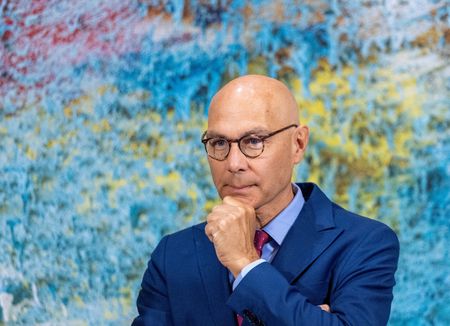
Volker Türk, the U.N. High Commissioner for Human Rights, told the Human Rights Council in Geneva that his office has recorded a dramatic surge in drone warfare as well as widespread rape and sexual violence throughout the ongoing conflict in Sudan, which has now stretched into its fourth year.
“In Sudan, the horrific conflict has expanded and escalated, marked by a sharp increase in the use of drone warfare,” Türk told the council.
The Sudanese war began on April 15, 2023, when a struggle for power between the country’s military and a paramilitary group known as the Rapid Support Forces erupted into open combat in the capital city of Khartoum and across the country.
According to the Armed Conflict Location and Event Data Project, commonly referred to as ACLED, the war has claimed at least 59,000 lives over three years — though the U.S.-based conflict monitoring organization cautioned that the true death toll is likely far greater due to challenges in gathering accurate data from the region.
ACLED also reported that at least 2,670 people — both fighters and civilians — died in drone-related incidents in 2025, representing a staggering 600% jump in drone-caused deaths and an 81% rise in drone attacks compared to the previous year.
Just last week, a drone strike attributed to the paramilitary group struck a cemetery and a gas station in the central city of el-Obeid, killing at least 15 people, according to local health officials.
Both sides in the conflict have increasingly deployed drones loaded with explosives, with attacks repeatedly hitting civilian targets such as hospitals, dams, schools, markets, and camps housing displaced people. Drone strikes have emerged as the single deadliest threat to civilians in the conflict.
The United Nations estimates that roughly 34 million people — nearly two out of every three people living in Sudan — are in need of humanitarian assistance, making it the largest such crisis in the world.
Beyond the physical destruction, the conflict has been defined by widespread atrocities. The U.N. and various international human rights organizations have characterized mass rape and killings motivated by ethnicity as war crimes and crimes against humanity.
“Rape and sexual violence are rampant,” Türk stated.
PRAGUE (AP) — One of Europe’s most storied churches now has a new voice. Prague’s St. Vitus Cathedral officially unveiled its new organ on Monday, providing the 700-year-old structure — the largest in the Czech Republic — with an instrument worthy of both its religious services and concert performances.
Prague Archbishop Stanislav Přibyl blessed the organ during a ceremonial mass, accompanied by the Czech Philharmonic. The program included Antonín Dvořák’s “The Lužany Mass” along with compositions by Georg Friedrich Händel, Camille Saint-Saëns, and Joseph Haydn.
“St. Vitus Cathedral has gained a new voice,” Archbishop Přibyl said in a prepared statement. “A voice that will not speak with words but will still speak to the heart.”
Eight concerts are planned in the coming days to showcase the new instrument to the public.
The organ, which features four keyboards, was crafted in the workshop of Gerhard Grenzing, located in El Papiol near Barcelona, Spain. The celebrated German organ builder has constructed nearly 140 organs and restored more than 90 historic instruments across numerous countries.
After being completed in Spain, the organ was taken apart and transported piece by piece to Prague by truck. Workers reassembled it inside the cathedral approximately one year ago, after which craftsmen spent several months carefully voicing and tuning each of its pipes.
In total, the instrument contains around 6,000 pipes, with lengths ranging from just 7 millimeters — about a quarter of an inch — to more than 7 meters, or roughly 23 feet.
The cathedral’s previous organ was finished in the early 1930s, but it was never well-suited to the grand space and repeatedly broke down. During World War II and through more than four decades of communist rule, no one pursued repairs or a replacement.
Discussions about building a new organ began approximately 14 years ago. A crowdfunding effort launched in 2017 ultimately raised more than 135 million Czech crowns — equivalent to about $6.5 million — from thousands of individual contributors.
St. Vitus Cathedral holds deep significance in Czech history. It served as the site of royal coronations and burials for Czech kings, and the Czech crown jewels are kept within its walls. The cathedral was also the setting for the funeral mass of Václav Havel, the Czech Republic’s first president, held on December 23, 2011.
LONDON (AP) — The United Kingdom has announced plans to prohibit children and teenagers under 16 from accessing a wide range of social media platforms, including Snapchat, TikTok, and YouTube. The decision is aimed at protecting young people from harmful content and the dangers of excessive screen time.
In taking this step, the U.K. joins a growing number of nations that have moved to enforce age-based restrictions on social media access. While many parents and child advocacy organizations have praised these efforts, critics argue the measures are difficult to enforce and raise serious privacy concerns.
Here is a look at what several other countries are already doing or planning to do:
Australia — Australia’s ban was described as a first of its kind globally when it was introduced in December. The law prevents anyone under 16 from holding accounts on Facebook, Instagram, Kick, Reddit, Snapchat, Threads, TikTok, X, YouTube, and Twitch. Technology companies that fail to take reasonable steps to remove underage accounts can face fines of up to 49.5 million Australian dollars, which equals roughly $35 million. While no fines have been issued yet, the government reports that companies have already shut down nearly 5 million accounts identified as belonging to children.
Vietnam — In March, the Vietnamese government announced that users under 16 would no longer be permitted to hold accounts on platforms that could expose them to addiction, pornography, online scams, and cyberbullying. The affected platforms include YouTube, TikTok, Facebook, Instagram, Threads, X, Bigo Live, and gaming platform Roblox.
Malaysia — Social media platforms with at least 8 million users in Malaysia — including Facebook, Instagram, TikTok, and YouTube — are now required to put age-verification systems in place and prevent anyone under 16 from creating an account. Companies that do not comply can face penalties of up to 10 million ringgit, or approximately $2.5 million.
Norway — A law that went into effect in March stops short of an outright ban but requires users under 16 to link their social media accounts to a parent or legal guardian for supervision. The law also bans platforms from using features designed to keep users hooked, such as infinite scroll and autoplay video. Additionally, digital services must verify users’ ages through methods that go beyond simply asking someone to confirm they are over 18, in order to block access to inappropriate or prohibited content.
Canada — The Canadian government introduced legislation this month to establish a new regulatory body called the Digital Safety Commission of Canada. The commission would have the authority to ban children under 16 from social media accounts unless companies can demonstrate they are actively removing harmful content — including nonconsensual intimate images, material that encourages self-harm, content that incites violence, and material that promotes hatred.
Beyond these countries, France, Spain, Denmark, Greece, Thailand, and South Korea are also considering or actively working on their own measures to limit minors’ access to social media platforms.
A London court handed down guilty verdicts Monday against two men charged in connection with a scheme to burn properties belonging to British Prime Minister Keir Starmer.
The arson attacks took place in May 2025 and caused damage to the home Starmer had lived in before becoming prime minister, an apartment building he once had partial ownership of, and completely destroyed his former Toyota SUV. No injuries were reported.
Authorities say the plot was masterminded by a mysterious individual who communicated in Russian and went by the alias “El Money.” This person reached out to Ukrainian national Roman Lavrynovych through the Telegram messaging app, offering him cryptocurrency in exchange for torching the properties and filming the destruction to post online for maximum visibility.
Despite the investigation, El Money’s true identity was never determined and no charges were filed against the figure. Cmdr. Helen Flanagan, who leads the counterterrorism unit at the Metropolitan Police, said investigators found no proof that a hostile foreign government was behind the fires, as they were unable to establish El Money’s motive or employer.
“Clearly the tasking was to intimidate and create fear for the prime minister and to attack the U.K.,” Flanagan stated.
Lavrynovych, 22, and Stanislav Carpiuc, a 27-year-old Romanian citizen, were found guilty at London’s Central Criminal Court of conspiring to destroy property through arson. A third defendant, Petro Pochynok, 35, was cleared of the same charge.
Lavrynovych also faced and was convicted on two separate counts of arson that could have recklessly put lives at risk.
During the proceedings, Lavrynovych admitted to starting the fires, saying he was desperate for money. He said he was motivated by a promised reward of 3,000 pounds — roughly $4,000 in cryptocurrency — which he intended to use to cover medical costs for his father. He also claimed El Money had threatened him, and that he had no knowledge of who owned the properties until after the fires were set. He told investigators he had no idea who Starmer even was.
El Money had given Lavrynovych specific instructions on the target locations, directions on how to prepare flammable mixtures, and guidance on how to avoid detection.
Messages found on Lavrynovych’s phone revealed discussions about the fires, as well as other paid acts of vandalism he had carried out — including blacking out car windshields with paint and posting anti-Islam materials in Muslim neighborhoods throughout London.
Following the attacks, El Money told Lavrynovych payment was coming and instructed him to send a coded message using the word “geranium” if he was ever stopped by police. Lavrynovych was arrested shortly after receiving that message. The court was informed he never actually received any payment for carrying out the three fires.
Carpiuc served as a go-between in the scheme, while Pochynok was allegedly brought in to record video of the fires so Lavrynovych could collect his payment.
The fires were set in the middle of the night. Residents who had been asleep were jolted awake to find smoke pouring through their front doors.
Starmer’s sister-in-law, who was staying at his former home, said she heard a loud bang and had difficulty breathing as smoke overtook the stairwell. Her 9-year-old daughter was left terrified by the ordeal.
A resident of the apartment building was forced to retreat to the rooftop after finding the hallways engulfed in smoke.
Sentencing for both convicted men is scheduled for Friday.
Alabama residents are heading back to the ballot box Tuesday for a primary runoff election that will lock in party nominees for an open U.S. Senate seat and several other races where no candidate captured a majority of votes during the May 19 primary.
The winners of Tuesday’s runoffs will advance to compete in the general election this fall, when candidates across the heavily Republican state will face off for a full slate of state and federal offices.
It’s worth noting that primaries for four of Alabama’s seven congressional districts were pushed back from May 19 to an August 11 special primary — a consequence of a U.S. Supreme Court ruling that led Republicans in several southern states to scrap their existing congressional district maps.
On the Republican side, the race for U.S. Senate comes down to Barry Moore and Jared Hudson, who are competing for the right to replace U.S. Sen. Tommy Tuberville. Tuberville chose to run for governor rather than seek another Senate term. Moore, a third-term congressman who represents Alabama’s 1st Congressional District, carries the endorsement of President Donald Trump. His opponent, Hudson, is a former Navy SEAL who runs a security and weapons training company and founded a nonprofit dedicated to fighting human trafficking.
Moore finished first in the May primary with roughly 39% of the vote, while Hudson came in second with about 26%. State Attorney General Steve Marshall finished a close third at around 25%.
Moore’s strongest showing came from his home turf in the 1st Congressional District in southern Alabama, near the Florida border and the Gulf Coast. He also claimed pluralities across a large portion of central Alabama, including the Montgomery area, with narrower margins in the northern and northeastern parts of the state near the Tennessee and Georgia borders.
Hudson performed best in Jefferson County — the state’s most populous county and home to Birmingham — where he secured about 45% of the vote and built a 19-percentage-point lead. Expanding on that advantage will be essential to his runoff chances.
Moore holds an edge heading into the runoff in Madison County, the second-largest county in the state and home to Huntsville — a city nicknamed Rocket City for its NASA presence. Moore pulled in about 34% of the vote there in May, while Hudson placed third with roughly 22%.
Trump’s backing is expected to be a significant factor for Moore in a state where Trump received two out of every three votes against Democrat Kamala Harris in the 2024 presidential race. Trump-endorsed candidates have an almost flawless record at the polls, though his pick for Iowa governor did fall short earlier in June.
Democrats are also settling their U.S. Senate nomination Tuesday. The two candidates are Dakarai Larriett — a former corporate executive, aromatherapy pet care entrepreneur and policing reform advocate — and Everett Wess, an attorney and former Midfield Municipal Court Judge. Wess led the Democratic primary field with about 40% of the vote, followed by Larriett at approximately 29%.
Additional Republican runoffs are taking place for lieutenant governor, attorney general, agriculture commissioner and other state positions. A Democratic runoff is also being held in the 5th Congressional District, which held its primary back in May. The 1st, 2nd, 6th and 7th Congressional Districts will hold their primaries in the August 11 special election.
Polls across Alabama close at 7 p.m. Central Time, which is 8 p.m. Eastern Time. The Associated Press will report results and declare winners in runoffs for U.S. Senate, U.S. House, lieutenant governor, attorney general, agriculture commissioner, state Public Service Commission, state Board of Education, and both chambers of the state legislature.
Under Alabama’s election rules, voters who participated in a partisan primary on May 19 can only vote in the runoff for the same party. Democratic primary voters cannot cross over to vote in the Republican runoff, and vice versa. However, registered voters who sat out the May 19 primary are free to participate in either party’s runoff Tuesday.
As of Thursday, Alabama had approximately 3.8 million registered voters on the books.
During the May 19 primary, around 482,000 people voted in the Republican Senate race, about 474,000 participated in the Republican lieutenant governor primary, and roughly 340,000 cast ballots in the Democratic Senate primary.
Looking at historical trends, the last Republican Senate primary runoffs were held in 2022 and 2020. In 2022, total votes dropped from about 647,000 in the primary to around 402,000 in the runoff — falling from 18% to 11% of registered voters. In 2020, when Tuberville first appeared on the ballot, turnout slipped from roughly 718,000 in the primary to about 551,000 in the runoff, representing a drop from 20% to 15% of registered voters.
Alabama is one of the few states in the country that does not offer any form of in-person early voting, meaning the vast majority of residents cast their ballots on Election Day. In the 2024 primaries, mail voting was minimal — about 4% of Democratic primary voters and just 1% of Republican primary voters used absentee ballots.
Vote reporting practices differ by county. Most counties tend to release absentee ballot results in their first update, sometimes alongside Election Day totals. During the May 19 Republican Senate primary, the AP first reported results at 8:28 p.m. Eastern Time — just 28 minutes after polls closed — with the final update of the night coming at 12:54 a.m. Eastern Time, at which point more than 99.9% of votes had been counted.
The AP does not make projections and will only call a race when it is mathematically clear that a trailing candidate cannot catch up. If a race remains uncalled, the AP will continue monitoring and reporting on significant developments — such as a candidate conceding or claiming victory — while making clear that no official winner has been declared.
Alabama law includes an automatic recount provision, but the state attorney general issued an opinion in 2010 stating that it does not apply to primary elections.
As of Tuesday, 56 days remain until the special congressional primaries on August 11, and 140 days until the November 3 midterm elections.
A bipartisan coalition of U.S. senators, joined by two Democratic House committees, sent letters Monday to the National Science Foundation demanding it reverse plans to dismantle a wide-reaching ocean monitoring system — with House members going further by alleging the agency is acting outside the law.
The Ocean Observatories Initiative is made up of more than 900 underwater and ocean-surface sensors that cost $386 million to build. Over the past decade, the network has gathered data on ocean circulation, marine ecosystems, climate change, and extreme weather. That information has been made freely available to the public and has contributed to more than 500 scientific publications. The project was originally expected to continue operating for another 15 to 20 years.
The National Science Foundation directed that most of the system’s instruments be removed from waters off Oregon, Washington, Alaska, North Carolina, and Greenland by 2027. Scientists say that decision came without warning and without any scientific review. The independent federal agency — created by Congress — characterized the move not as a cancellation, but as a “descoping” in line with what it called “evolving scientific priorities and emerging technologies.” The Trump administration’s proposed 2026 budget called for a 55% reduction in the agency’s funding.
Democratic Sen. Jeff Merkley of Oregon was blunt in his criticism, telling the Associated Press: “It just seems like this is supreme stupidity and a violation of the fundamental distribution of powers in our Constitution. This program is authorized, it’s funded, and for the administration to shut it down without direction from Congress violates that vision in which the people’s representatives decide what’s done and funded, and the executive branch executes that vision.”
Sen. Merkley and Republican Sen. Lisa Murkowski of Alaska co-led the Senate letter, which was also signed by Democratic Sens. Edward Markey and Elizabeth Warren of Massachusetts, Tammy Baldwin of Wisconsin, Patty Murray and Maria Cantwell of Washington, Sheldon Whitehouse of Rhode Island, Chris Van Hollen of Maryland, and Ron Wyden of Oregon. The letter called on the NSF to pause the dismantling and conduct a full review — including input from the marine science community — before moving forward.
“Eliminating most of this complex ocean monitoring system threatens the safety of our coastal communities while undermining our nation’s ability to monitor coastal environments, marine currents, and extreme weather events,” the senators wrote.
House Democrats took an even harder line. Members of the House Science, Space and Technology Committee and the House Natural Resources Committee sent a joint letter calling on the agency to “cease this expensive, destructive, and — crucially — illegal action at once.” That letter was led by Reps. Zoe Lofgren and Jared Huffman of California, the top Democrats on their respective committees, and was signed by 23 Democratic members from each panel.
In a statement dated June 3, the NSF said its decision was informed in part by a 2025 National Academies report on the future of ocean science. The agency added: “NSF remains committed to ocean science and will continue working with the scientific community on high-priority research objectives.”
The cuts to the ocean observatory are part of a larger pullback from environmental and climate-related science under President Donald Trump’s administration, which has also moved to reduce staffing at agencies including the National Oceanic and Atmospheric Administration and the Environmental Protection Agency, and has loosened emissions regulations.
Federal appropriations law requires the NSF to notify the House and Senate Appropriations Committees at least 30 days before decommissioning any agency-owned facility or asset worth more than $2.5 million. According to the House letter, no such notification was provided.
Sen. Merkley said he first heard about the dismantling through news reports. “It was like the alarm bells just went off,” he said. “None of us knew about this, and there didn’t appear to have been any consultation or any scientific commission or stakeholders that were leading to this.”
While his office was still working to confirm whether formal notification had been given, Merkley added: “If there was no notification, this would appear to be illegal.”
Merkley and Murkowski also planned to introduce legislation Monday that would block the NSF from using federal funds to decommission instruments until a thorough review is completed. Scientists were scheduled to begin pulling the first buoy off the Oregon coast on Tuesday.
The senators also pointed to the approaching El Niño — a periodic Pacific Ocean warming pattern that disrupts weather and intensifies marine heat waves — as evidence that the timing of the cuts is especially problematic. “The loss of this deep-water observation system would threaten our ability to prepare for and monitor future El Niño events,” they wrote, warning that coastal communities, fishermen, and emergency responders would lose access to critical data.
The House letter was equally pointed: “Instead of paying for the valuable insights that can be gleaned from the 10-years-and-counting continuous monitoring, taxpayers are now paying for research vessels to span the ocean dredging up hundreds of pieces of instrumentation. This is pathetic. In a time of strained resources, the NSF is wasting time and money to destroy its own scientific infrastructure.”
CONCORD, N.H. — Paper may be the traditional gift for a first wedding anniversary, but it turns out it’s also a fitting choice for a 250th birthday — particularly when you’re packing a time capsule meant to honor American independence.
A 2016 law established the nonpartisan America250 commission and required that a time capsule be buried in Philadelphia on July 4, 2026, with instructions not to open it until 2276 — a full 250 years later. Just last week, the massive 900-pound cylindrical capsule was officially sealed, marking the end of years of design work, construction, collaboration with states, and careful review of submitted items.
“Once it was closed, it was a little bit anti-climactic, and then it was kind of really emotional,” said Michael Berilla, who leads the fabrication technology office at the National Institute of Standards and Technology and headed the team responsible for designing and building the capsule.
Berilla’s office, which falls under the Department of Commerce, has previously built protective encasements for historical documents — though those are typically kept indoors under tightly controlled conditions. A time capsule buried underground faces a very different threat: water. That concern drove much of the design process.
The capsule is cylindrical rather than box-shaped, since corners and square edges are prone to cracking over time. A second outer cylinder will surround it, creating an air barrier that pushes water away. The capsule’s lid is also lined with a soft metal that compresses when sealed.
“When you smash it shut with the lid, that metal goes into all the cracks and spaces and makes an airtight, watertight seal,” Berilla explained.
The contents inside were stored at 35% relative humidity — moist enough to prevent materials from drying out and crumbling, but dry enough to avoid creating moisture-related damage. The capsule will be placed 10 feet underground, shielding it from temperature swings and storm damage.
“Philadelphia would have to be six feet underwater in order for this time capsule to even possibly take on water,” Berilla said. “And if Philly is six feet underwater, you’ve got way bigger problems in the world.”
The capsule holds contributions from all three branches of the federal government, items tied to ongoing America 250 events and programs, and submissions from all 50 states, five U.S. territories, and the District of Columbia. Most items are housed in small archival boxes, while paper documents occupy a separate compartment. According to a list published on the America250 website, archival-grade paper was among the most popular choices, with states sending in hundreds of letters, postcards, posters, poems, and other printed materials.
States took very different approaches to their submissions. New Hampshire looked back, contributing a brochure tracing major moments in the state’s Revolutionary War history. California looked ahead, submitting the response it received when it asked an AI chatbot: “Write me a prediction of what California will be like 250 years from July 4, 2026.” According to the AI, highways will disappear, grizzly bears will return, and California will eventually break away to join Oregon, Washington, and British Columbia in forming a “Pacific Federation.”
Some states went above and beyond. Utah included 100 cards highlighting historical figures from the state, along with 13 coins, eight documents, eight pins, two granite disks, and a booklet. Arizona used nano-etching technology to engrave the full text of both the Declaration of Independence and the U.S. Constitution onto a stainless steel coin. Other contributions were more unusual — Maine submitted a bone from the endangered North Atlantic right whale, while Arkansas sent an actual diamond.
Tom Medema, a retired National Park Service official who served as project manager for the time capsule, said the range of submissions was remarkable.
“I’m glad there wasn’t really a prescription for it,” he said. “I know that was hard for them, but in the end, it was just up to them to represent themselves.”
Items that could deteriorate or metals that might rust were not permitted. Maryland’s attempt to include Old Bay seasoning was turned away, and a piece of Native American beaded artwork originally backed by elk hide had to be resubmitted on a fabric backing instead.
Medema noted that some submissions reflect difficult chapters in American history, as well as challenges the country faces today. Even so, the overall spirit of the project remained hopeful.
“There’s great hope in what this capsule represents and the messages that are put in it,” he said. “Something about this capsule has been truly uplifting for everyone who’s been involved in it.”
This is not the first time Americans have buried a national time capsule connected to the signing of the Declaration of Independence. A so-called “Century Safe” filled in 1876 was opened by President Gerald Ford in 1976. That same year, an official Bicentennial time capsule was created; it is currently held at the National Archives and scheduled to be opened in 2076. A separate time capsule is also being planned for the U.S. Capitol Visitor Center.
To make sure the America 250 capsule is actually located in 2276, the National Park Service has incorporated details about it into succession plans that will be handed down over the generations. A capstone marking the burial site will also be installed above it.
For Berilla, reflecting on what America looked like 250 years ago brings one word to mind: resilience.
“And when I think forward to the future, I hope that’s what they see from us,” he said. “That, yes, we had it hard compared to them, but more importantly, we were diverse. We were interesting. We were creative. We worked together.”
The capsule includes a photo of his team along with a letter he wrote on their behalf. “Greetings from the living, breathing hearts and hands of 2026,” Berilla wrote. “We will have long since returned to dust, but our devotion, pride, and unwavering hope for what our world could become are alive right here inside this steel. We built this for you.”
WASHINGTON — U.S. Vice President JD Vance announced Monday that he is hopeful the written text of an agreement aimed at ending the war in Iran and reopening the Strait of Hormuz will be made available to the public sometime this week, even as technical negotiations over the finer points of the deal are expected to continue.
Speaking during an interview on CNBC, Vance expressed the United States’ position that the economically critical shipping waterway should remain open without any fees on a permanent basis.
“Our expectation is that the Strait is going to be opened in a toll-free way for the long-term,” Vance said.
He added, “That’s the sort of thing that we’re going to figure out in these technical negotiations. You know that there are a lot of very important details to figure out that we’re actually going to sit at the table and discuss together and figure out a path forward.”
Both the United States and Iran have confirmed they reached terms to end the conflict and reopen the strait. The announcement brought some relief to financial markets, though the agreement may depend on a cessation of hostilities in Lebanon and puts off discussions about Tehran’s nuclear program to a later date.
While still considered a framework rather than a finalized agreement, the deal represents the most significant step yet toward resolving a conflict that has claimed thousands of lives and rattled global energy markets since it began with joint U.S.-Israeli military strikes against Iran back in February.
Vance indicated that Iran’s foreign minister and House speaker will serve as the country’s representatives at a signing ceremony set for Friday in Switzerland. He did not identify who would be present on behalf of the United States at that event.
JOHANNESBURG — South Africa’s justice minister is warning that a recent surge in violence against foreign nationals is tarnishing the country’s international reputation and triggering a backlash that is affecting South African businesses and entertainers abroad.
At a briefing held Sunday, minister Mmamoloko Kubayi urged South Africans to step back from vigilante actions and allow the government to address illegal immigration through official channels.
Over the past several weeks, South Africa has experienced a wave of protests and violent incidents directed at other African nationals — including some living in the country legally — as anti-immigrant groups point the finger at foreigners for the nation’s high unemployment rate and crime levels.
“A majority of South African artists perform on the continent, and many of them are seeing their gigs being cancelled,” Kubayi said, declining to name any performers specifically.
She added that the government is extending support to South African businesses operating in other countries that have been caught in the resulting backlash.
“We do believe that it can not only hurt the brand, but can hurt our social cohesion,” she said. Kubayi also noted that even some South African citizens have been caught up in the anti-immigrant aggression simply because of their appearance or the way they speak.
Xenophobia has long been a recurring problem in South Africa, and observers say the issue has been stoked by politicians looking to build support ahead of local elections scheduled for November.
Multiple countries — among them Ghana, Malawi, and Mozambique — have moved to bring their citizens back home due to safety concerns. Malawi announced Monday that it was transporting hundreds more of its nationals home by bus from the city of Durban.
World Health Organization chief Tedros Adhanom Ghebreyesus took to social media platform X to express his dismay, writing: “It is profoundly heartbreaking to witness another surge of xenophobic violence in #SouthAfrica.” He described the situation as a “tragic betrayal” of the African nations that stood by South Africa during its fight against apartheid.
Tedros also reported that five Ethiopians and five Mozambicans had lost their lives in the attacks.
South Africa’s foreign ministry pushed back on that characterization, stating that the deaths of the five Ethiopians were tied to organized crime rather than xenophobic violence. The circumstances surrounding the deaths of the five Mozambicans remain under investigation, the ministry said.
“We deeply regret the tragic loss of life in these recent incidents, as one life lost is simply one too many,” said foreign ministry spokesperson Chrispin Phiri.
MADRID — Spain’s Migration Ministry announced Monday that approximately 900,000 undocumented migrants have applied for legal status through a government program that was originally projected to attract around 500,000 applicants.
The initiative is designed, in part, to bring undocumented workers into Spain’s formal labor market. The country has maintained a relatively open posture toward immigration even as many other European nations have moved to tighten their borders.
CEAR, a non-profit organization that assists refugees, anticipates the total number of applications will surpass one million before the program concludes in two weeks.
Spain’s economy has grown at a pace that has outstripped most of its European counterparts over the past two years. Migrants have played a significant role in that growth, filling critical labor gaps in industries like hospitality and elderly care while also contributing to social security funding.
Since April, Spain has issued 360,000 temporary work permits — approximately 40% of all applications submitted, according to the ministry. Applicants are permitted to start working as soon as their paperwork is accepted for review.
Pilar Cancela, Spain’s secretary of state for migration, told Reuters that the government has the capacity to process up to one million applications between April and June, though she acknowledged that the number of requests will exceed the number of permits ultimately granted.
Spain’s immigration system has long struggled with significant backlogs. Thousands of migrants from countries such as Colombia and Senegal have waited years for asylum decisions, with more than 90% of those requests ultimately denied.
According to the think tank Funcas, those rigid policies have left roughly 840,000 undocumented migrants in a prolonged limbo — living and working in Spain off the books while waiting years to obtain other forms of residency.
CEAR Director Monica Lopez spoke at a press conference Monday, calling for longer-term solutions beyond the current effort. “This is an extraordinary programme, but there should be a structural measure to facilitate access to work and residence permits, in order to avoid creating groups of people living on the margins of society,” she said.
The Carolina Hurricanes are Stanley Cup champions for the first time in two decades, finishing off the Vegas Golden Knights with a dominant 3-0 shutout in Game 6 on Sunday night. The Hurricanes won three consecutive games to close out an exciting final series that featured dramatic momentum shifts and high-powered offense throughout. Goaltender Brandon Bussi, whose entry into Game 3 proved to be a turning point for Carolina, stopped all 22 shots he faced to earn his first career playoff shutout. Jackson Blake contributed a goal and an assist, Taylor Hall struck just 3 minutes and 47 seconds into the game to establish early control, and Nikolaj Ehlers sealed the win with an empty-net goal.
Jordan Staal has been awarded the Conn Smythe Trophy as the playoffs’ most valuable player, becoming the oldest recipient of that honor at 37 years old. Staal led Carolina in goal-scoring during the final against Vegas and was a dominant two-way center throughout the entire postseason, excelling in faceoffs and shutdown situations. He joined the Hurricanes via a trade from Pittsburgh back in 2012 and has served as team captain for the past seven years, making him the longest-tenured player in the organization.
Brandon Bussi’s path to a Stanley Cup championship is one of the more unlikely stories of this postseason. Head coach Rod Brind’Amour had actually expressed relief before the final that Bussi — the team’s backup — hadn’t been needed. That changed when Bussi entered during Game 3 and ultimately carried the team the rest of the way. The 27-year-old, once a journeyman goalie, had already played in nearly half of Carolina’s regular-season games, helping the team earn the top playoff seed. Starter Frederik Andersen handled the first three rounds before Bussi took over and made crucial saves in the clinching game.
President Donald Trump celebrated his 80th birthday with a UFC event held on the White House lawn. The event, called Freedom 250, featured seven fights and also marked the 250th anniversary of the Declaration of Independence. Fighters from across the globe participated, with UFC President Dana White alongside Trump as the crowd chanted “USA! USA!” Fighter Bo Nickal won his bout and publicly thanked Trump for the opportunity. Thousands of fans attended, including notable guests such as Mark Zuckerberg, highlighting the long-standing relationship between Trump and White.
Hockey stars Matthew and Brady Tkachuk and Logan Paul were among those taking part in pre-fight festivities for UFC Freedom 250 at the South Lawn of the White House. While VIPs filled the area around the Octagon, a separate viewing party was held at the Ellipse for the general public. Weather was a concern for a time, with dark clouds gathering as the fights began, but the area avoided any storms.
Iran captain Mehdi Taremi says his team is facing a difficult World Cup experience due to the tensions stemming from his country’s conflict with co-host United States. The Iranian squad arrived in the Los Angeles area on Sunday after training in Tijuana, Mexico — just over the U.S. border and roughly 140 miles from the stadium where they will open group-stage play against New Zealand. Taremi said he felt the tension from the moment Iran arrived and described this World Cup as far less enjoyable than his two previous appearances in the tournament.
Colorado football coach Deion Sanders is speaking out about the gambling scandal spreading through college football. Sanders, who has dealt with plenty of risk throughout his career, said he will not tolerate wagering on college games. The controversy has grown after Texas Tech quarterback Brendan Sorsby obtained a court order last week restoring his eligibility and overturning an NCAA ban that had been imposed for betting on professional and college sports. Colorado is scheduled to face Big 12 rival Texas Tech on October 3rd. Sanders, who missed time last spring and summer while undergoing treatment for bladder cancer, is said to be more involved this offseason as the Buffaloes look to rebound from a 3-9 finish.
The NBA offseason is underway, with plenty of questions surrounding star players including Giannis Antetokounmpo and LeBron James. The New York Knicks are the reigning champions, continuing a remarkable stretch of parity in the league — eight different franchises have won the title over the past eight seasons. That list includes Toronto in 2019, the Los Angeles Lakers in 2020, Milwaukee in 2021, Golden State in 2022, Denver in 2023, Boston in 2024, Oklahoma City last year, and now New York. The rest of the league is now chasing the Knicks heading into the new season.
Denny Hamlin won the NASCAR Cup Series race at Pocono Raceway for his third consecutive victory, moving past the late Kyle Busch into ninth place on the all-time wins list. Hamlin, 45, is the oldest full-time driver in the Cup Series and now has 64 career wins, including four this season. Despite the success, Hamlin says he still plans to retire when his contract with Joe Gibbs Racing expires in 2027. Tyler Reddick came in second and William Byron finished third. The series heads next to a street race at Naval Base Coronado in San Diego.
The Colorado Rockies set a franchise record with a 23-9 victory over the Athletics on a scorching 101-degree afternoon at Las Vegas Ballpark. Willi Castro drove in seven runs and Hunter Goodman collected a career-best five hits in the lopsided win. The Athletics, who are scheduled to move to Las Vegas full time in 2028, wrapped up a six-game homestand at the ballpark, which currently serves as the site of their top minor league affiliate.
WASHINGTON (AP) — President Donald Trump rang in his 80th birthday Sunday with two major moments: announcing an early-stage agreement to bring the conflict in Iran to a close, and hosting a professional cage-fighting event on the historic South Lawn of the White House.
The president had been talking up the emerging Iran deal for weeks, and the ongoing conflict had threatened to cast a shadow over the UFC mixed martial arts spectacle, where fighters inside a wire-mesh Octagon competed to defeat each other through punches, kicks, and grappling.
Before the event got underway, however, Trump announced the agreement to end the fighting “is now complete.” He said the United States would lift its blockade of Iran and that the Strait of Hormuz would reopen — though significant details still remain to be worked out in the weeks ahead.
Senior administration officials and Republican congressional leaders were on hand for the fights, among them Secretary of State Marco Rubio and House Speaker Mike Johnson. Polish President Karol Nawrocki was also present at the White House.
The evening opened with Trump and UFC president Dana White walking side by side from the Oval Office to the Blue Room Balcony to take in the view of the Octagon, standing together as fighter jets roared overhead during the national anthem.
A massive temporary arena was packed with thousands of spectators beneath “The Claw,” a striking metal arch resembling a spacecraft, outfitted with lights, speakers, and giant video screens. Thousands more fans watched the action on large screens from the nearby Ellipse.
“This event is a one of one event, incredible event,” White said during a Friday night preview gathering at the Lincoln Memorial, where fighters faced off for the cameras beneath the marble statue of Abraham Lincoln.
Before the night’s main event, lightweight fighters Ilia Topuria and Justin Gaethje each made their entrance by walking out of the Oval Office itself before heading to the Octagon — a gesture that had Trump temporarily giving up his own workspace for the spectacle.
American fighter Gaethje went on to defeat Spanish-Georgian Topuria in an upset after four bloody rounds. Trump later entered the cage himself to greet the fighters and stayed to watch a fireworks show that launched well after 1 a.m.
Throughout the night, many victorious fighters offered thanks to both Trump and God from inside the cage. Heavyweight Josh Hokit went further, making an extraordinary and baseless attack rooted in a right-wing conspiracy theory targeting a former first lady: “Michelle Obama is a man. Am I right, America?” Hokit also approached Trump and draped a chain around the president’s neck.
Despite the summer heat, Trump wore a suit and tie throughout much of the evening, often watching the bouts stone-faced through the cage’s wire mesh. At one point, he briefly chatted with Meta CEO Mark Zuckerberg.
When American fighter Sean O’Malley faced Canadian Aiemann Zahabi, Trump put on a white USA hat. After Zahabi won, he shook the president’s hand and offered a salute. Earlier, Trump was seen speaking with first lady Melania Trump during the opening bout between Diego Lopes and Steve Garcia. After Bo Nickal knocked out Kyle Daukaus in the second fight, Nickal walked over to Trump and knelt beside him for a brief conversation.
“I gotta thank President Trump for making this happen,” Nickal said in a post-fight interview as Trump smiled nearby, calling the president a “special person” — after which Trump’s signature song “YMCA” played over the speakers.
Trump framed the event as part of broader celebrations marking the 250th anniversary of the signing of the Declaration of Independence. The fights were so central to his plans that the G7 summit of industrialized nations was pushed back to allow Trump to attend his cage-match celebration before flying to Europe for the meetings.
Crowds repeatedly broke into chants of “USA! USA!” when American fighters squared off against foreign opponents, though those chants didn’t always translate into victories — at least until the final bout. Brazilian fighter Mauricio Ruffy, after winning his match, proposed to his girlfriend in the crowd, who flashed a thumbs-up in what observers noted was a very Trumpian moment.
The evening stood in sharp contrast to how Trump’s predecessor, President Joe Biden, spent his own 80th birthday. Biden marked the milestone in November 2022 with a quiet private family brunch at the White House.
Asked about the difference between the two celebrations, White House spokesperson Allison Schuster issued a statement calling the UFC event “one of the most entertaining nights in American history.”
When Biden turned 80, he was the oldest sitting president in U.S. history, and was just months away from launching a reelection campaign he would eventually abandon following a poor debate performance against Trump and growing opposition within his own party.
World leaders have descended on a French spa town for a Group of Seven summit that carries added weight following President Donald Trump’s announcement of an agreement he says will end the U.S. war against Iran.
Trump arrived in Evian-les-Bains Monday afternoon for discussions with G7 leaders, some of whom have been openly critical of how he managed the roughly 15-week conflict — a war that has caused a spike in global energy prices.
Trump has clashed with French President Emmanuel Macron, British Prime Minister Keir Starmer, German Chancellor Friedrich Merz, and Italian Prime Minister Giorgia Meloni over his decision to go to war without consulting them. He has threatened to pull U.S. troops out of all four countries — each a member of the NATO alliance — in response to their lack of support.
The G7 consists of France, the United States, Canada, Germany, Italy, Japan, and the United Kingdom. This year’s summit also includes guest nations Brazil, Egypt, India, Kenya, South Korea, Qatar, Syria, Ukraine, and the United Arab Emirates.
Macron Stands Firm Against Trump’s Tariff Threats
French President Emmanuel Macron made clear Monday that he will not yield to Trump’s threat to impose 100% tariffs on French wines unless Paris scraps its digital tax on American technology companies.
In an interview with French broadcaster TF1, Macron stated that the tax was a European decision and that it is not “for the United States to decide what European or French law should be.” He added that his position is “normal” and will not shift “as long as I am here.”
European Union wines and spirits currently face a 15% tariff when exported to the United States. Macron said he plans to raise the issue in a “respectful but firm” way at the summit.
“What is important to understand is why the G7 was created,” Macron said. “To resolve many of our international imbalances, it is better to coordinate and consult with one another, especially when we are among the world’s major democracies.”
France Ready to Act on Strait of Hormuz Security
Macron said France and other Western allies are “ready to take action very quickly” to help peacefully reopen the Strait of Hormuz, a critical global shipping lane.
France and Britain have both pushed for a mission to restore maritime security in the strait once conditions permit.
“We already have forces in the area,” Macron said during his TF1 interview, pointing to France’s nuclear-powered aircraft carrier, the Charles de Gaulle.
“We are ready to take action very quickly … to send aircraft, deploy a frigate, send mine-clearing vessels. We also have our aircraft carrier, the Charles de Gaulle, along with its accompanying strike group, which remains in the region and could be deployed within two or three days following confirmation” of the tentative U.S.-Iran deal, he said.
G7 European Leaders Hail Iran Deal as ‘Diplomatic Breakthrough’
Despite their ongoing disagreements with Trump over the Iran conflict, the leaders of France, Germany, Italy, and the United Kingdom issued a joint statement before the summit began, praising the United States, Iran, and the mediators for what they described as a “diplomatic breakthrough.” Canada also signed onto the statement.
The leaders stressed that detailed follow-up negotiations must happen quickly and that the agreement needs to be put into effect soon so the Strait of Hormuz can be reopened to oil tanker traffic. They said they are committed to contributing, including through possible mine-clearing operations.
Macron Thanks Security Forces Protecting the Summit
As world leaders flew into Evian-les-Bains, the quiet lakeside resort town was transformed into a heavily secured zone, with officers stationed throughout the streets checking credentials and monitoring crowds.
Macron stopped by a temporary security command center Monday morning to personally thank the officers on duty.
He described the three-day summit — which covers topics including the Middle East, Ukraine, and trade — as “a big source of pride for France, a big responsibility.”
“We’ll try to make maximum progress on all the issues that are important for our country, our continent and also for global peace and prosperity,” Macron told the assembled police officers, gendarmes, firefighters, health workers, and other personnel.
Macron said nearly 13,800 officers have been deployed for the security operation. “Only your collective mobilization makes this possible,” he said. “Good luck for the coming days. Keep up the work.”
Japan to Join G7 European Nations’ Joint Statement
Japanese Prime Minister Sanae Takaichi announced that Japan will sign onto the joint statement issued by the G7’s four European nations, which calls for cooperation in quickly reopening the Strait of Hormuz and ending Iran’s nuclear program.
When asked about the statement, Takaichi confirmed Japan had been asked to participate and said simply, “We will join.”
The statement, issued Monday in response to the U.S.-Iran peace deal, emphasized that the agreement must be implemented rapidly and comprehensively. It also noted the signatories’ readiness to help ensure safe commercial shipping and conduct mine-clearing operations in the key waterway, in line with each country’s constitutional requirements.
Takaichi did not detail what Japan’s specific contribution might be, but said she intends to have thorough discussions at the summit about achieving peace and stability across the broader Middle East region.
Trump Announces July 4 Rally at Lincoln Memorial
Even while traveling to France for the G7 summit, Trump shared plans for a major celebration marking the 250th anniversary of American independence.
“On July 4th, at The Lincoln Memorial and Washington Monument, in beautiful and safe Washington D.C., we are going to host the most spectacular TRUMP RALLY of them all, a ‘TRIBUTE TO AMERICA,’” Trump posted on social media.
Trump said the event will feature military flyovers, a personally selected music playlist, and “the LARGEST FIREWORKS SHOW IN HISTORY.”
Trump had also previously announced in late May that he would headline “The Great American State Fair,” part of the America 250 celebration, after several musical performers withdrew partly due to the event’s association with Trump. Organizers indicated the president’s appearance was set for June 24 to kick off the fair.
Macron Samples the Spring Behind Evian’s Fame
In a lighter moment Monday, French President Emmanuel Macron drank a glass of water from the natural spring that gave Evian-les-Bains its worldwide reputation.
Macron visited the Cachat Spring, which takes its name from the owner of the garden through which the water once flowed in the late 1700s. The water was first scientifically analyzed in 1807 and was originally recommended as a remedy for kidney and bladder conditions. It became a popular table water starting in the 1860s and is now sold globally under the Evian brand.
Brazil’s Leader and UN Health Chief Urge Action on Pandemic Preparedness
Brazilian President Luiz Inácio Lula da Silva and the head of the United Nations health agency are jointly urging world leaders to strengthen a pandemic preparedness agreement passed last year.
“Humanity promised itself, in the rawness of that grief, that it would not face such a day again unprepared,” the two wrote in a shared statement.
Negotiations over a key annex to the accord have stalled due to disagreements about sharing disease-causing pathogens — which frequently emerge in tropical developing countries — in exchange for access to technologies like vaccines, which are typically developed in wealthier nations.
The pair called on G7 leaders and other international groupings to “instruct your negotiators to come to the July session ready to conclude” the annex.
Trump Calls White House UFC Event ‘Incredible’
While en route to France aboard Air Force One, Trump posted on Truth Social praising a UFC fight night held at the White House, calling the fighters “outstanding” and the South Lawn setting “unsurpassed.”
“The White House has never looked more beautiful,” Trump added.
Brazil’s Lula First to Arrive at G7 Venue
Brazilian President Luiz Inácio Lula da Silva became the first foreign leader to check in Monday at the Hotel Royal in Evian-les-Bains ahead of the summit’s formal opening.
Brazil, Egypt, Kenya, India, and South Korea have been invited to join select discussions as partner countries alongside the G7 members.
All world leaders, including Trump, were scheduled to receive an official welcome later Monday from French President Emmanuel Macron at the start of the summit.
The Hotel Royal, a five-star property with views of Lake Geneva and the foothills of the Alps, will host the leaders through Wednesday. The hotel is surrounded by sweeping gardens featuring flowerbeds, water features, and both English- and Japanese-inspired landscaping.
UN Human Rights Chief Welcomes US-Iran Deal
UN Human Rights Chief Volker Türk welcomed the announced peace agreement between the United States and Iran, while also renewing his call for the U.S. to publicly release the findings of an investigation into a deadly strike on a school in southern Iran that occurred when the war began.
Türk said he “deplores” the use of force by Israel and the United States against Iran, which he said has reportedly left thousands dead and caused widespread infrastructure damage. At the same time, he called Iran’s strikes on Gulf countries and Jordan, along with its blockade of the Strait of Hormuz, “completely unacceptable.”
“I welcome the announcement that the United States and Iran have agreed on a peace deal that provides for an immediate and permanent ceasefire, the reopening of the Strait of Hormuz, and a framework for further negotiations,” Türk told the Human Rights Council as it convened its latest session.
“At this fragile moment, it is clear all sides need to exercise maximum restraint and work to implement this agreement quickly and in good faith,” he added.
UK’s Starmer Calls Iran Deal a ‘Hugely Significant Opportunity’
British Prime Minister Keir Starmer welcomed the breakthrough in U.S.-Iran talks, describing it as a hugely significant opportunity to bring stability to the region.
Speaking at the start of a news conference at his No. 10 Downing Street office, Starmer emphasized that it is critical for all parties in the region to seize the moment and restore freedom of navigation through the Strait of Hormuz.
“We will now work closely with our partners to support this agreement and to ensure that it turns into a durable, lasting peace,” he said.
Trump Warned France of 100% Wine Tariffs Before Departure
Before leaving for the summit, Trump told the New York Post in an interview that he has warned Macron the United States will “have no choice” but to impose 100% tariffs on French wines unless Paris eliminates its digital tax on American technology companies — reviving a threat that first surfaced during his first administration.
Wines and spirits from the European Union currently face a 15% tariff when entering the United States.
Israel Says It Won’t Pull Back from Lebanon
Israel’s defense minister stated Monday that his country has no intention of withdrawing from territory it has seized in Lebanon while the interim U.S.-Iran deal remains pending.
The remarks from Defense Minister Israel Katz marked the first official Israeli response following the deal’s announcement. The two sides — the U.S. and Iran — are expected to meet Friday in Geneva to formally sign the agreement, according to Pakistan.
Katz said Israel plans to remain “indefinitely” in the lands it currently holds in Lebanon, as well as in Syria and the Gaza Strip. Iran has linked the interim deal to a halt in Israeli attacks on Hezbollah forces in Lebanon.
Katz also warned that if Iran retaliates against Israel over Israeli strikes in Lebanon, Israel will respond with “great force.”
A stretch of Jupiter Road is experiencing intermittent lane closures due to ongoing construction work.
The closure affects the section of Jupiter Road between Venus Road and Sun Court. Drivers traveling through that area may encounter reduced lanes until 5 PM.
Motorists are encouraged to allow extra travel time or consider using an alternate route to avoid potential delays.
Authorities have canceled a Gold Alert that had been issued for Anthony Pezzullo after he was found safe.
Officials confirmed that Pezzullo has been located, bringing the alert to a close. No additional information was released regarding the circumstances of his disappearance or recovery.
Wall Street was set to surge Monday alongside global markets after a tentative agreement was announced to end the Iran war and reopen the Strait of Hormuz — sending oil prices tumbling nearly $5 a barrel to their lowest point in months.
Before the opening bell, futures for the S&P 500 were up 1.3%, Dow Jones Industrial Average futures climbed 0.9%, and Nasdaq futures jumped 1.3%.
After several false starts that left investors skeptical, markets appeared to be betting that an end to the conflict was finally within reach. U.S. President Donald Trump confirmed the preliminary agreement and gave the green light to lift the U.S. naval blockade on Iranian ports.
Iran also confirmed the deal, though officials there indicated the agreement would not go into effect until a formal signing ceremony — which Pakistan said would take place Friday in Switzerland. Negotiations on broader issues, including Iran’s nuclear program, are expected to continue over the following 60 days.
Oil prices dropped sharply in Monday trading. Brent crude, the international benchmark, fell $4.28 to $83.05 per barrel, while U.S. benchmark crude dropped $4.55 to $80.33 per barrel — the lowest prices seen since the war’s opening days in late February.
Energy analysts cautioned that it could take months for oil prices to fully stabilize. The war’s disruptions sent fuel and product costs soaring, and experts said shipping and insurance companies will need confidence that the peace agreement will hold before supply flows freely again.
Stephen Innes of SPI Asset Management offered a measured take in a research note: “The reopening of Hormuz is a relief valve, not a full peace dividend. The market can remove some crude panic, but it still has to price the gap between a headline, a signature, and a regime that actually complies.”
Even so, the announcement brought significant relief to markets that have been in turmoil for more than three months.
On the corporate front, shares of Roku climbed an additional 1.5% Monday morning after Fox Corp. announced it is acquiring the streaming platform in a cash-and-stock deal worth approximately $22 billion. The acquisition gives Fox access to the Roku channel, first-party viewer data, and a customer base of more than 100 million streaming households worldwide. Fox will pay $96 in cash plus 0.9693 shares of its Class A common stock for each Roku share, valuing the transaction at $160 per share. After already jumping more than 20% on Friday when reports of the deal first emerged, Roku shares added another $1.84 to reach $145.50 Monday morning.
Shares of Elon Musk’s SpaceX also gained 5.6% in premarket trading Monday, building on a strong debut on Wall Street last week. The company’s stock had leaped 19.2% on its first day of trading, giving SpaceX a total market value of $2.1 trillion — larger than Exxon Mobil, Bank of America, and Coca-Cola combined. The strong investor appetite reflected continued enthusiasm for artificial intelligence-related companies.
European markets also moved higher by midday. Germany’s DAX rose 1.3% and France’s CAC 40 gained 1.2%, while Britain’s FTSE 100 was essentially flat.
Asian markets posted strong gains. Tokyo’s Nikkei 225 surged 5% to 69,317.50, setting another record high, driven largely by technology and AI-related stocks. Japan’s benchmark index has now risen more than 80% over the past year.
“This is great news,” said Takashi Hiroki, chief strategist at Monex. “Buying by foreign investors is leading the market with expectations of easing tensions around the situation in the Middle East. Then the decline in New York crude oil futures is supporting this positive market.”
South Korea’s Kospi surged 5.2% to 8,545.98. Hong Kong’s Hang Seng added 0.5% to 24,842.67, and China’s Shanghai Composite rose 1.6% to 4,096.47. Australia’s S&P/ASX 200 climbed 1.3% to 8,922.90, Taiwan’s Taiex was up 2.8%, and India’s Sensex gained 1.2%.
Looking ahead, investors will be watching several major interest rate decisions this week. The Federal Reserve is set to announce its decision Wednesday, followed by the Bank of England on Thursday. On Tuesday, the Bank of Japan is expected to raise its benchmark interest rate from 0.75% to 1% — which would mark the highest rate in more than 30 years.
Motorists traveling westbound on Concord Road/Hardscrabble Road, also known as Route 20, are facing a lane closure due to ongoing construction work.
The affected stretch runs between Beaver Dam Road and Fleetwood Pond Road (Road 484). Drivers in the area should plan for possible delays and consider alternate routes if available.
The westbound lane closure is scheduled to remain in place until 7:00 PM. Travelers are encouraged to use caution when passing through the construction zone.
Fox Corp. has struck a deal to acquire streaming pioneer Roku in a combined cash-and-stock transaction valued at approximately $22 billion, including debt.
The acquisition would hand Fox access to more than 100 million households around the world, along with the Roku channel and its first-party viewer data. Fox already operates a broad portfolio of sports, news, and entertainment properties, as well as Tubi, the streaming service it purchased in 2020.
Roku’s origins trace back to the early 2000s, when founder Anthony Wood worked inside Netflix as the company was making its historic transition away from DVD rentals and toward streaming video. Netflix eventually spun Roku off as its own company, and Roku launched its first set-top streaming box in 2008.
Wood, who serves as Roku’s chairman and CEO, has said his original drive to develop the technology came from a personal desire — he simply wanted to record and watch his favorite show, “Star Trek.”
Both companies announced Monday that Roku will continue operating as an open platform that remains friendly to outside partners. Together, Fox and Roku said the combined entity would rank as the third-largest presence in U.S. television based on share of viewing.
Fox Corp. CEO Lachlan Murdoch said in a statement that bringing the two companies together would unite Fox’s live news and sports programming with a streaming platform boasting a massive audience, while also expanding Fox’s reach into advertising revenue and streaming subscriptions.
“The combination with FOX is an extraordinary opportunity to accelerate our vision, scale faster and innovate more aggressively for viewers, partners and advertisers,” Wood said in prepared remarks.
Wood is expected to remain involved with the company going forward and will join Fox’s board of directors once the transaction is finalized.
Under the terms of the deal, Fox will pay $96 in cash plus 0.9693 shares of its Class A common stock for each Roku Class A and Class B share. The overall transaction is valued at $160 per Roku share.
Once the deal closes, current Fox shareholders are projected to hold roughly 73% of the combined company, while Roku shareholders would own approximately 27%.
The transaction is expected to be completed in the first half of next year, pending approval from shareholders of both companies and sign-off from regulators.
Following the announcement, Fox’s stock slipped in pre-market trading, while Roku shares edged slightly higher.
A right lane on westbound Commerce Street is currently closed due to construction activity, affecting the stretch of road between Farmington Road and Brown Street.
The lane closure is expected to remain in effect until 5 p.m. Drivers traveling through that corridor should allow extra time or consider an alternate route to avoid potential delays.
BANGKOK (AP) — The man who previously led the American Chamber of Commerce in Myanmar has been taken into custody after arriving back in Yangon, following the organization’s disclosure that it had been investigating suspicious financial dealings by former board members.
Adam Castillo, who founded and owns a security risk management company called AGS Myanmar, was apprehended Thursday at Yangon International Airport, according to a source familiar with the situation who asked not to be named due to safety concerns.
AGS Myanmar told The Associated Press only that the situation was “an ongoing matter” and declined to say anything further. An email sent to Castillo through his personal website went unanswered.
The U.S. State Department confirmed it had received reports of an American citizen being held in Myanmar but said it was unable to comment further, citing privacy considerations.
Myanmar’s military-backed government issued no official statement on the detention. Requests for comment sent to the government, the Yangon regional government office, and the Yangon Regional Police Department all went unanswered. Authorities in Myanmar, a country currently engulfed in civil war, rarely engage with international press.
However, several media outlets with ties to the military — including NP News — reported that Castillo had been arrested following a formal complaint filed against him by the American Chamber of Commerce. He served as the organization’s president from 2023 to 2025.
When asked about the complaint, the chamber’s executive director, Myat Phyu The, said she was unable to share specifics but pointed to the organization’s May 29 annual report, saying it “covers the issue at hand.” The chamber works to support American business interests.
According to that report, the current board discovered last year that certain transactions had been made by “former board representatives” under suspicious circumstances, and the matter was sent to a law firm for review.
Investigators found that “a former board representative” had entered into a contract in November 2024 with a Washington-based public relations firm. That firm paid him $300,000 that was “apparently collected and disbursed outside AMCHAM Myanmar’s accounts.”
“The signature exceeded the signing limits of individual board representatives, the board never approved the agreement,” the report stated. “AMCHAM Myanmar received no funds, made no payments, and received no services, and the matter was not disclosed to the statutory auditors.”
The report references “two former members of the board” as being connected to the case, though neither is identified by name, and no information is provided about what legal steps the organization may have taken. Myat Phyu The declined to elaborate further.
A statement posted to the organization’s website on June 12 said the board “has taken appropriate steps to safeguard the interests of the organization and its members.”
Myanmar has been in turmoil since its military forcibly removed democratically elected leader Aung San Suu Kyi from power in 2021 and violently cracked down on peaceful protests that followed. The crackdown sparked armed resistance from pro-democracy fighters and ethnic minority militias working to push out the military government.
Since the military seized control, Myanmar has seen a growing number of foreigners detained, with foreign journalists covering the country’s political crisis being particularly targeted.
AGS Myanmar, founded in 2013, lists security services on its website alongside offerings such as commercial cleaning and pest control.
Castillo’s company biography describes him as a former U.S. Marine officer who served in Afghanistan and currently chairs “Republican Overseas Myanmar,” a group established in 2024 to advance what it calls “America First policies in Myanmar and across the region.”
It remains unclear where Castillo had been traveling before returning to Myanmar and being detained. His Instagram account, however, shows that just one day before his arrest, he was attending a business forum in Kuala Lumpur, Malaysia, where he also promoted a book he recently published.
That memoir, titled “Finding Our Voice,” chronicles his time in Myanmar during the political upheaval, violence, and economic hardship that followed the military takeover, according to its description.
Whether the book had any connection to his detention remains unknown.
Voters in the Bay Area of California are casting ballots Tuesday in a special congressional primary to begin narrowing a field of nearly a dozen candidates competing to fill the seat once held by Democratic former U.S. Rep. Eric Swalwell. For many of those candidates, Tuesday marks the second time in just two weeks they have appeared on a ballot for this particular House seat.
A Democratic victory in this heavily Democratic district would put additional pressure on what is already a razor-thin Republican majority in the U.S. House of Representatives.
Swalwell stepped down from Congress in April following sexual-assault allegations, which he has denied. He also pulled out of the California governor’s race, in which he had been considered a leading contender.
There are actually two separate races happening simultaneously for Swalwell’s former seat. One is a standard scheduled election for the next full congressional term beginning in January 2027. The other is Tuesday’s special primary, which determines who will serve out the remaining 15 weeks of Swalwell’s current term.
Among the Democrats competing in the special primary for the 14th District’s abbreviated term are former Dublin mayor and Bay Area Rapid Transit board member Melissa Hernandez, state Sen. Aisha Wahab, and attorney and education entrepreneur Rakhi Israni Singh. On the Republican side, candidates include real estate investor Wendy Huang and small business owner Dena Maldonado. The top two vote-getters, regardless of party, will move on to a special general election set for August 18. California uses a top-two primary system in which all candidates from all parties appear on the same ballot.
All five of those candidates also competed in the June 2 primary for the full-term seat, which drew a slightly smaller field of nine candidates overall. Wahab and Hernandez finished first and second in that race, ensuring the seat will remain under Democratic control next year.
The boundaries of California’s 14th Congressional District were redrawn under a new congressional map approved by voters through a 2025 statewide ballot measure called Proposition 50. Those new boundaries take effect for the full-term seat in January, while whoever wins the special election will serve under the current district boundaries for the rest of this year.
Proposition 50 was placed before voters partly in response to mid-decade redistricting efforts pushed by President Donald Trump in several Republican-led states. Although the new map generally benefits Democrats, the changes to the 14th District specifically were not dramatic. Under the current boundaries, Democrats account for 50.4% of registered voters as of October, compared to 17.6% for Republicans. Under the newly drawn boundaries, Democrats make up roughly 49.7% of registered voters as of mid-May, with Republicans at about 17.4%.
In the 2024 presidential election, Democratic nominee and then-Vice President Kamala Harris won the current 14th District with 65.8% of the vote. Under the newly redrawn boundaries, she would have received approximately 65.4% of the vote.
Both versions of the district fall entirely within Alameda County in the East Bay region. The current district encompasses Hayward, Livermore, Pleasanton, and Union City, along with portions of San Leandro, Fremont, and Dublin.
Polls close at 8 p.m. Pacific Time, or 11 p.m. Eastern Time.
The Associated Press will report vote totals and declare winners in the 14th Congressional District special primary. Any registered voter within the pre-redistricting version of California’s 14th Congressional District is eligible to participate.
As of October 2025, approximately 429,000 voters were registered in the current 14th Congressional District, including around 216,000 Democrats, about 76,000 Republicans, and roughly 114,000 voters with no party preference.
About 214,000 district voters cast ballots in the statewide Proposition 50 measure in November 2025, and around 126,000 cast ballots in the March 2024 primary — the last time the district held a primary under its current boundaries.
In Alameda County, roughly 93% of voters in the March 2024 primary and about 87% of voters in the 2024 general election submitted their ballots either early in person or by mail.
As of Friday, approximately 106,000 ballots had already been submitted for Tuesday’s election. Of those, about 57% came from Democrats, 19% from Republicans, and 20% from voters with no party affiliation.
In Alameda County, the first vote update of the evening typically reflects only mail ballot results, though a significant number of mail ballots usually remain to be counted by the following morning. Because mail voting tends to favor Democrats while in-person Election Day voting tends to favor Republicans, early results could show Democratic candidates leading — with Republican candidates potentially closing that gap as more Election Day votes are tallied. Democrats could also pick up additional ground later as remaining mail ballots are processed after election night.
During the November 4, 2025 special election for Proposition 50, the AP first reported Alameda County results at 11:14 p.m. Eastern — just 14 minutes after polls closed. The final update of that night came at 1:33 a.m. Eastern, with approximately 57% of total votes counted. The county finished tallying about 99% of all votes by November 10.
The AP does not make projections and will only declare a winner once it has been determined that no trailing candidate can mathematically close the gap. If a race remains undeclared, the AP will continue reporting on significant developments such as concessions or victory claims, while making clear that no winner has been officially called and explaining the reason for the delay.
California does not have automatic recounts. Any registered voter may request and fund a recount. The AP may still declare a winner in a race subject to a recount if the margin is determined to be too large for a recount or legal challenge to change the result.
As of Tuesday, 63 days remain until the August 18 special general election for Congressional District 14, and 140 days remain until the November 3 midterm general election.
Community-supported agriculture — commonly called CSA — has been a cornerstone of the local food movement for decades. The basic concept is straightforward: a customer pays a farm at the start of the season, and in exchange, they receive regular shares of freshly grown produce throughout the harvest period.
But as consumer habits and preferences continue to shift, some farmers are finding that the traditional CSA structure no longer fits every customer’s lifestyle. In response, growers are experimenting with updated versions of the model designed to give buyers more flexibility and choice.
These changes reflect a growing recognition among farmers that meeting customers where they are — both literally and figuratively — may be key to keeping community-supported agriculture relevant and sustainable in today’s marketplace.
Australia’s stock exchange operator, ASX, has acknowledged that it made misleading statements to the public about the status of a major software overhaul, agreeing on Monday to pay a penalty of A$20.5 million — roughly $14.5 million in U.S. dollars — pending approval from Australia’s Federal Court.
The Australian Securities & Investments Commission, known as ASIC, brought legal action against ASX in August 2024. The regulator alleged that statements the exchange made in 2022 about its Clearing House Electronic Subregister System — commonly referred to as CHESS — painted a misleading picture of a project that was already in serious trouble. The system had been scheduled to launch in 2023.
Internal records show that by late 2021, ASX had already classified the project’s status as “red,” a designation indicating significant risks to its timeline. According to the ASIC lawsuit, the exchange’s audit and risk committee was briefed on that “red” status just one week before a February 2022 market update was released.
Despite those internal warnings, a February 10, 2022 announcement — which also disclosed that then-CEO Dominic Stevens planned to retire — told the market that the CHESS replacement project was “progressing well.”
Kai Chen, Director at MPC Markets, offered perspective on what the settlement means going forward. “The fine closes a legal chapter, but the reputational discount and deeper structural questions will persist until ASX faces real competitive pressure or demonstrates genuine cultural reform through delivery,” Chen said.
ASX ultimately abandoned the original CHESS project in November 2022 after repeated setbacks and significant expenditures. A redesigned version of the clearing system began its first rollout phase in April and is now expected to be fully completed by 2029.
In addition to the penalty, ASX has agreed to contribute A$3 million toward ASIC’s legal costs, also subject to Federal Court approval. Both the penalty and the legal cost contribution will be recorded as non-recurring significant items in the exchange’s fiscal year 2026 financial statements.
ASX shares ended the trading day up 2.6%, closing at A$50.46 — outpacing the broader market benchmark, which gained 1.3%.
Canadian financial technology firm Nuvei announced Monday that it has agreed to acquire cross-border payments company Payoneer in an all-cash deal worth approximately $2.75 billion, as part of a broader push to grow its global footprint.
Under the terms of the agreement, Nuvei will purchase every share of Payoneer at $7.40 per share — representing a roughly 44% premium over Payoneer’s closing price on June 8. According to data from LSEG, Payoneer currently carries a market capitalization of around $2.26 billion.
Reuters had reported the previous week that the two companies were deep in acquisition discussions.
The deal reflects a broader trend in the payments industry, where companies have been joining forces to strengthen their presence in high-growth areas like international and business-to-business transactions.
Beyond expanding its global reach, the acquisition is expected to position Nuvei to capitalize on emerging opportunities in stablecoin transactions and commerce powered by artificial intelligence. The deal would also give Nuvei access to a roster of major marketplace clients, including Amazon, Walmart, eBay, and Airbnb.
Once combined, the two companies are projected to generate approximately $3 billion in annual revenue and handle more than $500 billion in payment volume each year.
Nuvei CEO Phil Fayer described the strategic value of the merger, saying: “By combining complementary capabilities, we can offer businesses a more complete platform to accept payments, send funds, issue cards, manage treasury and FX needs, and access embedded financial services – at scale.”
Payoneer specializes in helping businesses send and receive payments across international borders and manage money in multiple currencies. The company holds licenses in several major markets around the world.
The transaction requires approval from Payoneer shareholders as well as regulatory clearances, with an expected closing date in mid-2027.
Financing for the deal is being provided by BMO Capital Markets, RBC Capital Markets, Barclays, UBS, and Wells Fargo. Goldman Sachs is serving as lead financial adviser to Nuvei, with Barclays Capital also in an advisory role. Qatalyst Partners is acting as the exclusive financial adviser to Payoneer.
BEIRUT — An unnamed Hezbollah official revealed to Reuters on Monday that the militant group has refrained from carrying out any operations following the announcement of the Iran-U.S. deal.
The official, who chose to remain anonymous, stated that Hezbollah’s position on the ongoing ceasefire is directly tied to whether Israel complies with its terms. The official also made clear that Hezbollah firmly opposes what it described as Israeli “freedom of movement” within Lebanon.
According to the official, Iran deliberately held off on finalizing the deal with the United States in order to observe how Israel would respond to the ceasefire agreement in Lebanon.
As of Monday, Hezbollah had not released any formal or official statement regarding the agreement between Iran and the U.S.
LONDON — A 22-year-old Ukrainian man was convicted Monday of arson attacks targeting properties linked to British Prime Minister Keir Starmer that took place last May.
The attacks unfolded over the course of five days, during which police responded to fires at a north London home connected to Starmer, a nearby residence where he previously lived and where his sister-in-law currently resides, and a blaze involving a Toyota vehicle that had once belonged to the British leader.
Roman Lavrynovych was found guilty at London’s Old Bailey Court on one count of arson with intent to endanger life and one count of arson with reckless disregard for whether lives were put at risk, in connection with one of the house fires. He was acquitted on charges tied to the other property.
Lavrynovych and 27-year-old Stanislav Carpiuc — a Romanian national who was born in Ukraine — were both convicted of conspiracy to commit arson. A third defendant, fellow Ukrainian Petro Pochynok, 35, was found not guilty on that same charge.
Motorists traveling westbound and northbound on Broadkill Road (Route 16) between Jefferson Road and Grant Avenue should be prepared for slowdowns.
Intermittent lane closures and a flagging operation are in place along that stretch of roadway, with crews directing traffic through the area.
The restrictions are expected to remain in effect until 3 PM. Drivers are encouraged to use caution, follow the directions of flaggers on site, and consider alternate routes if possible.
Accused killer Luigi Mangione is back in the spotlight this week as his attorneys appear in a New York City courtroom for an important pretrial hearing in the case.
Mangione, 28, faces charges that he stalked and murdered the chief executive of a major health insurance company. While prosecutors have described him as a cold-blooded killer, he has attracted a wave of public sympathy and support from people around the world who have cast him as a kind of vigilante figure.
That outpouring of support has translated into real money for his legal defense — donors have contributed $1.5 million to help fund his case.
The case has drawn international attention, with a mural of Mangione even appearing in the Bethnal Green neighborhood of London, England, illustrating just how far his notoriety has spread beyond the United States.
Motorists heading westbound and northbound on Broadkill Road, also known as Route 16, should be aware of traffic disruptions currently in place.
Intermittent lane closures and a flagging operation are active along the stretch of roadway between Jefferson Road and Grant Avenue. These restrictions are expected to remain in effect until 3 PM.
Drivers in the area are encouraged to use caution, follow the directions of flaggers on site, and consider alternate routes if possible to avoid delays.
Motorists traveling westbound and northbound on Broadkill Road, also known as Route 16, should be aware of temporary traffic disruptions currently underway.
The stretch of roadway between Jefferson Road and Grant Avenue is experiencing intermittent lane closures, with flaggers on site directing traffic through the area.
The lane restrictions are expected to remain in place until 3 PM. Drivers in the area are encouraged to allow extra travel time or consider an alternate route if possible.
Northbound travelers on Janice Road are facing a right lane closure due to construction activity in the area.
The closure affects the stretch of roadway between Nassau Commons Boulevard and Nassau Park Road. Crews are expected to have the lane closed until 5 PM.
Drivers in the area should allow extra travel time or consider using an alternate route to avoid delays.
RAMALLAH, West Bank — A new report from a prominent conflict monitoring organization warns that the Palestinian economy in the occupied West Bank is on the brink of collapse, driven by a series of Israeli restrictions that severely limit opportunities for the millions of Palestinians living under long-standing military occupation.
The International Crisis Group released findings showing that Israeli measures — including limits on movement, the withholding of tax revenue, and land seizures — are not only strangling the Palestinian economy but also stoking dangerous instability in the region.
The report states bluntly: “The economic conditions necessary for any Palestinian future other than permanent subjugation are being dismantled.”
Researchers gathered information through interviews with Palestinian business leaders, mayors, and government officials to document the financial strain being felt by companies, families, and the internationally supported Palestinian Authority, which oversees cities and towns throughout the West Bank.
The report suggests Israeli policies reflect a deliberate push to “advance Israel’s own declared goal of extending its control and preventing a Palestinian state from emerging.”
Decades of military occupation have taken a toll on Palestinian economic life, with checkpoints and military gates restricting the flow of people and goods. Palestinians have long depended on employment and imports connected to Israel while facing limitations on land use and trade. The approximately 3.4 million Palestinians currently living in the West Bank are dealing with an unemployment rate of around 30%, and their economy has contracted sharply since the outbreak of the Israel-Hamas war.
Following Hamas’ October 7, 2023 attack, Israel cancelled work permits for the vast majority of the nearly 200,000 Palestinians who had previously been employed in Israel. While Israeli officials pointed to security concerns as the reason, the move effectively stripped the Palestinian economy of close to $400 million per month — nearly one-quarter of its total economic output.
Today, many businesses are struggling to meet payroll and pay suppliers, with private sector companies reporting an estimated 50% drop in activity compared to before the war. The report attributes this to “tightened movement controls, disrupted supply chains and heightened uncertainty.”
“Palestinian society survives, but in a state of grinding immiseration. Absent remedies, the result will likely be a loss of hope and a growing risk of instability and greater violence,” the report warns.
The Palestinian Authority, which serves as the West Bank’s largest employer and provider of public services, sits at the center of this crisis. Government agencies have taken on heavy debt just to remain operational, while public workers go without pay and basic infrastructure — including roads and water systems — continues to deteriorate. The failure to fund public services is leaving patients unable to access hospital care and children out of school.
The Palestinian Authority relies heavily on tax revenues collected on goods coming into the West Bank through Israeli ports, since Palestinians have no control over their own borders. However, under hard-line ministers within Israeli Prime Minister Benjamin Netanyahu’s government, Israel has withheld billions of dollars in tax funds it owes and has made unilateral deductions from those amounts. No transfers have occurred since May 2025.
Joost Hiltermann, the International Crisis Group’s special adviser for the Middle East and North Africa and the report’s author, said the world’s attention has been largely consumed by more than two years of war in Gaza, causing many to overlook the West Bank — even though the changes happening there could have broader consequences for Palestinians’ long-term aspirations.
Hiltermann noted that Israeli officials, who hold significant sway over many of the policies discussed in the report, declined to be interviewed. He did, however, point to internal disagreements within Netanyahu’s government, with settler leaders and security officials frequently at odds over how to handle the Palestinian economy.
“The security establishment doesn’t want the Palestinian Authority or economy to collapse because they would have to assume the burden of governing the territory in full after essentially destroying it,” Hiltermann said.
Motorists traveling southbound on Foulk Road should plan for a lane restriction currently in place between Chatham Drive and Heather Road East.
A right lane closure is active in that stretch due to ongoing construction work. Drivers in the area are advised to allow extra travel time or consider an alternate route if possible.
The lane closure is expected to remain in effect until 3:00 PM. No additional details regarding the nature of the construction were provided.
Motorists traveling westbound on W Lebanon Road should be aware of an active lane closure currently in effect between Rising Sun Lane and First Tent Court.
The right travel lane and right shoulder along that stretch are shut down, which may cause slowdowns or require drivers to merge left to continue through the area.
The closure is expected to remain in place until 3 PM. Drivers are encouraged to allow extra travel time or consider an alternate route if possible.
Motorists traveling southbound on Foulk Road should be aware of a right lane closure currently in effect between Chatham Drive and Heather Road East.
The lane restriction is the result of ongoing construction work in the area. Drivers are advised to use caution and allow extra travel time when passing through the affected stretch of road.
The closure is scheduled to remain in place until 3:00 PM. No additional detour information was provided at this time.
Travelers making their way along Elderon Drive at the Loop should be prepared for intermittent lane closures as construction work continues in the area.
According to traffic officials, the lane restrictions are expected to remain in place through 6:00 PM. Drivers are encouraged to use caution when passing through the construction zone and to budget additional time for their commute.
No further details about the nature of the construction work were provided. Updates will be issued as conditions change.
LONDON — Britain’s Court of Appeal delivered a ruling Monday upholding the government’s decision to classify the protest group Palestine Action as a terrorist organization, reversing an earlier court decision that had sided with the group.
Chief Justice Sue Carr wrote that Palestine Action could not credibly be described as a civil disobedience organization, as the group had argued. She noted that the group operated through covert cells and carried out deliberate destruction of property at defense companies and on military bases.
“In our judgment, that premise was seriously flawed. It was not a sustainable proposition to portray Palestine Action as a non-violent organization,” Carr stated in the ruling.
The decision overturns a February ruling by three senior High Court judges who had concluded that while the group did commit some crimes in pursuit of its political goals, the extent of those activities did not justify a terrorism designation. The ban had remained in effect throughout the government’s appeal process.
Palestine Action co-founder Huda Ammori responded defiantly, saying the group would “fight proscription all the way” to both the Supreme Court and the European Court of Human Rights. She described the ban as “one of the most extreme attacks on free speech and the right to protest in modern British history.”
The British government moved to outlaw the group after activists broke into a Royal Air Force base in June 2025 to demonstrate against British military support for Israel’s offensive against Hamas in Gaza — a conflict that has resulted in tens of thousands of Palestinian deaths. That incident came after a series of other vandalism-related actions carried out by the group.
By being placed on the terrorism list alongside organizations such as al-Qaida and Hamas, membership in or support for Palestine Action became a criminal offense carrying a sentence of up to 14 years in prison.
Since the ban took effect, more than 3,300 people have been arrested at protests for holding signs reading, “I oppose genocide. I support Palestine Action.” Over 700 individuals have been charged under the U.K.’s Terrorism Act, though no convictions have been handed down yet.
Civil liberties advocates and supporters of the group argue that arresting people for peaceful demonstration tramples on free speech rights and the right to protest.
The group Defend Our Juries criticized the ruling, saying it would likely result in more police resources being used to detain peaceful protesters. “It appears the courts have been instrumentalized to suppress opposition to genocide, when they should be doing the precise opposite,” the group said in a statement released following the decision.
Palestine Action has been staging direct action protests at military and industrial locations across the U.K. since its founding in 2020, including break-ins at facilities operated by Israeli weapons manufacturer Elbit Systems UK. Authorities say the group’s activities have caused millions of pounds in damage with implications for national security.
The original High Court panel acknowledged that some of those actions rose to the level of terrorist acts but said they could be prosecuted through the criminal justice system without a formal proscription order.
Just last Friday, four group members who broke into an Elbit factory in Bristol in 2024 and destroyed equipment were sentenced to prison after a judge determined they had acted as terrorists. More than 100 Palestine Action supporters were arrested outside the London courthouse where that sentencing took place.
Georgia Republicans are settling their party’s nominations in high-profile runoff contests for U.S. Senate and governor on Tuesday. Beyond those marquee matchups, voters are also choosing nominees for congressional seats, state legislative districts, lieutenant governor, secretary of state, and several other races where no candidate claimed a majority in the May 19 primary.
In the U.S. Senate race, U.S. Rep. Mike Collins and former University of Tennessee football coach Derek Dooley are competing for the Republican nomination to take on U.S. Sen. Jon Ossoff in November. Defeating Ossoff would give Republicans additional cushion as they work to hold onto competitive seats in Alaska, Maine, Ohio, North Carolina, and other states. The party can lose as many as three of its current 53 Senate seats and still retain control of the chamber, with Vice President JD Vance available to cast tiebreaking votes.
Collins led the five-person May 19 primary field with roughly 41% of the vote. He built that lead by running up strong margins in smaller, more rural counties throughout Georgia, as well as in some larger counties north of the Atlanta metro area.
Dooley’s route to the runoff looked quite different. He won just 14 of Georgia’s 159 counties, but those included five of the six most densely populated: Fulton, Gwinnett, Cobb, DeKalb, and Clayton. He also carried Clarke County, home to the University of Georgia in Athens. His overall share of the primary vote was approximately 30%.
U.S. Rep. Earl “Buddy” Carter finished a close third with about 25% of the vote. Those Carter supporters could now tip the scales toward either Collins or Dooley in the runoff.
Carter’s geographic base of support aligned much more closely with Collins than with Dooley. He performed strongest in the small, rural counties in southeastern Georgia — territory that largely overlaps with the 1st Congressional District he currently represents.
Both Carter and Collins are more closely tied to President Donald Trump’s “Make America Great Again” movement. Dooley, by contrast, has acknowledged that he did not vote in either the 2016 or 2020 presidential elections.
Trump stayed out of the primary but announced his endorsement of Collins on Sunday ahead of the runoff. Outgoing Republican Gov. Brian Kemp endorsed Dooley, a move that likely helped him edge out Carter for second place.
In the governor’s race, Trump did weigh in during the primary, backing Lt. Gov. Burt Jones, who led the field with about 38% of the vote. Healthcare executive Rick Jackson came in second at approximately 33%. Kemp announced his endorsement of Jones on Sunday.
Similar to Collins, Jones built his primary lead by winning in small rural counties across the state. Jackson stayed competitive by narrowly winning larger counties, including Fulton County and several Atlanta-area suburbs.
Polls will close at 7 p.m. ET on Tuesday.
The Associated Press will report vote totals and declare winners in primary runoffs for U.S. Senate, U.S. House, governor, lieutenant governor, secretary of state, insurance commissioner, state school superintendent, labor commissioner, public service commissioner, and both chambers of the state legislature.
Under Georgia’s runoff rules, voters who participated in a partisan primary on May 19 may only cast a ballot in the runoff of the same party. Democratic primary voters cannot participate in the Republican runoff, and vice versa. However, registered voters who sat out the May 19 primary are eligible to vote in either party’s runoff.
As of May 28, Georgia had approximately 8.1 million registered voters on the rolls.
During the May 19 primaries, around 934,000 votes were cast in the Republican governor’s primary and roughly 913,000 in the Republican U.S. Senate primary.
Early in-person and mail-in ballots accounted for about 46% of all votes cast in the May 19 primary.
By Friday, approximately 119,000 Democratic and 222,000 Republican runoff ballots had already been submitted ahead of Tuesday’s election.
A significant portion of early voting results is expected to be released shortly after polls close, before most Election Day ballots are counted. About four out of five counties release nearly all of their early in-person results in the first vote update of the evening, and roughly two-thirds do the same with mail ballot results.
In the May 19 Republican primary for governor, the AP reported its first results at 7:13 p.m. ET — just 13 minutes after polls closed. The final update of that night came at 3:13 a.m. ET, with more than 99.9% of votes tallied.
The AP does not make projections. It will only declare a winner once it has determined that no remaining scenario could allow a trailing candidate to close the gap. If a race remains uncalled, the AP will continue reporting on notable developments — such as a candidate conceding or claiming victory — while making clear that no official winner has been declared.
Georgia does not have an automatic recount provision, but a losing candidate may request one if the margin falls at or below 0.5% of the total vote. The AP may still call a winner in such a race if the lead is determined to be too large for a recount or legal challenge to change the result.
As of Tuesday, 140 days remain until the 2026 midterm elections.
Washington, D.C., is heading to the polls Tuesday for a districtwide primary unlike anything the nation’s capital has seen before — one shaped by federal intervention, a wave of open seats, and a brand-new way of casting ballots.
Three major factors are setting this election apart. First, President Donald Trump’s ongoing and unprecedented involvement in how the district operates has become a central issue in the campaign. Second, a rare combination of top offices being open at the same time has created a domino effect of candidates shuffling for position throughout the ballot. Third, voters will be using a ranked choice voting system for the first time in D.C. history.
The Democratic primary for mayor is drawing significant attention, with Ward 4 Councilwoman Janeese Lewis George, former At-Large Councilman Kenyan McDuffie, and five additional candidates vying for the nomination. The endorsements each candidate has secured reveal a clear divide between the party’s establishment wing and its progressive base.
Lewis George has earned the support of four fellow council members, including at-large member Robert White, who is himself running for the district’s congressional seat. She has also received backing from several left-leaning organizations, including the Working Families Party, the Metro D.C. Democratic Socialists of America, and Our Revolution, a political committee connected to allies of independent Vermont Sen. Bernie Sanders, who aligns with Democrats in Congress.
McDuffie’s list of supporters reads more like a who’s who of D.C. political history. Former Mayors Sharon Pratt and Anthony Williams have endorsed him, as have outgoing At-Large Councilwoman Anita Bonds, former longtime Councilwomen Charlene Drew Jarvis and Linda Cropp, former U.S. Attorney General Eric Holder, and former Democratic National Committee Chairmen Tom Perez and Jaime Harrison.
Retiring three-term Democratic Mayor Muriel Bowser has stopped short of making a formal endorsement, but her preference has been anything but hidden. At an Economic Club event in 2025, she reportedly said, “if you like me, you’re going to love Kenyon, wink, wink,” according to NBC4 Washington. Then at a June Axios Live event, she stated, “I support Kenyon McDuffie, and I have always supported Kenyon McDuffie” — though she insisted she was not officially endorsing anyone.
Bowser has faced a difficult balancing act since Trump returned to the White House in 2025, trying to lead a heavily Democratic city while having limited power to govern independently. Progressives have criticized her for not pushing back harder against the Trump administration. On the campaign trail, Lewis George has taken indirect shots at unnamed leaders she accuses of “complying in advance” and who “shrink in the face of injustice.”
Trump himself entered the conversation Thursday, suggesting he would look at a federal takeover of the District of Columbia if Lewis George wins the mayoral race — a threat he has floated in various forms since the start of his second term.
In the race for D.C.’s non-voting seat in Congress, White, Ward 2 Councilwoman Brooke Pinto, and three others are competing to succeed retiring 18-term Democratic U.S. Del. Eleanor Holmes Norton.
Norton’s and Bowser’s retirements have created a situation not seen since 1990 — both the mayor’s office and the congressional seat are open in the same election cycle. That has triggered a chain reaction of open council seats as incumbents reach for higher office.
Washington is an overwhelmingly Democratic city. Registered Democrats outnumber Republicans by nearly 15 to one, and the district has not supported a Republican presidential candidate since it first gained the right to vote in presidential elections in 1964.
Despite those lopsided general election results, the district has significant internal divides along socioeconomic lines. Ward 3 in the wealthy upper Northwest has the highest concentration of white residents, the highest median income, and the lowest poverty rate. Ward 8 in Southeast has the largest Black majority, the lowest median income, and the highest poverty rate.
Historical voting patterns show a consistent east-west split. When Bowser first won the Democratic mayoral primary in 2014, she carried the five westernmost wards while incumbent Mayor Vincent Gray held Wards 5, 7 and 8 to the east. White’s only competitive council primary in 2016 followed a similar pattern, with him winning western wards and running nearly even in Ward 4. When he ran against Bowser for mayor in 2022, he carried only Ward 1, which covers the center of the district and includes Adams Morgan, Columbia Heights, Mount Pleasant, and the U Street Corridor. In McDuffie’s successful 2022 council race, his strongest showings came from the northwesternmost sections of Wards 3 and 4.
Tuesday’s election marks the debut of ranked choice voting in Washington, D.C. Under this system, voters list candidates in order of preference rather than choosing just one. If no candidate earns a majority of first-choice votes, the last-place candidate is eliminated, and those ballots are redistributed based on the voters’ next choices. The process continues until one candidate reaches a majority.
Here is what to know about how the results will unfold:
Polls close at 8 p.m. ET. The Associated Press will provide vote counts and declare winners in contested primaries for U.S. Delegate to Congress, mayor, attorney general, and district council. A special election is also being held to fill a vacant at-large council seat.
Only voters registered with a political party may participate in that party’s primary. Democrats cannot vote in the Republican primary and vice versa. Independent and unaffiliated voters cannot participate in either primary.
As of May 31, Washington had approximately 481,000 registered voters. Of those, about 363,000 — more than three-quarters — were registered Democrats. Roughly 25,000, or 5%, were registered Republicans, and approximately 86,000, or 18%, were not affiliated with any party.
In the 2022 mayoral primary, about 127,000 Democrats cast ballots, representing roughly 26% of registered voters. About 92,000 Democrats voted in the 2024 primary for U.S. delegate.
In the 2024 primary, about 78% of all voters cast ballots early in person or by mail — slightly above the 76% who did so in 2022. As of Wednesday, approximately 35,000 ballots had already been submitted ahead of Tuesday’s election.
Early in-person and mail ballot results will be released throughout election night alongside in-person Election Day results. However, mail ballots received on Election Day — whether by mail or drop box — and those received after Election Day with the required postmark will not be included in election night totals.
In the 2022 primary, the AP first reported results at 8:30 p.m. ET, half an hour after polls closed. The final update of that night came at 11:59 p.m. ET, with about 69% of total votes counted.
Because of the ranked choice system, only first-choice vote totals will be available on election night in races where the process is triggered. Additional rounds of counting are expected to be reported by June 21 and June 24, with complete round-by-round results expected on or after June 26. The election is scheduled to be certified on July 17.
The AP will only declare a winner when it is certain no trailing candidate can close the gap. If a race remains undeclared, the AP will continue reporting on developments such as concessions or victory claims while making clear no winner has been officially called.
Automatic recounts are triggered in D.C. elections when the margin falls below 1% of the total vote in races for federal office, mayor, attorney general, and district council, among others. Candidates may also request and pay for a recount regardless of the margin. The AP may still declare a winner in a recount-eligible race if the lead is determined to be too large to be overturned.
Tuesday’s primary comes 140 days before the 2026 midterm elections.
A surge of open seats is drawing Oklahoma voters to the polls Tuesday for a state primary election shaped by term limits, retirements, ambitions for higher office, and a high-profile cabinet appointment made by President Donald Trump.
Oklahomans will choose nominees to fill vacancies left by departing officials at both the federal and state levels — including seats for U.S. senator, U.S. representative, governor, lieutenant governor, attorney general, and various state legislative positions. Voters will also weigh in on whether some current officeholders deserve another term, and they’ll decide the fate of a statewide ballot measure on the minimum wage.
One of the most closely watched contests is the race to succeed term-limited Republican Gov. Kevin Stitt. Nine Republicans are vying for their party’s nomination, among them state Attorney General Gentner Drummond, former state Secretary of Public Safety Chip Keating — the son of former Gov. Frank Keating — former state Sen. Mike Mazzei, and former state House Speaker Charles McCall.
On the Democratic side, state House Minority Leader Cyndi Munson and former state Sen. Connie Johnson are competing for their party’s gubernatorial nomination.
Another major opening came when President Trump tapped Republican U.S. Sen. Markwayne Mullin to serve as Department of Homeland Security secretary, replacing fellow Republican Kristi Noem in that role. Mullin’s appointed successor, U.S. Sen. Alan Armstrong, chose not to run for a full term of his own.
The Republican primary to fill that Senate seat includes U.S. Rep. Kevin Hern along with four other candidates. Five Democrats are also seeking their party’s nomination, including attorney and minister Jim Priest. Hern and Priest are the fundraising leaders in their respective fields — though the gap is vast. As of May 27, the Hern campaign had $6.8 million in available cash, while the Priest campaign had just $118,000.
President Trump has thrown his support behind Mazzei in the governor’s race and Hern in the U.S. Senate contest.
To secure a party nomination outright, a candidate must earn more than half of all votes cast in the primary. If no one clears that threshold, the top two finishers will face each other in an Aug. 25 runoff election.
Also before voters Tuesday is State Question 832, a ballot measure that would increase Oklahoma’s minimum wage from its current $7.25 per hour to $15 per hour by 2029. Beginning in 2030, future wage increases would be tied to changes in the cost of living.
Oklahoma leans heavily Republican in general elections. The state gave Trump his fifth-highest vote share of any state in the 2024 presidential race. No Democratic presidential candidate has carried Oklahoma since President Lyndon Johnson did so in 1964. The state last sent a Democrat to the governor’s office in 2006 and last elected a Democrat to the U.S. Senate in 1990.
Polls close at 7 p.m. Central Time, or 8 p.m. Eastern Time. As of May 31, Oklahoma had approximately 2.4 million registered voters — about 1.3 million Republicans, 614,000 Democrats, and 495,000 independents with no party affiliation.
Registered party members may only vote in their own party’s primary. Neither state party has opted to allow independent voters to participate in the 2026 primaries, though all registered voters may cast a ballot on the statewide minimum wage question.
About 35,000 ballots had already been submitted as of Friday, including roughly 21,000 from Republicans, 12,000 from Democrats, and 2,000 from unaffiliated voters.
In the 2022 state primary, results began coming in at 8:10 p.m. Eastern Time — just ten minutes after polls closed — and more than 90% of votes had been counted by 10:30 p.m. Eastern Time.
Oklahoma does not hold automatic recounts in candidate races, though any candidate may request and pay for one regardless of the margin. Automatic recounts are required for statewide ballot questions when the margin falls at or below 0.5% of total votes cast. If a runoff is needed, it will be held Aug. 25, with the general midterm election following on Nov. 3.
NEW YORK — A national coalition of charitable foundations is urging its members to shine a light on the good they do for everyday Americans, launching a campaign tied to the country’s 250th anniversary in response to what the group describes as heightened scrutiny from both the federal government and populist movements.
The Council on Foundations, an advocacy organization representing around 1,000 nonprofits, says public misconceptions — that philanthropy is simply a playground for the ultra-rich to push political agendas or commit fraud — have left the sector open to political attacks that threaten critical community services. The group launched its “Generosity Builds” campaign on Monday, hoping to close what CEO Kathleen Enright describes as a “perception gap.”
Enright says most Americans don’t realize just how much they depend on nonprofit organizations. A 2023 report from the Indiana University Lilly Family School of Philanthropy found that only about 1 in 20 adults said they or a family member had used nonprofit services in the past year.
“This week, I got an MRI at Georgetown University Hospital, I participated in my church at St. Columba’s, my daughter was inducted into National Junior Honor Society. Four or five nonprofits have been instrumental in my life this week,” Enright said. “Folks just aren’t putting that tag on it.”
That recognition is becoming more critical, Enright noted. During last year’s debate over President Donald Trump’s tax and spending legislation, proposals surfaced that would have imposed new taxes on private foundations — measures Enright said could have drained resources away from communities had they become law.
The broader debate over what nonprofits actually do has intensified under the Trump administration, which has dismantled longstanding partnerships with nonprofit organizations. The White House froze, cut, or threatened a wide range of social service grants, characterizing them as “government largesse that’s often riddled with corruption, waste, fraud, and abuse.” More recently, the Department of Justice charged the Southern Poverty Law Center — a civil rights nonprofit that Republicans have accused of targeting conservatives through its extremist-tracking work — with defrauding donors via payments made to informants.
Vice President JD Vance, speaking as a U.S. Senate candidate in 2021, called the Ford Foundation, the Gates Foundation, and the Harvard University endowment “cancers on American society,” telling Tucker Carlson that “we are actively subsidizing the people who are destroying this country and they call it a charity.”
“All across our country, we have nonprofits — big foundations — that are effectively social-justice hedge funds,” Vance said that same year during a talk on “woke capital.”
Enright countered that stories portraying nonprofits as “overly politicized” or wasteful are “extreme minority stories” that don’t accurately represent how the philanthropic sector works.
Surveys consistently show that public trust in nonprofits remains higher than in most other sectors. Still, measuring and communicating their impact can be difficult. According to Kathryn Thomas, vice president of communications for the Charles Stewart Mott Foundation in Flint, Michigan, the sector hasn’t faced conditions this difficult in nearly 60 years.
Thomas pointed to congressional efforts to raise taxes on foundations’ investment income and acknowledged the impact of the Trump administration’s federal funding cuts.
“In an era when everything is under partisan attack and there’s so much polarization, we really have to do a better job of emphasizing why we exist,” Thomas said.
Enright pushed back on the idea that philanthropy is about a wealthy person riding in to “save the day.” She acknowledged growing unease about billionaires’ outsized influence, which she said is feeding skepticism about what motivates major donors. Some critics argue that the charitable sector lets wealthy interests determine how tax-exempt dollars are spent, bypassing elected officials.
The campaign will instead highlight that the majority of donors “have just a little bit more than they need and therefore want to give back,” Enright said, particularly at the local level.
“Money does not solve problems. It’s a tool that creative people and institutions inside communities use to solve problems,” she said. “The real heroes of most of these stories are nonprofit leaders, religious leaders, civic leaders who just roll up their sleeves and get something done — but do it with some financial underpinning by charitable foundations.”
One example featured in the campaign comes from the Gulf Coast Community Foundation in Sarasota, Florida. Last year, the foundation helped open a 10-unit affordable housing complex specifically for military veterans.
Jon Thaxton, the foundation’s director of policy and advocacy, said the Sarasota area has an “embarrassingly high” number of unhoused veterans, many of whom have been priced out of a market that has increasingly become a luxury destination with steep real estate costs.
Local donors had been working toward a similar project when they came to the foundation for assistance in 2020. Thaxton helped secure land already designated for affordable housing, assembled $2.2 million in private donations, obtained $800,000 from the city, and gained support from their U.S. representatives.
Foundation leaders say their established reputation made that success possible. President and CEO Phillip Lanham noted the project was completed across multiple election cycles and through a pandemic, arguing that community foundations are uniquely positioned to “play the long game.”
“Most people think that foundations like us deal with money and donors. We really don’t. We deal with relationships and trust,” Thaxton said. “That’s our commodity. That’s what we earn. That’s what we save. And that’s what we contribute back to the community.”
As part of its broader case for philanthropy as a fundamental “part of the American story,” the Council on Foundations will also highlight early, ordinary givers from the nation’s history.
Enright pointed to an 18th century sailor who launched the country’s first charity hospital by leaving his estate to establish a Boston facility for sick and injured sailors. She also cited a formerly enslaved man who donated land in North Carolina that became an African Methodist Episcopal church — one that still serves as a cornerstone of its local community today.
Lillian Kuri, president and CEO of the Cleveland Foundation, welcomed the campaign’s focus on everyday philanthropists. The Cleveland Foundation is widely regarded as the nation’s first community foundation, established in 1914 by attorney Frederick Harris Goff as a vehicle for creating lasting change in the city.
The foundation is exploring new ways to broaden the circle of people committed to improving their communities. This week, it announced new investments in a fund aimed at converting vacant industrial land into job-ready work sites. It also launched a fund allowing donors to invest in major companies in Northeast Ohio, with the goal of growing those contributions into larger sums that can eventually be donated to nonprofits.
“Generosity cuts across everybody,” Kuri said, adding that community foundations provide “a way for everyday people — not just the largest, wealthiest people — to participate in the change they want to see in their communities.”
Shipping companies across Asia and Europe are holding off on resuming passage through the Strait of Hormuz, saying it could take weeks to rebuild confidence in the route — even after the United States and Iran reached a framework agreement to reopen the critical waterway.
U.S. and Iranian officials are expected to sign a memorandum of understanding on Friday that would end their war, lift the U.S. blockade of Iran, and reopen the strait. Global oil prices dropped roughly 5% on Monday in response to the news.
While shippers have welcomed the agreement, many are waiting for more specifics — particularly around mine clearance operations in the strait before committing to any voyages.
“Initial reactions in the shipping industry are muted. AIS data shows no wave of ships heading towards Hormuz this morning,” Jyske Bank analyst Haider Anjum wrote in a note to clients.
“The shipping companies probably want to wait until it is clear that the agreement holds, as we have already had Hormuz ‘open’ for a very short time twice before,” Anjum added.
The U.S.-Israeli war with Iran, which began on February 28, has largely shut down shipping through the strait — a passage that normally handles roughly one-fifth of the world’s oil and liquefied natural gas supply, as well as key commodities like aluminium and urea.
Traffic through the waterway remains minimal. India’s Petronet sent the LNG tanker Disha through Hormuz on Monday, making it the only visible shipment so far, according to data from Kpler and LSEG. The tanker had loaded its cargo at Qatar’s Ras Laffan facility on March 1-2 and had been waiting west of the strait since then, with India’s Dahej terminal as its final destination. Petronet did not respond to a request for comment.
Shipping association BIMCO said Monday that it still views transits through the strait as highly risky, with mines remaining a top concern.
“The next step is for shipowners to be reassured that transiting the Strait of Hormuz is not only permitted but also safe,” said Jakob Larsen, BIMCO’s chief safety and security officer.
A spokesperson for the Japanese Shipowners’ Association said the group welcomed the peace agreement but wanted to “wait a little longer for more concrete information” before making any decisions.
“Given the situation, we cannot simply say, ‘Right then, let’s go’ based on news of the agreement alone,” the spokesperson added.
Nippon Yusen, the country’s largest shipper, said it hoped operations would return to normal as soon as possible. Mitsui O.S.K. Lines said it would only resume navigation once safety has been fully confirmed.
Germany’s shipowners’ association VDR described itself as “cautiously optimistic” about whether the deal could effectively reopen the strait. German shipper Hapag-Lloyd expressed hope that vessels would be able to cross the strait by this week.
As of June 15, an estimated 155 tankers carrying oil and chemicals were in the Middle East Gulf area, down from 201 at the end of May, according to Kpler shiptracking data. Oil Brokerage put its own estimate at 215 tankers. Under unrestricted navigation conditions, the backlog on both sides of the strait could be cleared in 8 to 10 days, according to Anoop Singh, Oil Brokerage’s global head of shipping research.
While some tankers have been quietly moving cargo along Oman’s coastline for weeks — sailing without broadcasting their location and with U.S. Navy support — experts say meaningful traffic won’t resume for some time. David Jorbenaze, global oil market leader at ICIS, said it would take weeks of de-mining operations and a normalization of insurance rates before significant shipping activity could return.
“Returning to full pre-conflict volumes is realistically a 2027 story, and only if the agreement holds without incident and production recovers at pace,” Jorbenaze said.
Motorists in the area should be aware that West Dennys Road, between Dinah’s Corner and Maidstone Branch Road, is experiencing an intermittent lane closure due to construction work.
The lane restriction is expected to remain in effect until 6 p.m. Drivers are encouraged to plan ahead and allow extra travel time if their route takes them through this stretch of road.
No additional details about the nature of the construction were provided. Travelers may want to consider alternate routes to avoid potential delays.
NAIROBI — The African Export-Import Bank has scrapped plans for its annual meeting, which had been scheduled to take place at the Egyptian resort of El Alamein next week. The decision comes in response to joint measures adopted by Egypt and the African Union following a surge in Ebola cases in central Africa.
The Democratic Republic of Congo has recorded 782 Ebola cases since an outbreak was officially declared one month ago, raising significant concerns about travel throughout the region for meetings and other gatherings. Neighboring Uganda has also reported confirmed infections.
The Cairo-based bank, known as Afreximbank, announced it will instead carry out shareholder business through “correspondence,” according to a statement reviewed by Reuters on Monday. The bank also noted that the Egyptian government has postponed other international events that had been planned for this month.
“These decisions were taken on public health and safety grounds in light of the evolving health situation in parts of the continent,” the lender stated.
Afreximbank is owned by a combination of African governments, regional financial institutions, and private shareholders.
The African Development Bank held its own annual meeting last month in Brazzaville, in the Republic of Congo — shortly after the Ebola outbreak was declared by its neighbor, the DRC.
Individual investors who jumped into the SpaceX initial public offering are discovering they’re playing by a very different set of rules than Wall Street’s biggest players — and the stakes are high.
Retail trading platforms including Fidelity, Robinhood, E*TRADE, and SoFi all impose restrictions preventing small investors from selling their newly acquired SpaceX shares within 15 to 30 days of the stock’s debut. Breaking those rules carries serious consequences, from temporary suspensions to permanent bans from participating in future IPOs — including potentially hot offerings from companies like OpenAI and Anthropic.
Those penalties are already relevant for investors who wanted to cash out on Friday, when SpaceX shares climbed as much as 30% during their first day of trading before settling at $160.95, a gain of 19% at closing.
Fidelity’s policy requires clients to hold shares for at least 15 days. Violating that rule can trigger a six-month ban from future IPOs, with repeat offenses potentially leading to a permanent ban tied to the account holder’s Social Security number. Robinhood enforces a 30-day holding window and suspends violators for two months. SoFi and E*TRADE also apply 30-day limits, with SoFi permanently banning customers after a third offense.
By contrast, major hedge funds and asset managers — which often receive IPO shares at the original offer price — can in some cases sell immediately to capture the early price surge, commonly called the “IPO pop.” Firms such as BlackRock and Citadel are among those with that kind of access, though neither responded to a request for comment.
Jay Ritter, an IPO expert at the University of Florida, explained the double standard plainly. “It’s very common for brokerage firms to put restrictions on flipping for retail investors,” he said. “But if the hedge funds are profitable enough customers (for banks), they can do whatever they want.”
The SpaceX IPO made the gap between small and large investors especially apparent because retail participation was unusually significant. According to a source close to the deal, individual investors ended up with 20% of the IPO allocation, hedge funds received 10%, and long-term institutional investors took the remaining 70%.
One asset manager, speaking anonymously, told Reuters they received roughly a $300 million allocation in the offering with no flipping restrictions attached. That manager said they plan “to sell it straight into the open and return cash within five days,” capitalizing on demand from smaller investors.
Ritter noted that for large funds, access to IPO shares is driven more by the fees and trading revenue they generate for banks than by market rules. Those relationships are evaluated on a case-by-case basis, with underwriters considering the overall business relationship rather than any single transaction.
Retail investors, meanwhile, face a difficult choice: sell early and risk losing access to future IPOs, or hold on and potentially miss the window to lock in gains before market volatility sets in.
Part of that timing pressure comes from how large IPOs get added to stock market indexes. Funds tracking indexes like the Nasdaq-100 may be required to buy shares of a newly listed company within two weeks of its debut. Vanguard’s Total Market funds, which follow a CRSP index, can start adding a new stock within just five trading days. That automatic buying creates predictable demand — demand that larger, unrestricted investors can sell into, while retail holders are still locked out.
At Fidelity, the earliest a retail investor can sell without being labeled a flipper is day 16.
Emil Barr, a 23-year-old entrepreneur who set aside $500,000 for the SpaceX IPO, pushed back on the fairness of the system. “Their entire trading account could be restricted,” he said. “It’s a really deep penalizing system in which the punishment doesn’t quite match the crime.”
Barr said he accessed the IPO through JPMorgan’s private banking service, which is generally available only to clients with more than $5 million in assets. Because of that access, he is not subject to the same restrictive rules. He said he plans to hold his shares.
Still, he was critical of how the structure works for ordinary investors. “I think the underwriting firms are using retail investors as cannon fodder because they have to hold the stock for 30 days,” Barr said. “It’s like a cushion to absorb some of the risk from how highly priced the stock is.”
The U.S. Financial Industry Regulatory Authority defines flipping as selling IPO shares within 30 days but does not impose any legal penalties for doing so. The restrictions that exist are set by underwriters and brokerage platforms, which use them to reduce the stock price volatility that can follow a major public offering. Platforms like Robinhood also benefit from enforcing these rules, as banks managing IPOs tend to favor platforms that keep long-term shareholders — rewarding them with larger allocations in future deals.
Darley Road is closed between S. Trail and Indian Field Road while crews conduct tree removal operations in the area.
Motorists are advised to seek alternate routes and allow extra travel time until the road is reopened. No estimated reopening time was immediately available.
The United States and Iran have struck a landmark agreement aimed at bringing an end to their conflict and reopening the Strait of Hormuz — a development being described as a major breakthrough in a crisis that had destabilized the Middle East and sent shockwaves through the global economy.
The announcement came as President Donald Trump departed Joint Base Andrews in Maryland on June 15, 2026, heading to Evian-les-Bains, France, for the G7 summit.
While the deal represents a significant step forward, it falls short of resolving all outstanding disputes between the two nations. A number of critical issues were deliberately set aside and will be subject to future rounds of negotiations.
The conflict had drawn widespread international concern, both for its humanitarian impact across the Middle East and for the economic turbulence caused by the closure of the Strait of Hormuz — one of the world’s most vital shipping corridors for global oil supplies.
When spring sales failed to materialize as expected, Coley Brady made a tough call at the end of March — scaling back production from five days a week to four on most of the assembly lines at his five recreational vehicle factories in Elkhart, Indiana.
The timing wasn’t coincidental. The U.S.-Israeli war on Iran was only about a month underway at that point, but the ripple effects on global energy markets had already driven American gasoline prices up 33% and diesel prices up 43%.
“Clearly the war and higher gas prices are the easiest things to point to,” said Brady, who co-founded Alliance RV, a company that manufactures high-end fifth-wheel trailers and motorhomes.
The RV industry, which builds more than 80% of the recreational vehicles sold across the country right there in northern Indiana, is often viewed as a barometer for the broader U.S. economy. Commerce Department figures show that inflation-adjusted consumer spending on recreational goods and vehicles dropped for a fifth consecutive month in April — the longest stretch of declining real spending in that category since the depths of the Great Recession back in 2008.
Recreational vehicles are costly, optional purchases that consumers tend to delay when the economic picture looks uncertain. The University of Michigan’s Surveys of Consumers found that U.S. consumer sentiment hit a record low in May, recovering only slightly in early June. Inflation running at its highest rate in three years continues to squeeze household budgets, and elevated interest rates aren’t helping matters. Most RV buyers take out loans to finance their purchase, and according to LendingTree, the average interest rate on those loans currently sits at 7.53%.
Jeff Hirsch, CEO of Campers Inn — a chain of 50 RV dealerships operating across 22 states — said wealthier baby boomers are still making purchases, but many budget-conscious shoppers “just don’t feel this is the right time to make an investment.”
Spring is typically when RV sales get a boost, as families map out summer road trips to national parks and other destinations. But consumer RV registrations — a closely watched industry indicator — have been falling since last summer, according to Statistical Surveys Inc. That includes a nearly 22% plunge in March and a nearly 17% drop in April when compared to the same months a year ago.
The RV Industry Association reports that manufacturers shipped 13.5% fewer units to dealers during the first four months of this year versus the same period last year. On June 1, the association trimmed its full-year shipment forecast to between 300,000 and 328,100 units — well short of last year’s total of 342,200 units.
“Economic headwinds and tightening household budgets are weighing on consumer demand and contributing to a more cautious outlook for RV shipments in 2026,” said Craig Kirby, the association’s president, in a statement accompanying the revised projection.
The industry has faced a rough stretch in recent years. During the early days of the COVID-19 pandemic, demand exploded as people looked for ways to travel while avoiding airplanes and hotels. Shipments set a record of just over 600,000 units in 2021. But once the pandemic boom faded, sales cratered and manufacturers were left sitting on enormous excess inventory that took years to clear out.
Gregg Fore, a former RV components manufacturer who now consults for the industry, said the war and elevated fuel costs “killed whatever speed there was” in the market heading into this spring. Many manufacturers are now running reduced production schedules, and some are consolidating their factory operations.
Despite the challenges, Alliance RV’s Brady believes business will rebound later in the year — perhaps even by summer if the conflict in Iran comes to an end. Analysts, however, caution that gasoline prices are likely to remain elevated for some time even if hostilities wind down.
“The stock market is strong, and I think that’ll ultimately be good for business,” Brady said. He also pointed to factors that could steer consumers back toward RV travel: skyrocketing airfares, ongoing safety concerns related to cartels and violence in Mexico, and cruise lines dealing with illness outbreaks. “You’d think all of that would guide back to RV use,” he said.
Alliance built 8,200 RVs last year and expects to exceed that figure this year, though Brady acknowledged it “depends on the market.” He estimates the production cutbacks since March have reduced his output by roughly 10%. “We’re scheduled through July, but if the summer goes well, we have the ability to go higher (with production) in August,” he said.
Michael Hicks, an economist at Ball State University who follows the RV sector, said the industry does have some things going for it. He noted that most RV buyers are in their 50s and 60s, many of them with solid retirement savings. “They’ve lived through high gas prices before, they’ve bought homes at higher interest rates,” he said. “Those are the ones that the industry really counts on.”
Michael Provost fits that description. The 69-year-old retiree from Rhode Island has owned three RVs over the past two decades and has no plans to change his routine of heading to Cape Cod in the summer and Florida in the winter with his wife Cheryl. As for the spike in gas prices, he’s not losing sleep over it. “This year, we went to Florida and when we came back, it was a dollar more (a gallon),” he said. “You kind of take it in stride.”
The recent stock market debut of Elon Musk’s SpaceX is creating a headache for the companies that manage major stock indexes, forcing them to weigh two goals that don’t always line up: follow their established rules for adding new stocks, or update those rules to better reflect today’s market landscape.
Financial advisers and asset managers say both approaches can serve investors well — but the tension between them requires careful thinking about how much risk and price swings investors are actually signing up for, even when index funds are often sold as a straightforward, one-size-fits-all solution.
“The IPO is the headline, but the real story is about index methodology,” said Dina Ting, head of global index portfolio management at Franklin Templeton. “Investors should pay attention … because what you actually own depends on whether you’re buying this index versus that index.”
The wave of massive IPOs — starting with SpaceX and potentially followed by AI companies Anthropic and OpenAI — may push investors and index providers alike to take a closer look at which indexes best match the level of risk they’re comfortable with.
For now, Nasdaq’s decision to fast-track SpaceX into its flagship Nasdaq 100 index, while S&P Dow Jones Indices chose not to immediately include it in the S&P 500, is likely to reinforce the Nasdaq’s image as the go-to choice for investors willing to accept bigger price swings in exchange for potentially higher returns.
“You’re going to get very different experiences because all of the indexes made a bunch of active decisions about which stocks to include, when to include them, how much weight to give them,” said Joel Schneider, deputy head of portfolio management at Dimensional Fund Advisors, an investment firm that describes its approach as “going beyond indexing.”
Schneider added that the surge of major IPOs “is causing advisers and investors to start to pay more attention to some of these decisions and how they are made and what they mean.”
Before its listing, SpaceX had been working to speed up its entry into major indexes, including the S&P 500 — the most widely followed U.S. stock index — and the Nasdaq 100, which has long been a showcase for top American technology companies.
Many everyday investors gain exposure to these indexes through mutual funds and ETFs, such as the Invesco QQQ ETF for the Nasdaq 100 and the State Street SPDR S&P 500 ETF.
“I think the most aggressive investors have for years been shifting their focus to the QQQs rather than the SPY. The decision by the different index providers will further that trend,” said Eric Kuby, chief investment officer at North Star Investment Management Corp.
By changing its rules to bring SpaceX in within a month of its listing, Nasdaq is returning to its tradition of embracing high-growth companies that haven’t always shown strong financial results. If Anthropic and OpenAI were also to list on the Nasdaq, it could spotlight a valuation gap in U.S. markets not seen since the technology collapse of 2000.
The stakes are enormous. S&P 500 index funds hold trillions of dollars in assets, and those funds would have been required to purchase SpaceX shares had the rules been changed to allow it in. The three largest ETFs tracking the S&P 500, from Vanguard, Invesco, and State Street, hold $3.2 trillion in assets under management, compared to roughly $600 billion in the largest Nasdaq 100 funds.
The S&P 500’s decision to hold off on SpaceX and similar companies could cause the performance of major indexes to drift further apart, putting investors in a tough spot — attracted by the excitement of AI-related offerings but uncertain about the risk tied to trillion-dollar-plus IPO valuations.
“In general, if you’re sort of more risk-on, if you would, then obviously the QQQ has the ability to include companies that are not profitable,” said King Lip, chief strategist at BakerAvenue Wealth Management in San Francisco. “Risk-off market, you’re going to have the S&P probably going to do better from an overall perspective.”
Schneider also pointed to research published this month in the scholarly Review of Asset Pricing Studies showing that IPOs added to indexes on a fast-track basis outperform non-fast-tracked ones by 5 percentage points up until the date they’re officially added — but that those gains are more than cut in half within two weeks of inclusion.
It’s worth noting that S&P 500-linked funds still carry significant exposure to technology stocks and AI-related trends, which have helped fuel market gains but could also make them more vulnerable.
“Obviously, the early inclusion of some of these companies into the indices is a change, so people that have been investing passively are going to find themselves arguably with riskier portfolios than they were historically,” said short-seller Jim Chanos, who has cautioned that the SpaceX offering is driven by “hopes and dreams” that don’t justify its price tag. “And the AI bull market — to the extent there’s anything systemic, it’s just that equity portfolios have gotten a lot riskier.”
SOUTHAMPTON, New York — The world’s top golfers are converging on Shinnecock Hills Golf Club this week for the U.S. Open, scheduled for June 18-21. Here are five major storylines to keep an eye on as the action unfolds.
SCHEFFLER CHASING GOLF’S ULTIMATE PRIZE
World number one Scottie Scheffler — a two-time Masters champion who also claimed last year’s PGA Championship and British Open titles — will have his first opportunity to complete the career Grand Slam by capturing all four of golf’s major championships. A victory would place him among an exclusive group of just seven men to accomplish the feat, joining Rory McIlroy, Tiger Woods, Jack Nicklaus, Gary Player, Ben Hogan, and Gene Sarazen. Through 12 PGA Tour starts this season, Scheffler has posted seven top-10 finishes, including a January win at La Quinta and runner-up showings at the Masters, the Cadillac Championship, and the RBC Heritage.
EUROPEANS RIDING HIGH
European golfers arrive in New York with significant momentum. When Englishman Aaron Rai captured the 2026 PGA Championship just a month after Northern Ireland’s Rory McIlroy defended his Masters title in April, it marked the first time in the modern major era that the season’s opening two majors were both claimed by European players. McIlroy and Rai will spearhead the European effort at Shinnecock Hills, with McIlroy’s Ryder Cup teammates Justin Rose and Matt Fitzpatrick also looking to build on their own wins earlier this season.
SCOTT POISED TO ENTER RARE TERRITORY
Australian Adam Scott is on the verge of a remarkable milestone. When he tees it up in Thursday’s opening round, he will join Jack Nicklaus as the only men in history to compete in 100 consecutive major championships. Scott’s extraordinary streak dates back to the 2001 British Open and includes his 2013 Masters victory. By comparison, Nicklaus played in 146 straight majors, from the 1962 Masters through the 1998 U.S. Open.
KOEPKA’S STATUS IN QUESTION
Brooks Koepka would have entered this week with a distinct edge, having won his second U.S. Open title at Shinnecock Hills back in 2018. However, a puzzling hand injury forced him to withdraw during the final round of the RBC Canadian Open on Sunday, casting doubt on whether he’ll be able to compete. Koepka described the moment it became clear something was wrong: “(I) got to the range and went to grip the club and I just couldn’t even grip it,” he told reporters.
THE HAMPTONS BACKDROP
This year’s U.S. Open takes place in the Hamptons, the glamorous Long Island destination favored by celebrities and Manhattan’s wealthiest residents. The influx of summer visitors and tournament traffic is expected to create significant congestion across Long Island. To help ease the burden, a temporary Long Island Rail Road platform has been built right next to the tournament grounds, and organizers have urged ticket holders to use public transportation. Home rental prices in the surrounding area have also surged ahead of the event.
WASHINGTON — New Federal Reserve Chairman Kevin Warsh is set to face reporters for the first time Wednesday in what will be his debut press conference as the nation’s top central banker, offering markets and the public their first real glimpse into how he plans to steer monetary policy.
While Warsh has spoken extensively in recent years about the Fed’s balance sheet, his preference for saying less about future interest rate moves, and his view that the central bank should stay out of issues like climate change, Wednesday’s appearance will be his first opportunity to address current economic conditions — including inflation, unemployment, and the broader economic outlook — from the chairman’s seat.
Inflation remains a central concern. Prices are still running more than a percentage point above the Fed’s 2% target, and how Warsh characterizes the path forward will be a closely watched signal for investors who are already pricing in the possibility of higher interest rates later this year.
Several factors are complicating the inflation picture. Price shocks that might have been short-lived — stemming from the Trump administration’s import tariff increases and elevated oil prices tied to the U.S.-backed conflict with Iran — now appear to pose a more lasting inflation threat. At the same time, the U.S. labor market is near full employment, hiring has bounced back, and a recent report from the Fed’s regional districts pointed to growing wage pressures.
The press conference will follow the conclusion of the Fed’s June 16-17 policy meeting and give Warsh a platform to address these competing economic forces as he begins building his narrative about the risks facing the central bank.
Warsh, who took over from former Fed chief Jerome Powell roughly a month ago, has left many questions unanswered about his specific economic views. “He has been much more vocal in terms of the balance sheet, he’s been much more vocal on communication strategy. When it comes to what’s your theory of change for inflation, what’s your view in terms of the current posture of monetary policy, those things are a big black box that we’re going to start to open up,” said Ed Al-Hussainy, portfolio manager for fixed income and macro at Columbia Threadneedle, speaking to reporters last week.
Analysts expect Warsh to face pointed questions about how tariffs are affecting goods prices, whether the recent spike in oil prices will linger and spread through the economy, and whether the progress on inflation that had been coming from slowing rent increases has now stalled.
Those are topics that Powell — who remains on the Fed’s Board of Governors — would typically address head-on. Warsh has expressed a desire to pull back on so-called “forward guidance,” meaning he doesn’t want to tip the Fed’s hand too much on future rate decisions. How he balances that preference against the need to communicate clearly about the economic outlook will be one of the most telling aspects of Wednesday’s appearance.
Christopher Hodge, chief U.S. economist at Natixis CIB Americas, predicted Warsh will sidestep a direct answer on where inflation is headed. “I think Warsh is going to punt on the question,” Hodge said. He still believes the Fed is more likely to cut rates than raise them, though the timing is unclear. Despite what he called a “neutral-to-hawkish tone,” Hodge added, “I don’t think he will preclude cuts, but the onus will be on the data to prove that the energy shock is past us.”
The Fed is broadly expected to leave its benchmark interest rate unchanged in the 3.50%-3.75% range — where it has sat since December. Alongside the policy decision, the central bank will release updated quarterly economic projections from its policymakers, followed by Warsh’s press conference.
Warsh is known to be skeptical of some of the Fed’s existing communications tools, including those projections and the accompanying “dot-plot” chart that maps out individual policymakers’ rate expectations. However, changing or eliminating those tools would require broad agreement among his 18 fellow policymakers.
Warsh is not required to submit his own projections. Doing so could reveal how closely his economic thinking aligns with the Fed’s mainstream view — a potentially sensitive issue given that former Fed Governor Stephen Miran, a brief board member who backed the sharp rate cuts called for by President Donald Trump, has now departed. Miran’s low projection will no longer appear in the dot-plot.
A more significant question is whether the Fed will drop language in its policy statement suggesting the next rate move is likely to be a cut, replacing it with more neutral wording that leaves open the possibility of a rate hike. Three policymakers pushed for that change at the April 28-29 meeting. Since then, influential Fed Governor Christopher Waller and others have indicated they now support the shift after a strong hiring report eased concerns about the labor market. Such a change would also fit with Warsh’s preference for less forward guidance.
One potential communications challenge for Warsh arises if the policy statement takes a more neutral tone while the dot-plot simultaneously shows many policymakers expecting rate hikes before year’s end.
The median policymaker projection is expected to show the Fed holding rates steady through 2026 — a shift away from the quarter-point cut that policymakers had anticipated in their previous two outlooks, which assumed inflation would continue falling toward the 2% target as part of an easing cycle that began in 2024.
If the median inflation outlook is revised higher without a corresponding expectation of rate hikes, it could raise questions about whether the Warsh-led Fed risks repeating the same mistake made under Powell — treating the forces driving prices higher as temporary and expecting them to fade on their own without higher borrowing costs. The policy rules that Warsh himself once called “aspirational” tools during his time at Stanford University’s Hoover Institution now almost universally point toward raising rates.
In the period leading up to his nomination by Trump, Warsh laid out reasons why inflation — and therefore interest rates — could decline, pointing to the potential impact of reducing the Fed’s $6.71 trillion balance sheet and productivity gains from the artificial intelligence boom. He has also suggested that inflation may be mismeasured and actually running lower than official figures show.
How heavily he leans on those arguments to push back against calls for rate hikes will offer an early window into his leadership style and whether it truly differs from the approach he has sharply criticized.
William English, former head of the Fed’s monetary affairs division and now a professor at the Yale School of Management, put it bluntly: “It’s a bad look for the Fed to say inflation is much too high, but we are going to ignore it because if you exclude these five things it will go away. He does not want to get too far in front of that.”
SRN News brings listeners “Global Landscape,” a two-minute feature designed to keep audiences informed on the most important religion-focused news happening around the world.
The segment offers a concise snapshot of significant developments at the crossroads of faith and global affairs, covering cultural shifts, key events, and emerging stories that matter to people of faith everywhere.
For the full audio segment and more religion news from around the world, visit SRN News online.
KINSHASA, Congo — Health authorities in Congo have recorded one of the largest single-day jumps in Ebola infections since the current outbreak began, with ongoing obstacles such as inadequate contact tracing, regional instability, and financial shortfalls continuing to slow efforts to contain the disease.
Congo’s Ministry of Health announced Sunday that 72 new cases were confirmed within a single 24-hour window, pushing the total number of confirmed infections to 782. That same report included 32 additional deaths, bringing the confirmed death toll to 181.
Officials believe the true number of cases is likely even greater. The outbreak was officially confirmed on May 15, several weeks after it is thought to have actually started. Additionally, the rate of contact tracing coverage has dropped to just 56%, a notable decline from the previous week.
This outbreak is being driven by the rare Bundibugyo strain of the Ebola virus. Unlike the Zaire strain — which was responsible for the majority of Congo’s 16 previous Ebola outbreaks — the Bundibugyo virus currently has no approved vaccine or treatment available.
So far, 56 patients have recovered from the disease. The current fatality rate stands at 23%, according to the ministry.
The World Health Organization said Sunday that it is stepping up testing, contact tracing, and treatment efforts in response to the escalating situation.
Africa’s leading health organization also announced it is sending technical specialists and bolstering laboratory systems, active case identification, and community outreach to speed up the overall response to the outbreak.
The head of the Africa Centers for Disease Control and Prevention, Jean Kaseya, issued a call to action, stating: “We remain committed to supporting affected countries until transmission is stopped. We call on partners and donors to urgently mobilize resources to strengthen the response and save lives.”
The vast majority of cases — more than 90% — are located in Congo’s eastern Ituri province. Additional cases have been identified in the North Kivu and South Kivu provinces, and the disease has crossed the border into neighboring Uganda.
Containment efforts in Ituri face enormous challenges. According to the United Nations humanitarian office, nearly one million people have been displaced in the region due to armed conflict, making it extremely difficult to track the movements of those who may have been exposed to the virus. People are frequently on the move, either fleeing violence or relocating across a vast province characterized by thick forests, poor road infrastructure, and remote villages that can require days of travel to reach.
Contact tracing is further complicated by the presence of thousands of artisanal miners who routinely travel between isolated work sites throughout the mineral-rich region.
Northbound travelers on Route 13 are facing a right shoulder closure between Big Oak Road and Cathleen Drive as construction crews work in the area.
The lane restriction is expected to remain in effect until 3:00 p.m. Drivers are encouraged to slow down and stay alert when passing through the construction zone.
No additional detour information has been issued at this time. Check back for updates as conditions change.
Last week’s Southern Baptist Convention annual summer gathering produced more than just the widely-discussed decision to codify a ban on female pastors. Delegates — known as messengers — also passed a resolution condemning political violence and hateful speech. A separate resolution called for the humane treatment of people in the country illegally, while at the same time affirming that immigration enforcement is legitimate and rejecting rhetoric that dehumanizes or promotes nativism. The delegates additionally backed a resolution speaking out against anti-Semitic violence and conspiracy theories, with particular attention to those that emerged following the Hamas attack on Israel in 2023.
The United Nations is once more raising the alarm over violence targeting Christians in Nigeria. The Office of the U.N. High Commissioner for Human Rights reports being overwhelmed with accounts of Muslim terrorist attacks on believers in that country, with women bearing the heaviest burden. According to the U.N., there has been a sharp rise in kidnappings, sexual violence, forced marriages, and enforced disappearances — particularly in Nigeria’s northern and Middle Belt regions. At least two Muslim extremist organizations, Boko Haram and the Islamic State West Africa Province, are known to be operating in Nigeria. Critics have accused the Nigerian government of responding too weakly to the ongoing crisis.
Evangelical Christians continue to stand as one of President Trump’s most reliable voting blocs. A new AP-NORC poll shows that roughly two out of three white born-again Protestants gave Mr. Trump a thumbs-up on his overall job performance in April. That tracks with his electoral history — Mr. Trump earned the backing of about eight in ten White Evangelical Christian voters in both 2020 and 2024. A number of high-profile religious leaders have been among his most vocal supporters. Robert Jeffress, senior pastor of First Baptist Church in Dallas, said he has been particularly appreciative of Mr. Trump’s creation of the Religious Liberty Commission. Jeffress himself testified before that commission about what he described as unfair scrutiny of his church by the IRS.
SEOUL, South Korea — Starbucks Korea announced Monday that it will shut all of its stores across the country early on June 22, requiring employees to undergo mandatory training on history and social sensitivity. The move comes as the company faces intense public backlash over a marketing campaign that many South Koreans viewed as deeply offensive to victims of a violent military crackdown on pro-democracy demonstrators in 1980.
Shinsegae Group, which holds a 67.5% ownership stake in Starbucks Korea, said executives and headquarters staff will attend a training session on Wednesday led by professors specializing in history and sociology. All Starbucks locations throughout South Korea will then close at 3 p.m. the following Monday so that store employees can view a recording of that session, according to a company statement.
The controversy began when Starbucks Korea tried to market a line of stainless-steel tumblers it called the “SS Tank” by declaring May 18 as “Tank Day.” That date holds deep significance in South Korea — it marks the anniversary of a 1980 pro-democracy uprising in the southern city of Gwangju, which was violently crushed by the country’s military government. Troops, tanks, and helicopters were deployed during the suppression, leaving hundreds of people dead or wounded.
The campaign drew even more outrage because of its slogan, “Thwack it on the table!” Many people connected that phrase to a notorious 1987 police statement that tried to conceal the torture and death of student activist Park Jong-chol. Officials had falsely claimed that Park died after investigators “hit the desk with a thwack” during questioning.
After the promotion triggered immediate public anger, Shinsegae pulled it within hours and removed the chief executive of Starbucks Korea from the position. Shinsegae Chairman Chung Yong-jin later delivered a nationally televised apology, and police launched an investigation in response to complaints filed by relatives of Gwangju crackdown victims. Chairman Chung is also scheduled to undergo separate training alongside the chief executives of Shinsegae’s affiliated companies on June 24.
Shinsegae said the decision to close all Starbucks stores early — the first such companywide shutdown since the chain’s debut in South Korea in 1999 — along with the requirement for company-wide training, demonstrates “how seriously it views the marketing controversy and its determination to prevent a recurrence.”
The Gwangju crackdown took place just months after General Chun Doo-hwan seized control of the government through a coup in late 1979. South Korean government records indicate approximately 200 people were killed in Gwangju, though activists contend the actual number was considerably higher. Chun’s government also imprisoned tens of thousands of people under the claim of eliminating social evils.
The widespread public fury over Chun’s dictatorship eventually led to massive nationwide protests in 1987, which pressured him into accepting a constitutional change that restored direct presidential elections — a moment widely regarded as the beginning of South Korea’s path toward democracy.
A new survey from the Barna Group shows that American teenagers are deeply engaged in questions about faith — and many feel a sense of urgency to find answers.
The poll, which focused on adolescents between the ages of 13 and 18, found that 57% of teens say they feel pressure to determine whether or not God actually exists. That same percentage — 57% — also reported feeling pressure to figure out whether God loves them.
Christian leaders are pointing to these numbers as a sign that the nation’s young people represent one of the most significant opportunities for outreach available to believers today, calling youth one of the most important mission fields in the country.
A new analysis from the Pew Research Center is offering a more detailed picture of where American voters actually stand politically, moving beyond the traditional divide of simply labeling people as Republican or Democrat.
Using responses from a wide-ranging questionnaire, Pew sorted voters into nine separate categories, or typologies, each reflecting different combinations of beliefs and priorities.
One of the biggest groups to emerge from that breakdown is called Faith First Conservatives, accounting for 12% of the overall electorate. According to Pew, this group forms a core base of the Republican Party and places the greatest importance on matters related to religion, moral values, and social issues.
Legal challenges are now underway in New York and Illinois as advocacy groups push back against laws that allow terminally ill patients to end their lives with a physician’s assistance.
The lawsuits were filed by a coalition made up of disability rights organizations and patient advocacy groups. The coalition contends that these assisted suicide laws put people with disabilities at a disadvantage, arguing they are more vulnerable to being coerced into choosing to end their own lives.
Beyond the discrimination concerns, the groups also claim these laws run afoul of the U.S. Constitution and specific federal civil rights statutes, setting the stage for what could be a significant legal battle over the future of physician-assisted death in those states.
Turkey’s Foreign Minister Hakan Fidan is headed to Moscow this week, where he plans to renew his country’s offer to serve as a host for negotiations between Russia and Ukraine, according to a diplomatic source who spoke on Monday.
The two-day visit, scheduled for Tuesday and Wednesday, comes just ahead of a NATO summit that Turkey will host on July 7 and 8. It also follows a request made by Kyiv in April asking Ankara to step in as a mediator and host a meeting between top leaders. Turkey has managed to maintain working relationships with both Russia and Ukraine since Russia launched its invasion in 2022.
According to the Turkish diplomatic source, Fidan is expected to sit down with Russian Foreign Minister Sergei Lavrov and will also have a separate meeting with Russian President Vladimir Putin.
During those discussions, Fidan plans to caution against any further escalation of tensions in the Black Sea. He will also reiterate Turkey’s proposal for a limited ceasefire covering ports and energy infrastructure in the region. In recent months, both Ukraine and Russia have blamed each other for drone strikes targeting tankers near Turkey’s northern coastline.
On the Ukrainian side, an official indicated that Kyiv would be open to Turkey hosting direct bilateral talks — something President Volodymyr Zelenskiy has called for on multiple occasions.
Last month, Ukraine’s ambassador to Ankara told Reuters that his country was seeking a closer relationship with Turkey, including potential joint efforts in defense manufacturing.
Fidan’s agenda in Moscow will also include a discussion of the South Caucasus region, following the recent election victory of Armenian Prime Minister Nikol Pashinyan. That conversation is expected to touch on ongoing peace negotiations between Armenia and Azerbaijan — a process that could also help move forward Turkey’s own efforts to normalize relations with Armenia.
United Auto Workers President Shawn Fain is throwing his hat back into the ring for a second four-year term at the helm of the 400,000-member union. He enters the race as the frontrunner, riding the wave of a successful walkout three years ago that resonated strongly with workers.
Despite that momentum, setbacks in organizing efforts and accusations of mismanagement have stirred unease among some union members.
Fain, who has confirmed his intention to run, along with his challengers, is expected to be formally nominated by delegates at a UAW convention in Detroit this week. The actual election is scheduled for the fall.
The outcome will be closely monitored by Detroit’s major automakers — Ford Motor, General Motors, and Stellantis — whose U.S. factory employees are predominantly UAW members.
During the most recent contract negotiations in 2023, Fain emerged as the most aggressive union leader those companies had faced in decades. The 57-year-old, who previously worked as a Chrysler electrician, earned widespread backing from UAW members after steering a six-week strike against all three automakers simultaneously — a first in the union’s history. The effort resulted in landmark 25% wage increases.
Since those victories, though, Fain has hit some roadblocks. A $40 million effort to unionize non-union autoworkers across the country yielded one notable success at Volkswagen but lost steam in other locations, including a failed unionization vote at a Mercedes-Benz facility in Alabama.
Fain pushed back on criticism in an interview, saying,
FRANKFURT — Commerzbank’s chief executive expressed surprise Monday after rival financial institution UniCredit accused the German bank of misleading the public.
Speaking at a financial industry conference, CEO Bettina Orlopp said the bank was “taken aback” by the accusation, which came earlier the same day.
“We have, of course, simply presented the facts, and we will continue to do so, because we are the only ones who actually have access to them,” Orlopp told attendees at the conference.
The United States and Iran, with Pakistan acting as mediator, have outlined the key terms of a preliminary agreement they say will bring an end to the war between the two countries.
TIMELINE AND STRUCTURE OF THE DEAL
Pakistan’s Prime Minister Shehbaz Sharif announced that both nations have declared an immediate and permanent halt to all military operations. The formal memorandum of understanding is scheduled to be signed in Switzerland on Friday, after which Iran’s Deputy Foreign Minister Kazem Gharibabdi confirmed it will be made public.
Both sides have stated that the Strait of Hormuz will begin reopening and the U.S. naval blockade on Iranian ports will start to be lifted as soon as the document is signed. More contentious issues — including Iran’s nuclear program and existing U.S. sanctions — will be addressed through negotiations over the following 60 days.
STRAIT OF HORMUZ AND PORT BLOCKADE
U.S. President Donald Trump announced that the Strait of Hormuz would reopen Friday and that he had ordered the blockade on Iranian ports to be lifted. A senior Iranian official confirmed the strait would be reopened to all commercial vessels upon signing of the memorandum. Iran’s semi-official Fars news agency reported that under the agreement, marine traffic through the strait would be managed by Iran in coordination with Oman.
IRAN’S NUCLEAR PROGRAM
Both countries have stated that Iran agrees it will neither develop nor obtain nuclear weapons — a commitment Tehran has made repeatedly over the past several decades. The senior Iranian official said that, pending a final agreement, Iran would freeze its nuclear activities, halting further uranium enrichment and stopping any expansion of nuclear facilities.
The official also said the U.S. agreed that Iran could dilute its stockpile of highly enriched uranium inside Iran as part of a future comprehensive agreement. Trump said Saturday there was no immediate urgency to remove Iran’s nuclear material from the country, stating the U.S. would retrieve it “when all is calm.” He also said any final deal would include a strong inspections regime, though he offered no specifics.
U.S. Senator Lindsey Graham stated that any final agreement on Iran’s nuclear program would need to be reviewed and approved by Congress.
SANCTIONS AND FINANCIAL TERMS
The senior Iranian official said the U.S. agreed not to impose any new sanctions on Iran until a final deal is reached. The official added that Washington would waive oil sanctions on Iran for a set period of time, and that once a final agreement is in place, all U.S. and U.N. sanctions would be lifted on an agreed schedule.
The official also said the U.S. agreed to release $25 billion in frozen Iranian assets through a combination of direct cash transfers, cooperation among regional countries, and financial credit lines. Additionally, Washington and its regional allies would develop a reconstruction and development plan for Iran, to be negotiated with Tehran within 60 days.
Trump, however, said Iran would not receive direct cash payments, though he acknowledged sanctions could potentially be lifted.
LEBANON
Prime Minister Sharif said the permanent halt to military operations would also apply to Lebanon. Iran’s Supreme National Security Council Secretariat stated that military operations, including those in Lebanon, would stop permanently beginning Monday night.
Iran’s Foreign Minister Abbas Araqchi called for a complete end to Israeli military strikes against Lebanon, saying the United States bears responsibility for carrying out the terms of the framework deal. Israel’s Defense Minister Israel Katz, meanwhile, said Israeli forces would remain in security zones they have taken in Lebanon, Syria, and Gaza, and noted that Israeli Prime Minister Benjamin Netanyahu had made that position clear to Trump.
Israel is anticipating a wave of new air and missile defense orders from European countries, with a senior Israeli defense ministry official saying at least one new contract is expected to be finalized within the coming weeks.
European nations are increasingly looking to strengthen their air defenses as concerns about Russia continue to grow, fueling interest in systems capable of countering both intermediate-range ballistic missiles and shorter-range rocket threats.
Moshe Patel, the director and general manager of the Israeli Missile Defense Organization, spoke about the rising demand while attending last week’s Berlin airshow. “There’s a huge interest from Europe, from Western Europe,” he said, though he declined to name the specific countries involved.
Among the systems drawing attention is Arrow, an Israeli air defense platform built to intercept intermediate-range ballistic missiles — including Russia’s Oreshnik missile. Arrow was developed by Israel Aerospace Industries in partnership with the U.S. Missile Defense Agency. Germany has already purchased the system.
Finland, meanwhile, has acquired David’s Sling, a shorter-range system engineered to intercept ballistic missiles launched from distances between 100 and 200 kilometers — roughly 62 to 124 miles. European nations are making these purchases as they prepare for potential Russian aggression, though Moscow has denied any such intentions.
Patel pointed to the ongoing conflict between Russia and Ukraine as the primary driver of European interest. “It’s mainly (driven) by what’s happening between Russia and Ukraine,” he said. “Of course, they’re looking very carefully what is happening in Iran and whatever will be good against Russia could be good for Iran. Whatever they’re doing, it will be good for all those kinds of threats.”
When asked whether European buyers were focused on Arrow or David’s Sling specifically, Patel noted that Iron Dome — a system designed to neutralize short-range threats — was also generating significant interest.
“It’s a huge advantage to those nations that have enemies right on their borders, this is the main capability, and the ability to protect a city, protect (a) strategic area,” Patel said.
On the timeline for additional contracts, Patel indicated that momentum is building. “And there are discussions that, maybe by the end of the year, we’re going to hear about more nations,” he said. “So, it looks like the decision making by those nations, it’s expedite.”
Patel declined to provide details on the financial scale of the anticipated deals, saying only that the negotiations involve “not minor numbers.”
Good Monday morning, Delmarva! We’re kicking off the work week with some beautiful weather across the peninsula. Expect plenty of sunshine today with a pleasant high near 80°F. A northwest wind of 10 to 15 mph will keep things feeling comfortable, and while there’s a very slight chance of a stray sprinkle, rainfall amounts would be less than a tenth of an inch — nothing that should interrupt your outdoor plans.
Tonight looks equally lovely, with mostly clear skies and temperatures dropping to a comfortable 60°F. Perfect sleeping weather with the windows open!
Heading into Tuesday, more of the same great weather is on tap. Sunshine returns with a high near 78°F — actually a touch cooler than today. Tuesday night brings some clouds moving in, with overnight lows around 62°F.
All in all, it’s a fantastic stretch of June weather for the Delmarva Peninsula. Get outside and enjoy it! I’ll have your updated forecast tonight on TV Delmarva. Stay weather-aware and have a wonderful Monday!
The 2026 FIFA World Cup has gotten off to an action-packed start, with host nations Mexico, Canada, and the United States all playing their part in what has been a dramatic opening stretch of matches.
As the tournament moves into its first full week of competition, several unexpected results have already shaken up expectations across the group stage.
The United States opened their campaign in impressive fashion, rolling past Paraguay by a score of 4-1 at Los Angeles Stadium on June 12. Forward Folarin Balogun was a standout performer, netting two goals in the victory and sparking celebrations among his teammates on the pitch.
With early results already turning heads, soccer fans around the world are tuning in to see which nations can maintain momentum heading deeper into the tournament.
GENEVA — The top human rights official at the United Nations on Monday expressed strong support for the newly announced peace agreement between the United States and Iran, urging all parties across the region to exercise caution as the deal takes shape.
“I welcome the announcement that the United States and Iran have agreed on a peace deal that provides for an immediate and permanent ceasefire, the reopening of the Strait of Hormuz, and a framework for further negotiations,” said UN human rights chief Volker Turk.
Turk added, “At this fragile moment it is clear all sides need to exercise maximum restraint and work to implement the agreement reached quickly and in good faith.”
His statement followed word from both U.S. and Iranian officials that the two countries had reached an agreement to end their ongoing conflict and restore access through the Strait of Hormuz. While described as a preliminary pact, the announcement was enough to push oil prices lower. The future of Iran’s nuclear program, however, remains a subject for future negotiations.
Though still considered a framework agreement, the deal represents the most significant step forward in resolving a conflict that has claimed thousands of lives and thrown global energy markets into turmoil since it began with joint U.S.-Israeli strikes on Iran back in February.
Beyond the US-Iran situation, the UN rights chief also expressed serious concern about Israeli military strikes targeting populated areas and infrastructure in Lebanon, as well as cross-border attacks carried out by Hezbollah. Turk called for an immediate halt to the fighting, a withdrawal of Israeli forces from Lebanese territory, and thorough investigations into potential violations of international law by all parties involved.
The New Castle County Division of Police has issued a Gold Alert for a missing Wilmington man identified as 49-year-old Anthony Pezzullo.
Pezzullo was last seen in the unit block of Carousel Court at approximately 8:50 p.m. on Sunday, June 14, 2026. The area is located in the 19808 zip code in Wilmington.
Despite extensive efforts by officers to find him, authorities have been unable to locate Pezzullo or reach him by phone. Police say there is concern for his welfare.
Anyone with information on Anthony Pezzullo’s whereabouts is urged to contact the New Castle County Division of Police.
Officials in southern Lebanon are urging residents who fled the fighting to stay put for now, even after a deal between the United States and Iran aimed at ending the broader conflict — because Israel says it has no plans to pull its forces out of the region.
The war between Israel and the Iran-backed militant group Hezbollah has been devastating for Lebanon. Thousands of people have been killed, and roughly 1.2 million Lebanese have been forced from their homes since Israel launched its offensive after Hezbollah began firing on Israel in support of Tehran on March 2.
Pakistani Prime Minister Shehbaz Sharif, who played a central role as a mediator between Tehran and Washington, announced early Monday local time that a deal had been reached. He said the agreement calls for “the immediate and permanent termination of military operations on all fronts, including in Lebanon.”
Despite that announcement, municipal councils in southern Lebanon — where Israeli forces have established a self-declared security zone — issued statements urging residents not to return home yet, according to Lebanon’s state-run National News Agency.
Mona Mazeh, a displaced woman currently sheltering in Beirut’s Hamra district, said she has no plans to go back to her village near the southern city of Tyre anytime soon. “Frankly, we are hesitant; Israel cannot be trusted,” she said.
Israel is not a party to the US-Iran agreement, and Israeli Defence Minister Israel Katz made clear that his country intends to hold its ground. Katz said Israel will not pull back from security zones it has established in southern Lebanon, Gaza, or Syria, and warned that Israel would strike back if Iran attacked it over events in Lebanon.
Katz also said the security zone in southern Lebanon would be cleared of local residents and what he described as “all terrorist infrastructure, including houses in contact villages” — a reference to Hezbollah.
Hezbollah itself had not issued any statement on the agreement as of Monday. However, Parliament Speaker Nabih Berri, a political ally of the group and leader of the Shi’ite Muslim Amal Movement, said the deal established “the foundations for security and stability in the region, including Lebanon.”
In a written statement, Berri thanked both Iran and the United States for including a halt to Israeli attacks on Lebanon as part of the agreement, calling that provision binding.
The Israeli military has spent weeks demolishing villages in southern Lebanon, saying it is targeting Hezbollah fighters who operate within civilian communities in the predominantly Shi’ite Muslim area. Hundreds of thousands of Lebanese Shi’ites have taken refuge in other parts of the country.
In Nabatieh, a heavily damaged city in the south, resident Mohammed Daqdouq said he traveled back Monday morning to check on his home. “We’ll need a lifetime to rebuild — to rebuild it again and bring Nabatieh back to how it was,” he said.
Iran had insisted that any broader deal with the United States include a ceasefire in Lebanon. Iran’s Revolutionary Guards originally founded Hezbollah back in 1982.
TOKYO (AP) — She’s not old enough to walk through the doors of a nightclub, but that hasn’t stopped DJ Rinoka from becoming one of the most talked-about names in techno music.
At just 9 years old, this Japanese DJ has already made history — earning a spot in the Guinness World Records as the youngest DJ in the world, a title she claimed at age 6.
“It’s fun when people get excited at the live performances,” she shared with The Associated Press in a recent interview.
Her passion for DJing started at age 4, when she stumbled across videos of DJs Amelie Lens and Nina Kraviz on YouTube. She thought they were incredibly cool and wasted no time asking for a Pioneer DDJ-200 machine as a Christmas gift.
“I like a cool, fast, intense style,” she said during the interview, sporting a cap featuring her own personal logo.
Beyond the DJ booth, Rinoka is still very much a kid. She has a pet gecko at home and travels everywhere with a stuffed toy dog named Korochan — including up on stage. The gecko, however, stays behind.
Her performance schedule is anything but ordinary for a child her age. She regularly plays at games for Tokyo’s professional baseball team, the Yomiuri Giants, and shares the stage with DJs many years her senior.
When she performs, there’s a joyful confidence about her — pressing and turning buttons, bobbing along to the rhythm with pure enthusiasm.
Rinoka keeps her last name out of the public eye, and her parents have chosen to stay anonymous as well, hoping to give their only child as normal an upbringing as possible.
Outside of music, she takes hip-hop dance classes, enjoys making things out of paper and aluminum foil, and keeps up with her schoolwork like any other child her age.
Techno music itself has deep roots in American cities like Detroit and relies heavily on electronic instruments, including the now highly sought-after Roland machines. Among its many styles is the hypnotic, high-energy acid house genre that Rinoka is particularly drawn to.
The music is defined by its powerful, driving beat — the kind that makes listeners want to get up and move.
Over the decades, techno has grown into a global phenomenon, with top DJs crafting dance music for audiences around the world. And now, one of its most unlikely fans has become one of its rising stars.
“The music will continue,” Rinoka said with quiet thoughtfulness.
But when asked to choose between a career as a DJ or a life spent caring for a whole lot of geckos, she didn’t hesitate for a second.
PARIS/FRANKFURT — The president of the European Central Bank expressed cautious optimism Monday over a reported U.S.-Iran ceasefire, while a fellow policymaker warned that high inflation across the euro zone is far from over.
ECB President Christine Lagarde welcomed the overnight announcement that U.S. and Iranian officials had reached a preliminary agreement to end their conflict and reopen the Strait of Hormuz — a critical passage for global energy shipments. The news sent oil prices lower and caused financial investors to scale back their expectations for future ECB rate hikes.
“If this news is confirmed by developments in the coming days and the signing of a memorandum of understanding … it is good news. We can only welcome it,” Lagarde said in an interview on France Culture radio.
The ECB had raised interest rates for the first time in nearly three years just last week, aiming to slow inflation that has been driven higher by energy supply disruptions tied to the Iran conflict.
Investors who had largely anticipated two more rate hikes over the coming year pulled back those expectations on Monday, now pricing in just one additional increase with only a slim chance of another move beyond that.
Speaking separately in Frankfurt, ECB Governing Council member Joachim Nagel acknowledged that financial markets appeared to be betting on a lasting resolution to the Iran conflict. But he urged caution, saying that even if the Strait of Hormuz were to reopen in the near term, it would take months for oil supply to return to pre-war levels.
“No relief is in sight for the foreseeable future,” said Nagel, who leads Germany’s Bundesbank. “On the contrary: even if the Strait of Hormuz were to become navigable again soon, it will take months for the oil supply to return to normal.”
Nagel said euro zone inflation would remain elevated even under the ECB’s more optimistic scenario, in which energy prices decline more quickly. He also noted that inflation could actually climb again once government measures designed to cap energy costs expire. Those measures — which include a fuel price discount at the pump in Germany — had reduced the euro zone’s inflation rate by 0.4 percentage points in May, he said.
The German central banker said all options remain on the table for the ECB’s next policy meeting on July 22-23, including both holding rates steady and raising them further.
Lagarde also tempered her optimism, noting in her radio interview that “the whole question of uranium enrichment remains to be debated, agreed and concluded in the form of an agreement.”
SpaceX stock was on track to rise more than 5.6% before markets opened Monday morning, continuing a remarkable run following one of the biggest stock market debuts in Wall Street history.
On Sunday, CEO Elon Musk said the company — which operates in both the rocket and artificial intelligence sectors — could generate as much as $1 trillion in annual revenue by the year 2030. The company posted $18.7 billion in revenue during 2025.
When SpaceX made its Nasdaq debut last Friday, shares soared 19%, catapulting the company to the sixth-largest U.S. firm by market value. The milestone also made Elon Musk the world’s first trillionaire.
Everyday investors who received roughly 20% of the IPO’s share allocation purchased $117.6 million worth of SpaceX stock on Friday alone, according to data from Vanda Research. That made it the most-bought stock of the session and broke the previous record for an IPO set by Coinbase back in April 2021.
Despite the excitement, analysts and portfolio managers are cautioning investors to prepare for potential price swings, especially early in SpaceX’s time as a publicly traded company. The relatively small number of shares available to trade, combined with the company’s high valuation, could fuel volatility.
Additional momentum may be on the horizon. SpaceX is expected to be fast-tracked into the Nasdaq 100 index, which would make it a significant holding for passive investment funds and exchange-traded funds that follow the index — creating new demand for its shares.
Index providers FTSE Russell and MSCI have also announced plans to add SpaceX to their respective indexes, with those changes set to take effect on June 26 and June 29.
Voters in Switzerland have turned down a proposal that would have placed a hard limit on the country’s population, with data from Sunday’s referendum revealing that older citizens and residents of major cities played a decisive role in the outcome.
The initiative, championed by the Swiss People’s Party, was rejected by a margin of 55% to 45% following a closely contested campaign. The debate centered on competing concerns — fears over unchecked immigration on one side, and the risk of Switzerland cutting itself off from Europe on the other.
The Swiss People’s Party, which is the country’s largest political party, had pushed the proposal as a way to address public worries about overcrowding straining public services, driving up crime, and increasing rental costs. Despite the defeat, the party vowed to continue pressing the issue of immigration.
Polling data revealed a clear generational divide in how voters felt about the cap. Among those 65 and older, 60% voted against the measure. Of voters aged 50 to 64, opposition stood at 57%, according to figures published by Swiss newspaper Tages-Anzeiger.
On the other side, voters between the ages of 35 and 49 were the most supportive, with 51% backing the cap. Among the youngest group surveyed — those aged 18 to 34 — support came in at 48%, based on data gathered for online news outlet 20 Minuten/Tamedia by polling firm Leewas.
Political scientist Cloe Jans of polling organization GFS Bern offered some insight into the result, telling 20 Minuten that while many voters sympathized with the goals of the proposal, they were reluctant to see strict numerical limits written into law.
“In geopolitically uncertain times people aren’t keen on experiments and burning bridges unnecessarily,” she said.
The vote came after a difficult stretch for Switzerland in 2025, during which the country faced some of the steepest U.S. tariffs in Europe after President Donald Trump pushed the wealthy nation to reduce its trade surplus with the United States.
Switzerland is also currently working to finalize an agreement with the European Union aimed at strengthening economic ties. Opponents of the population cap used that context in their campaign, running posters featuring an image of a smiling Trump alongside the message: “Breaking with Europe, now of all times?”
Business organizations, the national government, and parliament all came out against the cap, cautioning that it could limit Swiss companies’ ability to draw workers from the EU — a critical source of labor.
A geographic breakdown of the results showed that Switzerland’s largest cities — Zurich, Geneva, Basel, Lausanne, and Bern — firmly rejected the measure. Its strongest backing came from rural, conservative cantons in central Switzerland. The proposal also failed in Valais and Grisons, two lightly populated cantons known for their ski resorts, and generally underperformed in French-speaking parts of the country.
Under the terms of the initiative, Switzerland’s population — currently at 9.1 million — would have been required to stay below 10 million by the year 2050. Once the population hit 9.5 million, the government would have been obligated to tighten immigration restrictions.
Stock futures tied to Wall Street’s major indexes each jumped more than 1% Monday morning after investors welcomed a preliminary agreement between the United States and Iran to end a conflict that had lasted more than three months and to reopen the strategically important Strait of Hormuz.
While the framework agreement signals progress, it leaves unresolved significant issues including Iran’s nuclear program and the ongoing conflict between Lebanon and Israel. Officials expect the deal to be formally signed this Friday in Switzerland.
Oil prices reacted sharply to the announcement, falling more than 4% to their lowest point since March. The drop is expected to draw attention to stocks that are sensitive to energy costs, including airlines, cruise lines such as Delta and Norwegian Cruise, and energy companies like Occidental and Exxon when markets open later Monday.
Max Kettner, chief multi-asset strategist at HSBC Global Investment Research, offered a measured take on the development. “If the overnight news of a deal between the U.S. and Iran proves to be credible and lasting, this should be taken as a positive, whereas setbacks will likely be taken as less of a negative by risk assets,” he said.
Despite the optimism, analysts are cautioning that Brent crude prices may still hover near $80 per barrel even after the resolution, as energy shipments resume through the Strait and Middle Eastern nations work to restore infrastructure that was damaged during the conflict.
Economic data released last week showed that elevated energy costs had begun working their way into consumer prices, putting additional attention on the Federal Reserve’s upcoming monetary policy meeting. The yield on the benchmark 2-year Treasury note dropped 7 basis points to a two-week low, reflecting shifting interest rate expectations.
The Fed is widely anticipated to hold interest rates steady at this week’s meeting, though traders still expect the central bank to raise borrowing costs by at least 25 basis points before the end of the year, based on data from the CME Group’s FedWatch tool.
As of 4:03 a.m. ET, Dow E-minis were up 519 points, or 1.01%. S&P 500 E-minis gained 94.5 points, or 1.27%, and Nasdaq 100 E-minis rose 622 points, representing a 2.1% increase.
SpaceX shares climbed 6% in premarket trading following the company’s successful stock market debut. Led by Elon Musk, the company’s shares closed at $160.95 on their first day of trading, up from an IPO price of $135. The smooth launch on the Nasdaq was seen as a relief across Wall Street and is being viewed as a model for the anticipated IPOs of OpenAI and Anthropic later this year.
All three major indexes finished last week with gains, even after artificial intelligence-related stocks came under pressure early in the week. Analysts attributed that sell-off to the tech sector’s sensitivity to higher interest rates and to investors repositioning ahead of the SpaceX IPO.
This week, market watchers will also be focused on Fed Chair Kevin Warsh’s first meeting leading the central bank. Investors are closely watching his communication approach and looking to economic and interest rate projections for clues about where borrowing costs are headed.
Among other notable early movers, Paramount Skydance shares rose 5.8% after the U.S. Justice Department approved the company’s acquisition of Warner Bros.
U.S.-based cybersecurity company N-able Inc is setting its sights on significant growth in India, with CEO John Pagliuca announcing plans to increase the company’s Indian workforce by at least 50% before the close of 2026.
N-able, which delivers IT management, cybersecurity, and data protection software to over 500,000 organizations around the world, officially opened a Global Capability Center — known as a GCC — in Bengaluru this past Monday. The new facility already has more than 100 employees on staff.
The timing aligns with a surge in India’s broader GCC landscape. According to a report from industry organization Nasscom and consulting firm Zinnov, India’s GCC workforce is expected to climb to 2.36 million workers by the end of 2026, with demand largely fueled by growth in artificial intelligence and cybersecurity fields.
Pagliuca explained the company’s decision to plant its flag in Bengaluru during a recent interview. “The reason we’re in Bengaluru is capability,” he said. “Our priority is to build for the long term, with the right people and a strong foundation, not to pursue a short-term headcount play.”
The CEO was clear that cost savings were not the primary motivation behind the expansion — rather, gaining access to skilled talent was the driving force.
Despite Bengaluru’s reputation as India’s top technology hub, competition for AI and cybersecurity professionals is fierce. Multinational corporations and homegrown tech companies are all vying for the same limited pool of experts.
Pagliuca identified AI engineering, applied machine learning, cloud security, and threat research as some of the most difficult skill sets to recruit. To stand out, N-able is offering competitive compensation packages along with opportunities to contribute to global innovation and build meaningful careers locally.
The new center is also expected to play a central role in countering the growing threat of cybercriminals who are increasingly using generative AI to launch sophisticated, automated attacks. Pagliuca said the Bengaluru team will focus on building defensive AI tools, including systems for automated threat detection, continuous monitoring, and faster incident response.
N-able did not share details about its current reach among small and medium-sized businesses in India or reveal any specific revenue goals for the market.
President Donald Trump rang in his 80th birthday on Sunday with a pair of headline-grabbing moments — touting a preliminary deal aimed at ending the ongoing conflict in Iran, while also turning the White House’s historic South Lawn into a venue for professional cage fighting.
The president used the occasion to celebrate what he described as an initial agreement to bring the war in Iran to an end, marking what could be a significant foreign policy milestone on his birthday.
Adding to the festivities, Trump hosted a UFC event on the South Lawn, bringing the world of mixed martial arts to one of Washington’s most iconic outdoor spaces.
Twelve people are presumed dead after a single-engine turboprop plane carrying skydivers went down Sunday near Butler, Missouri, according to authorities.
Officials say the victims include 11 skydivers who were aboard the aircraft along with the pilot. All 12 are presumed to have perished in the crash.
President Trump’s name has been taken down from the Kennedy Center for the Performing Arts in Washington, D.C., following a court order requiring its removal.
The ruling directed that the president’s name be stripped not only from the iconic performing arts venue itself, but also from the organization’s official website. Both removals have since been completed.
New York City has created its own commission focused on making government run more efficiently, and the man leading it says the goal is straightforward: cut through red tape so the mayor can deliver on what he promised voters.
Patrick Gaspard serves as chair of New York City’s Commission on Government Efficiency. He recently sat down for a conversation about what the commission does and how it fits into the broader effort to make city government more responsive and effective.
The commission’s work centers on identifying and removing bureaucratic obstacles that slow down the delivery of city services and programs. By streamlining processes within city government, the body aims to help translate the mayor’s campaign pledges into real results for New York City residents.
Motorists traveling on US Route 13 should plan for slowdowns as road crews are conducting work along the corridor overnight.
A rolling road blockage is currently active on US 13 in both the northbound and southbound directions, affecting the stretch of roadway between Big Oak Road and Cathleen Drive.
The blockage is expected to remain in effect until 6 AM. Drivers in the area are advised to use caution and allow extra travel time until the work is completed.
As Tesla pushes to gain regulatory approval for its “Full Self-Driving” (FSD) technology across Europe, the electric vehicle company has been sharing its own safety statistics with regulators in Sweden and the Netherlands — figures that independent traffic-safety researchers describe as little more than misleading marketing material.
A Reuters investigation published last month revealed that Tesla CEO Elon Musk and other company leaders have repeatedly cited statistics over the past year claiming FSD is up to 10 times safer than human drivers. However, the news agency’s review uncovered several faulty data comparisons at the heart of those claims that significantly overstate the system’s safety record.
According to correspondence obtained by Reuters through public records requests, Tesla has shared this inflated safety data with European regulators as it works to expand FSD’s footprint in a market where it is fighting to win back lost ground. The company approached RDW, the Dutch road regulator, in late 2024 to kick off the approval process.
In a letter sent to RDW in November 2024, Tesla included a link to its safety report and asserted that greater use of FSD “leads to safer roads.” The company sells access to FSD through a monthly subscription. While the system can handle driving under certain conditions, it still requires the human behind the wheel to remain attentive.
Following more than a year of testing and back-and-forth with Tesla, RDW gave FSD the green light for use in the Netherlands in April. The Dutch agency is now pursuing EU-wide approval on Tesla’s behalf.
RDW declined to address the specific problems Reuters identified with Tesla’s safety figures, but released a statement saying the agency “does not rely on marketing claims or external statistics” when making regulatory decisions, and instead conducts its own “tests, analyses and verifications” of the system on both public roads and test tracks. The agency did not clarify whether it evaluated Tesla’s U.S.-based safety statistics directly.
RDW noted that Tesla “collected a lot of data” throughout the testing period and that the agency “validated, tested and audited all of this data,” though it did not specify what type of data was gathered or what it measured. Tesla did not respond to requests for comment.
Shortly after the Netherlands announced its approval on April 10, a Tesla policy manager named Ivan Komusanac sent an email to Swedish regulators requesting similar approval for FSD. Attached to the email was a slide presentation featuring the disputed claim that Teslas operating with FSD can travel more than seven times farther between crashes compared to the average American human driver.
The presentation went further, suggesting FSD could have potentially saved 32,000 lives and prevented 1.9 million injuries.
Researchers who spoke with Reuters called those figures deeply misleading. They said the numbers rest on an unrealistic assumption — that every vehicle on U.S. roads, including freight trucks and crash-prone motorcycles, would be replaced by an FSD-equipped Tesla, and that each of those Teslas would be at least seven times safer than the vehicle it replaced.
Reuters also found that Tesla inflates its safety record by comparing the rate of crashes in FSD-operated vehicles that triggered airbag deployments against a broader U.S. crash rate that includes far less serious incidents. Additionally, Tesla compares its vehicles to the average American car, which is considerably older than the typical Tesla — a distortion that matters because newer vehicles come equipped with modern safety technology that reduces crashes.
Anders Eriksson, an investigator at the Swedish Transport Agency, declined to speak specifically about the data Tesla submitted but said Swedish regulators “look beyond headline figures” and that any evaluation of such a system would not be based “solely on aggregated safety claims, but on the overall evidence presented.” The agency did not respond to questions about what additional evidence Tesla provided.
Dudley Curtis, a spokesperson for the watchdog group European Transport Safety Council, said his organization is “certainly concerned” after Reuters informed the group about the correspondence showing Tesla had submitted what he called “unreliable safety data” from the United States to regulators in Sweden.
Curtis added that if Tesla wants to make safety claims, the company should “give the data to a university, have it independently verified by a qualified researcher, and then let’s talk.”
Tesla has stated that gaining FSD approval in Europe is critical to growing vehicle sales there. The company has been working to recover lost market share after sales dropped sharply last year amid public backlash over Musk’s political activities, including his alignment with far-right European political movements.
Without approval, Tesla could find it increasingly difficult to compete in a region where Chinese electric vehicle manufacturers are steadily gaining ground.
In the months ahead, representatives of member states accounting for 55% of EU membership and 65% of the bloc’s population must vote in favor for FSD to become legal across the entire European Union. In the meantime, individual countries can approve the technology on their own.
A regulator in Greece, which announced last month that it aims to approve FSD, cited data “from the other side of the Atlantic” showing “this system ultimately leads to a very significant drop in accidents.” The Greek transport ministry declined to answer questions about whether that data came from Tesla’s own safety report.
Regulators in other European countries have also been flooded with messages from Tesla drivers citing the company’s safety statistics and pushing for quick FSD approval. Several Tesla owners wrote to Norwegian road regulators last autumn referencing Tesla’s vehicle safety report, with one arguing the technology is “significantly safer than average manual driving” and could “reduce traffic accidents by up to 90% and thus save lives on Norwegian roads.”
Stein-Helge Mundal of the Norwegian Public Roads Administration responded to several of those Tesla enthusiasts, noting that Tesla’s figures “are self-produced,” which makes it “difficult to find correlation with the authorities’ accident statistics.”
KYIV, Ukraine — A massive Russian military assault on Ukraine on Monday left a trail of destruction, including a devastating fire at one of the nation’s most cherished religious sites and the deaths of rescue workers responding to the attacks.
The Dormition Cathedral at Kyiv-Pechersk Lavra — a sprawling monastic complex known for its golden domes and commonly referred to as the Monastery of the Caves — was engulfed in flames and thick smoke. Associated Press photographers on the scene captured images of firefighters working to contain the blaze while members of the clergy watched helplessly or rushed to remove valuable items from the historic, centuries-old complex.
In the northeastern Ukrainian city of Kharkiv, the Russian strikes proved fatal for rescue workers who had responded to the scene. Meanwhile, in Kyiv, the country’s capital, many residents were wounded and others sought safety by taking shelter underground as the attacks continued.
This report is based on a photo gallery assembled by Associated Press photo editors documenting the destruction across Ukraine.
HONG KONG — Hong Kong took a politically significant step Monday, opening a public consultation period for its first-ever five-year development plan — a move that draws the territory closer to the way mainland China manages its economy.
Secretary for Constitutional and Mainland Affairs Janice Tse told reporters that mainland China launched its own 15th five-year plan covering 2026 to 2030 this year. Hong Kong has historically taken pride in keeping government involvement in the economy to a minimum, even as it has looked to Beijing for broader direction.
Tse said Hong Kong’s plan will work in step with China’s national development strategy while still maintaining the city’s free-market principles.
“Aligning with the national 15th five-year plan does not replace the free market,” she said. “Rather, it channels a clear vision and strategic planning through major policies, and that allows the market to develop more stably and clearly.”
The consultation window runs for two months, during which residents can share their thoughts through a dedicated website, by email, or by sending letters. The government also plans to hold events to gather input from residents, lawmakers, and industry representatives. Officials hope to unveil a finalized plan during the third quarter of the year.
According to Tse, the plan will reinforce Hong Kong’s role as a global hub for finance, shipping, and trade.
Among the proposals, officials want to speed up development of the Northern Metropolis — a large-scale project aimed at building a technology center and university town near the mainland Chinese tech city of Shenzhen, just across the border.
The plan also looks to deepen Hong Kong’s involvement in the Greater Bay Area, Beijing’s initiative to create an integrated economic and business zone that includes Hong Kong, Macao, and nine other mainland cities.
Hong Kong leader John Lee said on June 9 that the five-year plan would better blend what he called a “capable government” with “an efficient market,” with the government taking a leading role in boosting the market’s competitiveness. Lee added that the plan would help residents identify personal development opportunities and make business planning easier.
A Beijing official overseeing Hong Kong and Macao affairs was expected to visit the city Tuesday for a two-day trip focused on reviewing the territory’s alignment with the national 2026–2030 plan and progress on the Northern Metropolis project.
John Burns, a politics and public administration professor at the University of Hong Kong, acknowledged that the city had previously put itself at a disadvantage by lacking strategic planning. However, he was skeptical about the consultation process, noting that public consultations in Hong Kong have long lost credibility because officials rarely change direction based on public feedback.
“This is the government selling its notion of a local five-year plan to the community that dovetails with central government priorities,” Burns said, also pointing out that the consultation document lacks specific targets or timelines.
Since Britain handed Hong Kong back to China in 1997, the former colony has grown increasingly tied to the mainland through economic links, cultural connections, and shared transportation and border infrastructure.
Although Hong Kong maintains its own government, legislature, and court system under Beijing’s “one country, two systems” framework, China’s influence over the territory has grown considerably in recent years.
After widespread anti-government protests erupted in 2019, Beijing enacted a national security law that Hong Kong authorities say was needed to restore stability. Critics say the law has effectively crushed all political opposition. Many prominent activists have been imprisoned under it, and the city’s legislature is now dominated by politicians loyal to Beijing following a sweeping overhaul of the electoral system.
TEL AVIV, Israel — Israel’s defense minister announced Monday that the country has no intention of pulling back from territory it has captured in Lebanon, a stance that could complicate an interim agreement reached just hours earlier between the United States and Iran.
The U.S.-Iran deal includes provisions to open the Strait of Hormuz and extend a fragile ceasefire, though full details were not immediately made public. Iran indicated it would not begin carrying out the agreement until a formal signing ceremony, which key mediator Pakistan said is scheduled to take place Friday in Switzerland.
Even before the ink could dry, the agreement faced significant obstacles. Israel continued its military operations against the Iranian-backed militia Hezbollah in Lebanon — including airstrikes on Beirut’s southern suburbs on Sunday — nearly derailing the negotiations. Israel joined the United States in launching the war on February 28.
In Israel’s first official response following the deal’s announcement, Defense Minister Israel Katz stated that Israel intends to remain in the territories it controls in Lebanon, Syria, and the Gaza Strip “indefinitely.” Iran has made halting Israeli attacks on Hezbollah in Lebanon a condition tied to the interim agreement.
Katz went further, warning that if Iran retaliates against Israel for its strikes in Lebanon, Israel would respond with “great force.”
Over the past two and a half years, Israel has taken control of areas across Gaza, Lebanon, and Syria totaling roughly 1,000 square kilometers — approximately 386 square miles — a stretch of land slightly smaller than New York City.
The U.S.-Iran deal gives both sides just 60 days to reach an agreement on what to do with Iran’s stockpile of highly enriched uranium and its broader nuclear program. Resolving those same issues took years during Tehran’s 2015 nuclear agreement with world powers. U.S. President Donald Trump walked away from that deal during his first term in office, setting in motion the chain of events that eventually led to the current conflict.
Trump took to social media to celebrate the agreement, writing “Congratulations to all!” as he marked his 80th birthday Sunday with a UFC cage match event at the White House. He also wrote that he was authorizing “the toll free opening of the Strait of Hormuz” and “the immediate removal of the United States Naval blockade,” which had been imposed in response to Iran’s control of the critical shipping route. He later clarified that the strait would not reopen until Friday’s signing.
Iran’s deputy foreign minister, Kazem Gharibabadi, confirmed the deal on state television but echoed that implementation would not begin until the formal signing on Friday. He noted the agreement came out of talks that also involved Qatar, another mediator in the negotiations.
Pakistan was the first country to publicly announce the deal. Prime Minister Shehbaz Sharif said “both sides have declared the immediate and permanent termination of military operations on all fronts, including in Lebanon,” and noted that mediators would facilitate meetings this week to “lay the foundation for the technical talks.”
Two senior Pakistani officials, speaking anonymously because they were not authorized to discuss the matter publicly, said broader negotiations on issues such as Iran’s nuclear program would continue over the following 60 days, with the possibility of extending that timeline if needed.
Iranian state television, citing the secretariat of the Supreme National Security Council, reported that hostilities on all fronts “will end immediately and permanently beginning tonight” and that the U.S. naval blockade “will be terminated immediately and in full.”
Qatari mediators departed Tehran after 17 hours of negotiations, according to an official familiar with the situation who spoke on condition of anonymity given the sensitivity of the talks. Separate preparatory meetings with each party are expected to take place in Doha this week.
It remained unclear who from Iran would sign the agreement on Friday. U.S. Vice President JD Vance told Fox News that the White House was still working out the details of who would attend, saying, “I certainly plan to be there, but it’s possible the president himself could be there.”
Concern was already surfacing among some Republicans. U.S. Sen. Lindsey Graham of South Carolina, who referred to Vance as “the architect of the deal,” posted online: “I am somewhat concerned that Iran’s view of the agreement seems different than what the American negotiating team is claiming.”
Global investment managers have been quietly shifting money into Chinese government bonds since the Iran war began, and not because of the returns they offer — but because of how little those bonds move in sync with markets in the West.
While sovereign debt in the United States, Britain, Europe, and Japan has taken a beating since March — with benchmark yields climbing between 35 and 60 basis points — yields on comparable Chinese government bonds have actually dropped by 8 basis points. That’s a dramatic contrast that has turned heads among serious institutional investors.
Sovereign wealth funds, central banks, and insurance companies are all taking a second look at how they build their portfolios, as Chinese bond yields have fallen to the lowest levels anywhere outside of Switzerland.
Wei Li, head of multi-asset investments at BNP Paribas Securities, said Chinese debt is pulling in investors focused on protecting capital. “Attractiveness is judged on a risk-adjusted footing. China delivers exceptional price stability,” Li said, describing the bonds as a low-volatility counterweight for regional portfolios holding riskier, higher-yielding assets.
Chinese bonds have stood out even more given that traditional safe havens have stumbled. Gold, for instance, has fallen roughly 25% from its peak in January.
Even with the Iran conflict appearing closer to resolution — after the U.S. and Iran struck a deal to end fighting and reopen the Strait of Hormuz — many of the factors supporting China’s bond market remain in place. Those include persistently low inflation, a central bank leaning toward looser policy, and heavy domestic investment flows.
Performance numbers tell the story clearly. The Guotai 10-Year China Treasury ETF has gained 1.26% so far this year. By comparison, the U.S.-focused iShares 7-10 Year Treasury Bond ETF has fallen 2.57%, and Invesco’s equivalent Euro bond ETF has slipped 1.23%.
Matthias Dettwiler, head of active fixed income at UBS Asset Management, pointed to the statistical independence of Chinese bonds from European rates. “If you look at correlations between CGBs and European rates, it’s close to zero. That has its attractiveness,” he said. For investors focused on protecting capital or spreading risk, “I would even go as far as to say the absolute yield doesn’t matter so much,” Dettwiler added.
Several structural factors are shielding China’s bond market from the turbulence triggered by the Middle East oil shock. The country holds substantial energy reserves, and consumer spending remains sluggish enough to keep price pressures minimal. On top of that, a large pool of household savings is being funneled by banks into the bond market, keeping yields in check.
Jerome Tay, senior investment manager of fixed income at Aberdeen in Singapore, noted that “liquidity plays a big part in driving the CGB markets, and liquidity conditions have remained extremely abundant.”
Chinese 10-year bond yields currently sit at 1.75%, now roughly one percentage point below Japan’s — a reversal from the dynamic that existed until late 2025, when Japan held the title of the world’s lowest-rate market.
Unlike Japan, however, where years of aggressive central bank stimulus drove capital to seek returns overseas, China’s strict controls on money leaving the country are keeping domestic investment at home.
Stephen Chang, a portfolio manager for Asia at PIMCO, said the contrast between China and other major economies helps explain the stability. “This divergence in macro conditions and policy stance helps explain why China’s bond market has remained relatively stable within a more volatile global rates environment,” Chang said. “We continue to maintain overall exposure to China bonds, focusing on relative value opportunities.”
Governments across the globe are cracking down on children’s use of social media, with an increasing number of countries passing laws or proposing new rules to limit how young people interact with platforms like TikTok, Instagram, and Facebook.
AUSTRALIA
Australia made history in December by becoming the first nation in the world to ban social media for anyone under the age of 16. The law, which took effect December 10, 2025, is considered one of the strictest tech regulations anywhere. Platforms that don’t comply could be hit with fines reaching A$49.5 million — roughly $34.9 million in U.S. dollars.
BRITAIN
Prime Minister Keir Starmer announced on June 15 that Britain is on track to approve a similar ban on social media for children under 16 before Christmas, with the rules expected to go into effect around Spring 2027. Starmer also issued a warning on June 8 that tech giants operating in Britain must take action to prevent children from sharing nude images on their devices — or face laws requiring them to do so. Under the proposed plan, companies like Apple and Google would need to build or turn on tools that detect and block nude images for minors. Adults would still be able to access such content through an age verification process.
CHINA
China’s internet regulator has already rolled out what it calls a “minor mode” system, which imposes device-level restrictions and app-specific rules that limit screen time based on a child’s age.
DENMARK
Denmark announced in November that it would ban social media for children under 15, though parents would have the option to grant access to certain platforms for kids as young as 13.
FRANCE
France’s National Assembly voted in January to ban children under 15 from social media, driven by growing alarm over cyberbullying and mental health dangers. The legislation still needs to clear the Senate before returning to the lower house for a final vote.
GERMANY
In Germany, children between the ages of 13 and 16 may use social media only with parental approval. However, child safety advocates argue the current controls don’t go far enough.
GREECE
A senior Greek government source told Reuters on February 3 that the country is “very close” to announcing a ban on social media for children under 15.
INDIA
India’s chief economic adviser called for age restrictions on social media platforms in January, describing them as “predatory” in the way they keep users hooked. The comments came just two days after the tourist state of Goa said it was considering restrictions similar to those in Australia.
ITALY
Italian law currently requires children under 14 to have parental consent before creating a social media account, while those 14 and older can sign up without it.
MALAYSIA
Malaysia’s communications regulator announced on June 1 that the country has started blocking anyone under 16 from registering accounts on social media platforms.
NORWAY
The Norwegian government put forward a proposal in 2024 to raise the age at which children can independently agree to social media terms of service — from 13 to 15. Parents would still be allowed to give consent on behalf of younger children. The government is also working on legislation to set a firm minimum age of 15 for social media use.
POLAND
Poland’s ruling party announced on February 27 that it is crafting legislation to ban social media for children under 15 and to require platforms to handle age verification themselves.
SLOVENIA
Deputy Prime Minister Matej Arcon said on February 6 that Slovenia is working on a law that would bar children under 15 from accessing social media.
SPAIN
Spain’s Digital Transformation Minister Oscar Lopez told Reuters in May that the country will move forward with new rules to make social networks and artificial intelligence safer, despite heavy lobbying from the tech industry. Prime Minister Pedro Sanchez had announced in February that Spain would prohibit social media access for anyone under 16, with platforms required to put age verification systems in place.
SWEDEN
A government-appointed commission recommended on June 2 that Sweden set a minimum age of 15 for social media use. Investigator Lisa Englund Krafft, speaking at a news conference alongside Social Affairs and Public Health Minister Jakob Forssmed, said the ban could be structured so that platforms bear responsibility for verifying users’ ages.
TURKEY
Turkey’s parliament passed a law on April 24 banning children under 15 from social media and introducing new regulations for digital platforms, including companies that make game software.
UNITED STATES
In the U.S., a bill aimed at pushing social media companies to better protect young users cleared a major hurdle on May 12 when Republican Senator Ted Cruz announced his support. Cruz said he would back the Kids Online Safety Act, which would require social media companies to “exercise reasonable care” when designing features that could harm minors. This legislation is separate from the long-standing Children’s Online Privacy Protection Act, which already prohibits companies from collecting personal data from children under 13 without parental approval. While several individual states have passed laws requiring parental consent for minors to use social media, those laws have faced legal challenges on free speech grounds.
EUROPEAN UNION
European Commission President Ursula von der Leyen said on May 12 that the EU will pursue stronger protections for children against harmful social media features. She said the Commission plans to target “addictive and harmful design practices” through its upcoming Digital Fairness Act, expected to be formally proposed later this year, while an expert panel works on recommendations. The European Parliament had already passed a resolution in November calling for an EU-wide ban on social media access for children under 16 without parental consent, and an outright ban for those under 13.
TECH INDUSTRY
Major social media platforms — including TikTok, Facebook, and Snapchat — say users must be at least 13 years old to create an account. But child safety advocates say these measures fall far short, and official data from several European countries shows that large numbers of children under 13 already have active social media profiles.
MOSCOW — Russia is pushing back against accusations that it struck one of Kyiv’s most historically significant religious sites, claiming instead that a U.S.-manufactured Patriot air defense missile was responsible for damaging the Pechersk Lavra monastery.
The UNESCO World Heritage-listed monastery caught fire overnight Monday during what officials described as the most intense Russian aerial assault on the Ukrainian capital in two weeks. While Russia maintained its forces targeted drone production facilities and hit those targets successfully, Ukraine and numerous Western nations placed the blame squarely on Russian forces for the attack on the monastery.
Russia’s Defence Ministry went further, suggesting the Patriot missile may have malfunctioned due to expired munitions supplied by Western allies to Ukraine.
“The armed forces of the Russian Federation do not plan or carry out strikes against civilian infrastructure,” the Defence Ministry stated.
The ministry elaborated in its official statement: “According to confirmed reports, the complex of buildings at the Kyiv-Pechersk Lavra was struck by a missile from the American Patriot air defence system. One possible reason for the malfunction of this system could be that Western countries supplied the Kyiv regime with missiles that had expired.”
Australia’s wealthiest individual, mining billionaire Gina Rinehart, has acquired a stake worth more than $1 billion in Elon Musk’s SpaceX through the company’s record-breaking $75 billion initial public offering, the Wall Street Journal reported Monday, citing a source with knowledge of the deal.
Rinehart’s firm, Hancock Prospecting, declined to confirm the exact size of its investment. However, Rinehart released a statement acknowledging the move: “This is a significant investment for Hancock, and we are pleased to have received an allocation in what has been an extremely popular and oversubscribed IPO.”
She went on to credit Musk with building two of the world’s ten largest companies and described SpaceX as a standout business opportunity.
“We see SpaceX as a rare business: led by a truly exceptional person, technically exceptional and operating in sectors that are crucial, and with long-term potential,” Rinehart said. Her fortune was built on iron ore extracted through her company, Hancock Prospecting.
Hancock, which holds major stakes in critical minerals ventures, has expressed hopes of partnering with SpaceX on mineral supply needs. Hancock CEO Garry Korte elaborated on that vision in the same statement: “In the future, we also see the possibility of mutually beneficial arrangements between SpaceX and Hancock Prospecting’s significant critical minerals investments, as demand grows for the materials and infrastructure needed to support advanced technology.”
The company holds notable positions in a range of rare earths businesses, including U.S.-based MP Materials and Rare Earths Americas, as well as Australia’s Lynas Rare Earths and lithium producer Liontown Resources, among others. Recent filings showed that Hancock expanded its defense, gold, and rare-earths holdings within its $3.3 billion U.S. investment portfolio earlier this year.
The SpaceX investment paid off quickly for Rinehart. Shares jumped 19% on their debut last Friday, vaulting the company’s total value past $2 trillion and making it the sixth-largest U.S. company. Investors rushed to get exposure to Musk’s wide-ranging business empire, which spans rockets, satellites, and artificial intelligence.
Beyond praising Musk’s business achievements, Rinehart also called him a patriot for his role in cutting federal government jobs through President Donald Trump’s Department of Government Efficiency, known as DOGE.
“SpaceX is yet another clear example of why the world needs more enterprise, more builders and much less bureaucracy,” Rinehart said.
Rinehart herself has become more politically active in recent years, reportedly encouraging some of Australia’s wealthiest voters to shift their support away from the country’s opposition Liberal-National conservatives toward the populist, anti-migration party One Nation.
SYDNEY — Australia’s Department of Finance announced Monday that KPMG Australia has agreed to halt all bids for new federal government work for a period of roughly three months, as investigators look into serious allegations against the accounting giant.
A spokesperson for the department confirmed that KPMG will not pursue any new government contracts between June 16 and September 30, while authorities examine the firm’s governance practices, corporate culture, ethics, and overall integrity.
The agreement represents the latest consequence stemming from a widening scandal surrounding the firm.
Both state and federal agencies have said they are taking a closer look at their existing contracts with KPMG, and several private sector clients have already ended their relationships with the company.
One of those clients, Lendlease, confirmed Monday that it would no longer use KPMG as its auditor. According to whistleblower allegations that became public in March, confidential board documents from the real estate company were used to support KPMG’s bids for major audit contracts with a large bank called Westpac and property company Dexus.
KPMG has acknowledged that it mishandled an internal review of those claims, a misstep serious enough to prompt the resignation of both its chief executive and its audit leader.
The controversy has put a fresh spotlight on Australia’s professional services industry, which was already shaken by a 2023 revelation that rival firm PwC had shared confidential government information with potential clients.
PwC faced a similar restriction, refraining from bidding on new government contracts between April 2024 and July 2025 in the aftermath of its own scandal. The firm also sold off its government advisory division — which had represented about one-fifth of its total revenue — for just one Australian dollar in August 2024. That business, rebranded as Scyne Advisory, was subsequently permitted to compete for new government contracts.
A Coastal Flood Advisory is in effect for Kent County, Delaware tonight, with minor tidal flooding expected to impact low-lying roads and waterways.
The National Weather Service has issued the advisory from 8 PM this evening through 2 AM Tuesday. Residents near shorelines and tidal waterways should expect up to one foot of water above ground level in the most vulnerable areas.
The flooding could trigger partial or full road closures in coastal and bayside communities, particularly on roads that are historically prone to tidal flooding.
Authorities are urging drivers to take precautions before the water rises. Do not leave your vehicle parked in areas known to flood, and never attempt to drive through standing water — it may be deeper than it appears and could put your life at risk.
This advisory is classified as minor, but officials stress that even minor flooding can create dangerous conditions on local roads.
The advisory remains in effect until 2 AM Tuesday morning. Residents can monitor real-time water levels and local flood impacts by visiting the National Water Prediction Service at water.noaa.gov.
TV Delmarva will continue to monitor conditions and bring you updates throughout the evening.
A Coastal Flood Advisory has been issued by the National Weather Service out of Mount Holly, New Jersey, beginning at 3:10 AM on June 15 and lasting until 2:00 AM on June 16.
The advisory signals the potential for minor coastal flooding in affected areas during that timeframe. Residents living near the coast or in low-lying areas should take precautions and stay alert to changing water levels.
Coastal flood advisories are typically issued when minor flooding is expected in vulnerable spots, such as low-lying roads, parking lots near the shoreline, and properties close to tidal waterways. While this level of advisory does not indicate a severe threat, it does mean some nuisance flooding is possible.
Residents are encouraged to monitor updates from the National Weather Service and avoid driving through any flooded roadways. If you live in a flood-prone area, consider moving vehicles and valuables to higher ground as a precaution.
PARIS — The president of the European Central Bank expressed optimism Monday over a newly reached ceasefire agreement with Iran, describing the development as welcome news — particularly given its potential to reopen the Strait of Hormuz to international shipping.
Speaking on France Culture radio, the ECB president said, “If this news is confirmed by developments in the coming days and the signing of a memorandum of understanding … it is good news. We can only welcome it.”
Still, she urged caution, noting that “we have not yet finished the story,” and that “the whole question of uranium enrichment remains to be debated, agreed and concluded in the form of an agreement.”
Both U.S. and Iranian officials confirmed they had reached a preliminary agreement to bring an end to hostilities and reopen the Strait of Hormuz, a vital waterway for global oil transport. The announcement sent oil prices dropping, though the future of Tehran’s nuclear program remains subject to further negotiations.
A Coastal Flood Advisory is in effect for parts of the Delmarva region and southern New Jersey, with minor tidal flooding expected to impact low-lying coastal areas beginning this evening.
The National Weather Service out of Mount Holly has issued the advisory, which runs from 8 o’clock tonight through 2 in the morning Tuesday. Areas under the advisory include Inland Sussex County and the Delaware Beaches, along with Atlantic, Cape May, and Southeastern Burlington Counties in New Jersey.
Authorities say up to one foot of inundation above ground level is possible in low-lying areas near shorelines and tidal waterways. Residents should expect flooding to begin on the most vulnerable roads in coastal and bayside communities, with some partial or full road closures possible.
Officials are urging drivers to use caution and avoid flood-prone parking areas before heading out this evening. The National Weather Service also stresses — do not drive through standing water. Floodwaters can be deeper than they appear, putting both you and your vehicle at serious risk.
This advisory remains in effect until 2 AM Tuesday. Residents can monitor real-time water levels and local flood impacts at water.noaa.gov. Stay with TV Delmarva for continuing updates as conditions develop.
A Coastal Flood Advisory has been issued by the National Weather Service out of Mount Holly, New Jersey, starting at 3:10 AM Eastern Time on June 15 and remaining in effect until 2:00 AM Eastern Time on June 16.
A Coastal Flood Advisory means that minor flooding is possible in low-lying areas near the coast. Residents in vulnerable areas should take precautions and avoid parking vehicles in spots that could be impacted by rising water.
TV Delmarva will continue to monitor this advisory and bring you the latest weather information as it becomes available.
An Oslo court handed down a guilty verdict Monday against the stepson of Norway’s Crown Prince Haakon, convicting him on two counts of rape along with additional criminal charges and sentencing him to four years behind bars.
Marius Borg Hoiby, 29, became part of the Norwegian royal family when his mother, Mette-Marit, wed Crown Prince Haakon in 2001. He has maintained his innocence on the most serious accusations brought against him, including the rape charges, and retains the right to challenge the court’s decision through an appeal.
TOKYO — News of a planned halt to hostilities between Iran and the United States gave global markets a boost on Monday, but Japan’s yen was left largely unmoved, staying just above the 160-per-dollar threshold that triggered government currency intervention only last month.
Stocks and bonds rallied on the ceasefire announcement, which had raised hopes of easing global inflation pressures — especially in energy-importing nations like Japan. Despite that, the yen remained fragile, hovering near levels not seen in decades.
The Japanese currency now faces a pivotal stretch, with the country’s central bank set to meet and widely expected to raise interest rates to their highest point in 31 years. However, analysts caution the decision may fall short of what investors are hoping to see in terms of aggressive monetary tightening signals.
Attention will be focused on Bank of Japan Deputy Governor Shinichi Uchida, who will speak to the media in place of Governor Kazuo Ueda, who is currently hospitalized. Uchida is not expected to stray significantly from Ueda’s messaging, but any cautious tone could embolden those betting against the yen.
“The yen is still rather weak on the background of the BOJ still being behind the curve,” said Naka Matsuzawa, chief strategist at Nomura Securities. “I don’t really think the BOJ can satisfy the market expectations on hawkishness. The BOJ doesn’t want to go too much ahead of the government policy stance, only to become a scapegoat.”
Markets are nearly certain the Bank of Japan will lift its benchmark rate by 25 basis points on Tuesday to 1%. Even so, pessimism about the yen has grown, with speculative short positions climbing to their highest level since July 2024, according to futures data released Friday.
Ueda had recently emphasized the risk of energy prices feeding into broader inflation across the economy. With him now sidelined due to treatment for an infected liver cyst, Uchida steps into the spotlight — himself only recently discharged from the hospital last month, adding to the uncertainty surrounding what he might communicate after an extended period of public silence.
“Market players tried to read the difference in Ueda’s comments at each press conference to gauge his stance, but this time, they can’t do that,” said Kumiko Ishihara, a senior analyst at Sony Financial Group.
As a career central banker who rose to deputy governor, Uchida has previously offered strong hints about near-term policy direction, including the 2024 decision to wind down a massive decade-long stimulus program. While some observers consider him dovish, those who know him describe Uchida as a pragmatic and flexible communicator.
A formal peace agreement would fit within the central bank’s baseline outlook, under which it had sharply raised its inflation forecasts and flagged growing price pressures tied to the Middle East conflict. The central bank’s former top economist Seisaku Kameda said Monday that the latest developments in the region would not alter the BOJ’s anticipated course of two interest rate increases this year.
Had the war continued, inflation could have remained near 3% for two years — a scenario that might have justified a faster pace of rate hikes. A resolution to the conflict, however, changes that equation.
“Given the drop in oil prices, the risk for accelerating inflation may weaken,” said Masahito Sugawara, a senior strategist at Daiwa Securities. “Market players have been bracing for a hawkish stance from the BOJ, but the post-meeting comments from Deputy Governor Uchida may not be as hawkish as they had expected.”
Markets are currently pricing in one additional rate hike from the Bank of Japan later in the year. The BOJ had been the only major central bank still in a tightening cycle, but inflation stemming from the Gulf war has shifted that picture. Expectations are now building that the U.S. Federal Reserve’s next move could also be a rate increase.
“Overall, gradual yen appreciation is expected, but it will be important to watch for a rise in volatility around central bank events,” said Hirofumi Suzuki, chief FX strategist at SMBC. “If expectations for further rate hikes by the Fed continue against the backdrop of U.S. inflation, there is a meaningful possibility that the dollar will remain strong.”
When the BOJ chose to hold rates steady in April, the yen resumed its decline past the 160-per-dollar mark. That prompted Japan’s Ministry of Finance to spend 11.7 trillion yen — equivalent to roughly $73.12 billion — to support the currency, the largest monthly intervention on record.
With hopes for a more aggressive BOJ stance fading, analysts suggest that further government currency intervention may be the only remaining barrier to another yen slide.
“There is a risk that pressure will arise on the yen and dollar-yen rate could move toward 161,” said Masafumi Yamamoto, chief foreign exchange strategist at Mizuho Securities. “Concerns over intervention will likely increase.”
BEIJING — Myanmar’s Min Aung Hlaing touched down in Beijing on Monday, beginning a five-day state visit at the invitation of Chinese leader Xi Jinping, according to Chinese state media. The trip marks his first journey to the world’s second-largest economy since taking on the role of civilian president.
Min Aung Hlaing, 69, was the driving force behind a 2021 military coup that toppled Myanmar’s democratic government, plunging the country into civil war and triggering a broad wave of international sanctions. Earlier this April, he was chosen as president by a parliament filled largely with loyalists to the military.
His transition from top military commander to civilian head of state has effectively cemented his grip on power — a shift that brought an end to roughly a decade of fragile democratic progress and pushed foreign investors out of what had once been considered one of Asia’s most promising emerging economies.
During his time in Beijing this week, Min Aung Hlaing is scheduled to sit down with Xi Jinping. He will also hold meetings with Premier Li Qiang and Zhao Leji, who rank as China’s second and third most powerful officials, respectively.
Ahead of the visit, a spokesperson for China’s foreign ministry offered warm words about the bilateral relationship. “China and Myanmar have stood together through thick and thin, looked out for each other and forged solidarity and cooperation, promoting China-Myanmar relations to achieve considerable progress,” the spokesperson said.
China is not the first nation Min Aung Hlaing has visited since assuming the presidency. In late May, he made a five-day trip to India — a country that shares a lengthy and loosely monitored border with Myanmar — as part of his administration’s wider effort to rebuild international ties after years of diplomatic and economic isolation stemming from global sanctions.
Westbound travelers on Georgetown Lewes Highway, also known as US Route 9, are facing a right shoulder closure between Emerson Way and Grace Road.
The closure is the result of construction activity in that area. Drivers should be aware that the restriction is expected to remain active until 5 a.m.
Motorists passing through the area are urged to slow down and stay alert for construction crews and equipment near the roadway.
The Trump administration’s ambitious plan to reshape how critical minerals are priced and traded is encountering significant resistance — both from allied nations and from within the American mining industry itself — as G7 leaders gather in France for high-stakes talks.
The idea was first floated by U.S. Vice President JD Vance back in February. The goal is to create a Western trading bloc that would help reduce dependence on China, which has become the world’s dominant minerals producer by operating at a loss and keeping prices artificially low. Those minerals — including cobalt, lithium, and nickel — are essential building blocks for semiconductors, computer servers, military hardware, and countless other products.
By flooding markets with cheap minerals, China has made it nearly impossible for Western mining companies to compete, stunting new development and forcing some businesses to shut down entirely — a strategy Beijing has deployed in other industries as well.
The proposed trading bloc would look at price supports, market standards, government subsidies, or guaranteed purchase agreements to prop up production across multiple countries. Vance suggested the measures could be backed by “adjustable tariffs to uphold pricing integrity.”
Currently, many of the specialty minerals vital to technology and defense are traded with little transparency and are effectively priced according to Chinese market rates, which dominate globally due to China’s outsized production share.
Since Vance’s announcement, G7 member nations have privately pushed back against U.S. Trade Representative Jamieson Greer and have grown lukewarm toward a pricing approach derived from a Pentagon artificial intelligence model, according to three sources who spoke with Reuters.
European officials say the main sticking points include who would absorb the cost of paying a premium for minerals, how far along the supply chain those subsidies would reach, and how the overall governance structure would function.
On the domestic front, the U.S. mining industry is far from unified. More than 230 public submissions sent to Greer’s office — from miners, refiners, and their customers — reveal deep disagreements about what direction the U.S. should push its allies to take.
Analysts and consultants say the stakes are enormous. More than a dozen experts told Reuters that the outcome of these negotiations could reshape global minerals markets for years.
“It is a very hard thing to do, and I’m happy I’m not the one doing it,” said Ashley Zumwalt-Forbes, a minerals investor who previously managed the U.S. Department of Energy’s batteries and critical minerals portfolio under former President Joe Biden.
A draft U.S. proposal has been built around an AI-based pricing program developed by the Pentagon’s Defense Advanced Research Projects Agency, known as DARPA. Called the Open Price Exploration for National Security, or OPEN, the program attempts to calculate what a metal should cost based on labor, processing, and other real expenses — while stripping out the effects of alleged Chinese market manipulation. That draft has been delivered to the White House and the National Security Council, and U.S. representatives are expected to brief G7 allies on it during the current meeting, according to a U.S. official.
But European allies have so far resisted the idea of using a pricing system developed in Washington, with one source pointing to concerns that it would give the U.S. too much influence over the bloc’s pricing decisions.
Another source said Europeans are pushing for a broader set of tools and what they described as “agile governance” to allow flexibility depending on the specific mineral and its supply chain.
“For Europe, it would be better to have a price index based on real deals in the European market. The question is whether we can make these opaque pricing mechanisms more transparent, more market-driven, and less prone to manipulation,” said Nicola Beer, who oversees minerals financing at the EU-controlled European Investment Bank. “Different parts of supply chains and products across sectors are shaped by very different pricing mechanisms, which adds to the complexity.”
As a potential alternative, an EU-funded agency called EIT RawMaterials is collaborating with digital platform Metalshub to develop pricing indexes that operate independently of Chinese government-driven pricing. Those indexes could eventually include the United States, Australia, Canada, and Britain.
European and industry officials say they want more time to study the long-term effects of price supports rather than rushing into quick commitments — a stance that puts them at odds with the faster-moving American side.
Meanwhile, the Trump administration is resisting a French proposal to establish a permanent administrative secretariat within either the International Energy Agency or the OECD to track G7 critical minerals efforts as leadership rotates among member nations.
Canada and France — which currently holds the G7 presidency — are pushing for a trading bloc led by the full G7, while the United States prefers to bypass multilateral negotiations in favor of swift bilateral deals that could later be expanded, according to three sources familiar with the discussions.
“What we’re trying to do is take some of these approaches and turn them into an agreement,” Greer told reporters in early June at an OECD ministerial meeting in Paris. He added that the U.S. would use price supports “to protect production of critical minerals and derivative products. … We want to phase it in. … If other countries want to join us in that, they’re welcome to do that.”
Washington is aiming to present a proposal for binding bilateral agreements to Japan and the European Union before the end of June, two sources said. The first such agreement could cover five to ten minerals, including heavy rare earths, antimony, graphite, and tungsten — all of which are currently subject to Chinese export bans or restrictions.
Back home, the corporate world is equally divided. While submissions to Greer’s office broadly agree that the trading bloc should target niche minerals rather than widely traded metals like copper, and should also address downstream products such as cell phones and laptops, there is significant disagreement over how prices should be regulated.
Several major companies and mining trade groups have come out against price-setting. Divergent recommendations came from General Motors, recycler Umicore, platinum miner Sibanye Stillwater, the U.S. Chamber of Commerce, and rare earths company MP Materials, among others.
“There’s nervousness from all sides about what to do and how different actions could affect different parts of the supply chain,” said Blake Harden, a managing director focused on trade policy at the EY consultancy.
The National Mining Association advised Greer to avoid heavy price-fixing and instead focus on tax credits and other financial incentives. “While market interventions such as pricing mechanisms may play a role in certain circumstances, incentive-based approaches … are better suited to addressing challenges facing the domestic mining industry,” said Rich Nolan, the trade group’s CEO.
A metals analyst at the WoodMac consultancy, James Willoughby, summed up the current state of affairs bluntly: “There’s a very mixed message coming out of the U.S. right now on battery metals.”