ST. LOUIS (AP) — Dustin May came within a whisker of pitching a perfect game Monday night, and even after losing that bid in the seventh inning, he delivered the most impressive outing of his injury-filled career as the St. Louis Cardinals blanked the San Diego Padres 3-0 at Busch Stadium.
“This is about as good as I’ve felt in a long time,” May said following his one-hit shutout performance.
The 28-year-old right-hander worked through 101 pitches, 69 of which were strikes, and struck out nine batters while issuing just a single walk. It was his first complete game in 71 major league starts.
May’s perfect game bid came to an end in the seventh inning when Fernando Tatis Jr. drew a walk to lead off the frame. Two batters later, Manny Machado laced a single to left field, ending any chance at a no-hitter as well.
Rather than losing his composure, May buckled down and retired the final seven batters he faced. The last out came on a sharp breaking ball that dove low and away, catching Tatis unable to hold his swing as the pitch skipped off the dirt and into catcher Jimmy Crooks’ glove for strike three.
May, who improved to 5-6 on the season, let out a roar of celebration and pumped his fist as he bounded off the mound. He embraced Crooks, acknowledged the crowd with a tip of his cap, and then made his way to a line of teammates and coaches waiting at the dugout entrance for high-fives. One teammate doused him with a chest full of ice.
“After all the stuff I’ve been through in my career,” May said, “that was fantastic.”
May became the first Cardinals starter this season to record an out in the eighth inning — something he himself had not accomplished during a seven-inning no-hit attempt against Milwaukee on May 27. In that game, he was removed before the eighth and ultimately took a 2-1 loss when the Brewers rallied. This time, Cardinals manager Oliver Marmol kept him in to finish the job.
May’s path to this moment has been anything but easy. He has dealt with multiple arm injuries and even a life-threatening tear in his esophagus early in his career. Between 2021 and 2024, he logged just 101 innings pitched and missed the entire 2024 season.
Originally with the Los Angeles Dodgers, May was traded to Boston last season. This year marks his first with St. Louis.
Monday’s performance was the ninth complete game thrown in the majors this season and the sixth individual shutout.
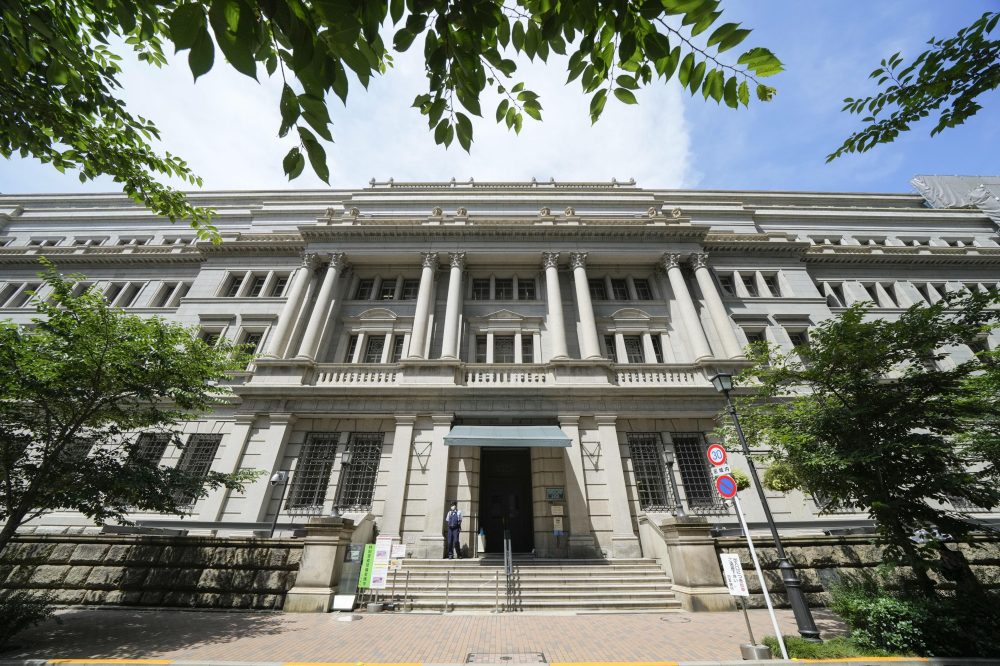
TOKYO — Japan’s central bank took a significant step Tuesday, lifting its benchmark interest rate to 1% — a level not seen in roughly 30 years — as the country grapples with a weakening currency and climbing prices.
The Bank of Japan increased its uncollateralized overnight rate by a quarter of a percentage point from its previous level of 0.75%, marking the latest move in the bank’s effort to bring monetary policy back to more normal territory.
For decades, Japan kept interest rates at or near zero — and even below zero at times — in an attempt to encourage borrowing and spending and fight off deflation that had weighed on the economy. The central bank has been gradually stepping away from that approach in recent months.
A major driver of the current inflation is the war in Iran, which has caused oil prices to surge. That has hit Japan especially hard because the country imports nearly all of its oil and natural gas.
The prolonged period of low interest rates also put downward pressure on the Japanese yen, which has slid to around 160 yen per U.S. dollar in recent months.
Notably absent from Tuesday’s policy board meeting was Bank of Japan Governor Kazuo Ueda, who has been hospitalized recently. Deputy Governor Shinichi Uchida was expected to represent the central bank at a news conference scheduled for later in the day.
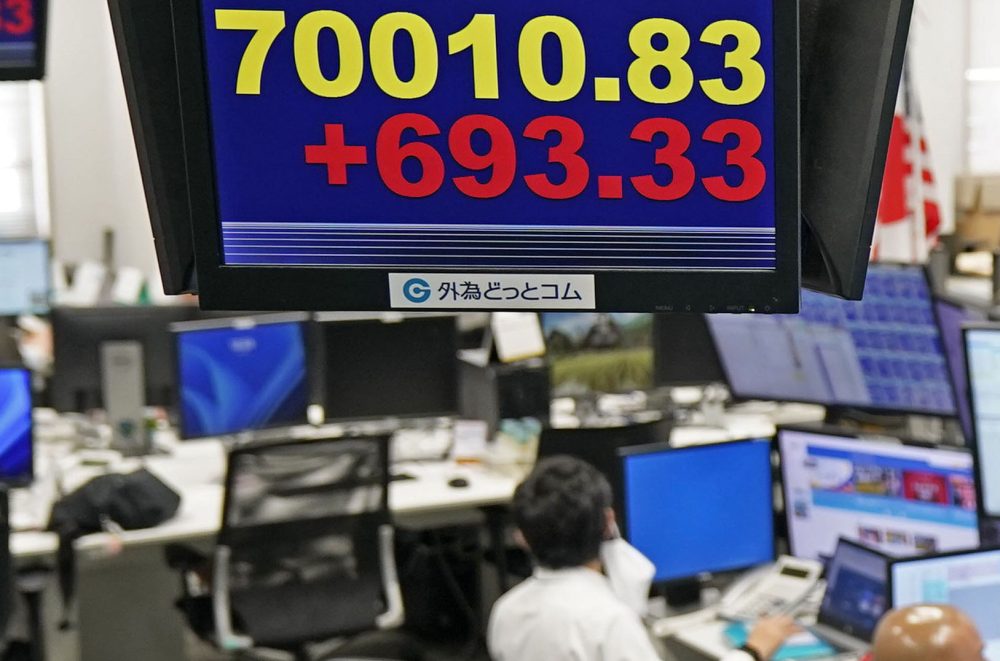
Financial markets were already reacting ahead of the announcement. Tokyo’s Nikkei 225 index briefly climbed above 70,000 early Tuesday before pulling back slightly from those gains.
A 6.7 magnitude earthquake struck Indonesia’s Sulawesi island on Tuesday, triggering intense shaking that lasted more than a minute and was followed by a series of strong aftershocks.
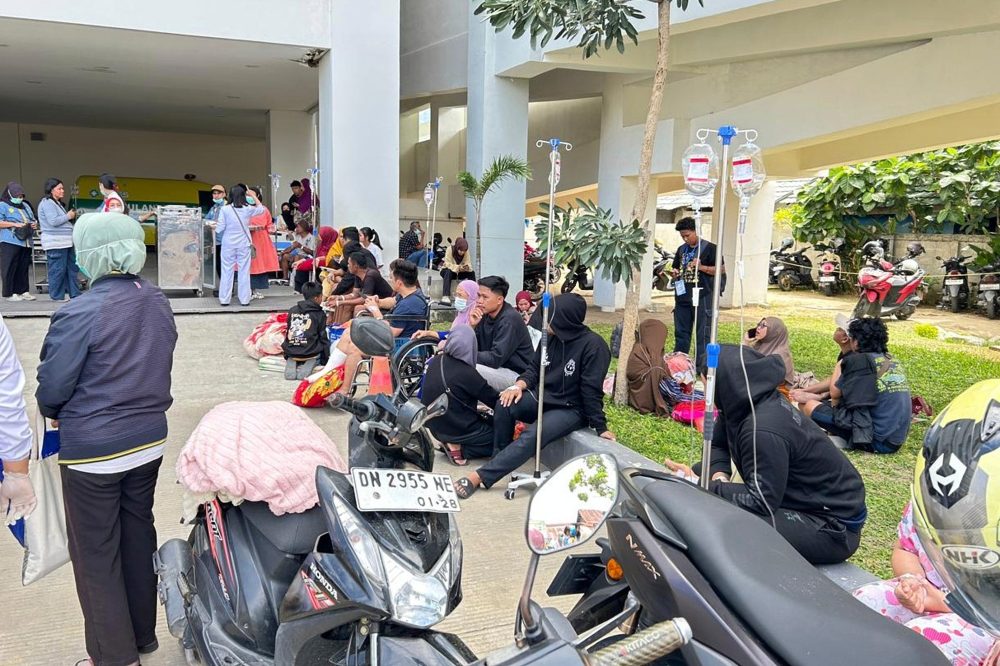
The tremor was felt heavily in Palu, a city of roughly 400,000 residents that serves as the capital of Central Sulawesi province. Damage was reported in scattered locations, and several hospitals moved patients — some still connected to IV drips — outdoors as a precautionary measure. No information on injuries or deaths was immediately released.
According to the U.S. Geological Survey, the earthquake’s epicenter was located 43 kilometers (27 miles) east-southeast of Palu at a depth of approximately 10 kilometers (6 miles). The most powerful aftershock registered a magnitude of 5.2. Officials determined there was no risk of a tsunami.
Indonesia sits atop multiple seismic fault lines, making earthquakes and volcanic activity a routine part of life across the archipelago.
For many residents of Sulawesi, Tuesday’s quake stirred haunting memories of a magnitude 7.5 earthquake that tore through Palu in 2018. That disaster triggered a tsunami with waves reaching 3 meters (10 feet) high and caused a rare geological phenomenon known as liquefaction, where the ground essentially collapses inward on itself. The death toll from that event surpassed 4,000 people, with entire neighborhoods swallowed by the sinking earth.
Sulawesi has also experienced other deadly seismic events in recent years. In January 2021, a magnitude 6.2 earthquake near the city of Mamuju killed at least 100 people, leaving thousands sleeping outside for days out of fear that more aftershocks could follow.
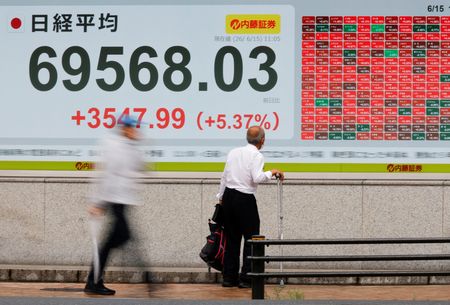
TOKYO (AP) — Japanese stocks briefly crossed a historic milestone Tuesday as the Nikkei 225 surpassed 70,000 for the first time ever, before retreating from those highs following an interest rate increase by the Bank of Japan. The central bank lifted its key rate to 1%, marking the highest benchmark level seen in Japan in roughly 30 years.
The quarter-point increase trimmed some of the early enthusiasm in the market. By early afternoon, the Nikkei 225 had settled to a gain of 0.6%, sitting at 69,713.05.
Elsewhere in Asia, South Korea’s Kospi continued its record-breaking run, climbing 2.1% to 8,721.64. China’s Shanghai Composite edged up less than 0.1% to 4,100.53. Australia’s S&P/ASX 200 dipped 0.3% to 8,892.10, and Hong Kong’s Hang Seng fell 1.3% to 24,533.35. Taiwan’s Taiex rose 0.6%, while India’s Sensex added 0.5%.
The broader positive mood in markets followed a strong Monday session on Wall Street, where stocks surged globally after the United States and Iran reached a tentative agreement aimed at restoring the flow of crude oil. The S&P 500 jumped 1.7%, the Dow Jones Industrial Average climbed 0.9% to a record high, and the Nasdaq composite soared 3.1%.
Oil prices dropped sharply on expectations that the deal could lead to the reopening of the Strait of Hormuz, a critical waterway through which much of Asia receives its oil. Brent crude fell 4.8%. However, some analysts cautioned that significant uncertainties remain. Negotiations between the two countries are expected to continue over the next 60 days, and even after the Strait of Hormuz reopens as anticipated on Friday, energy markets could take months to return to full capacity.
Oil prices had already been declining in recent weeks on hopes for a ceasefire extension in the ongoing war, dropping from levels above $100 per barrel. Prior to the war, oil had been trading around $70 a barrel.
As of early Tuesday, U.S. benchmark crude was down 9 cents at $80.66 a barrel, while Brent crude, the international standard, fell 24 cents to $82.93 a barrel.
On Monday, stocks tied to the artificial intelligence sector posted impressive gains. Micron Technology surged 10.8% and Advanced Micro Devices climbed 7%. Nvidia rose 3.5%, providing the single biggest lift to the S&P 500 due to its status as Wall Street’s most valuable company, giving it more influence over the index than any other stock. SpaceX, the rocket company owned by Elon Musk that also holds the AI firm xAI, jumped 19.6% in its second day of trading on public markets.
In the bond market, Treasury yields eased slightly as investors hoped lower oil prices would reduce pressure on central banks to raise rates further. The yield on the 10-year Treasury note slipped to 4.47% from 4.48% at the close on Friday.
In currency markets early Tuesday, the U.S. dollar was nearly flat against the Japanese yen at 160.33. The euro traded at $1.1580, a slight decline from $1.1592.
EVIAN-LES-BAINS, France — A group of U.S. allies is pushing for a naval mission in the Strait of Hormuz that would clear underwater mines and potentially provide military escorts for commercial ships, aiming to restore confidence among shipping crews and insurers that the critical waterway is safe to navigate once again.
France and Britain have spent months developing the proposal. French President Emmanuel Macron first raised the concept back in March, during the height of the conflict, suggesting that warships could escort tankers and cargo ships through the strategically vital chokepoint once hostilities wound down.
At the Group of Seven summit, U.S. President Donald Trump told Macron he doesn’t believe there is much need for outside assistance, saying the strait is “going to be open” as a result of the tentative agreement reached with Iran.
“But I don’t think it’s a bad idea to have a ship or two up here from a few countries. You’d be a great country to do it,” Trump told the French leader.
In a joint statement welcoming the framework agreement that would extend the U.S.-Iran tentative ceasefire and lead to the reopening of the strait, the allied nations declared they “are committed to playing our part” to urgently reopen the waterway “with unconditional and unrestricted freedom of navigation.”
That statement came from France, the United Kingdom, Germany, Japan, and Italy, with Canada joining later — all fellow members of the G7 alongside the United States.
The allies proposed “a strictly defensive and independent mission to reassure commercial shipping and conduct mine clearance operations.”
France’s nuclear-powered aircraft carrier, the Charles de Gaulle, is already positioned in the area. Macron sent it first to the eastern Mediterranean in early March before directing it through the Suez Canal and into the Arabian Sea.
Macron said other nations already in the region that could quickly contribute include the Netherlands, Italy, and the United Kingdom.
The French leader told Trump that French fighter jets could begin flying observation missions over the waterway as early as Tuesday, with frigates following “within 48 hours” and the aircraft carrier arriving “within two to three days.”
“Of course, all this supposes that it is desired and requested,” Macron said. “Perhaps it will not be wanted and perhaps it will not be necessary. But in any case, it reflects our willingness to help.”
Mine-clearing vessels would work to eliminate underwater hazards that pose serious dangers to shipping traffic. These mines can be rocket-propelled, cable-anchored, or rest on the ocean floor and detonate in response to sound, movement, or light.
Trump confirmed that mines have already been found and that the search for additional ones is ongoing, but said the strait “is already partially opened.”
Britain’s Royal Navy has been highlighting the specialized capabilities it could bring to the operation, recently inviting journalists aboard one of its vessels, the RFA Lyme Bay, as it waited near Gibraltar to be called into action.
Naval forces from France, the United States, Britain, and other countries already have firsthand experience protecting civilian ships under fire in the region, having previously defended cargo vessels from attacks in the Red Sea launched by Iran-backed Houthi rebels based in Yemen.
French frigates deployed machine guns, cannons, and advanced air-defense missile systems to repel those Houthi assaults. The French frigate Alsace shot down three ballistic missiles in the Red Sea in 2024 while guarding a container ship. The vessel’s commander at the time, Capt. Jérôme Henry, told the AP that enduring those potentially deadly attacks was both nerve-wracking and exhausting. U.S. Navy ships and sailors also bore significant costs during those sea battles.
Should the mission be deployed in the Strait of Hormuz, naval crews would hope for a calmer environment if the ceasefire holds. However, with Iran still believed to possess substantial stockpiles of missiles, drones, and other weapons, warships’ defensive systems would be ready to respond if the ceasefire collapses.
“Once there is a ceasefire, the need for a naval mission is significantly reduced,” said Max Bergmann, an analyst at the Center for Strategic and International Studies, a Washington, D.C.-based think tank.
“A U.K.-French naval presence will no doubt have some security benefits. It might raise the stakes for Iran to rekindle the war; it demonstrates European commitment to Gulf states; and it might reassure shipping and insurance companies,” Bergmann said. “But we should not overstate its utility.”
Planning for the joint French-British mission has drawn in nations from as far away as Australia, South Korea, Japan, Bahrain, Qatar, Canada, and more than a dozen European countries. A meeting of defense ministers and other officials convened last month by France and Britain brought together representatives from 38 nations in total.
NEW YORK — A tentative agreement to end the Iran war has people wondering how soon they’ll see lower prices for gasoline, groceries, airline tickets, and other goods that became more expensive during the conflict. Economists and industry analysts say don’t hold your breath.
Even as oil begins moving again from the Middle East, it could be a significant amount of time before shoppers notice any difference at the fuel pump, the supermarket, or anywhere else they spend their money, according to experts who follow these markets closely.
Combat over the Strait of Hormuz threw a wrench into the supply of both crude oil and refined fuel, as well as the broader supply chains for fertilizer, food, and even shoes. Businesses are bracing for elevated costs to stick around — and that means their customers may have to as well.
“It is not clear, despite three months of war, that anything has been achieved that makes the American consumer better off,” said Brett House, an economist who teaches at Columbia Business School. “In fact, by almost any measure, not just the American consumer, but the world, is worse off as a result of this attack.”
If the agreement between the U.S. and Iran holds, here is how experts see the war’s impact fading — or not — in the coming weeks:
Following news of the tentative deal, oil prices dropped Monday to roughly $80 per barrel for U.S. benchmark crude. That’s compared to $67 per barrel before hostilities began and a peak of more than $120 per barrel during the height of the conflict.
Refineries typically purchase crude oil a month or more ahead of time, meaning even after oil prices decline, they won’t immediately be working with cheaper raw materials.
“The tendency of gasoline prices to fall slowly is partly because the raw material takes weeks to work through the system until it’s delivered to consumers,” said Michael Lynch, a distinguished fellow at the nonpartisan Energy Policy Research Foundation.
In regions that don’t have enough refining capacity to meet local demand — such as the West Coast of the United States — gas prices will be slower to come down, according to Mark Barteau, a professor of chemical engineering and chemistry at Texas A&M University.
In parts of Asia and Africa that depend heavily on Middle Eastern oil, the supply disruption led to school and government office closures and directives for people to work from home, according to the International Energy Agency.
“The bottom line is that getting back to ‘normal’ will be a lengthy process involving many parties and countries,” Barteau said. “Getting an agreement between the U.S. and Iran to open the strait is just the beginning.”
Travel industry experts have spent months cautioning that even a war’s end wouldn’t mean immediate drops in airfare. Airlines tend to purchase jet fuel well in advance, make scheduling changes gradually, and set ticket prices largely based on passenger demand — all of which means it could take weeks or months before cheaper fuel costs show up in what travelers pay.
“I think it’s unlikely that we’re going to see a retreat or reduction in the cost of flying at any point this summer,” said Columbia’s House.
Fuel surcharges that some international airlines added during the conflict may be among the first things passengers see removed, according to Gordon Ho, a professor at the University of Southern California’s business school.
“Consumers are going to say, ‘Wait a minute, why are you still charging me a fuel surcharge?’” Ho said.
Reopening the strait is not expected to bring fast relief to grocery shoppers either, according to David Ortega, a professor of food economics and policy at Michigan State University.
Fuel makes up roughly 15% to 30% of the total cost of food, according to the Independent Grocers Alliance, which represents 7,500 supermarkets around the world.
But energy shocks like the one triggered by the Iran war can take months to ripple through the food supply chain and push grocery prices higher. And once prices climb, they tend to be slow to fall back down — particularly when the future remains uncertain, Ortega noted.
“We’re likely still looking at inflationary pressure on food in the coming months,” Ortega said. “There’s still a good deal of uncertainty about how the reopening will unfold, and it will take time for fuel, diesel and retail fertilizer prices to come back down.”
Rabobank, headquartered in the Netherlands, projected that war-related food price inflation in Europe would peak sometime next year. In the United States, grocery prices are expected to climb 3.2% this year, compared to a historical average of 2.6%, according to the U.S. Department of Agriculture.
Reopening the Strait of Hormuz would also bring welcome news to farmers worldwide. Before the war, roughly 30% of the world’s fertilizer supply passed through that waterway. Prices spiked sharply when those shipments were cut off, and it will likely take a long time for deliveries to return to pre-war levels.
The fertilizer shortage hitting farmers right now could have even deeper consequences down the road. Many growers around the world are entering planting seasons without adequate fertilizer or are paying extremely high prices for both fertilizer and fuel needed to grow and move their crops. The United Nations’ World Food Program anticipates this will have a “devastating impact” on crop yields — and, in turn, on food prices and availability — for months to come.
U.S. shoe retailers were encouraged by falling gasoline prices, hoping that would leave Americans with more cash for back-to-school purchases, said Andy Polk, senior vice president of the Footwear Distributors and Retailers of America trade group.
However, shoe companies expect their own costs to remain elevated for the foreseeable future, Polk said. Member companies typically carry two to three months of finished inventory, but their next rounds of orders may come with suppliers charging more for materials. Polk said he expects shipping costs to stay higher through the rest of 2026 and into 2027.
U.S. tariffs imposed last year have made it harder for shoe retailers to absorb those higher costs or pass them along to shoppers, Polk noted. In May, footwear prices were 5.2% higher than they were during the same month a year ago, according to government data.
Judah Levine, head of research at the freight booking platform Freightos, said the Strait of Hormuz closure has affected roughly 2% to 3% of total global container ship traffic, but the broader impact of higher oil prices and supply disruptions has been felt across the entire shipping industry.
Josh Steinitz, chief strategy officer of the business logistics platform ShipStation Global, said consumers may notice higher shipping costs and more out-of-stock products online through the end of the year.
“I think fuel surcharges, which then flow into shipping costs, which then get passed along to consumers, are still going to be with us for quite sometime from many of the major carriers,” Steinitz said.
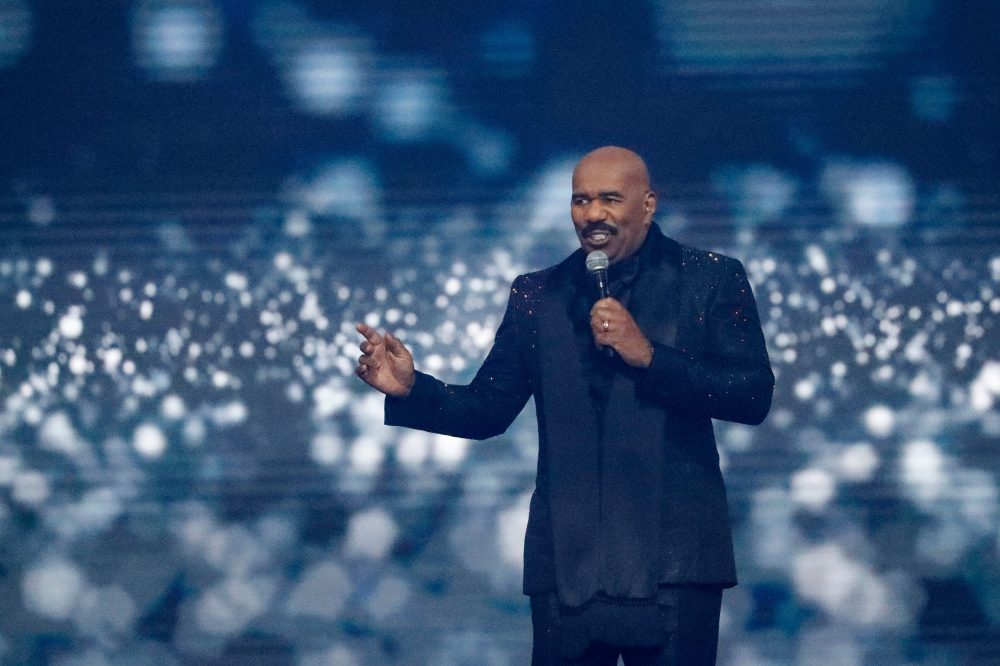
Steve Harvey says the decades he has spent as an entertainer, motivational speaker, and author are blessings from God — and those blessings come with strings attached.
“The more God trusts you, the more he will bless you, but he has to trust you with what he’s going to give,” Harvey said to The Associated Press following a recent appearance at the Social Innovation Summit in Atlanta. “And a part of what he is going to give to you is going to require that you take a portion of it and return the favor.”
Zeev Klein, CEO of Landmark Ventures and founder and curator of the Social Innovation Summit, praised Harvey’s message as especially meaningful given the many pressing challenges society faces today.
“Steve has an extraordinary ability to meet the moment with honesty, empathy, and clarity,” Klein said. “He doesn’t just speak to an audience, he connects people in a way that moves conversations forward.”
Harvey, best known as the longtime host of “Family Feud” and a star of many movies and television programs, takes charitable giving seriously — particularly through The Steve & Marjorie Harvey Foundation, which he co-founded with his wife. He has also made a point of passing that commitment on to his children.
Harvey says his philosophy on giving was shaped by his mother, who taught him that receiving blessings means becoming a blessing to others. He emphasized that when giving to someone in need, it is not the giver’s place to judge how the recipient uses the help.
“You have to give to people without expecting anything in return. It’s your job,” Harvey said. “When you give to somebody you don’t have the right to make the determination what they need it for… If you do it with the intent to help, the reward is given back to you.”
Harvey also spoke about the divide between those who have experienced poverty and those who have not, arguing that a lack of understanding fuels many of today’s social problems.
“People who don’t know what it is like to be without, they come from a different perspective,” he said. “They don’t know what it is to grovel… But when you don’t listen to them, you don’t want to hear their story, then you keep acting as though you’ve been rich the whole time. That’s the problem we have today.”
When it comes to his own children, Harvey said he made sure they grew up with comfort and opportunity — but also with humility. Each of his children had their own room, bathroom, desk, and computer. However, he made certain they understood they had not earned those privileges on their own.
“You don’t have the right to think you are better than anybody else. You just hit the jackpot, I’m your daddy,” Harvey recalled telling them. He also shared a lesson he passed on to all his children: “Justice is when you get what you deserve. Mercy is when you don’t get what you deserve. But grace is when you get what you don’t deserve. My children were born into grace.”
Harvey also reflected on changes he has noticed over the years in the boys who attend his youth camp. He said the messaging has had to shift because today’s campers are different from those in earlier years.
“It’s a softer boy that’s being raised now,” Harvey said. “We used to go right into the tough stuff. Now we gotta ease them off the bus.” Despite the adjustments, Harvey said the core lessons remain intact. “For the five days I got them, we still show them how life really works. You don’t get participation trophies in life.”
WASHINGTON — For eight years, the United States has been fighting an economic battle with China, imposing heavy tariffs on Chinese goods entering American ports. But those efforts have done little to slow China’s manufacturing machine.
The world’s second-largest economy is actually shipping out more products than ever before — it has simply shifted where those goods are going, steering them away from the U.S. tariff barrier and toward more accessible markets in Europe and parts of Asia.
That redirection of Chinese trade is raising fears of a repeat of what economists call the “China Shock” — the wave of factory closures that eliminated hundreds of thousands of manufacturing jobs across the American heartland in the 2000s. That economic disruption is widely credited with fueling the political unrest that helped put Donald Trump in the White House on two separate occasions. Now, analysts worry Europe could be next.
Even with U.S. sanctions in place, China posted a record global trade surplus last year — a staggering $1.2 trillion.
French President Emmanuel Macron sounded the alarm earlier this year, saying Chinese exports are “literally killing a large part of the European industry” and acknowledging that Europe was “slow to see that.”
European leaders are no longer looking the other way. China’s trade practices are expected to be front and center this week when leaders of the G7 wealthy democracies convene in Évian-les-Bains, France. French officials said last week they are hoping the summit produces a concrete strategy to confront the China problem.
One option on the table is for the European Union and other nations to erect their own higher tariff barriers against Chinese imports. Right now, the EU applies relatively modest tariffs on Chinese goods under World Trade Organization guidelines, though it does impose steeper duties on specific products — up to 35% on electric vehicles, for instance.
“China’s export surge, unless its leaders rein it in, will provoke a protectionist wave against Chinese imports worldwide,” said Maurice Obstfeld, a senior fellow at the Peterson Institute for International Economics and former chief economist at the International Monetary Fund. “All the more so if the current disruptions around the Iran war persist and cause a sharper global slowdown.”
An economist at HSBC, Taylor Wang, cautioned this month that a trade dispute between China and the EU could seriously hurt Chinese exports, noting that Europe represents a major portion of China’s overseas sales of electric vehicles, solar panels, and lithium-ion batteries.
European leaders are also pushing Trump to stop levying punishing tariffs on U.S. allies like the EU and Canada, and instead join forces with them to push back against China.
The original China Shock began around 2001, when China joined the World Trade Organization and gained reduced-tariff entry into the markets of the United States and Europe. American factories were overwhelmed by lower-cost Chinese textiles, furniture, electronics, and other manufactured goods.
Economists David Autor of the Massachusetts Institute of Technology, David Dorn of the University of Zurich, and Gordon Hanson, now at Harvard, determined that Chinese competition resulted in the loss of 2.4 million American jobs.
What’s being called China Shock 2.0 is unfolding in a different way. The first time around, China was still establishing itself as a major global trading power. Today, it dominates world trade and manufacturing outright.
China held just 4% of global goods exports back in 2000. That figure has jumped to 16% — the highest of any nation on Earth — making Beijing’s trade decisions far more impactful on the world economy.
China has also moved upmarket, now exporting sophisticated products like electric vehicles, batteries, advanced machinery, software, and scientific instruments — putting it in direct competition with the world’s wealthiest countries. Chinese exports now compete with nearly 58% of goods exported by the 21 European nations that use the euro, up from 46% in 2000, according to a recent paper by researchers at the Federal Reserve and the Federal Reserve Bank of St. Louis.
“The second China shock is characterized by its companies running the board on manufacturing exports — from low-tech, low-wage to high-tech high value-added industries,” said economist Eswar Prasad of Cornell University. “This is directly hitting advanced economies where it now hurts the most” — in high-tech sectors like electric vehicles and advanced robotics that many countries “had been counting on for a manufacturing revival.”
Germany has felt the impact severely. German companies once thrived by selling to Chinese consumers, but the tables have turned: China now exports more to Germany than it imports. German manufacturers are struggling to keep pace with Chinese competitors across key sectors — industrial machinery, construction equipment, automobiles, and chemicals — all pillars of Germany’s export-driven economy.
Largely due to Chinese competition, Germany’s economy has stalled, contracting in both 2023 and 2024, and managing only 0.2% growth last year.
The United States finds itself in a less vulnerable position than it was in the early 2000s. Trump’s tariffs have blocked a significant volume of Chinese goods. U.S. Commerce Department data shows Chinese exports to the United States dropped 37% from January through April this year compared to the same period in 2025.
America also benefits from producing its own energy — unlike the EU and Japan — and is experiencing a surge in productivity and investment in artificial intelligence.
Despite reduced access to the American market, China is still benefiting from strong global demand for its affordable electric vehicles and from AI-driven investment that fuels sales of Chinese electrical components and machinery used in data centers.
Chinese exports to the 27-nation EU climbed 16.4% from January through May compared to the previous year. For France specifically, that translated into a trade deficit with China — measured by Beijing’s customs figures — rising to $5.3 billion from $3.3 billion a year earlier.
Economists point to Chinese government policies that push factories to overproduce while discouraging consumer spending at home. State-run banks, for example, offer low interest rates to savers while providing cheap loans to government-backed manufacturers. A weak social safety net also pressures Chinese families to save rather than spend, as they brace for retirement and healthcare costs.
Obstfeld explained that these policies are partly designed to keep factories running and workers employed. “The result is an excess domestic supply of manufactured products, which must be exported abroad,” he said. The flood of low-priced Chinese goods on world markets then threatens to put European and other manufacturers out of business.
Beijing has also pushed companies to compete fiercely against one another domestically. “The rest of the world is ill prepared to compete with these apex predators,” Autor and Hanson wrote in a New York Times column last year.
China has repeatedly pledged to cut back on overproduction and stimulate domestic consumer spending — a goal the U.S. and other nations have urged for decades. Such a shift would reduce China’s dependence on exports and improve living standards for its own citizens, while also opening up a growing market for American and European goods. “The leadership has long said this is a goal,” Obstfeld noted, “but they have been slow to act as if they mean it.”
“Beijing has been relying on the rest of the world to address its overcapacity problem,” said former U.S. trade negotiator Wendy Cutler, now senior vice president at the Asia Society Policy Institute. “However, this unsustainable situation may soon change if the EU and others take steps to halt Chinese imports, following the U.S. lead.”
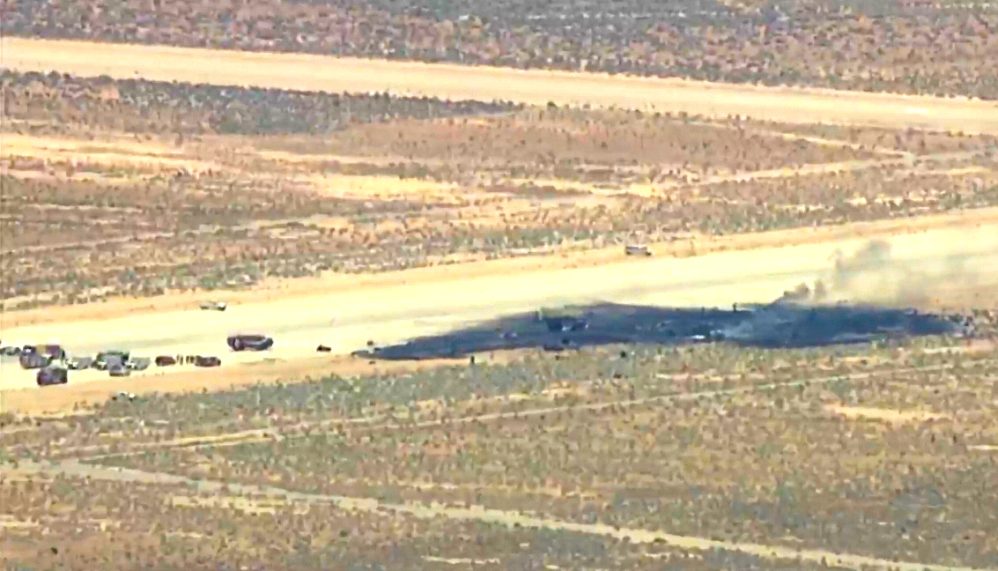
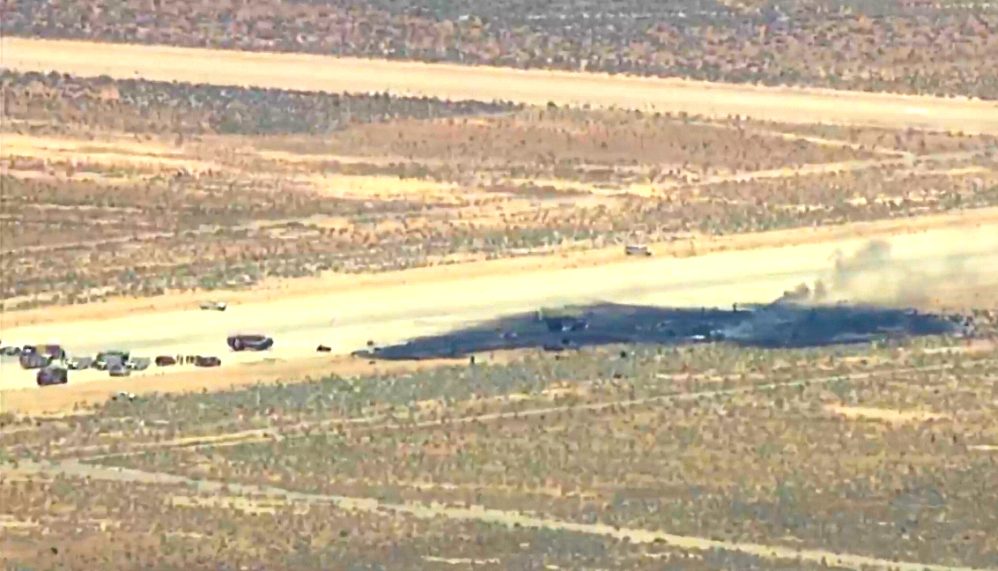
Edwards Air Force Base, located in Southern California’s Mojave Desert roughly 100 miles north of Los Angeles, has long been one of the most storied flight research facilities in the United States. But on Monday, tragedy struck when a B-52 bomber went down shortly after takeoff and burst into flames, claiming the lives of all eight people aboard.
The base has a rich history of aviation firsts dating back to the early 1940s. In 1942, test pilot Bob Stanley flew the first jet-powered aircraft in U.S. history, launching from the base’s dry lake bed — a naturally expansive stretch of flat terrain that proved critical for early turbojet engines that were prone to “flaming out.”
Five years later, in 1947, Air Force test pilot Chuck Yeager made global aviation history by pushing an orange, bullet-shaped Bell X-1 rocket plane to Mach 1.05, officially breaking the sound barrier. That milestone was kept under wraps for nearly a year — during which time the world believed the British had achieved the feat first.
Then in 1981, astronauts John Young and Robert Crippen landed on that same dry lake bed, completing the first flight of an orbiting space vehicle that launched on rocket power and returned to Earth gliding on wings like a conventional aircraft.
Today, the base is described as an “irreplaceable national asset” and continues to serve as a central hub for Air Force aircraft testing and development. All Air Force aircraft undergo testing there, along with select Navy and Army aircraft. The base itself has stated that “arguably, more major milestones in flight have occurred at this base than anywhere else in the world.”
Operations at the base are overseen by the 412th Test Wing, which handles developmental testing of Air Force weapons systems, software, and components — both before they are purchased by the military and throughout their operational lifespan.
In 2025, Boeing delivered a B-52 to Edwards equipped with a new, modernized radar system. According to an Air Force news release from that year, a test team was scheduled to conduct ground and flight tests on the aircraft through 2026 to inform a production decision. The updated Active Electronically Scanned Array, or AESA, radar replaced the plane’s older, outdated system. It remains unclear whether that aircraft is the same one involved in Monday’s crash.
Military officials confirmed the B-52 went down during what was described as a routine test mission. Col. James Hayes, the deputy commander of the 412th Test Wing at Edwards, told reporters at a news conference that the aircraft was supporting the “radar modernization program” at the time of the crash.
Among those killed were both government contractors and uniformed military personnel. Aircraft manufacturer Boeing confirmed that two of its employees were on board.
The cause of the crash has not yet been determined, and an official investigation is currently underway.
Residents of Washington, DC are casting their votes Tuesday to choose party nominees for mayor and the district’s seat in Congress — an election happening at a time when the nation’s capital is experiencing dramatic shifts under President Donald Trump’s administration.
It’s a historic moment for the district: for the first time in a generation, DC voters are choosing both a new mayor and a new congressional delegate in the same election cycle. Because Washington is a heavily Democratic city, whoever wins the Democratic primary is broadly expected to win the general election this November.
The mayoral race is drawing the most attention. Current Mayor Muriel Bowser, first elected in 2014, chose not to run for a fourth term, leaving the door open for Democratic front-runners Janeese Lewis George and Kenyan McDuffie to compete for the city’s top job.
On the congressional side, longtime delegate Eleanor Holmes Norton is stepping down after serving 18 terms. The leading Democratic candidates to succeed her are council member Brooke Pinto and at-large council member Robert White Jr. On the Republican side, immigration attorney Denise Rosado is running without opposition.
Tuesday’s primary will also introduce rank-choice voting to DC elections for the first time. Election officials have cautioned that this new system could push back the announcement of final results by several days.
Running through every campaign is the complicated and increasingly tense relationship between Washington and the Trump administration. The district operates with limited self-governance, and the federal government holds considerable authority over local matters — including the ability to approve or reject the city’s budget and legislation passed by the DC Council.
That already constrained independence has been squeezed further under Trump. His administration launched a federal law enforcement surge in the city last summer and deployed the National Guard on an open-ended basis. Thousands of residents lost their jobs as a result of Trump’s federal workforce reduction efforts. The president has also been physically remaking the city, removing or renovating well-known landmarks and attaching his name or image to buildings.
Just last week, Trump raised the prospect of a federal takeover of Washington when asked how he might respond if Lewis George — a democratic socialist — were to win the mayor’s race.
Oklahoma voters cast ballots Tuesday in primary elections featuring open contests for both U.S. Senate and governor, giving President Donald Trump another opportunity to demonstrate his influence as a party kingmaker ahead of November’s midterm elections.
In the Senate race, Trump’s early endorsement of Republican U.S. Rep. Kevin Hern — who is seeking the seat formerly held by Homeland Security Secretary Markwayne Mullin — helped discourage other high-profile candidates from entering the race. Oklahoma has not sent a Democrat to the U.S. Senate since 1990.
A potentially bigger challenge to Trump’s clout may emerge in the wide-open race to replace outgoing Gov. Kevin Stitt. Trump endorsed former state Sen. Mike Mazzei last month, stepping into a primary that was already crowded with well-known Oklahoma Republicans, including Attorney General Gentner Drummond, former Oklahoma House Speaker Charles McCall, and Chip Keating, who previously served as the state’s public safety director.
With so many candidates in the field, political observers say an August runoff is likely unless one contender manages to capture more than half of all votes cast.
The two open seats created a political scramble in this solidly Republican state. Mullin departed the Senate to join Trump’s cabinet, taking over at the Department of Homeland Security to replace Kristi Noem, whom the president dismissed in March amid growing criticism of her leadership at that agency. Republican Alan Armstrong, an energy executive, was appointed to temporarily fill Mullin’s Senate seat, though state law bars him from running for a full term as an interim appointee.
Stitt, who has served as governor since 2019, is prohibited from seeking another term due to term limits — and Trump has made little secret of his desire to see Stitt move on. Earlier this year, while Stitt was leading the National Governors Association, a dispute arose over White House event invitations at the group’s annual meeting. The conflict prompted Trump to publicly attack Stitt on social media, labeling him a “RINO” — short for Republican in Name Only.
Voters in Alabama are casting ballots Tuesday in a Republican runoff to determine who will compete for the state’s open U.S. Senate seat in November’s general election.
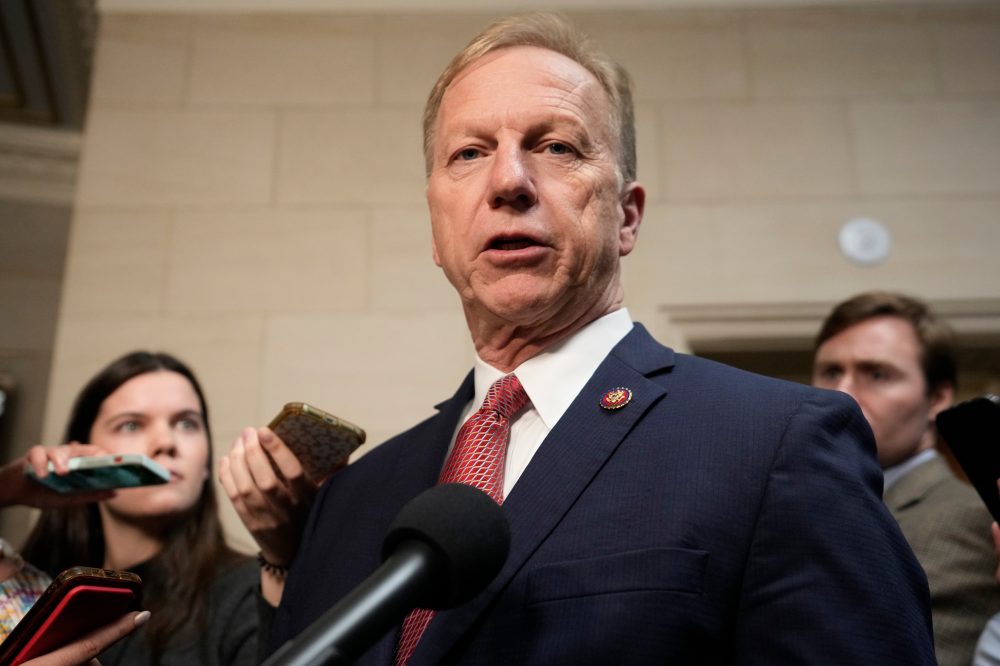
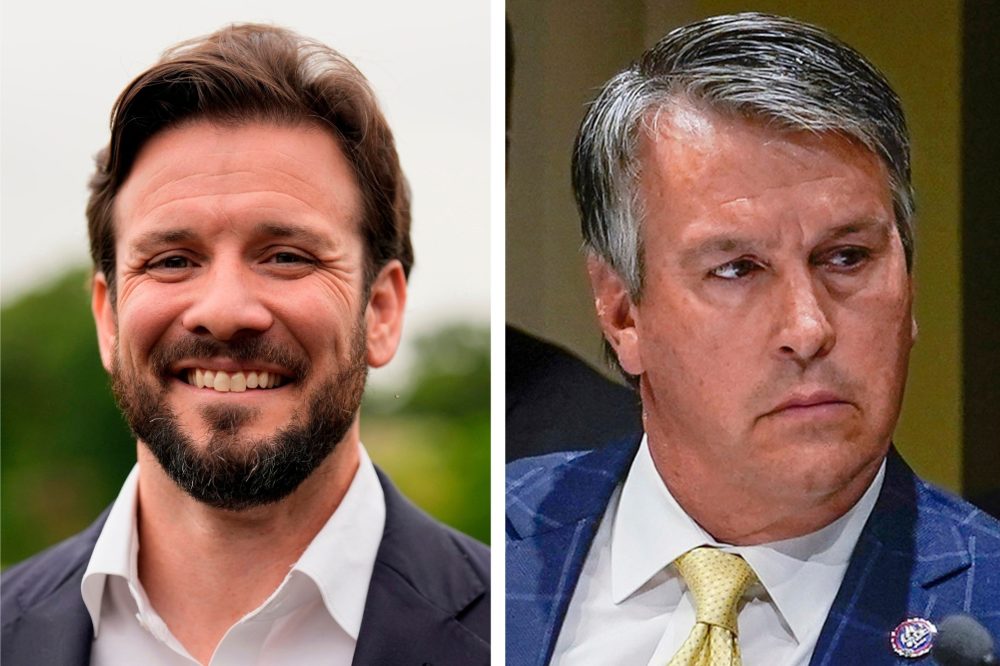
Three-term U.S. Representative Barry Moore is squaring off against former Navy SEAL Jared Hudson for the Republican nomination. The seat became available after Sen. Tommy Tuberville stepped down to pursue the governorship. Moore carries the backing of President Donald Trump, while Hudson is running as a Washington outsider.
Trump’s endorsed candidates have largely come out on top in Republican primaries throughout the year, though his pick for Iowa governor fell short earlier this month. The Alabama contest represents yet another measure of how much weight the president’s endorsement carries.
Moore, a member of the conservative House Freedom Caucus, finished ahead in the first round of voting back in May, capturing nearly 40% of the vote compared to Hudson’s 25%. Moore was an early supporter of Trump’s first presidential run, and Trump has since returned the favor.
“Barry Moore has my complete and total endorsement. He’s the best America First candidate you can imagine,” Trump said recently.
Hudson has positioned himself as the anti-establishment choice, criticizing Moore’s deep ties to Washington while vowing to serve as “a warrior for President Trump’s ‘America First’ agenda.”
“If you want the same thing over and over again, elect a career politician. If you want different results, somebody who can take your issues to Washington and not bring the stupidity of Washington back here to you, send a warrior to Washington,” Hudson said at a candidate forum in May.
Hudson earned his runoff spot by narrowly beating out Alabama Attorney General Steve Marshall in the initial primary.
Moore has leaned heavily on his voting record in Congress, pointing to Trump’s endorsement and a high score from a conservative group that grades lawmakers based on their votes. He argues that while many candidates claim to support Trump, his record speaks for itself.
“Look at my record, the most conservative member in the Alabama delegation, an ally of the president,” Moore said. “The president has endorsed me because he’s seen me in the fire. I never bow down.”
Hudson, for his part, has joked that he may not have a legislative scorecard, but he has racked up a strong record “against the Taliban in over 60 combat operations.”
On the Democratic side, attorney Everett Wess and business owner Dakarai Larriett are competing in their own runoff. Wess led the first primary round with 39% of the vote to Larriett’s 29%. Democrats believe that voter frustration over inflation and other issues could give them a foothold in a state where Republicans currently hold every statewide office.
Wess is the managing partner of The Wess Law Firm and has previously served as a municipal judge, city prosecutor, and public defender. His legal work focuses mainly on estate planning and criminal defense.
“Families throughout Alabama are struggling with inflation, housing costs, high gas bills, high utility bills and these everyday expenses,” Wess said during an online forum hosted by Birmingham Indivisible.
Larriett owns a pet care business and said he was driven to enter the race following a 2023 encounter with police in Michigan in which he claims he was wrongfully arrested.
“We can and we must nominate a fighter, a Democratic fighter, for the United States Senate, someone who represents our values,” Larriett said at the forum. He added that the party needs a candidate who “takes reproductive health seriously” and will “fight like hell” for voting rights.
Tuesday’s ballot also includes competitive runoffs for attorney general and lieutenant governor. Secretary of State Wes Allen and former Alabama Republican Party Chairman John Wahl are battling for the GOP lieutenant governor nomination, with the winner set to face Democrat Phillip Ensler in November.
In the attorney general’s race, former Alabama Supreme Court Justice Jay Mitchell faces Katherine Robertson, who currently serves as chief counsel to Attorney General Marshall. Mitchell has criticized Robertson over the attorney general office’s early work defending the conviction of a police officer charged with manslaughter in an on-duty shooting. Robertson has responded by labeling Mitchell a “woke lawyer.” The winner will face Democrat Jeff McLaughlin in November.
Additionally, Andrew Sneed and Candice Duvieilh are in a Democratic runoff for the 5th Congressional District nomination. The winner will face Republican Rep. Dale Strong, who was first elected in 2022.
Alabama is also holding special congressional primaries in August after the U.S. Supreme Court allowed the state to use a redrawn congressional map for the midterms. The new map could give Republicans a shot at reclaiming the 2nd Congressional District, currently held by Democratic Rep. Shomari Figures — a race that could factor into the broader national fight for control of the closely divided House.
Alabama is among several Southern states that redrew their congressional maps and eliminated districts represented by Black Democrats following a Supreme Court ruling that significantly weakened the Voting Rights Act.
Residents of a San Francisco Bay Area congressional district went to the polls Tuesday to decide who will take over the seat left vacant by Democratic Rep. Eric Swalwell, who stepped down from Congress after facing allegations of sexual assault.
The special primary election is being held for California’s 14th Congressional District, a heavily Democratic area covering East Bay communities including Fremont, Hayward, and Livermore. Swalwell routinely defeated Republican opponents by large margins during his time representing the district.
A candidate who earns more than 50% of Tuesday’s vote will win the seat outright and serve the rest of Swalwell’s term through January. If no one clears that threshold, the top two finishers — regardless of party — will meet in an August 18 runoff election.
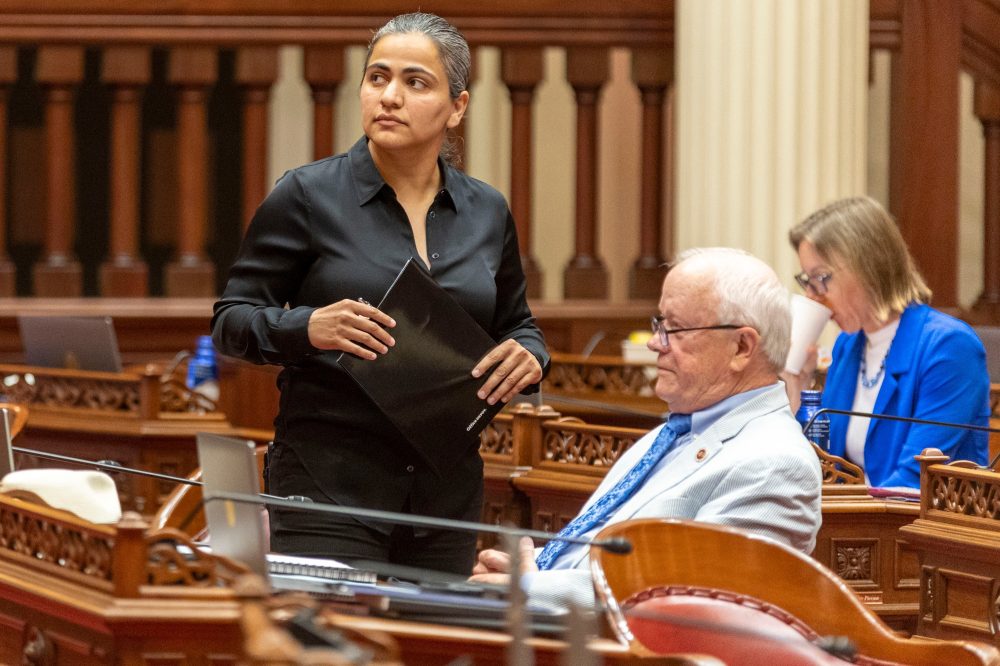
Eleven candidates appear on the ballot. Among the leading Democrats are Aisha Wahab, a state senator who built her campaign around lowering housing costs, and Melissa Hernandez, a Bay Area Rapid Transit board director and former mayor of the East Bay city of Dublin.
On the Republican side, the field includes Wendy Huang, a real estate investor, and Dena Maldonado, who operates a small flower business.
This special election is separate from a regular primary held June 2 for a full term beginning in January. Many of the same candidates appeared on both ballots. Wahab and Hernandez finished as the top two vote-getters in that June contest and are already set to face each other in the November general election.
For Wahab or Hernandez, a victory in Tuesday’s special election would offer a chance to serve in the seat for several months before the full-term race — potentially boosting their name recognition and giving them governing experience to highlight on the campaign trail.
Also in the running is Rakhi Israni Singh, an attorney and businesswoman who ran in the June statewide primary but did not finish in the top two. She is seeking the opportunity to fill the remainder of Swalwell’s term through Tuesday’s ballot.
Swalwell served seven terms in Congress before announcing his resignation in April. He also withdrew from California’s governor’s race at the same time. His departure came after the San Francisco Chronicle published a report alleging he sexually assaulted a woman on two occasions, including during a period when she was employed by him. CNN later reported that additional women accused him of sending inappropriate messages and explicit photos.
Swalwell has consistently denied all of the allegations against him, but stated that staying in Congress would be unfair to the people he represented.
WASHINGTON — President Trump’s endorsement carries significant weight in Republican primary races, but Tuesday’s elections across four states and the District of Columbia will put that influence to the test in some unusual ways.
In Georgia, a health care businessman named Rick Jackson has poured more than $100 million of his own money into a gubernatorial runoff campaign against Trump-backed Lt. Gov. Burt Jones. Trump endorsed Jones over a year ago and reaffirmed that support on June 8, praising Jones’ “Courage and Wisdom” in a social media post. It’s a rare situation where a massive financial advantage is being pitted directly against a presidential endorsement.
Jones came out ahead in the May 19 primary with 38% of the vote, while Jackson trailed at 33%. The runoff winner will lead one of the country’s most closely watched battleground states, and the outcome will depend on voters who didn’t support either man the first time around.
In Oklahoma, Trump jumped into a crowded Republican gubernatorial primary just two weeks ago, throwing his support behind former state Sen. Mike Mazzei. With no clear front-runner in the race, it will head to a runoff if no candidate clears a majority. Trump’s endorsement record has not been perfect — earlier this month, his preferred candidate for Iowa governor, U.S. Rep. Randy Feenstra, lost to Zach Lahn in that state’s primary.
Alabama is hosting a Republican Senate primary runoff that raises a different kind of question: what happens when Trump endorses a Washington insider? Trump is supporting U.S. Rep. Barry Moore, a three-term congressman who has vowed to be “a warrior for President Trump’s ‘America First’ agenda” in the Senate. Moore’s opponent is former Navy SEAL Jared Hudson, who is positioning himself as an anti-establishment outsider — using the same political energy that once fueled Trump’s own rise.
Since Alabama leans heavily Republican, the winner of that primary will be a strong favorite in November. The Democratic runoff features business owner Dakarai Larriett and attorney Everett Wess. The Senate seat is being vacated by Sen. Tommy Tuberville, who is now the Republican nominee for Alabama governor.
In Washington, D.C., the Democratic mayoral primary is drawing national attention. Candidate Janeese Lewis George, who describes herself as a democratic socialist, is one of the leading contenders. Her campaign has drawn comparisons to democratic socialist Zohran Mamdani’s upset win in the New York City mayoral race last year.
Trump weighed in on the D.C. race days before the primary, suggesting he might take control of the city if George wins, saying “we won’t put up with it.” George fired back, calling Trump’s comments “an attack on democracy itself.”
The president’s relationship with the nation’s capital has been a central campaign issue. Trump has deployed National Guard troops in the city’s streets and overseen significant cuts to the federal workforce, which makes up a large portion of D.C.’s economy. Some residents feel that current Mayor Muriel Bowser did not push back hard enough against the administration. George’s platform, which centers heavily on affordability, includes a pledge to “protect Home Rule” with “leaders that stand up and fight back, not shrink in the face of injustice.”
George and fellow Democrat Kenyan McDuffie, who has focused his campaign on public safety, are among seven candidates competing in D.C.’s first-ever mayoral election using ranked choice voting. Under that system, voters rank candidates by preference, and if no one receives more than 50% of first-choice votes, lower-ranked candidates are eliminated and those voters’ second choices are counted. Election officials have cautioned that the new system could push results back by several days.
The Georgia Secretary of State’s race is also on the ballot Tuesday, carrying its own historical weight. Six years ago, then-Secretary of State Brad Raffensperger refused to go along with Trump’s unsubstantiated claims of election fraud and rejected a request to “find 11,800 votes” to reverse Joe Biden’s victory in the state.
Now, with Raffensperger’s seat open for the first time since that confrontation, both Republicans in the runoff have embraced versions of Trump’s election fraud narrative. Candidate Vernon Jones — a former Democrat who switched parties and aligned with Trump — has stated he believes there were “irregularities” and “violations” in past elections and says he stands “with those who believe there was election fraud.” Three of his four main campaign platform points deal with election administration.
His runoff opponent, State Rep. Tim Fleming, has been more cautious, acknowledging “irregularities” in 2020 but insisting he’s “not running on conspiracy theories.” Nevertheless, four of the seven points on his campaign website address election management, including a pledge to “make it impossible for the Left to cheat in our elections.”
Election integrity concerns have also surfaced in California, where Trump made unsubstantiated claims that Democrats were manipulating results against a Republican gubernatorial candidate and a Republican candidate for Los Angeles mayor. Shortly after, the U.S. attorney’s office in Los Angeles — led by a Trump appointee named Bill Essayli — announced it was opening fraud investigations tied to those races.
California is also holding a special primary Tuesday to fill the congressional seat left vacant by Eric Swalwell, who resigned from the U.S. House in April after a woman accused him of sexually assaulting her on two occasions, alleging she was too intoxicated to consent both times. Swalwell, a Democrat, denied the accusations but stepped down from Congress and dropped his campaign for California governor.
If any candidate receives more than 50% of Tuesday’s vote, they will win the seat outright. Otherwise, the top two finishers will advance to a runoff on August 18. The Democratic candidates — who are favored in the heavily Democratic district, which covers several East Bay cities — include state Sen. Aisha Wahab and Bay Area Rapid Transit director Melissa Hernandez. Wahab is considered the more progressive of the two, targeting “corporate profiteering” and calling for expanded social safety nets, while Hernandez takes a more centrist approach, emphasizing local job creation and small business support. Both candidates are also running in the regular November general election for the seat, with the winner of that race taking office next year.
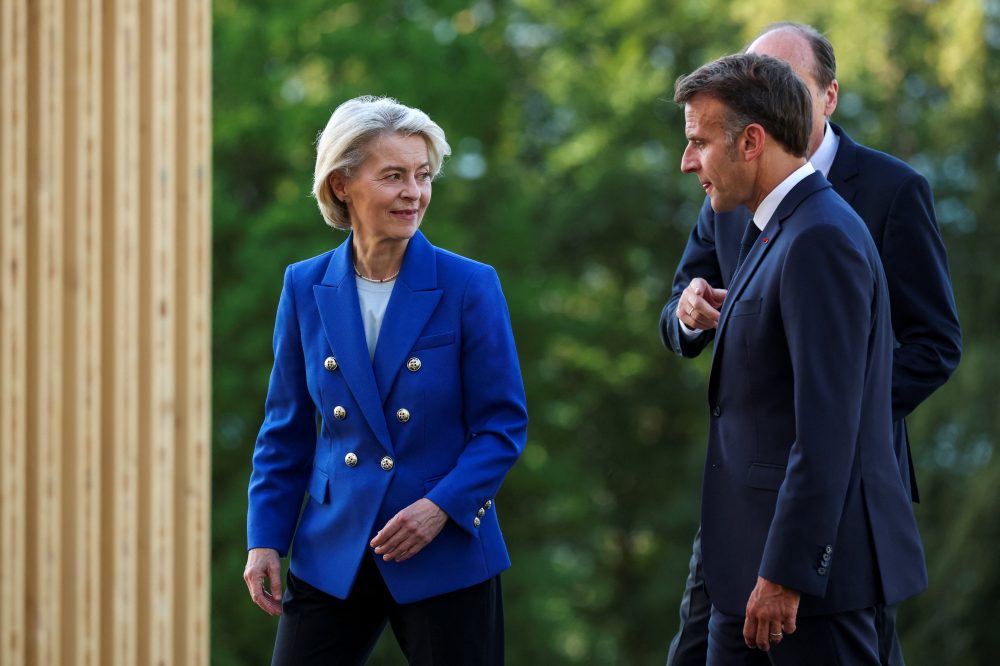
European leaders are preparing to challenge President Donald Trump at this week’s G7 summit in France, warning that a shallow interim agreement with Iran could allow Tehran to continue developing its nuclear and ballistic missile capabilities — while also calling on Trump to take a fresh look at his strategy for ending the war in Ukraine.
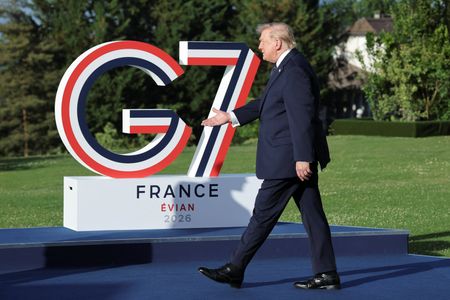
The summit, running from June 15 through 17 in Evian-les-Bains along the shores of Lake Geneva, has brought together the heads of government from France, Britain, Canada, Germany, Italy, Japan, and the United States, along with the European Union.
Trump touched down in France on Monday evening riding a wave of momentum after Washington and Tehran reached a preliminary agreement aimed at resolving the broader conflict, with a formal signing ceremony set for Friday.
“The Iran deal will bring a lot of success,” Trump remarked shortly after arriving in Evian-les-Bains.
PUSHING FOR A STRONGER NUCLEAR AGREEMENT
French President Emmanuel Macron stressed the need for what he called a “solid, serious agreement that is finalised.” He said a Tuesday lunchtime session would be devoted to the safe reopening of the Strait of Hormuz, including the possible launch of a Franco-British maritime mission and identifying energy supply routes that could bypass the waterway altogether. Trump, for his part, predicted the strait would be “completely open” by Friday.
Leaders from the United Arab Emirates, Qatar, and Egypt are also joining Tuesday’s discussions. Diplomats say those leaders are not expected to dig into the technical details of Iran’s nuclear program, but may lay out their broader expectations for the outcome.
The preliminary agreement is designed to open a 60-day window for complex follow-on negotiations covering issues such as what happens to Iran’s highly enriched uranium stockpile and the conditions under which sanctions could be lifted.
Still, European allies are worried that an inexperienced U.S. negotiating team might fall short of locking in a strong nuclear deal or fail to address Iran’s ballistic missile program in the next phase — potentially leading to a prolonged standoff.
France, Britain, and Germany — which first engaged Iran on nuclear issues back in 2003 and later partnered with then-President Barack Obama to craft the 2015 nuclear accord — are seeking a seat at the table for the upcoming negotiations after being largely pushed to the sidelines in recent months.
Trump dismissed the earlier agreement before heading into a one-on-one meeting with Macron, saying of his deal: “It’s not like the Obama document, that was a terrible document.”
EUROPE WANTS A RESET ON UKRAINE
European diplomats are also viewing the summit as a chance to persuade Trump that previous U.S. proposals for ending the fighting in Ukraine have tilted too far in Russia’s favor.
European nations want to signal their readiness to engage in peace talks with President Vladimir Putin, while simultaneously tightening sanctions on Russia and stepping up military aid to Ukraine — making clear that it is Moscow, not Kyiv, that is standing in the way of progress.
Trump said he believed Putin and Ukrainian President Volodymyr Zelenskiy were both “open to do something about the war.” Zelenskiy is scheduled to take part in the summit’s opening session, which is focused on “building peace in Ukraine,” and may also hold a separate conversation with Trump.
With negotiations stalled, Zelenskiy is pushing for a renewed push toward peace and a larger role for European nations in the process. He revealed Monday that he had offered to meet Putin at the G7 summit for direct talks to end the four-year conflict, but said Putin was not ready to engage.
European Commission President Ursula von der Leyen offered a pointed assessment of where things stand: “Ukraine is holding the front line and even partially regaining territory. Ukraine has developed the capability to strike strategic targets deep inside Russia. And Ukraine has become a world-leading producer of cutting-edge military equipment.”
She added: “On the other hand, Russia is feeling the strain and pressure of sanctions… Putin’s war economy has never been as weak.”
Zelenskiy has expressed concern that the conflict involving Iran has pulled U.S. attention away from Ukraine. Meanwhile, the situation on the battlefield has been shifting, with Ukrainian drones reaching deeper into Russian territory to disrupt supply lines and damage energy infrastructure.
A Kremlin foreign policy adviser said Putin believes that increased Ukrainian strikes on Russian targets will not change the overall military picture on the ground.
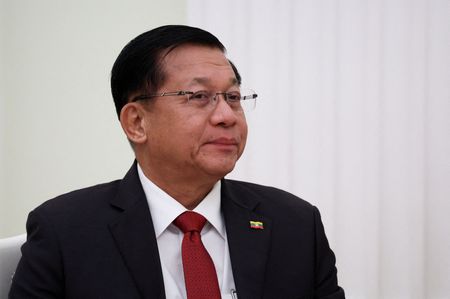
Myanmar President Min Aung Hlaing is receiving a significant diplomatic boost through a state visit to China, where he is expected to meet with Chinese President Xi Jinping. The five-day trip represents the highest level of diplomatic engagement and comes as the former military commander works to strengthen his authority over the conflict-ridden country following an election at the start of the year that drew widespread international condemnation.
The China visit follows a recent official trip to India, where Min Aung Hlaing met with Prime Minister Narendra Modi — though analysts noted that visit did not carry the full prestige of a formal state visit.
“An official state visit hosted by Xi Jinping is a visible signal that China is prepared to deal with Myanmar’s new administration as a full partner,” said Richard Horsey, the senior Myanmar adviser at Crisis Group. “India gave him a warm embrace on his recent visit, but not the full honours of an official state visit.”
While the diplomatic optics favor Min Aung Hlaing, analysts caution that Beijing’s priorities are firmly rooted in self-interest. China is Myanmar’s largest trading partner and top investor, with major Belt and Road Initiative projects in the country, including a cross-border oil and gas pipeline and a deep-sea port. Beijing also plays a key role as a military supplier and diplomatic ally for Myanmar’s armed forces, and has at times helped negotiate ceasefires along border regions controlled by ethnic armies with strong ties to China.
“China’s interests are not on federalism, but rare earths, infrastructure, mining, and securing the economic corridor to the Indian Ocean,” said David Mathieson, a Thailand-based independent analyst who closely follows Myanmar. “China also perceives the West in retreat from Myanmar and Beijing will assert a new suzerainty over the country.”
Myanmar has been engulfed in a brutal civil war since February 2021, when Min Aung Hlaing overthrew the elected government led by Aung San Suu Kyi. What began as protests against the military takeover evolved into a nationwide armed conflict, with the military fighting both newly formed pro-democracy groups and long-established ethnic armed organizations. The war has devastated the already impoverished Southeast Asian nation, claiming more than 93,000 lives and forcing more than 3.7 million people from their homes.
Despite the ongoing bloodshed, the military conducted a general election last December and January that blocked major opposition groups from participating. An army-backed party swept the vote, clearing the path for Min Aung Hlaing to assume the presidency.
The delegation traveling with Min Aung Hlaing to China includes the chief ministers of Kachin and Shan states — both of which share a border with China — along with Myanmar’s industry minister, according to state media reports. Kachin State, where fighting continues between the military and a major armed group, sits atop one of the world’s most significant heavy rare earth mining regions. Shan State maintains several key trade routes with China.
The presence of those ministers points to likely discussions around border commerce and the long-stalled Myitsone Dam, a $3.6 billion Chinese-backed project in Kachin State that was suspended in 2011, according to Aung Kyaw Soe, an independent analyst based in Thailand.
“In 2025, the military’s second-in-command, General Soe Win, personally began bringing up the subject of restarting Myitsone, so I think they will discuss restarting it during Min Aung Hlaing’s current trip to China,” Aung Kyaw Soe said.
Adding a layer of complexity to the visit is the recent detention in China of Min Zin, a well-known American scholar specializing in Myanmar, on suspicion of espionage. Crisis Group’s Horsey noted that the timing draws additional attention to the case. “Min Aung Hlaing’s visit will put a greater focus on Min Zin’s arrest, because he is one of the most prominent Myanmar scholars working to improve understanding between the two countries,” Horsey said.
A strong earthquake measuring 6.7 in magnitude rattled Indonesia’s Sulawesi island on Tuesday, according to the country’s geophysics agency, BMKG.
The agency reported that the quake’s epicenter was situated approximately 42 kilometers — or about 26 miles — to the southeast of the town of Palu. It struck at a depth of 10 kilometers below the surface.
BMKG confirmed that the earthquake did not generate a tsunami risk for the surrounding region.
OpenAI poured $34 billion into its operations last year in a push to cement its position at the top of the rapidly growing artificial intelligence industry, the Financial Times reported Monday.
According to audited financial figures cited in the report, the maker of ChatGPT directed roughly $19 billion toward research and development in 2024, while spending close to $6 billion on sales, marketing, and other operational costs.
The massive expenditure comes as the company prepares for a planned initial public offering, which would allow the public to buy shares in one of the most talked-about companies in the tech world.
TOKYO — Japan’s central bank took a significant step Tuesday, pushing its short-term interest rate to the highest point in more than three decades in a move that financial markets had widely anticipated.
The Bank of Japan concluded a two-day policy meeting by voting 7-1 to raise its benchmark rate from 0.75% to 1.0%. The increase brings the rate to a level not seen since 1995 and marks the bank’s first rate hike since December.
Officials signaled that the decision reflects the central bank’s concern about inflation risks stemming from the ongoing conflict in the Middle East.
Governor Kazuo Ueda was absent from the meeting, as he is currently hospitalized for medical treatment and did not cast a vote. Deputy Governor Shinichi Uchida is scheduled to hold a news briefing at 3:30 p.m. local time (0630 GMT) on Ueda’s behalf to outline the reasoning behind the policy change.
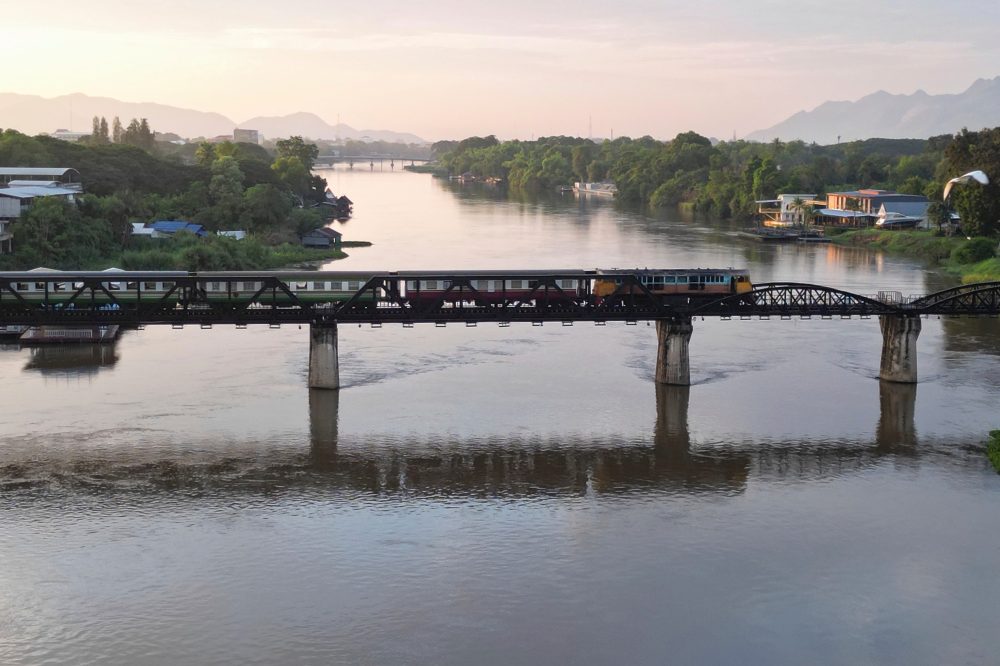
KANCHANABURI, Thailand — A piece of World War II history has emerged from the depths of a Thai reservoir, offering a brief but remarkable window into the past.
When maintenance work at Vajiralongkorn Dam required draining the facility’s reservoir, it uncovered Nithe Station — a site that had been submerged for over 40 years. The station was once a key depot along the notorious “Death Railway,” a 415-kilometer (257-mile) route stretching between what was then Siam and Burma, now known as Thailand and Myanmar.
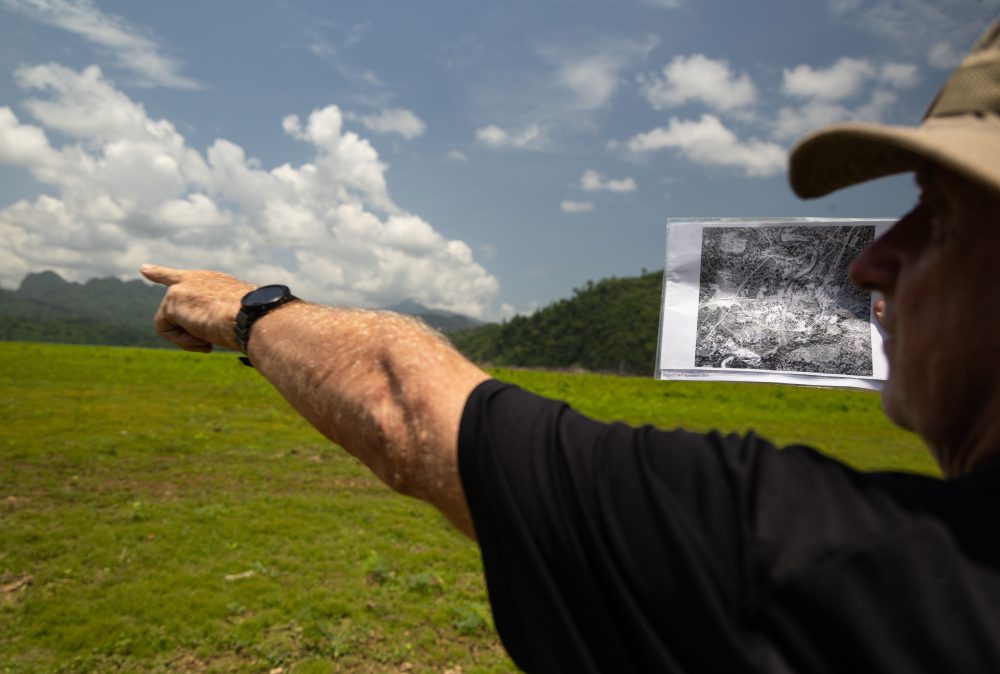
Researchers are moving quickly to document the site before it disappears again. Once dam maintenance wraps up in August, combined with the region’s rainy season, the area could be flooded once more.
The railway earned its grim nickname during World War II, when the Empire of Japan forced approximately 60,000 Allied prisoners of war — along with hundreds of thousands of Asian laborers — to construct the line. More than 12,500 of those POWs and around 75,000 laborers lost their lives during the brutal construction effort.
For some researchers, the work is deeply personal. Andrew Snow, a researcher at the Thailand-Burma Railway Centre, has a direct family connection to the site. His father was captured in Singapore in 1942 and compelled to work on the railway. “We deal with a lot of relatives of POWs. Some of those POWs worked in the area we’re talking about, up at Nithe, and it’s a good opportunity for us to do some surveying… so that we can show relatives in the future,” Snow said.
Independent researcher Martyn Fryer traveled all the way from Australia to see the fully exposed station — his third visit to Nithe overall. His grandfather perished as a POW while building the railway. Fryer said he made the journey to see firsthand “what infrastructure is lying under the water.”
The Death Railway’s legacy continues to draw visitors to Thailand. Portions of the original line remain in operation today, carrying both locals and tourists. Educational facilities such as The Hellfire Pass Interpretive Centre work to preserve and share the railway’s history with new generations.
For some travelers, visiting the region is about more than sightseeing. Michael Weber, a German tourist at Thamkra Sae Station, reflected on what travel means to him. “Traveling presents the chance to learn about the people and the culture of the place you’re going,” he said. “And part of the culture is always the history.”
SPRINGVILLE, Utah — Paris Hilton walked back onto the grounds of a Utah boarding school Monday where she says she endured abuse as a teenager, this time to stand with two families who filed lawsuits that same day claiming their children were harmed at the same facility.
Hilton was at Provo Canyon School in Springville to lend her voice to new legal action against the institution, where she spent nearly a year in the late 1990s. The hotel heiress and media personality has alleged that staff members physically beat her, watched her shower, gave her unidentified pills, and placed her in solitary confinement without clothing.
“I dreamed of becoming strong enough, successful enough and powerful enough to come back and be the hero that I needed when I was a little girl locked inside,” Hilton said. “Today is that day, and I am not backing down.”
The school is currently under new ownership, and its administration has stated it is unable to address anything that occurred prior to the ownership change, including the period when Hilton was enrolled there.
Hilton, who is 45 years old, is urging Utah licensing authorities to close the school permanently. Over the years, she has testified about her experiences before Congress and in state legislatures across the country, contributing to the passage of protective laws for minors in Utah and 15 other states. Utah has long been a significant hub for what is called the troubled teen industry — a network of private, for-profit residential programs for young people with behavioral challenges.
State health officials placed restrictions on Provo Canyon School’s operating license in May after determining that staff failed to seek prompt medical care for a student who suffered serious injuries. Those restrictions, which include a ban on accepting new students, are scheduled to expire Thursday.
One of Monday’s lawsuits was filed by Aleah Corona, the mother of the injured student. She alleges that after another resident slammed her 13-year-old son’s head into the ground, the school did not respond quickly enough. The boy suffered a fractured jaw and a traumatic brain injury, according to her account. A second family alleged that their daughter endured severe stomach pain and nausea for more than a week before the school arranged appropriate medical care, after which she experienced kidney failure, according to their lawsuit.
The school declined to comment on the specific cases, citing patient privacy laws, but released a statement saying: “At Provo Canyon School, the safety, dignity, and well-being of those entrusted to our care are our highest priorities.”
As she approached the campus, Hilton walked with both middle fingers raised, telling The Associated Press she would not be intimidated by a place where she once feared for her life on a daily basis.
She also cautioned that parents, including her own, can be misled by the marketing used by facilities like this one, which often present themselves as safe environments for struggling teens.
“These places really just pray on parents who are just looking for help for their children,” Hilton said. “I wasn’t a bad kid, I was just sneaking out at night, getting bad grades. I had ADHD, so I wasn’t doing well in school, but this was definitely not the place that I should’ve been sent. My parents had no idea.”
The Texas Rangers are dealing with another setback involving shortstop Corey Seager, who was placed on the seven-day concussion injured list on Monday.
The injury stems from a collision at home plate last Thursday involving Kansas City Royals catcher Carter Jensen. Despite remaining in that game and even hitting a home run afterward, Seager sat out the entire weekend series against the Boston Red Sox before the Rangers officially made the roster move. To fill his spot, infielder Josh Smith was activated from the 10-day injured list.
This is the second time Seager has landed on the injured list this season. Earlier, he missed nearly three weeks — 19 games total — due to lower back inflammation before returning on June 5. After just five games back in the lineup, he is now sidelined again while the team waits for his concussion symptoms to resolve.
The absence adds pressure to a Texas team that has remained in the playoff conversation despite an inconsistent first half of the season. Seager has also struggled offensively by his own standards, posting a .186 batting average with nine home runs, 24 RBIs, and a .657 OPS across 47 games.
The Rangers have not provided a specific return timeline beyond the mandatory seven-day minimum, which is typical for concussion-related injuries. The roster move was made retroactive to Friday.
Smith had been out since early May dealing with multiple issues, including a strained glute, an inflamed left wrist, and symptoms related to viral meningitis. He appeared in Monday’s 4-3 home loss to the Minnesota Twins, coming in as a pinch hitter and fouling out. On the season, Smith is hitting .215 with a .321 on-base percentage, a .237 slugging percentage, no home runs, and six RBIs in 32 games.
A new report from the United Nations Children’s Fund (UNICEF) reveals a startling reality: nearly every child on the planet faces exposure to at least one climate-related danger, with up to 1.8 billion children at risk from droughts and 1.2 billion threatened by extreme heat.
Released on Tuesday, UNICEF’s Children’s Climate Risk Report warns that children are “disproportionately affected” by a growing number of climate-related threats. The agency is urging governments around the world to immediately step up investments in infrastructure, adaptation strategies, and disaster management to better shield children from these dangers.
The report examined a wide range of climate hazards, including air pollution and the threat of diseases spread by insects, such as malaria. Researchers also took into account how well children across the globe can access clean water, healthcare, and social services.
Among the report’s most alarming findings: as many as 1.1 billion children worldwide are simultaneously exposed to at least three overlapping climate risks. UNICEF cautioned that this creates a “dangerous cascade of multiple, overlapping hazards” that could overwhelm governments and social service systems.
Rohini Sampoornam Swaminathan, a UNICEF statistics manager and one of the report’s authors, emphasized the compounding nature of these threats. “It’s not just the exposure to the single hazards like floods or droughts or heat waves and extreme heat that children face, but it is the exposure to multiple hazards,” she said.
The numbers are staggering across multiple categories of risk. Up to 662 million children face danger from tropical storms, while 337 million are at risk from river flooding and 33 million from coastal flooding. Additionally, around 1 billion children — the majority living in Africa — are exposed to malaria.
The report also found that in 2024, climate hazards disrupted the education of 242 million children across 85 countries.
UNICEF identified Somalia, Madagascar, Myanmar, Cambodia, and Pakistan as the nations most vulnerable to climate-related risks. Countries with economies heavily dependent on farming — including Bangladesh, Indonesia, Nigeria, Pakistan, and Tanzania — are home to the largest numbers of children exposed to drought.
Children living in landlocked countries are also facing what the report calls “disproportionate” risks, including drought, desertification, heat stress, and flash flooding. Nations such as Botswana and Burkina Faso are expected to see worsening water shortages in the years ahead.
China’s economy is sending mixed signals, with fresh government data revealing a growing divide between a booming manufacturing sector and a struggling consumer base.
Industrial production climbed 4.5% in May compared to the same month last year, an improvement over the 4.1% growth seen in April, according to figures released Tuesday by the National Bureau of Statistics. That result came in ahead of analyst forecasts, which had projected a 4.3% gain.
A worldwide boom in artificial intelligence investment has helped China’s massive manufacturing sector weather the trade disruptions stemming from turmoil in the Middle East. Exports surged 19.4% — but that windfall has not translated into stronger spending at home.
Consumer retail sales, considered a key indicator of domestic demand, dropped 0.6% in May. That reversed a modest 0.2% gain recorded in April and came in below forecasts of flat growth. It marked the first monthly decline in retail sales since December 2022.
The auto industry reflected that weakness clearly. Car sales inside China fell for the eighth month in a row in May, highlighting softening demand in the world’s largest vehicle market. Analysts expect that pressure to continue through the remainder of the year.
Even a five-day national holiday in early May — the Labour Day break — failed to spark a meaningful boost in consumer activity. The effect of a government program encouraging consumers to trade in old goods for new ones has also been fading.
Tuesday’s data underscores what economists describe as a two-speed economy: exports are performing exceptionally well, while domestic demand continues to weaken against the backdrop of a prolonged slump in the property market.
Inflation figures also reflect this imbalance. The gap between rising factory-gate prices — which hit their highest point since July 2022 — and nearly stagnant consumer prices suggests that production is outpacing what households are actually buying.
Investment figures came in well below expectations. Fixed-asset investment dropped 4.1% during the first five months of 2025, a steeper decline than the 1.6% fall recorded through April. Economists had anticipated only a 2% decrease.
Real estate investment continued to slide as well, falling 16.2% in the January-through-May period compared to the same stretch last year. That follows a 13.7% drop in the first four months of the year. New home prices also declined at a slightly faster pace in May on a month-over-month basis.
Data on household borrowing released last week suggested that many Chinese consumers remain reluctant to take out loans to purchase homes, amid slow income growth and concerns about job stability.
The national unemployment rate dipped slightly to 5.1% in May, down from 5.2% in April, though worker anxiety persists — partly driven by fears that artificial intelligence could displace jobs.
SEOUL — South Korean brokerage Mirae Asset Securities issued a public apology to its clients on Monday after the firm was shut out of SpaceX’s historic stock market debut, leaving hundreds of millions of dollars in investor orders unfulfilled.
In a letter to clients that was reviewed by Reuters, Mirae Asset Securities co-CEOs Kim Mi-seob and Heo Sun-ho explained that while the brokerage had been qualified to offer SpaceX shares to South Korean investors and had served as one of the IPO’s underwriters, the U.S. lead underwriter ultimately chose not to include Mirae in the final share distribution.
SpaceX made its stock market debut on Friday, sending the company’s total valuation beyond $2 trillion and making founder Elon Musk the world’s first trillionaire.
Earlier this month, Mirae Asset had gathered $500 million worth of orders from investors eager to get in on the SpaceX offering. According to someone with knowledge of the situation, both portions of the offering sold out within minutes of becoming available.
“We made every effort until the very end to secure an allocation of shares. However, due to the discretionary final decision made by the lead underwriter in the United States, no shares were ultimately allocated to us,” the letter stated. The firm added that it is now looking into the circumstances behind that decision.
“We are deeply disappointed and sincerely sorry to all customers who placed their trust in Mirae Asset Securities and participated in this offering,” the letter continued.
The letter did not name the lead underwriter responsible for the allocation decision. Several major banks involved in the SpaceX IPO — including Morgan Stanley, Bank of America, and JPMorgan Chase — did not respond to requests for comment outside of Asian business hours. Goldman Sachs and Citigroup both declined to comment.
According to Korea Economic Daily TV, investors who had already converted their money into U.S. dollars to cover subscription deposits were still on the hook for foreign exchange fees and had to absorb losses tied to recent currency fluctuations.
South Korea’s Financial Supervisory Service opened a formal inspection of Mirae Asset on June 8, looking into whether the brokerage adequately warned investors about the possibility that a share allocation might not come through. A regulator official confirmed the inspection on Tuesday but asked not to be named, citing the confidential nature of the matter.
MIAMI GARDENS, Fla. — A late goal from Maxi Araújo gave the large crowd of Uruguay supporters at Hard Rock Stadium something to celebrate Monday, as La Celeste fought back to earn a 1-1 draw with Saudi Arabia in their World Cup Group H opener.
Despite the comeback, Uruguay’s players were far from satisfied with how the match unfolded.
“We gave it away. We have to be honest,” midfielder Federico Valverde said in Spanish following the result.
Valverde was blunt in his assessment of the first half: “We gave away the first half. We didn’t play the way we had trained. It wasn’t what we were aiming for. We rushed things too much. We wanted to win the game in the very first minute. Sometimes you need a bit more patience and just play our game. We improved a lot in the second half.”
Saudi Arabia took the lead when Abdulelah Al-Amri tapped in a rebound in the 41st minute after goalkeeper Fernando Muslera palmed away a header. Al-Amri had already tested Muslera earlier in the half before finally breaking through. He dropped to his knees and bowed his head to the pitch in celebration as Saudi fans — though heavily outnumbered — roared their approval.
Araújo answered in the 80th minute, blasting a rebound past Saudi goalkeeper Mohammed Al-Owais from close range to level the score. It was the fourth international goal of Araújo’s career and his second scored at Hard Rock Stadium, which serves as the home of the NFL’s Miami Dolphins.
Uruguay controlled the ball for the majority of the match and generated 29 shot attempts compared to just seven for Saudi Arabia, yet found themselves trailing deep into the second half.
Al-Owais was a key reason for that, turning away a close-range header from Federico Vinas in the first half, getting his fingertips on a Manuel Ugarte attempt in the 61st minute, and later denying Valverde during stoppage time.
Uruguay coach Marcelo Bielsa, speaking through an interpreter, reflected on how the dynamic of the game shifted: “When a team that is supposed to make a difference cannot do it, in terms of being dangerous or dominating the ball, then the weaker team actually dares to do something.”
Saudi Arabia coach Georgios Donis, who took over just two months ago after Hervé Renard was let go, viewed the result more positively. Speaking through an interpreter, he praised Uruguay’s quality while expressing satisfaction with earning a point.
“Uruguay is a team that is very energetic,” Donis said. “The players are well experienced, and there is depth on the bench. … When you’re faced with such an opponent, getting one point is a positive.”
Donis acknowledged he is still getting to know his squad but felt encouraged by the performance. “I need to get to know my team better,” he said. “I need to create a team that is competitive, and it only makes sense that we need time to do this. Today’s outcome gives us an advantage.”
The draw was part of a surprising day across Group H. Cape Verde, competing in their very first World Cup, held heavily favored Spain to a scoreless draw in Atlanta.
“The draw involving Spain may be the biggest surprise in this World Cup,” Donis said. “Cape Verde was very competitive, very strong. It’s not like the (group) favorites changed. It’s Spain and Uruguay.”
Monday’s match also carried historical weight. Uruguay hosted the very first World Cup back in 1930 and is set to host a centennial match in 2030, while Saudi Arabia will serve as host of the 2034 tournament.
Notable figures in attendance included FIFA President Gianni Infantino, Miami Heat star Bam Adebayo, former NFL player Chad Ochocinco, and longtime Uruguay standout Luis Suárez — currently a teammate of Lionel Messi at Inter Miami — who was not selected to represent his country at this tournament.
Researchers are scrambling to western Thailand after a long-submerged train depot from World War II’s notorious “Death Railway” emerged from beneath a reservoir, offering an uncommon glimpse into one of the war’s darkest chapters.
The station, known as Nithe Station, sits in Kanchanaburi province and was uncovered after the Electricity Generating Authority of Thailand drained the reservoir at Vajiralongkorn Dam for routine maintenance. Historians are taking advantage of the rare window to search for artifacts and confirm historical details about the site.
The clock is ticking, however. Dam maintenance is expected to wrap up in August, and Southeast Asia’s rainy season could soon refill the reservoir, sending Nithe back beneath the water.
Nithe was a significant stop along the 415-kilometer (257-mile) railway that once linked Thailand — then called Siam — with Myanmar, which was known as Burma at the time. The line was constructed using the forced labor of roughly 60,000 Allied prisoners of war, primarily from Australia, the United Kingdom, the United States, and Indonesia, then called the Dutch East Indies. Hundreds of thousands of Asian laborers, referred to by the Japanese as römusha, also worked on the project.
The human cost was staggering. More than 12,500 Allied POWs and approximately 75,000 laborers died during construction — a toll that earned the route its grim nickname, “The Death Railway.”
The railway has been immortalized in popular culture, including the classic 1957 film “The Bridge on the River Kwai” and the 2013 movie “The Railway Man.” It also served as the subject of the award-winning novel “The Narrow Road to the Deep North,” which was adapted into a 2025 miniseries featuring Australian actor Jacob Elordi.
Independent Australian researcher Martyn Fryer made the journey from Perth specifically to walk the site. His grandfather perished as a prisoner of war while laboring on the railway following his capture in Singapore in 1942.
Fryer waded through muddy terrain in sweltering 38-degree Celsius (100-degree Fahrenheit) heat, saying he wanted to “understand what those lads went through and to appreciate the country and the terrain that they endured.”
Fryer, who authored a book about his grandfather’s regiment titled “From the Woodlands to the Jungle,” swept the historic railway embankments with a metal detector and uncovered iron dog spikes, bridge staples, and other wartime relics.
“I’ve been to Nithe Station three times in the past, but the water level has always been too high to actually really appreciate the fantastic offerings that it has with the remaining infrastructure and the layout of the railway itself,” Fryer said.
To help pinpoint where POW camps once stood, Fryer compared wartime aerial photographs sourced from the National Archives in London with hand-drawn maps brought by Andrew Snow, a researcher with the Thailand–Burma Railway Centre. Snow’s father, like Fryer’s grandfather, was captured in Singapore and compelled to work on the railway.
Snow noted that the dry season in Southeast Asia typically exposes small portions of the station, but this year water levels dropped lower than usual — and drained so rapidly that vegetation has not had time to grow back, making the site far easier to examine.
“It is a good opportunity for us to do some surveying,” Snow said. “When you’re dealing with relatives of people that worked on the railway, it’s always nice to be able to show them the areas that maybe their relative worked on.”
The exposed station has also drawn significant public attention. Kitti Laokham, a 47-year-old local resident, posted footage of Nithe online that has since accumulated 32 million views on social media. Hundreds of Thai visitors have traveled to the area to witness what Laokham described as a “rare incident.”
Channarong Noimala was among those drawn to the site, riding a motorbike 350 kilometers (217 miles) northwest from Bangkok after seeing the videos.
“At least for those who died here, no matter whether they are laborers or prisoners of war, we can remember them,” Noimala said.
Roughly 100 kilometers (60 miles) of winding mountain roads southwest of Nithe lies Hellfire Pass, a grueling stretch of mountain terrain where hundreds of POWs lost their lives. The Hellfire Pass Interpretive Centre, which is funded by the Australian government, welcomed a record 169,000 visitors last year — coinciding with the 80th anniversary of the end of World War II.
Mick Clarke, an Australian Army veteran who oversees the center, reflected on the site’s growing significance.
“As time passes, places like Hellfire Pass become even more important,” Clarke said. “They keep personal stories alive and help future generations understand the cost of war.”
According to Australia’s Department of Veterans’ Affairs, around 22,000 Australians became prisoners of war during the conflict, with about 13,000 working on the railway and 2,800 dying during its construction.
“For many Australians, Hellfire Pass is deeply personal,” Clarke added. “It connects families and the nation to a difficult but important chapter of wartime history.”
LAS VEGAS (AP) — Former Nevada state lawmaker Jim Marchant secured the Republican nomination for Nevada secretary of state Monday, putting one of the state’s most vocal promoters of election fraud theories in position to potentially run the office that manages voting in a key presidential swing state.
Marchant’s victory following Nevada’s June 9 primary means he will face a rematch this November against Democratic Secretary of State Cisco Aguilar, the same opponent who defeated him four years ago.
Whoever wins in the fall will be responsible for overseeing the 2028 presidential election in Nevada — a state that backed President Donald Trump in 2024 after supporting Democrat Joe Biden four years prior.
Marchant has repeatedly raised doubts about the security of Nevada’s elections. He has alleged that both he and Trump were cheated by election fraud in 2020, when Marchant lost his congressional race for Nevada’s 4th District to Democratic Rep. Steven Horsford — even though officials found no credible evidence of widespread fraud.
He has also claimed mail-in ballots were fraudulent, despite the fact that he himself cast a mail ballot while registered to vote in Florida.
In December 2020, Marchant stood alongside six Nevada Republicans who signed false electoral certificates falsely declaring Trump had won the state — when Biden had actually carried Nevada by more than 33,000 votes. Those six individuals still face charges brought by the attorney general’s office.
The Nevada secretary of state at the time, a Republican, had her office examine numerous fraud allegations submitted by Republicans and determined them to be either unfounded or already under investigation, specifically refuting thousands of claims. An Associated Press review of potential fraud cases across the six battleground states where Trump contested his 2020 loss uncovered fewer than 475 total — nowhere near enough to have changed the outcome. In Nevada specifically, the number of possible fraud cases amounted to less than 0.3% of Biden’s winning margin.
In the Republican primary, Marchant beat both the candidate endorsed by Gov. Joe Lombardo — Shirley Folkins-Roberts, who had rejected claims of widespread fraud in Nevada elections — and former lawmaker Sharron Angle. Folkins-Roberts acknowledged her loss in a statement Monday.
Texas Tech quarterback Brendan Sorsby is reportedly planning to enter the NFL supplemental draft, according to several reports published Monday — a decision that could effectively end a growing legal dispute over whether he could continue playing college football.
Sorsby faced a June 22 deadline to submit his application for the supplemental draft, a process the NFL makes available to players who either missed the standard draft deadline or encountered eligibility complications at the college level.
What remains unclear is what path Sorsby would take if no NFL franchise selects him in that process.
Earlier this month, the supplemental draft had already appeared to be a strong possibility for Sorsby — until a Lubbock County, Texas judge granted him a temporary injunction blocking the NCAA’s decision to strip him of his college eligibility. The NCAA had revoked his eligibility because of sports betting violations.
Texas Tech stood behind Sorsby throughout his fight to reclaim his eligibility, but that support came at a cost. The Big 12 Conference filed a complaint against Texas Tech and the Texas attorney general on Monday, seeking a court ruling that would allow the conference to enforce its own eligibility bylaws. The Big 12 asked the court to affirm its authority to set and administer its own rules.
In a separate action, the NCAA filed a formal appeal in Lubbock County District Court and requested that the case be resolved quickly — ideally before the 2026 college football season gets underway. Sorsby’s case had previously been scheduled for trial in February 2027.
The 15 Big 12 athletic directors — everyone except Texas Tech’s — gathered last week and unanimously voiced their opposition to Sorsby suiting up for the Red Raiders. Big 12 university presidents were also scheduled to convene Monday to discuss the possibility of sanctions against the school.
The controversy surrounding Sorsby began in the offseason when his legal team acknowledged that he had placed a minimum of 40 bets on the Indiana football team while he was a member of that program in 2022 and 2023. Over a four-year span, he bet approximately $90,000 on both college and professional sporting events. He entered an addiction treatment program on April 27.
Texas Tech had been prepared to allow Sorsby to play throughout the regular season and any postseason games, following a two-game suspension at the beginning of the year.
The NFL supplemental draft has not taken place since 2023, as it is only held when at least one eligible player opts in. The draft is expected to be conducted sometime in late July, though no specific date has been confirmed.
Several quarterback-needy teams — including the Miami Dolphins, New York Jets, and Cleveland Browns — have been mentioned as potential suitors for Sorsby. However, first-year Browns head coach Todd Monken commented this month that pursuing Sorsby would be “a slippery slope” given the quarterback’s gambling history.
During his two seasons at Cincinnati, Sorsby threw for 5,613 yards, 45 touchdowns, and 12 interceptions. He also added 1,027 rushing yards and 18 touchdowns across 24 games.
Russian regional authorities confirmed Tuesday that debris from a drone triggered a fire at an oil depot in the Krasnodar region, located in southern Russia just across from the Crimean peninsula.
The fire broke out at the oil storage facility in the Poltavskaya area of Krasnodar. Officials reported no casualties as a result of the blaze and shared the update through a post on Telegram.
In response to the incident, authorities closed a local road that connects the affected area to a regional route leading to the bridge spanning the Kerch Strait — the crossing that links the Krasnodar region to Crimea. That bridge was constructed by Moscow following its annexation of Crimea in 2014.
The Kerch Strait bridge serves as one of several key supply routes into the Black Sea peninsula, alongside a handful of roads running through nearby Russian-controlled areas of Ukraine.
The fire comes just a day after Ukraine struck two bridges connecting Russian-held territory in Ukraine’s Kherson region to Crimea. The peninsula has been grappling with a fuel shortage as Kyiv has stepped up its attacks on Crimea’s supply lines in recent weeks.
The Krasnodar region, which draws large numbers of tourists during the summer months, has also been feeling the strain. The regional governor noted last week that disruptions to fuel supplies have led to panic-buying among residents, as Ukraine continues to target Russian energy infrastructure.
Asian stock markets edged slightly higher on Tuesday, pulling back from the stronger gains seen Monday when news broke of a preliminary peace agreement between the United States and Iran. As the initial excitement surrounding the deal began to settle, investors turned their attention to upcoming central bank decisions around the world.
The early trading mood across the region was more restrained, with markets adopting a wait-and-see approach regarding developments in the Gulf. Oil prices, which had already fallen to a three-month low overnight, showed only modest movement — Brent crude futures rose 51 cents, or 0.6%, to $83.74 per barrel. Shipping companies in Asia and Europe cautioned that rebuilding enough confidence to resume transit through the Strait of Hormuz could take several weeks.
The MSCI index tracking Asia-Pacific shares outside of Japan gained 0.2%, with South Korean stocks leading the way. Japan’s Nikkei 225 slipped 0.2%, pulling back from a record high, while S&P 500 e-mini futures dipped 0.1%.
Although U.S. President Donald Trump’s announcement of the Iran agreement brought a wave of investor relief on Monday, the deal is also expected to create tensions between Washington and Israel.
Analysts from Westpac described the development in a research note, saying, “While it is an important diplomatic breakthrough that should remove a key source of market volatility, the durability of the deal is likely to be tested in the future.” They added, “Many sticking points, including the fate of Iran’s nuclear programme, were left to be resolved in subsequent negotiations.”
On Wall Street Monday night, both stocks and bonds surged. The S&P 500 climbed 1.7% and the Nasdaq Composite jumped 3.1%, while the Dow Jones Industrial Average and Europe’s STOXX 600 both closed at all-time highs.
Looking beyond geopolitical developments, traders are closely watching a series of central bank announcements. The Bank of Japan is widely expected to raise its benchmark interest rate to a 31-year high on Tuesday. Deputy Governor Shinichi Uchida is scheduled to hold a press briefing following the meeting, stepping in for Governor Kazuo Ueda, who will be absent due to medical treatment.
Analysts from Mitsubishi UFJ noted in a research report, “We do not anticipate any major changes to the Bank’s assessment of current conditions.” They also wrote, “We expect Deputy Governor Uchida’s press conference, including the rationale he presents for the rate-hike decision, will be based largely on Governor Ueda’s June 3 speech,” adding that “Mr. Uchida is also likely to follow the governor’s remarks when discussing future policy decisions.”
Separately, a Reuters poll of economists indicates the Reserve Bank of Australia is expected to pause its rate-tightening campaign when it meets later Tuesday.
The U.S. dollar index, which tracks the greenback against a group of six major currencies, held steady at 99.66, staying within the narrow trading range it has maintained throughout the week. The yield on the 10-year U.S. Treasury bond edged up 0.8 basis points to 4.475%, while gold rose 0.2% to $4,313.87.
In digital currency markets, bitcoin fell 0.3% to $66,245.97, while ether dropped 1.2% to $1,793.70.
Czech qualifier Nikola Bartunkova delivered a stunning upset at the Berlin Tennis Open on Monday, taking down ninth-seeded Diana Shnaider of Russia in a dramatic three-set battle, 6-2, 6-7 (2), 6-3.
The match was anything but straightforward. Bartunkova built a 5-4 lead in the second set and had a chance to close it out, but Shnaider escaped two match points before ultimately winning the tiebreaker. In the third set, Shnaider jumped out to a 3-0 advantage, only for Bartunkova to reel off six consecutive games and seal the victory.
Two other first-round matches were completed Monday at the Berlin event. Belgium’s Elise Mertens mounted a strong comeback against Russia’s Liudmila Samsonova, winning 1-6, 6-3, 6-0, while Russia’s Ekaterina Alexandrova claimed the opening set 6-1 before her Austrian opponent Anastasia Potapova was forced to retire.
At the Lexus Nottingham Open in Great Britain, American third seed Emma Navarro bounced back from dropping the opening set in a tiebreaker to defeat Hungary’s Anna Bondar 6-7 (6), 6-3, 6-2. Navarro was dominant on serve, winning 76.8 percent of her service points — 63 out of 82 — while Bondar saved 9 of 13 break point opportunities. Navarro’s next challenge will be Ukraine’s Yuliia Starodubtseva, who advanced after rallying past Australia’s Maya Joint 6-7 (8), 7-5, 6-4.
Czech fourth seed Marie Bouzkova dispatched fellow Czech Tereza Valentova in straight sets, but the day saw two seeded players exit the tournament. China’s Qinwen Zheng upset Greek sixth seed Maria Sakkari 4-6, 7-6 (1), 6-4, and Germany’s Tatjana Maria eliminated ninth-seeded Janice Tjen of Indonesia 6-3, 6-2. Spain’s Jessica Bouzas Maneiro and Australians Talia Gibson and Taylah Preston also advanced to the next round.
Oil prices climbed back Tuesday following concerns that a preliminary peace agreement between the U.S. and Iran lacks critical details, and that restoring the flow of oil through a vital shipping corridor could take much longer than initially expected.
Brent crude futures edged up 26 cents, or 0.3%, reaching $83.42 per barrel, while U.S. West Texas Intermediate rose 46 cents, also 0.3%, to $81.12 per barrel, as of 0108 GMT.
The rebound came after oil prices plunged nearly 5% on Monday — hitting their lowest closing level since March 4 — following an announcement by U.S. President Donald Trump that a memorandum of understanding had been signed to bring an end to the U.S.-Israeli war with Iran. The conflict had shut down the Strait of Hormuz, a waterway that normally carries one-fifth of the world’s oil supply, and caused roughly 14 million barrels per day of oil production to be halted.
While the announcement sparked initial optimism, the full contents of the memorandum have not been made public, and a permanent truce has not yet been established. Early reports suggest the deal would reopen the Strait of Hormuz and put a 60-day ceasefire in place, giving negotiators time to work through complex issues such as the future of Iran’s nuclear program.
Iranian President Masoud Pezeshkian described the memorandum Monday as an “important step” toward ending the fighting, but acknowledged that a lasting peace agreement “has yet to take shape.”
A senior Iranian official also said Monday that, pending a final deal, Iran would pause its nuclear activities — halting further uranium enrichment and stopping any expansion of its nuclear facilities.
Market analysts cautioned that investors remain wary until more information becomes available. “The devil may be in the details, and until those details emerge, the market is likely to show restraint regarding the further unwinding of the risk premium in energy markets,” said Tim Waterer, chief market analyst at KCM Trade.
Questions also remain about how quickly oil production and shipping can return to normal, even if the agreement holds. “The path back to normal supply flows remains far from straightforward,” said Tony Sycamore, market analyst at IG.
Sycamore elaborated, noting that “clearing mines, restoring full marine insurance coverage, and getting vessels and operators comfortable enough to return to the Gulf will all take time as will bringing shuttered wells and damaged regional infrastructure back online.”
BEIJING — Nepal’s Foreign Minister Shisir Khanal sat down with China’s leading diplomat Wang Yi on Monday in Beijing, marking his first official visit to the neighboring superpower since his party claimed victory in March elections — and coming just days after he wrapped up a trip to China’s regional rival, India.
For Chinese diplomats, the change in government on their doorstep creates a tricky situation. Analysts say Beijing has been working hard to maintain strong ties with neighboring countries while also pressing its territorial claims in the East and South China Seas — and the removal of a Communist Party-led coalition government in Nepal complicates that effort.
According to a statement released by China’s foreign ministry late Monday, Wang told Khanal that “China has always placed Nepal at the forefront of its ‘neighbourhood diplomacy’” and pledged that China “will support Nepal in safeguarding its national sovereignty and territorial integrity.”
Analysts note that Nepal’s close relationship with the South Asian powerhouse India gives the country of roughly 30 million people some leverage when dealing with China — putting Beijing in the unusual position of having to demonstrate its value as a partner.
Nepal and India have had a long-running dispute over their shared 1,751-kilometer (1,088-mile) border that has stretched on for about 80 years. Still, when Khanal met with officials in Delhi earlier this month, he indicated that the new Nepalese government was “free from the political baggage from the past” and eager to strengthen ties with India.
Relations between Nepal and China have stalled in recent years, largely due to delays in delivering infrastructure projects tied to Chinese leader Xi Jinping’s signature “Belt and Road” initiative. Nepal joined that program in 2017, but disagreements over financing have slowed progress significantly.
During Monday’s meeting, Wang reaffirmed China’s intention to help build up Nepal’s infrastructure, pointing to planned cooperation in areas including electricity generation, road construction, ports, and aviation.
Eric Olander, co-founder of the China-Global South Project — a media and research organization — suggested China may not have anticipated the shift in Nepal’s political landscape.
“Beijing doesn’t like change that directly impacts them,” Olander said. “Change that is potentially hostile or challenges their interest is what gets their attention.”
“My guess is they didn’t see this coming in Nepal and they don’t like it when popular movements overthrow incumbent governments,” he added.
Westbound travelers on Kirkwood Highway, also known as Capitol Trail, are facing intermittent lane closures at the Cleveland Avenue intersection due to ongoing construction activity.
The lane restrictions are expected to remain in effect until 6:00 AM. Drivers in the area should anticipate possible delays and consider using alternate routes to avoid the construction zone.
No additional details about the nature of the construction work were provided. Motorists are encouraged to stay alert and follow any posted signage in the area.
Motorists traveling along Coastal Highway, also known as Route 1, should plan for intermittent lane closures currently in effect between Sea Air Avenue and Shuttle Road.
The closures are the result of active construction work in that stretch of the roadway. Drivers are advised to use caution and allow for extra travel time while passing through the affected area.
The lane restrictions are expected to remain in place until 6:00 AM. No further details about the nature of the construction were provided.
The U.S. dollar remained close to 10-day lows on Tuesday following news of a preliminary deal to end the Middle East conflict, lifting risk appetite across global markets while investors turned their attention to a series of central bank meetings in Japan and Australia.
U.S. President Donald Trump announced that the U.S. and Iran have signed a preliminary agreement to end the war, though specific details have not yet been released. Despite the lack of specifics, financial markets responded positively, with oil prices falling on the news.
The agreement would extend a fragile ceasefire — first announced in April — by an additional 60 days and reopen the Strait of Hormuz, a critical shipping passage that Tehran has effectively blocked since the U.S. and Israel launched attacks on Iran in February.
The dollar index, which tracks the U.S. currency against six others, stood at 99.66. The index has climbed roughly 2% since the conflict began in late February, driven by volatile reactions to the ceasefire and ongoing retaliatory strikes between the parties involved.
Currency markets were more restrained in their reaction compared to other financial sectors, as traders awaited decisions from several major central banks this week, including the Bank of England and the U.S. Federal Reserve later in the week.
The euro was trading at $1.159, just under the 10-day peak of $1.1622 reached the previous day. The British pound was valued at $1.3413 in early Tuesday trading.
Tony Sycamore, a market analyst at IG, noted that while energy markets moved swiftly to reduce concerns about prolonged supply disruptions, the road back to normal shipping flows is far from simple. “While energy markets moved quickly to price out the immediate risk of prolonged supply disruptions, the path back to normal flows remains far from straightforward,” he said.
Analysts at ING cautioned that market reactions have outpaced actual developments on the ground. “A more durable repricing requires safe, predictable and insured shipping through the Strait of Hormuz,” they wrote. “And demand could likely to be higher than usual as depleted reserves need to be replenished. Re-escalation risks are reduced, but not off the table.”
Uncertainty over supply chains, inflation, and interest rate paths is expected to keep investors cautious in the near term.
The Australian dollar was trading at $0.7069 ahead of the Reserve Bank of Australia’s policy meeting, where the central bank is widely expected to leave rates unchanged following three straight increases, even as inflation stays elevated.
Charu Chanana, chief investment strategist at Saxo, said investors will be watching whether the RBA’s statement continues to signal a leaning toward further tightening or begins to acknowledge that inflationary pressures may be easing. “The RBA may not want to sound too dovish yet. Inflation is still not fully back in the comfort zone and markets are still pricing a meaningful chance of one final hike by year-end,” she said.
In Japan, the yen was trading at 160.24 per U.S. dollar, hovering near the closely watched 160 level that has made traders nervous about possible intervention from Tokyo. Even the peace deal news offered little relief for the struggling Japanese currency.
The Bank of Japan is set to raise interest rates to a 31-year high on Tuesday, a move that is broadly anticipated. Investor focus will instead be on signals about when the next rate increase might come and the overall pace of tightening.
Deputy Governor Shinichi Uchida’s press briefing following the meeting is expected to draw significant attention, with markets anticipating he will reaffirm the central bank’s commitment to continued rate hikes without offering a specific timeline for the next move.
Yuxuan Tang, head of rates and foreign exchange strategy for Asia at J.P. Morgan Private Bank, warned that any communication perceived as dovish could reignite bearish bets on the yen and Japanese government bonds, making efforts to stabilize markets more costly. “That said, the BOJ has not typically leaned hawkish in its communication, particularly given the recent stabilization in inflation and downside growth risks from elevated energy prices,” Tang added.
INGLEWOOD, California — Iranian Americans made their way into a Los Angeles stadium Monday ahead of Iran’s opening match at the 2026 World Cup, with some carrying political symbols in opposition to the Iranian government while others urged fellow fans to set aside politics and simply support their team.
The Iranian squad had traveled to the U.S. on Sunday from their training base in Tijuana, Mexico, landing in Los Angeles just as a deal was announced bringing the U.S.-Iran war to an end. They are scheduled to face New Zealand in Group G at 6 p.m. local time (0100 GMT).
Los Angeles is home to the largest Iranian community outside of Iran itself, with many residents having left the country following the Islamic Revolution. Iranian American soccer fans there say they have found themselves caught between the thrill of watching their team compete on the world’s biggest stage, outrage over Tehran’s violent response to protesters, and worry over a U.S. bombing campaign against Iran.
Between 300 and 500 protesters assembled outside the stadium, holding anti-government signs and flags. Those demonstrators said they chose not to enter the venue, explaining that buying a ticket would feel like showing support for the Tehran government.
Some fans did enter the stadium but brought along symbols of dissent, including the pre-revolutionary Iranian flag. That flag features the same colors as the current official flag but displays a different lion-and-sun design rather than the current emblem.
Iranian officials have warned that matches could be stopped if unofficial flags are displayed or unauthorized chants are heard inside stadiums.
FIFA, the global governing body for soccer, has pointed to existing rules banning politically themed flags and clothing when asked about the situation, but has not specifically addressed how it plans to handle the pre-revolutionary Iranian flag. The organization did not respond to requests for comment on Monday.
Reporters on the scene observed numerous fans carrying the lion-and-sun flag or wearing shirts bearing that symbol pass through security without any problem. Many then held the flags up from their seats inside the stadium.
Three fans in the stands, all wearing white shirts printed with the lion-and-sun image, said they chose to wear the shirts despite the warnings they had heard.
“This team is not the team of the people of Iran,” said one of the three, Farhad Jafargad. He and the others said they planned to root for New Zealand instead.
Meanwhile, other fans draped themselves in the official Iranian flag and said they had been confronted by protesters outside. Some expressed frustration, saying they simply wanted to focus on their team — affectionately called Team Melli — and leave politics at the door.
“I’m here to support Iran. We’re going to win this game,” said 57-year-old Mehdi Jafari, dressed in an Iran soccer jersey.
“We’re very proud of our country. We’re here to support Iran. I think we should all let go of the politics and just go in and cheer on the Team Melli,” he added.
Iran’s presence at the tournament has been surrounded by controversy from the start, set against the backdrop of a war that began in February when the U.S. and Israel launched military strikes against Iran. That conflict followed nationwide protests inside Iran in January, during which thousands of people were killed amid a brutal government crackdown.
In recent weeks, the Iranian soccer team relocated their training base from Arizona to Mexico. Their federation also complained that some staff members were denied U.S. visas and that tickets originally set aside for Iranian supporters had been taken back.
American tennis standout Frances Tiafoe recorded his first top-10 victory since 2024 on Monday, defeating Italian Flavio Cobolli — the sixth seed and recent French Open finalist — by a score of 6-2, 7-6 (4) in the opening round of the Terra Wortmann Open in Halle, Germany.
Tiafoe, who was eliminated in the Round of 16 at Roland Garros, spoke to the ATP website about his approach to the match, saying he wanted to make things difficult for Cobolli and help him “come down to reality” in his first outing since the French Open final, where German Alexander Zverev defeated Cobolli in five sets. Tiafoe’s performance was impressive across the board — he delivered nine aces, converted 34 of 42 first-serve points for an 81.0% success rate, and never had to fend off a single break point.
Second-seeded Canadian Felix Auger-Aliassime — who lost to Cobolli in the French Open quarterfinals — had a tougher time advancing, needing three sets to get past Portugal’s Nuno Borges 6-3, 3-6, 6-3. His next opponent will be American Learner Tien, who beat German wild card Max Schoenhaus 6-2, 6-4. France’s Terence Atmane and German wild card Daniel Altmaier also moved on to the next round.
At the HSBC Championships in London, eighth-seeded American Tommy Paul had little trouble in his first-round match, dispatching lucky loser Zachary Svajda 7-5, 6-3 in one of just three matches completed on the day.
Paul dominated the all-American matchup by firing 15 aces, winning an impressive 33 of 38 first-serve points — an 86.8% clip — and successfully saving all five break points he encountered.
Elsewhere in London, Canada’s Denis Shapovalov outlasted British wild card Jack Pinnington Jones in a tight three-set battle, 6-4, 4-6, 7-6 (3), while the Netherlands’ Botic van de Zandschulp advanced with a 6-4, 7-6 (5) win over British wild card Harry Wendelken.
JOHANNESBURG (AP) — South Africa is marking half a century since the Soweto uprising, a deadly confrontation in which more than 200 young demonstrators were shot and killed by police while protesting the apartheid government’s education policies.
The events of June 16, 1976 — observed each year as Youth Day — are widely regarded as a turning point in the nation’s long struggle against white minority rule. The violence sparked further demonstrations across the country, intensified resistance to apartheid, and drew global attention to the racial oppression endured by Black South Africans.
Yet five decades later, serious concerns remain about the state of young people in the country. Uprising survivors, historians, and young South Africans alike have spoken out about the hardships still facing the nation’s youth — including deep inequality, high rates of unemployment, widespread poverty, and social issues such as drug and alcohol abuse.
Soweto, one of South Africa’s oldest townships, is dotted with landmarks tied to that historic day, drawing visitors from both home and abroad. Among them is a memorial named for Hector Pieterson, the 13-year-old whose lifeless body — captured in a photograph that circulated around the world — became one of the most recognizable images of the 1976 uprising.
Murals and billboards showing protesting students are visible throughout the township, which is also home to the June 16 Memorial dedicated to those events. For survivors, however, these symbols carry a heavy emotional weight.
Seth Mazibuko, who lived through the deadly protests, recalled in vivid detail how students pushed back against police attempts to break up the crowd using tear gas.
“They struggled with the tear gas because when they threw it our way, the wind would blow the gas back to them, so it was also affecting them,” Mazibuko said. “They then started sending the police dogs to us, we used stones to chase the dogs back to them.”
Mazibuko was arrested following the protests and held for 18 months before being sent to Robben Island, where he spent seven years imprisoned alongside other political prisoners.
South Africa has changed enormously in the 50 years since the uprising, but the so-called “born free” generation — those who grew up after the fall of apartheid — still faces steep obstacles.
“I would say the issues of poverty and crime are the most pressing ones,” said Sima Poto, a 19-year-old who was visiting the June 16 Memorial. “It is poverty that is leading many of them into crime.”
Zola Mguli, a 29-year-old who works with the Southern African Alcohol Policy Alliance — an organization focused on combating alcohol and substance abuse — said he feels fortunate to have grown up in a free South Africa, even as major problems persist. “Things are not going as well as our forefathers hoped, there is still racism, alcoholism and other things we are battling with,” he said. “But if we, the youth, rise up, we can do better.”
Historian Noor Nieftagodien described the 1976 student protest movement as both a traumatic and transformative moment that fundamentally shifted the anti-apartheid struggle by elevating young people to the center of liberation politics.
“This was a generation that was young, gifted, and Black,” he said. “They wanted education.”
“The idea of Black power resonated with this new generation of young people,” Nieftagodien added. “Black consciousness was kind of electrifying; it inspired university students and then increasingly also students in high schools.”
He expressed concern that since June 16 was declared a public holiday after apartheid’s end, the day’s deeper significance has faded, overshadowed by festivities that he believes dilute its political meaning.
“It has lost its meaning,” he said. “What has happened is that we’ve had the day marked with concerts, etc. I’m all for concerts. But, in fact, in so doing, the kind of celebrations that have been organized have been disinvested from politics, from a critical understanding of what happened.”
WASHINGTON — When Congress returned to work Monday, Republican senators made clear they want a lot more information about the deal President Donald Trump announced with Iran — and some are openly doubtful about it.
The agreement, announced Sunday, is aimed at ending the war with Iran and is scheduled for a formal signing ceremony this Friday in Geneva. The deal centers on reopening the Strait of Hormuz, lifting a U.S. naval blockade in the region, and offering Iran financial rewards if it meets specific conditions. But senators from both parties say too many questions remain unanswered before the agreement is finalized.
Senate Majority Leader John Thune, R-S.D., admitted he simply doesn’t have enough information yet. “I just don’t know enough about it,” he told reporters at the Capitol. “Even the people who follow this stuff closely up here don’t know that much about it.”
Thune also noted that despite congressional leaders typically receiving early intelligence briefings on major developments, he had not personally been briefed on the deal. He said his biggest concerns center on how compliance will be verified and enforced.
“I think that my understanding of what it entails — and, again, not having seen anything — it would require, I think the issues are going to be compliance, and how are you going to enforce that,” Thune said.
Other Republican senators voiced similar doubts. Sen. Thom Tillis of North Carolina put it bluntly: “If it’s a secret deal then how can I take it seriously?”
Vice President JD Vance pushed back on the criticism during an appearance on ABC News Monday, saying the White House plans to release the full text of the agreement this week. He added that “what everybody will see is that Iran doesn’t get a dime of money unless they perform their obligations.”
One major unresolved issue is how the deal handles Iran’s nuclear program — specifically, who will verify Iran’s compliance and who will be responsible for destroying or removing highly enriched uranium believed to be stored at nuclear sites that were heavily damaged by U.S. military strikes last summer.
According to senior U.S. officials, a memorandum of understanding tied to the agreement includes the potential release of Iran’s frozen assets, sanctions relief, and a $300 billion reconstruction fund for Iran — but only if Tehran meets certain benchmarks. That document has not yet been made public.
Thune said the deal could be a good one if the financial incentives are truly tied to Iran dismantling its nuclear program and eliminating its enriched uranium stockpile, “preventing them from having a nuclear capability in the future.”
Sen. John Kennedy, R-La., said he remains hopeful but cautious. “Until you see the final document, it’s hard to make an assessment,” he said. “I go into it very skeptical of the government of Iran. They learn to lie before they learn to talk. So any agreement we make with them has to have guardrails. It has to have a way to judge through independent inspection if they’re doing what they say they’re doing.”
Under a law passed by Congress during the Obama administration, any U.S. agreement involving Iran’s nuclear materials must be submitted to Congress for review within a set timeframe — though it is ultimately up to Congress whether to act on it.
For comparison, President Barack Obama’s 2015 nuclear agreement with Iran, known as the JCPOA, was submitted to the Senate for a vote of disapproval. While the outcome didn’t overturn the deal, it put senators on record regarding their support or opposition.
Sen. Lindsey Graham, a close Trump ally who has long taken a tough stance on Iran, said he is “pulling for a deal” but believes Congress must review and vote on it. He wants to see the memorandum both countries have agreed to.
“The way Iran describes it, it’s awful. The way we describe it, it makes sense to me,” Graham, R-S.C., said. “Let’s look at it and see what it actually is.”
Graham has called on Vice President Vance, whom he described as “the architect of the deal,” to present it directly to lawmakers. Vance responded Monday, urging Graham and others to disregard what he called “hard-liner propaganda in Iran” and instead focus on what the agreement actually contains.
In a separate interview with CNN, Vance addressed concerns about Iran’s leadership, arguing that even though the country’s new supreme leader is the son of the previous one and the Revolutionary Guard still holds considerable power, the conflict has opened up much more direct communication with senior Iranian officials. He said the relationship has been “fundamentally transformed.”
While most Senate Republicans said they want to review the deal, it remains unclear whether Congress will hold a vote or whether such a vote could pass.
Sen. Eric Schmitt, R-Mo., said he doesn’t believe an up-or-down vote is necessary. “You have the camp that wants us to lose and then you have a camp that wants a forever war,” he said. “President Trump’s not in either one of those camps, and neither am I.”
Sen. Ted Cruz, R-Texas, predicted the Senate will ultimately weigh in. He praised Trump for what he called “the single most consequential decision of his presidency” in choosing to strike Iran, adding: “I think he made America safer. The president as commander in chief acted decisively to stop that ayatollah from getting nuclear weapons.”
Sen. James Lankford, R-Okla., a member of the Intelligence Committee, said he believes there are still many steps ahead before anything reaches Congress. “Seems like early reports are showing that this is kind of the first step,” he said. “Once we have a final agreement, we need to take it up and pass it. … If you want a long-term agreement it’s got to be law.”
Democrats were equally full of questions, particularly about how the new deal improves on the situation before the war began and how it compares to Obama’s 2015 nuclear agreement.
Virginia Sen. Mark Warner, the top Democrat on the Intelligence Committee, pointed out on CBS’ “Face the Nation” Sunday that the JCPOA included international observers, European allies, and signatures from Russia and China. “For all his critique of JCPOA, we had international observers, we actually had an alliance there that included the Europeans, and Russia and China were all signatories,” he said.
Sen. Elizabeth Warren, D-Mass., said there are far more questions than answers — including what becomes of Iran’s nuclear program and sanctions on Iranian oil. She said Trump has spent “tens of billions of dollars,” lives have been lost on both sides, “and he still cannot explain how one family in Massachusetts is better off.”
Sen. Tim Kaine, D-Va., said ending a costly and unpopular war would be a welcome outcome, but he wants more specifics. “An off ramp is good because it was a war that should have never been started,” he said.
San Diego Padres relief pitcher Ron Marinaccio is facing a three-game suspension and an undisclosed financial penalty after Major League Baseball ruled he deliberately plunked Baltimore Orioles shortstop Gunnar Henderson with a pitch during Saturday’s game.
Marinaccio has filed an appeal of the suspension, which was originally set to begin with Monday’s road matchup against the St. Louis Cardinals. Under MLB rules, the discipline cannot take effect until the appeals process has run its course.
Meanwhile, Padres manager Craig Stammen — who received a one-game suspension and an undisclosed fine stemming from the same incident during Saturday’s 9-3 San Diego victory in Baltimore — began serving his penalty Monday, the league confirmed.
The hit-by-pitch occurred in the ninth inning, with Marinaccio having already recorded two outs and no runners on base. He struck Henderson on the very first pitch of his at-bat.
The Orioles believed the move was retaliation after Baltimore starter Trey Gibson — who had already walked five batters — hit San Diego’s Xander Bogaerts in the helmet in the fifth inning. That pitch was the rookie’s 93rd of the game. Bogaerts exited in the sixth inning with what Stammen described as “a little spasm here in the neck.”
Henderson said after Saturday’s contest that he believed he was targeted intentionally, noting he had managed to dodge two inside pitches from Padres pitcher Bradgley Rodriguez in the seventh inning but couldn’t get out of the way of Marinaccio’s delivery.
“I guess they were trying to get payback,” Henderson said, “so I guess we’re even now.”
Orioles manager Craig Albernaz said he respected the way the Padres handled the situation, even if he didn’t believe Gibson’s pitch was on purpose.
“Trey (Gibson) hit Bogaerts in the head and their dugout didn’t like it at all. Obviously, it definitely wasn’t intentional. It was a two-seam that slipped out of his hand,” Albernaz said Saturday. “I get there why they’re mad; the ball hit him in the head and he had to come out of the game. I’m not saying the ball to Gunnar was on purpose, but it was done the right way. And that’s why there was no gripes from us, and Gunnar was fine with it and just took it to first base.”
Marinaccio maintained after the game that his approach to Henderson was simply to pitch him on the inside part of the plate.
“He’s a great hitter. You’ve got to make hitters like that uncomfortable at times, and I pulled a fastball a little bit too much there,” Marinaccio said. “I could understand the visual, a couple guys pitching inside earlier, but there were no warnings.”
Stammen also took issue with the umpiring crew’s decision to eject Marinaccio without first issuing a warning, which forced him to bring in reliever Adrian Morejon.
“They definitely thought he did it on purpose. That was not my understanding or my take from it. Ultimately, that’s why I went out and argued,” Stammen said. “Just didn’t think it was warranted. It would’ve been fine if they just warned everybody. We’d have been fine and moved on from there.”
On the season, the 30-year-old Marinaccio owns a 1-0 record with a 3.96 ERA, 10 walks, and 31 strikeouts across 36 1/3 innings in 24 relief outings. For his career, he is 7-5 with two saves, a 3.23 ERA, 75 walks, and 180 strikeouts in 161 2/3 innings over 132 games, all coming out of the bullpen.
Belgium avoided a stunning World Cup opening-day defeat on Monday, battling back to share the points with Egypt in a 1-1 draw played in Seattle — a result secured largely thanks to the second-half arrival of all-time leading scorer Romelu Lukaku.
Egypt drew first blood against the flow of play in the 19th minute, when midfielder Emam Ashour unleashed a powerful strike past the goalkeeper for his maiden international goal.
Belgium had several opportunities to pull level before halftime but couldn’t convert. Jeremy Doku badly sliced a shot wide just before the break, and Kevin De Bruyne struck the post with a well-struck free kick as Egypt’s confidence grew. A win would have marked their first World Cup victory in four appearances at the tournament.
The turning point came in the 66th minute when Lukaku — who managed little more than an hour of playing time for Italian club Napoli this season due to injury — entered the match. Within roughly 20 seconds, Belgium were level, as defender Mohamed Hany turned a threatening cross into his own net.
Neither team was satisfied with a draw as the match entered its final stages. Lukaku himself had a prime opportunity to win it with two minutes left in regulation but failed to convert a close-range header.
Belgium coach Rudi Garcia praised Lukaku’s immediate influence on the game and kept a positive outlook, though he acknowledged that Sunday’s matchup against Iran in Los Angeles is now a must-win situation.
“We’re still in the competition, foot in the door, but now obviously we have to win against Iran,” Garcia said.
The other two sides in Group G — Iran and New Zealand — were set to meet in Los Angeles later Monday.
Egypt coach Hossam Hassan expressed pride in how his team performed against a strong opponent and felt his side deserved more than a point.
“We were the ones who scored the opening goal, and they equalised,” Hassan said. “I believe we were closer to winning — we really were. The chances we created were arguably more in our favour.”
Both teams started the match carefully, but Belgium quickly asserted themselves. De Bruyne had the game’s first clear-cut chance, pulling a shot wide from outside the box.
Just as Belgium appeared to be taking control, Egypt captain Mo Salah — playing in a deeper central position on his 34th birthday — set up Ashour, who fired past goalkeeper Thibaut Courtois at full stretch to put Egypt ahead.
Belgium pushed hard as halftime approached, but Leandro Trossard completely missed a cutback from Doku, who then had a golden chance to equalize in stoppage time but squandered it.
Early in the second half, De Bruyne’s free kick beat goalkeeper Mostafa Shobeir only to clang off the post. Egypt also missed opportunities to extend their advantage as Belgium pressed forward and left themselves exposed at the back.
Lukaku’s introduction ultimately changed the game, and Garcia admitted that his team still leans heavily on the striker.
“We know how he can be difficult for the opponent and we needed him to come on,” the coach said.
Lukaku did show signs of rustiness, however, heading a cross from fellow substitute Nicolas Raskin over an open goal from close range late in the match.
In the frantic closing moments, Egypt appealed loudly for a penalty when Ahmed Mostafa “Zizo” went to ground after contact from Maxim De Cuyper, but the referee waved play on with no VAR review called.
Hassan was furious with the decision.
“What surprises me is that there was no VAR review and the referee didn’t even consider going back to check it or stopping play,” he said. “That was a 100% penalty. If it had been against us, it would have been given.”
Uruguay narrowly avoided a stunning World Cup upset Monday in Miami, as winger Maxi Araujo scored a late equalizer to earn his side a 1-1 draw against Saudi Arabia in their Group H opener.
The result kept Uruguay from suffering the kind of shock that Saudi Arabia famously delivered in 2022, when the Saudis knocked off Argentina 2-1 in the tournament’s opening round. This time, an Abdulelah Alamri goal in the 41st minute had Saudi Arabia on course for another historic win — until Araujo stepped up with just 10 minutes remaining to level the score.
Uruguay coach Marcelo Bielsa made no attempt to hide his disappointment after the final whistle, particularly given that European champions Spain had also failed to win earlier in the day, drawing goalless with Cape Verde in the same group.
“An opponent we should have beaten; we gave away minutes in the first half that suggests we didn’t do things right,” Bielsa said. “We had to win this match.”
For Saudi Arabia, the draw was a cause for optimism. Their goalkeeper Mohammed Alowais was the difference-maker, making a series of crucial saves to preserve the point. The result gives the Saudis hope they can reach the knockout stage for the first time since the United States last hosted the World Cup in 1994.
Saudi coach Georgios Donis praised his players’ effort while acknowledging room for improvement. “We were very tired at the end, but to play this type of game with this opponent and to get a point, it’s a positive for us,” he said. “I like the spirit and the passion of my players but I think we have the quality to play better.”
Uruguay, who won the World Cup in both 1930 and 1950, came out of the gate looking like the favorites they were expected to be. In just the fifth minute, Araujo turned near the edge of the penalty area and fired a shot that Alowais managed to push away. Federico Vinas also threatened with a diving header around the half-hour mark, which Alowais again deflected to safety.
Despite those early chances, Uruguay was inconsistent going forward and at times looked careless in their own defensive third.
Saudi Arabia’s attack came to life in the 36th minute when left back Moteb Alharbi drove through midfield before being brought down roughly about 30 meters from goal. Two minutes later, Alamri tested Uruguay goalkeeper Fernando Muslera with a shot from the center of the box, which Muslera saved.
The Saudis broke through shortly after when Mohamed Kanno met a corner kick from Musab Aljuwayr. Muslera stopped Kanno’s powerful header, but Alamri was right there to tap the rebound into the net and put Saudi Arabia ahead 1-0 going into halftime.
Bielsa made two substitutions at the break, and Uruguay’s play became noticeably more organized in the second half. The team began getting the ball wide and delivering crosses into the box, creating a series of aerial challenges for Alowais to deal with.
Defensive midfielder Manuel Ugarte came agonizingly close to tying the score in the 60th minute, drilling a shot that beat Alowais but bounced off the far post.
The equalizer finally came with 10 minutes left in regulation. Vinas, who had been Uruguay’s most dangerous aerial presence all match, got his head on a ball and Alowais made yet another save — but the rebound dropped directly to Araujo, who controlled it cleanly and clipped it into the net at the near post to make it 1-1.
Uruguay pushed hard for a winner in a chaotic final stretch, with Federico Valverde and Jose Maria Gimenez both unleashing powerful shots from the edges of the box that Alowais pushed wide.
Vinas reflected on the nerves that seemed to affect his side throughout the match. “I think the nerves of the debut worked against us, as did the need to go out and score,” he said. “In the second half we did a bit more of what the manager wanted. I’m frustrated and angry, but as captain I’m happy with my teammates’ work.”
The top financial officer at SoftBank Group’s Vision Fund investment division is heading for the exit after roughly ten years with the organization, according to an internal company memo obtained by Reuters.
Navneet Govil, who held the role of chief financial officer at SoftBank Investment Advisors, is departing the firm. Alex Clavel, the CEO of SoftBank Investment Advisors, authored the memo and indicated that further details about the handover of responsibilities would be shared at an appropriate time.
SoftBank Vision Fund declined to offer any comment on the matter. Reuters is the first outlet to report on the departure.
Govil originally came on board at SoftBank in 2016, arriving a full year before the debut of the first Vision Fund — a vehicle that shook up the startup investment landscape through a series of bold, high-stakes bets on emerging companies.
Some of those investments paid off handsomely, while others turned into costly setbacks. Office-sharing company WeWork stands out as one of the more notable disappointments, as a number of once-celebrated startups fell out of favor with the broader market.
In recent years, the Vision Fund has gone through rounds of layoffs and internal restructuring. SoftBank’s founder and CEO Masayoshi Son has increasingly redirected the company’s attention toward artificial intelligence-related investments.
Vision Fund 2, which launched in 2019 with a focus on earlier-stage tech companies, has since become the vehicle holding SoftBank’s significant stake in OpenAI, the company behind the widely-used ChatGPT platform.
Belarusian President Alexander Lukashenko, one of Russian leader Vladimir Putin’s closest allies, is calling on both Russia and Ukraine to make compromises in order to bring their long-running war to an end. The comments came in an interview published Monday with Al Arabiya television and later republished by Belarus’ Belta news agency.
Lukashenko stated that a battlefield victory is simply not realistic for either side, even as he acknowledged that Russian forces continue to move forward in certain areas.
“Today, we need to use any steps to reach a peaceful agreement through compromises. For the long term,” Lukashenko said in the interview.
He went on to say that if both sides come to understand the limits of what force can achieve, a deal becomes possible. “If they realise on both sides … you can’t go further, otherwise there will be escalation and an even worse situation … If this sinks into the minds of the fighters and their supporters, it means a compromise can be reached,” he said.
Belarus permitted Russia to launch its full-scale invasion of Ukraine from Belarusian soil back in 2022 and has since allowed Moscow to station nuclear weapons within its borders. Russia’s early push toward the Ukrainian capital of Kyiv ultimately failed, and over the past four years the conflict has settled into a grinding war of incremental gains in Ukraine’s south and east, at enormous cost to both sides in lives and equipment.
Lukashenko extended his assessment beyond Ukraine, arguing that military solutions are off the table in multiple global conflicts. “Neither side has a military solution. There is no military solution in Ukraine or in the Middle East,” he said.
While describing Russian forces as advancing “step-by-step” against determined Ukrainian resistance, Lukashenko pointed to a critical problem facing both armies — a shortage of personnel. “Russians are experiencing this shortage. Maybe not like in Ukraine, but it’s there. But that’s the main issue of this conflict — they are running out of people,” he said.
Lukashenko has consistently maintained that Belarusian troops will not be sent into the conflict in Ukraine, while also stating that Russia and Belarus would stand together in their own defense. Meanwhile, Ukrainian President Zelenskiy has said his forces have strengthened their positions on the battlefield in recent months and has raised concerns that Russia could use Belarusian territory as a launching point for new attacks.
Lukashenko pushed back on those concerns, insisting Ukraine has nothing to fear from Belarus. “Absolutely nothing to fear. Absolutely. They know it, the soldiers know it. The people of Ukraine know it,” he said, adding that “this topic gets stirred up by political ambitions.”
Efforts to broker peace through U.S.-led negotiations have hit a wall, with Washington’s focus now largely directed toward the conflict involving Iran. Zelenskiy has repeatedly urged direct talks with Putin.
Motorists heading through the intersection of Coastal Highway (Route 1) and Broadkill Road (Route 16) should be prepared for intermittent lane closures overnight.
A mobile construction operation is underway at that location, causing periodic disruptions to traffic flow. The lane closures are expected to remain in effect until 6 a.m.
Drivers are encouraged to use caution in the area and allow extra travel time if passing through that intersection during the overnight hours.
A westbound right lane on Pulaski Highway, also known as US Route 40, is currently closed to traffic between Brookmont Drive and Salem Church Road due to ongoing construction work.
The lane restriction is scheduled to remain in effect until 5:00 AM. Motorists traveling westbound along that stretch of US 40 should expect possible delays and are encouraged to allow extra travel time or seek alternate routes where available.
No additional details regarding the nature of the construction project were provided. Drivers are urged to stay alert and follow any posted signage in the work zone.
MIAMI (AP) — A teenager accused of sexually assaulting and killing his 18-year-old stepsister while aboard a Carnival Cruise ship turned himself in Monday after a federal judge reversed an earlier ruling that had allowed him to remain free before trial, now that he faces charges as an adult.
The U.S. Attorney’s Office in Miami confirmed that Timothy Hudson is now in custody. U.S. Magistrate Judge Edwin Torres issued the order revoking Hudson’s pretrial release the previous Wednesday, though the order remained sealed until Monday afternoon. According to the order, Hudson was directed to surrender to U.S. Marshals at the federal courthouse in Tampa on Monday morning.
Back in February, the judge had permitted the then-16-year-old to reside with an uncle and wear an electronic monitoring device. However, once the case was transferred to adult court in April, prosecutors pushed for Hudson to be jailed.
The judge ultimately concluded that Hudson’s pretrial detention should be handled as though he were an adult, though he will be housed in an approved juvenile facility.
“The Government has established, by clear and convincing evidence, that no condition or combination of conditions of release will reasonably assure the safety of the community going forward,” Torres wrote in his order.
Hudson has entered a not guilty plea to charges of first-degree murder and aggravated sexual abuse in connection with the death of Anna Kepner. His federal public defenders have declined to make any public comment on the case.
It is uncommon for minors to face prosecution in federal court, but this case ended up there because Kepner apparently died in international waters, placing it outside the jurisdiction of any individual state.
Kepner had been traveling aboard the Carnival Horizon in November with her family, which included Hudson. Before the ship was set to return to Florida, her body was discovered hidden beneath a bed in a cabin she shared with Hudson and another teenager, according to a criminal complaint.
The cause of Kepner’s death on November 6 was determined to be mechanical asphyxia — a condition in which an object or physical force prevents a person from breathing.
Attorneys on both sides presented arguments regarding Hudson’s detention at a May 27 hearing, but Torres indicated he wanted to consult with the U.S. Marshals Service about the possibility of holding Hudson in central Florida, closer to his family, rather than in South Florida where the trial will be held. Hudson left the courthouse following that hearing.
Assistant U.S. Attorney Alejandra Lopez argued at the hearing that the severity of the alleged crimes made it too great a risk to allow Hudson to remain free. Prosecutors said an autopsy found that Kepner had been pinned down and forcibly raped. Lopez also pointed out that it likely took three to five minutes for Hudson to allegedly strangle Kepner to death.
The prosecutor further argued that Hudson posed a significantly higher flight risk now that he faces a possible life sentence as an adult. Under juvenile proceedings, he would have been released at age 21 regardless of the outcome.
Evan Kuhl, with the Federal Public Defender’s office, told the judge during the hearing that Hudson had followed all conditions of his release for months without any problems.
Kepner’s father, Christopher Kepner, previously issued a statement saying the family was placing “trust in the justice system to pursue the truth with care and integrity.”
“The situation is deeply painful and complex for the entire family,” Kepner said.
Anna Kepner was a high school cheerleader at Temple Christian School in Titusville, Florida, roughly 40 miles east of Orlando. At her memorial service in November, those who loved her asked attendees to wear bright colors rather than traditional black, “in honor of Anna’s bright and beautiful soul.”
Westbound travelers on Kirkwood Highway at Capitol Trail are facing a right lane closure between Dillwyn Road and Trout Stream Drive due to ongoing construction activity.
The lane restriction is expected to remain in effect until 6:00 AM, according to traffic information from DelDOT.
Drivers in the area should use caution, allow additional travel time, and be prepared for possible delays as crews work in the roadway.
General Motors may be moving into the defense manufacturing space. According to a report published Monday by the Wall Street Journal, the automaker is in active discussions with Lockheed Martin about supplying parts for the defense contractor’s weapons systems.
The report cited unnamed sources familiar with the matter. Reuters, which covered the story, said it was unable to immediately verify the Wall Street Journal’s reporting.
Roughly halfway through the 2026 PGA Tour season, few players have matched the level of consistency that Matt Fitzpatrick has shown from January through June.
Across 14 tournaments this season, Fitzpatrick has made the cut every single time, logged 10 top-25 finishes, placed in the top three five times, and claimed three victories.
Last week, he came within one spot of a fourth win, finishing runner-up at the RBC Canadian Open. With that momentum heading into the U.S. Open at Shinnecock Hills Golf Club in Southampton, N.Y., it’s no surprise that Fitzpatrick is hoping the course will be set up to challenge the field as much as possible.
“Really like the golf course. It’s looking great already,” Fitzpatrick said at his Monday press conference. “Actually a little bit disappointed that they’re out there watering it right now.”
The 31-year-old’s lone major title came at the 2022 U.S. Open, where he edged out Will Zalatoris and Scottie Scheffler by a single stroke at The Country Club in Brookline, Mass., finishing at 6-under-par 274. That victory came on a demanding layout, and Fitzpatrick has made no secret of his preference for courses that require precision over power.
“I don’t particularly like playing birdie-fests,” he said.
“For me, this golf course, I think when it is really tough like that, I enjoy that challenge because you have to do your homework and you have to hit good shots, and that’s what I think any good golf tournament should require.”
Shinnecock Hills last hosted the U.S. Open in 2018, when Brooks Koepka took the title despite finishing 1 over par — a testament to just how punishing the course can be. Fitzpatrick, who was 23 at the time, tied for 12th place that week at 8 over, hampered by a 5-over third round.
Now returning to Shinnecock eight years later, Fitzpatrick was quick to share the credit for his improved play with the people around him rather than taking it for himself.
“I’ve always liked to feel like I praise my team a lot. They put in a lot of hard work for me and try and help me become the best player I can be,” he said. “Mark Blackburn has done a brilliant job from a technical standpoint on my swing. My iron swing is very different to what it was in the past, and that’s been the biggest change, I think, from this year compared to previous years.”
“With that, that’s obviously given me more opportunities, and I know when I putt well, I can putt well and, I think, take advantage of those opportunities. That’s been the biggest thing,” Fitzpatrick added.
Defending U.S. Open champion J.J. Spaun is hoping to carry the same winning formula into this week’s tournament at Shinnecock Hills Golf Club — and in a strange twist, his home life is mirroring that journey in more ways than one.
Last Father’s Day, Spaun was up in the early morning hours hunting down a CVS pharmacy to find medicine for one of his daughters, who was battling a stomach bug. Just hours later, he carded a final-round 72 and drained a remarkable 64-foot birdie putt on the 18th hole to capture his first major championship title.
When reporters asked Spaun on Monday whether both of his kids were healthy heading into this week’s event, the golfer didn’t sugarcoat the situation. His older daughter Emerson, he said, had been having a rough stretch lately.
“She broke her collarbone at the Truist (Championship), so like a month ago at the daycare,” Spaun said. “Then she had a tooth pulled on Wednesday, poor thing.”
In an unintentional moment of irony, Spaun quickly pivoted to talking about “taking your medicine” — though this time he meant it in a figurative sense when describing what it takes to compete at a U.S. Open.
He said resilience is the quality he most wants to bring with him from Oakmont to Shinnecock Hills as he chases back-to-back titles.
“It was nice to get off to a really hot start in the first round, but I think that’s the biggest thing at U.S. Opens is being resilient, taking all the punches that are thrown at you, taking your medicine,” Spaun said.
“It’s not going to be easy golf. It’s not going to be ho-hum, very boring golf. But the way I persevered and was resilient last year, I’ve been trying to use that since then, as well.”
The 35-year-old has held his place among the world’s top-10 golfers this season, highlighted by a win at the Valero Texas Open in April. However, he has fallen short of the cut at both of the first two majors in 2026.
Spaun pointed to the greens at Aronimink Golf Club — the host venue for the PGA Championship — as a stumbling block for his game.
“I just think I got a little caught up in the putting portion of Aronimink,” he said. “My putting has been very hot and cold this year. That’s kind of been the only thing holding me back.”
“I got too caught up in, like, thinking I was the only one putting poorly at Aronimink, but apparently everyone was, like, three-putting. I think if I would have just accepted that, I would have done less of three-putting, and maybe it would have been a different week.”
It’s a recurring theme with Spaun — his mental approach often proving to be the deciding factor in how his rounds unfold, for better or worse.
He acknowledged that winning a major had changed his mindset in an unexpected way, shifting him from someone playing freely with nothing to lose, to someone feeling the weight of expectation to prove himself worthy of his new status.
The source of his renewed mental clarity? His daughter’s favorite Disney movie, “Frozen.”
“Yeah, the whole ‘Let It Go,’ that was definitely a mantra that I had kind of all year,” Spaun said.
“I felt like every week at the start of the year I had to be that guy that needed to show up and play well and kind of validate where I was in the world rankings and what I had achieved this season. So it was the complete opposite of letting it go. I put more pressure on myself, put way more emphasis on outcome instead of just focusing on my process.”
“It was a nice corner I turned at The Players (Championship) where I tried to just forget about trying to be this perfect golfer that I thought I was last year, when in reality I just was doing the same things. I just was mentally a little bit more nice to myself, I guess, and not so worried about being perfect. That’s what led to better golf.”
A group of indigenous Taiwanese set off Monday on a historic ocean voyage, paddling a handcrafted wooden canoe across the Bashi Channel toward the Philippines in an effort to breathe new life into a maritime route that has gone unused for hundreds of years.
The travelers are members of the Tao people, who call Orchid Island home — a Pacific island located roughly 50 nautical miles off Taiwan’s southeastern county of Taitung. The Tao share deep cultural and ancestral ties with the indigenous inhabitants of the Batanes Islands, which lie to the north of Luzon, the Philippines’ main island.
The canoe making the journey, called Ovayan — meaning “Golden Friendship” — was built by craftspeople from six different communities on Orchid Island as part of a government-supported initiative. The crossing is expected to take approximately 24 hours, with 60 paddlers rotating in shifts while support vessels travel alongside for safety.
Maraos, who serves as chairperson of Taiwan’s Indigenous Peoples Cultural Foundation and is himself a Tao from Orchid Island, described the deeper purpose behind the expedition. “So with this project, we are re-establishing the sea route between Orchid Island and Batanes, allowing our cultures and languages to continue being passed on,” said Maraos, who goes by one name.
One of the rowers, Hsieh Hsiu-hsiung, 61, a diving instructor, acknowledged both the challenges and the comfort of having modern vessels nearby. “Nowadays we have modern vessels accompanying us and sailing together with us, so we are not afraid,” Hsieh said. “In the past, we don’t know what methods our ancestors used; perhaps looking at the stars and the moon, to navigate while sailing.”
The Tao are among Taiwan’s smaller indigenous communities, numbering only around 5,000 people. Indigenous groups as a whole make up less than 3% of Taiwan’s total population of 23 million.
While Orchid Island draws visitors as a tourist destination, its remote location and frequent bouts of rough weather can leave it cut off from the Taiwanese mainland for stretches of time.
The Bashi Channel, which the canoe must cross, is a strategically significant waterway linking the South China Sea to the Pacific Ocean — an area regularly patrolled by Chinese warships. Maraos expressed hope that the voyage would be met with respect rather than interference. “We hope that this voyage can be respected by all countries,” he said. “Most importantly, we do not want to be harassed by warships from other countries or vessels from other countries while we are at sea.”
Todd Lyons, who previously served as the acting director of U.S. Immigration and Customs Enforcement, has secured a new position in the private sector focused on national security and defense consulting.
Under federal law, Lyons is prohibited from conducting any business with the Department of Homeland Security for a period of one year, a restriction that applies because of his former leadership role at ICE.
New Castle County Division of Police has activated a Gold Alert for a missing Wilmington woman identified as Lisa Williamson, 49 years old.
Williamson was last seen departing her home in the 400 block of Bennington Road at around 5:00 p.m. on June 15, 2026.
She is described as a White female standing approximately 5 feet 2 inches tall. Additional physical details were not fully available at the time of this report.
Anyone with information regarding Lisa Williamson’s location is urged to contact the New Castle County Division of Police immediately.
Drivers in the area should be aware that Central Avenue, between Oakwood Avenue and Betts Avenue, is currently closed due to emergency utility work.
The closure is expected to remain in place until 10 p.m. Motorists are advised to seek alternate routes and allow extra travel time until the work is completed.
No additional details about the nature of the utility work have been provided at this time. Updates will be issued as more information becomes available.
A federal judge in New York has dismissed a lawsuit brought by singer Dawn Richard against hip-hop mogul Sean ‘Diddy’ Combs, ruling that the majority of her allegations — including claims of physical and emotional abuse and groping — were not filed within the legally required one-year window following the events described.
Judge Katherine Polk Failla issued the ruling on Friday, with it becoming available to the public on Monday. The judge said Richard is permitted to refile one of her claims in state court, but other claims that missed New York’s legal filing deadline by more than a decade cannot be refiled.
In her written ruling, the judge used notably strong language, stating the decision “exists independently of its disapprobation of the factual allegations, which, if true, are execrable” — meaning the court’s decision was based solely on legal procedure, not on whether the judge personally approved or disapproved of what Combs stands accused of doing.
Richard’s attorney, Arick Fudali, confirmed the singer plans to refile her main claim in state court under the gender-motivated violence act. “We certainly agree with the Judge that the allegations in this case are execrable,” Fudali said in an emailed statement — noting that “execrable” means extremely bad. “We intend to continue to fight for Dawn until justice is achieved.”
Attorneys representing Combs had not responded to requests for comment at the time of this report. When the lawsuit was originally filed in September 2024, Combs’ representatives stated he was “shocked and disappointed” by the legal action and questioned why Richard would have continued working with him for so long if his behavior was truly that harmful.
Richard was a member of the Bad Boy Records groups Danity Kane and Diddy — Dirty Money between 2004 and 2012. She appeared as a witness at last year’s New York trial in which Combs was convicted on prostitution-related charges, though he was acquitted of the more serious sex trafficking counts.
During her testimony in Manhattan federal court, Richard told jurors she personally witnessed Combs physically assault his girlfriend in 2009 and that he later threatened her to keep quiet about what she had seen.
Her lawsuit alleged that over the course of her eight years working with Combs, she was subjected to ongoing abuse, manipulation, and violence, and that Combs routinely used degrading language when referring to women.
The lawsuit further claimed that Combs regularly denied Richard and her fellow bandmates food and sleep, and humiliated her when she asked him to get dressed after he held meetings while wearing only his underwear. It also alleged that Richard was repeatedly exposed to drug-fueled gatherings where Combs and associates performed sexual acts on incapacitated young women.
According to the lawsuit, Combs frequently flew into violent rages, throwing cell phones, laptops, food, and studio equipment. Richard also alleged she witnessed him choking and strangling his protege and long-term girlfriend, Casandra “Cassie” Ventura.
Ventura herself testified over several days at the trial that ended with Combs receiving a prison sentence of four years and two months.
SACRAMENTO, Calif. — California Gov. Gavin Newsom, a Democrat, went public Monday with accusations that the Justice Department under the Trump administration has opened a politically motivated probe into him and his wife, claiming the investigation is tied to his potential presidential ambitions.
Newsom, who has been a consistent and vocal critic of the Republican president, posted a video on X stating that federal agents have shown up at the homes of his friends and former employees and have sought records. While Newsom did not spell out the specific focus of the investigation, his office indicated the inquiry appears to have recently broadened into “increasingly personal matters involving the Governor’s family and professional network.”
“Donald Trump isn’t just coming after me because of my mean tweets,” Newsom said in the video, referencing his habit of using social media to ridicule the president. “He’s coming after me because I’m considering running for president, because he hates that I’ve consistently called him out over and over again for his lies and deceit.”
The complete scope of any Justice Department inquiries involving Newsom remained unclear Monday. However, the disclosure is expected to intensify criticism from those who argue the Trump administration is weaponizing federal law enforcement against the president’s political opponents.
A source with knowledge of the situation denied that a probe specifically aimed at the governor exists, but acknowledged there are several federal investigations involving people in his orbit — including one connected to his wife’s taxes. That particular investigation began last year, and the source said political leadership in Washington had no role in the decision to open it. The source spoke anonymously because they were not authorized to publicly discuss ongoing investigations.
A separate probe involves Newsom’s former chief of staff, Dana Williamson, who was indicted on federal charges alleging she participated in a scheme to steal campaign funds from former federal Health Secretary Xavier Becerra. Williamson pleaded guilty in May to charges that included conspiracy to commit bank fraud. That investigation, originally launched under President Joe Biden’s Justice Department, has since expanded to include other staff members, according to the source.
Newsom has not been accused of any wrongdoing in connection with Williamson’s case.
The Justice Department did not respond to requests for comment Monday. Acting Attorney General Todd Blanche declined to field questions about Newsom during a brief photo opportunity with Senate Judiciary Committee Chairman Chuck Grassley, R-Iowa, on Capitol Hill Monday afternoon. Blanche was meeting with Grassley to discuss his nomination to become attorney general.
The situation is part of a broader pattern of Justice Department scrutiny aimed at individuals seen as political adversaries of the president. The department has also opened investigations into or pursued prosecutions against former FBI Director James Comey, New York Attorney General Letitia James, former CIA Director John Brennan, and former Federal Reserve Chair Jerome Powell, among others.
“One by one, anyone who has challenged Donald Trump has ended up on his hit list, and today I proudly join that list,” Newsom said in the video.
According to Newsom’s office, investigators have issued subpoenas for records and agents have reached out to organizations and individuals connected to both the governor and his wife. His office accused the Justice Department of “searching for a crime that does not exist.”
Newsom’s office said it learned last week that federal agents had intensified their efforts, questioning people tied to the governor and his wife about a range of topics including businesses, finances, and personal matters.
Jennifer Siebel Newsom, the governor’s wife, issued a statement saying the investigation revealed Trump’s unfitness for office.
“There are clearly no boundaries to what Donald Trump will do to get his way or to challenge those who get in his way,” she said.
The Trump administration has repeatedly clashed with California during the president’s second term, including moves to roll back the state’s vehicle emissions policies, withhold wildfire recovery aid, and file a lawsuit over state policies related to transgender student-athletes. California has responded by suing the federal government dozens of times.
Newsom also spearheaded an effort to counter a Trump-backed push in Texas to redraw congressional maps in favor of Republicans, championing a redistricting measure in California intended to deliver Democrats five additional seats in the U.S. House.
Motorists traveling eastbound on Kirkwood Highway at Capitol Trail should plan for a lane restriction currently in effect between Redmill Road and Brewster Drive.
A left lane closure has been put in place in that stretch due to ongoing construction activity. Drivers in the area should allow extra travel time and use caution as they pass through the work zone.
The lane closure is expected to remain active until 6:00 AM, after which normal traffic flow is anticipated to resume.
Medical technology company iRhythm reported Monday that it experienced unauthorized access to data stored on certain third-party applications last week, though the company says it has found no evidence that its products, medical devices, or patient safety have been compromised.
According to a regulatory filing by the company, here is what is known so far:
iRhythm first detected the unauthorized activity on June 8 and immediately brought in outside cybersecurity specialists to investigate the breach.
The very next day, on June 9, the company received a demand for payment from a so-called “threat actor” who claimed to have taken proprietary company data, protected patient health information, and other personal details.
By June 10, iRhythm determined the incident was significant enough to be considered material, citing the large volume of data that may have been compromised.
The company says that based on its ongoing investigation, the cyberattack has not disrupted its manufacturing or distribution operations, its financial reporting systems, or its ability to continue serving patients.
Investigators found that the stolen data was obtained through social engineering tactics and came from certain business applications hosted by third-party providers. iRhythm stressed that its clinical systems, medical device infrastructure, and customer connections were not involved in the breach, and that it does not retain individual financial account or payment card data.
As of now, the company has not found any evidence that unauthorized access to its systems is continuing, though the investigation into the full scope of the incident and who may have been affected remains ongoing.
iRhythm also indicated it does not expect the incident to have a material impact on its financial condition or results, and noted that its cybersecurity insurance coverage may offset some of the losses stemming from the attack.
Federal authorities announced Monday that they have wrapped up their investigation into Delta Air Lines’ catastrophic operational breakdown from July 2024, choosing not to pursue any penalties against the carrier.
The crisis was set off by a widespread CrowdStrike software outage that left 1.3 million Delta customers stranded or with severely disrupted travel plans. While other major airlines managed to bounce back from the outage relatively quickly, Delta’s recovery was notably slower, prompting the Biden administration to launch a formal inquiry into how the airline handled the situation.
A spokesperson for the U.S. Transportation Department said the review concluded that Delta took appropriate steps to address the fallout for its customers. “Delta’s passengers received prompt refunds, adequate baggage assistance, and appropriate assistance for passengers with disabilities,” the spokesperson stated.
With those findings in hand, the Trump administration determined no further action was warranted and officially closed the case.
An Ecuadorean candidate seeking to become the next United Nations secretary-general told a candidacy hearing Monday that while the global organization remains vital, it must be reduced in size in a thoughtful and deliberate way.
Maria Fernanda Espinosa, who previously served as both foreign affairs minister and defense minister of Ecuador, is one of six people competing to take over from Antonio Guterres when his term concludes at the end of this year.
Whoever steps into that role will inherit a massive challenge: breathing new life into an organization that has seen its influence and reputation diminish in recent years.
“I am under no illusion about the difficulties ahead, yet I remain optimistic,” Espinosa stated during her candidacy hearing.
Like the other candidates in the running, she pledged to push forward with reform efforts at the UN, while stressing that the need for the organization — founded in the aftermath of World War Two — was still “undeniable.”
“Too often the U.N. is missing in action, or relegated to the sidelines. Too often it is slow, fragmented, and constrained … the U.N. needs to rebuild credibility and show, not just say, that it can deliver real change,” she said.
She also made clear her vision for restructuring: “We can shrink the U.N. responsibly, while strengthening national ownership and delivery, and restoring faith in the U.N.”
Espinosa, who previously served as Ecuador’s ambassador to the UN and led the UN General Assembly between 2018 and 2019, suggested that national governments could take on expanded roles in areas where the UN currently operates, though she did not elaborate on specifics.
Within Ecuador, she was part of the leftist administration of former President Rafael Correa, though she has distanced herself from his political party over the past several years.
The small Caribbean island nation of Antigua and Barbuda put her name forward as a candidate to replace Guterres. Ecuador’s current government, led by President Daniel Noboa — a right-wing ally of U.S. President Donald Trump — has not weighed in on her candidacy.
Last week, Guyana’s President Irfaan Ali announced that his country would put forward its UN Ambassador, Carolyn Rodrigues-Birkett, for the position.
Back in April, four additional candidates also pledged their commitment to UN reform while emphasizing the organization’s core missions of promoting peace and supporting global development. Those candidates are Rebeca Grynspan, a former vice president of Costa Rica; Michelle Bachelet, the former president of Chile; Macky Sall, a former president of Senegal; and Rafael Grossi of Argentina, who currently serves as director-general of the International Atomic Energy Agency.
The selection process is expected to conclude later this year. Notably, no woman has ever held the position of UN secretary-general.
By tradition, the secretary-general is not drawn from one of the five permanent members of the Security Council — Britain, China, France, Russia, and the United States — though the support of those powerful nations plays a crucial role in the complex and opaque selection process.
BRUSSELS — The European Union has opened up its emergency cyber security assistance program to Ukraine, according to an announcement from the European Commission on Monday.
Under the newly extended access, Ukraine is now able to activate incident response services through vetted private providers whenever the country faces significant or large-scale cyber incidents.
Moldova had already been brought into the same support framework back in 2024, making Ukraine the latest nation to gain access to the program.
Motorists in the area should be aware that Poly Drummond Hill Road is currently under a full road closure due to ongoing construction activity.
The affected stretch runs between New Linden Hill Road and Old Coach Road. The roadway is fully blocked in that section, meaning no through traffic is permitted.
The closure is scheduled to remain in effect until 5:00 AM. Drivers are encouraged to seek alternate routes and allow extra travel time until the road reopens.
When Herut Davidson hits post on a video in Arabic, she braces for the reaction. Some viewers respond with hostility, calling her a propagandist. But others — sometimes reaching out quietly, and sometimes from countries where any contact with Israelis is considered off-limits — tell her that hearing an Israeli Jewish woman speak their language has transformed their perspective.
Davidson is an Israeli content creator who has grown an audience of more than 90,000 followers between TikTok, where she goes by hurriya.it.is.me, and Instagram, where she posts as hurriya.its_my_name. Her goal is as ambitious as it is controversial: communicating directly with Arab-speaking audiences in their own language during a period when war, deep political divisions, and clashing narratives have made mutual understanding harder than ever.
For Davidson, social media represents both a challenge and a chance. She has noted that traditional news outlets tend to leave everyday people relying on official or dominant versions of events, while social platforms give individuals the power to speak for themselves and reach audiences directly.
One message that has stuck with her captures the essence of what she is trying to accomplish — a viewer telling her: ‘Thanks to your content, I don’t hate Israelis anymore.’
Drivers traveling southbound on Welsh Tract Road at the intersection of DE-896 should be aware of intermittent lane closures currently in place due to ongoing construction work.
The lane restrictions are expected to remain in effect until 6 a.m., according to traffic officials. Motorists in the area are encouraged to use caution, slow down near the work zone, and consider alternate routes if possible.
No additional details about the nature of the construction project were immediately available. Drivers should stay alert for traffic control personnel and signage in the area.
Motorists in the area should plan for delays as Chestnut Grove Road at Nault Road is currently closed following a crash.
The closure affects the stretch of roadway running from Sharon Hill Road to Yoder Drive. Drivers are urged to avoid the area and find an alternate route until the road is cleared and reopened.
No additional details about the crash have been released at this time. Check back for updates as more information becomes available.
Wyndham Clark captured his first major title at the 2023 U.S. Open, but a troubling chapter from last year’s edition of that same tournament is something the golfer is eager to put behind him.
Clark is teeing it up this week at Shinnecock Hills Golf Club for the U.S. Open, returning to the sport’s most prestigious championship one year after things went badly wrong at Oakmont Country Club near Pittsburgh.
After missing the cut at last year’s tournament, Clark was found to have caused significant damage to a locker inside Oakmont’s locker room before departing that Friday. The following month, Oakmont announced that Clark had been banned from the club following conversations between club members and the USGA.
Oakmont indicated the ban could potentially be lifted if Clark fulfilled several conditions — among them paying for the damage he caused, making a charitable donation, and completing anger management or similar counseling.
At the time, Clark vowed he would “show them who I really am with the apology and the things I’m going to do.” Now, a full year later, he says the regret has not faded.
“That was a really challenging time and something I’ve deeply regretted and feel awful that I did that,” Clark said Monday during a press conference at Shinnecock Hills. “But there were so many good lessons in that that really taught me a bunch.”
“I’ve really come a long way, and I’m excited for this year’s Open for some redemption and to move forward and enjoy the challenges of Shinnecock and how great this place is and how amazing this championship is,” he added.
Reporters did not press him further on the matter.
Clark’s 2023 U.S. Open victory came by a single stroke over Northern Ireland’s Rory McIlroy at Los Angeles Country Club. He then endured a winless stretch lasting more than two years — from February 2024 through May 2026 — before breaking through with a 30-under-par performance to claim the CJ Cup Byron Nelson in the Dallas area.
“It’s amazing,” Clark said of his U.S. Open history. “Being a major champion is one of the greatest things in golf, and to come back, to feel that and be in the champions’ locker room is really neat, and coming back to this great championship is something that always kind of reminds me of that amazing year in ’23.”
A former Louisville, Kentucky police officer is now facing criminal charges after a grand jury indicted him Monday in connection with the fatal shooting of an unarmed naked man last month.
The grand jury handed down two charges against Nathan A. Stotts — second-degree manslaughter and reckless homicide — stemming from the May 30 shooting death of 27-year-old Martin Nitzken Jr.
According to Louisville police, Stotts was dispatched to a neighborhood following reports that three women had been assaulted. Officers were informed that the suspect had no clothing on and was seen running in the street.
Body camera footage released by the department shows Stotts approaching a nude man seated in the road with his weapon already drawn. The man stands up and begins walking toward the officer. Despite commands to stop, the man keeps moving forward, and Stotts fires a single shot. The video ends with the man falling to his knees and going still.
Nitzken was pronounced dead at the scene.
At a news conference held earlier this month, Police Chief Paul Humphrey described Nitzken as “naked, stumbling and unarmed.”
“Sometimes we have to make decisions to take people’s lives, and this was not one of them,” Humphrey stated, adding that he believed nonlethal force should have been used as the victim moved toward the officer.
Humphrey had indicated he intended to terminate Stotts following the release of the body camera video, but Stotts submitted his resignation first. He had joined the Louisville police force in 2024.
Commonwealth’s Attorney Gerina Whethers announced Monday that while the grand jury did indict Stotts, it stopped short of charging him with murder.
The second-degree manslaughter charge carries a maximum sentence of five to ten years in prison, while the reckless homicide charge carries a maximum of one to five years.
As of Monday, no attorney for Stotts had been identified in court records. Louisville police issued a statement saying they “remain committed to transparency, accountability, and cooperation with all reviewing agencies,” but declined to comment further due to ongoing criminal and internal investigations.
The Louisville police department has been working to rebuild public trust in recent years following the 2020 fatal shooting of Breonna Taylor inside her apartment. Earlier this year, a federal judge agreed to dismiss all charges against two former Louisville officers who were involved in obtaining the warrant used to enter Taylor’s home the night she was killed.
The United Nations Security Council voted unanimously on Monday to demand that Afghanistan’s Taliban leadership swiftly undo its crackdown on women’s rights and take action against militant groups operating within Afghanistan’s borders — groups that Pakistan blames for deadly cross-border attacks.
China’s UN Ambassador Fu Cong, whose country put forward the resolution, expressed hope that the Afghan government would “take more proactive measures to protect human rights, especially the rights of women, and project an image of openness, inclusivity and responsibility.”
The measure extends the UN’s political mission in Afghanistan through June 17, 2027, and gives it authority to support the delivery of humanitarian aid “without discrimination.” It also directs the mission to promote governance at both the national and local levels “without any discrimination based on sex, religion or ethnicity, with the full, equal, meaningful and safe participation of women, … minorities, youth and persons with disabilities.”
The vote came after Taliban authorities arrested at least 30 women in the western city of Herat this month, accusing them of violating the Taliban’s rigid dress requirements. A rare public protest that erupted in response to those arrests was forcibly broken up by Taliban police, who shot and killed one person and wounded several others, according to the UN mission known as UNAMA.
The Taliban have governed Afghanistan since 2021, following the chaotic exit of U.S.-led military forces. Since taking power, they have enforced a strict reading of Islamic law, or Shariah, imposing sweeping restrictions on women and girls — including banning girls from attending school beyond the primary level and barring women from many types of employment. Religious and ethnic minorities have also faced significant restrictions.
The resolution also authorizes the UN mission to help facilitate dialogue between the Taliban and neighboring countries as well as the broader international community.
U.S. deputy ambassador Jennifer Locetta stressed that action from the Taliban is essential for any progress. “For that political process to succeed, the Taliban must act,” she said. “The Taliban must meet their counterterrorism commitments, respect Afghanistan’s international obligations, end hostage diplomacy, and cease their unconscionable abuses of the human rights of women and girls.”
Meanwhile, tensions between Afghanistan and Pakistan continue to simmer. Pakistan accuses Afghanistan of sheltering militants responsible for deadly attacks on Pakistani soil — a charge the Taliban rejects. Hundreds of people have died in clashes between the two nations since February, when Afghanistan launched attacks against Pakistan in retaliation for Pakistani airstrikes conducted inside Afghan territory.
Pakistan’s UN Ambassador Asim Ahmad welcomed the resolution, saying it “expresses the council’s serious concern over the presence of terrorist groups in Afghanistan, which continue to constitute a threat to international peace and security.”
The resolution also tasks UNAMA with supporting Afghanistan’s economic recovery, including helping to facilitate business and financial activity and backing efforts to return assets belonging to Afghanistan’s Central Bank “for the benefit of the Afghan people.”
ALPHARETTA, Ga. — With Tuesday’s Republican primary runoff in Georgia just hours away, cracks within the party have become impossible to ignore, producing unexpected alliances and raising questions about whether Republicans can unite quickly enough to compete with Democrats who have a head start on the general election.
The political scramble — featuring last-minute endorsements from President Donald Trump and outgoing Gov. Brian Kemp — was in full swing Monday. Rep. Mike Collins and former football coach Derek Dooley are squaring off for the Republican nomination for U.S. Senate, while Lt. Gov. Burt Jones and billionaire businessman Rick Jackson are competing for the gubernatorial nomination.
Trump and Kemp are both supporting Jones for governor, but they’ve gone in opposite directions on the Senate race. Grassroots organizers are similarly split. Texas Sen. Ted Cruz, once a Trump rival, jumped into the fray by endorsing Jackson — putting him directly at odds with both the president and the governor.
“There’s a lot of division in the MAGA world and across the Republican Party,” said Debbie Dooley, an original national tea party organizer who is supporting Jones for governor but backing Derek Dooley for Senate. She is not related to the Senate candidate. “We better get it together after Tuesday.”
Kemp pushed back on the notion of disarray, arguing his actions share a common goal.
“Everything I’m doing is to win in November,” he said Monday, after appearing at separate campaign events for Jones and Derek Dooley in the Atlanta metro area.
Kemp has supported Derek Dooley in the Senate race for months, making the case that defeating Democratic Sen. Jon Ossoff in November will require a political outsider. Yet it wasn’t until Monday that Kemp campaigned alongside Jones — just one day after endorsing the lieutenant governor, despite Jackson’s own outsider pitch. In the governor’s race, Kemp argued Jones is best positioned to defeat Democratic nominee and former Atlanta Mayor Keisha Lance Bottoms.
Trump, on the other hand, has been in Jones’ corner since last August, rewarding him for his role as part of Trump’s alternate Electoral College slate in the 2020 effort to reverse Democrat Joe Biden’s presidential win. The president held off until the final weekend to throw his support behind Collins over Dooley, citing in a social media post that Dooley has echoed Trump’s false claims about losing to Biden.
The diverging paths taken by Kemp and Trump reflect their complicated history — Kemp certified Biden’s electors in 2020 despite Trump’s opposition — and Tuesday’s results will serve as a gauge of each man’s standing within the party as both approach the end of their final terms.
“I’m not worried about any political equations or keeping score,” Kemp said Monday after appearing alongside both Jones and Dooley at separate morning events. “It’s making sure we have the right people at the top of the ticket.”
Kemp also dismissed suggestions that he was being inconsistent by championing a Washington outsider in one race while backing a Georgia statehouse insider in another. His reasoning: Republicans have governed Georgia for more than two decades and the state is performing well, meaning Jones would be “really building off the great legacy” of past administrations. Congress, by contrast, he described as plagued by “inaction” and suffering from rock-bottom approval ratings.
Derek Dooley leaned into Kemp’s backing while minimizing Trump’s late endorsement of his opponent.
“It’s very simple,” Dooley said. “A vote for Mike Collins is a vote for Jon Ossoff. A vote for me is a vote for the people of Georgia.”
Jackson was similarly dismissive of Kemp’s eleventh-hour endorsement of Jones.
“I respect Gov. Kemp very much, and I think people are ready for an outsider,” Jackson said.
Cruz was more colorful in his pitch for Jackson, drawing an implicit comparison to Trump himself.
“He’s rich,” Cruz told Jackson supporters with a grin. And he’s a first-time candidate, Cruz continued. “I don’t know anybody like that in politics,” he deadpanned.
Debbie Dooley also noted that former tea party allies in the state are no longer marching in step. While she has been out on the trail with Derek Dooley, Tea Party Patriots founder Jenny Beth Martin has been appearing alongside Collins.
“It’s just not as simple as blindly following Trump anymore,” Debbie Dooley said. “I don’t want the most conservative candidate. I want the most conservative candidate who can win.”
The San Jose Earthquakes made their commitment to head coach and sporting director Bruce Arena official on Monday, signing him to a new contract that extends through the 2028-29 season. The deal comes as Arena continues to guide the team through a dramatically improved second campaign.
Arena holds the distinction of being the all-time winningest coach in Major League Soccer history, and his current squad is living up to that reputation. The Earthquakes sit at 10-3-2 with 32 points, placing them tied atop the Western Conference in points alongside the Vancouver Whitecaps, who hold a 10-2-2 record. According to the team, San Jose has not been in that position in 14 years. The club also made league history by winning nine of its first 10 matches in the post-shootout era.
Arena spoke about his enthusiasm for the future in a team news release. “I have enjoyed my time here in San Jose, and I am excited to continue to see this team improve and compete at the highest level in MLS,” he said. “We have a great core group of players here and a devoted fan base that has treated me very well from the start. I would like to thank ownership for their support since I arrived, and I’m looking forward to the second half of this season as we compete for a playoff spot.”
The Earthquakes are currently ranked third in the overall Supporters’ Shield standings. San Jose also tied MLS records by starting the season 5-0-1 away from home and by opening with six consecutive shutouts. The team is just one win away from matching its entire regular-season win total from last year, when they finished 11-15-8 with 41 points.
Earthquakes managing partner John Fisher expressed strong confidence in Arena’s leadership. “He has done an outstanding job rebuilding this team and getting us positioned amongst the top teams in MLS this season,” Fisher said in the release. “Not only has he assembled a great, young team that is already competing for the playoffs this year, but he has built a team that is set up for sustainable, long-term success. We are excited to keep Bruce in San Jose for the foreseeable future.”
Arena, 74, is coaching his fifth MLS club and carries a trophy case that few in the sport can match. He has led teams to a record five MLS Cup championships, four Supporters’ Shield titles, one CONCACAF Champions Cup, a Copa Interamericana, and a Lamar Hunt U.S. Open Cup. His records for most MLS regular-season wins (283) and postseason victories (35) remain unmatched, and he has earned MLS Coach of the Year honors a record four times.
A member of the National Soccer Hall of Fame, Arena also spent time leading the U.S. men’s national team, compiling 81 wins — the most in program history — while guiding the squad to two FIFA World Cup appearances.
Adrian Rodriguez put on a historic show Monday afternoon in Omaha, Nebraska, going 5-for-5 with seven RBIs and hitting for the cycle as sixth-seeded Texas crushed seventh-seeded Alabama 14-2 in a College World Series elimination game.
The Longhorns wasted no time getting on the board, plating three runs in the first inning against Alabama starter Zane Adams on three consecutive doubles. Ethan Mendoza started the scoring with a double down the left-field line, and Rodriguez followed with a two-run double to right field.
Alabama trimmed the deficit to 3-1 with a run in the second, but Texas responded with four more runs in the bottom of the inning — all coming with two outs — to effectively put the game away.
Anthony Pack Jr. pushed the lead to 4-1 with an RBI single, and Mendoza added another run with a single through the right side. Mendoza then looped a ball into left-center that fell between Alabama left fielder Eric Hines and center fielder Bryce Fowler, allowing two more runs to score.
Hines was initially charged with an error on the play, which would have limited Mendoza to a single. However, late in the game — after Mendoza had already added a single and a home run — officials reversed the error call and upgraded the hit to a triple, completing the cycle and giving Mendoza a perfect 5-for-5 day at the plate.
The feat marked only the third cycle in Men’s College World Series history and the first since Tennessee’s Christian Moore accomplished it in 2024.
Rodriguez kept his own big day going by leading off the fifth with a single, then launching a two-run home run to right field in the sixth. Pack also went deep in the sixth with a two-run blast of his own.
Alabama’s John Lemm accounted for the Crimson Tide’s second run with a solo home run in the fourth inning. The Crimson Tide finished the game at 42-21 on the season.
Texas starter Ruger Riojas improved to 6-2 on the year, allowing just two runs on six hits over six innings while striking out seven and walking two.
The Longhorns tacked on three more runs in the eighth, with Rodriguez adding yet another RBI double to cap his remarkable afternoon.
Mendoza finished 3-for-4 with two runs scored and two RBIs, while Pack went 3-for-5 with three runs and four RBIs. Rodriguez’s seven RBIs tied a Men’s College World Series record, and he is now 7-for-8 in this year’s tournament.
Texas, now 46-14 on the season, will face the loser of Monday’s late game between Georgia and Oklahoma in an elimination contest on Tuesday. Monday’s victory was the Longhorns’ first win at the College World Series since 2021.
Newmont, the world’s largest gold miner, announced Monday that Brian Tabolt has been selected as its new chief financial officer, taking over from Peter Wexler, who stepped in as interim finance head after the previous CFO departed.
Tabolt came to Newmont in 2021, having previously worked at Molson Coors Beverage. Most recently, he held the roles of chief accounting officer and group head of finance at the company. His new role officially begins July 1.
The company had previously announced the exit of then-CFO Karyn Ovelmen, at which point Wexler was tapped to lead the finance division on a temporary basis.
Tabolt’s appointment is just one piece of a broader reshaping of Newmont’s executive team. The company is also bringing in Mark Rodgers as chief operating officer and David Thornton as chief technical officer. The moves reflect the mining company’s push to strengthen financial discipline and overall performance.
Mondelez International, the company behind popular chocolates and snack brands including Toblerone, announced Monday that it has appointed Amit Banati as its new chief financial officer. The change takes effect July 1.
Banati steps into the position previously held by Luca Zaramella, who transitioned to the role of chief operating officer in January after serving as the company’s finance chief for more than eight years.
Before joining Mondelez, Banati spent roughly 13 years as CFO at Kellogg and continued in that capacity at Kellanova following the company’s split, remaining there through May 2025. He then served for a year as CFO at Kenvue, the maker of Tylenol.
His career in the consumer goods sector spans decades. He has held senior-level positions at Cadbury Schweppes and at Kraft Foods, the predecessor to Mondelez, along with a 13-year tenure at Procter & Gamble earlier in his career.
Mondelez has managed to hold its ground in a challenging environment for packaged food companies, continuing to see demand for its biscuits and chocolates even as prices have risen.
The company behind the Dannon yogurt brand has filed a federal lawsuit against rival Chobani, claiming the competing yogurt maker is deceiving customers with inflated protein claims on its product labels.
Danone filed the complaint in Manhattan federal court, targeting Chobani’s 20G Protein line, which comes in multiple-serving tubs. Danone argues the product is positioned as a direct competitor to its own Oikos Pro in the ultra-high-protein yogurt market.
“This conduct is particularly insidious when Chobani knows that healthcare providers and the federal government are directing the public to choose foods that offer higher concentrations of protein to maintain their health,” Danone stated in the complaint.
Chobani and the attorneys representing it in separate false advertising litigation brought by Danone had not responded to requests for comment at the time of the report.
At the heart of the case is how protein content is measured per serving. Danone’s Oikos Pro delivers 20 grams of protein in a standard 5.3-ounce serving — a size consistent with industry norms. Danone contends that achieving that level of protein density is both difficult and expensive to produce.
Rather than match that standard, Danone alleges, Chobani simply enlarged its serving sizes without adding more yogurt to the container. Under U.S. Food and Drug Administration guidelines for serving sizes, Danone claims Chobani’s product would actually contain fewer than 18 grams of protein per serving.
That figure, Danone argues, puts Chobani 20G Protein closer in line with Oikos Triple Zero — a lower-cost product containing between 15 and 18 grams of protein per serving.
“If consumers knew the truth, instead of choosing the Chobani product, they would choose either Oikos Pro for a true ultra-high-protein option, or Oikos Triple Zero for a better price,” the complaint stated.
Danone is asking the court for unspecified financial damages and is also seeking changes to Chobani’s product labeling.
This is at least the fourth lawsuit filed between the two companies since 2016. In a separate legal dispute, Chobani has asked a Manhattan federal judge to throw out a Danone lawsuit claiming it copied packaging and the slogan “Bright & Mellow” for a line of cold brew coffee products.
Chobani is headquartered in New York, while Danone is based in Paris, France, with its U.S. operations centered in White Plains, New York.
Drivers heading eastbound on Bradford Street should be aware of an active flagging operation currently in effect between A Street and B Street.
The operation is set up in the eastbound lane and is expected to remain active until 5 p.m. Motorists are encouraged to use caution when traveling through the area or consider an alternate route to avoid delays.
California Governor Gavin Newsom is publicly accusing the Trump administration of directing the Department of Justice to go after him personally.
Newsom claims that both he and his wife have been targeted by the current federal administration, casting the legal scrutiny as politically motivated rather than legitimate law enforcement activity.
A federal judge has dismissed a lawsuit that accused the U.S. Equal Employment Opportunity Commission of unlawfully backing away from its duty to protect transgender workers from workplace discrimination.
Chief Maryland District Judge George L. Russell III threw out the case on Friday, determining that the court does not have jurisdiction to hear the complaint and that the plaintiff — FreeState Justice, a Maryland-based LGBTQ+ advocacy organization — does not have legal standing to bring the suit.
In a memorandum opinion issued Friday, Russell wrote: “While deeply troubling, the Court agrees with Defendants that the EEOC’s decision to alter its investigations of gender identity discrimination claims constitutes a discretionary decision over which the Court lacks authority to review.” Russell was nominated to the bench by President Barack Obama.
The EEOC, now led by Chair Andrea Lucas, a Republican, moved quickly to align with President Donald Trump’s January 2025 executive order declaring two unchangeable sexes. The agency, which is responsible for enforcing federal workplace discrimination laws, has significantly reduced protections for transgender employees — dropping lawsuits filed on their behalf and applying heightened scrutiny to incoming complaints tied to gender identity.
In July 2025, legal advocacy groups Democracy Forward and the National Women’s Law Center filed suit against the EEOC on behalf of FreeState Justice. The lawsuit argued that the agency’s so-called “Trans Exclusion Policy” violates a Supreme Court precedent, Title VII of the Civil Rights Act of 1964, the Fifth Amendment’s Equal Protection guarantee, and the Administrative Procedure Act.
Liz Theran, senior director of litigation for education and workplace justice at the National Women’s Law Center, said her organization is reviewing the ruling and “considering our options. Regardless of the outcome of this case, transgender people deserve workplaces free from discrimination, and we will continue fighting to ensure that federal civil rights protections apply to everyone they were designed to protect.”
Theran also stressed that “the EEOC exists because people who faced workplace discrimination often had nowhere else to turn. This agency is charged with enforcing civil rights laws and cannot single out workers it wants to protect. No one should lose access to federal protections because of who they are.”
The EEOC chose not to comment on the lawsuit and directed the Associated Press to the Department of Justice. The DOJ had not responded to a request for comment at the time of publication.
In its earlier motion to dismiss, filed October 15, the EEOC argued that “allowing FreeState’s suit would thrust this Court into the role of an overseer that micromanages the Commission’s enforcement process.” The agency compared the situation to a citizen trying to challenge law enforcement decisions, stating: “In the same way that a citizen cannot challenge the decision of the FBI or a U.S. Attorney to focus on certain kinds of crimes over others, FreeState cannot challenge the EEOC’s discretionary decisions about how to enforce federal antidiscrimination law.”
The ruling arrives during Pride Month, a time of global celebration that this year carries an undercurrent of resistance as the Trump administration continues to push policies that roll back transgender rights and limit recognition of diversity, equity, and inclusion efforts.
MIAMI (AP) — One of the primary websites that Cubans living in the United States rely on to send money, food, and clothing to family members back home has halted its operations as the Trump administration intensifies its economic pressure on the Cuban government.
Envioscuba.com has announced it is no longer accepting new orders, a move that comes amid escalating rounds of U.S. sanctions designed to cut off international financial support for Cuban businesses. The most recent sanctions have targeted Cuba’s state-owned oil and gas company, Cuban President Miguel Diaz-Canel, and GAESA — a large business conglomerate controlled by Cuba’s Revolutionary Armed Forces that operates everything from car rental agencies and retail shops to transportation companies.
The burden of these measures is falling hardest on ordinary Cubans, who are already struggling with severe shortages of food and medicine, near-constant power outages, and extreme heat. Many have depended on support from relatives and friends in the United States, who send money and packages from Miami filled with appliances, groceries, and clothing — or purchase goods through online portals for delivery directly on the island.
While Envioscuba.com says it will honor and deliver all orders that were previously placed and approved, no new purchases are being accepted. The site offered little explanation for the decision, stating only: “Due to reasons beyond our control, our platform can no longer provide services.” It remains unclear exactly when the site stopped accepting new orders.
Attempts by the Associated Press to reach the company were unsuccessful. The website provides no phone number or email address for contact.
Emilio Morales, president of Havana Consulting Group — a Miami-based firm that focuses on market strategies for doing business in Cuba — explained that platforms like Envioscuba.com were operating in direct partnership with Grupo de Administración Empresarial S.A. He noted that most of these portals, including Envioscuba.com, do not actually ship products from the U.S. to Cuba. Instead, they sell and arrange delivery of goods already stored in GAESA warehouses on the island.
Morales predicted more closures are on the horizon. “The trend is for all of this to disappear, because GAESA is behind it all,” he said, adding that other similar platforms are likely to shut down as well rather than risk being penalized for conducting business with the Cuban government.
The sanctions carry serious consequences for foreign companies, threatening to freeze their U.S.-held assets and potentially bar their investors, employees, and shareholders from traveling to the United States — effectively cutting them off from the American financial system entirely.
In a related development, Spanish hotel chain Meliá recently announced it will stop managing 15 of the 34 hotels it currently operates in Cuba, adding to a growing number of international companies that are pulling back or scaling down their presence on the island.
HAVANA (AP) — Cuba’s most vulnerable patients are bearing the brunt of U.S. energy restrictions, with surgical procedures being postponed, kidney dialysis schedules thrown into chaos, and children battling cancer facing a dramatically higher risk of death, according to a report released Monday by Cuban state-run outlet Cubadebate.
The report reveals that the survival rate for children with cancer has plummeted from 85% to just 65% since energy restrictions took effect in January. It also states that 100,000 children under the age of 7 are no longer receiving the daily liter of milk they had previously been provided by the government, and that Cuba’s 16-vaccine immunization program for infants is now considered “at risk.”
The report further notes that 100,000 Cubans are currently waiting for surgical procedures, and that treatment schedules for nearly 3,000 patients who require kidney dialysis have been thrown off course. On the medication front, 300 out of 395 essential medicines normally produced on the island are now unavailable due to shortages of the chemical components needed to make them.
Cuba operates a free, universal healthcare system, but that system has been pushed to its limits by a combination of resource shortages, scarce fuel supplies, and power outages lasting more than 20 hours at a time.
The island went three months without receiving a fuel shipment after the U.S. took action against Venezuela, one of Cuba’s key oil suppliers, and threatened tariffs against any nation that sells or delivers oil to Cuba.
Cuba was already struggling under a significant tightening of longstanding U.S. sanctions, which restrict the country from importing certain goods. The Trump administration has demanded that Cuba’s socialist government free political prisoners, undertake sweeping economic reforms, and change how it governs — or risk being deemed a national security threat. Cuba has consistently maintained that it does not pose any threat to the United States.
As the standoff between the two nations intensifies, United Nations officials have sounded alarms about a looming humanitarian disaster. In late March, the UN launched an emergency fundraising appeal on behalf of the island.
Paolo Spadoni, an associate professor at Augusta University in Georgia, described the current situation in stark terms. “What we are experiencing now is a unique situation,” he said. “There is no doubt that there were problems with healthcare and basic services in Cuba, but there is also no doubt that these recent events have vastly amplified what was already happening, and that we are now in a different dimension.”
While Spadoni acknowledged that Cuba faces real challenges and systemic failures that require reform, he argued that “it is impossible to deny” that the United States carries responsibility for the “acute humanitarian crisis” now unfolding there.
Monday’s Cubadebate report also revealed that roughly 1,400 megawatts of electricity generating capacity have gone offline due to shortages of diesel and fuel oil at smaller power plants, and that larger thermoelectric plants are unable to receive the spare parts they need.
Bread supplies have also been cut roughly in half compared to pre-restriction levels, the report said, due to “logistical and payment hurdles” in wheat procurement. A lack of fuel has also prevented the delivery of 170 containers of essential goods across the country.
The report concluded with a pointed statement: “Beyond numbers and coercive measures, the blockade amounts to an extreme and unjustifiable form of collective punishment inflicted on the Cuban people.”
A B-52 bomber crashed shortly after leaving the runway Monday morning at a U.S. Air Force installation in Southern California’s Mojave Desert, according to military officials.
The aircraft went down at approximately 11:20 a.m. at Edwards Air Force Base, the military announced via the social platform X. As of the initial report, there was no word on whether anyone aboard was injured or killed.
Footage captured at the scene showed a large column of black smoke billowing up from the desert floor.
By shortly before 1 p.m., the base had closed its airfield and was redirecting all incoming aircraft elsewhere. Officials also announced that all non-commercial visitor passes to the installation had been suspended, saying the move was necessary “to allow the installation to focus entirely on emergency response operations.”
The aircraft involved, the Boeing B-52 Stratofortress, is a long-range bomber that has been in service since 1955. It is normally operated by a crew of five and was built to carry both conventional and nuclear weapons. The aircraft has seen combat use across decades of American military operations, from the Vietnam War to more recent engagements in the Middle East.
Edwards Air Force Base sits roughly 100 miles north of Los Angeles and serves as a major hub for U.S. Air Force aircraft testing and development. The 412th Test Wing, which oversees the base, is responsible for developmental testing of all Air Force aircraft, weapons systems, software, and components — both before they are purchased by the military and throughout their operational life. The base also holds a place in aviation history as the site where Chuck Yeager broke the sound barrier in 1947.
This incident comes nearly a year after a separate B-52-related close call, when a regional airliner flying over North Dakota made an abrupt maneuver last July to avoid a potential midair collision with a military B-52 that had entered its flight path.
U.S. stock markets posted strong gains Monday and oil prices fell sharply after Washington and Tehran announced a deal to end their war and reopen the Strait of Hormuz — a critical global shipping lane whose closure had been shaking financial markets and raising fears of widespread inflation.
The Dow Jones Industrial Average climbed to an intraday record following the preliminary peace agreement, while the Nasdaq recorded its largest single-day percentage gain since March 31. Europe’s STOXX 600 index also closed at a record high.
Technology stocks led the charge, with chipmakers posting especially strong gains. Meanwhile, the U.S. dollar fell to a 10-day low against both the euro and the British pound, Treasury yields dropped to a one-month low, and gold prices jumped.
Despite the optimistic market reaction, global shipping companies in Asia and Europe said it could take weeks before they feel confident enough to resume normal transit through the Strait of Hormuz. Carriers are waiting for more details on the deal’s implementation, including the clearing of mines from the waterway. On Monday, only a single liquefied natural gas tanker was observed making the crossing.
In other major developments, Israeli Prime Minister Benjamin Netanyahu appears to be on a collision course with President Donald Trump in the wake of the peace agreement.
G7 leaders began arriving in France on Monday for a summit where they will weigh next steps following the U.S.-Iran deal and seek common ground on the war in Ukraine. The gathering may be overshadowed by new tariff threats from Trump, which have made global leaders increasingly uneasy about U.S. trade policy.
In other news making waves Monday, British Prime Minister Keir Starmer announced a plan to ban social media use for children under 16 years old, while also imposing restrictions on gaming and streaming services. Platforms including YouTube, Facebook, and X would fall under the ban, which has broad support among parents and politicians in the United Kingdom.
On the corporate front, SpaceX announced that its underwriters exercised the so-called “greenshoe” option to purchase additional shares, pushing total proceeds from its initial public offering to $85.7 billion. Fox announced a $22 billion agreement to acquire Roku as it looks to grow its advertising and streaming operations. Chipmaker Nvidia said it plans to raise $20 billion through a U.S. bond sale to fund the massive costs of producing advanced artificial intelligence chips.
International Monetary Fund chief Kristalina Georgieva noted that while there are currently no visible signs of a global economic slowdown tied to the Middle East conflict, risks remain elevated.
Looking ahead, markets will be watching developments in the Middle East, energy prices, G7 outcomes, a widely expected interest rate hike by the Bank of Japan, and a range of U.S. economic data releases including housing starts and import and export prices for May.
The U.S. Supreme Court on Monday refused to hear a challenge brought by the gun industry against a New York law that opens the door for lawsuits targeting firearms manufacturers, wholesalers, and dealers accused of endangering public safety through their sales of guns and ammunition.
The justices turned down an appeal filed by the National Shooting Sports Foundation, an industry trade group, after a lower federal court had upheld the New York statute, which the state classifies as a public nuisance law.
Several prominent gun manufacturers — including Smith & Wesson, Ruger, Beretta, Glock, Sig Sauer, and Sturm — had joined the appeal, arguing that New York’s law unconstitutionally clashed with existing federal legislation.
The New York law requires firearms industry participants to take reasonable precautions against gun trafficking, theft, and so-called “straw purchases,” where someone buys a firearm on behalf of another person. It also opens the door to civil lawsuits from both state and local government officials as well as private citizens.
It is worth noting that in 2025, the Supreme Court shielded Smith & Wesson from a lawsuit filed by the Mexican government, which had accused the company of facilitating illegal gun trafficking to drug cartels.
The National Shooting Sports Foundation said it was disappointed by the court’s decision not to intervene. Spokesperson Mark Oliva stated in an email: “NSSF sincerely believes that those criminals who illegally misuse lawful products should be held responsible for the harms they cause when they commit their crimes. Holding the firearm industry responsible for the criminal misuse of a firearm is akin to holding Anheuser-Busch and Ford Motor Company responsible for damages from drunk-driving crimes.”
New York’s Democratic Attorney General Letitia James had defended the law throughout the legal proceedings. Democratic Governor Kathy Hochul described the outcome as “a massive victory” in the fight to curb gun violence. The law was originally signed in 2021 by Hochul’s predecessor, Democrat Andrew Cuomo.
“The gun lobby fought tooth and nail against this first-in-the-nation law,” Hochul said in a statement. “New York will not allow gun manufacturers to profit from tragedy.”
The National Shooting Sports Foundation had argued the New York law was overridden by a 2005 federal statute known as the Protection of Lawful Commerce in Arms Act, which generally shields the gun industry from civil liability when its products are used in criminal acts. Under the U.S. Constitution’s Supremacy Clause, federal law takes precedence over conflicting state laws.
The Manhattan-based 2nd U.S. Circuit Court of Appeals had upheld New York’s law last year. Circuit Judge Eunice Lee, appointed by Democratic former President Joe Biden, wrote that Congress intended to preserve “at least some causes of action” when a defendant knowingly violated federal or state firearms sales and marketing laws and that violation was a direct cause of harm.
While the appeal did not center on Second Amendment gun rights, the trade group warned that laws like New York’s could threaten those rights by exposing gun companies to “crushing liability” for crimes they had no part in. The group also argued that a “predicate exception” within the federal law limited industry liability only to failures involving specific, controllable obligations or prohibitions.
New York countered that the predicate exception allowed for liability in some cases involving “downstream acts” by third parties, and noted that at least nine other states have enacted similar laws designed to satisfy that exception.
The appeal had drawn support from the National Rifle Association, 24 Republican state attorneys general, and several dozen Republican members of Congress.
The Supreme Court has significantly broadened gun rights through three landmark rulings since 2008, when it first established that the Second Amendment protects an individual’s right to keep and bear arms.
Chip designer Qualcomm is in discussions to purchase artificial intelligence chip startup Tenstorrent, with the potential deal carrying a price tag of anywhere from $8 billion to $10 billion, according to a report published Monday by The Information.
The publication cited a source who has direct knowledge of the ongoing negotiations.
Adaptive Biotechnologies announced Monday that it plans to split its immune medicine operation away from its cancer-testing division, as the company weighs what to do with its drug-discovery business and doubles down on diagnostic testing.
The company said it is currently exploring all available options for the immune medicine platform and expects to settle on a preferred course of action by the close of 2026.
Adaptive’s immune medicine platform is designed to assist in drug research by pinpointing therapeutic targets and speeding up the development of precision-based treatments.
Meanwhile, the company’s cancer-testing division — which includes its clonoSEQ diagnostic test — has turned a profit and expanded its coverage through insurance providers, the company said.
The clonoSEQ test is used to detect tiny amounts of cancer that may still be present in a patient’s body following treatment, and it is also utilized in drug-development research studies.
Revenue from the cancer-testing unit climbed to $212 million in 2025, up significantly from $103 million in 2023, according to the company.
Adaptive indicated that the immune medicine business may be a better fit outside of the company’s diagnostics-centered structure.
The company cautioned that there is no guarantee the review process will lead to a transaction or any specific result.
The National Weather Service office in Mount Holly, New Jersey has put a Coastal Flood Advisory into effect as of 4:55 PM Eastern Time on June 15, with the alert set to expire at 2:00 AM Eastern Time on June 16.
Coastal flood advisories are typically issued when minor flooding is expected in low-lying areas near the shoreline, which can affect roads, parking areas, and properties close to the water.
Residents in the areas covered by this advisory are encouraged to stay aware of changing water levels and avoid unnecessarily traveling through flooded roadways during the overnight hours.
Authorities are drawing renewed attention to the unsolved 1986 killing of a Kiamensi Gardens man whose body was found in a New Castle County waterway exactly 40 years ago.
Brian J. Donovan, 27, who lived on Liston Avenue in Kiamensi Gardens, was found dead in Red Clay Creek near the railroad bridge in Marshallton on June 15, 1986. A 14-year-old boy made the grim discovery that day, leading investigators to the scene.
The case has never been solved and is now classified as a cold case homicide. Investigators are asking anyone with information about the circumstances surrounding Donovan’s death to come forward.
The National Weather Service office in Mount Holly, New Jersey has put a Coastal Flood Advisory into effect starting Sunday, June 15 at 4:55 PM Eastern Time, with the advisory set to expire early Monday morning on June 16 at 2:00 AM Eastern Time.
A Coastal Flood Advisory is typically issued when minor flooding is expected in low-lying areas near the coast, which can affect roads, shoreline properties, and other vulnerable spots during high tide cycles.
Residents living near coastal areas covered by this advisory are encouraged to take precautions, avoid driving through flooded roadways, and monitor updates from the National Weather Service as conditions develop.
Israeli Prime Minister Benjamin Netanyahu declared Monday that while negotiations over a potential deal with Iran are ongoing, the final terms of any agreement remain unknown — but he made one thing clear: Iran will not be permitted to acquire nuclear weapons.
At a press conference, Netanyahu declined to draw comparisons between the current diplomatic effort and past negotiations, saying it was too early to do so.
“I would not make that comparison yet,” Netanyahu said. “We do not know what the agreement will be.”
Netanyahu argued that the key distinction between now and previous rounds of diplomacy is the presence of a credible military threat against Iran. He pointed to a large-scale air campaign as evidence of that pressure.
“I can say that the fundamental difference between the situation then and the situation today is that every agreement must be accompanied by a credible military threat,” he said. “Back then there was no credible military threat. There was no military threat. Today, because of what we did — not only the United States, because of us, because we went in there with 14,000 sorties — that is the biggest difference.”
He later clarified the figure, saying the total number of sorties was approximately 140,000, split roughly evenly between Israel and the United States.
“About 140,000 sorties, roughly half and half,” Netanyahu said. “For us, a little, roughly half and half between the United States and us. There is a credible military threat.”
The prime minister framed his stance as the product of a lifelong commitment to keeping nuclear weapons out of Iranian hands.
“I can speak about my commitment as prime minister of Israel, who has devoted most of his adult life to only one thing: preventing Iran from obtaining nuclear weapons,” he said.
Netanyahu contended that without the steps he has taken over the years, Iran would already be a nuclear-armed state.
“If I had not done the things I did over the years, Iran would long ago have had atomic bombs,” Netanyahu said. “So they do not have them, and I do not intend for them to have them.”
He left no doubt that Israel would take whatever action is needed to ensure that outcome.
“We will do what is necessary,” he said. “Again, I am not limiting myself in any way regarding that objective, and that objective is simple: Iran will not have nuclear weapons.”
When asked whether Israel was bound by any provisions in the US-Iran agreement relating to Lebanon or Iran, Netanyahu made clear that the deal is being driven by Washington.
“This agreement is being made by the United States, by the president of the United States,” he said. “He thinks he can truly combine both the opening of the straits and the elimination of the nuclear program.”
Netanyahu said he has communicated his views directly to President Trump, while acknowledging that the United States is leading the diplomatic effort.
“I said this is his decision,” Netanyahu said. “I repeat and say: This is his decision. He is leading this, and of course I expressed my opinion in various conversations.”
On the question of his relationship with President Trump, Netanyahu acknowledged that disagreements do occur between the two leaders, but said their longstanding ties remain intact. He noted that while they frequently see eye to eye, there are moments when their positions differ, and that his decisions are driven by Israel’s security needs rather than public appearances.
“We have known each other for a long time,” Netanyahu said.
Netanyahu also pushed back against suggestions that Operation Rising Lion had failed to achieve its goals. He argued that the campaign had neutralized what he described as an existential threat, severely damaged Iran’s economy and infrastructure, and helped set conditions under which the Iranian people might challenge their own government.
He also reaffirmed Israel’s commitment to maintaining a security buffer zone in Lebanon, dismissing Iranian demands that Israel withdraw.
“Second, regarding Lebanon, we created a buffer zone there, a security zone,” Netanyahu said. “We will remain in it as long as required. Iran wanted us to withdraw from there. That did not happen.”
He attributed Israel’s refusal to withdraw, in part, to his own firm resolve.
“Do you know why that did not happen?” Netanyahu said. “Among other things, because I stood very, very firm. I was very, very decisive on this matter, and I think our American friends respect that determination and that firm stand.”
Netanyahu said the security zone is essential for protecting communities in northern Israel.
“We are staying there because we need to protect the residents of the north, and there are other things as well,” he said. “In any case, we want to preserve, and are acting to preserve, our freedom of action.”
The prime minister also reported that Israeli forces carried out operations Monday against individuals who threatened or approached Israeli troops in a hostile manner.
“If people come and attack us, attack us or come to attack us, as happened today — then we eliminated four terrorists,” he said. “Two motorcyclists who approached our forces in a threatening manner were eliminated, and afterward two more terrorists.”
Netanyahu closed by reiterating Israel’s dual objectives of maintaining military freedom of action and holding the security zone to shield northern residents.
“We are preserving our freedom of action, and we are preserving the security zone in order to protect the residents of the north,” he said.
Drivers heading northbound on Pennsylvania Avenue/Kennett Pike (Route 52) should be aware of a lane restriction currently in effect due to ongoing construction work.
The right lane between Windmar and Brecks Lane is closed, and the closure is expected to remain in place until 5 p.m.
Motorists in the area are encouraged to allow extra travel time or consider using an alternate route to avoid potential delays.
ATLANTA — The Atlanta Braves announced Monday that starting pitcher Spencer Strider will not be allowed to throw for the next four weeks after doctors discovered inflammation in his right elbow.
Strider, who was placed on the 15-day injured list on Saturday, met with Dr. Keith Meister before the decision was made to shut him down for four weeks. At the end of that period, Strider will undergo another MRI, and if the results show the inflammation has resolved, he will begin a gradual throwing program, according to the team.
The right-hander exited Friday’s 7-5 defeat against the New York Mets in the fourth inning, citing soreness in both his right shoulder and elbow. Braves manager Walt Weiss noted that the team had also grown concerned about a significant drop in Strider’s pitching velocity.
This is not the first time Strider has dealt with arm injuries. He underwent Tommy John surgery back in 2019, and in April 2024 he had his UCL repaired using an internal brace.
With Strider out, rookie right-hander JR Ritchie — who came in as a reliever behind Strider on Friday — will take over a spot in the starting rotation. Ritchie is slated to take the mound Wednesday night against San Francisco.
In his final outing before being shut down, Strider gave up six hits, including three home runs, and surrendered a season-high seven earned runs in just three innings of work.
Friday’s start was Strider’s eighth of the season for the first-place Braves. He had missed the team’s first 34 games while recovering from a strained left oblique. On the year, he holds a 4-2 record with a 5.31 ERA.
Strider had a standout 2023 season, leading all of Major League Baseball with 20 victories while setting an Atlanta franchise record with 281 strikeouts.
JOHANNESBURG — The world of jazz is mourning the loss of one of South Africa’s most celebrated musicians. Abdullah Ibrahim, formerly known as Dollar Brand, died peacefully in Germany at the age of 91 following a short illness, with family members by his side. His family made the announcement in a statement released Monday.
A native of Cape Town, Ibrahim built an extraordinary career as a pianist, composer, and bandleader over more than seven decades. He became known for weaving together jazz and South African musical traditions in a way that earned him recognition as a cultural ambassador, connecting audiences around the globe to the sounds and spirit of his homeland.
Among his most memorable moments was performing at Nelson Mandela’s presidential inauguration in 1994 — a milestone that cemented his place in South African history. His final concert on South African soil came just recently, at the Cape Town International Jazz Festival in March, where he once again demonstrated the extraordinary talent that defined his life’s work.
His partner, Dr. Marina Umari, offered a heartfelt tribute, saying he “passed away peacefully with South Africa and its people in his heart.” She added, “His love for his country never wavered, no matter where in the world he found himself.”
His family expressed that while Ibrahim’s life has come to an end, his influence and voice will continue to echo across the world for generations to come.
South African President Cyril Ramaphosa honored Ibrahim’s memory, recognizing both his contributions to the fight against apartheid and the enduring impact of his music. “Today our nation mourns the passing of an international icon and global citizen whose profound creations honored the South Africa that shaped his political commitment and musical brilliance,” Ramaphosa said.
In 2009, Ibrahim received an Honorary Doctorate in Music from Wits University. That same year, former President Jacob Zuma presented him with the Order of Ikhamanga, one of South Africa’s most prestigious civilian honors.
Alan Winde, the mayor of the Western Cape — the region that includes Ibrahim’s hometown — also paid his respects, saying, “South Africa has lost a legend. Abdullah Ibrahim represented everything that makes South Africa and the Western Cape so remarkable. His music told the story of our unique cultural diversity and past.”
According to his family, Ibrahim will be buried in the German state of Bavaria, where he had made his home.
BOGOTÁ, Colombia — Colombia’s largest active rebel organization has declared a self-imposed ceasefire as the South American nation braces for a highly contentious presidential election this coming weekend.
The National Liberation Army, commonly known by its Spanish initials ELN, announced through its official X account that its fighters have been ordered to stand down from attacks against the Colombian military between June 20 and June 23. The country’s presidential election is scheduled for Sunday, June 21.
In its statement, the ELN said it stands behind citizens’ “right to vote freely” and emphasized that the group does not wish to “threaten any of the candidates, or stop people from voting.”
The rebel organization also took aim at outside nations, warning against any foreign involvement in the electoral process. “We cannot accept any involvement by leaders of other countries in political decisions that should only concern Colombians,” the statement read.
The election is shaping up to be a sharp contest between Sen. Iván Cepeda, a political ally of sitting President Gustavo Petro, and conservative attorney Abelardo de la Espriella, who received an endorsement from U.S. President Donald Trump earlier this month. De la Espriella has pledged to take a harder line against remaining rebel factions by ending peace negotiations that began under President Petro.
Political critics have long argued that rebel groups in Colombia have exploited past ceasefires as opportunities to rebuild their ranks, restock weapons, and tighten their control over rural areas, where they run extortion schemes and intimidate those who interfere with illegal operations.
The Petro government launched formal peace talks with the ELN back in 2023, but those negotiations collapsed in 2025 after the rebels carried out a string of violent attacks in northeastern Colombia that drove more than 56,000 residents from their homes.
Despite that breakdown, the Petro administration is still engaged in talks with other armed factions — including the Gulf Clan — groups known for controlling drug trafficking corridors and profiting from illegal mining operations.
Last week, the De la Espriella campaign called on Colombian prosecutors to look into whether rebel groups pressured voters in 109 isolated municipalities to cast ballots for Cepeda. The ruling party candidate pulled in over 70% of the vote in those areas during the first round of voting on May 31. Cepeda has flatly denied any connection between his campaign and rebel groups.
In that first-round contest, which featured 14 candidates, Cepeda received 40.9% of the total vote while De la Espriella led with 43.7%.
Colombia’s Defense Ministry estimates that the ELN maintains a force of more than 6,000 fighters operating across Colombia and Venezuela, where the group profits from illegal gold mining and the drug trade.
The ELN was established in the 1960s by union organizers and intellectuals motivated by social justice causes and inspired by the Cuban revolution. Over the decades, however, the group has become associated with criminal enterprises in the territories it controls, including extortion rings and attacks on oil infrastructure. President Petro himself has described the group’s leadership as “drug traffickers disguised as guerrilla fighters.”
SAN FRANCISCO — Over 100 cybersecurity professionals and executives are urging the Trump administration to reverse a government directive that blocks foreign nationals from accessing Anthropic’s most cutting-edge artificial intelligence models, warning that the restriction could end up benefiting America’s rivals more than protecting the country.
Anthropic announced Friday that it had taken two of its newest AI models — known as Fable 5 and Mythos 5 — offline in order to comply with the government’s order. The company made clear it did not believe the action was justified by the security concern the government had raised.
The San Francisco-based company had previously limited access to some of its most advanced technology to a select group of customers, citing the models’ ability to outperform human cybersecurity professionals in identifying and exploiting software weaknesses. Anthropic had held prior discussions with the White House regarding the capabilities of these newer models.
In a letter released Sunday, more than 100 cybersecurity professionals and leaders from companies including Adobe and Nvidia called on the federal government to lift the export control directives targeting Anthropic’s models. They also urged the administration to “commit to an open, scientific and transparent process of handling AI risk assessments in the future.”
The letter acknowledged that Anthropic’s Mythos models are “quite good” at uncovering software vulnerabilities and turning them into exploits, but argued they are “not uniquely good at these tasks.” Many of those who signed the letter said they regularly rely on other foundation and open-source models for security audits and training purposes.
According to the letter, stripping away top-tier cyber defense tools “without a good reason” is dangerous at a time when America’s adversaries are rapidly closing the gap. The letter noted that China’s AI models are “only months behind the best American models” and suggested China’s government likely has access to advanced capabilities that have not been made publicly available.
The export controls represent the most significant step the U.S. government has taken to date in limiting access to highly advanced AI systems. Anthropic had released Fable broadly just last week — a scaled-back version of the more powerful Mythos model, which the company had already been keeping under tight wraps due to cybersecurity concerns.
The Commerce Department had not responded to a request for comment as of Monday.
The directive came just 10 days after President Donald Trump signed an executive order creating a framework allowing the federal government to evaluate the national security implications of the most advanced AI systems for up to one month before they are released to the public. The order specified that participation by AI developers would be voluntary.
Relations between the Trump administration and Anthropic have been strained. The company has pushed for guardrails on AI development to reduce risks and strengthen both economic and national security benefits for the United States.
The tension escalated following a contract dispute with the Pentagon, after which Defense Secretary Pete Hegseth moved to label Anthropic a supply chain risk — an extraordinary step against a domestic company that Anthropic has since challenged in two separate federal courts. The company said it sought guarantees that the Pentagon would not deploy its technology in fully autonomous weapons systems or for surveilling American citizens. Hegseth countered that the company must permit any use the Pentagon considered lawful.
JUNEAU, Alaska — Alaska’s top elections official has determined that a U.S. Senate candidate who shares both the name and party affiliation of Republican incumbent Dan Sullivan cannot appear on the state’s August primary ballot.
Division of Elections Director Carol Beecher sent a letter to the challenger informing him that his candidacy filing “was not filed in order to declare an actual good-faith candidacy for the office of United States Senator, but was instead filed with a purpose to confuse or mislead and to thereby compromise the ballot’s fairness or neutrality.”
Beecher noted the challenger has the right to appeal her ruling, though she pointed out that ballots are scheduled to go to print on June 28.
A text message sent to the challenger Sullivan requesting comment went unanswered. He had previously indicated he expected to decide whether to file an appeal by early this week.
In a social media post on Sunday, the challenger wrote that he “met the qualification and I entered this race because I am unhappy with the 12 year record of the current Senator and I feel we need a change. It’s that simple.”
The situation has stirred up significant controversy surrounding one of the country’s most closely watched U.S. Senate contests — a race both major parties view as critical to determining control of the chamber.
The controversy began when the challenger filed his candidacy just days before the June 1 deadline. Senator Sullivan and fellow Republicans labeled him a “sham” candidate, alleging he was working in coordination with Democrats to improve the chances of Democratic former U.S. Rep. Mary Peltola. Both the challenger and Peltola’s campaign have rejected that claim.
Republican Lt. Gov. Nancy Dahlstrom announced an investigation into the challenger’s candidacy a week ago, citing “credible allegations” that he filed “in coordination with another candidate and campaign” with the goal of confusing and “manipulating” voters.
The challenger, a retired teacher from the small southeastern Alaska fishing town of Petersburg, has maintained he acted properly and argued that Dahlstrom has no legal authority to remove him from the ballot. In a recent interview, he said he had been considering a run for years and described sharing a name with the senator as a “matter of fate.”
“The Lieutenant Governor’s job is to oversee elections fairly and impartially,” he said in a statement last week. “Instead, her actions create the impression that the state government is being used to protect an incumbent senator from facing competition at the ballot box.”
Senator Sullivan’s campaign manager, Billy Mackey, praised the decision by the lieutenant governor — who holds oversight responsibility for Alaska elections — saying it upheld the right to “a free and fair election.”
Senator Sullivan, running for a third term, and Peltola are the two highest-profile contenders in the crowded field and the only candidates who have reported raising any campaign funds. Democrats have identified the seat as a key target in their effort to reclaim the Senate majority.
On Friday, demonstrators gathered outside the Division of Elections office in Juneau to protest efforts to keep the challenger off the ballot. One of those protesters, Ben Muse of Juneau, suggested the situation could have been resolved simply by using middle initials to tell the two candidates apart, but said it had been “blown way out of proportion.”
“This has nothing to do with whether you support this guy as a candidate,” Muse said. “It’s supporting his right to be on the ballot.”
The U.S. Department of Agriculture’s National Agricultural Statistics Service, known as NASS, has released its latest Crop Progress and Condition estimates.
The report offers a regular snapshot of how crops are faring across the nation, giving farmers, analysts, and agricultural officials a look at current growing conditions and development stages.
These periodic updates from NASS are used widely in the agricultural community to monitor crop health and progress throughout the growing season.
A weekend deal to end the war between the United States and Iran is raising hopes that stock market gains could spread well beyond the technology sector, with consumer-focused companies and smaller businesses seen as potential winners.
Investors say economically sensitive stocks — including consumer shares, small-cap companies, and equities in regions more exposed to energy prices than the U.S. — could see a boost following the announcement. The agreement included the reopening of the Strait of Hormuz, a vital route for global oil shipments.
U.S. crude oil prices dropped to a three-month low on Monday in the wake of the deal, while the S&P 500 climbed 1.7%, landing less than 1% below its all-time record set earlier this month.
“Easing in geopolitical tensions could alleviate some of the inflation pressures and reduce bond yields,” said Angelo Kourkafas, senior global investment strategist at Edward Jones. “That can be the catalyst driving that rotation into cyclical sectors and areas that have lagged.”
Robert Pavlik, senior portfolio manager at Dakota Wealth Management, said retail names such as Home Depot, Target, and Macy’s could benefit as falling oil prices lower gas costs for everyday shoppers. The S&P 500 consumer discretionary sector rose 1.9% in afternoon trading Monday, while the small-cap Russell 2000 index gained 0.9%.
“The end of the war could help fuel the belief that consumers will have discretionary money to spend somewhere else,” Pavlik said.
Strategists at BCA Research announced Monday they were opening a “tactical long” position in the consumer discretionary sector, citing “easing geopolitical tensions and oil-price relief.”
Many investors have been looking for relative bargains outside of tech. Since the conflict began in late February, the S&P 500 technology sector has surged 28%, compared to a 10% gain for the broader market index.
Despite that, Pavlik and other analysts cautioned that investors may be hesitant to leave tech stocks behind while they continue to perform strongly. On Monday, tech was actually the top-performing sector, climbing more than 3%.
“A sustained ceasefire between the U.S. and Iran, combined with easing oil prices, could help the rally broaden beyond AI and tech,” said Anthony Saglimbene, chief market strategist at Ameriprise, though he noted that on Monday, “investors appear most interested in bidding up established winners.”
Looking ahead, a number of market strategists are anticipating a wider expansion of stock market strength in the months to come. JPMorgan equity strategists said Monday they expect market gains to broaden in the second half of the year.
“If our positive macro view plays out — underpinned by strong earnings, stable inflation expectations, and an easing of geopolitical risks in the second half — cyclicals should remain well positioned to outperform through year-end,” JPMorgan strategists wrote in a research note.
Morgan Stanley equity strategists are forecasting “relative strength” ahead for consumer goods, transportation, and regional bank stocks, where earnings trends are on the upswing. “A broadening to under-owned cyclical groups is underway,” Morgan Stanley wrote Monday.
The resolution of the Iran conflict may also provide a bigger lift to international markets that were seen as more vulnerable to oil price spikes than the United States. “While recent shocks have reinforced U.S. resilience, the de-escalation in energy, with oil near about $80, could act as a catalyst for catch-up flows into ex-U.S. markets,” wrote Manish Kabra, equity strategist at Societe Generale.
Still, some investors say the market rally may need additional support to truly broaden out. Interest rate expectations have shifted dramatically — markets that started the year expecting rate cuts are now pricing in a potential rate hike, after energy-driven inflation climbed. The Federal Reserve is expected to keep rates unchanged at its meeting this week.
“When you think about whether the rest of the market will outperform the AI story, I think for that, you may have to see rate cuts being priced in,” said Sonu Varghese, global macro strategist at Carson Group.
Paul Nolte, senior wealth advisor and market strategist at Murphy & Sylvest Wealth Management, said tech stocks may need to stumble before other sectors can take the lead. “Where you’re going to get a boost in the rest of the market is from a stumble in the tech sector, in the AI trade,” Nolte said. “Tech has really just kind of sucked all the oxygen out of the room to this point to where it’s difficult for any other part of the market to do well.”
Falcons defensive end James Pearce Jr. arrived at Atlanta’s facility on Monday to complete a physical examination before the start of the team’s mandatory minicamp this week.
The 22-year-old had been absent from the Falcons’ voluntary spring workouts because of off-field legal matters.
Atlanta is scheduled to hold its minicamp Tuesday through Thursday, marking the last formal team gathering before training camp begins next month under head coach Kevin Stefanski.
Pearce Jr.’s absence this spring stems from felony charges connected to a domestic dispute with his ex-girlfriend, WNBA player Rickea Jackson. The incident occurred on February 7 in Miami. Before his trial on three felony counts could proceed, Pearce agreed in May to enter a diversion program.
The program runs for one year under a judge’s supervision. If Pearce successfully completes the terms, he will be eligible to petition to have all charges cleared from his record.
On the field, Pearce Jr. made a strong impression in his debut season, pacing the Falcons with 10.5 sacks and 16 quarterback hits. Atlanta made a significant investment to land him, trading up in the 2025 NFL Draft — surrendering a 2026 first-round pick — to select Pearce 26th overall.