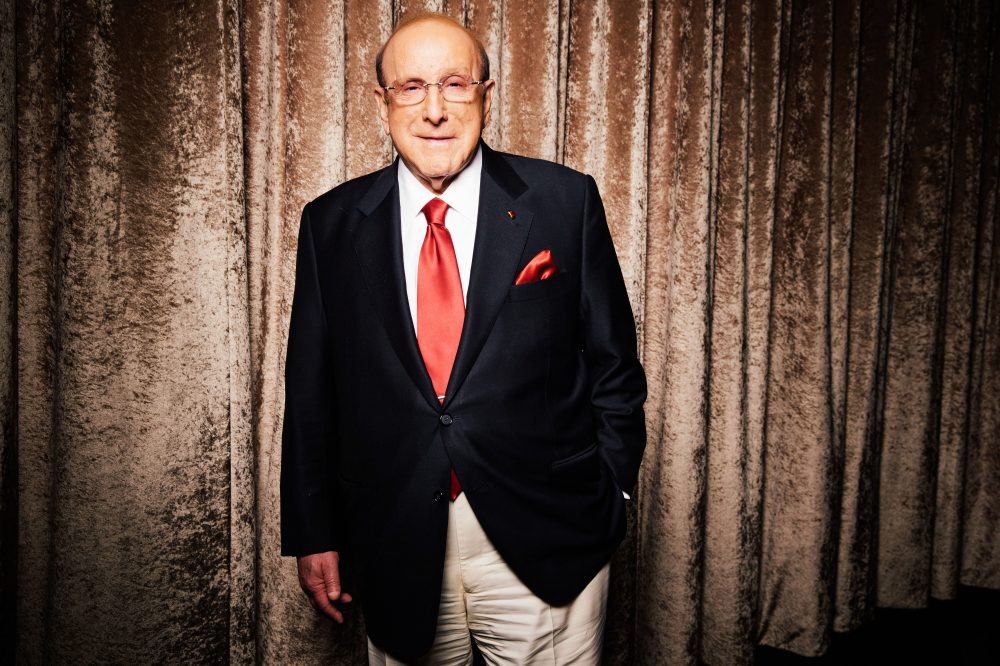

NEW YORK (AP) — Clive Davis, the attorney-turned-record executive who became one of the most influential forces in the music business, has passed away at age 94. His family confirmed the news to the New York Times. Davis was known for discovering or reigniting the careers of legendary artists including Janis Joplin, Whitney Houston, Carlos Santana, and Alicia Keys.
Davis had been hospitalized earlier this year after experiencing an upper respiratory illness, though he was discharged within a few days. He passed away at his apartment in Manhattan, the Times reported. Attempts to reach representatives for Davis on Monday were not immediately successful.
While many record industry heavyweights saw their power diminish with age, Davis seemed to only grow more influential as the decades passed. His career stretched across more than 50 years, crossing multiple musical genres and record labels. Well into his 80s, he was still steering the careers of artists ranging from Barry Manilow to “American Idol” champions Carrie Underwood and Kelly Clarkson.
Among his greatest accomplishments — and most heartbreaking stories — was his relationship with Whitney Houston. Davis signed her to his Arista Records label when she was still a teenager, transforming her into one of America’s most celebrated pop stars. She accumulated numerous No. 1 hits and became one of the best-selling recording artists in history, before substance abuse issues derailed her career. Houston died in a Los Angeles hotel room in 2012, just hours before she was scheduled to appear at Davis’s annual pre-Grammy Awards party. Davis had believed she was getting her life back on track.
“Maybe I should have been more skeptical,” Davis wrote in his 2013 memoir, “The Soundtrack of My Life,” “but I’ve always been optimistic, and I felt hopeful. It felt like old times.”
Davis also helped launch the career of multiplatinum, Grammy-winning artist Alicia Keys, and took pride in having signed other legendary names including Joplin, Billy Joel, Blood Sweat & Tears, and others he frequently called “all-timers.”
“I signed Patti Smith, the great Renaissance woman … I signed Lou Reed … I signed the Grateful Dead,” he said proudly during a 1999 interview with The Associated Press.
Davis had a gift not only for spotting fresh talent but also for keeping established artists relevant long after their peak years. Aretha Franklin, who built her legend at Atlantic Records, found continued success later in her career at Arista Records. Similarly, Luther Vandross recorded his final albums for another Davis-run label, J Records.
Davis was also the creative force behind the 1999 album “Supernatural,” which brought guitar legend Santana together with some of that era’s most popular artists. The album tied a record by winning eight Grammy Awards and gave Santana a level of commercial success that surpassed anything he had achieved in his long career.
He also convinced veteran rock star Rod Stewart to step away from his classic rock catalog and record standards from “The Great American Songbook.” That album, released in 2003, sold millions of copies and was so well received that it led to four volumes in total.
Davis was not without missteps. He passed on the opportunity to sign Meatloaf, a decision he later acknowledged. He also clashed with producer David Foster over the musical arrangement for Houston’s iconic cover of Dolly Parton’s “I Will Always Love You,” which went on to become one of the best-selling singles of all time. Manilow, meanwhile, strongly resisted recording “I Write the Songs” — a track written by Bruce Johnston, not Manilow himself — before it became one of his signature hits. Manilow went on to enjoy similar late-career success drawing from music of the 1950s, ’60s, and ’70s.
“He’s just brilliant at picking ideas he thinks the public will connect,” Manilow said of Davis, having worked with him since his early days as a singer at Columbia Records.
Davis’s career was not without controversy. He joined Columbia Records in 1960 as a lawyer and rose to become its president in 1967. But by 1973, he was fired following accusations of financial mismanagement. Although Davis maintained he was later cleared, his troubles continued — he was later indicted on tax evasion charges, pleaded guilty to one count, and paid a $10,000 fine.
Davis ultimately claimed a measure of vindication: he said Columbia provided him with the funding to launch Arista Records as part of a settlement, and the new label became a major success with artists including country stars Brooks & Dunn, R&B group TLC, Babyface, Houston, Franklin, and many others.
Arista scored an immediate hit with its debut act, Milli Vanilli — but the duo became one of the music industry’s biggest scandals when it was revealed, after they had already won a Grammy, that they had not actually performed the vocals on their recordings. Davis attributed the situation to the label’s European division, which he said was responsible for signing them. The group was ultimately stripped of their best new artist Grammy.
In 1999, as Arista marked its 25th anniversary, Davis faced a new challenge: the label’s parent company at the time, BMG Entertainment — a division of the German media giant Bertelsmann — wanted him to retire, as most of its executives were pushed out around age 60, and Davis was in his mid-60s.
In 2000, despite vocal support from his high-profile roster of artists, the company removed Davis and replaced him with producer and songwriter Antonio “L.A.” Reid, who later became chairman of Island/Def Jam.
Rather than cutting ties entirely, BMG helped Davis establish J Records in what the company described as the largest record label startup ever undertaken. Vandross was among his first signings, along with other acts including the boy band O-Town.
J Records quickly proved successful, and its standing grew considerably with the signing of a young artist named Alicia Keys — a singer, songwriter, and pianist whose powerful voice and compelling R&B material drove her albums to multi-million sales figures and multiple Grammy wins.
Davis’s reach expanded further when he was chosen to lead BMG’s U.S. division. He became a major force behind the careers of “American Idol” winners, guiding many of their albums to platinum status through a partnership between Sony BMG and 19 Recordings Unlimited, the label run by “Idol” creator Simon Fuller.
In 2007, Davis clashed with Clarkson over the direction of her album “My December,” and she publicly voiced her frustration with him. The album underperformed commercially, and Clarkson later apologized.
In 2008, Sony BMG transitioned Davis out of his role as chairman and chief executive officer of the BMG label group, giving him the title of chief creative officer instead.
Davis was born on April 4, 1932, and is survived by four children. In his memoir, he confirmed longstanding speculation that he was bisexual and had been in a relationship with a man in his later years.
“Do I feel I could have been similarly attracted to a woman?” Davis wrote. “The answer is yes.”