
Civil society organizations in South Africa sounded the alarm Wednesday, warning that adolescent girls and women are among the first vulnerable populations bearing the burden of U.S. foreign aid cuts as the Trump administration moves to phase out more than $400 million in annual funding for the country’s HIV programs.
The U.S. State Department announced it would begin a gradual withdrawal of the President’s Emergency Plan for AIDS Relief — known as PEPFAR — a program that has backed South Africa’s fight against HIV and AIDS for two decades and is widely credited with saving more than 20 million lives during that time.
Most programs are expected to be fully wound down by the end of September, with critical personnel support continuing through March of next year, according to the State Department.
South Africa carries the world’s largest HIV burden, with roughly 8 million people living with the virus — approximately 12.7% of its 63 million residents.
The country was specifically targeted for a halt in financial assistance beyond the broader foreign aid cuts U.S. President Donald Trump ordered through an executive order in January 2025. The following month, Trump announced a complete freeze on financial aid to South Africa, pointing to political disputes including the country’s Black Economic Empowerment policies and widely contested claims of a genocide against the white Afrikaner minority community.
Trump also cited South Africa’s land expropriation laws as targeting white Afrikaners and condemned the country’s legal action against Israel at the International Court of Justice, where South Africa has accused Israel of committing genocide in Gaza. Israel strongly rejects that accusation and has characterized the Hamas-led militant attack on southern Israel on October 7, 2023 — which killed approximately 1,200 people — as itself a genocidal act.
A U.S. State Department spokesperson told The Associated Press this week that South African officials had been put on notice that PEPFAR would be pulled unless certain concerns were resolved. Among the requirements was that senior South African government officials must “unequivocally condemn all race-based incitement to violence, including the ‘Kill the Boer’ song, more frequently.” That anti-apartheid liberation song has been interpreted by some as inciting violence against Afrikaners.
The South African government has said the PEPFAR funding represented about 17% of its total HIV program budget. That figure did not include antiretroviral drug purchases, since 90% of those costs are covered domestically and the remaining 10% through the Global Fund.
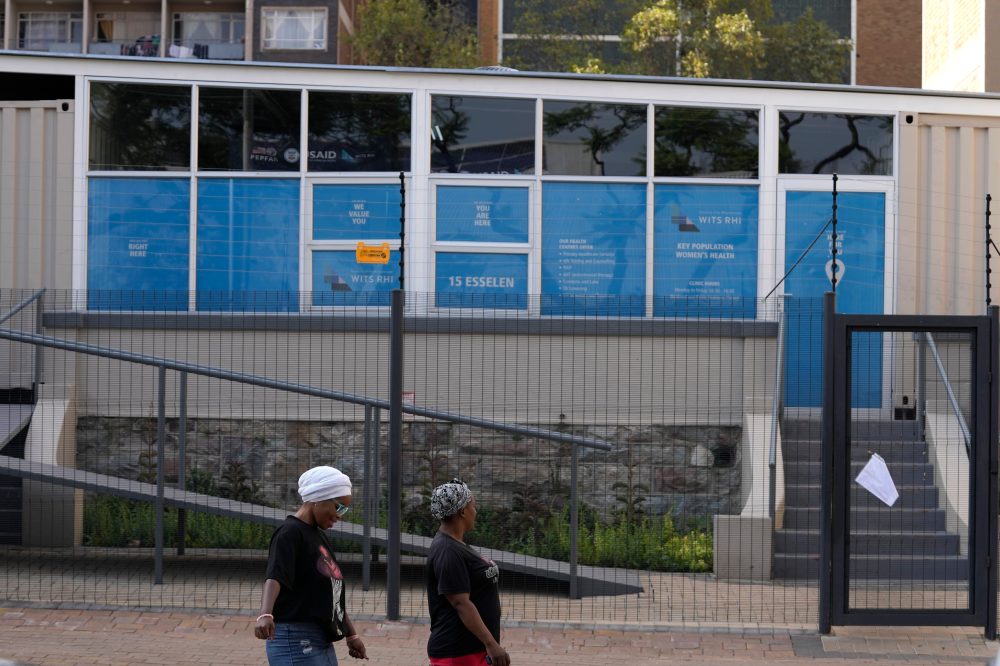
Despite that, HIV-related programs across 27 districts throughout the country have been badly disrupted. Some support facilities have shut their doors entirely, and frontline workers and volunteers have been left without employment.
“The department has long been working on a self-reliance plan to minimize the impact of funding withdrawal since the initial freeze on foreign assistance and a cancellation of USAID grants in January 2025,” said South Africa health department spokesperson Foster Mohale.
Last year, South Africa unveiled a $45 million emergency fund aimed at filling some of the gaps left by the PEPFAR withdrawal.
Civil society group Section27, which examined the funding fallout in three high-HIV-prevalence districts, found that prevention services took a particularly hard hit. “As the health system started to feel the pressure, the response was to prioritize treatment continuity versus prevention,” said Tendai Mafuma, a senior legal researcher at Section27.
The Anova Health Institute reported that it has shut down all of its PEPFAR-funded programs and laid off roughly 3,000 health workers since last year. “Community delivery of PrEP (preexposure prophylaxis) and prevention services has been heavily impacted,” said Dr. Kate Rees, a public health medicine specialist at Anova. “Community delivery of prevention is important to reach the people that need it most.”
Dr. Rees noted that children, adolescents, and young people are among the hardest hit, as are key populations such as men who have sex with men and people who use drugs.