
NEW YORK (AP) — The National Hockey League moved closer to expansion this week, reaching an agreement with billionaire Dan Friedkin and his family to look into whether a new franchise could work in Houston or Austin, Texas.
The Dallas Stars, who moved from Minnesota back in 1993, hold territorial rights in their area — but both Houston and Austin are far enough away that a new team would not step on those rights. The league has also shown it has no problem adding one team at a time, meaning a 33rd franchise doesn’t necessarily need to be paired with a 34th.
“Symmetry I don’t think should necessarily govern expansion,” NHL Commissioner Gary Bettman said Tuesday. “You expand if you think it makes sense and enhances what the league has.”
The financial incentive is significant. Bettman said the full investment would total roughly $3.5 billion, covering both the expansion fee paid to existing team owners and the cost of constructing a brand-new arena.
Currently, the Houston Rockets play in a publicly owned downtown arena managed by team owner Tilman Fertitta’s Clutch City Sports and Entertainment group. In the Austin area, the American Hockey League’s Texas Stars play in a Cedar Park facility with a capacity of just 8,000 — barely more than half the size of the NHL’s smallest current arena in Winnipeg.
“I would be surprised if the NHL would be OK with an expansion team that does not have a new arena,” said Brian Mills, an associate professor at the University of Texas who teaches sports economics and strategy. “The revenue potential with the luxury boxes and the way that they set those up and the money that they like to extract from the local cities is way too large to pass up.”
Both cities also represent massive markets. Houston, with nearly 2.4 million residents, ranks as the fourth-most-populated city in the United States. Austin, with just over 1 million people, falls within the country’s top 12 largest cities.
“Obviously it makes sense if you’re a sports league to have a franchise in the nation’s fifth-largest metro area and one that is growing rapidly,” said Holy Cross professor Victor Matheson, a sports economics expert. “Houston obviously makes sense in general as a destination for any league.”
Austin may be smaller, but it has doubled in population since the mid-1990s and has seen a significant wave of new residents over the past five years. Only eight of the NHL’s current markets are larger.
“It’s becoming more and more of a tech city, so I wouldn’t be surprised if there’s more hockey fans here than there used to be,” Mills said. “I would imagine there’s some market for the NHL here in Austin, particularly more than when it was a sleepy, small town capital of Texas 30 years ago.”
Hockey’s history in Texas goes back decades. During the sport’s rise in the 1960s and ’70s — when the NHL grew from six teams to 18 — the rival World Hockey Association launched, and Houston landed a franchise after a planned team in Dayton, Ohio, never got off the ground.
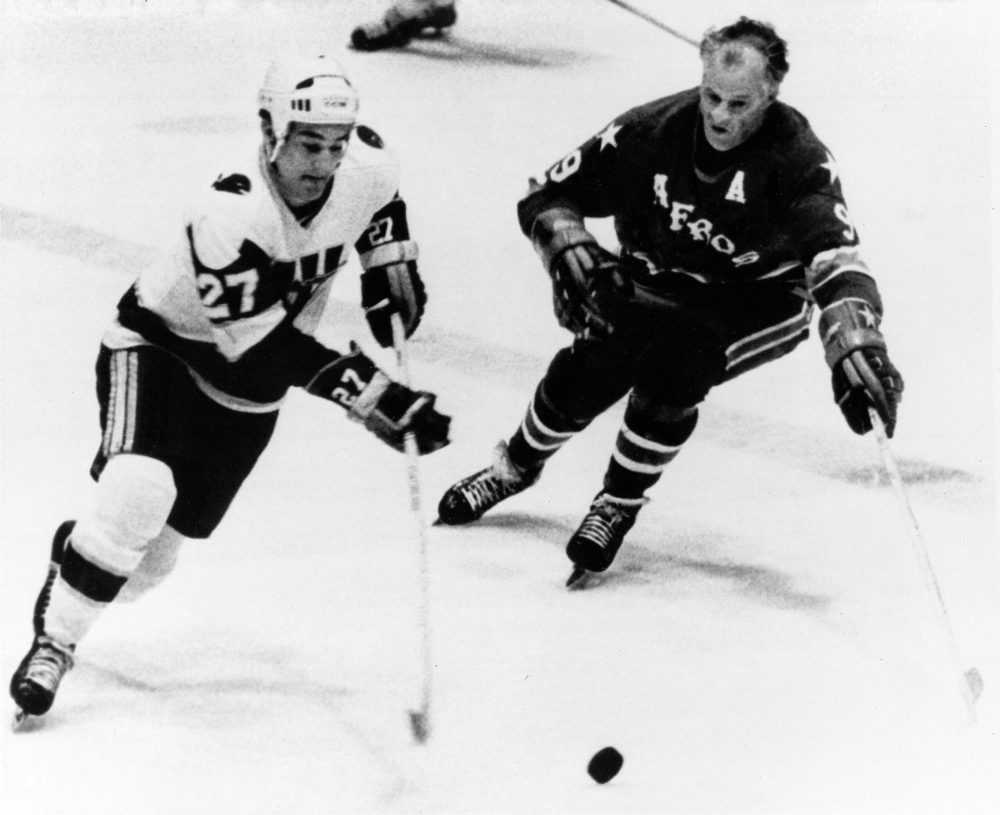
The Houston Aeros’ first season ran from 1972 to 1978. The team became famous for featuring “Mr. Hockey” Gordie Howe alongside his sons Mark and Marty. The Aeros captured four Avco World Trophies as WHA champions before the franchise eventually folded.
A separate AHL team carrying the Aeros name played in Houston from 1994 to 2013. The Texas Stars have been based in Austin since 2009.
“There’s some interest of hockey,” said Steven G. Craig, an economics professor at the University of Houston. “Houston is full of immigrants from around the country and around the world. And Austin is sort of similar in the sense of a pretty heterogeneous population.”
Expanding into another so-called non-traditional hockey market is seen as a major upside. The league has already seen remarkable success in places like Las Vegas and Tampa, Florida, proving that hockey can thrive across the Sun Belt when the right ownership is in place.
“Southern cities have been doing pretty well now these days in the NHL: the Lightning and the Panthers,” Mills said, referring to Florida’s two NHL clubs. “You’ve got some pretty good hockey teams after some pretty miserable failures with some earlier expansion to the South.”
Past stumbles in the South have largely been attributed to ownership problems rather than a lack of fan interest. The second Atlanta franchise, the Thrashers, played from 2000 to 2011 before folding. In Arizona, a series of ownership changes and arena problems ultimately led to the Coyotes being sold and relocated to Salt Lake City in 2024, where they became the Utah Mammoth.
Adding a 33rd team would also mean roster spots for 20 to 23 more NHL players, plus additional opportunities for players developing in the minor leagues. Experts say changes in junior and college hockey development, combined with a steady flow of European talent, mean the player pool is deeper than ever.
“You do have a pretty big pool of players,” Matheson said. “I’m not particularly worried about diluting the talent there because I think there’s a lot of skill.”
Once the current six-month exploration period wraps up, recent expansion history points to a season-ticket drive as a likely next step. Similar campaigns helped validate fan interest ahead of the launches of the Vegas Golden Knights and the Seattle Kraken.
The NHL’s Board of Governors would ultimately need to vote in favor of moving forward. No such vote has taken place yet, though the league’s executive committee has backed the effort to explore Houston and Austin as potential homes.
Even if the league moves forward with a 33rd team and accepts an unbalanced conference structure, a 34th franchise seems likely down the road. Bettman noted that the board was briefed Tuesday on developments in Atlanta and Arizona, suggesting either city could get another shot at NHL hockey.