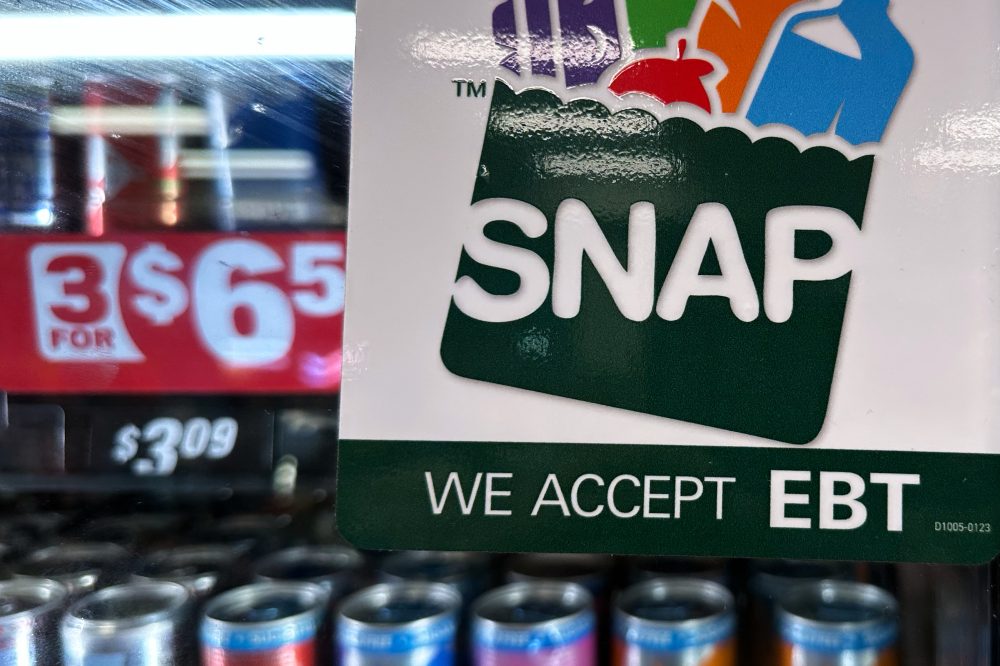

Dozens of states across the country — including Delaware — could soon be on the hook for millions of dollars in food assistance costs if they fail to bring down payment error rates in the Supplemental Nutrition Assistance Program, commonly known as SNAP or food stamps.
New data released Wednesday by the U.S. Department of Agriculture offers the first detailed look at which states stand to benefit and which could face serious financial consequences under a major tax-and-spending law signed by President Donald Trump.
Nine states have already secured an exemption from the new cost-sharing requirement, thanks to error rates low enough to qualify them for a complete waiver. Meanwhile, many others — including Delaware — are scrambling to understand what the changes could mean for their budgets and residents.
The error rate measures the percentage of SNAP benefits that were paid either too high or too low compared to what recipients should have received, largely due to administrative or recipient mistakes. States with error rates of 6% or higher could be required to start covering a share of SNAP benefit costs beginning in October 2027.
“There are billions of dollars that are at stake that states will have to find the money to be able to pay if they want to continue to operate a SNAP program,” said Chloe Green, assistant director for policy at the American Public Human Services Association.
More than 37 million people nationwide received SNAP benefits in March, according to preliminary USDA figures — a drop of nearly 5 million people, or more than 11%, compared to the same time last year. A law Trump signed last July expanded work, volunteer, and job training requirements for many adult SNAP recipients. The new rules are designed to increase accountability and generate federal savings to help offset recent tax cuts.
“These payment error rates are further proof that state accountability is severely lacking in SNAP,” said Agriculture Secretary Brooke Rollins.
Currently, the federal government and states split SNAP administrative costs evenly, 50-50. But starting this October, states will be required to cover 75% of those administrative costs under the new law. Then, beginning in October 2027, states with error rates at or above 6% could also have to pay a portion of the actual benefits distributed to residents.
The error rate data released Wednesday covers fiscal year 2025 and is the first set of numbers that will matter under the new law. States can choose to use either their 2025 or 2026 error rates when calculating how much they owe starting in October 2027.
South Dakota posted the lowest error rate in the country at roughly 2.5%. Nebraska came in just under the threshold at 5.9%. The other eight states with error rates below 6% — and therefore exempt from paying benefit costs — are Idaho, Iowa, Kentucky, Vermont, Utah, Wisconsin, and Wyoming.
Federal law lays out a sliding scale for how much states must contribute toward SNAP benefits based on their error rates. States with error rates between 6% and 8% will owe 5% of benefit costs. Those between 8% and 10% will owe 10%. And states with error rates above 10% will be responsible for 15% of benefit costs.
Missouri serves as a telling example. With an error rate of 8.7%, the state could be required to cover 10% of its SNAP benefit costs starting in October 2027. Missouri residents received roughly $1.5 billion in SNAP benefits in 2024. If that level of spending continues, the state could face a bill of $150 million — more than the total budget for several of its state prisons.
However, an exception in the law gives states with the highest error rates additional time to make improvements. States with error rates of at least 13.34% in fiscal year 2025 will have their cost-sharing requirements delayed until at least the 2029 fiscal year.
Delaware is among the states receiving that delay. Alaska had the highest error rate in the nation at over 23%. Other jurisdictions also receiving the one-year delay include Georgia, Illinois, New Mexico, Oregon, and the District of Columbia.
There is still an opportunity for more states to earn an extension. Any state with an error rate exceeding 13.34% in 2026 could have its cost-sharing requirements pushed back to the 2030 fiscal year.
A recent survey of state agencies that administer SNAP found that most are already working to identify the root causes of their payment mistakes. Errors appear to be split fairly evenly between program recipients and administrators. Many states said they plan to hire additional staff focused on reducing those errors.
Still, states are also preparing for potential cuts. More than a quarter of survey respondents said they might consider tightening eligibility rules, and four states indicated they could consider leaving the SNAP program altogether. The survey did not identify which states said they might withdraw.
Some advocates for low-income families are calling on Congress to delay the cost-sharing requirements for all states, which would require a change in federal law.
The error-rate data “really underscore the urgent need for Congress to delay this massive cost shift to state budgets,” said Katie Bergh, senior policy analyst at the Center on Budget and Policy Priorities.
Bergh added that many people are already dealing with high grocery prices, and “this is coming at a time when millions of people have already lost food assistance.”