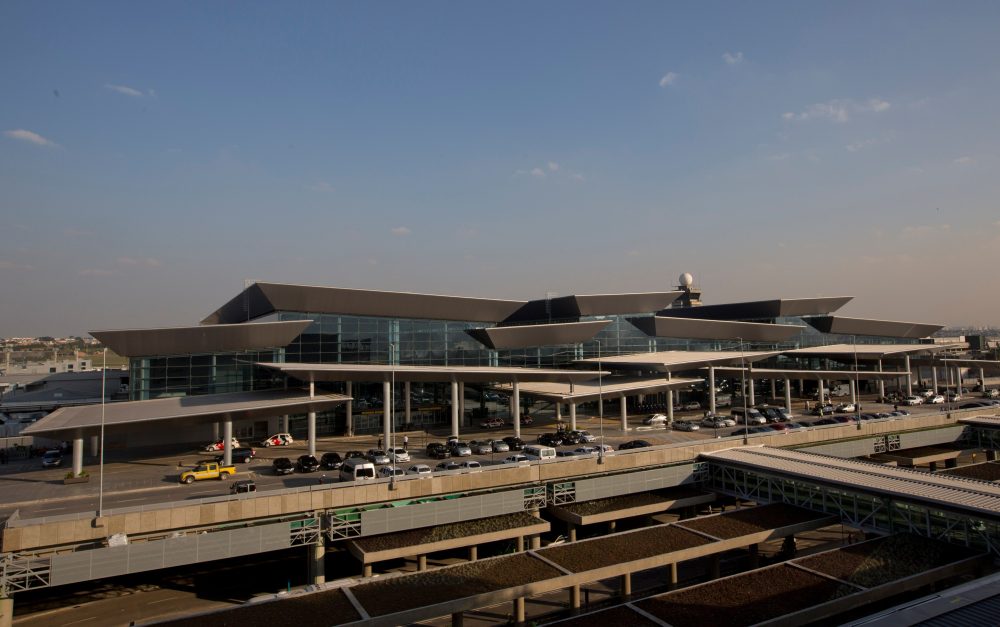

RIO DE JANEIRO — Federal police in Brazil took a Spanish citizen into custody Wednesday at São Paulo’s Guarulhos international airport, marking the most recent in a growing string of high-profile racism-related arrests involving foreign visitors to the country.
Brazil has confronted a long history tied to slavery and has established some of the most stringent anti-racism legislation in Latin America. Those protections were written into the country’s 1988 constitution. Under Brazilian law, insulting someone based on their race can result in a prison sentence of two to five years, along with financial penalties.
According to police, the crew aboard a LATAM airlines flight that had arrived from the northeastern city of São Luís contacted authorities after the Spanish woman allegedly hurled racially offensive comments at the workers responsible for unloading the plane’s baggage. Officers took her into custody as she stepped off the aircraft. LATAM issued a statement saying there was no excuse for the aggression aimed at its staff and that the airline stands firmly against racism and discrimination in all forms.
This incident follows several similar cases in recent months. In January, Argentine national Agostina Páez was arrested in Rio after video spread widely on social media showing her making monkey gestures toward a waiter at a nightclub. Though initially prohibited from leaving Brazil, Páez was ultimately allowed to return to Argentina in April, where photographs captured her meeting with Sen. Patricia Bullrich, a close ally of Argentine President Javier Milei. Both were seen celebrating her homecoming. Legal proceedings in her case are still underway.
In May, another Argentine national, Eduardo Ignacio Murias, was arrested in Minas Gerais. Authorities allege he took unauthorized photos and video of a young child and then shared those images alongside racist messages written in Spanish. News outlet G1 reported on June 17 that a court formally indicted Murias, who continues to be held in pretrial detention.
Also in May, a Chilean citizen was arrested for making racial and homophobic slurs against flight crew members during a trip between Guarulhos and Frankfurt. That individual also reportedly attempted to open the aircraft door mid-flight and, when crew members intervened, directed racial and homophobic insults at them, according to a May 15 police statement.
Brazil’s ties to slavery run deep — the country imported more Africans into forced labor than any other nation and was the final country in the Western Hemisphere to abolish slavery, doing so in 1888. At the same time, Brazil has a long tradition of anti-racism advocacy driven by movements pushing for racial equality.
Irapuã Santana, a lawyer who specializes in anti-racism cases and a professor at the Getulio Vargas Foundation, a think-tank and university, noted the significance of that history. “Social movements played a very important role in ensuring that the Black population was recognized in the 1988 constitution,” which explicitly bans racism, he said.
In January 2023, Brazilian President Luiz Inácio Lula da Silva signed legislation that classified racial insults as equivalent to the crime of racism itself, giving courts stronger tools to address such cases.
Santana added that racism cases in Brazil are drawing increasing public attention as more people learn about the country’s legal protections and recognize that the justice system can and does respond to such offenses.