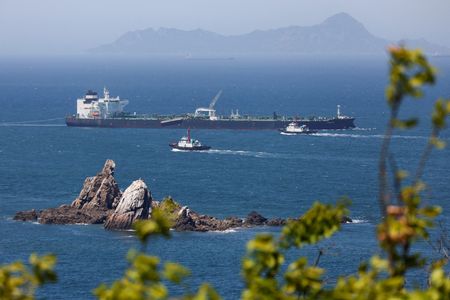

The United States has modified its United Nations resolution calling on Iran to cease attacks and mining operations in the Strait of Hormuz, though diplomatic sources indicate China and Russia remain poised to block the measure, according to Friday reports.
The timing presents diplomatic challenges as President Donald Trump prepares for his China visit next week, where the Iran conflict is anticipated to dominate discussions.
The revised draft, distributed to Security Council members Thursday afternoon, eliminated language referencing Chapter VII of the U.N. Charter, which would have enabled the council to authorize actions from economic sanctions to military intervention.
Despite this change, strong language condemning Iran persists, along with provisions stating that if Iran fails to comply, the council would “meet again to consider effective measures … including sanctions measures, in order to ensure the freedom of navigation in the area.”
No timeline has been established for when the Security Council might hold a vote on this resolution.
Although the current text stops short of explicitly authorizing military force, it doesn’t prohibit such action and “reaffirms the right of member States … to defend their vessels from attacks and threats, including those that undermine navigational rights and freedoms.”
Last month, Russia and China blocked a similar U.S.-supported resolution within the 15-member Security Council that appeared to create pathways for legitimizing American military response against Iran.
According to diplomatic sources, the initial version of this resolution, co-authored by the United States and Bahrain and circulated earlier this week, faced significant opposition from Chinese and Russian representatives.
One U.N. diplomat indicated that removing the Chapter VII language, which was also done with last month’s failed resolution, has not addressed the fundamental concerns raised by China and Russia.
China’s U.N. representatives declined to comment on the updated draft, while Russian officials did not provide immediate responses.
Thursday’s statement from Russia’s mission emphasized that Security Council members should avoid “pushing through one-sided and confrontational draft resolutions” that might “trigger a new wave of escalation in the Middle East.”
“It is precisely for this reason that on April 7, Russia, along with China, blocked the adoption of a draft resolution on the situation in the Strait of Hormuz,” the statement explained.
Earlier this week, U.S. Secretary of State Marco Rubio characterized the proposed resolution as a measure of the United Nations’ effectiveness and appealed to China and Russia to refrain from vetoing the proposal.