
BUENOS AIRES, Argentina (AP) — Provincial authorities in Argentina’s Tierra del Fuego are disputing federal claims that a fatal hantavirus outbreak aboard a cruise ship may have started in their region, calling instead for investigations into other Argentine locations the infected passengers had visited before their voyage.
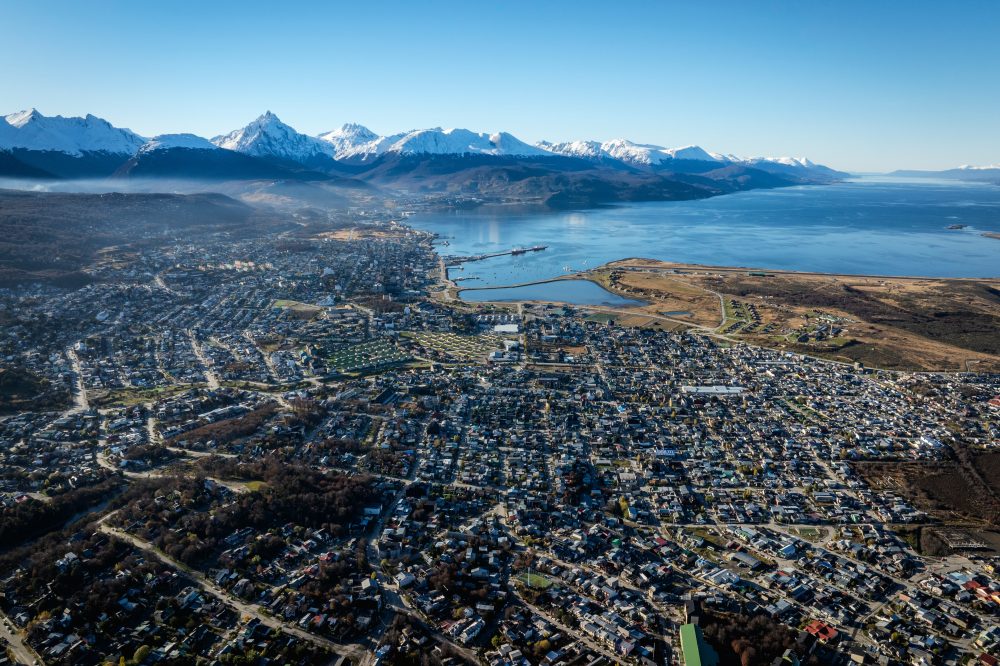
Local leaders in this southernmost archipelago of South America are rejecting the theory that the virus originated from a waste site in Ushuaia that national health officials identified earlier this week as the probable location where two Dutch tourists became infected while observing birds.
“I believe we are facing a smear campaign against this destination,” Juan Facundo Petrina, the province’s director of epidemiology, told reporters Friday in a press conference from Ushuaia.
Petrina said federal authorities failed to reach out to local officials initially, learning about the supposed Ushuaia connection through news coverage instead. He also noted that Tierra del Fuego has never documented a hantavirus case, particularly not the Andes strain linked to the ship outbreak, unlike northern Argentine provinces.
The Dutch pair, who both perished, remained in Tierra del Fuego for only two days during their four-month journey across Argentina and Chile, he noted, which “dramatically reduces the likelihood that the infection happened here.”
Serving as the primary departure point for Antarctic expeditions, the isolated community of Ushuaia welcomed more than 157,000 cruise travelers last year — nearly twice its resident population. Wealthy cruise tourists have become increasingly essential to Tierra del Fuego’s economic stability as its primary electronics manufacturing industry struggles under libertarian President Javier Milei’s elimination of trade protections and government subsidies.
“Now the whole world is associating Ushuaia, and cruise travel, with a lethal virus, and if this continues, reservations for next season are honestly going to plummet because nobody will want to be exposed,” said Rubén Rafael, the former health minister of Tierra del Fuego. “Ushuaia’s reputation as a tourist destination is suffering badly.”
When questioned Friday about whether the Argentine Health Ministry still supported the theory that the outbreak began at the Ushuaia landfill, a ministry representative, speaking anonymously due to lack of authorization to discuss the investigation, confirmed their position remained unchanged and Ushuaia was the sole location receiving investigators, while acknowledging the virus could have originated elsewhere in Argentina.
The Health Ministry revealed Wednesday it would send specialists from the government-supported Malbran Institute to capture rodents at the Ushuaia waste facility and surrounding areas for testing for the Andes hantavirus strain.
More than two days later, the research team has not yet arrived. The official attributed the postponement to Argentina’s typically sluggish government processes.
In Tierra del Fuego, Petrina expressed hope that national researchers would vindicate Ushuaia. He explained the delay was needed “to determine all the exact locations where trapping and analysis will take place.”
Others in the left-leaning province criticized the administration’s postponement and lack of openness as part of a broader trend since Milei dismantled the nation’s health infrastructure, pulling Argentina from the World Health Organization shortly after U.S. President Donald Trump made the same move and eliminating national programs that monitor infectious diseases.
“The health system in Argentina is going through a serious crisis,” said Rafael, the former provincial health minister. “The system is weakened, and as a result, the response to this outbreak has been very slow. That exposes all of us.”
Beyond Argentina, public health specialists emphasized that the investigation represents a crucial measure to prevent similar incidents.
“It’s not an extreme emergency, but it’s still of urgency in terms of collecting the data,” said Celine Gounder, an epidemiologist who serves as editor-at-large for public health at KFF Health News and previously advised the Biden administration on the coronavirus pandemic.
“If there is an Andes virus that is more infectious locally you’d want to know that so that you can warn local residents and take measures to prevent their infection. And if they haven’t started that process yet, that would be concerning.”
The Dutch travelers whom the WHO has confirmed as the initial cruise passengers infected with the Andes variant — the sole hantavirus that may transmit between people in uncommon instances — reached Argentina last November, according to the Argentine Health Ministry.
The travelers, ages 70 and 69, spent weeks driving throughout the nation before making multiple border crossings between Argentina and Chile over several months. They also journeyed between Argentina and Uruguay in March before starting their Antarctic cruise from Ushuaia on April 1.
The administrations of Chile, which has experienced fatal Andes variant outbreaks previously, and Uruguay, which has not, determined the couple could not have contracted the infection during their visits based on the virus’s up-to-eight-week incubation timeline. They provided no additional information.
Since the couple died, tracking their movements across the country proves extremely challenging, Argentine health officials stated, adding they are working to complete missing details of the couple’s itinerary.
Numerous independent Argentine disease specialists believe the hantavirus outbreak most likely originated from the forests of central Patagonia, another significant tourist area where officials have recently documented hantavirus cases and long-tailed rodents known to harbor the Andes variant are abundant — unlike in Ushuaia.
“With the media pressure now, it wouldn’t surprise me if the government’s response has been more about quieting criticism by appearing to act,” said Raul González Ittig, genetics professor at the National University of Cordoba.