
HAVANA — Secretary of State Marco Rubio stood behind the Trump administration’s latest sanctions against Cuba on Friday, with the most significant penalties targeting GAESA (Grupo de Administración Empresarial S.A.), a massive business empire controlled by Cuba’s military forces.
The penalties announced Thursday also hit Moa Nickel, a Cuban-Canadian partnership involving Sherritt International of Canada. The Canadian company responded immediately by announcing its complete withdrawal from Cuba, bringing to a close more than three decades of operations on the island.
According to Lee Schlenker, who researches at the Quincy Institute’s Global South program, the May 1 executive order and May 7 designations dramatically broaden Washington’s ability to impose penalties on foreign individuals and companies.
“Not only are they subject to having their assets frozen but their U.S. accounts as well as their travel to the U.S., that of their shareholders, investors or employees,” Schlenker explained. “This is bound to have an extremely significant impact of the presence of foreign companies” in Cuba.
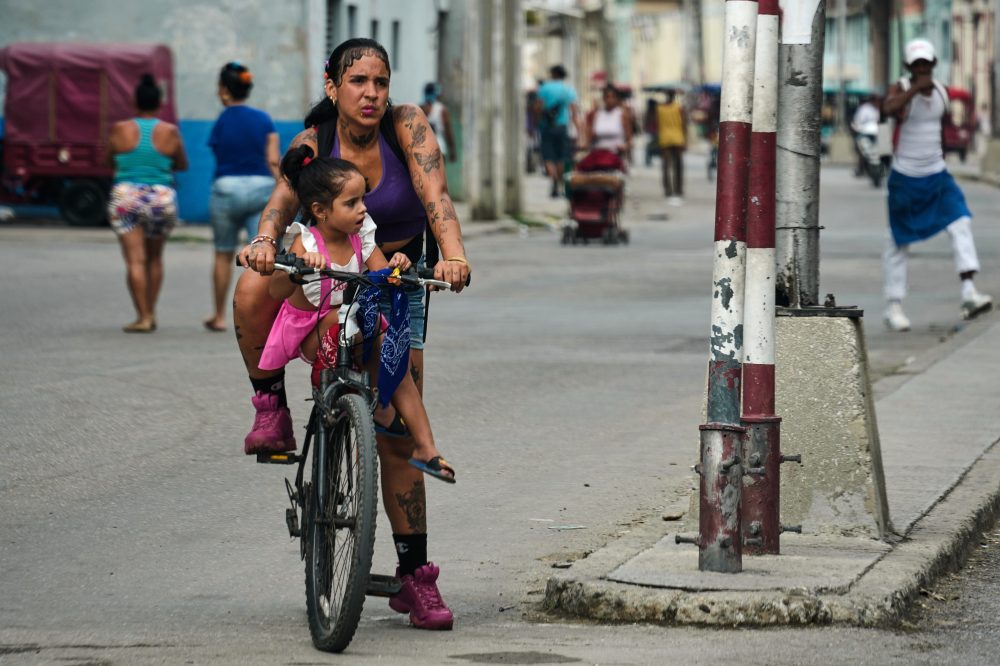
Cuba specialist Pavel Vidal from Pontificia Universidad Javeriana described the new restrictions as “very concerning” for an economy that’s already “practically paralyzed.” Since January, Washington has prevented fuel deliveries to Cuba, worsening the nation’s prolonged economic troubles. Vidal predicted the sanctions would discourage GAESA’s existing business partners, noting that “very few will risk defying them.”
Vidal characterized the fresh measures as creating “total isolation,” powered by the fear they create among global financial institutions, insurance companies and multinational corporations.
Having examined GAESA’s internal records, Vidal emphasized that the organization’s extensive involvement across virtually all Cuban economic sectors makes any business relationship with the island potentially problematic under Washington’s new regulations.
Based on Vidal’s analysis of available data, GAESA controls approximately 40% of Cuba’s total economic output. By early 2024, the conglomerate possessed $14.5 billion in available cash, generating yearly income three times larger than Cuba’s entire government budget.
Created during the 1990s under military leadership, GAESA represented the Cuban Armed Forces’ calculated answer to the economic devastation following the Soviet collapse and intensified U.S. economic pressure during that period.
Though government-owned, GAESA operates without financial scrutiny from the Office of the Comptroller General. Former director Gladys Bejerano acknowledged this absence of oversight in a 2024 discussion before stepping down shortly afterward.
Luis Alberto Rodríguez López-Calleja ran GAESA for many years until his passing in July 2022. Married to former President Raúl Castro’s daughter, he represented a cornerstone of the ruling family — a position now carried forward by his son, Raúl Guillermo Rodríguez Castro. Though officially working as his grandfather’s personal security chief, the younger Castro has recently become a key go-between in delicate negotiations with Washington.
This week’s sanctions also placed Ania Guillermina Lastres on the U.S. penalty list. Taking over from López-Calleja, she now leads GAESA as executive president, directing the organization’s extensive global financial operations.
From available information, GAESA controls numerous retail businesses selling products ranging from groceries and clothing to household goods, plus an extensive service network including vehicle rentals and tourism agencies. The conglomerate also runs Cuba’s banking sector, currency exchange operations, and manages the nation’s primary hotel properties.
Speaking to reporters Friday, Rubio emphasized the sanctions targeted the regime rather than ordinary Cubans, describing GAESA as an organization that “is taking anything that makes money in Cuba and illegally putting it into the pockets of a few regime insiders.”
Cuban officials argue the sanctions represent “collective punishment” intended to devastate the island’s economy, claiming the Trump administration’s approach prioritizes political gains over Cuban citizens’ well-being.
These latest penalties against Havana arrive amid an ongoing U.S. energy embargo that has triggered widespread electrical and water service disruptions plus acute fuel and water shortages.