
The family of imprisoned Hong Kong democracy advocate Jimmy Lai is pinning their hopes on President Donald Trump’s upcoming meeting with Chinese leader Xi Jinping, believing diplomatic negotiations could be their last chance to secure his freedom.
Lai, who previously believed Trump might prevent China from implementing its controversial national security legislation, instead found himself sentenced to two decades behind bars under that very law.
The 78-year-old former newspaper publisher established a pro-democracy publication that authorities shuttered amid the government’s response to Hong Kong’s widespread 2019 demonstrations against Chinese rule.
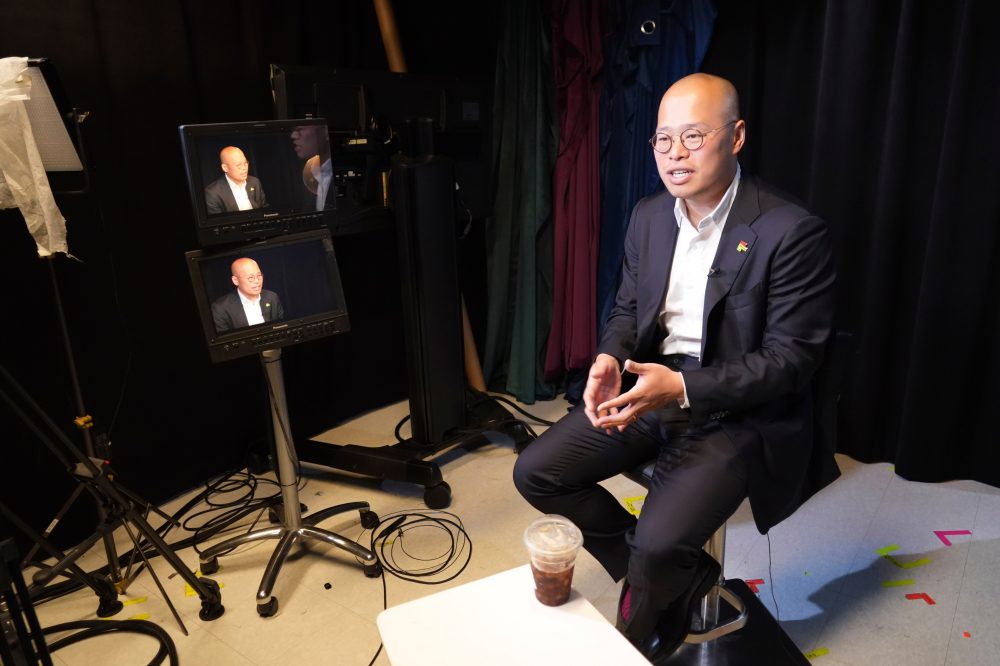
Political analysts view Lai’s imprisonment as emblematic of eroding civil liberties that Beijing had guaranteed when Britain transferred Hong Kong’s sovereignty in 1997. His son Sebastien Lai expressed urgent concerns about his elderly father’s deteriorating situation in an Associated Press interview.
While Trump’s discussions with Xi are expected to cover trade relations, Middle East conflicts, and Taiwan tensions, the president has indicated plans to address Lai’s case. Speaking to radio host Hugh Hewitt, Trump noted “there’s a little bitterness, I would say, with him and Jimmy Lai.”
The 31-year-old son believes his father’s situation could be resolved more easily than other complicated international disputes the two leaders will tackle.
“My father will die in prison if he’s not freed,” he stated, warning that such an outcome would devastate his family while creating a martyred figure. “It’s a lose-lose scenario for every single person.”
Trump has publicly expressed compassion for the elder Lai’s predicament. “I feel so badly,” the president told journalists in December following Lai’s conviction for conspiring with foreign entities and publishing seditious content. Trump had previously raised the activist’s case during his October meeting with Xi.
Mark Clifford, who leads the Committee for Freedom in Hong Kong Foundation advocating for Lai’s release, said sources briefed on the October discussions indicated Xi and his team “noted” Trump’s comments without strong opposition. This response suggests willingness to engage in dialogue, Clifford explained.
According to Clifford’s sources, Trump directed Treasury Secretary Scott Bessent to mention Lai’s release during June trade negotiations with China. Bessent reportedly raised Trump’s interest in freeing the activist during recent talks with Chinese officials, who acknowledged the request without significant pushback.
“It is positive that senior Chinese officials have stopped pushing back on the issue,” Clifford observed. The Treasury Department declined to comment on these claims.
However, Beijing maintains its hardline stance publicly. In March, Chinese foreign ministry representative Guo Jiakun labeled Lai as the orchestrator behind the 2019 civil unrest that disrupted Hong Kong.
When questioned Thursday about potentially releasing Lai, the foreign ministry avoided direct answers, stating that Hong Kong matters are domestic concerns where external interference isn’t permitted.
Hong Kong’s government previously dismissed connections between Lai’s case and press freedoms. Officials told the AP that Lai received conviction through transparent and equitable legal proceedings, emphasizing their commitment to law enforcement.
The White House hasn’t responded to inquiries about how aggressively Trump will advocate for Lai’s freedom.
More than 100 bipartisan congressional members sent a Thursday letter urging Trump to pursue Lai’s release during the Xi summit.
Despite escalating U.S.-China tensions, diplomatic efforts have achieved some prisoner releases. American pastor David Lin gained freedom in 2024 after nearly two decades in Chinese detention, while both nations exchanged several prisoners through diplomatic arrangements that year.
Activists note Beijing’s growing reluctance to release human rights challengers. Chinese Nobel winner Liu Xiaobo died in a northeastern Chinese hospital in 2017 despite international appeals for his medical release abroad.
Human rights attorney Jared Genser, Liu’s former representative, said a White House official confirmed Trump had contacted Xi requesting Liu’s medical release.
Under Xi’s predecessor Hu Jintao, China prioritized economic cooperation and international image concerns, explained Genser, who secured another activist’s freedom in 2007. Xi’s administration emphasizes national sovereignty and rejecting foreign intervention.
“China knows that by taking a very tough and unrelenting position that most countries in the world are not going to be willing to do more than privately raise a case,” Genser said. “That self-censorship to me is the biggest factor… in our inability to secure the release of political prisoners under Xi Jinping, as compared to Hu Jintao.”
John Kamm, who founded the prisoner advocacy organization Dui Hua Foundation, said China previously offered concessions when seeking specific goals, like Olympic hosting rights.
However, he attributed reduced success in freeing detained activists partly to American inattention. “I don’t know of anyone in this administration who cares about political prisoners in China,” Kamm stated, suggesting Secretary of State Marco Rubio might be an exception, though focused elsewhere.
Kamm noted Trump’s emphasis on trade, investment, and Middle East conflicts, but suggested China might release Lai in exchange for American concessions on Beijing’s priorities.
Thomas Kellogg from Georgetown Center for Asian Law believes both governments have motivations for reaching an agreement.
Freeing Lai would allow China to demonstrate readiness to progress beyond the nearly six-year period since implementing Hong Kong’s security legislation, while Trump’s team could claim a diplomatic victory after “a difficult couple of months,” Kellogg explained.
Such an achievement would generate praise even from administration critics, he added. “If the Trump administration is pushing very hard for Jimmy Lai’s release, then we could get a positive outcome.”
Wilson Chan, co-founder of the Pagoda Institute think tank, doubts diplomatic resolution prospects, believing Beijing wants to send a message through Lai’s case.
Chan suggested that continued international attention might make Beijing view Lai as an influential figure still representing security threats, while silence would eliminate pressure for action.
Lai, who holds British citizenship, chose not to appeal his conviction and sentence. The government, which considers him Chinese, seeks to seize his assets citing national security justifications.
Sebastien Lai described this action as another instance of his father “still being attacked.”
The elder Lai experiences health problems including irregular heartbeat and diabetes, according to his Hong Kong legal representatives in January. Prosecutors cited medical reports indicating his overall health remains stable. Officials claim his solitary confinement resulted from his own request.
The London-based son has maintained correspondence with his father throughout more than five years of detention. He believes his father would prefer quiet retirement if granted early release.
“The Chinese government would be complicit in killing him,” he warned.