THE HAGUE, Netherlands — Dutch authorities have formally charged a 37-year-old man with terrorism in connection with a bombing at the headquarters of the nation’s ruling political party, officials announced Monday during a court hearing that extended his detention for another two weeks.
The explosive device detonated on May 8 after being inserted through a mail slot at the D66 party offices, a centrist political organization. While no injuries occurred, the blast happened while approximately 30 young party members were conducting a meeting inside the building. Prime Minister Rob Jetten described the attendees as shaken but physically unharmed during his weekly press briefing.
Authorities have not disclosed the suspect’s identity, following standard Dutch privacy laws, and he was taken into custody immediately following the incident. Officials report that the man has remained silent regarding his reasons for the attack.
“The man is suspected of causing an explosion with terrorist intent. An explosion targeting the headquarters of a political party instills fear in a part of the population. For this reason, the terrorist motive has been charged,” The Hague Public Prosecutor’s Office stated in their official announcement.
Speaking to media representatives on Friday, Jetten, who assumed office in February, dismissed the intimidation attempt. “It was pretty futile if you think you can intimidate politicians with these kinds of actions,” he said.
This marks the second assault on the same downtown Hague facility within twelve months. Last September, the building suffered damage during a violent right-wing protest that turned destructive, occurring just weeks before the country’s national elections.
The Salisbury University Sea Gulls baseball program has secured its place as a host site for the upcoming NCAA Division III Baseball Tournament, marking an impressive fifth straight year of hosting privileges.
Officials announced Monday that the Sea Gulls, currently ranked seventh nationally, have been chosen as one of 16 regional host institutions for the 2026 tournament. The team will welcome visiting squads to compete at Donnie Williams Stadium on their home campus.
The tournament bracket selection was made public Monday afternoon from Indianapolis, confirming Salisbury’s continued status as a premier destination for Division III baseball competition. The consistent hosting designation reflects the program’s sustained excellence and quality facilities over the past half-decade.
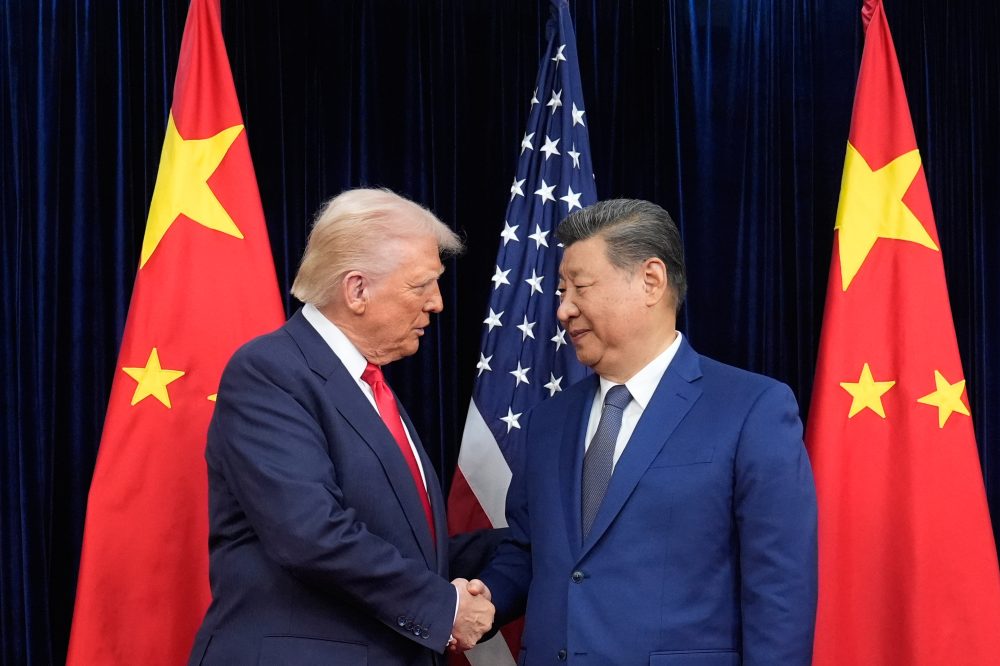
According to Bloomberg News, the Trump administration has extended invitations to several prominent business executives to join President Donald Trump during his upcoming state visit to China, a White House official confirmed Monday.
Among the high-profile attendees will be Tesla CEO Elon Musk and Apple’s chief executive Tim Cook, Bloomberg reported. The business delegation also includes Goldman Sachs Group CEO David Solomon, Blackstone’s Stephen Schwarzman, BlackRock leader Larry Fink, Citigroup’s Jane Fraser, and Meta Platforms’ Dina Powell McCormick.
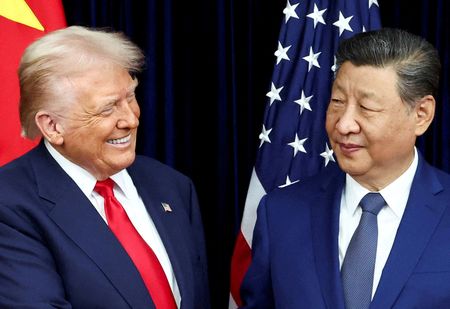
According to the report, Trump plans to bring more than twelve leading corporate executives as part of his strategy to negotiate new commercial agreements and purchasing deals with Beijing during his meeting with Chinese President Xi Jinping.
None of the mentioned corporations provided immediate responses when contacted for comment by Reuters.
China’s official Xinhua news agency announced that Trump’s state visit is scheduled to take place from May 13 through May 15.
WASHINGTON – President Donald Trump announced Monday his intention to temporarily suspend the federal gas tax of 18 cents per gallon as American drivers continue facing elevated fuel costs during the ongoing Iran conflict, according to CBS News.
“We’re going to take off the gas tax for a period of time, and when gas goes down, we’ll let it phase back in,” Trump stated during his interview with CBS.
When asked about potential assistance for airlines struggling with increased jet fuel expenses, Trump indicated no such relief package had been formally proposed. “The airlines are doing not badly,” he remarked to CBS, suggesting the industry doesn’t require a bailout at this time.
The announcement follows comments made Sunday by Energy Secretary Chris Wright, who confirmed during NBC’s “Meet the Press” that the administration was considering a federal gas tax suspension.
Meanwhile, individual states have begun implementing their own relief measures. Indiana, Kentucky, and Georgia have all moved forward with reductions to their state gasoline taxes to help ease the burden on consumers filling up at gas stations.
Fuel costs have climbed steadily since the Iran war commenced on February 28th. According to AAA data released Monday, the national average price for a gallon of gasoline has reached $4.52.
The Eurovision Song Contest is implementing significant changes to its voting system after facing criticism over Israel’s ability to rally public support in last year’s competition, which was already marked by boycotts over the country’s participation.
The European Broadcasting Union, which oversees the 70-year-old musical celebration, has established new guidelines for 2026 aimed at preventing “disproportionate promotion campaigns” following concerns raised by multiple national broadcasters about the previous year’s results.
Israel’s entry “New Day Will Rise” secured an exceptionally high 83% of its total points from public voting, ultimately finishing second in the overall competition. In contrast, Austria’s winning song “Wasted Love” received only 41% of its points from the public and depended heavily on jury votes to claim victory.
Social media activity from Israel’s foreign ministry X account during last year’s semi-final actively promoted voting for singer Yuval Raphael, specifically noting that “you can vote up to 20 times.”
Eurovision Song Contest Director Martin Green explained the reasoning behind the rule changes without directly addressing the Israeli posts. “We saw some activity last year which we could describe as disproportionate marketing and promotional activity that we felt was out of sync with the nature of the show, so we put some rules in about that,” Green stated in an interview with Reuters.
The updated regulations reduce the maximum number of votes per caller from 20 to 10, with voters identified through their payment methods to prevent abuse.
This past Saturday, Green issued a formal warning to Israel’s national broadcaster KAN regarding online videos posted by this year’s contestant Noam Bettan that instructed viewers to “vote 10 times for Israel.” Officials determined that directly soliciting the maximum number of votes violated both contest rules and the competition’s spirit.
KAN responded by stating it “follows all EBU rules” and characterized the videos as “an independent initiative carried out by the artist’s close personal team, without any prohibited financing, similar to activities conducted by other contestants as well.”
Israel has not provided a direct response to questions about its promotional strategies from the previous year, though the country has frequently claimed it faces unfair global criticism, particularly since the Gaza conflict began.
These developments highlight the ongoing challenges Eurovision faces in managing what the EBU describes as the world’s largest and most complicated television voting system.
Green emphasized that encouraging diaspora support is common practice among participating nations. “All countries ask their people, particularly their diasporas – because of course you can’t vote for your own country in your own country – to get behind (them). It’s a sport. We are the Olympics of music, so there’s nothing unusual about that,” he said during Friday’s interview.
The European Broadcasting Union is now encouraging viewers to distribute their votes among multiple songs while implementing additional fraud prevention measures.
Despite the new restrictions, determined voters can still potentially cast up to 30 votes by using all three available payment methods: online, text message, and phone calls.
Juan Moreno-Ternero, an economics professor at Pablo de Olavide University in Seville, Spain, who authored a 2022 academic study on Eurovision voting patterns, acknowledged the inherent challenges in any voting system. “You can always find pros and cons for almost any protocol,” he noted. “All voting rules, no matter what, are subject to manipulation.”
Buffalo Bills management announced Monday they have added defensive end Mike Danna to their roster through a one-year contract agreement.
The organization did not reveal financial details of the agreement.
The 28-year-old pass rusher has played his complete professional career with Kansas City after the Chiefs selected him during the fifth round of the 2020 draft.
Danna achieved his most productive campaign during the 2023 season, earning starting positions in all 16 regular season contests and every playoff game as Kansas City captured the Super Bowl title. That year, he recorded personal bests with 50 tackles, 6.5 sacks, and 13 quarterback pressures during regular season play, while contributing seven tackles throughout the postseason run.
During the 2024 campaign, he accumulated 25 tackles, one sack, and four quarterback hits across 15 appearances, starting 14 of those contests.
Throughout his six-year professional tenure, Danna has compiled 194 tackles, 25 tackles behind the line of scrimmage, 21.5 sacks, 51 quarterback hits, and six forced fumbles over 87 regular season games with 49 starts, while earning two Super Bowl championship rings.
To create roster space, Buffalo released cornerback MJ Devonshire, who joined the practice squad last December before signing a two-year, $1.9 million reserve/future deal in January.
Washington’s NFL franchise made official Monday their decision to retain veteran defensive back Antonio Hamilton with a fresh one-year contract extension.
Financial details of Hamilton’s new agreement with the Commanders remain undisclosed by the organization.
The 33-year-old cornerback contributed to 15 contests during his inaugural campaign with Washington in 2025, making one starting appearance while compiling 18 defensive stops, breaking up two passes, and recovering a fumble.
Hamilton originally entered the NFL as an undrafted player from South Carolina State University and has spent a decade in professional football across multiple franchises, including stints with the former Oakland Raiders from 2016-2017, followed by time with the New York Giants through 2019, Kansas City Chiefs in 2020, Arizona Cardinals from 2021-2023, Atlanta Falcons in 2024, and most recently Washington.
Throughout his professional career spanning 124 games with 19 starting assignments, Hamilton has accumulated 197 total tackles, intercepted two passes, defended 27 pass attempts, recovered two fumbles, and recorded one tackle behind the line of scrimmage.
Delaware’s top prosecutor is turning to the courts to compel a home improvement contractor to comply with a legal demand for information after months of silence.
Attorney General Kathy Jennings has asked the Superior Court to force Mastercraft Contracting, LLC to honor a subpoena issued by her Consumer Protection Unit. The company has ignored the legal request for almost three months without providing any meaningful response, according to court filings.
The contractor has been the subject of numerous consumer complaints, prompting the Attorney General’s investigation. Mastercraft Contracting operates as a home improvement business that has drawn scrutiny from state regulators.
The Consumer Protection Unit’s subpoena was part of an ongoing investigation into the company’s business practices. When companies fail to comply with subpoenas, prosecutors can ask courts to step in and enforce compliance through legal orders.
INDIANAPOLIS – The University of Delaware’s Department of Athletics, Community, and Campus Recreation has achieved exceptional Academic Performance Rate results for the 2024-25 academic year, according to Tuesday’s announcement from the NCAA.
The Blue Hens’ athletics department recorded a multi-year APR score of 989, which stands three points higher than the national average. This achievement demonstrates the continued academic excellence of Delaware’s student-athletes across all sports programs.
The Academic Performance Rate measures how well athletic programs balance competitive success with classroom achievement, tracking student-athletes’ academic progress and graduation rates. Delaware’s strong showing reflects the university’s commitment to supporting student-athletes both on the field and in their studies.
Rehoboth Beach officials have selected Nico Caceres as the new leader of the city’s Beach Patrol, promoting someone who has dedicated nearly his entire life to the organization.
Caceres will replace Jeff Giles as Captain, while Giles transitions to Administrative Chief for the upcoming summer season before his official retirement.
The new captain’s journey with Rehoboth Beach Patrol began when his family relocated from Downingtown, Pennsylvania to Long Neck, Delaware in his childhood. His mother enrolled the 10-year-old in the Junior Lifeguard program, where he remained until becoming eligible to join the official patrol team in 2014 as a rookie.
His career progression shows steady advancement through the organization’s ranks. After his rookie season, Caceres worked as a Veteran Guard during 2015-2016, then earned promotion to Lieutenant from 2017-2020, and most recently held the position of Chief of Daily Operations from 2021-2025.
Outside his beach patrol duties, Caceres works as a Spanish instructor at Sussex Academy, teaching high school students in grades 9-12. He also contributes as an assistant swimming coach and serves as advisor for the World Language Honor Society.
“The Rehoboth Beach Patrol is something that is very special to me as well as many other members that have gone through it,” says Caceres. “Being able to serve as Captain for RBP is something that holds a tremendous amount of honor and with my profession as a teacher, it was the most logical next step to take as it allows me to be able to carry on its traditions, guide future lifeguards to becoming extraordinary individuals, and continue making the City of Rehoboth a safe place to live and visit.”
City Manager Taylour Tedder expressed enthusiasm about the internal promotion, stating: “We are thrilled to have Nico make this natural progression into role of Beach Patrol Captain. Having someone literally grow up in this program and now take on this leadership role is ideal for the program and for the public. We also appreciate Captain Jeff Giles for his leadership and for what he’s done with the program over these past five years and are happy he’ll stick around for another summer as we make this transition.”
Outgoing Captain Giles praised his successor’s qualifications and dedication. “For my five years as Captain, Nico has been my right-hand man,” says Administrative Chief Jeff Giles, who will maintain a position this summer to help with the transition. “He has always been by my side supervising the leadership teams and running day to day operations. He has earned the respect and admiration of the whole patrol and is always striving to make the Rehoboth Beach Patrol the best it can be.”
The Beach Patrol will begin its 105th consecutive summer season on Saturday, May 22.
THE HAGUE, Netherlands — The International Criminal Court made public Monday an arrest warrant targeting a high-ranking Philippine senator connected to the brutal anti-narcotics campaign conducted under former President Rodrigo Duterte, which reportedly resulted in the extrajudicial executions of drug suspects.
The court document, initially issued under seal in November, accuses Ronald Marapon dela Rosa, who previously headed the Philippine national police force and served as a Duterte confidant, with crimes against humanity involving the murder of “no less than 32 persons” during a period spanning July 2016 through late April 2018.
Duterte, dela Rosa, and additional law enforcement leaders have rejected claims they sanctioned the executions of drug suspects, maintaining these individuals were fatally shot after purportedly posing threats to officers. Throughout his presidency, Duterte publicly and consistently issued death threats against drug suspects.
According to the court filing, judges determined after reviewing prosecutorial evidence that dela Rosa “made essential contributions to committing the alleged crime” of murder and designated him as an “indirect co-perpetrator.”
Dela Rosa made a surprise appearance at the Philippines Senate Monday following a summons related to a fresh inquiry into the suspected extrajudicial executions. Officers from the National Bureau of Investigation attempted to pursue dela Rosa upon his Senate arrival but were unsuccessful in apprehending him as he rushed into the legislative chamber seeking sanctuary among his senatorial colleagues.
Former Philippines Senator Antonio Trillanes displayed the warrant to reporters in Manila Monday, with the ICC subsequently verifying its legitimacy.
Dela Rosa previously held the position of national police commander under Duterte and was the initial official to implement the violent anti-drug initiative that resulted in thousands of deaths, primarily among small-time suspects. Philippine law enforcement authorities have called upon dela Rosa to present himself for questioning regarding his involvement in the Duterte administration’s killings.
Duterte faced arrest in March of the previous year and remains in custody in the Netherlands on crimes against humanity charges. These accusations also relate to the lethal anti-drug operations he authorized during his tenure. While he contests the charges, judicial officials have determined sufficient evidence exists to proceed with his trial. No trial date has been established, and Duterte has been absent from multiple court proceedings citing health issues.
The mass killings of predominantly poor drug suspects occurred both during Duterte’s tenure as mayor of Davao city in the southern Philippines and following his 2016 presidential inauguration. The deaths resulting from police operations drew concern from human rights organizations and Western nations, particularly the United States.
A woman whose husband was fatally shot during a mass attack at Florida State University has filed a federal lawsuit against OpenAI, claiming the company’s ChatGPT artificial intelligence system assisted the gunman in planning the deadly incident.
According to prosecutors, ChatGPT allegedly provided Phoenix Ikner with guidance on selecting the optimal location and timing to maximize casualties, recommendations for firearms and ammunition types, and information about weapon effectiveness at close distances.
“OpenAI knew this would happen. It’s happened before and it was only a matter of time before it happened again,” stated Vandana Joshi on Monday. Her spouse Tiru Chabba was among two fatalities in the attack, which also left six others injured.
OpenAI spokesperson Drew Pusateri rejected any responsibility for “this terrible crime.”
“In this case, ChatGPT provided factual responses to questions with information that could be found broadly across public sources on the internet, and it did not encourage or promote illegal or harmful activity,” Pusateri told The Associated Press via email Monday.
The federal court filing was submitted on Sunday.
Ikner is facing dual first-degree murder charges plus multiple attempted murder counts for the April 2025 shooting that sent shockwaves through the Tallahassee campus. Prosecutors plan to pursue capital punishment, though Ikner has entered a not guilty plea.
Additionally, Florida’s attorney general announced in April that a rare criminal probe was examining whether ChatGPT provided guidance to Ikner.
In her attorney’s statement, Joshi declared that OpenAI “put their profits over our safety and it killed my husband. They need to be responsible before another family has to go through this.”
Multiple civil cases have targeted artificial intelligence and technology firms regarding chatbots’ and social media platforms’ effects on users’ psychological well-being.
A Los Angeles jury ruled in March that both Meta and YouTube bore responsibility for harm to minors using their platforms. Meanwhile, a New Mexico jury concluded that Meta deliberately damaged children’s mental health while hiding knowledge of child exploitation on its services.
MADRID – A married couple with American and German citizenship received prison sentences of nearly three years each after a Spanish court found them guilty of confining their three children to their residence for more than three years following pandemic-related anxieties about the outside world.
Spanish authorities convicted both the father and mother on Monday of family abandonment and inflicting psychological damage on their children. However, the court dismissed more severe unlawful detention charges that prosecutors had pursued, which could have resulted in 25-year sentences.
The father holds German citizenship, while the mother possesses dual nationality from both Germany and the United States. Court officials have withheld their identities to safeguard their children – a pair of nine-year-old twins and one 11-year-old.
The court mandated that each parent compensate their children with 30,000 euros (approximately $32,000) per child and removed their parental rights for a minimum of three years and four months.
Authorities took the couple into custody in April 2025 after uncovering that the children had spent several years living in unsanitary conditions at a residence on the outskirts of Oviedo, a northern Spanish city. The children had not attended formal schooling during this period.
The mother’s attorney, Javier Muñoz, defended the family’s situation, stating the children received home-based education and maintained “a stable family life” while being properly nourished.
Muñoz indicated that his clients, who have remained in custody since their arrest, felt “moderately satisfied” with the court’s decision but are contemplating an appeal of the verdict.
Orthodox bishops in the nation of Georgia have selected a new spiritual leader during a critical period for the South Caucasus country, where religious institutions wield significant influence over society and politics.
The 57-year-old cleric, originally named Elizbar Mujiri, received the title Shio III after securing 22 votes from Georgia’s Holy Synod, which consists of 39 senior religious leaders, during Monday’s election.
Before the voting took place at Tbilisi’s Holy Trinity Cathedral, Shio III told those gathered that Georgian citizens were witnessing a “historic event” in selecting their patriarch.
“…with the Lord’s help, the Georgian Orthodox Church, which has always been a unifier of the nation, a defender of the true faith, the Georgian language, traditions and historical memory will continue on this path,” he was cited by the Interpress news agency as saying.
The new patriarch will officially assume his role during Tuesday’s enthronement ceremony in Mtskheta, Georgia’s former capital and the center of its Orthodox faith.
Christianity became Georgia’s official religion in the early 300s, and faith remains central to Georgian identity today. Research from the Pew Research Center in 2017 showed that 89% of Georgians consider themselves Orthodox Christians.
The previous patriarch, Ilia II, passed away in March at age 93 after leading the religious institution for nearly five decades. During his tenure, he guided the Church’s evolution from a suppressed organization under Soviet Communist control to become Georgia’s most influential non-governmental institution.
However, Ilia II faced criticism for allegedly allowing the Church to fall under Moscow’s Orthodox Church influence. Russian President Vladimir Putin has utilized the Russian Orthodox Church to build support for his military campaign in Ukraine. Given Georgia’s 2008 military conflict with Russia, which Georgia lost, Moscow’s influence remains a contentious political topic.
Shio III assumes leadership while ongoing demonstrations target the ruling Georgian Dream party. Opposition groups accuse the party of abandoning Western alignment in favor of pro-Russian and authoritarian policies. Ten protest organizers recently received lengthy prison terms.
While the Orthodox Church typically avoids direct political commentary, analysts note its historical impact on social policies including abortion and LGBT rights, both of which Ilia II publicly opposed.
The new patriarch, a Tbilisi native, originally pursued music as a cellist before entering monastic life. Similar to his predecessor, he completed religious education at Moscow’s Theological Academy. In 2017, Ilia II designated him as “locum tenens,” positioning him to serve as interim patriarch following the incumbent’s death.
A court in Bolivia issued a contempt ruling against former President Evo Morales on Monday when he did not show up for a scheduled hearing, according to local media reports from La Razon.
The former leader, who ran Bolivia from 2006 until 2019, was supposed to appear in court to face criminal charges involving the trafficking of a minor.
The contempt citation adds another legal complication for Morales, who has been dealing with various legal challenges since leaving office.
With President Trump scheduled to meet Chinese President Xi in the coming days, agricultural interests are hoping their concerns won’t get lost in broader discussions about trade and economic rivalry. Media reports suggest the talks will center on aircraft manufacturing, rare-earth minerals, semiconductors, and tensions in the Strait of Hormuz. Agriculture experts believe soybean and beef trade will dominate farming discussions, but wheat producers say they have significant interests at stake during these high-level negotiations.
The Chinese market has long offered substantial potential for American wheat exports. U.S. wheat previously built a solid reputation among Chinese buyers due to its superior quality, dependable supply, and reliable standards. However, political tensions, evolving trade partnerships, and fierce competition from rival wheat-exporting nations have gradually diminished America’s market position. Restoring and growing Chinese market access for U.S. wheat represents a crucial opportunity for producers.
Meanwhile, international pressures continue placing heavy burdens on farming operations. Persistent shipping problems and business uncertainty around the Strait of Hormuz keep affecting worldwide fuel and fertilizer markets. These impacts quickly reach individual farms through persistently elevated diesel costs, extremely high fertilizer expenses, and ongoing uncertainty about production inputs.
This explains why market stability is so crucial. Farmers can handle typical risks like weather patterns and market fluctuations, but extended political instability creates planning challenges that are nearly impossible to navigate. A successful dialogue between American and Chinese leadership could boost overall market confidence, reduce global commerce pressures, and establish a more predictable agricultural environment. Although no single meeting resolves all problems, meaningful dialogue between major world powers significantly benefits American agricultural producers.
The National Association of Wheat Growers maintains close collaboration with Congress and the Administration on policies addressing escalating input expenses and improving long-term business conditions for wheat producers. These ongoing discussions cover fertilizer supply, supply chain dependability, energy expenses, and regulatory predictability.
The organization also continues stressing the critical need for completing comprehensive Farm Bill legislation. Strong Farm Bill provisions offer certainty during a period when agriculture desperately requires stability. From risk management resources and research investments to conservation initiatives and market development programs, the Farm Bill remains among Congress’s most significant tools for providing stability to farming families facing challenging economic circumstances.
NAWG currently focuses on developing bipartisan support in the U.S. Senate to advance Farm Bill legislation. Wheat producers require more than temporary extensions and short-term solutions. They need long-term stability to make confident decisions about investments, risk management, and future planning.
The organization is also advocating for ending Countervailing Duties on Russian and Moroccan phosphates. Additionally, they’re preparing to address the proposed Union Pacific and Norfolk Southern railroad merger. Finally, they continue urging lawmakers to provide essential economic support to farming communities affected by years of inflation, tariffs, market volatility, supply chain problems, and severe weather conditions.
Agriculture functions most effectively when markets operate smoothly, trade relationships remain stable, and policymakers concentrate on practical solutions. Wheat growers have survived multiple years of financial losses due to supply chain disruptions, inflation, political instability, and increasing operational costs. What’s needed now is not additional uncertainty, but greater predictability and stronger, more dependable partnerships.
PHILADELPHIA (AP) — New York supporters brandished brooms outside the Philadelphia venue and created a thunderous atmosphere inside. Thousands of Knicks faithful flooded the arena and celebrated their team’s commanding playoff performance with repeated chants of “Knicks in four! Knicks in four!” during the final moments of another dominant victory.
Beyond that significant number of four games, the Knicks achieved something even more impressive: capturing playoff victories by an average margin of nearly 20 points per contest.
Led by Jalen Brunson and Karl-Anthony Towns, along with contributions from Deuce McBride and Landry Shamet, New York has continued their postseason dominance into the Eastern Conference finals for consecutive seasons.
Philadelphia proved to be merely a minor obstacle as the Knicks completed their series sweep and extended their overall playoff winning streak to seven games under head coach Mike Brown.
The lone concern following New York’s commanding 144-114 victory on Sunday may be the anticipated extended break before facing either Cleveland or Detroit in the conference finals. Detroit currently holds a 2-1 series advantage over Cleveland, with Game 4 scheduled for Monday.
“Yeah, you like the rhythm that you’re in,” Brown said. “But if we expect to be who we’re capable of being, we’ll find a way to stay consistent with what we’re doing, whether it’s the energy level, the effort level, or embracing-slash-focusing on the details that we have to be able to understand in order to get a win.”
New York completely grasped their mission and prevented Joel Embiid, Tyrese Maxey and a confident Philadelphia squad—fresh off their remarkable comeback from a 3-1 series deficit against Boston in the opening round—from mounting any meaningful challenge for another stunning upset.
Regarding the upcoming break, New York could benefit from additional recovery time, particularly for injured forward OG Anunoby. Anunoby sat out Games 3 and 4 due to a strained right hamstring and his status remains uncertain daily. The 6-foot-7 defender, considered New York’s premier defensive player, has averaged 21.4 points during the postseason.
Such exceptional offensive output proves difficult to compensate for, and during an extended playoff run—which New York anticipates being part of this season—it could become problematic if Anunoby faces a prolonged absence. However, in this brief period, the Knicks flourished, particularly against a demoralized Philadelphia team facing elimination.
McBride, previously recognized primarily for his defensive abilities but now developed into a dependable perimeter shooter, filled in for Anunoby and essentially secured the series victory during the opening quarter. McBride connected on seven three-pointers, shooting a perfect 4-for-4 in the first quarter when New York made 11 of 13 attempts, finishing with 25 points. With Knicks supporters on their feet chanting “Deuuuce,” McBride sank four consecutive three-pointers for a 20-6 advantage, transforming the South Philadelphia venue into something resembling Madison Square Garden.
“I definitely knew the Knicks had crazy fans,” McBride said.
The excitement surrounding the Knicks supporters’ invasion of Philadelphia was genuine and reached its peak during Game 4.
Notable fans including Spike Lee and Timothée Chalamet secured tickets for Friday evening’s contest in Philadelphia. During Game 4, supporters circumvented the 76ers’ alleged ticket-purchasing restrictions as effortlessly as New York hit three-pointers, clearly comprising the vast majority of the 19,746 attendees at Xfinity Mobile Arena.
Embiid’s pre-series appeals for Philadelphia fans to avoid selling their seats to New York supporters went unheeded, resulting in thunderous cheers for the visiting team. Knicks fans cleverly created printouts showing Embiid being dunked on by Mitch Robinson from Game 3. These supporters waved the images at the frequently injured Embiid during his free throw attempts while taunting him with “Mr. Glass,” referencing a fictional movie character afflicted with fragile bones.
“I used to think Philly was a sports town, I don’t know if it is anymore,” Knicks forward Josh Hart said.
Having a home-court atmosphere, even while playing away, only provides limited playoff advantages.
The true difference typically appears in the statistical summary.
New York recorded 33 assists on 49 made shots in Game 4 and continued their pattern of transforming elimination games into decisive victories. Following their 51-point victory over Atlanta to close their first-round series, they built leads as large as 44 points in Game 4 against Philadelphia, ultimately winning by 30.
New York’s 19.4 points-per-game victory margin represents the largest through two playoff rounds since the tournament expanded to 16 teams in 1984.
The Knicks haven’t appeared in the NBA Finals since 1999 and haven’t captured the championship since 1973. Nevertheless, they’ve transformed the postseason into their domain and are currently favored to emerge from the Eastern Conference, trailing only defending champion Oklahoma City and San Antonio in championship odds.
CHICAGO (AP) — Before a single name gets called at next month’s NBA draft, AJ Dybantsa is already making a bold declaration: The 2026 draft class will go down as one of the greatest in league history.
The draft hasn’t even happened yet, but the confidence level among the top prospects is unmistakable.
What unites the players projected to go early in next month’s selection process is their unwavering self-belief. These athletes know their abilities and aren’t shy about expressing their talent level. For the franchises positioned to select these elite players — Washington holding the No. 1 spot, Utah at No. 2, Memphis at No. 3 and Chicago at No. 4 — the coming weeks are filled with excitement and potential.
“Since I’m in this draft class, I’m going to say we’re one of the best draft classes,” said Dybantsa, who topped Division I men’s college basketball in scoring this past season. “We’ll see how that pans out and how our careers pan out, but if you ask me right now, I think we’re one of the best draft classes.”
That’s a reasonable assessment.
While an unexpected trade or medical examination results in the coming weeks could shake things up, current projections suggest Commissioner Adam Silver will announce these four names on June 23: BYU’s Dybantsa, Kansas’ Darryn Peterson, Duke’s Cameron Boozer and North Carolina’s Caleb Wilson.
These aren’t the only talented players available in this draft — not even close. However, there appears to be exceptional star quality among the top-tier prospects, which made Sunday’s draft lottery feel more significant than usual.
“I feel like it can be the best ever,” Wilson said when asked about the Class of 2026’s potential. “We have a deep draft and I feel like everybody wants to play hard and prove themselves. And it’s just a matter of time before we can do that.”
Indiana experienced disappointment after missing out on a selection despite posting the league’s second-worst record this season. The Pacers — who reached the NBA Finals last year — gave up the No. 5 pick to the Los Angeles Clippers as part of the trade compensation for center Ivica Zubac, who will certainly benefit Indiana when Tyrese Haliburton returns from his torn Achilles.
Missing the opportunity to acquire some of this year’s available talent was painful for Pacers President of Basketball Operations Kevin Pritchard.
“Today, it stings,” Pritchard said. “But wait ’til next season. Let’s give this group an opportunity to go compete for a championship, because they’ve proven they can do it.”
Wizards President Michael Winger appreciates the mathematics involved, understanding that a 14% probability wasn’t particularly favorable. However, it matched everyone else’s odds in the lottery, and ultimately proved sufficient to secure Washington’s No. 1 selection.
What made the difference?
“I don’t have a compelling answer for that. I think that ultimately it was just our time. I think it was time to get that pick,” Winger said. “Whether it’s because there’s a special athlete at the top of the draft that we want or organizationally we’re ready for a player like that, whatever the case may be … the basketball gods decided that this was our year.”
Washington emerged as the primary beneficiary, though they weren’t alone in celebrating.
Oklahoma City secured a lottery selection in this draft thanks to general manager Sam Presti’s years of accumulating both talented players and draft assets. This means the current champions — potentially repeat champions by draft time — will only strengthen their roster further.
The Clippers obtained a top-five selection, Memphis landed the No. 3 choice, Chicago’s rebuilding effort will see the Bulls add an exceptional talent, and Utah — which received a $500,000 fine this year for resting players during fourth quarters — sits at No. 2.
“Agree to disagree,” was Jazz owner Ryan Smith’s famous response when the NBA imposed that half-million-dollar penalty. The philosophy now might be patience; the Jazz possess considerable young talent and will add even more depth in that area.
Jazz guard Keyonte George attended Sunday’s lottery and mentioned that the Jazz are remembering everything — his way of indicating that Utah has noticed all the tanking criticism that followed the team this season.
“We’re going to make sure we go at our own pace, understand we’re a new group and we’re on our journey to something special,” George said. “But yeah, as a group, we’ll have a chip on our shoulder for sure.”
Plenty of basketball remains in the current season. New York has already advanced to the NBA’s final four, waiting for either Cleveland or Detroit in the Eastern Conference finals. Oklahoma City can return to the Western Conference finals on Monday, where they would face either San Antonio or Minnesota.
Nevertheless, draft discussions are gaining momentum. Considering the abundance of talent available, that enthusiasm makes perfect sense.
“A lot of people are saying we’re the best class in the last 10 years,” Peterson said. “So, we’re going to try our best to be that.”
Milwaukee’s victory over the New York Yankees, capped by Brice Turang’s ninth-inning home run that completed a three-game sweep, highlights a troubling pattern emerging across the American League this season.
The junior circuit is experiencing unprecedented struggles early in the 2024 campaign.
As Sunday’s games concluded, just three American League clubs maintained records above .500, with the Athletics sitting merely two games over the break-even mark. Only Tampa Bay (26-13) and New York (26-15) have shown truly strong performance, though the Yankees just encountered significant difficulty against Milwaukee from the National League Central division.
Should the current season conclude today, Chicago and Texas would claim the final two AL wild card positions despite their identical 19-21 records.
A staggering eleven American League franchises currently sit below the .500 threshold. According to Sportradar data, this represents the highest total through May 10 since divisional play began. Previous high marks included nine teams below .500 at this point in 2019 for the AL and in 2012 and 2010 for the NL.
The expanded interleague schedule contributes significantly to this situation. National League teams have compiled a 107-82 record against AL opponents this year, translating to a .566 success rate. While 2006 saw the AL achieve a superior .611 mark against the NL, that entire season featured just 252 interleague contests. This year has already witnessed 189 such matchups.
Increased interleague competition allows one league to establish greater dominance over the other. Even Tampa Bay, leading the AL East, holds an 8-10 record against NL teams while going 18-3 within their own league.
Baltimore fans are growing increasingly frustrated as their team stumbles through another slow start, following last season’s similar pattern. The Orioles stand at 18-23, positioned just 1½ games from playoff contention, but May included a devastating four-game sweep in New York where they were outscored 39-10.
The Yankees now travel to Baltimore for three games, followed by Tampa Bay visiting for a series beginning Memorial Day. Baltimore’s primary concern involves staying competitive through May’s remainder without creating an insurmountable deficit.
Detroit endured a particularly challenging week regarding their starting rotation, which was expected to provide significant strength. Tarik Skubal was removed from Monday’s scheduled start and faces extended absence due to loose bodies in his elbow. Framber Valdez struggled against Boston on Tuesday and received a five-game suspension for hitting Trevor Story with a pitch.
Jack Flaherty has also underperformed while Justin Verlander has managed only one start.
Despite their 19-22 record, the Tigers remain just half a game from wild card position and 1½ games behind in the AL Central race.
Milwaukee reliever Aaron Ashby has achieved a perfect 7-0 record this season. Pittsburgh’s Roy Face established the modern single-season relief victory record with 18 in 1959, while Hall of Fame knuckleballer Hoyt Wilhelm holds the career mark with 124 relief wins among his 143 total victories.
Andy Pages delivered three home runs and six RBIs during Los Angeles’ 12-2 victory over Houston on Wednesday. Pages, rather than stars like Shohei Ohtani, Freddie Freeman, or Kyle Tucker, has provided exceptional offensive production for the defending champions. He maintains a .333 average with nine homers and 35 RBIs.
San Diego staged a dramatic comeback Sunday against St. Louis, with Nick Castellanos’ two-run homer tying the game with their final out. Manny Machado then secured a 3-2 victory in the tenth inning with a walk-off sacrifice fly.
St. Louis held a 95.4% win probability entering the bottom of the ninth, according to Baseball Savant data.
The Padres have recorded four walk-off victories this season, trailing only Chicago’s six. Neither team has suffered a walk-off defeat.
The nation’s housing market showed minimal improvement in April, delivering another disappointing performance during the season that typically sees the year’s strongest activity.
According to Monday’s report from the National Association of Realtors, sales of existing homes climbed just 0.2% from March, reaching a seasonally adjusted annual rate of 4.02 million units. This figure matched last April’s sales volume exactly.
The April results disappointed analysts who had projected sales would reach approximately 4.12 million units, based on FactSet data.
For more than a year now, sales activity has remained stuck near the 4-million mark annually, well below the typical historical average of around 5.2 million.
Meanwhile, housing costs continued their upward trajectory last month, though the pace of increases has moderated. The national median home price climbed 0.9% year-over-year to reach $417,700, setting a new record for any April since data collection began in 1999. This marks the 34th consecutive month of annual price growth.
America’s housing sector has struggled since 2022, coinciding with rising mortgage rates from their pandemic lows. Last year saw existing home sales remain essentially stagnant at three-decade lows, and this year’s first quarter continued showing year-over-year declines.
“This spring homebuying season, so far all the way through April, we can say we are not predicting any increase compared to one year ago,” said Lawrence Yun, NAR’s chief economist.
April purchases likely originated from contracts signed during February and March, when 30-year mortgage rates fluctuated between 5.98% — the lowest point in three and a half years — and 6.38%, according to Freddie Mac data. Last week’s average rate stood at 6.37%.
Though current rates remain lower than last year’s levels, they’ve been volatile since conflicts with Iran escalated, as rising energy costs spark inflation concerns.
Buyers who can afford current prices are finding more options available, though inventory remains significantly below normal levels.
Unsold properties totaled 1.47 million at April’s end, representing a 5.8% increase from March and 1.4% growth from the previous April. This inventory level marks the highest April total since 2019, when 1.83 million homes were available.
However, this still falls short of the roughly 2 million homes typically available before the COVID-19 pandemic began.
April’s inventory represents a 4.4-month supply based on current sales activity. Market balance traditionally requires a 5- to 6-month supply.
“We really need to see 30% growth in inventory, but we’re not really seeing that,” Yun said.
BRUSSELS — Foreign ministers from the European Union’s 27 member nations broke through years of political stalemate Monday, unanimously approving fresh sanctions targeting both Hamas leadership and Israeli settler groups operating in the West Bank.
Following the Brussels meeting, EU foreign policy chief Kaja Kallas announced on social media that violence and extremism must face repercussions. “It was high time we move from deadlock to delivery,” she stated.
While ministers stopped short of implementing more aggressive economic measures advocated by certain European nations and withheld immediate specifics about the new restrictions, French Foreign Minister Jean-Noël Barrot confirmed the decision encompasses sanctions against Hamas leaders plus key figures and organizations within Israel’s West Bank settler movement.
“The European Union is sanctioning today the main Israeli organizations guilty of supporting the extremist and violent colonization of the West Bank, as well as their leaders. These most serious and intolerable acts must cease without delay,” Barrot wrote on social media Monday.
“It is sanctioning the main leaders of Hamas, responsible for the worst antisemitic massacre in our history since the Shoah during which 51 French people lost their lives, a terrorist movement that must imperatively be disarmed and excluded from any participation in the future of Palestine,” Barrot added.
International observers, Palestinian officials, and human rights organizations have increasingly sounded alarms about escalating violence throughout the West Bank, where young Palestinian men face mounting casualties amid widespread arson, property destruction, and forced displacement of agricultural communities near settlement areas in the occupied territory.
United Nations Office for the Coordination of Humanitarian Affairs data shows at least 40 Palestinians have died since January began, with a record 11 killed by settlers — exceeding the total settler-related deaths for all of 2025 by two.
The unified EU decision reflects new political dynamics following Hungarian Prime Minister Viktor Orbán’s removal from office last month after governing Budapest for 16 years. Orbán, a vocal ally of Israeli Prime Minister Benjamin Netanyahu, had consistently blocked previous attempts to sanction Israeli settlers for West Bank activities.
Orbán’s April electoral defeat to Péter Magyar enabled Monday’s sanctions approval, “validates the notion that Orbán was blocking them single-handedly,” according to Martin Konečný, who leads the Brussels-based European Middle East Project.
These sanctions may represent a pivotal shift in EU-Israel relations. Growing criticism of Netanyahu’s government regarding its operations in Gaza, the West Bank, Lebanon, Syria and Iran had driven multiple European governments — particularly Spain, Ireland and the Netherlands — to pursue such penalties.
“You can’t just turn a blind eye,” Luxembourg Foreign Minister Xavier Bettel commented before the meeting.
Nevertheless, EU diplomats could not reach consensus on more forceful measures to pressure Israel, such as prohibiting West Bank settlement products or suspending crucial trade agreements.
“There’s so much that you can and should be doing, and so to get stuck in this question of adding a few more settlers is missing the big picture,” said Hugh Lovatt, a fellow at the European Council on Foreign Relations. “The EU’s narrowed the scope of action now to individuals and to a few entities, and in doing that it’s ignoring the far more systemic issues at play.”
Claudio Francavilla, Human Rights Watch associate EU director, called the sanctions “a step in the right direction, but so many more needed for the EU to comply with international law.”
Italian Foreign Minister Antonio Tajani indicated before the Brussels gathering that his government required additional time to examine a French-Swedish proposal for cutting West Bank settlers off from EU markets, essentially withholding Italian backing for the initiative despite rising domestic political pressure.
Dutch Foreign Minister Tom Berendsen noted that individual countries could independently ban settlement products should the Brussels process remain stalled.
The EU’s upcoming Foreign Affairs Council meeting later in May will concentrate on trade matters.
“We have been talking about measures for too long,” Spanish Foreign Minister José Manuel Albares Bueno said in Brussels. “Let’s move on to a vote and stop saying that there is no qualified majority for it. Let’s see how many of us are in agreement and who is not.”
BOGOTA, Colombia — Native organizations throughout the Amazon basin and Latin America plan to deliver a message Monday to the United Nations, calling attention to how organized criminal activity is fueling violence and environmental harm in rainforest communities. The groups are asking governments to tackle illegal mining, drug trafficking, and logging operations without deploying heavy military presence in Indigenous territories.
The correspondence, directed to U.N. member nations and departments including the U.N. Office on Drugs and Crime and the U.N. Permanent Forum on Indigenous Issues, describes how criminal operations are spreading throughout Amazon regions and other Indigenous lands in Latin America, putting communities, natural ecosystems, and local leadership at risk.
Those signing the correspondence say criminal expansion is damaging Indigenous leadership structures and endangering communities that have historically protected some of Earth’s most biologically diverse ecosystems.
The request comes as Indigenous communities throughout the Amazon basin face increasing pressure from both growing criminal operations and government security responses. Over recent years, unlawful gold extraction, timber harvesting, and narcotics trafficking have penetrated further into isolated rainforest areas in nations like Brazil, Peru, Colombia, and Ecuador, introducing violence, mercury pollution, and forest destruction.
International human rights organizations and U.N. specialists have expressed alarm about increasing attacks on Indigenous leaders and environmental activists connected to conflicts over territory, natural resources, and criminal enterprises throughout the Amazon. Global Witness reports that no fewer than 2,253 land and environmental advocates have been murdered or vanished worldwide from 2012 to 2024, with Latin America representing the majority of incidents.
In Peru, five individuals face trial for the 2023 murder of Indigenous advocate Quinto Inuma Alvarado, who had consistently exposed illegal timber operations and drug trafficking in his territory. Human rights organizations say most comparable murders in the region remain unprosecuted.
Raphael Hoetmer, Western Amazon Program Director at Amazon Watch, an environmental and Indigenous rights advocacy organization, said the correspondence demonstrates increasing concern among Indigenous organizations as these dangers grow.
“More and more Indigenous Peoples are experiencing the violence and impacts of illicit economies in their territories, so it is higher on the agenda,” he told The Associated Press in written comments. “Even four years ago this was not a central topic for most of our partners, but now it is one of the central topics for the wide majority.”
Hoetmer said criminal expansion is increasingly influencing daily life throughout large Amazon areas.
“The expansion and control of organized crime and violent conflict is taking over more and more of the Amazon, becoming a risk to their ways of living and to the global climate,” he said.
The correspondence warns that these situations are not only causing environmental harm but also undermining Indigenous leadership and territorial authority.
Unlawful gold extraction specifically has emerged as a significant cause of forest loss and mercury pollution throughout Amazon regions, while armed organizations and trafficking operations have attempted to control important river passages and Indigenous territories.
“Drug trafficking in the Amazon often connects with illegal mining, logging and land grabbing — a criminal ecosystem where environmental degradation disproportionately impacts local populations and Indigenous people,” said United Nations Office on Drugs and Crime Deputy Director of Operations Jeremy Douglas in written statements to AP.
“Pushing back requires territorial protection, prioritizing environmental crimes, and cooperation against transnational organized crime networks active across the Amazon,” he added.
When providing the statements, the U.N. agency noted it had not yet reviewed the Indigenous organizations’ correspondence and that the response should not be considered an endorsement of its contents. UNODC said its Latin American offices are collaborating with Indigenous communities and national authorities to strengthen territorial protection and fight environmental crimes connected to organized criminal operations.
The AP also reached out to the U.N. Permanent Forum on Indigenous Issues for comment, but did not receive a response by publication time.
The document received signatures from major Indigenous organizations including the Coordinator of Indigenous Organizations of the Amazon River Basin, known as COICA, Brazil’s Indigenous umbrella organization APIB, Peru’s AIDESEP and Ecuador’s CONAIE, along with dozens of regional Indigenous federations and international advocacy organizations.
Ercilia Castañeda, vice president of Ecuador’s largest Indigenous organization, the Confederation of Indigenous Nationalities of Ecuador, or CONAIE, said governments have increasingly addressed organized crime and illegal mining through militarization that has failed to solve the crisis in many Indigenous territories.
“Militarization has not provided answers,” she said.
Rather, she said, some communities have experienced displacement, fear, and psychological damage.
“It has affected their relationship with the land, with the water, with sacred sites, with their spiritual life,” she said. “We are talking about a deterioration of the identity and life of Indigenous peoples.”
Herlín Odicio, vice president of Organización Regional AIDESEP Ucayali, or ORAU, an Indigenous organization representing communities in Peru’s Amazon region of Ucayali, said organized crime organizations have increasingly modified their operations in Indigenous territories.
“Organized crime in Indigenous territories has changed its strategies significantly,” he said in a call with AP. “They no longer make direct threats. Now they use other strategies.”
Odicio said criminal organizations are increasingly integrating themselves into local political frameworks and campaigns to maintain control and continue operations in Indigenous territories.
He said criminal expansion has severely impacted Indigenous communities, where poverty and lack of government services leave many susceptible to recruitment into illegal operations.
“They recruit young people to work as ‘mochileros,’” he said, referring to people used to transport drugs or supplies through remote areas. “Then, in the end, when they no longer want them or do not want to pay them, they kill them.”
Odicio also warned of increasing sexual exploitation of Indigenous girls in communities and border regions affected by criminal organizations, some as young as 13 and 14, he said.
In the correspondence, organizations say government responses focused mainly on military force risk worsening conditions for Indigenous communities if they fail to acknowledge Indigenous territorial rights and self-governance systems.
“In light of this situation, it is essential that responses to organized crime and illicit economies do not translate into new processes of militarization, criminalization, or the subordination of Indigenous governance systems,” the letter says.
The correspondence asks the U.N. Permanent Forum on Indigenous Issues to conduct a dedicated study on organized crime and illicit economies in Indigenous territories and urged U.N. agencies to include Indigenous perspectives in anti-crime and anti-corruption policies.
“We are talking about a deterioration of the identity and life of Indigenous peoples,” Castañeda said.
A California resident facing federal charges for an armed assault at the White House Correspondents’ Association dinner entered a not guilty plea during his Monday court appearance in Washington.
Cole Tomas Allen, 31, from Torrance, California, appeared before a federal judge in restraints and jail clothing for his formal arraignment. Allen remained silent throughout the proceedings while his legal team submitted the plea on his behalf.
Federal prosecutors allege Allen breached security at the April 25 event while carrying firearms and bladed weapons, then discharged a shotgun at a Secret Service agent attempting to halt his advance. The charges against him include attempting to assassinate President Donald Trump.
Allen’s defense team has requested that U.S. District Judge Trevor McFadden remove key Justice Department figures from the prosecution due to potential conflicts of interest. Defense attorney Eugene Ohm argued that Acting Attorney General Todd Blanche and U.S. Attorney Jeanine Pirro should be disqualified since both were present during the incident and could serve as witnesses or be considered victims.
The judge did not immediately decide on the recusal motion but requested additional details from the defense regarding the extent of their request. Ohm indicated they may seek to exclude Pirro’s entire office from the case.
The attack occurred at the Washington Hilton during one of the capital’s most prominent annual gatherings. A Secret Service officer sustained a gunshot wound to their protective vest during the confrontation, while Allen suffered injuries but was not struck by gunfire. The incident forced organizers to conclude the event prematurely.
Allen’s next court date is set for June 29.
The defendant faces multiple federal charges beyond the assassination attempt, including assault on a federal officer with a deadly weapon and additional firearms violations. If found guilty on the assassination charge alone, he could receive a life sentence.
Following his arrest, Allen was initially monitored for suicide risk but was later removed from that status. His attorneys have criticized his treatment in custody, citing concerns about his confinement conditions including constant illumination, frequent searches, and restraint usage.
According to prosecutors, Allen informed FBI investigators that he did not anticipate surviving the assault, which officials cite as justification for the initial suicide precautions.
Recent rainfall across Germany has brought relief to shipping companies operating on the Rhine River, allowing cargo vessels to increase their loads significantly after drought conditions severely limited operations last week, according to industry traders who spoke Monday.
Throughout April, lack of precipitation caused the vital waterway to drop to dangerously shallow depths, forcing commercial ships to operate at just half their normal capacity. When water levels drop too low, shipping companies must add extra fees to freight costs to make up for the reduced cargo space, driving up expenses for businesses that rely on river transport. Companies also face additional costs when they must divide shipments across multiple partially-loaded vessels.
The recent precipitation has allowed water levels to recover substantially, with traders reporting that ships can now operate at between 70% and 90% capacity, a significant improvement from the 50% capacity limit imposed during the worst of the shallow water conditions.
Shipping has returned to nearly standard operations along northern stretches of the river, particularly near the major ports of Duisburg and Cologne. However, the critical bottleneck area at Kaub continues to restrict vessels to approximately 70% of their full cargo capacity.
Industry experts expect water levels at Kaub to improve enough to allow completely full loads by the end of this week as rainwater continues to flow into the river system.
The Rhine serves as a crucial transportation corridor for essential commodities including agricultural products, minerals, raw materials, industrial chemicals, coal, and petroleum products such as heating fuel.
German businesses experienced significant supply chain disruptions and manufacturing difficulties during the summer of 2022 when severe drought conditions caused the river to reach historically low levels.
Home sales across the nation posted a modest gain in April, though the increase fell below what economists had anticipated, according to new data released Monday by the National Association of Realtors.
Sales of previously owned homes climbed 0.2% during the month, reaching a seasonally adjusted annual pace of 4.02 million units. Economic forecasters had predicted sales would reach 4.05 million units.
Lawrence Yun, chief economist for the National Association of Realtors, noted the complex economic environment affecting the market. “Despite mixed macroeconomic signals, including a record-high stock market and historically low consumer confidence, home sales were modestly boosted by the continued improvement in housing affordability,” Yun explained.
The sales figures represent completed transactions from contracts that were typically signed during February and March.
Mortgage rates have been volatile, with the 30-year fixed rate falling to 5.98% in late February before surging to 6.38% by March’s end, according to Freddie Mac data. These rate increases came as inflation pressures mounted, partly due to geopolitical tensions involving the U.S.-Israel conflict with Iran. Rates peaked at 6.46% in early April and averaged 6.37% last week.
Consumer prices jumped significantly in March, marking the steepest annual increase in nearly two years. Economists expect Tuesday’s Consumer Price Index report to show a 3.7% year-over-year increase for April, which would represent the largest gain since September 2023.
The housing affordability index improved to 110.6 in April, up from 101.4 the previous year. The typical home price reached $417,700 last month, representing a 0.9% increase from April 2023.
Regional variations showed sales growing in Southern and Midwestern markets, while Western sales declined and Northeastern sales remained flat. Nationally, sales matched last year’s April levels.
Available inventory grew 5.8% to 1.47 million homes, though supply remains significantly below pre-pandemic levels. Year-over-year inventory increased 1.4%.
Based on current sales activity, the existing inventory would be depleted in 4.4 months, slightly longer than the 4.3 months recorded a year earlier. Properties stayed on the market for a median of 32 days, up from 29 days in April 2023.
Yun observed continuing market tightness. “Inventory still remains tight,” he said. “Multiple offers, though not as intense as a few years ago, are still occurring. At the same time, days on market are lengthening on average, implying that consumers are taking their time before making decisions.”
First-time purchasers represented 33% of all sales, down from 34% the previous year. Industry experts say a healthy market requires first-time buyers to comprise 40% of transactions. Cash purchases accounted for 25% of sales, unchanged from last year, while distressed sales including foreclosures remained steady at 2% of all transactions.
LONDON – The United Kingdom announced sanctions Monday against a dozen individuals and organizations allegedly connected to Iran, claiming they participated in hostile activities including attack planning and financial operations aimed at destabilizing Britain and other nations.
The sanctions target suspected members and affiliates of what British officials have identified as the Zindashti criminal network, along with multiple currency exchange businesses and financial operators.
British authorities stated the network engaged in Iranian-supported hostile operations, including making threats, planning or carrying out attacks against individuals and property in the UK and internationally.
Iran has consistently rejected claims of involvement in attacks or conspiracies within the UK and other nations.
The sanctions notice indicates some individuals face penalties for direct participation in hostile actions, while others are accused of supplying financial services or additional material assistance to enable such activities.
The punitive actions, detailed in an official government sanctions announcement, encompass asset freezes, travel restrictions and orders barring individuals from serving as company directors.
British officials said the sanctioned financial organizations had delivered services to people and groups connected to destabilizing operations, enabling Iran-linked networks to transfer and obtain funding despite international sanctions.
In recent weeks, law enforcement announced investigations into potential Iranian connections to a string of arson incidents targeting Jewish facilities in London, which triggered counter-terrorism investigations and alerts about hostile actions by Tehran or affiliated groups.
The UK elevated its national terrorism threat assessment to “severe,” representing the second-highest level, as police and government officials cautioned about increased attack risks and mounting concerns regarding hostile activities tied to foreign governments, including Iran.
The Goldey-Beacom College Lightning baseball squad has earned another opportunity to compete on college baseball’s biggest stage, receiving an invitation to participate in the NCAA Tournament for the fourth straight season.
The Lightning will open tournament play against a familiar opponent – Wilmington University – in a matchup between two Central Atlantic Collegiate Conference schools. The game is scheduled for Thursday and will take place in Waltham, Massachusetts.
This marks another milestone for the Goldey-Beacom program, which has now established itself as a consistent contender at the national level with four consecutive tournament appearances.
European Union foreign ministers on Monday firmly dismissed Russian President Vladimir Putin’s proposal that former German Chancellor Gerhard Schroeder could serve as Europe’s representative in potential future security negotiations with Moscow.
Putin had indicated over the weekend that he believed the conflict in Ukraine was nearing its conclusion and expressed willingness to discuss new European security frameworks, with Schroeder as his preferred negotiating partner.
However, EU foreign ministers gathering in Brussels for their scheduled meeting expressed serious doubts about Russia’s genuine commitment to ending the conflict and engaging in authentic peace discussions for Europe.
The ministers completely rejected any involvement from Schroeder, who has maintained employment with Russian state enterprises and developed a personal friendship with Putin over the years.
EU foreign policy chief Kaja Kallas explained the obvious conflict of interest to reporters: “It’s clear why Putin wants him to be the person – so that actually … he would be sitting on both sides of the table. If we give the right to Russia to appoint a negotiator on our behalf … that would not be very wise.”
Germany’s Europe minister, Gunther Krichbaum, stated that Schroeder, who led Germany from 1998 to 2005, lacks the qualifications to serve as an “honest broker.”
“He is, and certainly has been, heavily influenced by Mr Putin. Close friendships may be legitimate anywhere in the world, but they do not help one to be perceived as an impartial mediator,” Krichbaum explained.
Since Russia’s invasion of Ukraine in 2022, the European Union has maintained a strategy of diplomatically isolating Moscow through comprehensive sanctions and minimal high-level political engagement.
Despite this approach, some European officials have begun advocating for direct EU engagement with Russia as U.S.-led peace efforts show limited advancement, particularly as Washington shifts focus to the conflict involving Iran.
European Council President Antonio Costa revealed last week that he has been consulting with fellow EU leaders “to organise ourselves and to identify what we need” for eventual discussions with Russia when “the right moment” arrives.
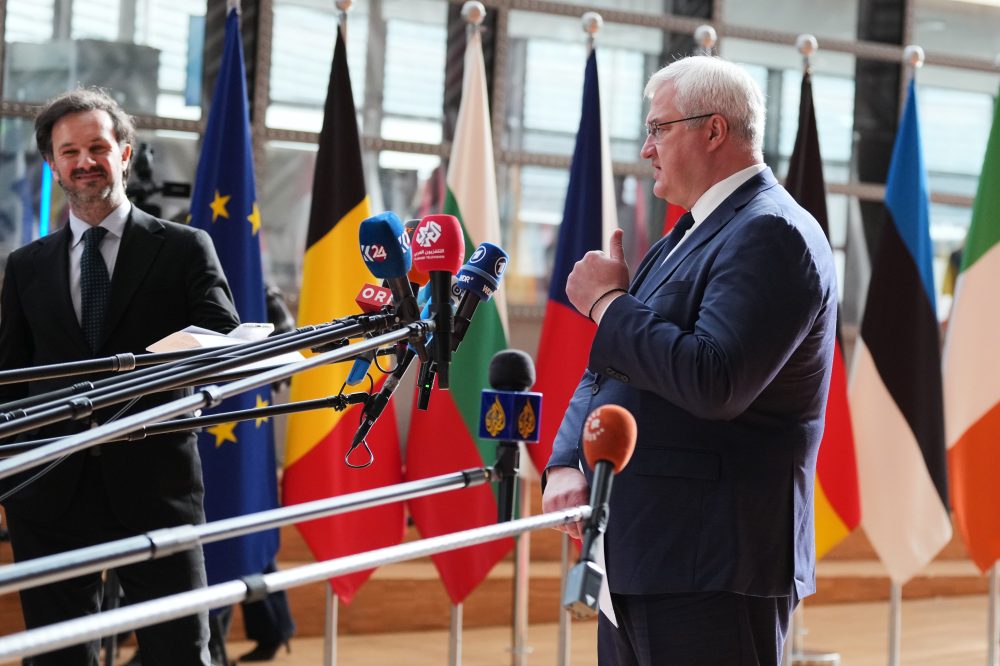
Ukrainian Foreign Minister Andrii Sybiha suggested the EU could participate in negotiations that would be “complementary” to U.S.-led talks, though he provided no additional specifics.
“We could talk about (a) new role of Europe,” Sybiha told Brussels reporters. “We have mainstream peace talks under the leadership of the U.S.A. and we need this track … but Europe could play also its role.”
Kallas and several other ministers emphasized that the EU should first intensify pressure on Russia and establish clear negotiating objectives before considering any discussions or selecting representatives.
“It’s not about choosing someone,” said Lithuanian Foreign Minister Kestutis Budrys. “We should get to the basics and the basics is to get our tools ready to pressure Russia.”
Austrian Foreign Minister Beate Meinl-Reisinger supported greater EU involvement in Russian negotiations and appointing a negotiating team.
“But we will decide that – Russia won’t decide it,” she declared.
Motorists traveling southbound on Route 1 should expect delays this morning due to maintenance operations by the Delaware Department of Transportation.
DelDOT crews are performing grass cutting along the highway, creating rolling closures in the left lane. The affected stretch runs from the Route 273 overpass down to Route 40.
The lane restrictions are scheduled to continue until 11 AM today. Drivers are advised to allow extra travel time and use caution when approaching the work zone.
The rolling nature of the closure means the lane blockage will move along the roadway as crews progress with their mowing activities.
WASHINGTON — A pivotal diplomatic meeting between President Donald Trump and Chinese leader Xi Jinping is scheduled for May 14th and 15th in Beijing, with discussions potentially determining the trajectory of relations between the world’s two economic superpowers amid escalating international tensions.
The diplomatic discussions will cover a broad range of contentious issues including commercial disagreements, technology and artificial intelligence policies, Taiwan’s security situation, Middle Eastern peace initiatives, and China’s alleged connections to Iran. Additional topics on the table include agricultural trade agreements, Boeing aircraft transactions, export restrictions, and collaborative efforts to combat fentanyl and other illegal drugs.
Political experts suggest the likelihood of significant diplomatic victories remains minimal, though both countries seem committed to preventing further deterioration of relations between the globe’s dominant economic powers.
The situation surrounding Taiwan is anticipated to emerge as one of the most delicate subjects during negotiations. Reports indicate Beijing wants the self-governing territory to feature prominently in the conversations. Some advocates for Taiwan express concern that President Trump might adopt a more business-oriented stance regarding American support for Taipei. Former Rear Admiral Mark Montgomery has voiced worries that Taiwan might become a bargaining chip in discussions between the two leaders.
China’s Foreign Minister Wang Yi has recently called on the United States to “make the right choices” regarding Taiwan to preserve bilateral stability. However, Secretary of State Marco Rubio maintains that American policy remains unchanged, cautioning that any forced alteration of Taiwan’s circumstances would create regional and global instability.
The White House emphasizes ongoing American military assistance to Taiwan, highlighting that the Trump administration has authorized billions in defense equipment sales and aircraft components for the island’s protection.
The situation of imprisoned Christian publisher and Hong Kong democracy advocate Jimmy Lai is also expected to arise during the summit. The 78-year-old activist’s family members have expressed hope that President Trump might help secure his freedom from detention. Trump has indicated his intention to discuss Lai’s case directly with Xi Jinping during their meetings.
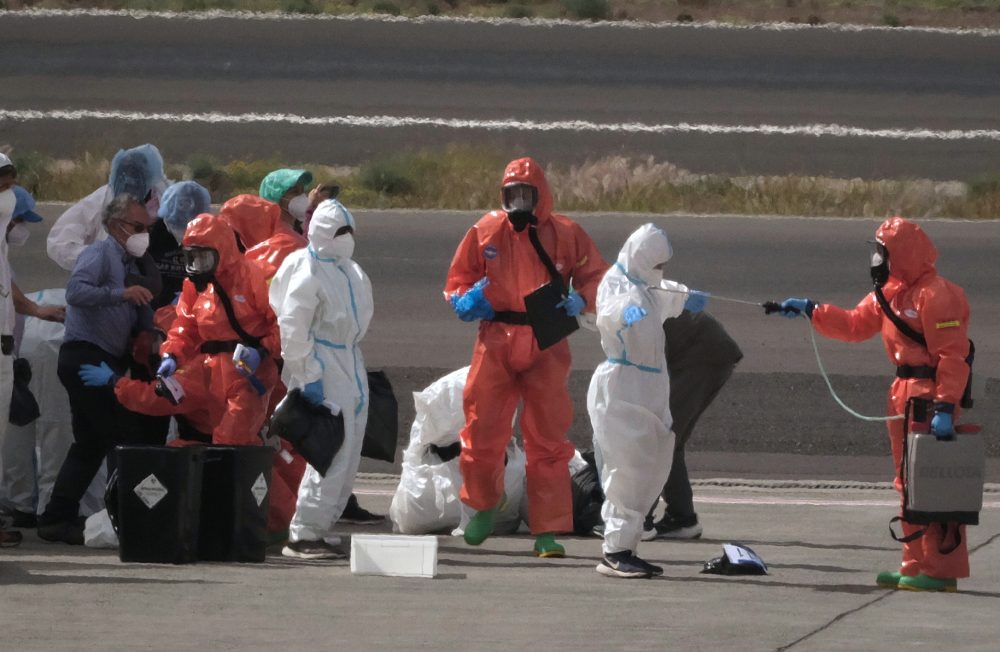
FRANKFURT, Germany – German health officials are closely watching four passengers from a cruise ship where a deadly hantavirus outbreak occurred, authorities announced Monday.
The individuals arrived at Frankfurt University Hospital during the early morning hours between midnight and 1 a.m. for medical evaluation and laboratory work, according to hospital officials. All four passengers are currently symptom-free and were placed in a specialized isolation facility.
A representative from Germany’s health ministry confirmed to Reuters that the passengers will eventually be moved to different regions across the country – Berlin, Baden-Wuerttemberg, Bavaria and Schleswig-Holstein – where local health departments will continue their care.
“No indications of illness” have been detected so far, according to Timo Wolf, who oversees the specialized isolation unit for dangerous infectious diseases at Frankfurt University Hospital.
The outbreak occurred aboard the cruise vessel MV Hondius, which departed from Argentina carrying primarily passengers from Britain, the United States, and Spain. The virus strain identified is the Andes hantavirus, a rodent-transmitted disease that can pass between humans and is commonly found in Argentina and Chile.
The outbreak has proven fatal for three individuals – two passengers from the Netherlands and one German citizen. Hantaviruses are carried by rodents and can cause serious illness when transmitted to humans.
Drivers traveling westbound on Hamburg Road should expect delays this afternoon due to construction activity that has forced the closure of the right lane.
The lane restriction affects the stretch of Hamburg Road between South DuPont Highway (Route 13) and River Road (Route 9), according to Delaware Department of Transportation officials.
The right lane closure is scheduled to remain in effect until 4:30 PM today. Motorists are advised to use caution in the area and allow extra travel time while construction crews complete their work.
Traffic is being maintained in the remaining lanes during the construction period.
The National Football League revealed on Monday that the Dallas Cowboys will travel to face the New York Giants for the season’s inaugural Sunday night matchup on September 13, 2026.
The Week 1 clash between these NFC East division opponents will take place at MetLife Stadium in East Rutherford, New Jersey. League officials plan to unveil the complete 2026 schedule on Thursday, with additional games being announced throughout the week.
These longtime rivals have now been paired for season openers eight times over the last 15 seasons, highlighting their marquee appeal.
The Cowboys consistently attract nationwide television audiences as “America’s Team,” while the Giants are expected to receive increased prime-time coverage featuring newly hired head coach John Harbaugh and established franchise quarterback Jaxson Dart, who completed a notable first season. The game will mark Harbaugh’s coaching debut with New York.
Assuming both players remain healthy, this contest would represent the first significant meeting between Dart and Dallas quarterback Dak Prescott. Though both signal-callers participated in the January 4th season finale, their teams had already been eliminated from playoff consideration.
The matchup may also showcase the professional debuts of two former Ohio State teammates: New York linebacker Arvell Reese, selected fifth overall in the draft, and Dallas safety Caleb Downs, chosen 11th overall.
With Dallas visiting New York, neither franchise will travel to Seattle for the Wednesday night season opener on September 9th, when the defending Super Bowl champion Seahawks will reveal their championship banner. The remaining candidates for that Wednesday matchup include Chicago, Arizona, Kansas City, the Los Angeles Chargers, or a potential championship game rematch against New England.
OSLO, Norway — A Norwegian court announced Monday it will issue its decision next month in the criminal case against the stepson of Norway’s future king, who faces serious charges including rape that have brought unwanted attention to the royal family.
The Oslo District Court scheduled June 15 as the date for announcing the verdict in the prosecution of Marius Borg Høiby.
Following six weeks of legal proceedings that concluded March 19, prosecutors have requested a prison term of seven years and seven months for Høiby, who maintains his innocence regarding the rape accusations.
The 29-year-old defendant is Crown Princess Mette-Marit’s son from an earlier relationship and serves as stepson to Crown Prince Haakon, who stands in line to inherit Norway’s throne. Authorities have brought 40 criminal charges against him, including four separate rape counts spanning from 2018 through 2024.
Legal representatives for Høiby, who holds no royal status or ceremonial responsibilities, argued that prosecutors lack sufficient evidence to prove the rape allegations. The defendant has acknowledged guilt for various minor infractions, including possessing illegal drugs, transporting 3.5 kilograms of marijuana in 2020, violating traffic laws, and breaking court-ordered restrictions regarding a former romantic partner. He has also partially confessed to certain violent acts and making threats while challenging crucial elements of those accusations, particularly regarding his intentions.
Høiby’s legal team contends that an 18-month maximum sentence would be fitting for the offenses he has accepted responsibility for. They maintained that their client has endured exceptional media scrutiny because of his family ties to royalty, which they claim has influenced how the public views the case.
As this legal drama has unfolded, Mette-Marit has encountered separate criticism this year regarding her past associations with deceased convicted sex offender Jeffrey Epstein. These connections have prompted questions about her decision-making abilities, although she faces no allegations of criminal behavior.
BRUSSELS (AP) — European Union leaders announced new sanctions Monday targeting 16 officials and seven facilities they say have participated in Russia’s systematic removal of tens of thousands of Ukrainian children from their homes.
The sanctioned facilities are accused of indoctrinating the children or preparing them for military service with Russian forces or pro-Russian groups operating within Ukraine.
The latest round of penalties brings the total number of individuals and organizations facing EU sanctions related to these child abductions to more than 130.
European Union headquarters stated that the asset freezes and travel restrictions were implemented because these officials and institutions are considered “responsible for actions undermining or threatening the territorial integrity, sovereignty and independence of Ukraine.”
Estimates suggest that approximately 20,500 children have been illegally removed or forcibly relocated to Russia or Russian-controlled areas in eastern Ukraine since Moscow began its full-scale military assault in early 2022.
European officials report that many of these children have their Ukrainian heritage and culture systematically erased, receive Russian citizenship documents, and are placed in adoptive families. Others face forced enrollment in indoctrination programs or military training facilities.
“Russia is trying to erase their identity,” said Latvian Foreign Minister Baiba Braže during Monday’s meeting with European counterparts in Brussels, where the sanctions received approval. “When you look at the Genocide Convention, it’s one of the features of the genocide crime. So, it’s very serious.”
The International Criminal Court has issued a warrant for Russian President Vladimir Putin’s arrest on war crimes charges, holding him personally accountable for these forced relocations.
While approximately 2,200 children have been returned to Ukraine, the identification process remains extremely challenging. Young children who were taken can become difficult to recognize after just a few years. The process of bringing them home is traumatic, and some children face difficulties readjusting upon their return.
On Monday, the EU joined Canada in hosting a gathering of the 47-nation International Coalition for the Return of Ukrainian Children, aimed at increasing diplomatic pressure on Russia and building support for efforts to locate and track those who have been taken.
“War has really many faces, but stealing the children is really one of the most horrific,” said EU Enlargement Commissioner Marta Kos before the meeting. “We should stop this, and Russia should pay.”
Monday’s sanctions target individuals including camp directors, government officials, and military personnel overseeing youth programs.
Among the 16 people named was Lilya Shvetsova, who runs the “Red Carnation” facility in occupied Crimea. The EU stated she oversees “activities aimed at shaping the political and ideological views of children present at the facility, including Ukrainian children.”
Like others facing sanctions, she was found to be “supporting and implementing actions and policies contributing to the deportation, forced transfer, forced assimilation, including indoctrination, or militarized education of Ukrainian minors.”
Morning commuters traveling south on DuPont Parkway are facing lane restrictions due to ongoing construction work in the New Castle area.
Delaware Department of Transportation officials report that the right lane of US Route 13 southbound is currently closed between 2nd Avenue and Llangollen Boulevard. The closure is expected to remain in effect until 10 AM today.
Motorists are advised to allow extra travel time and use caution when driving through the work zone. Traffic may be slower than usual during the morning rush hour period.
Delaware State Police continue their investigation into a deadly motorcycle accident that claimed the life of a Seaford resident over the weekend.
According to authorities, the fatal incident took place on Saturday, May 9, 2026, around 9:20 p.m. when a Yamaha XVS motorcycle was heading west on River Road near Woodland Ferry Road. Police report the bike was moving at what appeared to be excessive speed when the operator lost control while attempting to navigate a bend in the road, causing the motorcycle to tip over and slide off the pavement.
The motorcyclist, identified as a 56-year-old Seaford man, sustained critical injuries in the accident and was rushed to a nearby medical facility. Despite medical efforts, he succumbed to his injuries on Sunday, May 10, 2026. Authorities are withholding his identity pending notification of family members.
The Delaware State Police Collision Reconstruction Unit continues to examine the circumstances surrounding the crash. Officials are requesting anyone who may have seen the accident or has relevant information to reach out to Master Corporal J. Smith at (302) 703-3267. Tips can also be submitted through a private message to the Delaware State Police Facebook page or by contacting Delaware Crime Stoppers at (800) 847-3333.
Those affected by crime, traumatic incidents, or sudden loss can access support through the Delaware State Police Victim Services Unit and Delaware Victim Center, which provides round-the-clock assistance via their hotline at 1-800-VICTIM-1 (1-800-842-8461). Support services can also be reached by email at [email protected].
An unusual political drama is unfolding in Nebraska’s primary election Tuesday, where two Democratic candidates seeking to challenge Republican Senator Pete Ricketts are trading accusations of being fraudulent contenders with no genuine intention to win.
The peculiar Senate primary battle features pharmacy technician and community college instructor Cindy Burbank facing off against pastor Bill Forbes. Each claims the other is a disingenuous candidate who won’t seriously compete in November’s general election.
Senator Ricketts, who took office in 2023 after being appointed to fill Ben Sasse’s seat and winning a special election in 2024, is expected to cruise through his Republican primary despite facing four challengers. Political observers anticipate his main November opponent will be independent Dan Osborn, an industrial mechanic and veteran who nearly defeated Senator Deb Fischer in 2024, losing by just 7 percentage points.
The Nebraska Democratic Party has endorsed Burbank for the primary while simultaneously backing independent Osborn for the fall campaign. Party officials initially planned to avoid fielding any general election candidate to unite behind Osborn’s independent bid. Forbes’ late entry into the race, combined with his previous statements and political stances, has led party leaders to suspect he joined the contest to ensure a Democrat appears on November’s ballot, potentially splitting anti-Ricketts votes and benefiting the incumbent.
Forbes has rejected these accusations, and official records confirm his Democratic Party registration.
Burbank also entered the race late and has made preventing Forbes from reaching the November ballot a central campaign goal. Her website states that Osborn “deserves a fair shot against Ricketts.”
In March, Republican Secretary of State Bob Evnen removed Burbank from the ballot after the state Republican Party filed a complaint claiming she wasn’t campaigning sincerely. The Nebraska Supreme Court subsequently restored her ballot position.
Neither Democratic candidate has raised significant funds, with Burbank collecting approximately $4,300 through April 22 while Forbes reported no monetary contributions.
Republicans have controlled both Nebraska Senate seats since 2012, and the state isn’t considered a priority target for Democrats aiming to regain Senate control in 2026. However, a strong showing against Ricketts could provide Democrats additional flexibility as they pursue potentially winnable seats in Alaska, Maine, North Carolina, and Ohio.
The gubernatorial race features incumbent Republican Governor Jim Pillen against five primary opponents, while former state Senator Lynne Walz competes with perennial candidate Larry Marvin for the Democratic nomination. Marvin has unsuccessfully sought the Senate four times since 2012.
In Omaha’s 2nd Congressional District, six active candidates are pursuing the Democratic nomination to challenge Republican Omaha City Councilmember Brinker Harding, who faces no primary opposition. The seat, currently held by retiring Republican Representative Don Bacon, represents a crucial opportunity for Democratic efforts to reclaim the House.
Additionally, eleven state legislative primaries are occurring. Though officially nonpartisan, most candidates align with either party. These contests will send two finalists to November’s general election, with voters selecting only one candidate in the primary.
Nebraska spans both Central and Mountain time zones, but all polling locations close simultaneously at 9 p.m. Eastern Time. The Associated Press will report results and call winners in competitive primaries for Senate, House, governor, secretary of state, and legislative seats.
Primary voting is restricted by party registration, preventing crossover voting between Republican and Democratic contests. The Democratic and Libertarian parties permit unaffiliated voters to participate in their primaries, while Republicans and the Legal Marijuana NOW party allow independents to vote only in federal races. Photo identification is mandatory for all voters.
Current registration totals approximately 1.3 million voters statewide, including roughly 621,000 Republicans and 328,000 Democrats. Historical turnout suggests about 18-22% of registered voters typically participate in Republican primaries, while Democratic primary participation runs around 8% of registered voters.
Early voting data shows approximately 39% of Republican ballots and 65% of Democratic ballots were cast before Election Day in recent elections. As of Thursday, about 56,000 Republican and 49,000 Democratic primary ballots had already been submitted.
Most of Nebraska’s 93 counties typically release early and absentee results in their initial reports, often before any Election Day totals become available. The most populous counties, Douglas and Lancaster, usually provide limited Election Day results in their first updates.
During Ricketts’ 2024 Senate primary, initial results appeared at 9 p.m. Eastern Time when polls closed, with 90% of votes counted by 12:10 a.m. and final tallies around 1:35 a.m. The Associated Press declared Ricketts the winner at 9:10 p.m.
The Associated Press only declares winners when no mathematical possibility exists for trailing candidates to overcome their deficits. Automatic recounts occur when margins fall within 1% of total votes cast in races exceeding 500 votes.
Tuesday’s primary results will set the stage for November elections that remain 175 days away.
Newark, New Jersey’s incumbent Mayor Ras Baraka will compete against seven opponents on Tuesday as he pursues his fourth consecutive term leading New Jersey’s most populous city.
This election follows a turbulent year for the Democratic mayor. Nearly 12 months ago, Baraka was taken into custody during a demonstration outside a federal immigration detention facility. Those charges were subsequently dismissed, prompting him to file a lawsuit against the federal prosecutor, claiming wrongful arrest and vindictive prosecution.
Earlier this year, Baraka campaigned for governor in the Democratic primary, finishing as runner-up to former U.S. Representative Mikie Sherrill, who ultimately won the general election. While Baraka is affiliated with the Democratic Party, Newark’s mayoral position operates on a nonpartisan basis without party designations.
Seven individuals are vying to unseat Baraka: artist Tanisha Garner, developer and contractor Noble Milton, community organizer Sheila Montague, community activist Debra Salters, former Newark Municipal Court administrator Nasheedah Singleton, tech entrepreneur Jhamar Youngblood, and Douglas “Rodney” Davis, who has proposed eliminating “casual Fridays” at City Hall as part of his campaign agenda.
Montague previously ran against Baraka in 2022, capturing approximately 17% of votes in a second-place finish that was well behind the mayor. Both Montague and Salters competed for the Democratic nomination to succeed the late U.S. Representative Donald Payne in 2024, finishing in seventh and eleventh places respectively.
Should no candidate secure more than 50% of votes cast, the two highest vote recipients will proceed to a runoff election scheduled for June 9.
Voting concludes at 8 p.m. Eastern Time on Tuesday. The Associated Press will track vote totals and announce the winner of Newark’s mayoral contest.
All registered Newark voters are eligible to participate in this election. Registration records show approximately 159,000 voters were registered in Newark for the 2025 general election.
Turnout in the previous mayoral election in 2022 reached about 18,000 votes, with roughly 16% of those ballots submitted prior to Election Day. As of Thursday, nearly 2,700 early votes had already been recorded for Tuesday’s contest, with the vast majority coming from Democratic voters.
In Essex County, where Newark serves as the county seat, initial vote reports typically encompass almost all early and mail-in ballots, while same-day voting results come later. During the 2025 general election, Essex County’s first results appeared at 8:06 p.m. Eastern Time, just six minutes after polls closed. The final vote update occurred at 10:10 p.m. Eastern Time, representing about 93% of total votes.
The Associated Press follows strict protocols for declaring winners, only making calls when no mathematical possibility exists for trailing candidates to overcome the lead. New Jersey does not conduct automatic recounts, though candidates and voters may request and fund recounts, with costs reimbursed if results change.
If a runoff becomes necessary, it will take place 28 days after Tuesday’s election on June 9.
Diplomatic efforts between Iran and the United States hit another roadblock Monday as negotiations to end their ongoing conflict stalled, while a fragile ceasefire continues to deteriorate with both nations trading fire in recent confrontations.
The escalating tensions have also involved attacks on maritime vessels and Gulf region nations, along with renewed clashes between Israel and Hezbollah, the Lebanese militant organization.
President Trump dismissed Iran’s latest diplomatic response on Sunday, declaring it “TOTALLY UNACCEPTABLE!”
The president is scheduled to visit Beijing later this week for a postponed meeting with Chinese President Xi Jinping. However, China’s significant economic relationship with Iran, combined with ongoing trade disputes and tariff disagreements dating back to Trump’s previous presidency, may complicate the discussions, despite Trump’s history of publicly praising the Chinese leader.
The current volatility threatens to plunge the Middle East back into full-scale conflict and extend the global energy crisis triggered by the dispute. Iran maintains control over the critical Strait of Hormuz shipping route while America continues its blockade of Iranian ports.
Trump plans to use his upcoming China visit to encourage Xi Jinping to apply pressure on Iran for diplomatic concessions to break the current deadlock. China serves as Iran’s largest purchaser of sanctioned oil, providing Beijing with considerable influence over the situation.
The president’s rejection of Iran’s proposal centers on concerns that lifting the blockade before addressing Iran’s nuclear activities would remove a crucial bargaining chip from future negotiations.
Meanwhile, the ongoing standoff has created ripple effects in global markets, with oil prices climbing more than 2% following Trump’s announcement. World stock markets showed mixed results Monday after Wall Street achieved new record highs.
As Trump prepares for his Beijing summit, questions remain about various contentious issues on the agenda, including trade relations, the Iran situation, and Taiwan’s status. The president has indicated he may also raise the case of imprisoned pro-democracy activist Jimmy Lai during his discussions with Xi.
Telecommunications company EchoStar announced steeper subscriber losses than Wall Street anticipated for the first three months of the year, reflecting the ongoing shift away from traditional television services.
The company’s first-quarter results underscore how consumers are abandoning conventional cable and satellite TV packages in favor of more affordable streaming options that offer greater flexibility.
EchoStar shed approximately 366,000 pay-television customers during the quarter, surpassing analyst projections of 336,433 lost subscribers based on Visible Alpha data.
Despite the customer exodus, the pay-TV division’s revenue reached $2.29 billion, slightly exceeding Wall Street expectations of $2.28 billion, according to LSEG research.
The telecommunications firm completed a debt restructuring agreement in March with bondholders from Dish DBS, marking another step in the company’s ongoing efforts to address significant financial obligations.
Overall company revenue totaled $3.67 billion, marginally beating forecasts of $3.66 billion. The firm’s quarterly losses decreased to $146.9 million compared to $202.7 million during the same three-month period last year.
These financial results follow EchoStar’s inclusion in the S&P 500 index during March.
Delaware Department of Transportation crews are currently conducting debris removal operations along Route 896, affecting both directions of travel.
The cleanup work is taking place on the shoulder areas between Pulaski Highway (Route 40) and Red Lion Road (Route 71), with crews expected to wrap up operations by 4:30 PM today.
Motorists traveling through the area should expect to see work vehicles and crews along the roadway during the cleanup effort.
Motorists traveling southbound on Valley Road near Fitness Way are encountering traffic delays due to ongoing construction activity that has shut down the right lane.
According to DelDOT traffic reports, the lane closure is expected to last until 5 PM today. Drivers are advised to use caution in the area and allow extra travel time while work crews complete their operations.
Traffic is being directed around the construction zone, but delays are likely during peak travel hours as vehicles merge into the remaining open lanes.
Motorists should avoid Rose Dale Lane after a car fire prompted officials to shut down the roadway in both directions between Seeneytown Road and Pearson’s Corner Road.
The closure remains in effect as emergency crews work to extinguish the blaze and clear the scene. Drivers are advised to seek alternate routes until the road reopens.
No additional details about the incident have been released at this time.
Delaware State Police are continuing their investigation into a deadly collision that claimed the life of an elderly Maryland man in Felton over the weekend.
The tragic incident unfolded around 4:50 p.m. on May 10, 2026, when an 80-year-old driver from Goldsboro, Maryland was operating a Kia Sorento heading north along Sandtown Road near Willow Grove Road. According to initial findings from investigators, the vehicle was moving at excessive speed when the driver illegally overtook two other cars in an area where passing is prohibited. The driver then lost control while attempting to navigate a bend in the roadway.
The SUV veered off the western side of the road and collided with two empty commercial trucks and their trailers that were parked in an adjacent lot. The elderly motorist, who was not wearing a safety belt, sustained fatal injuries and was transported to a nearby medical facility where he passed away. Authorities are withholding his identity pending notification of relatives.
Traffic along the roadway was disrupted for roughly three hours as emergency responders worked to clear the accident scene and conduct their preliminary examination.
The case remains under active review by Delaware State Police Troop 3’s Collision Reconstruction Unit. Officials are requesting that anyone who observed the incident or possesses relevant information reach out to Master Corporal W. Booth at (302) 698-8451. Tips can also be submitted through private messages to the Delaware State Police Facebook page or by contacting Delaware Crime Stoppers at (800) 847-3333.
Those affected by crime or sudden loss can access support services around the clock through the Delaware State Police Victim Services Unit and Delaware Victim Center. The toll-free helpline is available at 1-800-VICTIM-1 (1-800-842-8461), and assistance can also be requested via email at [email protected].
SRN News has unveiled a new daily audio program designed to keep audiences informed about religious developments worldwide. The feature, known as “Global Landscape,” offers a brief two-minute overview of faith-related headlines and stories each day.
The audio segment focuses on delivering quick updates about religious news, cultural changes, and major events that highlight how faith intersects with current affairs across the globe. The program aims to provide audiences with essential information about significant developments in the religious community in an easily digestible format.
This new offering represents SRN News’ effort to create specialized content that addresses the growing interest in how religious matters impact world events and cultural movements.
Major technology corporations are turning to religious communities for guidance as they navigate the ethical challenges of artificial intelligence development.
Last month marked the first-ever Faith-AI Covenant roundtable held in New York, an event coordinated by the Interfaith Alliance for Safer Communities. The initiative aims to establish ethical standards for AI development drawing from diverse religious traditions.
Companies such as Anthropic have begun actively consulting with religious leaders on AI matters. However, skeptics raise questions about whether these corporate efforts are genuine and whether they will effectively address ethical concerns surrounding artificial intelligence. Questions remain about how extensively these companies will implement recommendations from faith communities into their actual practices.
In other religious news, a political scientist specializing in religious demographics is raising concerns about the future of America’s largest Protestant denomination. Ryan Burge warns that the Southern Baptist Convention may continue experiencing significant membership losses despite recent increases in baptisms and church attendance.
The denomination saw membership decline by three percent last year, representing nearly 400,000 departing members – equivalent to the total membership of smaller denominations. Burge, who teaches at Washington University, explained the challenge: “The SBC has a baby boomer problem. Structurally speaking, it’s hard to outrun that demographic cliff.”
Recent judicial decisions regarding abortion medication access have renewed political tensions during this election year. While it remains premature to predict how these rulings might influence upcoming races, advocacy organizations on both sides anticipate the decisions could motivate their respective voter bases.
Organizations supporting abortion rights are developing strategies to mobilize voters who might be more inclined to support Democratic candidates. Conversely, anti-abortion groups expressing frustration with federal inaction on restricting these medications warn that traditionally Republican voters might abstain from future elections. One activist characterized the situation as a “five-alarm crisis” for the Republican Party.
The Trump administration has launched an investigation into Smith College in Northampton, Massachusetts, examining potential Title IX violations. The inquiry focuses on the institution’s admissions policies regarding transgender students.
Over the past ten years, most women’s colleges across the United States have modified their enrollment policies to include transgender women. The Education Department stated: “An all-women’s college loses all meaning if it is admitting biological males.” Numerous graduates of women’s colleges have voiced concerns that admitting transgender students could undermine these institutions’ fundamental mission and identity.
Live Action, a prominent anti-abortion advocacy organization, has released several reports alleging that the National Abortion Federation collaborated with the Biden administration to target pro-life activists. According to Live Action’s claims, the NAF gathered comprehensive personal details about anti-abortion advocates, including their names and private information. The organization states that this data collection extended to information about activists’ family members, including spouses and children, and in certain instances included travel schedules and driver’s license information. Live Action references documentation from the previous Trump administration that allegedly shows how President Biden conducted what they characterize as a campaign against pro-life advocates.
Writer G.K. Chesterton once observed that “When men choose not to believe in God, they do not thereafter believe in nothing, they then become capable of believing in anything.” This observation appears increasingly relevant as spiritual trends shift across the United States.
As traditional religious affiliation continues to decline nationwide, Americans are exploring alternative spiritual practices at unprecedented rates. Ancient pagan traditions and occult practices are experiencing a notable revival among those seeking spiritual meaning outside conventional faiths.
This trend was recently showcased in Minnesota, where Twin Cities Pagan Pride organized a festival celebrating these alternative spiritual paths. Such gatherings represent a broader movement of individuals reconnecting with pre-Christian spiritual traditions and nature-based belief systems.
The spiritual exploration extends beyond traditional paganism, with some Americans developing what could be described as technological spirituality. This modern interpretation involves viewing artificial intelligence as a divine or god-like entity, representing a unique fusion of ancient spiritual concepts with cutting-edge technology.
Iraqi Christians continue to endure violent persecution and oppression throughout much of the country, despite the defeat of ISIS forces years ago, according to a recent report from Britain’s All-Party Parliamentary Group for International Freedom of Religion or Belief.
The analysis reveals that while Christian communities in Iraq’s Kurdistan region experience relatively better conditions, believers in other areas of the nation continue to face victimization from Muslim neighbors. Christians represent approximately three percent of Iraq’s total population.
Religious leaders across the United States are experiencing less emotional stress than they have in a decade, according to recent research from the Barna Group. The survey shows that ministers are reporting reduced feelings of burnout and inadequacy while experiencing higher energy levels compared to previous years.
The study indicates that confidence among pastors has been recovering following significant declines during the COVID-19 pandemic, now measuring at 58 percent. This represents a notable improvement from the challenging period when many religious institutions faced unprecedented disruptions.
Despite these positive mental health trends, the research reveals a concerning development in career satisfaction. The percentage of religious leaders who report being “very satisfied” with their calling has dropped significantly, falling from 72 percent down to 52 percent according to the Barna findings.
While the Dallas Cowboys had hoped to secure the World Cup championship game for their home stadium, they’ve received the next best thing: hosting more tournament matches than any other venue across the tri-national event.
AT&T Stadium in Arlington will showcase nine World Cup games, topping all 16 locations selected for the tournament shared between the United States, Canada, and Mexico. The venue’s schedule kicks off June 14 with Japan facing the Netherlands and reaches its peak with a semifinal contest on July 14.
Soccer powerhouses Argentina and England are both scheduled to play at the facility, which features a retractable roof and massive overhead video display in suburban Arlington.
The Dallas-Fort Worth metropolitan area sits in America’s football heartland but brings World Cup experience from serving as a host city during the 1994 tournament.
While North Texas may not overflow with tourist destinations, visitors should consider two standout attractions: the JFK assassination site in downtown Dallas and the Fort Worth Stockyards north of the city center. The stockyards feature twice-daily longhorn cattle drives that represent authentic Texas culture.
Food enthusiasts will find abundant Tex-Mex and barbecue choices, from chain restaurants to family-owned establishments scattered across the region. Options extend from Frisco, located 30 miles north of Dallas, to Mansfield, 30 miles south of the city.
Fair Park, situated east of downtown Dallas, will serve as the designated fan headquarters. This 277-acre space houses the Cotton Bowl, which hosted World Cup games three decades ago. The main entertainment area centers around an amphitheater typically used for major musical performances, with extensive additional space for fan activities.
Transportation presents challenges since Arlington, a city of approximately 400,000 residents, lacks mass transit options. World Cup organizers have developed a bus connection system linking to the nearest Trinity Railway Express station. The TRE connects Dallas and Fort Worth city centers, with officials promoting a “GoPass” for optimal transportation access, including Dallas County’s DART light-rail network, though the stadium sits in neighboring Tarrant County.
The 80,000-capacity stadium may seem familiar to international visitors due to its standing-room areas at both ends, inspired by Cowboys owner Jerry Jones’ European stadium visits during the design phase. Globe Life Field, home to Major League Baseball’s Texas Rangers, sits adjacent to the World Cup venue, offering baseball game opportunities throughout the month-long tournament. Texas Live, a entertainment complex featuring bars and restaurants, operates just outside the baseball stadium.
A former justice minister from Poland who is wanted on criminal charges in his home country has made his way to the United States after receiving political asylum in Hungary, according to reports from Warsaw.
Zbigniew Ziobro served as a prominent member of the nationalist conservative Law and Justice party, which controlled Poland’s government from 2015 through 2023. During that period, the administration gained political influence over Poland’s court system by appointing sympathetic judges to senior positions and retaliating against critics through disciplinary measures or relocations.
Ziobro revealed in January that Hungary had granted him asylum under the leadership of nationalist Prime Minister Viktor Orbán.
Speaking to the Polish right-wing news outlet Republika on Sunday, Ziobro confirmed his arrival in America the day before, which happened to coincide with the swearing-in ceremony in Budapest for Orbán’s replacement, Péter Magyar, who won against the veteran leader in last month’s election. According to Polish news service PAP, Ziobro stated he was traveling with documentation provided as part of his asylum status.
Poland’s current Prime Minister Donald Tusk took office in late 2023 with plans to reverse the judicial reforms implemented by the previous administration, though these efforts have faced resistance from two consecutive presidents who support the nationalist right.
Last October, prosecutors sought to remove Ziobro’s parliamentary protection so they could file charges against him. The allegations include misappropriating funds designated for violence victims, specifically for acquiring Israeli Pegasus spying technology.
Tusk’s political party maintains that Law and Justice illegally deployed Pegasus to monitor political rivals during their time in office. Ziobro maintains his actions were within legal bounds.
The national prosecutor’s office announced Monday through social media that they are tracking Ziobro’s location and examining whether others helped him in “escaping and avoiding criminal responsibility, thus hindering the probe into the justice fund.”
Justice Minister Waldemar Żurek posted on X Sunday night that Poland had canceled Ziobro’s travel credentials, including his diplomatic passport, and that Warsaw plans to question both the United States and Hungary regarding the legal foundation for Ziobro’s departure from Hungarian soil and entry into America.
Ziobro’s international movement could strain relations between Warsaw and Washington.
Polish Foreign Ministry representative Maciej Wewiór told The Associated Press that “we don’t want this issue to become political.”
“Our relationship with the U.S. goes much deeper than what happens with Ziobro,” he said. “But we do want our citizen to eventually return to Poland and face justice.”
Pakistani officials called in Afghanistan’s top diplomat Monday to formally complain about a deadly suicide bombing that claimed the lives of 15 police officers in the country’s northwestern border region.
The Pakistani government is pointing fingers at the Tehrik-e-Taliban Pakistan (TTP), commonly called the Pakistani Taliban, for Saturday’s devastating attack. Pakistani leaders have repeatedly accused Afghanistan’s Taliban rulers of providing safe haven to the TTP, which maintains close ties to the Afghan Taliban despite being a distinct organization. Afghanistan’s government rejects these allegations, insisting it prevents militant groups from launching attacks on neighboring countries from Afghan territory.
According to Pakistan’s Foreign Ministry, officials presented their complaint to Afghanistan’s charge d’affaires, stating that “a detailed investigation into the incident, along with evidence collected and technical intelligence” showed the attack was “masterminded by terrorists residing in Afghanistan.”
The ministry also warned that Pakistan “reserves the right to respond decisively against the perpetrators of this barbaric act,” according to their official statement.
Afghan officials have not yet responded to the diplomatic protest.
The deadly assault occurred in Bannu district within Khyber Pakhtunkhwa province, where an explosive-packed vehicle driven by a suicide bomber struck near a security checkpoint while armed accomplices provided support. The blast sparked intense gunfire between militants and security forces. Authorities report that some officers died during the firefight, while others perished when portions of their building crumbled from the explosion. The attack also left four officers injured.
A recently established offshoot of the Pakistani Taliban called Ittehad-ul-Mujahideen Pakistan has taken credit for the assault. Pakistani authorities maintain this group operates as a cover organization for the broader Pakistani Taliban movement.
The country has experienced an uptick in extremist violence over recent years, with officials attributing much of the bloodshed to TTP activities.
Relations between Pakistan and Afghanistan remain strained, with border conflicts resulting in hundreds of casualties since late February. Chinese mediators facilitated peace discussions between Afghan Taliban and Pakistani representatives in early April, yet intermittent cross-border skirmishes persist, albeit with reduced frequency compared to previous months.
West Virginia Governor Patrick Morrisey is taking a page from former President Donald Trump’s political playbook, working to remove Republican state lawmakers he considers disloyal in Tuesday’s primary elections.
While Morrisey’s name won’t appear on any ballot, the Republican governor is putting his political reputation on the line by endorsing challengers against multiple GOP incumbents in the state legislature. His goal is to reshape the party’s overwhelming majorities to better align with his vision.
The primary results will serve as a crucial measure of Morrisey’s influence halfway through his gubernatorial term.
Tuesday’s elections will also determine nominees for federal offices including the U.S. Senate and House of Representatives. Additionally, Charleston’s Democratic mayor will face a primary challenger, while two state Supreme Court justices and an appeals court judge must defend their positions.
Morrisey’s legislative endorsements have created tension with fellow West Virginia Republican U.S. Sen. Shelley Moore Capito, who is running for her third term. The two party leaders are supporting different candidates in several races.
A prime example is state Senate District 10, where Capito backs incumbent Republican Sen. Vince Deeds while Morrisey supports challenger Jonathan Comer, a local pastor.
This political split isn’t new for the two Republicans. In 2024, Morrisey edged out Capito’s son Moore Capito in a close race for the GOP gubernatorial nomination.
For the U.S. Senate seat, Capito confronts five primary opponents, with state Sen. Tom Willis emerging as her most significant challenger. Willis has secured backing from six Republican state senators, including Senate President Randy Smith. However, Capito holds endorsements from 15 state senators plus a crucial nod from Trump, which could blunt Willis’ criticisms of her voting record.
In Charleston’s mayoral race, Democratic incumbent Amy Goodwin is seeking her third term but must first overcome primary challenger Martec Washington, a community organizer who finished far behind Goodwin in their 2022 primary matchup. Republican Brian Hunt faces no opposition for his party’s nomination.
Two state Supreme Court justices, Tom Ewing and Gerald Titus, are defending their seats in special elections after being appointed in 2025 to fill vacant positions. Intermediate Court of Appeals Chief Judge Dan Greear is also fighting to keep his position against challenger Jim Douglas for a 10-year term.
Voting concludes at 7:30 p.m. Eastern Time on Tuesday.
The Associated Press will report results and announce winners in competitive primaries for federal and state legislative seats, Charleston’s mayoral race, and judicial elections. Three special state Senate elections are also on the ballot.
West Virginia’s primary system restricts registered party members to voting only in their own party’s contests. Independent and unaffiliated voters can participate in Democratic or Mountain Party primaries but are excluded from Republican primaries. All voters must present identification.
Current registration figures show approximately 1.2 million eligible voters statewide as of late April, with Republicans leading at 520,000, followed by 327,000 Democrats and 302,000 unaffiliated voters.
Last year’s GOP primaries for president, governor, and U.S. Senate each drew roughly 225,000 participants, representing about 19% of registered voters. Democratic primary turnout ranged from 90,000 to 102,000 voters depending on the race.
Early voting accounted for approximately 30% of all ballots cast in 2024’s primaries.
Through May 5, more than 36,000 voters had already cast ballots for Tuesday’s election, including over 17,000 Republicans, about 13,600 Democrats, and roughly 3,600 unaffiliated voters.
Most of West Virginia’s 55 counties typically release their early and absentee voting results in the first report of election night, with about 60% reporting complete or near-complete totals initially.
During 2024’s Republican U.S. Senate primary, initial results appeared at 7:41 p.m. Eastern Time, just 11 minutes after polls closed. Vote counting reached 90% completion around 10:06 p.m., with final updates released at 12:40 a.m. showing more than 99% of votes tallied.
The Associated Press only declares winners when no mathematical possibility exists for trailing candidates to overcome the deficit. For undecided races, coverage continues for significant developments like candidate concessions while clearly noting no winner has been declared.
West Virginia law doesn’t mandate automatic recounts, though candidates may request and fund recounts regardless of victory margins. Costs are reimbursed if recounts alter outcomes. The AP may call races subject to potential recounts if leads are mathematically insurmountable.
Tuesday’s results will set the stage for the 2026 midterm elections, now 175 days away.
Fox Corporation announced Monday that it surpassed financial analysts’ revenue projections for the third quarter, driven by solid performance across its sports and news programming segments along with continued expansion of its Tubi streaming platform.
The media company posted quarterly revenue of $3.99 billion, outpacing the average analyst forecast of $3.82 billion based on data gathered by LSEG. The stronger-than-expected results were attributed to robust advertising income from Fox’s sports and news content, as well as positive momentum from the company’s streaming service operations.
BRUSSELS – The European Union announced new punitive measures Monday against Russian officials and organizations accused of systematically removing Ukrainian children from their homeland.
The sanctions target 16 individuals and seven organizations connected to what the EU Council describes as the unlawful forced deportation of Ukrainian minors, according to a statement released Monday.
European officials estimate that Russia has forcibly relocated approximately 20,500 Ukrainian children since the conflict began.
The EU Council stated these deportations represent serious violations of international law and infringe upon children’s basic rights, with the goal of eliminating Ukrainian cultural identity and damaging future generations.
Among the organizations now facing sanctions are federal agencies connected to Russia’s Education Ministry, according to the Council’s announcement.
The sanctions also target government officials and political figures from Russian-controlled territories, as well as directors of youth facilities and military-focused patriotic groups.
Under the new measures, those sanctioned will have their assets frozen, while European citizens and businesses are prohibited from providing financial support or economic resources to them. Individual targets also face restrictions on traveling to EU countries, the Council explained.
Political chaos continues to engulf Italy’s Culture Ministry as Minister Alessandro Giuli terminated two top officials following public backlash over the rejection of funding for a documentary project.
The dismissals represent the most recent upheaval in a department that has experienced significant instability under Prime Minister Giorgia Meloni’s conservative administration, which has been working to transform Italy’s traditionally left-leaning cultural establishment.
According to Italian news outlets, Giuli removed Emanuele Merlino, who directed the ministry’s technical secretariat, along with Elena Proietti, who managed the minister’s private office. While no formal announcement was made, high-ranking government officials verified the terminations on Monday.
The controversy erupted after the ministry rejected financial support for a film documenting the story of Giulio Regeni, an Italian university student who was abducted, tortured and murdered in Cairo during early 2016. Italian authorities have accused Egyptian security personnel of responsibility for his death.
Giuli characterized the funding rejection as “unacceptable” and claimed he was unaware the decision had been made.
Sources indicate Merlino lost his position due to his role in the funding controversy, while Proietti was reportedly dismissed for missing a scheduled departure for an official trip to New York last month.
Both dismissed officials have remained silent about their terminations, and the Culture Ministry has refused to provide statements.
The two figures held significant positions within right-wing political circles, prompting opposition leaders to characterize their removals as evidence of increasing discord within Meloni’s governing coalition, particularly following their loss in a justice reform referendum in March.
“This is the sign of a coalition riven by internal wars, score-settling, clashes between factions and competing leaderships,” said Sandro Ruotolo, the culture spokesman for the centre-left Democratic Party.
The current crisis represents just the latest disruption to plague the Culture Ministry during Meloni’s tenure, including the 2024 resignation of Giuli’s predecessor, Gennaro Sangiuliano, followed by a series of sudden dismissals and departures.
Since assuming power in 2022, Meloni has worked to expand conservative influence throughout Italy’s major cultural organizations, including theaters and museums.
The transformation has encountered significant obstacles. Last month, conductor Beatrice Venezi, who maintains close ties to Meloni’s Brothers of Italy party, was removed from her role as musical director at Venice’s La Fenice opera house after publicly criticizing the orchestra for nepotism.
Meanwhile, the renowned Venice Biennale art exhibition has become embroiled in scandal after a government appointee permitted Russia’s return to the event, sparking anger from both Giuli and Meloni, who viewed the decision as a betrayal of Ukraine during the ongoing conflict.
Google’s parent company, Alphabet Inc., revealed plans Monday to issue bonds denominated in Japanese yen for the first time as major technology corporations increasingly turn to borrowing to finance their artificial intelligence expansion efforts.
While Alphabet did not reveal the exact amount it plans to raise, an insider familiar with the transaction indicated the bond offering could reach several hundred billion yen, with final terms anticipated to be set within the month. The source requested anonymity as they were not permitted to discuss the matter publicly.
Alphabet has selected Mizuho, Bank of America, and Morgan Stanley to manage the bond transaction. When contacted for comment, Morgan Stanley did not respond immediately, while both Bank of America and Mizuho declined to provide statements.
This move reflects a broader trend among the world’s biggest tech companies, which are increasingly relying on debt financing rather than cash reserves to support their expensive AI ambitions – marking a departure from Silicon Valley’s traditional approach to funding major investments.
Industry analysts project that major technology firms will invest more than $700 billion in AI infrastructure during the current year, representing a substantial jump from the $410 billion spent in 2025.
Amazon is also exploring new debt markets, preparing its first-ever bond sale in Swiss francs, according to another person with knowledge of the situation who spoke on condition of anonymity. The e-commerce company has appointed BNP Paribas, Deutsche Bank, and JPMorgan Chase to handle a six-part debt offering with terms ranging from three to 25 years.
Representatives from Amazon, BNP Paribas, and JPMorgan Chase did not immediately respond when asked for comment about the Swiss franc bond plans.
Data from LSEG confirms this would mark Alphabet’s first bond issuance in Japanese currency. The company recently completed two major bond sales totaling nearly $17 billion – including a 9 billion euro offering worth $10.6 billion and a Canadian dollar sale of C$8.5 billion, valued at $6.2 billion.
In late April, Alphabet increased its annual capital expenditure projection by $5 billion, setting a new range of $180 billion to $190 billion, while indicating plans for another substantial increase in 2027.
Stock market futures displayed restrained movement Monday morning as investors took a step back following last week’s historic gains, with concerns mounting over diplomatic gridlock between Washington and Tehran that drove energy costs upward.
President Donald Trump’s quick dismissal of Iran’s counter-proposal to a U.S. peace initiative heightened anxiety that the ongoing 10-week dispute might continue indefinitely, potentially maintaining disruptions to maritime traffic through the strategically important Strait of Hormuz. This development pushed crude oil values up nearly 3%.
“Although the oil price is higher, there is no sign of panic in the market,” said Kathleen Brooks, research director at XTB.
“Wrangling over the details of a path to a peaceful resolution is to be expected. This is all part of a negotiation.”
American equities reached unprecedented levels during the previous week, with both the S&P 500 and Nasdaq indexes achieving all-time closing records on Friday. This surge was driven by encouraging corporate profit reports, robust employment data, and optimism about a quick end to Middle Eastern tensions.
Early Monday morning at 7:18 a.m. ET, Dow E-minis dropped 56 points or 0.11%, while S&P 500 E-minis declined 4 points or 0.05%. The Nasdaq 100 E-minis bucked the trend, gaining 13.25 points or 0.05%.
Market participants will focus attention on Tuesday’s consumer price index release, anticipated to reveal rising inflation during April as Middle Eastern hostilities continue pressuring energy costs higher.
Despite America’s status as a net petroleum exporter, anxiety persists regarding the conflict’s potential effects on consumer spending patterns and business operations. Additional economic indicators including producer pricing and monthly retail sales data are scheduled for release later this week.
Investors are also monitoring an upcoming meeting between Trump and Chinese President Xi Jinping, where the leaders plan to address Iran, Taiwan, artificial intelligence, and nuclear weapons issues, while potentially extending an important minerals agreement.
The first-quarter earnings reporting period is approaching its conclusion after companies delivered significantly better-than-anticipated results, especially within the technology sector, helping propel stocks to new peaks.
Notable companies reporting this week include networking technology leader Cisco and semiconductor equipment manufacturer Applied Materials, while industry heavyweights Nvidia and Walmart are scheduled to announce results later in the month.
Intel shares climbed 5.6% in pre-market activity following Friday’s 14% surge based on reports of a preliminary chip manufacturing deal with Apple.
Among other notable movements, several airline stocks declined as rising fuel costs threatened profit margins. Southwest Airlines, Delta Air Lines, and United Airlines dropped between 0.9% and 1.6%.
U.S.-traded shares of gold mining companies fell as precious metal prices decreased 1%. Newmont, Sibanye Stillwater, and Harmony Gold lost between 1.6% to 1.7%.
Motorists traveling on Blackbird Station Road should expect delays and plan alternate routes as construction crews continue work that requires intermittent lane restrictions.
The affected area spans the stretch of Blackbird Station Road from Blackbird Forest Road to Grears Corner Road, where workers are causing periodic lane closures throughout the day.
DelDOT reports the construction-related lane restrictions will remain in effect until 5 PM today. Drivers are advised to use caution when traveling through the work zone and allow extra time for their commute.
Delaware Department of Transportation crews are currently removing debris from the median strip along northbound Route 13, causing potential traffic delays in the area.
The litter cleanup operation is taking place on the stretch of highway between Martin Luther King Jr. Boulevard and West Denneys Road, with work expected to wrap up by 2 PM today.
Motorists traveling northbound on this section of Route 13 should expect possible lane restrictions and are advised to use caution when passing through the work zone.
Motorists using North Star Road are experiencing intermittent lane closures today as construction work continues in the area.
The Delaware Department of Transportation reports that the lane restrictions affect the stretch of North Star Road located between Planet Road and Beech Hill Road.
According to DelDOT, the construction-related closures are expected to remain active until 5 PM today. Drivers are advised to plan for potential delays and consider alternate routes if possible.
Motorists traveling eastbound on West Newport Pike are encountering traffic delays due to ongoing construction work that has shut down the right lane between Silview Avenue and Westmont Avenue.
According to DelDOT officials, the lane restriction is expected to remain in place until 5 PM today. Drivers are advised to use caution when traveling through the work zone and allow extra time for their commute.
The construction activity is causing traffic to merge into the left lane, potentially creating slower moving conditions during peak travel times.
Motorists traveling eastbound on West Newport Pike are dealing with traffic delays today due to ongoing construction work that has forced the closure of the right travel lane.
According to DelDOT, the lane restriction affects the stretch of roadway between Silview Avenue and Westmont Avenue. Officials say the closure is expected to last until 5 PM this afternoon.
Drivers are advised to allow extra travel time and use caution when passing through the construction zone. Traffic is being directed into the remaining open lanes during the work period.
A unique gubernatorial campaign is taking shape in Oregon, where someone identifying as “Pencil” has launched a write-in bid for the state’s highest office.
The unconventional candidate, whose real name is J. Schuberth, has been making rounds through downtown Portland to connect with voters and curious onlookers. Schuberth’s campaign centers on advocating for significant changes to Oregon’s kindergarten through 12th-grade education system.
The motivation behind this unusual political approach stems from alarming statistics about the state’s academic performance. National testing data reveals that Oregon students score lowest in the nation for fourth-grade reading comprehension.
By running under the “Pencil” moniker, Schuberth hopes to serve as an alarm bell for current political leaders about the urgent need to address educational shortcomings in the state. The symbolic campaign represents a call to action for meaningful reform in Oregon’s struggling school system.
A fertility specialist who struggled with the ethical implications of traditional in vitro fertilization practices has established a faith-based clinic that operates according to Christian principles.
Dr. John Gordon, who previously served as co-director of a major fertility center, experienced growing concerns about standard IVF procedures that often result in excess embryos being stored indefinitely or destroyed. He also questioned the increasing use of genetic screening that allows parents to select their baby’s gender or eliminate various conditions, ranging from serious genetic disorders to minor impairments such as hearing difficulties.
“What are children?” he asked recently. “I mean, are they a gift from the Lord or are they just a product where you’re trying to manufacture the best product you can?”
Gordon left his position in the Washington, D.C. suburbs in 2019 to establish Rejoice Fertility in Knoxville, Tennessee. The clinic operates under principles that prohibit destroying viable embryos, conducting genetic testing, or providing embryos for research purposes. Instead, the facility promotes embryo adoption programs and works to minimize the total number of embryos produced during treatment.
In vitro fertilization involves combining sperm and eggs in laboratory conditions to form embryos, which can be preserved through freezing before being implanted in a patient’s uterus to achieve pregnancy.
Recent data from the American Society of Reproductive Medicine shows that over 100,000 American babies were conceived through IVF in 2024, representing the highest annual total on record. Healthcare professionals estimate approximately 1.5 million frozen embryos remain in storage facilities across the United States, though advocacy groups suggest the actual figure may be significantly higher.
Many Christians and opponents of abortion view embryonic life as beginning at fertilization, creating moral dilemmas around standard IVF practices that may endanger embryos. Additionally, some Christian denominations maintain that procreation should occur exclusively within marital intimacy, making assisted reproductive technologies problematic from a theological perspective.
The Roman Catholic Church has historically rejected IVF procedures, while evangelical Protestant communities are increasingly examining these issues. The Southern Baptist Convention, representing the nation’s largest Protestant group, passed a resolution in 2024 advocating for IVF limitations when procedures result in the destruction of what they term “embryonic human life.”
Gordon practices within the Presbyterian Church in America, an evangelical Reformed tradition, and reports that his local congregation supports Rejoice’s mission and approach.
Contemporary court rulings have intensified discussions surrounding IVF, including the Supreme Court’s decision eliminating constitutional abortion protections and an Alabama Supreme Court ruling that classified embryos as children. Despite these controversies, public opinion surveys continue to show widespread support for IVF access, and President Donald Trump has pursued policies to expand treatment availability.
Gordon maintains that his clinic’s approach resolves many ethical concerns surrounding fertility treatment. “I need to practice in a way that I can I live with the decisions I’m making,” he explained.
Rejoice implements strategies to reduce surplus embryo creation by discussing patients’ family planning goals and designing treatment protocols accordingly.
Many patients select minimal stimulation IVF, sometimes called “mini-IVF,” which employs reduced medication doses and typically produces fewer eggs. Patients may then choose to fertilize only a portion of retrieved eggs, creating fewer embryos overall. The clinic also offers natural cycle IVF, which collects a single egg during a woman’s normal monthly ovulation. While other facilities provide these alternatives, Rejoice distinguishes itself by emphasizing these approaches as primary options.
The trade-off involves potentially requiring additional treatment cycles if patients exhaust their limited embryos, with each cycle costing between $8,000 and $10,000 at Rejoice. Despite these expenses, Gordon reports that patients generally prefer creating fewer embryos due to their religious convictions.
When patients occasionally have remaining embryos, Gordon encourages placement through adoption programs. Within conservative Christian communities, these transfers are termed “embryo adoptions,” reflecting the belief that embryos represent children awaiting families rather than medical property.
The facility recently introduced Rejoice Embryo Rescue, which Gordon describes as an “orphanage” for donated embryos. This program stores contributed embryos and collaborates with specialized agencies, predominantly Christian organizations, to coordinate adoption placements.
KNOXVILLE, Tenn. — Dr. John Gordon spent three decades helping couples struggling with infertility, but his faith eventually led him to question the very methods he used to help them.
The reproductive endocrinologist found himself increasingly uncomfortable with standard fertility treatment practices that created excess embryos destined for storage or disposal. Modern genetic screening allowed parents to select their baby’s gender or eliminate certain conditions, raising ethical questions that troubled the Christian physician.
“It’s too morally problematic,” Gordon reflected. “I don’t know where you draw the line.”
His wife Allison pushed for change in 2018, viewing their comfortable lifestyle as potentially built on what she called “ill-gotten gains.” Both believed their Christian faith required viewing embryos as sacred life.
Gordon purchased a Knoxville practice and transformed it into Rejoice Fertility, implementing strict policies against discarding viable embryos, genetic testing, or donating embryos to research. The clinic also minimizes the number of embryos created during treatment.
This transformation occurred amid growing national controversy over in vitro fertilization. Recent court decisions, including the Alabama Supreme Court ruling that designated embryos as children, have intensified debates about IVF practices. While polling shows continued public support for fertility treatments, President Trump’s conservative Christian supporters remain divided on the issue.
The Southern Baptist Convention, America’s largest Protestant denomination, called for IVF restrictions in 2024 when procedures destroy what they term “embryonic human life.” The Catholic Church has long opposed IVF entirely.
Gordon acknowledged the difficulty of his career change at age 55, saying “I don’t like changing toothpaste brands.”
However, he explained, “I need to practice in a way that I can I live with the decisions I’m making.”
Rejoice attracts patients from across the country seeking faith-based fertility care. The waiting room displays evangelical literature and a wooden cross, while a Bible verse near the recovery area reads: “Do not be afraid or discouraged, for the Lord your God will be with you wherever you go.”
Knoxville residents Maggie and Cade Lichfield, members of the Latter-day Saints church, recently celebrated a successful pregnancy after three failed embryo transfers. They appreciate Rejoice’s approach to embryo handling.
“You’re still letting God be God,” Maggie Lichfield observed. “He is in control.”
Tennessee couple Domenic and Olivia D’Agostino drive nearly two hours to reach Rejoice, having initially planned to avoid IVF for religious reasons until discovering Gordon’s practice.
“That was the biggest one for me because in my eyes there’s not much difference between discarding an embryo and abortion,” Domenic D’Agostino explained. “We just weren’t really willing to do that.”
He particularly values Gordon’s practice of praying with patients before transfers, saying the doctor “focused in on the sovereignty of God in it and submitting to God’s will in this process.”
Gordon’s path to this practice began with his Jewish upbringing outside Boston in a family of physicians. After attending Princeton and Duke medical school, he completed his residency at Stanford.
He married Allison, a Duke engineering doctorate recipient from a small North Carolina Christian community. Their interfaith marriage continued for years until their oldest son’s life-threatening illness prompted Gordon’s conversion experience.
“I got down on my knees, and I said, ‘OK, you’ve got my attention, Lord,’” Gordon recalled.
Following their son’s recovery, the family joined a Presbyterian church where Gordon was baptized in 2000. They now belong to the conservative Presbyterian Church in America, with church elders supporting Rejoice’s mission.
The clinic welcomes employees and patients regardless of religious beliefs. Senior embryologist Sarah Coe Atkinson said, “I don’t necessarily believe in everything he believes in, but I believe in what we’re doing in terms of helping these embryos become lives.”
Atkinson oversees a laboratory that accepts embryos regardless of condition, often saying “Sometimes the ugliest embryos make the prettiest babies.”
Rejoice recently handled care for a couple using an embryo frozen for nearly 31 years, resulting in a 2025 birth that broke records for the longest-frozen embryo to produce a baby.
Atkinson has created a reference library of outdated embryo storage devices, complete with opening instructions. One entry for glass ampules warns to wear face shields because they “Might explode.”
Medical experts estimate 1.5 million frozen embryos exist in U.S. storage, though advocates suggest the number could be higher.
Gordon works to avoid adding to that total by customizing treatments based on patients’ desired family size. He specializes in lower-medication IVF cycles that cost less and typically produce fewer eggs, allowing patients to fertilize fewer eggs overall.
While other clinics offer similar options, Rejoice uniquely prioritizes these approaches. The downside involves potentially needing additional $8,000 to $10,000 cycles if initial embryos don’t succeed, though Gordon notes his patients generally prefer creating fewer embryos due to their beliefs.
Knoxville resident Emily Martin struggles with embryos she has in storage from treatment at another clinic, saying “I would wake up in the middle of the night just like, ‘Oh, what have we done?’ And just this heaviness.”
As an anti-abortion Christian, she wishes she had discovered Rejoice before creating more embryos than she planned to use. “That portion is something that’s not being talked about enough,” she noted.
When Rejoice patients have unused embryos, Gordon encourages embryo adoption. Conservative Christian communities call these donations “embryo adoptions,” viewing embryos as children rather than property.
The clinic recently launched Rejoice Embryo Rescue, which Gordon describes as an “orphanage” for donated embryos. The program works with primarily Christian agencies specializing in embryo adoption coordination.
Augusta, Georgia couple Adrienne and Colby McKnight learned about embryo adoption through their homeschooling community before traditional adoption. They adopted an 11-year-frozen embryo they named Gloria.
Though the transfer didn’t result in pregnancy, they found peace in their decision.
“Really it’s just giving her a chance at life and just freeing her from being frozen,” Adrienne McKnight explained. “Either way she gets to continue on. She gets to be with the Lord.”
The couple has since adopted two additional embryos through Rejoice.
“It’s hard to be torn between your faith and your work,” Gordon reflected, referencing biblical teachings about showing “faith through our works.”
While Rejoice has allowed him to reconcile these conflicts, the journey has presented challenges. His relationship with the physician who sold him the practice deteriorated into legal disputes.
Gordon also faces criticism from Christians and anti-abortion activists who consider all IVF forms unethical.
“He’s moving in the right trajectory,” said Matthew Lee Anderson, a Christian ethicist at Baylor who opposes IVF. “It’s impressive that he’s taken the steps that he has to change how he is doing business, and I hope for more.”
Gordon expresses no regret about his career restart and plans to hire additional physicians.
During a recent Sunday clinic visit, Atkinson prepared a North Carolina couple’s frozen embryo for afternoon transfer. As the embryo thawed and expanded in its culture dish, its cells rehydrated and plumped with renewed potential.
The laboratory scene represented hope combined with prayer—hallmarks of Rejoice’s approach.
Four weeks later, welcome news arrived: the patient was pregnant.
Chinese automakers are increasingly turning to international markets as overseas shipments of passenger vehicles climbed dramatically in April while home country sales continued their downward slide, according to industry data released Monday.
The China Association of Automobile Manufacturers reported that passenger vehicle exports reached approximately 796,000 units last month, representing an 85% jump compared to the same period last year and exceeding March’s total of 748,000 vehicles.
Electric and hybrid vehicles drove much of this growth, with new energy passenger car exports soaring more than 120% year-over-year to roughly 420,000 units in April.
Meanwhile, China’s domestic passenger vehicle market tells a different story, with sales dropping 25.5% from the previous year to 1.3 million vehicles. This marks the sixth consecutive month of declining year-over-year sales in what remains the world’s largest automotive market.
Industry experts point to reduced government incentives for electric vehicle purchases and broader economic uncertainty stemming from the country’s ongoing real estate sector troubles as factors dampening consumer appetite for new vehicles at home.
The competitive landscape among Chinese manufacturers has intensified significantly. Last month’s Beijing auto show featured over 1,450 vehicles as companies unveiled cutting-edge technologies ranging from AI-powered systems to revolutionary fast-charging battery solutions.
Some industry observers anticipate domestic sales could rebound later this year as manufacturers launch new models and consumers adapt to modified government subsidy programs. Yichao Zhang, an automotive practice partner at consultancy AlixPartners, suggested that buyers will likely return as they become more comfortable with the changed incentive structure.
Major Chinese brands including BYD and Geely Auto are establishing stronger footholds in foreign markets. Beyond simply increasing exports, manufacturers like BYD are building production facilities in Europe and Latin America to expand their global manufacturing footprint.
Rising fuel costs linked to Middle Eastern conflicts are creating additional opportunities for Chinese electric vehicle manufacturers worldwide. Australian market data shows one in six new vehicles sold there in April were electric, with BYD ranking as the second-best-selling brand after Toyota.
“With oil and fuel prices likely to stay elevated for a longer period,” said Claire Yuan, an auto analyst at S&P Global Ratings, “it would likely incentivize consumers to buy EVs and this will benefit Chinese EV exports.”
AlixPartners projects Chinese passenger vehicle exports could grow approximately 20% by 2026, driven by expansion into key regions like Southeast Asia.
Trade relationships remain a crucial factor in this growth. While Beijing has made progress with the European Union and Canada regarding Chinese electric vehicle imports, significant barriers persist in the American market. Chinese EVs face substantial obstacles entering the United States due to 100% tariffs implemented by the previous Biden administration in 2024.
BATON ROUGE, La. — Election chaos is spreading across multiple Southern states as Republican lawmakers rush to redraw congressional boundaries in the middle of primary season, leaving thousands of voters uncertain whether their ballots will even count.
The frantic redistricting push comes after a recent Supreme Court decision that significantly weakened the Voting Rights Act, prompting GOP-controlled legislatures to move quickly on new maps that could eliminate several Democratic-held seats.
In Louisiana, the situation has become particularly confusing for voters like 66-year-old New Orleans resident Sallie Davis, who cast an early ballot last week only to discover a handwritten X crossing out her preferred candidate’s name on a polling station sign.
“I was supposed to believe a piece of paper with an X on it marking out the person I wanted to vote for,” she said, her voice breaking as she recounted her experience later. “I think I have been disenfranchised. I think my vote, that I just voted on, it’s not going to count or something. I think it’s illegal.”
Louisiana’s governor declared an emergency and halted congressional primaries just two days into early voting, but not before nearly 179,000 ballots were cast, including approximately 53,000 absentee votes returned by mail. Secretary of State Nancy Landry’s office confirmed those congressional votes will not be tallied.
The turbulent election season stems from an aggressive gerrymandering campaign initiated by President Donald Trump last year to safeguard Republicans’ narrow House majority. The Supreme Court’s recent ruling required Louisiana to reconsider its 2024 map that created two majority-minority districts electing Black representatives, despite the state’s roughly 30% Black population.
Similar disruptions are unfolding in Alabama, where lawmakers approved legislation Friday to redo congressional primaries just a week before the May 19 election date. Voters will still cast ballots in House races using current district lines, but those votes may be discarded if courts approve new boundaries.
Tennessee became the first state to enact revised maps following the Supreme Court decision, forcing election coordinators to warn county officials about reprogramming voting systems, retraining poll workers, and potentially relocating polling sites for some voters.
The state’s elections coordinator outlined the challenges in a memo: adjusting precinct boundaries and updating election infrastructure with compressed timelines before the August 6 congressional primaries.
South Carolina faces similar pressures, with lawmakers considering whether to postpone all June 9 primaries to August or just the congressional races. More than 6,800 mail ballots have already been distributed to voters, with 260 returned as of Friday, according to the state Elections Commission.
Conway Belangia, the commission’s executive director, warned lawmakers Friday that conducting separate congressional primaries would cost $3 million with extremely tight preparation schedules.
“It will be difficult, but it will be possible,” he said.
The redistricting efforts target multiple Democratic seats across the region. Republicans in Alabama, Mississippi, South Carolina and Tennessee are considering eliminating four Democratic districts combined, three represented by Black lawmakers. Florida has already implemented a new map designed to cost Democrats four of their eight congressional seats out of 28 total.
Voter confusion is widespread, according to Michael McClanahan, president of the NAACP’s Louisiana State Conference, who says constituents are calling with questions about whether elections are even happening.
“People say, ‘I ain’t going to vote because the governor’s suspended the election,’” he said. “But he didn’t, he only suspended one aspect of it.”
Alabama Senate Democratic leader Bobby Singleton reports similar confusion among election officials themselves.
“These are the people who are the head of elections,” he said. “They don’t know what to do.”
Voting rights advocates point to Nashville’s 2022 experience as a warning sign for what Memphis voters might face this year. When Republican legislators split Tennessee’s capital city across three congressional districts to capture a Democratic seat, more than 3,000 Nashville-area voters were placed in incorrect districts and over 430 cast ballots in wrong races during the November 2022 election.
“It’s going to be really hard for the election commissions to be able to keep up with this short timeline,” Matia Powell, executive director of voting rights nonprofit Civic TN, said during a Friday conference call with other Southern voting rights activists.
Anneshia Hardy, executive director of Alabama Values, which supports voting and civil rights organizations, warned that frequent rule changes could undermine public faith in elections.
“Once people stop believing that the process is stable and fair, disengagement is going to increase, and that’s one of the biggest dangers here,” she said. “Democracy doesn’t just depend on voting systems existing but really on people believing that their participation matters.”
The uncertainty has driven some voters to protest at state capitols. Davis joined demonstrators at Louisiana’s State Capitol in Baton Rouge Friday, using a bullhorn to chant “Whose vote? Our vote!”
David Victorian, a 79-year-old Vietnam veteran from Baton Rouge, expressed broader concerns about democratic institutions.
“I’m concerned for the survival of the democracy that we’re supposed to be living in,” he said.
Mississippi, which completed its primaries in March, now faces a federal court order to redraw state Supreme Court districts, while Trump pushes Republicans to revise the state’s four congressional districts. A special legislative session scheduled for May 20 will convene at the Old State Capitol due to House chamber renovations — the same building where lawmakers once passed Jim Crow voting restrictions decades ago.
“Modern-day voter suppression relies on election administration errors and chaos, and that’s what we’re going to see play out in all of these states,” said Amir Badat, a Jackson, Mississippi, voting rights attorney and activist.
Investment giant Blackstone announced Monday it will purchase the Greek online shopping platform Skroutz from private equity firm CVC Capital Partners Fund VII.
According to a source with knowledge of the transaction, the deal places a total value of roughly 635 million euros, equivalent to $747 million, on the Greek company when including its debt.
The sale represents a significant win for CVC, with the source indicating the firm will double what it originally invested in the e-commerce business.
While Skroutz’s founding team plans to sell off part of their ownership, they will keep a meaningful stake in the company and remain in leadership roles. George Chatzigeorgiou will stay on as chief executive officer.
This marks another chapter in CVC’s investment activity in Greece. The asset management firm previously divested its majority ownership in Greek insurance company Ethniki Insurance to Piraeus Financial Holdings, one of Greece’s top banks, in a transaction valued at 600 million euros last year.
BRUSSELS, May 11 – European Union regulators are holding separate conversations with two major American artificial intelligence companies, OpenAI and Anthropic, according to a Commission representative who spoke Monday.
Commission spokesperson Thomas Regnier told reporters that officials appreciate OpenAI’s willingness to cooperate, particularly the company’s offer to provide access to its newest artificial intelligence technology. Meanwhile, the Commission has conducted four to five separate meetings with Anthropic, though conversations about potential access to that company’s AI systems have not yet begun.
During his daily news conference, Regnier explained the different stages of engagement with each company. “With one (OpenAI), you have a company proactively offering to give access to the company. With the other one (Anthropic), we have good exchanges though we’re not at a stage where we can speculate on potential access or not,” Regnier stated.
The conflict involving Iran has now stretched into its 11th week, lasting more than double the timeframe initially anticipated when President Donald Trump first authorized military action against the nation.
Hopes for a peaceful resolution that emerged last week were dashed over the weekend after Trump characterized Iran’s latest diplomatic response as “totally unacceptable.”
The ongoing standoff centers around Tehran’s nuclear program and its grip on the Strait of Hormuz, a critical waterway that remains largely closed to oil tankers and commercial vessels.
Global oil markets reacted sharply to Trump’s overnight statement, with prices spiking almost 5% before moderating slightly. Brent crude was trading around $104 per barrel, putting pressure on stock markets that had been performing strongly.
Despite energy sector concerns, the artificial intelligence boom and semiconductor rally continue to capture investor attention. South Korea’s technology-focused KOSPI index demonstrated this trend with a more than 4% surge on Monday.
U.S. stock futures showed little movement in early Monday trading, following another week of record highs for the S&P 500. Friday’s April employment data reinforced market optimism, joining other labor indicators that suggest the conflict hasn’t significantly impacted job growth yet.
However, employment effects may emerge with a delay, and elevated gasoline prices could eventually affect consumer spending.
Chinese stock markets gained ground ahead of this week’s scheduled meeting between Trump and Chinese President Xi Jinping, set to begin Thursday. The energy crisis has pushed Chinese producer and consumer prices higher than expected, potentially complicating the diplomatic discussions.
Treasury Secretary Scott Bessent is traveling to Tokyo today for discussions with Japanese government officials.
In the United Kingdom, Prime Minister Keir Starmer faces mounting pressure from his Labour Party colleagues following disappointing local election results. Despite weekend speculation about a potential leadership challenge, Starmer stated he would not resign and delivered remarks Monday intended to rally party support.
This week’s domestic economic calendar includes existing home sales figures for Monday, with April inflation data taking center stage Tuesday. The Senate may also vote Monday on Kevin Warsh’s nomination as the next Federal Reserve Chair, as current Chair Jerome Powell’s tenure ends Friday.
Major corporate earnings reports this week include technology companies Cisco and Applied Materials.
Chinese export activity accelerated in April as manufacturers worked to fulfill orders from artificial intelligence companies and other businesses stockpiling materials amid concerns that the Iran situation could drive global supply costs higher.
China’s trade surplus with the United States has expanded to $87.7 billion this year, a figure that will likely feature prominently in next week’s Trump-Xi summit discussions aimed at extending last year’s trade agreement.
Today’s key economic releases include U.S. existing home sales data and the Conference Board Employment Trends Index, both scheduled for 10 a.m. Eastern. A three-year Treasury note auction is set for 1 p.m. Eastern.
TEL AVIV – The executive leading Israel’s primary missile defense contractor announced Monday that the Iron Dome system has achieved remarkable success rates approaching 99% in stopping incoming projectiles from militant organizations.
Speaking at a Jerusalem Center for Security and Foreign Affairs gathering, Yuval Steinitz, who heads the government-owned Rafael Advanced Defense Systems Ltd, revealed that militant groups have launched approximately 40,000 rockets toward Israel following the Hamas attack in October 2023.
“Iron Dome intercepted most of them with success rates that (are) not 100% but close to 100%. It’s around 98%, even 99%, so it’s not perfect, but almost,” Steinitz stated during his presentation.
Regarding Iranian ballistic missile strikes, Steinitz reported that roughly 1,500 missiles were launched at Israel across two separate attack waves in 2024, with “only several dozens” managing to evade the defense system.
The Rafael chairman emphasized that Israel maintains adequate supplies of interceptor missiles to continue operations.
Banking institution HSBC announced Monday it has increased its year-end projection for the S&P 500 stock market index to 7,650 points, up from its earlier forecast of 7,500, as corporate earnings continue showing strength.
American stock markets have reached new record levels in recent weeks, powered by enthusiasm surrounding artificial intelligence investments and expectations for continued strong corporate profit growth. This momentum has overshadowed worries that elevated oil costs stemming from Middle Eastern tensions could drive up inflation.
The S&P 500 finished April with its strongest monthly percentage increase since November 2020.
HSBC’s revised projection suggests the index could climb approximately 3.4% above its Friday closing value of 7,398.93 points.
The financial firm anticipates earnings per share for the index will grow roughly 20% by 2026, reaching $325, with the so-called “Magnificent Seven” large technology companies expected to continue generating significant gains.
First-quarter earnings for S&P 500 companies are projected to increase nearly 29% compared to the same period last year, largely driven by major technology firms focused on artificial intelligence, according to data from LSEG I/B/E/S.
“While earnings remain supportive, sentiment is on shakier ground,” HSBC strategists noted, pointing out that the recent market surge has been concentrated among relatively few stocks.
The majority of individual stocks continue trading below their highest levels over the past 52 weeks, indicating potential for additional growth if more companies participate in the rally, the strategists explained.
HSBC analysts suggested the index could potentially exceed 8,000 points if technology company valuations strengthen further – possibly boosted by high-value initial public offerings – while coinciding with improvement in underperforming market sectors, broader artificial intelligence-driven earnings growth across various industries, and supportive economic conditions.
A new study reveals that America’s teenagers have developed the strongest confidence in the dairy industry among all age demographics, according to research released by Dairy Management Inc. Their Consumer Perceptions Tracker, which has been monitoring public opinion for three years, found that teen trust in dairy reached 47% in 2025 when measured on a seven-point confidence scale.
The nationwide study tracked how different age groups rate their confidence in dairy products and the industry overall. While general consumer trust increased modestly to 36% in 2025 (up slightly from the previous year), the teenage demographic stood out significantly above all other age categories.
What makes this finding particularly noteworthy is the consistent upward trajectory among young people over the study period. Teen confidence scores have climbed steadily from 33% in 2023, jumping to 41% in 2024, and reaching 47% in 2025 – representing substantial growth over just three years.
Industry analysts point to several potential factors driving this youth engagement with dairy. The recent popularity of cottage cheese among younger consumers, declining interest in plant-based milk alternatives that previously appealed to millennials, and a renewed appreciation for whole milk products may all be contributing to this trend.
Marketing efforts targeting teenagers through social media platforms and digital channels they frequent, supported by dairy farmers and industry advocates, may also be influencing these positive perceptions.
The research suggests a significant shift in generational attitudes toward dairy. Historically, older consumers showed the strongest support for traditional dairy products, but teenagers now demonstrate confidence levels that match or exceed those of previous generations.
This demographic trend represents promising news for the dairy industry’s long-term outlook, as today’s teenagers will become tomorrow’s primary consumers and decision-makers in household purchasing.
Good morning, Delmarva! We’re starting this Monday with mostly cloudy skies and a chance of light rain showers through early this afternoon. Don’t let that dampen your spirits though – we’re looking at a pleasant high of 61 degrees with gentle north winds between 5 to 10 mph.
If you’re planning any outdoor activities, keep an umbrella handy until about 2 PM. We’re only expecting about a 40% chance of precipitation, and any rainfall will be light – less than a tenth of an inch. So while you might see a few sprinkles, it won’t be a washout by any means!
Tonight brings much better news as skies clear out nicely. We’ll cool down to a comfortable 46 degrees under mostly clear conditions – perfect for an evening stroll or some backyard relaxation.
Tuesday is shaping up to be absolutely beautiful! Sunshine returns in full force with temperatures climbing to a delightful 68 degrees. Tuesday night stays pleasant with partly cloudy skies and lows around 51.
Enjoy this lovely spring weather, Delmarva! Stay dry this morning, and have a wonderful start to your week!
A watchdog organization is pushing the Trump administration to implement mandatory security evaluations for advanced artificial intelligence systems before companies can secure federal contracts.
Americans for Responsible Innovation submitted recommendations to government officials on Monday, calling for comprehensive screening processes that would examine AI technology for potential cybersecurity threats and weapons development risks before public deployment.
The proposal comes as the White House confronts concerns about Anthropic’s Mythos system, which experts worry could streamline sophisticated cyber operations and create national security vulnerabilities.
Under the advocacy group’s plan, AI developers would need to successfully complete security assessments to qualify for government contracting opportunities. The organization emphasized that these evaluations should focus on preventing the creation of tools that could facilitate cyberattacks or military applications.
Currently, the U.S. Center for AI Standards and Innovation conducts voluntary assessments of certain AI systems through partnerships with major technology companies including OpenAI, Anthropic, Google, Microsoft and xAI.
The advocacy group recommends expanding CAISI’s role to include developing binding standards, while suggesting Congress establish a dedicated enforcement division within the Department of Commerce to oversee compliance.
The proposed regulations would target companies investing at least $100 million annually in computational resources for training advanced AI models, or those generating $500 million or more yearly from artificial intelligence products and services.
This framework mirrors safety reporting standards that California implemented in the previous year, establishing similar financial thresholds for regulatory oversight.
A 72-hour truce between Russia and Ukraine, negotiated by the United States, came to an end Monday amid mutual accusations of violations from both warring nations, leaving American and European leaders weighing their next diplomatic moves.
Officials in Ukraine reported Monday that Russian aerial attacks, explosive devices, and artillery bombardment targeted civilian locations in the northeastern Kharkiv and southern Kherson areas, resulting in at least two deaths and seven injuries.
Moscow’s military leadership claimed Sunday that Ukraine had violated the temporary truce more than 1,000 times, according to state-controlled media outlets.
Previous temporary ceasefires declared throughout the conflict, which began when Russia invaded its neighboring country over four years ago, have likewise collapsed, and diplomatic initiatives led by the United States over the past year have produced no results.
The Washington-based Institute for the Study of War reported that NASA satellite data showed reduced but ongoing military operations following Trump’s Friday announcement that Russian President Vladimir Putin and Ukrainian leader Volodymyr Zelenskyy had agreed to his ceasefire proposal spanning Saturday through Monday. The timing coincided with Victory Day, Russia’s annual commemoration of Nazi Germany’s defeat.
The ISW observed Sunday evening that “ceasefires without explicit enforcement mechanisms, credible monitoring, and defined dispute resolution processes are unlikely to hold.”
Trump had indicated the agreement would include a prisoner swap, stating the pause in hostilities might represent the “beginning of the end” of the conflict. Zelenskyy confirmed preparations were underway for exchanging 1,000 detainees from each nation.
However, neither side appears willing to compromise on their fundamental negotiating demands.
Putin seeks control over the entire Donbas region, Ukraine’s manufacturing center, despite his forces failing to fully secure it, while Zelenskyy refuses to cede the territory. The Ukrainian president has proposed a ceasefire and direct talks with Putin, but the Russian leader has rejected face-to-face meetings until a negotiated agreement is nearly complete.
Putin proposed over the weekend that former German Chancellor Gerhard Schröder, who maintains close Russian business connections, could serve as an intermediary. However, German and European officials rejected this suggestion while acknowledging the European Union might assume a larger role in peace negotiations after being marginalized by Washington’s efforts over the past year.
Nevertheless, EU foreign policy chief Kaja Kallas emphasized the bloc must clarify its goals before engaging with the Kremlin.
“Before we discuss with Russia, we should discuss amongst ourselves what we want to talk to them about,” she told reporters in Brussels.
Ukraine’s Foreign Minister Andrii Sybiha participated in the Brussels gathering with EU foreign ministers. “We have mainstream peace talks under the leadership of the U.S., and we need this track and we need U.S. leadership. But Europe could play also its role,” Sybiha said.
He emphasized that Ukraine has recently strengthened its battlefield position, forcing the larger Russian military into slow and expensive advances along the 1,250-kilometer (780-mile) battle line, while deploying domestically produced long-range drones and missiles against targets within Russian territory.
“We have a new reality on the battlefield … Ukraine became stronger after the most difficult winter,” Sybiha said.
German Defense Minister Boris Pistorius became the newest high-ranking European official to visit Kyiv, arriving Monday for an unscheduled trip focused on expanding defense collaboration between the nations.
Prime Minister Evika Silina ordered the dismissal of Defense Minister Andris Sprūds on Sunday following recent drone incidents in the Baltic nation.
In a social media post, Silina stated Sprūds had “lost my trust” after a drone incident that “clearly demonstrated that the political leadership of the defense sector has failed to fulfill its promise of safe skies over our country.”
Sprūds resigned, characterizing it as a domestic political disagreement.
Ukraine’s Sybiha reported Sunday he had another conversation with Latvian Foreign Minister Baiba Braže regarding recent drone incidents in Latvia, after investigations revealed Russian electronic warfare had intentionally redirected Ukrainian drones from their planned targets inside Russia.
Sybiha confirmed Ukraine’s dedication to collaborating with the Baltic nations and Finland to avoid similar incidents, proposing direct participation from Ukrainian technical experts.
Estonia, Poland and Romania have also documented stray drones landing within their borders.
As President Donald Trump prepares for a crucial meeting with Chinese President Xi Jinping this week, concerns are mounting about the future of U.S. support for Taiwan, the self-governing island that Beijing considers its territory.
Trump’s recent actions have sent mixed signals regarding America’s relationship with Taiwan. While he greenlit a record-breaking $11 billion weapons package for the island in December, the delivery remains on hold, and Trump has acknowledged discussing the sale directly with Xi. The president has also criticized Taiwan for taking away America’s chip manufacturing dominance and suggested the island should compensate the United States for military protection.
Meanwhile, Trump has used tariff threats to pressure Taiwan into making substantial investments in American semiconductor facilities and agreeing to purchase billions in U.S. natural gas and oil.
These mixed messages have sparked debate in Washington, Beijing, and Taipei about whether America’s long-standing commitment to Taiwan’s defense might be wavering under Trump’s leadership.
Retired Navy Rear Admiral Mark Montgomery, now with the Foundation for Defense of Democracies, expressed worry about Taiwan becoming a bargaining chip in the upcoming talks.
“I do worry that we have a transactional president and a transactional opportunity could arise, and then we would have a challenge,” Montgomery stated.
Chinese officials have made clear they plan to prioritize Taiwan discussions during the summit. Foreign Minister Wang Yi brought up Taiwan during preparations with Secretary of State Marco Rubio, encouraging the United States to “make the right choices” regarding the island to maintain bilateral stability.
However, Rubio maintained that American policy remains unchanged. Speaking to reporters in Rome on Friday, he said, “We don’t want to see any forced or compelled change in the situation,” calling such action “destabilizing to the world.” He confirmed Taiwan would be discussed but wouldn’t be “a feature of our trip.”
The White House has emphasized that Trump has already authorized more military aid to Taiwan in his second term’s first year than the approximately $8.4 billion approved by former President Joe Biden throughout his entire presidency, including $330 million in aircraft components last November.
Under pressure from the Trump administration to boost defense spending, Taiwan’s legislature ended months of political deadlock Friday by approving $25 billion for military purchases. This amount fell short of the $40 billion requested by Taiwan President Lai Ching-te last year. A senior Trump administration official, speaking anonymously, called the reduced funding disappointing.
Taiwan’s National Security Bureau Director-General Tsai Ming-yen attempted to calm concerns, telling reporters that while “(China) may attempt some maneuvering during the talks,” the United States has consistently reaffirmed through public and private communications that its Taiwan policy hasn’t changed.
The central question among China specialists is how aggressively Xi will push Trump toward Beijing’s perspective on Taiwan.
Beijing views Taiwan as a rebellious province that must be reunited with mainland China, using military force if necessary. China prevents nations with which it maintains diplomatic ties from establishing formal relationships with Taiwan. Since recognizing modern China diplomatically in 1979, America has balanced Beijing’s demands while providing unofficial support and weapons to Taiwan.
This delicate balance involves Washington acknowledging Beijing’s claim that Taiwan belongs to China without explicitly agreeing with that position. The U.S. has traditionally stated it “does not support” Taiwan’s independence while opposing any unilateral changes to the current situation.
Experts suggest Xi might try to convince Trump to reduce Taiwan ties by limiting arms sales or restricting high-level American visits to the island. In February, Trump indicated he had broken with established policy by consulting Xi about Taiwan weapons sales.
Patricia Kim from the Brookings Institution’s Assessing China Project warned about potential policy shifts.
“Even if we don’t see something as dramatic as a formal shift in declaratory policy, this time around, there is always a risk that President Trump may make an off-the-cuff remark given he’s not necessarily somebody who appreciates the nuances of longstanding policy language,” Kim explained.
Tensions between U.S. ally Japan and China have also raised questions about Trump’s Taiwan commitment. In November, Japanese Prime Minister Sanae Takaichi called a potential Chinese attack on Taiwan a regional concern that could create “a survival-threatening situation” for Japan, possibly requiring military response.
Trump spoke with both Takaichi and Xi that same month but has remained mostly quiet about the dispute. When hosting Takaichi for discussions in March, Trump said, “I know they have a little bit of an edgy relationship,” adding, “I’ll be speaking Japan’s praises when I’m in China with President Xi.”
Questions about Trump’s Taiwan support also arose when the 2026 U.S. National Defense Strategy failed to specifically mention the island.
Taiwan’s advantage lies in its dominant global semiconductor industry, which America needs to maintain its technological edge over China.
“Trump at the very least realizes the role that Taiwan plays in the U.S.’s economic growth,” said Lev Nachman, a political science professor at National Taiwan University. “So I think that is sort of the main silver lining in thinking that nothing drastic will change in terms of policy toward Taiwan.”
Despite Trump’s deal-making reputation, his administration hasn’t treated challenging U.S.-China issues as tradeable commodities, according to Edgard Kagan, a former State Department official who worked under both Trump and Biden on East Asian affairs.
“The president understands leverage. My experience of being in meetings with him, he has a very, very acute sense of how to use it,” said Kagan, now the China Studies chair at the Center for Strategic and International Studies. “And so I think that the idea that there’s going to be a trade where the president sort of sacrifices U.S. interests in Taiwan in order to get other things — I think it’s unlikely based on my own experience of how he operates.”
The summit’s impact on Taiwan will likely be measured by the leaders’ public statements afterward.
Following his previous face-to-face meeting with Xi in October, Trump claimed Xi hadn’t mentioned Taiwan and that Chinese officials “know the consequences” of military action against the island.
“I think the best-case scenario Taiwan can hope for is that Taiwan is not talked about publicly or, at the very least, in a minimal way,” Nachman concluded.
DUBAI, United Arab Emirates (AP) — Diplomatic negotiations between Iran and the United States have stalled once more on Monday, as both nations struggle to find common ground for ending their conflict while a fragile ceasefire continues to deteriorate through recent military exchanges, attacks on vessels and Gulf nations, and escalating clashes between Israel and Hezbollah militants in Lebanon.
This unstable situation threatens to plunge the Middle East back into full-scale conflict and extend the global energy emergency triggered by the ongoing hostilities, as Iran continues controlling the Strait of Hormuz while America maintains its naval blockade of Iranian harbors. President Donald Trump plans to leverage his upcoming diplomatic visit to China this week, seeking to convince Chinese leader Xi Jinping to apply pressure on Iran for meaningful compromises to break the current deadlock. China’s position as Iran’s largest purchaser of sanctioned petroleum provides Beijing with significant influence over the Islamic Republic.
However, reaching any meaningful agreement appears challenging. Iranian leadership demands the lifting of American naval blockades and economic sanctions before entering discussions about their stockpiled enriched uranium. Washington and Israeli officials insist on removing this nuclear material first, citing concerns it could eventually support weapons development if Iran chooses that path. While Tehran maintains its nuclear activities serve peaceful purposes, the country has enriched uranium far beyond levels required for civilian energy production.
On Sunday, Trump declared Iran’s latest diplomatic offer “TOTALLY UNACCEPTABLE!” Lifting the blockade prior to nuclear discussions would strip Trump of crucial negotiating power in future talks.
During this standoff, the disputed strait remains a critical passage for global oil and natural gas shipments, causing fuel costs to surge dramatically and creating widespread market instability.
Israeli leader Benjamin Netanyahu, who initiated the February 28th military campaign alongside Trump, emphasized the conflict remains ongoing. Speaking to CBS’ “60 Minutes” in Sunday’s broadcast, he stressed that removing nuclear materials from Iran represents a vital objective. Should diplomatic efforts fail, Netanyahu indicated Israel and America are prepared to “reengage them militarily.”
Netanyahu further stated the current Iranian leadership’s “days are numbered — but it could take a lot of days.”
American and Israeli forces have eliminated numerous senior Iranian officials, including the nation’s supreme leader during the war’s initial phase, while the conflict has severely damaged Iran’s economic infrastructure, though the theocratic government retains control.
Trump swiftly dismissed Iran’s newest proposal delivered Sunday through Pakistani intermediaries. The Iranian demands included war compensation from America, complete Iranian control over the Strait of Hormuz, sanctions removal, and return of frozen assets overseas, according to Iranian state media reports.
Iran additionally requested immediate cessation of all hostilities, including the Israel-Hezbollah fighting — groups that continue exchanging attacks despite their technical ceasefire status. This secondary conflict has involved Israeli airstrikes in Lebanon, Israeli occupation of Lebanese areas, and fatal Hezbollah counterattacks, including one that claimed another Israeli soldier’s life, military officials confirmed Monday.
“We did not demand any concessions — the only thing we demanded was Iran’s legitimate rights,” stated Iranian Foreign Ministry spokesman Esmail Baghaei on Monday. “The American side still insists on its one-sided views and unreasonable demands.”
Iran did propose diluting portions of their highly enriched uranium while transferring remaining materials to neutral territory, requesting 30-day negotiations for finalizing arrangements, according to two regional diplomatic sources familiar with the talks who spoke anonymously due to the sensitive nature of ongoing diplomacy.
Russian leader Vladimir Putin has volunteered to accept Iran’s uranium materials.
Russia operates Iran’s only nuclear facility at Bushehr and previously received Iranian uranium under the 2015 international nuclear agreement. When questioned Monday regarding Putin’s statements, Baghaei responded: “At the current stage, our focus is on ending the war.”
Separately, Iran executed another individual accused of espionage for both the CIA and Israel’s Mossad intelligence agency. Iran’s official IRNA news service named the executed prisoner as Erfan Shakourzadeh, claiming he handled satellite communications and transmitted classified intelligence to those agencies.
Iran has conducted multiple executions since nationwide demonstrations erupted in January. Human rights organizations have consistently criticized Iran for conducting secretive trials where defendants cannot adequately defend themselves. Iran’s chief judicial officer has repeatedly announced Tehran’s intention to accelerate execution schedules as retaliation against domestic and international adversaries.
KANSAS CITY, Missouri – The heartland city known for jazz music, championship barbecue, and NFL glory is gearing up for an unexpected role on the world stage. Kansas City will serve as headquarters for some of soccer’s biggest stars during the 2026 FIFA World Cup tournament scheduled for June 11 through July 19.
Despite ranking as the smallest among America’s 11 World Cup host cities, Kansas City has secured commitments from three powerhouse nations – defending champion Argentina, England, and the Netherlands – to establish their tournament operations there.
This means the Missouri metropolis will temporarily house wealthy international athletes, passionate supporters from around the globe, and what British media calls “WAGs” – the fashionably dressed spouses and partners of players. The accommodations will certainly differ from their previous World Cup experience aboard a cruise ship in Qatar.
Three decades ago when America last hosted the World Cup in 1994, Kansas City’s hosting application was rejected. Since then, soccer has taken root in the region, with the city investing in multiple elite-level training complexes. Its geographic position in America’s center also appeals to teams seeking to minimize cross-country travel between matches.
The metropolitan area, locally called KC, sits where two rivers meet and spans both Missouri and Kansas state lines. The Missouri portion holds greater fame and population, and will stage six World Cup contests including a quarterfinal at Arrowhead Stadium, where the NFL’s Kansas City Chiefs play. Current world champions Argentina will conduct training sessions on the Kansas side, while England’s squad will lodge at a nearby hotel.
Though the region cannot match New York’s entertainment districts, Los Angeles’ dining reputation, or Miami’s coastal attractions, residents believe international guests will discover pleasant surprises.
Visitors will likely queue for the signature “burnt ends” brisket or hickory-smoked pork at legendary barbecue establishments like Arthur Bryant’s or Joe’s Kansas City Bar-B-Que, a former gas station eatery that earned recognition on late celebrity chef Anthony Bourdain’s “13 places to eat before you die” compilation.
Jazz enthusiasts can experience live jam sessions at The Blue Room within the historic 18th & Vine District, while cinema lovers willing to take a road trip can follow the yellow brick road to the Oz Museum in Wamego, Kansas.
“I think you come in and you expect Midwest cows walking down the street,” said Jake Reid, vice president of the Kansas City host committee. “But it’s got such a great arts and culture scene,” he said, and the people “just make you feel welcome.”
THE SWIFT EFFECT
Kansas City’s reputation centers on American football – the helmet-and-pads variety. The Chiefs have captured three recent Super Bowl titles, and their star tight end Travis Kelce is engaged to music icon Taylor Swift.
However, the metropolitan area has worked to brand itself as America’s “Soccer Capital.” It supports successful professional teams in both men’s and women’s leagues – Sporting Kansas City and KC Current – and has invested hundreds of millions over 15 years in cutting-edge training centers and stadiums.
Dani Welniak, communications vice president for the Current, credited Swift with boosting the city’s visibility. “We’re so excited that she’s a part of the Kansas City sports scene now, and I really hope and believe that she will show up for some of these World Cup matches because it is going to be a spectacle,” Welniak said.
The Netherlands, often considered the strongest nation never to claim a World Cup title, will use the Current’s training grounds for preparation. Dutch head coach Ronald Koeman announced in April after visiting the location that he considered it the “best option” for his squad.
“Sports culture in Kansas City is contagious,” said Kyra Carusa, a forward for the Current. “It’s exciting. It’s everywhere.”
‘COME PREPARED’
Argentina became the first nation in February to announce Kansas City as their tournament base, pointing to travel distances and available facilities. Superstar Lionel Messi, probably making his final World Cup appearance, and his teammates will launch their championship defense on June 16 against Algeria at Arrowhead Stadium.
England won’t play any home games locally but will prepare at Swope Soccer Village – Sporting Kansas City’s former training ground – before traveling to Dallas, New York and Boston for their group stage encounters.
Teams headquartered in New York or Los Angeles “it’s going to be a little bit crazier, there’s probably a little bit more people hounding you,” said Reid. Kansas City, in comparison, “feels like home,” he said.
Visit KC, the city’s official tourism organization, projects approximately 650,000 people will arrive during the tournament period. However, hotel reservations are currently below projections according to an early May American Hotel and Lodging Association analysis.
At Joe’s Bar-B-Que, regular customer Camilla Thomas, 29, advised visitors to “come prepared,” as staff announced an order of pork spare ribs that completely filled the serving plate.
“It’s going to be much bigger portions than anyone in Europe is going to be used to,” she said.
European nations and Switzerland have pledged approximately $235 billion toward developing their electric vehicle industry, according to research data released Monday by New Automotive.
The bulk of these investments – roughly $72 billion – has targeted battery supply chain development as European countries work to break China’s stronghold on battery manufacturing.
According to the International Energy Agency, China produced more than 80% of all batteries manufactured in 2025, including those used beyond the electric vehicle industry.
“Europe now produces batteries for roughly one in three EVs sold domestically, and announced capacity could meet future demand if fully utilised,” New Automotive reported.
An additional $72 billion has gone toward electric vehicle manufacturing, primarily through converting traditional automotive facilities and building select new electric-only production plants, according to the research organization that aims to accelerate the transition to electric vehicles.
Charging infrastructure development has received between $28 billion and $55 billion in public funding, resulting in more than 1 million public charging stations across Europe. Manufacturing of this charging equipment has attracted over $4.2 billion in additional investment.
“These investments support more than 150,000 jobs, with a further 300,000 jobs expected if all announced projects are fully realised,” Chris Heron, secretary general of campaign group E-Mobility Europe, stated regarding the findings.
New Automotive’s analysis revealed significant differences between countries, with Germany – a major automotive producer – representing nearly 25% of the region’s total investment.
“The country anchors both domestic production and wider European value chains, with leading OEMs transitioning at scale alongside major international battery manufacturers,” the research group noted.
In December, the European Commission announced plans to eliminate the European Union’s ban on new combustion-engine vehicles scheduled for 2035, following pressure from the automotive industry. This represents the bloc’s most significant step back from environmental policies in recent years.
Heron noted that Germany, Italy and Central and Eastern European nations have formally challenged the EU’s 2035 vehicle framework, while more than half of tracked investments are located in these areas.
“France and Spain stand out as other major beneficiaries (of the investments),” he stated.
ANKARA – Turkey’s top diplomat Hakan Fidan will travel to Qatar on Tuesday to discuss the ongoing conflict involving Iran and its broader implications for Middle East stability, according to a Turkish diplomatic source who spoke Monday.
The NATO-allied nation of Turkey, which shares a border with Iran, has maintained ongoing communications with the United States, Iran, and mediating nation Pakistan throughout the U.S.-Israeli conflict with Iran. Turkish officials have advocated for ending the hostilities while denouncing both attacks against Iran and Tehran’s military actions targeting Gulf nations.
Fidan, whose most recent trip to Doha occurred in March and who conducted two phone conversations with Iran’s foreign minister over the weekend, plans to reaffirm Turkey’s backing of ally Qatar amid Iranian aggression, the diplomatic source indicated.
The foreign minister will communicate Ankara’s demands for maintaining secure passage through the Strait of Hormuz shipping lane and emphasize how crucial such protection is for both regional security and economic stability, according to the source.
The diplomatic source noted that Fidan is anticipated to “state that permanently resolving the conflict in the Gulf is the most urgent priority and exchange views on diplomatic initiatives to achieve this.”
Turkey and Qatar maintain robust diplomatic relationships and collaborate across multiple sectors including energy and military defense. Turkey operates a military installation in Qatar and has been discussing with Doha the potential purchase of Eurofighter Typhoon aircraft through a British-brokered deal.
The shutdown of Spirit Airlines, a major discount carrier known for rock-bottom fares, has created opportunities for remaining budget airlines to raise ticket prices, but industry analysts warn this development won’t resolve the deeper financial troubles facing the low-cost aviation sector.
Spirit, headquartered in Florida, stopped flying on May 2nd when creditors couldn’t reach agreement on a $500 million government rescue package. Competing budget airlines like JetBlue Airways and Frontier Airlines are now moving into Spirit’s former markets while grappling with the same escalating fuel expenses that brought down their former rival.
Aviation industry specialists point out that the fundamental problems confronting discount airlines existed long before Spirit’s demise and won’t vanish with its departure. Post-COVID increases in employee salaries, climbing aircraft rental fees, and higher maintenance costs have undermined the core advantages that previously made budget carriers successful.
Since discount airlines primarily serve cost-conscious passengers, they face significant constraints when trying to raise prices to offset increased expenses without damaging customer demand.
Joe Rohlena, a senior director at Fitch Ratings, explained his outlook on the situation. “I expect Spirit’s liquidation to be a modest benefit to its low-cost competitors,” Rohlena stated. “But I don’t expect it to be sufficient on its own to overcome other hurdles that the discounters are facing.”
Financial performance data illustrates the struggles facing budget carriers. Frontier has recorded adjusted per-share losses in eight out of the last 13 quarters, while JetBlue hasn’t achieved annual profitability since 2019. Both companies have seen their stock values drop approximately 75% over the past five years.
Meanwhile, major U.S. carriers including Delta Air Lines and United Airlines maintained profitability in 2025, benefiting from passengers with higher disposable incomes.
According to research from TD Cowen, Frontier’s adjusted earnings before interest and taxes margin dropped dramatically from 9.3% in 2019 to negative 12.1% in 2025. JetBlue experienced a similar decline from roughly 10.0% to negative 3.7% during the same period. By comparison, Delta’s EBIT margin decreased from 19% to 10%.
Industry executives indicate that Spirit’s departure won’t lead to a complete restoration of flight capacity, as discount carriers have been reducing their route networks. Instead, airlines are selectively choosing Spirit’s most profitable routes to replace available seats.
Frontier reported that the aviation industry has restored approximately half of Spirit’s capacity reductions from earlier in May, with Frontier responsible for about 40% of that replacement capacity. The company anticipates Spirit’s exit will increase revenue per seat by 3% to 5%.
In a company statement, CEO Jimmy Dempsey highlighted the airline’s record adjusted revenue in its latest quarter, expressing confidence that the company is well-positioned to fill the capacity gap and emerge “structurally stronger.”
JetBlue is increasing its presence in Fort Lauderdale, previously Spirit’s primary hub, and attracting former Spirit customers through loyalty program matching offers. The airline plans to operate 130 daily departures by summer, representing more than a 75% increase from its 2025 flight levels.
JetBlue did not provide a response when contacted for comment.
However, not every low-cost carrier is experiencing difficulties. Allegiant Air, based in Las Vegas, achieved a 14.9% adjusted operating margin in the recent quarter compared to negative margins posted by JetBlue and Frontier. Allegiant’s success stems from its strategy of serving leisure destinations with limited service and minimal competition.
Budget airlines face particularly challenging conditions when fuel costs remain elevated, with limited ability to adjust pricing. Andrew Levy, CEO of Houston-based budget carrier Avelo Airlines, noted that pricing flexibility is restricted, making operations “a little harder for companies like mine.”
Levy described how his airline’s fuel expenses jumped from approximately $2.56 per gallon in February to around $4.71 in April, forcing the company to increase base ticket prices by about $20, raise additional fees, and implement promotional campaigns to maintain passenger demand.
The impact of higher fuel costs could reach tens of millions of dollars for Frontier and exceed $100 million for JetBlue this quarter. JetBlue projects it can only recover 30% to 40% of increased fuel expenses, while Frontier expects to recoup roughly 35% to 45%.
Frontier spent $268 million on fuel at $2.88 per gallon during the first quarter and has projected $4.25 per gallon for the current quarter. Based on similar fuel consumption patterns, the unrecovered fuel cost increase could result in approximately $70 million to $83 million in lost earnings.
JetBlue faced similar challenges, paying $2.96 per gallon in the first quarter while forecasting a range of $4.13 to $4.28 for the current quarter. With comparable consumption levels, fuel expenses would increase from $573 million in the first quarter to between $797 million and $826 million.
Jarrett Bilous, an analyst at S&P Global, emphasized the critical nature of fuel cost management. “The ability to recoup sharply higher fuel prices is the primary consideration at the moment,” Bilous said.
Business representatives on Japan’s primary economic advisory committee issued a warning Monday to the nation’s central bank about potential financial pressures on smaller businesses as Middle East conflicts continue.
The recommendations were presented to the Council on Economic and Fiscal Policy, which guides Japan’s budget planning and long-term economic strategy. The advisory effectively asks for careful consideration before implementing policy changes, even as the Bank of Japan has indicated possible interest rate increases to address inflation concerns related to ongoing conflicts.
Four private sector representatives released a joint statement saying: “We expect the BOJ to conduct appropriate monetary policy while closely monitoring price developments, including inflation expectations, and taking into account trends in supply and demand for funds across financial markets.”
Although current data shows no immediate financing difficulties for small and medium enterprises, the panel expressed worry that elevated energy prices and supply chain disruptions might create greater capital requirements for these businesses.
Companies are already taking defensive measures against potential supply disruptions. Bank of Japan statistics reveal that commitment line agreements, which provide companies with predetermined borrowing capacity from banks, jumped by 2.5 trillion yen (approximately $16 billion) in March. This represents the steepest monthly climb since May 2020 during the coronavirus outbreak.
Japan’s central bank maintained current interest rates during its recent meeting but sent strong indications about a possible rate adjustment as early as June. This consideration stems from growing worries that rising energy expenses could accelerate inflation beyond manageable levels.
Financial experts suggest the gradual approach to rate increases contributes to the yen’s ongoing decline, creating policy challenges for government officials as it drives up import costs for everything from petroleum to food products.
However, increased interest rates would also mean higher debt payments, particularly affecting smaller businesses that depend more heavily on bank financing and typically maintain smaller cash reserves.
The four business representatives, including two individuals considered supportive allies of Prime Minister Sanae Takaichi’s economic policies, emphasized the need for strong cooperation between the central bank and government officials.
Additionally, the panel suggested the government should evaluate fiscal health using multiple measurements instead of depending solely on one indicator, shifting away from Japan’s traditional emphasis on primary balance as the primary fiscal responsibility metric.
Across Delaware and the region, families feeling the pinch of rising costs are changing where they shop for groceries, abandoning traditional supermarkets for discount chains and warehouse stores.
The shift reflects growing economic pressures as households search for ways to reduce their grocery bills without sacrificing quality. Stores like Aldi are seeing increased foot traffic as customers prioritize savings over convenience.
Rich Henderson and his wife Rachel Negro-Henderson represent this trend, regularly shopping at the Aldi location in Bellmawr, New Jersey, as they seek the best deals for their family’s needs.
The movement toward budget-friendly grocery options highlights how inflation and economic uncertainty continue to influence consumer behavior, with families willing to adjust their shopping habits to make ends meet.
NAIROBI, Kenya — French President Emmanuel Macron is leading a diplomatic push to reshape his country’s relationships across Africa during a groundbreaking summit that kicked off Monday in Kenya, coinciding with France’s complete military pullout from West African nations that many view as a sign of waning French influence across the continent.
The French government is using the two-day Africa Forward Summit, which it is jointly hosting, to promote what officials describe as a fresh approach to African relations that emphasizes English-speaking nations and establishes what Paris terms a “partnership of equals.” France’s recent defense pact with Kenya exemplifies this new strategic direction.
For decades, France has exercised substantial economic, political and military control over its former colonies through a system known as Françafrique, which involved deploying thousands of soldiers throughout the region. However, following sustained criticism from African leaders and opposition movements who characterized France’s approach as patronizing and authoritarian, the French government has been compelled to remove the majority of these forces.
This gathering marks France’s inaugural summit held in an English-speaking African nation and will welcome over 30 heads of state and government representatives, including leaders from French-speaking countries. Upon his Sunday arrival, President Macron stated that while France might have disagreements with West African governments, it “never disagrees with the people.”
Kenya’s recently approved defense pact with France has drawn criticism from advocacy organizations who argue it provides excessive legal immunity to French military personnel under local law — a contentious matter in a nation where a comparable arrangement with the United Kingdom has resulted in numerous difficult-to-prosecute offenses against local residents.
During a period when numerous African countries, especially those in the Sahel region, are limiting or removing foreign military operations as part of what they describe as efforts to restore their independence, Kenya is welcoming an expanding international military presence.
The Kenya-France Defense Cooperation Agreement received signatures on October 29, 2025, from Kenya’s Defense Minister Soipan Tuya and French Ambassador to Kenya Arnaud Suquet, with parliamentary approval following on April 8. During that same month, lawmakers also approved defense partnerships with several nations including the Czech Republic, China and Italy.
While supporting the defense agreements, parliament defense committee chair Nelson Koech explained that Kenya’s partnerships with militarily advanced nations provide training opportunities and intelligence-sharing capabilities that will strengthen the country’s defense capabilities.
“These agreements were not a ‘surrender of sovereignty,’” Koech stated, noting that more recent pacts ensure foreign military personnel will face trial in Kenya if accused of serious offenses such as murder.
One month before the summit’s start, approximately 800 French soldiers arrived in Kenya via naval vessel.
The agreement provides visiting French forces with primary legal authority over their personnel for duty-related violations, mirroring extensive legal protections in previous UK agreements that protected British soldiers from Kenyan judicial proceedings during controversies including the 2012 killing of a young woman named Agnes Wanjiru and the fatal 2021 Lolldaiga ranch fire.
A British soldier faces extradition after Kenyan courts determined he must answer for the 2012 death of Wanjiru, who was last observed alive with him near British military training facilities in Nanyuki, central Kenya.
SARAJEVO, Bosnia-Herzegovina — The German diplomat responsible for monitoring peace efforts in Bosnia-Herzegovina since the 1990s conflict has announced his resignation, according to his office on Monday.
Christian Schmidt has made a “personal decision to conclude his service” as High Representative for Bosnia and Herzegovina following almost five years in the position, according to an official statement. The German official will remain in his role until authorities select his replacement.
Throughout his tenure, Schmidt engaged in frequent disputes with Milorad Dodik, the leading Bosnian Serb politician who heads the Serbian portion of Bosnia known as Republika Srpska. In August, officials stripped Dodik of his presidential position and imposed a temporary political ban for refusing to comply with Schmidt’s directives.
Dodik, who maintains pro-Russian positions, has advocated for the Serbian region of Bosnia to break away and unite with Serbia. His political stance has raised concerns about potential renewed conflict in Bosnia, where ethnic divisions persist among Serbs, Croats, and Bosniaks, who are predominantly Muslim.
The United States previously imposed sanctions on Dodik for his separatist activities, though these penalties were recently removed. He maintains regular contact with Russia and attended Saturday’s annual military ceremony in Moscow marking the end of World War II in Europe.
The High Representative’s office was created through a peace accord brokered by the United States that concluded the 1992-95 ethnic conflict, which claimed over 100,000 lives. This position holds power to modify legislation and remove officials who obstruct post-conflict reconciliation efforts.
As a potential European Union member nation, Bosnia has struggled to complete required reforms because of ongoing political disputes and ethnic divisions among nationalist leaders. The nation is structured with a Serbian entity and a Bosnian-Croat entity, unified under a multi-ethnic federal government.
MANILA, Philippines — Philippine lawmakers delivered a decisive blow to Vice President Sara Duterte on Monday, voting overwhelmingly to remove her from office amid accusations of financial misconduct and threatening President Ferdinand Marcos Jr.’s life.
The chamber, controlled by allies of President Marcos, cast ballots 255-26 with nine members choosing not to vote. Two separate impeachment cases against Duterte will now advance to the Senate, where lawmakers will form a trial tribunal to hear the charges.
Duterte faces accusations of accumulating unexplained wealth, improperly using government money, and making assassination threats against the current president. The vice president, whose father previously served as the country’s leader, has broadly rejected the allegations while avoiding detailed responses to the specific criminal charges.
This marks the second time in consecutive years that House members have moved to impeach Duterte. Her previous impeachment effort was halted when the nation’s highest court intervened, citing constitutional procedural issues that prevented a Senate trial.
As grocery store prices continue to climb, National Public Radio is reaching out to the public for money-saving strategies and practical advice on reducing food expenses.
The network is collecting tips and creative solutions from listeners who have found ways to lower their grocery bills despite ongoing food cost increases affecting households nationwide.
NPR is seeking both simple tricks and innovative approaches that people use to stretch their food budgets further in today’s challenging economic climate.
Two months have passed since a violent attack shattered the peace at Temple Israel in West Bloomfield, Michigan, yet the wounds remain fresh for the state’s largest Jewish congregation.
In March, an armed assailant drove a vehicle packed with fireworks and gasoline directly through the doors of the synagogue’s preschool facility. Miraculously, every child and educator present during the incident escaped without physical injury.
“I think people don’t understand how close this was to a massacre,” said Rabbi Jen Lader, reflecting on the terrifying event that could have claimed numerous innocent lives.
The congregation continues to operate from temporary locations while working toward returning to their permanent home. Beyond the physical damage to their building, the community faces the ongoing challenge of healing from the psychological trauma inflicted by the attack.
The incident serves as a stark reminder of the security concerns facing religious institutions across the country, particularly Jewish communities that have experienced increased threats in recent years.
WASHINGTON — Congressional Republicans face mounting opposition this week over a billion-dollar security funding proposal tied to President Donald Trump’s planned White House ballroom, with Democrats promising an aggressive fight against the measure.
The substantial security allocation was inserted by Senate Republicans into spending legislation that would also reinstate funding for immigration enforcement agencies previously blocked by Democrats since February. This security funding proposal emerged following charges against a man accused of attempting to assassinate Trump during last month’s White House Correspondents’ Association dinner.
GOP leaders plan to advance the spending measure through Congress using partisan budget procedures that bypass Democratic support entirely. However, Senate Democratic leader Chuck Schumer announced Monday that his party will mount opposition through alternative strategies, including urging the Senate parliamentarian to remove the ballroom security funds and introducing amendments that force Republicans into difficult votes.
“The Republican-controlled Congress is preparing to answer this moment with a deficit-busting, party-line bill that pours billions more taxpayer dollars into a rogue ICE operation and a billion-dollar ballroom, while doing nothing to end the illegal war in Iran or ease the Republican affordability crisis bearing down on working families,” Schumer stated in a letter to colleagues.
Republican support for the security funding remains uncertain. The House version of the bill has not been released, though the Senate is anticipated to begin voting on its version this week.
Several GOP lawmakers have expressed reservations about the proposal during the recent congressional recess, with some publicly questioning their potential support.
“I’m going to look at it very carefully and make sure those things are in the national interest,” stated Rep. Rob Wittman, a Virginia Republican who was at the Capitol last week for a brief House session.
“I want to know the exact nature of the expenditures that would go there for security. So I think it’s a little premature to look at that and say, you know, yes or no to it,” Wittman explained.
Wittman emphasized his desire to understand the Senate proposal’s specifics and “how it’s part of what the total construction cost is,” he noted.
Trump has estimated the ballroom construction at $400 million using private funding, though he had not previously specified security-related expenses.
The Senate legislation would allocate the funds to the U.S. Secret Service for “security adjustments and upgrades” connected to the ballroom project, which Trump and Republican allies have championed since Cole Tomas Allen was charged with attacking the April 25 media dinner at the Washington Hilton while armed with guns and knives.
The proposed legislation indicates the funding would support ballroom project enhancements, “including above-ground and below-ground security features,” while explicitly prohibiting use for non-security components.
White House spokesperson Davis Ingle commended Republicans last week for incorporating funding for the “long overdue” project, stating it would “provide the United States Secret Service with the resources they need to fully and completely harden the White House complex, in addition to the many other critical missions for the USSS.”
Court filings from the White House describe the East Wing project as “heavily fortified,” featuring bomb shelters, military installations and underground medical facilities beneath the ballroom. Trump has advocated for bulletproof glass and drone attack resistance capabilities.
The National Trust for Historic Preservation has filed a lawsuit challenging the project’s construction, though a federal appeals court ruled last month that work may proceed during the legal proceedings.
Nigeria’s Defense Headquarters has pushed back against media reports claiming civilian casualties occurred during recent drone operations targeting armed criminal groups in the country’s northern Niger state.
Defense spokesperson Major-General Michael Onoja stated Monday that the overnight drone operations conducted between May 9 and 10 were guided by intelligence and struck only militant locations. The operations focused on four villages in the Shiroro district: Katerma, Bokko, Kusasu and Kuduru, where intelligence suggested armed criminal groups known locally as bandits were assembling to plan future attacks.
The military’s response addresses Nigerian media reports that alleged civilian deaths, highlighting ongoing concerns about how airstrikes in conflict areas affect local populations.
Nigeria’s armed forces are currently fighting criminal gangs in the country’s northwest region while also combating a 17-year Islamic extremist uprising in the northeast.
Just last month, approximately 200 people died when military aircraft hit a village marketplace during operations against Islamic militants in the northeast, according to local residents who spoke with Reuters.
Regarding the recent operations, Onoja reported that no fewer than 70 suspected criminals were eliminated in Kusasu village alone. Intelligence gathered after the strikes revealed surviving fighters were regrouping, with over 200 motorcycles observed moving toward the nearby village of Zango.
“The strikes were precisely targeted at identified terrorist enclaves and achieved their intended military objectives,” Onoja stated. He added that local residents had moved to another village prior to the operation, reducing the possibility of civilian casualties.
Onoja did not specify whether civilians received advance warning about the planned strikes.
The military has directed field commanders to look into any allegations of civilian harm, according to Onoja.
Hungary’s new government plans to examine a massive nuclear power plant expansion agreement with Russia, according to the country’s nominee for economy and energy affairs minister during a parliamentary hearing Monday.
The ministerial candidate, Istvan Kapitany, announced the review of the controversial $14.7 billion project to add two Russian-built VVER reactors to Hungary’s existing Paks nuclear facility. The original deal was granted to Russia’s state nuclear company Rosatom in 2014 without any competitive bidding process and has faced multiple delays over the years.
“We need a transparent nuclear strategy,” Kapitany stated during his hearing. “We have to review the financing and costs of Paks 2 (expansion project) and its implementation conditions. These are classified contracts, which we have not yet seen, we need to examine them.”
The nuclear expansion has long been viewed by political analysts as evidence of the strong relationship between Budapest and Moscow under previous prime minister Viktor Orban. Hungary’s new leadership has promised to alter this dynamic as part of broader efforts to improve ties with the European Union.
Centre-right leader Peter Magyar, who took the oath as prime minister Saturday, previously stated that the project’s costs were artificially inflated. Rosatom has indicated its willingness to defend the pricing structure.
Despite the review, Kapitany emphasized that nuclear energy would remain a significant component of Hungary’s power strategy. He also committed to combating corruption, addressing criticism that graft flourished under Orban’s administration – allegations the former leader has rejected.
In a separate committee hearing, foreign minister nominee Anita Orban outlined her priority to restore international confidence in Hungary following deterioration under the previous administration.
The former government maintained frequent disputes with EU leadership on matters including judicial independence and minority protections. Hungary’s sustained connections with Moscow amid Russia’s invasion of Ukraine, combined with blocking financial assistance to Kyiv, further damaged these relationships.
“Laws need to be passed that will ensure that Hungary’s judiciary is independent, that public tenders are transparent, that corruption can be fought, wealth declarations can be checked and the use of European Union funds can be tracked,” Orban explained.
She clarified that Hungary would not deploy military personnel or armaments to Ukraine.
Federal research funding worth billions of dollars has been released by the Trump administration after being previously frozen or held back from scientific institutions and agencies across the country.
Despite the restoration of these funds, many scientists are expressing concerns that the timing may be insufficient to rescue research projects that have already suffered significant setbacks during the funding freeze.
The delayed release of funding has left researchers questioning whether their work can recover from the interruption, with some indicating that the damage to ongoing studies may already be irreversible.
Motorists traveling on Route 896 southbound should prepare for lane configuration changes when accessing northbound Interstate 95.
The Delaware Department of Transportation has announced that the ramp connecting southbound DE-896 to northbound I-95 will feature modified lane patterns. These adjustments to the normal traffic flow will continue until 5:00 AM on May 13, 2026.
Drivers are advised to use caution when navigating through the work zone and allow extra time for their commute while the lane shifts are in effect.
TENERIFE, Spain — Health officials in France and the United States confirmed Monday that passengers evacuated from a cruise ship outbreak have contracted hantavirus, with one patient’s condition declining after arrival.
French Health Minister Stephanie Rist announced that a French woman who was airlifted to Paris on Sunday has tested positive for the virus and experienced worsening symptoms during her overnight hospital stay. The patient was one of five French nationals brought home from the MV Hondius and began showing signs of illness while aboard the repatriation flight, Rist explained during an interview with France-Inter radio.
Meanwhile, U.S. health authorities confirmed late Sunday that one of 17 American passengers flown to Nebraska has also contracted the virus but remains without symptoms. Officials noted that a second American passenger is experiencing minor symptoms. The evacuation flight touched down in Nebraska early Monday morning.
The American passengers will undergo evaluation at the University of Nebraska Medical Center, which operates a government-funded isolation facility. Medical staff will determine each person’s exposure risk and potential for virus transmission. The medical center houses a specialized treatment unit for highly contagious diseases, previously utilized for COVID-19 and Ebola patients during past health emergencies.
Military and government aircraft began transporting passengers from the cruise vessel on Sunday after it docked in the Canary Islands. Medical personnel wearing complete protective suits and respiratory equipment guided travelers from the ship to shore in Tenerife, with evacuation operations extending into Monday.
The World Health Organization has advised strict surveillance of all former passengers, prompting numerous nations to implement quarantine protocols.
Previously, representatives from Spain’s Health Ministry, the World Health Organization, and cruise operator Oceanwide Expeditions had stated that none of the more than 140 individuals aboard the Hondius were displaying viral symptoms.
The international evacuation effort involves transporting passengers from over 20 nations, with operations scheduled to continue through Monday.
The outbreak has claimed three lives, while five additional passengers who disembarked earlier have confirmed infections.
WHO Director-General Tedros Adhanom Ghebreyesus emphasized that the general population should remain calm about the situation. “This is not another COVID. And the risk to the public is low. So they shouldn’t be scared, and they shouldn’t panic,” he stated Sunday.
The virus typically transmits through contact with rodent waste and rarely passes between humans. However, the Andes strain identified in this cruise ship incident may occasionally spread person-to-person. Symptoms generally appear one to eight weeks following exposure.
Maria van Kerkhove, WHO’s chief epidemiologist, explained the organization’s recommendations for passenger monitoring: “have active monitoring and follow-up, which means daily health checks, either at home or in a specialized facility.”
Multiple countries have announced plans to quarantine or hospitalize their returning citizens for medical observation.
Nearly 500 mountaineers are pushing forward with their quest to reach the summit of the world’s tallest mountain, even as a treacherous ice formation threatens the primary climbing path, along with rising expedition costs and higher permit prices.
Approximately 492 climbers accompanied by an equal number of Nepali guides are preparing for their journey to the summit of the towering peak that reaches nearly 8,850 meters (roughly 29,000 feet) this month, taking advantage of the eagerly awaited period of favorable weather conditions.
Mountaineers started assembling in April at base camp, positioned at 5,300 meters (17,340 feet) above sea level. However, a colossal and precarious ice formation, known as a serac, has prevented their advance up the mountain for more than two weeks.
This serac forms part of the Khumbu Icefall, a continuously moving glacier filled with deep cracks and enormous overhanging ice chunks that can reach the size of a ten-story structure. This area ranks among the most challenging and dangerous sections to navigate.
Mountaineering specialist Ang Tshering Sherpa from Nepal noted that despite ongoing conflicts in Iran and rising travel expenses, a substantial number of climbers are tackling Mount Everest this climbing season. While fewer mountaineers from America and Europe are participating, there has been an increase in Asian climbers making the attempt.
The mountain sits along the border between Nepal and China, though China has shut down its climbing route this year, forcing all climbers to attempt their ascent from Nepal’s southern approach.
Ukrainian military commanders and local officials documented continued Russian drone attacks and combat engagements on Monday, breaking terms of a ceasefire arrangement facilitated by the United States.
Both nations had committed to halting hostilities from May 9 through May 11 under an American-led diplomatic initiative spearheaded by President Donald Trump, aimed at concluding the conflict that has persisted for over four years following Russia’s comprehensive military offensive launched in 2022.
The temporary truce, which Trump expressed hope on Friday could be prolonged, began showing cracks on Sunday as both countries pointed fingers at each other for ceasefire breaches.
Ukrainian President Volodymyr Zelenskiy stated on Sunday that while Moscow had avoided major air and missile bombardments, Russian forces maintained offensive operations across sections of the extensive battle line where they continue advancing.
Moscow’s Defense Ministry countered on Sunday by claiming Ukraine violated the truce terms, reporting the destruction of 57 Ukrainian drones within a 24-hour period and stating they had “responded in kind” during ground fighting. Russian officials had not released updated battlefield assessments by Monday.
Casualties mounted across Ukrainian territories, with Zaporizhzhia’s southeastern region recording one fatality and two injuries, according to the area’s governor. The southern Kherson region saw two deaths and two wounded, as reported by local leadership.
Additional injuries were documented in neighboring areas: three wounded in the Mykolaiv region, five injured in northern Kharkiv, and four casualties in eastern Donetsk, based on statements from regional governors.
Ukraine’s military General Staff documented 180 separate combat incidents across front-line positions during the previous 24-hour period, noting that Russian forces had launched 8,037 “kamikaze” drones targeting both civilian areas and military installations on Sunday.