Federal employees have filed legal action against the Secretary of Agriculture following an Easter message distributed to the Department of Agriculture’s 90,000 workers by Brooke Rollins. The legal challenge centers on claims that the message crossed constitutional boundaries.
The lawsuit is being backed by Americans United for Separation of Church and State, with the workers alleging they were subjected to “government-sponsored religious coercion” through the Easter communication.
When asked about the pending legal action, a USDA spokesman responded to Politico saying, “While we do not comment on pending litigation, we will keep the plaintiffs in our prayers during this process.”
MALE, Maldives — Rescue operations resumed Friday in the Maldives as authorities continue dangerous underwater searches for four Italian divers who perished in a tragic cave diving incident.
Officials recovered one victim’s body on Thursday following the deadly accident that claimed five lives.
The group of divers, which included an instructor, was reportedly investigating the underwater cave system when they disappeared, according to Maldivian presidential spokesperson Mohamed Hussain Shareef.
“The cave is so deep that divers even with the best equipment do not try to approach,” he said.
Italy’s Foreign Ministry confirmed the five divers “apparently died while attempting to explore caves at a depth of 50 meters (164 feet)” in the Vaavu Atoll on Thursday. The ministry noted that investigators are still examining what led to their deaths.
Emergency responders mobilized extensive rescue resources following Thursday’s incident, sending out watercraft, aerial support and specialized diving crews to comb the region.
Recovery teams pulled one victim from approximately 60 meters (200 feet) underwater on Thursday, while initial search efforts could not find the other four divers, believed to remain within the cave structure, Maldivian officials reported.
Dive teams prepared for another attempt Friday, with Maldivian officials maintaining communication with Italian representatives. Italy’s ambassador joined the search vessel operations, and the Maldives indicated they might request international help if necessary.
The Italian foreign ministry offered no updates on body recovery efforts. Officials confirmed an Italian specialist was working alongside coast guard and Maldivian vessels during Friday’s search mission.
Authorities planned an assessment dive to determine cave accessibility, though challenging weather could hamper recovery efforts.
The diving party had embarked on their morning expedition near Alimathaa, with their disappearance reported when they failed to return to the surface by Thursday afternoon, early accounts indicated. Weather was reportedly poor during the incident, with a yellow alert status active.
The Italian Embassy maintained contact with bereaved families while offering support services.
An anonymous bidder shelled out more than $9 million for the chance to dine privately with NBA star Stephen Curry and investment legend Warren Buffett, with the 95-year-old business icon pledging to double the donation so both of their preferred charitable organizations will receive funding.
The eBay bidding concluded Thursday evening as part of an effort to bring back a fundraising tradition that Buffett had maintained for over twenty years, generating $53 million for San Francisco’s GLIDE Foundation, which serves the homeless population. This year’s revival also benefited Curry’s Eat.Learn.Play. Foundation, which he founded alongside his wife, Ayesha.
The unidentified auction winner bid exactly $9,000,100 to secure a private meal with Buffett and the Currys scheduled for next month in Omaha, Nebraska, where the renowned investor makes his home.
“We’re overwhelmed with gratitude for this opportunity, which reflects a shared belief that when different generations and institutions come together with purpose, we can create deeper and more lasting impact for the people who need it most,” the Currys said in a statement.
These charity lunch auctions began in 2000 and ran annually until the pandemic caused a temporary halt. Beginning in 2008, each successful bid to dine with the investment legend exceeded $1 million. Buffett ended the tradition after a record $19 million winning bid in 2022.
An attempt to continue the concept in 2024 featured software executive Marc Benioff and generated $1.5 million, though that iteration didn’t continue.
Earlier this year, Buffett contacted the Currys to invite them to participate in reviving the lunch auction. Curry had been sidelined for 27 games this season before returning to assist the Golden State Warriors in their final stretch.
After six decades at the helm, Buffett stepped away from his role as CEO of Berkshire Hathaway in January, though he continues as chairman. He recently experienced his first annual shareholder meeting as an attendee rather than the event’s leader on stage.
Louisiana residents will cast ballots Saturday in a restructured primary election that will determine the future of a Republican U.S. senator who faces opposition from President Donald Trump.
Sen. Bill Cassidy seeks a third term but must first navigate a Republican primary that features state Treasurer John Fleming and U.S. Rep. Julia Letlow, whom Trump backed in January.
This primary represents another chance for the president to settle scores with perceived political adversaries, including Republicans he views as unfaithful. Cassidy has ranked high on that list ever since his decision more than five years ago to vote for Trump’s conviction during his second impeachment trial after the Jan. 6, 2021 attack on the U.S. Capitol by Trump supporters. Trump was cleared of charges.
Democrats are not focusing on Louisiana in their campaign to regain control of the U.S. Senate. Should Cassidy lose in the primary, it would likely create a Senate Republican caucus with even stronger Trump loyalty and further showcase the president’s control over the party.
Voters will also select candidates for state Supreme Court, Public Service Commission and state school board positions, plus weigh five proposed amendments to the state constitution.
Louisiana postponed its U.S. House primaries following a U.S. Supreme Court ruling that invalidated the state’s current congressional districts, which feature a majority Black district that benefits Democrats. While U.S. House races appear on ballots, votes in those competitions will not be tallied.
Saturday’s elections mark a significant change from past Louisiana primaries, as candidates will compete in separate party primaries instead of the traditional jungle primary where all contenders shared one ballot. State legislators implemented this new format for specific offices in 2024, though the law didn’t take effect until 2026.
U.S. House races were initially scheduled to use the new primary format under the 2024 legislation, but state Republicans passed new rules Thursday to restore the jungle primary for U.S. House contests, pointing to time constraints following the Supreme Court ruling. The jungle primary will occur Nov. 3 alongside the general election, matching previous election cycles.
While East Baton Rouge Parish, which includes Baton Rouge, and Jefferson and Orleans Parishes in the New Orleans region have the largest populations statewide, St. Tammany Parish north of New Orleans along the Mississippi border delivered the highest vote totals in both the 2016 and 2024 Republican presidential primaries.
Caddo Parish in the northwest, which encompasses Shreveport, and Lafayette Parish typically carry more weight in Republican primaries compared to Democratic contests.
Trump achieved a narrow victory in a four-candidate primary in 2016, driven partly by strong support in Jefferson Parish and overcoming defeats to Texas U.S. Sen. Ted Cruz in East Baton Rouge and Caddo Parishes. He dominated the state eight years later in the 2024 primary against former United Nations Ambassador Nikki Haley, who had exited the race before the primary but continued showing unexpected strength in other states.
Cassidy’s earlier wins in 2014 and 2020 occurred under the previous primary format, where his primary competition came from Democrats.
Voting concludes at 8 p.m. local time (CT), or 9 p.m. ET.
The Associated Press will report vote totals and announce winners in competitive primaries for U.S. Senate, state Supreme Court, state Public Service Commission and state school board, plus five statewide ballot questions.
Only registered party members can participate in their party’s primary. Democrats cannot vote in Republican primaries and Republicans cannot vote in Democratic primaries. Independent or unaffiliated voters can choose either primary. Voters registered with other parties can only participate in nonpartisan races.
Louisiana had approximately 3 million registered voters as of May 1. Registered Democrats and Republicans each numbered around 1.1 million, with Democrats holding a small edge. About 813,000 voters had no party registration, while the rest belonged to other parties.
Louisiana’s updated primary format resembles the 2024 presidential primaries more than previous state primaries. Roughly 192,000 votes were recorded in the Republican primary and approximately 167,000 in the Democratic race. Each primary represented about 6% of registered voters.
Around 41% of Republican primary votes and roughly 45% of Democratic primary votes in 2024 were submitted before primary day.
Through Thursday, about 255,000 ballots had been cast for Saturday’s election, with approximately 44% from Democrats and about 41% from Republicans.
Early and absentee voting results typically appear in each parish’s first vote report, listed separately from Election Day in-person voting totals.
During the 2024 general election, the AP released initial results at 9:32 p.m. ET, 32 minutes after polls closed. The final vote update occurred at 11:56 p.m. ET, with over 99% of votes tallied.
The AP does not issue projections and only declares winners when no possible scenario exists for a trailing candidate to overcome the deficit. If a race remains undecided, the AP will report any significant developments, including candidate concessions or victory claims, while clarifying that no winner has been declared and explaining the reasoning.
Louisiana has no automatic recount provisions, but candidates may request and fund recounts of absentee and early votes. The AP may announce a winner in races eligible for recounts if the margin is too wide for a recount or legal challenge to alter the result.
Saturday marks 42 days until the June 27 primary runoff if necessary, 171 days until the Nov. 3 general election and rescheduled U.S. House jungle primaries, and 210 days until the Dec. 12 runoff.
Japan’s Prime Minister Sanae Takaichi announced Friday that she spoke by telephone with U.S. President Donald Trump, who called from Air Force One following the conclusion of his two-day trip to China. During their conversation, both leaders reinforced what Takaichi described as an “ironclad” partnership between their nations.
Speaking to members of the press following the phone call, Takaichi explained that the discussion covered various topics concerning China, spanning both economic and security matters. “We exchanged views on issues surrounding China, including the economy and security…and reaffirmed close communication on Indo-Pacific issues,” she stated.
The Japanese leader noted that Iran-related topics were also part of their conversation, and she conveyed Japan’s position on those matters to Trump. When asked by a journalist whether Taiwan was discussed during the call, Takaichi declined to provide an answer.
Regarding Trump’s recent diplomatic mission to China, Takaichi revealed that the President provided her with comprehensive details about his visit, though she emphasized that Trump “briefed me in detail (on his China visit) on the condition that our conversation remain confidential.”
President Donald Trump revealed Friday that he explored the possibility of removing sanctions on Chinese firms that purchase Iranian oil during his recent diplomatic visit to Beijing, with a decision expected in the coming days.
Washington recently placed sanctions on multiple Chinese oil refining companies for their Iranian oil purchases, including Hengli Petrochemical, which ranks among China’s biggest private refiners and represents Beijing’s efforts to advance and modernize its energy sector.
“We talked about that and I’m going to make a decision over the next few days,” Trump informed reporters while traveling on Air Force One after completing his two-day summit with President Xi Jinping in Beijing.
American officials, including Trump, brought up the prospect of China increasing purchases of U.S. energy during the summit discussions, though Chinese accounts of the meetings did not reference any agreements.
Trump expressed growing impatience with Iran and stated that he and Xi reached consensus that Tehran must be prevented from obtaining nuclear weapons and must reopen the Strait of Hormuz.
The president also indicated his willingness to accept Iran halting its nuclear activities for two decades, provided Tehran makes a genuine commitment.
“Twenty years is enough, but the level of guarantee from them, it’s got to be a real 20 years,” Trump stated.
A French filmmaker behind Netflix’s popular shark thriller “Under Paris” says he could have slashed his production budget in half and finished eight months sooner if he had access to today’s artificial intelligence technology.
Director Xavier Gens revealed to Reuters that his 2024 hit about a massive shark terrorizing the Seine River could have been completed “in three months instead of one year” using current AI tools. The visual effects budget would have dropped from 4 million euros to just 2 million euros ($2.34 million), he explained during the Cannes Film Festival.
This year’s festival in France marks a notable transformation in how the film industry views artificial intelligence. Rather than debating whether AI belongs in cinema, attendees are now focused on determining the best ways to implement the technology.
While concerns persist about protecting artistic integrity, the potential for significant time and cost savings is proving irresistible for an industry still working to recover audiences lost during the COVID pandemic, according to festival participants.
Gens has already begun investigating AI applications for “Under Paris 2,” which he hopes to release next year. The original film’s post-production phase, which involved extensive visual effects work to blend shark imagery with real footage, consumed nearly twelve months.
AI technology can streamline many labor-intensive post-production processes, particularly valuable for effects-heavy productions. A Morgan Stanley analysis from last year suggested generative AI could reduce film and television production expenses by up to 30 percent.
Demonstrating the digital shift, Meta secured an official festival partnership this year through a multi-year agreement. The company’s AI software contributed to Steven Soderbergh’s documentary about John Lennon and Yoko Ono, which earned inclusion in the festival’s official selection, though not in the competition category.
Festival organizers haven’t implemented a complete AI prohibition, but they do exclude movies primarily created through generative AI from Palme d’Or consideration. This policy aligns with recent Academy Awards guidelines requiring human involvement in acting and writing categories.
Festival Director Thierry Fremaux explained that AI cannot replace fundamental skills, comparing it to riding an electric bicycle: “To ride an electric bike, you have to know how to ride a normal bike,” he told journalists.
At the Cannes Film Market, a major venue for international film transactions and industry connections, startups have established an “Innovation Village” overlooking the harbor filled with yachts. The market also featured two days of invitation-only AI conference sessions for the second consecutive year, with presentations from representatives of Alphabet, Disney Accelerator, NVIDIA and OpenAI.
While directors generally oppose using generative AI to create entire scripts or films from simple prompts, its application in production and post-production phases is gaining wider acceptance.
Mexican director Guillermo del Toro emphasized the need for clearer distinctions in AI discussions. “In a very dishonest way, (AI is) all under the same name,” he told Reuters. “To have a proper discussion, you have to distinguish generative AI and any other function of AI.”
This represents a marked change from controversy surrounding the 2025 Oscars, when AI enhancement of Adrien Brody’s Hungarian dialogue in “The Brutalist” sparked significant debate.
Alex Serdiuk, who heads Ukrainian company Respeecher that created the voice technology for “The Brutalist,” argued that AI served as an effective enhancement of human performance in that case and should lose its negative associations.
“They got the Oscar, right? So the Academy understood what exactly was done there,” he noted.
AI applications continue expanding rapidly. Emerging companies are proposing new uses, including Largo, which provides audience analysis tools such as simulated focus groups to help directors predict how various viewers, including critics, might react to their films.
However, some industry leaders warn that even sophisticated AI struggles to analyze what makes movies successful.
“Basically, every movie in Cannes is a prototype,” said Elisha Karmitz, who leads French sales agent, distributor and production company MK2. He explained that no formula exists for selection beyond creating the highest quality film with proper intentions.
Nevertheless, Karmitz acknowledged that AI cannot be dismissed entirely.
“I don’t know if AI in the future would give an advantage,” Karmitz said. “What I’m kind of sure of is just rejecting AI by principle would give a disadvantage.”
U.S. President Donald Trump announced Friday that China has committed to purchasing 200 Boeing aircraft, with the potential for acquiring up to 750 planes in total, according to statements made to reporters. The President noted that the aircraft would be equipped with General Electric engines.
Should this agreement reach completion, it would represent Boeing’s first significant contract with China in almost ten years. The American aircraft manufacturer has been largely excluded from what is considered the world’s second-largest aviation market due to ongoing trade disputes between Beijing and Washington.
This development would also provide a significant victory for Trump, whose assertive tariff strategies and additional trade measures have not yet substantially reduced the considerable U.S. trade deficit.
President Donald Trump revealed on Friday that he engaged in extensive discussions about U.S. weapons sales to Taiwan with Chinese President Xi Jinping during recent meetings in Beijing, announcing that a decision on the matter would come soon.
While speaking with reporters during his flight back from China aboard Air Force One, Trump indicated that he and Xi had lengthy conversations about Taiwan, though he emphasized he didn’t perceive any disagreement on the subject. The president confirmed he made no promises to Xi concerning Taiwan policy.
According to Trump, Xi directly questioned whether America would come to Taiwan’s defense in the event of a Chinese attack on the island, but Trump refused to provide an answer.
“There’s only one person that knows that, and it is me. I’m the only person,” Trump said. “That question was asked to me today by President Xi. I said, I don’t talk about that.”
Beijing considers Taiwan part of its sovereign territory and has consistently condemned American weapon sales to the island, viewing such transactions as meddling in China’s domestic matters. Although the United States maintains no official diplomatic relations with Taiwan, it serves as Taiwan’s primary international ally and main arms provider.
Motorists traveling on northbound Route 1 at Essex Street are encountering traffic delays due to ongoing construction work that has forced officials to close the right lane.
The lane restriction on the Coastal Highway is expected to remain in effect until 4 PM today, according to traffic officials.
Drivers are advised to plan for extra travel time and use caution when passing through the construction zone.
Motorists traveling on North Star Road should plan for potential delays this afternoon as construction crews continue work that requires periodic lane restrictions.
The lane closures are occurring along the stretch of North Star Road that runs between Planet Road and Neptune Drive, with restrictions expected to remain in place until 5 PM today.
Drivers are advised to allow extra travel time and use alternate routes when possible to avoid delays in the construction zone.
Motorists traveling on northbound US 113 should expect lane restrictions in the Bridgeville area due to ongoing construction work.
The right shoulder is currently closed along the northbound lanes of US 113 from Bridgeville Road (US 404/DE 18) to North Street. Officials say the closure is necessary for construction activities in the area.
The shoulder restriction is expected to be lifted by 4:00 PM today. Drivers are advised to use caution and allow extra travel time when passing through the work zone.
Motorists traveling along Route 202 should expect traffic delays as crews work to repair potholes in the roadway. The maintenance work is affecting the stretch of highway between Naamans Road and the Pennsylvania state line.
DelDOT reports that lanes are being closed intermittently throughout the repair process. The roadwork is expected to wrap up by 1PM today.
Drivers are advised to plan for extra travel time and consider alternate routes if possible while the repairs are underway.
Motorists traveling along Route 202 should plan for delays as road crews conduct pothole repairs in the northern section of the highway.
The Delaware Department of Transportation reports that intermittent lane restrictions are affecting traffic on Route 202 between Naamans Road and the Pennsylvania state line. The temporary closures are necessary to allow workers to fix damaged pavement in the corridor.
The lane restrictions are scheduled to remain in place until 1 PM today. Drivers are advised to use alternate routes or allow extra travel time when passing through the construction zone.
Hurricane season monitoring has officially commenced for 2026, with the National Hurricane Center in Miami beginning its regular Atlantic basin weather assessments on Friday, May 15.
Weather forecasters report that no tropical storm or hurricane formation is anticipated during the upcoming seven-day period across the North Atlantic, Caribbean Sea, and Gulf of America regions.
The federal weather service will now provide these tropical weather assessments daily through November 30, offering updates on any significant weather disturbances and their likelihood of developing into tropical systems. These reports are released four times daily at 2 AM, 8 AM, 2 PM, and 8 PM Eastern Daylight Time.
When daylight saving time ends in November, the schedule shifts to 1 AM, 7 AM, 1 PM, and 7 PM Eastern Standard Time. Emergency updates will be distributed between regular reporting times when weather conditions warrant additional alerts.
Residents can access visual versions of these tropical weather assessments online at hurricanes.gov for the latest storm tracking information and forecasts.
The chief executive of Nvidia recently experienced Beijing’s local cuisine firsthand during a culinary adventure through the Chinese capital — with mixed results that caught the attention of onlookers and social media users.
Jensen Huang was photographed by bystanders and news outlets at No. 69 Fangzhuanchang Noodles, where he sampled zhajiangmian, a regional noodle dish topped with a rich soybean-paste sauce combined with vegetables and meat.
“It’s so good,” he commented while eating from the bowl outside the restaurant’s front door, surrounded by curious spectators who recorded videos and snapped pictures of the tech executive.
However, when Huang tried douzhi’er — a traditional fermented soybean beverage with a tart flavor and grayish-green appearance — his facial expression told a different story. Clips showing his reaction became popular content on Weibo, China’s major social networking site, on Friday afternoon. The beverage represents a quintessential Beijing tradition, though it appeals to only certain palates.
Following the challenging drink experience, Huang promptly purchased a sweetened beverage from Mixue Bingcheng, a popular Chinese drink franchise, to cleanse his palate.
The Nvidia leader was exploring Nanluoguxiang, located in Beijing’s eastern section, an area famous for its characteristic traditional single-story residences known as hutongs. This neighborhood combines commercial establishments, dining venues, and residential spaces. While urban development has removed many of these historic structures over time, Beijing has maintained this particular area as a preserved cultural district.
Continental health authorities have verified a fresh Ebola outbreak in the Ituri province of Congo.
The Africa Centres for Disease Control and Prevention announced Friday that 246 suspected cases and 65 fatalities have been documented in this latest outbreak.
The majority of suspected Ebola cases have been identified in Ituri’s Mongwalu and Rwampara health zones. Additional suspected cases have emerged in Bunia, which serves as Ituri province’s capital.
While only four deaths have received laboratory confirmation, health officials declared the new outbreak following numerous suspected cases.
Ituri sits in Congo’s remote eastern region with inadequate road infrastructure, positioned over 1,000 kilometers (620 miles) from Kinshasa, the country’s capital.
The Africa CDC highlighted a significant worry regarding the closeness of impacted regions to Uganda and South Sudan. Bunia, Ituri’s primary urban center, sits close to Uganda’s border.
The organization noted additional spread risks from heavy population movement, mining-related travel, and ongoing security problems in affected regions. Armed group attacks have resulted in dozens of deaths and displaced thousands throughout portions of Ituri province over the past year.
Contact tracing efforts face significant gaps, according to the Africa CDC, as regional officials work urgently to locate individuals potentially exposed to the virus.
The Africa CDC announced it has begun collaborating with national officials and partners to facilitate a “rapid, coordinated response.”
The agency organized an emergency high-level coordination meeting Friday involving health officials from Congo, Uganda and South Sudan, along with essential partners including U.N. agencies and other nations.
The gathering will address immediate response priorities, cross-border coordination, surveillance, safe and dignified burials and resource mobilization, among other critical areas, according to the agency.
Congo ranks as Africa’s second-largest nation by territory and frequently encounters logistical difficulties when responding to disease outbreaks due to poor roads and vast distances.
In the previous year’s outbreak, which spanned three months, the World Health Organization initially encountered substantial obstacles delivering vaccines, requiring a full week following outbreak confirmation.
Financial support has presented ongoing challenges. Health officials expressed concerns about recent U.S. funding reductions during last year’s outbreak.
The U.S. previously backed Congo’s Ebola outbreak responses, including 2021 when the U.S. Agency for International Development allocated up to $11.5 million supporting continental efforts.
This represents Congo’s 17th outbreak since the disease initially appeared in the nation in 1976.
The current outbreak emerges approximately five months after Congo’s previous Ebola outbreak concluded in December following 43 deaths. The prior outbreak in northeastern Equateur province during 2022 resulted in six fatalities.
An Ebola outbreak spanning 2018 to 2020 in eastern Congo claimed over 1,000 lives, representing the highest death toll following the 2014-2016 outbreak across West African nations Guinea, Sierra Leone and Liberia that killed more than 11,000 people.
The Ebola virus spreads easily and can transmit from wild animals to humans. Human-to-human transmission occurs through contact with bodily fluids including vomit, blood or semen, and contaminated surfaces and materials such as bedding and clothing.
The resulting disease presents as rare but serious — and frequently deadly — illness in humans. Symptoms encompass fever, vomiting, diarrhea, muscle pain and sometimes internal and external bleeding.
Scientists first identified the virus in 1976, close to the Ebola lake in present-day Congo. Initial outbreaks developed in isolated Central African villages near tropical rainforests.
At a Seattle sports bar on a recent Saturday evening, hundreds of exceptionally tall individuals experienced something uncommon: fitting in. Women wearing their tallest heels had to stretch their necks upward to meet someone’s gaze. Men accustomed to ducking through doorways appeared average-sized. For one night, no one had to answer questions about why they don’t play basketball.
This is Tall Tour, a traveling gathering that attracts thousands nationwide to honor the singular physical characteristic that has distinguished them throughout their lives — sometimes positively, sometimes not. Since beginning last summer, the tour has made stops in 19 cities, with attendance growing from just 30 participants in Tampa, Florida to approximately 4,000 in Orlando, event organizers report. The Seattle gathering brought together roughly 750 people, they noted.
“You’re moving around and there are individuals your height and people even taller than you when you believed you were simply this enormous oddity,” explained Tyler Bergantino, the tour’s 6-foot-9 creator who requires a size-16 shoe. “That’s something that I believe is very therapeutic for tall people.”
The idea developed almost by chance. Bergantino, 32, a former software sales professional turned TikTok content creator, shared an informal invitation on social media during a trip through Texas. He sought content material. Instead, he ignited a nationwide phenomenon.
“It developed organically,” he explained. “I can’t really claim responsibility for it.”
Every event follows a consistent structure: Tall individuals congregate, capture photographs, exchange advice for footwear shopping and share experiences about bumping their heads on door frames and squeezing into airplane seats.
For numerous women, the evening’s primary attraction is the speed dating segment and the possibility of encountering someone willing to date a taller woman — whether that involves matching their stature, surpassing it or simply accepting it. Many connected over the mutual difficulty of navigating a dating environment that continues to prefer shorter women.
“Dating as a tall woman, you feel like you’re intimidating to people,” expressed 25-year-old Ksenia Protasenko, who stands 6 feet tall. “There’s this association with you being a warrior type, but it’s not true. It’s tough to have your height as the first thing people notice about you because it feels like people are not really seeing any vulnerable parts of you.”
Protasenko mentioned that men frequently inquire whether she plays basketball. She typically has a response prepared.
“I tell them, ‘Yeah, sure,’ even though I don’t,” she said. “Then I ask them if they play mini golf. That seems to straighten them right up.”
The peak moment arrives when organizers announce the tallest man and woman present. In Seattle, those honors went to a mother and son. Susan Mullendore, 44 and 6-foot-5, stood next to her son Grayson, 19 and 7 feet tall, as the audience cheered enthusiastically.
“As a mom, just seeing Grayson having this experience meant the world to me,” Susan said. “To be able to be crowned with him was really special. It was nice to have our height celebrated.”
For Grayson, a college freshman, the evening provided something unusual: a sense of belonging. When in public, he explained, strangers make remarks and take photos of him without permission. “People think that because we’re tall they can say whatever they want or do whatever they want, like we’re zoo animals almost,” he said.
At Tall Tour, the situation reversed.
“It was insane to feel small for once,” he said, referencing the event’s 7-foot-3 and 7-foot-4 co-hosts known as the Tall Boys. “It was so surreal to be able to have a conversation and look people in the eyes.”
That shared experience goes beyond footwear sizes. Participants describe a lifetime of social awareness — adjusting their voices to higher tones to appear less threatening, moving slowly around corners to avoid startling people, hunching over to blend in.
“You’re hyper-fixated on making sure that people don’t see you as a threat,” Bergantino said.
Tall individuals frequently feel isolated and misplaced, especially during adolescence he explained, mentioning he reached 6-foot-9 at age 16. But at Tall Tour, participants can finally experience belonging.
“It heals a portion of your inner child,” he said. “Everyone’s walls come down, and it’s like we’re all one family.”
Susan understands that sentiment.
“Sometimes you just want to go through the airport and be left alone. And that doesn’t happen for us. We usually get a lot of whispers,” she said. “We get it. It’s shocking to see tall people. But sometimes it does get old.”
The difficulties go beyond social discomfort. Locating clothing and footwear that fits can be challenging. Susan, who requires a size-14 shoe, purchases clothing from a specialty company in the United Kingdom. To accommodate his dormitory bed, Grayson added a mattress extension and three plywood sheets for support. He still extends beyond the edge.
Bergantino left his sales position two years ago and now operates Tall Tour full-time with a small team including his brother, who manages video and social media, a chief executive officer and a chief operating officer.
Even famous personalities have noticed. Seven-foot-6 basketball player Mamadou Ndiaye attended the Los Angeles gathering and the team has communicated with 7-foot-1 NBA legend Shaquille O’Neal.
Upcoming plans include expanding speed dating opportunities, creating a fashion show featuring height-inclusive brands and models, and developing spinoffs such as Tall Tour at Sea. International destinations in Canada, Dubai, London, Australia, the Netherlands and Japan are also under consideration. Bergantino says he aims to create “the tall-person ecosystem” — advocacy for exit row seating, improved clothing options and even a mobile application.
For now, the satisfaction comes in smaller moments, like watching women in heels celebrate the height that previously caused embarrassment.
“The most joy of the day comes from the Tall Queen when she gets her crown and everyone’s going crazy,” he said. “It gets me every time.”
___
Tall Tour will continue through May with two additional stops in Houston and Dallas, Texas. Follow Annika Hammerschlag on Instagram.
Financial markets are grappling with mounting inflation pressures as ongoing Middle East conflicts continue to push energy prices higher and squeeze bond investors globally.
A highly anticipated meeting between U.S. President Donald Trump and Chinese leader Xi Jinping this week generated significant attention but delivered minimal concrete results. While the leaders exchanged diplomatic pleasantries and shared elaborate meals, substantive agreements remained elusive. The only notable outcomes were the completion of a Boeing contract that fell short of market expectations and discussions about potential agricultural purchases worth billions.
The ongoing Iran conflict, now in its 13th week, remains a critical concern for energy markets. Trump had previously described the month-long ceasefire as being “on life support” before Thursday’s discussions with Xi. Although both nations agreed the Strait of Hormuz should reopen completely and China pledged to avoid sending military equipment to Iran, Beijing stopped short of committing to pressure Tehran regarding the strait’s closure.
Oil prices maintained their position above $100 per barrel throughout the week, climbing approximately 3% by Friday morning as hopes for a swift conflict resolution diminished. Despite the high stakes, market reactions have remained relatively controlled.
The global energy situation has found a precarious equilibrium, with the U.S. and other nations increasing exports to offset Middle Eastern supply shortages. Countries worldwide have reduced their oil reserves while China has decreased its purchases, and Russia has expanded its energy exports to help fill the gap.
However, experts warn this stability may prove temporary as peak summer demand approaches. Recent reports indicate more tankers have been moving through the Strait of Hormuz with Tehran’s apparent approval, though this development may establish an unsustainable precedent that could spark future conflicts.
These energy market dynamics are creating significant headaches for inflation and bond markets worldwide. Both U.S. consumer and producer prices posted their largest increases in years during April, driven by the energy crisis. Even the “trimmed-mean” inflation measurement, which excludes extreme monthly price fluctuations, showed concerning growth.
This inflation trend presents particular challenges for incoming Federal Reserve Chair Kevin Warsh, who received Senate confirmation Wednesday. While he might favor more accommodative monetary policies aligned with President Trump’s preferences, current economic conditions make such moves difficult to justify. Although arguments for interest rate reductions still exist, this week’s inflation data weakened that position considerably.
Market observers now view a rate increase as more probable than a cut over the coming year, as the Fed may need to demonstrate its commitment to fighting inflation to preserve its credibility.
Bond markets worldwide have suffered under these conditions. This week’s 30-year bond auction produced yields of 5.046%, marking the highest level for that duration since August 2007. Short-term borrowing costs are also climbing steadily.
Rising yields extend beyond U.S. borders, affecting all Group of Seven economies as they confront increasing inflation pressures and additional economic stressors.
Britain faces particular vulnerability, with political instability driving long-term borrowing costs to nearly 30-year highs. Prime Minister Keir Starmer confronted resignation demands this week following his Labour Party’s significant losses in Thursday’s local elections. While Starmer has rejected these calls, the possibility of a leadership challenge persists.
Global stock markets largely ignored negative developments for most of the week, supported by continued positive artificial intelligence earnings reports. Major U.S. indices reached new record highs Wednesday, with momentum continuing Thursday amid a technology sector rally led by Nvidia after news that the U.S. had approved approximately 10 Chinese companies to purchase its H200 chips.
Technology-focused Asian markets also gained earlier in the week, with South Korea’s SK Hynix appearing positioned to join Samsung in the trillion-dollar market capitalization category. However, these gains faltered Friday as global bond market turmoil spread.
The sustainability of stock market gains remains questionable, though Nvidia’s upcoming earnings report next week could reignite artificial intelligence enthusiasm and overshadow other market concerns.
Iran’s Foreign Minister Abbas Araqchi declared Friday that his country lacks confidence in the United States and will only pursue meaningful dialogue if Washington demonstrates genuine commitment to peace negotiations.
Speaking to reporters in New Delhi while attending the BRICS foreign ministers’ meeting, Araqchi stated that all ships may travel through the Strait of Hormuz except those belonging to nations at war with Iran. He noted that vessels seeking passage should coordinate with Iran’s naval forces.
The foreign minister described the situation surrounding the crucial waterway as “very complicated.”
Iran has essentially blocked the strait to most maritime traffic since conflict with the US and Israel began in February. The waterway previously carried approximately one-fifth of global oil and gas shipments.
Although Washington and Tehran declared a ceasefire last month, both nations continue to face challenges in developing a lasting peace agreement. Pakistan-mediated discussions have been halted since both countries rejected each other’s latest proposals last week.
Araqchi explained that “contradictory messages” have created skepticism about America’s genuine intentions regarding negotiations. He emphasized that while Pakistan’s mediation efforts haven’t collapsed, they face significant “difficulty.”
The Iranian official said his country seeks to maintain the ceasefire to allow diplomatic efforts to continue, but remains ready to resume hostilities if necessary.
Key obstacles preventing progress in negotiations include Iran’s nuclear program and its authority over the Hormuz strait.
Araqchi’s remarks came just hours after US President Donald Trump expressed diminishing patience with Iran and reached agreement with Chinese President Xi Jinping that Tehran must allow the strait to reopen.
An artificial intelligence infrastructure company has announced a massive $2.5 billion partnership to develop one of Europe’s largest independent AI data facilities, according to a Friday announcement.
Argentum AI revealed the partnership with cloud gaming company Boosteroid and real estate firm DL Invest Group will create a 300-megawatt data center somewhere in Europe. The AI infrastructure provider shared details of the agreement with Reuters on Friday.
The arrangement calls for Argentum to install graphics processing unit infrastructure within the data center facility. The company anticipates utilizing tens of thousands of cutting-edge GPUs, with plans to incorporate Nvidia’s Blackwell systems down the road.
This partnership represents one of the region’s most significant independent artificial intelligence infrastructure ventures. The agreement reflects the technology sector’s urgent push to secure computing power as demand continues to skyrocket, creating opportunities for independent infrastructure companies like Argentum.
The three companies plan to make a formal public announcement of their collaboration later Friday.
Boosteroid currently operates dense GPU infrastructure across 29 data centers throughout Europe and the Americas.
Argentum indicated it is working with U.S. financial institutions and international investment banks to arrange large-scale financing options for massive AI infrastructure projects.
Companies across Hungary are voicing strong opposition to the incoming government’s proposal to suspend work visas for employees from countries outside the European Union, warning the policy could damage production in an already strained job market.
The Tisza party, led by Prime Minister Peter Magyar, swept into power after defeating longtime leader Viktor Orban in an April 12 election that ended Orban’s 16-year tenure. The new administration plans to discontinue visa approvals for non-EU workers beginning next month.
“We will not allow foreign guest workers to take the jobs of Hungarians and push down salaries,” the party stated in its campaign platform, sparking concern among major international companies operating in Hungary.
Sandor Baja, who oversees Randstad’s operations across the Czech Republic, Hungary and Romania, cautioned that completely blocking workers from non-EU countries would create long-term problems for businesses that depend on international staff.
“An outright ban on workers from outside the EU would not be viable in the long run,” Baja explained, pointing out that significant portions of Hungary’s labor force will reach retirement age within the coming decade.
Speaking to Reuters on Friday, Baja expressed optimism that economic considerations would influence policy decisions. “I sincerely hope that (economy minister Istvan) Kapitany’s team will allow economic rationality to prevail here,” he said.
Government data shows international workers make up just 2% of Hungary’s total employment. The country has not experienced the large influx of Ukrainian refugees that has helped address labor shortages in Germany, Poland and the Czech Republic.
Despite the small overall percentage, business representatives say certain industries depend heavily on foreign employees for their operations.
Akos Janza, who leads the American Chamber of Commerce, reported that international workers fill as much as 20% of positions at some member companies, including both professional and manual labor roles.
“We have a member company, which would have to cut a full shift (without guest workers),” Janza noted on Friday, identifying the affected business as a manufacturer in Hungary’s important industrial sector.
While Baja estimated that younger Hungarians under 25, older workers above 55, and residents of rural areas could provide approximately 400,000 additional workers, he acknowledged that transportation and relocation challenges would limit their ability to fill current gaps.
Robert Keszte, representing German businesses operating in Hungary, issued a stark warning about the economic impact of halting visa approvals.
“In our view, the Hungarian economy cannot currently function without workers from third countries (outside the EU),” he stated last week.
A major British investment firm is withdrawing from China’s massive fund management market, marking the first such exit since foreign companies were allowed to operate independently in the country.
Three sources familiar with the situation report that Schroders has struck an agreement to transfer its investment products to Neuberger Berman as part of its departure from Chinese operations. The decision follows shareholder approval last month of a massive 9.9 billion pound ($13.2 billion) sale of the historic London-based investment house to American rival Nuveen, creating what would become one of the globe’s largest active fund management companies.
Neuberger’s Chinese subsidiary will assume control of investment products previously managed by Shanghai-based Schroders Fund Management (China), which began operations in 2023, according to the sources.
The financial terms of the transfer agreement have not been disclosed. Sources indicate that Schroders is also looking for buyers interested in acquiring the fund management unit’s operating license, which would provide immediate access to China’s $5.6 trillion investment market. South Korean company Mirae Asset Financial Group is reportedly among the potential purchasers in discussions.
All sources requested anonymity because they lack authorization to discuss the matter publicly. Representatives from Schroders and Neuberger declined to provide statements, while Mirae did not respond to requests for comment.
Schroders received Chinese regulatory permission to establish its independent mutual fund operation in January 2023, during a period when Beijing was rapidly expanding foreign access to its multi-trillion-dollar financial sector.
The Chinese unit oversaw 1.7 billion yuan ($249.89 million) in mutual fund assets through the end of March, according to recent filings. This represents a small portion of the parent company’s $1.1 trillion in worldwide assets.
The exit will not impact Schroders’ two remaining Chinese partnerships, sources confirmed. These include a wealth management venture with state-owned Bank of Communications where Schroders maintains controlling interest, and a minority stake in Bank of Communications Schroders Fund Management.
China began permitting foreign companies to operate independent fund management businesses in 2020, opening the domestic market to global investment giants including BlackRock and Fidelity International. Schroders becomes the first to withdraw after establishing a wholly-owned operation.
London-traded Schroders shares declined 0.3% by 1020 GMT following the news.
Two major forces shaping the U.S. stock market will face scrutiny next week as semiconductor leader Nvidia and major retailers including Walmart release quarterly earnings reports, offering fresh insights into artificial intelligence growth and consumer spending under inflationary pressure.
Stock markets extended their upward momentum this week, with the benchmark S&P 500 and tech-focused Nasdaq Composite reaching new record highs. According to Allen Bond, portfolio manager at Jensen Investment Management, market movements have been influenced by developments in AI and rising energy costs from the conflict in Iran, operating on “almost parallel tracks.”
“There is not a lot of overlap in the two narratives, but one day to the next, the developments … can really drive the market,” Bond said.
The S&P 500 has surged approximately 18% from its late March yearly low and now shows gains exceeding 9% for 2026.
Following the significant rally, multiple investors indicated the market appeared ready for a pause. Some expressed concern that a relatively small number of stocks have powered recent advances, indicating the upward trend may be less solid than it appears. LSEG data shows only about 20% of S&P 500 companies have beaten the index’s performance since the March 30 low through Thursday morning.
“There are really a smaller set of names driving the overall index returns again,” said Patrick Ryan, chief investment strategist at Madison Investments. “It’s not necessarily a healthy market when you have that many stocks being left behind.”
Nvidia will announce results on Wednesday as an exceptionally robust first quarter for U.S. corporate earnings concludes.
Shares of Nvidia, the world’s largest company by market value, along with other chip manufacturers have pushed indexes higher in recent weeks. Nvidia stock has climbed more than 40% since the March bottom, while the Philadelphia SE semiconductor index has jumped about 70%, driven by intense demand for processors as technology companies invest heavily in data centers and AI-related infrastructure.
Nvidia’s artificial intelligence products have propelled its stock price up over 1,900% since the current bull market started in October 2022.
“What we need to see from Nvidia is evidence that justifies the increase in the stock price and justifies their position and their benefit from this increased spending in data centers,” Bond said. “The results will be looked at … as a signal into the health of the rest of the industry.”
One key question involves whether competitors are cutting into Nvidia’s market dominance, noted Yung-Yu Ma, chief investment strategist at PNC Financial Services Group.
“It’s probably going to be more a story of, is Nvidia able to defend its leadership position as well as it has been able to the past few years?” Ma said.
Next week also provides an update on the retail sector. Walmart, the world’s biggest retailer, releases quarterly figures on Thursday. Additional retailers reporting include Home Depot, Target and TJX Cos.
Investors have grown concerned that conflict-related inflation will begin impacting consumer spending, which represents more than two-thirds of the U.S. economy.
This week’s data revealed elevated monthly figures for both consumer and wholesale prices, with the Producer Price Index for April recording its steepest increase since March 2022. Earlier this month, the U.S. national average gasoline price exceeded $4.50 per gallon for the first time in nearly four years.
Investors will seek retailer perspectives on spending patterns and whether they have shifted in recent weeks, PNC’s Ma explained.
“At some point, these costs are going to catch up with consumers and are going to start to moderate spending,” Ma said. “That is probably what is more at stake for the retail earnings is, how resilient is the consumer?”
WASHINGTON – The newly confirmed Federal Reserve Chairman Kevin Warsh may find his ambitions to reduce the central bank’s market presence hampered by mounting federal debt and declining appeal of U.S. Treasury bonds, financial experts warn.
The U.S. Senate confirmed Warsh on Wednesday to succeed Fed Chair Jerome Powell. He has championed reducing the central bank’s involvement in markets and scaling back interventions as part of returning to traditional monetary policy approaches that he believes can better focus on inflation control while avoiding market distortions.
While appealing conceptually, this strategy might expose weaknesses in Treasury markets that could either drive up long-term borrowing costs – harming businesses, consumers and government finances – or force the Fed to intervene anyway to keep rates manageable, according to Hanno Lustig, a finance professor at Stanford University’s Graduate School of Business. Lustig’s latest research indicates that leading developed economies like the U.S. have lost their “convenience yield” – essentially lower borrowing rates for countries with risk-free status and independent central banks.
Speaking at a Stanford’s Hoover Institution conference, Lustig emphasized the need for transparency if Warsh and fellow Fed officials want to address this issue when bond yields react to fiscal pressures. “In order to have real price discovery in the Treasury market, we need a central bank that will not intervene,” he stated, rather than claiming market disruptions are temporary hiccups requiring Fed bond purchases.
Since his tenure as a Fed governor over ten years ago, Warsh has criticized how the central bank expanded its balance sheet during emergencies or banking stress periods without clear guidelines on which securities to purchase, in what amounts, or how to subsequently reduce holdings.
The Fed’s asset portfolio has fluctuated through a mix of financial experimentation – testing how much liquidity banks require before rates climb – and comprehensive responses to crises like the COVID-19 pandemic or the 2007-2009 recession and financial meltdown. Currently, the Fed maintains approximately $6.7 trillion in assets, reduced from roughly $9 trillion in 2022, though the total is gradually increasing again to maintain adequate bank reserves.
No widespread consensus exists regarding how Fed bond buying, termed “quantitative easing,” impacts the economy.
Typically, the U.S. central bank limits monetary policy actions to adjusting short-term interest rates that affect consumer and business lending costs. Elevated rates reduce spending when inflation accelerates, while lower rates stimulate spending during economic downturns.
When the policy rate reaches zero and cannot decrease further during economic disruptions, the Fed can deploy its theoretically limitless balance sheet – its money creation authority – for intervention. Purchased assets exit the system and are replaced with cash, helping reduce longer-term rates further to encourage spending and stimulate growth.
Fed officials and others generally acknowledge this approach works to some extent.
However, “they’re overdue for a discussion around how they use the balance sheet and under what circumstances,” said Ellen Meade, a former top Fed adviser who now teaches economics at Duke University. “That’s a nine-to-12-month process, with staff memos and briefings, committee discussions and then agreement.”
Attempting to simultaneously reduce holdings and maintain low rates might also require unusually close coordination with the U.S. Treasury, whose debt-issuance choices could affect rates as the Fed cuts its holdings.
In recent analysis, Bill Nelson, a former Fed staffer and current chief economist at the Bank Policy Institute, determined that if the central bank used regulatory and other modifications to shrink its balance sheet by an additional $2 trillion, the impact on policy rates would depend significantly on implementation methods and Treasury Department responses – potentially ranging from a 0.84-percentage-point rate reduction to a possible increase.
Not everyone views a large balance sheet as problematic as Warsh believes.
Fed Governor Christopher Waller, observing that substantial central bank asset holdings primarily provide adequate bank liquidity, called proposals to reduce holdings to levels where financial institutions compete for reserves “extremely inefficient and stupid.” A recent Brookings Institution survey of 29 top Fed and economic analysts found most respondents said the Fed’s balance sheet size “does not currently pose a problem for the growth or financial stability of the U.S. economy.”
Beyond these concerns, broader debt trends could create additional challenges as Warsh assumes leadership. The Congressional Budget Office projects a federal deficit equivalent to 5.8% of gross domestic product for fiscal year 2026 compared to a 50-year average of 3.8%, with increasing interest expenses driving it higher.
St. Louis Fed research also determined that U.S. Treasuries and bonds from other “risk-free” countries are losing their rate advantages. The study by YiLi Chien, an economist and senior policy advisor at the regional Fed bank, and Kevin Bloodworth, a research associate there, discovered that as the central bank began reducing its balance sheet in 2022, the convenience yield dropped approximately 40 basis points, requiring the U.S. to pay investors that much more for borrowing.
Warsh must determine how to offset this effect to further reduce holdings or justify it as the price of large deficits, which would approach the type of “mission creep” into fiscal matters he has opposed.
Jeffrey Lacker, who led the Richmond Fed during Warsh’s governorship, said Warsh’s balance sheet observations “resonates strongly” with those seeking more restrained central banking, but implementation requires discipline extending beyond Fed offices.
“I think for the Fed to back away from things that amount to debt management would clarify market participants’ expectations and would help make the Treasury market more resilient,” Lacker explained. It would also “aid in sort of the general process of the Treasury as it has to … face the music in essence.”
LONDON (AP) — Britain’s government confronts an extended period of political instability while Prime Minister Keir Starmer deals with a brewing leadership contest from the mayor of Greater Manchester, Andy Burnham, who must first secure a parliamentary seat before officially entering the race.
Burnham’s route to Westminster remains complicated. He faces the challenge of defeating a formidable opponent from the anti-immigrant Reform UK party in an upcoming special election for a parliamentary position that was vacated to accommodate his return.
Financial markets reacted negatively Friday as British government borrowing expenses increased and the pound declined amid investor worries about ongoing governmental chaos. The currency has fallen 1.4% compared to the U.S. dollar during this week.
Months of rumors regarding Starmer’s political survival erupted into public defiance within the ruling Labour Party Thursday when Burnham announced his leadership ambitions and two additional senior officials positioned themselves for potential campaigns. Pressure mounted on Starmer following Labour’s poor performance in recent local elections, where the party lost support to Reform UK and the Green Party.
Housing Secretary Steve Reed Friday urged party colleagues to avoid a damaging leadership battle that he warned would hinder the government’s ability to address pressing concerns like rising living costs while strengthening Reform UK’s position.
“This weekend people just need to take a breath, look at what’s gone wrong this week, and come back next week ready to do what we said we’d do — country first, party second — and focus on delivering the change we were elected to deliver,” he told the BBC.
Reed’s appeal followed a week dominated by political maneuvering that overshadowed other Westminster business.
Following public demands from numerous Labour members for Starmer’s resignation, Health Secretary Wes Streeting Thursday became the initial Cabinet official to quit. Despite commending Starmer’s “courage and statesmanship” in foreign policy, Streeting expressed lost faith in the prime minister’s domestic leadership due to policy errors.
“Where we need vision, we have a vacuum. Where we need direction, we have drift,” Streeting wrote in a sharp resignation letter.
“Leaders take responsibility, but too often that has meant other people falling on their swords,” he added. “You also need to listen to your colleagues, including backbenchers, and the heavy-handed approach to dissenting voices diminishes our politics.”
Streeting avoided declaring himself the ideal party leader for the upcoming general election, instead suggesting Starmer should resign to permit a “broad” range of candidates to discuss the party’s direction.
This appeared to reference Burnham, a former Cabinet official who departed Parliament in 2017 to pursue the Greater Manchester mayoral position. Burnham has sought opportunities to rejoin the House of Commons to mount his leadership challenge against Starmer.
Josh Simons, a Labour representative from Northern England, created that opportunity Thursday by stepping down from his position specifically to provide Burnham with a seat. However, this represents just the initial hurdle for Burnham. Before returning to Westminster, he must prevail in a special election for Makerfield, a constituency where Reform UK demonstrated significant strength in recent local voting.
Burnham recognized these obstacles Thursday while announcing his candidacy for the position.
“I truly do not take a single vote for granted and will work hard to regain the trust of people in the Makerfield constituency, many of whom have long supported our party but lost faith in recent times,” he said in a statement.
Foreign ministers from BRICS nations wrapped up their two-day conference in New Delhi on Friday without reaching consensus for a joint statement, according to host India. The failure to agree stemmed from conflicting viewpoints among member countries regarding the ongoing Middle East crisis.
The inability to reach agreement underscored the difficulties the alliance faces in staying unified while working to broaden its global reach.
According to India’s official statement, participating nations articulated “their respective national positions and shared a range of perspectives” on matters such as sovereignty, maritime security and safeguarding civilian infrastructure and lives in the Middle East region.
The statement contained a footnote noting that “a member had reservations” regarding portions of sections addressing Gaza and security concerns in the Red Sea and Bab al-Mandeb Strait.
The BRICS alliance consists of Brazil, Russia, India, China, South Africa, Ethiopia, Egypt, Iran, the United Arab Emirates and Indonesia.
Disagreements between members have grown more apparent during the Iran war, especially between Iran and the UAE.
During Thursday’s proceedings, Iranian Foreign Minister Abbas Araghchi pushed BRICS countries to denounce the U.S. and Israel for what he characterized as their “unlawful aggression.” He additionally urged fellow member nations to oppose what he termed the politicization of international institutions.
AKRON, Ohio — A deadly aircraft accident occurred Thursday afternoon when a small plane slammed into a residential property in Ohio, killing both individuals aboard the aircraft, according to the Akron Fire Department.
The crash happened just before 4 p.m. and immediately burst into flames, officials reported in a statement. Authorities confirmed no one inside the struck residence was harmed during the incident. Emergency responders evacuated the impacted home along with an adjacent property as a safety precaution.
Aviation officials identified the aircraft as a Piper PA-28, the Federal Aviation Administration confirmed via email.
Social media footage posted on X captured the aftermath, displaying a massive column of dark smoke billowing above the residential area following the collision. While the aircraft cannot be seen in the recorded material, flames are visible at the bottom of the smoke column as it extends upward over surrounding houses in the neighborhood.
WASHINGTON – Jerome Powell’s eight-year run as Federal Reserve Chair comes to an end Friday, and while he navigated major economic crises, his most lasting contribution may be how he rebuilt the central bank’s ties with lawmakers on Capitol Hill.
During his tenure, the former lawyer and private equity investor had to master the same crisis management skills as his predecessors – cutting interest rates to near zero and purchasing bonds at unprecedented levels during the COVID-19 pandemic, then raising rates at the steepest pace in 40 years to combat subsequent inflation. He also revised the Fed’s policy framework twice and communicated with the public more frequently than any previous central bank leader.
However, what distinguished Powell from past chairs was his systematic effort to strengthen relationships with elected officials in Congress. As someone with a background in Washington dealmaking, Treasury work, and think tank analysis before joining the Fed, building these connections may have come more naturally to Powell than to predecessors like Janet Yellen and Ben Bernanke, despite their advanced academic credentials.
Powell’s approach went beyond simple networking. He viewed Congress as the Fed’s primary source of oversight and accountability. After clashing with President Donald Trump early in his chairmanship, he also saw lawmakers as the main defense against attempts to compromise the Fed’s independence in making economic and interest rate decisions.
Research conducted by University of Maryland assistant economics professor Thomas Drechsel, analyzing publicly available meeting schedules, revealed that Powell engaged with Hill members much more aggressively than Yellen and Bernanke. The frequency of meetings with House and Senate members from both parties peaked during Trump’s presidency.
Kevin Warsh, the incoming Fed Chair who also has a legal background, is similarly praised for his diplomatic abilities and may adopt a comparable strategy, especially as protection should Democrats gain congressional control and assume leadership of key Fed oversight committees.
Not everyone became Powell’s ally through this approach. Ohio Republican Bernie Moreno remained a harsh critic after appearing before the Senate Banking Committee in 2025, stating that his two meetings with Powell last year didn’t change his opinion that Powell “is hyperpolitical … and it hurt the Fed in a gigantic way,” echoing sentiments common among Trump supporters.
Nevertheless, Drechsel argues the data tells a compelling story, particularly regarding recent events when important senators supported Powell during his conflict with the Trump administration over a criminal investigation that was ultimately dropped.
Specifically, Powell met 11 times with North Carolina Republican Senator Thom Tillis during his tenure, according to Drechsel’s analysis. When pressure intensified on Powell, Tillis blocked Warsh’s nomination until the administration abandoned the probe.
“It was systematic,” Drechsel explained regarding Powell’s legislative outreach. “Maybe it was just natural given Powell’s background. Bernanke and Yellen were academics…But given the political environment it was noteworthy that he interacted so much…One interpretation is that Powell actively worked with Congress perhaps to protect the Fed.”
The space exploration company led by Elon Musk is preparing for what could become the largest initial public offering in United States history, with plans to seek a market valuation of approximately $1.75 trillion.
This potential stock market launch would significantly surpass previous record-setting IPOs from major companies like Alibaba, Visa, and Facebook (now known as Meta Platforms). Financial experts suggest this enormous valuation demonstrates the high expectations investors have for the aerospace and satellite business, though meeting those expectations may prove challenging.
Data comparisons show how this planned offering measures against other notable public market entries from recent years based on company valuations and financial fundamentals.
Many of the companies that previously went public had established larger revenue streams and more defined profit margins at the time of their debuts. Market analysts note that the proposed valuation for the rocket company largely represents what investors are willing to pay based on anticipated future expansion.
“All of these companies have had a compelling story for why rapid growth and big future profits might happen. But when a company goes public at such a high valuation, lots of things have to go right,” said Jay Ritter, a University of Florida professor who tracks U.S. IPOs.
“Revenue has to grow enormously, and costs have to grow more slowly. Most of the time, things don’t go according to plan.”
Stock market futures dropped significantly Friday morning as concerns about rising inflation linked to Middle East conflicts sent Treasury yields soaring and threatened to derail the recent technology-driven market surge.
Futures contracts for both the technology-heavy index and the broader market index fell more than 1% in pre-market trading, signaling potential trouble for the artificial intelligence boom that has powered recent gains.
The 10-year Treasury note yield climbed to 4.54%, marking its highest point since early June 2025. This benchmark rate influences borrowing costs worldwide and reflects growing investor anxiety about economic conditions.
Bond yields worldwide rose as mounting evidence of economic harm from the Iran war led traders to expect faster interest rate increases and slower economic growth ahead.
Market data shows the probability of the U.S. Federal Reserve raising rates by 25 basis points in December has more than doubled in the past week, now standing at approximately 40% according to the CMEGroup’s Fedwatch tool.
Oil prices surged nearly 3% to $109 per barrel as the Strait of Hormuz remained blocked, creating fresh worries about global energy supply disruptions.
“The longer the Middle East war drags on, the higher energy prices rise – fuelling inflation expectations and borrowing costs, and increasing the cost of building that extra data center,” said Ipek Ozkardeskaya, senior analyst at Swissquote Bank.
“This is a red flag that many tech investors have been ignoring, blinded by shiny earnings and even shinier earnings expectations.”
Early trading data at 05:38 a.m. ET showed the industrial average futures down 330 points or 0.66%, while the broader market index futures declined 80.75 points or 1.07%. Technology futures dropped 463.25 points or 1.56%.
This downturn comes after another day of record-breaking performance on Wall Street, where both major indexes reached new all-time highs. The industrial average crossed the 50,000 mark again, while the broader index surpassed 7,500 for the first time.
Earlier in the week, markets had seemed to brush aside inflation worries connected to the Iran conflict, with artificial intelligence excitement driving continued gains and keeping major indexes positioned for weekly increases.
Traders also monitored the conclusion of the U.S.-China summit on Friday, which ended without significant progress after talks covering topics including trade, tariffs, Iran and Taiwan.
Medical device company Dexcom rose 2% after announcing plans to add two independent board members and restructure a key committee in partnership with activist investor Elliott Investment Management.
Airline stocks declined broadly as climbing oil prices pressured the industry, with Delta Air Lines, United Airlines and Southwest Airlines falling between 1.3% and 1.5%, while Alaska Air shares dropped 1.8%.
A high-profile gathering of America’s leading corporate executives in Beijing this week yielded limited tangible business results, despite efforts to restore commercial relationships between the two economic superpowers.
The business delegation, which accompanied U.S. President Donald Trump to China’s capital, included top leaders from major corporations such as Tesla, Nvidia, Apple, Meta, Boeing, Cargill and Goldman Sachs. The group participated in a leadership summit featuring elaborate hospitality, photo opportunities and diplomatic dining as they worked to rebuild ties with Chinese counterparts.
However, as Trump departed Beijing on Friday afternoon, concrete achievements for the accompanying business leaders remained unclear.
The participation of such influential American corporate figures highlights China’s continued significance as a market, despite ongoing political tensions surrounding trade disputes, artificial intelligence concerns and broader international relations challenges.
Direct discussions between American executives and Chinese government representatives and policy officials remain essential for understanding regulatory obstacles, securing business agreements and growing operations in the world’s second-largest economy.
This trip differed markedly from Trump’s previous presidential visit to Beijing in 2017, which brought a larger corporate delegation and resulted in agreements and memorandums worth $250 billion. Experts indicated this visit focused more on building political relationships than immediate transactions.
“Beijing never approaches a leadership summit of this sort from a purely transactional perspective,” said Feng Chucheng, founder and partner at Hutong Research, a Beijing-based strategic consultancy. “I wouldn’t use the size of deals to measure the outcome of the summit.”
“Its top priority is to find a mutually agreed ‘floor’ for the bilateral relationship and secure a set of guardrails to avoid uncontrolled, unexpected escalation,” Feng added.
Whether the positive atmosphere will translate into regulatory approvals, improved market access and investment opportunities remains uncertain, as companies confront broader operational difficulties in China beyond simple deal-making.
Several executives planned to stay in China for additional meetings with officials following Trump’s departure, and more business announcements could emerge in coming days.
One apparent agreement, based on Trump’s statements though not yet officially confirmed, involves China purchasing 200 Boeing aircraft. While this represents a concrete outcome, it falls short of the 500 planes originally anticipated and below the 300 aircraft purchased during the 2017 visit.
No progress was reported on China approving sales of Nvidia’s H200 AI chip, which ranks as the company’s second-most advanced artificial intelligence processor. The U.S. has already authorized sales of this chip to certain Chinese companies.
When Reuters repeatedly questioned him about signed deals and the H200 chip situation, Nvidia’s CEO Jensen Huang responded only: “I love China, had a great time.”
Huang was not originally listed on the White House delegation but joined the trip after Trump invited him aboard in Alaska during the journey to Beijing. His addition raised expectations that the visit might advance Nvidia’s stalled efforts to sell AI chips in China.
On Friday, Huang toured picturesque Beijing locations with his team, pausing to observe street performers and visiting a ground-floor establishment he had patronized during an earlier trip to the capital.
“The summit has much more on positive atmospherics than deliverables, or at least on what China will officially acknowledge,” said Han Shen Lin, the Shanghai-based China country director at U.S. consultancy firm The Asia Group.
“Nonetheless, if Beijing doesn’t give Trump enough ‘wins’ to take home, the risk is that in his disappointment, Trump steps back and lets his more hawkish administration drive the bilateral relationship. This will undoubtedly take us on the road to escalation,” Han added.
ATHENS, May 15 – Greek officials on Friday requested European Union assistance to address what they characterized as illegal fishing practices and maritime law violations by Turkish vessels in the eastern Mediterranean waters.
The two NATO member nations and regional neighbors have maintained conflicting positions for decades regarding continental shelf boundaries and maritime authority in the Aegean Sea, particularly concerning fishing rights.
During a Friday meeting in Athens with the European Commissioner for Fisheries and Oceans, Costas Kadis, Shipping Minister Vasilis Kikilias presented the concerns.
“I’ve raised with the Commissioner a major issue for Greece regarding our fishermen and our fisheries and the provocative behaviour of our Turkish neighbours with regards to the unlawful fishing, the non-respect of the law of the sea, and the disputing of our sovereign rights,” Kikilias stated.
“We ask the European Union to intervene,” Kikilias declared, emphasizing that Greek maritime boundaries also represent European borders.
Turkish authorities had not provided immediate responses to requests for comment.
Greek authorities have established restricted fishing zones within the Aegean Sea, several of which Turkey has disputed as beyond the country’s legal authority. Athens filed formal protests last year regarding a Turkish maritime spatial plan that established designated areas for fishing and additional activities throughout the Aegean Sea.
The EU Commission indicated last year that coastal nations bear primary enforcement responsibility while it assists Greece through European Fisheries Control Agency patrols, satellite monitoring and inspection services.
Even amid these disagreements, both countries have maintained regular diplomatic discussions to examine possibilities for beginning negotiations to establish maritime boundary demarcations.
Good morning, Delmarva! We’re starting your Friday with beautiful mostly sunny skies and comfortable temperatures reaching 72 degrees this afternoon. It’s shaping up to be a perfect day to get outside and enjoy some fresh air!
You’ll want to secure any loose outdoor items today, as we’re seeing northwest winds around 10 mph with gusts up to 25 mph. Nothing too concerning, but definitely breezy conditions across the peninsula.
Tonight looks fantastic with mostly clear skies and a pleasant low of 53 degrees – perfect sleeping weather with the windows open!
Looking ahead to your Saturday, get ready for even better conditions! We’re tracking sunny skies with temperatures climbing to a warm 82 degrees. It’s going to be an absolutely gorgeous day for any outdoor plans you might have. Saturday night stays nice with partly cloudy skies and a comfortable low around 65.
This weekend is shaping up beautifully for the peninsula! I’m meteorologist [Name] – enjoy this fantastic Friday, and we’ll see you back here tonight for your weekend outlook!
The annual National Safe Boating Week will take place from May 16 through May 22, 2026, according to information from the Safe Boating Campaign.
This week-long national observance is designed to raise awareness about water safety and encourage responsible practices among recreational boaters throughout the United States.
The designated week provides an opportunity for boating safety organizations, coast guard units, and marine law enforcement agencies to promote educational programs and safety initiatives aimed at reducing accidents on the water.
Motorists traveling on Boyds Corner Road should prepare for potential delays due to ongoing construction work affecting traffic flow in the area.
Transportation officials report that intermittent lane restrictions are currently in place along the stretch of roadway between Vessel Drive and DuPont Parkway. The construction activity is causing periodic lane closures that are expected to remain in effect until 5:30 AM.
Drivers are advised to allow extra travel time and exercise caution when navigating through the work zone area.
During this week’s events in the nation’s capital, senators gave their approval to Kevin Warsh for his appointment as Federal Reserve chair, prompting quiz writers to craft a question centered around his name. That question joins nine others in this week’s current events quiz.
Young adults in their twenties are achieving homeownership at rates that exceed what millennials accomplished at the same age, defying expectations in today’s challenging real estate market.
Francisco Vazquez, 27, stands in front of his new home in Milwaukee, Wis. He was able to buy it after changing his career track and saving aggressively, including for one year while he lived rent free with his parents.
The current generation of twenty-something homebuyers demonstrates different characteristics compared to their predecessors. They are more frequently purchasing homes while unmarried and are less dependent on parental financial support to make their purchases possible.
This trend represents a notable shift in homebuying patterns, particularly given the obstacles young buyers face in today’s housing market, including elevated prices and interest rates that have made homeownership increasingly difficult to achieve.
Democratic Party leadership, struggling to remain competitive in conservative states where their political brand faces challenges, are trying an unconventional approach this election cycle: supporting candidates who aren’t Democrats.
Across states including Nebraska, Idaho and Alaska, Democratic officials are looking beyond their own party’s nominees while quietly encouraging — and sometimes openly endorsing — independent candidates they believe can perform better than those carrying the Democratic label. The Democratic National Committee and Washington allies are quietly backing this new approach.
Some of these independent candidates are coordinating through group messaging as they work on strategies that could disrupt Congress, which remains stuck in partisan deadlock.
Nebraska Democrats this week selected a nominee for U.S. Senate, Cindy Burbank, who stated that a key campaign goal was ensuring no Democrat would appear on the November ballot to split votes away from independent Dan Osborn. After voting ended, Burbank confirmed her intention to withdraw in the coming weeks during a private discussion with a party official, according to state Democratic chair Jane Kleeb.
Democratic leadership believes Osborn, who lost by just 7 points in his 2024 Senate race, represents the strongest opportunity to unseat Republican Sen. Pete Ricketts.
The Democratic shift toward independents represents a deliberate strategy in certain areas — and a more subtle understanding elsewhere — spanning multiple high-profile Senate and House races plus statehouse competitions. Independent Senate candidates are also campaigning in states like Idaho, South Dakota and Montana, where Democratic leadership has been reluctant to fully endorse the independents, though many consider them the party’s best option to block Republicans this election season.
“For some states, and Nebraska is one of them, where Democrats are 32% of the electorate, this is a long-term strategy for us,” said Kleeb, who also serves as a vice chair to the Democratic National Committee.
Kleeb explained her state party is supporting independents in at least four state legislative races beyond the U.S. Senate: “We have to build a coalition with independents in order to win elections so we can do good work for the people. Period.”
Parts of the Democratic Party’s national political infrastructure appear supportive.
The Democrats’ fundraising platform, ActBlue, works with some of the independent candidates, along with popular Democratic-allied website builders. Meanwhile, some of the party’s campaign committees in Washington quietly offer logistical assistance in certain cases, while avoiding public attacks on the independent candidates even in races where a Democratic nominee exists.
“The Democratic Party’s brand is awful right now,” said Democratic strategist Josh Schwerin. “The combination of the brand problem and the existential nature of the threat that our country is facing requires us to have a big tent and look for candidates who can win.”
Some Democratic donors, strategists and party leaders from other states have privately objected, arguing Democrats should not abandon their own nominees for short-term political advantages. They want Democratic officials, both in Washington and locally in conservative states, to work harder to improve the Democratic brand’s appeal — even if becoming competitive takes several more years.
“What’s the independent going to do for the Democratic Party if they win?” asked Democratic strategist Mike Ceraso, who views the shift toward independents as an effort to disguise Democrats in some instances. “We’re the party of truth and honesty and integrity, but we’re playing these stupid political games?”
Additionally, there’s no assurance that independent candidates, if elected, would back all Democratic policy priorities or even Democratic leadership in Congress.
In Idaho, independent Senate candidate Todd Achilles, an Army veteran and former Democratic state legislator, said he won’t be caucusing with either party if elected. He described his politics as “straight down the middle,” and said he believes in individual liberties.
“Idahoans should be able to live how they want,” he said. But the Democratic Party was a bad fit because it “has given up on little red states like Idaho.”
Among his criticisms of Democrats is that the party made a significant error by initially running Joe Biden again for president in 2024. However, he also said “the shine is coming off” the former president, whom Idaho voters supported by 36 points in 2024.
Achilles said he and other military veterans running for Senate as independents communicate in the text chain and are “very much on the same page.” He says the group wants to establish “guardrails,” including term and age limits and campaign finance reform.
“The priority is to get Congress functioning again,” he said. “We gotta break the grip of the two-party system.”
In South Dakota, Navy and Air Force veteran Brian Bengs has started an independent campaign to defeat Republican incumbent Sen. Mike Rounds, who’s seeking a third term this fall.
Bengs campaigned as a Democrat against Senate Majority Leader John Thune four years ago and lost by 43 points.
A lifelong independent, he said he was rejected by the party this time when he requested to run with its organizational support but without the label. Nevertheless, he maintains he can win without the party’s formal endorsement.
One important lesson from his 2022 campaign, he says, was how difficult it was to connect with voters while carrying the Democratic Party label.
Voters would immediately ask, “What are you?” he recalled.
“When you say, ‘I’m a lifelong independent running as a Democrat,’” Bengs said, the response was swift. “‘I’ll never vote for a Democrat.’ And that was it,” he said.
“So that takeaway soured me on running again in any party system, because it was just a soul-sucking experience.”
In Alaska, some Democrats believe that commercial fisherman Bill Hill, a retired school superintendent, may represent their strongest chance at defeating first-term Republican Rep. Nick Begich for the state’s only House seat.
Hill, a lifelong independent, raised more than $780,000 in the first three months of the year, surpassing Democrat Matt Schultz, a pastor, who raised $578,000.
The state Democratic Party chose not to endorse Schultz at its recent convention, which Hill also attended. The House Democrats’ campaign committee in Washington has also declined so far to promote Schultz’s candidacy. Hill, meanwhile, is collecting local union endorsements.
Hill’s message to voters, he said, is the same for Republicans, Democrats and independents: “You need to be pragmatic about who you choose to support in this election cycle, because at the end of the day, we need a change in the House seat in Alaska.”
A spokeswoman for the National Republican Senatorial Committee criticized independents like Osborn, Bengs, Achilles and Seth Bodnar, who is running in Montana, as “fake Independents who would push liberal Democratic policies in the Senate.”
Currently, there are two independents in the Senate: Maine Sen. Angus King and Vermont Sen. Bernie Sanders. Both caucus with Democrats.
In an interview, Hill said he’s unlikely to caucus with Republicans in Washington if elected, but he’s not committing to joining Democrats either. He was hesitant to criticize the Democratic Party or the former president.
Hill acknowledged the challenge of running for Congress as an independent, but said there are benefits, too.
“There’s freedom,” he said. “I can truly represent the working people of Alaska.”
WASHINGTON — Jerome Powell’s eight-year tenure as Federal Reserve chair began with concerns about sluggish inflation and high unemployment, but ends with the American economy fundamentally changed by pandemic-era price surges and political turbulence.
When Powell assumed leadership of the nation’s central bank eight years ago, economists fretted over persistently low inflation and interest rates, alongside insufficient job creation. Today, as he concludes his chairmanship, the economic landscape bears little resemblance to those earlier concerns.
Following the pandemic, consumer prices skyrocketed and have stayed above the Federal Reserve’s 2% goal for more than five years, frustrating voters and making housing, vehicles, and food increasingly expensive. The central bank’s primary short-term interest rate climbed to its highest point in twenty years during 2023, while joblessness dropped to levels not seen in fifty years.
Throughout this period, Powell weathered continuous personal criticism from President Donald Trump that started just months into his appointment. However, in January, he resisted an unusual legal probe by the Justice Department, establishing himself as among the few senior Washington officials willing to confront the Trump administration.
Powell indicated he plans to remain on the governing board until he feels confident the Fed’s autonomy is fully secured. His effectiveness in shielding the central bank from daily political pressures will define much of his institutional impact.
“It is not an unblemished record, but in an extremely challenging context, he’s performed exceedingly well,” said David Wilcox, a senior fellow at the Peterson Institute for International Economics and director of research at Bloomberg Economics. “And my overall assessment is that the country has been lucky indeed to have him as chair.”
Unlike numerous previous Fed leaders, Powell, 73, lacks formal economics training, having worked as an attorney and in financial services before joining the Fed’s board of governors in 2012. Known for his modest demeanor both publicly and privately, Powell typically introduces himself as “Jay” and would showcase his guitar abilities, developed while busking across Europe as a student, during the Fed’s holiday celebrations.
The post-pandemic inflation explosion will inevitably form a central component of Powell’s historical record, with consumer prices reaching a four-decade peak of 9.1% in June 2022.
Current price levels stand 27% above pre-pandemic figures from six years ago, representing a dramatic shift for a nation accustomed to minimal inflation for decades. Prices increased only 10% during the six years preceding the pandemic. Food costs have risen 30% compared to six years ago, after climbing just 3.6% in the six years before COVID arrived.
Powell and fellow Fed officials — along with most economic experts — initially characterized the inflation spike as “transitory,” attributing it to supply chain disruptions caused by the pandemic, as COVID shuttered manufacturing facilities and delayed port operations worldwide.
Their immediate focus centered on economic crisis support.
Through two March 2020 actions, they reduced their benchmark interest rate by 1.5 percentage points to nearly zero. The Fed additionally purchased substantial quantities of Treasury bonds and government-backed mortgage securities to lower long-term interest rates and implemented other measures to inject money into the financial system, maintaining credit market operations during pandemic upheaval.
In April 2020, Powell stated that the Fed would “continue to use these powers forcefully, proactively, and aggressively until we are confident that we are solidly on the road to recovery.”
Despite inflation surpassing the Fed’s 2% target throughout 2021, the central bank maintained its key interest rate near zero until March 2022, when inflation reached 6.9% according to the Fed’s preferred measurement.
The Fed’s hesitation in raising rates reflected traditional economic thinking that inflation from supply disruptions would prove temporary, and if a central bank increased borrowing costs to combat it, higher rates would simply damage the economy and increase unemployment as supply problems resolved.
Meanwhile, the Trump and Biden administrations injected approximately $5 trillion in government spending into the economy through multiple stimulus payments, small business support, and additional aid. This monetary flow sparked a spending surge precisely when supply chains couldn’t meet demand.
By maintaining its key rate near zero for an extended period, Powell’s detractors argue, the Fed amplified excessive spending and intensified inflation.
“Even though there was all the evidence there in the data that aggregate demand was going through the roof, they still said it was a transitory supply shock,” said Mickey Levy, a former top economist at Bank of America and a visiting fellow at the Hoover Institution. “The Fed contributed to that inflation and completely misread the tea leaves.”
As inflation spread to areas like apartment rentals and surveys revealed growing American concerns about its persistence, Powell changed course and supervised the most aggressive interest rate increases since the early 1980s to counter the price surge.
Nevertheless, many prominent economists, including former Treasury Secretary Larry Summers, feared that conquering inflation would necessitate a recession and sharp unemployment increases. Instead, inflation fell to 2.3% by September 2024, according to the Fed’s preferred measure, nearly achieving its 2% target.
By reducing inflation without severe economic disruption, Powell largely accomplished an elusive “soft landing.” Inflation subsequently rose after Trump implemented comprehensive tariffs last April.
Combating inflation represented a dramatic departure for a Fed chair who began his term emphasizing the Fed’s employment maximization mandate. Before the pandemic, Powell frequently praised the advantages of robust job markets for disadvantaged workers, earning recognition from many progressive economists.
However, some economists contend the Fed’s employment focus contributed to its delayed inflation response. In an August 2021 speech, Powell cited the then-elevated unemployment rate of 5.4% as justification for avoiding premature rate increases.
Many analysts still defend Powell’s employment mandate support. Julia Coronado, president of MacroPolicy Perspectives and a former Fed economist, argued Powell was correct to maintain low rates before the pandemic, even as unemployment steadily decreased, because inflation showed no signs of worsening.
“If you can actually push a little harder for a little longer with no consequences for inflation, then you should damn well do it,” she said. “He was absolutely right about that. He’s still right about that.”
Powell stated in late April that “overweighting the employment market” bore no responsibility for the inflation spike.
“It was a global shock that happened essentially very, very similarly all over the world,” he said.
Last July, in what may prove the most memorable image of his Fed leadership, Powell and Trump appeared before cameras wearing hard hats at the Fed’s extensive $2.5 billion building renovation site, which Trump had criticized as wasteful.
Trump alleged the project would cost even more — $3.1 billion — and presented Powell with a paper detailing the expenses. Powell retrieved his reading glasses and publicly corrected the president by pointing out that he had included a third building already renovated.
This moment exemplified Powell’s readiness to challenge Trump’s unprecedented attacks. Economists have historically supported Fed independence because it enables the central bank to implement difficult measures — such as aggressive interest rate increases to fight inflation — that politicians often resist due to their potential pain.
Powell benefited from extensive congressional relationship-building. Research by University of Maryland economist Thomas Drechsel found that Powell met with senators more than twice as frequently as his two predecessors, with meetings equally distributed between both parties.
During one visit, Powell even charmed North Carolina Republican Sen. Thom Tillis’ dog, a gesture that proved highly beneficial. Tillis essentially prevented Senate confirmation of Kevin Warsh, Trump’s choice to replace Powell, until the building project investigation was abandoned. The Justice Department ultimately discontinued its probe.
Even those who criticize Powell’s policy decisions acknowledge his Fed defense efforts.
“The big plus is the way he has protected central bank independence,” said Don Kohn, a former vice chair of the Fed. “That is the most important thing for the future of the Federal Reserve and for protecting the public interest in having an independent central bank.”
Powell hasn’t announced when he might leave the Fed, though he could continue on the governing board until January 2028.
“You want people to … set interest rates to benefit the general public,” Powell said at his final news conference, “and focus only on that and ignore political considerations. This isn’t bipartisan, this is nonpartisan.”
WASHINGTON — Jerome Powell’s eight-year tenure as Federal Reserve chair began with economists concerned about sluggish inflation, low interest rates, and insufficient employment opportunities for Americans.
As Powell concludes his leadership of the nation’s central bank following eight challenging years, the economic landscape has dramatically shifted: Post-pandemic inflation climbed to levels not seen in decades and has stayed above the Fed’s 2% goal for over five years, frustrating consumers facing higher costs for housing, vehicles, and food. The central bank’s benchmark short-term rate reached its highest point in twenty years during 2023, while joblessness dropped to levels not witnessed in fifty years.
Throughout his tenure, Powell weathered constant personal criticism from President Donald Trump that started just months into his role. However, this past January, he challenged an extraordinary legal probe by the Justice Department, establishing himself as among the few senior Washington officials willing to confront the Trump administration.
Powell stated his intention to remain on the governing board until he feels certain the Fed’s independence has been fully restored. His efforts to shield the central bank from political interference will define much of his tenure.
“It is not an unblemished record, but in an extremely challenging context, he’s performed exceedingly well,” said David Wilcox, a senior fellow at the Peterson Institute for International Economics and director of research at Bloomberg Economics. “And my overall assessment is that the country has been lucky indeed to have him as chair.”
Powell, 73, differs from many previous Fed chairs as he lacks formal economics training, having worked as an attorney and in financial services before joining the Fed’s board of governors in 2012. Known for his modest demeanor both publicly and privately, Powell typically introduces himself as “Jay” and would showcase his guitar abilities, developed during his college years busking across Europe, at the Fed’s annual holiday celebrations.
A defining element of Powell’s leadership will be the inflation surge following the pandemic, when consumer costs jumped to a four-decade peak of 9.1% in June 2022.
Current prices stand 27% above pre-pandemic levels from six years ago, representing a dramatic shift for a nation accustomed to minimal inflation for decades. Costs increased only 10% during the six years preceding the pandemic. Food prices have risen 30% compared to six years ago, after climbing just 3.6% in the six years before COVID arrived.
Powell and fellow Fed officials — along with most economists — initially characterized the inflation spike as “transitory,” attributing it to supply chain disruptions caused by the pandemic as COVID forced factory closures and port delays worldwide.
Despite inflation surging beyond the Fed’s 2% target throughout 2021, the central bank maintained its benchmark rate near zero until March 2022, when inflation reached 6.9% using the Fed’s preferred measurement.
The Fed’s hesitation to increase rates reflected conventional economic thinking that inflation from supply disruptions would be temporary, and raising borrowing costs to combat it would only damage the economy and increase unemployment as supply problems resolved themselves.
Simultaneously, the Trump and Biden administrations injected approximately $5 trillion in government spending through various stimulus payments, small business assistance, and other relief programs. This monetary influx drove a spending surge precisely when supply chains couldn’t meet the increased demand.
By maintaining near-zero rates for an extended period, Powell’s detractors argue, the Fed amplified excessive spending and intensified inflation.
“Even though there was all the evidence there in the data that aggregate demand was going through the roof, they still said it was a transitory supply shock,” said Mickey Levy, a former top economist at Bank of America and a visiting fellow at the Hoover Institution. “The Fed contributed to that inflation and completely misread the tea leaves.”
When inflation began affecting sectors like housing costs and surveys indicated growing public concern about its persistence, Powell changed course and supervised the most aggressive rate increases since the early 1980s to address rising prices.
Nevertheless, many prominent economists, including former Treasury Secretary Larry Summers, feared that conquering inflation would necessitate an economic downturn and substantial unemployment increases. Instead, inflation declined to 2.3% by September 2024 according to the Fed’s preferred gauge, approaching its 2% objective.
Through reducing inflation while avoiding severe economic contraction, Powell essentially accomplished the challenging “soft landing.” Inflation subsequently rose again after Trump implemented extensive tariffs last April.
Combating inflation marked a significant change for a Fed chair who initially prioritized the Fed’s employment mandate. Before the pandemic, Powell frequently praised the advantages of robust job markets for disadvantaged workers, earning recognition from progressive economists.
Some economists contend the Fed’s employment emphasis contributed to its delayed inflation response. During an August 2021 address, Powell cited the then-high unemployment rate of 5.4% as justification for postponing rate increases.
Many analysts still support Powell’s commitment to maximum employment. Julia Coronado, president of MacroPolicy Perspectives and former Fed economist, argued Powell correctly maintained low rates before the pandemic despite declining unemployment, since inflation showed no signs of worsening.
“If you can actually push a little harder for a little longer with no consequences for inflation, then you should damn well do it,” she said. “He was absolutely right about that. He’s still right about that.”
Last July, in what may become the most memorable image from his chairmanship, Powell and Trump appeared before cameras wearing hard hats at the Fed’s ongoing $2.5 billion building renovation site, which Trump had criticized as wasteful.
Trump alleged the project would cost more — $3.1 billion — and presented Powell with documentation of the expenses. Powell retrieved his reading glasses and publicly corrected the president, explaining that Trump had included a third building already completed.
This moment exemplified Powell’s readiness to challenge Trump’s extraordinary criticisms. Economists have historically supported Fed independence because it enables the central bank to implement difficult measures — like substantial rate increases to fight inflation — that politicians often resist due to their potential economic pain.
Powell gained from cultivating strong congressional relationships. Research by University of Maryland economist Thomas Drechsel found Powell met with senators more than double the frequency of his two predecessors, with meetings equally distributed between both parties.
Even those critical of some policy choices acknowledge Powell’s defense of the Fed.
“The big plus is the way he has protected central bank independence,” said Don Kohn, a former vice chair of the Fed. “That is the most important thing for the future of the Federal Reserve and for protecting the public interest in having an independent central bank.”
NEW DELHI, May 15 – Foreign ministers from BRICS nations concluded their yearly gathering in New Delhi on Friday without reaching agreement on key issues, prompting India to release a chair’s statement rather than the traditional joint declaration due to conflicting perspectives on Middle Eastern developments.
The economic alliance encompasses Brazil, Russia, India, China, South Africa, Ethiopia, Egypt, Iran, the United Arab Emirates and Indonesia.
The disagreements stem partly from the opposing positions of Iran and the UAE regarding Tehran’s ongoing conflict with the U.S. and Israel, a confrontation in which Iran has focused attacks on the UAE more extensively than other Gulf nations.
Russia and Ukraine carried out a prisoner exchange on Friday, with both nations releasing 205 captured soldiers as part of a broader diplomatic agreement.
According to Russia’s Defence Ministry, the returned Russian military personnel were transported to Belarus where they are receiving necessary care and support. Officials in Moscow noted that the United Arab Emirates served as the mediator for the prisoner swap.
Ukrainian authorities also verified that their prisoners of war had been successfully returned.
The exchange represents part of a larger arrangement between the two warring nations to swap 1,000 soldiers total, stemming from an agreement tied to a ceasefire that U.S. President Donald Trump helped broker earlier in May. That temporary ceasefire lasted from May 9 through May 11, though both sides reported violations of the truce during that period.
Ukrainian President Volodymyr Zelenskiy demanded accountability from Moscow on Friday as he paid respects at the site where a Russian missile devastated a residential apartment complex, claiming the lives of 24 people, including three young children.
Emergency crews concluded their search efforts at the destroyed building, which suffered the attack during what officials described as Russia’s most intense aerial bombardment of the Ukrainian capital in 2024.
“Our first responders … worked non-stop for more than a day,” Zelenskiy posted on the Telegram messaging platform following his visit to the attack location in Kyiv’s Darnytskyi district, situated on the left bank of the Dnipro river, where he laid flowers and spoke with emergency personnel.
“The Russians practically levelled an entire section of the building with their missile,” he stated.
Moscow launched its comprehensive military operation against Ukraine in February 2022, and Ukrainian authorities reported that Russia deployed over 1,500 drones and numerous missiles in coordinated attacks throughout the country during two straight days this week.
Western Ukraine, located far from active combat zones, experienced six fatalities during Wednesday’s bombardments.
“A Russia like this can never be normalized – a Russia that deliberately destroys lives and hopes to remain unpunished. Pressure is needed,” Zelenskiy declared, renewing his requests for international partners to assist Ukraine in bolstering its aerial defense capabilities.
DAY OF MOURNING IN KYIV
Municipal leaders in Kyiv designated Friday as an official day of remembrance for the casualties, ordering national flags lowered to half-staff throughout the metropolis of three million residents. All recreational activities were either canceled or delayed.
The Interior Ministry reported that emergency response efforts at the residential complex continued for over 28 hours, with hundreds of rescue personnel examining 3,000 cubic meters of debris.
Municipal authorities confirmed that 24 bodies were retrieved from the wreckage while approximately 30 individuals were pulled out alive. Close to 50 people sustained injuries, and roughly 400 residents needed mental health assistance, according to interior ministry officials.
Zelenskiy stated that preliminary investigations indicated a newly manufactured Russian Kh-101 missile was responsible for hitting the residential structure.
Moscow has not provided immediate response regarding the apartment building attack. Russia maintains it does not intentionally target civilian populations, though throughout more than four years of conflict, it has repeatedly struck residential complexes and other non-military infrastructure in aerial campaigns throughout Ukraine.
The World Health Organization issued a call Friday for stricter government oversight of nicotine pouches, expressing concern that these highly addictive products are being marketed in ways that specifically target younger consumers.
These lip-inserted products, which deliver a nicotine hit to users, have quickly emerged as a key revenue source for major tobacco corporations seeking to compensate for declining cigarette sales. However, advocacy groups and scientists have raised concerns about how these products are being promoted.
The global health organization emphasized that governments must implement stronger protective measures to shield people, particularly young individuals, from developing addictions.
According to the WHO, certain products contain elevated levels of highly addictive nicotine and utilize technology designed to accelerate and intensify drug delivery, while appealing to youth through specific flavors and attractive packaging.
“These products are engineered for addiction,” stated Etienne Krug, director of the WHO’s Department of Health Determinants, Promotion and Prevention at the WHO.
The international health organization highlighted extensive promotional campaigns on social media platforms and through influencers, lifestyle-focused marketing approaches, and sponsorships of concerts, festivals and sporting events with significant youth followings, including Formula 1. Even some supporters of pouches as smoking harm reduction tools acknowledge these marketing approaches are problematic.
The WHO reported that approximately 160 nations lack specific pouch regulations and recommended implementing various controls such as nicotine content limits, promotional restrictions, and flavor prohibitions or strict limitations.
Certain researchers and government officials believe nicotine pouches can help minimize tobacco-related health risks by providing smokers and potential smokers with cigarette alternatives. Health regulatory bodies like the U.S. Food and Drug Administration indicate evidence demonstrates these products cause significantly less harm than tobacco and even other alternatives such as vaping devices.
Industry representatives maintain their focus is on adult smokers and nicotine consumers. Laura Leigh Oyler, vice president of regulatory affairs at Nicokick, an online store for nicotine pouches in the United States — the world’s largest pouch market — referenced FDA data indicating minimal youth usage.
“They are primarily being used by adults who already consume nicotine and are looking for lower-risk alternatives,” she said.
Compact gardens showcasing indigenous plant varieties are increasingly appearing throughout metropolitan areas. A local volunteer working with these miniature green spaces in a Washington, D.C., community shows how urban environments can support native vegetation through small-scale gardening initiatives.
A rising trend across America shows families with children, parents, and grandparents choosing to share the same residence. These multi-generation living arrangements are also influencing changes in home design and construction.
Listen to the Morning Delmarva Farm Report Update — May 15, 2026
DELMARVA — China will commit to buying at least $10 billion worth of American farm products annually, according to U.S. Trade Representative Jamieson Greer. The pledge follows President Trump’s recent visit to Beijing where trade discussions took place between the two nations. The agreement could boost demand for Delmarva corn and soybeans heading into the export season.
Markets
Corn prices are climbing this morning. Agricultural forecasters show corn at $4.40 per bushel, up $0.25. The May World Agricultural Supply and Demand Estimates report projects decreased supply and lower ending stocks for the 2026-27 marketing year. The harvest is forecast at 16 billion bushels, down 6% from last year due to reduced planted acreage and lower yields.
Locally, corn at Laurel Grain Company in Laurel, Delaware is bringing $5.14 a bushel for July delivery. Soybeans there are $11.31 for July.
Production
Agronomists are urging growers to watch for uneven emergence in corn and soybean fields. Ryan Peterson from WinField United says uniform emergence is critical for maximizing yields. He warns that corn plants emerging 2 leaves behind their neighbors essentially become weeds competing for resources rather than contributing to harvest.
Forecast
Expect mostly sunny skies today with a high near 67°F. Winds northwest at 10 to 15 mph. Tonight stays mostly clear with a low around 55°F. Tomorrow looks sunny with temperatures climbing to 75°F.
This article is based on the Delmarva Farm Report Update Morning Edition, May 15, 2026. Hosted by Tom Bradley.
Health officials across Africa announced Friday that a fresh Ebola outbreak has emerged in Congo’s isolated Ituri province, where authorities have documented 246 suspected cases and 65 fatalities.
According to the Africa Centres for Disease Control and Prevention, the majority of deaths and suspected infections have occurred within the Mongwalu and Rwampara health zones.
“Four deaths have been reported among laboratory-confirmed cases. Suspected cases have also been reported in Bunia, pending confirmation,” the agency said.
The deadly virus spreads easily through contact with bodily fluids including vomit, blood, or semen. While uncommon, the illness it triggers is serious and frequently leads to death.
This recent outbreak emerges approximately five months following the end of Congo’s previous Ebola crisis, which claimed 43 lives before being declared over.
The current situation represents the nation’s 17th occurrence since the virus initially surfaced in Congo during 1976. A particularly devastating outbreak between 2018 and 2020 in the country’s eastern region resulted in over 1,000 fatalities.
Located in a distant area of Congo with inadequate transportation infrastructure, Ituri sits more than 1,000 kilometers (620 miles) away from Kinshasa, the nation’s capital.
This health emergency adds to the challenges facing the Central African nation, which continues fighting multiple armed factions in its eastern territories, including the M23 rebel group that began an aggressive campaign in January of last year and has captured important urban centers.
The Ituri region specifically confronts ongoing attacks from the Allied Democratic Force militant organization, which maintains connections to the Islamic State and has killed numerous people throughout the eastern areas.
As Africa’s second-largest nation by territory, Congo regularly encounters operational difficulties when addressing disease outbreaks. During the previous year’s three-month outbreak, the World Health Organization initially struggled considerably with vaccine distribution due to restricted access and insufficient funding.
Ukrainian President Volodymyr Zelenskyy announced Friday that 24 people died when a Russian missile struck a residential building in Kyiv the day before, with three children among the victims.
Rescue teams completed their search through the debris after working for more than 24 hours, Zelenskyy reported on the social media platform X.
The missile struck a nine-story residential building on a corner during what Ukrainian air defense officials described as Russia’s most extensive bombing campaign since the full-scale invasion began.
The bombardment primarily focused on Ukraine’s capital city, where 48 additional people sustained injuries, including two children, according to Zelenskyy’s statement.
Officials in Kyiv declared Friday as an official day of mourning to honor the victims of the attack.
Analysis of the missile debris revealed that the weapon was manufactured during the second quarter of 2024, Zelenskyy noted, citing findings from Ukrainian investigators.
“This means Russia is still importing the components, resources, and equipment necessary for missile production in circumvention of global sanctions,” Zelenskyy wrote in a separate post on X Thursday evening.
“Stopping Russia’s sanctions evasion schemes must be a genuine priority for all our partners,” he added.
CISARUA, Indonesia — Indonesia’s inaugural giant panda birth has reached a major milestone as the healthy cub underwent medical evaluations Friday in preparation for meeting the public later this month.
The baby panda, officially named Satrio Wiratama but called “Rio,” demonstrated his developing abilities during the veterinary examination. At 169 days old, the cub has reached 10 kilograms (22 pounds), moves around independently, scales his mother’s body, and has begun consuming bamboo shoots.
Medical staff are closely observing Rio’s progress to evaluate his readiness for public interaction when he makes his anticipated appearance at Indonesian Safari Park, located outside Jakarta.
“What’s important to note is that all of Rio’s senses are active; he has the ability to understand the environment, assess the situation, adapt to more people, and hear sounds, even in certain levels of noise. We will train him gradually,” said Bongot Huaso Mulia, a veterinarian who monitors Rio’s progress.
According to Mulia, the young panda’s development exceeds typical timelines in certain areas, particularly regarding his dental growth.
Rio entered the world on Nov. 27, born to mother Hu Chun and father Cai Tao, both 15 years old. The adult pair came to Indonesia in 2017 as part of a decade-long conservation agreement with China. Their home is a specially constructed habitat at the park, situated approximately 70 kilometers (43 miles) from the capital in Cisarua, West Java province.
The parent pandas have captured significant public attention throughout Indonesia. Rio’s arrival has excited panda fans nationwide, with social media buzzing with requests to see the youngster soon.
The panda family resides in an elaborate three-story structure called the Panda Palace, positioned on elevated terrain encompassing roughly 5,000 square meters of land (1.2 acres). The facility features elevator access, rest quarters, medical equipment, and both interior and exterior recreational spaces.
Rio’s name represents the shared dedication between Indonesia and China toward safeguarding threatened wildlife species.
Giant pandas serve as China’s unofficial national symbol, and Beijing’s practice of lending these animals to international zoos has traditionally functioned as diplomatic “panda diplomacy.”
Reproduction challenges make giant panda births especially significant. Fewer than 1,900 giant pandas exist in their natural Chinese habitats across Sichuan, Shaanxi and Gansu provinces.
Rio’s birth resulted from artificial insemination procedures. Beyond adding another individual to the population, Rio contributes valuable genetic information for panda research efforts in both Indonesia and China, explained Aswin Sumampau, president director of the park.
“This is the moment we’ve all been waiting for, a small victory for us, as we’ve managed to breed a species that is extremely difficult to breed. Just imagine, for the past two years, no pandas were born at any ex-situ conservation facility worldwide. Taman Safari has managed to do that,” Sumampau said.
The world’s leading contract semiconductor manufacturer announced Friday its intention to divest up to 152 million shares of Vanguard International Semiconductor through a block transaction targeting financial institutional investors, thereby decreasing its ownership position in the chipmaker.
The Taiwan-based TSMC stated that the planned divestiture would lower its ownership in Vanguard International Semiconductor, known as VIS, to approximately 19% from its current level of around 27.1% calculated on a fully diluted basis. The semiconductor giant indicated it has no intentions to divest any additional VIS shares in the coming period.
Ukrainian President Volodymyr Zelenskiy announced Friday that 205 Ukrainian military members have been returned from Russian detention as part of an initial phase of a larger prisoner exchange agreement.
The exchange marks the beginning of a more extensive prisoner swap arrangement where both Russia and Ukraine will release 1,000 prisoners of war from each side. This exchange is taking place during a three-day ceasefire that was facilitated by U.S. President Donald Trump.
MANILA – The Philippines’ anti-corruption leader has imposed a six-month suspension on the Senate’s top security official after gunfire erupted in the legislative building Wednesday, followed by the flight of a senator sought by the International Criminal Court.
“It’s a preventive suspension meant to make things easier for us to get to the bottom of this,” Ombudsman Jesus Crispin Remulla stated during a Friday press briefing.
“We can’t ignore something of this magnitude,” Remulla explained, noting that Senate Sergeant-at-Arms Mao Aplasca’s suspension became effective Friday.
Reuters was unable to immediately reach Aplasca for his response to the suspension.
Military forces were sent to the legislative complex after Senator Ronald dela Rosa, who previously led President Rodrigo Duterte’s aggressive anti-drug campaign, called on his followers to gather and prevent his pending arrest on an ICC warrant.
Aplasca has acknowledged firing the initial warning shot during a confrontation with National Bureau of Investigation officers within the Senate facility.
“He was the first to fire. Do you fire at law enforcement? We do not tolerate that,” Remulla declared. “What right does he have to do that? Not even the President will do that.”
Dela Rosa, who had been sheltering in the Senate since Monday, has relocated elsewhere following what his spouse called an “escape” in the early morning hours Thursday.
“Flight is an indication of guilt, right? That’s a very basic tenet of criminal law. Flight is an indication of guilt,” Remulla observed.
“Is that how our senators should be, someone who runs from the law? He should be held accountable. He should just face the accusations and respond properly if he really has done nothing wrong.”
President Ferdinand Marcos Jr previously urged restraint and stated that no government staff participated in the confrontation. Both the Senate and law enforcement agencies confirmed that an inquiry into the shooting incident is ongoing.
According to the Philippine Constitution and the Ombudsman Act, the Ombudsman possesses the power to sanction public officials and can implement preventive suspensions to maintain objectivity during investigations.
A major healthcare company has finalized a $194 million sustainability-focused loan agreement with Singapore’s largest banking institution, linking portions of the financing to enhanced antibiotic management practices across multiple medical facilities.
IHH Healthcare announced Friday that it completed the S$250 million loan arrangement with DBS, which establishes performance benchmarks for four Singapore medical centers: Mount Elizabeth, Mount Elizabeth Novena, Gleneagles and Parkway East hospitals.
Under the agreement’s terms, these medical facilities must enhance their monitoring procedures to evaluate whether patients require continued antibiotic therapy within 72 hours of beginning treatment.
Both organizations stated that the initiative aims to reduce inappropriate antibiotic usage, which contributes to the development of drug-resistant bacterial strains and creates more challenging treatment scenarios for infections.
IHH Healthcare noted that this program aligns with Singapore’s broader national strategy to combat antimicrobial resistance.
A major Japanese manufacturer of memory chips announced Friday that it projects quarterly operating profits will reach 1.3 trillion yen ($8.20 billion) for the April through June period, as artificial intelligence applications drive unprecedented demand for semiconductor products.
Kioxia, which produces NAND flash memory chips, disclosed that its operating profits climbed 92.7% to 870.4 billion yen during the fiscal year that concluded in March, surpassing analyst projections.
The company revealed plans to offer American depositary shares on a United States stock exchange as part of efforts to expand its pool of investors.
Kioxia’s stock value has increased more than four times this year, pushing the company’s market value above major corporations including Sony and Fast Retailing, which owns the Uniqlo brand.
Other Asian semiconductor companies have also seen dramatic value increases, with South Korean manufacturer Samsung Electronics achieving a market valuation exceeding $1 trillion, while SK Hynix approaches the same benchmark.
The memory chip producer has navigated significant corporate changes in recent years, including its separation from scandal-plagued Toshiba through an acquisition led by Bain Capital, followed by its public listing in Tokyo during late 2024.
Companies in the memory chip sector typically require substantial capital investments and face exposure to unpredictable pricing fluctuations in the market.
Drivers using DE 72 should plan for potential delays as construction work continues to impact traffic flow in the area.
The roadway, also known as Paper Mill Road, is experiencing intermittent lane restrictions between Limestone Road (DE 7) and Willow Creek Lane while crews complete construction activities.
These temporary lane closures are expected to remain in effect until 5 AM, according to traffic officials.
Motorists are advised to allow extra travel time and exercise caution when navigating through the construction zone.
HAVANA — Juan Miguel Mas spent almost 30 years leading Cuba’s Danza Voluminosa dance company, which regularly performed at elite theaters including the 2,000-capacity National Theater. The 60-year-old choreographer created an innovative movement featuring exclusively larger-bodied performers — work that became the subject of a Canadian documentary film.
Now the Havana native has moved away from the grand theaters where he once worked with professional performers. His current routine involves leading dance classes for young people and organizing community shows.
Mas faces the same challenges as other Cubans dealing with the island’s severe economic downturn, including frequent power failures, water shortages, rising prices and limited public transit options.
Artists face additional hardships, including canceled productions, eliminated funding for shows and widespread departures from the arts community. Mas recently learned his teaching position with the National Theater of Cuba has been terminated.
Arts journalist and essayist Michel Hernández described the situation bluntly. “The outlook for the arts is complex and bleak,” he said, explaining that Cuba’s once-accessible, government-funded cultural venues have declined dramatically, forcing artists to rely on costly private locations.
Despite these obstacles, Mas remains determined to stay.
“I am very interested in staying in Cuba,” he explained to The Associated Press during a recent Saturday while getting ready for practice with neighborhood children. “Were I to emigrate, I would lose contact with that ‘Cubanness’ that exists here, with the audience, the people, the folks next door.”
Mas was born in Havana in 1965 and learned dance and choreography from celebrated ballerina Laura Alonso and Ramiro Guerra, considered the founder of contemporary dance in Cuba. He also trained with Cuban-American performer and choreographer Lorna Burdsall, who supported him through discrimination from dance institutions due to his 160-kilogram (352-pound) weight.
In 1996, he launched Danza Voluminosa (or Voluminous Dance), which operated through 2024 and welcomed performers whose physiques didn’t match traditional dance standards. He also pursued acting and appeared in 2025’s “Cherri,” a dramatized movie inspired by his personal story.
To earn additional money beyond his modest income from youth instruction, Mas rents out part of his residence for commercial purposes and organizes weekend yard sales selling selected secondhand clothing, dishes and home items.
After his sister and teenage nephew moved to Spain last year, he lives by himself and manages costs by shopping at a neighborhood farmers’ market two blocks from home. He also benefits from having a government-subsidized pharmacy located directly across his street.
On a recent morning, carrying water to combat the heat, Mas walked six blocks to the bustling Marianao neighborhood, where 30 children and their mothers gathered to meet him.
The group quickly converted a street intersection into a performance space, and for 90 minutes straight, music played as the young performers sang songs and demonstrated dance routines while dressed as bees and other vibrant characters.
Despite facing significant challenges, Mas emphasized the value of maintaining ties to his neighborhood.
“It’s about bringing the knowledge of art to these children and lifting them out of a reality defined by conflict,” he said.
Australian officials have designated a neo-Nazi organization as the second group to be prohibited under new legislation that makes hate groups illegal.
The organization, previously called the National Socialist Network and also referred to as White Australia, announced it would dissolve after lawmakers enacted the legislation in January that permits certain groups to be outlawed. The legislation was created following the antisemitic assault on a Hanukkah event at Sydney’s Bondi Beach in December that resulted in 15 deaths.
“They changed their name, but didn’t change the fact that they were still an organization and were still engaging in the same sort of behavior that met the thresholds for this legislation,” Home Affairs Minister Tony Burke stated to media in Canberra on Friday.
The prohibition, effective at Friday’s conclusion, makes supporting, financing, training for, recruiting for, joining or leading the organization illegal, including if it reorganizes with a different identity, Burke explained. Violations carry penalties of up to 15 years imprisonment.
The Islamist organization Hibzt ut-Tahrir became the first group prohibited under the hate speech legislation in March. Both that group and the National Socialist Network were specifically named by legislators and government officials as the law’s main focus.
The legislation enabled authorities to ban hate organizations that didn’t qualify as terrorist groups under Australia’s existing definitions. It was part of multiple measures implemented to combat antisemitic hatred following the Bondi attack that shocked the nation.
The national security agency ASIO determines if an organization qualifies for designation as a hate group, and a government minister must subsequently authorize the ban. Requirements include that an organization’s actions could heighten violence risks and that it has promoted or participated in hate crimes.
“None of this will stop bigoted people from having horrific ideologies,” Burke stated. “But it does prevent this group from organizing, from meeting, and prevents some of the sorts of horrific bigoted rallies that we’ve seen around our country.”
The disbanded group’s leader Thomas Sewell faces trial on charges connected to an assault he allegedly led against an Indigenous protest site last August. Masked individuals attacked the Melbourne camp during an anti-immigration demonstration, wounding three people.
Sewell has entered not guilty pleas to his five charges. A separate investigation into the white supremacist shooting deaths of 51 Muslims in Christchurch, New Zealand in 2019 determined that Sewell had tried to recruit the shooter, Brenton Tarrant, into another white nationalist organization two years prior to the mosque killings.
Burke rejected claims that the National Socialist Network had truly disbanded. The organization posted on its Telegram account in January that it would dissolve to prevent member arrests, according to Australian media reports.
The minister indicated his administration was ready for court challenges from the banned organizations.
Prior to the Bondi shooting in 2024, Australia implemented a national prohibition on Nazi salutes and displaying swastikas and other Nazi imagery. This followed months of antisemitic incidents targeting synagogues and Jewish businesses and schools in Sydney and Melbourne.
The Chicago White Sox achieved a milestone Thursday night, defeating the Kansas City Royals 6-2 to push their record above .500 for the first time since their 2023 season opener.
Randal Grichuk powered the offensive attack with four RBIs, connecting for a two-run blast in the opening frame and adding two more runs with a base hit in the third inning. The victory marked Chicago’s fifth consecutive win, extending their current hot streak.
Chicago completed a three-game sweep of Kansas City, establishing themselves as baseball’s hottest team. With a 22-21 record, the White Sox have reached .500 after April for the first time since October 2022.
Left-handed starter Anthony Kay (3-1) delivered a solid performance for Chicago, surrendering six hits and two runs across six-plus innings. Kay walked two batters while striking out four on 97 pitches.
In other MLB action Thursday:
Cincinnati dominated Washington 15-1, with JJ Bleday launching two home runs and collecting six RBIs to help the Reds salvage the series finale. Matt McLain and Dane Myers also went deep, while Spencer Steer contributed two hits and three runs scored. Elly De La Cruz extended his multi-hit streak to six games with two hits and two runs. Chase Burns (5-1) shut out the Nationals over six innings, allowing just two hits.
The New York Mets completed their first series sweep of the season with a 9-4 victory over Detroit. Nolan McLean (2-2) worked seven innings of three-run ball for the win. Juan Soto delivered the go-ahead hit in the fifth and added a leadoff homer in the seventh. A.J. Ewing, Marcus Semien, Brett Baty and Mark Vientos also homered for New York.
Chicago Cubs avoided a sweep with a 2-0 shutout victory at Atlanta. Ian Happ homered while five Cubs pitchers combined for a five-hit shutout. Hoby Milner (1-0) earned the win with two scoreless innings. The Cubs snapped a season-high four-game losing streak.
Pittsburgh defeated Colorado 7-2 behind Ryan O’Hearn’s three-hit, two-RBI performance that included a home run. The Pirates took two of three games from the Rockies.
Seattle beat Houston 8-3 to win three of four games in the series. Luke Raley and Mitch Garver homered for the Mariners, while Brendan Donovan went 3-for-5 with a double and triple.
Milwaukee topped San Diego 7-1 in the series finale. Luis Rengifo drove in three runs while Kyle Harrison (4-1) threw five shutout innings with seven strikeouts.
Philadelphia edged Boston 3-1 as Kyle Schwarber hit his 18th homer of the season and Jesus Luzardo pitched six scoreless innings for the road victory.
Minnesota cruised past Miami 9-1, with Austin Martin and James Outman each driving in three runs. Zebby Matthews (1-0) scattered four hits over seven shutout innings in his season debut.
Los Angeles defeated San Francisco 5-2 to close their four-game series. Emmet Sheehan (3-1) threw six strong innings, while Alex Call hit a go-ahead two-run double in the sixth.
St. Louis rallied for a 5-4 win over the Athletics in West Sacramento. Ivan Herrera tied the game with a two-out single in the ninth, and Jordan Walker followed with the go-ahead double.
The Los Angeles Dodgers secured a 5-2 victory against the San Francisco Giants on Thursday, splitting their four-game series behind a stellar pitching performance from Emmet Sheehan and a crucial sixth-inning rally.
Sheehan delivered six impressive innings on the mound, while Alex Call provided the decisive blow with a two-run double in the sixth that put the Dodgers ahead for good. Will Smith got things started early with a leadoff home run, and Teoscar Hernandez contributed three hits to the winning effort.
The victory allowed the Dodgers to claim the final two contests of the series after beginning the season with a disappointing 1-4 record against their division rivals. Los Angeles managed eight hits despite playing without Shohei Ohtani for the second straight game, as the star player received his first complete day off of the year while working through offensive struggles.
Sheehan improved to 3-1 on the season, surrendering just two runs on two hits while walking two and striking out six batters. Tanner Scott closed out the game with a flawless ninth inning to earn his fourth save of the campaign.
For San Francisco, Jung Hoo Lee provided the offensive highlight with a two-run inside-the-park home run. Starting pitcher Landen Roupp took the loss, falling to 5-4 after allowing four runs on six hits across 5 1/3 innings. He recorded seven strikeouts and issued two walks as the Giants dropped back-to-back games following a strong 4-1 stretch.
The Giants’ offensive struggles continued from the previous night when they were shut out by Ohtani and the Los Angeles bullpen.
Smith, batting leadoff for the first time in his professional career, wasted no time connecting on Roupp’s fourth pitch of the game, sending it just over the right field fence for his fourth homer this season.
The Dodgers extended their lead to 2-0 in the second inning when Hyeseong Kim drove in a run with a single.
Lee’s dramatic inside-the-park homer came in the fifth inning with a runner on first base. His blooper down the left field line took an unusual bounce off the retaining wall, rolling past Hernandez into the corner and allowing Lee to circle the bases for his third home run of the year, sliding safely into home ahead of the relay throw.
The decisive sixth inning saw pinch hitter Call deliver a clutch single to right field off reliever Matt Gage, bringing home two runs for a 4-2 advantage. Miguel Rojas added an insurance run with an RBI single to center field on the tenth pitch of his at-bat.
International bond markets concluded a difficult week on Friday with widespread declines as mounting signs of economic disruption from the Iran war led investors to expect more aggressive interest rate increases and slower economic growth.
Treasury yields in the United States reached approximately one-year highs as market participants expect the Federal Reserve may need to raise borrowing costs to combat inflation driven by energy price spikes related to the Iran conflict.
European government bonds from Germany, Italy and France faced selling pressure during morning trading sessions, while bond yields in Japan climbed to unprecedented levels.
Italy’s 10-year government bond yields jumped nearly 9 basis points to approximately 3.87%, marking a weekly increase of almost 14 basis points, while Germany’s benchmark Bund yields climbed about 6 basis points to roughly 3.11%.
Economic data released this week demonstrated that consumers and companies are beginning to experience significant price increases due to the conflict, which has driven crude oil prices up more than 50%.
Shorter-term two-year yields, which respond most quickly to shifting expectations about inflation and monetary policy, posted the steepest gains this week, though longer-term bond yields have also begun climbing as investors worry about extended impacts from energy price shocks.
“It’s not just inflation, but also higher deficits that should be the focus,” Jefferies strategist Mohit Kumar said.
“We are likely to see a number of support measures for fuel subsidies announced in the coming months.”
Kumar predicted a steepening pattern in government bond yield curves, describing a market condition where longer-term bond yields increase faster than shorter-term rates.
The benchmark 10-year Treasury note was most recently trading at 4.53%, gaining 7.3 basis points for the session and near its peak since last June.
British government bond yields experienced volatile trading throughout the week, reaching multi-decade highs, as political pressure intensifies on Prime Minister Keir Starmer to step down following his Labour party’s significant defeats in local elections and the emergence of potential leadership rivals.
BEIJING, May 15 – Following discussions about trade, Taiwan and Iran, the Chinese President took the U.S. President Donald Trump on an exclusive walk through the historic Zhongnanhai compound in Beijing during the final portion of their diplomatic meeting.
The secure government complex, which previously served as an imperial garden and currently accommodates the offices of the ruling Communist Party and the state council, sits next to Beijing’s renowned Forbidden City near Tiananmen Square.
Audio equipment picked up the conversation between the two leaders, revealing Trump’s amazement upon learning that certain trees in the garden had survived for a millennium.
“Let me tell you, all the trees on this side are over 200 to 300 years old,” the Chinese President explained through his interpreter while pointing toward the massive tree trunks. “Over there, there are some more than 400 years old.”
Trump responded with surprise, asking “They live that long?”
The Chinese leader continued, “There are also 1,000-year-old trees in other places.”
When Trump inquired whether other international leaders had visited the compound, the Chinese President confirmed such visits were uncommon.
“Very rarely,” he answered. “At first, we usually didn’t hold diplomatic events here. Even after we started having some, it’s still extremely rare. For example, Putin has been here.”
The Chinese President then encouraged Trump to feel the bark of a tree that was 280 years old.
“Good. I like it,” Trump responded.
This exchange provided an unusual look at casual diplomatic moments between world leaders.
Previously in September, recording equipment had captured a conversation between the Chinese President and Russian President Vladimir Putin about organ transplants and human longevity potentially reaching 150 years as they approached Tiananmen Square for Beijing’s military parade.
Continental health officials announced Friday that an Ebola outbreak has been verified in the Ituri province of Democratic Republic of Congo.
The Africa Centres for Disease Control and Prevention released a statement indicating they are organizing an emergency meeting with Congo, Uganda, South Sudan and international partners to strengthen border monitoring, preparedness and response measures.
Officials reported approximately 246 suspected cases and 65 deaths, primarily concentrated in the Mongwalu and Rwampara health zones, with four fatalities confirmed among laboratory-verified cases.
Preliminary research indicates the presence of a non-Zaire strain of the virus, with genetic analysis continuing to provide further identification.
“Africa CDC is concerned about the risk of further spread due to the urban context of Bunia and Rwampara, intense population movement, mining-related mobility in Mongwalu,” the agency stated.
The Ebola virus causes a serious and frequently deadly disease. According to the Africa CDC, transmission occurs through direct contact with bodily fluids from infected individuals, contaminated objects or those who have died from the illness.
Six travelers from a cruise vessel struck by a deadly hantavirus outbreak touched down in Australia on Friday, beginning what officials expect will be at least a three-week isolation period.
A Gulfstream business aircraft transported the passengers from the Netherlands to RAAF Base Pearce near Perth, the capital of Western Australia. From there, the group was transferred to the Bullsbrook isolation facility located nearby.
On Thursday, Australian Health Minister Mark Butler announced the government would put in place “one of the strongest quarantine arrangements in response to this virus outbreak you’ll find anywhere in the world.”
The group consists of five Australian nationals and one citizen of New Zealand, who will remain at the isolation center that has sat mostly empty since its construction in 2022 during the COVID-19 pandemic.
Officials have not yet determined what additional safety measures may be needed for the remaining portion of the 42-day potential incubation timeframe identified by the World Health Organization, Butler explained.
According to Butler, other passengers from the cruise vessel MV Hondius who returned to the United States and Britain will complete most of their isolation periods in their own homes.
All six passengers showed negative test results for the virus prior to departing the Netherlands and have shown no signs of illness, Butler reported.
The hantavirus outbreak on the MV Hondius affected 11 people total, with three fatalities reported.
The vessel was traveling from Argentina to the Antarctic region and then to various remote islands in the South Atlantic Ocean when health officials identified the outbreak.
Now that all passengers and most crew members have been evacuated, the MV Hondius is returning to the Netherlands for thorough cleaning and sanitization procedures.
India implemented a 3 rupee ($0.03) per liter increase in fuel costs Friday as officials work to balance losses caused by escalating worldwide oil prices.
The capital city of New Delhi now sees gasoline priced at 97.77 rupees ($1.17) per liter, with diesel reaching 90.67 rupees ($1.09) per liter.
The nation depends on imports for approximately 90% of its oil supply and has faced significant challenges from climbing energy costs and distribution problems connected to the Iran war and the Strait of Hormuz closure. Until this point, the country had resisted increasing consumer fuel costs despite dramatic rises in energy expenses, positioning it among the final major economies to transfer elevated crude prices to buyers.
These cost adjustments occurred just days following Prime Minister Narendra Modi’s call for Indians to embrace voluntary conservation efforts.
During a Sunday address, Modi encouraged citizens to work from home when feasible, restrict international travel, and decrease gold purchases. He characterized fuel preservation and foreign exchange conservation as acts of “patriotism,” while promoting increased public transit usage, ride-sharing, and reduced fertilizer consumption.
Political opposition figures noted that Modi’s request came only after a significant state election cycle had finished, pointing out that fuel costs remained stable throughout the campaign period.
This week also saw India implement higher import tariffs on gold and silver at 15% as an attempt to reduce demand for imports that deplete foreign currency reserves.
The nation’s currency has dropped to historic lows recently as elevated oil costs have intensified import pressures and strained foreign exchange holdings.
India’s capital has emerged as the first state to implement conservation policies.
New Delhi officials announced fuel conservation initiatives Thursday, featuring required remote work days for certain government workers. Delhi Chief Minister Rekha Gupta explained the 90-day initiative seeks to decrease official fuel consumption and motivate residents to depend more heavily on public transit rather than personal vehicles.
The strategy requires employees capable of remote work to stay home twice weekly, while private businesses receive encouragement to voluntarily implement comparable policies.
The country has also expedited ethanol integration in gasoline as part of efforts to decrease crude oil dependency.
The majority of filling stations nationwide now offer gasoline mixed with 20% ethanol, with officials proposing expanded use of fuels containing 85% or complete ethanol in suitable vehicles.
Energy specialists noted that biofuel blending can provide protection from global energy disruptions but may further strain already diminishing groundwater supplies, encroach on agricultural land designated for food production, and affect older vehicle engines.
HONG KONG (AP) — Markets across Asia declined on Friday despite South Korea’s Kospi index achieving a historic peak before surrendering its advances, while investors monitored developments surrounding the Iran conflict and U.S. President Donald Trump’s Beijing summit with Chinese leader Xi Jinping.
American futures declined following Wall Street’s achievement of new record highs.
Japan’s Nikkei 225 dropped 1.2% to 61,880.04 despite earlier gains during the session. South Korea’s Kospi declined 3.2% to 7,727.34 after surpassing the 8,000 threshold for the first time and touching 8,046.78, driven partly by enthusiasm surrounding artificial intelligence developments.
The Hang Seng in Hong Kong decreased 0.9% to 26,145.66, while Shanghai’s Composite index gained 0.1% to 4,183.05.
The S&P/ASX 200 in Australia fell 0.1% to 8,629.70.
Taiwan’s Taiex declined 0.5%, while India’s Sensex rose 0.1%.
Trump is concluding his Chinese visit on Friday following multiple sessions with Xi that addressed topics including bilateral trade, expanded economic partnerships and Taiwan. Market participants are tracking updates on trade agreements covering American agricultural products like soybeans, beef and aircraft.
Despite positive sentiment regarding U.S.-China relations, some experts recommend approaching any agreements with caution. “Headline deals should be looked at with a healthy degree of scepticism,” wrote Leahy Fahy and Julian Evans-Pritchard, China economists at Capital Economics, in a Friday note.
Many of the announced projects and investments from U.S.-China agreements during Trump’s previous China visit in 2017 never came to fruition, they noted, as Washington-Beijing relations deteriorated significantly in subsequent years.
Trump also mentioned in an interview that China could purchase U.S. oil, more than a year after China essentially halted crude oil purchases from the United States following Trump’s implementation of significant trade tariffs last year.
Energy prices rose early Friday as U.S.-Iran negotiations on permanently ending the Iran war reached an impasse, and following the seizure of a vessel anchored near the United Arab Emirates and an attack on another cargo ship close to Oman.
Brent crude, the global benchmark, increased 1.3% to $107.06 per barrel. It was trading around $70 per barrel before the Iranian conflict began in late February.
U.S. benchmark crude rose 1.4% to $102.56 per barrel.
International energy transportation continues to face restrictions with the Strait of Hormuz, vital for worldwide oil and gas movement, remaining mostly blocked and as the U.S. established a naval blockade on Iranian ports since last month. The White House announced Thursday after bilateral discussions between Trump and Xi that both nations agreed the Strait of Hormuz must stay open.
On Thursday, Wall Street equities advanced with the S&P 500 benchmark climbing 0.8% to 7,501.24 and achieving a record high for the second straight day.
The Dow Jones Industrial Average increased more than 0.7% to 50,063.46, marking the first time it finished above 50,000 since the Iran war began. The tech-focused Nasdaq composite advanced 0.9% to 26,635.22.
Technology company Cisco Systems shares surged 13.4% after exceeding earnings expectations and announcing job cuts affecting fewer than 4,000 positions, while Nvidia gained 4.4% as investor optimism increased regarding updates on sales of its advanced H200 chips to Chinese companies as CEO Jensen Huang accompanied Trump to Beijing.
In currency markets, the U.S. dollar strengthened to 158.50 Japanese yen from 158.37 yen. The euro traded at $1.1651, declining from $1.1669.
India’s Foreign Minister Subrahmanyam Jaishankar declared Friday that overhauling the United Nations and its related organizations continues to be a priority, stating that major UN institutions, especially the Security Council, still mirror an outdated time period.
Speaking at the BRICS foreign ministers’ gathering in New Delhi, Jaishankar emphasized that proper representation for Asia, Africa, and Latin America is crucial within the UN framework.
Health officials worldwide are facing a familiar challenge as a hantavirus outbreak aboard a cruise ship triggers memories of early pandemic fears and online panic.
The virus, carried by rodents and known as the Andes strain, has infected passengers on a luxury cruise vessel quarantined in the Atlantic Ocean. Three fatalities have occurred among 11 confirmed cases, with dozens of other passengers now under monitoring as they return to approximately 20 different countries.
Public health authorities find themselves walking a tightrope between providing timely information about a virus that poses serious risks but is unlikely to spark a pandemic, while avoiding the spread of unnecessary fear.
The health department of Illinois state demonstrated this careful approach earlier this week when posting about an unrelated case. “Hantavirus thread incoming,” they wrote, “But you have to promise to read this whole thread before panic-texting your group chat. Deal?”
Multiple health officials interviewed said they are applying lessons learned from pandemic-era communication failures, emphasizing empathy while addressing uncertainties and combating false information.
“We spend half of our time discussing how we will communicate,” explained the emergencies lead at the EU’s European Centre for Disease Prevention and Control.
The pandemic exposed significant weaknesses in government response and public messaging. Many administrations reacted slowly or denied problems initially, delivered confusing and contradictory information, implemented varying policies worldwide, and allowed misinformation and political division to flourish.
These failures contributed to widespread institutional distrust. Research indicates that confidence in public health agencies dropped in 20 out of 27 EU nations between 2020 and 2022.
Current health communication efforts focus on balancing explanations of why this constitutes a serious global health situation with reassurances about low public risk levels, while maintaining honesty about remaining unknowns regarding a virus that has rarely transmitted between humans previously.
“There are people who say we are overdoing it, and on the other extreme, that we’re not doing enough,” the EU official noted. “We always base our messages on the evidence we have.”
Social media activity suggests these communication efforts remain challenging, with many individuals unnecessarily worrying about potential returns to lockdowns, social distancing requirements, and mask mandates.
“We have kind of lost perspective,” observed a professor at Icahn School of Medicine at Mount Sinai who specializes in hantavirus research and originates from Argentina.
He emphasized that disease outbreaks can represent major public health events requiring attention and action without necessarily becoming pandemics.
Online misinformation includes false claims presenting hantavirus as more dangerous than COVID, promoting unproven treatments like the anti-parasite medication ivermectin, vitamin D, and zinc. Conspiracy theories have also emerged, falsely linking the virus to vaccine side effects or pharmaceutical company profit schemes.
A psychology professor at England’s University of Cambridge who studies misinformation suggested the public requires better guidance on information interpretation, potentially including exposure to conspiracy theories they might encounter during outbreaks.
“We need to do more preparatory work to create resilience in the population,” he stated.
By Thursday, the outbreak had resulted in three deaths from 11 reported cases, all individuals who had traveled aboard the cruise vessel. Dozens of additional passengers remain under observation as they return home.
Unlike COVID, established protocols exist for controlling hantavirus transmission, officials noted. This particular strain has circulated in regions of Argentina and Chile for decades, and ship samples show no significant variation from that existing virus.
A former head of communications at the World Health Organization, who served until September last year, acknowledged improvements in current responses. “I’m definitely seeing improvements,” she said, particularly regarding sharing available information promptly.
“It seems like the public health community has absorbed crucial lessons, although not all of them.”
The WHO responded quickly to reassure the public, conducting regular press briefings, issuing alerts, and addressing misinformation through social media question-and-answer sessions since the outbreak became public on May 3.
The WHO chief took the unusual step of writing an open letter to residents of Tenerife, where the cruise ship docked on Sunday.
“But I need you to hear me clearly: this is not another COVID,” he wrote. “The current public health risk from hantavirus remains low. My colleagues and I have said this unequivocally, and I will say it again to you now.”
Some agencies began communications more slowly. The Centers for Disease Control and Prevention in the United States issued its first information on May 8, five days after news broke, but has since accelerated its communication pace.
“One of the things this is teaching us is a lesson we should have learned from COVID: What we say is really important,” said an infectious diseases expert at the University of Minnesota.
The cruise ship setting has complicated the narrative, echoing memories of the Diamond Princess outbreak during early COVID in 2020, where 14 people died and nearly 25% of the 3,000 passengers and crew became infected while docked off Japan.
“The whole cruise ship thing … is a very significant memory from the beginning of COVID,” explained an associate professor of medicine at the University of Texas Southwestern Medical Center.
“There’s an emotional reaction that is stirring people.”
The similarity was apparent to a 40-year-old Tenerife resident as passengers began disembarking under strict infection-control protocols at the week’s beginning.
Witnessing the WHO leader’s arrival on the island with Spanish officials to help oversee the response brought back memories.
“It gave me the impression that this isn’t just the flu – otherwise all these people wouldn’t be coming,” she said at a playground, while adding that she understood their involvement helped ensure appropriate measures were taken.
A young man from a Minneapolis suburb who grew up enjoying rap music, video games and football is now thousands of miles from home, pursuing his destiny as a Buddhist monk in the mountains of northern India.
Jalue Dorje has dedicated much of his life to monastic preparation, studying sacred texts, practicing calligraphy and absorbing Buddhist teachings, after being identified as a reincarnated lama by the Dalai Lama and other prominent Tibetan Buddhist figures.
Following his high school graduation last year, Dorje relocated to a monastery situated in the Himalayan foothills, far from his Minnesota home.
After completing what would be equivalent to a college’s first semester, he traveled to Nepal for a reunion with his parents and participated in religious ceremonies and instruction at monasteries throughout the Kathmandu Valley.
The 12-day period of ceremonies and prayers concluded with Dorje and his parents making a spiritual journey to the historic Maratika or Halesi Mahadev Caves in eastern Nepal.
These caves hold religious significance for both Hindu and Buddhist faiths, with visitors traditionally decorating the cave walls using vibrant powders and presenting offerings of fruit and flowers.
After completing several years of meditation and spiritual discipline, Dorje plans to return to the United States to serve Minnesota’s Buddhist community as a teacher. He aspires to become a peaceful leader, drawing inspiration from figures like Nelson Mandela, Gandhi and the Dalai Lama.
A young Buddhist spiritual leader recently conducted blessings for thousands of followers at a monastery nestled in the Himalayan foothills.
Half a year before that ceremony and thousands of miles away, the same teenager was staying up all night playing Madden NFL video games on his Xbox in a Minneapolis-area home.
These contrasting worlds both belong to Jalue Dorje.
Dorje experienced a typical American adolescence, embracing rap music, gaming, and football. Yet he’s also a future spiritual guide — identified by the Dalai Lama from a young age as a reincarnated lama.
The Associated Press started documenting his journey several years back when he turned 14.
Today at 19, he completed high school last year and relocated to northern India to enter the Mindrolling Monastery, situated roughly 7,200 miles from his Columbia Heights residence.
During a recent visit to Nepal, he reunited with his parents who traveled from Minneapolis to witness sacred ceremonies and teachings led by the abbot of Shechen Monastery. This monastery sits near the ancient 1,500-year-old Boudhanath stupa, among Tibetan Buddhism’s holiest locations.
Gone were his typical hoodies and sweatpants — replaced entirely by maroon and golden monastic robes. However, underneath his traditional garments, he sported white Crocs adorned with “The Simpsons” Jibbitz charms.
Daily routines began at sunrise. Following prayer sessions, he would walk from his lodging through bustling Kathmandu streets near the towering white dome and spire of Boudhanath — surrounded by vibrant Tibetan prayer flags and the painted, watchful eyes of the Buddha.
After the Dalai Lama’s recognition when he was 2 years old, Dorje dedicated much of his childhood to monastic preparation. He committed sacred scriptures to memory, studied calligraphy, and absorbed Buddhist teachings.
Identifying a lama relies on spiritual signs and visions.
Dorje received identification at 4 months old from Kyabje Trulshik Rinpoche, a respected Tibetan Buddhism master. Multiple lamas later verified him as the eighth Terchen Taksham Rinpoche — the lineage’s first incarnation dates to 1655.
Dorje’s parents brought him before the Dalai Lama during a 2010 Wisconsin visit by Tibetan Buddhism’s spiritual leader. The Dalai Lama performed a ceremony cutting a lock of Dorje’s hair. He recommended the parents allow their son to remain in America to master English before monastery enrollment.
During childhood, he frequently questioned why he couldn’t sleep in on weekends and watch cartoons like his peers. His father would explain that eventually it would benefit him, “like planting a seed that one day would sprout.”
Speaking both English and Tibetan fluently, Dorje thrived in public education. Despite his 2019 lama enthronement ceremony in India, his parents permitted him to complete his American education.
Throughout his upbringing, he displayed a Dalai Lama photograph in his bedroom above DVD collections of “The Simpsons,” “South Park,” and “Family Guy,” alongside the manga graphic novel series “Buddha.”
He struck an agreement with his father, receiving Pokémon cards for memorizing Buddhist scriptures. He amassed hundreds of cards, occasionally hiding them in his robes during ceremonies.
Each morning began with sacred text recitation. School followed, then football practice. He returned for tutoring sessions on Tibetan history and Buddhism. Evenings involved calligraphy practice or listening to rap artists. After receiving his driver’s license, he drove around enjoying Taylor Swift music.
As a passionate sports enthusiast, he supports the Atlanta Hawks in basketball, Real Madrid in soccer, and the Atlanta Falcons in football.
During football games, teammates appreciated his upbeat attitude; he encouraged them to enjoy themselves and maintain perspective after defeats. However, during his final senior season game, he wept, understanding it would probably be his last time playing.
He also pursues writing and journalism interests. During high school, he created an award-winning Tibet story for the student publication.
He frequently assisted with local Tibetan community events.
For his 18th birthday celebration, the AP documented when over 1,000 attendees gathered at the Tibetan American Foundation of Minnesota for his farewell party before departing for the Indian monastery.
He traveled light to his new environment: headphones, laptop, a Fantasy Football magazine, and a book about the Indian Buddhist master who introduced Tantric Buddhism to Tibet.
His parents accompanied him to New Delhi, then drove north to Dehradun near the Himalayan foothills, resembling a college send-off. They purchased him a larger bed, more suitable for a football player than a monk. They painted his monastic quarters and installed a shrine for prayer.
He studied Buddhist philosophy and practiced calligraphy and chanting in India while his friends attended history, science, and literature courses at American colleges.
Despite the 10-hour time difference, he maintained friendships back home through texts and WhatsApp.
During breaks from chanting and prayers, he assembled Legos, visited an arcade for FIFA soccer games, and watched Marvel superhero movies plus NBA and NFL games on his laptop. He expressed particular excitement about the Super Bowl halftime show and praised what he called an incredible performance by Bad Bunny.
This marked his first experience with ascetic living. He consumed daily portions of rice and lentils and hand-washed his clothing.
However, he adapted well, easily connecting with monks from across Asia while discussing spirituality, popular culture, and sports.
After several years of reflection and ascetic practice, Dorje plans to return to America for teaching within Minnesota’s Buddhist community.
His aspiration involves becoming “a leader of peace,” modeling himself after Nelson Mandela, Gandhi, and the Dalai Lama. It represents a lengthy journey that started shortly after birth. Yet he feels prepared, stating that this “is just the beginning.”
DEIR AL-BALAH, Gaza Strip — A quick glance reveals only scattered stone remnants of the community that Yusuf Abu Hamam’s relatives were compelled to abandon when he was a baby in 1948.
The community, al-Joura, was destroyed by Israeli forces during that period. It has since disappeared beneath residential areas of the southern Israeli city of Ashkelon and a national park’s grounds.
The area where Abu Hamam’s family settled — and where he lived most of his years — now also sits mostly in ruins. Structures in the Shati Camp in northern Gaza have been demolished and destroyed by Israeli bombing and demolitions throughout the last 2½ years of conflict.
On Friday, Abu Hamam and millions of Palestinians observe the 78th anniversary of the Nakba, meaning “catastrophe” in Arabic, which refers to the mass displacement and exodus of approximately 750,000 Palestinians from present-day Israel during the 1948 conflict surrounding Israel’s establishment. This marks the third Nakba remembrance since the Gaza war started.
The 78-year-old Abu Hamam, among a shrinking group of Nakba survivors, believes the present conflict represents an even worse disaster.
More than six months following an October ceasefire, he and Gaza’s remaining 2 million inhabitants are packed into fewer than half of the 25-mile coastal territory along the Mediterranean, encircled by an Israeli-controlled area covering the remaining land.
“There is no country left,” Abu Hamam said, speaking next to his home, which was heavily damaged by Israeli shelling earlier in the war. “A square kilometer and a half extending from the sea, this is what we are living in … It’s indescribable, unbearable.”
For Palestinians, the Nakba represented losing most of their ancestral land. Approximately 80% of Palestinians residing in the region that became Israel were forced from their residences by the emerging state’s forces before and during the conflict. The fighting started when Arab armies attacked after Israel’s creation as a Jewish homeland following the Holocaust. Palestinians who stayed received Israeli citizenship.
Following the conflict, Israel declined to permit Palestinian refugees to return to maintain a Jewish majority within its boundaries. Palestinians became what appears to be a permanent refugee population now totaling around 6 million, with most residing in refugee camps in the Israeli-occupied West Bank, Lebanon, Syria, Jordan and Gaza.
Approximately 530 Palestinian communities in what became Israel were demolished, according to the Palestinian Bureau of Statistics.
Abu Hamam’s birthplace was among them. Al-Joura was captured by Israeli forces as they advanced against Egyptian troops in November 1948. Soldiers received orders to demolish every residence in al-Joura and surrounding communities to prevent their Palestinian residents from returning, according to military records referenced by Israeli historian Benny Morris.
Refugees expanded the population of the small coastal territory that became the Gaza Strip. They remained in temporary camps, managed by a newly established U.N. agency for Palestinians, UNRWA, which supplied assistance and education. Those camps, including Abu Hamam’s Shati Camp, developed into crowded urban areas over decades, before many were destroyed during the recent Gaza conflict by Israeli bombardment.
The forebears of Ne’man Abu Jarad and his wife, Majida, were already residing in what would become the Gaza Strip in 1948. Both remember family stories about refugees arriving on foot from northern areas, like the community Abu Hamam originated from.
Although they escaped the initial Nakba, there was no avoiding what Majida now terms “our Nakba.”
Their community has been completely destroyed. During the past year, Israeli bulldozers and controlled explosions have demolished almost every structure in the northern Gaza towns of Beit Lahiya and Beit Hanoun. A new Israeli military installation sits approximately 700 meters (765 yards) from where the Abu Jarads’ residence once existed, based on satellite images.
Also destroyed is the southern Gaza city of Rafah, formerly housing a quarter million residents, and other communities and areas in the Israeli-controlled portion of the Gaza Strip. The military states it is eliminating positions used by Hamas and preparing the region for rebuilding. Satellite images reveal nearly every building reduced to debris.
During the last 31 months of conflict, the Abu Jarads and their six daughters have been forced to relocate more than twelve times while escaping Israeli bombing and military operations. They presently reside in a camp in the southern city of Khan Younis. Their tent provides minimal protection from harsh winter winds or summer heat, Majida explained.
Their daughters have been absent from school for more than two years.
“The Nakba of ’48, I don’t think it can be compared to our Nakba,” Majida said. “In ’48, they say people were displaced once and settled in one place, and they are still there until now. But our Nakba, honestly, is more severe because our displacement has happened multiple times. There is no stability.”
Approximately 90% of Gaza’s more than 2 million residents have lost their residences, based on U.N. estimates, with most now living in massive tent camps with rodent problems and sewage pools. They depend on aid for survival.
Israel’s military campaign has resulted in over 72,700 Palestinian deaths, according to local health authorities. It began following Hamas’ Oct. 7, 2023, assault on southern Israel that resulted in approximately 1,200 deaths. Militants also captured 251 hostages.
In the northern West Bank, tens of thousands of Palestinians are experiencing their 15th month of displacement, after Israeli forces ordered them from their refugee camps during an operation targeting militant organizations.
Since that time, troops have destroyed or severely damaged at least 850 buildings throughout the refugee camps of Nur Shams, Jenin and Tulkarem, based on satellite imagery analysis by Human Rights Watch published in December.
The 1948 Nakba also resulted in Palestinians losing their historical records, as those fleeing found it difficult to preserve documents and belongings connecting them to their homes.
One of the most extensive collections of Palestinian documents from the Nakba period belongs to UNRWA.
UNRWA personnel, who evacuated their Gaza offices after Israel ordered northern evacuation, were forced to abandon the agency’s comprehensive archive.
The staff then began a rescue operation for the most essential documents — birth, death and marriage certificates and refugee registration cards, according to Juliette Touma, a former senior UNRWA official.
Without these documents, Palestinians could forfeit their rights and refugee status. Staff members filled their personal luggage with papers and transported them through checkpoints and out of the territory, Touma explained.
The ongoing conflict has taken from Palestinians in Gaza what remained of their personal histories. Majida’s parents’ residence in Beit Hanoun was demolished, along with family photographs.
“There is nothing left,” she said.
Abu Hamam also states everything has been lost.
“When this war came, it devoured trees, stones and people,” he said. “Entire families were erased from the civil registry. Hundreds of families are still buried under the rubble.”
BUCHAREST, Romania — Disturbing footage shows dogs drinking from frozen water bowls and eating dried waste in concrete enclosures at a facility in eastern Romania.
These images were captured during a covert investigation by Vier Pfoten, an international animal welfare organization also called Four Paws, which examined conditions at Romania’s government-funded stray dog facilities.
During a 10-day period from Jan. 8-18, investigators visited nine facilities across the nation, recording what the organization characterizes as “high death rates and disturbing conditions” that represent “systemic neglect.”
The welfare organization discovered cramped enclosures, animals with untreated injuries, and numerous dogs housed in areas without protection from harsh winter weather.
With approximately 500,000 stray dogs, Romania maintains one of Europe’s largest homeless canine populations. Thousands of these animals live in government facilities where they await adoption or, sometimes, euthanasia.
Manuela Rowlings, who specializes in stray animal issues at Four Paws, explained to The Associated Press that their findings demonstrate these problems are widespread and require comprehensive reform.
“Public shelters are horrible places in Romania,” she stated. “It’s simply places where dogs are locked up and where they wait to die, and they do not even receive the minimum care or minimum standards.”
“Enclosures were frequently soiled with feces and overcrowded, leading to aggression and fighting among the dogs,” the Four Paws report states. “One dog even appeared to have bitten off parts of his own tail due to the highly stressful environment.”
During their visit to a government facility in western Arad County, considered among the better locations they examined, Four Paws discovered bare concrete flooring, no bedding or heating systems, and a complete absence of enrichment activities or toys. Despite these conditions, the organization commended staff members for their efforts to enhance the environment and promote adoptions.
The investigation criticized numerous facilities for making adoption processes difficult and noted that public records requests showed poor transparency regarding funding, animal intake numbers, and euthanasia statistics.
Romania’s National Sanitary Veterinary and Food Safety Authority, which supervises animal welfare and shelter operations, did not respond to the AP’s requests for comment.
Data obtained by the welfare organization shows that in 2024, only 134 of 644 dogs brought to a facility in northeastern Galati County found homes, while 28 were legally euthanized and 412 died from “other causes.”
“There is nothing that can be reported to the authorities, because it is not illegal to keep dogs in very, very poor conditions in the shelters,” Rowlings said.
Following the death of a 4-year-old boy killed by stray dogs in Bucharest in 2013, Romania enacted legislation leading to mass roundups of homeless animals, with those not adopted within 14 days facing euthanasia.
Animal protection advocates have consistently maintained that widespread spaying and neutering programs offer the most effective long-term solution.
Hilde Tudora, Director of Animal Protection at Ilfov County Council, explained to the AP that comprehensive sterilization programs fail because the stray dog situation has become a “money-making machine,” with taxpayer funds often supporting private facilities.
“Private companies have swelled up with public money, and then it turned into a business,” she said. “There must be dogs, because if you castrate en masse, there’s no more merchandise … No one really wants to solve the problem.”
Proposed legislation introduced last November would classify animals as “living beings with rights and freedoms” and shift focus from euthanasia to sterilization and microchipping programs.
Andrei Baciu, a parliamentarian from the National Liberal Party, said Romania has spent over 1.3 billion euros ($1.5 billion) in the last three decades on euthanizing stray dogs.
“From a single pair of unsterilized dogs can appear, in just six years, over 67,000 puppies,” he said in a Facebook post. “Capturing and euthanizing them would cost around 13.4 million euros ($15.6 billion). With the same money, we could sterilize 268,000 dogs.”
A catastrophic breakdown of Cuba’s electrical infrastructure has left the island nation’s eastern regions completely without power, while residents in Havana continue to endure persistent electrical outages. Frustrated citizens in the capital responded by constructing flaming roadblocks in protest of the extended power failures.
In Colombia, the Cienaga Grande de Santa Marta wetland ecosystem is experiencing severe environmental damage caused by an invasive Asian plant species. The rapidly spreading aquatic vegetation is blocking fishing channels and obstructing waterways, threatening the economic survival of local communities who depend on the lagoon for income.
Large demonstrations filled the streets of Buenos Aires, Argentina, as protesters marched to government buildings to oppose funding cuts that are undermining the financial stability of the nation’s university system.
This gallery was curated by photo editor Anita Baca based in Mexico City.
LEXINGTON, Ky. (AP) — Senator Mitch McConnell holds such prominence in Kentucky that state legislators approved placing his statue next to Abraham Lincoln in the state Capitol. The 84-year-old politician, who conquered polio in childhood, went on to become the Senate’s longest-tenured leader and played a key role in establishing a conservative Supreme Court majority.
However, those seeking to succeed the departing senator aren’t offering glowing praise of McConnell as they campaign for his seat.
Congressman Andy Barr and former state Attorney General Daniel Cameron, both vying for the Republican nomination in Tuesday’s primary election, have strategically positioned themselves at a measured distance from the man they previously called a mentor.
This represents the final phase of a generational transformation within the Republican Party, as veteran leaders like McConnell exit the political arena while President Donald Trump continues reshaping the organization. Though many recognize that McConnell no longer aligns with contemporary “Make America Great Again” ideology, the senator retains significant influence and devoted supporters throughout Kentucky.
The contenders are navigating a “razor’s edge” between an establishment still faithful to the senator and “voters’ unhappiness with Mitch McConnell’s old-school Reagan-Bush era Republicans,” explained Stephen Voss, a political scientist at the University of Kentucky.
McConnell distanced himself from the president following the Jan. 6 Capitol attack, stating he contributed to inciting the violence. Recently, he has resisted several of Trump’s appointments, including Pete Hegseth for defense secretary and Robert F. Kennedy Jr. for health secretary. He also pushed for ongoing military aid to Ukraine amid the Russian conflict.
Numerous Kentucky Republican officials acknowledge McConnell’s influence on their political trajectories. They reference the more than $65 billion his office claims he delivered to Kentucky, along with his efforts establishing GOP control in the state.
Some Republicans took offense when Nate Morris, a third primary contender, aired a commercial featuring a cardboard McConnell figure being discarded. Morris labeled Barr and Cameron as “McConnell’s boys.”
Appearing disconnected from Trump can prove damaging with Republican primary voters. However, the approach didn’t resonate with Shawnee State University student Landon Shaw, 21.
“He’s talking about how much he opposes McConnell,” Shaw observed, “he’s not talking about himself.”
The strategy seemingly failed with other voters as well. Morris trailed Cameron and Barr despite receiving $10 million in backing from Elon Musk. Two weeks prior, Trump offered him an unspecified diplomatic position and Morris withdrew from the contest.
While some goodwill exists toward McConnell, many Republicans desire new leadership.
“He did a great service for the United States, for Kentucky, but times are changing and we need to finally move on and thank him for his service,” stated Tony Quillen, 61, the property valuation administrator in Greenup County.
Cameron, who formerly served as McConnell’s legal counsel, tapped into voter dissatisfaction last year. He declared the senator was “flat out wrong” for opposing Hegseth, Kennedy and Tulsi Gabbard for director of national intelligence in a social media video that essentially launched his candidacy.
He adopted a more moderate tone while speaking in a nearly empty banquet room following a recent Lincoln Day Dinner in Covington, Kentucky.
“If you talk to people, they acknowledge this is a change election and are ready for someone else to serve in that seat,” Cameron noted, “but they also don’t want you to kick a man when he’s on the way out. Call it the kindness or courteous nature of Kentuckians.”
Barr, who previously interned with McConnell, has indicated he wants an inclusive approach that welcomes McConnell-style Republicans, though he maintains a consistent campaign message regarding the senator.
“People have asked me,” Barr told attendees at a recent public library event, “are you a Mitch McConnell Republican or are you a Rand Paul Republican?” referring to Kentucky’s other senator.
“I am neither, I am an Andy Barr Republican,” he declared.
Trump endorsed Barr earlier this month. A Cameron campaign advisor responded with a statement highlighting Barr’s connection to the senator.
“Congrats to Mitch McConnell for getting his guy,” he commented.
Nevertheless, during one of their final pre-primary forums, both Cameron and Barr spoke positively about McConnell, based on reporting from The Paducah Sun, a local publication.
“A lot of dollars in resources have been secured here because of Sen. McConnell and we need somebody in Washington that’s going to maintain the responsibility,” Cameron stated.
Barr mentioned the state’s advancement under McConnell’s guidance. “It’s really important that Kentucky continues to do as Sen. McConnell said, to punch above its weight,” he remarked, emphasizing that he was his “own man.”
Voss, the politics professor, noted that the senator’s supporters understand the candidates’ challenging position.
“McConnell’s people are realistic enough to understand that the candidates need to distance themselves from McConnell,” he explained, “but that’s different than openly disrespecting or attacking him.”
Crude oil markets experienced significant gains exceeding 1% after President Donald Trump warned his patience with Iran is running short, while shipping concerns continue in the vital Strait of Hormuz waterway.
Brent crude futures climbed $1.32, representing a 1.25% increase to reach $107.04 per barrel by 0425 GMT. Meanwhile, U.S. West Texas Intermediate futures advanced $1.33, or 1.31%, settling at $102.50.
Weekly performance showed strong momentum, with Brent advancing nearly 6% and WTI surging more than 7%, driven by uncertainty surrounding the fragile ceasefire in the Iran conflict.
In a Thursday evening Fox News interview, Trump declared: “I am not going to be much more patient. They should make a deal.”
During a Friday morning Bloomberg interview, U.S. Trade Representative Jamieson Greer noted China’s pragmatic approach regarding Iran involvement, emphasizing China’s interest in maintaining open access through the Strait of Hormuz.
President Trump and China’s President Xi Jinping were scheduled to meet Friday, concluding a two-day state visit marked by ceremonial events and business agreements.
Vandana Hari, founder of oil market analysis provider Vanda Insights, explained: “With the Beijing summit not delivering any breakthrough on Iran, market focus is back on the deadlock and a blockaded Strait, with a tail risk of renewed military escalation.”
Regarding potential deals from the summit, Trump indicated China’s interest in purchasing American oil.
Recent shipping incidents near the Strait of Hormuz included Iranian personnel reportedly seizing a vessel off the United Arab Emirates and directing it toward Iranian waters Thursday. Additionally, an Indian cargo ship transporting livestock from Africa to the UAE sank Wednesday in waters near Oman’s coast.
The White House reported that Trump and Xi reached agreement on maintaining open shipping lanes.
Iran’s Revolutionary Guards reported 30 vessels crossed the Strait of Hormuz since Wednesday evening. While this represents a notable increase if verified, it remains well below the typical pre-war daily traffic of 140 ships.
Haitong Futures analyst Yang An identified supply constraints as the primary oil price driver.
“Oil prices swung several times yesterday but still closed near the day’s high,” he noted.
“Ships passing through the strait eased some market concerns, but not enough to change the strong trend driven by tight supply.”
A comprehensive overview of upcoming trading in European and international markets from Stella Qiu
Are stock market investors finally getting the message? Bond traders have been raising red flags for weeks — unchecked inflation suggests interest rate increases are back on the table.
The technology-driven market surge appears to be losing momentum. While Wall Street reached new record levels, boosted by a 4% surge in Nvidia after CEO Jensen Huang accompanied Trump on his trip to Beijing, Asian markets are showing widespread declines.
Japan’s Nikkei dropped more than 1% following producer price data that showed the largest increase in three years, strengthening expectations that the Bank of Japan will raise rates in June. South Korea’s KOSPI plummeted over 3%. European markets are facing approximately 1% losses at opening.
Adding to the concerns is the situation in the Strait of Hormuz. Iran reports roughly 30 vessels are passing through, but this represents only a fraction of typical pre-conflict shipping volumes. Trump, following discussions with Beijing, appears to be growing impatient with the situation.
Worries are mounting that the strait could remain restricted past June, depleting worldwide reserves and pushing the globe toward a serious energy crisis.
Sophisticated bond market investors appear to be preparing for trouble. Weak U.S. Treasury sales this week served as an early indicator, showing diminished investor interest just as inflation pressures increase.
The most recent 30-year bond auction settled at 5% for the first time since 2007. Yields reached 5.061% on Friday, marking a 10-month high. Even shorter-term bonds aren’t immune, with the two-year climbing to 4.055%, hitting a one-year peak.
With oil prices rising and consumer spending continuing, markets are quickly adjusting expectations for Federal Reserve policy. The likelihood of another rate increase this year has more than doubled within a week to 45%, even with Trump’s Fed leadership choice, Kevin Warsh.
Considering all factors, taking a cautious approach might be wise for investors entering the weekend.
Important developments that may impact markets on Friday:
— Trump scheduled to conclude his official visit to China
Six passengers who were aboard a luxury cruise vessel during a fatal hantavirus outbreak have returned to Australia and begun mandatory isolation that will last a minimum of three weeks.
The group, consisting of four Australian citizens, one permanent resident, and one New Zealand resident, touched down Friday at a military airfield near Perth in Western Australia aboard a government-arranged aircraft, according to local news outlets.
Federal Health Minister Mark Butler confirmed that every member of the returning group had received negative test results and showed no signs of illness before departing from the Netherlands.
“They will be transported immediately to the quarantine facility that’s effectively next door, and they will be tested again,” Butler told Sky News.
The World Health Organization reports that 11 passengers aboard the MV Hondius became infected with the virus, resulting in three fatalities.
Health officials from the WHO have advised a 42-day isolation period for all cruise passengers, while medical experts are encouraging public calm by emphasizing that this virus spreads much less easily than COVID-19 and presents minimal danger to the general population.
Rodents serve as the main carriers of hantavirus, though human-to-human transmission can occur in uncommon instances. The illness typically manifests with symptoms resembling the flu, including exhaustion and elevated body temperature, appearing one to eight weeks following contact, the WHO states.
BEIJING, May 15 – During his state visit to China on Friday, U.S. President Donald Trump announced that he and Chinese President Xi Jinping had conversations about Iran and share the goal of preventing that nation from acquiring nuclear weapons while ensuring “the straits remain open.”
The meeting between the two world leaders took place at Beijing’s secure Zhongnanhai complex as Trump concluded his official visit to China.
Speaking about their discussions, Trump stated: “We’ve settled a lot of different problems that other people wouldn’t have been able to solve.”
Three people died and 12 others were wounded, including children, when drones struck the Russian city of Ryazan early Friday morning, according to Regional Governor Pavel Malkov.
“To our great regret, three people have been killed and 12 injured, including children,” Malkov wrote on the Telegram messaging app.
The governor reported that the drone strike caused damage to two high-rise apartment buildings. Falling debris from the drones also struck an unspecified industrial facility in the area, Malkov stated.
Images posted on the unofficial Telegram channel Mash depicted smoke billowing from a high-rise structure and indicated that one building entrance was obstructed, trapping residents inside.
Additional unofficial sources published photos showing multiple apartments engulfed in flames.
The targeted city of Ryazan sits approximately 200 kilometers (120 miles) southeast of Moscow and houses a major oil refinery.
KATHMANDU, Nepal — In a monastery nestled within the Himalayan foothills, a 19-year-old Buddhist monk provides blessings to countless devotees. Using a ceremonial vessel and peacock feather, he touches each bowed head while sprinkling blessed water for spiritual protection, cleansing, and enlightenment. He pauses to acknowledge children who watch him with wonder, respect, and amazement. He works to match the rhythm of fellow spiritual leaders who, like himself, are selected few offering these final benedictions.
Half a year before this moment, thousands of miles distant, this young man was staying up all night playing Madden NFL on his Xbox near Minneapolis. During breaks, he would grab pizza rolls and Diet Coke, or check messages about upcoming visits to TopGolf or Buffalo Wild Wings.
These contrasting environments both represent home for Jalue Dorje.
Living as an ordinary American teenager, he developed a passion for rap music, gaming, and football. He also serves as an emerging spiritual guide who was identified by the Dalai Lama and additional Tibetan Buddhist authorities as a reincarnated lama from childhood.
At 19 years old, he completed high school last year and relocated to northern India to enter the Mindrolling Monastery, approximately 7,200 miles from his Columbia Heights residence. He recently visited Nepal to reunite with his parents, who traveled from Minneapolis, and participated in holy ceremonies and lessons led by the abbot of Shechen Monastery.
Traditional burgundy and gold monastery garments had taken the place of his typical hoodies and sweatpants. Yet he continued referencing both Drake and Shantideva, the 8th-century Indian monk. Under his robes, he sported white Crocs adorned with “The Simpsons” Jibbitz charms. He frequently wore these at Shechen Monastery, located near the 1,500-year-old Boudhanath stupa, among Tibetan Buddhism’s holiest locations.
Every morning brought dawn awakening. Following prayers, he walked from his lodging through busy Kathmandu streets filled with fruit vendors, incense, and spices, avoiding mopeds near the towering white dome and spire of Boudhanath with its vibrant Tibetan prayer flags and painted, watchful Buddha eyes.
On one particular day, he approached the monastery and removed his Crocs before entering a prayer hall designated for doctorate-holding monks and lamas. Incense filled the air. Ancient instruments — cymbals, bells, and drums — accompanied the monastic chanting.
Standing before three massive golden Buddha statues, Dorje bowed to Shechen Rabjam Rinpoche, the monastery’s spiritual leader, and offered him a golden plate representing the entire universe, plus a “khata” — a white Tibetan ceremonial scarf.
This marked Dorje’s first mandala, or offering, since beginning his destined spiritual journey. He describes this as a moment of recognition regarding his progress.
“This is the real one, you know? We’re here and this is really happening,” he says. “I’m doing what the prophecy fulfilled.”
Following the Dalai Lama’s recognition at age 2, Dorje dedicated much of his childhood to monastic preparation, memorizing holy texts, practicing calligraphy, and studying Buddha’s teachings.
Lama identification relies on spiritual indicators and visions. Dorje was four months old when Kyabje Trulshik Rinpoche, a respected Tibetan Buddhism master, identified him. Multiple lamas later confirmed him as the eighth Terchen Taksham Rinpoche — the original was born in 1655.
Jalue Dorje’s parents brought him to meet the Dalai Lama in 2010 during Tibetan Buddhism’s spiritual leader’s Wisconsin visit. The Dalai Lama performed a hair-cutting ceremony and recommended the parents allow their son to remain in America to master English before monastery enrollment.
“From my parents’ end, educating me was a really big one,” Dorje says. “They followed the words of his holiness; he laid the foundation, and they took that gamble.”
During childhood, he questioned why he couldn’t sleep late on weekends and watch cartoons like other children. His father assured him this would eventually benefit him, “like planting a seed that one day would sprout.”
He recalled early morning recitation and memorization sessions. He remembered online critics questioning his status as a reincarnated lama, which upset his parents. He also remembered both parents working diligently cleaning hotel rooms and hospital laundry while raising him.
“It wasn’t all rainbows and unicorns every day,” Dorje says. “We overcame a lot.”
Speaking both English and Tibetan fluently, Dorje succeeded in public school. Despite his official lama enthronement during a 2019 India ceremony, his parents allowed him to remain in America until graduation.
During his upbringing, he displayed a Dalai Lama photograph in his bedroom above DVD collections of “The Simpsons,” “South Park,” and “Family Guy,” alongside the “Buddha” manga series.
His bedside table held a journal containing football play diagrams he hoped to execute as left guard for his school team. His living room wall featured a poster showing his senior photo in sunglasses and football uniform, making a meditation gesture with his fingers.
He maintained an arrangement with his father, receiving Pokémon cards for memorizing Buddhist scriptures. He accumulated hundreds, occasionally hiding them in his ceremony robes. “I remember,” he says, “when I first learned my Tibetan ABCs, when I was able to recite it all by memory, my dad was so happy.”
His days were extensive. Each morning began with sacred text recitation. School followed, then football practice. He returned home for Tibetan history and Buddhism tutoring. Evenings involved calligraphy practice or listening to rap music. After getting his license, he drove around enjoying Taylor Swift.
What alternative career might he have pursued? “Sports journalist would have been cool,” he says. He enjoys writing. As an enthusiastic fan, he supports the Atlanta Hawks in basketball, Real Madrid in soccer, and the Atlanta Falcons in football.
His preferred athlete is U.S. figure skater Alysa Liu: “She brings so much swagger, but it doesn’t overshadow the sports.” During high school, he wrote an award-winning Tibet story for the student newspaper.
On the football field, teammates appreciated his optimism; he encouraged them to enjoy themselves and maintain perspective during defeats. However, during his final senior season game, he cried, understanding it would likely be his last game ever.
He frequently assisted with local Tibetan community events. For his 18th birthday, over 1,000 people gathered at the Tibetan American Foundation of Minnesota for his final celebration before joining the India monastery.
During the lengthy flight, his thoughts wandered.
“I was like, ‘Dang! I’m missing the first week of NFL!’” He packed minimally: headphones, laptop, a fantasy football magazine, and a book about Guru Rinpoche, the Indian Buddhist master who introduced Tantric Buddhism to Tibet.
His parents accompanied him to New Delhi, then drove north to Dehradun, near the Himalayan foothills, in a college drop-off equivalent. They purchased him a larger bed. They painted his monastic room and built a shrine for dawn and dusk prayers.
As an only child, his departure brought tears from his parents. His longest previous solo journey from home was a three-day northern Minnesota camping trip.
“Everything leading up to this point in the history of all your lifetimes — the billions and billions of lifetimes you accumulated — leads to your family,” Dorje says. “To have such great parents is a result of a great past life’s merit. But not only past life merit, but the connection of karma — and love.”
Initially, his mother, Dechen Wangmo, worried about her toddler son during extended prayer sessions.
“Would he be hungry? What if he fell asleep?” she recalled thinking. She continued worrying about him as a teenager: “He’s a tulku,” she says, using the Tibetan term for a reincarnated lama, “but he’s my son.”
To her relief, he flourished. While his friends attended history, science, and literature classes at U.S. colleges, he studied Buddhist philosophy and practiced calligraphy and chanting in India.
“He’s kind of found his groove at the monastery,” says Kate Thomas, one of his Minneapolis tutors.
Despite the 10-hour time difference, he maintained contact with home friends through texts and WhatsApp. During free time, he assembled Legos, visited an arcade for FIFA soccer video games, and watched Marvel superhero films plus NBA and NFL games on his laptop. He was particularly excited about the Super Bowl halftime show: “That was an incredible performance by Bad Bunny — I can’t lie!”
This marked his first experience with ascetic living, consuming daily rice and lentil rations and hand-washing his clothing. However, he adapted well, befriending monks from across Asia while discussing spirituality, popular culture, and sports.
“Dudes are dudes!” he says.
This was his first opportunity socializing with other “tulkus” — reincarnated spiritual masters near his age. Among them was Trulshik Yangsi Rinpoche, 13. He’s considered the reincarnation of Kyabje Trulshik Rinpoche — the Tibetan Buddhist master who originally recognized Dorje as a tulku at four months old.
At the monastery, they connected over their shared love of Tintin comics. Dorje became his English instructor.
“I think of him as my spiritual teacher,” Dorje said after sharing a meal with the younger lama. “I’m profoundly grateful that I get to repay my debt to the one who found me and improving his English.”
Yangsi Rinpoche smiled, then reflected: “He’s my best friend.”
Hours after Dorje blessed thousands — including his parents — on the final day of the 12-day ceremonies, the family rose before dawn to visit the ancient Maratika or Halesi Mahadev Caves, 100 miles southwest of Mount Everest. They traveled eight hours on dirt roads, crossing mountains and valleys, for a pilgrimage to caves sacred to both Hindus and Buddhists.
After exploring the caves with wonder, Dorje sat cross-legged on rocky ground beside his father, Dorje Tsegyal. They prayed together, as they had done nearly daily since his childhood.
After several years of contemplation and ascetic practice, Dorje plans to return to the United States to teach Minnesota’s Buddhist community at the Nyingmapa Taksham Buddhist Center. His objective: becoming “a leader of peace,” following examples set by the Dalai Lama, Nelson Mandela, and Gandhi.
This represents a lengthy path that started shortly after his birth. He feels prepared. “This,” he says, “is just the beginning.”
CHIYAH, Lebanon (AP) — Ayman al-Zain stood watching as heavy machinery removed debris from what remained of his athletic apparel shop, one of many structures leveled during Israeli attacks targeting the Hezbollah militant organization.
With a fragile ceasefire now reducing but not eliminating hostilities, Al-Zain considered whether to reconstruct his business in Beirut’s southern neighborhoods that he had planned to leave to his children. However, rebuilding appears unlikely in the near term, and not solely due to concerns about additional air attacks.
“Everything is expensive,” he explained to The Associated Press. “If I want to open a new store and get mannequins, hangers and some accessories, the prices are very different than before.”
The conflict between the U.S. and Israel against Iran, along with the blocking of the Strait of Hormuz, has created financial turbulence throughout the Middle East. Lebanon’s difficulties have been magnified by pre-existing economic troubles and largely uncontrolled markets susceptible to exploitation.
“This continues to be a major economic shock, one of honestly an existential nature,” stated Economy Minister Amer Bisat, a member of the Lebanese Cabinet that assumed power more than a year ago with reform objectives.
Beginning in 2019, the small Mediterranean nation has endured an economic catastrophe that devastated its local currency’s worth and destroyed its banking infrastructure.
Lebanese financial institutions failed at that time, wiping out depositors’ funds and forcing roughly half of the 6.5 million residents into poverty, following years of widespread corruption, waste and poor governance. The nation experienced approximately $70 billion in financial sector damages, further increased by roughly $11 billion from the 2024 conflict between Israel and Hezbollah, according to the World Bank. The Lebanese pound has subsequently declined more than 90% of its strength versus the U.S. dollar.
The financially struggling state power company delivers just a few hours of electricity daily, forcing most Lebanese to depend on diesel-powered generators for additional power. This situation makes the economy especially susceptible to fuel cost increases.
Lebanon was already “grappling with multiple rounds of crises,” explained Mohamad Faour, professor of finance at the American University of Beirut. “So this round of war only made an already fragile situation more fragile.”
During this latest conflict, 1.2 million Lebanese citizens have been forced from their homes, primarily from southern Lebanon and Beirut’s southern districts. Many are taking refuge in educational facilities without employment or depleting their remaining funds on apartment rentals or hotel accommodations.
During an AP interview at his workplace, Bisat calculated that the nation confronts economic damages of approximately 7% of its gross domestic product from the war because “companies are closing, people are losing their jobs, tourists are not showing up.”
Signs of rising costs are everywhere.
At the typically busy fresh food market in Sabra, south of Beirut, seller Ahmad al-Farra appeared discouraged as an older woman shopping for watermelon, tomatoes and potatoes left empty-handed after seeing the costs.
Costs have surged since the U.S. and Israel began their war against Iran on Feb. 28, quickly followed by renewed fighting between Israel and Hezbollah.
“We’re keeping our prices low so we can sell, and even then we’re not selling,” al-Farra explained as an Israeli drone buzzed overhead.
Even customers with spending power are worried and reducing non-essential buying, leaving many establishments nearly empty.
Riad Aboulteif, who operates multiple restaurants and bars in the capital, reported his income has fallen by approximately 90% since hostilities started, as Lebanon’s diminishing middle class reduces expenses.
Citizens are preserving more funds for basic needs and avoiding plans for birthday celebrations or other special events, he noted at one of his establishments in Beirut’s busy Hamra area, where lively customer conversations once drowned out the jazz music from the speakers.
That evening, only a handful of tables had patrons. He has been forced to reduce employees and modify his menus to provide more budget-friendly options.
At the same time, the nation’s financially ruined government has found it difficult to stop unfair and illegal profiteering and the stockpiling of fuel and other vital supplies.
Numerous farming regions in southern and eastern Lebanon are now unreachable due to airstrikes and fighting, but al-Faraa suspects suppliers have increased costs beyond what’s needed to cover expense rises.
Some of the most dramatic price increases have occurred with generator charges.
Households and businesses have for years paid several utility bills to cover privately provided electricity and water due to absent government services. Local generator operators impose monthly fees, and some property owners maintain their own generators and pass costs to renters.
Angry business operators report that generator expenses have sometimes doubled, compelling them to reduce operating hours or close on certain days to lower costs.
“If we didn’t take these measures, we cannot continue,” Aboulteif stated.
Bisat noted his ministry has performed more than 4,000 inspections of private generators, fuel stations and stores nationwide since the war started in March and filed numerous court complaints. However, the problem will not be rapidly solved.
Currently, the government has limited capacity to control the small number of companies that import and distribute fuel and other products.
With no war conclusion visible, the economic circumstances show no indication of improvement.
A fragile ceasefire exists between the U.S. and Iran, but discussions between Washington and Tehran have stalled. A temporary truce between Israel and Hezbollah has decreased but not eliminated fighting in Lebanon.
For the present, Lebanese families and business operators are addressing the difficulties daily while hoping for improvement.
“Only God knows how we’ve been trying to manage ourselves,” al-Farra stated.
VIENNA (AP) — Eurovision Song Contest performers have just three minutes to create a memorable impact.
Capturing audience attention among 25 competing acts in Saturday’s grand finale in Vienna requires maximum effort in both musical and visual presentation.
For this year’s leading contenders, Finnish performers pop vocalist Pete Parkkonen and classical musician Linda Lampenius, their strategy includes fire jets, an antique violin from the 18th century, and a crew of “ninjas” dedicated to preventing mishaps.
Their track “Liekinheitin,” which translates to “Flamethrower,” has gained favor among supporters and gambling odds with its fusion of popular and classical music styles — plus its dramatic presentation.
Here’s the process behind crafting their attention-grabbing act.
Parkkonen and Lampenius describe their musical style as “new pop with a classical touch.” Their composition about passionate love delivers explosive energy where Parkkonen’s intense singing creates contrast with Lampenius’ dynamic violin playing.
The Finnish team needed to obtain special authorization for Lampenius to perform her instrument live. Eurovision regulations require that main vocals be sung live, while instruments use pre-recorded tracks to facilitate quick transitions between performances.
Lampenius explains “Flamethrower” was “written as a duet,” requiring both artists to perform live for proper execution.
“It’s a woman and a man, it’s a female voice and a male voice. So I do all my lyrics through my violin, by playing, and you (Parkkonen) are singing it with words. But we are talking. We are (equally) as important, both of us.”
The duo remained uncertain upon reaching Vienna whether Eurovision officials would approve their request. Final authorization came only after they demonstrated their act before a live audience during rehearsal.
The European Broadcasting Union, Eurovision’s organizing body, stated that competition rules permit “live audio capture of instruments may exceptionally be permitted where artistically justified.”
Lampenius traveled with two violins as backup — a prized Gagliano crafted in 1781 for optimal live sound quality, plus a less expensive alternative for potential playback use. This strategy would protect the Gagliano from the somewhat dangerous staging elements.
Lampenius and Parkkonen report they have been practicing for this opportunity since November. After winning Finland’s national Eurovision selection in February, they estimate having performed their song hundreds of times.
Precision is essential. Their act culminates with fire bursts erupting from the stage while Lampenius, wearing a flowing gown and aided by a leaf blower, plays her valuable violin.
Lampenius admits it’s “a bit scary when you think of it.”
However, she feels confident knowing she has dark-clothed crew members who refer to themselves as “ninjas” standing by to protect her costume from the flames — a critical but invisible element for home viewers.
“They’re running with me – first one guy carrying my dress when I’m running, then the other one catching me during my run,” she explained. “And he helps me also when I jump up on the stage and do the pirouette.”
During the dramatic concluding pose where Lampenius balances on chairs in high heels while holding her violin high, Parkkonen manages both his vocal performance and serves as a safety observer, ready to catch her if she falls.
Civil rights organizations nationwide are mobilizing for what leaders describe as a new chapter in the ongoing battle for voting rights, following a recent Supreme Court decision that has significantly diminished protections for minority voters.
The movement’s leaders say they’re facing the same fundamental struggle as previous generations, but with fresh urgency after the nation’s highest court ruled two weeks ago to eliminate racial considerations in the drawing of congressional and legislative districts.
“We have to respond as quickly as possible,” said NAACP President Derrick Johnson during a recent interview. Johnson asked The Associated Press, “The real question is how do we as a country really address the effort to shrink us backwards into a 1950s reality?”
Johnson’s organization, which has championed Black political rights for 117 years, joins dozens of other groups gathering this Saturday in Alabama for demonstrations and ceremonies honoring the Civil Rights Movement that led to the 1965 Voting Rights Act. Activities are planned for both Selma, the site where voting rights marchers faced violent attacks from white police on Bloody Sunday, and Montgomery, where a postponed march ended two weeks afterward.
However, unlike the events of 61 years past, this weekend’s Alabama gatherings aren’t the culmination of an extended campaign. Civil rights advocates instead hope these events will spark a revitalized movement following the Supreme Court’s recent decision to further erode the VRA by prohibiting racial factors in district mapping.
Activists recognize the challenge of opposing a predominantly white conservative network that has gained control across the White House, Congress, federal judiciary, and numerous state governments throughout the former Confederacy, where most Black Americans continue to reside.
Jared Evans from the Louisiana-based Power Coalition for Equity and Justice described the VRA as “the foundational nucleus of the Civil Rights Movement.” Evans stated, “They’ve taken that from us,” referencing both the recent Louisiana v. Callais ruling on congressional boundaries and the 2013 Shelby v. Holder decision that eliminated federal supervision of election procedures in areas with histories of discrimination.
Georgia Sen. Raphael Warnock, who serves as senior pastor at Atlanta’s Ebenezer Baptist Church where the Rev. Martin Luther King Jr. once delivered sermons, characterized the situation from his pulpit as “Jim Crow in new clothes.”
Drawing inspiration from King and earlier voting rights campaigns, Warnock declared, “We need political power. We need economic power. We need personal power.” He reassured his congregation that “your adversaries know that your voice matters” because they’re “bending over backwards” to diminish it.
Evans looked to historical precedent when describing the path forward.
“Our response must be and will be a second Reconstruction period,” Evans declared.
According to organizers, their ultimate objective involves winning additional elections, influencing policy debates, and safeguarding diverse political representation across all governmental levels.
U.S. Rep. Terri Sewell, a Black congresswoman representing Selma, Alabama, identified an immediate priority to “reform and reintroduce” the Democrats’ primary voting legislation, the John R. Lewis Voting Rights Act.
Sewell, whose own congressional seat could face threats under redistricting changes, said Democrats aim to “completely” eliminate partisan gerrymandering.
The legislation would also “bring back pre-clearance,” she explained, referring to the federal approval requirements that the court eliminated in Shelby.
“We need to come up with a modern-day formula for showing just how egregious the behavior of these state actors is,” Sewell stated.
The Supreme Court determined in Callais that states aren’t required to create majority nonwhite districts under the Voting Rights Act and should actually avoid considering race entirely when establishing boundaries. By contending that the law’s anti-discrimination measures had themselves become discriminatory, the ruling permits states to redraw predominantly Black districts that historically elected Democrats while claiming the designs reflect partisan rather than racial motivations.
President Donald Trump celebrated the decision as “a BIG WIN for Equal Protection under the Law, as it returns the Voting Rights Act to its Original Intent, which was to protect against intentional Racial Discrimination.”
Many organizations planning to participate in Saturday’s Alabama events have already visited Southern state capitols, where white Republican legislators quickly moved to redraw congressional maps following Callais.
Lawmakers in Alabama and Louisiana returned to single majority-Black districts, abandoning second districts that lower federal courts had mandated under now-overturned VRA interpretations. Tennessee legislators dismantled a majority Black district by dividing greater Memphis across three separate sprawling districts — creating what Evans called an obvious racial gerrymander that courts had previously prohibited.
Expecting the Callais decision, Florida and Texas completed their redistricting before the ruling. Georgia Gov. Brian Kemp, a term-limited Republican, has scheduled a June session to redraw congressional boundaries for the 2028 election cycle. Mississippi and South Carolina have postponed action for now.
South Carolina state Senate Majority Leader Shane Massey stood among the few white Republicans opposing GOP redistricting proposals. He said that even pressure from Trump couldn’t convince him to disenfranchise Black South Carolinians rather than pursuing what’s best for his state.
Other white conservatives continue discussing plans to target Reps. Jim Clyburn and Bennie Thompson, the sole Black U.S. House representatives from South Carolina and Mississippi, respectively.
Evans, the Louisiana organizer, predicted the coming battle won’t focus solely on congressional representation.
“Look for them to go after state house and state senate seats — and then it will be the local level,” he warned, adding that “it’s going to be an entire erasure of Black representation.”
Predominantly minority districts created under the VRA before Callais consistently elected Democrats. Black Americans have overwhelmingly supported the party since President Lyndon B. Johnson signed the Civil Rights Act and Voting Rights Act, triggering a decades-long shift of most white Southern politicians to the Republicans. Latino and Hispanic voters also tend to favor Democrats in most regions.
The immediate conflict influences the midterm election battle for U.S. House control during Trump’s presidency’s final years. Trump initially urged Republican-controlled states to redistrict in ways that would preserve the party’s narrow House majority.
However, Johnson, the NAACP leader, argued that all voters should recognize more than partisan conflict or regional racial disputes.
Beyond party loyalty, Johnson contended, white conservatives seek to restrict various rights “depending on how you pray, depending on who you love,” while also promoting economic policies that harm workers across racial and ethnic boundaries. From legislation to federal judge confirmations that determine constitutional issues, these policy results begin with election outcomes.
“It’s not a Black problem,” Johnson emphasized. “That’s an American problem.”
Evans, Johnson and others acknowledged the complexity of uniting diverse organizations and energizing voters around issues like redistricting and gerrymandering. But they maintain that the bold nature of Republicans’ actions has increased participation.
Johnson reported participating in a Mississippi organizing call this week with 8,000 attendees. Evans noted crowded corridors in the state capitols of Baton Rouge and Nashville, respectively.
The NAACP and partner organizations have contested new maps in multiple states, despite Callais. Many groups aim to boost midterm participation among Black voters and others frustrated with white conservatives’ tactics in racially diverse communities.
Johnson emphasized the importance of persistence.
The 1954 Brown v. Board of Education ruling was transformative, with a unanimous court declaring segregated public schools unconstitutional and overturning 19th-century precedents that denied Black Americans’ basic rights.
Yet implementation required 17 years — and numerous additional court cases — before most Southern school districts complied. Disputes over mandatory student busing extended beyond the South. A full decade passed after Brown before Congress and Johnson enacted the movement’s landmark legislation.
No clear leader has emerged for a contemporary movement.
Johnson noted that even with King leading before his assassination, “there was tension around strategy” during the 1950s and 1960s.
But even “through that tension, through many episodes, we were able to get directly in the right place.”
A Florida judge will hear arguments Friday on whether recently approved congressional districts violate the state’s constitutional prohibition against partisan gerrymandering, in a case that could significantly impact November’s midterm elections.
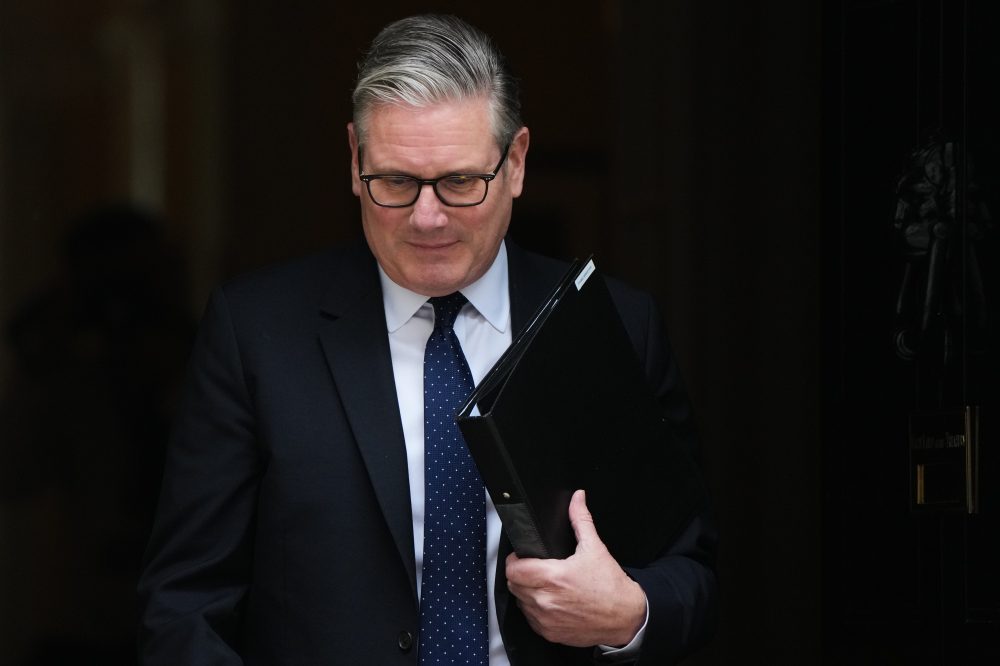
Legal challenges filed by voter advocacy groups seek to prevent the new districts from being implemented for the upcoming elections. The outcome could complicate President Donald Trump’s efforts to maintain a slim House majority through strategic redistricting that benefits the GOP.

The Republican Party currently controls 20 of Florida’s 28 House seats. The revised congressional map, enacted by Republican Gov. Ron DeSantis following a rapid two-day special legislative session, may boost GOP prospects to capture four more seats in November.
State lawmakers passed the new House boundaries on April 29 — the identical date the U.S. Supreme Court diminished federal Voting Rights Act safeguards for minorities by overturning a majority-Black congressional district in Louisiana. Following that decision, multiple Southern states have moved to dismantle minority districts that typically elect Democrats.
Congressional boundaries are normally redrawn every ten years following the census to adjust for population changes. However, since Trump advocated for mid-decade redistricting last year, Republicans believe they could secure up to 15 additional seats through new House maps across Texas, Missouri, North Carolina, Ohio, Florida, Tennessee and Alabama. Democrats expect to gain six seats through revised maps in California and Utah.
Democrats had anticipated winning up to four extra seats in Virginia. However, the Virginia Supreme Court recently invalidated a Democratic redistricting proposal approved by voters, determining the legislature failed to follow proper procedures when placing it on the ballot.
The U.S. Supreme Court determined in 2019 that federal courts lack jurisdiction over partisan gerrymandering disputes. The court noted that such claims could still be addressed in state courts under their respective constitutions and statutes.
Florida residents passed a state constitutional amendment in 2010 that forbids drawing U.S. House districts with the purpose of benefiting or harming a political party or sitting representative. The amendment prevents districts from reducing racial or language minorities’ capacity to choose their preferred representatives. It additionally mandates districts be geographically compact and utilize existing political and geographic boundaries when possible.
Legal action filed by voter representatives requests emergency relief blocking the new U.S. House map for violating that amendment. The litigation emphasizes allegations of political bias.
“The plan takes the state’s partisan skew to an unprecedented extreme,” stated one of three lawsuits filed in Leon County.
A court filing submitted on behalf of the Florida Senate contends that partisan motivation has not been established and emergency relief against the new districts is inappropriate before a complete trial.
While DeSantis convened lawmakers before the Supreme Court’s decision in the Louisiana case, he expected an eventual ruling that would weaken Voting Rights Act protections for minority districts. Among various modifications, Florida’s new map alters a southeastern Florida district that DeSantis’ office stated was designed to help elect a Black representative to satisfy federal Voting Rights Act requirements.
DeSantis’ office reported that no racial information was considered when creating the new map he submitted to the Legislature. In a communication to lawmakers, DeSantis’ General Counsel David Axelman claimed that Florida’s constitutional language regarding racial redistricting conflicts with the U.S. Constitution. If one component is invalid, Axelman argued, then the complete 2010 amendment becomes null, including sections prohibiting partisan gerrymandering.
PORT ISABEL, Texas — Children who once played on sunny lawns outside their subsidized housing units have disappeared, replaced by abandoned furniture lining the streets waiting for pickup. A thriving residential community has transformed into an eerily quiet neighborhood with empty playgrounds.
The dramatic change occurred after the housing authority in Port Isabel, a Gulf Coast community of 5,000 residents — many immigrants employed at hotels and restaurants on nearby South Padre Island beaches — sent a confusing notice about proposed Trump administration housing policies. The housing authority mistakenly suggested that new regulations barring housing assistance to families containing undocumented members were immediately taking effect. The resulting chaos offers a preview of potential consequences if the proposed federal rule becomes reality.
“The impact was not limited to undocumented immigrants, but really to immigrants who are here legally as well as people within their families who are citizens,” Marie Claire Tran-Leung, senior staff attorney at National Housing Law Project, said.
Current federal policy has permitted mixed-status families to reside in subsidized housing for many years, requiring undocumented or ineligible members to pay full, unsubsidized rent portions. The U.S. Department of Housing and Urban Development seeks to eliminate this arrangement.
Housing advocates project that approximately 80,000 individuals nationwide could lose their homes under the proposed policy, which forms part of President Donald Trump’s broader immigration enforcement strategy. Many affected residents would be U.S. citizens, particularly American-born children with undocumented parents.
The Port Isabel Housing Authority distributed a notice on Feb. 3 demanding all household members demonstrate legal status within 30 days or face removal. Three weeks later, officials issued a “clarification” stating no such documentation was necessary.
The damage was already done.
Fifty percent of Port Isabel public housing residents departed within one month of receiving the initial notice. Occupancy dropped from 91% in January to 43% in May, dramatically below the 94% national average.
The HUD proposal remains pending.
Housing authority officials provided no explanation for their initial error and ignored multiple comment requests from The Associated Press.
Concerns about potential removal and speculation that U.S. Immigration and Customs Enforcement might become involved created widespread alarm among residents.
“My kids and I spoke and wondered what we were going to do, but then we said it’s better to leave and avoid any retaliation,” a single mother from Mexico raising two teenagers who are U.S. citizens told The Associated Press. She, like other former residents, spoke on condition of anonymity due to fears of being deported.
She consulted legal aid organizations that assured her and others they could remain in public housing. However, she and her children determined the risk was too great and abandoned their home of almost ten years, securing an apartment in the same school district that costs approximately $500 more monthly.
The relocation also extended their commute to the island, where both mother and daughter are employed, by roughly 10 minutes. The 18-year-old arrives home from school at 4:30 p.m. and eats quickly before her mother drives her to work starting at 5 p.m. The daughter excels academically as a senior and plans college attendance in the fall with scholarship assistance, but worries about her family’s financial stability. Her brother lost his job, and their mother received cancer treatment last year, reducing her energy and creating financial hardship.
Additional families confront even more severe difficulties.
One mother of three relocated her family to a one-bedroom trailer illegally positioned between two other trailers. Her eldest son sleeps in the living area.
Another three-person family sold beds and furniture to fit into a small trailer, only to discover the landlord prohibited use of the mailing address, complicating their children’s schooling and health coverage.
“Since we got the letter, everything changed from one day to the next. It wasn’t the same anymore. Before the letter, the kids were happy, playing outside,” the mother of two said.
The Trump administration introduced the proposal in February targeting any household containing one ineligible resident, disqualifying entire families. Officials estimated 24,000 recipients were ineligible across 20,000 households.
“We have zero tolerance for pushing aside hardworking U.S. citizens while enabling others to exploit decades-old loopholes,” HUD Secretary Scott Turner said at the time.
The Center on Budget and Policy Priorities, which advocates for low-income families, estimates that 79,600 people could be forced to leave their homes, with a disproportionate impact on children and Latinos.
The regulation generated over 16,000 public comments, predominantly critical responses, including opposition from municipal leaders nationwide.
The New York City Council informed HUD that approximately 12% of city households include at least one member lacking legal status. About 240,000 children live in those homes.
“This proposed rule will unequivocally lead to increased displacement, homelessness, poverty, and decreased educational and health outcomes,” the council wrote.
HUD is anticipated to release a final rule version after reviewing public feedback.
Labor representatives at Volkswagen have firmly rejected any possibility of shutting down German manufacturing facilities, maintaining their unwavering stance against plant closures while expressing willingness to consider alternative solutions for underutilized production sites.
The automaker is seeking ways to reduce surplus capacity across its German manufacturing network while avoiding facility shutdowns, which were prohibited under a 2024 restructuring agreement with labor unions. Potential alternatives being explored include defense industry partnerships and collaborative arrangements with Chinese companies.

Three key union figures – works council leader Daniela Cavallo, IG Metall union chief Christiane Benner, and regional union representative Thorsten Groeger – emphasized that the 2024 agreement protecting German facilities remains non-negotiable.
“The fundamental situation has not changed — nor have the red lines set by the employee side,” they stated. “With us as the general works council and IG Metall, there will be no plant closures.”
The German automaker has seen its profit margins decline due to sluggish consumer demand and expensive investments in electric vehicle technology. Additional pressures have mounted from intense Chinese competition, increased tariffs, and Middle Eastern conflicts that have raised operational costs and created market uncertainty.
Following another earnings decline early this year, CEO Oliver Blume intensified efforts to find additional cost savings.
Blume has suggested potential facility-sharing arrangements with Chinese partners to address the overcapacity issue, though no formal discussions have been announced. Meanwhile, negotiations continue regarding a potential sale of Volkswagen’s Osnabrueck facility to a defense contractor.
During a Financial Times conference in London this week, Volkswagen brand leader Thomas Schaefer indicated the company was working to manage excess production volumes and described facility closures as “the second-best option.”
The union representatives expressed openness to considering proposals from within the company or external partners, as long as these initiatives honor the commitments management made in 2024.
Cavallo, Benner and Groeger reiterated their core principles of maintaining quality employment, career advancement opportunities and job stability, vowing to vigorously oppose any measures that contradict these values both currently and going forward.
Larry Culp, the chief executive of GE Aerospace, was observed Friday exiting a meeting at the Beijing offices of China’s National Development and Reform Commission, the country’s influential economic planning body, a Reuters witness reported.
The executive’s meeting at the NDRC facility follows recent statements by U.S. President Donald Trump on Fox News regarding his Thursday discussions with Chinese leader Xi Jinping in Beijing. Trump announced that China had committed to purchasing 200 Boeing aircraft, marking the nation’s first acquisition of American-manufactured commercial planes in almost ten years.
Given GE Aerospace’s role as Boeing’s main engine provider, the company is positioned to benefit from this purchasing deal, though the agreement was smaller than the approximately 500 aircraft that market analysts had anticipated, leading to stock price declines for both firms.
Both Culp and Boeing CEO Kelly Ortberg are participating in a business group consisting of more than twelve American corporate leaders who are traveling with Trump during his initial state visit to China in nearly a decade.
GE Aerospace has not yet provided a response to inquiries about the specific purpose behind Culp’s meeting at the NDRC.
An Australian Federal Court judge delivered a stern rebuke to Tesla on Friday, expressing shock at what he called the electric vehicle manufacturer’s inadequate cooperation in a major class action lawsuit.
Justice Tom Thawley questioned whether the Elon Musk-led company was treating the legal discovery process with appropriate seriousness, cautioning Tesla it could face “a really bad time” if cooperation doesn’t improve.
The sharp criticism came after attorneys representing 10,000 Australian Tesla owners reported that the U.S.-based automaker had delivered only 2,000 documents following eight months of discovery proceedings.
Brisbane law firm JGA Saddler brought the legal action, alleging Tesla deceived Australian buyers regarding phantom braking issues, actual battery range capabilities and autonomous driving features.
Tesla has maintained it does not misrepresent its vehicles’ capabilities.
During Friday’s pre-trial proceedings, JGA Saddler attorney Rebecca Jancauskas explained the case necessitates Tesla providing documentation related to engineering software, computer systems and customer complaints from international markets, but materials received so far have been insufficient.
“From what we’re getting, we can’t brief our experts,” Jancauskas informed the court. “The paucity of discovery is what’s thrown a massive spanner in the works.”
Justice Thawley stated it was reasonable to expect comprehensive documentation from Tesla, noting the company could request redaction of confidential or sensitive materials.
“I find it gobsmacking that only 2,000 documents have been produced and I wonder whether the exercise has been treated seriously,” he said.
The judge added his belief that “one would need to get into engineering drawings and reports that had been made from others, and into investigations that may or may not have been undertaken.”
Tesla’s legal representative Imtiaz Ahmed explained the defense team had manually examined approximately 100,000 documents and still needed to review roughly 75,000 more. He said the automaker had concerns about revealing confidential and sensitive information, including individual names that opposing counsel might contact.
Thawley established a July 31 deadline for Tesla to complete its discovery obligations, warning that “if it’s inadequate, you can expect a really bad time, and I will get into what’s gone on and whether it’s been done appropriately.”
The judge set September 1 for the next case management hearing.
Milwaukee Brewers officials are taking a wait-and-see approach with star outfielder Christian Yelich, who has been dealing with back stiffness that may require a stint on the injured list.
The team has given Yelich two consecutive days off to address the back issues, with Friday’s evaluation expected to determine his immediate future. Yelich had just returned from missing 24 games with a left groin injury when he played Tuesday against the visiting San Diego Padres, going hitless in four at-bats during Milwaukee’s 6-4 victory.
Following Tuesday’s contest, Yelich developed back stiffness that kept him sidelined for Wednesday’s defeat and Thursday’s win that concluded the series against San Diego. Team officials believe the current problem stems from back surgery the player had in August 2024.
Manager Pat Murphy provided an update after Thursday’s 7-1 triumph over San Diego, saying, “He felt much better today. We’ll find out a lot more (Friday). I think (Friday) will be kind of a telling tale whether he needs a longer break.”
Milwaukee begins a three-game road series against the Minnesota Twins on Friday in Minneapolis.
Murphy explained that similar issues occurred previously, noting, “He had the same thing last year. If you talked to his doctor, they would tell you the same thing, that this is going to happen from time to time. Do you know anybody with back surgery that absolutely has no problems with their back? That’s just not how it is.”
The 34-year-old Yelich has posted a .291 batting average this season with a .350 on-base percentage and .418 slugging percentage, along with one home run and 10 RBIs across 16 games.
The three-time All-Star earned National League Most Valuable Player honors in 2018 and carries career statistics of a .285/.374/.464 batting line with 234 home runs, 861 RBIs and 224 stolen bases over 1,632 games.
Yelich spent his early career with the Miami Marlins from 2013-17 before joining Milwaukee via trade in January 2018.
Workers at Samsung Electronics in South Korea announced Friday they will proceed with a planned work stoppage next week, despite the tech giant’s latest attempt to restart salary negotiations without preconditions. The news sent the company’s stock tumbling by as much as 5.9%.
Talks between the labor group and Samsung over compensation and bonus structures fell apart this week with government mediators involved, raising the stakes for a potential strike at the globe’s largest memory chip manufacturer.
Union representatives said Friday they would consider new discussions after June 7, but are moving ahead with their 18-day work stoppage beginning May 21 that threatens to interrupt chip manufacturing operations.
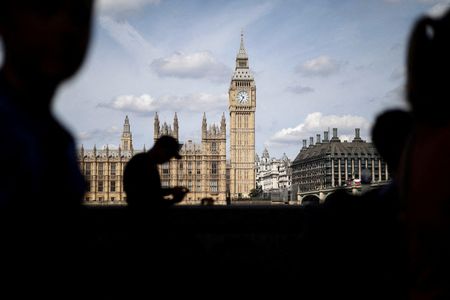
Market experts blamed the stock drop on mounting worries about how a strike might affect production capabilities and Samsung’s capacity to fulfill customer orders.
“There appears to be rising concerns over delivery reliability if the strike takes place and sentiment that rivals could benefit from the uncertainty,” said Ryu Young-ho, a senior analyst at NH Investment & Securities.

The likelihood of a work stoppage seemed to be growing since Samsung had not appeared to offer new proposals to workers, according to Ryu.
Samsung Electronics acknowledged in a public statement that it had proposed talks without conditions, but declined to elaborate further.
South Korea’s Labour Commission has urged both parties to participate in another government-facilitated negotiation session Saturday to prevent the strike from occurring.
The labor organization had previously stated it would only participate in discussions if Samsung presented a comprehensive proposal meeting worker demands by 0100 GMT Friday.
Frustrated by what they describe as a significant disparity in bonus compensation compared to competing chipmaker SK Hynix, union leaders have warned that more than 50,000 employees could leave their positions next week.
High-ranking South Korean officials, including the prime minister and finance minister, have expressed alarm that a Samsung work stoppage must be prevented, cautioning it could create substantial threats to economic expansion, export revenues and financial markets.
South Korean Industry Minister Kim Jung-kwan stated Thursday that a strike would inflict permanent economic harm and that emergency intervention might become necessary.
According to South Korean regulations, only the labour minister possesses emergency arbitration authority. Labour Minister Kim Young-hoon has emphasized the importance of continued dialogue between Samsung and its workers.
Investment bank JPMorgan released analysis suggesting the production consequences of a strike could exceed earlier projections, based on the union’s expectations of widespread worker participation.
JPMorgan calculated potential damage to Samsung’s operating profits at 21 trillion won to 31 trillion won ($14.08 billion to $20.79 billion), with sales losses potentially reaching approximately 4.5 trillion won.
Samsung Electronics stock was down 5.2% at 0305 GMT, while the benchmark KOSPI index fell 3.4%.
The leaders of South Korea and Japan have scheduled a diplomatic meeting for this weekend, according to an announcement from Seoul’s presidential office on Friday.
South Korean President Lee Jae Myung will host Japan’s Prime Minister Sanae Takaichi in the South Korean city of Andong from May 19 through May 20. The location holds personal significance as it is Lee’s place of birth.
This diplomatic gathering represents the second time the two leaders will meet face-to-face in 2024. Their previous encounter took place in January when Lee traveled to Nara, Takaichi’s birthplace, as part of what officials describe as continuing “shuttle diplomacy” between the neighboring countries.
President Trump concluded his Beijing visit on Friday with a final private meeting at Chinese leader Xi Jinping’s official residence before departing for Washington.
The two leaders spent Thursday addressing contentious topics including the Iran conflict, trade relations, technology issues and Taiwan.
Trump revealed that Xi informed him China is willing to help broker an end to the conflict and reopen the Strait of Hormuz. Since China purchases the most Iranian oil, Trump hopes Xi will leverage this relationship to pressure Iran into accepting U.S. conditions. Trump also mentioned that Xi promised China would not supply Iran with military equipment.

Throughout this visit, Trump has maintained an optimistic view of U.S.-China relations. However, this perspective faces challenges when confronting the most difficult issues between the two nations, including Taiwan, the Iran conflict and trade disputes.
During their summit filled with ceremony and diplomatic courtesy, Xi cautioned Trump that disagreements over Taiwan, a self-governing island that Beijing considers its territory, could lead to U.S.-China confrontations or conflict. Trump approved an $11 billion arms package for Taiwan in December but has not proceeded with delivery. Secretary of State Marco Rubio later warned Thursday that China attempting to seize Taiwan by force would be “a terrible mistake.”
Trump also emphasized trade matters and agreements for China to purchase more agricultural goods and passenger aircraft, establishing a board to resolve their disagreements and prevent another trade war like the one sparked last year following Trump’s tariff increases.
The president’s convoy traveled to Zhongnanhai, the Chinese central leadership complex adjacent to the Forbidden City in Beijing.
The compound’s gardens hosted Trump and Xi for an official photograph commemorating Trump’s visit, followed by a working tea session.
The leaders also planned a private lunch before Trump’s Friday afternoon departure to Washington.
Last year, the Trump administration announced it would begin canceling visas for certain Chinese students, including those connected to the Communist Party or studying in sensitive areas.
When questioned about this policy during a Fox News interview, Trump stated, “I frankly think that it’s good that people come from other countries and they learn our culture, and many of them want to stay here.”
Approximately 270,000 Chinese students attended U.S. colleges and universities during the 2023-2024 academic year, representing nearly a quarter of all international students.
Trump referenced a figure of 500,000 Chinese students in the interview and commented, “if you want to see a university system die, take a half a million people out of it.”
“It’s something I’m always looking at. But it’s a very insulting thing to tell a country, we don’t want your people in our schools,” he explained.
Adjacent to Beijing’s Forbidden City sits a secretive complex surrounding two artificial lakes created for imperial enjoyment.
Zhongnanhai, meaning “middle and southern seas,” represents China’s power center as Chinese President Xi Jinping’s primary residence and central government headquarters.
Zhongnanhai draws comparisons to the White House, the Kremlin or South Korea’s Blue House. However, unlike other presidential residences, Zhongnanhai rarely serves as the primary location for diplomatic visits.
China’s leadership reserves the highly protected grounds exclusively for their closest allies and carefully chosen dignitaries.
Russian President Vladimir Putin, whom Xi has described as his closest friend, visited Zhongnanhai at least twice, in 2024 and 2025.
Xi also invited former U.S. President Barack Obama to Zhongnanhai in 2014, where the two leaders enjoyed an evening walk and dinner.
Elon Musk’s 6-year-old son appeared Thursday at the Great Hall of the People wearing Chinese-style clothing and carrying a tiger bag that became an internet sensation in China.
The small, tiger-head crossbody bag comes from artisanal brand YASTEE, which collaborates with embroiderers in southern China to create handcrafted items.
According to local media, a bag similar to the one Musk’s son wore requires several days to make and decorate by hand.
The bag became viral on Chinese social media and sold out within hours on the company’s online platforms.
In his interview with Sean Hannity of Fox News, the president said he invited them to join his meeting with Xi at the Great Hall of the People despite their participation not being planned.
Trump explained the American business executives were in the building “and I said I think I can get them in five minutes.”
Trump declined to identify which executives participated but said they introduced themselves and spoke briefly, appearing to impress Xi. He noted most had never met the Chinese president.
“He actually said that was very good. That was a good idea,” Trump said regarding Xi’s reaction.
Trump, whose delegation included the CEOs of Mastercard and Visa, said he also discussed with Xi expanding U.S. credit card companies’ access to the Chinese market.
“I said, ‘What about using Visa in China?’” Trump mentioned in his Fox News interview. “For some reason they were blackballed and maybe that’ll come off.”
China permits foreign cards to connect with instant payment apps like Alipay and WeChat Pay. However, physical card usage remains limited primarily to international hotels, luxury shopping centers, and select upscale restaurants.
Visa and Mastercard have long sought greater access to Chinese consumers and businesses in the world’s second-largest economy.
Trump inquired about releasing Jimmy Lai, the 78-year-old former newspaper publisher and pro-democracy activist serving a 20-year sentence in Hong Kong, during his meeting with Xi, Secretary of State Marco Rubio revealed in an NBC News interview Thursday.
“We would like to see him released. We would be open to any arrangement that would work for them, as long as he’s given his freedom,” Rubio stated.
Lai published Apple Daily, a tabloid that criticized Chinese and Hong Kong government officials.
“He’s all business,” Trump told Sean Hannity of Fox News in a recorded interview following Thursday’s meeting with the Chinese leader. “There’s no games. There’s no talking about how nice the weather is.”
Trump described Xi as “a very smart person” and said they maintain “a good relationship.”
“He’s all about China,” Trump observed.
The president suggested during the Fox News interview that Iranian officials initially “said very strongly” that the U.S. could send teams to collect hundreds of pounds of enriched uranium believed buried beneath nuclear sites severely damaged by U.S. military strikes last year.
However, he said Iran later withdrew from the agreement.
“They agreed to it. They take it back. They agree, you know it’s back and forth,” he explained.
Iran’s willingness to surrender enriched uranium represents a crucial point in negotiations to end the conflict.
Trump has consistently maintained Tehran is prepared to do so, but Iran has largely dismissed such claims.
Trump added during the interview that Iran claims only the U.S. and China possess sufficient technology to extract the enriched uranium, given its deep underground location.
Trump and Xi planned additional discussions Friday.
They scheduled time together at Xi’s official Beijing residence before Trump returns to Washington.
Secretary of State Marco Rubio told NBC that “there’s going to be some agricultural purchases” resulting from this visit.
U.S. soybean farmers suffered significant losses during Trump’s trade war with China and have pressed him to convince Beijing to increase purchases of their crops.
China is expected to meet its commitment to buy 12 million metric tons (13.2 million tons) of U.S. soybeans this year, though this falls well short of the 25 million to 30 million metric tons (27.5 million to 33 million tons) purchased previously.
China, the largest foreign purchaser of U.S. soybeans, completely stopped buying them last year after Trump raised tariffs on all Chinese products. Following Trump’s October meeting with Xi, the White House announced China agreed to purchase 12 million metric tons.

The American Soybean Association hopes Trump can negotiate an agreement for an additional 8 million metric tons (8.8 million tons) by August 31.
HONOLULU (AP) — Hawaii’s Democratic governor enacted groundbreaking legislation Thursday designed to curtail corporate political influence and anonymous “dark money” organizations that have poured unlimited funds into elections following a landmark 2010 Supreme Court decision.
The legislation, set to become effective July 1, 2027, changes how corporations are classified to prevent their involvement in election spending. Meanwhile, volunteers in Montana are collecting petition signatures to potentially place a comparable measure before voters this November.
The Supreme Court’s decision in Citizens United v. Federal Election Commission eliminated restrictions on corporate and union political expenditures, provided they avoid direct campaign contributions. The case originated when Citizens United, a conservative organization, sought to air television advertisements for its anti-Hillary Clinton documentary during her 2008 presidential campaign.
Both major political parties have benefited from this decision. According to campaign finance monitoring organization OpenSecrets, outside political spending in 2024 federal elections exceeded $4 billion — nearly twelve times the amount spent in 2008.
A portion of these funds originated from dark money organizations that face no donor disclosure requirements, with the Brennan Center for Justice recording an unprecedented $1.9 billion in such spending during 2024. This type of funding has also influenced various state-level contests.

Hawaii Attorney General Anne Lopez’s office, led by the Democratic official, expressed opposition to the state’s new measure, contending it would prove challenging and expensive to defend through litigation.
“Hawaii is taking a brave and bold step to get corporate and dark money out of America’s politics,” stated Tom Moore, senior fellow at the Center for American Progress, the organization that developed the legal framework underlying the legislation. “It will send a powerful message that will be heard loud and clear across the Pacific and across the mainland.”
Federal authorities have reached a settlement agreement with an Indian energy mogul accused of misleading investors about a massive corruption scheme involving his company’s solar power operations, according to legal documents made public Thursday.
The Securities and Exchange Commission filed charges in late 2024 against Indian billionaire Gautam Adani and his nephew Sagar Adani, who both lead Adani Green Energy Limited. Regulators alleged the pair committed to paying Indian government officials hundreds of millions of dollars worth of bribes in return for energy purchase contracts at artificially high prices.
During this same period, the energy firm raised billions from Wall Street investors who were reportedly told the company maintained strong anti-corruption policies and received guarantees from top executives that no bribes would be paid.
Federal regulators stated these actions breached antifraud sections of U.S. securities regulations.
Settlement documents reveal Gautam Adani has agreed to pay $6 million in civil fines, while his nephew will pay $12 million. The proposed agreement does not require either party to admit wrongdoing.
The Adani Group rejected the accusations when they were first made, describing them as without merit. Legal representatives for both men did not respond to requests for comment Thursday.
Both individuals face criminal charges filed in late 2024 in New York for securities fraud and conspiracy to commit securities and wire fraud. The New York Times and Bloomberg reported Thursday that these criminal charges will likely be dismissed. Federal prosecutors in the Eastern District of New York did not respond to inquiries from The Associated Press.
The decision to dismiss charges appeared to be influenced by developments following President Donald Trump’s election to a second term and Gautam Adani’s public praise of the president.
In March 2025, Trump suspended enforcement of the Foreign Corrupt Practices Act, which prohibits overseas business bribes, leading some in India to believe the Adanis’ legal troubles were severely weakened.
Gautam Adani built his influence in the world’s largest country by developing a coal business empire during the 1990s.
The Adani Group eventually expanded into multiple sectors, making investments in critical areas including renewable energy, defense and agriculture.
Operating under the motto “Growth with Goodness,” the company developed a clean energy portfolio exceeding 20 gigawatts, featuring one of the globe’s largest solar installations in Tamil Nadu state.
The Adani Group previously aimed to become India’s dominant renewable energy company by 2030, planning to spend $70 billion on clean energy developments by 2032.
Adani’s strong connections to the government and Prime Minister Narendra Modi have drawn criticism, while U.S.-based Hindenburg Research has alleged the company engaged in “brazen stock manipulation” and “accounting fraud.”
The Adani Group dismissed these accusations as “a malicious combination of selective misinformation and stale, baseless and discredited allegations.”
Following the announcement of the Brooklyn case, Kenya’s president terminated multimillion-dollar agreements with the Adani Group covering airport upgrades and energy initiatives. Adani Green Energy pulled out of wind energy developments in Sri Lanka after the country requested price renegotiations. A major French oil company also halted new investments.
Industry experts believe a crucial element in Adani’s rapid expansion has been his ability to match his company’s objectives with the Modi administration’s goals. Critics claim he benefits from crony capitalism and receives special government treatment, including in contract awards, which the Adani Group has disputed.
Four people died when a medical transport aircraft went down in mountainous terrain near Ruidoso, New Mexico, during the early morning hours of Thursday, according to local authorities. The crash also started a forest fire in the area.
By midday, the blaze had expanded to cover 35 acres amid windy and dry weather conditions, Lincoln County Manager Jason Burns reported. Burns expressed that county authorities were “very concerned” about the fire, with local agencies collaborating alongside the U.S. Forest Service to control the flames.
What caused the aircraft to crash remains unclear, Burns stated. Search teams located the wreckage between 8 a.m. and 9 a.m. Thursday in challenging, steep and rocky terrain within the Capitan Mountains that proved hard to reach, requiring crews to walk the final half-mile to access the site, according to Burns.
Those who perished included flight crew members and medical staff, Burns noted. Authorities have not released the identities of the deceased.
“Our hearts and prayers go out to the families, loved ones, friends and colleagues of those who lost their lives in this tragic incident,” Burns stated during a press briefing.
The aircraft had taken off from Roswell Air Center with Sierra Blanca Regional Airport as its destination, the Federal Aviation Administration reported. Both the FAA and National Transportation Safety Board will conduct investigations into the incident.
Trans Aero MedEvac operated the aircraft, which had been conducting a medical transport mission and was declared overdue when radio communications and radar tracking were lost, the company announced.
Trans Aero MedEvac has provided services throughout southeastern New Mexico and west Texas since 1966.
Ruidoso is a mountain community with fewer than 8,000 permanent residents, located at the foot of south-central New Mexico’s Sierra Blanca range. The region, which encompasses Lincoln National Forest, features dense forests and rural landscapes.
A previous medical aircraft accident in the Devil’s Canyon section of Lincoln National Forest claimed five lives in 2007. That incident occurred shortly after the flight departed from Ruidoso Regional Airport en route to Albuquerque.
Before Thursday’s accident, NTSB data shows 25 deadly medical aircraft crashes have occurred over the last 25 years, resulting in nearly 70 fatalities.
Multiple incidents have happened within the last 18 months, including a jet that went down in a Philadelphia neighborhood in January 2025, killing eight people, and an August crash on the Navajo Nation in northern Arizona that killed four. In December, a Mexican Navy aircraft carrying a young patient and seven others crashed in the Gulf off the Texas coast.
Medical evacuation aircraft flights typically don’t pose greater risks than other flights since they operate between airports like standard aircraft, according to aviation safety expert Jeff Guzzetti. Medical helicopter operations carry higher dangers because they frequently involve landing on roadways or makeshift sites near accident scenes to rapidly transport injured individuals to hospitals.
Research examining air medical accidents across a 20-year span through 2020 revealed that helicopters accounted for more than 70% of deaths.
“Typically when an air medical air plane accident occurs, the reasons are usually the same as any other airplane accident. There’s not unique issues with the air medical mission,” stated Guzzetti, who previously worked as a crash investigator for both the NTSB and FAA.
Federal prosecutors are reportedly preparing to abandon criminal fraud charges against Gautam Adani, an Indian billionaire who has committed to a $10 billion investment in American economic projects, according to two individuals with knowledge of the situation.
On Thursday, Adani also settled a corresponding civil fraud case filed by the Securities and Exchange Commission concerning an alleged bribery operation targeting Indian government officials, pending judicial approval.
The potential abandonment of criminal charges follows a presentation by Adani’s attorney, Robert Giuffra, who also represents U.S. President Donald Trump personally. Giuffra informed Justice Department officials last month that Adani could not proceed with the investment while facing prosecution, according to one source.
Following Trump’s 2024 electoral victory, Adani had publicly committed to investing that sum and generating 15,000 American jobs.
According to the source, who requested anonymity, Giuffra devoted most of his 100-page presentation to challenging the case’s strength, arguing jurisdictional problems and insufficient evidence. Giuffra presented similar arguments in court documents for the related SEC case last month.
One source indicated that some prosecutors emphasized the $10 billion investment would not influence their case, though it remains uncertain whether others held different views.
The Justice Department has not yet responded to requests for comment.
Bloomberg News initially reported the Justice Department’s consideration of dismissing Adani’s case.
This represents another instance of Trump’s Justice Department moving to drop a prominent criminal case initiated by federal prosecutors under his Democratic predecessor, Joe Biden.
In November 2024, federal prosecutors in Brooklyn filed charges against Adani regarding an alleged conspiracy where he reportedly agreed to provide approximately $265 million in bribes to Indian government officials to secure approval for developing India’s largest solar energy facility.
Prosecutors alleged that Adani and his suspected accomplices obtained more than $3 billion through loans and bonds while concealing their corruption from financial institutions and investors.
The Adani Group has characterized the allegations as “baseless.”
Adani also confronted a related SEC civil fraud case, which the securities agency settled Thursday pending court approval, according to court documents. Sagar Adani, Gautam Adani’s nephew, also faced SEC civil allegations.
Both Adani and his nephew agreed to pay $18 million in civil penalties without admitting or denying wrongdoing, court records indicate.
Adani Green Energy stated that both individuals and the SEC had submitted documents to a New York court requesting entry of a final judgment, which awaits approval.
Last month, the Adanis’ legal team argued their clients disputed any credible evidence supporting the SEC’s alleged bribery conspiracy.
They contended that the Adanis’ non-involvement in the offering and the lack of fraudulent intent or negligence warranted dismissal.
They also described the SEC allegations as “impermissibly extraterritorial,” noting that the Adanis and all purported misconduct occurred in India, while the bonds never traded on American exchanges.
The 63-year-old Adani possesses a net worth of $82 billion according to Forbes magazine, ranking him among the world’s wealthiest individuals.
A federal court has temporarily halted enforcement of major components of Texas legislation that would have granted state authorities the ability to detain and remove individuals suspected of unauthorized border crossings.
On Thursday, U.S. District Judge David Ezra in Austin granted a temporary restraining order requested by the American Civil Liberties Union and allied organizations representing thousands of individuals who would have fallen under the law’s scope.
Judge Ezra, a Reagan appointee, determined that the state legislation violated federal supremacy and inappropriately encroached upon the federal government’s established authority over immigration matters and deportation procedures.
“At the broadest level, SB 4 conflicts with federal immigration law because it provides state officials the power to enforce federal law without federal supervision,” Ezra wrote.
Representatives for Republican Attorney General Ken Paxton, whose office is defending the law, did not respond to requests for comment.
The legal challenge was initiated last week to stop portions of the 2023 legislation from becoming active, following an April decision by a federal appeals court that reversed a previous injunction from the Democratic President Joe Biden’s administration that had blocked the Republican-supported measure known as SB 4.
Republican President Donald Trump’s administration had abandoned a legal challenge that the Biden administration had brought against the law. Immigration advocacy groups that had also filed suit continued their efforts, but the 5th U.S. Circuit Court of Appeals determined the organizations did not have proper legal standing for their case.
The new ACLU-supported legal action aimed to resolve that problem by filing on behalf of noncitizens who would face the law’s four primary requirements, scheduled to become effective Friday.
These requirements include provisions that would criminalize under state law someone’s reentry to the U.S. following deportation, even with federal authorization or after obtaining permanent resident status, and would authorize Texas magistrate judges to issue removal orders.
Legal representatives for the challengers celebrated Ezra’s decision in a collective statement.
“Texas cannot override the U.S. Constitution and should stop wasting time attempting to do so,” they said.
Toyota Motor has requested permission to construct a new vehicle assembly facility at its current Texas manufacturing site, with approximately $2 billion in planned investment, according to regulatory documents.
The proposed San Antonio project, which has been given the code name “Project Orca,” is scheduled to break ground by late 2026, with vehicle manufacturing expected to commence in 2030, based on documents submitted to the Texas Comptroller of Public Accounts.
The automaker’s investment plan allocates $1.05 billion toward building construction and facility enhancements, while $950 million will go toward purchasing machinery and equipment.
The expansion is projected to generate 2,000 new employment opportunities between 2028 and 2030.
“We regularly evaluate our manufacturing footprint to ensure we remain competitive and aligned with customer demand. This reflects our long-term commitment of investing in the North American region, local manufacturing/jobs, and suppliers,” Toyota said in a statement to Reuters.