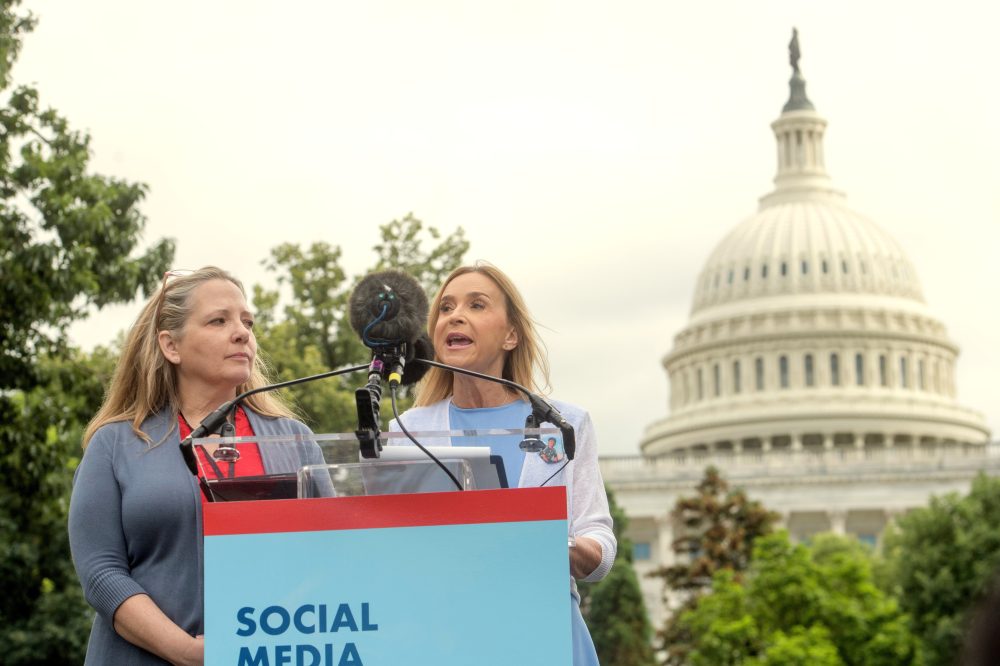

Amy Neville calls Kristin Bride her “soulmate” — a bond born from the worst day either woman has ever experienced. On June 23, 2020, both mothers lost their teenage sons to harms connected to social media use. The boys lived a thousand miles apart and never crossed paths in life, but their deaths linked their families forever.
When the two women first connected through their advocacy efforts, Bride recalled feeling “totally alone.” Since then, however, they have watched a growing movement take shape, with dozens of other grieving parents joining the push for stronger online protections for children.
Advocates say the momentum is building. Two significant jury verdicts this year have opened a new path toward holding technology companies legally accountable, and calls for federal regulation are gaining renewed energy in Congress.
“Moving forward for me, it’s this groundswell. We now have the court of public opinion on our side, and that is powerful. That has brought things to the next level,” Neville said.
Neville described her son Alexander as “brilliant and intense,” with an entrepreneurial drive and “the best laugh in the world.” At age 14, a drug dealer reached him through Snapchat and sold him the pill that ended his life. Kristin Bride described her son Carson as the “bright light” of their family — funny, caring, and someone who loved connecting with others. He died by suicide at 16 following severe cyberbullying.
This past Tuesday, both teenagers were honored in Washington, D.C., along with 270 other young people whose deaths have been linked to online harms. The event fell on the sixth anniversary of the boys’ deaths — a date their families have been working to officially establish as Social Media Victims Remembrance Day.
Globally, awareness of the risks social media poses to young, still-developing minds has led to a wave of new laws. Australia, the United Kingdom, Turkey, Indonesia and other nations have enacted bans preventing children under 15 or 16 from accessing platforms such as TikTok, YouTube and Instagram. The United States has not gone nearly that far.
In the U.S., progress shifted after jury verdicts went against Meta twice and against Google once, energizing child safety advocates. Court proceedings revealed internal company communications in which employees compared their own products to drugs and casinos.
The fact that a Los Angeles trial accusing social media platforms of deliberately harming children was allowed to proceed at all was described as a turning point by Matthew Bergman, who leads the Social Media Victims Law Center. The organization represents more than 1,000 people suing social media companies.
A longstanding legal shield — Section 230 of the 1996 Communications Decency Act — has historically protected tech companies from being held responsible for content posted on their platforms. Lawsuits are now working around that protection by targeting the companies’ intentional design decisions rather than the content itself.
“It is still a hurdle, but it is no longer a barrier,” Bergman said.
Federal action on social media regulation has moved slowly. The Children’s Online Privacy Protection Act, which took effect in 2000, requires apps and websites aimed at children to obtain parental consent before gathering personal data on users under 13.
This week, House lawmakers announced a bipartisan proposal called the Kids Internet and Digital Safety Act. It incorporates elements of the Kids Online Safety Act, which the Senate passed in 2024. However, critics argue the new bill has been stripped of its most critical element — a “duty of care” provision that would legally require companies to take reasonable steps to avoid harming children.
“Without a duty of care, Big Tech companies will maintain the status quo of putting profit before the safety of our children,” said Sen. Marsha Blackburn, R-Tenn., in a written statement.
Bride said advocates must pursue three simultaneous strategies: legislation, litigation and education. That way, she explained, “when one stalls, like legislation, then we have the trials and we have litigation. So we keep pressing forward. We’re not going to give up.”
Representatives from Meta, YouTube and TikTok did not respond to requests for comment. Snap issued a written statement saying the company continuously works to strengthen safety measures on its platform.
Over the years, social media companies have rolled out some protective features, such as placing minors in dedicated teen accounts with tighter controls. Instagram, for example, now limits teen accounts to content rated similarly to PG-13, sets those accounts to private by default and prevents strangers from sending direct messages. YouTube offers a separate app for younger children and parental control options on its main platform.
But advocates for children say far more is needed.
“Their fundamental incentive to design products that maximize engagement has not changed,” Bergman said. “Yes, there have been some improvements. A 13-year-old child is not by default provided with an open account for adult predators to prey upon. So, you know, there are baby steps, but there are steps in the right direction. We just need more of them.”
Since 2024, the Senate has passed a resolution each year recognizing June 23 as Social Media Harms Victim Remembrance Day, honoring those who died from online-related harms including suicide, drug poisoning, cyberbullying and dangerous social media challenges.
At Tuesday’s event, senators joined parents and advocates — including Bride and Neville — in calling for urgent action. Sen. Amy Klobuchar, D-Minn., called for repealing Section 230. Sen. Richard Blumenthal, D-Conn., urged those gathered to “fight like hell for the living.” Sen. Josh Hawley, R-Mo., criticized fellow lawmakers for their inaction, saying “we all know why” Congress has failed to act.
“It’s the same reason that the companies want the kids online, want their privacy destroyed, want all their information — it’s money,” Hawley said, pointing to the technology industry’s campaign contributions and millions spent on lobbying each year.
The Senate Judiciary Committee has invited the chief executives of Meta, Alphabet, TikTok and Snap to testify at an upcoming hearing focused on children’s safety on their platforms. The committee framed the moment starkly in the hearing’s title: “Is This Social Media’s Big Tobacco Moment?”
Bride and Neville plan to listen closely to what the tech executives say under oath — just as they did during a similar hearing in 2024 — and both say they remain hopeful.
“Every morning I wake up, lives are on the line. If we’re not talking about these things, if we’re not doing something about it, lives are on line,” Neville said. “And that’s probably not good for my nervous system, but that’s the state that I’ll live in until I’ll probably die on this hill.”