
Wildfire activity is surging across the western United States as back-to-back days of scorching heat, parched conditions, and strong winds have fed fast-moving flames in Utah, Arizona, and beyond — with new fires continuing to break out throughout the region.
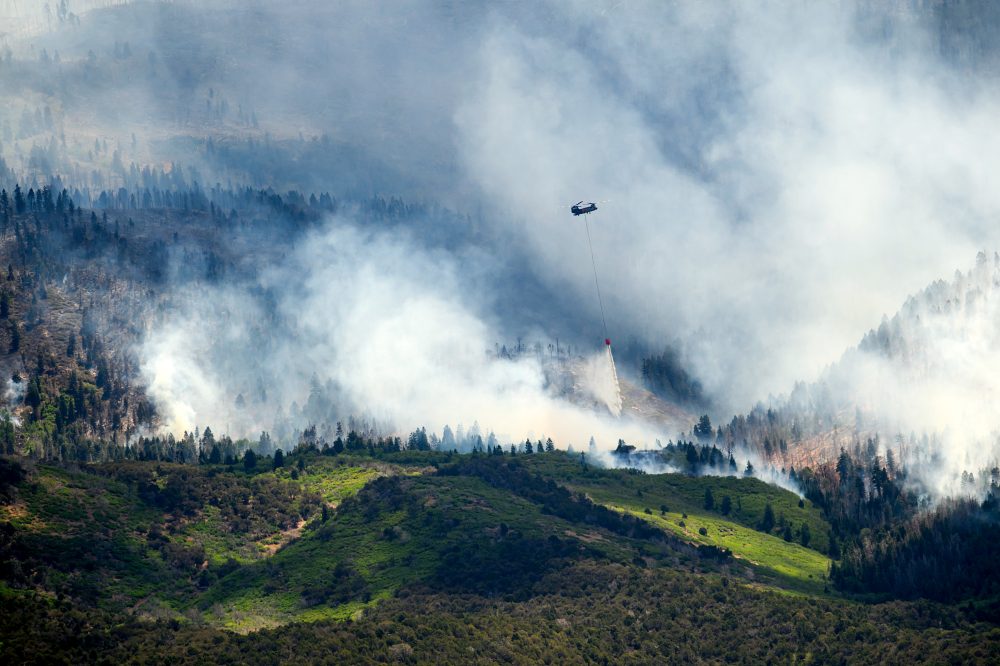
The biggest blaze, known as the Cottonwood Fire, is tearing through rugged terrain in southwest Utah. By Saturday, it had grown to more than 144 square miles — roughly 373 square kilometers — after sweeping through canyons and along steep mountainsides, taking out a portion of a ski resort and a number of summer cabins in its path.
Damage assessment teams in Beaver County began working alongside fire crews Saturday, though no specific damage figures were immediately released. Gov. Spencer Cox took to social media to describe the situation as grim, while also expressing gratitude to firefighting crews for what he described as “several miraculous stops and saves.”
The rugged landscape has made firefighting even more difficult. Alyssa Mason, a spokesperson assigned to the Cottonwood Fire, explained the challenges crews are facing on the ground.
“It’s hard to get dozers and other heavy equipment into that. It’s hard to get engines into that,” she said. “It doesn’t make it impossible to firefight, but it does just kind of slow things down.”
Hundreds of firefighters have been deployed across Utah to tackle both newly ignited blazes and fires that have continued to spread. Weather forecasters have described current conditions as critical fire weather — a combination of dangerously low humidity, warm temperatures, and strong gusts.
The threat is compounded this year by Utah’s record-low snowpack and its warmest winter ever recorded. According to the National Interagency Fire Center, much of the western United States is dealing with similar conditions.
On Saturday, firefighting crews from Alaska to Florida worked to contain dozens of active fires, including 36 classified as large and uncontained. Across the country, close to 3 million acres — approximately 1.2 million hectares — have burned since January 1, surpassing the 10-year average.
The severity of conditions in Utah prompted Gov. Spencer Cox to declare a state of emergency earlier this week, which also cleared the way for a statewide fireworks ban ahead of the July Fourth holiday. Officials say Utah is currently experiencing one of its worst wildfire seasons in recent memory, driven by historic drought.
State Forester Jamie Barnes said that over the past week, Utah has seen a sharp rise in new fire starts, with each one displaying unusual and unpredictable behavior — pushing the state’s wildland firefighting resources to their limits.
The National Weather Service has issued red flag warnings across a broad stretch of the West in recent days, covering areas from California through Arizona and New Mexico.
In Arizona, south of Grand Canyon National Park, a newly ignited wildfire was reported to be moving away from Grand Canyon Village and the nearby community of Tusayan as of Saturday. However, roughly 50 miles away, a separate fire led Coconino County authorities to order evacuations for residents near Kendrick Mountain.
Parts of northern Arizona lost power Saturday after the local utility initiated a precautionary shut-off to reduce wildfire risk. Such power shutoffs have grown more common across the West as fire danger has increased — typically used as a last resort after utility companies weigh wind speeds, available fuel, and terrain.
In Utah, Rocky Mountain Power also cut electricity to Beaver County and surrounding areas as extreme fire conditions continued to persist.