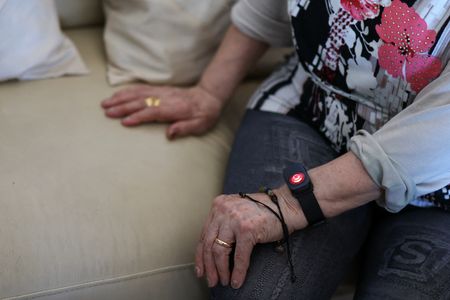

ROME — At 85 years old, Dina Gazzella lives alone in her home on the eastern edge of Rome. She lost her husband in 2023 and her cat a year after that. But a small electronic device on her wrist means she is never truly without support.
Gazzella is one of around 700 elderly Romans enrolled in a smart bracelet program launched by Rome’s city government using EU funds set aside after the COVID pandemic. The initiative carries a price tag of €400 million — roughly $456 million — and provides participants with a wearable device at no cost.
The black plastic bracelet, worn like a wristwatch, does much more than tell time. It continuously monitors the wearer’s heart rate and sleep patterns, detects falls through built-in motion sensors, and allows the user to call for emergency assistance at the press of a button — whether they are inside their home or out on the street.
City officials are pointing to the bracelet as a vital health tool, particularly as a deadly heatwave continues to push temperatures in Rome into the upper 30s degrees Celsius.
Clinical psychologist Piera Pomente, who coordinates a support desk for the program at a local pharmacy, explained why the device is so important right now. “The bracelet is crucial for elderly people in this hot period, especially because their blood pressure drops, their heart rate is slightly lower than normal, they really suffer,” she said.
For Gazzella herself, the bracelet brings peace of mind. She appeared lively during a visit to her apartment — showing off photos of her grandchildren, brewing espresso, and recounting a recent outing to a World War Two bunker with a local community group.
“If I feel unwell, this is a lifesaver,” she said. She added that social workers persuaded her to sign up by pointing out the risks of living alone. “They convinced me because they told me it was necessary, because I’m alone in the house and if something happens, if I fall, no one will pick me up; instead this one beeps, and someone will come.”
Pomente and her team handle applications and track participants’ data through a computer at the pharmacy. The monitoring runs Monday through Friday from 8:30 a.m. to 7 p.m. During nights and weekends, alerts from the bracelets are forwarded to family members through a mobile app.
In the past year, Pomente’s team has handled two emergencies — one involving a man who fell in the street and another who slipped from his wheelchair at home. In both cases, relatives were alerted and responded in time.
On quieter days, the work is more about connection than crisis. Social workers make daily phone calls to check whether participants have taken their medications, ask how they are holding up in the heat, or simply chat with those who are feeling lonely or bored.
“It’s about helping them share their day, their emotions, and the excessive heat,” Pomente said.
Not everyone has embraced the program. Privacy concerns have led some to drop out — of the roughly 70 people who initially enrolled through the pharmacy, only about 45 have remained. Pomente said she hopes to bring the others back and was quick to address the concern directly. “It’s not like we spy inside their homes with cameras,” she said.