Two pilots lost their lives when an Air Canada Express regional aircraft collided with a fire truck during landing operations at LaGuardia Airport on Sunday evening.
The CRJ-900 aircraft was attempting to land when it struck the emergency vehicle on the runway. Both pilots aboard the Air Canada flight were killed in the impact.
Emergency responders transported at least nine individuals to area hospitals for treatment of injuries sustained in the collision. The extent of their injuries has not been disclosed.
LaGuardia Airport operations were suspended following the incident, with the facility remaining closed Monday morning as investigators work to determine what led to the deadly collision.
The damaged Air Canada Express aircraft remained on the runway Monday as authorities continued their investigation into the circumstances surrounding the crash.
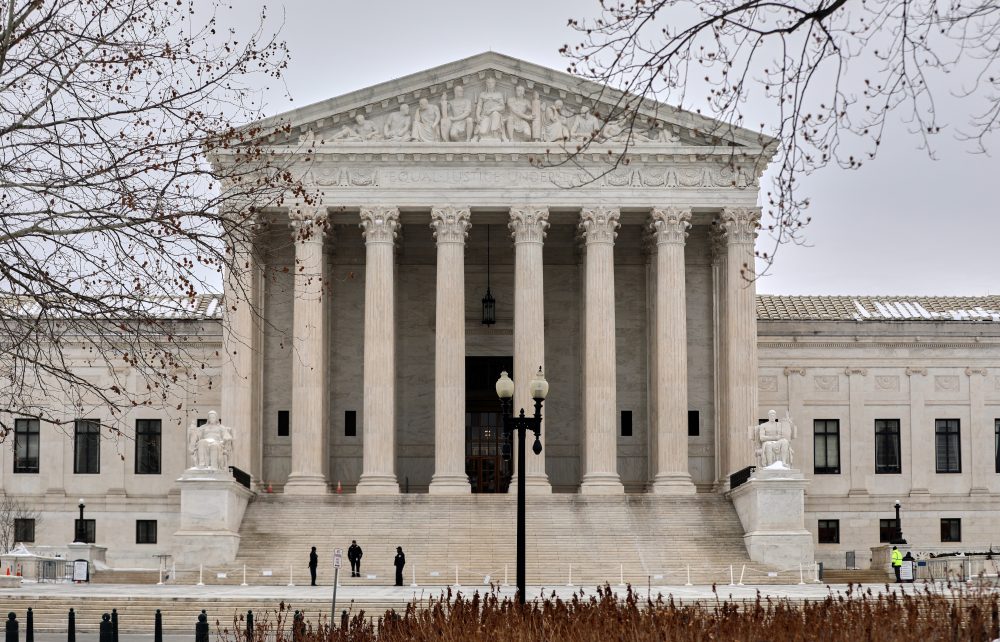
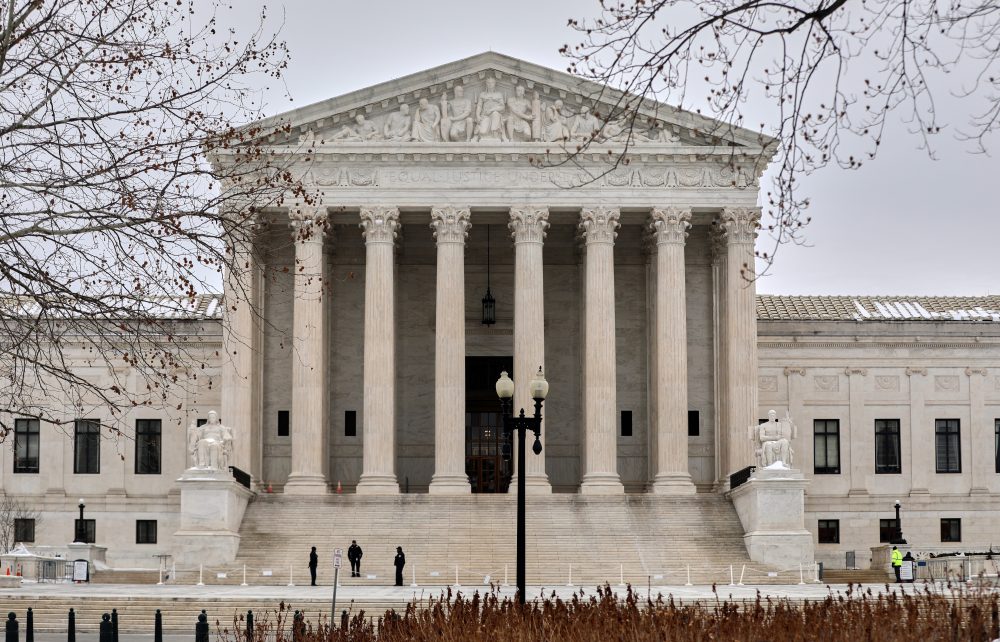
WASHINGTON — The nation’s highest court declined Monday to consider the case of a Texas-based digital journalist who maintained her detention was unlawful, disappointing media groups and First Amendment advocates who had been watching the proceedings closely.
The court allowed a split federal appellate decision to remain unchanged, which determined that Priscilla Villarreal — who operates under the online handle La Gordiloca — lacked grounds to file suit against law enforcement and government officials following her detention for requesting and publishing confidential police details.
In a dissenting opinion, Justice Sonia Sotomayor stated: “It should be obvious that this arrest violated the First Amendment.”
The Supreme Court had previously instructed the 5th U.S. Circuit Court of Appeals to reconsider Villareal’s matter following the high court’s decision in a separate Texas case. Last June, the justices allowed a former municipal official to continue her legal challenge alleging she was also improperly detained.
That separate matter involved Sylvia Gonzalez, who previously served on the city council in Castle Hills, a community near San Antonio. Gonzalez claimed her arrest was retaliatory and connected to a conflict with a political opponent.
However, the 5th Circuit maintained its original position, and this time the Supreme Court chose not to step in without providing reasoning. Villareal’s legal team argued in their high court petition: “The Fifth Circuit has doubled down on granting officials free rein to turn routine news reporting into a felony.”
A state court judge had earlier thrown out the criminal charges against Villareal, determining that the statute under which she was arrested in 2017 violated constitutional principles. She subsequently attempted to pursue monetary damages against the officials involved. The complete 5th Circuit panel voted 9-7 that the Laredo and Webb County officials Villareal targeted in her lawsuit deserved legal protection from such claims.
Villareal had requested and received from a law enforcement officer the names of an individual who died by suicide and a family involved in a vehicle collision, then shared this information through her Facebook page. According to the arrest documentation, authorities alleged she pursued this information to increase her social media following.
A statewide marketing initiative in Maryland is calling on ice cream businesses to apply for inclusion in next year’s promotional trail featuring local frozen treats.
Maryland’s Best, the program that links consumers with local producers across the state, announced it is accepting applications from ice cream establishments that operate on-farm creameries or use locally-sourced milk for their 2026 Ice Cream Trail.
The application deadline is set for April 10, 2026, according to the announcement made on March 23rd from Annapolis.
The initiative focuses on connecting visitors with authentic local ice cream experiences while supporting Maryland’s agricultural community and dairy producers.
The nation’s highest court has chosen not to take up a significant case involving media rights and press freedom protections.
The legal challenge stemmed from events in 2017 when a Texas-based reporter faced arrest following publication of coverage regarding a border patrol agent’s public suicide and a separate vehicle collision incident.
By declining to review the case, the Supreme Court leaves the lower court’s decision in place, potentially affecting how similar press freedom disputes may be handled in the future.
The case had drawn attention from media organizations and press freedom advocates who were watching to see if the court would weigh in on the boundaries of journalist protections when covering sensitive law enforcement matters.
WASHINGTON — The nation’s highest court declined Monday to hear an appeal from a Texas death row prisoner who has spent decades trying to get DNA testing on evidence he claims would prove his innocence.
The Supreme Court’s decision leaves standing a federal appeals court ruling that went against Rodney Reed for the second time in under three years.
Three liberal justices disagreed with the majority’s decision.
Reed received a death sentence for murdering 19-year-old Stacey Stites in 1996. Texas prosecutors have consistently blocked DNA analysis of the woven belt used to strangle Stites as she traveled to her job at a grocery store in Bastrop, located roughly 30 miles southeast of Austin in a rural area.
While prosecutors claim Reed sexually assaulted Stites, he insists they were involved in a consensual romantic relationship.
Reed has consistently argued that Stites’ fiancé, ex-police officer Jimmy Fennell, committed the murder. According to Reed, Fennell was enraged about the interracial relationship. Stites was white while Reed is Black. Fennell, who completed a prison sentence for sexual assault in 2018, has denied any involvement in Stites’ death.
“The killer held that belt tight against her throat for minutes, and must have left his sweat and skin cells—and thus his DNA—where he gripped the belt, both on the surface and deep within the webbing,” Reed’s attorneys wrote.
Both state courts and lower federal courts have supported prosecutors in blocking the testing, even though Reed’s legal team would cover all costs.
Justice Sonia Sotomayor called it “inexplicable” that prosecutors would prevent testing of the belt, “despite the very substantial possibility that such testing would exculpate Reed and identify the real killer.”
Because the Supreme Court refused to intervene, “the State will likely execute Reed without the world ever knowing whether Reed’s or Fennell’s DNA is on the murder weapon,” Sotomayor wrote in a dissenting opinion supported by Justices Elena Kagan and Ketanji Brown Jackson.
Texas’s highest criminal court determined that the state’s DNA testing statute doesn’t cover potentially contaminated items. However, Reed’s legal team argued that Texas regularly uses contaminated evidence in criminal cases, and regardless, the state bears responsibility for how the evidence was handled.
In 2023, the justices voted 6-3 to return Reed’s case to a lower court regarding his constitutional challenge to Texas’s DNA testing law.
The previous Supreme Court issue centered on whether Reed, who received his death sentence over 25 years ago, had waited too long to file his lawsuit arguing that untested evidence would clear him. Both Texas courts and the New Orleans federal appeals court determined he had missed the filing deadline.
Reed’s campaign to halt his execution has drawn backing from high-profile figures including Beyoncé, Kim Kardashian and Oprah Winfrey.
Delaware State Police have taken into custody a 24-year-old New Castle resident in connection with a deadly incident that occurred at Christiana Hospital last November.
Shawn Wootson now faces murder and attempted rape charges related to the death of 42-year-old Amie Bradley from North Carolina. The victim was discovered unresponsive near a retention pond on the hospital grounds at 4755 Ogletown Stanton Road in Newark on November 23, 2024, around 8:30 p.m.
Emergency responders immediately began lifesaving measures when troopers arrived at the scene. Bradley was rushed to the medical facility by ambulance but succumbed to her injuries.
The circumstances surrounding Bradley’s death prompted investigators from the Delaware State Police Criminal Investigations Unit and Homicide Unit to launch a comprehensive probe. Their investigation revealed evidence suggesting Wootson had strangled the victim and attempted sexual assault.
Wootson became a suspect but managed to leave Delaware soon after the incident occurred, making it difficult for law enforcement to locate him for months.
A New Castle County Grand Jury reviewed the case findings on March 16, 2026, and issued an indictment against Wootson for Bradley’s killing. The following day, detectives working alongside the DSP Special Operations Response Team successfully arrested Wootson and brought him to Troop 2 headquarters.
During questioning at the police facility, Wootson made a dramatic escape attempt while taking a break from his interview. He managed to access the ceiling tiles in the interview room but was quickly recaptured after officers deployed a taser. The incident prompted authorities to surround the building with additional law enforcement as a safety measure. Police say additional charges related to the escape attempt are forthcoming.
Following his arraignment at Justice of the Peace Court 2, Wootson was ordered held at the Howard R. Young Correctional Institution under a $2,060,000 cash bond. He faces two counts of Murder in the First Degree and one count of Attempted Rape in the Second Degree.
Marine wildlife officials are drawing attention to the importance of seals and sea lions through a dedicated week of recognition focusing on these ocean mammals.
The National Oceanic and Atmospheric Administration is spotlighting various species including Steller sea lions, spotted seals, bearded seals, Hawaiian monk seals, and ribbon seals as part of their educational outreach efforts.
The awareness campaign emphasizes the critical role these marine mammals play in ocean ecosystems and highlights ongoing conservation work to protect their populations and habitats.
NOAA Fisheries continues to monitor and study these species as part of broader marine conservation initiatives aimed at maintaining healthy ocean environments.
The popular food delivery service DoorDash has launched a temporary assistance initiative to help its drivers manage the burden of escalating fuel costs across the United States and Canada.
The California-based company revealed the relief program on Monday, coinciding with the national gas price average reaching $3.96 per gallon in America, as reported by AAA. This represents a dramatic 35% increase from prices just four weeks earlier.
Under the new program, American drivers who possess a DoorDash debit card will receive enhanced cash back rewards of 10% on all fuel purchases, a significant jump from the standard 2% rate. The company reports that more than half of its driver workforce currently uses these cards.
Additionally, drivers who log 125 miles or more during their delivery shifts will qualify for weekly fuel assistance payments ranging from $5 to a maximum of $15, according to the company’s announcement.
North of the border, Canadian DoorDash drivers will be eligible for weekly payments up to $36 Canadian dollars, calculated based on their delivery mileage.
Both relief programs will continue operating until April 26, DoorDash confirmed. The company recently implemented a comparable fuel assistance program in Australia.
Whether competing delivery services will introduce similar driver support measures remains uncertain. GrubHub indicated last week that it is monitoring fuel price trends closely. Uber has not yet responded to requests for comment regarding potential driver assistance programs.
BRUSSELS — A historic trade agreement linking the European Union with four South American nations will officially launch May 1, following more than 25 years of complex negotiations amid growing global economic tensions from tariffs, mineral restrictions, and ongoing conflicts in Iran.
The European Commission announced Monday that the EU-Mercosur trade pact received its final approval after Brussels received formal notification from Paraguay confirming the country’s ratification. This agreement represents a cornerstone of the 27-member EU’s broader strategy to reduce economic reliance on China and the United States.
Legislative bodies in Uruguay, Brazil, Paraguay, and Argentina have all given their approval to the arrangement, which encompasses over 700 million people and represents 25% of worldwide economic output. Bolivia, which recently joined Mercosur, was not part of the original negotiations but may participate in the agreement in future years.
“The priority now is turning this EU-Mercosur agreement into concrete outcomes, giving EU exporters the platform they need to seize new opportunities for trade, growth and jobs,” said European trade commissioner Maroš Šefčovič.
Strong resistance from agricultural groups and environmental advocates caused significant delays to the agreement in December. Additional complications arose when EU legislators voted to refer the deal to the bloc’s legal system for review. The EU’s executive branch responded by deciding to implement the agreement on a temporary basis, essentially bypassing the European Parliament.
This approach means commercial activity will commence in May and will only cease if the European Court of Justice issues an unfavorable ruling.
French President Emmanuel Macron described this strategy as “a bad surprise.” France and Poland had spearheaded efforts to block or modify the agreement with additional protections for consumers and farming interests.
European Commission President Ursula von der Leyen has dismissed such objections to an agreement she characterizes as essential for the EU’s future in an increasingly unstable global environment.
“This is about resilience, this is about growth, and Europe shaping its own future,” she told a news conference in February. Recently, she has not taken questions about the issue.
Von der Leyen is currently visiting Australia this week for discussions regarding a possible trade agreement, defense collaboration, and critical mineral supply arrangements.
ROME – Initial polling results from Monday indicate that Italian Prime Minister Giorgia Meloni’s administration has suffered a close defeat in a crucial referendum regarding judicial system reforms, potentially weakening her governing alliance before next year’s national elections.
Multiple polling organizations, including SWG and Opinio, reported after the March 22-23 voting period that opposition forces supporting the “No” position captured between 49% and 53% of votes, while the administration’s “Yes” supporters received 47% to 51%. YouTrend polling also showed the “No” side leading.
Voter participation exceeded projections and came after a contentious campaign period that exposed significant hostility between Italy’s conservative governing alliance and the country’s judicial branch, creating divisions that may have long-term consequences.
WASHINGTON – President Donald Trump announced Monday that diplomatic discussions between the United States and Iran have produced significant common ground between the two nations.
Speaking to reporters, Trump revealed that negotiations held on Sunday were set to resume Monday, expressing optimism that a diplomatic agreement could be reached quickly if discussions remain productive.
The president disclosed that Middle East envoy Steve Witkoff and son-in-law Jared Kushner conducted the diplomatic discussions with Iranian representatives.
Trump also revealed he had issued orders to delay planned military strikes targeting Iranian power facilities for a five-day period, just hours before a deadline that could have intensified the ongoing conflict, which has now entered its fourth week.
A Federal Reserve official remains committed to lowering interest rates despite mounting concerns about climbing oil prices and their potential impact on the American economy.
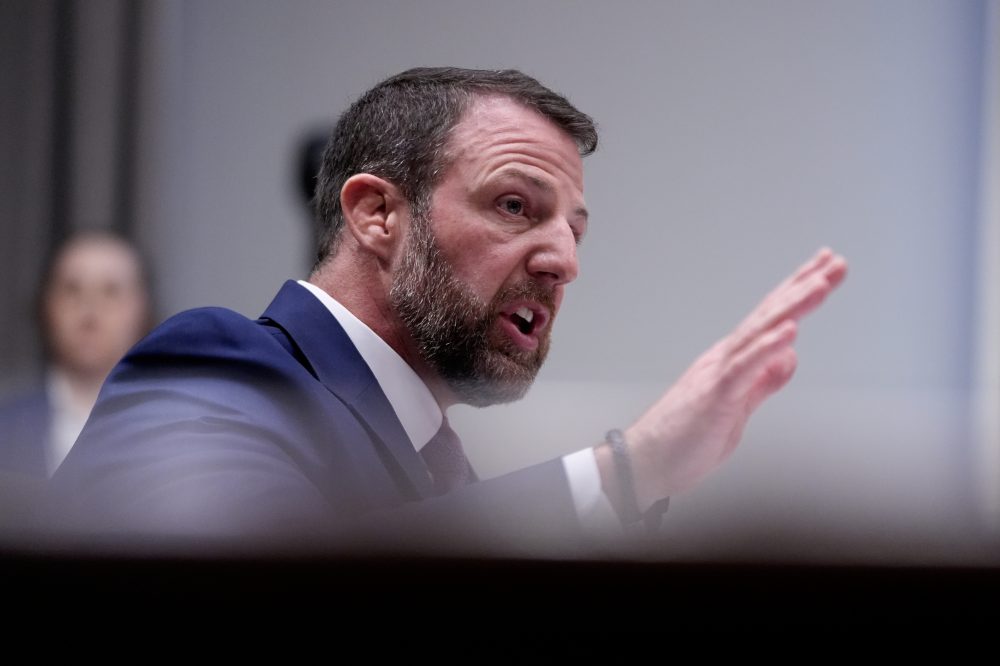
Federal Reserve Governor Stephen Miran told Bloomberg Television on Monday that it’s too soon to determine how recent spikes in energy costs will influence economic conditions moving forward. He emphasized his continued support for additional rate reductions to help bolster employment.
“We should wait for all the information to come in before really changing our outlook,” Miran explained during the television interview. Regarding the significant increase in energy costs, “I think it’s just still premature to have a clear view about what this is going to look like as you look 12 months out,” which represents the timeframe monetary officials must consider.
The Fed governor indicated that “traditionally, you would look through an oil price shock like this, which means that my policy outlook from before is unchanged and my policy outlook from before would be gradual cuts of interest rates.”
During last week’s Federal Reserve meeting, Miran adjusted his projections, reducing his anticipated rate cuts from six to four for the current year while increasing his inflation predictions.
The Federal Open Market Committee maintained interest rates between 3.5% and 3.75% during their recent session, with officials collectively anticipating just one rate reduction this year. President Donald Trump’s conflict with Iran has created uncertainty in economic forecasting, as rising energy costs threaten to increase inflation beyond the Fed’s 2% goal while simultaneously reducing consumer demand.
Miran stood alone as the sole committee member supporting a rate cut during the meeting. The official, who recently served as a Fed governor while taking leave from his White House advisory position under Trump, has consistently pushed for significant rate reductions similar to those preferred by Trump but opposed by other Fed leadership.
“I think the labor market still can use additional support for monetary policy, and that’s why I dissented last meeting,” he stated.
During his interview, Miran observed that “inflation risks have got a little more concerning, but the unemployment risks have gotten more concerning too, because the negative supply shock that is the oil price is also a negative demand shock.”
The Fed official emphasized monitoring whether elevated oil prices start influencing inflation expectations and wage increases, neither of which he reports are currently occurring.
Several Fed officials are considering potential interest rate increases if oil price volatility significantly drives up inflation levels.
Israel’s Finance Minister Bezalel Smotrich has made the boldest territorial claim yet by a senior Israeli official, demanding that his country’s northern boundary be pushed deep into Lebanon to reach the Litani River, as military forces continue their devastating campaign across southern Lebanon.
Speaking on an Israeli radio show Monday, Smotrich delivered what represents the most direct statement from a high-ranking Israeli leader about capturing Lebanese land during the ongoing conflict with Iran-supported Hezbollah forces.
The regional conflict expanded on March 2 when Hezbollah launched missile attacks against Israel. In response, Israeli forces have commanded all civilians to evacuate areas south of the Litani River while conducting relentless aerial bombardments against what they consider Hezbollah’s primary operational zone.
According to Lebanese officials, Israel’s combined air and ground operations have resulted in more than 1,000 deaths, while displacing over one million residents as Israel has demanded mass evacuations across large portions of the nation.
During his radio appearance, Smotrich stated that the Lebanese military operation “needs to end with a different reality entirely, both with the Hezbollah decision but also with the change of Israel’s borders.”
“I say here definitively…in every room and in every discussion, too: the new Israeli border must be the Litani,” Smotrich declared.
As head of a small far-right faction within Prime Minister Benjamin Netanyahu’s government, Smotrich frequently voices positions that exceed Israel’s stated policies. Netanyahu’s administration has not yet responded to requests for comment regarding these territorial demands. However, Defense Minister Israel Katz suggested similar intentions earlier this month, warning Lebanon could experience “loss of territory” unless it dismantles Hezbollah.
These territorial statements carry particular weight in Lebanon, a nation struggling to break free from decades of invasions and occupations by its southern neighbor. Israeli military forces have conducted multiple assaults on Lebanon beginning in 1978 and maintained control over the south from 1982 through 2000.
A Lebanese government representative informed Reuters that Beirut continues hoping international allies will apply sufficient pressure on Israel to halt the warfare, potentially through President Joseph Aoun’s proposal for direct negotiations.
Beyond Lebanon, Smotrich has also advocated for Israeli annexation of Gaza Strip territory currently under Israeli control, extending to the armistice boundary with Hamas. An October ceasefire agreement left Israel controlling 53% of Gaza, where authorities have ordered resident evacuations and demolished structures.
Israeli military officials describe their Lebanese operations as focused ground movements and precision strikes targeting Hezbollah fighters and weapon storage facilities, designed to safeguard northern Israeli communities from Hezbollah attacks.
Lebanon’s government has prohibited Hezbollah military operations and expressed interest in pursuing direct negotiations with Israel.
Throughout the weekend, Israel destroyed a major bridge connecting southern Lebanon to the rest of the country after directing its military to eliminate all Litani River crossings and intensify the destruction of homes near the southern frontier.
International legal standards typically forbid military forces from targeting civilian infrastructure, and United Nations human rights leadership has condemned Israel’s Lebanese actions, particularly its extensive evacuation directives.
Monday brought additional Israeli strikes against two more Litani River crossings — targeting a roadway near the main bridge hit Sunday and another smaller bridge elsewhere along the river.
Hanna Amil, mayor of the Christian border community Rmeish where residents have declined to abandon their homes, described increasingly challenging conditions to Reuters.
“Once or twice a week, a convoy from the Lebanese army accompanies us as we try to get basic goods from nearby areas,” Amil explained.
“Already, we have no state electricity, no water and we have diesel shortages. If all the routes to the north get cut off, who knows what the future could hold for us,” the mayor added.
The nation’s highest court on Monday rejected an appeal from a Texas citizen journalist who challenged her arrest after publishing information she received from law enforcement sources.
The justices refused to consider Priscilla Villarreal’s case seeking to overturn a lower court decision that shielded police officers and prosecutors from her lawsuit through qualified immunity protections. By declining to hear the appeal, the court allowed the previous ruling to stand.
Only Justice Sonia Sotomayor disagreed with the decision to reject the case.
Villarreal had received backing from major media organizations and advocates for free speech rights.
The legal principle of qualified immunity can protect government workers from being held liable in civil lawsuits concerning their official duties. Villarreal wanted the Supreme Court to rule that this protection shouldn’t apply when officials use state laws in ways that clearly breach First Amendment rights, which she claimed happened during her arrest.
Operating as one of Laredo’s most followed news sources, Villarreal has built an audience of more than 200,000 followers on her Facebook page where she regularly covers criminal cases, local happenings and municipal affairs.
Authorities filed two felony charges against her for improper use of information after she posted the names of people who died in a suicide and vehicle accident on Facebook in 2017, details she confirmed through conversations with a Laredo police officer.
The Texas law used to charge her criminalizes requesting non-public information from government workers with the goal of gaining an advantage. Officials claimed she sought the information to grow her Facebook following.
The 5th U.S. Circuit Court of Appeals in New Orleans ruled 10-5 last year that the officers and prosecutors deserved qualified immunity protection and that police weren’t expected to determine if the Texas statute was constitutional before making the arrest.
In the court’s opinion, Judge Edith Jones stated it was wrong to “portray her as a martyr for the sake of journalism,” noting that Villarreal had circumvented Texas law “to capitalize on others’ tragedies to propel her reputation and career.”
Attorneys from the Foundation for Individual Rights and Expression representing Villarreal argued to the Supreme Court that the 5th Circuit’s decision “doubled down on granting officials free rein to turn routine news reporting into a felony.”
The Reporters Committee for Freedom of the Press supported her appeal. Leading news organizations including ABC, the New York Times and the Washington Post also encouraged the Supreme Court to review Villarreal’s case.
A strong cold front is sweeping across the Delmarva Peninsula this morning, bringing a period of showers followed by a sharp drop in temperatures and increasing winds that will make for a raw and blustery day.
Early this morning, a disorganized but impactful system stretched from eastern Virginia to just off the coast near Cape May, helping to drive a band of steady showers across the region. This rainfall is expected to persist through the early morning hours before gradually tapering off by mid to late morning. However, the unsettled pattern doesn’t end there, as a secondary round of light showers or drizzle may develop around midday into the early afternoon.
Behind the departing system, a strong surge of cold air is quickly moving into the region. Temperatures will likely peak early in the day before steadily falling, dropping into the 40s and low 50s by late morning and afternoon. This cold air advection, combined with thick cloud cover, will create a noticeably colder feel compared to recent days.
In addition to the cooler air, winds will become a major factor. As the pressure gradient tightens between departing low pressure and building high pressure to the west, north to northwest winds will increase to 15 to 20 mph, with gusts reaching 25 to 35 mph throughout the afternoon. These gusty winds will enhance the chilly conditions, making it feel even colder across the peninsula.
Showers should come to an end by mid-afternoon, but skies are expected to remain mostly cloudy for much of the day, reinforcing the cool and damp feel.
Conditions improve tonight as winds gradually diminish and skies begin to clear. Sunshine returns for Tuesday, though temperatures will remain on the cooler side, signaling a quieter but still brisk stretch of weather across Delmarva.
Two men from Middletown have been handed life sentences plus additional prison time for their involvement in a deadly 2020 shooting that claimed the life of Shiheem Durham.
The Delaware Department of Justice announced that Jason Calhum, 24, and Khalil Dixon received their sentences on March 18th following convictions on several serious charges, with first-degree murder being the most severe.
Calhum was ordered to serve life imprisonment plus an extra 14 years behind bars after being found guilty of the murder charge and other related offenses stemming from Durham’s death four years ago.
Dixon also received a life sentence with additional time added to his punishment for his role in the fatal incident.
The sentencing brings closure to a case that has been working its way through the Delaware court system since the 2020 homicide occurred.
Nature enthusiasts will once again be able to explore the DuPont Nature Center at Mispillion Harbor Reserve beginning April 1st as the facility kicks off its 2026 season.
The Delaware Department of Natural Resources and Environmental Control facility, operated by the Division of Fish and Wildlife, will welcome guests from 9 a.m. until 4 p.m. on Wednesdays and Saturdays throughout the month of April.
Starting in May and continuing through August, the nature center will expand its operating schedule to include Tuesday, Thursday, and Friday in addition to the existing Wednesday and Saturday hours.
Delaware Department of Transportation crews are currently performing litter removal operations along a busy stretch of US-13, working in the median areas of both directions of travel.
The cleanup activities are taking place on US-13 from the point where it splits with US-40 up to the Interstate 495 on-ramp. Workers are operating in both the northbound and southbound median strips as part of the maintenance effort.
According to DelDOT, the litter removal crew will remain active in the area until 5 PM today. Motorists traveling through this section of US-13 should exercise caution and be aware of the ongoing work zone.
Authorities in Wicomico County are looking into a Sunday evening collision that sent six individuals to area hospitals for medical care.
Emergency responders transported two occupants of a Toyota Corolla – ages 17 and 25 – via helicopter to a trauma facility due to the severity of their conditions. Three other Toyota occupants, including the 18-year-old driver and passengers aged 20 and 18, required ambulance transport to a nearby medical center. A 46-year-old woman driving a Ford Fiesta was also taken by ambulance to receive hospital treatment.
Officers from the Maryland State Police Salisbury Barrack arrived at the intersection of U.S. Route 50 and White Lowe Road at approximately 6:50 p.m. Sunday following reports of the collision. Initial findings suggest the Toyota driver disregarded a red traffic signal while entering the intersection, colliding with the Ford as it attempted a left turn from the eastbound lanes of Route 50. The collision’s force sent the Ford off the roadway into a light pole, while the Toyota also departed the road, rolling over on an embankment before hitting a tree.
Traffic was disrupted for roughly three hours as investigators worked at the scene. The Maryland State Police Crash Team remains in charge of the continuing investigation.
Agricultural education initiatives in Virginia are offering students valuable hands-on experience that prepares them for future careers in farming and related industries.
These educational programs focus on providing practical learning opportunities where students can apply classroom knowledge to real farming situations. Through direct involvement in agricultural activities, young people gain essential skills that extend beyond traditional academic subjects.
The hands-on approach allows students to understand the complexities of modern farming while developing problem-solving abilities and work ethic that will serve them throughout their lives. These programs represent a growing trend toward experiential learning in agricultural education across Virginia.
Motorists traveling on Interstate 95 northbound should expect lane restrictions at the Newark toll plaza due to ongoing drone flight activities.
Delaware Department of Transportation officials report that the shoulder lane has been temporarily closed to accommodate the aerial operation. The restriction is scheduled to lift at 2 PM today.
Drivers are advised to use caution when passing through the area and may experience minor delays during the closure period.
Flight operations came to a temporary standstill at Newark Liberty International Airport on Monday morning when air traffic controllers were forced to evacuate their control tower because of a burning odor emanating from an elevator, according to the Federal Aviation Administration.
The source of the smell remained unclear, though officials confirmed no actual fire took place. The disruption lasted under one hour with no reported injuries.
While flights were suspended, FAA personnel moved operations to an alternate control tower at the facility, the Port Authority of New York and New Jersey reported. Controllers eventually returned to their main tower location.
This incident follows a similar situation from earlier in January when airports in the Washington D.C., Baltimore, and Richmond areas suspended all air traffic for more than an hour due to a powerful chemical odor that affected air traffic control operations. Federal Transportation Secretary Sean Duffy later identified an overheated circuit board as the culprit, which was subsequently replaced.
Monday’s flight suspension at Newark Liberty had no connection to the deadly collision at LaGuardia Airport on Sunday evening. That tragic incident resulted in two fatalities and multiple serious injuries when an Air Canada regional aircraft collided with a fire truck during landing, according to authorities.
HARARE, Zimbabwe — Authorities in Zimbabwe have arrested the most prominent critic of proposed constitutional changes designed to extend the presidency of 83-year-old leader Emmerson Mnangagwa beyond his current term limit. Former finance minister Tendai Biti was scheduled to face court proceedings on Monday.
The arrest represents the most significant detention to date among those opposing efforts to allow Mnangagwa to remain in power past 2028, when his current term is set to conclude, for an additional two years. Law enforcement officials have increasingly prohibited gatherings and detained individuals attempting to voice their opposition to the proposed amendments in recent months.
Biti serves as the leader of the Constitutional Defenders Forum, an organization actively campaigning against the constitutional modifications. According to CDF spokesperson Jacob Rukweza, both Biti and the group’s programs director Morgan Ncube face charges of conducting a public gathering without proper police notification. The pair were taken into custody Saturday in Mutare, located in the country’s eastern region.
Zimbabwean officials have not provided any statement regarding the arrests. However, government representatives have previously dismissed claims that they are undermining democratic reform commitments established following the end of Robert Mugabe’s lengthy reign.
Mnangagwa assumed leadership following a widely-supported military intervention that removed Mugabe from power in 2017. He has publicly stated his intention to leave office at the conclusion of his second term in 2028.
Despite these statements, Mnangagwa has not publicly challenged his ruling ZANU-PF party’s efforts to extend his tenure. His administration endorsed the amendment proposal in February before forwarding it to Parliament, where the governing party maintains majority control.
The suggested constitutional modifications would delay upcoming elections until 2030, transfer presidential selection from direct public voting to parliamentary appointment, and increase both presidential and parliamentary terms from five to seven years.
Biti and fellow critics argue that any constitutional change extending presidential terms requires voter approval through a referendum. However, Justice Minister Ziyambi Ziyambi and Mnangagwa allies contend that Parliament can enact these changes without public consultation since the two-term restriction would remain intact, despite longer individual terms.
Resistance to the amendments has intensified, with legal challenges submitted to various courts. Nevertheless, organizing physical opposition gatherings has become increasingly dangerous. Amnesty International has characterized the recent arrests as part of an “escalating crackdown on peaceful dissent.”
Earlier this month, law professor and opposition leader Lovemore Madhuku required hospitalization after being assaulted by unidentified attackers he identified as police officers following a political meeting discussing the proposed amendments. Police officials denied any involvement and stated the gathering had been prohibited.
In the previous year, the offices of SAPES Trust, a research organization, were destroyed by fire just hours before the group planned to host a press conference featuring amendment opponents.
Mnangagwa secured reelection in a contested 2023 vote, though international human rights organizations documented systematic suppression of opposition politicians and their supporters by the ruling party.
ATLANTA — Immigration enforcement officers were observed Monday morning at one of the nation’s busiest airports following President Donald Trump’s announcement that he would send federal agents to help the Transportation Security Administration during an ongoing government shutdown.
Associated Press reporters spotted several federal agents positioned near crowded security lines at Hartsfield-Jackson Atlanta International Airport on Monday.
While federal law enforcement personnel regularly work at international airports — with Customs and Border Protection screening international arrivals and Homeland Security Investigations handling smuggling and trafficking cases — their presence at TSA checkpoints represents an unusual shift from standard operations.
The deployment differs from typical airport security procedures, where transportation security officers normally manage passenger screening rather than federal immigration investigators.
Since Congress failed to renew Department of Homeland Security funding last month, hundreds of thousands of agency employees — including TSA workers, Secret Service personnel, and Coast Guard members — have continued their duties without receiving paychecks.
The decision to station immigration agents at airports has raised concerns about potentially heightening existing tensions.
During a Sunday announcement, Trump indicated he would send federal immigration officers to airports for tasks such as monitoring exit areas and verifying passenger identification, unless Democrats approved funding for the Department of Homeland Security. The agency’s funding expired February 14 when Democrats declined to support Immigration and Customs Enforcement and Customs and Border Protection budgets without operational reforms following the deaths of Alex Pretti and Renee Good in Minneapolis.
Democratic lawmakers maintain their push for significant reforms to federal immigration enforcement, including requirements for ICE agents to obtain judicial warrants before forced home entries, prohibition of face coverings, and mandating clear identification on uniforms.
In a Monday social media statement, Trump instructed ICE officers to remove face coverings while working at airports. Trump indicated support for mask-wearing when agents deal with “hardened criminals” but suggested such measures were unnecessary when addressing the “MESS at the airports.”
Chinese e-commerce giant Alibaba has entered the competitive artificial intelligence market with a new business-focused platform called Accio Work, designed to help small and medium-sized companies automate their operations.
The international commerce arm of Alibaba rolled out this “AI taskforce” system in Shanghai on March 23, positioning it as a ready-to-use solution that can independently handle complicated business processes without requiring users to write code or perform technical setup.
This development occurs during a surge of interest in China surrounding AI agents, sparked by OpenClaw technology, which has created a consumer craze nicknamed “lobster raising” that has attracted everyone from college students to senior citizens. This trend has prompted businesses to rapidly develop OpenClaw-based applications while raising cybersecurity worries.
Unlike the consumer-focused excitement, Accio Work targets business clients by providing specialized AI teams that operate across different company functions.
“We distinguish ourselves by being a specialized B2B tool rather than a generalist platform,” stated Kuo Zhang, Vice President of Alibaba International. “We draw a very clear line at high-stakes operations … any action involving financial transactions, payment execution, or access to private files requires explicit, granular permission from the user.”
This announcement follows closely after another Alibaba department unveiled Wukong just days earlier, an enterprise-oriented AI system capable of managing multiple artificial intelligence agents to handle various business functions like document preparation, data analysis, meeting notes, and research through one unified system.
Additionally, Alibaba announced plans last week to split its artificial intelligence operations from its cloud services division. The company established the new Alibaba Token Hub business unit under CEO Eddie Wu’s leadership, signaling a strategic pivot toward AI-powered digital assistants that consume significantly more data tokens compared to standard question-and-answer chatbots.
Zhang emphasized that the global competition to develop AI agents presents significant dangers that require careful management through specialized, controlled systems that maintain a balance between automation and protection.
“We believe the greatest risk lies in using horizontal, generalist models for vertical business tasks. By focusing on specialized B2B agents and implementing AI alongside human approval layers, we can deliver the benefits of an autonomous workforce without the traditional risks associated with unconstrained AI,” Zhang explained.
Leo Radvinsky, the Ukrainian-American businessman who controlled the adult content platform OnlyFans, passed away Monday at 43 years old after battling cancer, according to a company announcement.
“We are deeply saddened to announce the death of Leo Radvinsky. Leo passed away peacefully after a long battle with cancer,” a company representative stated. “His family have requested privacy at this difficult time.”
The entrepreneur purchased Fenix International Limited, which owns OnlyFans, back in 2018 and held the position of director while maintaining majority ownership of the business.
Beyond OnlyFans, Radvinsky operated Leo, his own venture capital firm established in 2009 that specializes in backing technology startups.
The subscription-based platform, originally launched in 2016 by British businessman Tim Stokely, experienced explosive growth during the coronavirus pandemic as stay-at-home orders pushed both content creators and users to digital platforms, transforming it into a widely recognized source of income and entertainment worldwide.
Earlier this year in January, reports emerged that OnlyFans was considering selling a controlling interest to Architect Capital, an investment company, in a transaction that would value the platform at approximately $5.5 billion when including debt.
A European artificial intelligence infrastructure company announced Monday it has successfully completed a massive $4.34 billion convertible debt funding round, positioning itself as a major player in the rapidly expanding AI market.
Nebius executives say the substantial financing gives the company sufficient resources to execute capital spending plans ranging from $16 billion to $20 billion through 2026. The funding milestone caps off a remarkable month for the Amsterdam-based firm, which also completed a $2 billion share warrant sale to Nvidia and finalized a contract potentially worth $27 billion to provide data center services to Meta, Facebook’s parent company.
The recent financial activities highlight strong investor confidence in AI infrastructure development as demand continues surging across multiple industries.
Tom Blackwell, the company’s Chief Communications Officer, indicated Nebius plans to pursue additional large-scale agreements similar to the Meta partnership, which came after securing a $17.3 billion supply contract with Microsoft last September.
“We’ll continue to consider these types of deals as we go, just because if they’re structured in the right way, they can be a very efficient source of capital,” Blackwell explained.
Beyond securing immediate funding, Blackwell emphasized that these major contract victories demonstrate the company’s technical capabilities while providing financial foundation for long-term business sustainability. The strategy focuses on developing AI cloud services for corporate clients, building upon the physical infrastructure foundation the company already provides.
Addressing concerns about rapid expansion potentially creating vulnerability during economic downturns, Blackwell dismissed such worries. “As long as enterprise AI adoption does continue to increase… the need for what we’re doing is going to make sense,” he stated.
The company’s growth financing strategy involves funding 60% of expansion through customer advance payments, primarily from Microsoft and Meta partnerships, while covering the remaining 40% through combined equity and debt financing, according to Blackwell.
Earlier this month, Nebius completed the sale of $2 billion in share warrants to Nvidia at $94.94 per share. Monday’s convertible bond offering exceeded initial expectations due to strong investor demand, Blackwell reported.
The bond package features a 2.63% interest rate for notes maturing in 2033, with conversion terms set at approximately 90% above the company’s Friday closing stock price of $117.62.
“We’ve managed to achieve a significant amount of funding while really minimizing the dilution,” Blackwell noted regarding the financing structure.
Authorities in Hong Kong have been granted expanded powers allowing them to compel individuals suspected of violating national security laws to surrender passwords for mobile devices and computers, marking another step in the territory’s ongoing restrictions on opposition activities.
Those who refuse to cooperate face imprisonment of up to one year along with fines reaching HK$100,000 ($12,773), while individuals who provide false or deceptive information could receive three-year prison sentences and penalties up to HK$500,000.
Hong Kong’s administration officially published these new modifications to the national security law’s enforcement regulations on Monday, utilizing authority that circumvents the territory’s legislative body. The comprehensive security legislation was implemented by Beijing in 2020.
Government officials are scheduled to inform legislators about these changes on Tuesday, according to an official announcement.
The broad-reaching legislation imposes penalties for various offenses, including undermining state authority and collaborating with international entities, carrying potential life sentences.
While the law drew condemnation from Western nations and human rights organizations, authorities in both Beijing and Hong Kong defended its necessity for restoring order following extensive pro-democracy demonstrations that disrupted the city throughout 2019.
Under the updated regulations, law enforcement officers can require individuals under investigation for potential national security violations to supply passwords or decryption keys for electronic equipment and offer police “any reasonable and necessary information or assistance.”
The modifications also grant customs officials authority to confiscate materials considered to contain “seditious intention,” even without arrests being made in connection with national security violations related to those items.
Urania Chiu, a legal academic in the United Kingdom who studies Hong Kong affairs, criticized the new measures as interfering with basic freedoms, including communication privacy and fair trial rights.
“The sweeping powers given to law enforcement officers without any need for judicial authorisation are grossly disproportionate to any legitimate aim the bylaw purports to achieve,” Chiu stated.
A representative for Hong Kong’s government maintained that the revised regulations comply with the territory’s constitutional framework, known as the Basic Law, and its human rights protections, adding they “will not affect the lives of the general public or the normal operation of institutions and organisations.”
The Security Bureau reports that 386 individuals have been detained for national security violations to date, with 176 people and four corporations receiving convictions.
Media executive Jimmy Lai received a 20-year prison sentence in February for collaborating with foreign entities and sedition, drawing international condemnation.
WASHINGTON – Federal immigration enforcement officers started arriving at major airports across the country Monday to assist with security operations as widespread absences among unpaid TSA workers create extensive flight delays.
The Department of Homeland Security has confirmed the deployment of hundreds of ICE personnel to help with airport security screening at facilities experiencing severe staffing shortages.
Officials report that Immigration and Customs Enforcement agents along with Homeland Security Investigations personnel are being sent to 14 airports nationwide. The affected locations include major hubs such as Atlanta, New York’s JFK, Cleveland, Pittsburgh, Phoenix, and Fort Myers.
Meanwhile, Atlanta’s Hartsfield-Jackson International Airport – which handles more passenger traffic than any other U.S. airport – issued advisories Monday recommending travelers plan to arrive a minimum of four hours before their scheduled departure times.
Delaware Department of Transportation officials have implemented a temporary lane closure on a busy section of Route 1 for ongoing construction work.
The right shoulder along Coastal Highway is currently blocked to traffic between Sea Air Avenue and Shuttle Road while crews complete roadwork in the area.
According to DelDOT, the shoulder closure is expected to be lifted by 4 PM today. Motorists traveling through this corridor should expect potential delays and are advised to allow extra time for their commute.
Drivers are encouraged to use caution when passing through the construction zone and to follow posted signage and traffic control measures.
Motorists traveling on Route 1 near Rehoboth Beach should expect delays as the Delaware Department of Transportation has implemented a right shoulder closure for ongoing construction activities.
The lane restriction affects the northbound direction of Coastal Highway between Sea Air Avenue and Shuttle Road. DelDOT officials indicate the shoulder closure will remain active until 4:00 PM today.
Drivers are advised to use caution when traveling through the construction zone and allow extra time for their commute. Traffic may experience slower speeds and potential backups during peak travel hours.
Motorists traveling along Pike Creek Road are experiencing periodic lane restrictions today as construction work continues in the area.
According to DelDOT, the traffic disruptions are occurring on the stretch of Pike Creek Road that runs from Kirkwood Highway (Route 2) to Abbey Lane. The construction activity is causing lanes to close intermittently throughout the day.
Officials say the lane restrictions are expected to remain in effect until 5 PM today. Drivers are advised to plan for potential delays and consider alternate routes if possible during the affected timeframe.
Motorists traveling through Sussex County should prepare for traffic delays on Park Avenue today as construction crews continue their work along the roadway.
According to DelDOT officials, intermittent lane closures are affecting Park Avenue (Route 431) in the stretch between Lewes Georgetown Highway (Route 9) and Springfield Road. The temporary traffic restrictions began earlier today and are expected to continue until 5:00 PM this evening.
Drivers using this route are advised to allow extra travel time and exercise caution when approaching the work zone. Officials recommend considering alternate routes if possible to avoid potential delays during the construction period.
Drivers traveling on southbound Foulk Road should plan for potential delays today as construction crews have temporarily shut down the right lane near Wynnwood Drive.
According to DelDOT, work activity in the area has necessitated the lane restriction, which is expected to continue until 3 PM this afternoon.
Motorists are advised to allow extra travel time and use caution when passing through the construction zone.
Drivers using Foulk Road should plan for potential delays this afternoon as Delaware Department of Transportation crews continue work that has shut down the right lane of southbound traffic near Wynnwood Drive.
The lane restriction is expected to remain in place until 3 PM today while workers complete their project in the area.
Motorists are advised to use caution when traveling through the work zone and allow extra time for their commute. Traffic may be moving slower than usual as vehicles merge from the closed lane.
Drivers using Route 9 are experiencing traffic delays today as construction crews work on the Reedy Point Bridge crossing the Chesapeake & Delaware Canal.
DelDOT reports that one southbound lane on the bridge remains closed to traffic while the work continues. The construction activity is expected to wrap up by 3 PM this afternoon.
Motorists are advised to allow extra travel time and consider alternate routes if possible while the lane restriction remains in place.
Drivers heading north on Interstate 95 should expect delays Tuesday as Delaware Department of Transportation officials report a lane closure near the Salem Church Road overpass.
The right lane of northbound I-95 remains blocked due to a traffic incident in the area, according to DelDOT’s traffic management system.
Transportation officials have not provided details about the nature of the incident or an estimated time for reopening the affected lane.
Motorists are advised to use caution when traveling through the area and consider alternate routes if possible to avoid potential backups.
Motorists should expect delays on Nassau Road today as construction crews have closed one southbound lane between New Road and Coastal Highway (Route 1).
According to DelDOT traffic reports, the lane restriction is currently in effect and will continue through 5 PM this afternoon.
Drivers are advised to use caution when traveling through the work zone and consider alternate routes if possible to avoid potential delays during the closure period.
Motorists traveling on Nassau Road are experiencing lane restrictions today as construction crews continue work in the area.
According to DelDOT, one southbound lane on Nassau Road is currently closed between New Road and Coastal Highway northbound (Route 1). The lane closure is expected to remain in effect until 5 PM today.
Drivers are advised to allow extra travel time and use caution when passing through the construction zone. Traffic may experience delays during peak travel hours.
Motorists traveling through a section of Peachtree Run will need to navigate around ongoing construction work that has shut down the southbound lane.
The lane closure affects the stretch of roadway between Lochmeath Way and Mifflin Meadows Drive, according to traffic officials.
The construction-related closure is scheduled to remain in effect until 5 PM today, and drivers should plan for possible delays while traveling through the area.
Authorities recommend seeking alternate routes if possible to avoid congestion in the affected zone.
TEL AVIV, Israel (AP) — Israeli military forces successfully exploited Iran’s comprehensive street surveillance system to locate and eliminate the nation’s supreme leader, demonstrating how modern warfare increasingly targets digital infrastructure originally built for domestic control.
Across the globe, hundreds of millions of surveillance devices monitor storefronts, residential areas, and public spaces, with many connected to internet networks lacking adequate security measures. Military and intelligence organizations now leverage artificial intelligence breakthroughs to analyze massive volumes of surveillance data and locate specific targets.
Israeli operations on February 28 showcased the devastating potential when adversaries compromise such networks, successfully tracking Iranian Supreme Leader Ayatollah Ali Khamenei using Tehran’s own monitoring equipment — this despite multiple prior alerts about security breaches in Iran’s surveillance infrastructure, based on interviews and Associated Press analysis of leaked intelligence, official statements, and media coverage.
Two intelligence sources familiar with the mission described to AP how compromised surveillance cameras contributed to the operation that resulted in Khamenei’s death. Both sources requested anonymity as they lacked authorization for media interviews.
Iranian authorities deployed thousands of monitoring devices throughout their capital following successive protest movements, including massive January demonstrations that concluded with violent government suppression resulting in numerous civilian casualties.
The compromise of Tehran’s camera systems was widely acknowledged: hackers had repeatedly breached the city’s surveillance network beginning in 2021, and the previous year, a prominent Iranian official publicly acknowledged Israeli infiltration of the camera system, calling it a threat to national security.
Conor Healy, research director at surveillance publication IPVM, noted that Khamenei’s assassination reveals a critical security paradox facing governments attempting to suppress opposition movements.
“The infrastructure authoritarian states build to make their rule unassailable may be what makes their leaders most visible to the people trying to kill them,” Healy said. “Do you trust who is watching?”
Cybersecurity professionals have long cautioned about cameras becoming warfare tools.
Security engineer Paul Marrapese discovered in 2019 that he could breach millions of camera systems from his California home office.
Despite his continued warnings, vulnerable camera installations keep expanding. Recent scans revealed nearly three million unprotected camera feeds globally, including approximately 2,000 Iranian devices, Marrapese informed AP.
“There are millions and millions and millions of these throughout the world,” Marrapese said. Many remain extremely vulnerable to attack: “They’re just dumb little things. … It’s fish in a barrel.”
Manufacturers market internet-connected cameras accessible through mobile devices, with feeds easily redirected by malicious actors. Many installations lack proper security protocols, with unsophisticated users failing to establish passwords or apply security updates. While camera protection requires ongoing attention, successful hacking needs only one weakness, such as outdated systems or simple passwords like “1234.”
Even government surveillance networks isolated from public internet remain at risk: a single insider with malicious intent can compromise entire systems.
“Humans are kind of the weakest link,” Marrapese said. “There’s really only so much you can do.”
Eyal Hulata, Israel’s former national security adviser now with the Foundation for Defense of Democracies, confirmed Israel faces constant Iranian cyberattacks but maintains effective defenses.
“There is high alert on all cyber fronts,” he said.
Military camera hacking remained largely theoretical until 2023, when Hamas compromised southern Israeli surveillance systems before their October 7 assault, enabling monitoring of Israeli military patrols and facilitating their attack, according to Israeli media reports. That year also saw Ukrainian officials report Russian attempts to hijack cameras near missile targets, continuing into 2024 with Russians breaching Kyiv cameras and border crossing surveillance systems.
Artificial intelligence advances now enable military forces to overcome a major obstacle in weaponizing stolen footage: processing enormous video volumes to identify individuals, vehicles, and targets — work that previously required analyst teams working for weeks or months but now occurs instantly. Simple keyword searches allow AI systems to scan feeds and deliver immediate results.
“It used to be that you could hack the cameras, but humans had to do the real work of figuring out where the person was,” said cryptographer and security expert Bruce Schneier. “With AI systems … you can do a lot more automatically.”
Iranian cameras have faced repeated breaches in recent years.
In 2021, an Iranian exile organization released footage showing abuses at Tehran’s infamous Evin prison. The following year, another group claimed responsibility for hacking over 5,000 Tehran cameras, releasing gigabytes of surveillance material and internal documents through a Telegram channel.
During a 12-day conflict last summer, Israel utilized Tehran’s camera network to locate and bomb an Iranian Supreme National Security Council meeting, wounding Iranian President Masoud Pezeshkian, according to Iranian legislators and Israeli documentary evidence.
“All the cameras at our intersections are in the hands of Israel,” Mahmoud Nabavian, deputy chairman of the Iranian parliament’s national security committee, told Iranian media in September. “Everything on the internet is in their hands … if we move, they will find out.”
These security weaknesses emerged as Iran expanded surveillance camera usage following nationwide protests. Metro system cameras, for instance, detect women not wearing mandatory hijabs, using facial recognition technology to identify violators.
However, data gathered for government control creates attractive targets for hackers, said researcher Michael Caster, who studied Chinese surveillance technology sales to Iran.
“Malicious parties can more easily gain access,” Caster said.
Iran, facing long-term Western sanctions, struggles to obtain current hardware and software, frequently depending on Chinese-manufactured electronics or legacy systems. Pirated Windows and other software versions are widespread, making the country more vulnerable to potential hackers.
The Financial Times previously reported camera usage in Khamenei’s assassination.
The operation source who spoke with AP revealed that Israeli forces had compromised nearly all Tehran traffic cameras for years, transferring information to Israeli servers. At least one camera angle enabled Israel to monitor daily routines of individuals, including parking locations near Iran’s leadership facilities, both sources confirmed.
Algorithmic analysis provided intelligence including residential addresses, commuting routes, and security details, according to the briefed source. The same individual said the attack required months of planning, but execution accelerated once intelligence confirmed Khamenei and senior officials would be at the leadership compound that morning.
Israel’s prime minister’s office did not respond to requests for comment.
Colonel Amit Assa, former Israeli Shin Bet domestic security official, explained that such operations rely on multiple intelligence sources, including undercover operatives and intercepted communications.
However, Assa emphasized cameras play crucial roles by enabling intelligence officers to identify individuals, providing essential confirmation for strike decisions.
When officers observe a person’s face on command center screens, it assists in deciding to “put your finger on the yellow button, as we say,” he said.
Check Point Research, a cyber threat intelligence organization, reports Iranian camera hacking attacks have increased since the war began, with activity surges in Israel and Gulf nations including Bahrain and the United Arab Emirates.
Such breaches could help Iran monitor targets and evaluate damage following missile attacks, according to Gil Messing, Check Point Research’s chief of staff.
“The more people are installing cameras … the more area is being covered by these cameras,” Messing said. “It is very easy to use in order to get extra eyes into different places.”
Analysts estimate over one billion security cameras operate worldwide, triple the number from ten years ago. Hundreds of millions more are installed annually.
Muhanad Seloom, assistant professor in security studies at the Doha Institute for Graduate Studies, noted that wealthy Gulf nations like Qatar have long secured their petroleum facilities against wartime targeting. However, officials only recently recognized that street cameras could also become weapons.
“I don’t think anyone anticipated that these traffic cameras would become targeting tools … there is alarm all over,” Seloom said. “How come Iran’s whole leadership has been decapitated on the first day? … It is a topic that is being talked about.”
Gulf monarchies have prohibited residents from recording or livestreaming Iranian strike footage, with the UAE arresting dozens for sharing conflict videos online. While partly protecting national reputation, these restrictions also reflect concerns about Iranian military exploitation of such material, Seloom explained.
Earlier this month, Israel’s National Cyber Directorate announced warnings to hundreds of camera owners targeted by Iran, urging password changes and software updates to prevent attacks.
Ali Vaez, Iran project director at the International Crisis Group, described the increased hacking since the war began as “a wake-up call,” though acknowledging limited solutions for addressing vulnerabilities.
SEOUL, South Korea — Kim Yo Jong, the influential sister of North Korean dictator Kim Jong Un, declared Monday that any potential meeting between her brother and Japanese Prime Minister Sanae Takaichi is impossible unless Japan abandons what she termed outdated policies.
Her remarks followed Takaichi’s recent comments to the press about her discussions with U.S. President Donald Trump in Washington, where she expressed having “a very strong desire” to arrange a face-to-face meeting with Kim Jong Un.
“But this is not the one that comes true, as wanted or decided by Japan,” Kim Yo Jong stated. “In order for the top leaders of the two countries to meet each other, Japan should first be determined to break with its anachronistic practice and habit.”
While Kim Yo Jong, who holds a high-ranking position in the regime, didn’t specify exactly what Japan’s outdated practices entail, she previously indicated in 2024 that North Korea would only consider diplomatic meetings if Japan accepted the country’s nuclear weapons development and stopped pursuing the issue of kidnapped Japanese citizens. That proposed meeting never took place.
In Monday’s statement released through North Korean state media, Kim Yo Jong declared: “I don’t want to see the prime minister of Japan coming to Pyongyang.” However, she characterized her opposition as “just my personal position,” which analysts interpret as an attempt to pressure Japan into making diplomatic concessions.
Experts believe North Korea seeks improved relations with Japan as a strategy to create division between the United States and its regional partners. Japan, meanwhile, remains focused on resolving the cases of its citizens who were kidnapped by North Korean operatives during the 1970s and 1980s.
Following years of denying involvement, North Korea admitted during a 2002 meeting between Kim Jong Il, the current leader’s deceased father, and former Japanese Prime Minister Junichiro Koizumi that its agents had abducted 13 Japanese citizens. The regime permitted five of those individuals to return to Japan. Japanese officials maintain that additional people may have been taken and some could remain alive.
Koizumi traveled to North Korea a second time in 2004 for another meeting with Kim Jong Il, marking the final diplomatic talks between the two nations.
The prospects for a North Korea-Japan summit appear unlikely given that North Korea has avoided diplomatic engagement with both the United States and South Korea since 2019. While Trump, who conducted three meetings with Kim Jong Un from 2018 to 2019, has repeatedly stated his intention to restart negotiations with Kim, the North Korean leader has suggested he would only resume discussions if the U.S. abandons “its delusional obsession with denuclearization” of North Korea.
According to Takaichi, Trump voiced his support for quickly resolving the abduction cases and indicated he would “provide cooperation in various ways” regarding potential meetings with Kim Jong Un.
The nation’s highest court heard oral arguments Monday in a case that could reshape how mail-in ballots are handled across the country, with justices weighing whether states should be allowed to accept and tally ballots that arrive after Election Day.
While every state mandates that ballots must be cast or bear a postmark by Election Day, 14 states currently provide extended timeframes for receiving and processing mailed ballots, with some allowing up to several weeks past the election for counting.
The court’s decision, expected by the end of June, will be implemented in time to affect ballot counting procedures for the 2026 midterm elections.
Leading the argument against late ballot counting, Solicitor General D. John Sauer made his eighth appearance before the high court, advocating for eliminating grace periods except for military personnel and overseas voters. Sauer previously secured a major victory with the presidential immunity ruling that protected Trump from prosecution related to 2020 election challenges.
Defending state laws, former Bush administration Solicitor General Paul Clement presented his eighth case this term, adding to his extensive record of over 125 Supreme Court arguments since 2001. Mississippi’s Solicitor General Scott Stewart, who previously convinced the court to overturn abortion rights in the 2022 Dobbs decision, defended his state’s ballot laws in his second high court appearance.
Data from the U.S. Election Assistance Commission reveals that mail-in voting expanded in 2024, with three Trump-supporting states – Indiana, South Dakota, and Utah – along with Washington showing increased mail ballot usage compared to 2020. Approximately 30% of voters nationwide used mail ballots in 2024, up from the typical 25% in pre-pandemic elections, though below the 43% recorded during the 2020 election.
California election officials expressed concerns about potential impacts beyond mail ballots. Jesse Salinas, who leads the California Association of Clerks and Election Officials, warned that eliminating grace periods could force all ballot counting to conclude by midnight on Election Day.
“So all of those folks who will want to register and vote on Election Day, we just simply won’t have the ability to process all those” ballots before midnight, he said. This would particularly affect young voters who frequently use California’s same-day registration option.
Alaska faces unique challenges due to its vast geography and remote communities accessible only by plane or boat. The state’s 10-day grace period proves crucial given limited postal services in rural areas, with Native voting rights advocates emphasizing its importance.
Statistics from Alaska’s 2022 general election show that roughly 20% of absentee ballots arrived after Election Day, with even higher percentages from the state’s most isolated communities. Republican Senator Lisa Murkowski highlighted the potential consequences, stating “there’s probably no other state where this ruling could have a more detrimental impact than ours.”
Both Alaska Native voting advocates and state legal officials submitted briefs to the Supreme Court outlining the critical need for extended ballot receipt periods given the state’s geographic realities.
A growing number of Americans are embracing weight loss medications, with both injectable and oral forms gaining widespread acceptance as tools for shedding pounds and improving overall wellness.
Recent survey data from health research organization KFF reveals that approximately one in eight adults across the United States are currently using GLP-1 medications.
The popularity surge is evident in prescription numbers, with Novo Nordisk reporting over 600,000 prescriptions filled for their new oral Wegovy formulation since the beginning of January alone. Health data firm Truveta’s preliminary analysis indicates that more than one-third of these users are first-time patients trying these medications.
However, medical professionals stress that simply taking medication won’t deliver optimal results without accompanying changes to daily routines, including nutritious eating patterns, regular physical activity, sufficient rest, and effective stress reduction techniques.
“The biggest mistake people make with GLP-1 medications is thinking the prescription is the treatment,” explained Dr. Katherine Saunders, who specializes in obesity medicine at Weill Cornell Medicine and serves as co-founder of weight-loss treatment company FlyteHealth.
Research analyzing nearly three dozen studies demonstrates that while GLP-1 medications can produce weight reduction and health improvements independently, the results are more substantial and enduring when patients also implement lifestyle modifications.
Medical experts want patients to understand several key points about combining GLP-1 drugs with healthy behaviors:
While obesity contributes significantly to chronic health conditions like cardiovascular disease and diabetes, Dr. Jody Dushay, who practices endocrinology and obesity medicine at Harvard Medical School, emphasizes that overall wellness should take priority over scale readings alone.
“Health is what you eat, how much you move your body, what is your blood sugar, what is your blood pressure, what is your cholesterol,” Dushay explained. “All of those things are really important.”
These medications function by influencing hormones throughout the digestive system and brain, which reduces digestion speed while affecting hunger signals and satiety sensations. This mechanism “levels the playing field,” according to Saunders, creating better conditions for establishing healthier behaviors like portion control and increased physical activity.
“Social media and advertising sometimes create the impression that these medications are a quick fix, but obesity is a complex, chronic, progressive disease” requiring continuous medical oversight, Saunders noted.
Research studies testing weight loss drugs such as Wegovy and Zepbound incorporated organized lifestyle intervention programs alongside medication administration, with these comprehensive approaches recommended for every new patient.
This combined strategy produces not only meaningful weight reduction but also enhanced health indicators.
A study published in February examining more than 98,000 military veterans in the United States discovered that participants who used GLP-1 drugs while maintaining six to eight healthy lifestyle practices experienced a 43% reduction in risk for major cardiovascular incidents like strokes and heart attacks compared to those who avoided the medications and followed three or fewer healthy behaviors.
These lifestyle practices “can substantially amplify the benefits of modern medications,” observed Dr. Frank Hu, the study’s primary author and department chair for nutrition at Harvard T.H. Chan School of Public Health.
To optimize GLP-1 benefits while minimizing adverse effects such as nausea, vomiting, constipation, and muscle deterioration, Dushay and fellow specialists provide targeted recommendations.
Preserve muscle mass by consuming 20 to 30 grams of protein with each meal through sources like fish, poultry, yogurt, and legumes. Increase fiber consumption and water intake to 8-12 cups daily. For patients experiencing heartburn or nausea, eliminate fried and spicy foods from meals and avoid lying down immediately after eating.
Target 150 minutes of cardiovascular exercise weekly, or optimally around one hour daily. Include 30 minutes of resistance training two to three times per week through activities like weightlifting or resistance band exercises.
Prioritize adequate rest with seven to nine hours of sleep nightly for healthy adults. Implement strategies to minimize psychological and emotional stress.
Most importantly, maintain regular communication with healthcare providers regarding treatment progress. Medical experts point out that GLP-1 drugs can cause uncommon but severe adverse reactions.
“Someone really does need to keeping track of: What is the pace of your weight loss? What are your side effects? And not just mailing you a prescription every month,” Dushay emphasized.
BERLIN – Following what party officials described as a devastating electoral defeat over the weekend, Germany’s Social Democratic Party leadership announced Monday they will prioritize policy changes over leadership restructuring.
The SPD suffered a major blow in Rhineland-Palatinate’s state election, losing control of a region they had governed for three and a half decades. This marks the second significant electoral setback in a series of five state contests that Chancellor Friedrich Merz’s coalition government faces this year.
The victory provided a political boost for Merz’s Christian Democratic party while further undermining his coalition partner’s position and threatening governmental stability.
SPD co-leaders Finance Minister Lars Klingbeil and Labour Minister Baerbel Bas acknowledged the need for serious discussions within party leadership regarding accountability for the loss. However, they emphasized that Germany’s current challenges require immediate attention to policy matters rather than internal restructuring.
“The situation facing Germany was too serious for ‘self-lacerating’ internal debates about personnel issues while a major package of reforms had to be agreed with their coalition partners,” the leaders stated, stressing the importance of advancing promised tax and social welfare changes.
This electoral defeat compounds problems stemming from an equally disappointing result in Baden-Wuerttemberg on March 8, intensifying the crisis that has plagued the SPD since their coalition government under Chancellor Olaf Scholz collapsed in 2024.
Current polling data shows the party trailing behind the far-right Alternative for Germany nationally, increasing pressure on party leadership, though no serious internal challengers have emerged.
Describing the Rhineland-Palatinate outcome as devastating, Klingbeil explained that party executives unanimously agreed their response should focus on “setting a clear programmatic and strategic course” rather than changing personnel.
Party leadership plans to convene Friday with SPD ministers, state governors, and senior officials to develop a comprehensive reform package for subsequent negotiations with coalition partners.
A congressional advisory panel issued a warning Monday that Chinese artificial intelligence companies are establishing a powerful competitive position through open-source technology, potentially undermining America’s leadership in the field despite ongoing restrictions on chip exports to China.
The U.S.-China Economic and Security Review Commission released findings showing that affordable Chinese language models from companies like Alibaba, Moonshot and MiniMax now lead global usage statistics on major platforms including HuggingFace and OpenRouter.
According to the commission’s analysis, China’s strategy of implementing AI across multiple industries – from manufacturing plants to logistics systems and robotics – is creating valuable real-world information that helps improve their models.
“This open ecosystem enables China to innovate close to the frontier despite significant compute constraints,” the commission stated in Monday’s report.
The panel added that “Chinese labs have narrowed performance gaps with top Western large language models.”
Since 2022, American legislators have implemented multiple waves of export controls targeting China, preventing the country from obtaining the most sophisticated AI processing chips. However, Washington did authorize sales of Nvidia’s second-tier chip technology in December.
Meanwhile, American firms such as OpenAI, which developed ChatGPT, and Anthropic, the company behind Claude, along with established technology corporations, have poured billions into maintaining their technological edge.
However, their market position may face challenges.
“Open model proliferation creates alternative pathways to AI leadership,” according to the report’s findings.
Research indicates that approximately 80 percent of American AI startup companies now utilize Chinese open-source artificial intelligence models.
DeepSeek’s innovative R1 model, released in the previous year, rapidly surpassed ChatGPT to become the top downloaded application on America’s App Store. Additionally, Alibaba’s Qwen model series has exceeded Meta’s Llama in worldwide download totals, based on HuggingFace data.
The report suggests that as artificial intelligence evolution moves beyond language models toward autonomous AI systems and physical robotics applications, China may be better positioned to leverage its extensive data gathering capabilities for developing humanoid robots, self-driving vehicle technology, and dual-use applications.
“There’s a bit of a deployment gap in the embodied AI space between the U.S. and China. That’s something that over time compounds itself … We’re starting to see that compounding now,” Michael Kuiken, the commission’s vice-chair, explained in a Reuters interview.
Kuiken noted that the commission is also monitoring China’s AI applications in biotechnology, quantum computing, and advanced materials sectors.
Chinese leadership has identified embodied AI as a critical strategic industry for the future, with numerous prominent Chinese robotics companies planning to go public this year.
Despite concerns raised by Western research institutions about potential security vulnerabilities and political biases in Chinese open-source AI systems that favor Beijing’s governmental positions, many corporations continue adopting these technologies.
Siemens CEO Roland Busch stated Monday that his company sees “no disadvantages” in using Chinese open-source AI for training their industrial automation models, highlighting cost benefits and flexible customization options.
The head of investment powerhouse BlackRock delivered a message of patience to investors on March 23, encouraging them to maintain their positions despite recent market turbulence while pointing to artificial intelligence as a game-changing force in finance and beyond.
Recent weeks have brought significant challenges to worldwide financial markets through a combination of international tensions and economic pressures. The growing conflict involving the United States, Israel, and Iran has caused petroleum costs to surge and created disruptions in crucial transportation corridors, sparking concerns about rising prices and unsettling market confidence.
Meanwhile, worries that artificial intelligence technology might diminish the worth of traditional software companies have put pressure on certain technology stocks. These concerns are emerging as consumer expenditures show signs of weakening and fears grow about potential economic deceleration while borrowing costs remain high.
In his yearly message to company shareholders, CEO Larry Fink described the current environment: “We are living through a period where things that would’ve defined a decade have become routine: wars with global repercussions, trillion-dollar companies, a fundamental reordering of international trade, and the advent of the most significant technology since, at least, the computer.”
Fink emphasized the importance of maintaining investment positions rather than attempting to time market movements perfectly. “Over time, staying invested has mattered far more than getting the timing right. Over the past two decades, every dollar invested in the S&P 500 grew more than eightfold,” he stated.
Industry experts note that artificial intelligence is quickly transforming various sectors, changing employment patterns and corporate operations, with expectations of major market and economic shifts in coming years.
Regarding AI’s economic impact, Fink expressed confidence: “One thing is clear: AI will create significant economic value. Ensuring that participation in that growth expands alongside it is both the challenge and the opportunity.”
The BlackRock leader stressed that artificial intelligence technology is permanent and continues to be a focal point of strategic rivalry between America and China.
“History suggests that transformative technologies create enormous value – and much of that value accrues to the companies that build and deploy them, and to the investors who own them,” Fink concluded.
A biotechnology company specializing in next-generation treatments has struck a significant partnership deal with one of the world’s largest pharmaceutical manufacturers to advance a promising autoimmune therapy.
Kali Therapeutics announced Monday that it has formed a licensing partnership with Sanofi, the French pharmaceutical giant, to further develop the company’s experimental autoimmune disease treatment called KT501.
The financial terms of the agreement are substantial. Kali Therapeutics will collect $180 million in immediate and short-term payments, with the potential to earn an additional $1.05 billion through various development and sales milestones. Should the treatment receive regulatory approval, the company will earn royalty payments ranging from high single-digit to double-digit percentages on product sales.
Through this partnership, Sanofi gains worldwide rights to KT501, which represents a tri-specific antibody created using Kali Therapeutics’ proprietary research platform. The experimental drug is currently undergoing early-phase clinical testing in rheumatoid arthritis patients to evaluate safety and patient tolerance levels.
According to Kali Therapeutics, the treatment is engineered to target and regulate immune cells responsible for triggering autoimmune conditions, including diseases like lupus and rheumatoid arthritis. Laboratory studies conducted on non-human primates demonstrated that KT501 significantly decreased B cell populations—a type of white blood cell—while minimizing the dangerous immune responses sometimes associated with comparable therapies.
Sanofi brings existing expertise in autoimmune treatments to the partnership, currently selling Kevzara, an approved rheumatoid arthritis medication developed in collaboration with Regeneron Pharmaceuticals. The company is simultaneously working on additional anti-inflammatory drug candidates in its pipeline.
Hungarian Prime Minister Viktor Orban has initiated an investigation into allegations that his foreign minister was under surveillance amid reports of secret communications with Russian officials.
The controversy erupted following a Washington Post report claiming that Foreign Minister Peter Szijjarto regularly contacted Russian Foreign Minister Sergei Lavrov during European Union meetings to share confidential discussions.
“We are dealing with two serious issues: there is evidence that Hungary’s Foreign Minister was wiretapped, and we also have indications of who may be behind it. This must be investigated immediately,” Orban posted on social media Monday.
The timing proves particularly challenging for Orban, who is facing his most difficult reelection campaign since taking office in 2010. With Hungary’s April 12 election approaching, polls show the center-right opposition Tisza party holding a significant lead.
According to the Washington Post report, which cited a European security official, Szijjarto allegedly provided Lavrov with “live reports on what’s been discussed” during breaks in EU meetings over several years.
Szijjarto quickly rejected these claims, calling the report “fake news” on Sunday.
The situation intensified when Hungarian conservative publication Mandiner released audio recordings featuring investigative journalist Szabolcs Panyi discussing how he provided Szijjarto’s phone numbers to “a state organ of an EU country” for verification purposes.
Panyi acknowledged the conversation’s authenticity on Facebook, explaining he was cross-referencing the numbers with intelligence from a European security service while investigating potential information sharing between Szijjarto and Russia.
Speaking to Reuters, Panyi accused the government of employing intelligence tactics to expose his source communications while he investigated sensitive matters.
Szijjarto expressed outrage over the Mandiner revelations, describing them as “shocking.”
“It is astonishing that with the active cooperation of a Hungarian journalist one or more foreign intelligence services have wiretapped me,” Szijjarto stated in a Facebook video.
The foreign minister has maintained regular contact with Moscow since Russia’s 2022 invasion of Ukraine, including a March 4 meeting with President Vladimir Putin to discuss oil supply arrangements.
Despite the ongoing conflict in Ukraine, Orban has preserved close relationships with Putin and continued Hungary’s dependence on Russian energy resources. Last week, citing disagreements with Kyiv over a damaged oil pipeline, Orban prevented the European Union from implementing a loan package for Ukraine that was approved in December.
Motorists traveling eastbound on Lighthouse Road are experiencing delays today due to ongoing construction work that has forced the closure of one lane.
The affected area spans from Dukes Avenue to Madison Avenue, creating a bottleneck for drivers heading east on the busy roadway. Construction crews are actively working in the zone, requiring traffic to merge into fewer available lanes.
According to Delaware Department of Transportation officials, the lane restriction is scheduled to be lifted by 5 PM this evening. Drivers are advised to seek alternate routes or allow extra travel time when passing through the construction zone.
The work is part of ongoing infrastructure improvements in the area, though specific details about the nature of the construction project were not immediately available.
Drivers traveling through the area this morning will encounter lane restrictions on Old Orchard Road due to ongoing construction activities.
DelDOT reports that the southbound lane is currently blocked between East Austin Street and the Lewes Georgetown Trail. The construction work is expected to wrap up by 10 AM today.
Motorists are advised to plan for potential delays and consider alternate routes if traveling through this section of Old Orchard Road during the morning hours.
Motorists traveling on Delaware Route 9 should expect periodic lane restrictions today as road work continues along a section of Wilmington Road.
The Delaware Department of Transportation reports that intermittent lane closures are affecting the stretch of RT-9 between Baldt Avenue and West 6th Street. These temporary restrictions are expected to remain in place until 5 p.m. this afternoon.
Drivers are advised to plan for potential delays and consider alternate routes if possible during the affected timeframe.
Drivers traveling through downtown Wilmington will need to plan for delays and lane restrictions on South Walnut Street today.
According to DelDOT, the left lanes of South Walnut Street are currently shut down between New Sweden Street and A Street while construction crews complete work in the area. The lane closures are scheduled to remain in effect until 5 PM today.
Motorists are advised to use alternate routes or allow extra travel time when navigating through this section of the city. Traffic is being directed around the construction zone using the remaining open lanes.
Drivers traveling on westbound Walker Road in New Castle County should expect delays this afternoon due to construction activity.
Delaware Department of Transportation reports that one lane is currently blocked between Independence Boulevard and Kenton Road while crews perform construction work in the area.
The lane restriction is expected to be lifted by 3:30 PM today, according to DelDOT traffic advisories.
Motorists are advised to allow extra travel time and consider alternate routes if possible while the construction work continues.
Former French Prime Minister Lionel Jospin, the Socialist leader who introduced France’s 35-hour work week and championed progressive social policies, has passed away at the age of 88.
Current Prime Minister Sébastien Lecornu announced Jospin’s death, which occurred on Sunday according to family sources reported by Agence France-Presse.
In a statement posted on X, Lecornu praised Jospin’s legacy, saying he “served France with constancy, rigor and a sense of responsibility” and that “his actions, guided by a certain vision of social progress and republican values, leave a lasting mark and a model of commitment.”
With his distinctive white curly hair and thick glasses, Jospin maintained the scholarly appearance of the economics professor he had been before François Mitterrand unexpectedly appointed him to lead the Socialist Party in 1981.
Following corruption scandals that devastated the Socialists in the 1993 parliamentary elections, Jospin helped restore the party’s reputation, remaining free from the bribery and fraud allegations that had tainted other leaders.
From 1997 to 2002, Jospin served as prime minister under conservative President Jacques Chirac in an unusual power-sharing arrangement known as “cohabitation,” heading a coalition of left-wing parties.
During his tenure, Jospin rejected the free-market reforms that were gaining popularity in Britain and other nations, instead pursuing distinctly leftist policies.
His major accomplishments included implementing France’s gender parity law requiring equal numbers of male and female candidates in national elections, establishing civil unions for both same-sex and heterosexual couples, and reducing the standard work week from 39 to 35 hours—a change celebrated by labor advocates but denounced by business leaders as economically harmful.
Despite his political success, Jospin struggled with public appearances, his naturally reserved demeanor becoming even more rigid when facing television cameras.
His political career ended abruptly following a devastating defeat in the 2002 presidential election’s first round, where he unexpectedly lost to far-right candidate Jean-Marie Le Pen.
In that shocking result, Le Pen narrowly edged out Jospin for second place by fewer than 200,000 votes, both receiving over 16% of the total. This allowed Le Pen, the anti-immigration National Front founder, to advance to the runoff against incumbent Chirac, delivering a major blow to mainstream French politics.
French voters ultimately united behind Chirac in the second round to prevent Le Pen from reaching the Élysée Palace, giving Chirac a decisive victory.
Born on July 12, 1937, Jospin came into the world under unusual circumstances—his midwife mother reportedly elevated her pelvis using volumes of Voltaire’s writings during labor.
“She believed I would have the spirit of Voltaire,” Jospin once recalled.
His formative years in Nazi-occupied Paris left a lasting impression on his personality and political approach.
“I have the memory of the importance of silence. If you weren’t quiet, you ran the risk of putting people in danger. Certainly in political life I’ve retained a certain horror of talkativeness,” he reflected.
Raised in a Protestant household, Jospin attended the elite École d’Administration Nationale, which has produced numerous French political leaders and intellectuals.
The leftist student movements of 1968 drew him into politics, and after initially associating with Trotskyist groups, he eventually joined the Socialist Party.
Throughout his career, even as his views evolved, Jospin maintained his skepticism of unchecked capitalism, frequently repeating his signature slogan: “Yes to the market economy, no to a market society.”
LJUBLJANA, Slovenia — Following a razor-thin electoral outcome that left no party with a governing majority, Slovenia’s president called Monday for immediate coalition discussions among the nation’s political parties.
According to preliminary tallies covering 99.85% of ballots, Prime Minister Robert Golob’s liberal Freedom Movement secured 29 seats in the 90-member parliament, while the opposition Slovenian Democratic Party (SDS) captured 28 seats — a margin of victory of less than one percent.
The narrow results mean neither major party can govern alone, leaving smaller parties to play the decisive role in determining Slovenia’s next government. The potential shape of future political alliances remains unclear.
President Natasa Pirc Musar took to social media platform X to encourage rapid negotiations, stating “I urge them to sit down at the negotiating table as soon as possible.” She offered congratulations to what she termed the “relative winner” — Golob’s pro-European Union Freedom Movement.
Sunday’s election was viewed as a critical moment for determining whether this EU member nation would continue its liberal trajectory or shift rightward. The inconclusive results highlight the sharp political divide among Slovenia’s 1.7 million registered voters.
Under Golob’s leadership, the current administration has championed liberal policies within the 27-member European Union. In contrast, SDS leader Janez Jansa represents a populist approach and maintains close ties with Hungary’s nationalist Prime Minister Viktor Orbán. A Jansa victory would strengthen Europe’s right-wing political movements.
Despite the narrow victory, Golob expressed optimism about forming the next administration while recognizing that “tough negotiations” await his party.
Jansa, known for his admiration of U.S. President Donald Trump, indicated his party’s reluctance to participate in what he considers an unstable coalition. He warned that the current “balance of political powers … based on what we see now, will not provide much stability.”
The election followed an intense campaign marked by accusations of foreign meddling and corruption scandals, intensifying existing tensions between the competing political factions.
Since gaining independence from Yugoslavia in 1991, Slovenia has regularly alternated between right-wing and left-leaning governments. The mountainous country of 2 million citizens joined both NATO and the European Union in 2004.
WASHINGTON — Oklahoma Republican Senator Markwayne Mullin appears headed for Senate confirmation as the nation’s next Homeland Security Secretary, stepping into President Donald Trump’s cabinet after the controversial firing of Kristi Noem amid mounting criticism over immigration policies and mass deportation efforts.
The former mixed martial arts fighter and longtime Trump ally has positioned himself as someone who can bring stability to the troubled agency, stating his objective would be removing the department from negative headlines. However, Mullin faced sharp questioning about his character and judgment during a contentious confirmation hearing last week, including criticism from Republican Senator Rand Paul, who chairs the Homeland Security Committee.
During an unusual Sunday session, senators moved Mullin’s nomination forward on a mostly partisan 54-37 vote, with final confirmation anticipated Monday evening. Democratic Senators John Fetterman of Pennsylvania and Martin Heinrich of New Mexico broke ranks to support the nomination alongside most Republicans.
Mullin inherits a department in crisis, with funding frozen since mid-February, creating extensive delays at airports nationwide during peak spring break travel. The funding standoff stems from Democratic demands for stricter oversight of immigration enforcement following the deaths of two American citizens during Minneapolis protests this year.
Adding to airport tensions, Trump announced plans over the weekend to deploy immigration agents to assist Transportation Security Administration workers, a move that lawmakers and experts warn could heighten conflicts in already crowded terminals.
Despite serving over a decade in Congress and managing his family’s expanding Oklahoma plumbing operation, Mullin has not been considered a major player on immigration policy. The former collegiate wrestler, known for organizing early morning workout sessions in the House gym, built relationships across party lines and earned a reputation as someone who could bridge political divides.
His selection stems primarily from his unwavering support for Trump, and observers expect him to faithfully implement the president’s immigration strategy. Mullin backed Trump’s previous immigration initiatives and supported ICE operations before receiving the cabinet nomination.
“I can have different opinions with everybody in this room, but as secretary of homeland I’ll be protecting everybody,” Mullin stated during his confirmation proceedings.
Restoring department funding represents Mullin’s most pressing challenge, blocked by Democrats seeking enhanced restrictions on immigration officers. Their demands include requiring agents to identify themselves without masks, avoiding enforcement near schools, churches, and hospitals, using body cameras, and obtaining judicial approval before entering private residences.
Paul opposed Mullin in committee proceedings and abstained from Sunday’s advancement vote, while Democrats remain doubtful, viewing him as another Trump loyalist who will execute the administration’s agenda without question.
Public backing for Trump’s immigration approach has declined following a year of high-visibility operations across multiple cities. Under Noem’s leadership, officers faced accusations of excessive force, maintaining substandard detention conditions, and circumventing legal procedures to expedite deportations.
During his hearing, Mullin acknowledged errors in his previous criticism of Alex Pretti, a protester killed by an ICE officer, promising to avoid prejudging situations before investigations conclude.
Mullin outlined potential policy modifications, including requiring court-signed warrants rather than administrative ones for home entries, except in emergency situations. He recognized community concerns about large ICE detention centers and described cutting federal funding to sanctuary jurisdictions as a final option.
However, the White House ultimately directs immigration enforcement strategy, and Mullin is expected to follow presidential guidance. Trump faces pressure from Republican supporters to fulfill his campaign pledge of deporting one million people annually.
The incoming secretary must also address problems at the Federal Emergency Management Agency, which has faced criticism for its disaster response in hurricane-affected regions. Critics, including fellow Republicans, blamed Noem’s policy requiring personal approval for contracts exceeding $100,000 for slowing relief efforts, while the agency still lacks permanent leadership.
Mullin proposed changes to federal emergency management during his confirmation, rejecting calls to eliminate FEMA and pledging to reverse Noem’s contract approval requirement.
SANTA FE, N.M. — A historic courtroom battle in New Mexico is coming to a close as jurors prepare to decide whether social media giant Meta deceived users about the dangers its platforms pose to young people.
Final arguments are set for Monday following six weeks of witness testimony that featured educators, mental health professionals, state investigators, high-ranking Meta executives, and former company insiders who became whistleblowers.
This New Mexico state court proceeding represents one of the first cases to go to trial amid a surge of legal challenges targeting social media companies and their effects on minors.
State prosecutors contend that Meta — the parent company of Facebook, Instagram and WhatsApp — put financial gain ahead of user protection, violating New Mexico’s consumer protection statutes. Officials have highlighted concerns regarding sophisticated recommendation systems and various communication tools and privacy controls.
Meta’s legal team contests these allegations, arguing the corporation implements safeguards for young users and removes dangerous material, while conceding that some problematic content occasionally bypasses their security measures.
Following the jury’s decision, a second trial phase will commence where a judge will determine if Meta created a public health hazard and should provide financial support for programs addressing purported harm to children.
Attorney General Raúl Torrez launched the lawsuit in 2023, claiming Meta established a platform that serves as a “breeding ground” for individuals seeking to sexually exploit minors while concealing knowledge of these damaging consequences. State officials established fake social media profiles mimicking children to track online predatory behavior and Meta’s response.
Meta’s lawyers maintain the company provides transparent information about its comprehensive yet imperfect efforts to eliminate child sexual abuse content. They also claim prosecutors selected evidence selectively and performed inadequate research.
During testimony, Meta leadership stressed the company’s ongoing commitment to enhancing safety measures and combating addictive social media behavior while respecting free expression and avoiding excessive content removal.
A jury composed of Santa Fe County residents, including those from the liberal-leaning capital city, will determine whether Meta breached the state’s Unfair Practices Act on three charges, including “unconscionable” business conduct.
If jurors find intentional violations occurred, Meta could face penalties reaching $5,000 per infraction. State officials suggest this could total billions considering Meta’s user base in New Mexico, though the company would likely challenge such calculations.
Technology firms have historically enjoyed legal protection from user-generated content liability through Section 230, a three-decade-old component of federal communications law, along with First Amendment defenses.
However, New Mexico officials clarify they’re not holding Meta responsible for platform content itself, but rather the company’s role in distributing material through sophisticated algorithms that spread potentially addictive and harmful content to young users.
Meanwhile in California, another jury is currently deliberating whether Meta and YouTube bear responsibility for damages caused to children using their services. This key case could influence the outcome of thousands of similar legal actions against social media corporations.
As concerns about cost of living continue to weigh heavily on American families, Democratic lawmakers are embracing a strategy typically associated with Republicans: reducing taxes to help people keep more money in their wallets.
Maryland Senator Chris Van Hollen has introduced legislation that would essentially eliminate federal income taxes for individuals earning $46,000 or less per year, while also providing reductions for those making up to approximately $106,000 annually. Meanwhile, New Jersey Senator Cory Booker is pushing for households to pay zero income tax on their first $75,000 in earnings.
This shift represents an early indication that Democrats are attempting to reshape their image by borrowing from President Donald Trump’s successful campaign strategy, which featured easily understood promises such as eliminating taxes on tips and overtime pay.
However, these proposals could create conflicts with other Democratic priorities by removing substantial revenue sources that might otherwise fund efforts to reverse Trump’s tax benefits for wealthy Americans or restore Medicaid funding. The plans could also restrict resources available for new programs Democrats typically champion during campaigns.
Booker dismissed any comparisons to Trump’s approach, explaining he was responding to constituents who want “somebody to start fighting for them in a way that is bigger, bolder and more ambitious.”
Similar tax reduction ideas are emerging in state-level campaigns as well. Keisha Lance Bottoms, the former Atlanta mayor seeking Georgia’s governorship, proposes eliminating state income taxes for public school educators.
California gubernatorial candidate Rep. Katie Porter advocates for eliminating state income taxes for families earning under $100,000. She criticized Democrats for historically taking overly complex approaches to policy creation, citing President Joe Biden’s Inflation Reduction Act as an example with its credit for those earning less than 150% of their area’s median income. “I don’t even know what 150% the median income is in my area,” Porter remarked.
“I like this proposal more than a complex web of reductions because it’s more straightforward,” Porter explained. “This is a conversation that I think Democrats should have been owning for the last decade.”
During the 2024 presidential race, Trump dominated this messaging territory. While tax policy experts criticized his ideas as ineffective and wasteful, they connected with voters effectively.
Van Hollen remembered hearing hairdressers at his neighborhood barbershop enthusiastically discussing potential savings from Trump’s tip tax elimination proposal, which later became part of the Republican budget legislation that primarily benefited wealthy Americans while cutting Medicaid substantially.
“What our bill does is make sure all those people benefit,” Van Hollen stated.
Despite these new tax reduction proposals, Democrats continue advocating for increased taxes on extremely wealthy Americans.
Van Hollen’s plan includes an additional tax on income exceeding $1 million to fund the lower-income tax cuts. Both Booker and Porter propose raising corporate tax rates at federal and state levels respectively.
According to Yale Budget Lab analysis, Booker’s proposal would still create approximately $7 trillion in deficit spending, though Booker argues the study underestimates savings from eliminating wealthy Americans’ “tax avoidance schemes.”
Tax reductions targeting one income group often benefit higher earners as well, which has been Democrats’ primary criticism of Republican tax policies that typically provide modest savings for working families while delivering larger benefits to affluent taxpayers who already pay more.
Booker’s plan would raise the standard deduction for married couples from $31,500 to $75,000, eliminating taxes for working-class families while providing the largest benefits to those with higher incomes. Yale Budget Lab research shows his proposal would result in those earning up to the 80th income percentile—roughly $106,000 for individuals—saving 5.3% on their taxes, slightly more than those in the 20th-40th percentile range.
While Van Hollen’s cuts decrease as income rises, Yale Budget Lab analysis found they would only reduce the top 20% of earners’ taxable income by about 2%, with the most significant impact—approximately 12%—affecting the top 1%.
Since lower and some middle-income Americans already pay relatively little in taxes, the savings for higher middle-class earners could be more substantial under these proposals, according to policy analysts.
“The breaks that middle-income people are getting out of these proposals is not impressive,” said Vanessa Williamson from the Tax Policy Center.
Democrats’ decision to focus on ultra-wealthy Americans while largely excluding upper-middle-class taxpayers reflects the party’s increasingly affluent voter base, which includes educated urban residents who aren’t billionaires but earn more than most Americans.
“The Democratic approach is different than anything in the past, in that it’s trying to splice away the very wealthiest from people who are also wealthy,” explained Alan Cole, an economist with the conservative Tax Foundation in Washington, D.C. “Democratic priorities mirror what their coalition looks like.”
Chuck Marr, vice president at the liberal Center on Budget and Policy Priorities, emphasized that Democrats will need substantial revenue to reverse Trump’s tax cuts. “Reversing those costs a lot of money,” he noted.
Budget deficits, already elevated following the COVID-19 pandemic, have increased significantly during Trump’s second term, contributing to higher interest rates that worsen voters’ affordability concerns. Marr expressed concern that these proposals might benefit wealthier taxpayers more than intended. “I just don’t think the execution works as well as the intention,” Marr said.
Democratic lawmakers, however, remain enthusiastic about these initiatives. Van Hollen’s legislation has attracted 19 Democratic Senate co-sponsors plus the two independents who align with the party. Major labor organizations, including the AFL-CIO, have also endorsed the proposal.
AFL-CIO President Liz Shuler contrasted this legislation with previous Democratic worker assistance efforts during a recent press conference introducing the bill. “We need ideas that are as clear and simple as the demands workers have given us,” Shuler stated. “That’s how we restore faith — give people real relief.”
Porter argued her party must reconsider their tax philosophy, acknowledging concerns that California is losing residents to more conservative states like Texas.
“Democrats need to recognize that taxes are a tool, yes, for funding programs to help people,” she said, “but they are also a driver of unaffordability.”
Two flight crew members died in a tragic runway accident at New York’s LaGuardia Airport late Sunday evening. The fatal incident occurred when an Air Canada regional aircraft crashed into an emergency fire vehicle on the tarmac following a completed landing.
The collision claimed the lives of both the aircraft’s pilot and co-pilot. Airport authorities are investigating the circumstances that led to the deadly crash between the passenger jet and the fire truck on the runway.
A frontrunner in West Africa’s upcoming presidential election has announced plans to establish local police units in northern border communities to combat escalating extremist violence.
Finance Minister Romuald Wadagni, who serves as the ruling party’s candidate for Benin’s April 12 presidential election, outlined his security strategy while presenting his campaign platform. Wadagni has held his current cabinet position under President Patrice Talon’s administration since 2016.
The proposed municipal police forces would operate in northern border communities, where extremist groups have intensified their operations. Wadagni emphasized that Benin has “no choice” but to collaborate with neighboring nations to tackle these security threats, as militants from the Sahel region escalate attacks along the borders shared by Niger, Benin, and Nigeria.
While Benin already maintains both national Republican Police units and military personnel in the northern region, Wadagni did not provide specific numbers for the proposed municipal officers or detail the program’s anticipated costs.
“The goal will be to ensure that young people, in their own environment, are trained, equipped, and given the opportunity to defend their homes, their families, their siblings, and their surroundings,” he said.
Northern security concerns represent a major challenge awaiting Wadagni if he succeeds Talon, who has focused on comprehensive economic reforms while working to enhance Benin’s tourism sector.
Although Benin typically maintains silence regarding extremist violence in its northern territories, officials confirmed last April that al Qaeda-affiliated group Jama’at Nusrat al-Islam wal-Muslimin conducted an assault that resulted in 54 military fatalities. A more recent attack this month claimed 15 soldiers’ lives and injured five others at a northern military installation.
The deteriorating security situation sparked a failed military coup attempt against Talon in December, with discontented soldiers citing worsening northern security conditions “coupled with the disregard and neglect of our fallen brothers-in-arms.”
Regional partners, including Nigeria, assisted in preventing the coup attempt.
Victory Capital launched a sharp counterattack Monday against activist investor Nelson Peltz and his firm Trian, defending its massive $8.6 billion bid for asset management company Janus Henderson.
The San Antonio-based investment firm accused Trian of conducting “efforts to blanket market with misinformation” regarding Victory’s enhanced offer for Janus Henderson.
Victory Capital claimed that recent media coverage suggesting Janus employees and clients oppose the Victory transaction represents an attempt to “manufacture uncertainty” about whether the deal can successfully close.
The heated exchange comes after Trian, which holds the largest ownership position in Janus with a 20.7% stake, expressed concerns Friday about Victory’s improved bid. Trian’s objections pose a challenge to Victory’s proposal, which is competing directly against Trian’s own plan to take the company private.
When contacted by Reuters for a response to Victory’s accusations, Trian did not provide immediate comment.
Pharmaceutical giants Pfizer and French company Valneva announced Monday that their experimental Lyme disease vaccine demonstrated over 70% effectiveness in advanced clinical trials.
The American drugmaker revealed plans to pursue U.S. regulatory approval for the vaccine, designated PF-07307405.
Currently, no approved vaccine exists to protect against Lyme disease, which spreads through bites from infected blacklegged ticks. The last available vaccine, GSK’s Lymerix, was pulled from the market in 2002 due to low consumer interest.
The Pfizer-Valneva vaccine demonstrated 73.2% effectiveness beginning 28 days following the fourth dose. Initially, the trial fell short of its primary objective because fewer Lyme disease cases occurred than researchers expected, creating limited data for analysis.
A subsequent planned analysis achieved the target threshold, showing 74.8% effectiveness. This result boosted Pfizer’s confidence “in the vaccine’s potential” as the company prepares “submissions to regulatory authorities.”
The U.S. Centers for Disease Control and Prevention reports that Lyme disease symptoms include fever, headache, exhaustion, and a distinctive skin rash known as erythema migrans. Without treatment, the infection can affect joints, heart function, and the nervous system.
Healthcare providers can successfully treat most Lyme disease cases using several weeks of antibiotic therapy.
The CDC calculates that approximately 476,000 Americans receive Lyme disease diagnosis and treatment annually, while about 132,000 cases occur yearly across Europe, according to the pharmaceutical companies.
Valneva previously indicated it anticipates Pfizer will bring the vaccine to market during the latter half of 2027 following regulatory approval.
Global financial markets are in freefall as tensions with Iran reach a critical juncture, with President Trump’s 48-hour ultimatum for Tehran to completely reopen the Strait of Hormuz set to expire Monday.
The president has warned he will “obliterate” Iran’s key power facilities if the nation fails to meet his demands. Iranian officials have responded by threatening to target energy and water infrastructure throughout the Gulf region. The conflict has now entered its fourth week with no indication of reduced hostilities.
Oil markets are experiencing dramatic price spikes, with Brent crude surpassing $113 per barrel Monday morning and West Texas Intermediate briefly touching $100 before retreating slightly. American drivers are facing the prospect of gasoline prices exceeding $4 per gallon nationwide.
Asian stock markets suffered significant losses Monday, led by Japan’s Nikkei index which dropped 3.5% at closing, pushing March declines beyond 12%. South Korea’s KOSPI index plummeted nearly 6%, triggering trading restrictions for the fourth occurrence this month.
The MSCI global equity benchmark has tumbled to its weakest position since November 2025. European markets opened with substantial losses Monday, as the STOXX 600 declined more than 2% to reach a four-month low. U.S. stock futures indicated negative openings before trading begins.
Government bond markets worldwide are extending last week’s selloff, with 10-year U.S. Treasury yields climbing to nine-month highs. Federal Reserve futures markets have eliminated expectations for additional rate cuts this year, instead pricing in a 75% probability of rate increases by year-end.
Concerns about inflation driven by energy price shocks have led money markets to anticipate three interest rate hikes each from the European Central Bank and Bank of England through the remainder of the year.
Traditional safe-haven investments are failing to provide protection, with gold continuing its decline alongside bonds, leaving cash as the primary refuge for investors. The dollar strengthened against major global currencies.
Japan’s government has indicated readiness to intervene in currency markets as the yen approaches the critical $160 level. The struggling currency has been unable to recover despite recent hawkish statements from Bank of Japan Governor Kazuo Ueda.
Energy prices face additional upward pressure from escalating Middle Eastern conflicts, despite potential oil reserve releases being considered by the International Energy Agency. IEA Director Fatih Birol stated such releases would occur “if necessary,” while emphasizing that reopening the Hormuz strait represents the only genuine solution.
Gold experienced its worst performance Monday, falling over 8% to yearly lows following last week’s largest weekly decline in approximately 43 years. The precious metal’s struggles reflect speculation about higher global interest rates aimed at containing inflation from energy price increases.
Key developments to monitor include EU March consumer confidence data at 11:00 AM and EU Commission President Ursula von der Leyen’s three-day visit to Australia beginning today.
As America rapidly pursues bilateral trade deals around the world, the dairy industry is positioning itself strategically to capitalize on emerging opportunities, according to a top trade official speaking on a recent industry podcast.
Shawna Morris, who serves as executive vice president for both the National Milk Producers Federation and the U.S. Dairy Export Council, highlighted the industry’s forward-thinking strategy during an appearance on the Dairy Defined Podcast released today.
“On the whole, a lot of good stuff coming down the pipe,” Morris stated, pointing to potential agreements with Indonesia and Taiwan as particularly promising for major market growth. The optimism comes as dairy exports achieved their second-strongest performance on record in 2025.
Morris explained that her organizations are working at the same aggressive pace as federal negotiators, both in providing guidance on new trade agreements and protecting existing market access abroad.
“Our focus really is on, how do we make sure that we’re keeping the doors open, and also looking at some of the policy tools that can be leveraged in order to expand consumption or dairy access more broadly,” Morris said.
The executive emphasized that the dairy sector’s success stems from a proactive strategy that prioritizes understanding and addressing the core needs of the industry.
SRN News has launched “Global Landscape,” a daily two-minute audio program that summarizes religious news stories from across the globe. The brief segment aims to keep listeners informed about major developments in faith communities worldwide.
The program covers significant religious events, shifts in various faith traditions, and stories where spiritual matters intersect with international affairs. Each episode provides a quick but comprehensive overview of the day’s most important religion-focused headlines.
The audio feature is designed to give busy listeners an efficient way to stay current on religious news that impacts communities around the world.
An Oregon federal judge has ruled that the Trump administration exceeded its authority when it declared gender transition surgeries for minors to be unsafe and ineffective. Judge Mustafa Kasubhai (kah-shoob-HIGH) determined that Health and Human Services Secretary Robert F. Kennedy Jr. bypassed required administrative protocols when he made the December announcement. The declaration also cautioned medical providers they risked losing access to federal healthcare programs including Medicare and Medicaid if they performed such procedures. Nineteen states along with the District of Columbia filed suit against HHS, arguing that Secretary Kennedy ignored established procedural requirements.
Meanwhile, a growing number of Democratic candidates are making faith a central part of their campaigns. Among them is James Talarico, a Texas seminary student seeking a Senate seat, and multiple ordained ministers pursuing congressional positions in Iowa. Kentucky’s Democratic Governor Andy Beshear has also emphasized his religious beliefs in a recent book release, fueling speculation about a potential 2028 presidential bid. Political analysts note that Democrats typically shy away from religious messaging since polls indicate atheists, agnostics, and non-religious voters form some of their most dedicated supporters. Conversely, the overwhelming majority of Evangelical voters support Republican candidates and represent a crucial voting bloc for President Trump.
In related developments, the Trump administration has initiated investigations targeting 13 states that mandate abortion coverage in state-regulated insurance plans. These inquiries represent the latest chapter in an ongoing partisan battle over interpreting federal spending law provisions. The disputed language prohibits states from discriminating against healthcare entities that refuse to provide, cover, or refer patients for abortion services. Under former President Joe Biden’s administration, the Department of Health and Human Services maintained this provision didn’t apply to employers or other healthcare sponsors. The current Trump administration interprets it differently.
In Georgia, law enforcement has filed murder charges against a 31-year-old woman accused of taking medication to induce what they term an illegal abortion. Should state prosecutors proceed with the case, it would mark one of the first times a woman faces charges for ending her pregnancy in Georgia since the state enacted legislation prohibiting most abortions. The arrest warrant indicates police concluded the woman was pregnant beyond six weeks “based on the medical staff’s knowledge that the baby had a beating heart and was struggling to breathe.” Hospital records show the infant lived for approximately one hour after delivery.
Faith leaders from Bangladesh’s Christian community are expressing cautious optimism after a significant political shift in the South Asian nation. The Bangladesh Nationalist Party, which recently secured electoral victory in the Muslim-majority country, has taken steps that could signal improved conditions for religious minorities.
In a groundbreaking decision, the new government has announced financial support for religious clergy that will extend to Christian leaders – marking the first time in Bangladesh’s history that such assistance has been offered to non-Muslim religious figures. While Christian community leaders are pleased with this development, they emphasize that additional concrete measures are necessary to ensure meaningful change.
Religious minority advocates are calling on the newly installed leadership to implement comprehensive protections that would guarantee both physical security and equal treatment under the law for all citizens regardless of their faith background.
Two reproductive health facilities operated by Planned Parenthood in Indianapolis are set to permanently cease operations on April 3rd, according to the organization. Both clinics are situated within the Indianapolis metropolitan area.
The organization points to federal policies enacted under the Trump administration that limited taxpayer funding for abortion services as the primary factor behind these facility closures. Planned Parenthood, which operates as the country’s largest provider of abortion services, says these funding restrictions have made it financially unsustainable to maintain operations at these locations.
Separately, Indiana’s statewide prohibition on abortion procedures remains stalled in legal proceedings. A coalition of legal challengers argues that abortion access is integral to their religious beliefs and should therefore receive constitutional protection under First Amendment religious freedom provisions.
Religious leaders across America are showing strong enthusiasm for incorporating digital technology into their ministries, according to fresh research from the Barna Group. The survey discovered that an overwhelming 95% of church leaders view digital tools and online platforms as creating fresh opportunities for their religious work.
The study also revealed that 79% of these religious leaders believe technological innovations will have a positive impact on how churches operate in the years ahead. With many religious communities already implementing various digital solutions, the Barna Group notes that the focus is shifting. “The next question is: How can the technology they already use help them fulfill their mission more faithfully and effectively?” researchers stated.
Recent research conducted by the Pew Research Center reveals significant differences in how men and women view the morality of several key social issues. According to the study’s findings, male respondents showed higher rates of moral opposition to certain practices compared to their female counterparts.
The data shows that men express stronger moral objections to divorce than women do. Similarly, male participants were more inclined to view abortion as ethically wrong when compared to female respondents in the survey.
However, the research also highlighted areas where women held more conservative moral positions. The study found that 58 percent of female participants consider pornography consumption to be morally objectionable, while only 47 percent of men shared this view.
Capital punishment also revealed a gender divide in moral perspectives. Women showed greater opposition to the death penalty, with 36 percent calling it immoral, compared to 31 percent of men who held the same position.
MOSCOW – Russian officials issued stern warnings Monday regarding recent military strikes conducted by U.S. and Israeli forces in the vicinity of Iran’s Bushehr nuclear facility, calling the attacks extremely hazardous.
Kremlin spokesperson Dmitry Peskov told reporters that Moscow has communicated its concerns directly to Washington about the potentially devastating impact of such operations.
Peskov emphasized that these military actions could result in devastating and permanent damage.
“We believe that strikes on nuclear facilities are potentially extremely dangerous. (…) Therefore, the Russian side, taking an extremely responsible stance on this issue, has repeatedly voiced its concerns,” Peskov stated during Monday’s briefing.
The Russian official indicated that the Iranian conflict situation “as recently as yesterday” required immediate transition to diplomatic negotiations rather than military action.
“This is the only thing that can effectively help defuse the catastrophically tense situation that has now developed in the region,” he added.
According to Rosatom, Russia’s state-owned nuclear energy company, a military strike occurred on March 17th targeting an area “on the territory adjacent to the building of the metrological service, located on the site of the Bushehr nuclear power plant, in close proximity to the operating power unit.”
Moscow denounced the attack on the nuclear facility grounds and urged all parties to reduce tensions surrounding the strategic installation.
MEMPHIS, March 23 – President Donald Trump turned his attention to domestic law enforcement Monday, traveling to Memphis, Tennessee, to showcase his administration’s crime reduction achievements as the Iran conflict continues into its fourth week and midterm elections approach in November.
The president’s emphasis on crime and immigration represents a strategic pivot to issues his advisers believe will connect with voters, as he navigates challenging military decisions and economic pressures from the ongoing war while working to reshape his law enforcement image following controversial operations in Minnesota.
Federal agents numbering in the thousands were deployed to Memphis beginning in September after FBI statistics showed the city recorded the nation’s highest per capita violent crime rate. This prompted Trump to establish the Memphis Safe Task Force.
“The city, a beacon of American culture that was Elvis’s home and is often called the birthplace of rock and roll and the blues, should be safe and secure for all of its citizens,” Trump’s directive stated when he deployed National Guard units for patrols, similar to his Washington, DC deployment.
Law enforcement statistics show Memphis has experienced approximately a 43% decrease in overall crime compared to the previous year. Task force officials report nearly 7,000 arrests and the confiscation of almost 1,100 illegal weapons since operations commenced.
MIDTERM ELECTION STRATEGY
While Trump’s senior political strategists prefer he address everyday economic concerns, rising costs and his international military engagements have overshadowed his domestic visits to Republican-controlled regions.
Energy prices have climbed since U.S. and Israeli forces began striking Iran on February 28, with Middle Eastern oil and gas shipments disrupted by combat operations. Tennessee motorists are paying over $1 more per gallon compared to the previous month, according to AAA travel analysts.
“We’re in a war that we know nothing about, and we really do make a decent salary, but gas is getting too expensive for us,” said Kimberly Jenkins, 55, a hospital administrator visiting Memphis from Houston, Texas.
Republican strategists believe emphasizing crime reduction in a major urban center will redirect political discourse toward territory their party has traditionally favored.
Trump’s immigration leadership has frequently pointed to the Memphis deployment – which received support from several local Democratic leaders – as a successful model contrasting with aggressive immigration enforcement in Minneapolis that sparked widespread demonstrations after federal officers killed two American citizens.
“We don’t have this problem” in Memphis, former Homeland Security Secretary Kristi Noem stated in January following the second fatal Minneapolis shooting by immigration officers. However, Trump has since attempted to recalibrate his approach, replacing Noem, instructing governors that agent deployments would only occur upon request, and directing officials toward more “targeted” strategies.
This tactical shift may benefit Trump’s Republican Party in November’s midterm contests, where conservatives aim to expand their narrow congressional majorities. A recent Reuters/Ipsos survey found 61% of participants – including 92% of Republicans and 35% of Democrats – “support deporting unauthorized immigrants” while generally opposing the administration’s aggressive methods.
On Sunday evening before Trump’s Memphis appearance, locals and visitors along Beale Street, where bright signage celebrates the city’s blues and jazz heritage, expressed mixed reactions to the expanded law enforcement presence.
“The crazy presence of National Guard and ramped-up police is only in the predominant tourist areas,” said 33-year-old law student Darius O’Neal, questioning Trump’s political reasons for the operation.
However, Dewayne Hambrick, a 60-year-old Memphis photographer who identifies as a Democrat, acknowledged that while criminal activity persists, “I think it’s been great that the law enforcement is here.”
The nation’s highest court is preparing to examine a Mississippi voting law on Monday that has sparked a legal battle over mail-in ballot deadlines, with potential implications for election procedures across the United States.
The case centers on Mississippi’s policy that allows certain absentee ballots to be counted if they arrive within five business days after a federal election, provided they were postmarked by Election Day. The law restricts mail-in voting to specific groups including senior citizens, disabled individuals, and those residing away from their home addresses.
President Donald Trump’s administration is supporting the legal challenge against this Mississippi statute. Trump previously pledged to eliminate mail-in voting nationwide ahead of the 2026 midterm elections, a change that would likely favor Republicans since Democratic voters historically utilize mail-in ballots at higher rates.
The Republican Party has expressed concerns about mail-in voting security, with Trump repeatedly questioning the integrity of such ballots despite limited evidence of voter fraud. The former president continues to make unsubstantiated allegations about widespread fraud in the 2020 election he lost to Joe Biden.
Approximately 30 states plus Washington D.C. currently allow ballots postmarked by Election Day to be counted even when they arrive after the official voting date.
The Republican National Committee, Mississippi’s state GOP, and additional plaintiffs initiated legal action in 2024 to overturn the law, which was originally enacted in 2020 by the Republican-led Mississippi legislature with bipartisan support during the early COVID-19 pandemic.
The 5th U.S. Circuit Court of Appeals sided with Republican challengers in 2024, determining that federal election laws establish Election Day as the deadline when ballots must be “both cast by voters and received by state officials.”
The appeals court stated that federal law “does not permit the state of Mississippi to extend the period for voting by one day, five days or 100 days.”
While the 5th Circuit didn’t immediately halt Mississippi’s current procedures, it returned the matter to a lower court for additional review. The case remains paused while awaiting the Supreme Court’s decision.
Although the appellate ruling directly affects only Mississippi, Louisiana, and Texas within the 5th Circuit’s jurisdiction, it raises questions about similar mail-in ballot policies in other states.
In its Supreme Court appeal, Mississippi argued that the lower court’s decision would “override countless state laws from the past 165 years and largely require citizens to vote in person, on Election Day, in their home districts, without the secret-ballot system.”
The artificial intelligence company behind ChatGPT is making more attractive financial offers to private investment firms than its main competitor as both companies battle for lucrative business partnerships, according to sources with knowledge of the negotiations.
OpenAI is promising private equity companies a guaranteed minimum return of 17.5%, a rate substantially above what these types of investments typically offer, two informed sources revealed. The company is also providing early access to its latest AI technology as it works to secure partnerships with major firms like TPG and Advent for a new joint venture, three additional sources confirmed.
The company has recently intensified its focus on business clients, a market where competitor Anthropic has traditionally held an advantage. In contrast, Anthropic’s business-focused partnership proposal to private equity firms included no such guaranteed returns, the sources noted.
Both OpenAI and Anthropic are pursuing partnerships with investment firms that would enable rapid deployment of their AI technology across hundreds of established companies in these firms’ portfolios. This strategy would significantly increase usage of their AI systems and create stronger customer loyalty on a large scale.
The two companies are competing intensely for more profitable business clients as they position themselves for possible public stock offerings potentially as soon as this year.
The joint venture approach could help cover the substantial upfront expenses of deploying engineers to tailor AI systems for individual clients, reducing financial pressure on both OpenAI and Anthropic before going public while providing clearer financial reporting that could support their IPO stories, two people familiar with the discussions explained.
Both AI companies are rushing to secure similar partnerships with private equity firms, representing a new strategic approach in the artificial intelligence industry.
“There’s a big race to lock in as much enterprise, as many desks as possible,” explained Matt Kropp from Boston Consulting Group’s AI division, noting that once a company integrates a customized AI system into its operations, switching to a competitor becomes much more difficult.
“I can see that there’s a huge amount of scalability there,” he added.
OpenAI, TPG and Advent all declined to provide comments. Anthropic did not respond to requests for comment.
However, not all private equity firms are embracing these opportunities. At least two investment companies chose not to join either joint venture, expressing concerns about the financial terms, operational flexibility and profit potential of the partnerships, two sources said.
Thoma Bravo, among the world’s largest software-focused investment firms, decided against participation after internal discussions led by managing partner Orlando Bravo, according to someone familiar with the decision. Bravo questioned the long-term profitability of joint ventures with OpenAI and Anthropic, noting that many companies in their portfolio are already using AI tools, this person said.
Thoma Bravo declined to comment on the matter.
Some private equity investors have questioned these partnerships, pointing out that large investment firms already have direct relationships with OpenAI and Anthropic without needing to commit additional capital.
These investors suggested the partnerships also reflect pressure on investment firms from their own backers to show a clear artificial intelligence strategy. They observed that with technology company valuations currently depressed, such joint ventures might not significantly improve access to AI tools or create additional revenue. Any substantial benefits, they argued, would likely require securing board positions, ownership stakes or other favorable economic arrangements—opportunities only available to lead partners.
Additional private equity firms remain in discussions with OpenAI and Anthropic about joining the joint ventures, though many are expected to take smaller ownership positions without board representation or leadership roles, four sources indicated.
The investment package also includes priority status over other joint venture participants and protection against losses, sources revealed, with more private equity firms in talks to invest smaller amounts in the venture.
Reuters had previously reported that OpenAI is in advanced negotiations with firms including TPG, Bain Capital, Advent International and Brookfield Asset Management to raise approximately $4 billion at a pre-investment valuation of roughly $10 billion.
Anthropic, which has built strong relationships among business customers, is following a similar approach and has been courting private equity firms including Blackstone, Hellman & Friedman and Permira for its own business-focused venture, Reuters previously reported.
History will be made Wednesday when Sarah Mullally becomes the first woman to hold the position of Archbishop of Canterbury, taking on leadership of the Church of England and its 85 million members worldwide.
The 63-year-old will be formally installed during a ceremony at Canterbury Cathedral, with 2,000 attendees expected including Prince William, Kate Middleton, and Prime Minister Keir Starmer.
Mullally faces immediate challenges, including opposition from Gafcon, a conservative alliance of Anglican churches primarily in Africa and Asia. This group established a new governing council this month to directly challenge her authority after rejecting her appointment in October.
The conservative faction opposes women’s ordination—which the Church of England has permitted for over 30 years—and greater inclusion of LGBTQ+ individuals. They had also rejected her predecessor Justin Welby’s leadership over policies allowing same-sex blessings.
Wednesday’s installation ceremony will combine ancient traditions with international elements. Mullally will follow the traditional ritual of requesting entry by knocking on the cathedral’s western entrance, where children will welcome her. The service will feature prayers and scripture readings in various languages including Urdu, along with African musical selections to represent the worldwide Anglican community.
Over 100 international visitors from 165 nations will attend the ceremony, where Mullally will take her place in the historic Chair of St Augustine, carved from Purbeck marble in the early 1200s. St Augustine established the Canterbury archbishopric in 597 after bringing Christianity to Anglo-Saxon England.
“To be welcomed into the city and diocese of Canterbury is an immense privilege,” Mullally stated.
In preparation for her installation, Mullally completed an 87-mile pilgrimage along the “Becket Camino” path from London’s St Paul’s Cathedral to Canterbury, visiting churches, educational institutions, and monasteries along the way.
Before entering religious service, Mullally worked as England’s Chief Nursing Officer. She was ordained in 2002 and became among the first women bishops in the Church of England in 2015. Her office announced she has extended invitations to nurses and healthcare workers for the ceremony.
“Installing Sarah as our first female Archbishop would have been almost unimaginable even 50 years ago,” commented Dean of Canterbury David Monteith, who will oversee the installation.
Unlike the Pope’s clear authority over global Catholicism, the Archbishop of Canterbury’s influence is primarily symbolic and relies on persuasion rather than direct control, making unity among progressive and conservative factions particularly challenging.
Mullally also takes over a Church of England grappling with decades of shrinking membership and working to restore confidence across its 16,000 parishes following historical safeguarding scandals that led to Welby’s departure.
Despite these challenges, the Church maintains significant influence in British society through its operation of thousands of schools and oversight of charitable organizations and community initiatives. The British monarch continues to serve as the Church’s Supreme Governor, a role established during the 16th-century Reformation.
PARIS – Former French Prime Minister Lionel Jospin, who led the Socialist government from 1997 to 2002, has passed away on March 23rd, prompting an outpouring of condolences from political leaders across France.
French President Emmanuel Macron honored Jospin’s distinguished career on social media, describing him as a major force in French governance who held numerous key positions including Socialist Party leader under François Mitterrand, education minister, prime minister, and Constitutional Council member. “Through his rigour, his courage and his commitment to progress, he embodied a noble vision of the Republic,” Macron stated.
Current Prime Minister Sebastien Lecornu praised Jospin’s dedication to the nation, writing that “He served France with steadfastness, high standards and a strong sense of responsibility.” Lecornu added that Jospin’s contributions, “guided by a vision of social progress and Republican values, has left a lasting legacy and stands as a model of dedication. France has today lost a faithful public servant, whose name will forever be associated with the State.”
Even political opponents acknowledged Jospin’s character. Far-right leader Marine Le Pen, while noting their policy disagreements during his tenure, called him “a man of integrity on the left, the only one who had the courage, in the aftermath of the 2002 presidential election, to denounce the shameless lie of the fascist threat that was being frantically stirred up by both the right and the left between the two rounds.”
National Rally party chief Jordan Bardella remembered Jospin as “a leading figure of the Fifth Republic and, despite our differences, as an honest man of the left.”
Former Prime Minister Elisabeth Borne, who worked with Jospin personally, highlighted his lasting influence on French politics through “his dedication, his rigour and his sense of public duty, qualities I was able to appreciate first-hand whilst working alongside him.”
Hard-left politician Jean-Luc Melenchon, who served under Jospin as vocational education minister, called him “a paragon of high standards and hard work.” Melenchon credited Jospin with implementing the 35-hour work week and maintaining “his refusal to move the retirement age,” adding that Jospin represented “an intellectual presence in a world that was drifting off course.”
National Assembly President Yael Braun-Pivet emphasized Jospin’s concrete achievements, noting how “he transformed the daily lives of the French people: universal healthcare, gender parity, youth employment schemes, and civil partnerships.” She praised his reputation for “integrity and his sense of public duty: rigour and respect for institutions.”
Socialist Party leader Olivier Faure expressed deep sorrow over the loss, describing Jospin as embodying “a left-wing movement that was demanding, principled and Republican.” Faure emphasized that Jospin “had succeeded in leading the pluralist left to victory” and called for a national tribute, stating that Jospin’s career “serves as a reminder that it is possible to govern without pandering to the prevailing trends.”
Segolene Royal, the 2007 Socialist presidential candidate who served in Jospin’s cabinet, mourned the passing of “a political ideal of rare integrity, guided by an unwavering moral compass.” Royal noted that with Jospin’s death, “a certain vision of politics is leaving us — one that respects debate and is committed to sound decision-making, without insults or fury.”
Former Prime Minister Bernard Cazeneuve described Jospin as “a respected statesman” whose “integrity, his sense of responsibility and his loyalty to the values of socialism and the left made him a guiding light for all those who believed in social progress.”
Hubert Vedrine, who served as Jospin’s foreign minister, told Le Monde newspaper that Jospin “was an extraordinary prime minister” with “a remarkable way of exercising authority, as he was both a great teacher and very precise.” Vedrine defended Jospin against critics, explaining that while some viewed his management style as micromanagement, “in reality he was very respectful of the necessary authority of each of his ministers, whilst himself being very clear in his ability to articulate where he wanted to go and to explain his decisions.”
LONDON, March 23 – British Prime Minister Keir Starmer announced Monday that security evaluations show no indication that Iran is directing attacks toward mainland Britain.
“We carry out assessments all the time in order to keep us safe, and there’s no assessment that we’re being targeted in that way,” Starmer told reporters.
The Prime Minister’s statement came in response to questions about potential Iranian threats to Britain following weekend news reports indicating Iran had launched two ballistic missiles at Diego Garcia, a joint US-UK military installation located in the Indian Ocean.
Starmer additionally stated that any efforts to reopen the Strait of Hormuz would require thoughtful analysis and a workable strategy. He emphasized that protecting British interests and reducing tensions remain his top priority.
Goalkeeper Ilya Sorokin delivered a flawless performance between the pipes Sunday night, turning away all 26 shots he faced as the New York Islanders secured a crucial 1-0 victory over the Columbus Blue Jackets in Elmont, New York.
Bo Horvat provided the only offense the Islanders would need, scoring on their very first shot of the contest. That early strike proved sufficient as Sorokin dominated throughout the evening in a game carrying significant Eastern Conference playoff implications.
The victory propelled the Islanders (40-26-5, 85 points) past the idle Detroit Red Wings (84 points) into the second and final wild-card position in the Eastern Conference. New York also ended a troublesome two-game skid while drawing even with Columbus (37-21-11, 85 points) for third place in the Metropolitan Division, though the Blue Jackets maintain a game in hand.
Sorokin’s stellar effort marked his seventh shutout of the current campaign and the 29th of his professional career, setting a new franchise milestone. The performance also tied him with Glenn “Chico” Resch and Semyon Varlamov for the team’s single-season shutout record.
Columbus netminder Jet Greaves answered with 21 saves of his own, but the Blue Jackets saw their impressive 12-game point streak (8-0-4) come to an end.
In other NHL action, the Winnipeg Jets defeated the New York Rangers 3-2 in a shootout, with Kyle Connor and Gabriel Vilardi converting in the decisive round. The victory ended Winnipeg’s three-game losing streak against a Rangers squad that has now dropped four consecutive contests.
Utah’s Hockey Club edged the Los Angeles Kings 4-3 in overtime, with Nick Schmaltz netting his second goal of the night just 1:46 into the extra session. The win helped Utah maintain their grip on the first wild-card position in the Western Conference.
The Vegas Golden Knights snapped their own three-game slide with a 3-2 triumph over Dallas, thanks to Reilly Smith’s go-ahead goal with 3:38 remaining. Smith had been a healthy scratch for the previous five contests before delivering the game-winning strike.
Anaheim topped Buffalo 6-5 in overtime, with Troy Terry scoring twice including the decisive goal at 1:29 of the extra period. The Ducks have now captured three of their last four outings.
Colorado rallied past Washington 3-2 in overtime, becoming the first franchise to clinch a Stanley Cup playoff berth this season. Brock Nelson provided the winning goal at 1:22 of overtime.
Nashville continued their hot streak with a 3-2 overtime victory over Chicago, marking their fourth straight win. Filip Forsberg tallied twice, including the overtime winner, after returning from a two-game absence due to an upper-body injury.
Carolina dominated Pittsburgh 5-1, converting three of five power-play opportunities. Seth Jarvis contributed a goal and two assists in the lopsided victory.
Calgary completed a 4-3 overtime win against Tampa Bay for their third consecutive victory, with Ryan Strome providing the overtime heroics. The Flames extended their remarkable streak to 54 straight wins when scoring four or more goals, the fourth-longest such streak in league history.
Iranian authorities announced Monday they are moving forward with punishments for individuals detained during widespread anti-government demonstrations that swept the nation in January.
Hamzeh Khalili, the first deputy Chief of the Judiciary, confirmed that legal proceedings against those arrested have concluded, with final judgments now being carried out across the country.
The January uprising represented one of the most significant challenges to government authority in Iran’s recent history, prompting what analysts describe as the most severe government response since the Islamic Republic’s establishment.
“The cases of January terrorist elements and rioters have been processed. Some have led to final verdicts being issued and are now being implemented. Some cases have already been implemented in the past few days, which will be reported. No leniency will be applied to the convicts in these cases,” Khalili stated to Mizan, the judiciary’s official news platform.
The announcement follows last week’s execution of three men found guilty of killing two police officers during the January unrest. Human rights organizations, including Hengaw, have expressed alarm over what they characterize as an escalation in state executions targeting political prisoners and demonstration participants, occurring as Iran faces increased military and diplomatic pressure internationally.
Khalili further declared the judicial system would show no compassion toward individuals he described as “infiltrators, mercenaries, traitors who cooperate with the enemy,” noting that hundreds more arrests have occurred throughout March amid ongoing tensions with Israel and the United States.
Good morning, Delmarva! We’re starting this Monday with unsettled weather across the peninsula. Expect mostly cloudy skies with a chance of showers and thunderstorms through early afternoon, tapering off around 2 PM. Today’s high will reach a cool 54 degrees, so you’ll want that light jacket handy.
The wind will be quite noticeable today with north winds of 10-15 mph and gusts up to 35 mph – perfect weather to secure any loose outdoor items! While we do have a 40% chance of rain, any precipitation amounts should stay light, less than a tenth of an inch.
Tonight brings much better news as skies clear out nicely. Temperatures will drop to a chilly 32 degrees, so we could see some frost in our rural areas by Tuesday morning.
Looking ahead to Tuesday, it’s shaping up beautifully with sunny skies and temperatures climbing to a pleasant 49 degrees. Tuesday night stays quiet with partly cloudy skies and lows around 34.
That’s your Delmarva forecast! Stay dry this morning, and enjoy the sunshine coming tomorrow!
Immigration detention operations have expanded significantly across the United States, with new government data showing widespread facility usage from January 20 through mid-October 2025.
Information obtained through a Freedom of Information Act request by the Deportation Data Project and examined by NPR reveals detention bookings at locations nationwide during this timeframe. The data illustrates the scope of Immigration and Customs Enforcement operations across different regions.
Opposition to expanded immigration enforcement is emerging from communities regardless of their political leanings. Both Democratic and Republican municipalities are expressing concerns about the current approach to immigration detention.
This pushback from diverse political communities suggests widespread discomfort with how immigration enforcement is currently being conducted, indicating that concerns about detention practices cross traditional party lines.
As America’s population ages, state governments face a growing challenge: how to keep roads safe while preserving independence for senior citizens who rely on driving.
The population of elderly motorists is expanding nationwide, prompting safety advocates to call for more stringent license renewal procedures for older adults. However, many seniors push back against such measures, arguing that driving privileges shouldn’t be stripped away based solely on age.
This debate highlights the tension between public safety concerns and personal mobility rights. A tragic incident in Green Lake, Wisconsin last year illustrates the stakes involved, where an 85-year-old motorist fatally struck a 12-year-old cyclist on a sidewalk in what authorities described as an accident.
The incident underscores the complex issues facing lawmakers as they attempt to create policies that protect all road users while respecting the rights of older drivers who depend on their vehicles for daily activities and independence.
State officials continue working to find solutions that address safety concerns without unfairly targeting seniors, as the demographic shift toward an older population shows no signs of slowing.
The spectacular cherry blossom display around Washington D.C.’s Tidal Basin is approaching its most magnificent phase, as the famous trees prepare to reach peak bloom in the coming days.
These iconic flowering trees have a remarkable backstory that dates back more than 110 years. The beautiful specimens were originally presented to the United States as a diplomatic gesture from Japan in 1912, symbolizing friendship between the two nations.
What makes this display even more special is that several of the trees currently gracing the Tidal Basin are descendants of that original gift from Japan. Some of these century-old trees continue to flourish and produce their stunning pink and white blossoms each spring.
The annual blooming period draws hundreds of thousands of visitors to the nation’s capital, creating one of the most photographed natural displays in the country. The timing of peak bloom varies each year depending on weather conditions, but typically occurs in late March or early April.
This living symbol of international friendship has become one of Washington’s most treasured attractions, transforming the area around the Tidal Basin into a breathtaking landscape of delicate flowers framing the city’s monuments.
Major television and streaming companies across Europe are pressing European Union officials to impose tougher regulations on smart TV platforms operated by tech giants Google, Amazon, Apple and Samsung, citing concerns about their expanding influence over content distribution.
The Association of Commercial Television and Video on Demand Services in Europe, representing media powerhouses including Canal+, RTL, Mediaset, ITV, Paramount+, NBCUniversal, Walt Disney, Warner Bros Discovery, Sky and TF1 Groupe, delivered their appeal to EU antitrust commissioner Teresa Ribera on Monday.
According to the broadcasters’ analysis of 2025 market data, Google’s Android TV platform expanded its market presence from 16% to 23% between 2019 and 2024, while Amazon’s Fire OS grew from 5% to 12% during the same timeframe. Samsung’s Tizen operating system currently holds a 24% market share, the group reported.
The media companies want these platforms classified as “gatekeepers” under the EU’s Digital Markets Act, legislation that took effect in 2023 designed to limit big tech companies’ market power while promoting competition and consumer options.
“A limited number of operators are therefore gaining growing ability to shape outcomes for millions of users and businesses by controlling access to audiences and content distribution,” the broadcasters stated in their correspondence to Ribera, which Reuters obtained.
“It is crucial that the Commission designate major TV operating systems as gatekeepers and ensure adequate oversight to guarantee fairness and contestability,” the media companies emphasized.
The broadcasting alliance expressed worry that their technology competitors might work to keep users locked within their own platforms and could impose contractual or technical barriers that prevent smooth transitions between different media applications.
Representatives from the European Commission, Google, Amazon, Apple and Samsung have not yet provided responses to requests for comment on the matter.
The broadcasters also raised alarms about voice-activated assistants, particularly Amazon’s Alexa and Apple’s Siri, while noting that OpenAI introduced its own entry into this space last year through a beta feature called Tasks integrated with its ChatGPT artificial intelligence system.
Currently, the European Commission has not designated any voice assistants as gatekeepers under the Digital Markets Act framework.
“The lack of designation of virtual assistants creates a regulatory void, allowing powerful AI assistants to become de facto gatekeepers for media content through mobile phones, smart speakers and in-car radio infotainment services, without being subject to DMA obligations,” the broadcasting groups warned.
The media companies are asking Ribera to apply Digital Markets Act rules to smart television platforms and voice assistants based on qualitative assessments, even if these services don’t reach the standard quantitative thresholds of more than 45 million monthly users and 75 billion euros in market value.
Additional organizations supporting this initiative include the Association of European Radios, the European Broadcasting Union, the European association of television and radio sales houses, Confindustria Radio Televisioni, Televisión Comercial en Abierto, and Verband Österreichischer Privatsender.
Major investment funds dramatically increased their negative bets on American stocks and Asian emerging markets last week, while simultaneously placing positive wagers on European equities, according to a Goldman Sachs client report obtained by Reuters on Monday.
The selling of global equities reached unprecedented levels during the week, marking the most significant net selling activity since April 2025. This represents the fifth consecutive week that speculators have taken short positions, betting that stock prices will decline.
Short positions generate profits when stock values drop.
International stock markets fell for the third straight week, while bond yields increased due to concerns that ongoing conflict in Iran could maintain upward pressure on oil costs and trigger inflation.
Goldman Sachs reported that both index-tracking products such as ETFs and individual stocks experienced net selling. The majority of global market sectors saw more selling than buying activity, with consumer discretionary, technology, and financial sectors leading the decline.
Only two sectors attracted positive investment from hedge funds: consumer staples, which include essential weekly purchases, and energy stocks. These were the sole areas where funds maintained long positions, anticipating price increases.
The investment bank noted that hedge funds abandoned their long positions and increased short bets in Asian emerging markets.
Between March 13 and March 19, hedge fund stock selectors achieved a 0.47% performance gain, with many earning profits from their long-term investments, Goldman reported.
Despite this weekly gain, stock selectors have declined 3.85% throughout March, though they maintain a 0.16% positive return for the year.
Systematic stock traders profited from their short positions and have gained just over 6% for the year.
The report indicated that gross leverage, which measures hedge fund trading activity levels, decreased to 309.8% during the week.
Delaware Department of Transportation officials have implemented a temporary speed reduction on Interstate 495 due to current rainfall affecting the roadway.
The speed limit has been adjusted down to 55 miles per hour as a safety measure while wet conditions persist on the highway. This precautionary step is designed to help motorists maintain better control of their vehicles and reduce the risk of weather-related accidents.
Drivers traveling on I-495 are advised to observe the posted reduced speed limit and exercise additional caution while road surfaces remain slick from precipitation.
WASHINGTON — Former Chicago Mayor Rahm Emanuel, eyeing a potential 2028 White House run, has unveiled a sweeping proposal to prohibit federal workers and their relatives from participating in prediction market gambling as part of his broader campaign against government corruption.
Emanuel’s plan, which he revealed to The Associated Press, would cover personnel and leadership throughout all three branches of government — executive, legislative, and judicial. Should he win the presidency, Emanuel indicated he would create a specialized Justice Department unit dedicated to investigating violations of such betting restrictions.
The initiative comes as legal gambling continues expanding nationwide, raising concerns about its effects on various sectors and addiction rates. Emanuel said his focus on this particular issue stems from troubling reports suggesting Washington insiders may have used classified national security intelligence to profit from wagers placed before recent military operations involving Venezuela and Iran.
“Somebody clearly with inside information inside the government was making bets, made money,” he said in an interview. “You have fellow Americans, what I call the true 1%, the people that volunteer to serve the interests of this country and its national security, they’re putting their lives on the line and you’ve got somebody else sitting in his or her basement placing bets on it.”
Emanuel frames this initiative as one component of a wider effort to reform a capital city that he believes has grown numb to ethical violations during the Trump administration.
“All of Washington has become so accustomed to this amorality and immorality and nobody says anything,” Emanuel said. “Washington needs a good power washing.”
The 66-year-old Emanuel brings extensive Washington experience to his potential campaign. The former Illinois representative helped orchestrate major Democratic gains during the 2006 midterm elections, served as President Barack Obama’s White House chief of staff, completed two terms leading Chicago, and most recently worked as U.S. ambassador to Japan under President Joe Biden.
As Emanuel explores his own presidential ambitions for 2028, he faces early competition from several Democratic governors who have already garnered significant attention, including California’s Gavin Newsom and Pennsylvania’s Josh Shapiro. Kentucky Governor Andy Beshear also made headlines recently by visiting Vice President JD Vance’s Ohio hometown to deliver sharp criticism of the potential GOP presidential contender.
Emanuel has carved out his own space in this emerging field by releasing multiple policy proposals targeting central Democratic concerns. Following questions about elderly leaders’ fitness for office that arose during Biden’s presidency, Emanuel suggested implementing a mandatory retirement age of 75 for federal officials — a rule that would prevent him from pursuing re-election if he won the presidency. His other proposals include restricting social media access for children under 16 and implementing new literacy programs.
Rather than focusing solely on traditional early primary states, Emanuel has been traveling to communities across the country, from Michigan to Mississippi, presenting his ideas in areas that typically receive less attention from presidential hopefuls.
While Emanuel expressed hope that Congress would collaborate on passing the prediction market betting prohibition, he suggested executive action remains an option if legislative cooperation proves impossible. During the interview, he rejected suggestions that his policy proposals are merely strategic moves designed to influence Democratic Party discussions as the next campaign cycle approaches.
Emanuel explained that initiatives like the betting ban aim to jolt Washington back to the ethical standards that historically guided American politics.
“I put this out there because everybody else is walking around sleepwalking,” he said.
Flooding has claimed the lives of five people in Oman during the last 24 hours, with emergency officials reporting that rushing waters carried away multiple vehicles on Monday.
According to Oman’s Civil Defence and Ambulance Authority, rescue teams saved seven individuals after floodwaters swept a vehicle containing 10 people into a wadi in the Wilayat of Barka region. The remaining three passengers were discovered deceased.
A second tragedy occurred in the Wilayat of Al-Maabilah area, where two residents perished when their car was overtaken by floodwaters in another wadi. Emergency responders later retrieved both bodies.
Officials reported that intense rainfall across portions of the nation led to these fatal incidents.
The Gulf nation has faced similar devastating flood events in recent years. In April 2024, sudden flooding resulted in at least 20 fatalities and submerged extensive regions of the country.
A British citizen imprisoned in Iran has made a desperate plea to UK Prime Minister Keir Starmer, calling on him to publicly defend the man and his wife against espionage allegations they strongly deny.
Craig Foreman and his wife Lindsay are currently serving 10-year prison sentences after Iranian authorities convicted them in February on charges of spying for Britain and Israel. Both have consistently maintained their innocence throughout the ordeal.
From his cell in Tehran’s Evin prison, Foreman recorded an audio message that was obtained by Reuters, describing their current situation as living in “a war zone” while criticizing the British government for not doing enough to prove their innocence.
The imprisoned man expressed feeling “let down, alone and completely frustrated by the lack of public defence by the people in charge of the government.”
“You know we are innocent. Go public with the information you have to clearly step up, step out of the shadows and help us. Our lives are constantly at risk,” Foreman stated in his message.
The couple’s fears have intensified as Tehran faces ongoing military strikes from U.S. and Israeli forces. Earlier this month, an explosion near Evin prison shattered windows and forced inmates to take cover under their beds for protection.
According to Foreman, British officials have provided “zero information” about emergency procedures should their dangerous situation worsen further.
The UK’s foreign ministry has previously condemned the prison sentences as “totally unjustifiable” and stated that protecting British citizens detained in Iran remains a top government priority.
Last Friday, officials promised to maintain pressure on Iranian authorities for the couple’s freedom, though the ministry declined to comment when contacted Monday about Foreman’s latest appeal.
Lionel Jospin, the former French Socialist prime minister whose political career ended with a stunning upset loss to a far-right candidate in 2002, has passed away at age 88, according to sources within his Socialist party who confirmed his death Monday.
The cause of death has not been disclosed.
Jospin’s political downfall came on the evening of April 21, 2002, when French voters received shocking results from the first round of the presidential election. Jean-Marie Le Pen, representing the far-right, had secured enough votes to advance to the runoff – marking the first time in French Republic history that such a candidate reached the final round.
Shortly after the results were announced, Jospin spoke to his stunned supporters. The leftist leader, who had been widely expected to become the next president, accepted complete responsibility for the surprising loss. Standing before a crowd of crying supporters, a visibly shaken but controlled Jospin declared his retirement from political life.
The Socialist leader would never again seek elected office.
Reflecting on that devastating election years afterward, he remarked: “One may regret not having had the chance to prove oneself when there was a single step left to climb, and one stumbled before that step.”
This measured response exemplified the reserved nature of a politician many considered stern and distant.
PROGRESSIVE POLICIES WITH FISCAL DISCIPLINE
During his tenure as prime minister between 1997 and 2002, Jospin implemented significant social reforms. He reduced the standard work week, expanded free medical care, and established civil unions that granted unmarried couples – both heterosexual and same-sex – the same legal rights as married couples.
While championing progressive causes, he also maintained fiscal discipline and privatized more government-owned enterprises than any previous leader. His governing philosophy was captured in his motto: “Yes to the market economy, no to a market society.”
Le Monde newspaper’s editor-in-chief wrote on April 22, 2002: “For a time, Lionel Jospin was able to revive reformist politics which, after so many years of crisis, reconciled economic progress with social progress.”
Despite his accomplishments, the bespectacled politician with white hair never connected deeply with French voters. His serious demeanor and marriage to philosopher Sylviane Agacinski reinforced perceptions of a rigid leader more at ease with policy documents than inspiring public enthusiasm.
His final vote tally in 2002 – 16.18% compared to Le Pen’s 16.86% – dashed his presidential ambitions forever. Though Le Pen was decisively defeated by center-right President Jacques Chirac in the runoff, Jospin never returned to prominent political roles.
EARLY LIFE AND IDEOLOGICAL EVOLUTION
Born in 1937 in a middle-class Paris suburb, Lionel Robert Jospin inherited both the discipline of his Protestant upbringing and the socialist activism of his parents – unusual in a nation that is traditionally Catholic but maintains secular public institutions.
His father Robert worked as a teacher and organized for the French Section of the Workers’ International, which later became the Socialist Party that Jospin would eventually lead. His mother Mireille Dandieu served as a midwife before becoming a nurse and school social worker.
After studying at the Institute of Political Studies in Paris in 1956, he attended the École Nationale d’Administration, where France’s political elite are trained. There he embraced Trotskyist ideology, joining the Internationist Communist Organisation under the alias “Comrade Michel.”
Jospin began working for France’s foreign ministry in 1965 but resigned during the 1968 student uprising against President Charles de Gaulle to pursue studies in America. Upon returning to France in 1970, he taught economics at a Paris university for more than ten years.
He cultivated relationships with Left Bank intellectuals, including Agacinski, whom he wed in 1994. Pushing back against characterizations of his personality, he told reporters in 1999: “When you finally understand that I am a rigid person who evolves, an austere person who laughs, and an atheist Protestant, you will write less nonsense.”
RISE TO POWER
Joining the Socialist Party in 1971, Jospin climbed its hierarchy to become one of President François Mitterrand’s most trusted allies while mentoring future leaders including François Hollande, who would later become president.
Mitterrand, whom Jospin considered a mentor, taught him that politics represented “a will, an art, a culture and a skill,” he later explained to Le Nouvel Observateur magazine. However, by the 1990s, Jospin had emerged as leader of a faction critical of Mitterrand’s legacy.
Following a narrow loss to Chirac in the 1995 presidential race, Jospin got another chance when Chirac called an unexpected parliamentary election in 1997. The left won control of the National Assembly, forcing the president to work with an opposing government led by Jospin.
Television footage from that election night showed Jospin taking notes on a notepad as early returns arrived, already planning his future administration.
While allowing Chirac to handle foreign policy matters, Jospin managed domestic affairs. Leading a coalition of Socialists, Communists and Greens, he abandoned many radical beliefs from his youth.
The former Trotskyist, who eventually acknowledged his extremist past, pursued economic liberalization policies. He sold major state-owned companies and accepted public spending reductions to qualify France for the European single currency.
His leadership coincided with sustained economic growth and falling unemployment, partly due to creating approximately 300,000 public sector jobs for young people and reducing the standard work week from 39 to 35 hours – a change unions praised but many businesses criticized.
This combination of progressive and liberal reforms created tensions with both private sector interests and his coalition partners.
“Remain firm on ends, be flexible on means,” he once stated, a principle that helped him navigate ideological conflicts.
ELECTORAL DEFEAT AND REFLECTION
Just four days before the 2002 presidential election, Jospin dismissed suggestions he might finish third as unrealistic.
However, what appeared to be a standard rematch between Chirac and Jospin was disrupted by Le Pen’s strong showing and competition from multiple left-wing candidates.
Jospin’s third-place finish behind Le Pen sparked massive street demonstrations. Chirac ultimately won overwhelmingly thanks to left-wing voters who supported him to block Le Pen.
“I overestimated the extent to which Jacques Chirac was rejected, and I overestimated how positively the public viewed my record,” he told documentary filmmaker Patrick Rotman in 2010. “I underestimated the impact that the left’s divisions had. I underestimated the first round.”
When asked about losing to Chirac, who was later convicted of using taxpayer money to fund political allies’ fake jobs, Jospin emphasized his principled approach.
“For my part, I simply strove in politics to respect the rules, to cultivate the principles of the Republic, to be honest and to keep my commitments,” he told Rotman.
He expressed pride in leading a government that “worked well for five years and avoided every scandal.”
After briefly considering another campaign, he withdrew, allowing Socialist Ségolène Royal to make an unsuccessful presidential run in 2007.
In 2012, President François Hollande named Jospin to head his Commission on renewal and ethics in public life, focused on eliminating corruption from French politics.
Having earned recognition for his professionalism, he largely escaped the scandals and corruption that tainted many contemporaries in the late 20th and early 21st centuries.
He leaves behind Agacinski and his children from a previous marriage: composer Hugo and visual artist Eva.
Jospin represented the final generation of traditional French politicians – more connected to academic study and regulation than crowd-pleasing messaging – predating the era when political leaders used social media to reach voters directly.
However, his approach ultimately failed to unite the left’s diverse factions.
In 2002, each of the four parties in his coalition government fielded separate candidates. Had just two of them supported his campaign, he would have won the first round, he reflected in a France Info interview 20 years later.
Regarding his decision on election night to accept full blame for the defeat, he observed with characteristic understatement: “I acted as if I only blamed myself.”
Financial markets across the globe are experiencing a sharp downturn as investors abandon expectations of a swift end to Middle East hostilities, instead preparing their portfolios for extended conflict and potential energy market disruptions.
Market participants are shifting strategies, moving funds into cash positions and energy stocks while reducing exposure to technology companies, mining firms, and bonds. This represents a fundamental change from earlier market behavior that attempted to weather what many initially viewed as temporary disruptions.
Friday saw the S&P 500 decline 1.5%, with technology giants leading the selloff. Asian futures markets extended losses by an additional 0.6% overnight.
Asian markets bore the brunt of Monday’s trading session, with Japan’s Nikkei index tumbling 3.5%. Chinese markets also felt the pressure, with blue-chip stocks experiencing their worst performance since trade tensions with the United States rattled markets last year.
Bond markets have seen even more aggressive selling as traders watch President Donald Trump’s deadline for Iran to reopen the Strait of Hormuz approach, while preparing for sustained economic impact regardless of potential diplomatic breakthroughs.
Aaron Costello, who leads Asian operations at Cambridge Associates investment advisory, noted the shift in market sentiment during a Milken Institute gathering in Hong Kong. “Markets have been, until recently, extremely resilient,” Costello observed, explaining that investors had grown accustomed to expecting policy reversals from the Trump administration.
“Then on Friday, markets kind of broke to new lows… because I think the reality is it is going to escalate before it de-escalates,” he continued. “Right now, companies and countries have reserves and stockpiles, but those will eventually be depleted unless this wraps up. So markets are starting to price that and they need to price that.”
Global stock measures tracked by MSCI reached four-month lows Monday after breaking through key technical support levels Friday.
Karen Jorritsma, who oversees Australian equities at RBC Capital Markets in Sydney, described the market retreat as swift and decisive. “There was a huge lack of conviction around valuation on this market rally. And so what we’re seeing now is a fairly quick exit to the door,” she explained.
“Cash balances are going up. We’re seeing de-grossing across markets, here, in Asia, the United States, across the board. And I think that makes a lot of sense,” Jorritsma added.
Infrastructure damage and the potential for additional destruction are convincing investors that neither policy changes from the Trump administration nor interest rate reductions will counteract the war’s economic consequences.
QatarEnergy’s leadership informed Reuters last week that Iranian strikes eliminated nearly 20% of Qatar’s liquefied natural gas export capabilities, with long-term supply agreements facing years of disruption. Meanwhile, oil shipments through the Strait of Hormuz have virtually ceased.
The conflict’s impact extends beyond energy markets, with airline ticket costs surging and gasoline prices climbing. Businesses are adapting their strategies accordingly – United Airlines announced preparations for $100 oil prices lasting through 2027 and plans to reduce capacity by five percentage points.
Asian markets face particular vulnerability due to their reliance on Middle Eastern oil supplies, prompting sector rotation and outright capital flight in some instances. Regional stock selling has reached $44.36 billion this month, potentially marking the largest monthly exodus since 2008.
Francis Tan, chief Asia strategist at Indosuez Wealth Management in Singapore, emphasized the growing realization among investors. “This (escalation) is causing investors to realise that we’re really not at the end of this whole thing. In fact it looks like it’s going to get worse,” Tan said.
“(Clients) are staying more defensive, taking some profits off the table, locking some of the profits that they have been seeing for the last one year-plus,” he added.
Traditional safe-haven investments are providing little refuge. Inflation concerns are pressuring bond prices downward, while gold – typically viewed as a protective asset – has declined as investors take profits from recent gains.
Australian gold mining companies suffered significant losses Monday as diesel transportation costs to remote mining locations began escalating rapidly.
However, institutional investors with longer investment timeframes are maintaining composure and avoiding dramatic portfolio changes.
Lori Heinel, global chief investment officer at State Street Investment Management, addressed the situation during a Hong Kong media briefing Friday. “We haven’t seen massive flows out of equities,” Heinel stated.
“But the longer the conflict goes on, the more vulnerability Asia will have, because of the dependence on energy and the potential for elevated levels of energy prices,” she cautioned.
Energy investments – encompassing oil, gas, and renewable sectors – have attracted significant interest, along with dollar-denominated assets, based on expectations that U.S. markets may weather the crisis more effectively.
Lombard Odier recently adjusted its U.S. equity outlook to neutral, citing America’s position as an energy exporter, though even domestic markets have begun showing instability.
Jason Chan, a strategist at Bank of East Asia, summarized the current environment succinctly: “Whether it’s stocks, bonds, or gold, they’re all falling.”
“No particular asset is immune… so in the short term, cash seems to be the only place to hide,” Chan concluded.
Former French Socialist Prime Minister Lionel Jospin passed away at age 88, according to two sources within his political party who confirmed his death Monday. The cause of death has not been disclosed.
Jospin became widely known for a stunning political upset in 2002 when he was defeated in the first round of France’s presidential election by far-right candidate Jean-Marie Le Pen. On the evening of April 21, 2002, French voters witnessed an unprecedented moment as Le Pen became the first far-right politician in the Republic’s history to advance to a presidential runoff.
Following the shocking results, Jospin spoke to his supporters, accepting complete responsibility for the unexpected loss. Despite appearing visibly shaken but maintaining his composure, he declared his retirement from politics as supporters cried out in dismay. The Socialist leader would never seek elected office again.
Reflecting on that pivotal moment years afterward, Jospin remarked: “One may regret not having had the chance to prove oneself when there was a single step left to climb, and one stumbled before that step.” This measured response exemplified the restrained demeanor that characterized the politician many considered overly formal.
During his tenure as prime minister between 1997 and 2002, Jospin championed significant progressive legislation. He reduced the standard work week, expanded free medical care, and established civil unions granting unmarried couples – both same-sex and heterosexual – rights equivalent to married partners.
While advocating for progressive social policies, Jospin also embraced fiscal discipline and privatized more government-owned enterprises than any previous leader. His balanced approach was encapsulated in his motto: “Yes to the market economy, no to a market society.”
A Le Monde newspaper editorial from April 22, 2002, noted: “For a time, Lionel Jospin was able to revive reformist politics which, after so many years of crisis, reconciled economic progress with social progress.”
Despite his policy achievements, the serious, white-haired politician with glasses struggled to connect emotionally with voters. His scholarly demeanor and marriage to philosopher Sylviane Agacinski reinforced perceptions of a reserved leader more at ease with policy documents than inspiring public enthusiasm.
The 2002 election results – where Jospin received 16.18% compared to Le Pen’s 16.86% – dashed his presidential ambitions. Though Le Pen ultimately lost decisively to center-right President Jacques Chirac in the runoff, Jospin never returned to prominent political roles.
Born in 1937 in a middle-class Parisian suburb, Lionel Robert Jospin inherited both the discipline of his Protestant upbringing and his parents’ socialist convictions in predominantly Catholic France. His father Robert worked as a teacher and organized for the French Section of the Workers’ International, which later became the Socialist Party Jospin would lead. His mother Mireille served as a midwife before becoming a nurse and school social worker.
After studying at the Institute of Political Studies in Paris in 1956, Jospin attended the École Nationale d’Administration, where France’s governing elite receives training. During this period, he embraced Trotskyist ideology, joining the Internationalist Communist Organisation under the alias “Comrade Michel.”
Jospin began his career at the French foreign ministry in 1965 but resigned during the 1968 student demonstrations against President Charles de Gaulle to pursue studies in America. Upon returning to France in 1970, he spent more than ten years teaching economics at a Paris university.
He cultivated relationships within Left Bank intellectual circles, including his future wife Agacinski, whom he wed in 1994. Addressing misconceptions about his personality in 1999, Jospin told reporters: “When you finally understand that I am a rigid person who evolves, an austere person who laughs, and an atheist Protestant, you will write less nonsense.”
Joining the Socialist Party in 1971, Jospin advanced through party leadership and became a trusted ally of President François Mitterrand, mentoring future leaders like François Hollande. Mitterrand taught him that politics represented “a will, an art, a culture and a skill,” Jospin later explained to Le Nouvel Observateur magazine. However, by the 1990s, he led a faction critical of Mitterrand’s presidency.
After narrowly losing the 1995 presidential race to Chirac, Jospin got another opportunity when Chirac called an unexpected parliamentary election in 1997. The left gained control of the National Assembly, forcing the president to work with an opposing government led by Jospin.
Television footage from that election night showed Jospin taking notes as early returns arrived, already planning his future administration. While Chirac handled foreign affairs, Jospin managed domestic policy despite leading a coalition including Socialists, Communists, and Greens.
The former Trotskyist, who eventually acknowledged his radical background, pursued economic liberalization policies. He sold major state companies and accepted public spending reductions to qualify France for European monetary union participation.
His leadership coincided with sustained economic expansion and declining unemployment, partly due to creating approximately 300,000 youth-oriented public jobs and reducing the standard work week from 39 to 35 hours. Labor unions praised this change while many businesses criticized it.
This combination of progressive and liberal reforms created tensions with both private sector interests and coalition partners. Jospin’s guiding principle was: “Remain firm on ends, be flexible on means.”
Four days before the 2002 presidential election, Jospin dismissed suggestions he might finish third as unrealistic. However, what appeared to be a straightforward rematch between Chirac and Jospin was disrupted by Le Pen’s strong showing and competition from multiple left-wing candidates.
Jospin’s third-place finish behind Le Pen sparked massive street demonstrations. Chirac won the runoff overwhelmingly thanks to left-wing voters supporting him against Le Pen.
In a 2010 interview with documentary filmmaker Patrick Rotman, Jospin analyzed his defeat: “I overestimated the extent to which Jacques Chirac was rejected, and I overestimated how positively the public viewed my record. I underestimated the impact that the left’s divisions had. I underestimated the first round.”
When asked about losing to Chirac, who was later convicted of funding fictitious political positions with taxpayer money, Jospin emphasized his principled approach: “For my part, I simply strove in politics to respect the rules, to cultivate the principles of the Republic, to be honest and to keep my commitments.”
He expressed pride in leading a government that “worked well for five years and avoided every scandal.”
Though he briefly considered another campaign, Jospin stepped aside, allowing Socialist Ségolène Royal’s unsuccessful 2007 presidential attempt. In 2012, President François Hollande named Jospin to head his Commission on renewal and ethics in public life, focused on eliminating corruption from French politics.
Earning recognition for his professionalism, Jospin largely escaped the scandals that tainted many contemporaries during the late 20th and early 21st centuries.
He is survived by Agacinski and children from his first marriage: composer Hugo and visual artist Eva.
Jospin represented a traditional style of French politician – more connected to academic study and regulatory details than crowd-pleasing rhetoric – from an era before social media transformed political communication. However, his approach ultimately failed to maintain unity among the left’s diverse factions.
In 2002, each of the four parties in his coalition government nominated separate candidates. Jospin reflected in a France Info interview 20 years later that support from just two of them would have secured first place in the initial voting round.
Regarding his election night decision to accept full responsibility for the loss, he observed with characteristic understatement: “I acted as if I only blamed myself.”
LaGuardia Airport in New York has suspended operations following a deadly runway collision that occurred late Sunday evening when an Air Canada regional aircraft crashed into a Port Authority emergency response vehicle.
The incident took place after the aircraft had completed its landing sequence, according to initial reports. A source with knowledge of the ongoing investigation confirmed that the crash claimed two lives.
The collision involved the passenger jet and an airport rescue and firefighting truck that was positioned on the runway. Emergency crews responded immediately to the scene of the accident.
Airport officials have not yet announced when normal flight operations will resume as investigators work to determine the cause of the fatal incident.
Former President Trump has issued a 48-hour ultimatum demanding Iran reopen the Strait of Hormuz, prompting Iran to respond with counter-threats of its own. The escalating tensions highlight ongoing disputes over the critical shipping waterway.
Meanwhile, lawmakers on Capitol Hill are preparing to tackle an extensive agenda as Congress reconvenes for its new session. Members face numerous pressing issues requiring immediate attention upon their return to Washington.
In domestic enforcement news, Immigration and Customs Enforcement officials are set to begin deployment operations at airports across the United States starting Monday, marking a significant expansion of immigration enforcement activities at transportation hubs nationwide.
Security screeners at airports across the nation are reporting to work despite not receiving their regular paychecks as the partial government shutdown continues. Transportation Security Administration personnel remain on duty as essential workers during the federal funding lapse.
A nationwide assessment examined passenger security checkpoint conditions at half a dozen major airports spanning five metropolitan areas to gauge whether the unpaid work situation is affecting screening operations and traveler wait times.
Listen to the Morning Delmarva Farm Report Update — March 23, 2026
DELMARVA — Dairy producers across the region are being reminded that farm cleanliness has evolved beyond regulatory compliance. Industry experts say hygiene standards from the milking parlor to feed troughs directly impact milk quality, food safety, and increasingly, consumer confidence.
With more consumers wanting to know where their food comes from, maintaining spotless operations has become critical for building trust and protecting farm reputations. Strong sanitation protocols also help prevent disease and can improve profitability by reducing contamination and veterinary costs.
Meanwhile, livestock producers continue facing significant challenges beyond their control. Market fluctuations, shifting government policies, and volatile feed costs are hitting cattle operations especially hard this spring. These external pressures often determine whether operations succeed or struggle, regardless of how well day-to-day management is handled.
Markets
March corn futures opened at $3.82 per bushel. Soybeans traded at $10.15. Wheat opened at $5.47.
Locally, #2 corn is bringing $3.75 in Georgetown. Soybeans are fetching $10.05 in Salisbury.
Forecast
Showers and thunderstorms are likely this morning with temperatures reaching 53°F. North winds 10-15 mph. Skies will clear tonight, dropping to 33°F under mostly clear conditions.
Tuesday looks sunny and pleasant with highs near 49°F. Expect mostly sunny skies Wednesday as temperatures climb back to 54°F.
Field work remains on hold today but conditions improve starting tomorrow.
This article is based on the Delmarva Farm Report Update Morning Edition, March 23, 2026. Hosted by Tom Bradley.
Finland’s national carrier Finnair announced Monday it will purchase 18 narrow-body aircraft from Brazil’s Embraer to modernize its European operations, marking a significant shift away from current supplier Airbus.
The deal represents Finnair’s most substantial investment in more than 20 years and delivers another setback to France-based Airbus, coming after Embraer’s E2 series aircraft outsold the competing Airbus A220 by a three-to-one margin in the previous year. The Finnish airline also intends to purchase as many as 12 used Airbus A320 or A321 aircraft from the secondary market.
“This is a highly versatile aircraft and one of the quietest on the market,” Chief Executive Turkka Kuusisto told Reuters, speaking about the E195-E2 model.
“It will reduce our CO2 emissions by 30% per passenger carried. In addition to enabling us to operate efficiently within Finland and widely across Europe, it also supports our climate objectives,” Kuusisto explained.
The Brazilian manufacturer’s contract includes provisions for 16 additional planes plus purchasing rights for another dozen aircraft, according to Finnair’s announcement. The airline has also secured agreements with RTX’s Pratt & Whitney division for backup engines and maintenance support.
Kuusisto revealed to Reuters that the company’s complete investment strategy extending through 2029’s conclusion will total approximately 2 billion euros ($2.31 billion), though he declined to provide additional financial specifics.
The state-majority-owned Finnish carrier has weathered significant challenges in recent years, beginning with COVID-19 pandemic disruptions and continuing since 2022 with reciprocal airspace restrictions between Russia and European Union nations following Moscow’s invasion of Ukraine.
Brazil’s Embraer, which specializes in medium-sized aircraft, has capitalized on worldwide increased demand for regional jets as airlines resume fleet upgrades delayed during the pandemic, according to the manufacturer’s CEO Arjan Meijer, who spoke with Reuters in January.
“We look forward to helping Finnair modernise its short-haul fleet to better match demand, reduce emissions, and unlock growth,” Meijer stated following the Finnish airline’s order announcement.
Last year, Finnair indicated it had an urgent requirement to replace 15 aging aircraft from its 29-plane narrow-body Airbus fleet, noting that additional new jets might be purchased to satisfy increasing passenger demand.
The airline’s current narrow-body operations utilize 29 Airbus aircraft across the A319, A320 and A321 models. Finnair’s complete fleet of roughly 80 planes includes 26 wide-body Airbus A330s and A350s for long-haul routes, plus regional operations with 12 ATR 72-500s and 12 Embraer 190s.
Italian competition regulators imposed a substantial 4 million euro ($4.6 million) penalty on Monday against Trustpilot, the popular online review platform, along with its subsidiary companies.
The Competition Authority determined that Trustpilot violated consumer protection rules by not properly confirming whether reviews posted on its website were legitimate. Officials also found the company provided misleading information to users regarding its business practices and service operations.
The monetary penalty reflects growing scrutiny from European regulators over how digital platforms manage user-generated content and transparency in their business models.