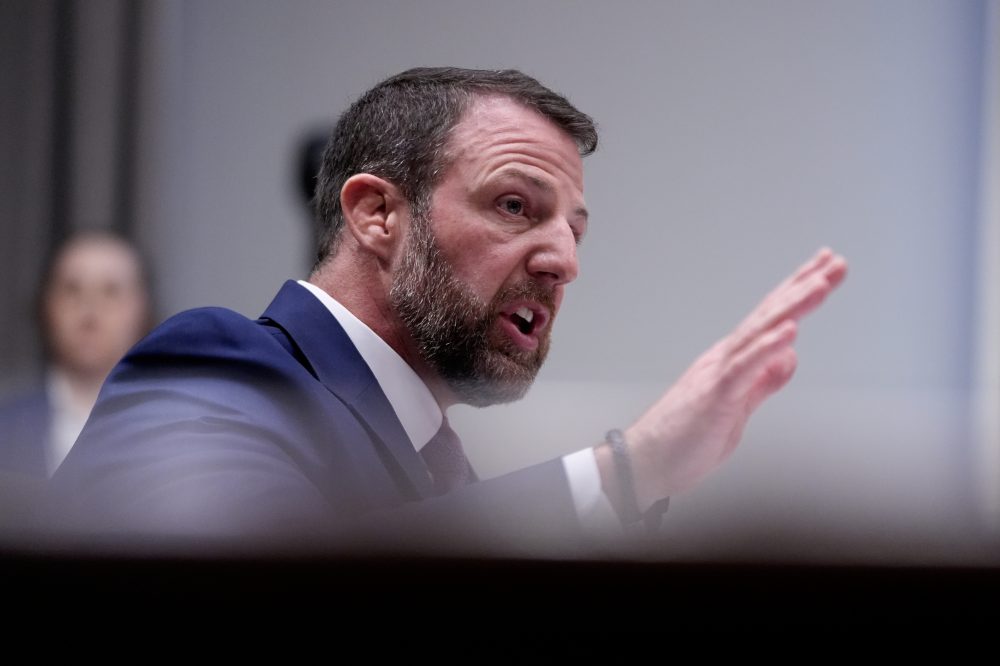

WASHINGTON — Oklahoma Republican Senator Markwayne Mullin appears headed for Senate confirmation as the nation’s next Homeland Security Secretary, stepping into President Donald Trump’s cabinet after the controversial firing of Kristi Noem amid mounting criticism over immigration policies and mass deportation efforts.
The former mixed martial arts fighter and longtime Trump ally has positioned himself as someone who can bring stability to the troubled agency, stating his objective would be removing the department from negative headlines. However, Mullin faced sharp questioning about his character and judgment during a contentious confirmation hearing last week, including criticism from Republican Senator Rand Paul, who chairs the Homeland Security Committee.
During an unusual Sunday session, senators moved Mullin’s nomination forward on a mostly partisan 54-37 vote, with final confirmation anticipated Monday evening. Democratic Senators John Fetterman of Pennsylvania and Martin Heinrich of New Mexico broke ranks to support the nomination alongside most Republicans.
Mullin inherits a department in crisis, with funding frozen since mid-February, creating extensive delays at airports nationwide during peak spring break travel. The funding standoff stems from Democratic demands for stricter oversight of immigration enforcement following the deaths of two American citizens during Minneapolis protests this year.
Adding to airport tensions, Trump announced plans over the weekend to deploy immigration agents to assist Transportation Security Administration workers, a move that lawmakers and experts warn could heighten conflicts in already crowded terminals.
Despite serving over a decade in Congress and managing his family’s expanding Oklahoma plumbing operation, Mullin has not been considered a major player on immigration policy. The former collegiate wrestler, known for organizing early morning workout sessions in the House gym, built relationships across party lines and earned a reputation as someone who could bridge political divides.
His selection stems primarily from his unwavering support for Trump, and observers expect him to faithfully implement the president’s immigration strategy. Mullin backed Trump’s previous immigration initiatives and supported ICE operations before receiving the cabinet nomination.
“I can have different opinions with everybody in this room, but as secretary of homeland I’ll be protecting everybody,” Mullin stated during his confirmation proceedings.
Restoring department funding represents Mullin’s most pressing challenge, blocked by Democrats seeking enhanced restrictions on immigration officers. Their demands include requiring agents to identify themselves without masks, avoiding enforcement near schools, churches, and hospitals, using body cameras, and obtaining judicial approval before entering private residences.
Paul opposed Mullin in committee proceedings and abstained from Sunday’s advancement vote, while Democrats remain doubtful, viewing him as another Trump loyalist who will execute the administration’s agenda without question.
Public backing for Trump’s immigration approach has declined following a year of high-visibility operations across multiple cities. Under Noem’s leadership, officers faced accusations of excessive force, maintaining substandard detention conditions, and circumventing legal procedures to expedite deportations.
During his hearing, Mullin acknowledged errors in his previous criticism of Alex Pretti, a protester killed by an ICE officer, promising to avoid prejudging situations before investigations conclude.
Mullin outlined potential policy modifications, including requiring court-signed warrants rather than administrative ones for home entries, except in emergency situations. He recognized community concerns about large ICE detention centers and described cutting federal funding to sanctuary jurisdictions as a final option.
However, the White House ultimately directs immigration enforcement strategy, and Mullin is expected to follow presidential guidance. Trump faces pressure from Republican supporters to fulfill his campaign pledge of deporting one million people annually.
The incoming secretary must also address problems at the Federal Emergency Management Agency, which has faced criticism for its disaster response in hurricane-affected regions. Critics, including fellow Republicans, blamed Noem’s policy requiring personal approval for contracts exceeding $100,000 for slowing relief efforts, while the agency still lacks permanent leadership.
Mullin proposed changes to federal emergency management during his confirmation, rejecting calls to eliminate FEMA and pledging to reverse Noem’s contract approval requirement.