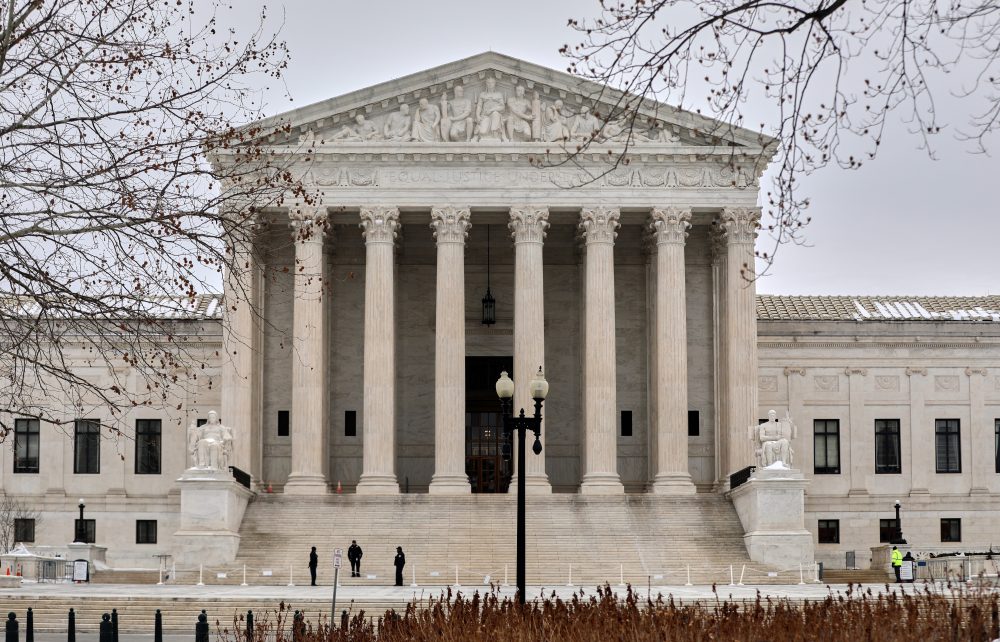

WASHINGTON — The nation’s highest court declined Monday to hear an appeal from a Texas death row prisoner who has spent decades trying to get DNA testing on evidence he claims would prove his innocence.
The Supreme Court’s decision leaves standing a federal appeals court ruling that went against Rodney Reed for the second time in under three years.
Three liberal justices disagreed with the majority’s decision.
Reed received a death sentence for murdering 19-year-old Stacey Stites in 1996. Texas prosecutors have consistently blocked DNA analysis of the woven belt used to strangle Stites as she traveled to her job at a grocery store in Bastrop, located roughly 30 miles southeast of Austin in a rural area.
While prosecutors claim Reed sexually assaulted Stites, he insists they were involved in a consensual romantic relationship.
Reed has consistently argued that Stites’ fiancé, ex-police officer Jimmy Fennell, committed the murder. According to Reed, Fennell was enraged about the interracial relationship. Stites was white while Reed is Black. Fennell, who completed a prison sentence for sexual assault in 2018, has denied any involvement in Stites’ death.
“The killer held that belt tight against her throat for minutes, and must have left his sweat and skin cells—and thus his DNA—where he gripped the belt, both on the surface and deep within the webbing,” Reed’s attorneys wrote.
Both state courts and lower federal courts have supported prosecutors in blocking the testing, even though Reed’s legal team would cover all costs.
Justice Sonia Sotomayor called it “inexplicable” that prosecutors would prevent testing of the belt, “despite the very substantial possibility that such testing would exculpate Reed and identify the real killer.”
Because the Supreme Court refused to intervene, “the State will likely execute Reed without the world ever knowing whether Reed’s or Fennell’s DNA is on the murder weapon,” Sotomayor wrote in a dissenting opinion supported by Justices Elena Kagan and Ketanji Brown Jackson.
Texas’s highest criminal court determined that the state’s DNA testing statute doesn’t cover potentially contaminated items. However, Reed’s legal team argued that Texas regularly uses contaminated evidence in criminal cases, and regardless, the state bears responsibility for how the evidence was handled.
In 2023, the justices voted 6-3 to return Reed’s case to a lower court regarding his constitutional challenge to Texas’s DNA testing law.
The previous Supreme Court issue centered on whether Reed, who received his death sentence over 25 years ago, had waited too long to file his lawsuit arguing that untested evidence would clear him. Both Texas courts and the New Orleans federal appeals court determined he had missed the filing deadline.
Reed’s campaign to halt his execution has drawn backing from high-profile figures including Beyoncé, Kim Kardashian and Oprah Winfrey.