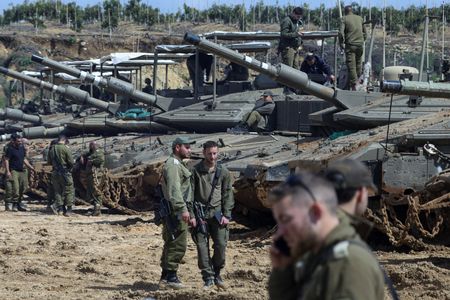

Israel’s Finance Minister Bezalel Smotrich has made the boldest territorial claim yet by a senior Israeli official, demanding that his country’s northern boundary be pushed deep into Lebanon to reach the Litani River, as military forces continue their devastating campaign across southern Lebanon.
Speaking on an Israeli radio show Monday, Smotrich delivered what represents the most direct statement from a high-ranking Israeli leader about capturing Lebanese land during the ongoing conflict with Iran-supported Hezbollah forces.
The regional conflict expanded on March 2 when Hezbollah launched missile attacks against Israel. In response, Israeli forces have commanded all civilians to evacuate areas south of the Litani River while conducting relentless aerial bombardments against what they consider Hezbollah’s primary operational zone.
According to Lebanese officials, Israel’s combined air and ground operations have resulted in more than 1,000 deaths, while displacing over one million residents as Israel has demanded mass evacuations across large portions of the nation.
During his radio appearance, Smotrich stated that the Lebanese military operation “needs to end with a different reality entirely, both with the Hezbollah decision but also with the change of Israel’s borders.”
“I say here definitively…in every room and in every discussion, too: the new Israeli border must be the Litani,” Smotrich declared.
As head of a small far-right faction within Prime Minister Benjamin Netanyahu’s government, Smotrich frequently voices positions that exceed Israel’s stated policies. Netanyahu’s administration has not yet responded to requests for comment regarding these territorial demands. However, Defense Minister Israel Katz suggested similar intentions earlier this month, warning Lebanon could experience “loss of territory” unless it dismantles Hezbollah.
These territorial statements carry particular weight in Lebanon, a nation struggling to break free from decades of invasions and occupations by its southern neighbor. Israeli military forces have conducted multiple assaults on Lebanon beginning in 1978 and maintained control over the south from 1982 through 2000.
A Lebanese government representative informed Reuters that Beirut continues hoping international allies will apply sufficient pressure on Israel to halt the warfare, potentially through President Joseph Aoun’s proposal for direct negotiations.
Beyond Lebanon, Smotrich has also advocated for Israeli annexation of Gaza Strip territory currently under Israeli control, extending to the armistice boundary with Hamas. An October ceasefire agreement left Israel controlling 53% of Gaza, where authorities have ordered resident evacuations and demolished structures.
Israeli military officials describe their Lebanese operations as focused ground movements and precision strikes targeting Hezbollah fighters and weapon storage facilities, designed to safeguard northern Israeli communities from Hezbollah attacks.
Lebanon’s government has prohibited Hezbollah military operations and expressed interest in pursuing direct negotiations with Israel.
Throughout the weekend, Israel destroyed a major bridge connecting southern Lebanon to the rest of the country after directing its military to eliminate all Litani River crossings and intensify the destruction of homes near the southern frontier.
International legal standards typically forbid military forces from targeting civilian infrastructure, and United Nations human rights leadership has condemned Israel’s Lebanese actions, particularly its extensive evacuation directives.
Monday brought additional Israeli strikes against two more Litani River crossings — targeting a roadway near the main bridge hit Sunday and another smaller bridge elsewhere along the river.
Hanna Amil, mayor of the Christian border community Rmeish where residents have declined to abandon their homes, described increasingly challenging conditions to Reuters.
“Once or twice a week, a convoy from the Lebanese army accompanies us as we try to get basic goods from nearby areas,” Amil explained.
“Already, we have no state electricity, no water and we have diesel shortages. If all the routes to the north get cut off, who knows what the future could hold for us,” the mayor added.