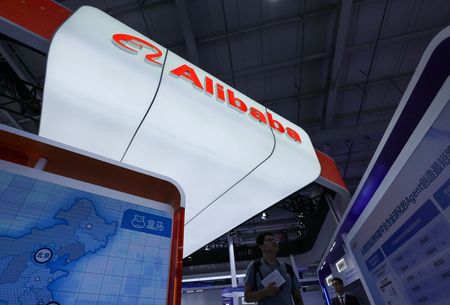

Chinese e-commerce giant Alibaba has entered the competitive artificial intelligence market with a new business-focused platform called Accio Work, designed to help small and medium-sized companies automate their operations.
The international commerce arm of Alibaba rolled out this “AI taskforce” system in Shanghai on March 23, positioning it as a ready-to-use solution that can independently handle complicated business processes without requiring users to write code or perform technical setup.
This development occurs during a surge of interest in China surrounding AI agents, sparked by OpenClaw technology, which has created a consumer craze nicknamed “lobster raising” that has attracted everyone from college students to senior citizens. This trend has prompted businesses to rapidly develop OpenClaw-based applications while raising cybersecurity worries.
Unlike the consumer-focused excitement, Accio Work targets business clients by providing specialized AI teams that operate across different company functions.
“We distinguish ourselves by being a specialized B2B tool rather than a generalist platform,” stated Kuo Zhang, Vice President of Alibaba International. “We draw a very clear line at high-stakes operations … any action involving financial transactions, payment execution, or access to private files requires explicit, granular permission from the user.”
This announcement follows closely after another Alibaba department unveiled Wukong just days earlier, an enterprise-oriented AI system capable of managing multiple artificial intelligence agents to handle various business functions like document preparation, data analysis, meeting notes, and research through one unified system.
Additionally, Alibaba announced plans last week to split its artificial intelligence operations from its cloud services division. The company established the new Alibaba Token Hub business unit under CEO Eddie Wu’s leadership, signaling a strategic pivot toward AI-powered digital assistants that consume significantly more data tokens compared to standard question-and-answer chatbots.
Zhang emphasized that the global competition to develop AI agents presents significant dangers that require careful management through specialized, controlled systems that maintain a balance between automation and protection.
“We believe the greatest risk lies in using horizontal, generalist models for vertical business tasks. By focusing on specialized B2B agents and implementing AI alongside human approval layers, we can deliver the benefits of an autonomous workforce without the traditional risks associated with unconstrained AI,” Zhang explained.