
TEL AVIV, Israel (AP) — Israeli military forces successfully exploited Iran’s comprehensive street surveillance system to locate and eliminate the nation’s supreme leader, demonstrating how modern warfare increasingly targets digital infrastructure originally built for domestic control.
Across the globe, hundreds of millions of surveillance devices monitor storefronts, residential areas, and public spaces, with many connected to internet networks lacking adequate security measures. Military and intelligence organizations now leverage artificial intelligence breakthroughs to analyze massive volumes of surveillance data and locate specific targets.
Israeli operations on February 28 showcased the devastating potential when adversaries compromise such networks, successfully tracking Iranian Supreme Leader Ayatollah Ali Khamenei using Tehran’s own monitoring equipment — this despite multiple prior alerts about security breaches in Iran’s surveillance infrastructure, based on interviews and Associated Press analysis of leaked intelligence, official statements, and media coverage.
Two intelligence sources familiar with the mission described to AP how compromised surveillance cameras contributed to the operation that resulted in Khamenei’s death. Both sources requested anonymity as they lacked authorization for media interviews.
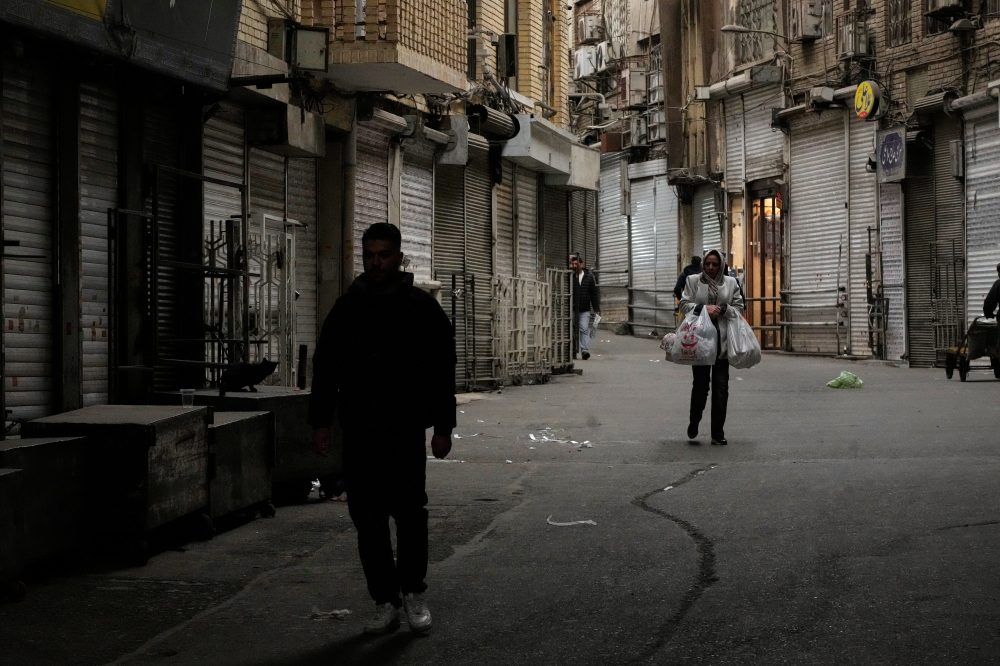
Iranian authorities deployed thousands of monitoring devices throughout their capital following successive protest movements, including massive January demonstrations that concluded with violent government suppression resulting in numerous civilian casualties.
The compromise of Tehran’s camera systems was widely acknowledged: hackers had repeatedly breached the city’s surveillance network beginning in 2021, and the previous year, a prominent Iranian official publicly acknowledged Israeli infiltration of the camera system, calling it a threat to national security.
Conor Healy, research director at surveillance publication IPVM, noted that Khamenei’s assassination reveals a critical security paradox facing governments attempting to suppress opposition movements.
“The infrastructure authoritarian states build to make their rule unassailable may be what makes their leaders most visible to the people trying to kill them,” Healy said. “Do you trust who is watching?”
Cybersecurity professionals have long cautioned about cameras becoming warfare tools.
Security engineer Paul Marrapese discovered in 2019 that he could breach millions of camera systems from his California home office.
Despite his continued warnings, vulnerable camera installations keep expanding. Recent scans revealed nearly three million unprotected camera feeds globally, including approximately 2,000 Iranian devices, Marrapese informed AP.
“There are millions and millions and millions of these throughout the world,” Marrapese said. Many remain extremely vulnerable to attack: “They’re just dumb little things. … It’s fish in a barrel.”
Manufacturers market internet-connected cameras accessible through mobile devices, with feeds easily redirected by malicious actors. Many installations lack proper security protocols, with unsophisticated users failing to establish passwords or apply security updates. While camera protection requires ongoing attention, successful hacking needs only one weakness, such as outdated systems or simple passwords like “1234.”
Even government surveillance networks isolated from public internet remain at risk: a single insider with malicious intent can compromise entire systems.
“Humans are kind of the weakest link,” Marrapese said. “There’s really only so much you can do.”
Eyal Hulata, Israel’s former national security adviser now with the Foundation for Defense of Democracies, confirmed Israel faces constant Iranian cyberattacks but maintains effective defenses.
“There is high alert on all cyber fronts,” he said.
Military camera hacking remained largely theoretical until 2023, when Hamas compromised southern Israeli surveillance systems before their October 7 assault, enabling monitoring of Israeli military patrols and facilitating their attack, according to Israeli media reports. That year also saw Ukrainian officials report Russian attempts to hijack cameras near missile targets, continuing into 2024 with Russians breaching Kyiv cameras and border crossing surveillance systems.
Artificial intelligence advances now enable military forces to overcome a major obstacle in weaponizing stolen footage: processing enormous video volumes to identify individuals, vehicles, and targets — work that previously required analyst teams working for weeks or months but now occurs instantly. Simple keyword searches allow AI systems to scan feeds and deliver immediate results.
“It used to be that you could hack the cameras, but humans had to do the real work of figuring out where the person was,” said cryptographer and security expert Bruce Schneier. “With AI systems … you can do a lot more automatically.”
Iranian cameras have faced repeated breaches in recent years.
In 2021, an Iranian exile organization released footage showing abuses at Tehran’s infamous Evin prison. The following year, another group claimed responsibility for hacking over 5,000 Tehran cameras, releasing gigabytes of surveillance material and internal documents through a Telegram channel.
During a 12-day conflict last summer, Israel utilized Tehran’s camera network to locate and bomb an Iranian Supreme National Security Council meeting, wounding Iranian President Masoud Pezeshkian, according to Iranian legislators and Israeli documentary evidence.
“All the cameras at our intersections are in the hands of Israel,” Mahmoud Nabavian, deputy chairman of the Iranian parliament’s national security committee, told Iranian media in September. “Everything on the internet is in their hands … if we move, they will find out.”
These security weaknesses emerged as Iran expanded surveillance camera usage following nationwide protests. Metro system cameras, for instance, detect women not wearing mandatory hijabs, using facial recognition technology to identify violators.
However, data gathered for government control creates attractive targets for hackers, said researcher Michael Caster, who studied Chinese surveillance technology sales to Iran.
“Malicious parties can more easily gain access,” Caster said.
Iran, facing long-term Western sanctions, struggles to obtain current hardware and software, frequently depending on Chinese-manufactured electronics or legacy systems. Pirated Windows and other software versions are widespread, making the country more vulnerable to potential hackers.
The Financial Times previously reported camera usage in Khamenei’s assassination.
The operation source who spoke with AP revealed that Israeli forces had compromised nearly all Tehran traffic cameras for years, transferring information to Israeli servers. At least one camera angle enabled Israel to monitor daily routines of individuals, including parking locations near Iran’s leadership facilities, both sources confirmed.
Algorithmic analysis provided intelligence including residential addresses, commuting routes, and security details, according to the briefed source. The same individual said the attack required months of planning, but execution accelerated once intelligence confirmed Khamenei and senior officials would be at the leadership compound that morning.
Israel’s prime minister’s office did not respond to requests for comment.
Colonel Amit Assa, former Israeli Shin Bet domestic security official, explained that such operations rely on multiple intelligence sources, including undercover operatives and intercepted communications.
However, Assa emphasized cameras play crucial roles by enabling intelligence officers to identify individuals, providing essential confirmation for strike decisions.
When officers observe a person’s face on command center screens, it assists in deciding to “put your finger on the yellow button, as we say,” he said.
Check Point Research, a cyber threat intelligence organization, reports Iranian camera hacking attacks have increased since the war began, with activity surges in Israel and Gulf nations including Bahrain and the United Arab Emirates.
Such breaches could help Iran monitor targets and evaluate damage following missile attacks, according to Gil Messing, Check Point Research’s chief of staff.
“The more people are installing cameras … the more area is being covered by these cameras,” Messing said. “It is very easy to use in order to get extra eyes into different places.”
Analysts estimate over one billion security cameras operate worldwide, triple the number from ten years ago. Hundreds of millions more are installed annually.
Muhanad Seloom, assistant professor in security studies at the Doha Institute for Graduate Studies, noted that wealthy Gulf nations like Qatar have long secured their petroleum facilities against wartime targeting. However, officials only recently recognized that street cameras could also become weapons.
“I don’t think anyone anticipated that these traffic cameras would become targeting tools … there is alarm all over,” Seloom said. “How come Iran’s whole leadership has been decapitated on the first day? … It is a topic that is being talked about.”
Regional governments maintain heightened vigilance.
Gulf monarchies have prohibited residents from recording or livestreaming Iranian strike footage, with the UAE arresting dozens for sharing conflict videos online. While partly protecting national reputation, these restrictions also reflect concerns about Iranian military exploitation of such material, Seloom explained.
Earlier this month, Israel’s National Cyber Directorate announced warnings to hundreds of camera owners targeted by Iran, urging password changes and software updates to prevent attacks.
Ali Vaez, Iran project director at the International Crisis Group, described the increased hacking since the war began as “a wake-up call,” though acknowledging limited solutions for addressing vulnerabilities.
“It’s a whack-a-mole,” Vaez said.