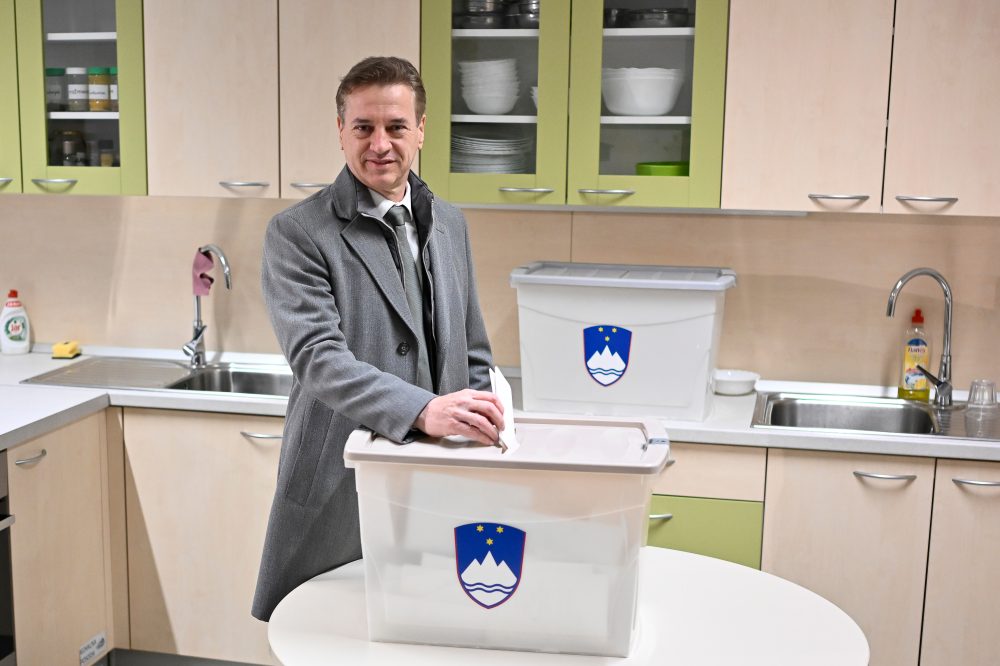

LJUBLJANA, Slovenia — Following a razor-thin electoral outcome that left no party with a governing majority, Slovenia’s president called Monday for immediate coalition discussions among the nation’s political parties.
According to preliminary tallies covering 99.85% of ballots, Prime Minister Robert Golob’s liberal Freedom Movement secured 29 seats in the 90-member parliament, while the opposition Slovenian Democratic Party (SDS) captured 28 seats — a margin of victory of less than one percent.
The narrow results mean neither major party can govern alone, leaving smaller parties to play the decisive role in determining Slovenia’s next government. The potential shape of future political alliances remains unclear.
President Natasa Pirc Musar took to social media platform X to encourage rapid negotiations, stating “I urge them to sit down at the negotiating table as soon as possible.” She offered congratulations to what she termed the “relative winner” — Golob’s pro-European Union Freedom Movement.
Sunday’s election was viewed as a critical moment for determining whether this EU member nation would continue its liberal trajectory or shift rightward. The inconclusive results highlight the sharp political divide among Slovenia’s 1.7 million registered voters.
Under Golob’s leadership, the current administration has championed liberal policies within the 27-member European Union. In contrast, SDS leader Janez Jansa represents a populist approach and maintains close ties with Hungary’s nationalist Prime Minister Viktor Orbán. A Jansa victory would strengthen Europe’s right-wing political movements.
Despite the narrow victory, Golob expressed optimism about forming the next administration while recognizing that “tough negotiations” await his party.
Jansa, known for his admiration of U.S. President Donald Trump, indicated his party’s reluctance to participate in what he considers an unstable coalition. He warned that the current “balance of political powers … based on what we see now, will not provide much stability.”
The election followed an intense campaign marked by accusations of foreign meddling and corruption scandals, intensifying existing tensions between the competing political factions.
Since gaining independence from Yugoslavia in 1991, Slovenia has regularly alternated between right-wing and left-leaning governments. The mountainous country of 2 million citizens joined both NATO and the European Union in 2004.