Blog

  • Dry Weather Provides Ideal Conditions for Early Fieldwork on Delmarva

    Dry Weather Provides Ideal Conditions for Early Fieldwork on Delmarva

    Listen to the Morning Delmarva Farm Report Update — March 24, 2026

    DELMARVA — Dry weather continues across the Delmarva Peninsula, providing ideal conditions for early fieldwork as farmers prepare for spring planting season. Clear overnight temperatures dipped to 31°F, with sunny skies expected to push temperatures to 49°F today with light northwest winds.

    The favorable conditions offer a good window for checking equipment and scouting fields. However, overnight frost remains a concern for any early transplants, and growers are advised to keep row covers handy through the week.

    Markets

    May corn futures opened at $4.73/bu, up 2 cents from Monday’s close. May soybeans are trading at $10.86/bu, steady from the previous session. May wheat declined 5 cents to $5.31/bu.

    Locally, cash corn bids across Sussex County are running $4.50 to $4.65/bu. Soybeans are bringing $10.45 to $10.60/bu.

    Forecast

    Today’s sunshine and high near 49°F will give way to mostly cloudy skies tonight with lows around 35°F. Wednesday brings partly sunny skies with temperatures warming to 53°F and light south winds developing.

    Dry conditions are expected to hold through midweek, but rain is likely late Thursday into Friday. Farmers are advised to plan accordingly when scheduling spray applications or fieldwork.

    This article is based on the Delmarva Farm Report Update Morning Edition, March 24, 2026. Hosted by Tom Bradley.
  • Federal Agency Extends Comment Period for Dog Breeding Facility Standards

    Federal Agency Extends Comment Period for Dog Breeding Facility Standards

    Federal authorities have announced an extension to the public comment period concerning proposed regulations for commercial dog breeding operations nationwide.

    The extension applies to standards that would govern the treatment of breeding female dogs at licensed facilities, as well as requirements for exercise and social interaction for all dogs covered under the Animal Welfare Act.

    Officials stated the decision to reopen the comment window will provide interested individuals and organizations with additional time to develop and submit their feedback on the proposed animal welfare standards.

    The regulations under consideration would affect commercial dog breeding establishments that fall under federal oversight through the Animal Welfare Act.

  • Federal Agency Seeks Input on New Rules for Food Processing Plants

    Federal Agency Seeks Input on New Rules for Food Processing Plants

    Federal food safety officials are asking for public input on potential changes to how they classify processing facilities that handle meat, poultry, and egg products.

    The Food Safety and Inspection Service has relied on the same classification system for nearly three decades, dating back to 1996. That system groups facilities using Hazard Analysis and Critical Control Point categories, which look at how many people work at each plant and their yearly revenue figures.

    Agency officials use these classifications to evaluate how new regulations might affect different businesses and to provide targeted support to smaller operations. In recent years, the service has also started using production volume measurements to group facilities when analyzing regulatory impacts and determining how often inspections should occur.

    Through this advance notice of proposed rulemaking, federal officials are seeking feedback from industry stakeholders about whether the current classification system needs updating and what changes might be appropriate.

  • Beijing Files Complaint After Japanese Soldier Breaks Into Chinese Embassy

    Beijing Files Complaint After Japanese Soldier Breaks Into Chinese Embassy

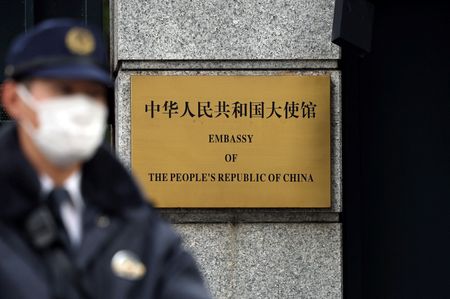
    BEIJING – Chinese officials have filed a formal complaint with Japan following what they’re calling an illegal intrusion at their Tokyo embassy facility, according to statements released Tuesday by China’s foreign ministry.

    The incident occurred Tuesday morning when someone identifying himself as a member of Japan’s Self-Defense Forces climbed over the embassy’s perimeter wall and unlawfully entered the diplomatic compound, said ministry spokesperson Lin Jian during a scheduled news briefing.

    “The individual admitted that his actions were illegal and threatened to kill Chinese diplomatic personnel in the so-called name of God,” Lin stated, calling on Tokyo authorities to launch a comprehensive investigation into what happened.

    Chinese officials have formally registered their strong objections with Japanese authorities over what they characterized as a serious security breach at the diplomatic facility.

  • Japanese Banking Giant Eyes Potential Buyout of Wall Street Firm Jefferies

    Japanese Banking Giant Eyes Potential Buyout of Wall Street Firm Jefferies

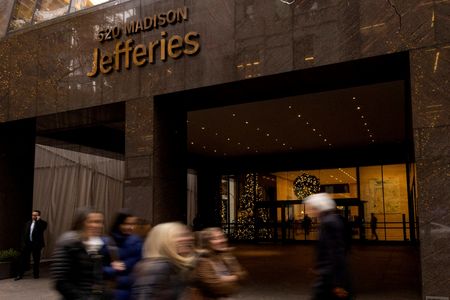
    A major Japanese banking corporation is reportedly developing strategies for a potential acquisition of Wall Street investment firm Jefferies, according to a Financial Times report released Tuesday.

    Sumitomo Mitsui Financial Group has assembled a dedicated team to ensure readiness should Jefferies’ declining stock value create an acquisition opportunity, sources familiar with the situation told the Financial Times.

    Following the report’s publication, Jefferies stock jumped 6% during Frankfurt trading sessions.

    The investment bank’s share value has dropped more than 36% year-to-date, building on significant losses from the previous year when a subsidiary connected to Jefferies’ asset management division became entangled in the First Brands auto parts supplier bankruptcy.

    Neither Reuters nor other outlets could immediately confirm the Financial Times report. Jefferies representatives did not respond to requests for comment, and SMFG officials were unavailable for immediate response.

    According to the report, any potential move by the Japanese financial giant would not happen immediately, and uncertainty remains whether Jefferies leadership would agree to sell while share prices remain suppressed.

    The independent investment bank, which rivals some of Wall Street’s largest institutions, currently holds a market value of $8.17 billion based on LSEG data. In comparison, SMFG maintains a market capitalization of approximately $124 billion.

    Jefferies faces intense examination regarding its lending practices and risk management following the failures of British lending institution Market Financial Solutions and First Brands.

    The investment firm currently faces investor lawsuits alleging fraudulent practices in connection with a fund tied to First Brands, which owed approximately $715 million in receivables to Jefferies’ Leucadia Asset Management division.

  • Middle East Conflict Triggers Massive Asian Stock Selloff as Oil Prices Surge

    Middle East Conflict Triggers Massive Asian Stock Selloff as Oil Prices Surge

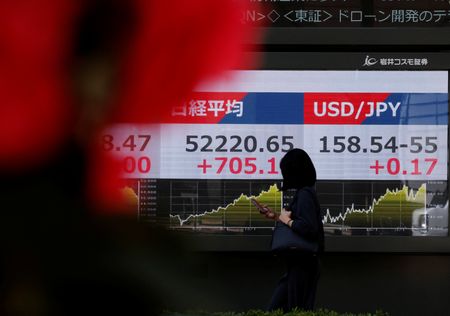
    International investors are fleeing Asian stock markets at an unprecedented pace this March, pulling out more than $50 billion as Middle East tensions threaten global oil supplies and spark economic concerns.

    The massive withdrawal of funds represents the largest monthly exodus from the region since at least 2008, according to data from LSEG covering major exchanges across South Korea, Taiwan, Thailand, India, Indonesia, Vietnam and the Philippines.

    The selling spree has been triggered by escalating tensions from the U.S.-Israeli conflict with Iran, which has raised alarm about potential disruptions to Middle Eastern energy exports and the possibility of an oil price shock leading to stagflation.

    “Outflows from EM Asia markets were driven by the broad-based risk-off sentiment due to the Middle East conflicts, as most of EM Asia economies are net importers of energy products,” explained Jason Lui, who heads APAC equity and derivative strategy at BNP Paribas.

    Energy markets have already felt the impact, with Brent crude oil prices skyrocketing as much as 65% during March to reach $119.50 per barrel.

    The situation has been made worse by climbing global interest rates and changing expectations about monetary policy, according to Abdelaziz Albogdady, a market research and fintech strategy manager at brokerage FXEM. He noted that the outflows were amplified by rising yields and reassessment of rate expectations, alongside concerns about economic effects on countries that import oil.

    Central bank officials from major economies have signaled that interest rates will likely stay put or increase further if the Middle East crisis continues to drive up prices.

    Taiwan has been hit hardest, experiencing approximately $25.28 billion in outflows so far this month – the largest drain in at least 18 years. South Korea and India have also seen significant foreign selling, with about $13.5 billion and $10.17 billion in net sales respectively.

    “Outflows in Taiwan and South Korea were mostly focused on AI/technology stocks given they have accumulated sizable gains during the AI boom,” Lui noted.

    Despite the broader selloff, analysts at Nomura pointed out in a Monday research note that technology hardware companies in Korea and China continue to show promise, experiencing minimal direct effects from the Middle East crisis or higher energy costs.

    Other regional markets have also seen money flowing out, with Thailand recording $1.35 billion in net outflows, the Philippines losing $182 million, and Vietnam seeing $21 million in departures. Indonesia bucked the trend, attracting $59 million in net inflows during the same timeframe.

    Looking ahead, Lui warned that emerging Asian markets will likely continue experiencing volatility as conflicting news reports and heightened geopolitical tensions persist.

    “Unlike the Liberation Day scenario during which the U.S. can unilaterally decide on the tariff threshold, the current energy shock may take longer to normalize given the disruption to the production facilities in the Middle East,” he said.

  • Korean Memory Chip Giant SK Hynix Eyes $10B US Stock Market Debut

    Korean Memory Chip Giant SK Hynix Eyes $10B US Stock Market Debut

    SEOUL, March 24 – Memory chip manufacturer SK Hynix from South Korea is exploring the possibility of securing between 10 trillion and 15 trillion won (approximately $10.03 billion) through a potential stock market debut in the United States, according to a report from the Korea Economic Daily. The funding would support expanded manufacturing capabilities for cutting-edge memory semiconductors.

    The newspaper indicated that pursuing a US stock exchange listing would provide the Nvidia chip supplier with broader access to investment capital and could help close valuation differences when compared to international competitors like Micron.

    According to the Korea Economic Daily’s reporting, which cited anonymous industry insiders, SK Hynix is planning to create new stock shares to facilitate American depositary receipt (ADR) trading, with the generated capital expected to fund artificial intelligence infrastructure development and memory product manufacturing expansion.

    When contacted by Reuters, the semiconductor company confirmed it is “reviewing various measures to enhance shareholder value, including an ADR listing,” while emphasizing that no final decisions have been reached.

    SK Group Chairman Chey Tae-won stated last week that SK Hynix is examining a possible US ADR listing strategy to expand its international investor participation beyond Korean markets and boost visibility among worldwide investment communities.

    Earlier this year in January, SK Hynix announced plans to eliminate approximately 12.2 trillion won in treasury stock, representing 2.1% of outstanding shares, as part of efforts to increase shareholder returns.

    Market research from Counterpoint shows SK Hynix leads the high-bandwidth memory semiconductor sector used in AI applications with a commanding 57% market position. The company also maintains a 32% portion of the worldwide DRAM market for AI processors and consumer electronics, positioning it as the second-largest competitor behind domestic rival Samsung Electronics.

    Following the news, SK Hynix stock prices climbed 5.7% at market close, outperforming the benchmark KOSPI index which gained 2.7%.

  • S&P Warns Hungary’s Next Government Must Cut Social Spending After Election

    S&P Warns Hungary’s Next Government Must Cut Social Spending After Election

    Credit rating agency S&P Global is cautioning that Hungary’s next government will face tough financial decisions following the country’s April 12 parliamentary election, requiring cuts to social programs to stabilize public finances amid global economic pressures.

    The European nation’s budget shortfall has already hit nearly 40% of its yearly projection within the initial two months of this year, as longtime Prime Minister Viktor Orban has increased government spending before facing voters. The veteran politician confronts his most serious electoral challenge in his 16-year tenure.

    According to S&P Global, failure to rebalance the country’s medium-term financial outlook following the elections, combined with mounting external economic pressures, could result in a credit rating downgrade.

    “We would anticipate that the incoming government after the 2026 election (regardless of the government composition) will need to engage in consolidation efforts to rein in the trajectory of social spending,” S&P told Reuters in an emailed reply to queries.

    Prime Minister Orban has maintained that no austerity measures will be necessary after the election to address the budget gap, which has surpassed government projections in recent years and is projected at approximately 5% of economic output.

    His center-right challenger Peter Magyar is counting on rapidly accessing billions of euros in European Union funding, implementing anti-corruption measures, and introducing a wealth tax to strengthen government finances.

    S&P noted that recent worldwide economic difficulties are putting downward pressure on its 2.5% growth projection following three years of economic stagnation. Goldman Sachs reduced its Hungarian growth forecast to 1.6% from 1.9% on Monday, citing the global energy price surge.

    “Our current negative outlook to Hungary’s ‘BBB-‘ rating reflects the potential risk that its fiscal performance could prove materially weaker than our forecasts,” S&P said.

    The rating agency indicated that the energy price crisis could increase both inflation and government costs for Hungary due to the economy’s heavy reliance on energy. S&P does not anticipate Hungary will receive funding from the EU’s pandemic recovery program because of timing limitations.

    Fitch Ratings stated earlier this month that addressing sluggish economic growth and the decline in public finances and policy credibility would be the primary obstacles for Hungary’s incoming government following greater-than-expected fiscal stimulus before the election.

  • Middle East Conflict Drives Up Feed Costs for Chinese Pig Farmers Already Struggling

    Middle East Conflict Drives Up Feed Costs for Chinese Pig Farmers Already Struggling

    Chinese pig farmers are facing a devastating double blow as the conflict in Iran drives up feed costs while pork prices remain at their lowest point in 16 years.

    The war that began February 28 has pushed futures prices for soymeal and corn—critical components of animal feed—to multi-month peaks on China’s Dalian exchange. Industry experts point to rising oil prices, increased shipping costs, and higher fertilizer expenses as key factors driving the surge.

    During March alone, Chinese spot prices for soymeal jumped more than 200 yuan per ton, while corn increased around 100 yuan per ton—representing increases of 7% and 4% respectively. Other essential feed components have seen even steeper price hikes, with some ingredients rising as much as 77% this month.

    “Prices for most raw materials used in animal feed have experienced a significant increase in March, partly driven by the ongoing conflict in the Middle East,” explained Lin Guofa, a senior analyst with Bric Agriculture Group.

    Rosa Wang from Shanghai JC Intelligence Co. noted that critical feed additives including lysine, methionine, fishmeal, and vitamins A and E have all increased between 6% and 77% due to the war’s impact.

    The timing couldn’t be worse for Chinese hog producers, who raise half the world’s pig population but are already struggling with excess capacity and sluggish consumer demand. On Monday, China’s primary hog futures contract dropped to a record low of 9,980 yuan ($1,448.16) per ton, while cash prices fell to 9.69 yuan per kilogram—the weakest level in 16 years according to JCI data.

    The financial squeeze is severe. Lin calculated that producing a pig weighing 60-62.5 kilograms currently costs farmers 12.2-12.5 yuan per kilogram, meaning they lose 280-350 yuan on every animal sold.

    Smaller operations face the greatest risk of closure, as they’re particularly vulnerable to price volatility despite accounting for less than 30% of China’s pig production, industry analysts warn.

    “For small farmers now, either you sell your pigs cheap or you grit your teeth and bear it, get through this price drop, and then wait for the pig price to rebound,” said Fu Zhenzhen, a feed analyst with Beijing Orient Agribusiness Consultants.

    Li, who operates a 600-head pig farm in northern Hebei province, described his predicament: “We are being roasted by fire now. Pork prices are so low, but feed costs have jumped sharply in March.” He said his operation has been losing money since last year.

    Chinese government officials have stepped up efforts to address the oversupply crisis, encouraging breeders to reduce sow numbers and manage slaughter timing more strategically. Authorities have also begun purchasing frozen pork for national reserves to help stabilize market prices.

    Despite these interventions, China’s sow population remained at 39.61 million head at the end of December, still above the recommended normal level of 39 million.

    “Going forward, pork prices will mainly depend on how aggressively companies trim their herds,” said Pan Chenjun, senior animal protein analyst at Rabobank in Hong Kong.

  • British Beverage Company Fevertree Sees Profits Fall 16% Amid Legal Battle

    British Beverage Company Fevertree Sees Profits Fall 16% Amid Legal Battle

    British beverage company Fevertree Drinks announced Tuesday that its annual profits declined by 16%, attributed to a contentious 2.8-million-pound ($3.76 million) packaging fee and reduced margins during the initial phase of its American business partnership with Molson Coors.

    The beverage manufacturer has initiated formal legal proceedings against the UK Environment Agency regarding the Extended Producer Responsibility levy, contending that this fee should not be applied to specific glass container formats distributed to bars and restaurants.

    To address increasing tariff costs and expand its American market presence, Fevertree entered into a distribution and manufacturing partnership with Molson Coors in the previous year. This agreement aims to establish local production capabilities for products that were previously manufactured in Britain for the U.S. market.

    The company’s adjusted core earnings totaled 42.4 million pounds, representing a decrease from the previous year’s 50.7 million pounds. This figure fell short of analyst projections, which averaged 44.4 million pounds according to a company survey.

  • Ford Issues Recall for Over 254K SUVs Due to Camera, Safety System Glitches

    Ford Issues Recall for Over 254K SUVs Due to Camera, Safety System Glitches

    Ford Motor Company announced Tuesday it will recall more than 254,640 sport utility vehicles across the United States after federal safety officials identified software malfunctions that could disable backup cameras and critical safety systems.

    The National Highway Traffic Safety Administration reported that the recall encompasses several popular Ford and Lincoln models, including the Lincoln Navigator, Lincoln Nautilus, Lincoln Aviator, and Ford Explorer SUVs.

    According to federal regulators, the problem stems from an unexpected malfunction in image processing software that can suddenly shut down multiple safety technologies. When the software fails, drivers may lose access to pre-collision assistance, lane-keeping assistance, and blind-spot monitoring systems – all designed to prevent accidents.

    The safety administration indicated that Ford will address the software malfunction through dealership repairs or by sending wireless updates directly to affected vehicles. Vehicle owners can expect to receive notification about the recall and repair options in the coming weeks.

  • Six Kurdish Fighters Dead in Rocket Strike on Iraq Military Base

    Six Kurdish Fighters Dead in Rocket Strike on Iraq Military Base

    BAGHDAD – A deadly rocket assault targeted a Kurdish military facility north of Erbil on Tuesday, resulting in the deaths of six Peshmerga soldiers and injuries to 22 others, according to military and security officials in Iraqi Kurdistan.

    The attack struck the base in the northern region of Iraq’s Kurdistan territory, though authorities have not yet determined who was responsible for the deadly strike, sources confirmed.

    The incident represents another violent episode in the ongoing instability affecting Iraq’s Kurdish region, where Peshmerga forces serve as the primary military defenders of the autonomous territory.

  • Danish Prime Minister Seeks Third Term After Trump-Greenland Standoff

    Danish Prime Minister Seeks Third Term After Trump-Greenland Standoff

    COPENHAGEN, Denmark — Citizens across Denmark headed to voting stations Tuesday for a national election, as Prime Minister Mette Frederiksen campaigns for a third consecutive term leading the Nordic nation following tensions with President Donald Trump regarding Greenland’s future status.

    Over 4.3 million eligible voters participated in selecting members of the Folketing, Denmark’s parliament based in Copenhagen, which serves four-year terms.

    The prime minister announced the election last month, moving up the timeline by several months in what appears to be a strategic decision to capitalize on her firm stance during the Greenland dispute with the United States, hoping this would resonate with voters in the EU and NATO member nation.

    During her current tenure, Frederiksen’s popularity had declined amid rising living costs — an issue that has dominated campaign discussions alongside retirement benefits and potential wealth taxation.

    The 48-year-old Social Democratic leader has built a reputation for backing Ukraine against Russian aggression while maintaining strict immigration policies — a stance that reflects Denmark’s political direction over the past twenty years.

    Responding to right-wing pressure and citing concerns about potential migration increases due to Middle Eastern conflicts, Frederiksen recently proposed measures including an “emergency brake” mechanism for asylum requests and enhanced oversight of undocumented criminals. Her administration had previously announced plans allowing deportation of foreign nationals sentenced to one year or more for serious offenses.

    Two center-right candidates are vying to replace Frederiksen as prime minister. Defense Minister Troels Lund Poulsen from the Liberal (Venstre) party, currently serving in her government, represents one challenge from a party that has led multiple recent governments.

    The second challenger is Alex Vanopslagh, age 34, from the opposition Liberal Alliance, advocating for reduced taxes, streamlined bureaucracy, and ending Denmark’s opposition to nuclear energy. However, Vanopslagh’s recent acknowledgment of past cocaine use during his party leadership may have damaged his electoral prospects.

    On the far right, the anti-immigration Danish People’s Party appears positioned for a strong comeback after performing poorly in the 2022 elections.

    Analysts expect no party to secure a clear majority. Denmark’s proportional representation framework typically creates coalition governments formed by multiple parties from either the left-leaning “red bloc” or right-wing “blue bloc” following extensive negotiations.

    Frederiksen’s departing three-party coalition marked the first cross-partisan government in decades. Whether this election produces similar results remains uncertain, with the centrist Moderate party led by Foreign Minister Lars Løkke Rasmussen potentially holding decisive influence.

    Despite consuming significant government attention recently, Greenland has not featured prominently in campaign messaging due to widespread consensus on its relationship with Denmark.

    Frederiksen stated in January that American control of Greenland would effectively destroy NATO. However, the diplomatic crisis has cooled considerably.

    Following Trump’s retreat from tariff threats against Denmark and other European nations opposing U.S. control of the Arctic territory, America, Denmark, and Greenland began technical discussions regarding an Arctic security agreement.

    Denmark’s unicameral parliament contains 179 seats, with 175 allocated to mainland Danish representatives and two each for delegates from sparsely populated Greenland and the Faroe Islands, the kingdom’s other semi-autonomous territory.

  • Powerful 7.6 Earthquake Hits Tonga, Deep Location Prevents Tsunami Risk

    Powerful 7.6 Earthquake Hits Tonga, Deep Location Prevents Tsunami Risk

    A powerful magnitude 7.6 earthquake rocked the Pacific island nation of Tonga on Tuesday, prompting emergency alerts in the capital city, the United States Geological Survey reported.

    Emergency sirens blared throughout Nuku’alofa as residents responded to the seismic event, though officials confirmed no immediate damage or injuries occurred. Video from the Tonga Broadcasting Commission captured residents gathering on rooftops in the capital while warning sirens echoed across the city.

    Local emergency officials with the Tonga National Disaster Risk Management Office initially activated tsunami protocols, directing residents in coastal zones to evacuate to elevated areas and move away from shorelines.

    However, the Pacific Tsunami Warning Center quickly clarified that “there is no tsunami threat because the earthquake is located too deep inside the earth.”

    According to USGS data, the seismic event occurred at an extraordinary depth of approximately 238 kilometers (148 miles) below the surface, with its center located roughly 150 kilometers from Neiafu.

    The island nation frequently experiences significant geological activity due to its position along the “Pacific Ring of Fire,” a region known worldwide for intense seismic and volcanic phenomena that regularly produces earthquakes, tsunamis and volcanic eruptions.

  • Indian Hospital Chain Manipal Health Seeks $852M in Stock Market Debut

    Indian Hospital Chain Manipal Health Seeks $852M in Stock Market Debut

    A prominent Indian healthcare company backed by Singapore investment firm Temasek has submitted paperwork for a stock market debut, seeking to capitalize on growing demand for specialized medical services across India.

    Manipal Health Enterprises announced Tuesday it intends to generate 80 billion rupees (equivalent to $852.24 million) by issuing new shares to investors. The company’s current shareholders also plan to offload 43.2 million existing shares as part of the offering, according to preliminary documents filed with regulators.

    The Bengaluru-headquartered healthcare provider is positioning itself to benefit from India’s expanding appetite for advanced medical treatments, which industry experts believe will drive future growth in the nation’s healthcare sector. The medical industry has attracted substantial investment from major global firms including Blackstone, Novo Nordisk, and KKR.

    Company officials have not disclosed the complete size of their planned public offering.

    Over recent years, Manipal Health has established itself as one of India’s most active healthcare companies in terms of acquisitions and expansion. The firm’s most recent major purchase was Sahyadri Hospitals, which it acquired for $700 million.

    The timing of the IPO announcement comes as India’s stock markets face significant challenges, with declining values driven by global economic uncertainty, reduced market liquidity, and ongoing withdrawal of funds by international investors.

    According to the regulatory filing, Manipal Health intends to allocate the IPO funds toward paying down existing debt obligations and completing the financing for its Sahyadri Hospitals acquisition.

  • Detroit Stops Lakers’ Hot Streak with 113-110 Victory

    Detroit Stops Lakers’ Hot Streak with 113-110 Victory

    Detroit’s Daniss Jenkins delivered a career-best performance with 30 points, including crucial baskets in the final 25 seconds, as the Pistons stunned the visiting Los Angeles Lakers 113-110 on Monday night, bringing an end to LA’s impressive nine-game winning streak.

    Jenkins also dished out eight assists while Jalen Duren dominated inside with 20 points and 11 rebounds, helping Detroit secure their fourth consecutive victory. The Pistons accomplished this feat while missing All-Star guard Cade Cunningham for the third straight game due to a collapsed lung diagnosis from last week.

    Los Angeles was led by Luka Doncic’s 32-point effort, with Austin Reaves contributing 24 points and Deandre Ayton recording a double-double of 13 points and 10 rebounds. LeBron James nearly achieved a triple-double with 12 points, 10 assists, and nine rebounds.

    Doncic was available to play after the Lakers successfully appealed his 16th technical foul from Saturday, which had triggered an automatic suspension. The league rescinded the technical on Sunday, allowing the superstar to suit up. However, Doncic’s contested three-point attempt at the final buzzer missed the mark entirely.

    In other NBA action, Shai Gilgeous-Alexander’s 22 points powered Oklahoma City past Philadelphia 123-103, extending the Thunder’s winning streak to 12 games. The Thunder shot efficiently across all categories while VJ Edgecombe led the undermanned 76ers with 35 points.

    Pascal Siakam erupted for a season-high 37 points as Indiana finally broke their franchise-record 16-game losing streak with a 128-126 victory over Orlando. The Pacers hadn’t won since before the All-Star break on February 11th, with Siakam making a crucial defensive play by blocking Paolo Banchero’s potential game-tying layup at the buzzer.

    Victor Wembanyama showcased his versatility with 26 points, 15 rebounds, five blocks, and four assists in San Antonio’s dominant 136-111 win over Miami. The Spurs have now won 11 straight games with Wembanyama in the lineup and boast the NBA’s best record since February 1st at 22-2.

    Kawhi Leonard set a career-high for three-pointers made in a season while scoring 28 points in the LA Clippers’ 129-96 blowout of Milwaukee. The Clippers shot 58% from the field and connected on 17 of 38 three-point attempts in the lopsided victory.

    Chicago overcame a blown 22-point lead to defeat Houston 132-124, with Collin Sexton’s 25 points and Matas Buzelis’ 23 points leading seven Bulls players in double figures. Despite Kevin Durant’s 40-point performance and Alperen Sengun’s triple-double of 33 points, 13 rebounds, and 10 assists, the Rockets fell short on the road.

    Atlanta continued their home dominance with a 146-107 rout of Memphis, extending their home winning streak to 11 games. Nickeil Alexander-Walker scored 26 points, including 22 in the first half, as the Hawks improved to 14-2 since the All-Star break.

    Toronto snapped a two-game skid with a convincing 143-127 victory over Utah, led by RJ Barrett’s 27 points and Sandro Mamukelashvili’s 23 points. The Raptors shot an impressive 61.4% from the field and 54.1% from three-point range.

    Toumani Camara established career highs with 35 points and nine three-pointers in Portland’s 134-99 demolition of Brooklyn. The Trail Blazers moved within a half-game of the eighth playoff spot in the Western Conference with the victory.

    Golden State concluded their six-game road trip with a 137-131 overtime victory over Dallas, though Moses Moody suffered a knee injury after hitting a crucial three-pointer in the extra period. Cooper Flagg led Dallas with 32 points in the losing effort.

  • Samsung Workers and Management Set to Restart Bonus Negotiations

    Samsung Workers and Management Set to Restart Bonus Negotiations

    Samsung Electronics and its labor union in South Korea have decided to return to negotiations regarding employee bonuses, according to a Tuesday announcement from the union.

    The labor organization speaks for approximately 90,000 employees, which represents more than 70 percent of Samsung’s South Korean workforce. Just last week, these workers had given their union authorization to call a strike, creating potential concerns about work stoppages at the globe’s largest producer of memory chips.

  • Ukraine Reports 3 Dead in Overnight Russian Strikes on Multiple Cities

    Ukraine Reports 3 Dead in Overnight Russian Strikes on Multiple Cities

    Ukrainian authorities reported Tuesday that overnight Russian aerial assaults claimed the lives of three civilians and wounded 16 others across multiple regions of the country.

    The strikes occurred just one day after Ukrainian President Volodymyr Zelenskyy issued a warning about an anticipated large-scale Russian offensive, based on intelligence reports his government had received.

    In the southeastern city of Zaporizhzhia, regional officials confirmed one fatality and five wounded from the combined drone and missile bombardment that targeted the area.

    “Russia launched a massive combined strike on Zaporizhzhia using drones and missiles,” stated Governor Ivan Fedorov through the Telegram messaging platform.

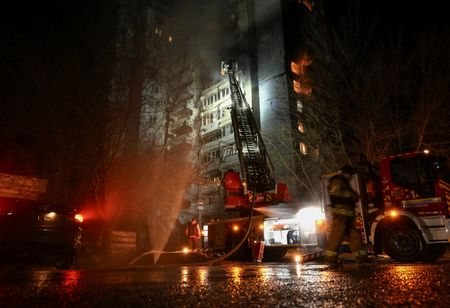
    Fedorov detailed extensive property damage throughout Zaporizhzhia, including harm to six apartment complexes, two residential homes, a retail establishment, various non-residential structures, and an industrial facility. The governor shared images on social media showing emergency crews battling blazes in a tall residential building and another structure completely consumed by flames.

    The eastern Poltava region suffered two deaths and 11 injuries from the assault, according to local leadership. Officials there reported damage to residential properties and a hotel from the strikes.

  • Swiss Scientists Test Groundbreaking Transport of Antimatter by Truck

    Swiss Scientists Test Groundbreaking Transport of Antimatter by Truck

    GENEVA (AP) — European researchers conducted a groundbreaking experiment Tuesday, attempting the world’s first road transport of antimatter particles in what scientists call an extremely delicate operation.

    The challenge involves moving approximately 100 antiprotons without allowing them to contact regular matter, which would cause instant destruction and energy release. Researchers at CERN, Europe’s premier nuclear research facility, spent four hours carefully preparing the particles for their unprecedented journey.

    The antiprotons traveled inside a specialized container weighing 2,200 pounds, where they remained suspended in a vacuum using ultra-cold magnetic fields. Scientists then loaded this equipment onto a truck for a 30-minute test drive to determine whether such particles can survive road transportation.

    Working with antimatter presents extraordinary challenges for researchers. Current scientific understanding indicates that every particle has a corresponding antiparticle with identical properties but opposite electrical charge.

    When these opposing particles meet, they destroy each other completely, releasing significant energy based on their combined mass. Any unexpected jolts during the test journey that the specialized container couldn’t absorb would ruin the entire experiment.

    Tuesday’s trial represents the initial phase of an ambitious plan to eventually transport CERN’s antiprotons to Heinrich Heine University in Düsseldorf, Germany, located roughly eight hours away by conventional driving.

    Scientists enclosed the antiprotons within what they term a “transportable antiproton trap” – a device small enough to pass through standard laboratory doorways and fit aboard trucks. The system employs superconducting magnets chilled to -452 degrees Fahrenheit, keeping the antiprotons floating in vacuum without touching the container’s matter-based walls.

    The quantity used in Tuesday’s experiment – equivalent to less than 100 hydrogen atoms – posed minimal risk, according to experts. Even complete failure would only result in losing the antiprotons, with any energy release so small that only specialized electrical detection equipment could measure it.

    “The trap is supposed to contain these antiprotons no matter what: if the truck stops, if it starts again, if it has to slam on the brakes — all that,” explained CERN spokeswoman Sophie Tesauri. However, significant work remains since the containment system can only hold antiprotons independently for four hours, while the German destination requires double that travel time.

    CERN gained worldwide recognition for its Large Hadron Collider, a massive magnetic system that propels particles through a 17-mile underground ring, crashing them together at nearly light speed while scientists analyze the collision results.

    Yet the expansive research complex accomplishes far more than particle collisions – notably, British scientist Tim Berners-Lee created the World Wide Web there in 1989.

    Heinrich Heine University offers superior conditions for detailed antiproton research because CERN’s numerous ongoing projects create substantial magnetic interference that can compromise antimatter studies.

    However, successfully delivering antiprotons to Germany requires preventing any contact with matter during the entire journey.

    CERN’s Antiproton Decelerator produces these particles by firing proton beams into metal blocks, creating collisions that generate various secondary particles including numerous antiprotons. Officials describe it as the world’s only machine capable of producing low-energy antiprotons for antimatter research.

    Laboratory representatives say CERN’s “Antimatter Factory” stands as the planet’s sole facility where scientists can preserve and examine antiprotons.

    The research center has conducted antimatter experiments for many years, achieving major advances in measuring, storing and understanding antimatter behavior. Two years earlier, the team successfully moved approximately 70 regular protons – not antiprotons – across CERN’s campus grounds.

    This latest attempt follows similar procedures, though antiprotons demand much superior vacuum chambers, according to Christian Smorra, who leads the team that designed the antimatter storage and transport equipment.

    Nervous research teams declined interviews before the experiment but planned to discuss results following Tuesday’s completion.

  • Germany’s Solo Military Satellite Plan Sparks EU Unity Concerns

    Germany’s Solo Military Satellite Plan Sparks EU Unity Concerns

    A proposed $11.6 billion military satellite network that Germany wants to develop independently is creating tension within the European Union, with lawmakers expressing concerns about divided efforts and wasted resources.

    The German initiative would operate alongside the EU’s own $12.3 billion IRIS² satellite system, which serves as a cornerstone of the bloc’s strategy to achieve greater defense independence.

    EU representatives speaking to Reuters warned that Germany’s separate project could damage efforts to strengthen shared defense capabilities, particularly as Europe adjusts to reduced American military support under President Donald Trump’s leadership.

    Marie-Agnes Strack-Zimmermann, who chairs the European Parliament’s security and defense committee, expressed worry about the potential consequences.

    “If Germany now builds a purely national architecture that is not integrated into IRIS², there is a risk of weakening European structures,” Strack-Zimmermann stated.

    The German proposal calls for launching 100 satellites in low-Earth orbit dedicated solely to military communications. This contrasts with the broader EU initiative, which plans to deploy 290 satellites by 2029 to create a comprehensive space-based communication network.

    Defense experts note that Germany’s satellite constellation would use technology similar to Elon Musk’s SpaceX Starshield platform, which has proven crucial for Ukraine’s military communications during the ongoing conflict.

    While both the German and EU systems would match Starshield’s capabilities, IRIS² – which will handle both military and commercial communications – would still be significantly smaller than Starlink’s approximately 10,000 satellites.

    A German government representative said Berlin continues to track the IRIS² development, noting it “has the potential, where appropriate, to complement national initiatives in fulfilling sovereign tasks.”

    The spokesperson explained that Germany’s proposed network would meet specific military needs with capability requirements and performance standards that were “entirely different” from IRIS².

    The disagreement highlights ongoing challenges within the 27-nation EU as it tries to balance individual country priorities with collective goals while managing costs and maintaining strategic unity.

    Strack-Zimmermann warned that running parallel systems could create “duplicate structures, fragmented standards, and ultimately less strategic impact for more money,” particularly given growing security concerns from the Ukraine war.

    “The decisive point is compatibility, connectivity and European integration,” she emphasized, stressing that individual nation projects must work within EU frameworks.

    Italy is also exploring its own low-Earth orbit satellite network for both military and civilian purposes, though this project remains in early planning stages and trails behind Germany’s more advanced proposal.

    European Commission spokesperson Thomas Regnier declined to comment on individual member state investments, calling them national decisions.

    “By investing in IRIS², member states can be part of a common European effort that benefits from shared resources and expertise. This helps develop advanced satellite communication technologies more efficiently and at a larger scale,” Regnier explained.

    Financial concerns are also mounting among lawmakers in both Germany and the EU.

    “The (German) taxpayer will ultimately pay the bill,” said Jeanne Dillschneider, a Green Party member on the Bundestag’s defense committee.

    Christophe Grudler, a European Parliament member from the Renew Europe party who focuses on defense and space issues, cautioned against wasteful spending.

    “Fragmentation is rarely the most efficient use of public resources,” Grudler noted, adding that “a smaller, isolated constellation would come with limitations in coverage and scalability.”

    However, Germany’s Alternative for Germany (AfD) party backed Berlin’s independent approach.

    “Given the capabilities of potential adversaries to disrupt or even destroy satellites, redundancy – in military terms, reserves – is not a waste of money but a requirement of responsible national security policy,” stated AfD defense policy spokesperson Ruediger Lucassen.

    OHB CEO Marco Fuchs argued that IRIS², which depends on public-private partnerships, doesn’t provide the specialized focus needed for military operations.

    “If there is a genuine military requirement, you cannot simply say: ‘I’ll rent it from private companies and wait to see how the conditions turn out,’” Fuchs commented following his company’s earnings report last week.

    While Airbus expressed interest in receiving a proposal request from Berlin, a company spokesperson refused to address duplication concerns.

    Despite IRIS² supporters arguing it will decrease EU reliance on foreign providers and ensure compatibility across member nations’ military systems, analysts point out that full operation won’t begin until the 2030s.

    “Europe must accelerate,” Grudler urged, though he noted that national systems were unlikely to fill the gap any faster.

  • Oracle Transforms Business Software to Work with AI Assistants

    Oracle Transforms Business Software to Work with AI Assistants

    Technology corporation Oracle is transforming its cloud-based business software to integrate with artificial intelligence assistants, allowing companies to ask business questions and have AI locate the necessary information automatically.

    The software updates, which Oracle revealed at a London event on Tuesday, represent part of an industry-wide shift where corporate software providers are modifying their platforms to support AI agents that can perform tasks for human users.

    Oracle’s stock has declined approximately 40% this year amid investor worries that artificial intelligence tools may replace complex business software systems. Company leadership has maintained they are incorporating AI technology to keep their products competitive with these technological advances.

    The tech firm is upgrading its Fusion software package, which handles essential business operations including factory production planning and customer payment collection.

    Steve Miranda, Oracle’s executive vice president of applications development, explained the company wants to simplify focusing on business challenges, such as reducing costs and speeding up new product development while limiting supply chain risks.

    Miranda noted that information required for these decisions is spread across Oracle’s various applications and connected third-party systems. Artificial intelligence will handle tasks like data entry, information gathering, and providing recommendations, while human workers will concentrate on skills such as supplier negotiations and determining acceptable risk levels for supply disruptions.

    “Typing in an invoice isn’t a particularly high-value skill to your enterprise or to the person you know who does that part of their job,” Miranda stated.

    “Decision making is still kind of up to that human and weighing the different pros and cons of that case. But certainly the execution, the typing of the invoices, the typing of the purchase order, that is what is going to be replaced in whole in AI,” he added.

  • Tech Giant Broadcom Reports Manufacturing Delays Due to AI Chip Demand Surge

    Tech Giant Broadcom Reports Manufacturing Delays Due to AI Chip Demand Surge

    A major semiconductor company is warning about manufacturing delays caused by overwhelming demand for artificial intelligence technology, creating ripple effects throughout the global tech industry.

    Broadcom revealed Tuesday that it’s facing production limitations at Taiwan Semiconductor Manufacturing Company (TSMC), its primary manufacturing partner, as AI chip demand continues to surge beyond available capacity.

    “We are seeing that TSMC is hitting (production capacity) limits,” said Natarajan Ramachandran, who serves as director of product marketing in Broadcom’s Physical Layer Products division. He noted that just a few years ago, he would have considered TSMC’s manufacturing capacity as “infinite.”

    The manufacturing crunch is expected to worsen before it gets better. “They will be increasing the capacity to 2027, but that has become a bottleneck, or that has kind of choked the supply chain in 2026,” Ramachandran explained to reporters.

    TSMC, which serves as the world’s primary producer of advanced AI processors, has not yet responded to requests for comment about the capacity constraints.

    The Taiwanese manufacturer acknowledged the tight capacity situation in January, explaining that the artificial intelligence infrastructure boom has consumed much of its advanced production capabilities. The company, which also manufactures chips for tech giants Nvidia and Apple, stated it was working aggressively to balance supply with surging demand.

    According to Ramachandran, the supply challenges extend far beyond semiconductor manufacturing into multiple technology sectors.

    “Even though there are multiple suppliers in the industry today … there is definitely a supply constraint in the laser space,” he noted, while also identifying printed circuit boards as an “unexpected” production bottleneck.

    Both Taiwanese and Chinese circuit board manufacturers are struggling with capacity limitations, resulting in extended delivery timeframes, though Ramachandran declined to identify specific suppliers.

    The supply crunch is forcing companies to adopt new procurement strategies, with many clients now negotiating long-term supply agreements spanning three to four years to guarantee production capacity.

    This shift toward extended contracts was recently highlighted by Samsung Electronics, which announced last week that it’s collaborating with major clients on three-to-five-year supply agreements.

    Industry analysts say this trend demonstrates both customers’ need for supply chain stability and manufacturers’ efforts to protect against unpredictable demand fluctuations in the rapidly evolving AI market.

  • Global Markets Tumble as Middle East Crisis Deepens Despite Trump Delay

    Global Markets Tumble as Middle East Crisis Deepens Despite Trump Delay

    Global financial markets faced fresh turbulence Tuesday as a short-lived rally quickly evaporated following escalating Middle East tensions, despite President Donald Trump’s decision to delay threatened military action against Iran’s electrical grid.

    The temporary market boost from Trump’s postponement of bombing threats lasted less than 24 hours before investor confidence crumbled again. Oil prices shot back above $100 per barrel for Brent crude as geopolitical fears resurged.

    Tehran rejected claims that diplomatic talks were underway with Washington, while ongoing energy supply disruptions continued to rattle global markets. Asian stock indices managed modest gains in overnight trading, but both U.S. and European market futures declined amid volatile conditions.

    The U.S. dollar recovered previous losses while Treasury bond yields continued their upward trajectory. Despite Trump extending his weekend deadline by five days for Iran to reopen the Strait of Hormuz, tensions remain elevated with no clear resolution in sight for the Middle Eastern conflict.

    Israeli military officials reported that Iran fired multiple missile barrages at Israel, activating air raid warnings across several regions including Tel Aviv, where residents heard explosions from defensive interceptor systems.

    The ongoing energy crisis has forced nations worldwide to implement emergency measures for fuel procurement and consumption reduction. Japanese Prime Minister Sanae Takaichi announced Tuesday via social media that the country will begin tapping into joint oil reserves held by producer nations before the end of March.

    South Korean President Lee Jae Myung launched a national energy conservation initiative, directing government agencies to reduce their fleet vehicle usage significantly.

    In energy trading developments, Iranian crude oil is being marketed to Indian refineries at prices above ICE Brent rates, following Washington’s temporary sanctions relief aimed at addressing the supply shortage, according to three industry insiders.

    Economic data from Japan revealed that core inflation dropped below the central bank’s 2% benchmark in February, marking the first such decline in nearly four years. This development complicates the Bank of Japan’s messaging strategy as officials work to increase historically low interest rates.

    Upcoming market indicators include preliminary purchasing managers’ index data for the eurozone, United Kingdom, and United States, all scheduled for release Tuesday.

    Tuesday’s key market events include UK, eurozone, and U.S. preliminary PMI reports for March, speeches by European Central Bank officials Pedro Machado, Piero Cipollone, and Philip Lane at various venues, and remarks from Federal Reserve official Barr.

  • India Cracks Down on Unauthorized Weight-Loss Drug Sales After Generic Launch

    India Cracks Down on Unauthorized Weight-Loss Drug Sales After Generic Launch

    India’s health ministry announced Tuesday that drug regulators have strengthened oversight of unauthorized weight-loss medication sales and marketing following the recent introduction of lower-cost generic alternatives to Ozempic and Wegovy over the weekend.

    Six or more Indian pharmaceutical companies, including major players Dr Reddy’s, Zydus and Sun Pharma, introduced various branded versions of the popular diabetes and weight-loss medications, offering prices as much as 70% below Novo Nordisk’s original products in certain instances. This followed the expiration of semaglutide’s patent protection last week.

    Semaglutide serves as the primary active ingredient in both Ozempic and Wegovy medications.

    The patent’s expiration raised alarm about potential abuse and physician confusion as medication costs dropped dramatically.

    According to the ministry’s announcement, the Central Drugs Standard Control Organization (CDSCO) performed inspections at 49 locations nationwide, encompassing pharmaceutical distributors, retail pharmacies, and weight-loss clinics.

    The regulatory focus centered on detecting infractions involving unauthorized sales activities, inappropriate prescribing methods, and deceptive advertising practices, with violation notices issued to non-compliant organizations, the announcement stated.

    “These drugs, when used without proper medical supervision, may lead to serious adverse effects and related health risks,” the statement said, noting concerns about their widespread availability through multiple distribution channels.

    The CDSCO issued warnings to pharmaceutical manufacturers earlier this month against direct or indirect promotional activities for weight-loss treatments, including obesity education programs that might function as disguised marketing efforts.

    Industry experts anticipated over 40 Indian drug manufacturers would introduce more than 50 branded versions following patent expiration, competing for market share in a sector projected to expand to 80 billion rupees ($852.62 million) by 2030 from approximately 15 billion rupees currently, based on Pharmarack research firm data.

  • Trump Claims Peace Talks with Iran as Missiles Strike Israel, Gulf States

    Trump Claims Peace Talks with Iran as Missiles Strike Israel, Gulf States

    DUBAI, United Arab Emirates — While President Donald Trump announced Tuesday that America is negotiating with Iran to halt current military operations, Iranian forces simultaneously launched missile and drone attacks against Israel and several Gulf Arab nations.

    Trump also extended his ultimatum for Iran to reopen the crucial Strait of Hormuz shipping lane, postponing threatened airstrikes against Iranian power facilities. This extension temporarily lowered oil prices and lifted stock markets.

    The postponement provided temporary relief following weekend exchanges of threats between Washington and Tehran that could have left millions without electricity across Iran and Gulf regions, potentially destroying water desalination facilities critical to desert countries and raising concerns about nuclear facility strikes.

    However, Iran disputes Trump’s characterization of ongoing negotiations, flatly rejecting claims that discussions are underway.

    “No negotiations have been held with the US,” Iranian parliament Speaker Mohammad Bagher Qalibaf posted on X, adding that “fakenews is used to manipulate the financial and oil markets.”

    Israeli Prime Minister Benjamin Netanyahu stated Israel would maintain its military operations against Iran and Lebanon despite U.S. ceasefire considerations.

    “There’s more to come,” he said.

    Early Tuesday, Iran launched three separate missile waves toward Israel, with the Israeli Home Front Command confirming impacts in northern regions.

    Israeli forces simultaneously bombarded southern Beirut neighborhoods, claiming they were destroying facilities operated by Hezbollah, the Iran-backed militant organization.

    The attacks affected multiple Gulf nations. In Kuwait, air defense debris damaged electrical infrastructure, creating power outages lasting several hours. Bahrain activated missile warning systems, while Saudi Arabia’s Defense Ministry reported intercepting 19 Iranian drones aimed at its oil-producing Eastern Province.

    Oil markets initially dropped below $100 per barrel following Trump’s negotiation claims. However, this decline proved temporary, with Brent crude prices returning to $104 per barrel during morning trading, representing a 40% increase since the conflict began February 28.

    Trump originally established a Monday evening deadline for Iran to reopen the Strait of Hormuz or face power plant attacks, but extended this timeframe by five additional days.

    Iran has permitted limited vessel passage through the strait connecting the Persian Gulf to international waters, while maintaining its policy of targeting ships associated with the United States, Israel, or their allies.

    Iranian leadership remains suspicious of Washington’s intentions, partly because Tehran was engaged in negotiations with America before the surprise offensive that initiated current hostilities. Iran was also conducting talks last year when U.S. and Israeli forces struck its nuclear installations, triggering a 12-day conflict.

    Trump’s deadline extension coincides with thousands of Marines heading toward the region, sparking speculation about potential American efforts to capture Kharg Island, located off Iran’s coastline and essential to its petroleum operations.

    American forces bombed this Persian Gulf island over a week ago, targeting defensive systems while reportedly preserving oil infrastructure.

    Iran has warned it might deploy mines throughout the Persian Gulf if U.S. ground forces appear imminent, which would complicate amphibious operations and endanger all regional shipping.

    The postponement might align with Marine arrival schedules, expected Friday, according to analysis from the New York-based Soufan Center think tank.

    “As Trump has in the past, he could be moving military assets into place, in this case to prepare for an invasion and seizure of Kharg Island, while using negotiations as a cover until those assets are fully combat-ready.”

    The center also observed that “Trump could be actively seeking an offramp. Whether Iran reciprocates is yet to be seen.”

    While Trump has stated no intentions to deploy ground troops inside Iran, he hasn’t eliminated this possibility. Israel has indicated its ground forces might participate in the conflict.

    Iran’s Health Ministry reports casualties exceeding 1,500 deaths. Israeli losses include 15 fatalities from Iranian attacks. At least 13 American military personnel have died, along with more than a dozen civilians in the occupied West Bank and Gulf Arab states.

  • Trump Delays Iran Strikes for Talks, but Violence Continues Across Region

    Trump Delays Iran Strikes for Talks, but Violence Continues Across Region

    Optimism emerged Monday that the ongoing Iran conflict might begin to de-escalate after President Donald Trump announced his administration was engaged in meaningful discussions with Tehran, though Iran has rejected claims that any negotiations are occurring and violence persists across the region.

    Trump postponed his ultimatum for Iran to reopen the Strait of Hormuz on Monday, announcing the United States would delay attacks on Iranian power facilities for an additional five days to give American diplomats time to meet with what he called a “respected” Iranian official.

    Tehran officials responded by stating the American president had retreated “following Iran’s firm warning.”

    Financial markets experienced significant relief Monday as oil prices stabilized after dramatic declines before Trump’s statement. Trading has been extremely volatile since the conflict started due to questions about its duration.

    Casualties have climbed to over 1,500 deaths in Iran, more than 1,000 in Lebanon, 15 Israeli fatalities and 13 American service members killed, along with numerous civilian deaths throughout the Gulf area. Displacement has affected millions across Lebanon and Iran.

    Recent developments include:

    Israeli forces conducted an early Tuesday morning attack on a residential building in Bchamoun, approximately 10 kilometers southeast of Beirut, resulting in at least two deaths according to preliminary figures from Lebanon’s Health Ministry.

    The ministry reported five additional injuries from the strike.

    The attack occurred without advance notice and targeted an area beyond Beirut’s southern suburbs, where Israeli military forces had previously issued evacuation warnings.

    Video footage shared online depicted at least one apartment unit completely consumed by flames.

    During the same early Tuesday timeframe, Israeli forces targeted multiple locations in southern Lebanon, including an Amana company fuel station in Rashidieh near the coastal city of Tyre, creating a massive fireball visible from a distance.

    No immediate casualty reports were available from these strikes.

    Israeli forces have consistently targeted Amana fuel facilities since the Hezbollah conflict resumed on March 2, claiming these locations serve as part of the organization’s “economic infrastructure” supporting military operations.

  • Senators Make NHL History with Defensive Masterpiece Against Rangers

    Senators Make NHL History with Defensive Masterpiece Against Rangers

    NEW YORK (AP) — Ottawa Senators goaltender James Reimer spent Monday night waiting for the New York Rangers’ offensive attack to materialize at Madison Square Garden.

    It never came.

    When the final buzzer sounded on the Senators’ 2-1 victory, the Rangers had managed a mere nine shots on goal — setting multiple records in the process. The performance represented Ottawa’s franchise-best defensive showing, New York’s weakest offensive output since 1955, and marked the first time any NHL team had been held under 10 shots since 2003.

    “The boys played great,” Reimer commented after the victory.

    The defensive achievement became even more remarkable considering Ottawa lost two defensemen to injuries during the contest, forcing them to play most of the game with only four blue-liners. Thomas Chabot departed in the closing moments of the opening period after Rangers captain J.T. Miller struck his right arm with a stick, while Lassi Thomson suffered an undisclosed lower-body injury in the second period during his first NHL appearance since November 25, 2022.

    “Whenever you get down to four D-men and you find a way to win, it’s a gutsy effort,” stated Warren Foegele, who netted his fifth goal in nine contests since arriving from Los Angeles in a trade deadline deal. “The whole group stepped up when those guys went down.”

    Head coach Travis Green indicated both Chabot and Thomson will “both be out for a while,” with the team planning to summon two replacement players Tuesday before facing Detroit in a crucial Eastern Conference playoff race matchup.

    The Senators were already missing two key defensemen, with Jake Sanderson potentially sidelined for another week and Nick Jensen rehabilitating from knee surgery.

    With the depleted roster, Jordan Spence logged a personal-best 26 minutes and 44 seconds of ice time. Tyler Kleven contributed 24:30, Artem Zub played 23:44, and Nikolas Matinpalo skated 18:19.

    “With two defensemen going down, guys have to step up, play a lot more minutes than they’re used to,” Green explained. “Give them all credit. They played a hell of a game back there.”

    Spence remained unaware of his extensive playing time, focusing instead on Chabot’s injury.

    “Chabby just doing how well he was doing and seeing that, it’s unfortunate,” Spence reflected. “We’re trying to win a game, so we kind of had to forget about that and try and do the best we can.”

    Ottawa became the first franchise since the salary-cap implementation in 2005-06 to restrict an opponent to single-digit shots. The last occurrence happened when New Jersey limited Washington to nine shots on December 4, 2003.

    Shot totals weren’t officially recorded by the league until the 1959-60 season. New York’s record books show their previous low of nine shots in a Detroit loss on December 11, 1955.

    “They were better than us,” Miller admitted following the disappointing performance that overshadowed teammate Mika Zibanejad’s 1,000th regular-season game celebration. “We just didn’t have it. I don’t know what to say. We got outplayed, got outcompeted — things that we’re just not OK with as a group.”

    Since beginning their playoff push on January 25, Ottawa has surrendered the fewest shots in the NHL at approximately 21 per game. They permitted just 14 shots while defeating Toronto on Saturday and 19 against the New York Islanders on Thursday.

    “That’s part of our structure,” Spence noted. “That’s part of our identity, so we have to keep that going in order to win games.”

    Despite needing only eight saves for the victory, Reimer admitted the quiet evening presented unique challenges.

    “These games are a lot harder than a 30- or a 40-shot night,” he explained. “You’re not in a rhythm. You’re not feeling it. It’s not just happening, so you’ve just got to trust it and trust that your body knows what it has to do when the time comes. It’s a difficult game as a goalie to play mentally, but you just trust it.”

  • Spurs Star Wembanyama Makes Bold MVP Push: ‘No Debate’ by Season’s End

    Spurs Star Wembanyama Makes Bold MVP Push: ‘No Debate’ by Season’s End

    MIAMI — San Antonio Spurs sensation Victor Wembanyama isn’t being shy about his ultimate goal this season: capturing the NBA’s Most Valuable Player trophy.

    Following the Spurs’ commanding 136-111 victory over Miami that secured their first Southwest Division championship in nearly a decade, the towering star laid out his argument for why he deserves the league’s top individual honor. The triumph marked San Antonio’s 22nd victory in their past 24 contests.

    “I have thought about it,” Wembanyama said. “I think right now there is a debate. There should be, even though I think I should lead the race. I’m trying to make sure that at the end of the season, there’s no debate.”

    The 7-foot-4 center is putting up remarkable numbers this season, posting averages of 24.3 points, 11.2 rebounds, 3.0 assists and 3.0 blocks per contest. Such statistical production places him in elite company — only five other players in NBA history have achieved those benchmarks: Kareem Abdul-Jabbar (five times), Hakeem Olajuwon (twice), plus single seasons from Shaquille O’Neal, Patrick Ewing and David Robinson. Notably, Wembanyama also reached these marks last season, though in just 46 games.

    According to BetMGM Sportsbook, current MVP holder Shai Gilgeous-Alexander from Oklahoma City Thunder leads the odds for repeat honors. Los Angeles Lakers’ Luka Doncic holds the second position in betting favorites.

    Wembanyama sits third in the current MVP race odds, just ahead of Denver’s Nikola Jokic. The NBA’s requirement of 65 games played for major awards could influence the final outcome — Jokic can afford to miss just one more game before becoming ineligible, while Wembanyama has a cushion of three additional games he could sit out.

    The former Rookie of the Year winner, who was considered a frontrunner for Defensive Player of the Year last season before being sidelined with deep vein thrombosis, presented a three-pronged argument for his MVP candidacy.

    “My first one would be that defense is 50% of the game and that it is undervalued so far in the MVP race. I believe I’m the most impactful player defensively in the league,” Wembanyama said. “Second argument would be that we almost swept OKC in the season, and we dominated them three times with their real team. … The third argument would be that offense impact is not just points.”

    Spurs head coach Mitch Johnson offered strong support for his star player’s MVP credentials.

    “I think he’s close,” Spurs coach Mitch Johnson said. “All those guys you named are deserving; a couple of them already have that award. And I’m very biased. I get to see one of those guys every single night. I get to see him on the practice court. I get to see what he does in the morning. I get to see what does right now after the game. So, I understand my opinion and outlook and perspective is very different than almost everyone else.”

    Johnson continued his praise, emphasizing Wembanyama’s comprehensive impact on games.

    “But he affects as much of the game in every single way — on the court, on both ends, with and without the ball, what the other team tries to do, plan for, scheme, adjust to, on both sides of the basketball, in my very ignorant opinion, as much as any other player I’ve ever seen. Take that for whatever it’s worth.”

    San Antonio’s impressive 54-18 record positions them for either the top or second seed in the Western Conference playoffs. This record guarantees home-court advantage for at least the opening playoff round, likely extending through the second round, and potentially through the NBA Finals should they advance that far. While multiple factors contribute to this success, the primary catalyst remains their 22-year-old franchise cornerstone, whose daily dedication and professional maturity continue to impress the organization.

    Though MVP awards seem inevitable in Wembanyama’s future, the young star isn’t interested in postponing that recognition.

    “Right now, it is still reasonable that there is a debate,” Wembanyama said. “But as I said, my goal is to make sure there’s no debate anymore at the end of the season.”

  • Dodgers’ New Pitcher Roki Sasaki Continues Spring Training Struggles

    Dodgers’ New Pitcher Roki Sasaki Continues Spring Training Struggles

    LOS ANGELES (AP) — The Los Angeles Dodgers’ newest pitcher Roki Sasaki encountered more difficulties during Monday night’s spring training matchup.

    The Japanese rookie surrendered five runs while walking six batters in just over two innings of work against the Los Angeles Angels at Dodger Stadium. Out of his 66 total pitches, only 32 found the strike zone.

    Through four spring training appearances, the right-handed pitcher has compiled a troubling 15.58 ERA for the reigning World Series champions. With 15 walks issued across 8 2/3 innings, concerns are mounting about whether he’ll be ready when the regular season begins.

    When the Dodgers face Arizona in their season opener Thursday night, Yoshinobu Yamamoto will take the mound instead.

    Sasaki’s Monday performance got off to a disastrous start in the first inning, where he recorded no outs. After hitting Zach Neto with a 3-0 fastball and allowing Mike Trout to reach on a fielder’s choice, he walked three straight batters before manager Dave Roberts pulled him for Ronan Kopp.

    The 24-year-old returned to pitch the second inning, where he again hit Neto and walked Trout before managing to work out of trouble with two ground ball outs.

    In the third frame, Sasaki walked Yoán Moncada to start the inning but recovered by striking out Jo Adell and Josh Lowe. Logan O’Hoppe’s line drive to second base ended the inning.

    After walking Adam Frazier to begin the fourth inning, Sasaki was pulled for Ben Casparius. Frazier eventually came around to score on a sacrifice fly by Nolan Schanuel.

    The young pitcher joined the Dodgers organization in January 2025 on a minor league contract, earning a $6.5 million signing bonus under international signing rules that apply to players under 25. He spent his previous four professional seasons playing in Japan’s Nippon Professional Baseball League.

    A right shoulder impingement limited Sasaki’s availability for most of last season, where he posted a 1-1 record with a 4.46 ERA across eight starts and two relief outings.

    However, he made a strong comeback in September and became crucial to the team’s postseason success, allowing just one earned run over 10 2/3 innings while recording three saves to help the Dodgers capture their second consecutive championship.

  • Ancient Cambodian Temple Severely Damaged in Border War with Thailand

    Ancient Cambodian Temple Severely Damaged in Border War with Thailand

    PREAH VIHEAR, Cambodia (AP) — Three months have passed since a ceasefire halted intense military confrontations between Cambodia and Thailand, yet evidence of warfare remains deeply etched into this ancient temple perched on a 1,722-foot cliff in the Dangrek Mountains.

    The millennium-old sacred site has become a casualty of the decades-long territorial dispute between these Southeast Asian nations, placing the historic structure at serious risk.

    Constructed by the Khmer Empire that also built the famous Angkor Wat temple complex 100 miles to the southwest, Preah Vihear earned UNESCO World Heritage designation in 2008 and represents a treasured cultural monument for Cambodians.

    Following two major periods of warfare last year, significant portions of the structure have been compromised, with Cambodian authorities warning that certain sections could potentially crumble.

    The location where visitors previously marveled at intricate stone carvings and breathtaking views across Cambodia’s lowlands now features scattered rubble, bomb craters, and charred remains of burned plants.

    “The temple has turned quiet, and its beauty looks so sorrowful because of the tragedy,” Hem Sinath, archeologist and deputy director-general of the National Authority for Preah Vihear, told Associated Press journalists visiting earlier this month.

    Tourist access has been suspended due to unstable walls and concerns about unexploded weapons remaining in the area. Barriers and warning signs mark potential landmine locations, a familiar danger for Cambodians following civil conflicts that concluded in the late 1990s. Conservation workers, maintenance crews, and military personnel continue operating at the site, where Thai forces remain visible across the border.

    Cambodia’s Culture Ministry reported in January that all five prominent gateway structures sustained damage, with three nearly destroyed completely. An ancient northern stairway that had been restored through American-funded conservation efforts took repeated hits from bombardment.

    Last week’s ministry statement documented temple damage at 142 locations during July fighting, plus 420 additional sites damaged during more intense December combat.

    “Experts have predicted that during the upcoming rainy season, some structures on the verge of collapsing could finally fall,” Hem Sinath said.

    Independent damage assessments from outside organizations remain unavailable.

    Information Minister Neth Pheaktra blamed Thai military forces for using inaccurate intelligence to justify border incursions and intentionally harming the temple.

    “Preah Vihear temple belongs to all humankind. It is not an enemy of Thailand,” he wrote.

    International regulations prohibit attacks against significant historical landmarks like this temple, though Thailand contends that Cambodia turned the site into a military installation by placing weapons, storing munitions, and operating surveillance equipment there, eliminating its wartime protections. Thai forces targeted a tall construction crane at the location, claiming it functioned as military communications equipment.

    Thai Army spokesperson Maj. Gen. Winthai Suvaree has maintained that Thai military units aimed exclusively at military objectives.

    Cambodia rejects claims that its armed forces operated from the temple, with the Culture Ministry stating the site remains under civilian administration and that security personnel were present solely to safeguard the cultural landmark.

    Both countries point fingers at each other for initiating the conflicts that erupted in July and December. Cambodia reports that over 640,000 residents fled border areas during the fighting, with nearly 37,000 still unable to return home.

    The temple, called Phra Viharn by Thai people, has remained central to border disagreements since the 1950s. The International Court of Justice determined in 1962 that the temple and surrounding two-square-mile area belonged to Cambodia, reconfirming this decision in 2013.

    For many years, the site attracted tourists from both countries, with numerous international visitors entering through Thailand before border closures.

    UNESCO’s 2008 recognition of the temple as a Cambodian heritage site intensified Thai resentment, while rising nationalism fueled by domestic Thai politics led to periodic armed confrontations at the temple in 2008 and 2011.

    Rebuilding the temple presents enormous challenges. Hem Sinath worries that weakened structures might collapse during monsoon season, which typically starts in late May or early June and lasts through October.

    India, China, and the United States have participated in earlier restoration work, but funding has been suspended since fighting began.

    Hem Sinath explained that urgent new projects needed to prevent further deterioration face obstacles due to safety and security concerns while the ceasefire remains unstable.

    “We have a plan; we want to do a repair — the sooner the better, but as you see, it depends on the situation along the border,” he said.

  • Supreme Court Mail Ballot Ruling Could Disrupt November Elections Nationwide

    Supreme Court Mail Ballot Ruling Could Disrupt November Elections Nationwide

    Following Monday’s Supreme Court arguments about mail ballot deadlines, Nevada’s top election official Cisco Aguilar immediately contacted his team with urgent instructions: prepare contingency plans for November’s midterm elections in case the justices alter current rules when they announce their decision this June.

    “The challenge is educating voters shortly before the election how the election is going to work,” stated Aguilar, a Democrat. “That doesn’t happen overnight. The election planning happens long before.”

    Officials across Nevada and 13 additional states that currently accept regular mail ballots arriving after Election Day closely monitored Monday’s oral arguments, where conservative justices seemed doubtful about existing grace periods. Another 15 states maintain similar extensions exclusively for military and overseas ballots.

    Absentee ballots have become a target of unfounded conspiracy theories from former President Donald Trump, who falsely attributes his 2020 defeat to mail voting irregularities. The current Supreme Court case stems from a lawsuit by the Republican National Committee and Libertarian Party challenging Mississippi’s policy of counting mail ballots postmarked by Election Day that arrive within five additional days.

    During nearly two hours of legal arguments, Justice Brett Kavanaugh, part of the court’s six-member conservative majority, questioned RNC lawyer Paul Clement about whether a June ruling might violate judicial precedent against disrupting imminent elections.

    Clement responded that “June would give them plenty of time” for election administrators to adapt to November voting requirements.

    However, Tammy Patrick, former Arizona election administrator and current chief programs officer at the National Association of Elections Officials’ Election Center, disputes this timeline. She explained that most election departments have already produced informational materials, signage, and ballot envelopes featuring existing deadlines for November use. These materials, typically prepared months or years ahead to reduce costs, would require expensive emergency reprinting.

    “Nobody has put in their budget to reprint all of their educational material for the midterms,” Patrick explained. “That’s the hard spot election administrators are in.”

    The Supreme Court case affects only a small percentage of ballots cast during election cycles.

    Nevada statistics show 98% of mail ballots arrive before Election Day, with 95% of remaining ballots arriving the following day. In Illinois, another state permitting late arrivals, 106,000 ballots came during the state’s 14-day extension period in 2024, representing less than 2% of 5.5 million total votes.

    Illinois State Board of Elections spokesman Matt Dietrich identified voter education as the primary obstacle if mail ballot deadlines change, saying his agency would collaborate with local election offices to communicate new requirements.

    Alaska’s vast geography and remote communities accessible only by aircraft make the state’s 10-day grace period essential for many residents.

    Michelle Sparck from Get Out the Native Vote expressed alarm about potential changes: “The thought that the outcome of Watson v. RNC could reshape elections as soon as June is horrifying to me, and for thousands of Alaskans who will have to rethink the way they approach voting by Election Day.”

    Massachusetts faces particular scheduling constraints with its September 1st primary date, preventing earlier general election ballot distribution, according to secretary of state office spokeswoman Debra O’Malley.

    “You can’t turn these things around on a dime,” O’Malley warned, expressing concern about inflexible timelines if the Supreme Court demands rapid changes.

    Patrick noted that election administrators increasingly struggle with sudden voting law modifications following Trump’s election challenges. Texas alone introduced 3,000 election-related legislative proposals last year, requiring officials to prepare for potential changes months beforehand.

    This situation relates to the Supreme Court’s “Purcell principle,” established in a 2006 Arizona case where justices reversed a decision striking down voter ID requirements close to election time, ruling that courts shouldn’t modify procedures near voting dates.

    Patrick worked in Arizona’s Maricopa County elections office during that period.

    “When the rules of engagement change too close to the election, you don’t have sufficient time to notify the electorate and make clear that policy change,” she observed.

    She worries that sudden rule changes could disproportionately affect rural voters who experience slower mail delivery, creating the highest disenfranchisement risk.

    While Aguilar expects Nevada officials will adapt to whatever decision emerges, he remains troubled by potential disruption.

    “To change the rules of the game in the middle of the competition does not do anyone any good,” he concluded.

  • Delaware Workers Increasingly Pessimistic About Finding Quality Jobs, Survey Shows

    Delaware Workers Increasingly Pessimistic About Finding Quality Jobs, Survey Shows

    WASHINGTON — American workers are expressing unprecedented pessimism about employment opportunities, according to new research that reveals a stark change in attitudes despite relatively low unemployment figures nationwide.

    A recent Gallup poll found that merely 28% of employees believe the current moment represents a favorable time to secure quality employment, while 72% view job-hunting prospects negatively. This represents a dramatic turnaround from mid-2022, when 70% of workers expressed confidence about finding good jobs.

    The decline in optimism has accelerated rapidly. As late as the end of 2024, nearly half of all workers maintained positive views about job searching. The latest research was completed during the fourth quarter of 2025, before the Iran conflict that has driven up fuel costs and threatens economic growth as consumers spend more on gasoline instead of other goods.

    These findings shed light on broader surveys showing Americans hold predominantly negative economic views, despite indicators suggesting continued growth and minimal job losses across the country.

    College-educated workers demonstrate particularly severe pessimism about employment prospects. This trend likely stems from exceptionally weak hiring patterns in white-collar industries over the past two years, including technology, customer relations, and marketing sectors.

    Educational background creates a clear divide in worker sentiment, with only 19% of college degree holders viewing current conditions as favorable for finding quality positions, compared to 35% of workers without higher education degrees expressing optimism.

    Additional Gallup research covering all U.S. adults shows college graduates’ job market confidence has reached its lowest point since 2013. The difference in employment outlook between Americans with and without college degrees has grown to its widest margin since polling began on this topic in 2001.

    Age demographics reveal another significant gap, with approximately 2 in 10 workers between 18-34 years old considering now a good time for job hunting, while roughly 4 in 10 workers aged 65 and above share that positive assessment.

    The survey results align with what labor economists describe as a “low-hire, low-fire” employment environment. Companies are retaining existing staff while layoff rates remain minimal, providing job security for established workers. However, recruitment has slowed considerably, creating barriers for younger professionals seeking to enter the workforce or find stable positions.

    Younger employees show much greater interest in job mobility compared to their older counterparts. Most Generation Z and Millennial workers report actively seeking new opportunities or monitoring the market, while approximately three-quarters of baby boomers indicate no interest in changing jobs.

    Government statistics support Gallup’s findings, showing overall hiring has reached its weakest level in more than ten years. The Labor Department’s “hiring rate” measurement, which tracks monthly new hires as a percentage of employed individuals, fell to 3.2% last November when Gallup conducted its survey. This matches the lowest rate since March 2013 and represents a decline from the pre-pandemic level of 3.9%.

    The 3.2% hiring rate is particularly concerning because when it last occurred in March 2013, unemployment stood at 7.5% as millions of Americans continued struggling to find work following the 2008-2009 Great Recession. This suggests job searching has become significantly more difficult than unemployment statistics would suggest.

    Federal data also indicates 7.4 million unemployed Americans now outnumber the 6.9 million available job openings. This reverses the pattern from the initial post-pandemic years when job vacancies exceeded the number of unemployed workers.

    Gallup’s research further reveals that workers express more negative views about their current circumstances and future expectations than at any time since 2009, when the organization began tracking workforce life satisfaction.

    Additional surveys confirm Americans’ generally pessimistic economic outlook. The Conference Board’s consumer confidence index registered just 91.2 in February, approaching pandemic-era lows and well below the nearly 130 reading recorded before the health crisis.

    While more respondents to the Conference Board survey still consider jobs “easy to get” rather than “hard to find,” that margin has consistently narrowed in recent years.

    The Gallup survey included 22,368 U.S. adults employed full-time and part-time by organizations nationwide. Research was conducted from October 30 through November 13, 2025, using participants selected from Gallup’s probability-based panel. The margin of error for all respondents is plus or minus 1.0 percentage points.

  • Senators Work on Deal to Fund TSA, Leave ICE Enforcement Unfunded

    Senators Work on Deal to Fund TSA, Leave ICE Enforcement Unfunded

    WASHINGTON — Congressional lawmakers are working on a compromise proposal that would restore funding to most Department of Homeland Security operations, including airport security personnel currently working without pay, while leaving immigration enforcement activities unfunded.

    The potential agreement emerged following a late Monday White House meeting between Republican senators and President Donald Trump. Legislative negotiators planned to work overnight developing detailed proposals for both parties to review during Tuesday’s weekly caucus meetings.

    “All I can say is that the discussions have been very positive and productive, and hopefully headed in the right direction,” Senate Majority Leader John Thune, R-S.D., stated.

    Late Monday evening, Senate Democratic Leader Chuck Schumer informed reporters: “Both sides are working in a serious way.”

    This development in the month-long budget impasse occurs as airports nationwide experience extensive delays due to Transportation Security Administration staffing shortages during peak spring travel periods. Democratic lawmakers have refused to approve Homeland Security funding without limitations on Trump’s immigration enforcement and deportation programs, particularly following the deaths of two American citizens during ICE demonstrations in Minneapolis.

    During the weekend, Trump made the unusual decision to deploy Immigration and Customs Enforcement personnel for airport security duties, prompting concerns from some legislators about potential escalation of tensions.

    The framework being discussed would provide funding for most Homeland Security components while specifically excluding ICE’s enforcement and removal divisions that form the foundation of Trump’s deportation policies.

    The proposed package would maintain funding for ICE’s Homeland Security Investigations unit and Customs and Border Protection, but would establish new restrictions to keep officers in their traditional assignments rather than participating in urban immigration raids. The plan would also incorporate several immigration policy modifications Democrats have requested, including requirements for officers to use body cameras and proper identification.

    Because much of ICE’s current funding comes from Trump’s tax legislation and immigration personnel continue receiving salaries during the partial shutdown, senators indicated the new limitations would apply to operations funded through those sources as well.

    “I’m going to be working through the night,” Republican Sen. Katie Britt of Alabama, a key negotiator who attended the White House meeting, said optimistically about finding a way to “land this plane.”

    “We’re going to be working diligently,” she added.

    Sen. Chris Coons, D-Del., who did not participate in the White House discussions, said his understanding was that negotiators felt a “sense of urgency” from the conversations.

    Coons outlined the options lawmakers are considering — ranging from eliminating ICE funding entirely without operational restrictions, to full ICE funding with enhanced Democratic demands, to a compromise approach funding most DHS operations except ICE enforcement and removal activities. He and other senators believed this middle approach was the primary option under consideration following the White House discussions.

    “First step is to get the proposal in writing,” said Sen. Angus King, the Independent from Maine. “I want to see exactly what that means.”

    Late Monday, senators also confirmed Markwayne Mullin as Homeland Security secretary. He replaces Kristi Noem, who oversaw the department’s immigration enforcement activities that sparked public criticism and the current funding dispute.

    Mullin represents a potentially fresh approach to immigration operations. During last week’s confirmation proceedings, Mullin addressed another key Democratic requirement — ensuring judges approve warrants used by immigration officers for home searches, rather than relying solely on administrative warrants issued by the department.

    “This is significant,” Sen. Peter Welch, D-Vt., said regarding the progress toward reforms. “Noem is gone. That’s a big deal.”

    Sen. John Hoeven, R-S.D., expressed optimism about reaching an agreement. “Look, there’s a lot of different variables in the equations,” he said. “I’m hopeful we’ll get there.”

  • Passengers Help Each Other Escape Deadly LaGuardia Airport Crash

    Passengers Help Each Other Escape Deadly LaGuardia Airport Crash

    NEW YORK — In the aftermath of a devastating collision between an Air Canada aircraft and a fire truck at LaGuardia Airport that claimed the lives of both pilots, passengers became their own rescuers in a desperate bid for survival.

    As fuel fumes filled the air and wreckage hung from the destroyed cockpit area, travelers forced open emergency exits, leaped from the aircraft’s wings, and then assisted fellow passengers who were following behind them, including some who were bleeding or had sustained head injuries.

    “Strangely enough, I wasn’t scared or panicked. On the contrary, I think most of us were pretty aware of what happened,” passenger Clément Lelièvre recalled. “So we all went outside; we got other people out.”

    Approximately 40 individuals from the regional aircraft traveling from Montreal, along with two fire truck occupants, required hospital treatment. While several sustained significant injuries, the majority were discharged by Monday morning, with others able to leave the scene without medical attention.

    While investigators pressed forward Tuesday with their examination of what led to the devastating accident, accounts of how people survived began surfacing — including the story of a flight attendant who was discovered injured but alive outside the plane.

    Lelièvre praised the pilots’ “incredible reflexes” for preventing additional casualties. He described how the flight crew applied maximum braking power immediately upon landing.

    The Sunday evening disaster occurred after the fire truck received authorization to inspect another aircraft that had canceled its departure due to an unusual smell and began moving across the airport surface. Airport communications captured an air traffic controller urgently instructing the fire truck to halt.

    About 20 minutes following the incident, the same controller appeared to accept responsibility. “We were dealing with an emergency earlier,” the controller stated. “I messed up.”

    According to Mary Schiavo, former Department of Transportation Inspector General, investigators will focus heavily on how airport air traffic and ground vehicle coordination functioned during the crash.

    Transportation Secretary Sean Duffy noted that while LaGuardia maintains adequate staffing levels, the facility struggles with a controller shortage.

    The runway where the accident took place will remain shuttered for “days” throughout the investigation, National Transportation Safety Board Chair Jennifer Homendy announced during Monday’s press briefing. She explained that investigators must examine extensive debris.

    Officials retrieved the aircraft’s cockpit and flight data recorders by creating an opening in the plane’s roof, then transported them to the NTSB laboratory in Washington for examination, Homendy reported.

    She indicated it remained premature to address many accident-related questions, though additional details were anticipated Tuesday.

    The incident forced LaGuardia’s complete closure — affecting the New York area’s third-largest aviation facility — during an already challenging period for American airports due to a partial government shutdown.

    Operations resumed Monday afternoon using a single runway with significant delays. The shutdown created additional complications at other airports, particularly affecting Delta, which maintains substantial LaGuardia operations.

    The Jazz Aviation flight, operating under Air Canada’s banner, carried 72 passengers and four crew members from Montreal-Pierre Elliott Trudeau International Airport. Canadian authorities also dispatched an investigative team.

    Both the pilot and copilot who perished in LaGuardia’s first fatal accident in 34 years were Canadian-based, according to Kathryn Garcia, executive director of the Port Authority of New York and New Jersey, which manages the airport.

    Jeannette Gagnier, great aunt of one pilot, named him as Antoine Forest and said aviation had always been his dream.

    Air traffic controllers remain unaffected by the partial government shutdown that has created extended security checkpoint delays at airports recently, though previous shutdowns have impacted them.

    The FAA has faced persistent air traffic controller shortages for years.

    LaGuardia operates one of 35 major American airports equipped with advanced surface surveillance technology designed to monitor aircraft and vehicle movements across airport grounds.

    Former FAA air traffic control chief Mike McCormick explained that an alarm audible in the background of air traffic control recordings likely originated from this system and would have warned the tower about the impending collision.

    FAA data indicates 1,636 runway incursions occurred last year.

  • Telehealth Abortion Pills Surge as States Target Out-of-State Providers

    Telehealth Abortion Pills Surge as States Target Out-of-State Providers

    States with existing abortion restrictions are shifting their legislative focus this year toward blocking medication sent from out-of-state telehealth providers, as new data reveals a significant trend in how women access reproductive care.

    Research published Tuesday provides insight into this legislative strategy. The data indicates that women residing in states with abortion prohibitions increasingly turned to telehealth-prescribed pills in the past year rather than crossing state lines to access procedures.

    Nearly four years have passed since the Supreme Court’s decision eliminated Roe v. Wade protections, and most states with the legislative support for comprehensive bans have already enacted them. This year, only one state has implemented a new prohibition.

    As numerous state legislatures conclude their 2026 sessions, here’s the current landscape of abortion-related legislation.

    Republican Governor Larry Rhoden of South Dakota approved legislation last week establishing felony charges for advertising, distributing, or selling abortion medications.

    Mississippi lawmakers have passed comparable legislation in both chambers this year. The House and Senate must reconcile differences in their respective versions before sending the final bill to Republican Governor Tate Reeves.

    Research from the Guttmacher Institute, an organization that advocates for abortion access, identifies at least three states—Florida, Oklahoma, and Texas—with existing statutes specifically prohibiting providers from mailing these medications to patients. Louisiana has designated mifepristone, one of the abortion drugs, as a controlled dangerous substance.

    Legislation targeting pill distribution has passed single chambers in Arizona, Indiana, and South Carolina during the current session. Republicans maintain control of all three state legislatures and hold gubernatorial offices in two states. However, Democratic Governor Katie Hobbs in Arizona could veto any restrictive measures that reach her desk.

    Tuesday’s Guttmacher research illuminates the rationale behind abortion opponents’ emphasis on medication restrictions.

    The findings suggest that 2025 marked the first year when more women in the 13 states with complete abortion bans accessed pills via telehealth compared to those who traveled elsewhere for procedures.

    These prescriptions originate from providers in states that have enacted post-Roe legislation designed to shield doctors who prescribe abortion medications to patients in restrictive states.

    The projected rise in mailed medications coincides with Guttmacher estimates showing decreased travel to states such as Colorado, Illinois, Kansas, and New Mexico for abortion services.

    Guttmacher develops its projections using monthly survey data from randomly selected U.S. abortion providers, combined with historical information from all national providers.

    This pattern aligns with trends documented in additional provider surveys.

    Several states have initiated court challenges against federal regulations permitting telehealth prescriptions of mifepristone.

    Successful challenges requiring in-person consultations would significantly hamper out-of-state providers’ ability to deliver pills to ban states.

    Louisiana has filed such litigation in federal court, while Florida and Texas attorneys general have submitted a case in Texas. These two states, alongside Idaho, Kansas, and Missouri, are pursuing similar arguments in Missouri courts.

    Additionally, Texas has initiated civil lawsuits and Louisiana has brought criminal charges against providers allegedly shipping pills across state lines.

    The Food and Drug Administration’s approval of generic mifepristone last year drew criticism from abortion opponents.

    Wyoming stands alone this year in implementing new abortion restrictions.

    Legislation signed by Republican Governor Mark Gordon in March established Wyoming as the fifth state prohibiting abortion around six weeks of pregnancy—often before women discover they’re pregnant. Similar to other states, Wyoming’s ban takes effect when cardiac activity becomes detectable.

    Previous Wyoming attempts to restrict abortion have faced court defeats.

    In January, the Wyoming Supreme Court overturned a comprehensive abortion ban covering all pregnancy stages.

    No state has enacted legislation enabling criminal prosecution of women who obtain abortions.

    While such proposals continue emerging, they typically fail early in the legislative process.

    The most progress any such measure achieved was a South Carolina Senate subcommittee hearing last year. Tennessee scheduled a subcommittee hearing for similar legislation this month but canceled it.

    Pregnancy Justice, which champions pregnant individuals’ rights, reports tracking new “abortion-as-homicide” bills in six states during 2026—down from 13 states the previous year.

    Major established anti-abortion organizations reject this approach. “Women require compassion and support,” stated Ingrid Duran, National Right to Life’s state legislative director. “Not prosecution.”

    New York University School of Law professor Melissa Murray explains that introducing bills penalizing women can erode the perception that such policies are unacceptable.

    “You keep pushing the boundary, pushing the envelope, eventually you will get what you’re seeking,” Murray explained. “It will no longer feel fanciful or shocking.”

    She emphasized that women already face pregnancy-related criminal charges in some cases. This month, Georgia police charged a woman with murder following alleged use of an abortion pill combined with oxycodone.

    Abortion-related questions will appear on November ballots in at least three states.

    Missouri legislators are requesting voters overturn the reproductive freedom rights they added to the state constitution in 2024.

    Other states are asking voters to approve constitutional amendments reflecting existing state abortion statutes.

    Nevada voters must approve a state constitutional amendment permitting abortion until fetal viability—typically considered around 21 weeks—for a second time after initial passage in 2024.

    Virginia’s ballot measure would constitutionally guarantee reproductive freedom rights, including contraception access and abortion decision-making during the first two pregnancy trimesters.

  • Texas Refinery Blast Forces Shelter-in-Place Order, No Injuries Reported

    Texas Refinery Blast Forces Shelter-in-Place Order, No Injuries Reported

    PORT ARTHUR, Texas — A massive blast at a Valero oil refinery along the Texas coastline Monday sent thick smoke clouds into the sky, prompting authorities to issue shelter-in-place orders for nearby communities.

    The explosion at the Port Arthur facility, located approximately 90 miles east of Houston, caused no injuries, according to Mayor Charlotte M. Moses. She advised residents on the city’s west side to remain indoors while firefighting crews responded to the scene.

    “There’s been an explosion, yes, but we’re OK; everybody’s OK,” she said. “They’re trying to put the fire out as quickly as possible.”

    The incident occurs as gasoline prices continue climbing due to concerns about global oil supply amid the Iran conflict.

    According to Valero’s website, the facility employs approximately 770 workers and has the capacity to process roughly 435,000 barrels of crude oil daily. The plant converts heavy sour crude into gasoline, diesel fuel, and jet fuel.

    Social media posts captured dramatic footage showing massive smoke plumes and flames erupting from the facility. Local residents described hearing a thunderous blast that rattled windows in surrounding areas.

    “For your safety please remain in place until the ‘All Clear’ is given by emergency personnel,” officials with the City of Port Arthur announced on their Facebook page.

    Valero representatives had not responded to requests for comment from The Associated Press at the time of this report.

    Texas state Representative Christian Manuel posted on social media that the Texas Commission on Environmental Quality had deployed to the scene with air quality monitoring equipment and was coordinating with local and state agencies.

    He advised area residents to stay indoors.

    “Please limit outdoor activity, keep windows and doors closed, and follow guidance from local officials,” he said.

  • Chinese Tech Giant Alibaba Unveils Advanced AI Processor

    Chinese Tech Giant Alibaba Unveils Advanced AI Processor

    Chinese technology company Alibaba introduced its latest XuanTie C950 processor during a company conference on Tuesday, according to local media reports from Beijing.

    The new 5-nanometer server processor operates at 3.2 GHz and utilizes open-source RISC-V chip architecture. During the presentation hosted by DAMO Academy, Alibaba’s research division, the company described the chip as “the highest performing RISC-V CPU in the world,” media outlets reported.

    Performance testing shows the new processor operates more than three times faster compared to the previous XuanTie C920 model, according to the reports. Company officials did not disclose which manufacturing facility produced the chip.

    Alibaba has not yet responded to requests for additional information about the processor.

    The technology giant is expanding its internal chip development efforts through its T-Head semiconductor division. While the company primarily concentrates on its Zhenwu 810E chip line for AI training and processing, the XuanTie series targets high-performance cloud computing systems and advanced AI applications.

    This processor announcement follows Alibaba’s recent launch of Wukong, an enterprise platform designed for AI agent workflows, as Chinese companies and organizations increasingly adopt OpenClaw technology. The company also released Accio Work on Monday, the international version of its AI platform that claims to independently manage complex business operations for small and medium-sized companies.

    Earlier this month, Alibaba restructured several AI-focused teams under its newly established Alibaba Token Hub, which concentrates on developing AI workplace platforms for business customers.

    This strategic direction reflects Alibaba’s efforts to maintain profitability as Chinese AI model pricing has significantly decreased due to intense competition within the domestic market.

  • Europe and Australia Finalize Major Trade Deal to Boost Economic Ties

    Europe and Australia Finalize Major Trade Deal to Boost Economic Ties

    SYDNEY, March 24 – European Union officials and Australia completed negotiations Tuesday on a comprehensive free trade agreement, marking Europe’s push to broaden its export destinations and strengthen economic relationships outside its usual trading sphere.

    The newly finalized deal includes several key provisions across multiple industries:

    AGRICULTURAL PRODUCTS

    Import duties will be eliminated immediately for major European exports including wine and sparkling wine varieties, select fruits and vegetables along with their processed forms and juices, chocolate products, sugar, candy, ice cream and numerous processed farm goods.

    European cheese imports will see tariff elimination phased in over three years.

    Europe will reciprocate by removing import duties on most Australian farm products including wine, nuts, fruits and vegetables, honey, olive oil, the majority of dairy items, wheat, barley and seafood.

    Australian beef, lamb, sugar, rice, wheat gluten, skimmed milk powder and natural butter will receive either new quota volumes or expanded existing quota arrangements for reduced-tariff access.

    EUROPEAN PRODUCT PROTECTIONS

    The agreement provides full protection for certain EU ‘geographical indications’ – special names for products like Pecorino Romano or Ouzo – following brief transition periods.

    For other products including feta or gruyere, Australian producers who have continuously used these terms for at least five years may continue using them provided they clearly label the product’s actual origin.

    Australian Prosecco wine producers may continue domestic sales but must halt exports after a 10-year period.

    AUTOMOTIVE SECTOR

    Australia will completely open market access for all European passenger vehicles and most other automobiles, with only select truck categories facing gradual duty removal over a brief timeframe.

    The luxury car tax threshold for European electric vehicles will increase to A$120,000 ($83,600) in Australia. This change will exempt roughly 75% of EU electric vehicles from luxury car taxation.

    STRATEGIC MINERALS

    Europe will eliminate tariffs on Australian critical mineral and hydrogen imports. Australia will open investment opportunities in these sectors to European companies.

    SERVICE INDUSTRIES

    The agreement facilitates European companies’ service sales in Australia, particularly in professional and business services, maritime shipping, and financial services. Both nations will reduce discriminatory practices and expand opportunities for service providers and investors.

    INVESTMENT PROVISIONS

    European investors will receive the most favorable treatment given to any foreign investor in Australia, with most receiving treatment equivalent to domestic Australian investors. Companies from both regions will be able to establish and operate businesses freely in each other’s territories.

  • Texas Rangers Manager Surprises Rookie with Roster Spot During Game

    Texas Rangers Manager Surprises Rookie with Roster Spot During Game

    ARLINGTON, Texas — What 24-year-old Carter Baumler thought would be the end of his final spring training appearance turned into the moment he learned he’d made the Texas Rangers’ opening day roster.

    After the rookie right-hander got two Kansas City Royals batters out in Monday night’s fifth inning, Rangers manager Skip Schumaker walked to the mound with an unexpected message. Surrounded by catcher Danny Jansen and the entire infield, Schumaker delivered the news that Baumler would be joining the team’s bullpen for the regular season.

    “I wasn’t expecting it. I was like, why is he coming out here? And he got on the mound and told me I made the team,” Baumler explained during a live television interview on the Rangers Sports Network. “I mean, honestly, I thought I was like getting taken out of the game. … Obviously, whenever the manager comes out, you’re usually done.”

    Following congratulations from his teammates on the field — including Jansen tapping his mitt against Baumler’s chest — the young pitcher regained his focus and finished the inning by striking out Isaac Collins with a 96.8 mph fastball.

    Throughout eight spring training appearances, Baumler posted impressive numbers, surrendering just one earned run while recording 10 strikeouts across 9 1/3 innings.

    When Baumler returned to the dugout after completing the inning, he embraced Schumaker and received congratulations from his teammates.

    The journey to this moment hasn’t been straightforward for Baumler. Baltimore drafted him in the fifth round from an Iowa high school in 2020, but he underwent Tommy John surgery shortly afterward. After spending 2022-25 in Baltimore’s minor league system — never advancing beyond Double-A — the Orioles left him off their 40-man roster last fall. Pittsburgh selected him in December’s Rule 5 draft before immediately trading him to Texas.

    “A few years ago I never would have expected this,” Baumler reflected. “Looking back … I’m glad I kept my head down and kept hammering away.”

  • Citi Names Two Co-Leaders for Infrastructure Finance Division

    Citi Names Two Co-Leaders for Infrastructure Finance Division

    Citigroup announced Tuesday that it has named Eric Farina and Rob Cascarino to serve as joint leaders of its Infrastructure Financing & Capital Solutions Group (IFCS).

    Farina will operate from New York in his new position, bringing more than 20 years of experience in infrastructure finance to the role. Prior to joining Citi, he led infrastructure finance operations within Morgan Stanley’s private capital markets division.

    Cascarino, who currently oversees Debt Capital Markets operations for the UK, Europe, Middle East & Africa region, will expand his responsibilities to work alongside Farina on global IFCS initiatives. Having joined Citi within the past year, Cascarino contributes over two decades of debt capital markets expertise, with particular experience in digital infrastructure projects and sports stadium financing across the United States and EMEA markets.

    Both newly appointed co-leaders will work under the supervision of Debt Capital Markets heads John McAuley and Chris Munro, while maintaining close working relationships with capital markets teams throughout the financial institution.

  • California Democrats Blast ICE Arrest of Crying Woman at San Francisco Airport

    California Democrats Blast ICE Arrest of Crying Woman at San Francisco Airport

    California Democratic leaders are expressing outrage after video footage surfaced showing federal immigration officers arresting a woman who was visibly distraught at San Francisco International Airport over the weekend.

    The viral video, broadcast by an NBC affiliate Monday, captured the woman sobbing and screaming while officers restrained her. Her daughter was also seen crying as she witnessed the arrest unfold.

    California State Senator Scott Wiener, a Democrat, criticized the federal action, stating it brings “nothing but fear and chaos.” San Francisco Mayor Daniel Lurie, also a Democrat, called the incident “upsetting.”

    The Department of Homeland Security defended the operation on social media, explaining that the footage documented the apprehension of individuals who were residing in the country without legal status.

    “ICE officers arrested Angelina Lopez-Jimenez and Wendy Godinez-Lopez at the San Francisco International Airport,” DHS posted on X, noting that the family faced a pending final deportation order to Guatemala dating back to 2019.

    Democratic Representative Doris Matsui revealed that one of the detained women was a Sacramento resident, calling her “our neighbor and a member of our community.”

    Civil rights organizations have broadly criticized President Trump’s expanded immigration enforcement efforts and increased ICE operations, arguing these measures undermine constitutional protections and create dangerous conditions, especially for minority communities.

    The Trump administration maintains that its immigration policies are designed to strengthen national security and curb unauthorized border crossings.

    Airport officials clarified they had no involvement in or advance warning about the enforcement action, characterizing it as an “isolated” event.

    Normal airport functions remained unaffected, with no delays to flight schedules or passenger screening procedures, according to airport representatives. The San Francisco Police Department also released a statement confirming it did not take part in the operation.

    DHS indicated the arrests occurred Sunday, prior to the deployment of ICE personnel to airport facilities.

    On Monday, Trump authorized armed immigration enforcement officers to assist with lengthy security checkpoint delays at major airports caused by staffing shortages.

    Congressional Democrats continue to oppose funding for DHS without additional restrictions on immigration agent activities. The political standoff between Trump’s Republican administration and Democratic opposition shows no signs of resolution.

  • Chinese Startup Claims AI Drives Better Than Human CEO on City Streets

    Chinese Startup Claims AI Drives Better Than Human CEO on City Streets

    A Chinese autonomous vehicle startup is making bold claims about its latest artificial intelligence technology, with the company’s leader stating the AI has become a more skilled driver than he is while navigating busy urban environments.

    Shen Shaojie, the 39-year-old chief executive of ZYT, will showcase what his company terms a “mobility foundation model” during April’s Beijing auto show. This represents a significant shift from traditional autonomous driving development methods, according to Shen’s recent interview with Reuters.

    Unlike conventional systems that use separate components to identify vehicles, pedestrians, and traffic signals while being trained for specific regions and traffic conditions, ZYT’s approach allows the AI to learn driving independently, Shen explained.

    The company’s AI training involved more than just road footage. Shen revealed that engineers incorporated video content from aerial drones, robotic devices, household cleaning robots, motorcycles, and even handheld cameras carried by people walking.

    This diverse training approach enables the system to function across different vehicle categories and locations in ways that traditional systems cannot match, he noted. The technology could potentially control future autonomous robots and other mobile devices as well.

    This development emerges as China pushes to integrate AI throughout its economy, following Xi Jinping’s initiative to create “new productive forces” as a response to U.S. restrictions on dual-use technologies. The advancement highlights the intense competition in AI-powered driving between Tesla and various Chinese manufacturers and suppliers, including Xpeng.

    ZYT originated as a spinoff from DJI, the drone manufacturer currently under U.S. sanctions due to national security concerns identified by American agencies. DJI maintains ownership in ZYT through an affiliated company.

    The startup competes against Huawei’s smart driving division and Momenta in the rapidly expanding AI-powered driving sector, where Tesla and Xpeng also compete.

    “If you can get six months of advantage, that’s already a huge thing,” Shen observed about the quickly evolving technology environment.

    ZYT aims for a Hong Kong stock exchange listing potentially by 2027, Shen disclosed, as the company capitalizes on commercial partnerships in China’s trucking industry and a recent major investment from state-owned FAW Group. “The potential quickest is somewhere sometime 2027,” Shen told Reuters.

    Regarding the AI’s driving capabilities, Shen confirmed it exceeds his own skills, particularly when maneuvering through tight spaces with approaching traffic and navigating school zones with children present in Shenzhen.

    “It actually drives better than me,” he stated.

    During a test drive, his engineering team highlighted a crucial difference in this advanced AI. “We don’t know what the car is thinking,” they informed him, demonstrating how sophisticated current AI versions have become.

    “The model is thinking in its own internal brain,” Shen added.

    The company has established partnerships with five of China’s six major truck manufacturers, representing over 98% of the domestic market. In January, ZYT announced plans to deploy highway truck driving systems with three Chinese manufacturers – XCMG, SHACMAN, and SINOTRUK – during the first half of this year.

    Adapting ZYT’s passenger vehicle AI for commercial trucks required approximately six weeks, Shen said.

    The trucking sector presents a stronger business case than passenger vehicles because advanced driving technology can provide immediate cost reductions, Shen explained. ZYT’s system can achieve “low single-digit (percentage) savings” in fuel consumption, he said.

    Late last year, FAW Group acquired a 35.8% stake in ZYT from New Territory, a DJI-affiliated holding company that retains 34.85% ownership. Shen indicated this transaction would address compliance concerns for international customers, since DJI no longer holds majority control. FAW now represents ZYT’s largest shareholder.

    Currently, ZYT’s foundation model operates on costly, high-performance computing equipment typically found in robotaxis and experimental vehicles, not consumer automobiles. The company is developing methods to adapt it for less expensive, mainstream processors, work that Shen described as “still ongoing.” The first consumer vehicle incorporating the system is anticipated in 2027.

    Volkswagen, whose Chinese partner is FAW, became ZYT’s initial customer. Xpeng also partners with VW for driving systems through its VLA 2.0 technology.

    ZYT has created an engineering and regulatory presence near Volkswagen’s Wolfsburg headquarters, where it has been evaluating a prototype from FAW’s Hongqi brand on European roadways.

    The United States remains outside ZYT’s expansion plans. “We will keep ourselves away from the market at this moment,” Shen explained. “The rest of the world is already picking up.”

  • Warriors’ Curry Set to Return for Play-In Tournament if Knee Heals

    Warriors’ Curry Set to Return for Play-In Tournament if Knee Heals

    DALLAS (AP) — Golden State Warriors head coach Steve Kerr confirmed that Stephen Curry will take part in the upcoming play-in tournament, provided his troubled right knee is healthy enough to compete. Kerr rejected any suggestion that the team would bench their franchise player given the Warriors’ uncertain playoff position.

    Speaking before Golden State’s matchup in Dallas on Monday evening, Kerr revealed that medical personnel postponed Curry’s anticipated return to practice by at least a day. The Warriors will wrap up their six-game road swing against the Mavericks before determining Curry’s next steps once they return home.

    “It’s all just part of the rehab and all the different testing he does,” Kerr said. “Just pushed back a day or two.”

    Currently sitting in 10th position in the Western Conference standings, the Warriors face an uphill battle if they maintain that final play-in spot, requiring victories in two away games to secure a playoff berth.

    The superstar guard has been absent from action since January 30th while battling patella-femoral pain syndrome and bone bruising in his knee. Golden State posted a 23-17 record with Curry in the lineup but has gone just 10-22 without him, including a devastating 1-8 slide that contributed to their 6-15 mark since his most recent injury.

    “We’re not chasing a play-in berth. We are squarely in the play-in no matter what we do,” Kerr said. “Bottom line, if Steph is healthy, he’s going to play because that’s what we’re here for. The chance to get into the playoffs is a big deal for us, big deal for Steph.”

    However, Kerr emphasized that if there’s any possibility of causing additional long-term harm to the knee, Curry will remain on the sidelines. The 38-year-old veteran paces the Warriors in scoring with 27.2 points per contest.

    When asked about Curry’s reaction to the delayed practice return, Kerr avoided giving specifics.

    The organization had originally targeted a comeback immediately following the All-Star break, though Curry chose to skip this year’s All-Star Game due to his injury.

    “It’s been a long haul,” the coach said. “He’s dying to get out there for sure.”

  • Asian Markets Rise After Trump Claims Iran Peace Talks Progress

    Asian Markets Rise After Trump Claims Iran Peace Talks Progress

    TOKYO (AP) — Stock markets throughout Asia posted gains Tuesday morning, reflecting the cautious optimism that swept Wall Street after President Donald Trump announced the United States has engaged in discussions with Iran regarding a potential resolution to their ongoing conflict.

    The Nikkei 225 in Japan climbed 0.8% during morning sessions, reaching 51,908.00 as it recovered from Monday’s decline.

    Toyota Motor Corp. saw its shares jump 1.3% in early trading following the company’s announcement of a $1 billion investment in manufacturing facilities located in Kentucky and Indiana. This investment represents part of Toyota’s broader commitment to spend up to $10 billion across the United States during the coming five years, a plan the automaker revealed in November. Japanese companies have been actively demonstrating their commitment to supporting American employment and economic development.

    Other regional markets showed similar positive movement, with Australia’s S&P/ASX 200 climbing 0.4% to reach 8,402.60. South Korea’s Kospi increased 0.6% to 5,439.39, while Hong Kong’s Hang Seng surged 1.1% to 24,656.59. The Shanghai Composite posted a modest 0.2% gain, closing at 3,820.77.

    International markets have experienced significant volatility due to concerns surrounding the Iranian conflict that started in late February, particularly affecting Asian nations that depend heavily on energy shipments passing through the strategically important Strait of Hormuz in the Middle East.

    Energy markets saw substantial movement, with U.S. crude oil futures rising $3.55 to $91.68 per barrel. Brent crude, the global benchmark, increased $3.83 to $103.77 per barrel, reversing earlier declines that occurred after Trump stated the United States and Iran conducted productive discussions “regarding a complete and total resolution of our hostilities in the Middle East” during the past two days.

    Iranian officials disputed Trump’s account of these alleged negotiations. Parliament speaker Mohammad Bagher Qalibaf posted on X that “fakenews is used to manipulate the financial and oil markets.”

    During the weekend, Trump had issued threats to “obliterate” Iran’s energy infrastructure unless the country reopened the Strait of Hormuz within 48 hours. This narrow shipping channel along Iran’s coastline has become a major concern for both the administration and global economy, as reduced maritime traffic has blocked oil tankers from exiting the Persian Gulf to deliver supplies to international customers.

    Monday’s trading on Wall Street showed strong performance, with the S&P 500 gaining 74.52 points to reach 6,581.00. The Dow Jones Industrial Average experienced dramatic swings, surging nearly 1,135 points during morning hours before moderating to a 540-point gain and ultimately finishing up 631 points, or 1.4%, at 46,208.47. The Nasdaq composite advanced 299.15 points, or 1.4%, to 21,946.76.

    Smaller company stocks performed particularly well, with the Russell 2000 small-cap index leading markets with a 2.3% increase.

    Bond market yields declined following Trump’s announcement, with the 10-year Treasury yield dropping to 4.35% on Monday from Friday’s close of 4.39%. Despite this decrease, yields remain significantly elevated compared to the 3.97% level recorded before the conflict began.

    Currency markets showed the U.S. dollar strengthening slightly to 158.61 Japanese yen in early Tuesday trading, up from 158.35 yen. The euro weakened to $1.1585 from the previous $1.1610.

  • Route 1 Lane Closures Between Northeast Front Street and Beaver Dam Road

    Route 1 Lane Closures Between Northeast Front Street and Beaver Dam Road

    Motorists traveling on Route 1 should expect periodic lane restrictions between Northeast Front Street and Beaver Dam Road as construction crews continue their work in the area.

    According to the Delaware Department of Transportation, drivers will encounter sporadic lane closures along this section of the highway. The construction-related restrictions are scheduled to remain in effect until 5:00 AM.

    Commuters are advised to allow extra travel time and exercise caution when navigating through the work zone. DelDOT recommends considering alternate routes if possible to avoid potential delays.

  • President Extends Iran Deadline as Diplomatic Talks Continue Amid War Tensions

    President Extends Iran Deadline as Diplomatic Talks Continue Amid War Tensions

    President Donald Trump announced Monday that diplomatic communications are taking place with Iranian officials, while giving the Islamic Republic an additional five days to reopen the Strait of Hormuz before potential military action against its energy infrastructure.

    The President’s shift toward diplomacy, coming during the fourth week of the ongoing conflict, helped lower oil prices and boost stock markets. This development provides temporary relief following a weekend of escalating threats between Washington and Tehran that could have left millions without power across Iran and Gulf nations, while potentially damaging critical water desalination facilities.

    During a press briefing, Trump indicated Iran desires “to make a deal,” revealing that U.S. envoy Steve Witkoff and his son-in-law Jared Kushner conducted discussions Sunday with an Iranian official. While Trump declined to identify the Iranian representative, he clarified that no communication occurred with Supreme Leader Ayatollah Mojtaba Khamenei.

    Iranian officials quickly disputed these claims. “No negotiations have been held with the US,” posted Iranian parliament Speaker Mohammad Bagher Qalibaf on X, stating that “fakenews is used to manipulate the financial and oil markets.”

    According to Trump, any potential agreement would require Iran to surrender its enriched uranium stockpile, which remains central to its controversial nuclear program. Tehran has historically rejected such conditions, maintaining its sovereign right to uranium enrichment for civilian applications.

    Princeton University professor Robert Goldston, who specializes in arms control and fusion energy research, noted that Iran has completed approximately 99% of the centrifuge operations needed to create weapons-grade uranium sufficient for nine nuclear devices. International Atomic Energy Agency data from June 2025 shows Iran possessing 440.9 kilograms (972 pounds) of highly enriched uranium.

    Regional powers Turkey and Egypt have initiated contact with both sides, marking the first coordinated mediation attempt by major Middle Eastern nations.

    The conflict, initiated by the United States and Israel, has resulted in more than 2,000 deaths, destabilized global markets, driven up energy costs, and threatened major international aviation routes.

    Trump’s weekend ultimatum threatened to “obliterate” Iranian power facilities unless the country ended its blockade of the Strait of Hormuz within 48 hours. This waterway previously handled one-fifth of global oil trade before the war began. The original deadline was set to expire late Monday evening in Washington.

    The President stated the five-day extension depends on “the success of the ongoing meetings and discussions.”

    Speaking later during a Tennessee appearance, Trump revealed his administration has been in negotiations “for a long time” with Iran.

    “They want peace,” Trump declared. “They’ve agreed they will not have a nuclear weapon, you know, etc., etc. but we’ll see.” He expressed confidence about a “very good chance” for an agreement this week, attributing progress to his threats against Iranian energy infrastructure.

    British Prime Minister Keir Starmer acknowledged awareness of U.S.-Iran discussions.

    “We, the U.K., were aware that was happening,” Starmer confirmed Monday without providing specifics.

    Iranian Foreign Minister Abbas Araghchi reportedly spoke with Turkish counterpart Hakan Fidan by telephone. Turkey has previously served as a mediator in Tehran-Washington communications.

    While Turkey’s Foreign Ministry declined Monday comments about message relay activities, Turkish officials confirmed Sunday that Fidan had contacted counterparts from Qatar, Saudi Arabia, Pakistan, Egypt, and the European Union, plus U.S. officials, seeking conflict resolution.

    Egyptian President Abdel-Fattah el-Sissi announced Cairo delivered “clear messages” to Iran emphasizing conflict de-escalation, according to his office. Egypt’s Foreign Ministry reported “constant efforts and communications” with all involved parties.

    An Egyptian official, speaking anonymously due to authorization restrictions, confirmed that the U.S. and Iran exchanged communications through Egypt, Turkey, and Pakistan over the weekend to prevent energy infrastructure attacks.

    A Gulf diplomat, also speaking anonymously, indicated Egypt and Turkey are spearheading de-escalation initiatives.

    “For now, it appears they managed to avert an energy catastrophe” that would follow Trump’s attacks on Iranian facilities and Iran’s retaliation, the diplomat noted.

    Following Trump’s diplomatic pivot, Iran’s semi-official Fars and Tasnim news agencies characterized the American president as retreating from confrontation.

    “Since the start of the war, messages have been sent to Tehran by some mediators, but Iran’s clear response has been that it will continue its defense until the required level of deterrence is achieved,” Tasnim reported. “With this kind of psychological warfare, neither the Strait of Hormuz will return to prewar conditions nor will calm return to energy markets.”

    Iran’s paramilitary Revolutionary Guard had vowed retaliation if Trump executed his threats, promising strikes on power facilities serving American bases, “as well as the economic, industrial and energy infrastructures in which Americans have shares.”

    Parliament speaker Qalibaf previously stated Iran would target vital regional infrastructure, including desalination plants essential for Gulf nations’ drinking water supplies.

    The Revolutionary Guard-affiliated Fars news agency published a target list including the United Arab Emirates’ nuclear facility. Over the weekend, Iran fired missiles at Israel’s Dimona city, near a facility linked to its suspected nuclear weapons program, though no damage occurred.

    As the U.S. deploys additional amphibious assault vessels and Marines to the Middle East, Iran’s Defense Council warned against ground operations, stating they would “lead to the mining of all access routes.”

    While Trump has denied plans for ground troop deployment in Iran, he hasn’t completely ruled out the option. Israel has suggested possible ground force participation in the conflict.

    Israel conducted fresh strikes Monday on Tehran, targeting infrastructure according to Israeli statements. Multiple explosions were reported across various locations, though immediate damage assessments were unavailable.

    Israel continues battling Iran-affiliated Hezbollah militants in Lebanon, who have launched hundreds of rockets into Israeli territory. Recent Israeli operations have struck Beirut apartment complexes and destroyed bridges crossing southern Lebanon’s Litani River.

    Lebanese President Joseph Aoun described the bridge targeting as “a prelude to a ground invasion.”

    Israeli Prime Minister Benjamin Netanyahu vowed continued strikes against Iran and Lebanon despite U.S. ceasefire considerations.

    “There’s more to come,” Netanyahu declared.

    Officials report Israeli attacks have killed over 1,000 people in Lebanon and displaced more than one million residents.

    Iran’s Health Ministry reports domestic casualties exceeding 1,500, while Iranian strikes have killed 15 people in Israel. At least 13 U.S. military personnel have died, along with more than a dozen civilians in the occupied West Bank and Gulf Arab nations.

  • Oklahoma Senator Mullin Confirmed as New Homeland Security Chief Amid TSA Crisis

    Oklahoma Senator Mullin Confirmed as New Homeland Security Chief Amid TSA Crisis

    The U.S. Senate voted Monday evening to approve Markwayne Mullin as the nation’s new Secretary of Homeland Security, placing President Trump’s chosen nominee in charge of the troubled agency following Kristi Noem’s removal amid widespread criticism of immigration enforcement tactics and mass deportation efforts.

    The Oklahoma Republican senator, recognized for his strong alliance with Trump, has attempted to position himself as a stabilizing leader, stating his objective as secretary would be to remove the department from negative headlines. Mullin assumes control during a challenging period as Trump has directed ICE personnel to strengthen airport security while Congress remains deadlocked over budget negotiations. During last week’s contentious confirmation proceedings, he faced criticism from the Republican leader of the Homeland Security Committee regarding his character and demeanor.

    The confirmation vote split largely along party lines, with senators approving Mullin 54-45.

    Standard funding for the Department of Homeland Security expired on February 14, creating extensive delays at airports nationwide as Transportation Security Administration workers refuse to report for duty without compensation. Democratic lawmakers are insisting the Trump administration modify immigration enforcement practices following the deaths of two American citizens during this year’s protests in Minneapolis. Trump has rejected the most recent proposal, causing negotiations to reach an impasse.

    Although the senator brings more than a decade of congressional experience and management skills from operating his family’s expanding Oklahoma plumbing enterprise, he has not been recognized as a prominent figure on immigration matters.

    The former mixed martial arts competitor and college wrestler, who has conducted early-morning fitness sessions in the exclusive House gymnasium, developed relationships across party lines and is frequently viewed as a mediator in polarized Washington.

    His allegiance to Trump secured him this position, and he is not anticipated to deviate from the president’s policies. Mullin strongly backed Trump’s immigration initiatives and ICE personnel before his selection for the DHS role.

    “I can have different opinions with everybody in this room, but as secretary of homeland I’ll be protecting everybody,” Mullin stated during his confirmation proceedings.

    Mullin’s initial obstacle will be restoring regular department funding that has been stalled since mid-February as Democrats insist on stricter controls. They are seeking requirements for immigration officers to reveal their identities and remove masks; avoid enforcement activities near schools, religious institutions, medical facilities and other protected areas; utilize body cameras; and secure judicial approval for warrants before accessing homes or private property.

    During last week’s confirmation session, Mullin attempted to present himself as a reliable leader during a crucial moment for the agency — a characterization that Republican Senator Rand Paul challenged in an intense confrontation. Democrats remain doubtful, viewing him as a faithful implementer of Trump’s policies.

    Paul opposed Mullin during the committee decision. Democratic Senators John Fetterman of Pennsylvania and Martin Heinrich of New Mexico joined most Republicans in supporting the nominee during Sunday’s vote.

    “Markwayne Mullin is ready to lead,” declared Senator John Barrasso of Wyoming, the second-ranking Republican. He stated Mullin will “serve with seriousness and character. He will be a leader who makes our country safer.”

    Mullin enters his role as public approval for the president’s immigration policies has declined following a year of prominent enforcement actions across multiple American cities. During Noem’s tenure, officers faced accusations of excessive force during immigrant arrests, holding detainees in deplorable conditions and circumventing proper procedures to expedite deportations.

    Mullin did retract certain statements during his confirmation hearing, acknowledging his error in criticizing protester Alex Pretti following his fatal shooting by an ICE officer. He indicated that as secretary he would avoid making premature judgments before investigations conclude.

    He revealed other potential policy influences regarding immigration matters. For instance, he stated officers would need warrants signed by judges — rather than the administrative warrants currently used by ICE — to enter homes except under extraordinary circumstances.

    He recognized community concerns about constructing large ICE detention centers in their areas and indicated that withdrawing federal funding from sanctuary jurisdictions that refuse ICE cooperation would be a final option.

    However, the White House ultimately determines the agenda for implementing Trump’s immigration enforcement vision, and Mullin is expected to follow its direction. Trump confronts significant pressure from GOP supporters urging him to fulfill his commitment to deport one million individuals annually.

    Mullin will also face challenges establishing new direction at the Federal Emergency Management Agency, which has faced criticism regarding disaster assistance delivery to regions devastated by hurricanes and other natural catastrophes.

    Increasing numbers of critics, including fellow Republicans, argued that Noem’s policy requiring her personal approval for contracts exceeding $100,000 delayed disaster response, and the department continues operating without a permanent administrator.

    Mullin offered a different approach to federal emergency management during his Senate confirmation hearing, dismissing the concept of eliminating FEMA and promising to rescind Noem’s contract approval requirement.

  • Japan’s Inflation Falls Below Target, Central Bank Faces Policy Challenges

    Japan’s Inflation Falls Below Target, Central Bank Faces Policy Challenges

    Japan’s core inflation rate declined to 1.6% in February, marking the first time in almost four years that price increases have fallen short of the Bank of Japan’s 2% goal, according to new government data released Tuesday.

    The February figure represents a decrease from January’s 2.0% rate and dropped below the central bank’s benchmark for the first time since March 2022. Government fuel subsidies helped counteract rising import expenses caused by a weakening yen and climbing oil prices linked to Middle East conflicts.

    Although this development is not expected to derail the Bank of Japan’s plans to tighten monetary policy, the downward pressure on prices from government programs will create communication challenges as officials work to increase borrowing costs that remain historically low.

    The central bank announced last week that it plans to unveil a new inflation measurement tool by summer that will exclude the impact of temporary policy interventions, providing a clearer picture of underlying price trends. Some financial experts believe this move is designed to support arguments for additional interest rate increases.

    “Inflationary pressures are more entrenched than the weak headline result for February would suggest,” stated Abhijit Surya, senior APAC economist at Capital Economics. “Indeed, we believe that the Bank of Japan’s preferred measure of core inflation will remain above its 2% target for the foreseeable future. Consequently, the case for further policy tightening remains intact.”

    The core consumer price index, which excludes volatile fresh food prices, matched economists’ expectations with its 1.6% annual increase, slightly below the predicted 1.7% rise.

    A different measurement that removes both fresh food and fuel costs – which the Bank of Japan considers a more reliable indicator of demand-driven inflation – increased 2.5% year-over-year in February, down from January’s 2.6% gain.

    Overall inflation decelerated to 1.3% in February from 1.5% the previous month, primarily due to a 9.1% decline in energy expenses resulting from renewed electricity and gas subsidies.

    Additional government measures also helped reduce inflationary pressure. A gasoline tax reduction lowered overall inflation by 0.94 percentage points in February, while tuition costs dropped 9.6% annually due to expanded educational subsidies.

    Experts anticipate that the Bank of Japan will exclude the effects of such policy interventions from its upcoming inflation indicator.

    Despite government subsidies, prices increased across various goods and services. Food costs, excluding volatile fresh items, rose 5.7% in February following a 6.2% increase in January. Service sector inflation remained steady at 1.4%.

    The Bank of Japan concluded its decade-long massive stimulus program in 2024 and has implemented several rate increases, including one in December, based on evidence that Japan was making consistent progress toward sustainably achieving its 2% inflation objective.

    Governor Kazuo Ueda has indicated the bank’s willingness to continue raising rates if officials become more confident that underlying inflation trends driven by domestic demand will stabilize around the 2% target.

    Various government programs designed to help households cope with rising living expenses, including fuel subsidies, have influenced price movements and complicated the central bank’s efforts to assess fundamental inflation trends.

    As Middle East conflicts have driven up crude oil prices, the government implemented new gasoline price controls this month that analysts predict could reduce core inflation by up to 0.5 percentage points.

    The central bank confronts a challenging balancing act, as regional conflicts increase inflationary pressures while simultaneously damaging corporate profits and an economy that depends heavily on imported fuel.

    “If the BOJ were to raise rates, that could hurt the economy already hit by worsening business sentiment from the conflict,” explained Takeshi Minami, chief economist at Norinchukin Research Institute. “We expect the BOJ to take a wait-and-see mode.”

  • US Dollar Weakens After Trump Postpones Iran Military Action

    US Dollar Weakens After Trump Postpones Iran Military Action

    The US dollar experienced significant declines against major world currencies Tuesday following President Donald Trump’s decision to postpone planned military strikes on Iran’s electrical infrastructure, easing concerns about extended conflict in the Middle East region.

    In a post on his Truth Social platform, Trump stated that the United States and Iran have had “very good and productive” discussions regarding a “complete and total resolution of hostilities in the Middle East.” Iranian officials, however, have disputed these claims, denying any direct diplomatic engagement.

    These conflicting statements have left financial markets uncertain, despite an initial surge following Trump’s announcement of a five-day delay in the planned bombing. Market participants remain concerned about ongoing disruptions to approximately 20% of global oil and liquefied natural gas shipments passing through the Strait of Hormuz due to regional tensions.

    The British pound retreated 0.5% to $1.33925 after Monday’s nearly 1% gain, while the euro declined 0.2% to $1.1593 following a 0.4% increase in the prior session.

    The dollar index, tracking the US currency against multiple trading partners, climbed nearly 0.2% to 99.35 after reaching close to a two-week low Monday.

    “The news overnight is giving a breather to volatility at least, but it’s difficult to see that this is going to trigger a risk-on trend,” said Rodrigo Catril, a currency strategist at National Australia Bank.

    Catril noted that Trump’s previous policy decisions have made traders cautious, with uncertainty about whether this represents genuine diplomatic progress or merely stepping back from market-disrupting threats.

    The Australian dollar dropped 0.2% to $0.6993 during early trading, retreating from a six-week peak. New Zealand’s currency fell 0.23% to $0.5845.

    Crude oil prices moved higher after Monday’s dramatic 10% plunge, with Brent crude futures climbing back above $100.94 per barrel as supply concerns continue affecting market sentiment.

    “The key question is whether participants see this as a genuine extension that brings a deal closer, or simply a delay that prolongs uncertainty,” said Chris Weston, head of research at Pepperstone.

    “The U.S. dollar has seen selling on the back of the move lower in crude and the broader repositioning in risk. However, there is little conviction in the move, and conditions remain ripe for sharp reversals.”

    The Japanese yen held steady at 158.61 against the dollar after Japan reported core consumer inflation of 1.6% in February. This figure fell short of the Bank of Japan’s 2% inflation target for the first time in nearly four years, creating challenges for the central bank’s interest rate policy decisions.

  • University of Maryland Eastern Shore Bowlers Earn Academic Honors

    University of Maryland Eastern Shore Bowlers Earn Academic Honors

    The University of Maryland Eastern Shore bowling program celebrated academic achievement as five student-athletes earned spots on the 2026 Mid-Eastern Athletic Conference All-Academic Team.

    The Hawks bowlers recognized for their classroom excellence include Mariane Almeida, Jayda Gordon, Ara Pitts, Mariana Santos Rivero, and Sofia Tosto Valenzuela.

    The MEAC All-Academic Team honors student-athletes who demonstrate outstanding performance both in their sport and in their academic studies. The recognition highlights the commitment these Hawks have shown to balancing their athletic responsibilities with their educational pursuits.

    This achievement reflects the strong academic culture within the UMES bowling program and the university’s emphasis on student-athlete success beyond competition.

  • Asian Nations Return to Coal Power as Iran Conflict Disrupts Gas Supplies

    Asian Nations Return to Coal Power as Iran Conflict Disrupts Gas Supplies

    BANGKOK (AP) — Nations throughout Asia are reverting to coal-fired power generation as military conflict in Iran threatens the flow of oil and natural gas shipments through vital maritime corridors.

    Asian nations face particular vulnerability due to their dependence on imported energy resources, with significant volumes transported through the Strait of Hormuz — a critical passage handling approximately one-fifth of worldwide oil and natural gas commerce.

    Liquefied natural gas represents natural gas that has been cooled to liquid state for simplified storage and transportation. Energy officials have championed LNG as a transitional fuel during the move away from oil and coal toward cleaner power sources. American officials have worked to expand LNG exports throughout Asian markets. While LNG burns more cleanly than coal, it continues to release greenhouse gases that contribute to climate change, particularly methane.

    The ongoing conflict has prompted nations to return to coal power to compensate for LNG supply gaps. India is increasing coal consumption to satisfy elevated summer electricity demands. South Korea has removed restrictions on coal-generated electricity. Indonesia is emphasizing the use of its domestic coal reserves. Thailand, the Philippines and Vietnam are expanding their coal-powered electricity generation.

    Increased coal consumption threatens to intensify smog conditions in metropolitan areas, delay the transition toward renewable energy sources and boost the region’s greenhouse gas emissions.

    Energy specialists indicate that coal serves as a temporary solution, while renewable energy represents the permanent answer. Ongoing dependence on coal leaves Asia vulnerable to future supply disruptions, according to Julia Skorupska from the international Powering Past Coal Alliance.

    “This kind of crisis is a real sort of warning,” she said.

    Coal remains central to Asia’s emergency energy strategies. The fuel’s widespread availability throughout Asia positions it as the standard backup option when renewable sources or natural gas prove insufficient, explained Sandeep Pai, an energy specialist at Duke University.

    China, leading both coal consumption and production globally, has constructed unprecedented coal power generation facilities since 2021 to strengthen its energy independence. National policy continues to support coal utilization, despite the country’s extensive clean energy infrastructure providing some alternatives.

    India, ranking second in coal consumption and production worldwide, is preparing for an intense summer season and will increase coal dependency to satisfy peak electricity demand of 270 gigawatts — almost double Spain’s total electricity generation capacity. The country maintains approximately three months’ worth of coal reserves, with certain stockpiles designated for small enterprises.

    Two recent Indian liquefied petroleum gas shipments exceeding 92,700 tons successfully navigated through the Strait of Hormuz. These imports will probably supply industries like fertilizer manufacturing rather than electricity production, Pai noted.

    Coal supporters including Michelle Manook from FutureCoal argue the supply shortage would be more severe without coal availability and future utilization should be calculated. “The lesson has to be diversity,” she said.

    Pauline Heinrichs, who researches climate and energy issues at King’s College London, highlights China’s increased coal usage to compensate for hydroelectric power shortages caused by drought conditions, worsening emissions that fuel climate change.

    “You learn to respond to shocks generated by certain insecurities by reproducing the insecurity,” she said.

    Compounding the challenge for import-dependent nations, Indonesia, the world’s top exporter, is prioritizing domestic consumption over international sales. This development could restrict regional availability and drive global prices upward, said Putra Adhiguna from the Energy Shift Institute.

    Coal pricing follows global markets, exposing importing countries to price fluctuations and supply interruptions. Increased coal usage does not ensure affordable or dependable electricity, noted Russell Marsh from E3G.

    Vietnam already confronts this price instability. The country boosted imports following weather-related supply shortages, but Indonesian supplies now face uncertainty, prompting consideration of coal imports from the United States and Laos, according to energy market analyst Argus Media.

    The benchmark price for coal utilized in Asia, known as Newcastle coal from Australia, has increased 13% since the conflict started.

    Rising prices will also impact Southeast Asia, the world’s third-largest coal-consuming region, including Vietnam, the Philippines and Thailand, which are increasing coal power generation.

    Current increases in coal usage will delay and potentially undermine long-term initiatives to eliminate coal-fired electricity.

    Indonesia was already experiencing difficulties meeting objectives to decommission coal facilities ahead of schedule, with financing obstacles predating the Iran conflict.

    Coal power in Indonesia cost 48% more in 2024 compared to 2020 due to deteriorating facilities and increased expenses, according to the U.S.-based Institute for Energy Economics and Financial Analysis or IEEFA. Government subsidies to the national utility increased 24% to $11 billion, representing approximately 5% of the national budget.

    Jakarta has encouraged LNG adoption to facilitate a transition away from coal. However, the renewed coal dependence “sends a signal” that converting to natural gas “is not as easy as it sounds,” Adhiguna explained.

    South Korea has committed to decommissioning most coal facilities by 2040 and reducing emissions by half by 2035. Nevertheless, the country is permitting increased coal usage during periods of low air pollution and LNG shortages.

    In 2023, South Korea required substantial renewable energy expansion — approximately 8 gigawatts of new wind capacity annually — to achieve carbon neutrality objectives, Agora Energiewende reported. Progress has been limited, with renewable sources providing only 10% of electricity in 2024, compared to a global average of 32%, according to IEEFA.

    During the past 11 years, South Korea has allocated $127 billion to fossil fuel projects. This amount exceeds renewable energy spending by 13 times, with 60% of export financing supporting LNG and $120.1 billion spent on fuel imports in 2024 alone, said Joojin Kim from Solutions for Our Climate.

    South Korea maintains plans to eliminate coal usage, but recent policy changes could extend beyond the current crisis, Kim warned. “The concern is not just the decision itself. It is the precedent it sets.”

    For nations with limited coal resources, such as Thailand, the effect on electricity costs would be minor, since coal represents too small a portion of generating capacity, explained Jitsai Santaputra from The Lantau Group. Domestic coal comprises less than 10% of Thailand’s energy portfolio.

    Coal combustion creates fine particles that penetrate deeply into lungs and enter the bloodstream, increasing risks of heart disease, stroke, lung cancer and chronic respiratory conditions, according to the World Health Organization, or WHO.

    This represents a widespread problem throughout Asia, particularly during seasons when agricultural burning occurs.

    All 1.4 billion Indians breathe air containing particle concentrations the WHO considers dangerous, according to research by the Energy Policy Institute of Chicago. The government has suspended air-quality regulations, permitting restaurants to burn coal to address natural gas shortages.

    Vietnam also experiences serious air pollution, with PM2.5 levels significantly exceeding WHO guidelines. The country is encouraging electric bicycle adoption and has established goals to reduce coal consumption.

    Lan Nguyen, a shop owner in Hanoi, said she understands coal remains necessary for electricity generation currently, but expresses concern for her asthmatic son’s health. “I worry for my son’s lungs every day,” she said.

  • Australia and EU Finalize Major Trade Deal After Years of Negotiations

    Australia and EU Finalize Major Trade Deal After Years of Negotiations

    MELBOURNE, Australia — Following years of stalled discussions, the European Union and Australia have finalized the terms of a comprehensive trade agreement on Tuesday, resolving disputes that had derailed talks two years earlier over beef market access and naming rights for products like prosecco wine.

    The signing ceremony took place at Australia’s Parliament House, where European Commission President Ursula von der Leyen joined Australian Prime Minister Anthony Albanese to formalize the deal that has been in development since 2018.

    Both regions are pursuing this partnership as they work to expand their trade relationships beyond China and shield themselves from potential shifts in American trade policies.

    “Today marks a defining moment in the relationship between Australia and the European Union,” Albanese told reporters.

    “After eight years of negotiations, Australia and the European Union have signed a landmark trade deal,” he added.

    Beyond trade, the two leaders unveiled a military cooperation agreement and announced plans to begin discussions about Australia potentially joining the Horizon Europe research funding initiative as an associate member.

    One significant provision requires Australian wine producers to stop using the “prosecco” label for exports within a decade of the agreement’s implementation, protecting the traditional Italian sparkling wine designation.

    For Australian livestock producers, Europe will establish import quotas totaling 30,600 metric tons for red meat products, with more than half entering duty-free.

    The arrangement will also help guarantee Europe’s access to essential raw materials from Australia.

  • Delaware Flags at Half-Staff for Former State Senator Nancy Cook, 89

    Delaware Flags at Half-Staff for Former State Senator Nancy Cook, 89

    Delaware flags will fly at half-staff at all state facilities following an order from Governor Matt Meyer to commemorate former State Senator Nancy Cook, who died March 23, 2026, at age 89.

    The governor’s directive applies to all state buildings and properties across Delaware as the state mourns the loss of Cook, who served in the Delaware General Assembly.

    Governor Meyer released a public statement paying tribute to Senator Cook’s service and contributions to the First State, though the full text of his remarks was not immediately available.

    Cook’s decades of public service left a lasting impact on Delaware politics and policy during her tenure in the state legislature.

  • Oil Prices Jump as Iran Rejects Claims of US Peace Talks

    Oil Prices Jump as Iran Rejects Claims of US Peace Talks

    Crude oil prices gained ground Tuesday morning as traders reacted to conflicting reports about potential diplomatic progress between the United States and Iran regarding ongoing Middle East tensions.

    Brent crude futures climbed $1.06, reaching $101 per barrel, representing a 1.1% increase during early trading. Meanwhile, West Texas Intermediate futures jumped $1.58 to $89.71, marking a 1.8% gain.

    The price recovery follows Monday’s dramatic sell-off, when oil futures plummeted more than 10% after President Trump announced he was postponing planned strikes against Iranian power facilities for five days. Trump had indicated that Washington held constructive discussions with Iranian representatives, claiming these conversations yielded “major points of agreement.”

    However, Tehran quickly disputed these assertions, characterizing them as market manipulation tactics. Iran’s Revolutionary Guards announced fresh attacks on American targets and dismissed Trump’s statements as “worn-out psychological operations.”

    Market analyst Tim Waterer from KCM Trade explained the price movements, saying: “By shelving the plan to strike Iranian power plants for five days, the U.S. effectively sucked much of the ‘war premium’ from the oil price.”

    Waterer added: “Today’s moderate bounce is just the market finding its footing in the mud. Traders are aware that while the missiles are on hold, the Strait of Hormuz is still far from a clear waterway.”

    The ongoing conflict has severely disrupted shipping through the Strait of Hormuz, effectively blocking approximately 20% of global oil and liquefied natural gas transportation. Despite the disruptions, two India-bound tankers successfully navigated the waterway Monday.

    Investment firm Macquarie forecasts continued price volatility, stating in a research note: “Even with a possible decrease in tensions after (Monday’s) announcement from President Trump, we expect a price floor of $85–$90 and a natural drift back to the $110 range until the Strait of Hormuz is restored.”

    The firm warned that if the strait remains essentially closed through April’s end, Brent crude could surge to $150 per barrel.

    Combat operations continue to damage regional energy infrastructure. Recent attacks targeted a gas company facility and pressure-reduction station in Isfahan, Iran’s central city, according to the semi-official Fars news agency. A separate projectile struck a gas pipeline supplying a Khorramshahr power plant.

    Washington has temporarily suspended sanctions on Russian and Iranian oil already in transit to address supply shortages. Industry insiders report that traders are now offering Iranian crude to Indian refineries at prices above ICE Brent following this policy shift.

    International Energy Agency Executive Director Fatih Birol announced Monday that the organization is consulting with Asian and European officials about potentially releasing additional strategic petroleum reserves “if necessary.”

    Energy industry leaders and government ministers gathered at a Houston conference expressed concerns about the broader economic implications of the U.S.-Israel conflict with Iran, though U.S. Energy Secretary Chris Wright minimized the crisis’s severity.

  • Global Markets Surge as Trump Delays Iran Strike, Extends Deadline

    Global Markets Surge as Trump Delays Iran Strike, Extends Deadline

    Global financial markets experienced a dramatic turnaround Tuesday following President Donald Trump’s decision to delay planned military strikes against Iran’s electrical infrastructure and extend his deadline by five additional days.

    The announcement came after Trump’s initial Saturday demand that Iran reopen the Strait of Hormuz within 48 hours. The president cited constructive discussions with Iranian representatives as the reason for the extension, though Iranian officials have disputed these claims.

    Investment markets, which had been experiencing significant volatility at the week’s start, responded positively to news of the postponement. Investors appeared relieved by the reduced prospect of immediate military escalation in the region.

    “It’s a negotiating tactic… I don’t think that the U.S. administration wants to see oil at $150 because they themselves provoked it,” explained Rajeev De Mello, who serves as chief investment officer at GAMA Asset Management.

    The market response was swift and substantial. Stock prices climbed while crude oil futures dropped significantly. Additionally, the dollar weakened and government bond yields declined as traders adjusted their positions.

    Asian markets carried this momentum into Tuesday’s trading session. The MSCI Asia-Pacific index, excluding Japan, gained 1.3%, while Australian shares rose 0.7%. Japan’s Nikkei index posted particularly strong gains of more than 2%, recovering most of Monday’s 3.5% loss.

    Energy markets showed mixed signals Tuesday. After Monday’s dramatic 10% decline, oil prices recovered modestly. Brent crude futures increased 1% to reach $100.94 per barrel, while U.S. crude climbed 1.9% to $89.84.

    However, analysts cautioned that uncertainty remains high given the ongoing Middle Eastern conflict and potential for sustained elevated energy costs.

    “Markets are not out of the woods,” warned Chris Weston, head of research at Pepperstone. “Price action could remain choppy into Friday’s revised deadline… The key question is whether participants see this as a genuine extension that brings a deal closer, or simply a delay that prolongs uncertainty.”

    The geopolitical developments also influenced expectations for central bank monetary policy. U.S. Treasury yields stabilized Tuesday after sharp overnight declines, reflecting reduced investor expectations for aggressive interest rate increases by major central banks this year.

    The two-year Treasury yield remained relatively stable at 3.8498% after falling more than 6 basis points in the previous session. The benchmark 10-year yield stood at 4.3400%.

    Market participants have essentially eliminated expectations for Federal Reserve rate increases this year, anticipating rates will remain unchanged. The Bank of England is now expected to raise rates only twice this year, down from four previous expectations. European Central Bank rate hike projections have similarly been reduced.

    “Unless the Strait (of Hormuz) is reopened very quickly, we are still more likely than not to see higher interest rates and a meaningful increase in oil importers’ costs in the coming weeks,” noted Kit Juckes, head of FX strategy at Societe Generale.

    Currency markets reflected the improved risk sentiment, with the U.S. dollar weakening as demand for safe-haven assets decreased. The euro traded at $1.1603 after gaining 0.4% overnight, while the British pound maintained strength near Monday’s two-week high at $1.3420.

    The dollar showed slight gains against the Japanese yen, rising 0.04% to 158.54. This came as new data revealed Japan’s core consumer inflation rate dropped to 1.6% in February, falling below the Bank of Japan’s 2% target for the first time in nearly four years.

    Precious metals also benefited from the market uncertainty, with spot gold prices increasing 0.6% to $4,431.65 per ounce.

  • Construction Closes Lanes on Westbound Pulaski Highway Overnight

    Construction Closes Lanes on Westbound Pulaski Highway Overnight

    Drivers traveling on Pulaski Highway should expect delays tonight as construction crews work on a section of the roadway.

    The Delaware Department of Transportation has temporarily closed the right lane and right turn lane on westbound Pulaski Highway in the area between Wellington Drive and Brookmont Drive.

    The lane restrictions are scheduled to remain in place until 4 a.m. while construction work is completed.

    Motorists are advised to use caution in the work zone and allow extra travel time when using this route.

  • Traffic Alert: Milford Highway Shut Down After Vehicle Accident

    Traffic Alert: Milford Highway Shut Down After Vehicle Accident

    Motorists in Milford are being advised to find alternate routes after a vehicle accident forced the complete closure of Harrington Highway.

    According to Delaware Department of Transportation officials, the roadway is currently blocked to all traffic in both directions from Church Hill Road to Canterbury Road due to the crash.

    No details about the severity of the accident or potential injuries have been released at this time. DelDOT has not provided an estimated timeline for when the highway will reopen to normal traffic flow.

    Drivers are encouraged to use alternative routes and expect delays in the area while emergency crews work to clear the scene.

  • Ex-Brazilian President Bolsonaro’s Health Improves, May Get House Arrest

    Ex-Brazilian President Bolsonaro’s Health Improves, May Get House Arrest

    Brazil’s former President Jair Bolsonaro has been moved to a standard hospital room in Brasilia while recovering from pneumonia, according to his medical team on Monday.

    The health update for the far-right former leader coincided with Brazil’s attorney general recommending he be allowed to complete his prison sentence at home rather than behind bars.

    The 71-year-old politician, who led Brazil from 2019 to 2022, is currently serving a 27-year prison term for his role in orchestrating a coup attempt in 2023.

    Dr. Brasil Caiado informed media in Brasilia that no release date has been set for Bolsonaro’s hospital discharge. The former president was admitted to medical care on March 13 after becoming sick while at the Papuda correctional facility in Brazil’s capital. He was placed in semi-intensive care three days after his admission.

    The controversial former leader had been moved from federal police headquarters to an expanded cell in January. Bolsonaro’s relatives and supporters have consistently petitioned Brazil’s Supreme Court to permit him to complete his prison term, which began in November, from his residence.

    In a ruling released Monday, Attorney General Paulo Gonet sided with Bolsonaro’s family request and recommended to Justice Alexandre de Moraes that the former president be sent home with electronic monitoring to complete his sentence.

    “The clinical evolution of the former president, as shown by the medical team that took care of him in the latest incident, recommends” house imprisonment, Gonet said in his decision.

    Justice de Moraes, who presided over Bolsonaro’s coup-related case, has not yet made a ruling. He typically follows Gonet’s recommendations.

  • Kim Jong Un Declares North Korea’s Nuclear Status Permanent, Targets South

    Kim Jong Un Declares North Korea’s Nuclear Status Permanent, Targets South

    SEOUL, South Korea — North Korean dictator Kim Jong Un announced his nation will permanently establish itself as a nuclear-armed state while taking an aggressive position against South Korea, which he labeled as the country’s greatest enemy, according to state-controlled media reports released Tuesday.

    During an address Monday before Pyongyang’s ceremonial legislative body, Kim criticized the United States for what he termed worldwide “state terrorism and aggression,” seemingly referencing Middle Eastern conflicts, and declared North Korea would take a stronger position in opposing Washington as anti-American feelings grow. However, Kim avoided directly naming U.S. President Donald Trump and stated that “whether his adversaries choose confrontation or peaceful coexistence is up to them, and we are prepared to respond to any choice.”

    These remarks echoed statements Kim made during last month’s ruling Workers’ Party Congress, where he attacked Seoul while keeping diplomatic channels open with the Trump administration, pushing Washington to abandon demands for North Korean nuclear disarmament before negotiations could begin.

    State media reported that the Supreme People’s Assembly, which wrapped up its two-day meeting Monday, approved constitutional amendments without revealing specific details. Observers had anticipated the changes would formally designate South Korea as a perpetual adversary and eliminate language about shared Korean heritage. This follows Kim’s hardline position after announcing in 2024 that North Korea would drop its historical objective of peaceful reunification with the South.

    Foreign policy experts suggest Kim’s attacks on South Korea demonstrate his belief that Seoul, which facilitated his initial Trump meetings in 2018 and 2019, no longer serves as a helpful mediator with Washington but instead blocks his efforts to expand regional influence. Kim has also demonstrated concern about South Korean cultural influence, launching intensive efforts to prevent its entertainment and language from affecting North Korean citizens while strengthening his dynasty’s totalitarian control.

    During his address, Kim praised his country’s swift nuclear weapons and missile development over recent years, describing it as the “right” decision to address future dangers and “hegemonic pursuits” by “gangsterlike” imperial powers, language North Korea typically uses for the United States and its partners.

    “The dignity of the nation, its national interest and its ultimate victory can only be guaranteed by the strongest of power,” Kim stated. “The government of our republic will continue to consolidate our absolutely irreversible status as a nuclear power and will aggressively wage a struggle against hostile forces to crush their (anti-North Korean) provocations and schemes.”

    Kim has ended all substantial diplomatic contact with Washington and Seoul following the breakdown of his second Trump summit in 2019 due to American-imposed economic penalties against North Korea.

    Kim has recently focused on strengthening ties with Russia, deploying thousands of soldiers and substantial military supplies to assist Moscow’s Ukrainian invasion, potentially receiving assistance and weapons technology in return. With the conflict possibly nearing conclusion, analysts believe Kim may attempt to maintain flexibility by adopting a more cautious approach toward Washington to keep future negotiations possible, ultimately seeking American sanctions relief and unofficial acceptance as a nuclear nation.

    Nevertheless, some specialists think that joint American and Israeli operations against Iran and the elimination of Tehran’s former supreme leader may have increased Kim’s requirements for resuming talks with Washington.

  • Convicted Philadelphia Abortion Doctor Kermit Gosnell Dies at 85

    Convicted Philadelphia Abortion Doctor Kermit Gosnell Dies at 85

    PHILADELPHIA (AP) — Kermit Gosnell, the Philadelphia abortion provider serving a life sentence for murdering three newborn babies, passed away earlier this month at a Pennsylvania medical facility, according to state corrections officials who announced his death Monday.

    The 85-year-old doctor’s unsanitary West Philadelphia facility earned the notorious nickname “house of horrors.” Workers who previously served at the clinic testified that Gosnell regularly conducted unlawful abortions beyond Pennsylvania’s 24-week legal threshold, delivered infants who showed signs of life including movement and crying, and eliminated these newborns by severing their spinal cords in what he called “snipping.”

    Maria Bivens, a spokesperson for the Department of Corrections, confirmed Gosnell died March 1 at a medical facility outside the correctional system. He had been serving his sentence at State Correctional Institution-Smithfield, located approximately 60 miles south of Pittsburgh. Officials did not reveal the cause of his death.

    The doctor had presented himself as a champion for impoverished and vulnerable women seeking reproductive services. Beyond the three first-degree murder convictions, Gosnell was also found guilty of numerous additional offenses, including breaking Pennsylvania’s reproductive health regulations.

    The horrific conditions inside his medical practice came to light during a 2010 investigation into illegal prescription drug distribution. Law enforcement officials found a facility reeking of foul odors, containing containers filled with fetal remains and preserved body parts, alongside blood-stained equipment and unsanitary medical tools.

    Pennsylvania regulatory agencies had neglected to perform required inspections at reproductive health clinics statewide for a 15-year period leading up to the raid on Gosnell’s operation. Following the public outcry over the scandal, the state dismissed two senior health department leaders and enacted stricter oversight requirements for such facilities.

    During his 2013 criminal trial, Gosnell chose not to take the witness stand, while his legal counsel maintained that no infants had been born alive and that any observed movement represented natural post-mortem reflexes.

  • Salisbury Women’s Lacrosse Extends Win Streak to 10 Games

    Salisbury Women’s Lacrosse Extends Win Streak to 10 Games

    SALISBURY, Md. – Salisbury University’s women’s lacrosse program showcased their championship caliber once again Monday afternoon, as the fourth-ranked Sea Gulls dominated Williams College 12-7 at Sea Gulls Stadium.

    The victory against the 22nd-ranked Ephs marked the tenth consecutive win for Salisbury, demonstrating the team’s continued excellence this season. The Sea Gulls controlled the contest from start to finish, outscoring their NESCAC conference opponents by five goals in front of their home crowd.

    With this latest triumph, Salisbury maintains their position among the nation’s elite women’s lacrosse programs while building momentum for the remainder of their campaign. The Sea Gulls’ impressive double-digit winning streak reflects the team’s consistency and skill level as they continue their pursuit of postseason success.

  • Danish Election Could Give PM Third Term Despite Trump Greenland Tensions

    Danish Election Could Give PM Third Term Despite Trump Greenland Tensions

    COPENHAGEN – Danish citizens cast ballots Tuesday in a national election that could deliver Prime Minister Mette Frederiksen another term in office, despite her party facing potential historic losses amid economic pressures that have undermined her progressive agenda.

    Polling data indicates Frederiksen’s Social Democratic Party is tracking toward its poorest electoral performance since the pre-World War II era, with many Danish voters criticizing her administration for failing to adequately safeguard their comprehensive social welfare system. Additional concerns center on voter fatigue following nearly seven years under her leadership.

    The 48-year-old prime minister scheduled the election well ahead of the required October deadline, which political observers attribute to her attempt to leverage increased public support following President Trump’s renewed interest in acquiring Greenland, including his refusal to dismiss potential military action.

    However, the Greenland controversy has since shifted to conventional diplomatic channels and been overshadowed by domestic policy debates, including proposals for wealth taxation and immigration reform discussions.

    Frederiksen has built her campaign around assertions that her experienced and decisive leadership approach will guide Denmark’s 6 million residents through challenging relations with Washington and coordinate European responses to Russia’s ongoing conflict in Ukraine.

    “I know that sometimes I express myself a bit bluntly,” she stated at a recent campaign rally. “But given the times we live in, it is perhaps very good that there are some things that cannot be misunderstood: that Russia should not be allowed to win or that Greenland is not for sale.”

    Since assuming power in 2019, Frederiksen became Denmark’s first leader in over four decades to successfully unite left and right political factions, though her current coalition appears likely to surrender its parliamentary control.

    Political commentator Hans Engell noted that “To a large degree, this election is about Mette Frederiksen,” explaining that while some citizens consider her the appropriate leader during turbulent times, others perceive her governing style as overly controlling.

    Her Social Democratic Party, which had lost support among leftist voters due to strict asylum policy changes, has seen polling numbers climb from December’s 17% low point to approximately 21% following the Greenland diplomatic crisis.

    Nevertheless, the progressive coalition remains unlikely to secure the 90 parliamentary seats required for majority control in Denmark’s 179-member Folketing, with current projections suggesting around 85 seats for the left-leaning alliance.

    Despite this shortfall, Frederiksen maintains frontrunner status to lead the next government, as her left-wing partners appear committed while conservative opposition remains divided, with political allegiances returning to traditional ideological boundaries.

    Central campaign themes include Frederiksen’s plan to restore wealth taxation to finance educational and social welfare investments, representing her effort to demonstrate a return to progressive policies.

    Under Denmark’s parliamentary structure, governments can function without majority support provided they avoid having a majority actively opposing them.

    The conservative opposition is headed by Defense Minister Troels Lund Poulsen from the Liberal Party, while former Prime Minister Lars Lokke Rasmussen could prove decisive. Rasmussen leads the centrist Moderate Party and currently serves as foreign minister, positioning him as a potential power broker.

    Rasmussen’s decision to support either Frederiksen’s coalition or a right-leaning alternative may ultimately determine government formation.

    Twelve political parties are competing in the election, with four additional seats designated for representatives from Greenland and the Faroe Islands potentially playing crucial roles in the outcome.

    Political analysts are particularly monitoring voting patterns in Greenland, looking for indicators of potential instability in the Nuuk government, which could complicate ongoing trilateral discussions between Danish, American, and Greenlandic officials regarding future policy coordination.

    Polling locations open at 8 a.m. local time and close at 8 p.m., with preliminary results expected shortly after voting concludes.

  • Federal Investigators Examine Air Traffic Controller After Fatal LaGuardia Crash

    Federal Investigators Examine Air Traffic Controller After Fatal LaGuardia Crash

    Federal safety investigators announced Monday they plan to interview an air traffic controller who was handling multiple emergencies just before a fatal collision at New York’s LaGuardia Airport between an Air Canada Express aircraft and a fire truck.

    National Transportation Safety Board Chairwoman Jennifer Homendy addressed reporters at LaGuardia, explaining that questioning the controller represents just one element of the comprehensive federal investigation, which will “rule nothing out.”

    The tragic landing accident claimed the lives of both pilots and left nine additional people with serious injuries, sparking renewed debate about air traffic control staffing shortages at America’s busiest airports.

    According to Homendy, the collision occurred just before midnight Sunday during the controller’s overnight shift. Standard protocol requires removing controllers from active duty following such incidents.

    “It’s pretty traumatic for that air traffic controller as well,” Homendy explained. “We’ll want to interview that air traffic controller as well as others that were in the tower.”

    Aviation safety specialists emphasized that communication patterns between the landing aircraft, control tower personnel, and ground vehicles will be crucial components of the investigation.

    Recent Federal Aviation Administration statistics reveal 80 runway incursions involving vehicles or pedestrians during the final quarter of last year, compared to 54 incidents during the same timeframe in the previous year.

    Investigators have successfully retrieved both the cockpit voice recorder and flight data recorder for detailed analysis. The NTSB noted that aviation accidents typically result from multiple contributing factors.

    PREVIOUS EMERGENCY SITUATION

    Air traffic controllers hold responsibility for authorizing aircraft landings and takeoffs, as well as permitting ground vehicle runway access. Audio recordings from liveatc.net indicate the controller directing Air Canada flight 8646 to land had been simultaneously working to locate a gate for a United Airlines flight reporting hazardous odors.

    The United crew ultimately declared an emergency after flight attendants became ill from the mysterious smell, deciding to cancel their departure.

    Emergency vehicles that the same controller had apparently authorized to cross Runway 4 were responding to the United Airlines situation when the Air Canada Express CRJ-900, operated by Jazz Aviation with 72 passengers and four crew members, attempted its landing approach.

    “Stop, truck one, stop,” the controller urgently commanded after initially clearing the runway crossing. Moments later, the incoming aircraft struck the fire truck.

    Additional audio recordings captured an unidentified controller, believed to be the one involved in the accident, explaining to another pilot that he had been managing an earlier emergency situation.

    “I messed up,” he said with obvious distress in his voice.

    The other pilot, who had witnessed the collision, responded supportively: “Nah man, you did the best you could.” That pilot had earlier described the previous incident as something that “wasn’t good to watch.”

    STAFFING CONCERNS

    Managing multiple aircraft simultaneously represents standard procedure for air traffic controllers. Four commercial pilots speaking with Reuters confirmed that having a single controller handle both ground operations and tower duties at LaGuardia and similar major metropolitan airports occurs regularly.

    “The really more fundamental question is ‘What was the work schedule and sleep schedule of that controller and is fatigue an issue?’” questioned aviation safety expert and pilot John Cox.

    Homendy indicated it remained premature to address staffing considerations at this stage of the investigation.

    While specific staffing details during the accident remained unclear, Transportation Secretary Sean Duffy rejected suggestions of inadequate personnel levels.

    Speaking to reporters at LaGuardia Monday, Duffy emphasized that the airport maintains appropriate staffing with 33 air traffic controllers against a target of 37. He also disputed reports suggesting the controller was working alone Sunday night, calling such claims inaccurate.

    Flight tracking data from Flightradar24 showed 51 aircraft arrivals and departures at LaGuardia during the hour preceding the Air Canada Express crash—more than double the 23 flights scheduled during the accident hour. The reason for this significant increase remains unexplained.

  • Columbus Statue Installed at White House Under Trump Administration

    A statue honoring explorer Christopher Columbus has been erected on White House property by the Trump administration, positioned at the Eisenhower Executive Office Building in Washington, D.C.

    The bronze monument was installed on March 23, 2026, marking the latest move by the administration to display historical figures on federal grounds.

    The statue’s placement has sparked controversy, with several individuals expressing opposition to the decision to honor the Italian explorer on the presidential complex.

    Columbus remains a divisive historical figure, with supporters viewing him as a pioneering explorer who connected two worlds, while critics point to his role in the colonization that led to the displacement and suffering of indigenous populations.

    The statue now stands prominently on the grounds where executive branch operations take place, visible to staff and visitors to the complex.

  • Pakistan Offers to Mediate Between US and Iran Amid Middle East Crisis

    Pakistan Offers to Mediate Between US and Iran Amid Middle East Crisis

    Pakistan is stepping forward as a diplomatic go-between in the growing crisis involving the United States, Israel, and Iran, according to reports from The Financial Times.

    Field Marshal Asim Munir, Pakistan’s top military commander, contacted President Donald Trump by phone on Sunday to discuss the Iranian situation and propose Pakistan’s services as a mediator. The following day, Pakistani Prime Minister Shehbaz Sharif held separate discussions with Iranian President Masoud Pezeshkian.

    Pakistani authorities have yet to officially confirm these diplomatic contacts.

    According to The Financial Times, Munir is spearheading this diplomatic effort by “leveraging Islamabad’s longstanding ties with Tehran alongside his reported rapport with US President Donald Trump to facilitate back-channel diplomacy.” The publication noted that Munir’s conversation with Trump aimed to reduce escalating Middle Eastern tensions.

    Notably, President Trump has recently described Munir publicly as his preferred field marshal on multiple occasions over recent months.

    Pakistani leadership has suggested their capital city could serve as an impartial location for discussions between American and Iranian officials, presenting their nation as a trustworthy and discreet diplomatic facilitator.

    This diplomatic outreach occurs during a crucial period in the US-Israeli military operations against Iran, with ongoing hostilities raising alarm about regional stability and potential disruptions to worldwide energy supplies.

    President Trump declared on Monday that he was suspending his threatened attacks on Iranian energy and military installations, announcing a five-day ceasefire period for both nations to engage in negotiations.

    Pakistan, which shares a border with Iran and maintains strong relationships with Gulf nations, has carefully avoided taking sides in this conflict.

    Experts observe that Pakistan’s approach reflects both strategic international considerations and internal factors, including the country’s substantial Shia Muslim community and deep-rooted cultural and trade connections with Iran.

    During a recent gathering with prominent Shia religious leaders in Rawalpindi, Munir declared that Pakistan would not accept violence resulting from conflicts originating in other nations. The meeting centered on how religious authorities could contribute to national security and social unity.

    These statements follow military strikes on Tehran by Israeli and American forces that killed Iran’s Supreme Leader Ali Khamenei.

    In response to these attacks, deadly demonstrations broke out across multiple Pakistani cities, including Karachi, Islamabad, and Gilgit, resulting in at least 20 fatalities and numerous injuries.

    Meanwhile, Pakistani leadership appears to recognize a chance to restore the country’s diplomatic significance on the world stage.

    Through assuming a mediating position, Pakistan could enhance its global reputation while potentially gaining strategic or economic benefits from Washington.

    Sources within the government and security apparatus indicate that Munir has communicated Pakistan’s readiness to enable discussions while promising both parties that Pakistan can establish private communication channels that few other nations could provide under current circumstances.

    This effort expands upon previous indications from Sharif and military officials showing their preparedness to support diplomatic initiatives designed to ease tensions.

    Currently, Pakistan is striking a delicate balance by publicly advocating for moderation and denouncing civilian harm while privately increasing diplomatic engagement.

    With tensions remaining high, Pakistan’s behind-the-scenes diplomatic efforts underscore an important truth: in an increasingly divided region, moderate nations may be crucial for maintaining vital communication pathways.

  • Jewish Residents Feel Secure in Cyprus Despite Growing Crime Worries

    Jewish Residents Feel Secure in Cyprus Despite Growing Crime Worries

    A Jewish resident who has lived in Cyprus for years tells reporters that the Mediterranean island continues to be a haven where Israeli and Jewish visitors feel secure, even amid concerns about increasing criminal activity and demographic changes following the October 7, 2023 Hamas assault on Israel.

    In an interview from Larnaca, a resident named Shely explained that Cypriots have affection for Israel and that Jewish tourists from Israel, America, and Britain still consider Cyprus a safe and friendly place to visit. He noted the island serves as a natural meeting place for Israelis due to its close location to Israel, requiring just a 40-minute flight.

    According to Shely, some Jewish tourists have questioned whether they should conceal religious symbols like yarmulkes or refrain from speaking Hebrew publicly. His response to such concerns is negative.

    “I always recommend to them, just, you know, be proud,” he said. “No one’s going to do anything. You’re incredibly safe here.”

    While he admitted there were some demonstrations and graffiti incidents in the immediate aftermath of the conflict’s start, Shely noted these manifestations vanished relatively quickly.

    Government statistics indicate a slight uptick in criminal incidents reported across Cyprus, though crime rates continue to be lower than most European nations.

    Meanwhile, Shely observed that attitudes on the island have become more nuanced as additional residents from various Middle Eastern nations—beyond just Israel—have relocated there in recent years. He connected this migration pattern to increased serious criminal activity and mentioned that some local residents have voiced concerns.

    Nevertheless, he emphasized that many Cypriots continue to regard Israelis positively, especially those who establish permanent residence and contribute to the local economy. He noted that following conflict periods in Israel, Cyprus typically experiences an increase in Israeli residents seeking stability and peaceful conditions for raising families.

    “We are seeing so, so many Israelis looking for shelter here,” he said. “Sometimes, you know, you want to raise your kids in a place where there’s less war.”

  • European Cities Now Within Range of Iranian Missiles, Security Experts Warn

    European Cities Now Within Range of Iranian Missiles, Security Experts Warn

    Major European capitals now sit within striking distance of Iranian missiles, security experts warn, following Tehran’s unsuccessful attack on a British-American military installation in the Indian Ocean.

    The failed missile strike against the Diego Garcia base has demonstrated Iran’s ability to launch weapons across a 4,000-kilometer range, placing cities like Paris, Berlin, Rome, and London within potential reach of Iranian forces.

    Benjamin Touati, who leads ELNET-Israel, described the attempted attack as part of a larger strategic transformation in the region. “The Middle East stands at a decisive turning point, even as tensions continue to escalate. The outcome of the conflict is increasingly clear; what remains uncertain is its cost, its duration, and the shape of the new regional order that will emerge,” Touati explained to reporters.

    According to Touati, current tensions stem from developments that began well before recent events. “This transformation did not begin recently. The region has been evolving since October 7, 2023, and even earlier with the Abraham Accords and the growing Iranian threat—not only to Israel, but to Gulf states as well,” he noted.

    The distance calculations are sobering for European leaders. Diego Garcia sits roughly 3,800 kilometers from Iran’s southeastern border, while Paris lies approximately 4,200 kilometers from Tehran and less than 3,500 kilometers from northwestern Iran. “The strike toward Diego Garcia carries implications far beyond its immediate tactical significance,” Touati observed, adding that the message to Europe is clear: “Europe is within range.”

    However, counterterrorism specialist Daniele Garofalo cautioned against assuming immediate operational threats based solely on missile range demonstrations. “On the technical level, three layers must be separated: theoretical range, actual operational capability, and political decision to employ,” Garofalo told reporters.

    Despite the symbolic importance of Iran’s long-distance missile launch, Garofalo emphasized that current intelligence assessments remain measured. “There is no evidence that Iran currently possesses a confirmed capability to reliably strike European targets,” he stated.

    Even with missiles capable of reaching 4,000 kilometers, Garofalo explained that multiple factors must align before a genuine threat emerges. “If one assumes a vector in the 4,000 km class that is truly operational, some portions of Europe … fall within a theoretical reachability perimeter. However, theoretical reachability does not equal a credible threat of an imminent strategic strike,” he pointed out.

    A successful long-range attack would require “vector reliability, penetration capability, targeting, a resilient C2 [command and control] chain, launch preparation, survivability management of launchers, and political willingness to accept a NATO response,” according to Garofalo’s analysis.

    These missile range concerns coincide with growing disagreements between Washington and European allies regarding security measures for the Strait of Hormuz. The United States has advocated for stronger protective actions for maritime shipping lanes, while multiple European nations have shown reluctance to expand their military commitments in the region.

    The strategic waterway serves as one of the planet’s most vital energy transit points, with approximately one-fifth of global oil shipments and substantial liquefied natural gas volumes passing through daily. Any interruption to commercial traffic through this corridor would immediately impact worldwide energy costs and European economies that rely heavily on energy imports.

    European leadership has therefore prioritized economic stability over military escalation. Policy discussions across several capitals have focused on strengthening maritime monitoring, expanding intelligence cooperation, and providing protective escorts for commercial shipping. Britain, France, Germany, Italy, and the Netherlands have responded favorably to calls for protective action in the strait, though specific implementation details—including potential military measures—remain undisclosed.

    This measured response reflects both political sensitivities and desires to prevent geographic expansion of the conflict. The gap between Washington’s push for stronger deterrence and Europe’s focus on risk management has contributed to perceptions of increasing transatlantic tensions over Hormuz security strategies.

    Garofalo characterized the European stance as careful rather than uninvolved. “Public signals point in the opposite direction of a rapid Europeanization of the Hormuz theater,” he observed.

    European governments will likely pursue gradual measures rather than dramatic changes, Garofalo predicted. “In practice, more presence and more prudence, not necessarily more combat,” he said. His assessment suggests European nations may enhance surveillance, intelligence sharing, and maritime protection without committing to major military deployments.

    Touati, however, argued that evolving circumstances may demand more decisive action. “This is no longer a regional issue; it is a strategic challenge with global implications,” he stated.

    The missile demonstration and maritime tensions reflect broader geopolitical changes, according to Touati. “The Iranian regime continues to escalate on multiple fronts—threatening regional stability, targeting moderate Sunni states in the Gulf, disrupting global economic flows through the Strait of Hormuz, and now extending its reach toward Europe itself,” he warned.

    These differing assessments highlight broader uncertainty about appropriate European responses. Some analysts stress risk containment, while others warn that hesitation could invite further escalation.

    Touati suggested that recent developments should prompt urgent reconsideration of European defense strategies. “Is this not the moment to move from concept to reality?” he questioned. The Diego Garcia attack is widely viewed as both a warning and provocation designed to discourage European intervention, he added.

    Beyond direct missile threats, analysts increasingly emphasize hybrid warfare risks. Garofalo noted that indirect attacks may pose more realistic dangers for Europe. “If Iran chose indirect retaliation on European soil, the most likely form would not be a direct missile. It would be a hybrid package,” he warned.

    Potential hybrid threats include “cyber operations against energy, healthcare, shipping, logistics, telecoms, finance, and public systems,” along with “limited sabotage or arson,” and “attacks on Israeli, Jewish, US, or Iranian dissident targets,” according to Garofalo’s analysis.

    He also highlighted concerning operational patterns already documented. “The Iranian threat in Europe does not necessarily pass through ‘classic cells’—it often passes through criminal proxies, facilitators, and opportunistic tasking.”

    Security monitoring should focus on “interfaces between hostile intelligence, organized crime, infiltrated diaspora, pre-operational surveillance, and cyber access,” Garofalo advised. “If I must put it bluntly—the real warning is not the lone fanatic. It is the convergence between gangs, Iranian intelligence, cyber access, and target selection,” he explained.

    Questions about European preparedness also factor into current discussions. Using Italy as an example, Garofalo pointed to existing defense capabilities while identifying civilian readiness gaps.

    “Italy is not exposed. On the military side, Italy is part of NATO’s Integrated Air and Missile Defense architecture and ballistic missile defense.” However, he noted that “public doctrine, widespread civil preparedness, alert culture, urban sheltering, population-institution exercises, and crisis communication are not at the level of a country truly preparing for a regular long-range threat.”

    Touati framed the challenge in broader strategic terms. “Ultimately, Europe faces a deeper structural challenge. For decades, it has lived without war on its soil. This has shaped both its strategic culture and its reflexes,” he said.

    “The question is no longer theoretical: Will Europe recognize this strategic momentum and prepare for what may be an unavoidable reality? Is Europe ready?” Touati asked.

    The Diego Garcia incident, maritime tensions, and transatlantic policy differences underscore how the conflict’s effects are becoming increasingly worldwide. While no immediate threat to Europe has materialized, the combination of long-range missile capabilities, hybrid warfare scenarios, and strategic disagreements indicates that the continent now has closer connections to a conflict previously considered distant.

  • Trump Declares 5-Day Halt to Iran Strikes Following Diplomatic Talks

    Trump Declares 5-Day Halt to Iran Strikes Following Diplomatic Talks

    President Donald Trump has declared a temporary five-day suspension of planned American military attacks on Iranian energy infrastructure following diplomatic discussions aimed at achieving a “complete and total resolution of hostilities” in the Middle East.

    Through a Truth Social post, Trump revealed that the United States conducted “very good and productive conversations” with Iran during the previous 48 hours. The president characterized these diplomatic exchanges as “in-depth, detailed, and constructive” while noting that negotiations would extend through the remainder of the week.

    Trump stated his willingness to “postpone any and all military strikes against Iranian power plants and energy infrastructure” throughout the five-day window. However, he emphasized that this decision remains conditional and “subject to the success of the ongoing meetings and discussions.”

    This diplomatic shift represents a notable change from Trump’s more aggressive position taken Saturday evening, when he issued Iran a 48-hour ultimatum to reopen the Strait of Hormuz, threatening that the United States would “obliterate” Iranian power facilities if his demands went unmet.

    However, an Iranian news outlet, referencing an unidentified source, denied that any negotiations have occurred between Tehran and President Trump.

    After Trump’s initial ultimatum, Tehran issued its own warning, stating it would “irreversibly destroy” vital infrastructure throughout the Middle East, including crucial water supply systems, should the United States proceed with Trump’s threat to “obliterate” Iran’s power facilities unless the Strait of Hormuz reopened within the two-day timeframe.

    Prior to Trump’s announcement of the strike suspension, the Israel Defense Forces had projected “several more weeks of fighting” against Iran and Hezbollah forces in Lebanon.

  • Israeli Military Investigation: Farmer Killed by Friendly Fire, Not Enemy Attack

    Israeli Military Investigation: Farmer Killed by Friendly Fire, Not Enemy Attack

    Israeli military officials have determined that a farmer’s death resulted from their own artillery fire rather than enemy attack, according to findings released one day following the tragic incident.

    The investigation, conducted under the leadership of Northern Command chief Maj. Gen. Rafi Milo and other high-ranking military officials, revealed that Ofer “Pushko” Moskovitz died when Israeli artillery shells mistakenly hit kibbutz Misgav Am instead of their intended target in southern Lebanon. The artillery support was meant to aid Israeli troops conducting operations across the border.

    Military investigators discovered that five artillery rounds struck various locations within the kibbutz community. Two shells hit a residential building, two more struck vehicles positioned near the community store, and the fifth shell hit Moskovitz’s vehicle directly. Officials stated that the chain of mistakes leading to this tragic outcome should never have happened and remains under continued examination.

    The investigation revealed that artillery crews fired the rounds at an improper angle while failing to follow established protocols, causing all five shells to impact the Misgav Am ridge area rather than reaching enemy targets. Military leadership indicated they would review these conclusions and implement necessary changes across affected units.

    Military officials have informed Moskovitz’s family of the investigation results and expressed deep regret over the incident while offering condolences to both the family and the broader Misgav Am community. A more detailed and transparent follow-up investigation will take place, with results being shared with the family first before public release.

    Community members remembered Moskovitz as a prominent and respected leader within Misgav Am, describing him as a dedicated farmer, community spokesperson, and central figure in local affairs. Residents said his passing would leave a lasting impact on the entire Galilee region.

    During a recent television interview with N12, Moskovitz had spoken passionately about his deep connection to the land, explaining that farming represented their entire way of life and that they remained committed to building a future in that location. He had expressed his dream that future grandchildren would someday walk through the orchards and understand them as his personal legacy.

  • Fatal LaGuardia Crash Highlights Nationwide Air Traffic Controller Shortage

    Fatal LaGuardia Crash Highlights Nationwide Air Traffic Controller Shortage

    Air traffic controllers at LaGuardia Airport were managing a complex nighttime emergency when tragedy struck – an Air Canada aircraft collided with a fire truck on the runway, killing both pilots of the regional jet from Montreal.

    The emergency began when a United Airlines plane had to abort takeoff twice due to a strange smell coming from the aircraft’s rear section. With no gate available for the troubled plane, controllers and the pilot engaged in urgent radio communications as officials scrambled to find solutions. Audio recordings reveal the escalating crisis as the cockpit reported increasing concern.

    “Flight attendants in the back are feeling ill because of the odor,” the pilot can be heard saying. “We will need to go into any available gate at this time.”

    Unable to find parking space for the aircraft, controllers sent emergency vehicles to the plane’s location and arranged for stairs to evacuate passengers while continuing to coordinate other airport operations. Then urgent radio traffic broke through: “Stop, stop, stop, Truck 1. Stop, stop, stop.”

    Shortly afterward, the incoming Air Canada flight touched down and struck one of the fire trucks as it moved across the runway toward the United plane. Both pilots of the regional aircraft died in the late Sunday collision.

    This tragic incident has brought renewed attention to the challenges facing America’s air traffic control system, which has struggled for years with personnel shortages, exhausting work schedules, aging technology, and disruptions from government shutdowns.

    Approximately 40 passengers and crew aboard the Air Canada aircraft, plus two occupants of the fire truck, required hospital treatment, with some sustaining serious injuries. Medical officials reported that most patients were discharged by Monday morning.

    As investigators begin examining what caused the runway collision, aviation specialists note the incident illustrates the complex environment controllers must navigate daily – coordinating arriving and departing flights, aircraft movement between terminals and runways, and various ground vehicles from emergency responders to maintenance crews.

    “In the best of times, air traffic controls and air traffic controllers are under a great deal of stress,” said Alan Diehl, a former federal crash investigator. “These are people with very high cognitive levels. They’re carefully selected, extensively trained. And one of the problems is there is a shortage of 3,000 of them in this country right now.”

    During a Monday press briefing, Transportation Secretary Sean Duffy, whose agency oversees the Federal Aviation Administration, refused to specify how many controllers were working at LaGuardia when the Canadian aircraft and fire truck carrying Port Authority of New York and New Jersey officers collided. However, he characterized the airport’s control tower as typically “well staffed” and slightly below its goal of 37 controllers. He noted the facility currently employs 33 controllers, with seven additional trainees.

    Duffy received confirmation as President Donald Trump’s transportation secretary one day before an Army helicopter and commercial aircraft crashed over the Potomac River near Ronald Reagan Washington National Airport, resulting in 67 deaths. Since assuming office, he has committed to improving air controller staffing levels and modernizing traffic control systems.

    The FAA has experienced chronic understaffing for years. Air traffic controllers regularly work extended hours and six-day schedules while operating aging equipment.

    Former FAA air traffic control director Mike McCormick noted that while LaGuardia is “not a control tower that has perennial staffing problems,” the overnight period when the accident happened would normally have lighter staffing. Investigators plan to review local controllers’ overtime hours and consecutive work days to assess whether exhaustion might have contributed.

    Such inquiries are routine following crashes. John Cox, CEO of aviation consulting firm Safety Operating Systems, said National Transportation Safety Board investigators would carefully study human factors related to tower operations.

    “The staffing issue and the controller’s work schedule will certainly be something that they look at and only then can we determine if it’s a staffing or fatigue issue,” Cox said.

    The National Air Traffic Controllers Association issued a Monday statement highlighting the profession’s responsibilities.

    “Air traffic controllers work every day to keep passengers and cargo moving safely and efficiently,” the statement said. “We serve quietly, but moments like this remind us of the responsibility we carry — and how deeply it stays with us when tragedy occurs.”

    About 20 minutes following the crash, a controller appears to accept responsibility.

    “We were dealing with an emergency,” he said, “and I messed up.”

    Workforce pressures have intensified over recent years. During a record 43-day U.S. government shutdown last fall, and a 35-day closure spanning December 2018 and January 2019, controllers had to continue working without compensation, prompting some to resign or retire early. Simultaneously, training and recruitment programs were suspended or delayed.

    Since certification requires years to complete, experts, union representatives, and agency leaders have cautioned that consequences would persist long after funding restoration, worsening staff losses and complicating recruitment efforts. Shutdowns also damage workplace morale, Diehl explained.

    Nevertheless, industry leaders highlight ongoing efforts to modernize controller technology and equipment. Chris Sununu, CEO of airline trade organization Airlines for America, said Congress has allocated billions for upgrading obsolete technology and enhancing the system.

    “I think the air traffic control system has been under a lot of strain for 30 years,” Sununu said. “And that’s why Congress has put billions of dollars behind rebuilding the entire system. And we’ve already seen some pretty good successes.”

    He cited the shift from paper flight progress strips to electronic systems at numerous airports, plus hundreds of new radar installations nationwide. A modernized traffic flow system with improved backend technology is scheduled for deployment later this year, he said.

    “By and large, the air traffic controllers work really, really well with a very antiquated system and every day that goes by the system is now getting upgraded,” Sununu said.

  • Defense Department to Relocate Pentagon Media Offices After Court Ruling

    Defense Department to Relocate Pentagon Media Offices After Court Ruling

    Following a federal court decision that favored The New York Times, the Defense Department announced Monday it will provide updated press passes to journalists while relocating media offices away from the Pentagon’s main structure.

    Defense Department spokesman Sean Parnell stated the military disagrees with the court’s decision and plans to file an appeal. Federal Judge Paul Friedman in Washington D.C. ruled last week in favor of the Times, determining that the Pentagon’s revised credentialing requirements unlawfully limited access for reporters who refused to accept the updated regulations.

    According to Parnell, journalists will operate from a separate facility located on Pentagon property but positioned outside the primary building. The spokesman indicated the alternative workspace “will be available when ready” without providing a specific timeline for completion.

    Media representatives will maintain access to Pentagon briefings and scheduled interviews coordinated by the department’s communications staff, though they must be accompanied by escorts, Parnell posted on X.

    The Times filed legal action against the Pentagon and Defense Secretary Pete Hegseth in December, arguing the credentialing requirements violated journalists’ First Amendment free speech protections and constitutional due process rights.

    The Pentagon’s current press pool consists primarily of conservative media organizations that accepted the policy changes. News outlets that rejected the updated requirements, including The Associated Press, have maintained their military coverage from outside the building.

    Separately, The AP awaits a ruling from a three-judge federal appeals court panel regarding its own legal challenge against President Donald Trump’s administration. The news organization alleges the White House reduced its access to presidential activities as retaliation for not adopting Trump’s renaming of the Gulf of Mexico.

  • America Deploys Military Drones to Nigeria Amid Growing Security Crisis

    America Deploys Military Drones to Nigeria Amid Growing Security Crisis

    DAKAR, Senegal (AP) — American military officials confirmed Monday that the United States has positioned advanced surveillance drones in Nigeria as the West African nation confronts an increasingly complex array of security threats.

    The deployment involves MQ-9 Reaper aircraft, which joined 200 American military personnel who arrived in Nigeria last month to conduct training operations and provide intelligence support. These sophisticated drones are capable of reaching altitudes exceeding 40,000 feet and remaining airborne for more than 30 hours at a time. The aircraft have been extensively utilized by both U.S. military forces and the CIA across Middle Eastern operations, including missions in Afghanistan, Iraq, and Yemen during American combat operations in those regions.

    Nigeria, which holds the distinction of being Africa’s most densely populated nation, is currently grappling with a complicated security situation, particularly across its northern territories. The country faces threats from several prominent Islamic extremist organizations, including Boko Haram and a splinter group that has aligned itself with the Islamic State and operates under the name Islamic State West Africa Province, or ISWAP. Additional concerns include the IS-connected Lakurawa organization, along with various criminal networks that focus on kidnapping operations for financial gain and unauthorized mining activities.

    An AFRICOM representative from the U.S. Africa Command explained to The Associated Press that American personnel “are working alongside their Nigerian counterparts to provide intelligence support, advisory assistance, and targeted training in support of the Nigerian Armed Forces.”

    Both the military personnel and the MQ-9 aircraft are operating from Bauchi Airfield, a recently constructed airport facility located in Nigeria’s northeastern region, according to the spokesperson. Officials have not disclosed the exact number of drones currently deployed to the location.

    Each MQ-9 drone carries a price tag of approximately $30 million and comes in specialized variants designed for land-based and maritime operations. While these aircraft possess strike capabilities, AFRICOM officials emphasize that their mission in Nigeria will be limited exclusively to intelligence collection and training purposes.

    This military deployment represents part of a fresh security cooperation agreement established following President Donald Trump’s assertions that Christians are being specifically targeted during Nigeria’s ongoing security crisis. American forces conducted strikes against Islamic State positions on December 26.

    Previously, the United States maintained a significant drone installation in neighboring Niger, but operations ceased after the country’s military leadership forced American troops to withdraw.

    Recent violence struck earlier this month when three suspected suicide attacks claimed the lives of at least 23 individuals and injured 108 others in Maiduguri, which serves as the capital of Borno state. While no organization has taken credit for the attacks, investigators suspect Boko Haram involvement, given the group’s 2009 launch of an insurgency campaign across northeastern Nigeria aimed at imposing their extreme interpretation of Islamic law.

    The security situation has deteriorated further with the involvement of additional militant organizations from the broader Sahel region, including Jama’at Nusrat al-Islam wal-Muslimin, which conducted its first documented attack on Nigerian territory last year.

    United Nations statistics indicate that more than 40,000 people have lost their lives since Boko Haram’s insurgency commenced. Security analysts argue that the Nigerian government’s efforts to safeguard its population remain inadequate.

  • Fallen Power Lines Force Closure of Lambson Lane in Both Directions

    Fallen Power Lines Force Closure of Lambson Lane in Both Directions

    Delaware Department of Transportation has shut down a section of Lambson Lane after power lines fell across the roadway.

    The closure affects both directions of travel on Lambson Lane between Pigeon Point Road and Harbor View Drive. Officials say electrical wires are currently obstructing the road, making it unsafe for vehicles to pass.

    DelDOT has not provided an estimated time for when the roadway will reopen. Motorists are advised to find alternate routes while crews work to clear the downed lines.

  • California Takes Legal Action Against Federal Energy Department Over Pipeline

    California Takes Legal Action Against Federal Energy Department Over Pipeline

    California’s top legal official has launched a federal court challenge against the U.S. Department of Energy over the controversial reactivation of an offshore oil pipeline network.

    Attorney General Rob Bonta announced Monday that his office filed suit to block federal authorities from using emergency Cold War legislation to bypass state regulations and restart the Santa Ynez offshore pipeline system, which connects ocean drilling platforms to mainland California refineries.

    Energy Secretary Chris Wright activated the pipeline network earlier this month through presidential authority granted by Donald Trump’s executive order, which utilized the Defense Production Act to override state-level restrictions.

    “We won’t let this outrageous federal overreach go without a fight,” Bonta declared during Monday’s news conference. The Attorney General contends that Wright’s activation order conflicts with state regulations, existing court rulings, and a federally-approved legal settlement.

    Neither the Department of Energy nor Sable Offshore provided immediate responses to requests for comment regarding the lawsuit, which was submitted to San Francisco’s federal courthouse.

    The state is requesting judicial determination that Wright’s pipeline activation breached federal statutes and constitutional provisions, while seeking an injunction preventing the Energy Department from operating the Santa Ynez platform and its associated pipeline infrastructure.

    Operations at the Santa Ynez facility ceased following a catastrophic 2015 incident that released over 100,000 gallons of crude oil into Pacific waters and contaminated Santa Barbara area coastlines.

    This legal battle represents another chapter in ongoing tensions between Trump’s push for expanded domestic energy production and California Governor Gavin Newsom’s progressive environmental policies.

    Wright’s directive coincided with global fuel price increases linked to the U.S.-Israeli conflict with Iran. Sable announced it resumed hydrocarbon transportation from Las Flores Canyon to Pentland Station on March 14, projecting daily sales of 50,000 barrels by April 1.

    California previously challenged the Trump administration’s January decision to redesignate the Sable pipeline network as “interstate” infrastructure despite operating entirely within California county boundaries.

    That earlier legal challenge remains under review by the 9th U.S. Circuit Court of Appeals.

  • Deadly Air Attack Kills 2 Iraqi Militia Members in Anbar Province

    Deadly Air Attack Kills 2 Iraqi Militia Members in Anbar Province

    Security officials reported early Tuesday that aerial bombardments struck facilities operated by Iraq’s Popular Mobilisation forces in Anbar province’s western region, resulting in the deaths of two militants and injuries to five additional personnel.

    The Popular Mobilisation forces represent a coalition composed largely of Shi’ite militia organizations that receive support from Iran, according to security sources who provided details about the attack.

  • Canadian Tennis Teen Victoria Mboko Advances to Miami Quarters, Gets Roddick Praise

    Canadian Tennis Teen Victoria Mboko Advances to Miami Quarters, Gets Roddick Praise

    Canadian tennis sensation Victoria Mboko continues her impressive climb up the professional ranks, with former U.S. Open winner Andy Roddick now predicting major championship success for the rising star after her latest victory at the Miami Open.

    The teenage player secured her spot in the tournament’s quarterfinals Monday following a hard-fought 7-6(4) 4-6 6-0 victory over fellow young competitor Mirra Andreeva on the Miami hard courts.

    Roddick expressed strong confidence in Mboko’s championship potential during his podcast appearance, declaring: “Mboko is going to win a slam in the next two years.”

    The former champion highlighted her remarkable consistency, noting: “She’s making the quarters or better in every single event. She gets through tough three-set matches all the time.”

    Mboko’s 2026 season has featured several impressive tournament performances, including reaching the fourth round at January’s Australian Open. Her breakthrough came at last year’s Miami tournament, where she claimed her inaugural WTA Tour victory.

    Despite recent losses to world number one Aryna Sabalenka at both the Australian Open and Indian Wells quarterfinals, Roddick remains convinced of her championship caliber.

    “She plays well every single week. Losing to Sabalenka, that doesn’t bother me at all. She’s physically strong and can withstand the stress test of big tennis,” Roddick explained, adding: “I’m just more and more impressed with her.”

    In Monday’s match, the 10th-seeded Mboko demonstrated her resilience against Andreeva, who also serves as her doubles partner. After dropping the second set, Mboko dominated the final frame, breaking her Russian opponent’s serve three times while Andreeva required medical attention for a back issue.

    The Canadian Open titleholder clinched the victory with a powerful inside-out forehand winner, marking her fifth top-10 triumph this season.

    Mboko’s semifinal berth will depend on her upcoming match against Karolina Muchova, who advanced earlier Monday with a commanding 6-0 6-2 victory over Alexandra Eala.

  • Pharmaceutical Giant Gilead Announces $2.18 Billion Acquisition Deal

    Pharmaceutical Giant Gilead Announces $2.18 Billion Acquisition Deal

    Pharmaceutical company Gilead Sciences announced Monday its intention to acquire Ouro Medicines, a privately-owned biotechnology company, in a transaction that could reach $2.18 billion in total value.

    The acquisition represents a major investment by Gilead in expanding its biotechnology portfolio through the purchase of the private firm.

  • Construction Closes Northbound Lane on Shingle Point Road Until 5PM

    Construction Closes Northbound Lane on Shingle Point Road Until 5PM

    Construction crews are causing traffic delays on Shingle Point Road today, with the northbound lane blocked between Webb Road (Route 248A) and Ols Silo Lane.

    The Delaware Department of Transportation reports the lane restriction will remain in effect until 5 PM this evening.

    Drivers traveling through the area should plan for potential delays and consider alternate routes if possible during the construction period.

  • Former Brazilian President Bolsonaro Leaves ICU After Pneumonia Treatment

    Former Brazilian President Bolsonaro Leaves ICU After Pneumonia Treatment

    Former Brazilian President Jair Bolsonaro has been transferred out of intensive care following his hospitalization for bronchopneumonia, according to a Monday report from Brazilian news outlet G1.

    The former president had been receiving treatment in the intensive care unit at a hospital in Brasilia since March 13, where he was being monitored for the lung infection.

    G1 reported the development based on information provided by Bolsonaro’s physician.

  • Pentagon Changes Media Rules Following Federal Court Ruling

    Pentagon Changes Media Rules Following Federal Court Ruling

    WASHINGTON – Defense Department officials announced Monday they have updated their media access procedures following a federal court ruling issued last Friday, according to Pentagon spokesperson Sean Parnell.

    “The Department always complies with court orders but disagrees with the decision and is pursuing an appeal,” Parnell stated on social media platform X, noting the policy changes would take effect right away.

    Under the new guidelines, Parnell explained that reporters visiting the Pentagon must be accompanied by official Defense Department staff members at all times.

    The Pentagon’s “Correspondents’ Corridor” will shut down effective immediately, Parnell announced. He added that officials plan to create a new media work area outside the main Pentagon building but still within the facility’s grounds, which will become available once construction is complete.

    Last Friday’s federal court decision struck down media access restrictions implemented by the Trump administration. The blocked policy would have allowed the Pentagon to label journalists as potential security threats if they requested information not cleared for public distribution.

  • Traffic Alert: I-95 Lane Closure at Delaware Ave After Vehicle Accident

    Traffic Alert: I-95 Lane Closure at Delaware Ave After Vehicle Accident

    A traffic accident has resulted in the closure of the right lane on Interstate 95 at the Delaware Avenue overpass, according to Delaware Department of Transportation officials.

    The crash is causing delays for commuters traveling through the area. Drivers are advised to use caution when approaching the scene and allow extra time for their commute.

    Transportation officials have not yet provided information about when the lane will reopen or the extent of any injuries from the collision.

    Motorists are encouraged to seek alternative routes if possible while emergency crews and transportation workers address the situation.

  • Netflix Enters Baseball Broadcasting with Yankees-Giants Season Opener

    Netflix Enters Baseball Broadcasting with Yankees-Giants Season Opener

    The streaming platform Netflix is making its debut in Major League Baseball broadcasting, launching Wednesday evening with the season-opening matchup featuring the New York Yankees against the San Francisco Giants.

    This inaugural broadcast marks the beginning of a three-game package that Netflix has acquired, which will also feature the Home Run Derby and the special Field of Dreams contest between the Minnesota Twins and Philadelphia Phillies scheduled for August 13.

    The streaming service’s entry into baseball follows a familiar pattern established with the NFL, where successful documentary programming demonstrated viewer appetite for the sport before moving into live game coverage.

    Major League Baseball found itself with available broadcast inventory after ESPN decided to exit its rights agreement in February of last year.

    While Netflix secured these three premium events, NBC and Peacock have taken over broadcasting duties for “Sunday Night Baseball” and the Wild Card Series.

    Brandon Riegg, who serves as Netflix’s vice president of nonfiction series and sports, acknowledged that while many expected the platform to broadcast the Home Run Derby, a single event wouldn’t have made business sense.

    “This is in with our event strategy. On opening night, there’s only one game, and it’s on Netflix. And then doing the Home Run Derby and Field of Dreams, we can capitalize on the renewed fandom and energy around baseball,” he said.

    The streaming company is investing approximately $50 million annually over three years and has obtained global broadcasting rights for these MLB events, similar to its NFL arrangement.

    Netflix previously demonstrated its baseball broadcasting capabilities by streaming all 47 World Baseball Classic games live and on-demand in Japan. The platform also holds U.S. broadcasting rights for the FIFA Women’s World Cup in 2027 and 2031.

    Historically, MLB featured a single opening-night game on Sunday when seasons traditionally began on Monday, but recent years have seen the season start on Thursday instead.

    “All of the events feel unique, and it’s our job to elevate those elements to make them even brighter. I think when you do that event approach, our experience at least has been you’re pulling in all the existing fans, but really you end up recruiting a lot of people that wouldn’t normally or wouldn’t have otherwise engaged or watched it,” Riegg said. “I think that’s always a big win for the league, and it’s certainly a big win for us.”

    MLB Network will handle production responsibilities, with Matt Vasgersian calling play-by-play, former players CC Sabathia and Hunter Pence providing analysis, and Lauren Shehadi serving as field reporter.

    Elle Duncan, who transitioned to Netflix from ESPN in December, will anchor pre-game and post-game programming. Her broadcast team includes Giants legend and seven-time National League MVP Barry Bonds, three-time NL MVP Albert Pujols, and Anthony Rizzo.

    These same broadcasting teams are anticipated to cover the Home Run Derby and Field of Dreams game as well.

    “I think what folks have seen us accomplish on the platform, and also knowing we’re only doing a couple of things over the year. I think it allows greater flexibility for some of the talent we’re approaching, so they don’t have to lock themselves into a really long schedule or a high volume of commitment. I do think we’ve been able to have conversations with some talent that otherwise wouldn’t either be interested or available to do it,” Riegg said.

    The contest will showcase Yankees power hitter Aaron Judge, a Northern California native who was courted by the Giants during 2022 free agency before ultimately signing a nine-year, $360 million deal to remain in New York.

    The game will also mark the major league managerial debut of Tony Vitello for San Francisco, who moves up from the University of Tennessee where he guided the Volunteers to a College World Series championship in 2024.

  • Florida Judge Dismisses Charges Against 3 More Officers in UPS Driver Death

    Florida Judge Dismisses Charges Against 3 More Officers in UPS Driver Death

    FORT LAUDERDALE, Fla. — A Florida circuit court judge has dismissed criminal charges against three additional police officers connected to the fatal shooting of a UPS driver during a 2019 hostage situation.

    Broward Circuit Judge Ernest Kollra determined Monday that Miami-Dade officers Richard Santiesteban, Leslie Lee and Rodolfo Mirabal cannot face prosecution for manslaughter in Frank Ordonez’s death due to Florida’s ‘stand your ground’ statute. This follows the judge’s September decision to clear officer Jose Mateo using identical legal reasoning.

    The Broward State Attorney’s Office announced plans to challenge all four dismissals on appeal.

    “Immunity from prosecution is not the same as a defense presented to a jury from this community,” prosecutors stated. “It is our belief that Stand Your Ground immunity does not apply in matters involving innocent bystanders, like Frank Ordonez and Richard Cutshaw, who presented no danger to officers. In this incident, two innocent men were killed, and the lives of numerous other innocent bystanders were endangered.”

    The deadly incident unfolded on December 5, 2019, when Ordonez, age 27, was making deliveries in Miami-Dade County. According to police, two suspects attempting to rob a jewelry store kidnapped the driver and commandeered his delivery truck to flee the scene. The pursuit continued through rush-hour traffic before ending at a crowded intersection in Broward County.

    Authorities determined that Mateo fired the fatal shots that killed Ordonez. The confrontation also claimed the lives of both robbery suspects and bystander Richard Cutshaw in the exchange of gunfire at the Miramar intersection.

    Court proceedings included body camera footage showing Mateo’s pursuit of the delivery truck. The video captured his partner holding a rifle in the passenger seat and showed Mateo approaching the vehicle, firing all rounds from his weapon, reloading, and then removing Ordonez from the truck.

    Judge Kollra determined the officers reasonably believed lethal force was required to resolve the dangerous situation.

    All four officers remain on suspension from their positions with the department.

  • Air Travel Stress Reaches New Heights Beyond Fear of Flying

    Air Travel Stress Reaches New Heights Beyond Fear of Flying

    CONCORD, N.H. — The reasons behind air travel stress have multiplied dramatically, extending far beyond traditional flight anxieties to include extensive security checkpoint waits at airports across the nation.

    Recent months have brought a cascade of travel disruptions: consecutive winter weather systems, international conflicts involving Iran, federal government shutdowns, and a deadly collision between an aircraft and emergency vehicle on a runway. These incidents, combined with standard travel frustrations such as baggage charges, seat assignment fees, overbooked aircraft, and departure postponements, are causing even experienced travelers to reconsider air travel plans.

    Extended security checkpoint delays resulting from Congressional budget disputes, along with President Donald Trump’s authorization for Immigration and Customs Enforcement personnel to assist with airport screening operations, dominated passenger concerns this Monday.

    At Louis Armstrong International Airport in New Orleans, John Hoffman returned for a second consecutive day after missing his Spokane, Washington flight due to four-hour security wait times. Though federal immigration officers helped reduce Tuesday’s delays by supporting Transportation Security Administration workers, Hoffman questioned the cost-effectiveness of the solution.

    “The lines are shorter today,” Hoffman said. “But in my mind, we can fund TSA a lot less expensive than we can send ICE here, put them up in hotels and all the things that go along with that.”

    At Reagan Washington National Airport, college student JD Foster experienced only a 10-minute security wait Monday morning but still missed a crucial appointment and forfeited a $500 deposit when his Boston flight faced repeated postponements.

    “They just kept saying ‘it’ll be a little bit longer’ every 15 minutes until they admitted it was a part malfunctioning and they switched planes,” Foster said in an email. “I would have had enough time to get an earlier flight if they would have been honest about the delay.”

    Despite ongoing challenges, the airline industry’s trade association leader encourages travelers to anticipate summer vacation planning with optimism.

    “The issues we’re dealing with today are truly temporary,” Chris Sununu, former governor of New Hampshire and president and CEO of Airlines for America, said in a phone interview. “People should know that solutions are being presented, and I think we think there are some solid long-term fixes and even some short-term fixes here, so people should feel confident buying in.”

    Air travel naturally triggers anxiety for numerous individuals, and current stressors compound these feelings, according to Dr. Michael Ziffra, a psychiatrist and associate professor at Northwestern University’s Feinberg School of Medicine. While complete elimination of travel anxiety may be impossible, he suggests multiple strategies for reducing its impact.

    Approaching travel with an adventurous mindset, or at minimum acceptance of potential issues, represents his primary recommendation.

    “You’re gonna get delays, you’re gonna get complications, you might get long lines,” he said. “So just try to somehow be at peace with the fact that air travel can be inherently unpredictable.”

    Advance preparation through flight status verification and wait time monitoring proves helpful, though attempting to plan for every conceivable situation becomes counterproductive, he noted. Instead, passengers should pack entertaining snacks, movies and music while steering clear of alcohol, medications or online complaints that might worsen their emotional state.

    “The best thing people can do is really avoid anything that might be exacerbating the negative feelings,” he said. “People should take care of themselves and do their best to enjoy whatever travel they’re doing.”

    Dr. Zaid Fadul, a U.S. Air Force flight surgeon and physician, emphasizes maintaining mental stability before physical departure.

    “I always tell people, all’s fair in love and travel. Delays are normal, it’s a part of life, and you have to find ways to really reground yourself,” said Fadul, CEO of Bespoke Concierge MD.

    This approach involves concentrating on controllable elements, particularly breathing patterns, he explained. His recommendations include deep breathing routines or simple techniques like focusing attention on foot-to-floor contact sensations. During a recent airport visit with his son, he demonstrated another preferred method by managing line frustration through expressing appreciation to a TSA worker.

    “She lit up,” he said. “Just seeing her response made me feel a little better, and it made it less about me.”

    Fadul encourages others to explore ways of making travel experiences “a little less annoying.”

    “Those little acts of kindness can really land,” he said.

  • Hawaii Devastated by Worst Flooding in 20 Years, Damage Could Exceed $1 Billion

    Hawaii Devastated by Worst Flooding in 20 Years, Damage Could Exceed $1 Billion

    HONOLULU — Hawaii is grappling with catastrophic flooding that has caused the most severe water damage the state has experienced in twenty years, with torrential waters demolishing homes from their foundations, carrying vehicles away from properties, and coating surfaces with dense, rust-colored volcanic sediment.

    Assessment teams worked through Monday to evaluate the devastation, with officials confirming that hundreds of residences have sustained damage, alongside educational facilities and medical centers.

    While no fatalities have been confirmed, rescue operations saved more than 230 individuals from the dangerous conditions.

    Governor Josh Green estimated storm-related expenses could exceed $1 billion, encompassing destruction to aviation facilities, educational institutions, transportation infrastructure, residential properties, and a medical facility in Kula, Maui. Green characterized it as Hawaii’s most devastating flood event since 2004, when Manoa experienced severe inundation affecting residences and a University of Hawaii library.

    On Oahu’s North Shore, renowned for its massive surfing waves, water levels surged rapidly after Friday midnight as intense precipitation fell on ground already waterlogged from storm activity one week prior. Violent currents displaced buildings and vehicles. Emergency officials issued evacuation directives for 5,500 residents north of Honolulu, though these orders were subsequently rescinded, while rescue teams saved more than 230 people from rising floodwaters.

    Several residents escaped on surfboards as water levels reached waist or chest depth.

    Authorities attributed much of the destruction to the enormous volume of precipitation that occurred within a compressed timeframe.

    According to the National Weather Service, sections of Oahu experienced 8 to 12 inches of rainfall, adding to substantial amounts from a previous storm days earlier. Kaala, the island’s tallest mountain, received almost 16 inches during the latter part of last week, in addition to 26.6 inches between March 10 and 16.

    Weather patterns called “Kona lows,” characterized by southern or southwestern winds carrying moisture-heavy air masses, have generated the recent flooding events. Climate scientists indicate that heavy rainfall intensity and frequency in Hawaii have grown due to human-induced climate change.

    The most severe weather conditions appeared to conclude by Sunday afternoon.

    Damage evaluation continues, but Oahu’s Department of Emergency Management had documented over 400 reports of damaged or destroyed residences by Monday, according to spokesperson Molly Pierce.

    In certain areas, residents must navigate through sediment reaching knee-depth or higher to access their properties, Pierce explained.

    The mud’s texture and distinctive reddish color, resulting from iron oxidation in volcanic earth, creates exceptional cleanup challenges.

    “When it’s dry, the dust stains, and when it’s wet, the mud clings,” Pierce stated Monday. She likened it to dense, saturated snow.

    Volunteer groups have arrived from throughout Oahu and neighboring islands to assist with debris and sediment removal, Pierce noted.

    During Friday’s flooding, authorities cautioned that the 120-year-old Wahiawa dam, located north of Honolulu, faced “imminent failure risk.” While the dam has maintained long-standing vulnerabilities, concerns diminished as water levels dropped.

    The earthen facility was constructed in 1906 to enhance sugar cultivation for Waialua Agricultural Co., which later became part of Dole Food Co. Reconstruction occurred following a 1921 collapse.

    State officials have classified Wahiawa dam as having “high hazard potential,” stating that failure “will result in probable loss of human life.”

    Since 2009, the state has issued four deficiency notices to Dole regarding the dam, and imposed a $20,000 penalty five years ago for delayed safety improvements, according to official records.

    Subsequently, Dole offered to transfer the dam, reservoir, and irrigation system to state ownership in return for an agreement to repair the spillway to meet safety requirements.

    “The dam continues to operate as designed with no indications of damage,” Dole stated.

    Green recommended Sunday that those seeking to assist affected families contribute to the Hawaii Community Foundation, which has activated its Stronger Hawaii Fund to distribute resources across impacted islands.

    The Hawaiian Council nonprofit organization also established the Kako’o Oahu initiative to provide housing and financial aid along with additional support for individuals and families. The council provided matching funds for the initial $100,000 in contributions and continues fundraising efforts.

    “So many families have been displaced, homes have been damaged, and communities are facing immediate needs,” stated Hawaiian Council CEO Kuhio Lewis. “The path to recovery begins now — it cannot wait.”

  • Democrats Blast Federal Immigration Arrest at San Francisco Airport

    Democrats Blast Federal Immigration Arrest at San Francisco Airport

    Disturbing video showing federal agents detaining a distressed woman at San Francisco International Airport has sparked fierce criticism from California Democratic officials on Monday, though the incident was not connected to President Donald Trump’s recent decision to send immigration personnel to understaffed airports amid the partial government shutdown.

    Social media footage captured a woman weeping and screaming as officers restrained her and worked to place handcuffs on her while her child witnessed the scene. According to the Department of Homeland Security, authorities apprehended Angelina Lopez-Jimenez and Wendy Godinez-Jimenez at the airport on Sunday due to an unresolved final deportation order to Guatemala dating back to 2019.

    San Francisco Democratic State Senator Scott Wiener, who is running for Congress, organized a press conference Monday outside the airport to criticize the federal authorities’ actions. Multiple Democratic candidates seeking the California governor’s office also issued sharp rebukes of U.S. Immigration and Customs Enforcement following the video’s circulation.

    “We don’t want ICE here and when ICE descends on our communities, it only creates fear,” Wiener said.

    The video sparked widespread concern on social media platforms regarding Trump’s decision to station ICE personnel at airports as numerous Transportation Security Administration workers have resigned or called in sick after working weeks without compensation. ICE agents were observed at multiple airports Monday following Trump’s announcement that he would deploy them unless Democrats approve funding legislation for the Department of Homeland Security. Democratic lawmakers say they’re refusing to compromise until the administration implements changes following a Minnesota enforcement operation that resulted in two protesters being fatally shot.

    Airport officials confirmed that San Francisco International Airport is not among the facilities where ICE officers are anticipated to be stationed. This is because the airport employs private security contractors for passenger screening, making it unaffected by the ongoing congressional standoff.

    “We believe this is an isolated incident and have no reason to suspect broader enforcement action at SFO,” airport spokesman Doug Yakel said in a statement.

    During transport to the international terminal for processing, Lopez-Jimenez tried to escape and fought against law enforcement personnel, according to an unnamed DHS representative in an email statement. DHS regularly maintains offices or processing centers at international airport terminals. ICE intends to deport the family to Guatemala, the statement indicated.

    “This arrest occurred BEFORE ICE officers were even deployed to bolster TSA efforts to help American travelers who are facing hours long lines across the country,” the statement said.

    In the detention footage, the officers disregarded multiple demands from witnesses to display their identification credentials. The agents wore civilian clothing, and at one moment an officer instructed the gathering to move back. Additional videos reveal a substantial crowd of observers, many recording the incident. One clip appears to show the woman ultimately being wheeled away in a wheelchair with the child following behind.

    San Francisco Mayor Daniel Lurie and an airport representative stated they view this as an isolated occurrence rather than evidence of a wider immigration enforcement campaign. Lurie, a Democrat, described the incident as “upsetting.”

  • Los Angeles Social Media Addiction Case Jury Struggles to Reach Decision

    Los Angeles Social Media Addiction Case Jury Struggles to Reach Decision

    Jurors deliberating a groundbreaking social media addiction lawsuit in Los Angeles informed the presiding judge Monday that they are struggling to reach a unanimous decision regarding one of the defendants in the case.

    The lawsuit targets tech giants Google and Meta, though the jury did not indicate which company is the subject of their disagreement.

    Presiding Judge Carolyn B. Kuhl instructed jurors to continue working toward a verdict if possible, warning that failure to reach consensus would result in a mistrial requiring the case to start over with a completely new jury panel.

    Deliberations have stretched beyond one week in this closely-watched trial featuring a young woman who alleges she developed an addiction to Google’s YouTube platform and Meta’s Instagram during her childhood years. The verdict in this case has the potential to shape the outcome of thousands of additional lawsuits filed against these technology companies by parents, state attorneys general, and school systems across the nation.

  • VCU Basketball Coach Phil Martelli Jr. Gets Contract Extension Through 2032

    VCU Basketball Coach Phil Martelli Jr. Gets Contract Extension Through 2032

    Virginia Commonwealth University announced Monday it has granted head basketball coach Phil Martelli Jr. a two-year contract extension, securing his position through the 2031-32 season following an impressive inaugural campaign.

    The contract extension follows Martelli’s outstanding first year leading the Rams, which concluded with a 28-8 record and the program’s first NCAA Tournament victory in ten years – an 82-78 overtime triumph against North Carolina on Thursday. The team’s remarkable run included 17 wins in their final 18 contests before falling 76-55 to Illinois on Saturday, ending their tournament journey.

    Athletic Director Ed McLaughlin praised the coach’s performance in a statement, saying Martelli “showed all season that he embodies the leadership qualities we want in our head men’s basketball coach.” McLaughlin added that the coach “made history in his first season by winning the Atlantic 10 Championship and an NCAA Tournament game and continued the standard of excellence that we have created and come to expect.”

    McLaughlin emphasized the university’s commitment to maintaining their basketball program’s success, noting their desire to “keep Coach Martelli and give him the opportunity to build on the amazing foundation we have solidified at VCU with three A-10 Championships in the last four years and appearances in 12 of the past 15 NCAA Tournaments.”

    The 28 wins achieved this season matched the second-highest total in university history, falling just one victory short of the record established during the 2011-12 campaign under former coach Shaka Smart.

    Expressing his appreciation, Martelli stated: “I am grateful to the players and the staff who believed in the vision and worked tirelessly to ensure its continued success. We are very fortunate to be at such a storied program and look forward to continuing our short- and long-term pursuit of adding to its rich legacy. Go Rams!”

    The 44-year-old coach arrived at VCU after spending two seasons at Bryant University, where he compiled a 43-25 record and led the Bulldogs to the 2025 NCAA Tournament before losing to Michigan State in the opening round.

    Martelli Jr. follows in the footsteps of his father, Phil Martelli, who achieved significant success during his 24-year tenure at St. Joseph’s University. The elder Martelli finished with a 444-328 record and guided the Hawks to the Elite Eight in 2004 as a top seed.

  • Trump Admin Considers Iranian Parliament Speaker as Potential Partner

    Trump Admin Considers Iranian Parliament Speaker as Potential Partner

    The Trump administration is discreetly considering Iran’s parliament speaker Mohammad Bagher Ghalibaf as a possible diplomatic partner and even potential future leader, according to a Monday report from Politico that cited two administration officials.

    According to the report, some White House officials view Ghalibaf as someone they could effectively work with to lead Iran and engage in negotiations with the Trump administration during the next phase of ongoing tensions.

  • Virginia Shocks Iowa 83-75 in Double Overtime NCAA Tournament Upset

    Virginia Shocks Iowa 83-75 in Double Overtime NCAA Tournament Upset

    In a stunning NCAA Tournament upset Monday night, Virginia’s women’s basketball team defeated heavily-favored Iowa 83-75 in double overtime, marking the tournament’s most shocking result so far this year in Iowa City.

    Kymora Johnson led the charge for the 10th-seeded Cavaliers with 28 points while also pushing the game into both overtime periods. Her performance helped Virginia (22-11) make history as the first women’s squad to reach the Sweet 16 after starting in the First Four.

    Paris Clark contributed significantly with 20 points, seven rebounds, and four assists for the Cavaliers. The second-round Regional 4 matchup saw dramatic momentum swings, with Virginia holding a seven-point advantage before Iowa surged in the third quarter to build a nine-point lead.

    Clark responded with a crucial individual 8-0 scoring streak featuring two three-pointers to cut into the deficit. Johnson then delivered the game-tying three-pointer with 2:11 remaining in regulation, which became the final score of the fourth quarter as Iowa missed their last five shot attempts.

    The first overtime period featured lead changes for both teams, but the Hawkeyes managed a two-point edge in the closing moments before Johnson’s paint jumper knotted the score at 65-65 with 13 seconds left. Virginia dominated the second extra period, outscoring Iowa 11-2 early and securing the victory from the free-throw line.

    Additional scoring for Virginia came from Romi Levy with 13 points and Caitlin Weimar with 12. The Cavaliers excelled at the charity stripe, converting 18 of 23 free throws compared to Iowa’s struggling 8-for-16 performance. For Iowa (27-7), Ava Heiden poured in 26 points, Chazadi Wright added 21, and Hannah Stuelke recorded 15 points, 19 rebounds, and six assists. The Hawkeyes had previously survived a close call against 15th-seeded FDU in the opening round, winning 58-48.

    In other tournament action, third-seeded Louisville edged sixth-seeded Alabama 69-68 to advance to the Sweet 16 from Regional 3. Elif Istanbulluoglu and Tajianna Roberts each scored 18 points for the host Cardinals.

    Alabama’s Karly Weathers scored with 9.4 seconds remaining to cut Louisville’s lead to four points. After Imari Berry made two free throws for Louisville, Weathers connected on another three-pointer with four seconds left to make it 69-68. However, after Reyna Scott missed two foul shots, Alabama couldn’t advance the ball in time for a potential game-winning attempt.

    Istanbulluoglu also grabbed 11 rebounds for Louisville, which overcame poor three-point shooting at 7-of-26 by collecting 14 offensive rebounds and scoring 24 points in the paint. The Cardinals outrebounded Alabama 41-24.

    Ace Austin paced Alabama with 17 points, including a fifth three-pointer that kept the Crimson Tide within striking distance at 52-49 with 1:22 left in the third quarter. Weathers scored 11 of her 13 points in the final quarter, while Diana Collins contributed 14 points and made 4 of 5 three-point attempts. Alabama shot an impressive 46.2% from beyond the arc (12 of 26) but managed only 45.6% overall (26 of 57).

  • Apollo Investment Fund Restricts Withdrawals as Investors Rush to Exit

    Apollo Investment Fund Restricts Withdrawals as Investors Rush to Exit

    Apollo Global’s investment arm announced Monday it will restrict how much money investors can withdraw from one of its major funds after facing an unprecedented wave of exit requests.

    The company’s Apollo Debt Solutions fund received redemption requests totaling roughly 11.2% of all outstanding shares, prompting managers to implement withdrawal limits. This type of restriction has become increasingly common among non-traded business development companies that typically allow quarterly redemptions.

    According to regulatory documents, Apollo will process withdrawal requests worth only 5% of outstanding shares – approximately $730 million in outflows. The firm, which oversees more than $930 billion in assets, stated this limit aligns with maintaining proper liquidity without harming asset values. Each investor requesting withdrawals will receive about 45% of their requested funds back.

    The company noted that incoming and outgoing investments would roughly balance during the first quarter. Business development companies like Apollo Debt Solutions commonly offer to repurchase 5% of fund shares each quarter as standard practice.

    This development reflects broader challenges facing the private credit industry, where major players including KKR and Blue Owl have watched their share values decline in recent weeks. Investor worries about loan quality and lending practices have intensified scrutiny of these investment vehicles.

    Nearly all of the 20 largest business development companies in the United States now trade below their asset values, with most experiencing stock price drops over the past year. Growing skepticism surrounds private credit – the practice of lending directly to companies outside traditional banking channels – as investors raise concerns about limited oversight and relaxed lending standards.

  • Delmarva Planting Prep Ahead of Schedule as Spring Temperatures Rise

    Delmarva Planting Prep Ahead of Schedule as Spring Temperatures Rise

    Listen to the Evening Delmarva Farm Report Update — March 23, 2026

    DELMARVA — Planting preparation is advancing across the peninsula as temperatures warm this week, with most growers wrapping up equipment maintenance and finalizing seed orders for corn and soybeans.

    Fields are drying out well after last week’s rain, and soil temperatures are climbing into the mid 40s in southern Delaware. Extension agents report the region is tracking about a week ahead of normal for spring fieldwork.

    Markets

    Corn futures closed at $4.18 per bushel, down 3 cents on the day. Soybeans finished at $11.42, up 5 cents. Wheat came in at $5.61, down 2 cents.

    Local cash corn on Delmarva is running $3.90 to $4.00. Soybeans are bringing in $11.10 to $11.25.

    Forecast

    Partly sunny skies are expected through this evening with temperatures holding near 53 degrees and northwest winds at 10 mph. Tonight will drop to 31 under mostly clear skies.

    Tuesday brings full sunshine with a high of 49 and light northwest winds around 5 mph. Good conditions are expected for any remaining field prep work.

    Warmer air returns midweek with highs climbing back into the mid 50s Wednesday and mid 60s by Thursday before the next chance of rain moves in late week.

    This article is based on the Delmarva Farm Report Update Evening Edition, March 23, 2026. Hosted by Tom Bradley.

  • Traffic Alert: Right Turn Lane Blocked After Collision at Major Intersection

    Traffic Alert: Right Turn Lane Blocked After Collision at Major Intersection

    A traffic accident has resulted in the closure of the right turn lane at the intersection of Faulkland Road and South DuPont Road, according to Delaware Department of Transportation officials.

    The lane closure is causing traffic delays in the area as authorities work to clear the crash scene. Drivers are advised to use caution when traveling through the intersection and consider alternate routes if possible.

    DelDOT has not provided an estimated time for when the lane will reopen to traffic. Updates on the situation are being monitored through the department’s traffic incident reporting system.

  • Columbus Statue Installed at White House Sparks Controversy

    Columbus Statue Installed at White House Sparks Controversy

    A Christopher Columbus monument has been installed on the grounds of the White House by the Trump administration, generating controversy among critics.

    The placement of the statue has sparked opposition from various groups who object to the decision to honor the historical figure on the presidential property.

  • Major Betting Platforms Add New Rules as Senators Target Prediction Markets

    Major Betting Platforms Add New Rules as Senators Target Prediction Markets

    NEW YORK (AP) — The nation’s two largest prediction market platforms implemented new trading restrictions Monday following proposed congressional legislation that could dramatically limit their operations.

    Kalshi announced it will prohibit political candidates from placing bets on their own campaigns and will prevent college and professional athletes from trading contracts related to sports in which they participate or work.

    Polymarket established more comprehensive restrictions, clearly stating that users cannot trade on contracts where they might have inside information or could influence an event’s outcome. These rules would apply to athletes, corporate executives, government officials, and anyone with enough influence to affect results or advance knowledge of outcomes.

    Polymarket has faced significant scrutiny after users placed large bets before military actions in Iran and Venezuela earlier this year. These traders appeared to profit significantly from advance knowledge of President Donald Trump’s planned military operations in those areas.

    Democratic Senator Adam Schiff of California and Republican Senator John Curtis of Utah introduced comprehensive legislation Monday that would prohibit prediction markets from offering sports-related contracts. The proposed ban would eliminate a major portion of Kalshi’s revenue model and significantly affect Polymarket’s operations. Although these platforms allow wagering on various topics from weather patterns to political outcomes, sports betting has driven much of their recent expansion.

    Stock prices for FanDuel and DraftKings’ parent companies jumped significantly Monday following the senators’ announcement.

    While Senators Schiff and Curtis aren’t the first lawmakers to propose extensive restrictions on prediction markets, bipartisan skepticism signals growing concern for the industry. Multiple states have already prohibited Kalshi and Polymarket operations, arguing these platforms are essentially sports betting services with technological enhancements. Kalshi’s legal challenges to enter markets like Nevada and Utah have largely failed.

    Both platforms have received support from the Trump administration’s Commodity Futures Trading Commission, which regulates derivatives and prediction market activities. CFTC Chairman Michael Selig has indicated he would support Kalshi in state-level legal disputes, maintaining that federal regulations supersede state laws on these matters.

  • Federal Judge Names New NJ Prosecutor After Trump Picks Disqualified

    Federal Judge Names New NJ Prosecutor After Trump Picks Disqualified

    A seasoned federal prosecutor was named Monday to lead New Jersey’s U.S. attorney’s office, bringing closure to a contentious legal battle between federal courts and the Trump administration over who controls the position.

    U.S. District Court Judge issued a brief order designating Robert Frazer as the state’s chief federal prosecutor through an arrangement worked out between federal judges and the Department of Justice.

    “The Department of Justice thanks the district court for working with the Department to appoint Robert Frazer to serve as US Attorney so that once again criminal prosecutions can resume without needless challenge or delay on behalf of the people of New Jersey,” the department said in a statement.

    The appointment follows U.S. District Judge Matthew Brann’s decision earlier this month to remove three Justice Department officials who had been sharing oversight of the office. Brann determined their appointments represented an unlawful seizure of power by the Trump administration. These officials had replaced Trump’s original nominee for U.S. attorney, his former personal lawyer Alina Habba, whom Brann had previously blocked from taking the role because she served beyond the legal timeframe without Senate approval.

    The three removed officials — Philip Lamparello, Jordan Fox and Ari Fontecchio — had been installed by Attorney General Pam Bondi to take over from Habba on an open-ended basis, an uncommon arrangement.

    During a court session last week, another New Jersey federal judge required the three officials to testify under oath and dismissed a government representative from the proceedings due to frustration over the Justice Department’s disorganized management of federal prosecutions in the state.

    Habba, who currently serves as a senior adviser at the Justice Department, praised Frazer’s appointment on social media Monday, stating “New Jersey deserves a great chief federal law enforcement official who is in line with President Trump’s agenda of making this country safe and NJ great!”

    Frazer, who previously worked as senior trial counsel within the New Jersey U.S. attorney’s office, did not respond to requests for comment Monday.

    The court system and Trump’s administration have clashed over procedures for choosing U.S. attorneys, who typically must receive Senate confirmation to remain in their roles permanently.

    Federal judges have determined in additional cases that individuals installed as chief federal prosecutors in Nevada, Los Angeles and northern New York were all serving without proper legal authority.

    Lindsey Halligan, who had pursued charges against two Trump opponents, stepped down from her role as acting U.S. attorney in Virginia following a judge’s November ruling that her appointment lacked legal basis. The same judge also determined that criminal charges she filed against New York Attorney General Letitia James and former FBI Director James Comey should be thrown out.

    In certain situations, judges have used their legal authority to name U.S. attorneys to manage prosecutor offices while waiting for presidential nominees to receive Senate approval. The Justice Department has responded by immediately dismissing these court-appointed officials.

  • Immigration Officers Deployed to Airports Despite Lack of Security Training

    Immigration Officers Deployed to Airports Despite Lack of Security Training

    WASHINGTON — Federal immigration agents have been positioned at airports nationwide in an effort to address extensive security line delays resulting from staffing challenges during the partial government shutdown.

    However, Immigration and Customs Enforcement personnel lack specialized aviation security training, and their prominent involvement in President Donald Trump’s controversial immigration policies has sparked debate about their effectiveness in reducing passenger wait times and potential impact on traveler relations.

    Officials have provided limited information about the specific duties these immigration agents will perform. Trump has characterized airports as “fertile territory” for immigration operations, though he emphasized that ICE’s primary purpose there is to provide assistance.

    On Monday, ICE personnel were observed positioned near security checkpoints and passenger lines, but they were not conducting passenger screenings. Extended wait times persisted at several airports.

    Industry experts indicate there are significant limitations to ICE’s potential contributions.

    Using ICE agents as replacements for Transportation Security Administration personnel represents a flawed approach to an increasingly critical travel crisis, according to Keith Jeffries, former TSA security chief at Los Angeles International Airport.

    “Can they do some of the duties? Perhaps,” stated Jeffries, currently serving as vice president at K2 Security Screening, a company that provides airport equipment installation.

    “There is just zero chance for them to be operating X-rays, conducting bag checks and pat-downs,” Jeffries explained, noting that TSA personnel undergo extensive classroom instruction in security protocols, followed by “weeks or months” of hands-on training.

    Tom Homan, Trump’s border enforcement leader, indicated Sunday that immigration officers might manage exit lanes, which could allow some TSA staff to focus on security operations.

    Travel industry blogger Zach Griff, who writes “From the Tray Table,” expressed cautious optimism about utilizing ICE personnel to support TSA operations while emphasizing that their deployment doesn’t represent a comprehensive solution to airport challenges.

    Similar to Jeffries’ assessment, Griff highlighted the complexity of incorporating ICE agents or other personnel into baggage screening operations, which constitute TSA agents’ primary responsibility.

    “That is a specialized training process that the TSA goes through with all of its agents. That’s not something that they can just kind of spin up,” Griff explained.

    ICE personnel undergo their own specialized preparation that bears little resemblance to airport security procedures.

    The agency encompasses Homeland Security Investigations agents and deportation officers within Enforcement and Removal Operations. Both groups receive fundamental instruction in firearms and vehicle operation, but deportation officers concentrate on immigration regulations, while HSI agents undergo extended training for complex criminal investigations, with some operating in airport environments.

    ICE agents and their methods, including intensive arrest operations and expanded detention authority, have faced intense criticism since the Trump administration initiated immigration enforcement campaigns across multiple cities last year.

    Immigration officers could assist with managing crowds in the massive security lines that have recently extended throughout airport terminals and beyond building entrances, Jeffries suggested.

    However, ICE’s deployment could attract demonstrators who have previously disrupted their enforcement activities, potentially diverting additional airport security resources from passenger processing, Jeffries observed. Notably, Lauren Bis from the Department of Homeland Security declined Sunday to identify which airports would receive ICE officers, citing security considerations.

    Introducing armed ICE agents into airports during a period of heightened immigration enforcement tensions may create discomfort among many travelers, Griff noted.

    “There are going to be people who are going to be uncomfortable seeing ICE agents at the airport,” Griff stated.

    Trump suggested Monday that immigration arrests might occur at airports, describing them as “fertile territory” for ICE operations. However, he added, “that’s not why they’re there, they’re really there to help.”

    Trump also addressed a key issue in the congressional funding dispute — protective face coverings worn by ICE officers. In a Monday social media message, Trump expressed support for officers wearing masks when apprehending “hardened criminals,” but requested “NO MASKS” when assisting with airport operations.

    Face coverings used by ICE officers have become a contentious point in immigration discussions. Opponents argue that masks enable ICE agents to avoid responsibility for potential rights violations. ICE leadership maintains they’re essential for protecting officers from personal information exposure.

    Democrats have demanded that ICE officers be prohibited from wearing masks as a condition for agreeing to fund the Department of Homeland Security, which would restore TSA worker compensation.

    Democratic leaders have expressed concerns about deploying ICE to airports.

    “Everywhere ICE goes, trouble follows,” said Senate Minority Leader Chuck Schumer, D-N.Y. “We’ve seen that, and it is highly likely the airports will be no exception. No one trusts that ICE is going to make things better.”

    Jeffries, the former Los Angeles Airport TSA security director, emphasized that resolving the congressional deadlock and fully funding DHS represents the only viable long-term solution.

    “There is no substitute — and I don’t even think ICE would disagree with that,” he concluded.

  • Middle East Conflict Drives Fertilizer Costs Up 25% During U.S. Planting Season

    Middle East Conflict Drives Fertilizer Costs Up 25% During U.S. Planting Season

    American agricultural producers are confronting a significant challenge as fertilizer costs surge by 25 percent during the critical spring planting period, driven by supply disruptions from the Middle East conflict involving Iran.

    The Persian Gulf region serves as a key source of fertilizer production globally, and the ongoing warfare has severely impacted export capabilities from these nations. This timing creates particular hardship for U.S. corn growers who are already facing economic pressures and must secure fertilizer supplies during their peak planting window.

  • LaGuardia Passengers Voice Frustration as ICE Agents Join Airport Security

    LaGuardia Passengers Voice Frustration as ICE Agents Join Airport Security

    Travelers at LaGuardia Airport in New York City are voicing their displeasure as Immigration and Customs Enforcement officers begin working alongside TSA personnel for security screening duties.

    The deployment follows President Trump’s announcement that ICE agents would be dispatched to airports across the United States to provide additional support for Transportation Security Administration screening operations.

    Passengers at the busy New York airport have expressed frustration with the new security arrangements, though specific details about their concerns were not immediately available.

  • Hyundai Issues Massive Recall for Palisade SUVs Over Deadly Seat Defect

    Hyundai Issues Massive Recall for Palisade SUVs Over Deadly Seat Defect

    South Korean officials ordered the recall of 58,000 Hyundai Palisade hybrid SUVs on Tuesday after safety issues with automatic seats led to a tragic death in the United States this month.

    The recall follows Hyundai’s decision to halt sales of premium Palisade models and recall 68,500 vehicles across the U.S. and Canada after a toddler in Ohio was killed on March 7. According to media accounts, the 2-year-old girl was fatally injured when an automatic seat in the third row suddenly collapsed. Hyundai officials say they are still examining the circumstances of the incident.

    The automaker disclosed Monday that two South Korean passengers suffered injuries in October and December of last year, potentially caused by malfunctioning automatic seats. This revelation came after Hyundai informed U.S. safety officials last week about four additional injuries in America connected to the power seat malfunction.

    Transportation officials in South Korea determined that the Palisade’s second and third-row seats cannot properly sense contact with people or objects because of flawed software programming in the seat control systems, creating dangerous conditions for passengers.

    Beginning Friday, Hyundai began distributing software fixes as a temporary solution to address the safety issues, according to the transport ministry, which noted the company is exploring further safety improvements.

    The Palisade ranked as Hyundai’s best-selling SUV model in South Korea during the previous year. Financial analysts at Meritz Securities estimated that if the recall requires replacing physical components, Hyundai could face costs reaching 100 billion won (approximately $66.08 million), while also confronting possible group lawsuits and penalty payments.

    The software modification will simplify the process for drivers to disable the automatic-folding seat feature using just one switch. The previous system required drivers to shut off the vehicle and restart it before they could turn off the power seat function.

    The updated software will also limit when the power seat system can operate, restricting its use to times when the rear tailgate is opened.