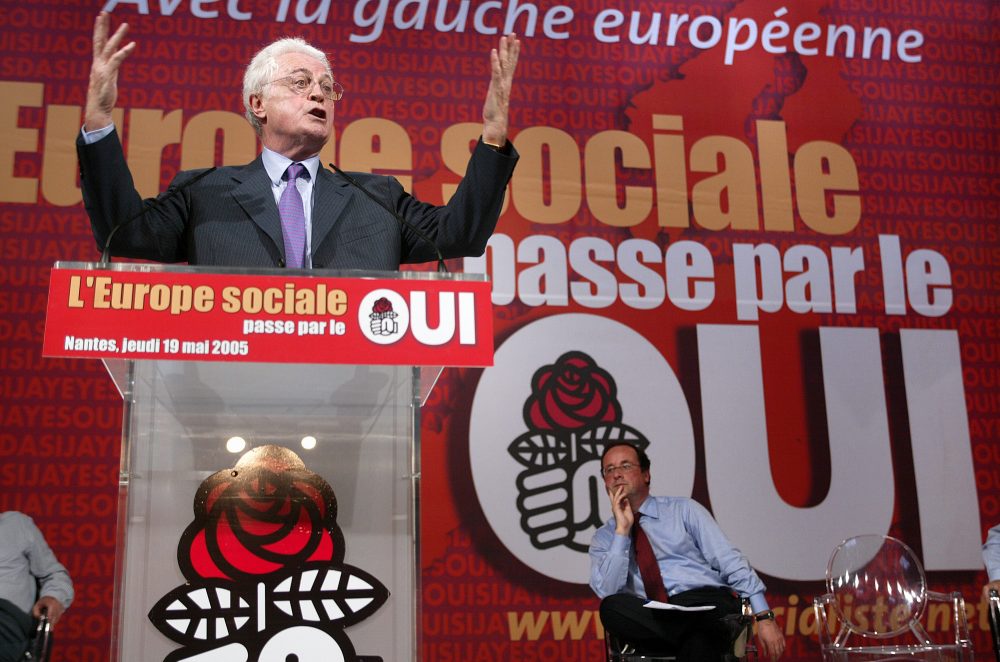

Former French Prime Minister Lionel Jospin, the Socialist leader who introduced France’s 35-hour work week and championed progressive social policies, has passed away at the age of 88.
Current Prime Minister Sébastien Lecornu announced Jospin’s death, which occurred on Sunday according to family sources reported by Agence France-Presse.
In a statement posted on X, Lecornu praised Jospin’s legacy, saying he “served France with constancy, rigor and a sense of responsibility” and that “his actions, guided by a certain vision of social progress and republican values, leave a lasting mark and a model of commitment.”
With his distinctive white curly hair and thick glasses, Jospin maintained the scholarly appearance of the economics professor he had been before François Mitterrand unexpectedly appointed him to lead the Socialist Party in 1981.
Following corruption scandals that devastated the Socialists in the 1993 parliamentary elections, Jospin helped restore the party’s reputation, remaining free from the bribery and fraud allegations that had tainted other leaders.
From 1997 to 2002, Jospin served as prime minister under conservative President Jacques Chirac in an unusual power-sharing arrangement known as “cohabitation,” heading a coalition of left-wing parties.
During his tenure, Jospin rejected the free-market reforms that were gaining popularity in Britain and other nations, instead pursuing distinctly leftist policies.
His major accomplishments included implementing France’s gender parity law requiring equal numbers of male and female candidates in national elections, establishing civil unions for both same-sex and heterosexual couples, and reducing the standard work week from 39 to 35 hours—a change celebrated by labor advocates but denounced by business leaders as economically harmful.
Despite his political success, Jospin struggled with public appearances, his naturally reserved demeanor becoming even more rigid when facing television cameras.
His political career ended abruptly following a devastating defeat in the 2002 presidential election’s first round, where he unexpectedly lost to far-right candidate Jean-Marie Le Pen.
In that shocking result, Le Pen narrowly edged out Jospin for second place by fewer than 200,000 votes, both receiving over 16% of the total. This allowed Le Pen, the anti-immigration National Front founder, to advance to the runoff against incumbent Chirac, delivering a major blow to mainstream French politics.
French voters ultimately united behind Chirac in the second round to prevent Le Pen from reaching the Élysée Palace, giving Chirac a decisive victory.
Born on July 12, 1937, Jospin came into the world under unusual circumstances—his midwife mother reportedly elevated her pelvis using volumes of Voltaire’s writings during labor.
“She believed I would have the spirit of Voltaire,” Jospin once recalled.
His formative years in Nazi-occupied Paris left a lasting impression on his personality and political approach.
“I have the memory of the importance of silence. If you weren’t quiet, you ran the risk of putting people in danger. Certainly in political life I’ve retained a certain horror of talkativeness,” he reflected.
Raised in a Protestant household, Jospin attended the elite École d’Administration Nationale, which has produced numerous French political leaders and intellectuals.
The leftist student movements of 1968 drew him into politics, and after initially associating with Trotskyist groups, he eventually joined the Socialist Party.
Throughout his career, even as his views evolved, Jospin maintained his skepticism of unchecked capitalism, frequently repeating his signature slogan: “Yes to the market economy, no to a market society.”