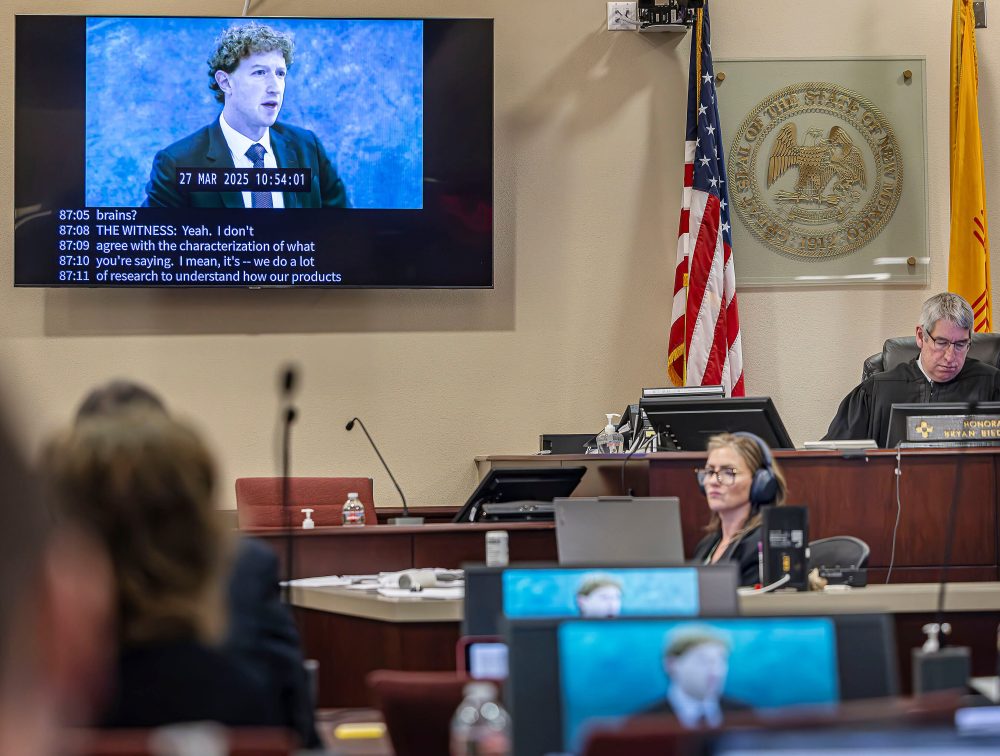

SANTA FE, N.M. — A historic courtroom battle in New Mexico is coming to a close as jurors prepare to decide whether social media giant Meta deceived users about the dangers its platforms pose to young people.
Final arguments are set for Monday following six weeks of witness testimony that featured educators, mental health professionals, state investigators, high-ranking Meta executives, and former company insiders who became whistleblowers.
This New Mexico state court proceeding represents one of the first cases to go to trial amid a surge of legal challenges targeting social media companies and their effects on minors.
State prosecutors contend that Meta — the parent company of Facebook, Instagram and WhatsApp — put financial gain ahead of user protection, violating New Mexico’s consumer protection statutes. Officials have highlighted concerns regarding sophisticated recommendation systems and various communication tools and privacy controls.
Meta’s legal team contests these allegations, arguing the corporation implements safeguards for young users and removes dangerous material, while conceding that some problematic content occasionally bypasses their security measures.
Following the jury’s decision, a second trial phase will commence where a judge will determine if Meta created a public health hazard and should provide financial support for programs addressing purported harm to children.
Attorney General Raúl Torrez launched the lawsuit in 2023, claiming Meta established a platform that serves as a “breeding ground” for individuals seeking to sexually exploit minors while concealing knowledge of these damaging consequences. State officials established fake social media profiles mimicking children to track online predatory behavior and Meta’s response.
Meta’s lawyers maintain the company provides transparent information about its comprehensive yet imperfect efforts to eliminate child sexual abuse content. They also claim prosecutors selected evidence selectively and performed inadequate research.
During testimony, Meta leadership stressed the company’s ongoing commitment to enhancing safety measures and combating addictive social media behavior while respecting free expression and avoiding excessive content removal.
A jury composed of Santa Fe County residents, including those from the liberal-leaning capital city, will determine whether Meta breached the state’s Unfair Practices Act on three charges, including “unconscionable” business conduct.
If jurors find intentional violations occurred, Meta could face penalties reaching $5,000 per infraction. State officials suggest this could total billions considering Meta’s user base in New Mexico, though the company would likely challenge such calculations.
Technology firms have historically enjoyed legal protection from user-generated content liability through Section 230, a three-decade-old component of federal communications law, along with First Amendment defenses.
However, New Mexico officials clarify they’re not holding Meta responsible for platform content itself, but rather the company’s role in distributing material through sophisticated algorithms that spread potentially addictive and harmful content to young users.
Meanwhile in California, another jury is currently deliberating whether Meta and YouTube bear responsibility for damages caused to children using their services. This key case could influence the outcome of thousands of similar legal actions against social media corporations.