CF Montreal terminated head coach Marco Donadel from his position on Sunday morning following the team’s struggling performance this season.
Philippe Eullaffroy has been named temporary head coach for CF Montreal, which holds a 1-6-0 record with just three points and sits in second-to-last place in the Eastern Conference. The team suffered a 2-1 loss to the Philadelphia Union on Saturday night.
Saturday’s victory marked Philadelphia Union’s first win of the current season.
According to CF Montreal’s announcement, assistant coaches Jacopo Falanga and Lorenzo Pinzauti have also been dismissed from the organization.
The club had promoted Donadel from interim status to permanent head coach on October 21st.
The 42-year-old Donadel initially stepped into the interim coaching role on March 24, 2025, when Montreal dismissed Laurent Courtois after the team started that season with an 0-4-1 record.
The Italian-born Donadel spent four seasons as a player with Montreal between 2015 and 2018, then rejoined the organization as an assistant coach on December 29, 2024.
On Sunday, April 12th, Saudi Arabia called in Iraq’s diplomatic representative to address ongoing drone attacks originating from within Iraq’s borders that are endangering Saudi Arabia and fellow Gulf region countries.
According to a statement released by Saudi Arabia’s foreign ministry, officials “emphasised the importance of Iraq dealing responsibly with these threats and attacks” during the diplomatic meeting.
The formal summoning of the Iraqi ambassador represents an escalation in diplomatic pressure as Saudi Arabia seeks to address the unmanned aerial vehicle strikes that have been launched from Iraqi territory.
MONTE CARLO – Italian tennis player Jannik Sinner captured his fourth consecutive Masters 1000 championship on Sunday, defeating Spain’s Carlos Alcaraz 7-6(5) 6-3 in the Monte Carlo Masters final to regain his position as the world’s top-ranked player.
The two tennis stars hadn’t competed against each other in almost five months, with their previous encounter being Sinner’s victory over Alcaraz at the ATP Finals championship match. Playing in windy weather conditions, the Italian once again emerged victorious after a match that lasted two hours and 15 minutes.
This latest triumph marks Sinner’s fourth consecutive Masters 1000 championship, following his previous wins in Paris, Indian Wells, and Miami before transitioning to Monte Carlo’s distinctive red clay surface. The victory brings his total Masters series titles to eight overall.
TCU basketball star Olivia Miles has made history by becoming the first upcoming rookie to join Unrivaled, the professional 3×3 basketball league, ahead of Monday’s WNBA Draft where she’s projected as an early pick.
The 5-foot-10 guard has inked a multi-year contract with the league, though financial terms were not disclosed. Miles is scheduled to begin playing in Unrivaled’s 2027 season next winter. The league, now entering its third year, was established by WNBA standouts Naphessa Collier and Breanna Stewart.
“I couldn’t be more excited to join the long list of incredible players playing in Unrivaled,” Miles stated in Sunday’s announcement. “This league is building something special for the women’s game and I’m excited to be a part of its long-term growth. I can’t wait to hit the floor next winter to compete alongside the absolute best in the world.”
The New Jersey native completed four years at Notre Dame before making the move to TCU for her final season of college eligibility in 2025-26. Under her leadership, the Horned Frogs secured an NCAA Tournament berth but were eliminated by eventual national runner-up South Carolina, 78-52, in the Sweet 16 round.
Miles earned second-team Associated Press All-American honors for the third straight year, posting impressive statistics with 19.6 points, 6.9 rebounds, and 6.4 assists per game this season.
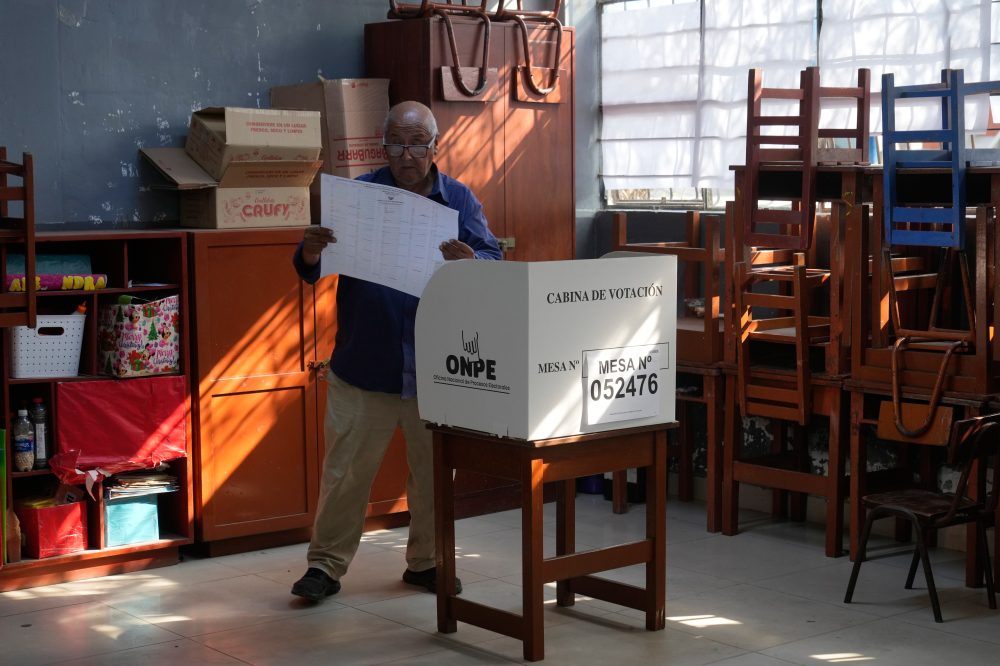
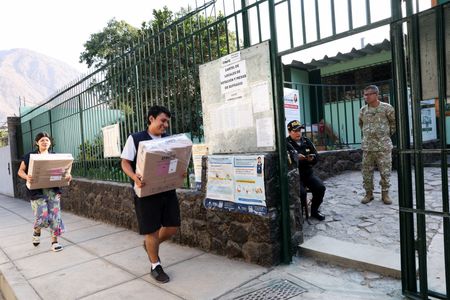
LIMA, Peru — Peruvian citizens headed to the polls Sunday to select from a record-breaking field of 35 presidential hopefuls, including a former government official, an entertainer, and the daughter of a deceased former leader, as the South American nation searches for its ninth chief executive in a single decade.
The election unfolds against a backdrop of escalating violent crime and corruption scandals that have left citizens deeply frustrated with their political system. Voters express widespread skepticism about the honesty and qualifications of those seeking the country’s highest office. Crime concerns have prompted candidates to propose dramatic measures ranging from constructing massive detention facilities to limiting prisoner meals and bringing back capital punishment for severe offenses.
Construction worker Juan Gómez, 53, voiced the despair felt by many citizens as he transported bags of potatoes and rice to feed his five children. “You can’t trust anyone anymore, nothing’s going to change,” he said. “(Criminals) come on motorcycles, put a gun to your head… you look around and there’s no police officer.”
“What are you going to do? You just let them rob you,” Gómez continued.
The electoral process requires participation from all Peruvians between 18 and 70 years old. Registration records show more than 27 million eligible voters, with approximately 1.2 million expected to vote from overseas locations, particularly in the United States and Argentina.
Victory requires securing more than half of all votes cast. Given the fractured political landscape and unprecedented number of candidates, a second-round runoff in June appears almost certain.
Rising criminal activity dominates public concerns and has sparked regular demonstrations. Government statistics reveal that murders have doubled while extortion incidents have multiplied by five during this decade.
Retiree Raúl Zevallos, 63, described the daily fear experienced by ordinary citizens. “You get on the bus, and you have to sit far from the driver; you don’t know if you’ll make it home alive,” he explained. “Criminals drive by on motorcycles, shoot, kill the driver, and you could die, too.”
Official data shows that more than 200 public transit operators lost their lives in Peru during 2025. A government survey conducted by the National Institute of Statistics and Informatics revealed that 84% of urban residents fear becoming crime victims within the next year.
The ballot features Keiko Fujimori, a conservative former legislator whose father was the late President Alberto Fujimori. This represents her fourth presidential campaign.
Fujimori has pledged aggressive anti-crime measures while simultaneously supporting legislation that experts argue hampers criminal prosecutions. Her political party has endorsed laws in recent years that eliminated pretrial detention in specific situations and increased requirements for confiscating criminal proceeds.
Her proposed reforms include anonymous judges for criminal proceedings and requiring inmates to work for their meals.
Another contender is Rafael López Aliaga, a conservative politician who previously served as mayor of Lima, the nation’s capital. His platform includes establishing correctional facilities in Peru’s Amazon territory, permitting judicial anonymity, and deporting individuals residing illegally in the country.
Comedian-turned-politician Carlos Álvarez has attempted to build support by proposing to bring together leaders from El Salvador, Denmark, and Singapore to share their security expertise.
Voters are simultaneously selecting members of a bicameral Congress, marking the first time in over three decades that Peru will have both a House and Senate. Recent legislative reforms have concentrated significant authority in the new upper chamber, which the president cannot dissolve, though senators retain the power to remove presidents from office.
The restructured system makes presidential removal procedures more streamlined, requiring only 40 of 60 senators for approval. The previous single-chamber system needed 87 of 130 lawmakers to vote for removal, a power they used frequently and contributed to the constant turnover of presidents over the past ten years.
This bicameral arrangement returns despite 80% of voters rejecting it in a 2018 public referendum. Legislators modified the Constitution in 2024 to enable the change.
Alejandro Boyco, who researches at the Institute of Peruvian Studies, explained that senators will select and oversee senior government officials, including the national ombudsman, constitutional court justices, and certain central bank leadership positions. The upper chamber will also examine and modify legislation from the lower house.
“They’ve concentrated too much power in a 60-people chamber,” Boyco observed. “They are not going to be immune to being corrupt.”
HOUSTON (AP) — Unprecedented footage of the moon’s hidden side. Accomplished. A total solar eclipse witnessed from lunar orbit. Accomplished. A new record for human space travel distance. Accomplished.
Following NASA’s spectacular lunar return mission with Artemis II, people worldwide are asking: What comes next? How does the space agency surpass such an achievement?
“To people all around the world who look up and dream about what is possible, the long wait is over,” NASA Administrator Jared Isaacman declared while presenting Artemis II commander Reid Wiseman, pilot Victor Glover, Christina Koch and Canada’s Jeremy Hansen during Saturday’s celebratory homecoming event.
Following the safe return of the first lunar voyagers in over fifty years to Houston and their families, NASA is focusing on Artemis III preparations.
“The next mission’s right around the corner,” entry flight director Rick Henfling remarked after the crew’s Pacific ocean landing on Friday.
During a recently scheduled mission for next year, Artemis III’s astronauts—not yet announced—will rehearse connecting their Orion spacecraft with lunar landing vehicles while orbiting Earth. Companies led by Elon Musk’s SpaceX and Jeff Bezos’ Blue Origin are competing to complete their landing systems first.
Musk’s Starship and Bezos’ Blue Moon are competing for the crucial Artemis IV moon landing scheduled for 2028. Two crew members will target the south polar region, the chosen site for Isaacman’s proposed $20 billion to $30 billion lunar base. Enormous quantities of ice likely exist within permanently dark craters in that area—ice that could supply water and spacecraft fuel.
The connecting equipment for Artemis III’s Earth-orbit practice mission is already positioned at Florida’s Kennedy Space Center. The newest Starship model is preparing for a test launch from South Texas, while a smaller Blue Moon prototype will attempt a lunar touchdown later this year.
NASA pledges to reveal the Artemis III crew “soon.” Similar to 1969’s Apollo 9, Artemis III seeks to minimize risks for subsequent moon landings.
Apollo 9 astronaut Rusty Schweickart enjoyed piloting the lunar module in low-Earth orbit—”a test pilot’s dream.” However, he acknowledged that “the real astronauts” in public perception were those who actually stepped onto the moon.
Wiseman and his teammates displayed remarkable emotion and authenticity during their lunar journey, becoming emotional while remembering deceased loved ones and those remaining on Earth.
Throughout their nearly 10-day expedition, they emotionally requested naming a fresh, brilliant lunar crater after Wiseman’s deceased wife, Carroll, who lost her battle with cancer in 2020. They also openly expressed their affection for each other and Planet Earth, describing it as a beautiful yet fragile sanctuary in the dark emptiness that requires better stewardship.
Artemis II featured the first woman, the first person of color and the first non-American to journey to the moon.
“Wonderful communicators, almost poets,” Isaacman commented from the recovery vessel while awaiting their return.
Apollo’s stoic, strictly professional moon crews from the 1960s and 1970s certainly never embraced as a group.
For those who remember Apollo, Artemis—Apollo’s twin sister in Greek mythology—couldn’t arrive soon enough.
Writer Andy Chaikin said he felt like Rip Van Winkle waking from a nearly 54-year sleep. His 1994 book “A Man on the Moon” inspired the HBO series “From the Earth to the Moon.”
“It’s amazing how far we’ve come and how different this experience is from back then,” Chaikin commented from Johnson Space Center late last week.
The most challenging aspect, according to NASA Associate Administrator Amit Kshatriya, is developing close relationships with the crews and their families before launching them to the moon. He nervously watched Friday’s reentry alongside the astronauts’ spouses and children.
“You know what’s at stake,” Kshatriya revealed afterward. “It’s going to take risk to explore, but you have to make sure you find the right line between being paralyzed by it and being able to manage it.”
Declaring “mission complete” only after reuniting with his two daughters, Wiseman delivered an inspiring message to the rows of blue-flight-suited astronauts at Saturday’s celebration.
“It is time to go and be ready,” he said, pointing at them, “because it takes courage. It takes determination, and you all are freaking going and we are going to be standing there supporting you every single step of the way in every possible way possible.”
QUETTA, Pakistan – In an unprecedented maritime assault, separatist militants fatally shot three Pakistan Coast Guard members aboard a patrol vessel in the Arabian Sea on Sunday, according to security officials.
The deadly encounter occurred while the coast guard crew was conducting standard patrol operations near the Pakistan-Iran coastal border when insurgents launched their attack, intelligence and police sources confirmed.
This maritime assault represents a significant escalation in the ongoing security crisis plaguing Balochistan province, where insurgent groups routinely target government forces and critical infrastructure.
The prohibited separatist organization Balochistan Liberation Army (BLA) took credit for the deadly operation. In an official statement, the BLA declared: “Following the operations on land, the action in maritime boundaries marks a new development in the BLA’s military strategy.”
Security and intelligence officials report that an investigation has been initiated and protective measures have been increased throughout the region following the attack.
The incident comes months after Pakistan conducted aerial bombardments in February that triggered a week-long military confrontation with Afghanistan. Pakistani officials accuse the Afghan government of sheltering militant organizations like the BLA, allowing them to organize and execute attacks from Afghan territory. Taliban leadership has rejected these allegations.
The strategically important Gwadar district, home to a crucial deep-water port central to China’s major “Belt and Road” development project, has experienced numerous assaults by Baloch separatist fighters targeting security personnel and government facilities.
Government representatives did not provide statements regarding the maritime attack when contacted for comment.
Former President Donald Trump indicated that putting a recently declared U.S. naval blockade of the Strait of Hormuz into action will require some time to implement, according to comments he made during a Fox News television appearance.
Trump made the remarks while speaking with host Maria Bartiromo on the Sunday morning news program “Sunday Morning Futures” from Miami, Florida on April 12th.
A British pharmaceutical company is expressing optimism about a new cancer treatment following encouraging preliminary trial results that demonstrated the drug’s ability to reduce tumors in patients battling difficult-to-treat cancers.
GSK’s experimental medication Mo-rez has emerged as a top priority for the company after initial data revealed its effectiveness against advanced forms of cancer, according to Hesham Abdullah, the firm’s head of oncology research.
“This is one of our priority assets at this stage,” Abdullah told reporters during a briefing about the preliminary findings, which are scheduled for presentation at a medical conference in Puerto Rico on Sunday.
When asked about the drug’s commercial prospects, Abdullah expressed confidence in its potential success. “Do we think it would be a blockbuster? Yes, absolutely,” he stated during the media call.
The early trial results focused on measuring how many patients experienced significant tumor reduction, specifically looking for at least 30% shrinkage. Among women with platinum-resistant ovarian cancer, 62% achieved this benchmark, while 67% of endometrial cancer patients reached the same milestone.
These positive outcomes are providing new energy to GSK’s rapidly expanding cancer treatment division. The company’s new CEO Luke Miels, who assumed leadership in January, has committed to accelerating the development of innovative medications. Abdullah noted this strategic shift is already influencing their research approach.
“I think it has been reflected in the type of pace that you are seeing and the type of conviction that we have in our programmes moving forward,” Abdullah explained.
Currently, GSK is conducting Mo-rez trials in two advanced-stage studies focusing on ovarian and endometrial cancers, with plans to launch three additional research studies in the coming months.
The experimental treatment is classified as an antibody-drug conjugate that specifically targets the B7H4 protein present on gynecological cancer cells while avoiding healthy tissue. Industry projections estimate the market for these types of treatments could reach $31 billion by 2030.
GSK obtained licensing rights for the drug from Chinese company Hansoh Pharma in 2023. Financial analysts have not yet released sales forecasts for Mo-rez given the early stage of trial data.
Authorities are actively searching for a Milton man wanted in connection with a deadly shooting that claimed the life of a 47-year-old victim Friday evening.
Delaware State Police responded to a shooting call around 5:30 p.m. on April 11, 2026, in the 20000 block of Forest Road in Milton. Officers discovered the victim with multiple gunshot wounds in the front yard of a home, where he was declared dead.
Investigators with the Delaware State Police Homicide Unit have taken over the case. Their initial findings indicate that 62-year-old Myron Savage of Milton walked up to the victim in the residential yard and fired multiple shots before escaping the scene on a black three-wheeled scooter of unknown make.
Police have secured an arrest warrant for Savage and are actively working to track him down. Authorities urge anyone who spots Savage to immediately dial 9-1-1.
The Homicide Unit continues its active investigation into this deadly incident. Anyone with details about this case should reach out to Detective A. Bluto at 302-741-2859. Tips can also be submitted through a private message to the Delaware State Police Facebook page or by contacting Delaware Crime Stoppers at 1-800-847-3333.
Victims, witnesses, or families affected by sudden loss can access support through the Delaware State Police Victim Services Unit and Delaware Victim Center, available around the clock at 1-800-VICTIM-1 (1-800-842-8461). Support can also be requested via email at [email protected].
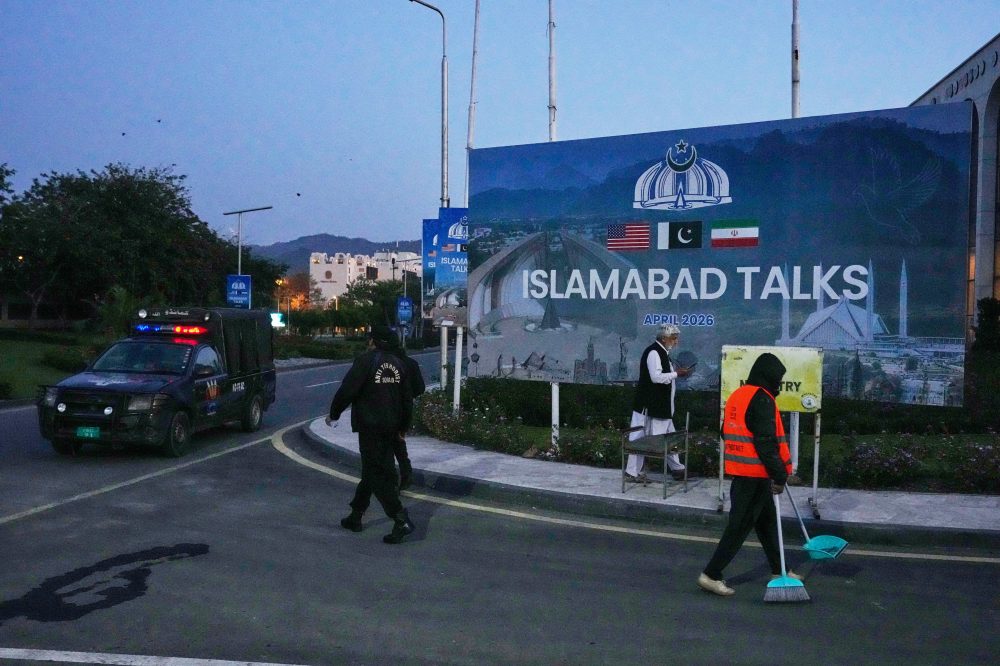
JERUSALEM (AP) — Diplomatic negotiations between the United States and Iran concluded without agreement early Sunday morning in Islamabad, Pakistan, sparking concerns about the future when the current two-week ceasefire ends on April 22.
Following the conclusion of discussions in Pakistan’s capital city, representatives from both nations pointed fingers at each other for the breakdown in negotiations.
Officials provided no indication whether diplomatic efforts would continue, while President Donald Trump issued fresh warnings directed at Iran.
While this diplomatic failure doesn’t guarantee a return to warfare, it demonstrates how firmly positioned both nations remain following an indecisive 40-day conflict that caused significant destruction in Iran, created regional instability, and disrupted worldwide economic markets.
Diplomatic representatives will now head back to their home countries to reassess their strategies moving forward.
Here’s an examination of the current situation:
Following the February 28 launch of military action by the U.S. and Israel, officials committed to dismantling Iran’s nuclear and missile capabilities along with its backing of armed proxy organizations throughout the region.
American negotiators have put forward a 15-point proposal that reportedly contains these identical requirements. Though the U.S. plan remains classified, Pakistani government sources informed The Associated Press that it includes provisions for reopening the Strait of Hormuz, the crucial shipping channel that handles twenty percent of global oil transport. Iran’s blockade of this waterway caused petroleum prices to surge and international markets to drop significantly.
Iranian officials have responded with their own 10-point proposal. Their plan demands Iranian authority over the strait, cessation of military operations, protection of their proxy forces including Lebanon’s influential Hezbollah organization, and financial compensation for war-related damages.
Both parties seemed to maintain their original ceasefire positions throughout 21 hours of direct negotiations.
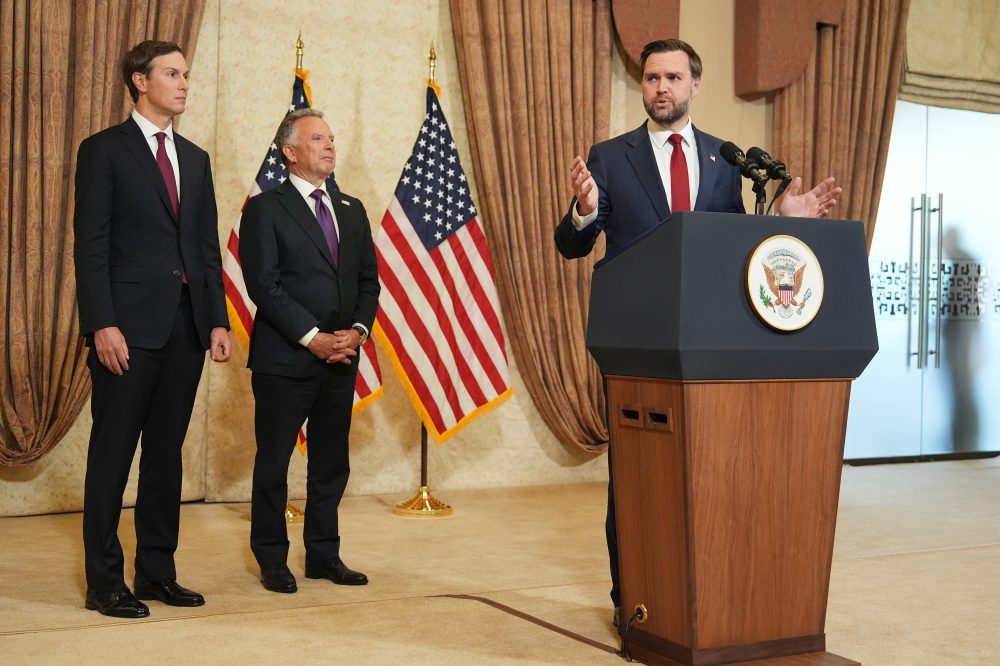
Vice President JD Vance, who headed the U.S. negotiating team, stated that Iran refused to provide guarantees against pursuing nuclear weapons development.
While Iran has consistently rejected accusations of weapons development, the nation continues demanding a civilian nuclear program featuring uranium enrichment — a critical component in weapons production. Security analysts note that Iran’s current enriched uranium reserves require only minor technical advancement to reach weapons-grade levels.
“We need to see an affirmative commitment that they will not seek a nuclear weapon and they will not seek the tools that would enable them to quickly achieve a nuclear weapon,” Vance said.
Iran’s lead negotiator, Parliament Speaker Mohammad Bagher Qalibaf, stated the U.S. must determine “whether it can gain our trust or not.”
While Qalibaf avoided addressing central disagreements in his online statements, other Iranian representatives indicated that Strait of Hormuz control remains a major obstacle.
Mohammad Reza Aref, Iran’s first vice president, declared in an online post that strait control represents part of the “rights of the people.”
Pakistani Foreign Minister Ishaq Dar announced his nation’s intention to help arrange additional dialogue between Iran and the U.S. in upcoming days. Neither country responded immediately to this offer.
A significant barrier appears to be both sides’ belief that they achieved victory and possess advantageous timing.
Vance characterized the negotiation failure as “bad news for Iran much more than it’s bad for the United States of America.”
Trump announced Sunday through social media that U.S. Naval forces would establish a blockade controlling all Strait of Hormuz traffic.
Qalibaf declared Iran would continue “striving to securing the achievements” from the conflict.
Danny Citrinowicz, a senior analyst with the Institute for National Security Studies, an Israeli research organization, expressed pessimism about these opposing viewpoints. Writing on X, he described Iran’s victory perception as “not the mindset of a regime preparing to compromise.”
“This gap between American expectations and Iranian self-perception now lies at the heart of a growing strategic deadlock,” he said.
Ali Vaez, Iran project director at the International Crisis Group research institute, said the Islamabad discussions highlight significant differences but doesn’t anticipate immediate breakdown.
“The likelier scenario is not immediate war, but a volatile period of pressure, signaling, and last-minute attempts to prevent a wider conflagration,” he said. “The path forward, if there is one, lies in a limited, reciprocal deal that buys time and lowers the temperature.”
MAIDUGURI, Nigeria – A devastating military airstrike targeting Islamic extremists instead hit civilians at a village marketplace in northeastern Nigeria, with local officials reporting approximately 200 people may have died in the Saturday evening attack.
The tragic incident unfolded in a Yobe state community located along the border with Borno state, according to area council members and local residents who spoke out Sunday. Nigerian air force aircraft were conducting operations against militant groups when the strike occurred at the busy market.
The affected region sits at the center of a prolonged conflict with insurgent forces that has claimed thousands of lives and forced millions of people from their homes over many years. The border area between Yobe and Borno states has been particularly hard hit by the ongoing violence and military operations.
A prolonged drought spanning most of the last seven years has pushed Corpus Christi, Texas to the brink of a water emergency that could impact both its 317,000 residents and the critical oil and gas facilities that help fuel the nation.
The coastal city’s water reservoirs have dropped to unprecedented low levels, forcing officials to explore emergency measures while hoping for significant rainfall that hasn’t materialized. The situation has developed as the city expanded water sales to major industrial clients without adequate backup supply systems in place.
“We just have not kept up with water supply and water infrastructure like we should have. And it’s decades in the making,” explained Peter Zanoni, who has served as city manager since 2019.
The water shortage poses particular concern because Corpus Christi serves as a vital energy hub, housing refineries and petrochemical facilities that manufacture essential products like gasoline and steel for global markets. The region contributes 5% of America’s total gasoline production at a time when Middle East conflicts are already pushing fuel prices higher.
While Zanoni believes the city won’t completely exhaust its water supply, he warns that without substantial precipitation or alternative sources, both residents and industrial operations may face mandatory reductions in water usage.
Current drought conditions have persisted far longer than typical weather patterns. Essential water reservoirs never fully recovered from the previous drought in the early 2010s, leaving the system vulnerable to the current crisis.
“We are actively praying for a hurricane,” said David Loeb, a former city council member, speaking somewhat jokingly. While Loeb doesn’t wish harm on anyone, his experience dealing with past droughts during his council tenure has made him acutely aware of the region’s dependence on storm systems for water replenishment.
Weather forecasts offer little hope for relief before summer arrives, prompting city leaders to urgently pursue additional groundwater sources to prevent an official emergency declaration.
Following the drought of the early 2010s, municipal leaders approved expanding a pipeline system to increase water flow from the Colorado River while encouraging conservation efforts. When water consumption actually decreased in subsequent years, the city welcomed new industrial clients, including a petrochemical facility and steel production plant.
City planners had factored drought scenarios into their calculations, but Zanoni admits they didn’t anticipate the severity and duration of the current dry spell, which struck before reservoirs could fully recharge.
The timing has proven particularly challenging. The pipeline expansion only reached full operational capacity last year after years of delays. Meanwhile, discussions about constructing a seawater desalination facility—a drought-resistant solution proposed in 2016—stalled due to concerns over the $1.3 billion price tag and potential environmental consequences.
“If the then-city council had followed through on that, we would have had that plant up and running by now,” Zanoni noted.
The city has implemented its established water conservation protocol, currently operating under Stage 3 restrictions that prohibit most outdoor water usage. The system begins with Stage 1 voluntary measures like shorter showers and limited lawn watering.
Resident frustration is mounting over lawn watering bans, anticipated sharp increases in water bills, and potential fines, according to Isabela Azaiza, who co-founded a community advocacy group focused on water policy. Many citizens question whether industrial users will face comparable sacrifices.
The city’s drought management plan includes surcharges for high-volume water users among both residential and commercial customers. However, major industrial operations—which Zanoni says consume up to 60% of the city’s water—can choose to pay a permanent additional fee to avoid potentially much higher emergency surcharges during drought periods.
Azaiza criticizes this arrangement as fundamentally flawed. She argues that once industrial users pay the surcharge, they lose any financial motivation to reduce water consumption.
City officials have defended their approach, stating in a written response that industrial customers don’t “get a pass on water conservation” or mandatory reductions. They noted that business surcharges generate approximately $6 million annually.
Bob Paulison, who leads the Coastal Bend Industry Association, disputes suggestions that companies aren’t contributing to conservation efforts. He says member businesses have eliminated landscaping, implemented water recycling for essential cooling operations, and are actively seeking alternative water sources.
No additional fees have been imposed on any users yet.
However, Zanoni warned that water rates could eventually double as the city invests roughly $1 billion in infrastructure improvements—costs that critics argue will primarily benefit industrial users while making basic services more expensive for residents.
The city enters water emergency status when officials calculate just 180 days remain before demand exceeds available supply. After analyzing various scenarios for new water sources and potential drought relief, authorities estimate an emergency declaration could occur anywhere from May to October, or possibly not at all.
Officials have already accessed millions of gallons from new groundwater sources and hope to secure additional supplies.
The most significant potential solution is the Evangeline Groundwater Project, featuring a pipeline network and approximately two dozen wells that could provide enough water to prevent an emergency. While still awaiting state regulatory approval, city leaders hope water could begin flowing by November. These alternative sources present their own challenges, including water quality concerns and fears that excessive pumping might deplete underground aquifers.
If forced to declare a water emergency, the city would gain authority to impose mandatory usage reductions affecting all residents and industrial users equally. Loeb described this as a sensitive decision likely to result in a “knock-down drag-out bloodbath.”
Since residents have already significantly reduced their water consumption, future mandatory cuts would likely impact industrial users more heavily.
“It’ll be an unbelievable disaster,” warned Don Roach, former assistant general manager of the San Patricio Municipal Water District, which serves numerous industrial customers in the region. “When you cut the cooling water off to most of these industries, they just have to shut down. There’s no other way around it.”
Paulison acknowledged that companies producing fuel, polymers, iron and steel “have the least amount of flexibility in just cutting water usage.” However, he expressed optimism that businesses can find ways to reduce consumption, adapt their operations, and continue functioning.
Zanoni believes the city’s current strategies should provide enough time to avoid the worst-case scenarios.
“We are hoping we don’t get there, but we don’t work on hope,” he said.
Former President Donald Trump announced on Sunday that American naval forces would begin an immediate blockade of the strategically important Strait of Hormuz waterway.
In a post on his Truth Social platform, Trump declared that the U.S. Navy would also stop and inspect any ships traveling through international waters that have made toll payments to Iran.
The announcement was made through Trump’s social media channel on April 12th.
Australian Prime Minister Anthony Albanese is set to embark on a crucial diplomatic mission to Southeast Asia this week, focusing on strengthening fuel supply partnerships with regional allies as his nation grapples with energy disruptions stemming from Middle Eastern conflicts.
The Prime Minister’s office announced Sunday that Albanese will conduct official visits to the capitals of Brunei and Malaysia between April 14 and 17, traveling to Bandar Seri Begawan and Kuala Lumpur respectively.
During his Southeast Asian tour, Albanese is expected to hold discussions with Sultan Hassanal Bolkiah of Brunei and Malaysian Prime Minister Anwar Ibrahim. Additionally, Australian Foreign Minister Penny Wong will participate in separate meetings with her diplomatic counterparts from both nations.
“Engaging with critical regional partners such as Brunei Darussalam and Malaysia will help ensure Australia’s energy supply remains secure during times of uncertainty,” Albanese stated. “We are taking every step to reinforce relationships and engage with key partners to keep our fuel supply flowing.”
This diplomatic initiative follows significant disruptions to global energy markets caused by Iran’s blockade of the Strait of Hormuz, a critical waterway that previously handled approximately 20% of worldwide oil and gas shipments before the current regional conflict began.
The energy crisis has hit Australia particularly hard, given that the country relies on imports for roughly 80% of its fuel needs. Australians have experienced fuel shortages in various regions and witnessed dramatic price increases since the strait’s closure.
The trade relationships underscore the importance of these diplomatic talks. Malaysia currently ranks as Australia’s third-most important refined fuel supplier and provides 10% of the country’s fertilizer-grade urea imports, while Australia reciprocates by supplying 95% of Malaysia’s imported natural gas needs.
Brunei also plays a significant role in Australia’s energy security, contributing 9% of diesel imports and 11% of fertilizer-grade urea imports to the Australian market.
The current diplomatic push represents part of a broader strategy, as Australian officials have conducted fuel supply negotiations with multiple Asian partners, including China, Indonesia, Japan, South Korea, and others.
This week’s visits build upon recent diplomatic efforts, including Albanese’s trip to Singapore last week, where he met with Prime Minister Lawrence Wong on Friday. The two leaders reached agreements on enhanced cooperation to ensure regional energy security.
SYDNEY, April 12 – The governments of Australia and the United States announced Sunday they have pledged more than $3.5 billion to support critical mineral development projects, marking a significant increase from their original commitment made half a year ago.
The expanded investment nearly doubles the funding initially promised when the two nations established their cooperation framework in October, according to Australian officials.
This financial backing targets Australian operations focused on developing and processing metals essential for defense applications, high-tech manufacturing, and clean energy initiatives – sectors where China currently holds market leadership.
The initiative aligns with broader goals to strengthen America’s advanced manufacturing capabilities while working to “counter China’s export dominance and ensure Western supply-chain resilience,” as outlined in the original partnership agreement reached last fall.
Under their initial accord, both countries agreed to contribute at least $1 billion each toward an $8.5 billion portfolio of priority mineral projects spanning both nations over a six-month period.
While Australia possesses abundant reserves of critical minerals including rare earth elements, China has developed expertise in the complex and environmentally challenging refinement processes.
“Australia and the U.S. are delivering on the commitments made in the White House, with priority projects in Australia that support production of rare earths and critical minerals,” stated Resources Minister Madeleine King.
“Australia is taking a global lead to diversify crucial supply chains for critical minerals and rare earths, which are vital to support economic and national security for Australia and our trading partners,” King added.
The $3.5 billion in project financing will be administered through Export Finance Australia and the U.S. Export-Import Bank.
One of the most substantial investments involves a rare earth processing facility operated by Tronox Holdings, which has received combined letters of support and interest totaling $849 million from both agencies. The company, with operations in Western Australia and the United States, plans to utilize its current mining and processing infrastructure to produce mixed rare earth carbonate containing both light and heavy rare earth elements, according to King.
The financing agencies have also pledged up to $1 billion in joint support for Ardea Resources’ Kalgoorlie Nickel Project located in Western Australia.
Additional ventures receiving backing through the partnership framework include Alcoa’s Gallium Recovery Project and Arafura’s Nolans Rare Earths Project, alongside initiatives involving graphite, magnesium, and tungsten development.
King noted that projects focusing on vanadium and scandium minerals have also received preliminary support indications.
British financial authorities are conducting emergency discussions with cybersecurity officials and banking leaders to evaluate potential threats from a new artificial intelligence system developed by Anthropic, according to a Financial Times report published Sunday.
The Bank of England, Financial Conduct Authority, and HM Treasury have initiated conversations with the National Cyber Security Centre to study possible weaknesses in essential computer systems that Anthropic’s newest AI technology has exposed, the publication stated.
Banking executives, insurance company leaders, and stock exchange officials from major British institutions are scheduled to receive briefings about cybersecurity dangers associated with the AI system, known as Claude Mythos Preview, during regulatory meetings planned for the coming two weeks, sources familiar with the discussions told the newspaper.
Reuters was unable to independently confirm the Financial Times report. Anthropic has not responded to requests for comment, while the Bank of England refused to provide statements and other agencies were unavailable for immediate response.
These developments come after U.S. Treasury Secretary Scott Bessent convened similar discussions with prominent Wall Street financial institutions regarding the AI model’s cybersecurity implications, Reuters reported Friday based on source information.
The artificial intelligence company has explained that the system is being implemented through “Project Glasswing,” a restricted program allowing selected organizations to utilize the unreleased Claude Mythos Preview model specifically for protective cybersecurity applications.
According to a company blog post published earlier this month, the AI system has successfully detected “thousands” of significant security vulnerabilities in operating systems, internet browsers, and other commonly utilized software programs.
The United States is witnessing a significant decline in fatal drug overdoses, according to recent data, though health officials warn that dangerous new synthetic substances are rapidly appearing on streets nationwide.
While the reduction in overdose fatalities represents encouraging progress in combating the nation’s drug crisis, experts emphasize concern about the swift emergence of street drugs manufactured using synthetic chemical compounds.
The development highlights the ongoing challenges facing public health officials as they work to address substance abuse issues while simultaneously monitoring the evolving landscape of illicit drug production and distribution.
NEW YORK (AP) — Sara Mearns found herself struggling to follow the rhythm.
The New York City Ballet principal dancer couldn’t make out what her dance partner was communicating from the other side of the rehearsal space. She frequently entered late because the musical accompaniment seemed too quiet to her ears.
Without informing her colleagues, she quietly scheduled an appointment for a hearing evaluation.
The examination revealed Mearns had developed hearing loss. Following years of feeling disconnected, she obtained the assistance needed to navigate a world that had become increasingly unclear.
Today, she stands among the pioneering dancers at New York City Ballet to perform with hearing aids on stage.
“I feel like it’s a whole new chapter of my life,” the 40-year-old Mearns shared during her conversation with the AP.
Though hearing difficulties frequently affect seniors, the condition can develop at any stage of life through various causes such as nerve deterioration, infections, or head injuries. For Mearns, the problem likely resulted from multiple influences including hereditary factors, health issues, and exposure to excessive noise levels.
Data from the National Institutes of Health shows fewer than 20 percent of American adults between 20 and 69 who would benefit from hearing devices actually use them. Barriers include limited availability, feelings of stigma or shame, and unfamiliarity with warning signs.
“Hearing loss is often not detected by the person because what they can’t hear, they don’t know,” explained Dr. Anil Lalwani, a hearing specialist at Columbia University Irving Medical Center.
However, “there are a lot of symptoms of hearing loss that are not hearing less,” noted Dr. Maura Cosetti from Mount Sinai’s New York Eye and Ear Infirmary.
Warning signs include frequently asking “what” and difficulty understanding loved ones in loud environments such as restaurants. Additional indicators encompass ear ringing, feelings of blockage in the ears, or voices that sound unclear.
Throughout the COVID-19 outbreak, Mearns found herself unable to understand people speaking through masks.
“I realized that I was reading everybody’s lips to understand what they were saying,” she recalled.
Medical professionals recommend consulting a physician if you suspect hearing difficulties. They can arrange connections with audiologists or ear, nose, and throat doctors for proper testing.
Cosetti from Mount Sinai mentioned the Mimi Hearing Test application as a helpful tool for initial assessment. Professional evaluation remains the most reliable method to determine the actual problem — such as whether ears are simply blocked with wax or fluid.
Hearing devices work by refining sound signals reaching the brain, amplifying speech while reducing background interference. Though costly, many models are now sold without prescriptions. Certain Apple AirPods can also function as hearing aids.
For more serious hearing impairment, physicians might suggest cochlear implants, which transform sounds into electrical signals transmitted to the brain. These involve surgically placed components and require months of adaptation.
Mearns initially felt self-conscious entering the testing booth, knowing she wouldn’t detect all the sounds. Her audiologist, Marta Gielarowiec, helped her comprehend what she was missing and selected suitable hearing devices.
“It’s definitely not a one size fits all. There is a lot of adjustment, tuning and calibration involved,” said Gielarowiec, who operates a New York practice. “Overall, the goal is to maximize the hearing that’s left.”
Treating hearing loss can enhance mental wellness, improve communication abilities, and reduce cognitive deterioration for individuals at elevated dementia risk.
When Mearns exited her audiologist’s office wearing her new devices initially, she felt overwhelmed. She could detect footsteps on pavement, bird songs from across the street, and a flag fluttering a block away. Upon reaching her dressing room, she wept.
She now experiences the orchestra’s complete power during performances — and can take phone calls through her ears.
Her previous existence, she explained, was draining. Each day ended with exhaustion from constantly asking for repetition and missing conversations and joke punchlines.
“I don’t want people to feel what I felt, where I was embarrassed and I was quiet about it,” she said. “Because now that I’m on the other side, I’m so happy.”
Irish authorities dismantled a demonstration in Dublin’s city center on Sunday, ending a six-day standoff with fuel protesters who had paralyzed much of the nation while government leaders prepared to pass relief measures aimed at stopping the widespread disruptions caused by rising pump prices.
While tractors and trucks departed O’Connell Street in the capital, demonstrations persisted in other areas, including confrontations at Galway docks where law enforcement deployed a military vehicle to dismantle a temporary barricade erected by protesters.
The widespread demonstrations created nationwide havoc as blockades at Ireland’s sole oil refinery and multiple critical fuel depots stopped delivery trucks from reaching gas stations, leaving more than one-third of pumps without fuel. Large, slow-moving vehicle convoys also created massive traffic backups on principal roadways.
Authorities initiated enforcement actions Saturday, deploying pepper spray to disperse demonstrators at the Whitegate refinery in County Cork while promising to clear additional protesters who were threatening essential infrastructure and public safety due to fuel shortages that could hamper emergency response capabilities.
“They are not a legitimate form of protest,” Irish police Commissioner Justin Kelly said on Saturday. “We gave the blockaders fair warning that we were moving to enforcement and they choose to ignore it and continue to hold the country to ransom.”
However, a farmer serving as a spokesperson for the Dublin group expressed frustration that their peaceful demonstration had been “ambushed” by numerous officers during overnight hours.
Christopher Duffy said police threatened to tow their heavy vehicles, so they had to leave.
“These vehicles are very expensive with automatic transmissions and everything, and if they drag them with the engine not on they could wreck them,” Duffy said. “So we have no choice, financially we have to move the vehicles.”
The demonstrations started Tuesday and expanded as information circulated through social media platforms, drawing participation from truckers, farmers, taxi drivers and bus operators demanding assistance such as price limits or tax reductions to lower fuel expenses they claim will force businesses to close.
Government leaders, who had already implemented relief measures for price increases two weeks earlier, expressed confusion about the reasoning behind the protests since the worldwide price surge stems from Middle Eastern conflicts that have limited oil shipments.
Prime Minister Micheál Martin called the move “illogical” and said the country was on the brink of turning tankers away at ports and losing its oil supply.
Officials were anticipated to approve legislation aimed at reducing gasoline and diesel costs, though it remained uncertain whether the measures would be sufficient to stop the protest movement.
JACKSON, Miss. — Transparent glass displays at the Lynching Victims Monolith bear the engraved names of over 600 people killed in documented racial murders throughout Mississippi, alongside descriptions of why they were targeted.
Among them was Malcolm Wright, who died in 1949 when attackers beat him to death as his family watched. His crime? “Hogging the road.” Later investigation showed his mule-pulled cart was simply traveling too slowly for his murderers’ liking.
These displays represent just a fraction of the thousands of items and historical pieces housed within the Mississippi Civil Rights Museum and its connected Museum of Mississippi History. Known collectively as the Two Mississippi Museums, this enormous facility within view of the state capitol serves as a cornerstone of Mississippi’s America 250 commemoration.
“That’s just the people that we know about,” said Kiama Johnson, a visitor from Monroe, Louisiana, as she viewed the victim displays while wiping away tears. “Just imagine the ones that we don’t. Imagine the ones that’s never going to be written in history books.”
Mississippi’s complete and unvarnished presentation of its past for the nation’s 250th anniversary celebration stands in sharp opposition to developments at the federal level since President Donald Trump’s return to office in January 2025.
Softening the harsh realities of America’s sometimes violent history has become a key focus of Trump’s administration. On his first day back in office, he issued an executive order dismantling diversity, equity and inclusion programs across federal agencies. This action, combined with a March 2025 executive order titled “Restoring Truth and Sanity to American History,” has resulted in modified signage at federal parks, altered or removed exhibits, and renamed military installations.
The Republican administration’s America 250 preparations have included pressuring federal institutions like the Smithsonian to present historical narratives that downplay discrimination and racial violence.
In Mississippi, a special exhibition called Mississippi Made was developed specifically for the anniversary celebration, occupying a rotating gallery space designed to encourage repeat visits. However, this showcase of achievements sits within a complex where success stories are woven together with the state’s troubling history involving Native Americans, enslaved individuals, and the Civil Rights struggle.
Nan Prince, who oversees collections for the Mississippi Department of Archives & History, explained that the guidance was straightforward from academics, elected officials, staff, and community and civil rights organizations during the museums’ planning and construction phases.
“Don’t brush over anything, don’t whitewash anything,” she recalled. “Just tell the absolute truth.”
Jackson Mayor John Horhn served as a state senator when he began advocating for the Civil Rights Museum in 1999. His initiative gained momentum when Haley Barbour, former Republican National Committee chairman, assumed the governor’s office.
Museum plans eventually merged with separate efforts to relocate the state history museum from the Capitol area, with both facilities opening together in 2017.
The philosophy for developing the state history museum remained consistent — present the complete narrative, starting with the forced removal of Native Americans from their ancestral lands.
“We said at the beginning we weren’t going to hide anything,” Barbour explained in an interview, referencing his upbringing during segregation. “We weren’t gonna try to justify what was done. That’s what the people wanted — to say, ‘Look, we’re not proud of this, but we’re not going to deny it.’”
Other states have emphasized diversity in their America 250 presentations. Neighboring Alabama’s “America 250” description includes significant Civil Rights Movement achievements.
Mississippi confronts its history directly. The state’s “America 250 MS” platform acknowledges that Mississippi’s story reflects the broader American experience, with Native American displacement paving the way for slavery, which led to the Civil War, followed by Reconstruction and the Jim Crow period.
Horhn commended Mississippi leadership for using the museums to present the state’s complete historical record.
“We still have issues, we still have a lot of challenges,” he noted. “But it’s a demonstration that progress has been made.”
The History Museum entrance features a gallery examining Mississippi’s original inhabitants, Native Americans. A 500-year-old canoe dominates the space, serving as a powerful reminder that Native Americans lived on this land for millennia before settlers arrived, displaced them, and claimed the territory for cotton cultivation using enslaved labor.
The Civil Rights Museum sits across the main lobby. Its first audio experience is jarring: “We don’t serve your kind,” a threatening voice announces when visitors enter the museum space.
This represents one of multiple phrases that were routine during America’s segregated era, confronting visitors immediately upon entering the gallery.
The museum directly addresses one of Mississippi’s most notorious racial murders — that of Emmett Till. The 14-year-old was abducted, tortured and murdered in 1955 following accusations that he whistled at a white woman in a rural Mississippi store.
Till’s killing became a turning point in the Civil Rights Movement. Thousands attended his Chicago funeral, where his mother, Mamie Till Mobley, demanded an open casket to show the nation the horrific condition of her son’s remains.
Following Oprah Winfrey’s narration of events, visitors can view the .45-caliber weapon used to murder the teenager.
Lindsay Ward, 49, wept in the lobby after completing her Civil Rights Museum tour. Growing up in what she called a protected environment in Salt Lake City, she had never encountered the subjects she experienced during her visit — “this heaviness,” as she described it.
Ward, currently living in Denver, expressed distress over how recently some events occurred.
“We’re not talking about hundreds and hundreds of years ago. We’re talking 60 years. It just made me want to weep,” she said. “It doesn’t feel great, but it’s important we understand what happened in the past.”
Connor Lynch, a Chicago history educator and social justice advocate, observed that determining how history gets presented has always been contentious.
“All we have is human narrative” and that includes bias, he explained. “I do believe that no matter what sort of erasure the country might be doing, we know the stories. We know the truth.”
For the America 250 celebration, the museums developed “Mississippi Made,” highlighting the state’s products and accomplishments.
Featured items include Pine-Sol household cleaner, a Nissan Frontier and Toyota Corolla, sections documenting the state’s space program contributions, and medical breakthroughs including the first human lung transplant.
The exhibit also includes work by celebrated Mississippi quilter Hystercine Rankin — a quilt depicting her father’s 1939 murder.
Jessica Walzer, the exhibit’s curator, explained she included it because it represents one of the few narrative quilts in the museums’ collection and because it tells part of Mississippi’s story.
“I think it’s important to have something kind of striking like that to kind of remind us that Mississippi also has this very difficult history that a lot of people have been through,” she said.
Prince, the state collections director, noted that such honesty had been absent for decades. Visitors to antebellum mansions, for example, learned about the families who resided there, but “they would never once tell you about the people that lived behind the house or the people that built the house or the people that worked the fields,” she said.
“For so long,” she concluded, “we just tried to gloss over that because it was uncomfortable.”
WASHINGTON — During the debut episode of “The Apprentice” in January 2004, Donald Trump made a rare admission he would be unlikely to repeat today.
“It wasn’t always so easy,” Trump narrated in a voice-over, acknowledging that during the late 1980s, “I was seriously in trouble” and “billions of dollars in debt.”
This represents one of the rare occasions when Trump has publicly recognized failure. However, even then, he was following a script designed to showcase his comeback story for television audiences, foreshadowing the confrontational appeal that would fuel his political ambitions years later.
“I fought back,” Trump declared. “And I won. Big league.”
According to Trump’s narrative, he never experiences defeat.
He proclaimed success just days after the Iran conflict began and continued making such claims throughout the crisis, even as Tehran launched attacks against American and allied forces while blocking the Strait of Hormuz, creating worldwide economic disruption.
Now that a ceasefire has been established, Trump maintains the United States achieved its objectives.
The president is celebrating a leadership transition following the death of Iran’s supreme leader, Ayatollah Ali Khamenei. However, his replacement is his son, Mojtaba Khamenei, who holds more extreme positions. While Trump insists Iran will be prevented from obtaining nuclear weapons, Tehran continues to maintain uranium stockpiles. The strait is reopening, but under Iranian military oversight.
After The Wall Street Journal’s editorial board criticized Trump for declaring premature success in Iran, the president responded on social media Thursday, stating, “Actually, it is a Victory.”
On Saturday, he posted that media outlets “love saying that Iran is ‘winning’ when, in fact, everyone knows that they are LOSING, and LOSING BIG!” When questioned later about ongoing Iranian negotiations, Trump replied, “Regardless what happens, we win.”
This tendency to claim victory has characterized Trump’s mindset since his youth as a New York property developer. The pattern continues across both significant and minor matters.
From golf tournaments at his properties where he consistently emerges as champion, to unfavorable court decisions he portrays as favorable, to business deals he announces but never finalizes.
“He has this fictional narrative in his head” and is “like a screenwriter,” explained David Cay Johnston, who wrote “The Making of Donald Trump.” “When you need to change the narrative, you just change it.”
The most dramatic example remains Trump’s refusal to accept his 2020 election loss to Democrat Joe Biden, despite confirmation through more than 60 court cases and his own attorney general. Yet Trump’s repeated victory declarations have convinced his supporters. He understands the influence of persistence and volume.
This defines Trump’s reality — as both promoter and president, crafting his narrative and others’, using slogans throughout his second term. One baseball cap he wears and sells summarizes this philosophy in five words: “TRUMP WAS RIGHT ABOUT EVERYTHING.”
“It’s much easier to lead when you’re successful and you’re winning,” Trump told a recent Saudi investment conference in Florida, where he also mentioned, “I always like to hang around losers, actually, because it makes me feel better.”
“People follow you if you win,” Trump added.
While White Houses have traditionally attempted to present negative developments positively to minimize unfavorable political assessments, Trump has elevated constant winning as central to his presidency.
When the Supreme Court overturns his key tariff policies, Trump promises to circumvent the decision so his import taxes can be “used in a much more powerful and obnoxious way, with legal certainty.” When promised American investments he promoted fail to materialize, he simply claims they occurred while sometimes exaggerating their imaginary value.
His Justice Department initially stopped challenging court rulings that blocked executive orders targeting major law firms, then reversed course because failing to appeal might appear as accepting defeat.
This alternative approach has become both a governing philosophy and a Trump family principle.
Eric Trump, one of the president’s sons, stated his father “has never needed to project a ‘winning image.’”
“He IS the definition of a winner,” the younger Trump declared in a statement, “based on what he has built and accomplished.”
Sarah Matthews, a former deputy press secretary from Trump’s first term who resigned following the January 6, 2021 Capitol riot by Trump supporters, said the president’s “ego won’t allow him to acknowledge defeat” and that “reality just kind of bends” to accommodate it.
“That was the messaging strategy,” Matthews explained. “It was, ‘How can we redefine this loss as a victory?’”
She admits regret now, but explained that previously, there was “always a way to find an excuse to justify that loss and defend his position.”
Recently, Trump’s second-term administration celebrated his first year back in office by compiling “365 wins” across the same timeframe. These included some repetitive and inflated claims while highlighting rising stock markets, declining gas prices, and robust job growth that have largely reversed since the Iran conflict started.
White House spokesman Davis Ingle said Trump “proudly projects the unmatched greatness of our country consistently in his public comments.”
John Bolton served as Trump’s first-term national security adviser and initially supported American and Israeli strikes against Iran. However, he said Trump’s victory declaration regarding Iran was always “baked in the cake” regardless of actual results.
“The world for him is divided into winners and losers,” Bolton observed. “And he’s always a winner.”
In 1973, federal officials sued Trump and his father for alleged racial discrimination in apartment rentals at their Brooklyn and Queens properties. Roy Cohn, the infamous attorney who aggressively promoted Senator Joseph McCarthy’s anti-communist hearings during the 1950s, encouraged the Trumps to file a countersuit.
Both parties reached a settlement two years later that prohibited the Trumps from “discriminating against any person.” The future Republican president called it a victory, emphasizing there was no guilt admission — despite the Justice Department describing the settlement as “one of the most far-reaching ever negotiated.”
Trump first encountered Cohn in 1973 at Manhattan’s exclusive Le Club, and Cohn is credited with teaching key principles, including never acknowledging wrongdoing or defeat and counterattacking anyone who attacks you.
Cohn “taught Donald, you never concede as much as a comma,” Johnston explained.
“Whatever position you’ve taken, that’s the position, and anybody who challenges you, they’re wrong. They’re disgusting. They’re incompetent. They’re idiotic,” Johnston continued. “If they’re law enforcement, they’re corrupt.”
Throughout the years, Trump consistently lost money, launching unsuccessful product lines bearing his name including steaks, bottled water, vodka, a magazine, an airline, a mortgage company, and online education. His Trump Plaza Hotel declared bankruptcy, his New Jersey Generals football team folded, and the Tour de Trump cycling event never became America’s equivalent to the Tour de France.
Barbara Res, who worked at Trump’s company for nearly twenty years, recalls him enjoying creating competition among top executives to ensure he remained the dominant voice, even as losses accumulated.
Regarding today’s Trump, she said, “Nothing is wrong to him, if it helps him.”
“He wasn’t always like that. He understood the difference before,” said Res, author of “Tower of Lies: What My Eighteen Years of Working With Donald Trump Reveals About Him.” “I can’t say why he changed. It could be because he has so much power. Or because he never really believed it.”
None of these setbacks damaged Trump’s self-promoted image as wealthy and famous, which was amplified by the television success “The Apprentice.”
However, Robert Thompson, a Syracuse University professor specializing in television and popular culture, said that success built upon earlier elements, including the appealing arrogance reflected in Trump’s 1987 book title “The Art of the Deal,” his aggressive pursuit of media coverage, and his fixation on naming ventures after himself.
This helped Trump become the “stock character of billionaire,” earning appearances on shows like “The Jeffersons,” “The Fresh Prince of Bel-Air,” “The Nanny,” and the movie “Home Alone 2,” Thompson noted.
“When you need someone to quickly and efficiently represent ‘American Rich Guy,’ Trump has kind of cast himself in that position,” Thompson said, “and everybody goes along with it.”
Trump refused to acknowledge his substantial losses. After his three Atlantic City, New Jersey casinos filed for bankruptcy, he told The Associated Press in 2016 that Atlantic City had been “a great period for me.”
Beginning in 2007, he became regularly involved with WWE executive Vince McMahon, whose wife Linda now serves as Trump’s education secretary. The future president enjoyed dramatic, televised events where his chosen wrestler always emerged victorious.
Trump also started addressing crowds, developing the “sketch and the rhythm” that would later become his political strength, Thompson explained: “The rallies are born in wrestling,” he said.
“Winning is an attitude, not a collection of facts,” Thompson observed. “Winning is, in this case, always defined by the person doing the winning.”
Trump brought this never-lose perspective into his political career.
Following his loss in the 2016 Republican Iowa caucus, he posted that winner Ted Cruz “illegally stole it.” Trump claimed victory in the popular vote against Democrat Hillary Clinton that November, “if you deduct millions of people who voted illegally.” Beyond his false assertions about the 2020 election being stolen, he alleged widespread fraud in the 2024 election, despite winning all crucial swing states.
Russell Muirhead, a Dartmouth College professor who has studied Trump’s chaotic leadership approach, said the president has practiced long enough “to live in a world where you make your own reality” with no actual world “outside your own mind.”
Even Trump’s golf playing involves accumulating victories — at least at his own courses.
Trump claims 38 victories at golf clubs he owns. This includes a 2018 tournament in West Palm Beach, Florida, where he didn’t participate but defeated the winner in a later match, one where he missed the opening round, and another where he posted a final-round 67 — a score that would impress even professional golfers.
Matthews said during her White House tenure, she couldn’t remember Trump ever admitting error, even privately.
“When it’s obvious that it looks like a loss on paper, you have to kind of spin this somehow into a victory,” she explained. “Because that’s what Trump would want.”
TEHRAN, Iran (AP) — Citizens across Iran expressed mixed feelings of frustration and determination on Sunday following the breakdown of diplomatic negotiations between their country and the United States after an extended bargaining session.
American representatives stated the discussions fell apart due to what they characterized as Iran’s unwillingness to pledge abandonment of its nuclear activities. Tehran’s officials pointed fingers at Washington for the diplomatic breakdown, though they did not detail specific obstacles.
The collapse of these crucial discussions in Pakistan after 21 hours raises questions about a temporary ceasefire agreement scheduled to end on April 22.
Speaking near a newspaper vendor in Tehran, Farhad Simia shared with The Associated Press his hopes for productive discussions and conflict resolution, while expressing continued support for Iran despite the negotiation breakdown.
“I oppose armed conflict. I believe diplomatic solutions offer a superior approach,” stated Simia, 43. He attributed the negotiation failure to “unreasonable demands” from the United States.
Mehdi Hosseini, also 43, shared similar views: “Given Iran’s apparent military advantages, there was genuine worry we might surrender those battlefield successes during negotiations.
“The outcome of these discussions matters less than the fact that Iran’s diplomatic representatives managed to maintain our wartime achievements while refusing to retreat or capitulate, which provides grounds for optimism.”
Throughout Tehran’s streets, large national banners and massive displays celebrating the nation’s leadership and military successes were visible. One prominent artwork showed Iranian servicemen pulling a fishing net from ocean waters filled with miniature American military planes and naval vessels. “The Strait Remains Closed,” declared the display.
Hamid Haghi, 55, attributed the negotiation failure to “America’s excessive demands.” The United States seeks “access to the Strait of Hormuz, which represents our ancestral inheritance,” he explained. “We can manage it independently.”
Similar to many fellow citizens, 60-year-old Mohammad Bagher believes Iran should maintain its resistance against the United States in what he views as an American-initiated conflict.
“We represent a people committed to discussion and diplomacy provided our national interests receive respect. We have never pursued warfare,” he stated. “We will maintain our position until the end, we are prepared to give our lives, and will not surrender any portion of our territory.”
Following the February 28 launch of military operations by the United States and Israel, casualties have reached at least 3,000 in Iran, 2,020 in Lebanon, 23 in Israel, and over a dozen across Gulf Arab nations, while causing significant infrastructure damage throughout multiple Middle Eastern countries.
Iran’s control over the Strait of Hormuz has effectively blocked Persian Gulf oil and gas shipments from reaching global markets, causing energy costs to spike dramatically.
Delaware Department of Transportation officials report that a moving operation is currently affecting traffic on Grubb Road in the area between Naamans Road and Philadelphia Pike.
The moving operation has been necessitated by construction activities in the area and is scheduled to remain in effect until 2 PM today.
Motorists traveling through the area should expect potential delays and are advised to seek alternate routes if possible during the affected timeframe.
What started as a simple display of oversized vehicles has transformed into a massive entertainment industry generating millions in revenue. The sight of enormous trucks with massive tires launching into the air while thousands of excited spectators cheer has become a major business venture across the nation.
The Democratic Alliance, South Africa’s primary opposition party, has selected Cape Town Mayor Geordin Hill-Lewis as its new leader during a weekend party conference held near Johannesburg.
Hill-Lewis, age 39, was the anticipated choice to replace outgoing leader John Steenhuisen, who served as Agriculture Minister and guided the pro-business organization since 2019 before announcing his departure.
The leadership transition comes as South Africa prepares for mandatory local elections scheduled before November, with the ruling African National Congress expected to lose additional voter support.
Speaking before the leadership election on Saturday, Hill-Lewis outlined his ambitious goals. “Our mission is to build the DA into the biggest party in South Africa,” he declared.
The Democratic Alliance currently controls 22% of parliamentary seats in the lower chamber, trailing behind the ANC’s 41% majority. The party entered into a governing coalition with the ANC in 2024, though it continues opposing key policies including national health insurance and affirmative action measures.
Hill-Lewis has revealed limited specifics about his future strategy but is anticipated to maintain similar policies to his predecessor’s approach.
Local elections typically present greater challenges for the ANC compared to national contests, as citizens frustrated with inadequate basic services such as water delivery and infrastructure maintenance often vote against the party that has governed since apartheid’s conclusion in 1994.
However, the Democratic Alliance faces its own obstacles in expanding its influence across Africa’s most industrialized nation. The party continues to be perceived by many as representing white interests, and hasn’t had a non-white leader since 2019 in a country where over 90% of the population is non-white.
Political analyst and author Susan Booysen highlighted this challenge, noting: “It would’ve been so much easier for them to appeal to a broader constituency if there was a dynamic person … of another colour.”
A devastating Israeli attack on a Lebanese family’s home claimed the life of a toddler and wounded several relatives as they gathered to mourn her father during what many believed was a ceasefire period.
Seven-year-old Aline Saeed clung to life, her small body wrapped in blood-soaked bandages after the strike devastated her family’s residence in the southern Lebanese village of Srifa. The attack occurred Wednesday as the family prepared to lay her father to rest, just as regional ceasefire hopes were spreading following U.S.-Iran diplomatic talks.
The bombing took place on the opening day of what many Lebanese citizens thought would extend a U.S.-Iran truce to their nation. However, Israeli military operations continued, resulting in over 350 deaths throughout Lebanon and adding four more Saeed family members to the casualty count.
“They said it was a ceasefire. Like all these people, we went up to the village. We went to the casket to read the prayers and walk home… suddenly we felt like a storm was landing right on us,” explained Nasser Saeed, the 64-year-old grandfather who managed to survive the blast.
On Sunday, family members gathered in the coastal city of Tyre to collect bodies shrouded in green fabric. Among them was the smallest bundle – containing his granddaughter Taleen, Aline’s younger sister who had not yet reached her second birthday.
Bearing head and hand bandages along with facial wounds, the elder Saeed grieved quietly while female relatives around him lifted their faces skyward, crying out in anguish.
The current Lebanese conflict erupted March 2nd when Hezbollah, the Iranian-backed militant organization, launched attacks on Israeli military positions in solidarity with Tehran.
Israel has since intensified both aerial bombardments and ground operations throughout Lebanon, with military actions resulting in more than 2,000 fatalities, including 165 children and nearly 250 women.
Pope Leo expressed solidarity with the “beloved Lebanese people” during Sunday’s address and urged for an immediate ceasefire. Speaking to worshippers gathered in St. Peter’s Square, the pontiff emphasized “a moral obligation to protect the civilian population from the horrific effects of war.”
Wednesday marked one of Lebanon’s most deadly single days in recent memory.
“This isn’t humanity. This is a war crime,” Saeed declared to Reuters while visiting the medical facility where Aline’s mother, Ghinwa, remained under treatment.
“Where are the human rights? If a child – a child! – is wounded in Israel, the whole world jumps up. Are we not people? Are we not humans? We’re like them!” he demanded.
When questioned about the Srifa incident, Israeli military officials stated they were investigating reports of the strike.
Baby Taleen entered the world in 2024 during the previous round of intense fighting between Hezbollah and Israeli forces.
“She was born in the war and died in the war,” observed Mohammed Nazzal, Ghinwa’s father.
Iran seeks to include Lebanese ceasefire terms in ongoing negotiations with the United States, which ended Sunday without significant progress. Meanwhile, Israel prefers conducting separate discussions with Lebanese government representatives.
Intense bombing campaigns against Lebanon have persisted, with approximately 100 casualties reported Saturday alone.
Dr. Abbas Attiyeh, who oversees emergency services at Tyre’s Jabal Amel hospital, described last week’s bombardment as among the most severe in years, noting that many incoming patients were children.
“The challenges we’re facing now are the numbers of wounded that come at the same time, within the same 30 minutes or hour,” Attiyeh explained to Reuters.
The Philippine government declared Sunday that future energy partnerships with China must strictly adhere to the nation’s constitutional framework and honor Philippine sovereignty.
The Foreign Affairs Department acknowledged public commentary from various organizations regarding potential renewed energy discussions between Manila and Beijing in the South China Sea, an area where both nations have ongoing territorial disagreements.
Officials from the Chinese embassy in Manila had not provided a response to requests for comment at the time of this report.
“Any decision to pursue, structure, or conclude an agreement on oil and gas cooperation, with China or any other foreign government, will be made solely in accordance with the Philippine Constitution and the country’s laws, jurisprudence and regulations, and in full assertion of its sovereign prerogatives,” the department stated.
In late March, Manila and Beijing renewed diplomatic conversations regarding the contested South China Sea waters, examining initial measures for potential energy collaboration and tackling supply challenges for oil and fertilizers stemming from Middle Eastern conflicts.
Philippine leader Ferdinand Marcos Jr. has emphasized the importance of bolstering the nation’s energy independence and maintaining reliable, cost-effective power sources.
MUMBAI, India — Asha Bhosle, a legendary Bollywood vocalist whose voice helped define India’s cinematic soundscape for nearly 80 years, passed away Sunday at age 92.
The renowned singer succumbed to multiple organ failure at Mumbai’s Breach Candy Hospital, according to hospital physician Pratit Samdani. Her son Anand Bhosle announced that funeral services will take place Monday.
Bhosle had been hospitalized late Saturday evening after developing a chest infection and experiencing exhaustion, her granddaughter Zanai Bhosle revealed on social media.
Throughout her extraordinary career, Bhosle’s distinctive voice became synonymous with Indian cinema, contributing to approximately 12,000 recorded songs. She carved out a unique niche by incorporating cabaret styles and Western musical influences, creating a signature sound that distinguished her from her equally famous sister, Lata Mangeshkar, known as the “Melody Queen.”
News of her death prompted widespread mourning and tributes from across India.
“I am deeply saddened” by her passing, Indian Prime Minister Narendra Modi wrote on social media.
“Her unique musical journey spanning decades has enriched our cultural heritage and touched the hearts of countless people around the world,” Modi continued. “From soulful melodies to spirited compositions, her voice carried a timeless brilliance.”
Bhosle entered the world on September 8, 1933, and received her musical training from her father, Dinanath Mangeshkar, who was also a skilled vocalist. Music ran in the family, with all four of her siblings becoming talented singers and musicians.
Her personal life included two marriages — the first in 1949 ended in separation by 1960, while her second union was with renowned music composer R.D. Burman in 1980. She leaves behind a son and several grandchildren.
Chinese automotive manufacturer Chery is actively pursuing partnerships with European car companies to boost its manufacturing presence across the continent, according to senior company officials speaking at a Paris event.
During a Friday launch event for Chery’s Omoda and Jaecoo vehicle lines in France, Lionel French Keogh, the company’s chief commercial officer for France, revealed to Reuters that “The company is looking for other production capacities in Europe.”
Company Chairman Yin Tongyue explained to reporters that Chery would rather utilize existing manufacturing facilities than make substantial investments in constructing new assembly operations.
“These processes require time and dedication but mainly setting up the right local partnerships,” Yin stated. “I really hope we will have news to share with you in the coming months.”
While Yin refused to identify potential automotive partners or specify which nations are under consideration, he confirmed that France remains among the possible locations for expansion.
Similar to Chinese competitor BYD, Chery has experienced dramatic expansion following its European market entry in 2023. European vehicle sales surged nearly six times last year, climbing to 120,147 units from 17,035 in 2024, based on Dataforce consulting firm statistics.
Multiple Chinese automotive brands have already established European operations, with additional companies preparing continental launches.
The Chinese automaker, which leads the nation in vehicle exports, has previously invested in a Barcelona facility through a partnership with Ebro at a former Nissan manufacturing site. Company officials aim to achieve annual production of 200,000 vehicles at that location by 2029.
However, executives indicated this capacity will prove insufficient to satisfy car demand, address European Union tariffs on Chinese electric vehicles, or fulfill European local content regulations.
France represents among the final major European automotive markets where Chery is introducing its Jaecoo and Omoda vehicle models. Company leaders announced plans to debut a Chery-branded model during the fourth quarter, with a potential small electric SUV launch in France before year-end.
The manufacturer recently revealed plans to introduce its Lepas brand throughout Europe.
Chery’s worldwide vehicle sales increased nearly 7% last year, reaching 2.8 million units. International markets beyond China represented more than 47% of total sales.
JERUSALEM – A controversial visit by Israel’s National Security Minister to one of the world’s most contested religious sites has sparked diplomatic tensions and raised fears of renewed conflict in the Middle East.
Itamar Ben-Gvir, known for his far-right political positions, toured the Al-Aqsa Mosque compound in Jerusalem’s historic Old City on Sunday, advocating for expanded prayer rights for Jewish visitors at the sacred location.
The site holds extraordinary significance for both faiths – revered by Jews as the Temple Mount and their holiest location, while serving as Islam’s third most sacred place. For decades, a fragile agreement has allowed the compound to remain under Jordanian religious administration, permitting Jewish visits while prohibiting Jewish prayer.
During his visit, Ben-Gvir recorded a video message stating his intentions. “Today, I feel like the owner here,” he declared. “There is still more to do, more to improve. I keep pushing the Prime Minister (Benjamin Netanyahu) to do more and more — we must keep rising higher and higher.”
Jordan’s foreign ministry responded swiftly with harsh criticism, denouncing the visit as a breach of longstanding agreements. Officials called it “a desecration of its sanctity, a condemnable escalation and an unacceptable provocation” that violated the established status quo.
A spokesperson for Ben-Gvir confirmed the minister had conducted prayers during his visit and was actively pushing for increased access and prayer permits for Jewish worshippers at the compound.
Prime Minister Netanyahu’s office remained silent on the visit. Previously, similar actions by Ben-Gvir have prompted Netanyahu to publicly reaffirm Israel’s commitment to maintaining current arrangements at the site.
Any proposals to modify existing protocols at the compound have historically triggered widespread Muslim outrage and led to violent confrontations. The location had been mostly closed to public access during recent regional conflicts involving Iran, though Sunday’s visit occurred without immediate signs of unrest.
Motorists traveling on South DuPont Highway (Route 13) are experiencing major delays following a traffic incident that has forced authorities to shut down multiple lanes in both directions.
According to Delaware Department of Transportation officials, the southbound lanes are completely closed to traffic, while two left lanes in the northbound direction have also been blocked off due to the incident.
The closures are causing significant backups for commuters and travelers using the busy highway corridor. DelDOT has not yet provided an estimated time for when normal traffic flow will resume.
Drivers are advised to seek alternate routes and expect extended travel times in the area until the situation is resolved and all lanes can be safely reopened.
Both Russia and Ukraine are blaming each other for violating a brief Orthodox Easter ceasefire in their ongoing conflict, with each side reporting extensive military activity just hours after the truce took effect Saturday.
Moscow’s defense ministry documented 1,971 violations of the ceasefire through Sunday morning, while Ukrainian military officials counted 479 artillery attacks and over 1,700 drone operations conducted by Russian forces.
The temporary halt in fighting was timed to coincide with Orthodox Easter Sunday, which follows the religious calendar observed by the majority populations in both nations.
Russian officials reported that a child was hurt during a Ukrainian drone strike in the Kursk region, and Belgorod region governor Vyacheslav Gladkov announced that two people died from Ukrainian artillery fire.
Meanwhile, Ukraine’s State Emergencies Service confirmed that two civilians sustained injuries Sunday from a Russian drone attack in the Kharkiv region.
Independent confirmation of these military activities could not be obtained by news organizations.
Russian President Vladimir Putin had declared the temporary Orthodox Easter ceasefire on April 9, with the agreement scheduled to conclude at midnight Sunday (2100 GMT).
Ukrainian President Volodymyr Zelenskiy accepted the truce proposal, despite Moscow having previously rejected similar ceasefire initiatives from Ukraine.
Global financial leaders are assembling in Washington this week as the Middle East conflict creates another major disruption to worldwide economic stability, marking the third substantial crisis following the COVID-19 pandemic and Russia’s 2022 invasion of Ukraine.
Leadership from the International Monetary Fund and World Bank announced last week they plan to reduce global growth projections while increasing inflation estimates due to the ongoing war. Officials warn that developing nations and emerging markets will bear the greatest burden from elevated energy costs and supply chain interruptions.
Prior to the Iran conflict beginning on February 28, both organizations anticipated raising their growth predictions based on the global economy’s strength despite significant tariffs implemented by U.S. President Donald Trump starting last year. However, the war has created multiple disruptions that will hinder progress toward economic recovery and inflation control.
Current World Bank projections show emerging markets and developing economies growing at 3.65% in 2026, reduced from the October estimate of 4%, with potential drops to 2.6% if the conflict extends. Inflation projections for these nations have increased to 4.9% in 2026 from the earlier 3% forecast, potentially reaching 6.7% under worst-case scenarios.
The IMF cautioned last week that approximately 45 million additional people may experience severe food shortages if the war continues and keeps disrupting fertilizer deliveries.
Both institutions are working rapidly to address this latest emergency and assist vulnerable nations while public debt reaches unprecedented levels and government budgets remain constrained.
The IMF anticipates requests for $20 billion to $50 billion in immediate emergency assistance for low-income and energy-dependent countries. The World Bank stated it could deploy approximately $25 billion through crisis response mechanisms immediately, expanding to $70 billion within six months as required.
Economic experts recommend governments implement only focused and temporary measures to alleviate higher prices for citizens, warning that broader interventions might increase inflation.
“Leadership matters, and we’ve come through crises in the past,” World Bank President Ajay Banga stated to Reuters, praising fiscal and monetary management that helped economies survive earlier challenges. “But this is a shock to the system.”
Nations must now carefully balance inflation management while monitoring growth and addressing the long-term goal of creating sufficient employment for the 1.2 billion people expected to reach working age in developing countries by 2035.
The IMF and World Bank also confront a dramatically different international environment with heightened tensions between the United States and China, the world’s two largest economies, while the Group of 20 major economies struggles to coordinate responses.
The United States currently leads the rotating G20 presidency, which includes Russia and China, but has excluded member South Africa from participation, hampering the group’s crisis coordination abilities.
“You’re trying to operate on consensus when there’s no consensus in the world right now on anything,” explained Josh Lipsky, chair of international economics at the Atlantic Council.
Lipsky noted that public commitments from the IMF, World Bank and other international lenders regarding their readiness to assist war-affected countries clearly target market reassurance.
“It’s a signal to private creditors. This is not a time to flee countries that are in problematic waters. They will have support from the multilateral development banks and the international financial institutions. This is not going to be COVID. This is something that we can handle.”
Mary Svenstrup, formerly with the U.S. Treasury and now at the Center for Global Development, emphasized that many emerging market and developing economies face this crisis in worse condition than previously, with reduced financial cushions, increased debt risks and lower reserves.
“We need to have this crisis be a catalyst for IMF stakeholders to really rethink how the Fund supports vulnerable countries with the recognition that we’re going to be seeing more global shocks,” she stated. “We can’t ask them to sacrifice growth and development for the sake of rebuilding buffers.”
Svenstrup suggested countries should pursue more comprehensive reforms when receiving new funding. “There probably does need to be more financial support from the (international financial institutions) but it needs to be affordable, and it needs to be in the context of reform programs and potentially broader debt relief,” she added.
Martin Muehleisen, former IMF strategy director now with the Atlantic Council, agreed, stating the IMF should collaborate with donor nations to expedite debt restructuring for borrowers and “get them off the debt cycle.” He recommended linking new lending to credible debt-reduction plans.
Eric Pelofsky, vice president at the Rockefeller Foundation, noted that low-income and lower middle-income countries paid double the amount for debt service in 2025 compared to pre-COVID levels, reducing funds available for education, healthcare and other essential social programs. Half now face debt distress or near-distress, up from one quarter just years ago.
“This new conflict threatens any recovery that occurred since the pandemic or the Ukraine war, and it takes countries that have basically been treading water, trying to stay away from default, and keeps them in a long term debt-growth-investment trap,” he concluded.
Citizens across Peru headed to voting stations Sunday to select their next president and congressional representatives from a field of more than 30 presidential hopefuls, following years of political instability that has shaken public trust in government institutions.
Election observers predict a runoff vote on June 7, as polling data shows no candidate approaching the 50% support required for an immediate victory. The extended electoral process could extend political uncertainty in the nation that ranks as the globe’s third-biggest copper producer, amid rising criminal activity and growing rivalry between U.S. and Chinese interests in the region.
Polling locations opened at 7 a.m. local time, with approximately 27 million eligible voters expected to participate.
Lima resident Gloria Padilla, who works selling fruit, expressed her uncertainty about the choices. “Peru is a mess, and there’s no candidate worth voting for,” she stated.
The country has experienced leadership from eight different presidents since 2018, creating doubt about whether any incoming administration can complete a full five-year term. This rapid succession has resulted from impeachment proceedings, corruption investigations, and ineffective governing alliances that have stalled government operations.
“People really despise the current Congress,” Atlantic Council analyst Martin Cassinelli observed. “They recognize them as responsible for the political chaos we’ve had over the last ten years,” he continued.
The widespread distrust of political institutions has created space for a diverse array of candidates representing various ideological positions, from experienced politicians to a far-right business owner and a television entertainer.
Conservative candidate Keiko Fujimori stands among the most recognizable names, launching her fourth presidential campaign after advancing to runoff elections in her three previous attempts. The U.S.-educated leader of the influential Popular Force congressional party has positioned herself as someone who can deliver stability and economic security, targeting voters concerned about escalating violent crime. Her campaign remains divisive due to her family’s political history and previous legal challenges.
Ricardo Belmont, a former Lima mayor representing the center-left Civic Works Party, has climbed to second place following a recent surge in voter support. Television comedian Carlos Alvarez follows in third place, running on a platform emphasizing crime reduction. Political experts view both candidates as outsiders who have gained momentum by connecting with voters’ anti-establishment sentiment.
Right-wing candidate Rafael Lopez Aliaga, a wealthy former Lima mayor holding socially conservative positions, has promoted an ultra-conservative agenda but has experienced varying levels of support throughout the campaign.
Crime and public safety have become the central focus of campaign messaging. Murder rates and extortion incidents have increased in recent years, partly due to drug trafficking operations and unauthorized mining activities. Most prominent candidates have suggested expanding military involvement in domestic security operations.
The election carries significant international implications. Peru’s growing economic ties with China — now its primary trading partner and major investor in mining and infrastructure projects — have generated concern in Washington, which has increased diplomatic and security cooperation leading up to the vote.
The eventual winner will need to work with a divided Congress and a newly restored Senate, potentially making legislative passage difficult and increasing the possibility of future impeachment conflicts.
Voting concludes at 5 p.m. local time, with initial results from the national election authority anticipated shortly afterward.
BARCELONA, Spain – Approximately 30 vessels departed from Barcelona’s Mediterranean port on Sunday, loaded with medical supplies and humanitarian assistance destined for Palestinians living in Gaza, as part of an international mission to challenge Israel’s naval blockade.
The Global Sumud Flotilla represents the second major attempt by the same organization to deliver aid directly to the territory, with additional ships expected to join the convoy as it travels toward Palestine.
Last October, Israeli naval forces intercepted a similar mission involving roughly 40 vessels from the same group, leading to the detention of climate activist Greta Thunberg and more than 450 other participants as they attempted to reach the blockaded territory.
Israeli authorities maintain complete control over all entry points to Gaza and reject claims that they are preventing necessary supplies from reaching the territory’s more than 2 million inhabitants. However, Palestinian representatives and international humanitarian organizations argue that aid deliveries remain inadequate, even following an October ceasefire agreement that included provisions for increased assistance.
Game of Thrones actor Liam Cunningham, who supports the flotilla mission but is not participating directly, shared his perspective with Reuters: “Every kilogram of aid that is on these ships is a failure because all these people on these ships giving up their time to help their fellow human beings are doing what their governments are legally obliged to do.”
The World Health Organization has emphasized that international humanitarian law requires states to guarantee safe access to medical care for civilians, even during active conflicts.
Palestinian activist Saif Abukeshak, who serves on the flotilla’s organizing committee, explained the mission’s goals to Reuters: “This is a mission that aims to open a humanitarian corridor so the aid delivery organisations can arrive.”
Activists from Switzerland and Spain who participated in the previous flotilla have alleged they faced inhumane treatment while detained by Israeli forces, claims that Israeli foreign ministry officials have disputed.
Good morning, Delmarva! We’re starting off this beautiful Sunday with plenty of sunshine and pleasant spring temperatures reaching 61 degrees. You’ll notice a gentle east breeze picking up throughout the day at 5 to 15 mph, making it perfect weather for any outdoor activities you have planned.
Tonight, we’ll see some clouds rolling in as temperatures drop to a comfortable 51 degrees. It’s shaping up to be a nice evening for a spring stroll or backyard barbecue.
Looking ahead to Monday, get ready for a significant warm-up! We’re expecting mostly sunny skies with temperatures soaring to 81 degrees – that’s a 20-degree jump from today. It’ll feel more like late spring or early summer, so you might want to break out those lighter clothes. Monday night will remain mild at 60 degrees under mostly cloudy skies.
Overall, it’s going to be a fantastic start to the week across the peninsula. Enjoy this gorgeous Sunday, and I’ll see you back here tomorrow with your updated forecast!
KYIV, Ukraine — Both sides in the ongoing conflict between Russia and Ukraine are trading accusations over violations of a brief Orthodox Easter truce that lasted less than a full day.
On Thursday, Russian leader Vladimir Putin announced a temporary 32-hour halt to fighting during the Orthodox Easter holiday, with Russian troops ordered to stop all combat operations starting Saturday at 4 p.m. through the end of Sunday.
Ukraine’s President Volodymyr Zelenskyy agreed to honor the temporary truce but cautioned that his forces would respond quickly to any breaches of the agreement.
By Sunday morning, Ukraine’s military command reported documenting 2,299 instances where the ceasefire was broken by 7 a.m. local time. These incidents included attacks, artillery fire, and launches of small unmanned aircraft, according to their official statement. However, they noted no reports of long-range drone strikes, missile attacks, or precision-guided munitions being used.
A Ukrainian military official speaking to The Associated Press on Saturday confirmed that Russian troops had maintained their offensive operations against Ukrainian positions.
Moscow’s Defense Ministry countered with its own allegations Sunday, claiming Ukrainian forces violated the ceasefire 1,971 times. Russian officials specifically cited drone attacks targeting the Kursk and Belgorod regions that reportedly wounded civilians.
This pattern of failed truces has become familiar, with both nations consistently blaming the other side when temporary ceasefires collapse.
Last year during Orthodox Easter, Putin similarly announced a unilateral 30-hour pause in fighting, but that truce also fell apart with mutual accusations of violations from both sides.
The Danish royal palace announced Sunday that John Donaldson, father of Queen Mary of Denmark, has passed away in Tasmania at the age of 84.
Palace officials confirmed Donaldson’s death occurred in Hobart but provided no additional circumstances surrounding his passing. The announcement noted that his health had been deteriorating in recent years, with Queen Mary making her final visit to see him in late March.
Born John Dalgleish Donaldson in Scotland on September 5, 1941, he worked as a professor specializing in applied mathematics.
Queen Mary ascended to the Danish throne in January 2024 following two decades serving as crown princess. Her husband became King Frederik X of Denmark after his mother, Queen Margrethe II, stepped down from the throne.
The royal couple’s relationship began when they encountered each other at the 2000 Sydney Olympics, leading to their wedding ceremony in 2004.
In Sunday’s palace statement, Queen Mary expressed her grief, saying “my heart is heavy.”
“But I know that when the grief settles, the memories will brighten my day, and what will remain strongest is love and gratitude for everything he gave me and taught me,” she continued.
Donaldson’s first wife, Henrietta Clark Donaldson, passed away in 1997. He later wed Susan Moody in 2001.
According to the palace announcement, the family plans to conduct a private memorial ceremony for Donaldson “at a later date.”
WASHINGTON — Global markets are facing an unsettling reminder of the economic turmoil that defined the 1970s.
Petroleum costs are climbing sharply amid Middle Eastern warfare, pushing up prices at gas pumps, for diesel, and aviation fuel while raising concerns about a return to stagflation — that damaging combination of rising prices and economic stagnation that plagued consumers fifty years ago.
However, both American and international economies have built stronger defenses against such disruptions compared to the era when Saudi Arabia and fellow Middle Eastern oil nations blocked supply lines to retaliate against nations backing Israel during the 1973 Yom Kippur conflict.
Following that crisis — and a second one sparked six years afterward by Iran’s revolution — nations pursued new strategies to boost energy efficiency, decrease reliance on Middle Eastern petroleum, build emergency fuel reserves, and develop alternative energy sources.
“We have decades of experience now dealing with these kinds of oil shocks,” said Amy Myers Jaffe, research professor at New York University’s Center for Global Affairs.
Naturally, the idea that today’s Iranian energy crisis might have been more severe offers little consolation to aggravated American drivers spending $4 or higher per gallon, European agricultural workers facing soaring fertilizer costs, and food vendors in India struggling to obtain sufficient cooking gas for their curries and samosas.
The current disruption’s magnitude is also without precedent. Following attacks by America and Israel that started February 28, Iran essentially blocked the Strait of Hormuz, which previously carried 20 million oil barrels daily — representing one-fifth of worldwide production.
Lutz Kilian, director of the Federal Reserve Bank of Dallas’ Center for Energy and the Economy, estimates that 5 million daily barrels can be redirected from the Persian Gulf to the Red Sea or continue moving through the Strait of Hormuz. However, this still leaves approximately 15 million barrels — 15% of global daily oil output — unavailable, compared to only 6% during the 1973 embargo and following Iraq’s Kuwait invasion in 1990.
Modifications implemented by America and other nations over five decades have reduced the economic damage from this conflict. In 1973, petroleum represented nearly half — 46% — of worldwide energy supplies. By 2023, oil’s portion had decreased to 30%, the International Energy Agency reports.
Global oil consumption remains at record levels: usage exceeded 100 million barrels daily last year, rising from under 60 million daily barrels in 1973. Yet a significantly larger portion of worldwide energy now comes from alternative sources — including natural gas, nuclear power, and solar — compared to five decades earlier.
America has particularly reduced its foreign oil dependency.
During the ’73 energy crisis, domestic production was declining while import reliance grew dangerously. However, fracking technology — injecting high-pressure water underground to extract previously inaccessible oil and gas from rock formations — revitalized U.S. energy output in the 21st century. By 2019, America had achieved net petroleum exporter status.
“The U.S. economy is much better positioned than it was in the 1970s,” when it was “particularly vulnerable to an oil price shock,” said Sam Ori, executive director of the University of Chicago’s Energy Policy Institute.
During the early ’70s, America generated approximately 20% of its electricity from oil, Ori noted. But legislation passed in 1978 banned petroleum use in power plants. Currently, the United States produces no electricity from oil — except for some generators in remote Alaskan locations.
The 1973 oil embargo served as an alarm, creating shortages that resulted in lengthy lines at American gas stations.
On November 25, 1973, President Richard Nixon addressed the nation on television, requesting American sacrifices. To preserve fuel, he encouraged gas stations to close pumps from Saturday evening through Sunday, hoping to discourage extended weekend travel.
He requested Congress lower maximum speed limits to 50 mph (legislators compromised at 55 mph) and eliminate decorative and most commercial lighting (they rejected that proposal). Nixon personally pledged to reduce White House Christmas lighting.
While those experiences may have permanently affected some people, Jaffe from New York University’s Center for Global Affairs believes that today, “a repeat of long gasoline lines, fuel rationing, and outright fuel shortages in the U.S seems highly unlikely.”
Other nations also implemented dramatic measures following the 1973 oil embargo.
Britain, facing both a coal strike and energy crisis, reduced the work week to three days to cut electricity usage. France mandated that offices extinguish lights at night.
Japan, almost completely reliant on imported oil, enacted multiple “sho-ene” laws — combining Japanese terms for “save” or “reduce” with “energy” — requiring efficiency improvements in shipping, construction, machinery, automobiles, and residences.
Japan also promoted liquefied natural gas usage and rapid nuclear power expansion, efforts hindered after a 2011 earthquake and tsunami damaged the Fukushima facility. Overall, Japan ranks 21st globally in per-capita energy consumption, according to International Energy Agency statistics, due to its efficiency campaigns and widespread public transportation use. The United States ranks 9th.
The American government began implementing fuel economy requirements in 1975. Vehicle fuel efficiency has improved from 13.1 miles per gallon for 1975 model year cars to 27.1 mpg for 2023 models, Environmental Protection Agency data shows. The World Bank credits most of the global economy’s reduced oil dependence to stricter vehicle fuel efficiency standards worldwide.
The ’70s crises also triggered searches for oil beyond the Middle East — Alaska’s Prudhoe Bay, North Sea deposits off Britain and Norway’s coasts, and Canada’s oil sands.
As fracking expanded, American oil production jumped from 5 million daily barrels in 2008 to 13.6 million daily barrels last year. During this same timeframe, U.S. natural gas production more than doubled.
Nations also began building oil reserves and established the Paris-based International Energy Agency in 1975 to coordinate energy shock responses. Last month, the agency’s 32 member nations agreed to release 400 million oil barrels to stabilize markets; this included 172 million barrels from the U.S. Strategic Petroleum Reserve, created in 1975.
Central banks like the Federal Reserve also gained valuable insights. During the ’70s, they lowered interest rates to shield the economy from oil shocks. By doing so, they ignored the danger from higher energy costs — and inflation, already elevated, worsened.
In a February 17 analysis — 11 days before America and Israel attacked Iran — Dallas Fed’s Kilian wrote that the Fed made mistakes by cutting rates to stimulate the economy during 1970s oil shocks: “What we can learn from the 1970s is that a well-intentioned policy of stimulating the economy by lowering interest rates has the potential of inadvertently reigniting inflation.”
Despite significant changes, the University of Chicago’s Ori warns: “Oil is still king, the No. 1 fuel in the U.S. economy.” Automobiles, aircraft, trucks, and ships obtain approximately 90% of their energy from petroleum. “The lifeblood of the economy – the transportation sector —is still overwhelmingly reliant on petroleum fuel, the price of which is set in a global market,” Ori said, “and a disruption anywhere affects the price everywhere.”
He also observes that President Donald Trump is reversing many policies designed to reduce America’s petroleum dependence and promote electric vehicle adoption.
Trump’s comprehensive tax legislation last year eliminated consumer credits up to $7,500 for EV purchases. He has announced plans to weaken American fuel economy standards and removed penalties on automakers failing to meet those requirements.
“You take all that together, and the fact is, the U.S. is going in the opposite direction of making big changes to further insulate the economy from oil shocks and oil price volatility,” Ori said.
Legendary Indian vocalist Asha Bhosle, celebrated worldwide for her dynamic voice and extensive catalog of Bollywood film music, passed away April 12 at age 92 in Mumbai.
Indian Prime Minister Narendra Modi paid tribute to the late singer on social media, stating: “Her extraordinary musical journey, spanning decades, enriched our cultural heritage and touched countless hearts across the world. Be it her soulful melodies or vibrant compositions, her voice carried timeless brilliance.”
According to her granddaughter Zanai Bhosle, the acclaimed performer had been hospitalized at a private Mumbai medical facility Saturday evening due to complications from a chest infection and severe fatigue.
The celebrated artist built an impressive nearly 70-year career in the entertainment industry and was the sibling of fellow renowned vocalist Lata Mangeshkar. Throughout her distinguished musical journey, Bhosle received recognition including two Grammy Award nominations and earned India’s prestigious Dadasaheb Phalke award, the nation’s highest arts honor, along with the country’s second-most distinguished civilian recognition.
DUBLIN, April 12 – Law enforcement officials in Ireland on Sunday removed agricultural vehicles and commercial trucks that had brought central Dublin traffic to a standstill for five consecutive days as demonstrators protested escalating fuel costs amid government efforts to address the economic impact of widespread blockades.
The demonstrators, frustrated by diesel price increases of more than 20% following the start of the U.S.-Israeli conflict with Iran, deployed farm tractors and commercial vehicles throughout the week to obstruct an oil processing facility, two shipping ports, a fuel distribution center, and multiple roadways across Ireland.
The demonstrations resulted in significant transportation delays throughout Dublin and caused approximately one-third of Ireland’s gas stations to run dry, prompting Finance Minister Simon Harris to call the situation a “very dangerous moment” for the nation.
Authorities on Saturday removed demonstrators from the nation’s sole oil processing plant and announced Sunday they had begun operations to clear protesters from Galway Port.
Government officials have declined to enter discussions with the demonstrators, which included agricultural workers, commercial drivers, and independent contractors. However, officials are conducting separate discussions with farming and transportation industry representatives regarding potential relief measures for rising fuel expenses.
A survey published in the Sunday Independent revealed that 56% of respondents backed the protesters, though most supporters of the two ruling political parties expressed opposition to the demonstrations.
Iranian authorities anticipate bringing most of their damaged oil refining and distribution infrastructure back to 70-80% of previous operational levels over the next one to two months, according to a high-ranking energy official speaking about recovery efforts following recent attacks on the nation’s energy sector.
Mohammad Sadeq Azimifar, who serves as Deputy Minister of Oil, informed the Student News Network that restoration efforts have already commenced. He indicated that portions of the Lavan refinery should return to service in approximately 10 days, while additional facilities will be brought back online in phases over the coming weeks.
BUDAPEST, April 12 – Opposition leader Peter Magyar expressed confidence that his Tisza party would emerge victorious in Sunday’s parliamentary election, calling the vote a historic moment for Hungary after he cast his ballot at a Budapest polling location.
Speaking to reporters, Magyar characterized the election as a pivotal decision for Hungarian citizens choosing “between East and West” and predicted that voters would make history with their selections.
The opposition leader emphasized the significance of each ballot cast in the parliamentary contest, which observers expect could see unprecedented voter participation. Magyar also called on citizens to document and report any voting irregularities they witness, stating that “election fraud is a very serious crime.”
Saudi Arabia announced Sunday that it has successfully brought its critical East-West oil pipeline back to maximum operating capacity of approximately 7 million barrels daily, following recent strikes on the kingdom’s energy infrastructure during ongoing tensions with Iran.
According to the Saudi energy ministry, all affected energy installations and pipeline systems have now been repaired and returned to normal operations after the recent attacks.
While Saudi officials did not identify the source of the attacks, the kingdom has been defending against numerous Iranian missile and drone strikes in recent weeks.
The attacks had caused significant disruptions across multiple energy sectors, affecting oil, natural gas, refining, petrochemical and power generation facilities in Riyadh, the Eastern Province and Yanbu Industrial City.
Saudi authorities revealed Thursday that the strikes had reduced the country’s oil production capabilities by approximately 600,000 barrels daily, while pipeline capacity dropped by roughly 700,000 barrels per day.
The East-West Pipeline has become Saudi Arabia’s primary crude oil export pathway following the shutdown of the Strait of Hormuz. Reports indicate Iran targeted the pipeline shortly after a ceasefire agreement was reached.
The ministry confirmed it has restored production levels from the Manifa oilfield, which had seen output decrease by about 300,000 barrels per day due to the attacks.
Officials said repair work continues at the Khurais facility, where strikes had reduced Saudi production capacity by an additional 300,000 barrels daily.
Saudi authorities emphasized that the rapid restoration efforts will strengthen the “reliability and continuity of supplies to local and global markets.”
Citizens across the West African nation of Benin participated in presidential elections Sunday, selecting a new leader to replace Patrice Talon, who is concluding his ten-year tenure. Talon leaves behind a complicated record featuring economic expansion, increased extremist activity in northern regions, and restrictions on political opposition.
Finance Minister Romuald Wadagni, age 49 and representing the ruling coalition, appears positioned as Talon’s chosen heir. His only competition comes from opposition candidate Paul Hounkpè in what has become a two-person race.
Approximately 8 million citizens were eligible to participate at over 17,000 voting locations throughout the country. With a 2024 population exceeding 15 million people, Benin mirrors other sub-Saharan African nations with predominantly youthful demographics. Voting concluded at 4 p.m., with official outcomes anticipated within two days.
Political experts anticipate a Wadagni victory following January’s parliamentary elections, where opposition groups failed to reach the required 20% support needed for legislative representation. This left Talon’s two partner parties controlling all 109 National Assembly positions.
Opposition Democrats leader Renaud Agbodjo could not participate after being unable to gather enough parliamentary endorsements—a requirement opponents claim was deliberately designed to exclude challengers.
Throughout his ten years overseeing the nation’s finances, Wadagni has highlighted the country’s economic progress as his primary qualification. Last year, Benin achieved 7% economic expansion, establishing it among West Africa’s most consistent economic performers.
“Ten years at the Finance Ministry have given him something rare in African politics: a quantified record — verifiable and difficult to dismantle in a serious debate,” said Fiacre Vidjingninou, political analyst at the Lagos-based Béhanzin Institute.
Despite Benin’s historical reputation as one of Africa’s most dependable democracies, opposition figures and human rights advocates have criticized Talon for weaponizing the legal system against political rivals.
Both Amnesty International and Human Rights Watch have condemned ongoing suppression of dissent during Talon’s presidency, pointing to questionable arrests, increased limitations on public gatherings, and growing pressure against independent journalism.
Demonstrations regarding increased living expenses emerged in recent years, though government authorities and security personnel suppressed any opposition activities.
Last December, a group of military officials unsuccessfully attempted to overthrow Talon’s administration, representing another example of recent coup attempts throughout Africa. These takeover efforts typically follow patterns involving contested elections, constitutional disruption, security challenges, and youth frustration.
Security deterioration in northern Benin ranked among the coup organizers’ primary concerns.
Benin has experienced years of violence spillover in its northern territories from neighboring Burkina Faso and Niger as they combat the al-Qaida-linked extremist organization Jama’at Nusrat al-Islam wal-Muslimin, known as JNIM.
The three-nation border region has remained a center for extremist violence, a situation worsened by insufficient security coordination with Niger and Burkina Faso, both currently governed by military leadership.
PORT-AU-PRINCE, Haiti — A 35-year-old factory worker now walks four hours daily to and from his job because he cannot afford bus fare, a direct result of conflict in Iran that has sent fuel costs soaring in Haiti.
Alexandre Joseph voiced his concerns loudly on a recent morning in Haiti’s capital, drawing attention from those walking by.
“The government raised the prices of gasoline, diesel and kerosene, hitting my family. I now am unable to feed my two children on the salary I have,” Joseph stated.
The Iranian conflict has triggered a spike in oil costs throughout Haiti, breaking down essential supply networks, increasing transport expenses by 100%, and compelling millions of malnourished residents to further reduce their already limited food intake.
As the Western Hemisphere’s poorest nation, Haiti faces the most severe impact from climbing oil prices, which experts say will worsen an already deteriorating humanitarian emergency.
Haiti’s administration declared on April 2 that diesel costs would jump 37% while gasoline prices would climb 29%.
“The consequences are huge,” stated Erwan Rumen, deputy country director for the United Nations World Food Program in Haiti. “It’s one of the most fragile countries in the world.”
Nearly half of Haiti’s roughly 12 million residents currently experience severe acute food insecurity. Rumen observed that in recent months, approximately 200,000 individuals moved from emergency status to acute conditions, marking a critical threshold.
“What is a bit frightening is to see that so many efforts could be basically wiped out by things that are completely out of our control,” Rumen explained. “This part of the population is extremely fragile. They’re on the verge of collapsing completely.”
Criminal gang activity has worsened food shortages, with armed groups controlling major roadways and blocking goods transportation. Rising food costs will only intensify hunger in a nation where gangs easily recruit children from families desperate for food and income.
Emmline Toussaint, main coordinator of Mary’s Meals’ BND school-feeding program in Haiti, reported that gas stations in certain areas charge 25% to 30% above government-set prices due to gang violence and truck access difficulties.
The U.S.-based nonprofit must now use boats and take longer, alternate routes to reach the 196,000 children they serve throughout Haiti while avoiding armed groups, Toussaint said.
“The humanitarian crisis that we’re facing right now is at its worst,” she explained. “So far, we are doing our best not to step back. Now, more than ever, the kids need us. … Most of them, it’s the only meal they receive.”
Fedline Jean-Pierre, a quiet mother of a 7-year-old boy, sat beneath a worn beach umbrella while considering whether to raise prices on the carrots, tomatoes and other vegetables she sells at a Port-au-Prince outdoor market.
“People are not buying now because they don’t have money,” Jean-Pierre said, explaining she may have no option but to increase prices to survive. “I have a child to feed.”
The 35-year-old mother and her son have spent two years living in a crowded, unsanitary shelter, part of a record 1.4 million Haitians forced from their homes by gang violence in recent years.
“The government doesn’t do anything for me,” she said. “Gas is up now, meaning everything will go up.”
Street vendor Maxime Poulard purchases charcoal from suppliers to resell at higher prices. While he sometimes sells two bags daily, he expects to soon afford only half a bag for resale.
“Traveling is expensive; eating is expensive; everything is expensive,” Poulard said. “I’m not sure if I will be able to hold on much more.”
Nearly 40% of Haitians live on less than $2.15 daily, according to World Bank data. Haiti’s economy has shrunk for seven straight years, with inflation hitting 32% by the end of fiscal 2025.
Joseph, the factory worker, plans to sell soft drinks from his home during evening hours to generate additional income, but acknowledges it won’t suffice: “We’re also going to reduce the way we normally eat.”
On April 6, Haitians pulled burning tires and debris into streets to block traffic and demonstrate against fuel price increases in Port-au-Prince, where gangs control an estimated 90% of the territory.
Local news outlets reported gunshots as some Haitians forced drivers of small colorful buses called tap-taps to remove their passengers.
Marc Jean-Louis, a 29-year-old tap-tap operator, said passengers increasingly try to negotiate fares, but he cannot afford to offer reduced prices.
“All the money is going toward gas,” Jean-Louis said while urging the government to lower prices “so that everyone can breathe.”
Haitians worry about increased violence as the nation’s poverty and hunger intensify.
Rumen, with the U.N.’s World Food Program, said they cannot reach 60,000 people in Haiti’s central region who need assistance. A powerful gang recently attacked the area, killing more than 70 people, according to U.N. reports.
“We’re going to have more needs and less resources,” he cautioned.
Allen Joseph, program manager for Mercy Corps in Haiti, said climbing oil prices are devastating the country’s weak economy: “The families already spending most of their income on food will face impossible tradeoffs.”
He warned the increases will impact access to essential services, including clean water.
“This is not an abstract inflation,” he cautioned. “It will directly impact survival.”
Jack Eichel delivered the decisive goal just 1:19 into the extra period, propelling the Vegas Golden Knights into the Stanley Cup Playoffs with a thrilling 3-2 overtime victory against the Colorado Avalanche in Denver on Saturday evening.
The veteran center collected the puck in Colorado’s defensive zone, maneuvered along the left wing, and fired a shot from the faceoff circle that beat netminder Mackenzie Blackwood for the game-deciding tally. This triumph secured Vegas’s eighth postseason qualification in their nine-year franchise history.
Mark Stone and Pavel Dorofeyev contributed the other goals for Vegas, while goaltender Carter Hart turned aside 30 shots in the winning effort.
Nick Blankenburg and Devon Toews found the net for the Central Division-leading Avalanche, who have already secured the Presidents’ Trophy. Blackwood made 26 saves in the losing cause.
Lightning 2, Bruins 1
Defenseman Emil Lilleberg netted a crucial rebound with 1:35 remaining in regulation, lifting visiting Tampa Bay past Boston in a tight contest. Despite the setback, the Bruins still secured their playoff position later that evening.
Following Boston’s failure to clear the puck from their zone, Lilleberg capitalized on Jake Guentzel’s shot attempt to give Tampa Bay the victory. The Lightning ended a three-game losing streak, while Boston punched their playoff ticket when Detroit fell to New Jersey.
Brandon Hagel also tallied for Tampa Bay, and Andrei Vasilevskiy recorded 19 saves for the Lightning, who overcame a 1-0 third-period deficit for their 23rd comeback victory of the campaign. Morgan Geekie scored for Boston, and Jeremy Swayman stopped 22 shots for the Bruins, who are winless in their past five contests (0-3-2).
Senators 3, Islanders 0
Ridly Greig converted a short-handed opportunity in the opening frame, and Jake Sanderson added a power-play marker in the final period as Ottawa blanked New York in Elmont, N.Y.
Michael Amadio sealed the victory with an empty-net goal late in regulation, while Linus Ullmark earned the shutout by stopping all 23 shots he faced. The Senators extended their winning streak to four games and later clinched their second consecutive playoff berth when New Jersey defeated Detroit.
Ilya Sorokin made 13 saves for the Islanders (43-32-5, 91 points), who failed to convert on five power-play opportunities. New York dropped to 1-1-0 under new head coach Peter DeBoer and suffered their fifth loss in six games.
Kings 1, Oilers 0
Anton Forsberg delivered a stellar 27-save performance for Los Angeles against visiting Edmonton, recording his third shutout this season and 11th of his 11-year NHL career.
Artemi Panarin provided the game’s only scoring for the Kings, who captured their fourth consecutive victory to maintain their grip on the second wild-card position in the Western Conference with three games left to play.
Connor Ingram turned away 20 shots for Edmonton, who secured their playoff spot thanks to Winnipeg’s defeat. The Oilers suffered their third 1-0 loss this season and fell to 1-2-1 over their last four outings.
Hurricanes 4, Utah 1
Andrei Svechnikov and Jordan Staal scored opening-period goals as Carolina defeated Utah in Salt Lake City.
The victory moved Carolina four points ahead of idle Buffalo for the top seed in the Eastern Conference, with both teams having two games remaining. Sebastian Aho and Sean Walker also scored, while Nikolaj Ehlers, Jordan Martinook, and Shayne Gostisbehere each contributed two assists. Frederik Andersen made 26 saves in his first career start and victory against Utah.
Dylan Guenther scored for Utah, and Karel Vejmelka stopped 26 shots as the team’s five-game winning streak came to an end. Utah maintains the top wild-card position in the Western Conference, holding a three-point advantage over Los Angeles with both clubs having three games to play.
Stars 2, Rangers 0
Jason Robertson scored a power-play goal with 7:11 left in regulation, leading Dallas to victory over visiting New York.
Robertson added an empty-net goal with 59 seconds remaining to tie teammate Wyatt Johnston for the team lead with 44 goals. The victory, combined with Minnesota’s loss to Nashville, secured home-ice advantage for Dallas against the Wild in their first-round playoff matchup.
Jake Oettinger posted his fourth shutout of the season and second in his last four starts, making 22 saves to win his fourth straight game. Igor Shesterkin kept New York competitive, stopping 17 of 18 shots.
Capitals 6, Penguins 3
Ilya Protas scored his first NHL goal and added two assists as visiting Washington kept their playoff hopes alive with a victory over a short-handed Pittsburgh squad.
Ryan Leonard scored twice, while Aliaksei Protas and Tom Wilson each contributed a goal and an assist for the Capitals, who remain three points behind Philadelphia for third place in the Metropolitan Division.
Anthony Mantha, Noel Acciari, and Kevin Hayes scored for Pittsburgh, who were missing Sidney Crosby, Evgeni Malkin, and other key contributors due to day-to-day injuries.
Devils 5, Red Wings 3
Jesper Bratt’s second goal broke a late third-period tie as New Jersey rallied for a victory over host Detroit.
The defeat eliminated Detroit from playoff contention. Bratt also added an assist, Jack Hughes recorded a goal and an assist, and Cody Glass and Dawson Mercer also found the net for New Jersey, whose playoff hopes ended earlier this week. Jake Allen made 25 saves.
Emmitt Finnie had a goal and an assist, while defenseman Justin Faulk and David Perron also scored for Detroit, which is 2-5-1 in its last eight games. Dylan Larkin contributed two assists, and John Gibson made 28 saves.
Additional Results:
Steven Stamkos had a goal and an assist as Nashville defeated visiting Minnesota 2-1, staying within a point of Los Angeles for the final Western Conference wild-card spot.
Charlie Coyle scored twice as Columbus kept playoff hopes alive with a 5-2 road victory over Montreal, moving within two points of Philadelphia in the Metropolitan Division.
Sean Couturier had two goals and an assist as Philadelphia moved closer to a playoff berth with a 7-1 rout of host Winnipeg.
Vancouver defeated San Jose 4-3 in a shootout, with Macklin Celebrini recording his 109th and 110th points of the season for the Sharks.
St. Louis held off Chicago 5-3, Seattle defeated Calgary 4-1, and Florida topped Toronto 6-2 in other Saturday action.
Hollywood heavyweights Cate Blanchett and Bryan Cranston will compete for top theater honors Sunday evening at the 50th annual Olivier Awards ceremony in London, Britain’s premier celebration of stage excellence.
Nick Mohammed, known for his role in “Ted Lasso,” will serve as master of ceremonies for this milestone anniversary event at the Royal Albert Hall. Distinguished presenters include theatrical legends Ian McKellen, Helen Mirren, Vanessa Williams, and composer Andrew Lloyd Webber.
Two productions dominate this year’s competition with 11 nominations each: the heartwarming “Paddington: The Musical” featuring the beloved marmalade-eating bear, and a critically acclaimed new production of Stephen Sondheim’s dark fairy tale musical “Into the Woods.”
The acting categories feature an impressive lineup including Marianne-Jean Baptiste, Paapa Essiedu, Rosamund Pike, and Tom Hiddleston. Blanchett earned her nomination for portraying a narcissistic performer in Anton Chekhov’s “The Seagull,” while Cranston received recognition for his role as a conflicted family man in Arthur Miller’s “All My Sons.”
In an unusual twist, the best actor in a musical category features a shared nomination for James Hameed and Arti Shah, who collaborate to bring Paddington to life on stage. Hameed handles vocal work and remote puppet control, while Shah performs inside the bear costume.
Sunday’s ceremony will showcase musical numbers from nominated shows and commemorate two major milestones: four decades of Lloyd Webber’s “Phantom of the Opera” and two decades of “Wicked” playing in London’s theater district.
Musical theater icon Elaine Paige will receive this year’s Special Award, honoring her starring performances in legendary productions including “Cats,” “Evita,” “Sunset Boulevard,” and “Piaf.”
Established in 1976 and named for legendary performer-director Laurence Olivier, these awards recognize excellence through votes cast by theater industry professionals and audience members.
London’s theater scene has experienced remarkable recovery following pandemic shutdowns, driven by fresh productions like “Paddington” and “The Unlikely Pilgrimage of Harold Fry,” plus innovative revivals such as director Jamie Lloyd’s reimagined “Evita.”
According to the Society of London Theatre, an industry trade organization, ticket sales have exceeded pre-COVID levels. West End theaters welcomed 17.6 million patrons in 2025, surpassing Broadway attendance by 3 million visitors.
However, the industry faces mounting challenges from escalating ticket costs and production expenses, driven by increased labor, material, and energy prices.
“Theaters are busier than ever, but many are operating with far less financial headroom,” the organization noted in a recent industry analysis.
Beijing announced Sunday its intention to restore several connections with Taiwan that had been cut off in recent years, including direct airline service and imports of Taiwan’s seafood products, following the conclusion of a visit by Taiwan’s opposition party leader.
The Taiwan Work Office, operating under China’s Communist Party, released a statement outlining plans to establish ongoing dialogue between the Communist Party and Taiwan’s Kuomingtang Party, while also working to restore imports of Taiwan’s aquaculture industry products that Beijing had prohibited in previous years.
Kuomingtang leader Cheng Li-wun met with Chinese President Xi Jinping in a widely-publicized Friday meeting where both leaders advocated for peaceful relations, though neither provided concrete details. While Taiwan operates as an independent entity, Beijing maintains its claim over the island as Chinese territory.
Tensions between Beijing and Taiwan have escalated significantly since 2016, when Taiwan voters chose Tsai Ing-wen of the Democratic Progressive Party as their president. Following her election, Beijing severed most official communications with Taiwan’s government in Taipei and began regular deployments of military aircraft and naval vessels near the island.
The measures outlined in Sunday’s statement address various connections that Beijing had terminated as bilateral tensions intensified over recent years.
Beijing indicated plans to restore airline service between Taiwan and mainland Chinese cities including Xi’an and Urumqi, though the statement provided no details about implementation timelines.
In 2019, Beijing prohibited individual Chinese citizens from traveling to Taiwan. Current Taiwan regulations require Chinese visitors to possess valid residency documentation from nations such as the United States or European Union countries before applying for visitor permits.
Beijing also expressed interest in moving forward with bridge construction connecting Taiwan’s Matsu and Kinmen islands, which sit geographically closer to mainland China. This infrastructure proposal represents a long-discussed project that Beijing has promoted previously.
Starting with pineapples in 2021, Beijing imposed import restrictions on various Taiwanese agricultural products, eventually expanding the prohibitions to include grouper fish, squid, tuna and additional fruits.
Following the initial grouper restrictions, Taiwan’s Ministry of Agriculture indicated it had contacted Beijing about modifications to meet import standards. Beijing responded with a narrow list of approved companies authorized to sell to China, without providing explanations for the selections.
Taiwan stated it would “continuously assist farmers and businesses in expanding into overseas markets” to reduce dependency risks, according to a Saturday statement from the government.
ISLAMABAD (AP) — Historic diplomatic negotiations between the United States and Iran concluded without success in Pakistan’s capital after Iranian officials declined to pledge they would abandon nuclear weapons development, casting doubt on the continuation of a delicate two-week ceasefire.
Vice President JD Vance, who headed the American negotiating team, revealed that discussions stretched for 21 hours in Islamabad but ultimately failed to produce “an affirmative commitment” from Iran “that they will not seek a nuclear weapon.”
The vice president’s statements left unclear what actions might follow the 14-day ceasefire originally brokered between the United States, Iran and Israel, though Pakistani officials urged both nations to maintain the truce.
“It is imperative that the parties continue to uphold their commitment to ceasefire,” Pakistan Foreign Minister Ishaq Dar said, adding that his country will try to facilitate a new dialogue between Iran and the U.S. in the coming days.
Iranian foreign ministry spokesman Esmaeil Baghaei offered one of Tehran’s initial responses, stating the negotiations broke down due to a “gap between our opinions over two or three important issues.” Speaking to Iran’s state television, he confirmed the Strait of Hormuz was among discussion topics but made no reference to nuclear weapons.
The Islamabad meetings commenced Saturday, several days following the announcement of the tenuous ceasefire as the conflict that has claimed thousands of lives and disrupted international markets reached its seventh week.
Vance maintained he stayed in regular contact with President Donald Trump and other administration officials throughout the diplomatic process.
“But the simple fact is that we need to see an affirmative commitment that they will not seek a nuclear weapon, and they will not seek the tools that would enable them to quickly achieve a nuclear weapon,” Vance told reporters. “That is the core goal of the president of the United States. And that’s what we’ve tried to achieve through these negotiations.”
The vice president disclosed he communicated with Trump “a half dozen times, a dozen times, over the past 21 hours” and also conferred with Secretary of State Marco Rubio, Treasury Secretary Scott Bessent and Adm. Brad Cooper, head of the United States Central Command.
“We were negotiating in good faith,” Vance said, speaking at a podium in front of a pair of American flags with special envoys Steve Witkoff and Jared Kushner to his side. “And we leave here, and we leave here with a very simple proposal, a method of understanding that is our final and best offer. We’ll see if the Iranians accept it.”
During the Islamabad discussions, American military officials announced two destroyers moved through the Iran-controlled Strait of Hormuz to begin mine-clearing operations, marking the first such action since hostilities began. Iranian state media disputed this claim.
“We’re sweeping the strait. Whether we make a deal or not makes no difference to me,” Trump told journalists as talks continued and the time approached 2 a.m. in Islamabad. He called negotiations “very deep.” Iranian state TV noted what it called “serious” differences.
Vance’s American delegation and the Iranian team headed by Parliament Speaker Mohammad Bagher Qalibaf worked with Pakistani officials to extend the ceasefire already endangered by fundamental disagreements and Israel’s ongoing military operations against Iranian-supported Hezbollah in Lebanon, where health officials report fatalities have exceeded 2,000.
The most direct American-Iranian contact since Iran’s 1979 Islamic Revolution occurred in 2013 when President Barack Obama telephoned newly elected President Hassan Rouhani regarding Iran’s nuclear activities. Obama’s secretary of state, John Kerry, and counterpart Mohammad Javad Zarif subsequently held meetings during negotiations that led to the 2015 Iran nuclear agreement — a process spanning more than a year.
These expanded discussions featured Vance, a war skeptic with limited diplomatic background who cautioned Iran against attempting to “try and play us,” and Qalibaf, a former Revolutionary Guard commander known for delivering Iran’s most aggressive rhetoric since fighting commenced.
Iran’s official news service reported the three-nation talks proceeded after Iranian preconditions were satisfied, including reduced Israeli attacks on southern Lebanon.
Iran’s negotiating team informed state television they had outlined “red lines” during meetings with Pakistani Prime Minister Shehbaz Sharif, including demands for compensation for damages from U.S.-Israeli strikes that initiated the February 28 war and the release of Iran’s frozen financial assets.
The conflict has resulted in at least 3,000 deaths in Iran, 2,020 in Lebanon, 23 in Israel and more than a dozen in Gulf Arab nations, while causing extensive infrastructure damage across multiple Middle Eastern countries. Iran’s control over the Strait of Hormuz has effectively blocked Persian Gulf oil and gas exports from reaching global markets, driving energy costs higher.
Iran’s blockade of the Strait of Hormuz represents its most significant strategic weapon in the conflict. Approximately one-fifth of internationally traded oil typically transited through the waterway on more than 100 vessels daily. Only 12 ships have been documented passing through since the ceasefire began.
Trump announced Saturday on social media that American forces had started “clearing out” the strait.
“Today, we began the process of establishing a new passage and we will share this safe pathway with the maritime industry soon,” U.S. Central Command commander Adm. Brad Cooper later said. The U.S. statement about the destroyers added: “Additional U.S. forces, including underwater drones, will join the clearance effort in the coming days.”
Iranian Foreign Minister Abbas Araghchi stated Tehran approached negotiations with “deep distrust” following previous attacks on Iran during earlier diplomatic efforts. Araghchi, serving on Iran’s delegation in Pakistan, announced Saturday his nation stood ready to respond if attacked again.
Iran’s 10-point negotiating position demanded guaranteed war termination and sought authority over the Strait of Hormuz. The proposal included ending military action against Iran’s “regional allies,” specifically requesting cessation of Israeli operations against Hezbollah.
America’s 15-point framework includes limitations on Iran’s nuclear activities and reopening the strait.
Israel continued Lebanese strikes after declaring no ceasefire exists there. Iran and Pakistan have expressed disagreement.
Israeli-Lebanese negotiations are scheduled to commence Tuesday in Washington, according to Lebanese President Joseph Aoun’s office, following Israel’s unexpected announcement authorizing discussions despite the nations’ lack of formal diplomatic relations.
However, as thousands demonstrated against the proposed negotiations Saturday in Lebanon, Prime Minister Nawaf Salam announced postponing his planned Washington visit “in light of the current internal circumstances.” His absence should not impact talks since initial sessions are expected at the ambassadorial level.
Israel seeks Lebanon’s government to accept responsibility for dismantling Hezbollah, similar to arrangements envisioned in a November 2024 ceasefire. The militant organization has withstood decades of efforts to reduce its influence.
Hezbollah entered the conflict supporting Iran during the initial phase. Israel responded with aerial bombardments and ground operations.
On the day Iran ceasefire arrangements were announced, Israel launched intensive Beirut airstrikes, killing more than 300 people in Lebanon’s deadliest single day since hostilities began, according to the country’s Health Ministry.
Delaware Department of Transportation officials report that all northbound lanes of Interstate 495 are currently blocked at the Claymont pedestrian crossover bridge due to a vehicle collision.
The highway closure is causing major traffic disruptions for commuters traveling through New Castle County. DelDOT has not yet provided an estimated time for when the roadway will reopen to traffic.
Drivers are advised to use alternative routes and allow extra travel time while emergency responders work to clear the crash scene and investigate the incident.
This is a developing story and updates will be provided as more information becomes available from transportation officials.
UFC CEO Dana White has confirmed that a heavyweight bout featuring Derrick Lewis and Josh Hokit will join the UFC Freedom 250 lineup scheduled for the White House this summer, following a direct request from President Donald Trump.
The matchup pairs Lewis, who maintains a 29-13 mixed martial arts record and holds the UFC’s knockout record with 16 finishes, against Hokit, an undefeated fighter at 9-0 who secured a victory over Curtis Blaydes during Saturday’s UFC 327 event in Miami. This bout will serve as the seventh contest on the June 14 card, which celebrates America’s 250th anniversary.
During Saturday’s post-event press conference, White revealed that Trump, who attended the Miami event, questioned Lewis’s absence from the White House lineup.
“I’m sure you guys just saw the Hokit fight,” White explained. “About an hour ago, the president leans over to me and says, ‘Why is Derrick Lewis not on the White House card?’ and I said, ‘Hold on, Mr. President.’ I stepped away and called Derrick Lewis and said, ‘Derrick, the president just asked why you’re not on the card. Do you want to fight on the White House card?’ He said, ‘Of course.’”
According to White, the bout was finalized moments later when he spoke with Hokit following his unanimous decision victory, which extended his UFC winning streak to 3-0.
The Baltimore Orioles evened their series against San Francisco with a commanding 6-2 victory on Saturday evening, powered by Gunnar Henderson’s ongoing home run streak and strong pitching from their bullpen.
Henderson’s latest long ball extends his remarkable start to the season, bringing his total to six home runs. Four of those have come in just his past five games, tying him with St. Louis’ Jordan Walker for the major league lead.
Jeremiah Jackson also contributed a home run for Baltimore, while Colton Cowser collected two hits and Coby Mayo knocked in a pair of runs. Relief pitcher Grant Wolfram earned his first victory of the season with a scoreless inning of work, leading a group of five relievers who followed starter Chris Bassitt.
San Francisco saw their three-game winning streak come to an end despite solid offensive contributions from Heliot Ramos, who drove in two runs, and Jung Hoo Lee, who recorded two hits. The Giants had surrendered only three runs during their winning streak. Starting pitcher Logan Webb took the loss after allowing four runs on five hits and three walks over six innings while striking out six batters.
In other Saturday action, Seattle rallied from five runs down to defeat Houston 8-7 on J.P. Crawford’s walk-off single with the bases loaded in the ninth inning. Julio Rodriguez had his first two extra-base hits of the season with a double and home run.
Philadelphia snapped a three-game skid by beating Arizona 4-3 behind consecutive home runs from Kyle Schwarber and Bryce Harper in the third inning. The back-to-back blasts helped Taijuan Walker secure his first win of the campaign.
Washington handed Milwaukee its fourth straight defeat with a 3-1 victory, as James Wood doubled home two runs and Foster Griffin combined with three relievers on a two-hitter. The Brewers managed just one hit until William Contreras homered to open the ninth.
Detroit’s Riley Greene drove in four runs with a homer and single in a 6-1 triumph over Miami. Greene has reached base safely in all 15 games this season and leads a Tigers offense that has won two consecutive games after dropping five straight.
Pittsburgh prevailed 4-3 in 11 innings over Chicago when a throwing error by Cubs pitcher Caleb Thielbar allowed Nick Gonzales to score the deciding run. Oneil Cruz went 4-for-5 with three stolen bases for the Pirates.
Tampa Bay outlasted the Yankees 5-4 in 10 innings as Jonathan Aranda chopped an infield single against a five-man infield to drive home the winning run. The Rays scored twice in the extra frame without hitting a ball out of the infield.
Minnesota defeated Toronto 7-4 behind Trevor Larnach’s three-run homer and seven effective innings from Joe Ryan. Blue Jays outfielder George Springer suffered a fractured left big toe after fouling a ball off his foot.
Kansas City recorded its second consecutive 2-0 shutout victory over Chicago, with Michael Wacha striking out seven over eight innings and Maikel Garcia hitting a leadoff home run.
Oakland’s Tyler Soderstrom homered twice in an 11-6 victory over the Mets, including a three-run blast in the eighth inning. The Athletics have won four straight games and five of their last six.
Cleveland blanked Atlanta 6-0 as rookie Parker Messick continued his impressive start with 6⅔ strong innings. Jose Ramirez provided the early offense with a first-inning home run.
Cincinnati evened its series with Los Angeles Angels by winning 7-3, highlighted by Spencer Steer’s home run and Nathaniel Lowe’s three-run double.
Boston dominated St. Louis 7-1 as Ranger Suarez scattered three hits over six scoreless innings. Jordan Walker hit his sixth homer for the Cardinals, tying him for the major league lead.
San Diego overcame an early 4-0 deficit to defeat Colorado 9-5, with home runs from Manny Machado and Ramon Laureano leading the comeback effort.
Los Angeles Dodgers jumped on Texas early with a four-run first inning, featuring a leadoff homer from Shohei Ohtani and a three-run shot from Teoscar Hernandez, in a 6-3 victory over the Rangers.
A devastating crowd surge at one of Haiti’s most famous historical landmarks has claimed the lives of at least 30 people, with officials warning the death count may climb higher.
The tragic incident unfolded Saturday at the Laferriere Citadel, a fortress constructed in the early 1800s following Haiti’s liberation from French colonial rule. Jean Henri Petit, who leads Civil Protection efforts for Haiti’s Nord Department, confirmed the deadly stampede took place at this renowned historical site.
The fortress had drawn large crowds of students and tourists who came to take part in the yearly festivities honoring the UNESCO World Heritage landmark, according to Petit’s account.
Prime Minister Alix Didier Fils-Aimé issued a public statement expressing his grief, saying he “extends his sincere condolences to the bereaved families and assures them of his profound solidarity during this time of mourning and great suffering.”
The prime minister noted that “many young people” had gathered for the Citadel’s commemorative events, though officials have not yet identified the victims or provided their own casualty figures.
According to Petit, the fatal crowd crush happened near the site’s entry point, with rainfall contributing to the dangerous conditions that led to the tragedy.
This catastrophic event occurs as Haiti continues to face severe challenges from gang violence that has targeted innocent civilians, along with an increasingly violent response from law enforcement agencies.
The Caribbean nation has endured a series of devastating incidents in recent years, including a 2024 fuel storage explosion that claimed 24 lives, a similar blast in 2021 that killed 90 individuals, and a major earthquake that resulted in approximately 2,000 deaths during that same period.
South Korea’s Industry Minister Kim Jung-kwan announced Sunday that his country is on the verge of finalizing crude oil supply agreements with Kazakhstan, as the nation seeks to reduce its reliance on Middle Eastern energy sources during ongoing regional conflicts.
Speaking with local broadcaster KBS, Kim revealed that negotiations have advanced significantly. “There has been quite (some) progress, so we should be able to announce specific amounts and details early next week,” the minister stated during the television interview.
The announcement follows a diplomatic mission earlier this month where Kim, accompanied by presidential chief of staff Kang Hoon-sik, visited Kazakhstan, Oman, and Saudi Arabia. Their goal was to establish new sources for crude oil and naphtha as shipping routes through the Strait of Hormuz face potential disruptions.
Kim addressed concerns about the distance involved in sourcing oil from the Central Asian nation, explaining that delivery times would be comparable to existing arrangements. “Kazakhstan might sound very far, but it actually takes about the same time with shipments from the U.S. About 50 to 60 days,” he noted, emphasizing that the initiative represents a long-term strategy for supply diversification.
The energy security efforts reflect South Korea’s vulnerable position as a nation that imports nearly all of its energy needs, with approximately 70% of its oil purchases currently originating from Middle Eastern countries. The country has already made progress in securing alternative supplies, having obtained a commitment from the United Arab Emirates last month for 24 million barrels of crude oil.
Vice President JD Vance departed Pakistan early Sunday morning following the breakdown of intensive diplomatic discussions with Iranian officials that failed to produce a peace agreement. The negotiations collapsed when Tehran would not agree to Washington’s demands regarding nuclear weapons development.
The marathon diplomatic session lasted 21 hours before concluding without success, according to Vance, who maintained regular contact with President Donald Trump and other administration officials throughout the process.
“But the simple fact is that we need to see an affirmative commitment that they will not seek a nuclear weapon, and they will not seek the tools that would enable them to quickly achieve a nuclear weapon,” Vance explained to members of the press. “That is the core goal of the president of the United States. And that’s what we’ve tried to achieve through these negotiations.”
The ongoing conflict, now in its seventh week, has resulted in thousands of casualties and caused significant disruption to international markets.
Vance headed the American diplomatic team while Iran’s delegation was led by Parliament Speaker Mohammad Bagher Qalibaf. The discussions focused on implementing a ceasefire that has faced challenges due to fundamental disagreements and Israel’s ongoing military operations against Hezbollah forces in Lebanon, which receive support from Iran.
Pakistan’s Foreign Minister Ishaq Dar urged both nations to honor their ceasefire obligations following the unsuccessful conclusion of the historic direct negotiations.
“It is imperative that the parties continue to uphold their commitment to ceasefire,” Dar stated.
Dar emphasized that Pakistan would maintain its role as mediator and work to facilitate continued dialogue between the United States and Iran in the coming period.
A traveling correspondent reported that Vance boarded his official aircraft at 7:08 a.m. local time in Islamabad, preparing to leave Pakistan after Iran’s refusal to abandon its nuclear weapons ambitions.
The conflict began in late February, and both countries had agreed to a two-week pause in hostilities on April 7 to allow for these diplomatic efforts.
A motor vehicle accident has resulted in the complete closure of Route 4 westbound at Old Churchmans Road, according to Delaware Department of Transportation officials.
The roadway remains blocked as emergency crews respond to the incident. DelDOT has not yet provided details about the severity of the crash or when the road might reopen to traffic.
Motorists traveling in the area are urged to seek alternative routes and expect significant delays while the situation is addressed.
Law enforcement officials have successfully found Joey Shipe, prompting authorities to discontinue the Gold Alert that had been issued for the missing person.
The alert, which is typically used for missing adults with cognitive impairments or other vulnerabilities, has been officially terminated following Shipe’s safe recovery.
No additional details about the circumstances of the disappearance or recovery have been released at this time.
BUDAPEST, Hungary (AP) — Hungarian citizens headed to voting stations Sunday in what many consider Europe’s most significant electoral contest of the year, with the potential to remove populist Prime Minister Viktor Orbán from office after a decade and a half in power.
This represents a pivotal moment for Orbán, who holds the distinction of being the European Union’s most tenured current leader and one of its most vocal critics. His political journey has taken him from his early role as a liberal activist opposing Soviet influence to his current position as a Russia-aligned nationalist who has gained admiration from far-right movements globally.
Voting stations opened their doors at 6 a.m. local time and remained operational until 7 p.m. Both Orbán and his primary opponent, Péter Magyar, planned to submit their ballots during the morning hours.
International observers from across Europe and beyond monitored the electoral process closely, reflecting Orbán’s significant influence within global far-right populist movements.
Supporters within Trump’s “Make America Great Again” coalition view Orbán’s administration and his Fidesz party as exemplary models of conservative, anti-globalist governance in practice. Conversely, proponents of liberal democratic values and legal accountability view him with deep disapproval.
Throughout his 16-year tenure as prime minister, Orbán has implemented severe restrictions on minority protections and press freedoms, undermined numerous Hungarian institutions, and faced accusations of directing substantial funds toward his business allies’ accounts—claims he has rejected.
His leadership has also significantly damaged Hungary’s ties with the EU, as he appears to enjoy wielding his veto authority to obstruct crucial decisions within the 27-nation alliance. His recent blocking of a 90-billion euro ($104 billion) EU loan package for Ukraine led his European counterparts to accuse him of sabotaging essential assistance.
However, following four straight electoral victories that secured parliamentary supermajorities for his party, indicators suggest Orbán’s complete dominance over Hungarian politics may be approaching its conclusion.
Magyar has quickly emerged as Orbán’s most formidable political opponent. The 45-year-old head of the center-right Tisza party, which currently leads in independent polling, focused his campaign on concerns affecting everyday citizens, including Hungary’s struggling healthcare and transportation systems, along with what he characterizes as widespread governmental corruption.
As a former Fidesz insider, Magyar severed ties with the party in 2024 and promptly established Tisza. Following this split, he conducted an intensive nationwide tour, organizing rallies in communities of all sizes through a campaign effort that recently involved visiting as many as six municipalities per day.
During a conversation with The Associated Press this month, Magyar described the election as a “referendum” on whether Hungary will continue its alignment toward Russia under Orbán’s leadership or reclaim its position among Europe’s democratic nations.
Magyar and Tisza confront significant obstacles in their campaign. Orbán’s dominance over Hungary’s state media, which he has converted into a promotional platform for his party, combined with his control over large portions of private media outlets, provides him with substantial advantages in message distribution.
Fidesz’s unilateral modifications to Hungary’s voting system and redistricting of its 106 electoral areas will require Tisza to secure approximately 5% more votes than Orbán’s party to achieve a basic majority.
Furthermore, hundreds of thousands of ethnic Hungarians residing in adjacent nations possess voting rights in Hungarian elections and have historically supported Orbán’s party by overwhelming margins.
Pre-election discussions have also raised concerns about foreign interference and domestic electoral misconduct potentially compromising the results. Both Fidesz and Tisza have established systems for documenting voting irregularities while accusing their rivals of planning electoral violations.
Multiple media outlets, including The Washington Post, have reported that Russian intelligence agencies have developed plans to interfere in the election to benefit Orbán. The prime minister has countered by accusing neighboring Ukraine and Hungary’s EU partners of attempting to meddle in the vote to establish a “pro-Ukraine” administration.
These allegations contribute to why many EU officials who view Orbán as a threat to the bloc’s future are hoping for his defeat and expect a new Hungarian government under Magyar would prove more cooperative.
Meanwhile, across the Atlantic, Trump and his MAGA supporters strongly back another Orbán term. Trump has repeatedly expressed support for the Hungarian leader, and U.S. Vice President JD Vance conducted a two-day Hungarian visit last week designed to boost Orbán’s electoral prospects.
MIAMI (AP) — Demolition crews are preparing to bring down a luxury hotel tower in one of Miami’s most prestigious areas this Sunday to clear space for an even larger development.
The former Mandarin Oriental in Miami will be destroyed through a controlled explosion on Brickell Key, an artificial island located where the Miami River meets Biscayne Bay, directly across from the city center. City officials report this will be Miami’s biggest controlled demolition in over ten years.
The tower, which rises 23 floors and first welcomed guests a quarter-century ago, is projected to crumble within moments after explosives detonate at 8:30 a.m. Swire Properties announced the destruction will clear the site for construction to begin on The Residences at Mandarin Oriental, Miami, an ultra-high-end dual-tower complex featuring both hotel accommodations and private residences, with an anticipated opening date of 2030.
Developers report the demolition process required almost two years of preparation and collaboration with expert contractors and municipal authorities. They chose the implosion method as the most secure and effective approach to stay on schedule while reducing disturbances and protecting residents of the Brickell Key area.
JUNEAU, Alaska — A beloved destination for Alaska cruise passengers has been removed from itineraries this season due to dangerous conditions created by a catastrophic landslide.
Tracy Arm, a spectacular 30-mile fjord southeast of Juneau known for its towering mountains, cascading waterfalls and active glaciers, is being bypassed by major cruise operators following last summer’s devastating slope collapse. The August 10th disaster sent massive amounts of debris into the waterway, triggered a tsunami, and launched waves more than a quarter-mile up the opposing mountainside.
Travel industry professional Nate Vallier described the impact of losing the destination: “Tracy Arm is the majestic princess, you know, she is the queen of fjords.”
Companies like Holland America, Carnival Cruise Line, Royal Caribbean, MSC Cruises, Virgin Voyages and regional operator Allen Marine are now taking passengers to the alternative location of Endicott Arm and Dawes Glacier instead. While Vallier acknowledged this substitute remains “still beautiful by any means, but it’s just not the same.”
The fjord normally showcases two tidewater glaciers — the North and South Sawyer — along with abundant wildlife including seals and bears. However, the landslide originated on steep terrain above the South Sawyer glacier, sending water rushing through the entire fjord system.
Fortunately, no vessels were present during the incident and no casualties occurred, according to officials. However, kayakers camping on a nearby island between Tracy and Endicott arms lost most of their equipment to the surging waters.
Gabriel Wolken, who manages Alaska’s climate and ice hazards program, explained that while landslides are common in southeast Alaska’s temperate rainforest environment, this particular slope hadn’t been flagged as a risk before the collapse. Scientists are now working to determine what triggered the failure and identify other potential dangers in the area.
Steven Sobieszczyk from the U.S. Geological Survey warned that hazardous conditions persist. “Continued rockfall and small-scale sliding from the exposed landslide scar are expected and could impact the water, potentially causing a future localized tsunami,” he stated.
Travel agent Vallier, who operates Alaska Travel Desk, expressed frustration that cruise companies didn’t provide passengers with earlier notification about the itinerary modifications. The first ships of the new season are scheduled to arrive in Ketchikan on April 21st, with Juneau visits beginning the following week.
For many tourists, witnessing an active, calving glacier represents a once-in-a-lifetime experience, which has made Tracy Arm such a sought-after destination. While Juneau’s Mendenhall Glacier attracts visitors to the capital city, many must view it from across a distant lake, and it has receded from several popular viewing spots.
Kansas resident Kimberly Lebeda had specifically researched and booked a Tracy Arm excursion for her family last year, drawn by descriptions of the scenery. However, the night before their scheduled visit, passengers learned they would visit Endicott Arm instead due to ice conditions in Tracy Arm.
Despite the change, Lebeda’s family joined other passengers on a smaller vessel equipped with panoramic windows, comfortable seating and refreshments. They observed seals resting on ice formations, dramatic waterfalls, and witnessed “a wall of ice” breaking away from Dawes Glacier.
She described the experience as “an amazing thing to witness.”
“Was it worth it? Yes, because I don’t know if I’ll ever get to do that trip again,” Lebeda reflected. “Again, I haven’t ever been to Tracy Arm so I can’t really compare. But to me, was it worth it and was it exciting? Absolutely.”
With Wednesday’s tax filing deadline approaching, Delaware residents and millions of other Americans are preparing to take advantage of new federal deductions for tip income and overtime pay that became available under President Trump’s comprehensive tax legislation.
However, taxpayers shouldn’t expect these same savings when completing their state tax forms. Individual states have the authority to determine whether they’ll adopt federal tax modifications, and the majority have chosen not to implement these particular changes.
Workers in states that haven’t aligned with federal tax policy will still face state tax obligations on tip and overtime income, even when receiving federal deductions for the same earnings.
Wednesday marks the filing deadline for both federal returns and most state tax submissions. Understanding how state income tax policies differ from federal rules is crucial for accurate filing.
Taxpayers in most states must complete two distinct forms – beginning with their federal return, then proceeding to state documentation. This sequence is important since state tax calculations typically begin with information from federal forms.
Nine states impose no income tax on wages and salaries: Alaska, Florida, New Hampshire, Nevada, South Dakota, Tennessee, Texas, Washington, and Wyoming. Missouri exempts capital gains from taxation but taxes regular income, while Washington state does the opposite.
Roughly six states have chosen to mirror the federal tax breaks for tips, overtime wages, and interest on loans for domestically-assembled vehicles.
Idaho, Iowa, Montana, North Dakota, and Oregon provide all three deductions to state taxpayers. Colorado adopted the tip and auto loan breaks while excluding overtime deductions. Alabama only offers the vehicle loan deduction.
Some states automatically incorporate federal tax changes unless officials actively reject them – as Colorado did with overtime deductions. Most states, however, require legislative action to implement these breaks, as occurred in Idaho.
Arizona presents a unique situation where Democratic Governor Katie Hobbs issued an executive order in November allowing deductions for tips, overtime, auto loans, and senior citizens on state forms. She anticipated the Republican-controlled Legislature would subsequently codify these breaks into law.
However, Arizona’s statutes remain unchanged. Hobbs rejected two legislative proposals because they included corporate tax provisions she opposed, and a third attempt hasn’t gained passage.
“It’s an extraordinarily unusual situation,” said Adam Chodorow, an Arizona State University law professor specializing in tax policy.
“We will likely have lots of people deducting tips” and overtime wages “who aren’t legally entitled to do so,” he explained. “But they are being instructed by the state government to take those deductions.”
Arizona could still pass legislation officially authorizing these deductions, potentially with retroactive application beyond the filing deadline.
Several other states nearly extended these tax benefits to workers this year.
South Carolina postponed its refund filing deadline to October 15, giving the Republican Legislature time to adopt federal deductions. While the House approved such legislation, the Senate voted it down.
Wisconsin’s Republican lawmakers passed bills enabling tip and overtime deductions, but Democratic Governor Tony Evers vetoed the measures on April 3.
Georgia, Indiana, and Michigan have enacted legislation providing tip and overtime deductions beginning with 2026 tax filings, making them unavailable for current 2025 returns.
Oregon may reverse course, with pending legislation before Democratic Governor Tina Kotek that would eliminate auto loan deductions and certain corporate breaks starting in 2026.
Additional states may still choose to adopt or reject these tax deductions for their 2026 tax years.
WASHINGTON — More than a decade after President Barack Obama announced America would shift its strategic focus from Middle Eastern conflicts to counter China’s growing influence in Asia, the United States once again finds itself militarily engaged in the Middle East while pulling crucial defense assets away from the Pacific region.
The current military operations against Iran have forced President Donald Trump to postpone his planned summit with Chinese President Xi Jinping by several weeks, raising concerns among foreign policy experts that America is repeating past mistakes by allowing Middle Eastern conflicts to undermine its strategic priorities in Asia.
Foreign policy analysts who oppose deeper U.S. involvement in Middle Eastern conflicts argue that the Iran war is hampering Trump’s ability to properly prepare for next month’s critical meeting with Xi, particularly when significant economic stakes are involved. They caution that reduced American focus on Asia and weakened deterrence capabilities could encourage China to act against Taiwan if Beijing perceives an opportune moment.
“This is precisely the wrong time for the United States to turn away and be sucked into another intractable Middle East conflict,” said Danny Russel, a distinguished fellow at the Asia Society Policy Institute. “Rebalancing to Asia is highly relevant to America’s national interests, but it has been undercut by many bad decisions.”
However, supporters of the president’s strategy contend that taking decisive action in Venezuela and Iran helps counter Chinese influence on a global scale.
“Beijing is the chief sponsor for the adversaries that President Trump is dealing with sequentially, and it’s wise to do this sequentially,” Matt Pottinger, who served as a deputy national security adviser in the first Trump administration, said in a recent podcast.
NATO Secretary General Mark Rutte warned that future conflicts might span multiple regions, noting that China could potentially activate its “junior partners” in other areas to split American attention if it decides to move against Taiwan.
“Most likely it will not be limited, something in the Indo-Pacific to the Indo-Pacific,” Rutte said, speaking Thursday at the Ronald Reagan Institute in Washington. “It will be a multi-theater issue.”
Senator Jeanne Shaheen, the ranking Democrat on the Senate Foreign Relations Committee, recently traveled with a bipartisan congressional delegation to Taiwan, Japan, and South Korea, where officials expressed concerns about rising energy prices and the withdrawal of American military equipment, including missile defense systems from South Korea and a rapid-response Marine unit from Japan.
During her visit, she worked to reassure allies of America’s dedication to preventing conflicts in Asia and maintaining regional security.
“Failure is not an option,” Shaheen told The Associated Press after returning from Asia. “We know China has already said they intend to take Taiwan by force if they need to, and they’re on an expedited time schedule. And we also know that what happened in Europe, in the war in Ukraine, in the Middle East is affecting those calculations.”
Kurt Campbell, who served as deputy secretary of state in the Biden administration, expressed concern that the military resources America had carefully built up in the Indo-Pacific region might not be fully restored even after the Iran conflict concludes.
According to Zack Cooper, a senior fellow at the American Enterprise Institute who analyzes U.S. strategy in Asia, the extended duration of the Middle Eastern conflict will continue drawing resources and attention away from Asia, while also negatively impacting future arms sales to the region.
“The United States has expended substantial numbers of munitions in the Middle East and will have to keep an increased force presence there, some of which has been redirected from Asia,” Cooper said. “Meanwhile, Xi Jinping’s wisdom in preparing a ‘war time’ economy by stockpiling and adding alternate energy sources has shown itself to be beneficial.”
Shaheen noted that America’s defense manufacturing sector faces challenges in meeting demand for weapons stockpile replenishment. “We’re working on a number of strategies to improve that, but at this point, timelines for weapons delivery are slipping,” she said.
The New Hampshire senator expressed optimism that Taiwan, Japan, and South Korea are increasing their own defense capabilities.
Obama’s strategic pivot to Asia demonstrated his recognition that America needed to maintain a strong Pacific presence to capitalize on regional economic growth and preserve U.S. leadership against China’s expanding influence.
“After a decade in which we fought two wars that cost us dearly, in blood and treasure, the United States is turning our attention to the vast potential of the Asia-Pacific region,” Obama said in a speech to the Australian Parliament. “So make no mistake, the tide of war is receding, and America is looking ahead to the future that we must build.”
However, the strategy faced setbacks when the proposed Trans-Pacific Partnership trade agreement with key regional allies failed to gain Senate approval. When Trump first assumed office in 2017, he pulled America out of the partnership and initiated a trade war with China.
His Democratic successor, Joe Biden, maintained Trump’s Chinese tariffs and strengthened export restrictions on advanced technology while reinforcing regional partnerships to counter China.
When Trump released his national security strategy in late 2025, the U.S. approach in Asia had been focused primarily on military deterrence in the Taiwan Strait and the First Island Chain, a series of U.S.-allied islands along China’s coast that limit Beijing’s access to the Western Pacific.
The national security document emphasizes America’s economic interest in maintaining access to advanced semiconductors, which come mainly from Taiwan and are essential for everything from computers to missiles, as well as protecting shipping routes in the South China Sea.
“Hence deterring a conflict over Taiwan, ideally by preserving military overmatch, is a priority,” the document says. “We will build a military capable of denying aggression anywhere in the First Island Chain.”
Regarding the Middle East, the document suggests reduced involvement: “As this administration rescinds or eases restrictive energy policies and American energy production ramps up, America’s historic reason for focusing on the Middle East will recede.”
Japan’s trade minister indicated Sunday that central bank actions to strengthen the country’s currency could serve as a tool to combat rising inflation linked to Middle East conflicts affecting oil prices.
Ryosei Akazawa, who leads Japan’s Ministry of Economy, Trade and Industry and serves as the nation’s chief trade negotiator, made the comments during a television discussion about economic policy options.
The remarks came after economist Hideo Kumano from Dai-ichi Life Research Institute suggested on the NHK public television program that strengthening the yen by 10% to 15% through Bank of Japan policies could help reduce price increases throughout the economy, particularly for food items that represent a significant portion of household budgets.
“While watching the impact on the economy, I think that considering things in the direction of what Mr. Kumano just mentioned could be possible as one option,” Akazawa responded. He noted that the central bank’s 2% inflation goal was “quite close” to being met while real interest rates stayed “quite low.”
Market analysts currently estimate about a 60% probability that Japan’s central bank will increase interest rates during its April 28 meeting.
Bank of Japan Deputy Governor Ryozo Himino stated Friday that monetary policy decisions would take into account both the magnitude and duration of economic disruption from the Middle East conflict, emphasizing concerns about potential stagflation risks.
Dallas Wings officials announced Saturday evening they have acquired free agent forward Alanna Smith, who earned co-Defensive Player of the Year honors in 2025 alongside Las Vegas Aces center A’ja Wilson.
According to ESPN, the 29-year-old player has committed to a three-year maximum deal, as confirmed by her representative Sammy Wloszczowski from Sports International Group agency. Smith previously played two seasons with the Minnesota Lynx.
The 6-foot-4 forward not only claimed the prestigious defensive award but also earned a spot on the All-Defensive first team in 2025, following her second-team selection the previous year.
During the 2025 season, Smith recorded impressive defensive statistics, finishing third league-wide in blocked shots with 80 and tying for tenth in steals with 55. Her contributions helped Minnesota achieve the WNBA’s top regular-season record at 34-10 while maintaining the second-best scoring defense at 76.7 points per game.
Wings general manager Curt Miller praised the acquisition in an official statement: “As the reigning Co-Defensive Player of the Year, she is one of the top two-way players in the WNBA who consistently impacts both sides of the ball. From a defensive standpoint, Alanna gives our coaching staff unbelievable versatility — she can play multiple coverages and drastically affect shots around the paint. Offensively — we are excited to pair her with our outstanding guards, showcasing her ability to play inside or outside.”
Smith’s 2025 regular season performance included averages of 9.6 points, 5.1 rebounds, 1.3 steals, 1.9 blocks across 26.5 minutes per game in 42 starts for Minnesota. Her playoff contributions featured 6.0 points, 5.2 rebounds, 2.0 assists, 1.0 steals, and 1.5 blocks over 23.5 minutes in six postseason appearances.
Throughout her professional career, the Australian native has compiled averages of 7.3 points, 4.6 rebounds, 1.9 assists, 1.0 steals, and 1.2 blocks across 20.9 minutes per game in 183 regular-season contests. Her journey has included stops with Phoenix Mercury (2019-21), Indiana Fever (2022), Chicago Sky (2023), and most recently Minnesota (2024-25), with 117 career starts.
Smith expressed gratitude for her Minnesota experience through a social media post: “It’s hard to put into words what my time in Minnesota has meant to me. This team and this city embraced me and I am so grateful for all the love and support and how this Aussie girl was welcomed with open arms. Forever will hold a special place in my heart.”
The Phoenix Mercury originally selected Smith as the eighth overall pick in the 2019 WNBA Draft following her collegiate career at Stanford University.
New Castle County police are searching for a 22-year-old Bear resident who vanished Saturday evening, prompting authorities to issue a Gold Alert.
Joey Shipe disappeared around 6:30 p.m. on Saturday, April 11, 2026, after departing his home on the unit block of South Murifield Lane, according to the New Castle County Division of Police.
Family and friends have had no contact with Shipe since his disappearance, police said.
Anyone with information about Shipe’s whereabouts is urged to contact New Castle County police immediately.
BEIJING, April 12 – Following a diplomatic visit by Taiwan’s main opposition party leader, China announced Sunday a package of 10 new incentive measures aimed at strengthening ties with the island nation.
The announcement came after Cheng Li-wun, who leads Taiwan’s Kuomintang (KMT) party, completed her trip to mainland China where she held discussions with Chinese President Xi Jinping focused on promoting peace and reconciliation between the two regions.
According to China’s state-run Xinhua news agency, the new measures would “explore” creating regular dialogue channels between the KMT and China’s Communist Party, work toward fully restoring air travel between the regions, and grant travel permissions for residents of Shanghai and Fujian province to visit Taiwan.
The package also includes plans to streamline inspection procedures for food and seafood imports, though Xinhua emphasized this would require a political commitment to “opposing Taiwan independence.”
Chinese officials indicated they would permit Taiwanese television programming, documentaries, and animated content to be broadcast, provided the material demonstrates “correct orientation, healthy content, and high production quality.”
Taiwan’s government has not yet responded to China’s announcement.
Beijing maintains its refusal to engage with Taiwan President Lai Ching-te, whom Chinese officials label a “separatist.” Lai has consistently rejected China’s claims of sovereignty over Taiwan, which operates as a democratic government.
Both governments have pointed fingers at each other regarding the failure to restart major Chinese tourism to Taiwan since COVID-19 restrictions ended.
Taiwan has previously criticized China for blocking certain agricultural and seafood imports, arguing that Beijing has used questionable justifications related to pest and disease prevention to restrict trade.
A powerful cyclone struck New Zealand’s North Island on Sunday, leaving thousands without electricity and prompting mass evacuations as weather officials cautioned that conditions would deteriorate further throughout the day.
Cyclone Vaianu delivered damaging winds surpassing 81 mph, torrential rainfall, and massive ocean swells before its anticipated afternoon landfall, MetService, the nation’s weather agency, reported.
Officials declared emergency status across multiple regions and issued the highest-level “red” wind alerts, typically reserved for the most severe weather emergencies.
Emergency Management Minister Mark Mitchell reported that the storm was moving along “more towards the fringes” of the North Island, allowing Auckland – New Zealand’s largest metropolitan area – to avoid the most devastating impacts. However, he cautioned that more powerful winds and swells were anticipated as the cyclone reached shore.
“It’s moved more to the fringes and more to the east, which means that we haven’t quite seen the intensity that we had prepared for or that we thought we were going to get hit with. So that is good news,” Mitchell stated.
“In terms of what we’re going to expect over the next 12 hours is we are going to see a bit more of intensification, as the cyclone starts to come down and get closer.”
Mitchell cautioned that the afternoon’s peak tide combined with powerful storm surges could create dangerous coastal flooding conditions.
“The concerning time is really from 2 p.m. this afternoon onwards when we’ve got high tides combined with those big swells,” he explained.
The storm has displaced hundreds of people from their homes and disrupted power service to approximately 5,000 residences, though electricity has been restored to about 2,000 properties, Mitchell noted.
Military personnel and specialized equipment from the New Zealand Defence Force have been mobilized to support evacuation efforts.
Weather monitoring stations recorded wind speeds exceeding 81 mph in certain locations and measured more than 3.9 inches of rainfall over 24 hours in Whangarei, MetService data showed.
The current storm has revived painful memories of 2023’s devastating Cyclone Gabrielle, which claimed 11 lives and forced thousands from their homes in what became one of New Zealand’s most catastrophic natural disasters in recent decades.
Delaware State University’s softball squad delivered a commanding performance on Friday, claiming victory in both contests of their doubleheader matchup against North Carolina Central University.
The Hornets captured the opening game with a 6-3 triumph, powered by an exceptional pitching display from White, who recorded an impressive dozen strikeouts throughout the contest.
The stellar mound performance by White proved to be the difference-maker as Delaware State controlled the game against the visiting Eagles. The victory marked the beginning of what would become a successful day for the home team.
Following their opening win, the Hornets maintained their momentum to complete the sweep in the second game of the doubleheader, giving Delaware State a perfect start to the series.
The doubleheader sweep demonstrates the strength of Delaware State’s softball program as they continue their season with strong performances both offensively and defensively.
Damascus security forces have thwarted a bombing conspiracy that officials say was designed to kill Jewish Rabbi Michael Khoury, according to Syrian Interior Ministry reports.
Five individuals were taken into custody during the counter-terrorism operation, and authorities recovered a remotely-controlled explosive device that was prepared for detonation, ministry officials announced.
An unnamed Syrian security insider told The Media Line that the arrests followed surveillance of questionable activities in Damascus. Law enforcement tracked the group as they allegedly prepared their attack in the Bab Touma neighborhood, an area recognized for its religious importance and tourist attractions.
Officials report that one individual was captured while trying to position an explosive device near a religious leader’s residence close to the Mariamite Cathedral. Bomb disposal experts successfully neutralized the device moments before its scheduled detonation. The other suspects were subsequently apprehended and turned over for questioning.
Initial investigation results suggest the group may have external connections, with several members reportedly trained in foreign countries on explosive manufacturing and deployment techniques, including remote activation through communication equipment. The planned target was initially kept confidential before being revealed as Rabbi Michael Khoury’s home.
Syrian security officials indicate the cell might have ties to Hezbollah through funding or indirect relationships, though no independent verification or comprehensive official declaration has been released. The investigation continues.
This incident occurs during a period of heightened security alerts across Syria, where officials regularly report assassination attempts against prominent individuals and attacks on civilian locations. Government representatives state that security forces are maintaining active monitoring programs to stop attacks, especially those carried out by small, secretive groups capable of executing bombings in crowded or strategically important areas.
Neither the accused parties nor those allegedly connected externally have released detailed responses regarding the charges or supposed foreign links. The case remains active with additional updates anticipated as investigators proceed.
Syrian leadership continues to emphasize their ongoing commitment to countering any efforts to undermine national security, stating that security agencies will persist with preventive operations to stop attacks targeting either security forces or civilians throughout the capital and surrounding regions.
ISLAMABAD (AP) — Vice President JD Vance announced early Sunday that marathon diplomatic negotiations with Iran collapsed after Iranian officials rejected U.S. demands to abandon nuclear weapon development programs.
The intensive diplomatic session lasted 21 hours before concluding without agreement, with Vance maintaining regular contact with President Donald Trump and other administration officials throughout the process.
“But the simple fact is that we need to see an affirmative commitment that they will not seek a nuclear weapon, and they will not seek the tools that would enable them to quickly achieve a nuclear weapon,” Vance told reporters. “That is the core goal of the president of the United States. And that’s what we’ve tried to achieve through these negotiations.”
During the extended talks, Vance maintained frequent communication with Trump, speaking with the president “a half dozen times, a dozen times, over the past 21 hours” while also coordinating with Secretary of State Marco Rubio, Treasury Secretary Scott Bessent and Adm. Brad Cooper, who leads United States Central Command.
“We were constantly in communication with the team because we were negotiating in good faith,” Vance explained, addressing media while flanked by special envoy Steve Witkoff and Jared Kushner at a podium with American flags. “And we leave here, and we leave here with a very simple proposal, a method of understanding that is our final and best offer. We’ll see if the Iranians accept it.”
Trump had previously announced a two-week suspension of attacks against Iran. Vance’s statements provided no clarity on future military actions once that timeframe concludes or whether the current ceasefire would continue.
Conflict Reaches Seventh Week
The unprecedented diplomatic effort concluded just days after officials announced a fragile two-week ceasefire, as the ongoing conflict that has claimed thousands of lives and disrupted global markets reached its seventh week. Pakistani officials indicated that discussions between delegation leaders would resume following a recess.
Technical staff from both negotiating teams continue their meetings, according to officials who requested anonymity since they lacked authorization to speak publicly.
In a related development, U.S. military officials reported that two destroyers passed through the Iran-controlled Strait of Hormuz to begin mine-clearing operations, marking the first such transit since hostilities began. Iranian state media disputed this account, claiming their joint military command denied the passage.
“We’re sweeping the strait. Whether we make a deal or not makes no difference to me,” Trump stated to journalists as negotiations continued past 2 a.m. local time in Islamabad. He characterized the talks as “very deep,” while Iranian state television highlighted what it termed “serious” disagreements between the parties.
The American delegation headed by Vance and the Iranian team led by Parliament Speaker Mohammad Bagher Qalibaf worked with Pakistani officials to strengthen the ceasefire, which faces threats from ongoing disputes and Israel’s continued military operations against Iranian-supported Hezbollah forces in Lebanon, where health officials report casualties exceeding 2,000.
These talks represent the most significant direct U.S.-Iran contact since the 1979 Islamic Revolution, surpassing even President Barack Obama’s 2013 phone conversation with newly elected President Hassan Rouhani about Iran’s nuclear activities. Obama’s Secretary of State John Kerry later conducted face-to-face meetings with counterpart Mohammad Javad Zarif during the lengthy negotiations that produced the 2015 Iran nuclear agreement.
The current broader discussions involve Vance and Qalibaf, a former Revolutionary Guard commander known for delivering some of Iran’s most aggressive rhetoric since the current fighting erupted.
Iran Establishes ‘Red Lines’ Including Strike Compensation
Iran’s official news agency reported that the three-way negotiations commenced after Iranian preconditions were satisfied, including reduced Israeli military operations in southern Lebanon.
The Iranian delegation informed state television that they had outlined “red lines” during meetings with Pakistani Prime Minister Shehbaz Sharif, demanding compensation for damages from U.S.-Israeli strikes that initiated the conflict on February 28 and the release of Iran’s frozen financial assets.
U.S. Deploys Forces for Strait Mine-Clearing Operations
Iran’s blockade of the Strait of Hormuz has emerged as its most significant strategic weapon in the conflict. Approximately one-fifth of global oil trade typically flows through this waterway on more than 100 vessels daily. Since the ceasefire began, only 12 ships have been documented making the transit.
Trump announced via social media Saturday that the U.S. had initiated “clearing out” operations in the strait.
“Today, we began the process of establishing a new passage and we will share this safe pathway with the maritime industry soon,” U.S. Central Command leader Adm. Brad Cooper stated later. The military announcement regarding the destroyers added: “Additional U.S. forces, including underwater drones, will join the clearance effort in the coming days.”
Israel-Lebanon Direct Talks Scheduled
Israeli forces continued strikes in Lebanon, maintaining there is no ceasefire agreement there, a position disputed by Iran and Pakistan.
Direct negotiations between Israel and Lebanon are scheduled to commence Tuesday in Washington, according to Lebanese President Joseph Aoun’s office, following Israel’s unexpected decision to authorize talks despite the absence of formal diplomatic relations between the nations.
MIAMI — Before any fighters stepped into the octagon Saturday evening, President Donald Trump became the center of attention at UFC 327 in Miami.
The president made his entrance at the Kaseya Center around 9 p.m., arriving to catch the light heavyweight championship match featuring Jiri Prochazka against Carlos Ulberg. Trump’s entourage included Ultimate Fighting Championship President Dana White and multiple Trump family members.
With Kid Rock’s music pumping through the venue’s sound system, Trump made his way to his ringside seat where Secretary of State Marco Rubio awaited his arrival. U.S. Ambassador to India Sergio Gor was also positioned nearby.
The president took time to interact with fight fans on the arena floor, making sure to personally acknowledge Joe Rogan, the popular podcast host who serves as a color commentator for UFC events.
Throughout the evening, Trump appeared comfortable in front of the cameras, flashing smiles for photographers and videographers.
Before reaching the venue, Trump’s Truth Social platform shared what looked like promotional material for a potential UFC event scheduled for the White House on June 14, which would coincide with Trump’s 80th birthday celebration.
Spectators gathered outside the arena to record video footage of the presidential motorcade as it arrived at the facility.
The main event featured Ulberg (14-1-0) facing off against Prochazka (32-5-1) after former champion Alex Pereira gave up his title to pursue the interim heavyweight championship at UFC Freedom 250, set for the White House.
The evening’s co-main event showcased light heavyweights Azamat Murzakanov (16-0-0) against Paulo Costa (15-4-0) in what could serve as an elimination bout to determine the next challenger for whoever emerges victorious from the Ulberg-Prochazka matchup.
In heavyweight action, fifth-ranked Curtis Blaydes (19-5-0) squared off against unbeaten Josh Hokit (8-0-0).
The card also featured a light heavyweight clash between 10th-ranked Reyes (15-5-0) and 12th-ranked Johnny Walker (22-9-0).
University of Illinois first-year basketball player Keaton Wagler announced Saturday via social media that he plans to enter the 2026 NBA Draft following a record-breaking freshman campaign.
The guard, who earned consensus second-team All-American honors, helped guide the Fighting Illini to a 28-9 season record and the program’s first Final Four appearance in nearly two decades.
“This past year has been the journey of a lifetime,” Wagler wrote on his Instagram account. “I never could have imagined what this season had in store for us. Our Final Four run is something I will cherish for the rest of my life.”
The 6-foot-6 player from Shawnee, Kansas, made history as the first freshman in Illinois basketball history to receive consensus All-America recognition. The university plans to honor his jersey at State Farm Center in Champaign.
Wagler posted impressive statistics throughout the season, leading Illinois with 17.9 points per game and 4.2 assists while starting every contest across 37 games. He also contributed 5.1 rebounds per game, shot 44.5% from the floor, and connected on 39.7% of his three-point attempts, recording 34 steals total.
His freshman campaign set new program milestones for first-year players, including total points scored (663) and points per game average. He also matched the freshman record for three-pointers made with 87.
Among his accolades, Wagler received the Jerry West Shooting Guard of the Year award, earned first-team All-Big Ten recognition, and was named the conference’s top freshman.
“The Illini fans are the best in the world,” Wagler wrote. “I’ll never forget the feeling of hearing State Farm Center go crazy for the kid from Shawnee, Kansas. Thank you to Coach (Brad) Underwood and the entire Illinois staff for believing in me when others did not. Since I was a kid, I’ve dreamt of playing basketball on the biggest stage. After speaking with my family and reflecting on this amazing journey, I’ve decided it’s time to turn that dream into reality. I will be declaring for the 2026 NBA Draft. Champaign, Illinois will always hold a special place in my heart.”
Draft analysts project Wagler as a potential lottery selection in the upcoming NBA Draft.
TAIPEI, April 12 – America’s highest-ranking official in Taiwan called on Beijing to cease its intimidation tactics and military coercion against the island nation, urging instead for direct communication with Taiwan’s democratically chosen leadership to prevent misunderstandings and promote stability.
Raymond Greene, who serves as the United States’ de facto ambassador through his role directing the American Institute in Taiwan – the organization managing U.S.-Taiwan relations without formal diplomatic recognition – emphasized America’s longstanding commitment to supporting cross-strait dialogue during a Saturday appearance on a Taiwanese political program.
Speaking in Mandarin, Greene stated: “However, we also expect China – Beijing – to maintain open communication channels with all of Taiwan’s political parties, especially the leaders elected by the Taiwanese people, in order to avoid misunderstandings and to stabilise cross-strait relations.”
“We further expect China to abandon threats against Taiwan or military pressure. I believe this would help ease cross-strait tensions,” Greene added.
China’s Taiwan Affairs Office has not yet provided a response to requests for comment regarding Greene’s remarks.
Beijing considers the democratically governed island as part of its territory and has consistently refused to rule out military action to achieve unification. Taiwan’s administration firmly disputes China’s territorial assertions.
Chinese leadership declines to engage with Taiwan’s President Lai Ching-te, labeling him a “separatist.” However, Chinese President Xi Jinping held talks Friday with Cheng Li-wun, who leads Taiwan’s primary opposition party, the Kuomintang, during her self-described peace mission to China.
Chinese military forces conduct regular operations in Taiwan’s vicinity, activities that have persisted throughout Cheng’s current visit to China.
Taiwan’s opposition-controlled parliament has blocked government defense spending initiatives, including a special $40 billion defense package designed to purchase American military equipment – a plan supported by Washington.
Although formal diplomatic relations don’t exist, the United States remains Taiwan’s primary weapons provider and most significant international ally.
Greene emphasized that while America encourages diplomatic engagement, such efforts cannot substitute for military deterrence.
“I don’t think there is a conflict here, because if there is sufficient deterrence capability, it will lead to a more equal dialogue,” he explained.
“There are three ways to resolve cross-strait differences: the first is dialogue, the second is coercion and the third is war. So if Taiwan can have sufficient deterrence capability, it can take the option of war off the table.”
A devastating crowd surge at one of Haiti’s most visited historic landmarks claimed at least 30 lives on Saturday, with officials warning the death count may climb higher.
The tragedy unfolded at the Laferriere Citadel, a fortress constructed in the early 1800s following Haiti’s liberation from French colonial rule, according to Jean Henri Petit, who leads Civil Protection efforts for Haiti’s Nord Department.
The UNESCO World Heritage fortress was crowded with students and tourists who had gathered for the site’s yearly commemoration festivities, Petit explained.
Prime Minister Alix Didier Fils-Aimé issued a public statement saying he “extends his sincere condolences to the bereaved families and assures them of his profound solidarity during this time of mourning and great suffering.”
The prime minister noted that “many young people” had attended the Citadel’s celebration, though authorities have not identified the victims or provided an official casualty count in his remarks.
According to Petit, the fatal crowd surge happened near the site’s entryway, with rainfall worsening the catastrophic situation.
This devastating incident occurs while Haiti faces ongoing turmoil from gang violence that has targeted innocent civilians, along with an intensifying security crackdown that has proven increasingly lethal.
The Caribbean nation has endured multiple tragedies in recent years, including a 2024 fuel storage explosion that claimed 24 lives, a similar blast in 2021 that killed 90 individuals, and an earthquake that claimed approximately 2,000 lives during that same period.
AUGUSTA, Ga. — Golf professionals competing in this year’s Masters tournament expressed surprise at how manageable Augusta National’s course conditions were during Saturday’s third round, with many describing the legendary course as unusually accessible.
A record-setting 19 competitors among the 54 who survived the cut managed to score in the 60s during Saturday’s play, with both Scottie Scheffler and Cameron Young leading the charge with impressive 65s. The day saw 35 golfers finish below par, contributing to a field average of 70.63 strokes — marking the lowest third-round scoring average in the tournament’s storied history.
Following Thursday’s challenging start where players averaged 74.65 strokes, Ireland’s Shane Lowry had anticipated this tournament would be among the most difficult in recent memory due to dry, firm playing conditions. However, Lowry managed an ace on Saturday that helped propel him to a 4-under 68 and positioned him at 9-under for the competition.
Friday’s scoring improved to an average of 72.85, prompting many competitors to expect tournament organizers would increase the difficulty level for the weekend. Instead, most found the greens remained receptive with pin placements that invited aggressive play.
“Pretty easy,” commented Max Homa when describing the course conditions following his round of 71, which he considered disappointing. “The front nine is pretty — I mean, very gettable. I didn’t feel like it was too fast, too firm. Obviously the weather is amazing, so it helps.”
Co-leader Rory McIlroy, despite carding a 1-over 73 on Saturday, recognized that opportunities for low scoring were abundant.
“The course was obviously gettable,” McIlroy observed. “There was a lot of good scores out there, and the quality of the chasing pack is obvious. There was a lot of guys that shot good scores.”
Earlier in the week, Patrick Reed had expressed hopes that officials would increase the challenge level. Adam Scott shared similar sentiments, particularly noting the absence of traditional winds that typically add complexity to Augusta National.
“I think the firmer and faster they can get it, the better,” Scott explained. “I mean, there’s no wind. The greens are still very, very friendly.”
“I don’t think it’s the scariest I’ve ever seen it here, but I love seeing the fairways play firmer. On some of these holes that turn, having the ball run and you’re having to be more precise with your line off the tee is an important defense of the golf course.”
Jason Day expressed satisfaction after recording a 4-under 68 that placed him in a fifth-place tie, trailing the leaders by just three strokes at 8-under overall.
“I expected to see it a little bit different than what I saw today. I mean, you were hitting shots in there that were spinning,” Day noted. “Typically sometimes you get to Saturday at Augusta and they’re bouncing. It’s really difficult to hold some shots.”
“So, I thought the green speeds were lovely. I thought the green firmness was great. It was very fair, and I think that’s why you’re seeing a lot of, like, decent scores out there, which brings in a lot of the crowd, which is great.”
Scheffler capitalized on an early starting time, making the turn at 5-under 31 en route to his personal-best Masters round of 65, though he felt it could have been even better. He’ll tee off in Sunday’s fourth-to-last pairing, when course conditions are expected to be at their most challenging.
“It depends on what the leadership here wants to do,” Scheffler said. “If they want to see some lower scores, they can make them softer if they want. They’re already pretty firm, so they can just go full Bay Hill (at the Arnold Palmer Invitational) and just let them die.”
PORT-AU-PRINCE, April 11 (Reuters) — A devastating crowd surge claimed the lives of at least 30 individuals on Saturday at a historic fortress in northern Haiti, with officials cautioning the fatality count may climb higher.
The tragic incident unfolded at the Laferriere Citadel, according to Jean Henri Petit, who leads Civil Protection for Haiti’s Nord Department. The fortress, constructed in the early 1800s following Haiti’s liberation from French colonial rule, became the scene of the deadly crowd crush.
The UNESCO World Heritage landmark draws thousands of visitors annually and ranks among Haiti’s premier tourist destinations. Saturday’s tragedy struck during the site’s yearly heritage festival, which had drawn large crowds of students and sightseers to the historic mountaintop fortress.
Salisbury Mayor Randy Taylor has issued a detailed public explanation defending his controversial decision to dissolve the city’s employee union, pointing to what he describes as an unsustainable financial crisis threatening the municipality’s future.
In a letter addressed to Salisbury taxpayers, Taylor outlined the city’s mounting fiscal challenges, revealing that Salisbury is projected to withdraw $3.3 million from its reserve funds just to cover routine operating expenses in fiscal year 2026.
“As Mayor, I believe the public deserves a clear understanding of how their city’s finances work,” Taylor wrote in his message to residents.
According to the mayor, he inherited significant financial obstacles when taking office, including three tax hikes implemented over five years by the previous administration, resulting in Wicomico County’s highest municipal tax rate. Taylor claims the formation of the employee union, initially promoted as wage protection for all workers, ultimately stretched the city beyond its financial capacity.
The mayor provided a breakdown of municipal finance basics, explaining that daily operational costs like salaries, healthcare, and utilities must come from ongoing revenue sources such as property taxes and fees. Meanwhile, infrastructure projects like parks and community centers are funded through reserve money or bonds that require repayment from operational income.
“Every municipality is required to spend less than it takes in. Savings are for capital needs and occasional emergencies — not for recurring operating costs,” Taylor explained.
The financial pressures facing Salisbury stem from union-negotiated salary increases that outpaced the city’s revenue growth, according to the mayor. He noted that the city’s reserve funds have only grown due to one-time income sources, not from operational surpluses.
For the coming fiscal year, Salisbury expects revenue to increase by $1.7 million. However, before considering any wage adjustments, the budget faces significant new expenses: $1 million more for health insurance, $200,000 additional utility costs, and $250,000 in other unavoidable increases including fuel and liability insurance.
These mandatory cost increases total $1.45 million, which Taylor says would normally be manageable. However, existing union commitments compound the problem. The administration’s proposed single-step wage increase would cost $750,000, while career advancement and merit raises add another $120,000. Meeting current union demands would require taking more than $3 million from reserves this year alone.
“No responsible financial professional — whether a banker, CPA, auditor, or municipal finance officer — would advise using savings to pay for permanent operating costs. It is simply unsustainable,” Taylor stated.
The mayor emphasized that his decision to eliminate the union stems from mathematical necessity rather than political motivation. He cited his duty to maintain Salisbury’s long-term fiscal health, ensure adequate public safety funding, and preserve the city’s capacity for community investments.
“Dissolving the union is not a political decision, nor is it an emotional one. It is a decision grounded in math, law, and the obligation to keep Salisbury on stable financial footing,” Taylor wrote.
Despite the union dissolution, the mayor pledged his continued support for fair compensation, competitive benefits, and maintaining a skilled professional workforce. He argued that allowing the current financial trajectory to continue would violate his administration’s fiscal responsibilities.
“I remain committed to fair wages, competitive benefits, and a strong, professional workforce. I cannot stand by and allow Salisbury to drift into a structural deficit that jeopardizes our future,” Taylor concluded.
The mayor thanked residents for their attention to the matter and requested their continued confidence in efforts to ensure Salisbury’s financial stability.
CHERRY HILL, N.J. – The University of Delaware rowing team delivered an impressive performance during Saturday’s opening day competition at the Knecht Cup, securing top-three placements in five out of six preliminary events.
The Blue Hens demonstrated strong competitive form throughout the day’s racing action in New Jersey, positioning themselves well as the regatta continues.
Baltimore’s starting catcher Adley Rutschman has been sidelined with left ankle inflammation, prompting the Orioles to place him on the 10-day injured list before Saturday’s matchup with the San Francisco Giants at home.
Originally scheduled to bat third and handle catching duties in Saturday’s contest, Rutschman was pulled from the lineup prior to first pitch. Ryan Mountcastle took his spot in the batting order, while designated hitter Samuel Basallo shifted to catcher.
To fill the roster spot, Baltimore brought up catcher Maverick Handley from their Double-A Chesapeake affiliate and moved pitcher Chayce McDermott to the designated for assignment list.
The 2019 first overall draft selection had been performing well early this season, posting a .294/.385/.471 slash line along with six doubles. Last year proved challenging for Rutschman, who landed on the injured list twice due to oblique muscle strains on both sides and appeared in just 90 games, the fewest of his career.
The two-time American League All-Star also endured offensive struggles during those limited appearances, managing only a .220 batting average and nine home runs across 322 at-bats.
Handley brings limited major league experience, having played 16 games for Baltimore last season where he collected three hits and three RBIs in 41 plate appearances.
Twenty-one-year-old prospect Basallo, considered a potential breakout player, is expected to handle the majority of catching responsibilities during Rutschman’s absence.
AUGUSTA, Ga. — A field of twenty golfers will tee off for Sunday’s final round at the Masters with a chance to claim victory, as each competitor sits within six strokes of the leaders heading into the tournament’s conclusion. The victor will walk away with a massive $4.5 million payday from Augusta National’s unprecedented $22.5 million total prize fund.
Augusta National Golf Club announced the complete payout structure on Saturday, revealing an increase from last year’s champion prize of $4.2 million and total purse of $21 million. This marks the largest prize pool ever offered at any major championship in professional golf.
Currently, only The Players Championship offers a larger total purse in professional golf. Cameron Young, who shares the 54-hole lead with Rory McIlroy entering the final day, captured $4.5 million from that tournament’s $25 million prize fund just last month.
Sunday’s runner-up will collect $2.43 million, while the third-place finisher receives $1.53 million and fourth place earns $1.08 million.
The complete 2026 Masters prize distribution includes: first place at $4.5 million, second at $2.43 million, third at $1.53 million, fourth at $1.08 million, and fifth at $900,000. Payouts continue down through the field, with sixth place receiving $810,000, seventh earning $753,750, eighth taking $697,500, ninth collecting $652,500, and tenth place awarded $607,500.
Prize money extends through the entire leaderboard, with 11th through 15th places earning between $562,500 and $405,000. The 16th through 20th positions receive payouts ranging from $382,500 to $292,500. Lower finishing positions continue to receive substantial compensation, with 21st through 30th places earning between $270,000 and $153,000.
Even golfers finishing in positions 31 through 50 will receive meaningful prize money, with payouts declining from $146,250 for 31st place down to $56,700 for 50th place.
Of the original 91-player field, fifty-four competitors successfully made the cut after 36 holes. Those remaining players who finish beyond 50th place will receive prize money starting at $55,350, with amounts decreasing based on final tournament position.
Every player who failed to make the weekend cut will still receive $25,000 for their participation in the tournament.
AUGUSTA, Georgia – What began as a seemingly effortless march toward a second consecutive Masters title turned into a battle for survival Saturday as Rory McIlroy watched his historic lead disappear at Augusta National.
The Northern Ireland golfer entered the third round holding the largest 36-hole advantage in tournament history, appearing destined for a comfortable final day. Instead, McIlroy’s commanding six-stroke cushion vanished in just 12 holes, with the notorious Amen Corner dealing the most devastating blows.
“This golf course has a way of, you know, when you’re not quite feeling it, you struggle,” said McIlroy.
The collapse began at the 11th hole, where McIlroy held a three-shot lead from the fairway. His approach shot struck the front edge of the green and rolled into the water hazard, resulting in a double-bogey. The damage continued at the par-three 12th, where his tee shot landed behind the green, leading to another dropped stroke.
The five-time major winner had previously navigated those same three holes at three-under-par through the first two rounds, but Saturday’s struggles erased that advantage. McIlroy showed resilience with birdies at the 14th and 15th holes to reclaim the lead, only to see another poor drive at the 17th result in yet another bogey that left him visibly frustrated.
“I have to look at the positives even though there isn’t that many to take today,” said McIlroy. “But I did bounce back. I hit some good shots coming in.”
Sunday’s final round will test McIlroy’s ability to close out his second consecutive green jacket, with Cameron Young now tied atop the leaderboard after starting the day eight shots behind. Should McIlroy succeed, he would join an exclusive group as only the fourth golfer to win back-to-back Masters tournaments, and the first to accomplish the feat since Tiger Woods in 2001-2002.
“There was a lot of guys that shot good scores,” said McIlroy. “I’m still tied for the best score going into tomorrow, so I can’t forget that, but I do know I’m going to have to be better if I want to have a chance to win.”
The situation brings back memories of McIlroy’s 2011 Masters collapse, when he surrendered a four-shot final-round lead in spectacular fashion. That meltdown sparked years of speculation about whether he could ever capture the elusive green jacket. Last year’s playoff victory finally silenced those doubts and completed his career Grand Slam.
McIlroy believes having that previous Masters victory will serve him well in Sunday’s pressure-packed final round.
“I’d like to think that I’ll play a little bit freer and I’ll play, you know, like I’ve already got a Green Jacket, which I do,” said McIlroy. “Sometimes I may just have to remind myself of that.”
AUGUSTA, Georgia – What started as a distant dream became reality for Cameron Young at Augusta National on Saturday, as the golfer transformed an eight-stroke deficit into a share of the Masters Tournament lead heading into Sunday’s final round.
Young delivered the round of the day with a spectacular seven-under 65, vaulting him to 11-under par for the championship and earning a coveted spot in the final pairing alongside defending champion and world No. 2 Rory McIlroy.
The journey to this moment has been anything but quick for Young, whose professional career exemplifies persistence paying off.
Following seven second-place finishes across his initial 93 PGA Tour events, Young finally captured his maiden victory last August at the Wyndham Championship.
“It’s been a slow climb,” Young explained. “The hardest thing to do, I think, is develop some confidence when things aren’t going great. Through the middle of last year I was able to take some positives out of some average results and out of some close calls.”
“Now I feel just much more comfortable, I would say, than before. It’s hard to say exactly what it is, but I feel like it’s just been very small things over the course of the last year or so that have just built up some steam,” he added.
That momentum has accelerated dramatically in recent months.
Young earned his inaugural Ryder Cup selection last September, then delivered the performance of his career in March by claiming The Players Championship – golf’s fifth major in everything but name. His tournament-winning moment came via a thunderous 375-yard drive on the final hole at TPC Sawgrass, edging out Matt Fitzpatrick for the title.
“I said it, I think in my press conference afterward, that really what I was trying to do was get ready to be playing late on Sunday at Augusta,” Young reflected.
“Now I’m here with what will be a late tee time on Sunday at Augusta, and that’s the best prep I could have asked for.
“I’ll try to run much the same process, same mindset as I did that day.”
Young’s Masters week has showcased remarkable mental fortitude and course management skills.
Despite struggling to four-over par through his opening 11 holes of the tournament, he has since dominated the remaining 43 holes with a stunning 15-under performance.
Acknowledging Sunday’s challenge, Young recognizes that crowd support will heavily favor his playing partner McIlroy.
“I don’t get the sense I’ll be the fan favourite, but yeah, I feel like the support, some fans that cheer for me have gotten louder over the last year,” Young noted.
“It will still be lopsided, I think. Rory’s kind of a world favourite in the golf world.”
COTONOU – Finance Minister Romuald Wadagni appears headed for victory in Benin’s presidential election scheduled for Sunday, supported by the nation’s economic performance and lacking significant opposition despite mounting concerns about militant threats in northern territories.
Current President Patrice Talon, who has led the West African country since 2016 but cannot run again due to constitutional term limits, chose Wadagni as his successor. This endorsement provides him with support from the controlling political alliance in the contest, occurring four months following a failed coup attempt against Talon’s administration.
The 49-year-old candidate, previously employed by Deloitte, has pledged to tackle fundamental concerns including expanding clean water access and ensuring emergency medical care without regard to patients’ financial capacity.
Security challenges will demand his attention, as Benin has suffered the most severe impact among West Africa’s coastal nations from extremist organizations that have expanded their influence across the central Sahel region.
Voting begins at 7 a.m. local time and concludes at 4 p.m., with over 7.9 million registered voters, including 62,000 living abroad. Initial results are anticipated Tuesday.
The primary opposition group, The Democrats, could not secure sufficient legislative support for their own nominee and declined to endorse the sole alternative candidate: Paul Hounkpe from the Cowry Forces for an Emerging Benin, a former governing party now with reduced influence.
Hounkpe contends that economic expansion under Talon and Wadagni has failed to benefit most of Benin’s approximately 15 million citizens.
“If we make progress but none of us can afford three meals a day, we haven’t made any progress. Yes or no?” he stated during a recent campaign event.
He has also criticized what he calls an atmosphere of intimidation as opposition political opportunities diminish, with the ruling alliance controlling all National Assembly positions.
During campaign activities, numerous potential voters have characterized the presidential race as predetermined and encouraged Wadagni to fulfill his commitments.
“Once President Romuald Wadagni is at the head of this country, I would like him to promote and help young people to find work because we have many young graduates on the streets driving ‘zem’,” said Marcel Sovi, a 34-year-old educator, referring to motorcycle taxi drivers.
Christelle Tessi, a 40-year-old merchant, emphasized that Wadagni should prioritize northern security improvements, where al Qaeda-affiliated Jama’at Nusrat al-Islam wal-Muslimin killed 54 Benin military personnel in a single assault one year ago and another 15 soldiers in last month’s attack.
“What is happening in northern Benin is that our brothers are being killed, and if a soldier goes there on a mission, it is his body that comes back,” she explained.
“We beg him to fight against these bandits so that peace may reign in our country.”
Delaware Department of Transportation crews are currently conducting debris removal operations along a busy stretch of Summit Bridge Road, according to DelDOT traffic alerts.
The cleanup work is taking place on Route 896 in both the northbound and southbound directions between Route 71 and Pulaski Highway (Route 40). Crews are working to clear trash from both the road shoulders and the center median area.
The debris removal operation is scheduled to continue until 5:00 PM today. Motorists traveling through the area should expect to see work crews and vehicles positioned along the roadway during this time.
DelDOT has not indicated whether the cleanup work will cause any lane restrictions or traffic delays, but drivers are advised to exercise caution when passing through the work zone.
The Goldey-Beacom Lightning softball squad endured a challenging road trip to New Jersey, where they dropped both ends of a doubleheader against Caldwell University.
The Lightning struggled in the opening contest, surrendering 10 runs while managing only five of their own in the defeat. The second game proved to be a much tighter affair, with Goldey-Beacom falling just short in a 3-2 loss to complete the sweep.
The doubleheader results represent a difficult day for the Lightning as they continue their season on the road in Caldwell, New Jersey.
The University of Delaware Blue Hens softball team celebrated a thrilling 4-3 victory over Middle Tennessee on Friday, thanks to sophomore Sorella Gallucci’s clutch performance in the final inning.
Gallucci stepped up to the plate and delivered the game-winning hit, marking the first walk-off moment of her collegiate career. The dramatic finish capped off an exciting matchup that saw the Blue Hens extend their impressive winning streak.
With this victory, Delaware has now won six games in a row overall and maintains a perfect 5-0 record in their last five conference matchups. The team’s strong performance continues to build momentum as they advance through their season.
The win showcases the depth and resilience of the Blue Hens roster, with Gallucci emerging as a key contributor in pressure situations. Her game-deciding hit demonstrates the team’s ability to come through when it matters most.
Costa Rica has begun implementing a controversial new arrangement with the United States by accepting its first group of migrants who were deported from America but are not Costa Rican nationals.
The Central American nation welcomed 25 individuals on Saturday representing eight different countries, according to Costa Rica’s General Directorate of Migration and Foreigners. The deportees came from Albania, Cameroon, China, Guatemala, Honduras, India, Kenya and Morocco.
“Upon entering the country, the migrants will receive primary care from the Professional Migration Police, with the cooperation of the International Organization for Migration (IOM),” Costa Rican officials announced in a statement.
The arrangement, finalized in March, allows Costa Rica to receive as many as 25 individuals weekly. In exchange, the United States provides monetary assistance while the International Organization for Migration supplies meals and housing for the migrants’ first week in the country.
This initiative represents part of President Donald Trump’s expanded mass deportation strategy, which includes sending immigrants to nations other than their birth countries. Trump’s administration argues these third-country removals are essential for dealing with individuals whose home nations won’t take them back.
However, the policy has drawn sharp criticism from Democratic lawmakers and human rights organizations who argue it abandons migrants in unfamiliar territories where they may not understand the local language or have family connections.
A February analysis by Senate Foreign Relations Committee Democrats revealed these international deportation partnerships are extremely expensive for American taxpayers, sometimes exceeding $1 million per individual removed, while delivering minimal results.
Diplomatic negotiations between American and Iranian officials have temporarily wrapped up in Pakistan’s capital, according to statements from Tehran early Sunday morning, following extensive discussions aimed at resolving the ongoing six-week conflict between the two nations.
The Islamabad meetings marked the most significant direct diplomatic contact between Washington and Tehran since the 1979 Islamic Revolution, representing the highest-level discussions in more than ten years. The results of these talks could shape the future of the current two-week ceasefire and determine whether the Strait of Hormuz will reopen to international shipping.
Iran has maintained a blockade of the strategic waterway since hostilities began, disrupting approximately 20% of the world’s energy transportation and causing oil prices to spike globally. The conflict has resulted in thousands of casualties.
Iranian officials announced on social media platform X that following 14 hours of intensive discussions, the negotiations had paused and technical teams from both countries would now review documentation.
“Negotiations will continue despite some remaining differences,” the Iranian government’s post stated, though no timeline was provided for resuming talks.
An Iranian state television correspondent indicated the discussions would resume on Sunday.
The American delegation included Vice President JD Vance, special envoy Steve Witkoff, and Jared Kushner, who is President Trump’s son-in-law. They met with Iranian Parliamentary Speaker Mohammad Baqer Qalibaf and Foreign Minister Abbas Araqchi for two hours before taking a break, according to Pakistani mediator sources.
The Trump administration has not yet issued any public statements regarding the conclusion of negotiations or the nature of outstanding disagreements.
Iranian representatives arrived Friday wearing black clothing to honor the late Supreme Leader Ayatollah Ali Khamenei and other war casualties. They brought shoes and personal belongings of students who died during a US bombing of a school adjacent to a military facility, Iranian officials reported. While the Pentagon states the incident remains under investigation, Reuters has reported that military investigators believe American forces were likely responsible for the strike.
“There were mood swings from the two sides and the temperature went up and down during the meeting,” a Pakistani source described regarding the initial round of discussions.
Security was extremely tight in Islamabad, a city housing over 2 million residents, with thousands of paramilitary forces and military personnel deployed throughout the streets during the talks.
Pakistan’s role as mediator represents a significant diplomatic shift for a country that faced international isolation just one year ago.
As negotiations commenced, US military officials announced they were “setting the conditions” to begin clearing the Strait of Hormuz of obstacles.
The waterway remains central to ceasefire discussions. American military sources reported that two warships had successfully navigated the strait and preparations were underway to remove mines, while Iranian state media disputed claims that any US vessels had passed through the area.
Prior to the talks, a senior Iranian source told Reuters that Washington had agreed to unfreeze assets held in Qatar and other international banks. However, a US official denied any such agreement had been reached.
Beyond asset releases, Tehran is seeking control over the Strait of Hormuz, war reparations, and a comprehensive regional ceasefire including Lebanon, according to Iranian state television and government officials.
Iran also wants to impose transit fees for ships using the Strait of Hormuz.
President Trump’s objectives have evolved, but he minimally seeks unrestricted global shipping access through the strait and the dismantling of Iran’s nuclear enrichment capabilities to prevent atomic weapon development.
Israel, which participated in the February 28 attacks that initiated the conflict, continues bombing Iranian-supported Hezbollah forces in Lebanon and maintains that the Lebanese situation falls outside the scope of US-Iran ceasefire negotiations.
Deep mistrust continues to characterize relations between both sides.
The Goldey-Beacom College women’s tennis team brought their exceptional season to a close with a dominant 6-1 victory against Shippensburg University on the road in Pennsylvania.
The Lightning’s commanding performance against the Red Raiders served as the concluding chapter to what the program describes as a historic campaign. The Delaware college secured five of six singles matches and swept the doubles competition to earn the decisive road victory.
The win caps off a memorable year for Goldey-Beacom’s women’s tennis program, which has established itself as a competitive force throughout the season.
The Goldey-Beacom Lightning baseball team experienced both sides of the game during a doubleheader against Dominican University of New York at Doyle Field in Hockessin.
The Lightning saw their impressive 11-game winning streak come to an end with an 11-4 defeat in the first game of Central Atlantic Collegiate Conference action. However, the team quickly regrouped for the second contest.
In the nightcap, Goldey-Beacom delivered a dominant performance, crushing Dominican by a score of 16-4 to salvage a split of the twin bill on their home diamond.
The doubleheader results left the Lightning with mixed emotions after their lengthy winning streak was halted, but they demonstrated resilience by bouncing back with an offensive explosion in the second game.
Hungarian citizens cast ballots Sunday in a pivotal election that could terminate Prime Minister Viktor Orban’s decade-and-a-half reign, potentially disrupting Moscow’s influence and creating ripple effects among right-wing movements worldwide, including supporters of former U.S. President Donald Trump.
The 62-year-old Orban, known for his eurosceptic nationalism, has established what he calls an “illiberal democracy” that has served as inspiration for Trump’s MAGA movement and similar groups throughout Europe.
However, a growing number of Hungarian citizens have become frustrated with Orban following three years of economic decline and rising costs of living, along with allegations that government-connected oligarchs have accumulated vast fortunes.
Recent polling data from the past two weeks indicates Orban’s Fidesz party is behind Peter Magyar’s emerging center-right opposition Tisza party by 7-9 percentage points, with Tisza polling around 38-41%.
Polls for the 199-seat parliamentary election opened at 6 a.m. local time and will remain open until 7 p.m.
European Union officials in Brussels are monitoring the election closely, as many have criticized Orban – who maintains friendships with Russian President Vladimir Putin and former President Trump – for what they describe as weakening Hungary’s democratic institutions, press freedoms, and minority protections.
Ukraine, Hungary’s eastern neighbor, could benefit significantly from an Orban loss, as it might unlock a 90-billion-euro ($105 billion) European Union loan crucial for Kyiv’s defense efforts. Such an outcome would also eliminate Russia’s strongest EU ally.
Orban has framed the election as a decision between “war and peace.” Throughout the campaign, his government has covered the nation with advertisements claiming that Tisza leader Magyar would involve Hungary in Russia’s conflict with Ukraine, allegations Magyar firmly rejects.
“I am looking forward to Sunday’s election with the best hope,” Orban stated to supporters in his hometown of Szekesfehervar.
“If we know ourselves well, if we know our country well and if we know our own people well, then I must say Hungarians will vote for safety on Sunday,” he continued.
The Trump administration has publicly supported Orban, highlighted by Vice President JD Vance’s recent Budapest visit, alongside backing from the Kremlin and European far-right politicians.
However, his campaign has faced challenges from news reports suggesting his administration collaborated with Moscow. Orban, who refutes any misconduct, states his objective is safeguarding Hungary’s national character and traditional Christian principles within the EU while ensuring security in an unstable world.
Magyar, 45, a former Orban supporter, has capitalized on frustration regarding alleged government corruption and declining living conditions, with younger voters showing particular enthusiasm for transformation.
“I am very excited but also very scared,” commented Kriszta Tokes, a 24-year-old Budapest vendor selling postcards and souvenirs. “I know that my future depends on this,” she explained, noting her intention to emigrate if Orban prevails.
Although Orban’s party has achieved positive results “on paper,” Tokes noted, referencing substantial financial benefits he has distributed to maintain support, she believes young people face greater hardships than the government acknowledges.
To combat his mere 8% approval rating among voters under 30, Orban has eliminated income taxes for the youngest workers and created a subsidized home loan program to assist first-time buyers amid the EU’s sharpest housing price increases during his tenure.
Nevertheless, Magyar’s promise of change appears to have greater appeal.
During a final campaign event in the eastern city of Miskolc on Friday, Magyar declared: “This will be a referendum… about our country’s place and our country’s future.”
Political experts warn that the election results remain unpredictable, pointing to numerous undecided voters, electoral boundary changes favoring Fidesz, and substantial support from ethnic Hungarians in surrounding nations who typically back the governing party.
They indicate possibilities ranging from a Tisza supermajority capable of constitutional amendments to a Fidesz majority.
Should Tisza emerge victorious, reversing the legal and institutional modifications Orban has implemented may present significant challenges for a new administration with only a simple parliamentary majority.
The Golden State Valkyries have locked up guard Veronica Burton with a multi-year contract extension, the franchise confirmed on Saturday. Burton claimed the WNBA’s Most Improved Player honor during the previous campaign.
The 25-year-old guard delivered outstanding performance throughout the season, recording personal bests with 11.9 points per game, 6.0 assists, 4.4 rebounds, and 1.1 steals per contest. Burton appeared in the starting lineup for all 44 games during the expansion team’s debut season. She dominated the Most Improved Player voting, capturing 68 out of 72 possible votes from the national media panel.
Prior to this breakthrough campaign, Burton had only made 20 starts across her first three WNBA seasons.
“Veronica was the backbone of this team in our inaugural season,” stated Valkyries general manager Ohemaa Nyanin. “She started every single game, led us in nearly every statistical category, and was the connective tissue between our locker room and our coaching staff.”
“Her work ethic, leadership and voice were exactly what we needed in year one, and we cannot wait to see her continue to grow here in Golden State. Building this roster has always started with character, and Veronica is exactly the type of person we continue to build around,” Nyanin added.
Burton’s defensive prowess also earned recognition, as she was named to the WNBA All-Defensive Second Team. She tallied 50 steals and recorded 27 blocks during the season.
The former Northwestern standout spent her first two professional seasons with Dallas from 2022-23, then played for Connecticut in 2024 before joining Golden State through the expansion draft process.
The Chicago Sky announced Saturday they have successfully signed veteran guard Skylar Diggins as a free agent, landing the seven-time All-Star in what reports indicate is a two-year contract.
Financial details of the agreement were not disclosed by the organization.
The 35-year-old veteran brings impressive career statistics to Chicago, having compiled averages of 16.4 points, 5.3 assists, 2.9 rebounds and 1.3 steals across 335 games during her 11-year professional career.
Sky general manager Jeff Pagliocca expressed enthusiasm about the acquisition in a team statement. “Skylar is a player we have coveted for years. We are ecstatic to bring her to Chicago,” Pagliocca said. “She is one of the all-time elite passers in our game and continues to play at a high level on both sides of the ball.”
Diggins holds the eighth position in WNBA history for career assists with 1,768 and ranks 25th all-time in scoring with 5,489 points. During her most recent campaign with the Seattle Storm, she contributed 15.5 points and 6.0 assists per game across 43 appearances.
Chicago head coach Tyler Marsh praised the veteran’s impact potential. “Diggins is the kind of player who elevates everyone around her,” Marsh stated. “Skylar is a true veteran leader, and she possesses unmatched speed and shot creation potential. I can’t wait to work with her.”
Saturday proved busy for Chicago’s front office, as they also secured forward Azura Stevens on a reported three-year contract and obtained guard Jacy Sheldon from Washington in exchange for their 2028 first-round draft selection.
The Sky made headlines earlier this week by trading standout Angel Reese to Atlanta, receiving two first-round picks in 2027 and 2028 plus a 2028 second-round pick swap option in return.
LONDON – Former heavyweight champion Tyson Fury dominated Russian fighter Arslanbek Makhmudov on Saturday night, earning a decisive victory by unanimous decision before issuing a dramatic challenge to fellow British boxer Anthony Joshua.
The bout at Tottenham Hotspur Stadium marked Fury’s return to the ring following his second defeat to Oleksandr Usyk last October, where he unsuccessfully attempted to reclaim the WBC title he had previously lost to the Ukrainian fighter.
Joshua observed the action from ringside as Makhmudov initially found some success in the opening rounds, aggressively pressuring Fury against the ropes. However, the Russian struggled to inflict significant damage during these early exchanges.
The tide turned when the 37-year-old Fury began utilizing his jab effectively to maintain distance and control the pace. He started alternating his stance, moving defensively, and targeting his opponent with uppercut combinations. Whenever the 36-year-old Makhmudov attempted to clinch, Fury responded with powerful strikes to both the body and head.
As Makhmudov’s energy waned, Fury increasingly dominated the latter portions of the 12-round contest, carefully selecting his attacks while remaining largely out of harm’s way.
The judges unanimously awarded Fury the victory, with two scorecards reading 120-108 and the third scoring it 119-109.
Following his triumph, Fury seized the microphone to publicly challenge the 36-year-old Joshua in what would potentially become the most significant fight in British boxing history.
“Next, I want to give you the fight you’ve all been waiting for. I want you AJ, Anthony Joshua, let’s give the fight fans what they want, the Battle of Britain. And here’s my challenge. I challenge you, Anthony Joshua, to fight me, the Gypsy King, next – do you accept my challenge?” he bellowed.
When given an opportunity to respond, Joshua declined to immediately accept but indicated the fight could materialize if negotiations proceed successfully.
“Tyson, I’ve never had a problem getting in the ring with you,” Joshua said. “I’ll stand across that ring from you in due time. You ain’t going to tell me what to do.
“I’ve been chasing you for the last 10 years. When you’re ready, you come and see me and tell me your terms and conditions, and I’ll have you in the ring when I’m ready.”
Russia’s space agency leader announced Saturday that the nation’s newest rocket has completed its testing phase and stands ready for operational missions.
Dmitry Bakanov, who leads Roscosmos, briefed President Vladimir Putin about the Soyuz-5 rocket’s progress just one day before Russia commemorates the 65th anniversary of Yuri Gagarin’s historic first human journey into space.
According to Bakanov, this marks Russia’s first newly developed rocket system since 2014.
“The new Soyuz-5 launch vehicle is absolutely ready. This is our joint project with our partners in Kazakhstan known as Baiterek,” Russian news agencies reported Bakanov telling Putin.
“Currently, tests of all units and assemblies are underway,” he added.
The space agency chief explained that testing teams have already positioned the rocket vertically as part of ongoing preparation procedures.
The two-stage rocket system is designed to carry payloads weighing up to 17 metric tons into orbit and will eventually replace the older Zenit rocket fleet.
Future launches will take place at the historic Baikonur space facility, which dates back to the Soviet era and operates from Kazakhstan.
Putin acknowledged improvements in Russia’s space sector, saying the industry was now “feeling more confident. I know that many problems had accumulated there over a long period of time,” according to Russian media reports.
The Salisbury University women’s golf squad has established a strong advantage at the halfway mark of their first-ever Sea Gull Invitational tournament, with Saturday’s opening round completed at Green Hill Country Club in Quantico, Maryland.
The Sea Gulls are hosting this inaugural event, marking a significant milestone for the university’s women’s golf program as they welcome competing teams to the Eastern Shore region for the new tournament.
With one round of competition in the books, Salisbury’s golfers have positioned themselves at the top of the leaderboard as they head into the final day of play at the Maryland venue.
The University of Maryland Eastern Shore softball team suffered a pair of defeats in Saturday’s doubleheader against South Carolina State University, despite mounting late comeback efforts in both games.
The Hawks struggled to find their rhythm early in each contest, falling behind before attempting to rally in the later innings. While UMES showed resilience by battling back late in both games, they were unable to complete either comeback against the visiting Bulldogs.
The doubleheader sweep extends South Carolina State’s recent success against UMES and continues the Hawks’ search for consistency as they work through their conference schedule.
UMES will look to regroup and refocus as they prepare for their next series, hoping to build on the positive momentum from their late-game rallies while working to avoid the early deficits that proved costly in Saturday’s action.
ASHLAND, Va. – Salisbury University’s baseball squad, currently holding the 12th spot in national rankings, suffered a disappointing 8-5 loss to the Randolph-Macon Yellow Jackets during Saturday’s matchup at Estes Park.
The Sea Gulls found themselves overwhelmed during crucial middle innings as the Yellow Jackets mounted their offensive attack, ultimately securing the victory on their home field in Virginia.
The defeat marks a setback for the highly-ranked Salisbury team as they continue their season away from the Eastern Shore.