
NEW YORK (AP) — Sara Mearns found herself struggling to follow the rhythm.
The New York City Ballet principal dancer couldn’t make out what her dance partner was communicating from the other side of the rehearsal space. She frequently entered late because the musical accompaniment seemed too quiet to her ears.
Without informing her colleagues, she quietly scheduled an appointment for a hearing evaluation.
The examination revealed Mearns had developed hearing loss. Following years of feeling disconnected, she obtained the assistance needed to navigate a world that had become increasingly unclear.
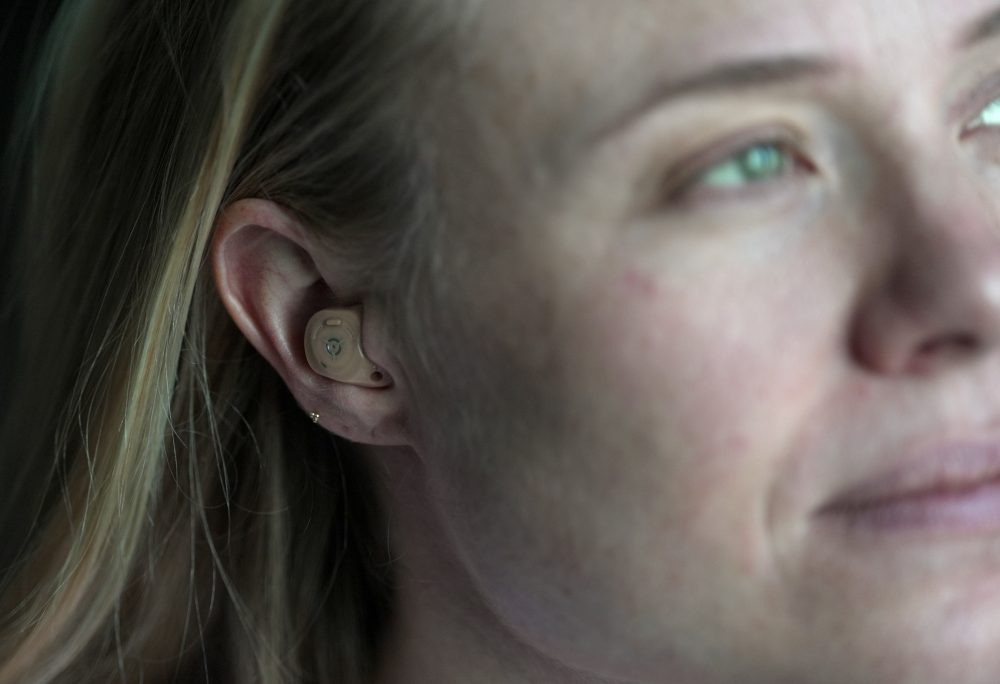
Today, she stands among the pioneering dancers at New York City Ballet to perform with hearing aids on stage.
“I feel like it’s a whole new chapter of my life,” the 40-year-old Mearns shared during her conversation with the AP.
Though hearing difficulties frequently affect seniors, the condition can develop at any stage of life through various causes such as nerve deterioration, infections, or head injuries. For Mearns, the problem likely resulted from multiple influences including hereditary factors, health issues, and exposure to excessive noise levels.
Data from the National Institutes of Health shows fewer than 20 percent of American adults between 20 and 69 who would benefit from hearing devices actually use them. Barriers include limited availability, feelings of stigma or shame, and unfamiliarity with warning signs.
“Hearing loss is often not detected by the person because what they can’t hear, they don’t know,” explained Dr. Anil Lalwani, a hearing specialist at Columbia University Irving Medical Center.
However, “there are a lot of symptoms of hearing loss that are not hearing less,” noted Dr. Maura Cosetti from Mount Sinai’s New York Eye and Ear Infirmary.
Warning signs include frequently asking “what” and difficulty understanding loved ones in loud environments such as restaurants. Additional indicators encompass ear ringing, feelings of blockage in the ears, or voices that sound unclear.
Throughout the COVID-19 outbreak, Mearns found herself unable to understand people speaking through masks.
“I realized that I was reading everybody’s lips to understand what they were saying,” she recalled.
Medical professionals recommend consulting a physician if you suspect hearing difficulties. They can arrange connections with audiologists or ear, nose, and throat doctors for proper testing.
Cosetti from Mount Sinai mentioned the Mimi Hearing Test application as a helpful tool for initial assessment. Professional evaluation remains the most reliable method to determine the actual problem — such as whether ears are simply blocked with wax or fluid.
Hearing devices work by refining sound signals reaching the brain, amplifying speech while reducing background interference. Though costly, many models are now sold without prescriptions. Certain Apple AirPods can also function as hearing aids.
For more serious hearing impairment, physicians might suggest cochlear implants, which transform sounds into electrical signals transmitted to the brain. These involve surgically placed components and require months of adaptation.
Mearns initially felt self-conscious entering the testing booth, knowing she wouldn’t detect all the sounds. Her audiologist, Marta Gielarowiec, helped her comprehend what she was missing and selected suitable hearing devices.
“It’s definitely not a one size fits all. There is a lot of adjustment, tuning and calibration involved,” said Gielarowiec, who operates a New York practice. “Overall, the goal is to maximize the hearing that’s left.”
Treating hearing loss can enhance mental wellness, improve communication abilities, and reduce cognitive deterioration for individuals at elevated dementia risk.
When Mearns exited her audiologist’s office wearing her new devices initially, she felt overwhelmed. She could detect footsteps on pavement, bird songs from across the street, and a flag fluttering a block away. Upon reaching her dressing room, she wept.
She now experiences the orchestra’s complete power during performances — and can take phone calls through her ears.
Her previous existence, she explained, was draining. Each day ended with exhaustion from constantly asking for repetition and missing conversations and joke punchlines.
“I don’t want people to feel what I felt, where I was embarrassed and I was quiet about it,” she said. “Because now that I’m on the other side, I’m so happy.”