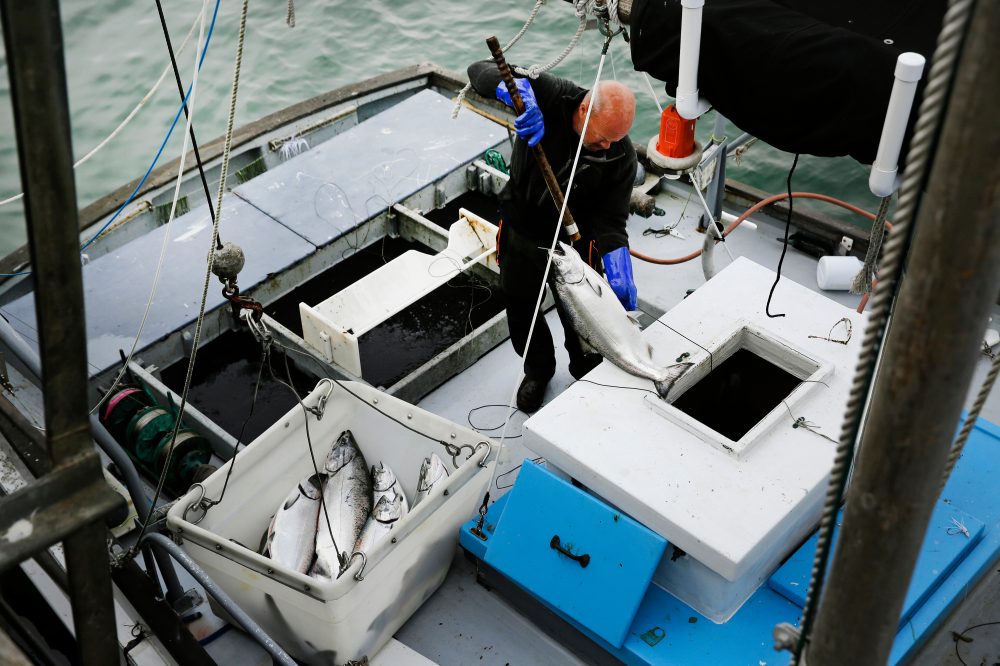
Maritime enforcement officials in Malaysia have seized two vessels accused of conducting an unauthorized fuel transfer operation involving hundreds of thousands of liters of diesel fuel near Penang island this past weekend.
The Malaysian Maritime Enforcement Agency (MMEA) took action following intelligence reports about suspicious activity in waters off Bagan Ajam on Saturday. The enforcement comes as Malaysia intensifies efforts to combat fuel smuggling operations that have increased due to regional supply shortages linked to Middle Eastern conflicts.
Muhammad Suffi Mohd Ramli, who heads the Penang MMEA division, announced that investigators discovered the vessels connected together during what appeared to be an unauthorized fuel transfer operation.
“The inspection found that both ships were in a coupled state and were suspected of carrying out ship-to-ship oil transfer activities without permission,” Muhammad Suffi stated in his Sunday announcement.
Officials report that approximately 700,000 liters of Euro 5 diesel were involved in the suspected transfer, while the total fuel seizure reached around 800,000 liters. The confiscated cargo carries an estimated worth of 5.43 million ringgit, equivalent to roughly $1.37 million.
Twenty-two crew members from various countries including Malaysia, Myanmar, Russia, the Philippines, and Indonesia were taken into custody during the operation.
Maritime enforcement officials have not disclosed details about where the tankers originated, the source of the diesel fuel, or its intended final destination.
These Malaysian waters have become notorious locations for unauthorized vessel-to-vessel fuel transfers, where petroleum products are moved between ships at sea to hide their true origins. Last July, Malaysian officials announced plans to strengthen enforcement of regulations governing such activities.
This incident follows a similar February operation where Penang MMEA officials detained two tankers for comparable unauthorized crude oil transfers, though those vessels were subsequently released under bond arrangements while investigations continued.
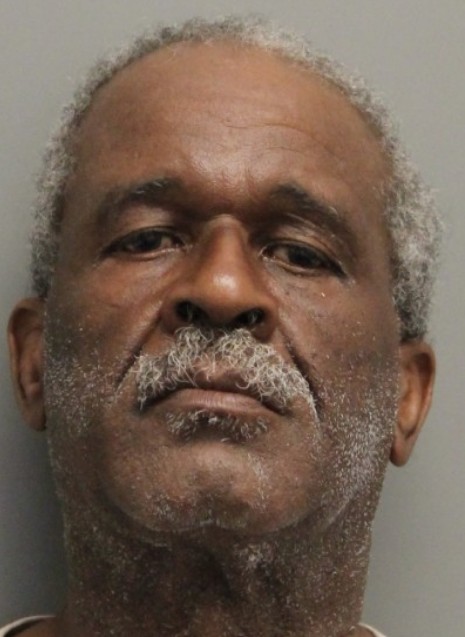
Delaware State Police have taken into custody a 62-year-old Milton resident in connection with a deadly shooting that claimed the life of a 47-year-old man.
Myron Savage was apprehended and charged with first-degree murder after authorities responded to a shooting incident on April 11, 2026, around 5:30 p.m. in the 20000 block of Forest Road in Milton. Officers arriving at the scene discovered the victim with gunshot injuries, and he was declared deceased on site.
Following their investigation, detectives identified Savage as the shooter and secured an arrest warrant. Law enforcement located and arrested Savage the following day, April 12, 2026, in Harrington without any complications.
After being transported to Troop 3, Savage faced arraignment at Justice of the Peace Court 3 and received charges including first-degree murder and possession of a firearm during the commission of a felony. He remains incarcerated at Sussex Correctional Institution with bail set at $1,060,000 cash.
The investigation remains active under the Delaware State Police Homicide Unit. Authorities encourage anyone with relevant information to reach out to Detective A. Bluto at 302-741-2859. Tips can also be submitted through private messages to the Delaware State Police Facebook page or by contacting Delaware Crime Stoppers at 1-800-847-3333.
Support services are available for crime victims, witnesses, or families affected by sudden loss through the Delaware State Police Victim Services Unit and Delaware Victim Center. Their 24-hour helpline can be reached at 1-800-VICTIM-1 (1-800-842-8461), or via email at [email protected].
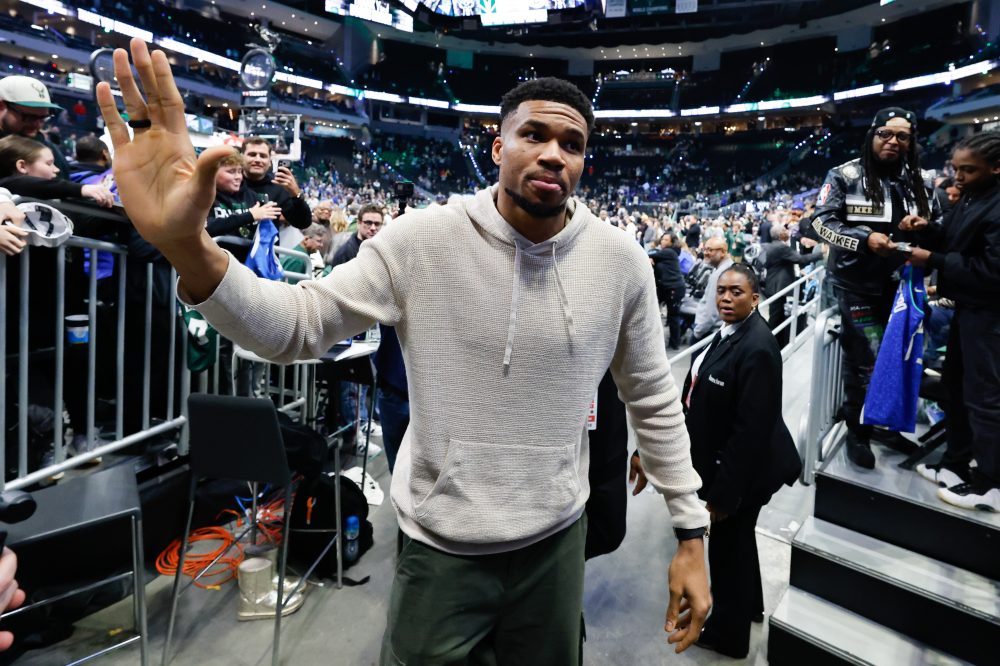
PHILADELPHIA — Milwaukee Bucks superstar Giannis Antetokounmpo delivered harsh criticism toward his team’s management following Sunday’s season-ending defeat in Philadelphia, condemning the organization’s decision to keep him sidelined despite his claims of being ready to return to action.
The two-time MVP, who brought Milwaukee its first championship in 50 years back in 2021, expressed frustration over learning he had no say in whether he could take the court as the Bucks struggled through their final games.
Trade rumors swirled around Antetokounmpo before the deadline, though no deal materialized. Since then, he has been locked in disagreement with team officials regarding his health status.
The 31-year-old star hasn’t seen game action since suffering an awkward landing following a dunk on March 15. While Antetokounmpo maintained he felt ready to compete in recent weeks, Milwaukee continued listing him as unavailable due to a left knee hyperextension and bone bruise.
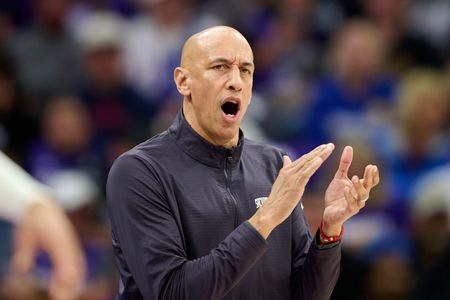
Sunday’s matchup in Philadelphia marked another missed game for Antetokounmpo, and potentially the final contest for legendary coach Doc Rivers as well.
“Being cleared to play, I don’t understand. I’ve never in my life denied participation in practice,” Antetokounmpo said. “Whoever came up with that is disrespectful towards what I’ve done for this team and the way I carry myself.
“I did what I was supposed to do. I wasn’t able to come on the court now. Who has that say? It comes from above. I thought I had control. OK, if I’m healthy, I’m going to play. This just shows me that not just me, players in general, don’t have no control. No, I didn’t feel like I had control.”
During recent pregame routines, Antetokounmpo appeared to move without any limitations, showing no visible signs of his injury.
“It was draining for me, for sure,” Antetokounmpo said. “If it was draining for me, it was definitely draining for me and the organization.”
The frustrated star mentioned plans to silence his phone and distance himself from the chaos that marked his season’s conclusion.
Milwaukee faces a crossroads this offseason, with options including trading their franchise player or offering him a massive four-year, $275 million contract extension come October.
Antetokounmpo confirmed he hasn’t received a formal extension proposal yet, which isn’t surprising given the months-long timeline required.
“That’s too far away. It’s something I have to sit down with my family and see what’s best for me, what’s best for my family,” Antetokounmpo said. “Money doesn’t mean nothing do me. Zero. Absolutely zero. What means something to me, it’s winning.”
The Bucks’ disappointing 32-50 record has put Rivers’ future in question, ending a remarkable nine-year playoff appearance streak.
Rivers spoke positively about his connection with Antetokounmpo, describing regular conversations about skill development and game improvement.
“I just want to see it end well for him and for the franchise. I think they both deserve it,” Rivers said. “Giannis is a fantastic person. I’ve been lucky to coach a lot of stars, and he’s right at the top as far as good people. I want good people to be taken care of.”
Milwaukee advanced to the Eastern Conference finals during Antetokounmpo’s initial MVP campaign in 2019, breaking an 18-year drought without a playoff series victory. Their championship followed two seasons later, but they haven’t captured a playoff series since 2022.
“We’re the furthest away we’ve been,” Antetokounmpo said. “I didn’t think we were going to be in this position last year, so I don’t know what position we will be in next year.”
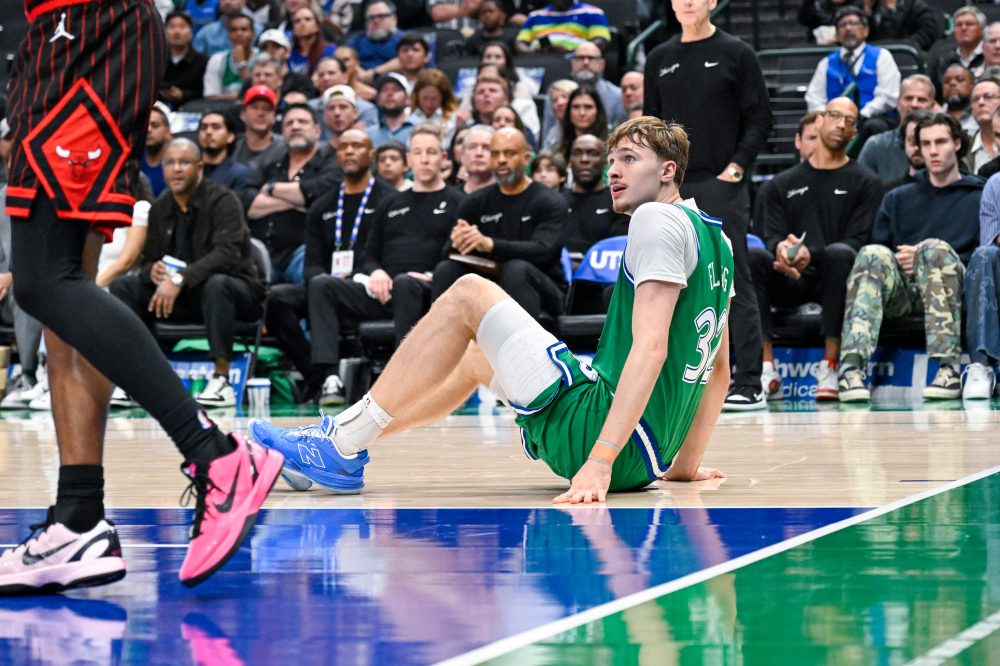
DALLAS — The Dallas Mavericks’ top draft selection Cooper Flagg saw his remarkable first NBA season come to an early close Sunday evening when he suffered an ankle sprain during the team’s final game against Chicago.
The 19-year-old basketball sensation was seen grimacing as he hobbled off the court, clearly favoring his left ankle during the second quarter. Team officials quickly announced that Flagg would not return to the contest. He remains locked in a competitive battle with his former Duke teammate Kon Knueppel for the coveted Rookie of the Year award.
The circumstances surrounding Flagg’s injury remain unclear. Before exiting the game, he had contributed 10 points and grabbed four rebounds during his 10 minutes of play. His final season statistics show an impressive average of 21.0 points, 5.4 rebounds, and 4.5 assists across 70 games.
Dallas has been eliminated from playoff contention for several weeks in what began as a promising season but deteriorated due to Anthony Davis’s persistent health problems and subsequent trade to Washington. The absence of Davis also led the organization to keep star guard Kyrie Irving on the sidelines for the entire campaign after he suffered a torn ACL in his left knee in March 2025.
Even as the team struggled in the standings, Flagg continued to make NBA history, culminating in an extraordinary 96-point performance across two games during the season’s penultimate weekend. His 51-point explosion against Orlando established him as the youngest player in NBA history to reach the 50-point milestone, surpassing his own previous record of 49 points for a teenager.
Last year, Flagg guided Duke to the Final Four and became only the fourth freshman ever to earn The Associated Press men’s basketball player of the year honor.
His professional success continued after Dallas defied the odds with just a 1.8% lottery chance to secure the first overall pick and select him.
Since the NBA-ABA merger in 1976-77, only Flagg and Michael Jordan have managed to score 45 or more points in multiple games during their rookie seasons.
Earlier this month, while facing LeBron James and the Los Angeles Lakers, Flagg dropped 45 points and surpassed the 41-year-old superstar for the most 40-point performances by a teenager, marking his fourth such achievement.
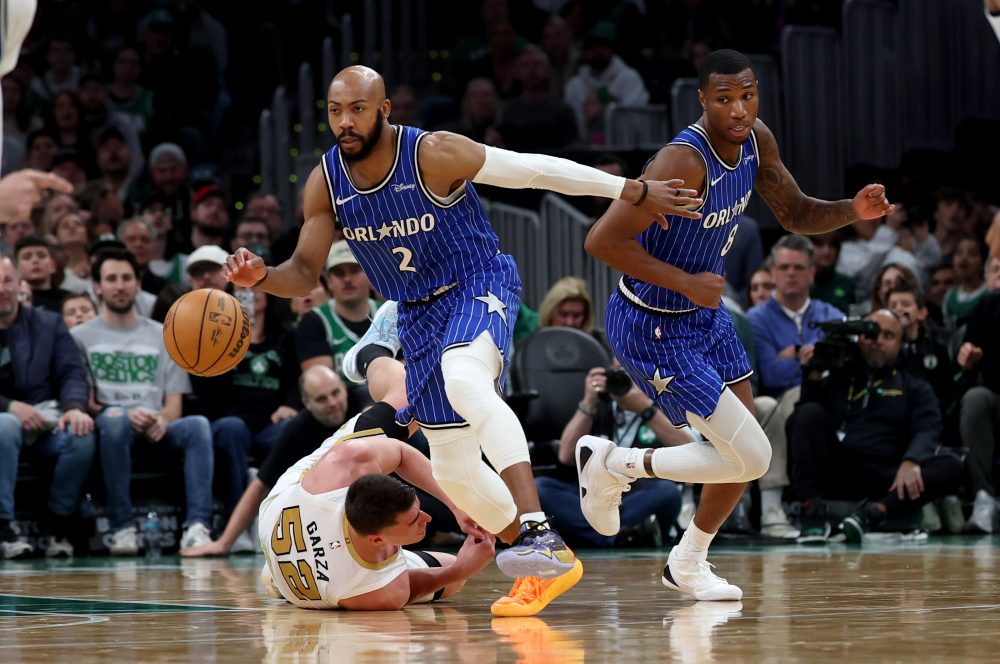
MIAMI (AP) — Players in Miami’s locker room Sunday evening found themselves glued to a large screen displaying the final moments of the Boston versus Orlando matchup.
Their attention was well-placed, as the outcome would determine significant playoff positioning across the Eastern Conference.
The Eastern Conference postseason bracket has been finalized as much as possible at this stage. Miami will travel to Charlotte for their play-in contest on Tuesday, while Orlando makes the trip to Philadelphia for Wednesday’s winner-advances game.
The victor of the Orlando-Philadelphia matchup will face second-seeded Boston in the opening round, while the defeated team will meet the winner of Miami-Charlotte on Friday to determine who challenges top-seeded Detroit in an Eastern Conference quarterfinal series.
Additional first-round pairings are now confirmed: third-seeded New York will battle sixth-seeded Atlanta, and fourth-seeded Cleveland faces fifth-seeded Toronto. Opening games for those series begin next weekend.
“Our group understands what wins and loses for us,” Heat coach Erik Spoelstra said. “And that’s the most important thing.”
Boston’s victory over the Magic sent Orlando down to the eighth position in the play-in tournament. The result also locked in Tuesday’s date for the Miami-Charlotte game, since Philadelphia’s arena cannot accommodate basketball on Monday or Tuesday due to scheduling conflicts with the NHL’s Flyers.
Western Conference playoff arrangements were expected to be determined later Sunday evening.
Phoenix will host either the Los Angeles Clippers or Portland on Tuesday for the seventh playoff seed and a first-round series against second-seeded San Antonio in the West. Golden State will visit either the Clippers or Portland on Wednesday in a must-win game to stay alive for a potential first-round meeting with Western Conference leader Oklahoma City.
Denver and the Los Angeles Lakers will occupy the third and fourth seeds in the West, though their exact order remains undetermined. The third seed will meet sixth-seeded Minnesota in the first round, while the fourth seed takes on fifth-seeded Houston.
This season established a new NBA record for total points scored, surpassing the previous mark of 282,127 points on Sunday night with approximately seven games remaining on the schedule.
However, the season will not set a record for points per game. The all-time mark of 118.8 points per team per game was established in 1961-62. This season’s average of 115.6 points per team entering Sunday ranks sixth in league history.
Denver’s Nikola Jokic participated in the Nuggets’ Sunday night game against San Antonio, bringing his season total to 65 games and qualifying him for NBA award consideration on ballots being distributed this week.
Last season, Jokic finished second in MVP voting behind Oklahoma City’s Shai Gilgeous-Alexander. This achievement made Jokic only the third player in NBA history to place in the top two of MVP voting for five straight seasons, joining Bill Russell and Larry Bird.
Jokic claimed MVP honors in 2021, 2023 and 2024, while finishing as runner-up in 2022 and last year.
Russell and Bird, both Boston Celtics legends, each earned first or second place in MVP balloting across six consecutive seasons.
WASHINGTON — American military forces destroyed two vessels suspected of carrying illegal drugs in the eastern Pacific Ocean on Saturday, resulting in five fatalities and one survivor, according to military officials.
The deadly operation adds to a growing death toll from similar maritime strikes conducted by U.S. forces. Since early September, when the Trump administration launched its campaign against suspected drug traffickers, at least 168 people have died in these boat attacks.
U.S. Southern Command reported that the vessels were targeted along established smuggling corridors. However, military officials did not present proof that the boats were actually transporting narcotics. Social media footage displayed small watercraft crossing ocean waters before being destroyed in massive explosions.
Following the strikes, U.S. Southern Command contacted the Coast Guard to initiate rescue operations for the lone survivor. Coast Guard officials confirmed they were managing the search effort and promised updates as information becomes available.
President Trump has declared the United States to be in “armed conflict” with Latin American cartels, defending these aggressive tactics as essential for stopping drug imports and preventing American overdose deaths. However, his administration has provided minimal proof to back up claims about eliminating “narcoterrorists.”
Legal experts and policy analysts have raised concerns about both the lawfulness and effectiveness of these maritime operations. Many point out that fentanyl, responsible for numerous fatal overdoses, typically enters the country through Mexico via land routes, produced using chemicals from China and India.
These Latin American operations have persisted despite U.S. military attention being divided by Middle Eastern conflicts, including a recent multi-week war with Iran.
On Sunday, Trump announced plans for a U.S. Navy blockade targeting ships using the Strait of Hormuz, following unsuccessful ceasefire negotiations with Iran in Pakistan. The president aims to pressure Iran regarding the strategic waterway that handles one-fifth of global oil shipments. Central Command indicated the blockade would affect Iranian port facilities.
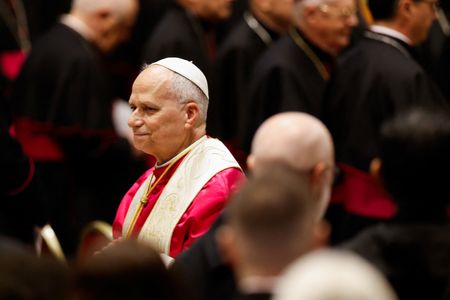
WASHINGTON — In an unprecedented public confrontation, President Donald Trump launched a scathing attack on Pope Leo XIV Sunday evening, declaring the first American pontiff isn’t “doing a very good job” and characterizing him as “a very liberal person” who should “stop catering to the Radical Left.”
The president’s harsh criticism came during his return flight from Florida to Washington, where he posted a lengthy social media message targeting the Pope, then continued his verbal assault while speaking with reporters on the airport tarmac.
“I’m not a fan of Pope Leo,” Trump told journalists.
The verbal confrontation erupted after Pope Leo XIV suggested during the weekend that a “delusion of omnipotence” was driving the ongoing U.S.-Israel military conflict in Iran. Though disagreements between papal leaders and American presidents aren’t uncommon, direct papal criticism of U.S. leadership is extraordinarily rare — making Trump’s fierce rebuttal equally unprecedented.
“Pope Leo is WEAK on Crime, and terrible for Foreign Policy,” Trump declared in his social media statement, continuing, “I don’t want a Pope who thinks it’s OK for Iran to have a Nuclear Weapon.”
Speaking to reporters, he reiterated his position: “We don’t like a pope who says it’s OK to have a nuclear weapon.”
The pontiff had conducted an evening prayer ceremony Saturday at St. Peter’s Basilica, coinciding with the start of direct U.S.-Iran diplomatic talks in Pakistan amid a temporary ceasefire. Though Pope Leo XIV avoided naming Trump or America specifically, his remarks and tone seemed clearly aimed at the president and administration officials who have celebrated American military dominance and framed the conflict in religious language.
Pope Leo XIV, who begins an 11-day African tour Monday, has previously stated that God “does not listen to the prayers of those who wage war, but rejects them.” He has also quoted Old Testament scripture from Isaiah, declaring that “even though you make many prayers, I will not listen — your hands are full of blood.”
Prior to the current ceasefire, when Trump threatened massive strikes on Iranian power infrastructure and warned that “an entire civilization will die tonight,” the Pope condemned such language as “truly unacceptable.”
Trump’s Sunday evening social media response expanded well beyond the Iranian conflict in attacking Pope Leo XIV.
“I don’t want a Pope who thinks it’s terrible that America attacked Venezuela, a Country that was sending massive amounts of Drugs into the United States,” the president wrote.
“I don’t want a Pope who criticizes the President of the United States because I’m doing exactly what I was elected, IN A LANDSLIDE, to do,” Trump added, referring to his 2024 electoral victory.
Trump also insinuated in his post that the Pope received his position “because he was an American, and they thought that would be the best way to deal with President Donald J. Trump.”
“If I wasn’t in the White House, Leo wouldn’t be in the Vatican,” Trump claimed, adding, “Leo should get his act together as Pope, use Common Sense, stop catering to the Radical Left, and focus on being a Great Pope, not a Politician. It’s hurting him very badly and, more importantly, it’s hurting the Catholic Church!”
During his airport remarks, Trump maintained his critical stance, stating about Pope Leo XIV: “I don’t think he’s doing a very good job. He likes crime I guess,” while describing the pontiff as “a very liberal person.”
The Trump administration has cultivated strong relationships with conservative evangelical Protestant leadership and has asserted divine approval for the Iranian military campaign.
Defense Secretary Pete Hegseth has encouraged Americans to pray for military success “in the name of Jesus Christ.” When questioned about whether God supports the war, Trump responded, “I do, because God is good — because God is good and God wants to see people taken care of.”
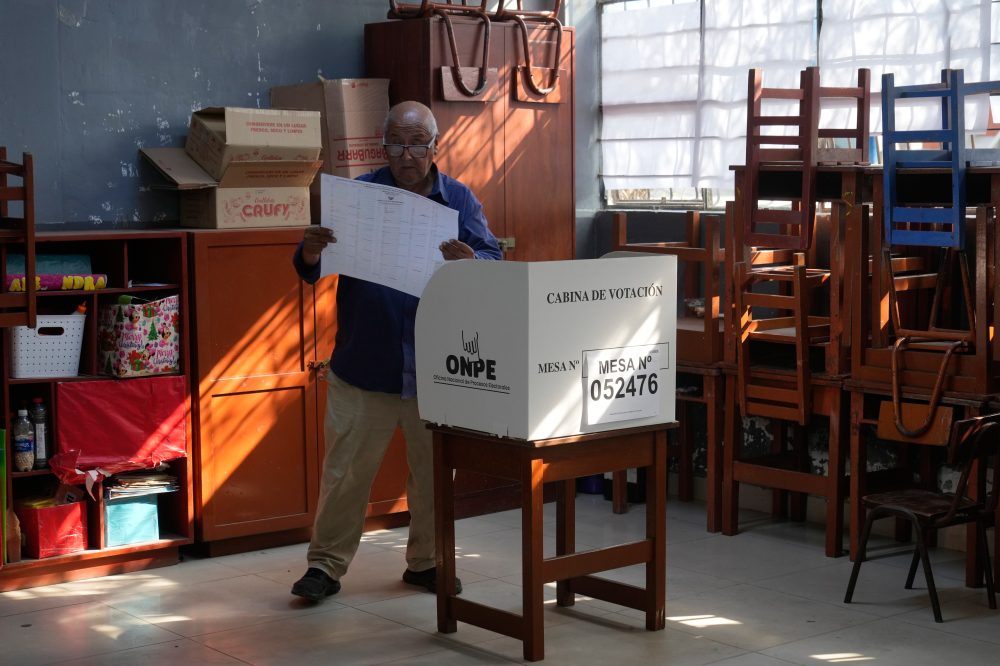
LIMA – Conservative businessman Rafael Lopez Aliaga has emerged as the frontrunner in Peru’s presidential election, capturing 23.4% of votes according to preliminary official tallies released Sunday.
Center-left contender Jorge Nieto holds second place with 16.4% of the vote, while conservative candidate Keiko Fujimori follows closely behind at 16.1%. These results reflect counting from 5% of all ballots cast.
Since no candidate has secured the 50% majority required for an outright victory, the top two vote-getters will face off in a runoff election set for June 7.
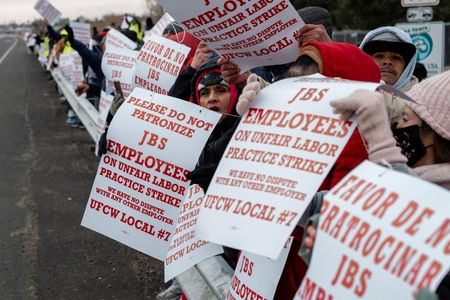
Nearly 3,800 employees at a major JBS beef processing facility in Greeley, Colorado have approved a new two-year contract with the global meat processing giant, ending a month-long work stoppage, both the company and union announced Sunday.
The deal between JBS and United Food and Commercial Workers Local 7 was finalized after negotiations resumed April 9-10. Workers had been on strike for a month demanding wage adjustments to keep pace with rising costs and an end to charges for replacement safety gear.
According to Local 7, the new contract delivers nearly a 33% pay raise spread over two years, eliminates worker payments for personal protective equipment, and shields employees from healthcare cost increases. JBS stated the final agreement matched their previous proposal.
Though JBS welcomed the resolution, the company said it was disappointed that “UFCW Local 7 leadership chose to eliminate the historic pension benefit that was part of the national agreement negotiated last year in partnership with UFCW International.”
Under the settlement terms, the union will also drop seven unfair labor practice complaints filed against JBS, the company confirmed.
The work stoppage came as beef prices reached historic highs this year due to the nation’s cattle inventory falling to its lowest point in 75 years. This shortage has forced meat processors like JBS to compete intensively for available cattle while also benefiting from elevated market prices.
The Colorado plant shutdown further strained U.S. meat processing capabilities, coming after Tyson Foods shuttered a Nebraska beef facility and scaled back operations at a Texas location this year.
Former President Donald Trump launched a harsh verbal assault against Pope Leo on Sunday evening, branding the religious leader as ineffective on crime matters and inadequate in handling foreign policy issues.
The confrontational remarks followed recent criticism from the Pope regarding Trump’s approaches to immigration and international relations.
In a detailed message posted to his Truth Social platform, Trump declared: “Pope Leo is WEAK on Crime and terrible for Foreign Policy.”
The pontiff, recognized for his measured and deliberate communication style, has become a vocal opponent of the ongoing U.S.-Israeli military conflict with Iran that commenced on February 28.
Earlier this month, Pope Leo condemned Trump’s warning to obliterate Iranian civilization as “unacceptable.” Additionally, the religious leader has urged “deep reflection” regarding the treatment of immigrants within the United States during Trump’s presidency.
Trump’s social media post continued with further criticism, stating: “Leo should get his act together as Pope.” When questioned by journalists later, Trump confirmed he was not a “big fan” of the Pope.
The exchange highlights growing tensions between the former president and the Vatican leadership over policy disagreements on multiple international and domestic issues.
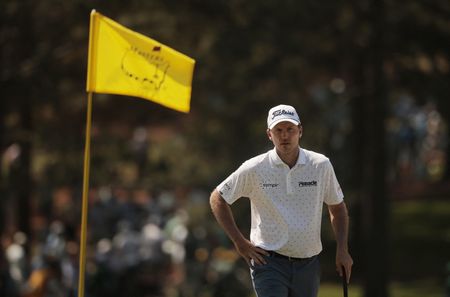
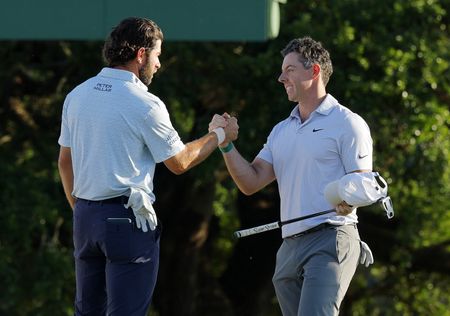
Russell Henley may not have received the ultimate birthday gift he hoped for at Augusta National on Sunday, but the golfer’s career-best major championship performance and temporary lead at the Masters made for a memorable 37th birthday celebration.
The American golfer carded a final-round 68, finishing four strokes under par to secure a tie for third place alongside three other competitors. He ended the tournament two shots behind champion Rory McIlroy, earning his strongest showing ever in a major championship.
“I feel like I handled it well, kind of like, I can do this,” Henley commented after his round. “I felt like I handled the pressure well, handled the conditions well. It was tricky out there.”
Had Henley captured the green jacket, he would have made history as the first golfer ever to claim Masters victory on his birthday. The most recent PGA Tour player to win on their birthday was Steve Flesch at the 2004 Charles Schwab Challenge.
The former Ryder Cup team member for the United States temporarily seized the tournament lead during Sunday’s action, but his putting stroke cooled during the crucial final holes of the championship.
“I hit it amazing today. I gave myself a bunch of looks. Unfortunately, I didn’t capitalize on those looks on the back like I would have liked to,” Henley explained. “Really thankful for a good finish. Wish I would have made some more putts and got a little closer to the lead, but overall very thankful.”
The strong finish represents a significant turnaround for Henley, who failed to make the cut at Augusta National in the previous year’s tournament.
Motorists traveling on northbound Interstate 495 in the Wilmington area should expect delays due to ongoing lane restrictions, according to DelDOT traffic reports.
The right lane is being closed intermittently between Exit 1 at US Route 13 and Exit 2 at Terminal Avenue. These temporary closures are expected to remain in effect until 2:00 AM.
Drivers are advised to allow extra travel time and use caution when approaching the work zone area. Traffic may be slower than usual during the lane closure periods.
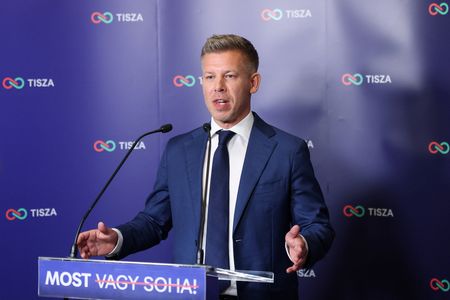
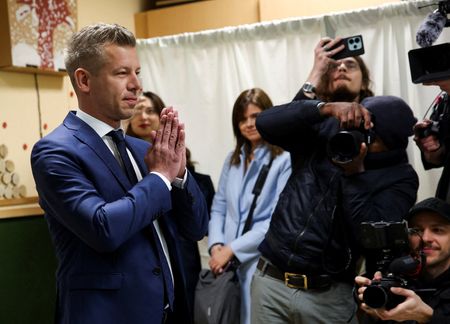
A stunning electoral upset in Hungary has brought Peter Magyar and his center-right Tisza party to power, ending Viktor Orban’s 16-year reign and potentially opening the door to billions in European Union funding.
Magyar’s decisive victory on Sunday delivered what experts call a commanding mandate that could allow his administration to implement significant reforms, strengthen democratic institutions, and repair Hungary’s strained relationship with Brussels.
Financial experts and political observers describe the incoming administration’s expected supermajority as the most favorable outcome for EU relations and market stability – a scenario that seemed highly unlikely before election day. Hungarian financial markets are expected to respond positively when trading begins Monday.
While some uncertainties persist, cautious diplomats and analysts note that the new leadership must follow through on campaign commitments before fully realizing potential benefits. However, markets appear ready to give Budapest’s new leadership an opportunity to prove itself.
“The result is a game-changer and will allow Magyar to govern with a free hand,” said Mujtaba Rahman, a managing director at Eurasia Group. “Most importantly, he will be able to unwind Orban’s autocracy and deliver on all of the reforms the EU is demanding.”
Rahman added: “That means at least 6.4 billion euros ($7.46 billion) from the resilience and recovery facility should flow quickly, shoring up the real economy and further consolidating Tisza’s win.”
MAGYAR PLEDGES TO REBUILD ALLIANCES
This election was widely viewed as Europe’s most economically significant political contest this year, given Orban’s frequent disputes with Brussels over immigration policy and his controversial ties to Russia during his decade-and-a-half in power.
Despite trailing in polling data, Orban had maintained confidence throughout his campaign, stating his commitment to preserving Hungary’s national character and Christian heritage within the European framework while rejecting accusations of misconduct.
Financial markets had been signaling anticipated change for weeks leading up to the vote. Stock prices for Orban-connected businesses dropped significantly, while market indicators suggested major currency fluctuations would follow the election results.
Speaking to enthusiastic supporters who chanted “Europe, Europe” after Orban acknowledged defeat, Magyar committed to strengthening Hungary’s position as a reliable EU and NATO partner while repairing relationships damaged by years of tension.
“With the two-thirds majority allowing us to amend the constitution, we will restore the system of checks and balances,” Magyar said.
“We will join the European Public Prosecutor’s Office and guarantee the democratic functioning of our country. We will never again allow anyone to hold free Hungary captive or to abandon it.”
A central component of Magyar’s economic revival strategy involves accessing EU funds that were suspended due to concerns about democratic backsliding under Orban’s administration. Hungary’s economy has experienced minimal growth over the past three years.
“A constitutional majority is a different story entirely,” said Ian Bremmer at GZERO Media.
“That would give Magyar the power to rewrite the constitution, clear out Fidesz loyalists from captured institutions, fully access EU funding, and even adopt the euro – a core campaign pledge.”
Following Sunday’s victory, Magyar demanded resignations from Hungary’s chief prosecutor, supreme court chief, media authority head, and other key officials, arguing that Orban supporters had compromised the country’s public institutions over 16 years.
DIPLOMATS AND RATING AGENCIES CAUTIOUS ON EU FUNDS
Magyar has promised an extensive anti-corruption campaign as his party works to satisfy EU requirements, including enhanced judicial independence and transparent public procurement processes, necessary to access frozen funds.
Nevertheless, credit rating firms including S&P Global and Fitch Ratings, along with some EU diplomatic sources, express doubt about whether remaining pandemic recovery funding would be quickly released.
Diplomatic and analytical sources suggest that comparisons to Poland’s 2023 election outcome, where Prime Minister Donald Tusk’s pro-European government quickly secured EU funding based on promises to reverse nationalist policies, may not apply to Hungary’s situation.
“There is no willingness to give out the money only on a promise like the EU did to Tusk in Poland, who was not able to deliver on most promises,” said an EU diplomat.
“Tisza would need to demonstrate that it can deliver. But if something is legally impossible, and that can be demonstrated, then the EU could figure out a way.”
Capital Economics analysts believe that accessing EU funding could reduce Hungary’s budget deficit to between 3.5% and 4% of national economic output by 2030 and stabilize public debt levels – currently the EU’s highest outside the eurozone.
“Overall, the election result marks a major turning point for Hungary’s economy,” Liam Peach said in a note.
“The durability of any positive market reaction will now depend on how quickly Tisza moves to rebuild relations with the EU, secure EU fund disbursements and signal a credible medium-term fiscal anchor.”
Defense analysts are warning that implementing a naval blockade against Iran would represent an enormous military commitment with significant risks, following President Trump’s announcement of the operation after failed peace negotiations in Islamabad over the weekend.
In a social media statement, Trump declared the U.S. Navy “will begin the process of BLOCKADING any and all Ships trying to enter, or leave, the Strait of Hormuz.”
U.S. Central Command clarified that the naval operation will target vessels traveling to and from Iranian ports along the Arabian Gulf and Gulf of Oman, with enforcement beginning Monday at 10 a.m. Eastern time.
Trump further announced that American forces would stop ships that have paid fees to Iran, regardless of their current location in international waters. “No one who pays an illegal toll will have safe passage on the high seas,” the president posted on Truth Social.
The operation seeks to force Iran to reopen the strategic waterway, which handles approximately 20% of global oil shipments but has been largely restricted to nations that obtain transit approval from Tehran.
Success would strip Iran of significant negotiating power with Washington and restore open maritime commerce through the strait, potentially reducing petroleum costs. However, defense experts emphasize that naval blockades constitute acts of war requiring substantial, long-term military resources.
“Trump wants a quick fix. The reality is, this mission is difficult to execute alone and likely unsustainable over the medium to long-term,” explained Dana Stroul, who previously served as a senior Pentagon official under the Biden administration and currently works at The Washington Institute for Near East Policy.
Military officials have yet to provide crucial operational details, including the number of warships involved, potential air support, and whether regional allies will participate. Central Command has not responded to media inquiries about these specifics.
Defense experts note that sufficient naval presence could deter commercial vessels from attempting to transport Iranian petroleum, but serious questions remain about enforcement protocols.
Critical concerns include whether the United States would board, seize, damage, or sink vessels attempting to breach the blockade, particularly those carrying oil for major powers like China or U.S. partners including India and South Korea.
Retired Admiral Gary Roughead, former chief of naval operations, warned that Iran might respond by attacking ships in the Gulf or targeting infrastructure in Gulf states that host American military installations.
“I honestly believe that if we begin to do it, that Iran will have some kind of a reaction,” Roughead stated.
Iranian shipping threats have driven global petroleum prices up roughly 50% since the U.S. and Israel initiated military action on February 28.
Trump acknowledged Sunday that oil and gasoline costs may stay elevated through November’s midterm elections, potentially threatening Republican congressional control if public opinion turns against the conflict, which has already faced widespread criticism.
Expressing frustration with Iran’s refusal to accept his proposed terms, Trump also suggested resuming American airstrikes within Iran, specifically mentioning missile production facilities as potential targets.
Virginia Senator Mark Warner, the leading Democrat on the Senate Intelligence Committee, challenged the approach, noting Iran could deploy small boats to plant mines in the strait or attach explosives to tankers.
“How is that going to ever bring down gas prices?” Warner questioned during an appearance on CBS’s “Face the Nation.”
Extensive U.S. military campaigns have significantly degraded Iranian military capabilities. Nevertheless, analysts believe Tehran has become an even more challenging adversary for Washington, featuring more extremist leadership and hidden reserves of weapons-grade uranium.
Trump issued a stark warning Sunday that “any Iranian who fires at us, or at peaceful vessels, will be BLOWN TO HELL!”
Iran’s Revolutionary Guards issued a counter-statement declaring that military ships approaching the strait would be viewed as ceasefire violations and met with severe, decisive action, highlighting the potential for dangerous escalation.
Stroul emphasized that resolving the crisis will demand sustained international cooperation.
“Over the long run, this will need to be resolved through diplomacy and international political will,” she concluded.
WASHINGTON — What may have been Alex Ovechkin’s last home game as a Washington Capital turned into an unforgettable afternoon filled with emotion and uncertainty about the hockey legend’s future.
The sellout crowd at Capital One Arena made their feelings clear early in Sunday’s contest against Pittsburgh, erupting in chants of “One more year!” directed at their beloved captain. When asked about the fans’ plea after the game, Ovechkin offered a cryptic response while flanked by his two young sons.
“I’ll think about it,” he said with a wry smile.
The emotional day concluded with a 3-0 victory over the Penguins, keeping Washington’s playoff hopes alive. Ovechkin, who will turn 41 in September, contributed an assist on the empty-net goal that sealed the crucial win.
Despite his age, the NHL’s all-time goal scoring champion with 929 career goals continues to perform at an elite level. He tops the Capitals in both goals (32) and points (63) this season, showing little sign of decline in what could be his 21st and final NHL campaign.
“It’s a big moment for us right now,” Ovechkin said. “Everybody was dialed in.”
The atmosphere felt different from the opening faceoff, when Ovechkin lined up against longtime rival Sidney Crosby at center ice for their 100th career meeting.
“You could tell, the game felt different and the night felt different,” Washington head coach Spencer Carbery observed. “A lot of great moments.”
Carbery admitted he found himself simply watching and absorbing the significance of the moment, particularly during the ceremonial opening draw.
“The opening draw, I got a kick out of that,” Carbery said. “I just caught myself watching in certain moments, taking it all in.”
Crosby, who has faced Ovechkin more than any other opponent, praised his rival’s remarkable career achievements.
“He came in with such high expectations, and he passed them,” Crosby said. “To be the greatest goal scorer of all time and to do what he’s done, its impressive.”
Washington’s playoff fate now rests on Tuesday’s season finale in Columbus, where they must win while hoping Philadelphia fails to capture victory in either of their remaining contests.
Regardless of how the playoff race unfolds or whether Ovechkin decides to return, the veteran forward will treasure Sunday’s special atmosphere.
“I’ll remember this moment, the atmosphere that was tonight,” he said.
Coach Carbery expressed gratitude for his association with “The Great 8,” acknowledging the privilege of coaching during historic moments.
“If it is the end of his career, I smile thinking of those moments because been blessed to be his coach when he broke the all-time goals record and I was the coach that was with him at the end,” Carbery said. “I don’t take that for granted one minute.”
NEW YORK (AP) — Marking his first 100 days as New York City’s mayor, Zohran Mamdani gathered supporters Sunday to highlight his administration’s early achievements while unveiling ambitious plans that include launching municipal grocery stores across the city.
Speaking to an enthusiastic audience just days after hitting the milestone, Mamdani reflected on his inaugural promise that “City Hall would hold a singular purpose, to make this city belong to more of its people than it did the day before.”
“For 102 days, we have endeavored to do exactly that,” he said.
Following a review of his administration’s initial successes, the mayor outlined several upcoming initiatives, beginning with progress on a signature campaign commitment: establishing government-operated grocery stores. According to Mamdani, the first location will launch next year, with additional stores planned for each borough before his four-year term concludes.
“At our stores, eggs will be cheaper. Bread will be cheaper. Grocery shopping will no longer be an unsolvable equation,” said Mamdani, a Democrat.
The mayor also revealed plans to broaden the city’s covered waste container program. “Say goodbye to black bags and say hello to the bins,” he declared, committing to implement the system citywide before 2031 ends.
Mamdani also renewed his campaign commitment to improve bus service while eliminating fares, announcing immediate steps to accelerate transit along certain routes. However, the pathway to removing bus costs remains uncertain.
“Tonight, we’re delivering the fast, and we’re excited to keep working with Albany to deliver the free,” he stated, acknowledging the governor and state Legislature’s influence over portions of his agenda.
Prior to the mayor’s remarks, attendees heard from a transportation department employee discussing Mamdani’s pothole repair initiative, a tenant advocate praising his renter-focused policies, and a parent supporting his childcare expansion efforts.
“No longer will city government be afraid of its own shadow,” Mamdani declared upon taking the stage. “If anyone should be afraid it is those who take advantage of working people.”
The 34-year-old mayor assumed office in January following a campaign focused on improving affordability throughout New York City, with his platform emphasizing the use of government resources to support the city’s financially struggling working population.
BUDAPEST – Hungary’s capital transformed into a massive street celebration that lasted until the early morning hours Monday as opposition supporters reveled in their stunning electoral victory that toppled Prime Minister Viktor Orban after 16 years in power.
Sunday’s election drew an unprecedented 80% voter turnout according to initial results, delivering a decisive win for the opposition Tisza party and bringing an end to Orban’s lengthy tenure as the country’s right-wing leader. For thousands of Hungarians who flooded the streets waving flags and raising toasts, the outcome represented a return to democratic values and closer ties with Europe after years of authoritarian drift under Orban’s administration since 2010.
The iconic Chain Bridge glowed with Hungary’s national colors as massive crowds gathered along the Danube riverfront, displaying both Hungarian and European Union flags while some celebrants shared champagne from disposable cups.
“I feel amazing! Really amazing! Like, I never thought this would actually happen. I’ve been praying for this for 16 years so I’m super happy,” expressed Szilvia, a Tisza supporter, while crowds gathered to watch opposition leader Peter Magyar deliver his victory address.
Spontaneous celebrations broke out throughout the city’s subway system, with riders chanting “it’s over.” Additional Tisza supporters organized an impromptu outdoor party near the nation’s historic parliament complex.
“It’s a big celebration. I’m quite happy. I have been waiting for this for some time. And I hope that the new leadership, new prime minister will be really a prime minister for all Hungarians, as he said,” commented Tisza supporter Sandor Zoletnik.
Groups of young voters expressed their elation with exclamations of “Amazing!” and “Can’t describe it!” as they embraced and celebrated, shouting “We are so happy that Orban is finally gone” and “We did not believe that it would change.”
“So, finally, after at least 16 years, we feel like there is a hope. We feel like there is a hope that Hungary can start walking into the right direction,” one young celebrant declared. Orban’s Fidesz party had struggled particularly with younger demographics throughout the campaign.
Polling data revealed Fidesz’s weakness among youth voters, with research firm Median showing only 8% support among 18-29 year-olds, while Zavecz Research found just 22% backing in the broader 18-39 age bracket. This marked a dramatic decline for Fidesz, which originally began as a youth opposition movement in the late 1980s.
Major thoroughfares experienced traffic disruptions as crowds spilled out from restaurants and bars, with flag-waving supporters stopping vehicles to share their joy. Hundreds continued strolling across the city’s Danube bridges well past midnight as the historic celebration continued.
The ongoing conflict involving Iran has dramatically transformed global oil market projections, with energy experts now predicting a supply shortage where they previously anticipated an abundance of crude.
Since hostilities began on February 28 following U.S. and Israeli military actions against Iran, oil shipments through the critical Strait of Hormuz have been severely hampered. This waterway typically handles approximately 20 percent of worldwide oil consumption, making its disruption particularly significant for global energy markets.
A recent survey of eight energy analysts conducted by Reuters reveals expectations that oil demand will exceed supply by an average of 750,000 barrels daily throughout this year. This represents a dramatic shift from September projections that had anticipated a surplus of 1.63 million barrels per day in 2026, largely attributed to OPEC+ plans to reduce production limits and robust output from nations including the United States, Brazil, and Guyana.
According to the International Energy Agency, the conflict has reduced global oil supply by approximately 11 million barrels per day through the end of March. ANZ bank’s April 9 analysis estimated that roughly 9 million barrels per day of crude production has been effectively eliminated from markets. For context, global oil supply reached around 106.6 million barrels daily in January, based on IEA data.
Energy analysts participating in the survey project these immediate supply disruptions will result in an average annual production decrease of 2.13 million barrels per day. Market experts anticipate the most severe shortage during the second quarter, averaging approximately 3 million barrels daily, before conditions improve to show a surplus of 1.4 million barrels per day in the final quarter.
However, analysts caution that supply shortages could worsen depending on the duration of shipping disruptions through the Strait of Hormuz.
Maritime traffic through this crucial passage remains limited, with industry traders indicating no clear evidence of sustained shipping resumption despite Tuesday’s ceasefire announcement.
Vikas Dwivedi, who serves as global energy strategist at Macquarie Group, reports that an estimated 136 million barrels of crude oil and petroleum products remain stranded in the Gulf region due to the ongoing conflict.
Resolving this supply backlog will require considerable time. Many shipping companies continue facing operational difficulties even after the ceasefire, particularly with reports suggesting Iran may implement transit fees for vessels passing through the Strait of Hormuz.
“Issues include insurance and the risk of violating sanctions (by) transacting with Iran if tolls are paid,” Dwivedi said.
The conflict-related supply disruptions triggered the largest annual price forecast increase in Reuters polling history last month, with analysts raising their 2026 Brent crude projections by approximately 30 percent to $82.85 per barrel. The war has driven oil prices up by roughly 50 percent.
Returning oil production to pre-conflict levels will likely require several months, depending on damage assessment at affected oilfields and the restoration of normal shipping operations through Hormuz.
Even under optimistic security conditions, ANZ analysts indicate that output can only be partially restored in the short term, with approximately 2 million to 3 million barrels per day potentially returning during the first month as export operations resume, and an additional 2 million to 3.5 million barrels per day possibly returning to markets throughout the remainder of the second quarter.
“However, operational friction, damaged infrastructure and export bottlenecks mean recovery is unlikely to be smooth,” they said.
ANZ also warns that between 1 million and 2 million barrels per day of production capacity may be permanently compromised or restricted even after hostilities end, creating conditions for tighter markets and increased price volatility.
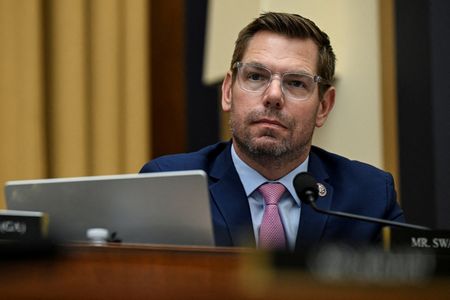
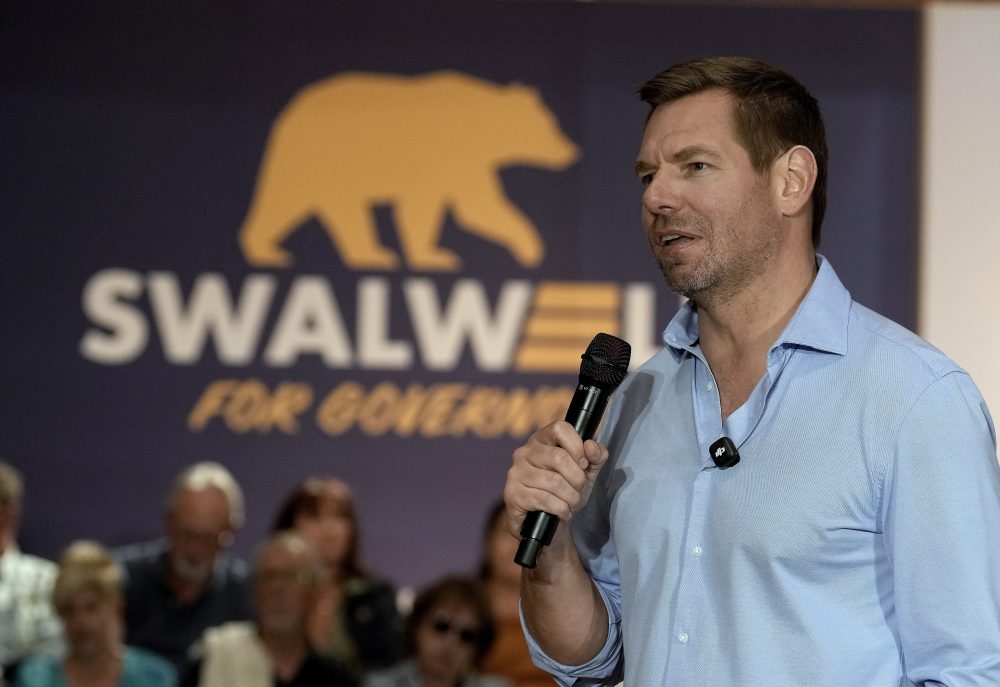
California Congressman Eric Swalwell announced Sunday that he’s ending his bid for governor while confronting sexual assault accusations.
The Democratic representative took to social media platform X to make the announcement, stating his decision to halt the gubernatorial race.
“I am suspending my campaign for Governor. To my family, staff, friends, and supporters, I am deeply sorry for mistakes in judgment I’ve made in my past. I will fight the serious, false allegations that have been made – but that’s my fight, not a campaign’s,” Swalwell posted.
The congressman indicated he plans to challenge the allegations while keeping that battle separate from his political ambitions.
AUGUSTA, Ga. — Following a week of comprehensive coverage at Augusta National Golf Club, from the legendary clubhouse to extensive time at the renowned “Amen Corner,” here are five key observations from the unforgettable 2026 Masters Tournament.
SCHEFFLER’S FANBASE EXPANDING
Scottie Scheffler generated significant excitement at Augusta National on Sunday, opening with two birdies in his first three holes to close within two shots of the leaders early in his round. His enthusiastic fist pump after a crucial par save on the par-3 sixth hole suggested the world’s top-ranked golfer might be mounting a spectacular comeback.
While that momentum plateaued with 11 straight pars over several hours, the massive crowds following Scheffler continued providing the day’s most thunderous applause. He validated their loyalty with renewed energy, sinking a long putt for his week’s first birdie on the par-5 15th hole, then adding another on No. 16. Though Scheffler’s comeback ultimately fell one stroke short, he has cultivated an impressive fanbase.
While Scheffler lacks Arnie’s Army and doesn’t command the massive crowds that once followed Tiger Woods, with fans climbing trees for glimpses during his peak, he clearly emerged as Sunday’s crowd favorite.
Rory McIlroy and Justin Rose also attracted substantial followings, and Cameron Young gained support as the day’s leading American, but none matched Scheffler’s devoted fan contingent.
A lighthearted moment occurred when Scheffler and playing partner Haotong Li shared laughs walking from the 10th tee, with the Chinese golfer looking at Scheffler and exclaiming, “Dude! Dude!,” followed by remarks about a fan interaction involving a golf glove.
KNAPP TIME?
Jake Knapp’s yardage book displays “Knapptime,” and the 31-year-old appears poised to emerge as a PGA Tour breakthrough star. Recognized for his ability to post extremely low scores, including a 59 in last year’s Cognizant Classic opening round and a course-record 61 at the Rocket Mortgage Classic, Knapp has historically struggled with consistency across four rounds.
He secured one of the final Masters qualifying spots by reaching the top 50 in the Official World Golf Ranking during the last cutoff week in March. Competing in just his second Masters, Knapp finished Sunday with a 70 to claim 11th place.
This result guarantees Knapp’s return to Augusta National next year, while the former nightclub security worker builds a following with his fluid swing and West Coast confidence. Knapp also received endorsement from an Augusta National authority.
“I think Jake Knapp can win here. I really do,” said Fred Couples, the 1992 champion who partnered with Knapp during practice rounds this week.
AN UNPRECEDENTED AUGUSTA?
Predicting Augusta National’s playing conditions remains perpetually difficult. This year featured an exceptionally rare combination of no rainfall, minimal wind, and elevated temperatures. The course displayed more brown patches than usual, and the iconic television-ready azaleas had not yet bloomed.
After players encountered limited birdie chances Thursday afternoon, Ireland’s Shane Lowry suggested this might be the most challenging Masters in recent memory, given forecasts for even higher temperatures. However, those extreme conditions never developed, despite the dried areas and firm putting surfaces.
The fairways played fast with extended roll, providing players shorter approach shots and enhanced ball-spinning opportunities. Following Friday’s 72.85 scoring average, Saturday’s 70.63 average established a new third-round Masters record.
Sunday proved slightly more demanding as anticipated, though the greens remained generally receptive. The final round scoring average reached just 72.09, barely above par.
“Have you ever seen looking down the property how yellow the patron areas and how brown and purple parts of the greens and fairways are?” Spain’s Jon Rahm asked rhetorically. “It will be a long time until we see it like this. Definitely have some things in mind for future editions where it gets to this level.”
DOES RORY’S SUCCESS POSE A PROBLEM?
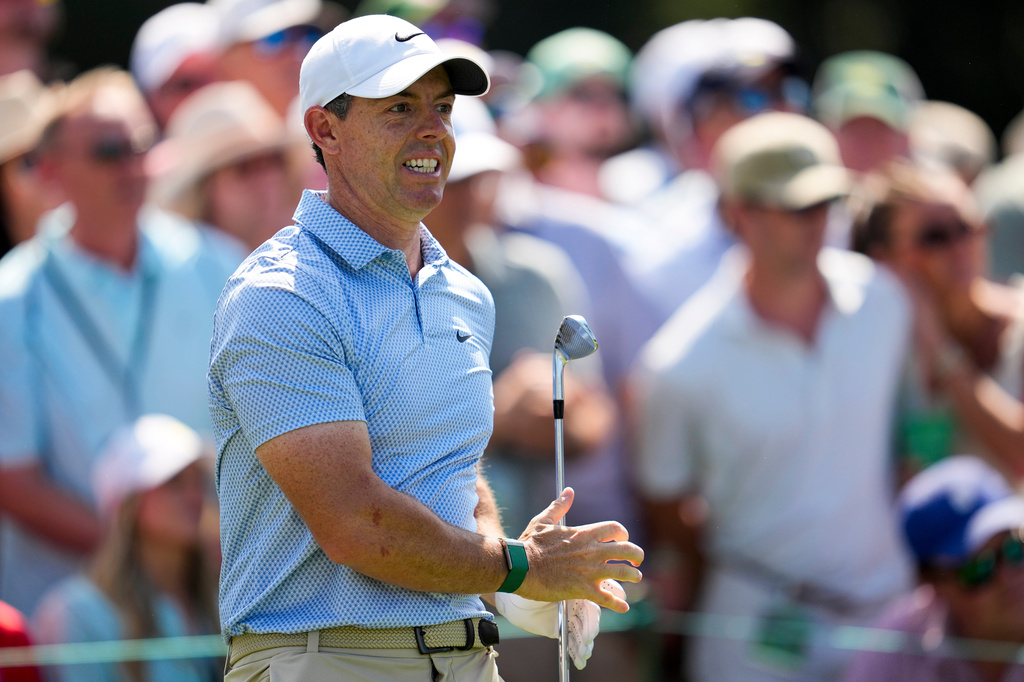
McIlroy’s pursuit of consecutive Masters victories dominated weekly coverage, rightfully so. He stated that 2026 didn’t begin with exclusive focus on Masters repetition and that he remains driven toward achieving new career milestones.
When asked for specifics about those goals, McIlroy declined details beyond saying the targets continue to “keep nudging a little bit further and further out of reach.”
However, McIlroy’s weekly comments might concern PGA Tour commissioner Brian Rolapp.
Discussing his Masters preparation, McIlroy revealed weeks of Augusta National practice. Some days involved dropping his daughter Poppy at school, flying to Augusta for practice rounds, and returning home for dinner.
This singular Augusta National focus meant McIlroy skipped PGA Tour events between The Players Championship and the Masters. He stated this week, “I honestly just don’t like the three tournaments leading up to this event. I’d rather come up here.”
This sentiment likely troubled PGA Tour headquarters and sponsors of the Valspar Championship, Texas Children’s Houston Open, and Valero Texas Open.
During his post-round press conference, McIlroy provided clarification, explaining that arriving at majors a week early was advice from Jack Nicklaus. He added that he doesn’t plan three-week competitive breaks before every major.
Certainly, McIlroy has earned the right to choose his schedule. However, given his global golf prominence and PGA Tour Enterprises’ for-profit status, it doesn’t help when McIlroy bypasses marquee events while expressing open dislike for other second-tier tournaments fighting for relevance in today’s landscape.
MASTERS’ MASTERY
Augusta National Golf Club and Augusta city have created a special formula making the Masters genuinely unique for all participants.
It starts with municipal pre-planning that virtually eliminates traffic congestion around the course. Backups rarely occur, parking costs nothing, and fans enter stress-free. Once inside, volunteer teams ensure foot traffic flows smoothly throughout the grounds.
While exact ticket distribution numbers remain unknown, even with leaders on Sunday’s back nine, spectators could always find direct views of any player or hole of interest.
Scheffler described the entire Masters experience as “enjoyable” this week, while Couples called Augusta National “the greatest walk you could ever have.”
Stepping onto AGNC property feels like entering sacred, history-rich grounds. The club obviously invests heavily ensuring everyone’s experience within its gates remains enjoyable.
It likely helps having resources from a massive merchandise operation that some press members hear generates approximately $1 million per hour.
AUGUSTA, Georgia – English golfer Justin Rose experienced the sting of another close call at Augusta National this week, but says the overwhelming fan support will provide lasting motivation despite missing out on his first Masters championship.
The 45-year-old veteran golfer momentarily grabbed the lead during Sunday’s final round before falling back to finish in a four-way tie for third place, ending two strokes behind champion Rory McIlroy. This marked another painful near-miss for Rose, who lost to McIlroy in a playoff just one year ago.
Rose, a former U.S. Open winner who has come in second place three times at the Masters, was particularly touched by the reception from spectators as he made his way up the 18th fairway following another disappointing finish.
“I felt like the crowd was amazing to me all week long … I felt their encouragement and support,” Rose commented after the round.
“At the end it kind of goes a little flat. It’s more of a sympathy than anything. But it was still nonetheless very beautiful.
“But, yeah, another little stinger.”
The English golfer started strong with five birdies on the front nine and believed he had positioned himself well to make a serious run at the title before things went sideways at the notorious Amen Corner section of the course.
“I was really in control. First 10 holes, I felt like I was,” Rose explained.
“And the mentality was to run through the finish line not just try and get it done.”
However, damaging bogeys on holes 11 and 12 killed his momentum, and his hopes were effectively ended when he failed to make a short par putt on the 17th hole, sealing another year without the coveted Green Jacket.
“Today I felt like there was an opportunity to do better, so obviously that is frustrating,” Rose admitted.
Despite the disappointment, Rose remains optimistic about his future chances, citing his strong performance over the past two seasons as evidence he can continue competing at golf’s highest level.
“In the last two years I’ve really kind of re-kicked on and re-energized my career and I have a lot of belief in myself that there is a lot of runway ahead,” he said.
“These are the tournaments I focus on. These tournaments are why I practice. These are the tournaments that get me going that extra mile.”
Rose believes Augusta National’s distinctive challenges will continue to favor his game as he ages, pointing to longtime competitors like Fred Couples and Bernhard Langer who have remained competitive at the Masters well into their later years.
“Those guys get around this golf course,” he noted.
When asked about the strong connection he’s formed with Augusta’s galleries, Rose provided a straightforward answer.
“I think people just know I play hard. I try hard. I’ve been close,” he said.
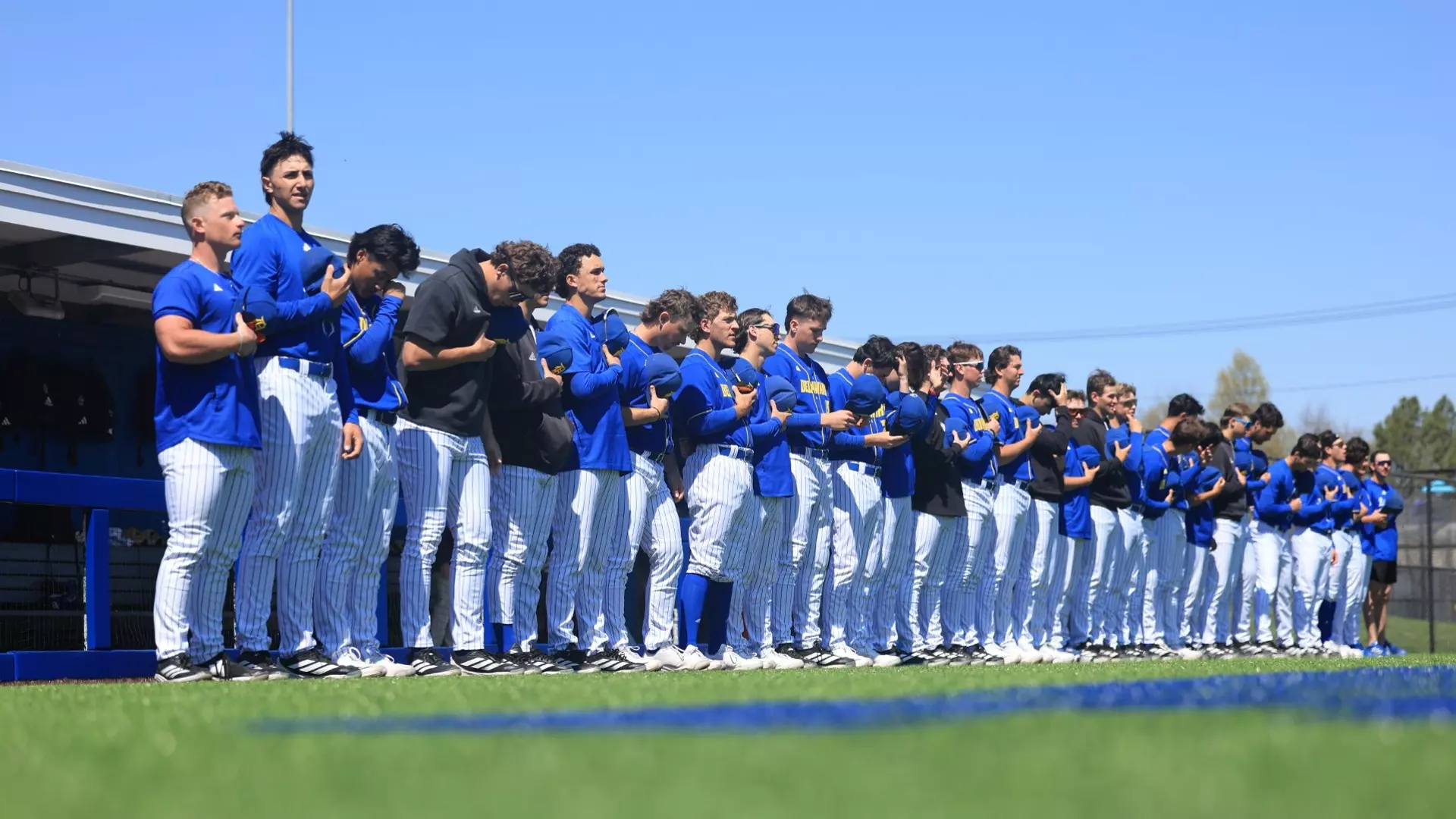
The Goldey-Beacom College Lightning baseball team traveled to Pomona, New York, where they defeated Dominican University 3-2 in a close conference matchup.
The narrow victory allowed the Lightning to claim the series win against their conference rivals, marking another successful road trip for the Delaware-based team.
The game was played at Dominican’s home field in New York, where Goldey-Beacom managed to edge out the tight contest by a single run.
The University of Delaware rowing squad wrapped up competition at the Knecht Cup Regatta in Cherry Hill, New Jersey this past Sunday with a solid performance from their second varsity eight crew.
The Blue Hens’ second varsity eight boat crossed the finish line in fifth place during the grand final race of the regatta, capping off their weekend of competition in the Garden State.
Motorists using northbound Route 896 should expect altered traffic patterns during overnight hours as a temporary lane adjustment remains in place.
The lane modification affects the stretch of roadway between Old Baltimore Pike and Ramp J, according to Delaware Department of Transportation officials.
The temporary traffic configuration will stay active until 6 a.m., when normal lane patterns are expected to resume.
Drivers are advised to exercise caution and allow extra travel time when navigating through the affected area during the lane shift period.
SAN ANTONIO — Denver’s three-time Most Valuable Player Nikola Jokic will take the court Sunday evening when the Nuggets face San Antonio in their season finale, marking his 65th appearance to meet NBA award requirements.
San Antonio All-Star Victor Wembanyama will be sidelined for the matchup after securing his eligibility threshold in his last outing.
The Serbian center has appeared in 64 contests this season and carried a questionable designation due to a right wrist injury.
The Nuggets must defeat San Antonio to claim the Western Conference’s third playoff position. Should Denver fall while the Los Angeles Lakers emerge victorious, the Nuggets would slip to fourth place as the Lakers claim third.
League regulations mandate that players participate in a minimum of 65 games to qualify for MVP, All-NBA Team, and Defensive Player of the Year recognition.
Jokic must log at least 15 minutes of playing time against the Spurs to meet the requirement.
NBA policy permits two exceptions where games lasting 15 to 19:59 minutes count toward the official total. Jokic has one such exception available.
“Yeah, he’ll play the first half,” Denver head coach David Adelman stated. “Then we’ll reconvene at halftime and see where he’s at, where the game’s at. It’s what the rules provide. So we’ll follow the rules.”
The center, who captured MVP honors in 2021, 2022 and 2024, has earned All-NBA Team selection in seven of his 11 professional seasons.
Wembanyama reached award qualification by competing in his 65th contest Friday during San Antonio’s 139-120 triumph over Dallas.
The French phenom participated in 64 regular-season contests plus the NBA Cup Final, which doesn’t affect regular-season records or statistics but counts as an official game appearance.
Wembanyama sustained a left rib injury and missed the second half of Monday’s 115-102 win against Philadelphia. He returned Friday to record 40 points and 13 rebounds across 26:13 of action versus Dallas.
He received a questionable listing for injury management purposes and was ruled out following San Antonio’s afternoon walkthrough session.
“Yeah, he’s doing well, but just a little sore and felt it was the appropriate decision,” San Antonio coach Mitch Johnson explained. “He was probably, to be honest, the closest call of the group, but just right in that kind of in between.”
Spurs guard Stephon Castle received an upgrade to available status after missing two games with left foot discomfort.
BUDAPEST (AP) — Leaders across Europe are expressing jubilation following Péter Magyar’s unexpected electoral triumph in Hungary, celebrating not only what the dynamic candidate might accomplish as the nation’s incoming prime minister, but also the departure of Viktor Orbán, whose lengthy tenure many viewed as a serious challenge to continental stability and economic growth.
The widespread enthusiasm demonstrates how deeply frustrated the 27-member European Union and its governing bodies had become with Orbán’s leadership.
“Today Europe wins and European values win,” declared Spanish Prime Minister Pedro Sánchez in a social media post Sunday evening. Polish Prime Minister Donald Tusk wrote enthusiastically online: “Back together! Glorious victory, dear friends!”
Orbán’s decade-and-a-half control of Hungary had strained the EU’s governing framework designed to maintain stability through shared economic and political cooperation following the devastation of two world wars. Asserting his commitment to Hungarian sovereignty over policies developed in Brussels, Orbán repeatedly blocked unified measures including assistance for Ukraine after Russia launched its comprehensive military assault.
Most recently, the far-right politician’s administration angered EU leadership when it acknowledged serving as an unofficial communication channel with Russia during high-level meetings.
During a recent conversation with The Associated Press, Magyar indicated his intention to mend Hungary’s ties with the EU if victorious. Nevertheless, throughout his campaign he strategically avoided taking definitive stances on several controversial topics — including Orbán’s anti-LGBTQ+ legislation and whether Hungary should increase its Ukrainian aid. “All Hungarians know that this is a shared victory. Our homeland made up its mind. It wants to live again. It wants to be a European country,” Magyar declared during his triumph address from Budapest’s Danube River waterfront.
Magyar revealed receiving phone calls Sunday evening — prior to his public victory announcement — from French President Emmanuel Macron, NATO Secretary-General Mark Rutte, German Chancellor Friedrich Merz, and European Commission President Ursula von der Leyen.
Social media congratulations poured in from British Prime Minister Keir Starmer, Irish Prime Minister Micheál Martin, Swedish Prime Minister Ulf Kristersson and European Parliament Speaker Roberta Metsola. Danish Prime Minister Mette Frederiksen, Romanian President Nicușor Dan and European Council President António Costa also shared their congratulatory messages for Magyar.
“This is an historic moment, not only for Hungary, but for European democracy,” Starmer stated.
“France welcomes the victory of democratic participation, the Hungarian people’s commitment to the values of the European Union, and Hungary’s commitment to Europe,” Macron commented.
Merz declared, “Let’s join forces for a strong, secure and, above all, united Europe.”
Kristersson mentioned both the EU and NATO in his congratulatory message to Magyar: “I look forward to working closely with you – as Allies and EU Members. This marks a new chapter in the history of Hungary.”
Slovenia’s liberal Prime Minister Robert Golob praised Magyar, describing his “victory over right-wing populism is also a great victory for the EU and its future.”
“Only a more united and more effective EU will be able to respond to the extremely serious challenges of the times ahead,” Golob stated.
Israeli opposition figure Yair Lapid, whose family includes Hungarian Jewish Holocaust survivors, also offered congratulations to Magyar.
Italian Prime Minister Giorgia Meloni congratulated Magyar while also expressing gratitude to Orbán for “intense collaboration for these years.”
Far-right French politician Jordan Bardella, considered a viable contender in France’s 2027 elections, commended Orbán’s populist achievements in a social media post without acknowledging Magyar.
Von der Leyen, who like many EU officials had maintained public neutrality regarding Hungary’s election, posted online that “Hungary has chosen Europe. Europe has always chosen Hungary. Together, we are stronger. A country returns to its European path. The Union grows stronger.”
Orbán had consistently attacked the Brussels-headquartered EU leadership and regularly obstructed her policy initiatives.
European People’s Party President Manfried Weber, another frequent target of Orbán’s criticism, announced on social media that “Hungary is back at the heart of Europe.”
German lawmaker Daniel Freund noted that “Hungarians are sending a signal to the world” — and cautioned that Orbán’s electoral defeat would impact populist movements globally.
“The icon of illiberal anti-European forces has now failed – brought down by a disastrous economy, corruption, and his own unfair electoral system,” Freund observed.
Ukraine offered congratulations to Magyar through its social media account, referencing significant waterways in both nations.
“The Dnipro and the Tisza flow through a shared home — Europe,” the message read.
Employees at a massive Colorado meat processing facility have successfully concluded their labor dispute with JBS USA, with both sides announcing a resolution on Sunday following a prolonged work stoppage.
Operations at the Swift Beef Co. facility in Greeley, Colorado, are set to resume immediately after experiencing weeks of disruption, according to a company announcement.
The resolution follows a three-week work stoppage led by thousands of employees represented by United Food and Commercial Workers Local 7 Union, who demanded improved compensation and enhanced healthcare benefits. The labor action concluded on April 4 when JBS USA committed to returning to the bargaining table.
The final deal includes pay raises spanning two years plus a one-time $750 payment for workers. Union representatives described the tentative contract as containing “all gains, countless improvements, and not a single concession.”
Under the new terms, the company will cover costs for personal protective equipment and shield employees from rising healthcare expenses, the union stated.
Union president Kim Cordova noted that employees maintained their picket lines despite harsh weather conditions “because they knew their worth and refused to be disrespected. Today, that sacrifice has been rewarded.”
“This is what union power looks like,” Cordova stated.
Union officials did not immediately provide additional details to The Associated Press.
While JBS USA expressed satisfaction with reaching an accord, the company voiced concerns that union leadership decided to eliminate retirement benefits that had been negotiated previously. The company maintained that the pension plan was intended to bolster long-term retirement security and criticized the union’s decision to redirect those funds toward immediate wage increases instead of workers’ future financial stability.
As part of the settlement, the union will drop seven unfair labor practice complaints, JBS USA confirmed.
“With the agreement now finalized, JBS USA looks forward to restoring stability, supporting its workforce, and continuing to invest in the Greeley facility for the future,” the company stated.
This labor action represented the first slaughterhouse strike in America since employees walked off the job at a Hormel facility in Minnesota in 1985. That earlier strike extended for more than a year and featured violent clashes between law enforcement and demonstrators.
JBS operates as the globe’s largest meat processing corporation with a market value of $17 billion. The company serves as the primary employer in Greeley, a community located 50 miles northeast of Denver with approximately 114,000 residents.
Delaware Department of Transportation crews are conducting construction work that has resulted in a temporary lane closure on a busy stretch of US Route 13.
The right northbound lane between American Legion Boulevard and Hyetts Corner Road is currently blocked to traffic as work continues overnight.
DelDOT officials indicate the lane restriction will remain in place until 5:30 AM, when normal traffic patterns are expected to resume.
Motorists traveling northbound on this section of Route 13 should expect delays and plan for reduced capacity during the construction period.
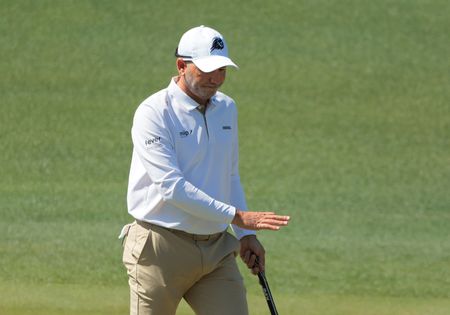
Masters Tournament officials at Augusta National witnessed an unusual scene Sunday when 2017 champion Sergio Garcia destroyed his driver in a fit of rage, forcing the Spanish golfer to complete his final round without the club.
The incident occurred early in Garcia’s round at the par-five second hole, where he started the day trailing the tournament leaders by 16 strokes and was already one stroke over par. After his tee shot landed in the right fairway bunker, Garcia’s frustration boiled over.
The former Green Jacket winner repeatedly slammed his driver into the ground before breaking the club completely when he struck a nearby cooler next to the tee box.
Tournament regulations prohibited Garcia from replacing the broken driver since the damage resulted from his angry outburst, leaving him to navigate the remaining 16 holes without his longest club.
When reporters asked if his frustration had been mounting, Garcia responded: “Through the year. Yeah. Just obviously not super proud of it, but sometimes it happens.”
The unusual round included a strange moment where spectators saw Garcia carrying fellow competitor Jon Rahm’s golf bag down one of the fairways.
Masters officials approached Garcia at the fourth hole to discuss the incident, though the golfer refused to reveal details of their conversation.
“I’m not going to tell you,” Garcia stated when pressed about the officials’ comments.
Despite the early drama, Garcia managed to salvage par on the second hole where the incident occurred. However, his performance deteriorated throughout the remainder of the round, ultimately finishing eight strokes over par.
When asked about the difficulty of playing without his driver, Garcia offered a sarcastic response: “It makes it very easy. I just have to hit 3-wood all the time. I didn’t have to choose another club.”
Garcia’s performance at Augusta National has declined significantly since his breakthrough victory seven years ago. When questioned about his recent struggles at golf’s first major championship, he provided terse explanations.
“Bad golf,” Garcia said initially.
Reporters seeking more detailed analysis received an equally brief response: “Bad shots.”
“Well, if you don’t hit good shots, you’re not going to score well here. It’s very simple,” Garcia concluded.
SINGAPORE, April 13 – The American dollar climbed to its strongest position in a week during Monday’s early Asian trading sessions as diplomatic negotiations between Washington and Tehran collapsed and the US military prepared to implement a naval blockade of Iranian shipping lanes.
Currency markets showed the dollar index, which tracks the greenback’s performance against six major world currencies, rising as much as 0.5% to reach 99.187 – marking its strongest showing since April 7.
European and Pacific currencies fell across the board, with the euro declining 0.5% to $1.1667 and the British pound dropping 0.6% to $1.3383. The Australian dollar weakened 0.8% to $0.7014 while New Zealand’s currency fell 0.7% to $0.5798.
President Donald Trump announced Sunday that American naval forces would begin blocking the Strait of Hormuz after extended negotiations with Iranian officials failed to produce an agreement ending the current conflict, putting at risk a fragile two-week ceasefire. US Central Command confirmed that American forces would start enforcing the blockade of all ship traffic moving in and out of Iranian ports beginning at 10 a.m. ET Monday.
Currency analysts at Westpac noted the market reaction in their research briefing, stating: “Early and thin FX trading this morning is showcasing a risk-off mood, with the broad-based rally in the USD in response.”
A Chinese technology manufacturer has kicked off a massive stock sale in Hong Kong, aiming to collect up to HK$17.49 billion ($2.23 billion) even as worldwide markets face uncertainty due to Middle East conflicts.
Victory Giant initiated its Hong Kong share offering on Monday, making available 83.35 million shares with a top price of HK$209.88 per share. Trading on the Hong Kong exchange is scheduled to begin April 21 using the ticker symbol 2476.
According to the company’s plans, roughly 74% of the money collected will go toward expanding manufacturing operations in mainland China, while nearly 15% will fund the construction of additional production sites.
Major investors including CPE Rosewood, Janchor Fund, and Jack Ma’s Yunfeng Capital will purchase approximately $997 million in shares as cornerstone backers, according to official listing paperwork.
This offering represents a significant challenge for Hong Kong’s ability to handle large technology stock launches as regulatory pressures mount and geopolitical tensions affect investor confidence.
Hong Kong recently recorded its best first-quarter performance for new listings in half a decade, though Beijing has increased oversight of Chinese companies incorporated overseas while Hong Kong authorities have also intensified scrutiny of investment banks regarding staffing levels and initial public offering documentation quality.
If successful, Victory’s public debut could surpass recent Hong Kong offerings like Muyuan Foods’ approximately $1.5 billion sale and would rank among the city’s most significant launches since Midea Group’s $4.6 billion flotation in 2024.
Established in 2006, Victory Giant produces sophisticated printed circuit boards designed for high-performance computing applications, including servers that power artificial intelligence systems.
The company’s Hong Kong filing states it held the top position worldwide for printed circuit board sales revenue in the AI and high-performance computing sectors during the first quarter of 2025, based on data from Frost & Sullivan.
Victory Giant’s existing Shenzhen-traded stock has gained approximately 0.8% year-to-date, following a dramatic surge of roughly 583.3% in 2025 as investors flocked to AI-related technology hardware companies.
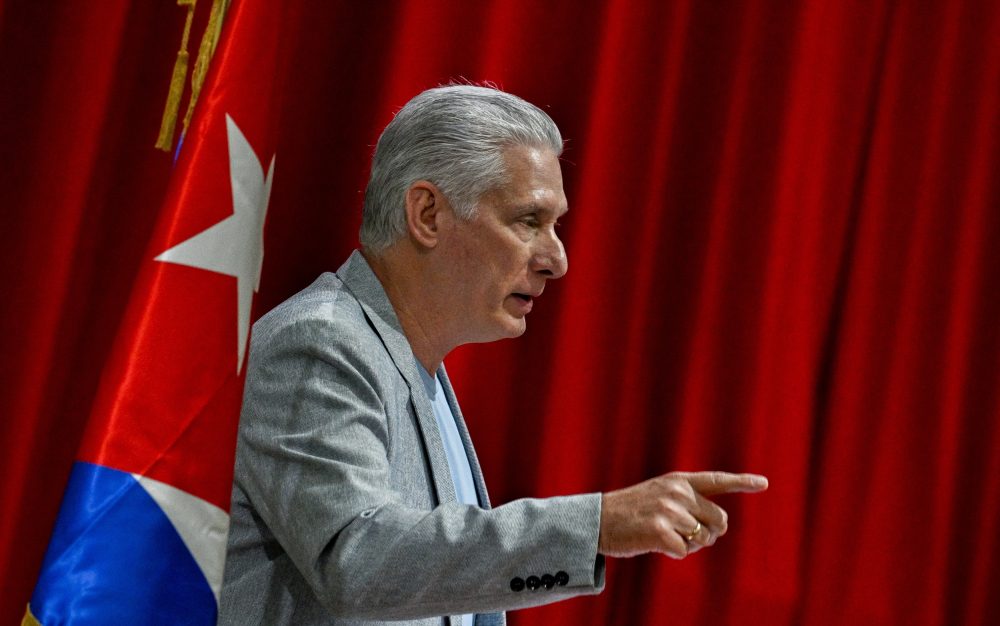
Cuban President Miguel Díaz-Canel issued a stern warning to the United States, stating there would be no legitimate grounds for military intervention against his nation or efforts to remove him from office.
During an appearance on NBC News’ Meet the Press, Díaz-Canel emphasized that any invasion would prove expensive and destabilize the region. However, he made clear that his people would resist any such action.
“If the time comes, I don’t think there would be any justification for the United States to launch a military aggression against Cuba, or for the U.S. to undertake a surgical operation or the kidnapping of a president,” Díaz-Canel stated through an interpreter.
The Cuban leader went further, declaring: “If that happens, there will be fighting, and there will be a struggle, and we will defend ourselves, and if we need to die, we’ll die, because as our national anthem says, ‘Dying for the homeland is to live’.”
These remarks surface amid ongoing strain between the two countries, though both nations have confirmed discussions are taking place without revealing specifics.
Díaz-Canel has criticized what he calls America’s “hostile policy” toward Cuba and claimed the U.S. lacks “moral authority to demand anything from Cuba.” He expressed Cuba’s willingness to participate in unconditional talks on any subject, “not demanding changes from our political system as we are not demanding change from the American system, about which we have a number of doubts.”
The island nation attributes its mounting difficulties to what it describes as an American energy embargo, with fuel shortages impacting healthcare, public transit, and the production of essential goods and services.
Cuba generates merely 40% of its required fuel supply and lost crucial oil deliveries from Venezuela following a U.S. military operation in early January that resulted in the capture of President Nicolás Maduro, who was transported to New York to face drug trafficking accusations. Subsequently, with assistance from Venezuelan political leaders, the Trump administration initiated a gradual plan to address Venezuela’s ongoing crisis.
A Russian vessel delivered 730,000 barrels of crude oil to Cuba in March, representing the nation’s first petroleum shipment in three months. Russia has committed to sending an additional tanker.
Although the Trump administration threatened tariffs in January against nations selling or supplying oil to Cuba, officials permitted the Russian tanker to proceed.
“Cuba’s finished,” President Donald Trump declared at that time. “They have a bad regime. They have very bad and corrupt leadership and whether or not they get a boat of oil, it’s not going to matter.”
Díaz-Canel indicated his administration interprets Trump’s statements as a threat.
“You hear that Cuba is next, that Cuba is going to be next, that there are, there’s a way out, that they’re going to take over Cuba,” he explained. “So, from the position of responsibility within the leadership of the country, that is a warning. And we need to responsibly protect our people, protect our project and protect our country.”
Crude oil markets experienced significant gains during early Sunday trading following the United States’ declaration that it will implement a naval blockade of Iranian ports starting Monday.
American crude jumped 8% to reach $104.24 per barrel, while Brent crude, which serves as the global benchmark, climbed 7% to $102.29.
Throughout the ongoing Iran conflict, Brent crude has experienced volatile swings, climbing from approximately $70 per barrel prior to the late February war outbreak to peaks exceeding $119. Friday’s trading session saw June delivery Brent decline 0.8% to $95.20 per barrel ahead of scheduled peace negotiations.
Iranian forces have maintained effective control over the Strait of Hormuz, a critical passage for international oil transportation.
According to U.S. Central Command, the naval blockade will be “enforced impartially against vessels of all nations” accessing Iranian ports and coastal regions, encompassing all Iranian facilities along the Persian Gulf and Gulf of Oman.
The military command indicated that vessels traveling between non-Iranian ports would continue to have transit access through the Strait of Hormuz.
Approximately 20% of global oil trade passes through the Strait of Hormuz daily. Major oil-exporting nations including Saudi Arabia, Iraq, the United Arab Emirates, Kuwait, and Iran all rely on this waterway.
Even following the recent ceasefire, shipping activity through the Strait has remained restricted. Maritime tracking systems indicate more than 40 commercial vessels have passed through since the ceasefire began.
Rystad Energy’s chief economist Claudio Galimberti suggested the blockade could increase prices while potentially advancing diplomatic discussions.
“It means the oil markets will be even tighter than before,” he said. “However, I think this is a negotiation tactic, which eventually resolves into a full opening of Hormuz. So, more pain now, but more gain later.”
Rice University Energy Research Fellow Jim Krane expressed concerns that while the blockade might serve as an effective long-term economic pressure tool against Iran, it represents poor short-term negotiating strategy given current market stress.
“If the deficit to the oil market takes another jump it is going to impose pain on every person on Earth that’s subject to market oil prices,” he said.
SALISBURY, Md. – The nationally-ranked Salisbury University Sea Gulls couldn’t shake off their struggles against Randolph-Macon, falling 5-2 to the Yellow Jackets on Sunday at Donnie Williams Sea Gull Baseball Stadium.
The loss marked the second consecutive defeat for the 12th-ranked Sea Gulls, as Randolph-Macon completed a weekend sweep of the home-and-home series. Despite playing on their home field Sunday afternoon, Salisbury was unable to reverse the momentum from their earlier loss.
The Yellow Jackets’ victory continues what has been a challenging stretch for the Sea Gulls, who entered the weekend series with high expectations given their national ranking.
AUGUSTA, Ga. — Northern Ireland’s Rory McIlroy etched his name deeper into golf history Sunday, capturing his second consecutive Masters championship and becoming just the fourth player ever to achieve back-to-back victories at Augusta National.
McIlroy took command during a final round that saw three different golfers hold two-shot leads at various points. The turning moment came at the treacherous Amen Corner, where McIlroy executed a daring shot across Rae’s Creek on the par-3 12th hole, landing within seven feet of the pin for a crucial birdie. He followed that with a thunderous 350-yard drive on the 13th hole that positioned him perfectly for another birdie, extending his advantage to three strokes.
Drama persisted until the final hole, where McIlroy’s wayward tee shot sailed toward the 10th fairway. Despite the miscue, he managed to salvage a bogey with a simple tap-in, finishing with a 1-under 71 and securing a one-shot triumph.
This victory follows McIlroy’s playoff win over Justin Rose last year, which completed his career Grand Slam. By claiming another green jacket, the Northern Irishman joins an exclusive group of consecutive Masters winners that includes Tiger Woods, Nick Faldo, and Jack Nicklaus.
More than 40 vessels departed Barcelona this weekend as part of the Global Sumud Flotilla, launching another maritime mission aimed at reaching Gaza. Crews spent several days preparing equipment at the port while organizers conducted media interviews before setting sail. While participants characterize their journey as a humanitarian effort, Israeli authorities challenge this description.
According to organizers, this latest mission has attracted increased participation from activists. Their public statements focus on delivering aid while drawing attention to conditions in Gaza.
The dispute extends beyond questions about aid delivery methods. Israeli authorities have repeatedly referenced documents and internal communications they claim demonstrate Hamas involvement in these initiatives. According to Israeli assertions, these missions prioritize creating a media platform for international pressure rather than actually providing supplies.
Flotilla participants categorically deny these allegations, maintaining they have no coordination with Hamas whatsoever. Israeli officials argue that the focus has shifted over time from the actual cargo being transported to the public messaging and reactions these missions generate.
The Gaza conflict, which lasted more than two years, concluded when both parties agreed to a 20-point agreement proposed by President Donald Trump. While this ended active hostilities, many issues remain unresolved, including reconstruction plans, oversight arrangements, and basic access management.
The flotilla controversy is part of a larger discussion about Gaza’s future direction.
Israeli authorities also highlight current aid flows already entering the territory. Data from The Coordinator of Government Activities in the Territories (COGAT) shows that 600 to 800 trucks enter Gaza daily during the ceasefire, with approximately 70 percent carrying food items. These numbers reportedly exceed international nutritional standards established by World Food Programme guidelines.
Greenpeace’s participation has brought additional attention to the mission.
The environmental organization stated it joined for humanitarian reasons, describing its involvement as civilian assistance for Gaza. The group did not directly address Israeli allegations. Israeli officials have maintained a broader response, avoiding focus on specific organizations while emphasizing that efforts operating outside established coordination mechanisms may complicate rather than improve aid delivery.
Barcelona has served as a launch point for similar expeditions previously.
The port has historically provided both Mediterranean access and public visibility before vessels travel eastward. Outcomes typically depend on decisions made during the journey. Some missions fail to reach their destination, with vessels returning early, changing course midway, or continuing until they encounter Israeli naval patrols.
Currently, the flotilla remains at sea, with its ultimate destination still unclear. However, debate surrounding the mission has already intensified.
Mission organizers describe their effort as essential and long overdue. Israel maintains the opposite position, arguing that established aid delivery systems already exist and that such flotillas typically serve political objectives, which they connect to patterns observed in previous campaigns.
Despite competing narratives, the participants’ backgrounds and the operation’s scope suggest different priorities. International activists, many with established media profiles, have promoted this voyage in highly public terms from the beginning.
Even accepting the cargo descriptions provided by organizers, the volume would remain minimal compared to daily aid entering Gaza through existing channels.
Considering the expenses involved in maintaining vessels and crews, the relationship between publicity and actual delivery becomes increasingly apparent. From this perspective, the initiative appears to prioritize media attention over humanitarian impact.
A prominent Christian organization has spoken out against an Easter ritual in southern Spain that involved burning a massive figure depicting Israeli Prime Minister Benjamin Netanyahu, labeling the ceremony as antisemitic.
The International Christian Embassy Jerusalem issued strong criticism of the event that took place in El Burgo, a town in southern Spain, where participants burned a 23-foot tall representation of Netanyahu during their Easter observance.
ICEJ President Dr. Jürgen Bühler explained that this “Burning of Judas” tradition has roots in medieval customs that historically promoted antisemitic stereotypes, depicting Jewish people as greedy, responsible for Christ’s death, or inherently wicked. Bühler argued that these outdated practices should be eliminated from modern religious observances and prohibited by the Catholic Church, consistent with changes made during the Vatican II Council.
According to the organization, comparable events have occurred in other nations including Mexico, Poland, and Greece in recent years. They referenced a particularly controversial incident in Pruchnik, Poland, where participants created a Judas figure dressed as an Orthodox Jew, which sparked widespread criticism for its resemblance to Nazi-era antisemitic propaganda.
The Christian Embassy connected this Spanish incident to recent political tensions, noting Spanish Prime Minister Pedro Sánchez’s accusations that Israel is committing genocide and “exterminating” Palestinians. They also pointed to Spain’s diplomatic actions, including support for arms embargoes, punitive measures against Israel, and Spain’s formal recognition of Palestinian statehood in 2024.
“The International Christian Embassy in Jerusalem denounces this outrageous antisemitic display carried out during the most sacred celebration in the Christian calendar, that of Easter,” their official statement declared. The group demanded that Spain’s Catholic Church provide “a clear and unequivocal condemnation and apology.”
The organization also called on Vatican leadership to reassess what they characterized as biased criticism of Israel and to work toward preventing similar incidents worldwide.
“Instead of condemning Israel and the Jews, Good Friday could be more meaningfully used to remember those Christians who ‘share in Christ’s sufferings,’” their statement continued, highlighting persecution of Christians in Nigeria, Sudan, and the Democratic Republic of the Congo.
The ICEJ emphasized that Easter observances “must never be used as an occasion to disparage Jews,” citing the New Testament passage: “Salvation is from the Jews.”
AUGUSTA, Ga. — Former Masters champion Sergio Garcia remained tight-lipped with the media following Sunday’s disappointing final round at Augusta National.
However, his explosive behavior on the golf course spoke volumes about his current state of mind.
An early-round breakdown on the second hole resulted in Garcia destroying his driver and earning himself an official conduct violation warning from tournament officials.
The Spanish golfer acknowledged that his outburst stemmed from ongoing struggles this season with his Fireballs team, which currently sits eighth out of 13 teams in LIV Golf competition, rather than issues specific to the Masters tournament.
“Just obviously not super proud of it, but sometimes it happens,” Garcia said.
After dropping a stroke on the opening hole — the first of five bogeys he would record during the round — Garcia stepped up to the tee at the second hole. When his drive headed straight toward a fairway bunker, the golfer immediately took two aggressive swings at the ground in anger.
Still not satisfied after damaging his club, Garcia proceeded to slam the broken driver against a nearby cooling station before completely removing the dangling clubhead himself.
Ironically, the par-5 second hole became the only one among Garcia’s opening four holes where he managed to avoid dropping a shot, as he went on to record bogeys on both the third and fourth holes.
Following his performance on the fourth hole, Augusta National’s competition committee chairman Geoff Yang approached Garcia to deliver the conduct warning.
When asked about Yang’s conversation with him, Garcia declined to elaborate, stating, “I’m not going to tell you.”
Garcia’s final-round 75, three shots over par, left him at 8-over for the tournament and tied for the third-worst score among players who made the weekend cut. Only Denmark’s Rasmus Hojgaard (10 over) and South Africa’s Charl Schwartzel (12 over) finished with higher scores.
“Well, if you don’t hit good shots, you’re not going to score well here,” Garcia said. “It’s very simple.”
While Garcia’s struggles may have been particularly painful given his status as a former Masters winner, his poor showing continues a troubling pattern at Augusta National. Since capturing the green jacket in 2017, Garcia has failed to make the cut in six of his eight Masters appearances. His best result during that period was a tie for 23rd place in 2022.
The US dollar strengthened considerably against major global currencies during early Monday trading in Asia, as investors flocked to its relative security following the breakdown of extensive diplomatic negotiations between Washington and Tehran that failed to produce an agreement, extending market volatility into its seventh consecutive week.
On Sunday, President Donald Trump announced that the US Navy would begin blocking the Strait of Hormuz, a critical passage for 20% of global daily energy shipments that Iran has effectively shut down since hostilities began in late February. This development has pushed oil prices upward by more than 30% and intensified concerns about widespread inflationary pressures.
The dollar, serving as a refuge given America’s limited vulnerability to imported energy-price inflation, strengthened as Asian trading commenced, pushing the euro down 0.53% to $1.1663 and advancing 0.1% against the Japanese yen to reach 159.43.
US stock futures dropped more than 1% during late Sunday trading in the United States.
Market optimism that the Middle East conflict was nearing resolution, following last week’s ceasefire declaration, had buoyed trading throughout the week, assisting the S&P 500’s recovery. By Friday, the index had regained almost all losses sustained since US and Israeli military operations commenced in late February.
The United States and Iran declared a two-week ceasefire on April 7, which investors initially welcomed by selling oil and redirecting some funds back into riskier assets like equities. Worries about the agreement’s fragile nature have since triggered a reversal of some of those investment moves.
“This is an absolute unwinding of any optimism heading into the peace talks into that play of dollar: safe-haven; oil jumping and selling out of everything else,” City Index senior market analyst Fiona Cincotta said.
“On the other hand, we have seen the markets over-exaggerate sometimes. And I think especially around this scenario, the market is struggling to really price it correctly, because there is so much uncertainty, so many unknowns.”
Currencies more sensitive to risk, including the Australian dollar and British pound, faced significant downward pressure, declining 1.1% and 0.5% respectively.
As anticipation grows for renewed inflationary trends, investors have factored in the likelihood that multiple central banks, including the European Central Bank and Bank of England, may lean toward increasing interest rates this year, contrasting sharply with pre-war expectations that borrowing costs would stay flat or decrease.
International stock markets, which concluded last week near their highest levels since early March due to optimism about potential US-Iran resolution, remain 2% below pre-war levels.
Gold has declined approximately 10% in value since late February, as investors currently view the dollar as a superior safe-haven option.
“The market is now largely back to conditions before the ceasefire, except now the US will block the remaining up to (2 mln barrels) Iranian-linked flows through the Strait of Hormuz as well,” said Saul Kavonic, MST Marquee analyst in Sydney.
“The key remaining question is if the U.S. renews strikes on Iran, raising the risk of strikes on energy infrastructure across the region which could have a further lasting impact beyond the duration of the war.”
Trump indicated on Sunday that oil and gasoline prices may stay elevated through November’s midterm elections, representing an unusual acknowledgment of the war’s potential political consequences.
Viktor Orban will step down as Hungary’s Prime Minister after suffering an electoral defeat that ends his 16-year hold on power, with the opposition Tisza Party projected to claim a commanding parliamentary majority.
Election officials reported Sunday evening that with approximately half the ballots tallied, Tisza was on track to capture 135 seats out of 199 in Hungary’s parliament, while Orban’s Fidesz party appeared headed for just 57 seats according to current vote counts.
Speaking from Fidesz headquarters, Orban acknowledged the outcome, stating: “The election results are not final yet, but the situation is understandable and clear. The responsibility and possibility of governing was not given to us. I have congratulated the winner.”
The results aligned with pre-election surveys that had shown Tisza holding a lead, making Sunday’s outcome largely expected. Peter Magyar is set to become Hungary’s next prime minister, marking the conclusion of Orban’s decade-and-a-half leadership during which he gained international recognition for conservative policies and maintained strong relationships with US President Donald Trump and Israeli Prime Minister Benjamin Netanyahu.
During the campaign’s closing days, US Vice President JD Vance made a visit to Hungary before heading to peace talks in Islamabad, in an apparent effort to support Orban’s reelection bid.
Throughout his tenure, Orban championed what he termed “illiberal democracy” while taking hardline stances on immigration policy, LGBTQ issues, and promoting Christian nationalist ideals.
Magyar, who will assume the prime minister role, was formerly a member of Orban’s Fidesz party until departing in 2024. Campaigning on a conservative platform, he promised to implement anti-corruption measures and successfully brought together Orban opponents from across the political spectrum.
Should the final vote tally confirm these projections, Tisza’s parliamentary majority would provide Magyar with substantial authority to implement his governing agenda.
A renowned Iranian photographer who gained international recognition for her feminist imagery during the “Woman, Life, Freedom” protests has now turned her lens toward documenting the harsh realities of war in Tehran.
Maryam Saeedpoor, a fine art photographer based in Iran’s capital, has created a compelling series of photographs that capture women’s experiences during recent conflicts and bombardments. Speaking with The Media Line, Saeedpoor explained that her goal was to chronicle Tehran’s most challenging periods through her artistic vision.
The photographer has shared selected images from this powerful series on her Instagram account, adding to the growing visual record of war’s impact on Iranian society. Her latest work builds upon her previous acclaim for documenting women during the “Woman, Life, Freedom” uprising that swept through Iran.
Saeedpoor’s photographs stand out among the numerous images of destruction and conflict damage emerging from Iran, offering a unique artistic perspective on the human cost of war. Her work specifically focuses on how women navigate and endure these extraordinary circumstances in the Iranian capital.
The photographer’s documentation efforts took place during active bombardment situations, highlighting both the danger and dedication involved in creating this visual testimony of wartime Tehran.
The final round at Augusta National has delivered intense drama as Rory McIlroy positioned himself for consecutive Masters victories, currently sitting at 13 under par with a two-stroke advantage over Scheffler and Rose heading into the tournament’s final stretch.
The Northern Irishman regained control of the leaderboard after Justin Rose encountered difficulties on the 12th hole, where mounting tournament pressure appeared to affect his performance. Rose’s chip shot came up short of the green, leading to his second consecutive bogey and allowing McIlroy to reclaim the top position.
Earlier in the round, McIlroy stood at 11 under par while Rose fell into a four-way tie for second place alongside Tyrrell Hatton, Russell Henley, and Cameron Young, all positioned at 10 under.
The leaderboard experienced rapid changes throughout the day, with Rose previously holding sole possession of the lead after sinking a birdie on the eighth hole while Young stumbled with a bogey on the seventh. Rose, who fell to McIlroy in last year’s playoff, had briefly seized the momentum.
Cameron Young emerged as an early threat, establishing a two-shot lead after five holes as he attempted to join an exclusive group. The golfer aimed to become the third consecutive player to capture both the Players Championship and Masters in the same season, following Scottie Scheffler’s 2024 double victory and McIlroy’s matching achievement the previous year.
Young’s strongest Masters performance came in 2023 when he secured a tie for seventh place, making this year’s run particularly significant for the rising star.
The tournament took a dramatic turn when McIlroy suffered a double-bogey on the fourth hole, temporarily handing Young sole possession of the lead at 12 under with a two-shot cushion.
However, McIlroy quickly responded with a birdie on the par-5 third hole, climbing back to 12 under and creating a deadlock with Young after the latter needed a crucial 6-foot putt to salvage par on the same hole.
World No. 1 Scottie Scheffler remained within striking distance, sitting three shots behind the leaders at 9 under after recording birdies on two of his opening six holes. The two-time Masters champion sought to become the first golfer since Danny Willett in 2016 to claim victory from outside the final pairing.
The final round began with McIlroy and Young sharing the lead at 11 under, after McIlroy surrendered a record-setting 36-hole lead of six strokes during Saturday’s disappointing 73. Young’s exceptional 65 on Saturday, tied for the tournament’s lowest round, propelled him into contention with a one-shot advantage over Sam Burns.
Scheffler entered Sunday’s action four shots behind the leaders at 7 under, immediately making his presence known with a birdie on the challenging par-4 opening hole.
The world’s top-ranked player had mounted an impressive comeback during Saturday’s second round, matching Young’s tournament-best 65 to position himself for a potential third green jacket. This scenario would mark Scheffler’s first come-from-behind victory at Augusta National, contrasting his previous wins where he held leads entering the final round.
Despite ranking first in tee-to-green performance and ballstriking through three rounds, Scheffler’s putting struggles kept him from the lead. The four-time major champion’s near-last ranking on the greens represented his primary obstacle to victory.
Tournament organizers scheduled the final groups strategically, with players at 5 under beginning shortly after 1 p.m. EDT. The progression included notable pairings such as Collin Morikawa with Patrick Reed, followed by Patrick Cantlay and Russell Henley.
Scheffler paired with Haotong Li at 1:52 p.m., while Justin Rose joined Jason Day at 2:03 p.m. Sam Burns and Shane Lowry comprised the penultimate group before McIlroy and Young’s 2:25 p.m. tee time on the 445-yard par-4 first hole.
The tournament featured an unusual incident involving 2017 Masters champion Sergio Garcia, who destroyed his driver following an angry outburst on the second tee box. After hitting his tee shot into a bunker, Garcia struck a table with his club, severing the driver’s head. Masters officials issued Garcia a code of conduct warning through competitions committee chairman Geoff Yang.
Weather conditions remained consistent with the week’s pattern, featuring hot, dry, and sunny skies that allowed course officials maximum setup flexibility. The forecast suggested challenging conditions with firm, fast greens and demanding pin placements for the final round.
“When greens are firm and targets are tight, even a light wind can add another layer of difficulty,” explained John Feerick, senior meteorologist at AccuWeather. “Players who manage launch, spin and landing spot most effectively may have the clearest edge.”
Off the course, speculation surrounded the future of the popular Masters gnome merchandise, with rumors suggesting this year might mark the final production run. The 13 1/2-inch collectible, featuring a bearded figure in golf attire holding an umbrella and Masters cup, sells for $59.50 at Augusta National but commands over $600 on secondary markets.
Masters chairman Fred Ridley has neither confirmed nor denied the discontinuation rumors, while limited daily availability of 1,000 gnomes continues to create early morning lines as they regularly sell out within an hour of availability.
QUANTICO, Md. – Salisbury University’s women’s golf program concluded its remarkable sophomore season on a high note, capturing the Sea Gull Invitational title with a commanding performance during Sunday’s final round at Green Hill Country Club.
The Sea Gulls dominated the tournament field, securing a decisive victory that capped off what has been described as a breakthrough campaign for the young program. The championship represents a significant milestone for the team in just their second year of competition.
The tournament victory at Green Hill Country Club showcased the continued growth and development of Salisbury University’s women’s golf program as they head into the offseason with momentum from their impressive showing.
Milwaukee Brewers star Christian Yelich exited Sunday’s 8-6 defeat against Washington after experiencing left hamstring tightness during the game.
The veteran player was serving as designated hitter and went hitless in two plate appearances before feeling discomfort in his hamstring during his second trip to the plate, manager Pat Murphy explained. Gary Sanchez replaced Yelich as a pinch-hitter in the fifth inning.
Following the game, Murphy shared his pessimistic outlook regarding the injury during his media session.
“We’re most likely to get some bad news on Yelich,” Murphy said.
This season, Yelich has posted a .314 batting average along with one home run and 10 RBIs across 15 contests.
The 34-year-old outfielder captured National League MVP honors in 2018 and has earned two batting titles plus three All-Star selections throughout his career. However, injuries have plagued him in recent seasons, particularly issues with his troublesome back.
Yelich enjoyed a productive 2025 season, hitting .264 with 29 home runs and 103 RBIs over 150 games. His 100-RBI performance marked just the second time in his career he reached that milestone, following his 110 RBIs during his MVP season.
Following five seasons with Miami from 2013-17, Yelich has remained with Milwaukee for the remainder of his major league tenure.
San Diego Padres pitcher Nick Pivetta was forced to exit Sunday’s matchup against the Colorado Rockies during the fourth inning after what appeared to be an arm injury sidelined him from play.
The right-hander had been dealing effectively through the early innings, getting out the first nine batters he encountered, including four strikeouts. Pivetta delivered a 92-mph fastball to batter Edouard Julien that evened the count to 2-2 when the fourth inning began, but team manager Craig Stammen and medical personnel immediately made their way to the pitcher’s mound following that throw.
Following a quick discussion on the field, Pivetta departed the game and headed straight through the tunnel toward San Diego’s locker room area, holding his hand over his mouth as he exited the field.
Relief pitcher Kyle Hart stepped in to replace Pivetta and successfully got out all three batters he faced, maintaining San Diego’s 2-0 advantage through three and a half innings. However, Colorado managed to score twice off Hart during the fifth inning, narrowing the gap to 3-2.
Through four appearances this season, Pivetta carries a 1-2 win-loss record along with a 4.50 earned run average.
Meanwhile, Colorado faced their own pitching complications when their planned starter, left-handed pitcher Kyle Freeland, was pulled during warm-ups due to what the team described as soreness in his left posterior shoulder.
Federal regulators are working toward settlement agreements with multiple large advertising firms as part of an investigation into alleged coordinated boycotts against social media platforms, according to a weekend report from the Wall Street Journal.
The Federal Trade Commission’s probe examines whether major advertising companies broke federal antitrust regulations by working together to organize boycotts targeting various platforms, including Elon Musk’s X social media site, sources with knowledge of the discussions told the Journal.
The settlement discussions represent the latest development in the agency’s examination of advertising industry practices and potential anti-competitive behavior among major firms in the sector.
Reuters has not independently confirmed the details of the reported settlement negotiations.
Citizens of Hungary brought an end to Viktor Orbán’s lengthy political reign on Sunday, removing the Prime Minister from office after he held power for 16 years. Peter Magyar, representing the Tisza party and formerly aligned with Orbán, secured victory in the election.
The electoral outcome marks a significant political shift for the Eastern European nation, as voters chose to change leadership after more than a decade and a half under Orbán’s administration.
SACRAMENTO, Calif. — Federal fishery officials approved the reopening of California’s coastal waters to commercial salmon fishing on Sunday, marking the first time since 2022 that such operations will be permitted as fish populations show signs of recovery following recent wet winters that broke a prolonged dry spell.
The Pacific Fishery Management Council’s approval to resume both commercial and recreational salmon fishing represents a significant victory for California’s fishing industry, which has endured multiple seasons of closures due to declining fish numbers. The West Coast fisheries management body had prohibited commercial salmon operations off California for three consecutive years, though it did authorize limited recreational fishing last year for the first time since 2022.
While the council serves in an advisory capacity to the U.S. Secretary of Commerce, who holds final authority, the secretary typically endorses the council’s recommendations. An official announcement is expected to appear in the Federal Register shortly.
“It is great news for everyone — for the fishermen, for seafood lovers and the environment because it means that salmon populations are back to a much healthier state,” California Natural Resources Secretary Wade Crowfoot said ahead of the decision.
Federal officials report encouraging projections for both Chinook and coho salmon populations along the West Coast this year, although the upcoming season will include certain limitations.
According to the Golden State Salmon Association, recreational fishing has already commenced this month along approximately 50 miles of coastline extending south from San Francisco to the Mexican border. Northern sportfishing areas, including San Francisco waters, will open in June, while commercial operations will launch in May.
The council established restrictions limiting commercial fishing to select days and implementing catch quotas for salmon harvests.
Scientists attribute the dramatic decline in Chinook salmon numbers to extended drought conditions that interfered with the species’ upstream spawning migrations. Industry representatives also point to policies from the previous Trump administration that permitted increased water diversions from the Sacramento River Basin for agricultural use, further damaging fish populations by raising river temperatures and reducing water levels during critical periods when juvenile salmon travel from spawning areas to ocean waters.
However, recent winters with increased precipitation have restored cooler water conditions essential for salmon reproduction.
Crowfoot noted that salmon have also returned to previously uninhabited areas thanks to river restoration initiatives.
Following the 2024 removal of four hydroelectric dams along the Klamath River, salmon have resumed spawning in waters near the Oregon-California border for the first time in decades. California has subsequently eliminated additional barriers blocking salmon passage in other waterways, including Alameda Creek in the San Francisco Bay Area, according to Crowfoot.
Most ocean-caught salmon originate from California’s Klamath and Sacramento river systems. After emerging in freshwater environments, they typically spend three years developing in Pacific waters, where commercial fishermen harvest many, before returning to their natal spawning locations under optimal reproductive conditions. The fish die after completing their egg-laying cycle.
Maintaining robust salmon populations remains vital for both environmental and economic reasons, Crowfoot emphasized.
“Salmon are an iconic species in California and critically important to our tribal communities and our fishing sector,” he said.
Vance Staplin, executive director of the Golden State Salmon Association, primarily attributed recent low salmon numbers to state and federal water management practices. The fishing season suspensions significantly affected California’s fishermen, bait retailers, and fishing equipment manufacturers, he explained.
“People don’t understand how big of an industry salmon is to California,” he said.
QUANTICO, Md. – Salisbury University’s men’s golf squad claimed victory in their inaugural Sea Gull Invitational tournament, marking the first time the team has successfully defended their home course advantage.
The championship was secured following Sunday’s final round of competition at Green Hill Country Club, where the Sea Gulls completed their dominant performance in the tournament they were hosting for the first time.
The victory represents a significant milestone for the Salisbury University golf program, as they managed to capture the title while playing on familiar territory at their home venue.
The Colorado Rockies had to make a last-minute pitching change Sunday when Kyle Freeland was unable to take the mound against the San Diego Padres due to discomfort in his left posterior shoulder.
Freeland had been performing well this season with a 1-1 record and 2.30 ERA through his first three outings. Right-handed pitcher Jimmy Herget stepped in to fill the void, marking his second appearance as an opener during this series against the Padres. Herget had previously started Thursday’s contest, delivering a clean first inning.
However, Herget’s Sunday performance didn’t match his earlier success. The Padres managed to score in the opening frame when Manny Machado drove in Ramon Laureano with a sacrifice fly.
Chase Dollander took over pitching duties in the second inning and was expected to handle the majority of the remaining innings as the team’s primary reliever. This marked Dollander’s second bulk relief appearance of the series, having previously thrown 4 1/3 innings on Thursday while giving up just one run.
WASHINGTON – The Pentagon announced Friday that American naval forces will launch a comprehensive maritime blockade targeting Iranian ports starting Monday morning at 10 a.m. Eastern Time, following directives from President Donald Trump to restrict access through the Strait of Hormuz.
U.S. Central Command officials stated the naval operation will target all vessel traffic moving in and out of Iranian territorial waters without regard to the ships’ country of origin. “The blockade will be enforced impartially against vessels of all nations entering or departing Iranian ports and coastal areas, including all Iranian ports on the Arabian Gulf and Gulf of Oman. CENTCOM forces will not impede freedom of navigation for vessels transiting the Strait of Hormuz to and from non-Iranian ports,” military commanders announced through an official statement released on social media platforms.
Pentagon officials indicated they plan to distribute detailed operational guidelines to international shipping companies and commercial vessel operators through official maritime channels prior to the blockade’s implementation on Monday.
The University of Delaware Blue Hens women’s tennis team capped off Senior Day celebrations with a commanding performance, shutting out Drexel 4-0 at the DFH Outdoor Courts in Newark on Sunday afternoon.
The dominant victory marked the Blue Hens’ seventh consecutive win, extending an impressive streak as the season progresses. The team honored their senior players before the match in a special ceremony recognizing their contributions to the program.
Delaware’s clean sweep of Drexel demonstrated the team’s current strong form, with the Blue Hens controlling play throughout the afternoon match. The shutout victory continues to build momentum for the program as they look ahead to upcoming competition.
The University of Maryland Eastern Shore softball team wrapped up their series against South Carolina State with a dominant 2-0 shutout victory, powered by an outstanding complete game effort from pitcher Chloe Weber.
Weber took control of the mound for the Hawks and never relinquished it, throwing all seven innings to secure the shutout win against the Bulldogs. Her stellar pitching performance helped UMES close out the series on a high note.
The Hawks managed to plate two runs while Weber kept South Carolina State off the scoreboard entirely, showcasing both offensive execution and defensive prowess in the victory.
This win adds another solid performance to UMES’s season record and demonstrates the team’s ability to execute in crucial moments when closing out a series against conference competition.
The University of Maryland Eastern Shore Hawks baseball team claimed a 7-5 victory over the Delaware State Hornets, powered by a stellar six-inning performance from starting pitcher Cade Williams.
Williams took command on the mound, helping the Hawks secure their sixth Northeast Conference victory of the current season in what proved to be a closely contested matchup against their in-state rivals.
The Hawks’ offensive attack was led by impressive performances from two key players who dominated at the plate. Both Jimenez and Taylor contributed significantly to the team’s success, each recording three hits during the game to fuel the Hawks’ scoring efforts.
The victory demonstrates the Hawks’ continued competitiveness in conference play as they work to build momentum in Northeast Conference standings. Williams’ ability to pitch effectively through six innings provided the stability the team needed to hold off the Hornets’ comeback attempts.
With this win, UMES continues to establish itself as a formidable opponent in the NEC, showcasing both strong pitching depth and offensive capability that will be crucial as the season progresses.
PORT-AU-PRINCE, Haiti — Officials have confirmed that a deadly crowd crush at Haiti’s renowned Citadelle Laferrière fortress has claimed the lives of at least 25 people, with dozens more suffering injuries during weekend festivities at the historic mountaintop site.
Cap-Haïtien city officials released a statement detailing how Saturday’s tragic incident in Milot “resulted in numerous cases of asphyxiation, trampling and loss of consciousness.” Emergency responders transported dozens of festival attendees to area medical facilities, while authorities continue searching for multiple missing persons.
“According to preliminary information … a situation of severe overcrowding, linked in particular to deficiencies in crowd management measures, triggered a stampede,” municipal leaders explained in their official statement.
The Haitian National Police have launched a formal investigation into what caused the devastating incident. Their inquiry prompted officials to revise the fatality count to 25 deaths, with medical examiners conducting autopsies as of Sunday.
Law enforcement reported that 30 individuals remain under hospital care. Police officials have urged citizens to assist with the ongoing investigation while cautioning against spreading unverified information.
The Haitian government has expressed sympathy for families affected by the tragedy at the Citadelle Laferrière, a popular tourist destination.
Recovery efforts continued Sunday, with some victims’ remains still located at the fortress site.
Donaldson Jean mourned the loss of his sister, who had earned her place on the school excursion through academic excellence. He wept while retrieving her body, which had been covered with white sheeting.
“Morning and night, she was studying for the genius program,” Jean recalled. “She would come and ask me to help with homework before dinner. Look how (I) lost her.”
The University of Delaware Blue Hens softball squad extended their impressive winning streak to seven games by capturing a 4-2 victory against Middle Tennessee on Sunday, April 12, 2026.
The triumph marked the completion of UD’s second consecutive Conference USA series sweep, demonstrating the team’s continued dominance in conference play. The Blue Hens have now secured six straight victories within CUSA competition.
This latest success builds on the momentum the Delaware program has established throughout their current hot streak, as they continue to make their mark in Conference USA action.
Iowa State basketball star Milan Momcilovic announced Sunday his intention to pursue the NBA draft while simultaneously placing his name in the transfer portal.
The talented shooter broke school records this season, connecting on 136 three-point shots at an impressive 48.8% clip to lead all college players nationwide. Momcilovic contributed 16.9 points per game across 37 contests for the Cyclones, who secured a No. 2 tournament seed and advanced to the Sweet 16 for the second occasion during his time with the program.
In a social media statement, Momcilovic reflected on his collegiate experience. “The last three years have been the best of my life, and (Iowa State fans) have been a major part of that,” he wrote. “It has always been a dream of mine to play in the NBA.”
“At this time, I’m turning my full focus to the NBA Draft, while also entering my name in the Transfer Portal, with the goal of being in the 2026 NBA Draft,” Momcilovic continued.
The 6-foot-8 forward has accumulated 260 career three-pointers across three collegiate seasons, tying him for second place in Iowa State history alongside Naz Mitrou-Long (2012-17). Jake Sullivan (2000-04) holds the program record with 270 made three-pointers.
Throughout his Cyclones career, Momcilovic posted 13.2 points per game over 102 appearances, starting 101 of those contests.
Head coach T.J. Otzelberger addressed his player’s decision in an official statement. “Milan and I have had meaningful discussions about his future over the last couple of weeks,” Otzelberger explained. “He needs to focus on what is best for him and his family.”
“We can’t thank him enough for what he has done for our program. We look forward to following him as he pursues his dream of playing in the NBA,” the coach added.
Iowa State concluded the season with a 29-8 record before falling to Tennessee in Sweet 16 action.
BUDAPEST, April 12 – Viktor Orban, Hungary’s Prime Minister and a major critic of European Union assistance to Ukraine against Russia’s invasion, was removed from office Sunday following 16 years of rule as Hungarian citizens cast ballots in unprecedented numbers for a pro-European direction led by center-right challenger Peter Magyar.
The 62-year-old Orban had received support from U.S. President Donald Trump and several prominent European conservative figures, but initial vote tallies indicated his nationalist Fidesz party was defeated by Magyar’s pro-EU Tisza party amid Hungary’s economic decline.
Once a passionate anti-Communist activist during the Cold War era, Orban served as the European Union’s most tenured leader and represented a patriotic symbol for his followers, though domestic and international critics have charged him with steering Hungary toward authoritarian rule.
Born in 1963 in a rural community west of Budapest, Orban pursued legal studies, spent time studying political philosophy at Oxford, and even competed as a semi-professional soccer player before assuming the role of prime minister initially in 1998 at age 35.
During Orban’s leadership, Hungary became a NATO member, though he was voted out in 2002. Following eight years as opposition leader, he secured a decisive electoral triumph in 2010, which allowed him to restructure Hungary’s constitution and enact significant legislation designed to establish an “illiberal democracy.”
His concentration of executive authority, new restrictions on non-governmental organizations and press freedoms, plus the undermining of judicial independence created conflicts with the European Union regarding democratic principles, resulting in the suspension of billions of euros in Hungarian funding.
However, Orban’s political fortunes collapsed Sunday evening as initial vote counts showed Magyar heading toward a parliamentary supermajority, positioning his center-right movement to reverse all of Orban’s disputed policy changes.
“What tonight’s election result means for the fate of our country and nation and what the deeper or higher meaning of all this is, remains unclear. We do not know it yet. Time will tell,” Orban told supporters, conceding defeat.
“But however it has turned out, we will keep serving our country and the Hungarian nation from opposition.”
Throughout Europe’s 2015 migration crisis, Orban positioned himself as the protector of Hungary’s national character and Christian values, rejecting EU requirements for accepting asylum seekers, primarily Muslims from the Middle East and other regions. His administration has progressively implemented measures to limit LGBTQ+ rights.
His strict immigration stance and initiatives to boost Hungary’s falling birth rates garnered approval from other conservative figures, including Trump.
Orban, who also achieved decisive electoral victories in 2014, 2018 and 2022, had obtained endorsements this election cycle from Italy’s Prime Minister Giorgia Meloni, Marine Le Pen of France’s National Rally, and Alice Weidel of the Alternative for Germany.
Trump also backed Orban, stating that U.S.-Hungary diplomatic relations have achieved “new heights” through their leadership following years of tension under Democratic administrations in Washington.
Orban has preserved strong relationships with Russia, an important energy provider, and China, whose companies are constructing significant electric vehicle and battery manufacturing facilities in the landlocked central European nation.
He attempted to present the election as a decision between “war or peace,” implying Tisza wanted to involve Hungary in the conflict occurring in neighboring Ukraine, which the party firmly rejects.
“For peace, Fidesz is the safe choice,” Orban declared during campaign events in February. He has repeatedly disagreed with Ukraine’s President Volodymyr Zelenskiy and angered Hungary’s EU allies by obstructing a 90 billion euro assistance package for Kyiv.
However, polling data revealed Hungarian voters were more focused on internal matters like healthcare and the economy, which has remained stagnant for three years.
Hungary faced the EU’s most severe inflation crisis following Russia’s February 2022 invasion of Ukraine, which pushed food costs near EU average levels, while Hungarian salaries remain the third-lowest among the 27-member union.
Despite generous family-support programs, including affordable loans and tax advantages, Orban appears to have lost backing from younger voters as he moved further right politically.
Pre-election surveys indicated young voters were especially motivated for change, with Orban alternating between attempting to attract this crucial group and dismissing their opposition to his leadership as a “phony rebellion.”
“I know young people like to turn against their parents and this can cause political problems,” said Orban, a father of five and a grandfather.
Despite participating in numerous campaign events and maintaining constant interviews and social media activity, he offered a rare insight late last year into the exhaustion the campaign may have caused after so many years in leadership.
“When I was a soldier (doing military service), they told us a soldier cannot be cold, he can only perceive the cold,” he said. “I am the same. I am not tired. It is just that my strength is running out.”
The Salisbury University men’s tennis squad encountered a formidable opponent on Sunday, suffering a complete 7-0 defeat against the nationally-ranked New York University Violets at the Stadium Tennis Center located in The Bronx.
The Sea Gulls were unable to capture a single victory against the 23rd-ranked Violets during the afternoon competition in New York City, highlighting the challenging level of competition they faced against the highly-regarded program.
Delaware Department of Transportation officials are advising motorists that a lane restriction continues on northbound Interstate 95 in the Newark area.
The right travel lane remains blocked between the Route 896 interchange and Ramp J, with the closure expected to last until 6:00 AM.
Commuters using this heavily traveled corridor should anticipate potential delays and may want to consider alternative routes for their morning travels.
DelDOT continues to monitor the situation and will provide updates as conditions change.
WASHINGTON — Democratic Congressman Eric Swalwell is facing intense pressure from his own party colleagues to abandon his California gubernatorial bid and step down from Congress following serious sexual assault accusations from a former staff member.
The California representative has firmly rejected the claims, stating they “are absolutely false.” The allegations emerged as Swalwell had gained significant momentum in the race to succeed outgoing Democratic Governor Gavin Newsom.
During the weekend, as Swalwell’s gubernatorial ambitions appeared to crumble, multiple House Democrats began demanding his immediate resignation. Several indicated they would back the extraordinary measure of expelling him if he refuses to leave voluntarily.
Among those calling for his departure are California Representatives Jared Huffman, Ro Khanna, and Sam Liccardo, along with Representatives Teresa Leger Fernández from New Mexico and Pramila Jayapal from Washington state.
“This is not a partisan issue,” Jayapal stated Sunday. “This cuts across party lines. And it is depravity of the way that women have been treated.”
Swalwell’s gubernatorial campaign did not respond to requests for comment from The Associated Press.
The congressman’s political standing continues to deteriorate as high-profile backers, including Senator Adam Schiff and influential labor organizations, have withdrawn their support and demanded he exit the race. Representative Jimmy Gomez of California, who previously helped manage Swalwell’s campaign, announced he was immediately terminating his involvement.
When the House reconvenes Tuesday, the question of Swalwell’s potential expulsion may quickly advance. Florida Republican Representative Anna Paulina Luna announced Saturday her intention to file a motion initiating the expulsion process.
House expulsion votes are uncommon and need a two-thirds majority to succeed, though recent history shows it’s possible. In 2023, Republican George Santos of New York became only the sixth House member ever removed by colleagues for misconduct.
Huffman, Jayapal, and Leger Fernández confirmed they would vote to remove Swalwell from the House, while also supporting expulsion proceedings against Representative Tony Gonzales, a Texas Republican who acknowledged having an affair with a former staff member who subsequently died by suicide.
Florida Republican Representative Byron Donalds, who is pursuing his own gubernatorial campaign, said both Swalwell and Gonzales “need to go home” and pledged to vote for expelling both lawmakers.
Khanna similarly expressed support for congressional action against both representatives.
“So, it depends on if it’s worded in a fair way,” Khanna said. “But this shouldn’t be about politics. Anyone who abuses young girls and staffers should not be in the United States Congress.”
The San Francisco Chronicle published a Friday report detailing accusations that Swalwell sexually assaulted a woman during incidents in 2019 and 2024. The accuser stated she avoided contacting police initially because she feared her claims would be dismissed.
According to the Chronicle’s reporting, the woman was employed by Swalwell when the first alleged assault took place in 2019, while the second incident allegedly happened at a charity gala in 2024. The woman claimed she was too intoxicated to provide consent during both encounters.
The newspaper protected the woman’s identity, and The Associated Press has been unable to independently confirm her account or identity. Her legal representative declined to provide comment.
The alleged 2024 incident took place in New York, and the Manhattan District Attorney’s Office confirmed Saturday it has opened an investigation. The office encouraged anyone with relevant information to contact its special victims division.
Following the publication of the allegations, Swalwell posted a Friday video on social media saying he would spend the weekend with loved ones and provide an update “very soon.” He is not seeking reelection to his House position.
“These allegations of sexual assault are flat false. They’re absolutely false. They did not happen, they have never happened, and I will fight them with everything that I have,” the congressman declared.
Former House Speaker Nancy Pelosi, who continues wielding considerable influence in California Democratic politics, said the “serious allegations” require investigation. She revealed she spoke with Swalwell and recommended the investigation occur “outside of a gubernatorial campaign.”
New York Representative Hakeem Jeffries, the House Democratic leader, and his leadership team have also demanded an investigation while calling for Swalwell to terminate his gubernatorial campaign.
Jayapal and Donalds made their comments during appearances on NBC’s “Meet the Press,” while Khanna was interviewed on “Fox News Sunday.”
UNION, New Jersey — A fatal shooting erupted at a Chick-fil-A restaurant in Union, New Jersey on Saturday night, claiming one life and leaving six people wounded, authorities announced.
The violence unfolded around 9 p.m. Saturday evening at the fast-food location. Law enforcement officials stated in a Sunday press release from the Union County Prosecutor’s Office that they do not consider the incident to be a random act of violence. While no suspects are currently in custody, prosecutors emphasized that “there is no immediate ongoing threat to the general public.”
Medical officials report that the six surviving victims sustained injuries that are not expected to be fatal, according to the statement.
A rideshare driver who was approaching the restaurant during the incident described hearing more than seven gunshots fired at close distance, according to his account to WABC television.
New Jersey Governor Mikie Sherrill addressed the tragedy Sunday through social media, stating: “Our hearts go out to the victim’s loved ones, and we are hoping for the full recovery of those who were injured.”
The governor also called on anyone with relevant information to reach out to law enforcement officials handling the case.
Corporate representatives from Chick-fil-A have not yet responded to requests for comment regarding the incident.
The county prosecutor’s office Homicide Task Force has taken over the investigation into the deadly shooting.
A childhood admirer who once hung a poster of Viktor Orban on his bedroom wall has now toppled the Hungarian strongman from power after 16 years of rule.
Peter Magyar’s pro-European Union Tisza party secured a stunning victory in Sunday’s parliamentary elections, capturing 137 seats for a commanding two-thirds majority in Hungary’s 199-member legislature. The upset defeat of Orban’s nationalist Fidesz party drew record voter participation and is expected to send ripples through right-wing political movements worldwide, including supporters of U.S. President Donald Trump.
As a nine-year-old when communism fell in 1989, Magyar had adorned his Budapest bedroom with images of prominent political leaders, including Orban, who had gained fame as an anti-Communist activist demanding Soviet withdrawal from Hungary.
“There was a surge of energy around the regime change that swept me up as a child,” Magyar shared during an interview with the Fokuszcsoport podcast last year.
Magyar, whose surname translates to “Hungarian,” emerged from relative anonymity two years ago following a scandal involving his former wife, Judit Varga, who had served as Orban’s justice minister. Varga stepped down from all political positions after public outrage over a controversial sex-abuse case pardon.
Following that incident, Magyar severed ties with the ruling party and launched sharp criticism of Fidesz, alleging corruption and propaganda while expressing his growing disenchantment with the organization.
In a remarkable political ascent, Magyar’s newly formed party captured 30% of the vote in June 2024’s European elections just four months after his debut interview on YouTube channel Partizan, finishing second to Fidesz while decimating other opposition groups.
The electoral outcome carries major consequences extending far beyond Hungary’s borders, potentially reshaping European politics and dealing a blow to populist movements across the continent.
Since returning to power in 2010, Orban has constructed what he terms an “illiberal democracy,” restricting press freedom, limiting non-governmental organization operations, and undermining judicial independence.
While cultivating close ties with Russian President Vladimir Putin and U.S. President Donald Trump, Orban has repeatedly clashed with European Union leadership, resulting in the suspension of billions in EU funding over democracy concerns.
Magyar has outlined a dramatically different path, promising to restore Hungary’s Western partnerships and eliminate Russian energy dependence by 2035 while maintaining “pragmatic relations” with Moscow. He also pledged to unlock frozen EU funds to jumpstart Hungary’s struggling economy.
“On the first day we need to pass anti-corruption measures and we need to submit our application to join the European Prosecutor’s Office,” Magyar declared Sunday morning after voting.
Throughout the campaign, Magyar carefully balanced his positions to avoid alienating conservative voters. While not opposing Ukraine’s eventual EU membership in principle, his party’s platform stops short of supporting accelerated entry for Kyiv. Like Fidesz, Tisza maintains opposition to EU migrant quotas and would preserve border barriers constructed under Orban.
Political observers suggest Magyar’s victory could ease Budapest’s tensions with Brussels, particularly after Orban blocked a 90 billion euro aid package for Ukraine.
“Orban has lost faith in the current form and direction of European integration, and is pursuing a policy of vetoes and obstruction,” explained Botond Feledy, a geopolitical analyst at Red Snow Consulting. “Tisza has no objection in principle to integration and would pitch its battles at a practical level.”
Magyar adopted several tactics from Orban’s political handbook, conducting a grassroots campaign that penetrated Fidesz strongholds in rural areas. His rallies prominently displayed Hungarian flags in an appeal to voters’ patriotic sentiments, mirroring Orban’s approach.
Gabor Toka, senior research fellow at the Vera and Donald Blinken Open Society Archives, credited Magyar’s rapid ascent to consistent messaging and effective social media strategy.
“Many people are also reassured by the story of someone who has irrevocably come into conflict with the system, and has no way back,” Toka noted, referring to Magyar’s definitive break with Orban’s circle.
Born in 1981 to a legal family, Magyar pursued law studies and married Varga in 2006. When her career led to Brussels, Magyar joined Hungary’s diplomatic service working on EU legislation. Upon returning home, he worked at a state bank before leading a student loan agency.
Magyar and Varga, who divorced in 2023, share three sons. He describes himself as religious and enjoys cooking and playing soccer with friends and his children.
When asked in December about changes since entering politics, Magyar referenced media reports describing his temper, saying: “Now I count to 10.”
The University of Louisville basketball program scored a major recruiting victory Sunday when two elite transfer portal prospects announced their commitments following campus visits over the weekend, according to multiple sports media outlets.
Former Kansas center Flory Bidunga and ex-Oregon point guard Jackson Shelstad both pledged to join the Cardinals, with ESPN indicating that Louisville presented the highly-sought players as a combined recruitment package. The network noted that the university was “aggressive in laying out a vision for building (a) championship roster.”
Bidunga brings impressive credentials to Louisville after earning Big 12 Defensive Player of the Year honors and being widely regarded as the premier talent available in this transfer cycle. During his sophomore campaign with Kansas, the 6-foot-10, 235-pound athlete posted 13.3 points per game while leading the Jayhawks with 9.0 rebounds and contributing 2.6 blocks across 35 contests, starting 34 times. His shot-blocking prowess ranked him fourth among all Division I players.
Shelstad arrives after three seasons with Oregon, where he established himself as a premier playmaker. This past season, he recorded career-best numbers with 15.6 points and team-leading 4.9 assists while maintaining just 1.8 turnovers per game, though his campaign ended December 28th due to tendon and ligament injuries to his right hand. The previous year, he earned third-team all-Big Ten recognition by averaging 13.7 points and helping Oregon secure a No. 5 NCAA Tournament seed. ESPN ranks him as the ninth-best portal player, while On3 places him 17th.
Under head coach Pat Kelsey, Louisville has reached consecutive NCAA Tournaments but fell to Michigan State in the second round this past March. The Cardinals are seeking their first Sweet 16 appearance since 2015.
Multiple media outlets are reporting that the Sacramento Kings plan to bring back Doug Christie as their head coach for the upcoming 2026-27 season.
Christie wraps up his first full season under a three-year coaching contract he inked with Sacramento on May 1st. The Kings finished with a disappointing 22-59 record, matching Utah for the Western Conference’s poorest performance and ranking fourth-worst across the entire NBA as the regular season concludes Sunday.
The 55-year-old Christie stepped into the interim coaching role on December 27, 2024, following the dismissal of Mike Brown. Sacramento removed the interim designation when they offered him the three-year agreement last May, which sources indicate guarantees two years at roughly $2 million annually.
During his playing career from 1992 to 2007, Christie spent five seasons with the Kings organization, suiting up for more games in Sacramento (355) than with any other franchise across his 15-year NBA tenure. His statistics with the Kings included averages of 10.6 points, 4.3 assists, 4.2 rebounds and 2.0 steals per game. As Sacramento’s coach, Christie holds a 49-83 record.
The Chicago Sky completed a significant roster move Sunday, obtaining forward Rickea Jackson from the Los Angeles Sparks in exchange for guard Ariel Atkins, according to team announcements.
Jackson, a 25-year-old talent who was selected fourth overall in the 2024 WNBA Draft, compiled statistics of 14.0 points and 3.6 rebounds per game across 78 contests (starting 72) during her two-year tenure with Los Angeles. Her scoring average increased to 14.7 points during the most recent season.
Chicago’s general manager Jeff Pagliocca expressed enthusiasm about the acquisition in an official statement: “It’s thrilling to acquire one of the great young talents in this league in Jackson. Rickea is only going to continue to ascend, and the organization is excited to witness that growth firsthand.”
The forward’s arrival addresses the roster gap left after Chicago sent Angel Reese to the Atlanta Dream earlier this week.
In additional roster moves, the Sky announced they have secured free agent guard/forward DiJonai Carrington and brought back veteran point guard Courtney Vandersloot.
The 28-year-old Carrington brings career statistics of 8.5 points and 3.5 rebounds across 162 games (56 as a starter) with previous stops including Connecticut (2021-24), Dallas (2025), and Minnesota (2025). She contributed 9.8 points per game in 31 appearances last season split between Dallas and Minnesota. Carrington earned WNBA Most Improved Player honors and placed fourth in Defensive Player of the Year consideration in 2024 while with Connecticut.
“We’re thrilled to bring DiJonai to the Sky,” Pagliocca commented. “She brings speed, defense, versatility and a fierce competitive spirit, and we can’t wait to see her electrify Skytown.”
Vandersloot, 37, reportedly agreed to a two-year contract worth $1.5 million to rejoin Chicago while continuing her recovery from an ACL tear suffered last June. The five-time All-Star selection has played 13 of her 15 professional seasons with the Sky and holds the second-highest assist total in league history with 2,886, trailing only Hall of Fame player Sue Bird’s record of 3,234.
“I truly believe the Sky are building something special, which made it a no-brainer to sign back,” Vandersloot stated. “Finishing last season with an injury was disappointing, but I’m eager to be back on the court.”
Atkins became available for trade following Chicago’s signing of seven-time All-Star guard Skylar Diggins on Saturday.
The 29-year-old Atkins posted averages of 13.1 points, 3.6 assists, and 3.4 rebounds in 34 games for Chicago in 2025. She joined the Sky before the 2025 season after spending her initial seven professional years with Washington.
Atkins earned All-Star recognition in both 2021 and 2022. She received first-team All-Defensive honors in 2022 following four consecutive seasons as a second-team selection.
The guard played an important role on Washington’s championship team in 2019.
Throughout her career, Atkins has maintained averages of 13.4 points, 3.0 rebounds, 2.6 assists, and 1.5 steals across 251 games (246 starts). She shoots 36.2% from three-point distance.
BUDAPEST, April 12 – Early election returns from Hungary indicate that the opposition centre-right Tisza party is positioned to claim victory in Sunday’s national vote, bringing to a close Prime Minister Viktor Orban’s 16-year tenure in power.
The nationalist leader, who has maintained close ties with both U.S. President Donald Trump and Russia, acknowledged the electoral outcome in his remarks following the preliminary results.
PRIME MINISTER VIKTOR ORBAN
“The election results are not final yet but the situation is understandable and clear. The election result is painful for us, but clear. The responsibility and possibility of governing was not given to us. I have congratulated the winner.”
European Commission President Ursula von der Leyen welcomed the apparent change in Hungarian leadership with her own statement.
URSULA VON DER LEYEN, president of the European Commission
“Europe’s heart is beating stronger in Hungary tonight.”
LONDON — Sunday’s ceremony for the prestigious Olivier Awards celebrated outstanding achievements across London’s theater, opera and dance scene for 2026.
“Paddington The Musical” emerged as the night’s biggest winner, claiming the top prize for Best New Musical. The beloved bear’s stage adaptation also earned recognition for James Hameed and Arti Shah in the Actor-Musical category, Victoria Hamilton-Barritt for Supporting Actress-Musical, and Tom Edden for Supporting Actor-Musical. Director Luke Sheppard received honors for his work on the production, which also took home awards for Set Design and Costume Design.
In the play categories, “Punch” claimed the Best New Play award, with Julie Hesmondhalgh earning Supporting Actress honors for her performance. Jack Holden received the Actor-Play recognition for “Kenrex,” while Rosamund Pike took home the Actress-Play award for “Inter Alia.”
Rachel Zegler was honored as Actress-Musical for her role in “Evita,” which also received the Theater Choreography award. “All My Sons” won the Revival category, with Paapa Essiedu earning Supporting Actor-Play recognition for his performance in the production.
Other notable winners included “Oh, Mary!” for New Entertainment or Comedy, “The Boy at the Back of the Class” for Family Show, and “Into The Woods” for Musical Revival. The Stephen Sondheim classic also earned the Lighting Design award.
Technical achievements were recognized across multiple productions, with “Kenrex” taking Sound Design honors. “Dead Man Walking” received the New Opera Production award, while “Into the Hairy” claimed New Dance Production recognition.
Chris Fenwick and Sean Hayes were honored for Outstanding Musical Contribution for “Goodnight Oscar.” The Yard Theatre’s production of “The Glass Menagerie” earned Outstanding Achievement in an Affiliate Theater, and veteran performer Elaine Paige received a Special Award for her contributions to theater.
The University of Delaware Blue Hens baseball team wrapped up their weekend series against Missouri State on Sunday, bringing the multi-game matchup to a close.
The series represented another chapter in the Blue Hens’ ongoing season as they continue their competitive schedule against various opponents.
Delaware’s baseball program has been working through their regular season slate, with this Missouri State series marking one of several key matchups for the team.
Colorado Avalanche head coach Jared Bednar will remain behind while his team travels for their next two road contests after suffering facial fractures and a corneal abrasion when struck by a puck during Saturday’s 3-2 overtime defeat against the Vegas Golden Knights.
The 54-year-old coach will be absent from the bench when Colorado faces Calgary on Monday and Edmonton on Tuesday. The injury occurred early in the third period when a puck deflected off Vegas forward Keegan Kolesar’s stick and struck Bednar in the face.
During Bednar’s absence, assistant coaches Dave Hakstol and Nolan Pratt will take charge of the team’s operations for the upcoming road swing.
Since taking the helm of the Avalanche a decade ago, Bednar has compiled a coaching record of 442 wins, 262 losses, and 75 overtime/shootout losses, achieving a .616 winning percentage. His most notable achievement came in 2022 when he guided the franchise to a Stanley Cup championship.
Following ten years of legal and cultural wins for LGBTQ rights advocates, the movement now faces mounting opposition across the United States. Recent years have brought significant pushback, particularly regarding transgender policies affecting minors. Multiple states have enacted legislation prohibiting biological males from participating in women’s athletics, while others have restricted gender transition procedures for children. At least nine states are now pursuing resolutions aimed at reversing legal recognition of same-sex marriages. Most of these measures call upon the Supreme Court to reconsider its landmark 2015 ruling that legalized such unions nationwide. While these resolutions lack legal authority, they could potentially encourage fresh challenges to reach the nation’s highest court.
The Department of Education announced it has canceled agreements from the Biden administration with five school districts and one college that were designed to advance transgender policies. This decision means the Trump administration will no longer enforce these agreements, which required schools to conceal students’ gender identity information from parents and mandated the use of students’ preferred pronouns. In a statement, the Education Department explained: “The administration is removing the unnecessary and unlawful burdens that prior administrations imposed on schools in its relentless pursuit of a radical transgender agenda.”
In Texas, public school students may soon be required to read biblical narratives like the story of Jonah and the whale under new proposals currently under review. During lengthy hearings this week, religious leaders, educators, parents, and students presented arguments to the state education board regarding reading materials for Texas’s 5.4 million students from kindergarten through 12th grade. The board is simultaneously reviewing social studies curriculum standards that critics claim focus too heavily on state-specific content. These reading requirements originate from 2023 state legislation mandating the development of an officially approved list of quality reading materials. Board members are expected to make their final decision in June.
The Center for Small Town Jewish Life at Colby College continues its mission to preserve synagogues in America’s rural communities. Launched ten years ago to support Jewish congregations located far from metropolitan areas, the center now operates programs serving more than 60 communities across over 20 states. According to the organization, one out of every eight Jewish Americans resides outside major urban centers, and the center works to help these communities flourish. This initiative comes at a time when synagogue numbers nationwide are declining and fewer rabbis are available to serve Jewish populations in smaller towns.
A former Israeli Air Force combat medic who spent over two decades treating wounded soldiers under fire has found relief from severe PTSD through an innovative oxygen therapy treatment that could revolutionize trauma care worldwide.
The veteran, identified only as Sarah to protect her privacy, witnessed horrific scenes during high-stakes military operations, including being ordered to separate a mother’s body from her two severely burned children. These traumatic images haunted her for years after leaving military service.
Sarah’s PTSD symptoms fully emerged when she became a nurse practitioner working in an intensive care unit. The high-stress medical environment seemed to trigger her delayed trauma response, leaving her unable to perform basic daily activities as a mother.
She developed severe anxiety, depression, sleep problems, and flashbacks. Sarah couldn’t eat meat because pulling chicken from bones reminded her of the trauma. Traditional talk therapy and antidepressant medications failed to provide relief for her treatment-resistant condition.
At age 60, Sarah was referred to the Aviv Clinic for hyperbaric oxygen therapy (HBOT). According to her case study published in 2024 in Annals of Case Reports, her nightmares ceased during treatment and she began remembering positive experiences from her past.
Three months after completing HBOT, clinical evaluations revealed significant reductions in anxiety and self-blame. Her PTSD severity score on the CAPS-5 scale plummeted from 34 to 10, indicating fewer intrusive thoughts, less avoidance behavior, and reduced hyperarousal.
Brain scans comparing before and after treatment showed increased activity in frontal, parietal, and temporal brain regions, correlating with improvements in memory, coordination, attention, and language processing.
Research indicates PTSD affects up to 30% of combat veterans worldwide, according to a 2015 JAMA Psychiatry report. Traditional treatments including cognitive behavioral therapy fail to help approximately one-third of patients, with up to 50% showing resistance to CBT specifically.
Israeli Defense Forces data reveals only 39% of patients experience meaningful clinical improvement using conventional treatment approaches.
Dr. Keren Doenyas-Barak, who directs the Post-Traumatic Stress Disorder Unit at Shamir Medical Center, explains that trauma creates physical brain damage. These changes primarily affect the frontolimbic circuit and can permanently alter brain structure and function.
“Hyperbaric oxygen therapy is not a new technology,” Doenyas-Barak told The Media Line. However, the Israeli protocols represent a unique approach.
HBOT has existed for approximately 100 years, originally treating decompression sickness and air embolism in divers and surgical patients. “While historically we used hyperbaric treatment for these urgent indications, we are now familiar with its role in regenerative medicine,” Doenyas-Barak explained.
Professor Shai Efrati at the Sagol Center for Hyperbaric Medicine and Research developed the regenerative medicine protocols currently being used.
“We can increase the pressure from the pressure in which we sit right now, which is 1 atmosphere, to a higher pressure; we usually use the pressure of 2 atmospheres, and increase the amount of oxygen in the blood,” Doenyas-Barak said.
The treatment works by dramatically increasing oxygen levels in blood plasma under pressure. When pressure doubles and patients breathe concentrated oxygen, dissolved oxygen in blood increases substantially, reaching tissues that normally receive less oxygen.
The fluctuating oxygen levels during treatment create “relative hypoxia,” triggering the body’s natural regenerative responses. Patients complete 60 sessions over 60 days, breathing 100% oxygen through masks for 20-minute intervals, repeating this cycle four times per session.
“We cause a fluctuation in oxygen level in each of our cells,” Doenyas-Barak explained. “We are moving from a very high level of oxygen back to normal. … This generates repairing mechanisms, and these mechanisms can contribute to better healing of any wound that needs to be healed.”
The approach adapts wound-healing techniques originally used for diabetic ulcers to target brain injuries. “We know today that post-traumatic stress disorder is associated with long-lasting or very chronic changes in brain activity and even structure,” Doenyas-Barak reiterated. “By using hyperbaric treatment, we can activate the malfunctioning brain regions and contribute to their recovery.”
Research began in 2017 with 35 veterans suffering persistent PTSD unresponsive to conventional treatments. Participants demonstrated significant symptom improvement and reactivation of damaged brain regions.
A placebo-controlled study published in the Journal of Clinical Psychiatry in November 2024 confirmed that the Israeli HBOT protocol “may induce neuroplasticity and improve clinical symptoms of patients suffering from PTSD.”
The study examined 56 male veterans aged 25-60 with CAPS-5 scores above 20. Half received actual HBOT while the control group underwent sham treatment. The HBOT group’s scores dropped from 42.57 to 25.8 after treatment, while control group scores actually increased to 47.75.
Following the October 7 attacks, the clinic expanded from treating 50 patients simultaneously to groups of 200 every 60 days, reaching approximately 800 people annually with philanthropic funding supporting civilian survivors.
The program includes comprehensive support beyond HBOT, featuring psychotherapy, social workers, trauma-focused yoga, and movement specialists. About 50 staff members support the initiative at Shamir Medical Center.
Doenyas-Barak is now developing biological markers for PTSD diagnosis using MRI and other objective measurements. “Today, we diagnose PTSD based on what the patient reports and based on our impressions. It is very subjective,” she explained. “If we can characterize new biomarkers, that will enable objective diagnosis of people.”
Brain scans already reveal clear differences between individuals with and without PTSD, though individual-level diagnosis remains under development. “To take this to the individual level, we are not there yet,” Doenyas-Barak admitted, while expressing optimism that “we will get there.”
Diplomatic negotiations between the United States and Iran concluded Sunday without a breakthrough, as Vice President JD Vance returned to Washington following weekend talks in Pakistan’s capital.
The ceasefire discussions, which took place Saturday in Islamabad, ended without producing a final deal. Vance and his team departed Sunday morning from Nur Khan Air Base, where Pakistani Deputy Prime Minister and Foreign Minister Ishaq Dar and Chief of Defense Forces Field Marshal Asim Munir bid them farewell.
During a brief news conference at the Serena Hotel before his departure, Vance addressed the outcome of the negotiations. “We’ve had a number of substantive discussions with the Iranians. That’s the good news. The bad news is that we have not reached an agreement, and I think that’s bad news for Iran much more than it is bad news for the United States of America,” he stated.
Following Vance’s departure, Dar conducted his own press briefing, describing the negotiations as involving several rounds of thorough and productive discussions between both delegations. He confirmed Pakistan’s commitment to continuing its role as a mediator in future US-Iran dialogue.
Dar voiced optimism that both nations would approach future negotiations with constructive attitudes aimed at achieving lasting peace and prosperity regionally and globally. He emphasized the importance of both parties maintaining their commitment to the current ceasefire agreement.
Iranian Foreign Ministry Spokesman Esmail Baghaei, quoted by Iranian media outlets, acknowledged the talks’ lack of concrete results while maintaining that “diplomacy never ends.”
Baghaei emphasized the importance of Iran’s diplomatic efforts, stating: “In any situation, the diplomatic apparatus must pursue the rights and interests of the Iranian people.”
In a social media post, Baghaei detailed the scope of the discussions, writing: “discussions were held on various dimensions of the main negotiation topics, including the Strait of Hormuz, the nuclear issue, war reparations, lifting of sanctions, and the complete end to the war against Iran and in the region.”
The Iranian spokesman revealed some progress had been made, noting that “Iran and the US have reached an understanding on several issues, and that there were differences of opinion on two to three important matters.”
While many news outlets have characterized the talks as unsuccessful, diplomatic experts and observers suggest the situation remains more open than it appears. The tone and statements from participating delegations and Pakistani facilitators indicate the diplomatic process has not completely stalled.
Foreign policy analysts caution against expecting decades of tensions to be resolved in approximately 20 to 21 hours of meetings, pointing to significant trust issues between the two countries as the primary obstacle. Nevertheless, they suggest these discussions may have created opportunities for renewed diplomatic engagement in the coming period.
President Donald Trump declared on his Truth Social platform that the United States Navy will commence an immediate blockade of shipping traffic through the Strait of Hormuz, while discussing Iran’s nuclear ambitions and military strategy during a Fox News Sunday interview with Maria Bartiromo.
In his Sunday Truth Social post, Trump announced that naval forces would start intercepting maritime traffic in the strategic waterway without delay. Trump wrote: “I have instructed our Navy to search for and prohibit any vessel in international waters that has paid a fee to Iran. No one who pays an illegal fee will have safe passage on the high seas.”
The president further declared: “We will also begin destroying the mines that the Iranians have placed in the strait. Any Iranian who fires at us, or at peaceful vessels, will be blown out of the water.”
This critical shipping lane has become a central battleground in the conflict with Iran, as approximately 20% of global oil and gas shipments travel through the waterway. Disruptions in this area have contributed significantly to rising fuel costs.
During his discussion with Bartiromo about war concerns and energy prices before upcoming midterm elections, Trump emphasized that Iran’s nuclear program remains the primary concern.
Trump declared during the interview: “We didn’t get there on the important issue. They want to have nuclear weapons. They’re not going to have nuclear weapons. I’ve been saying that for 30 years. I would never allow that to happen before I was in politics. And that country will not have nuclear weapons. Most countries shouldn’t be allowed to have, but that country will not have nuclear weapons.”
The president also emphasized American military capabilities, stating: “So we have the greatest military equipment. We have the greatest people. We have the strongest military in the world by far, and everybody sees it, whether it’s Venezuela or what we’ve done with Iran.”
Trump continued: “And when I read, you know, the fake news talking about how well Iran’s doing, they’re not doing well at all. They’re getting killed. I could take out Iran in one day.”
When questioned about a controversial social media message posted before ceasefire discussions that stated “A whole civilization will die tonight, never to be brought back again,” Trump defended his approach. “When I talk about a civilization, it really has changed, it really has. But think of it, they’re allowed to say, death to America, death to this, death to… And I make one statement, they say, oh, such a big deal.”
Trump claimed his strong rhetoric achieved diplomatic results: “Let me tell you, that statement got them to the bargaining table, and they haven’t left. They haven’t left the bargaining table. I predict they come back and they give us everything we want.”
The president concluded: “And I told my people, I want everything. I don’t want 90 percent. I don’t want 95 percent. I told them, I want everything.”
These developments follow unsuccessful diplomatic negotiations between the United States and Iran held in Islamabad, with Pakistani mediation, which concluded after 21 hours without reaching any agreement.
For the first time in Masters Tournament history, a player received a code-of-conduct warning when Sergio Garcia destroyed his driver in a fit of rage on Augusta National’s second hole.
The incident occurred after Garcia opened with a bogey, prompting an explosive tantrum on the second tee. Garcia violently struck his club against the ground twice before swinging it at a nearby table holding a green cooler. The outburst left his driver head barely attached to the shaft, which Garcia then ripped off entirely. Geoff Yang, serving as competitions committee chairman, approached Garcia at the fourth tee to deliver the historic warning.
In other Masters developments, what seemed like a runaway victory for Rory McIlroy has transformed into a wide-open championship race. McIlroy’s commanding six-shot advantage through two rounds has completely disappeared following a disappointing 73 in Saturday’s third round.
McIlroy now shares the lead with Cameron Young entering Sunday’s final round, with six additional players positioned within four strokes. The pairing marks a rare occurrence, as McIlroy ranks second globally while Young sits third. The last time two top-three ranked players competed together in the Masters final group was 2001, featuring Tiger Woods at number one and Phil Mickelson at number two.
In NBA news, Sacramento Kings coach Doug Christie will continue for another complete season despite overseeing one of the franchise’s most disastrous campaigns. According to a source speaking anonymously to The Associated Press, Christie will fulfill the second year of his contract, which includes a team option through 2027-28. The Kings concluded the regular season with a devastating 22-59 record, matching the second-highest loss total in team history.
Manchester City delivered a powerful message in the Premier League title chase, demolishing Chelsea 3-0 at Stamford Bridge. Pep Guardiola’s squad now trails leader Arsenal by just six points with a game in hand, perfectly positioned for next weekend’s crucial head-to-head showdown. Nico O’Reilly, Marc Guehi, and Jeremy Doku found the net during City’s explosive second-half display, capitalizing on Arsenal’s surprising loss to Bournemouth.
The NBA regular season concludes today with teams falling into three distinct categories. Ten franchises including Oklahoma City, Boston, and Cleveland have secured their playoff positions. Another ten teams like Denver, the Lakers, and Miami still have seeding implications to resolve. The remaining clubs are simply playing out meaningless season finales.
Golden State Valkyries strengthened their roster by signing All-Star Gabby Williams to a multi-year contract during WNBA free agency’s second day. Williams posted career-best numbers last season with Seattle, averaging 11.6 points and 4.2 assists while leading the league with 2.3 steals per game. The 29-year-old earned her first All-Star selection and All-Defensive First Team honors, joining a Valkyries franchise that made playoff history as the first expansion team to qualify in their inaugural season.
The baseball world mourns Phil Garner, who passed away Saturday at age 76 following a two-year battle with pancreatic cancer. Known as “Scrap Iron” for his gritty playing style, Garner enjoyed a 16-year career with Oakland, Pittsburgh, Houston, Los Angeles, and San Francisco, earning three All-Star selections. He later managed the Astros to their first World Series appearance.
Chicago Sky acquired promising young talent Rickea Jackson from Los Angeles Sparks in exchange for Ariel Atkins. Jackson, selected fourth overall in the 2024 WNBA draft, contributed 14.7 points, 3.2 rebounds, and 1.7 assists per game as a rookie. Chicago had previously designated Atkins with the franchise tag after she averaged 13.1 points in 34 games last season.
This year’s Stanley Cup playoffs guarantee a new champion after defending titlists Florida Panthers missed the postseason due to injuries. Colorado enters as the betting favorite following their dominant regular season and best overall record. However, regular season success rarely translates to playoff glory, making both conferences completely unpredictable.
Jannik Sinner captured his first Monte Carlo Masters title, defeating defending champion Carlos Alcaraz 7-6 (5), 6-3 to reclaim the world’s number one ranking. The victory marked Sinner’s 27th career title and reduced Alcaraz’s head-to-head advantage to 10-7 in their ongoing “Sincaraz” rivalry. The four-time Grand Slam champion celebrated by dropping to his knees before rushing to embrace his support team.
Southbound traffic on Route 1 has come to a complete standstill after a vehicle accident forced authorities to shut down the roadway at Nassau Road.
The Delaware Department of Transportation reported the closure and is directing drivers to find alternative routes while emergency responders and cleanup crews work at the crash site.
No details about injuries or the cause of the collision have been released at this time. DelDOT has not provided an estimated timeline for when the roadway will reopen to traffic.
Motorists traveling in the area should expect significant delays and plan accordingly while the investigation and cleanup continue.
The Sacramento Kings have decided to retain Doug Christie as their head coach for another complete season, even after experiencing one of the most disappointing campaigns in the organization’s history.
An anonymous source with knowledge of the situation confirmed Sunday that Christie will continue in his role for the second year of his contract, which includes a team option extending through the 2027-28 season. The individual requested anonymity since the organization has not made an official announcement, though The Athletic initially broke the story.
Christie originally stepped into the role on a temporary basis following the dismissal of Mike Brown during the early stages of the 2024-25 campaign. Under Christie’s leadership, Sacramento posted a 27-24 record for the remainder of that season before their playoff hopes ended in the play-in tournament.
Following that season, the Kings brought in Scott Perry as their new general manager and chose to keep Christie as the permanent head coach. However, this past season proved far more challenging, as injuries to crucial players including Domantas Sabonis, Zach LaVine, Keegan Murray, and DeAndre Hunter severely impacted the team’s performance from the beginning.
By mid-February, Sacramento held the NBA’s worst record at 12-46, which included a devastating 16-game losing streak. The team managed to show improvement in their final games, posting a 10-13 record leading up to Sunday’s season finale, though this late surge may negatively impact their draft lottery position. Currently, the Kings share the league’s fourth-worst record with Utah.
Entering Sunday’s final game against Portland, Sacramento’s 59 losses represent the second-highest total in franchise history, trailing only the 65 losses recorded during the 2008-09 season. While rookies Nique Clifford, Maxime Raynaud, and Dylan Cardwell provided bright spots, the organization is counting on lottery luck to secure a foundational player after trading away star point guard De’Aaron Fox during the previous season.
The Kings’ playoff drought continues, having reached the postseason only once over the past two decades – a first-round exit to Golden State in 2023 during Brown’s inaugural season as head coach.
Since Vivek Ranadive became the team’s owner in 2013, Sacramento has compiled the NBA’s fourth-worst overall record. During this period, the franchise has cycled through five top executives and nine different head coaches, including interim appointments.
Phil Garner, the tenacious All-Star infielder who earned the nickname ‘Scrap Iron’ and later guided the Houston Astros to their inaugural World Series appearance, passed away Saturday at age 76.
Family members announced Sunday that Garner had succumbed to pancreatic cancer after battling the disease for more than two years.
“Phil never lost his signature spark of life,” his son Ty said in a family statement. “He was so well known for or his love for baseball, which was with him until the end.”
The hard-nosed competitor earned his ‘Scrap Iron’ moniker through his gritty, workmanlike style during a 16-season playing career that spanned five teams: the Oakland Athletics (1973-76), Pittsburgh Pirates (1977-81), Houston Astros (1981-87), Los Angeles Dodgers (1987), and San Francisco Giants (1988).
Garner’s finest moment as a player came during Pittsburgh’s remarkable 1979 World Series championship run. He appeared in 150 games that season with an .800 OPS, then delivered clutch performances in the postseason. He hit .417 during the Pirates’ National League Championship Series sweep of Cincinnati and was even better in the World Series, batting .500 with 12 hits in 24 at-bats as Pittsburgh overcame a 3-1 series deficit to defeat Baltimore.
His excellence earned him All-Star selections three times – once with Oakland in 1976 and twice with Pittsburgh in 1980 and 1981.
“Phil Garner was a fierce competitor, a respected leader, and a cherished part of the Pirates family,” Pirates chairman Bob Nutting said in a statement. “His contributions to the 1979 World Series championship team will forever be part of Pirates history. We always appreciated welcoming Phil back to Pittsburgh, and it was evident how deeply this city, this team, his teammates, and our fans meant to him.”
“He will be remembered not only for the grit, passion, and heart he brought to the game, but also for the way he carried himself as a devoted family man and respected member of the baseball community.”
Throughout his playing career, Garner compiled a .260 batting average with 109 home runs, 738 RBIs, and 225 stolen bases across 1,860 regular-season contests. His versatility allowed him to start more than 700 games at both second base and third base.
After retiring as a player, Garner transitioned into managing and spent 15 years leading major league clubs. His managerial record stood at 985-1,054 across stints with Milwaukee (1992-99), Detroit (2000-02), and Houston (2004-07). He held Milwaukee’s record for most managerial victories until Craig Counsell broke it in 2022.
“He was a very highly respected and beloved individual who was known for his caring nature, wisdom and sense of humor,” the Brewers organization stated.
Garner took control of the Astros during the 2004 season following Jimy Williams’ dismissal and immediately turned the team around with a 48-26 record over the final months. Houston finished 92-70, defeated Atlanta in the NL Division Series, but squandered a 3-2 advantage against St. Louis in the NL Championship Series.
The following season brought Garner’s greatest managerial achievement. He led the Astros to an 89-73 record and guided them through victories over Atlanta in the NLDS and St. Louis in the NLCS, earning their first-ever World Series berth before falling to the Chicago White Sox in a four-game sweep.
A Tennessee native, Garner excelled at the University of Tennessee, which honored him by retiring his No. 18 jersey in 2009.
The outdoor music festival season is officially underway, bringing opportunities to enjoy live performances with friends, dance to favorite songs, and potentially meet beloved artists in person.
“Live music nourishes your soul and makes you feel truly alive,” explains Chris Bro, who hosts the “Next” radio program in Maryland and has attended numerous music festivals over the years.
However, maximizing your festival experience requires advance preparation for potential dangers including extreme temperatures, fluid loss, and other health concerns, according to seasoned festival attendees and healthcare professionals who treat them.
The positive development is that music festivals have become increasingly secure due to enhanced emphasis on medical personnel and equipment available on-site, according to Matt Friedman, who serves as national medical director at CrowdRx, an organization that delivers healthcare services at more than 20 major music festivals nationwide annually.
Various festival types typically experience distinct categories of medical emergencies, Friedman explains. Contributing factors include the musical genre, event duration, and weather conditions.
“Jazz music festivals tend have a low medical-usage rate, whereas a heavy metal event will have more blunt traumas from mosh pits and alcohol-related incidents,” he states.
Electronic dance music events typically feature welcoming audiences, though some “occasionally overindulge or make poor decisions regarding stimulant drugs,” Friedman notes. Classical music gatherings, conversely, often see more heart-related emergencies due to the higher average age of participants.
“You want to have fun, but it’s really important to stay aware,” advises Armelle Gloaguen, a performer who has experienced legendary festivals including Clearwater, established by Pete Seeger, and Woodstock ’94.
“Be there for the music, not the drugs and alcohol, if you want to remember any of it. Don’t accept food or drinks from strangers, and be aware of your limits,” recommends Gloaguen, who operates “Armelle for Kids,” an organization dedicated to connecting cultures through music.
Event regulations differ significantly, so prior to departure, research parking arrangements and permitted items lists.
For example, Coachella, the yearly celebration in Indio, California, prohibits chairs, external food, or umbrellas. At Tanglewood, located in western Massachusetts, guests may bring seating and meals, and umbrellas are permitted provided they don’t exceed 6 feet in diameter.
Install the festival’s mobile application and pack a portable device charger.
Upon arrival, survey the landscape. Locate the closest cooling areas and medical facilities while determining your seating location.
“First and foremost, we see a lot of heat-related illnesses, since temperatures in the desert can get pretty high and rise quickly,” states Julie Puzzo, assistant medical director of the emergency department at JFK Memorial Hospital, located near Coachella.
“We see everything from heat cramps to heat stroke, which can be life threatening,” she explains.
Maintain consistent fluid intake using electrolyte-rich drinks, she recommends.
Dress in layers, wear head protection and other defensive clothing, and limit alcohol consumption. Choose non-aerosol sunscreen, as many festival locations prohibit aerosol products.
Events where heat poses risks sometimes feature portable cold-water immersion systems to rapidly cool individuals, Friedman mentions.
During extended festivals, poor nutrition can become problematic, he notes. “People are running on adrenaline for the first two days, but by day three they realize they are dehydrated and exhausted and haven’t eaten nutritious food since they arrived, and this exacerbates any other conditions they might have.”
His primary safety recommendation: Stay together with your group to monitor each other’s wellbeing.
Both physicians encourage participants to wear comfortable, closed-toe footwear, as festival attendance often involves more walking than anticipated. Additionally, small rocks or sharp debris are easily encountered on festival grounds.
“Trips and falls are common, and we see a lot of sprains and foot contusions,” Friedman reports.
Individuals prone to breathing difficulties should carry an extra inhaler, as dust-filled wind can worsen respiratory conditions, Puzzo suggests.
Vision issues such as corneal scratches frequently occur at festivals, notes Friedman, who suggests bringing large sunglasses or protective eyewear if dusty conditions are expected.
Outdoor locations can become insect-heavy, making bug spray worth considering.
Safeguard your hearing by maintaining distance from speakers and bringing ear protection, recommends Greta Stamper, an audiologist at Mayo Clinic in Jacksonville, Florida.
“It is also helpful to take listening pauses during festivals to allow your ears an opportunity to take a break. Having some quieter moments during the day can help your ears recover,” she explains.
When hearing becomes muffled or ringing begins, your ears are signaling excessive volume levels, Stamper warns.
For families attending with children, provide additional protection using over-the-ear headphones rather than just earplugs, Friedman advises.
“Musical festivals are a marathon, not a sprint, so be sensible and take care of yourself,” Friedman emphasizes.
While relaxing with companions, alcohol consumption can easily increase throughout the day. Puzzo cautions that substances obtained at large events may not contain expected ingredients. This creates danger under any circumstances, particularly when combined with extreme heat and alcohol.
Remember, however, to discover happiness in the performances and atmosphere.
Welcome unexpected moments and new relationships.
“If you want to talk to your favorite musician, the most meaningful thing you can do is to thank them and talk about a specific song you love and why,” Gloaguen suggests.
MAIDUGURI, Nigeria — Nigerian military officials have acknowledged an accidental strike that resulted in the deaths of more than 100 civilians during an operation aimed at militant groups in the country’s northeast region.
The tragic incident occurred Saturday when an air force operation targeting extremist fighters instead hit a marketplace in Yobe state, close to the Borno state boundary where insurgent activity has plagued communities for more than ten years.
Amnesty International reported that survivors confirmed the death toll reached at least 100 people in the bombing, with children among the victims.
“We have their pictures and they include children,” said Isa Sanusi, who directs Amnesty International’s Nigeria operations, when speaking with The Associated Press about the casualties.
“We are in touch with people that are there, we spoke with the hospital,” Sanusi explained. “We spoke with the person in charge of casualties, and we spoke with the victims.”
Medical staff at Geidam General hospital in Yobe confirmed that no fewer than 23 wounded individuals from the bombing were being treated at their facility. The hospital employee requested anonymity since they lacked permission to discuss the matter publicly.
These types of accidental strikes occur frequently throughout Nigeria, where armed forces regularly launch aerial operations against militant organizations that have established control over extensive wilderness areas. Since 2017, mistaken bombings have claimed the lives of at least 500 non-combatants, based on Associated Press records of documented fatalities. Military experts attribute these errors to gaps in intelligence collection and inadequate communication between ground forces, aircraft, and other parties involved.
The expansive marketplace situated along the Borno-Yobe boundary is reportedly frequented by Boko Haram extremists purchasing food and other necessities.
Abdulmumin Bulama, who serves with a civilian defense unit that collaborates with Nigerian forces in the northeast, explained that military intelligence had indicated Boko Haram fighters were assembling near the market area while preparing to assault surrounding villages.
“The intel was shared and the Air Force jet acted based on the credible information,” Bulama stated.
Yobe State officials released a statement acknowledging that Nigerian military forces had conducted an operation against a Boko Haram militant stronghold in the region, noting that “some people … who went to the Jilli weekly market were affected.”
The state’s Emergency Management Agency also verified that casualties had occurred “affecting some marketers” and announced the deployment of emergency response personnel to the location.
In their official statement, Nigeria’s military described conducting a successful operation against a “terrorist enclave and logistics hub” used by extremists in the area, claiming to have eliminated numerous militants traveling on motorcycles. The statement made no reference to any accidental civilian casualties but emphasized that motorcycle use remains banned in conflict zones and “any such movements in restricted areas are therefore treated with the utmost seriousness.”
Amnesty International has demanded an independent inquiry into the bombing, criticizing the military for being “fond of” characterizing civilian deaths as bandit casualties.
Nigeria, home to Africa’s largest population, faces widespread security challenges particularly in northern regions, where a decade-long insurgency continues alongside various criminal organizations that conduct kidnapping operations for financial gain.
The most significant Islamic extremist organizations include Boko Haram and a splinter group connected to the Islamic State known as Islamic State West Africa Province. Additionally, the IS-affiliated Lakurawa group operates in northwestern communities along the border with Niger Republic.
Former Major League Baseball player and manager Phil Garner has died at the age of 76 following a battle with pancreatic cancer, his family announced Sunday.
Garner passed away Saturday evening surrounded by loved ones after fighting the disease for more than two years, according to a family statement released Sunday.
“(He) passed away peacefully last night, April 11, surrounded by family and love after a two-plus-year battle with pancreatic cancer. Phil never lost his signature spark of life he was so well known for or his love for baseball which was with him until the end,” the family said.
Garner received his cancer diagnosis in February 2024.
Known by the nickname “Scrap Iron” for his aggressive style of play, Garner earned three All-Star selections during a 16-year playing career that spanned from 1973 to 1988.
The versatile infielder finished his career with a .260 batting average, 109 home runs, and 738 RBIs across 1,860 games. He played for the Oakland Athletics, Pittsburgh Pirates, Houston Astros, Los Angeles Dodgers, and San Francisco Giants. Garner was part of Pittsburgh’s 1979 “We are Family” championship squad that captured the World Series title.
After his playing days ended, Garner transitioned to managing, leading the Milwaukee Brewers, Detroit Tigers, and Houston Astros to a combined 985-1,054 record. His most notable achievement as a skipper came in 2005 when he replaced Jimy Williams and guided the Astros to their first National League pennant, though they fell to the Chicago White Sox in a four-game World Series sweep.
The Astros paid tribute to Garner on what would have been his 76th birthday, April 30, 2025, inviting him to throw out the ceremonial first pitch before their game against Detroit.
During his tenure with Milwaukee from 1992-99, Garner compiled a 563-617 record across seven and a half seasons.
“The Brewers are saddened to learn of the passing of former manager Phil Garner,” Milwaukee said in an official statement. “Following a distinguished playing career, Phil served as our manager from 1992-99 and went on to manage the second-most games in franchise history.”
“He was a very highly respected and beloved individual who was known for his caring nature, wisdom and sense of humor. Our deepest condolences go out to Phil’s wife, Carol, and all of his family, friends and fans,” the Brewers added.
The Columbus Aviators will take the field Sunday without their head coach after Ted Ginn Jr. was arrested on driving while intoxicated charges in Texas over the weekend.
The former NFL receiver was taken into custody Saturday and processed at the Tarrant County jail around 3:30 p.m. local time before posting bond and being released at 8 p.m. that same day.
Ginn, who celebrated his 41st birthday on Sunday, was brought on to lead the Aviators during their first season after being hired in December. The former Ohio State second-team All-American addressed the incident through social media.
“I want to address the situation that took place over the weekend. I made a serious mistake and take full responsibility for my actions. I’ve always believed in accountability and now it’s my turn to live that standard,” Ginn said in a post on his X account.
“I understand the responsibility that comes with being a leader & role model, and falling short of this is not something I take lightly. I’m committed to learning from this, making better decisions, and earning back the trust of my players, our organization, and the fans.
“I appreciate the support of my family and the United Football League, and I respect the process as it moves forward. My focus now is on taking the necessary steps to grow from this and represent the Columbus Aviators and this community the right way.”
With Ginn unavailable, offensive coordinator Todd Haley will step in as interim head coach for Sunday’s matchup against Dallas in Frisco, Texas, according to a UFL announcement.
UFL president and CEO Russ Brandon acknowledged the situation in an official statement.
“We are aware of an incident involving Head Coach Ted Ginn Jr. over the weekend and are in the process of gathering more information,” Brandon said.
The struggling Aviators enter the contest winless at 0-2, having dropped both games since the franchise began play under Ginn’s leadership. Before transitioning to coaching, Ginn enjoyed a 14-season NFL career as a receiver, recording 412 catches for 5,742 yards and 33 touchdowns while playing for Miami (2007-09), San Francisco (2010-12), Carolina (2013, 2015-16), Arizona (2014), New Orleans (2017-19) and Chicago (2020). He also contributed seven return touchdowns and two rushing scores during his professional playing career.
All-Star basketball player Kelsey Plum has committed to staying with the Los Angeles Sparks for another season, accepting a contract worth $999,999 according to ESPN’s Sunday report.
The veteran guard chose to take approximately $400,000 less than her maximum eligible salary of $1.4 million, deliberately providing the Sparks with additional roster-building flexibility under the salary cap.
During her debut season in Los Angeles, the 31-year-old Plum posted impressive numbers, scoring an average of 19.5 points while dishing out 5.7 assists per game across 43 contests, starting every single matchup.
Throughout her professional career, Plum has maintained solid production with career averages of 15.1 points and 4.3 assists across 278 games, including 236 as a starter. She entered the league as the first overall selection in the 2017 WNBA Draft when she was picked by what was then the San Antonio Stars franchise, which later became the Las Vegas Aces.
The accomplished guard brings championship experience to Los Angeles, having captured two WNBA titles and earning four All-Star selections during her career that began after her college days at the University of Washington.
Toronto Blue Jays outfielder and designated hitter George Springer has been added to the 10-day injured list following a fractured big toe sustained during Saturday’s matchup with the Minnesota Twins.
The injury occurred when Springer made contact with an 0-1 pitch from Twins pitcher Joe Ryan, sending the ball directly into his left foot. Despite the painful collision, the veteran player completed his at-bat, ultimately grounding out to the third baseman before being substituted by Myles Straw in the sixth inning.
To fill the roster spot, Toronto has brought up outfielder Eloy Jimenez from their Triple-A affiliate, the Buffalo Bisons.
The 36-year-old Springer has struggled at the plate this season, posting a .185 batting average with two home runs and six RBIs across 14 games. Since joining Toronto in 2022, he has maintained excellent durability, appearing in no fewer than 133 games each season.
Springer began his major league career with the Houston Astros, where he played from 2014 through 2020. His standout achievement came in 2017 when he captured World Series MVP honors during Houston’s championship run.
Throughout his professional career, the outfielder has compiled a .266 batting average alongside 295 home runs and 802 RBIs.
Meanwhile, Jimenez, age 29, has recorded a .257 batting average with one home run and five RBIs through 11 games with Buffalo this season.
BUDAPEST – The center-right Tisza party appears positioned to claim control of Hungary’s parliament with 135 seats out of 199 total, according to the final polling data released before Sunday’s national election.
The Median polling organization’s survey, which was broadcast on RTL Klub television, shows the opposition party outpacing Prime Minister Viktor Orban’s ruling Fidesz party. The poll was conducted from April 7 through April 11, just days before voters head to the ballot box.
The survey results also indicate that the far-right Our Homeland party, known as Mi Hazank in Hungarian, would fail to reach the required 5% vote share needed to secure seats in the national legislature.
A fresh Stanley Cup champion is guaranteed this season following the defending Florida Panthers’ elimination from playoff contention due to injury troubles.
Florida isn’t alone among traditional powerhouses missing the postseason, while approximately six new teams have secured spots in the 16-team tournament. The Buffalo Sabres are among those newcomers, and Pittsburgh has returned to playoff action.
Colorado has shown exceptional performance throughout the season since October, entering as the top contender after securing the league’s best regular season record. However, regular season success rarely translates to Cup victory after four playoff rounds, making both Eastern and Western Conference outcomes highly unpredictable.
“Every team in the playoffs can win,” Dallas Stars defenseman Tyler Myers said. “Every series is a tough series. That’s what’s so amazing about the NHL playoffs: It brings out the best in everybody, in every team, and it creates an unbelievable battle no matter who’s playing.”
Buffalo concluded the NHL’s longest postseason absence at 14 years, achieving this milestone despite losing 18 of their initial 29 contests.
“It’s something that we strived for from Day One,” said Lindy Ruff, who is among the favorites to be coach of the year. “You’ve got to feel good about getting there. It’s hard. We’re in a division that’s been extremely hard to get there. You’ve got to look back and say that we did a lot of good things to get to this point.”
Buffalo appears capable of making significant impact in the Eastern Conference without Florida’s presence, having performed exceptionally well since the Olympic break.
Pittsburgh also finished strong, earning their first playoff berth since 2022 under first-year head coach Dan Muse. Despite being 6-1 longshots on BetMGM Sportsbook in October, the Penguins’ veteran core of Sidney Crosby, Evgeni Malkin and Kris Letang secured another postseason opportunity.
“A lot of people doubted us and I guess counted us out, and it just put fuel on the fire for us,” said defenseman Ryan Shea, who’s set to make his NHL playoff debut at 29. “I’ve been in the playoffs in the AHL, which was fun, but this is the best league in the world.”
Utah reached the playoffs in just their second season since relocating to Salt Lake City. Anaheim also qualified with their developing roster under three-time Cup winner Joel Quenneville.
Colorado rightfully holds championship favorite status. Nathan MacKinnon stands as a potential MVP candidate, Cale Makar could claim top defenseman honors, and Nazem Kadri’s trade deadline return provides the depth necessary for another Denver celebration, four years after their previous title.
However, they must navigate either Dallas or Minnesota in the second round just to reach the Western Conference finals.
“Confident for sure: Believe in this group. I know we have what it takes,” captain Gabriel Landeskog said. “It’s going to be a long, tough road and mentally, physically grinding. I think we’re ready for it.”
The Dallas-Minnesota opening matchup creates immediate excitement, featuring two top-seven teams in a series guaranteeing one elite squad’s early elimination by mid-May. This results from the division-based format that Commissioner Gary Bettman credits with creating superior first-round competition.
“That makes for great matchups,” Bettman said. “If you’re a fan of the game and you’re looking for excitement, you’re looking to be entertained, you’re looking for intriguing stories, this format does it.”
Multiple U.S. Olympic gold medalists have opportunities to add Stanley Cup victories to their 2024 achievements.
Colorado’s Brock Nelson contributed 30 goals after his Olympic performance in Milan. Carolina’s Jaccob Slavin, Buffalo’s Tage Thompson, Tampa Bay’s Jake Guentzel, Minnesota’s Matt Boldy, Quinn Hughes and Brock Faber, Ottawa’s Brady Tkachuk and Jake Sanderson all remain in contention, alongside goaltenders Jeremy Swayman from Boston and Dallas’ Jake Oettinger.
Canadian stars view their Olympic silver medals as disappointments and seek redemption. This includes Edmonton’s Connor McDavid following consecutive Cup final defeats, and Crosby, whose injury prevented him from playing in the gold medal game as he pursues a fourth NHL championship.
“That’s the best time of year,” Crosby said. “That’s why you play.”
AUGUSTA, Georgia — The stage is set for a thrilling finale at Augusta National as defending Masters champion Rory McIlroy prepares to battle Cameron Young for the green jacket after watching his massive lead disappear in dramatic fashion on Saturday.
McIlroy, the world’s second-ranked golfer, entered Saturday’s third round with a historic six-stroke advantage — the biggest 36-hole cushion in Masters tournament history. However, the Northern Ireland star struggled on what should have been a scoring day, posting a disappointing 73 while Young mounted an incredible comeback charge.
Young, who started the day trailing by eight strokes, delivered a masterful 65 that stands as one of the most impressive Saturday performances in Masters lore. The world No. 3 golfer becomes the first player in tournament history to erase a deficit of eight or more shots after two rounds to share the lead heading into the final day.
Both players now stand at 11-under par as they prepare for Sunday’s final round, scheduled to begin at 2:25 p.m. under clear skies.
For McIlroy, who captured his first Masters title last year to complete golf’s career Grand Slam, Sunday represents a chance at rare history. A victory would place him among just four golfers to win consecutive Masters tournaments, with Tiger Woods being the last to accomplish the feat in 2001-2002. McIlroy has maintained the lead or shared it after each round this week, attempting to join the exclusive group of just three wire-to-wire winners at Augusta in the past 45 years.
Young enters Sunday chasing his first major championship, having established himself as a force with his remarkable third-round surge that rewrote Masters record books.
The final pairing marks only the second time in Masters history that the last group on Sunday features two players from the world’s top three rankings.
Several other contenders remain within striking distance. Sam Burns sits just one shot behind the leaders, while Ireland’s Shane Lowry — who recorded the tournament’s 35th hole-in-one on Saturday — trails by two strokes in fourth place.
Jason Day and 2025 Masters runner-up Justin Rose find themselves three shots back, tied for fifth position. World No. 1 Scottie Scheffler surged back into contention with his own seven-under 65 on Saturday, matching the day’s best score to position himself four shots off the lead alongside China’s Li Haotong.
With multiple storylines converging and golf history hanging in the balance, Augusta National appears poised to host a memorable championship Sunday.
Iran’s Revolutionary Guards issued a stern warning Sunday, declaring that military ships attempting to enter the Strait of Hormuz will be treated as breaches of a two-week U.S. ceasefire and will face harsh and decisive action.
According to a statement carried by Iranian state media, the Guards emphasized that Iran’s Navy maintains control and ‘smart management’ over the crucial waterway. The statement noted the strait remains “open for the safe passage of non-military vessels in accordance with specific regulations.”
The announcement comes amid ongoing tensions in the region, with Iran asserting its authority over one of the world’s most strategically important shipping lanes.
The Golden State Valkyries announced Sunday they have secured All-Star forward Gabby Williams with a multi-year contract agreement.
Financial details of Williams’ new deal remain undisclosed by the franchise. The 29-year-old athlete previously played four seasons with the Seattle Storm.
“For a player of Gabby’s caliber to choose us in just our second year … means everything,” Valkyries general manager Ohemaa Nyanin said in a statement. “She is world-class. One of the best defenders in the world, an WNBA All-Star, and someone who makes everyone around her better.”
During the previous season, Williams achieved personal milestones with 11.6 points, 4.2 assists, and 2.3 steals per game across 44 contests, starting every matchup.
The 2025 All-Star selection accumulated 99 steals throughout the season, falling just short of Teresa Weatherspoon’s league record of 100 steals established in 1998.
Since entering the league as Chicago Sky’s fourth overall draft selection from the University of Connecticut in 2018, Williams has compiled averages of 8.3 points, 4.0 rebounds, and 2.9 assists across 191 career appearances, including 135 as a starter.
Universal’s “The Super Mario Galaxy Movie” continued its impressive box office run during its second weekend in theaters, demonstrating remarkable staying power.
The Illumination-produced sequel brought in $69 million across 4,284 North American theaters over the weekend, according to Sunday studio estimates. This performance pushes the film’s domestic earnings to $308.1 million and establishes a worldwide gross of $629 million.
While the weekend numbers represent a 48% decrease from the movie’s opening frame, industry experts consider this a relatively small decline for a major blockbuster release. However, the gap between this sequel and its predecessor continues to widen. During the same timeframe in 2023, “The Super Mario Bros. Movie” — which received significantly better critical reception — had already accumulated more than $353 million in domestic revenue. Nevertheless, with a production cost of just $110 million, the sequel stands as an undeniable commercial success.
Comscore’s senior media analyst Paul Dergarabedian characterized the weekend performance as “a very respectable” showing.
“For the film to already be over $300 million is just astonishing,” Dergarabedian commented, highlighting that many tickets were presumably purchased at discounted children’s prices. “To get to these box office milestones is all the more impressive.”
The animated feature is also contributing to building box office excitement ahead of the summer blockbuster season launching in May.
Universal also claimed the weekend’s top new release with the romantic travel comedy “You, Me & Tuscany,” featuring Halle Bailey and “Bridgerton” star Regé-Jean Page. The film landed in fourth position, generating approximately $8 million from 3,151 theaters against an $18 million production budget. Female moviegoers comprised 80% of the audience.
Under Kat Coiro’s direction, the film received generally favorable reviews from critics. The Associated Press described it as “a movie as frothy and insubstantial as the foam on a nice cappuccino.” Rotten Tomatoes currently shows a 68% critics’ rating.
Moviegoers responded more enthusiastically than critics. PostTrak survey data revealed that 77% of viewers would “definitely recommend” the film to others. The movie also received an A- grade from CinemaScore audiences.
Jim Orr, Universal’s domestic distribution chief, indicated the positive audience feedback “point to a very nice run at the box office.”
Amazon MGM Studios’ “Project Hail Mary” secured second place, maintaining strong performance in its fourth weekend with continued double-digit sales. The film added approximately $24.6 million over the three-day period, elevating its domestic total to $256.7 million. International markets have pushed the worldwide figure to $510.6 million.
A24’s “The Drama” claimed third place during its sophomore weekend, earning $8.7 million. The critically acclaimed film starring Robert Pattinson and Zendaya experienced only a 38% decline, bringing domestic earnings to $30.8 million and global receipts to $65 million.
Disney and Pixar’s “Hoppers” completed the top five in its sixth weekend, collecting $4.1 million. The animated feature has accumulated $354.4 million in worldwide revenue.
Based on estimated Friday through Sunday ticket sales at North American theaters, the complete weekend rankings include:
1. “The Super Mario Galaxy Movie,” $69 million. 2. “Project Hail Mary,” $24.6 million. 3. “The Drama,” $8.7 million. 4. “You, Me & Tuscany,” $8 million. 5. “Hoppers,” $4.1 million. 6. “Faces of Death,” $1.7 million. 7. “Exit 8,” $1.4 million. 8. “A Great Awakening,” $1.3 million. 9. “Reminders of Him,” $1 million. 10. “Ready or Not 2: Here I Come,” $867,000.
CF Montreal terminated head coach Marco Donadel from his position on Sunday morning following the team’s struggling performance this season.
Philippe Eullaffroy has been named temporary head coach for CF Montreal, which holds a 1-6-0 record with just three points and sits in second-to-last place in the Eastern Conference. The team suffered a 2-1 loss to the Philadelphia Union on Saturday night.
Saturday’s victory marked Philadelphia Union’s first win of the current season.
According to CF Montreal’s announcement, assistant coaches Jacopo Falanga and Lorenzo Pinzauti have also been dismissed from the organization.
The club had promoted Donadel from interim status to permanent head coach on October 21st.
The 42-year-old Donadel initially stepped into the interim coaching role on March 24, 2025, when Montreal dismissed Laurent Courtois after the team started that season with an 0-4-1 record.
The Italian-born Donadel spent four seasons as a player with Montreal between 2015 and 2018, then rejoined the organization as an assistant coach on December 29, 2024.
On Sunday, April 12th, Saudi Arabia called in Iraq’s diplomatic representative to address ongoing drone attacks originating from within Iraq’s borders that are endangering Saudi Arabia and fellow Gulf region countries.
According to a statement released by Saudi Arabia’s foreign ministry, officials “emphasised the importance of Iraq dealing responsibly with these threats and attacks” during the diplomatic meeting.
The formal summoning of the Iraqi ambassador represents an escalation in diplomatic pressure as Saudi Arabia seeks to address the unmanned aerial vehicle strikes that have been launched from Iraqi territory.
MONTE CARLO – Italian tennis player Jannik Sinner captured his fourth consecutive Masters 1000 championship on Sunday, defeating Spain’s Carlos Alcaraz 7-6(5) 6-3 in the Monte Carlo Masters final to regain his position as the world’s top-ranked player.
The two tennis stars hadn’t competed against each other in almost five months, with their previous encounter being Sinner’s victory over Alcaraz at the ATP Finals championship match. Playing in windy weather conditions, the Italian once again emerged victorious after a match that lasted two hours and 15 minutes.
This latest triumph marks Sinner’s fourth consecutive Masters 1000 championship, following his previous wins in Paris, Indian Wells, and Miami before transitioning to Monte Carlo’s distinctive red clay surface. The victory brings his total Masters series titles to eight overall.
TCU basketball star Olivia Miles has made history by becoming the first upcoming rookie to join Unrivaled, the professional 3×3 basketball league, ahead of Monday’s WNBA Draft where she’s projected as an early pick.
The 5-foot-10 guard has inked a multi-year contract with the league, though financial terms were not disclosed. Miles is scheduled to begin playing in Unrivaled’s 2027 season next winter. The league, now entering its third year, was established by WNBA standouts Naphessa Collier and Breanna Stewart.
“I couldn’t be more excited to join the long list of incredible players playing in Unrivaled,” Miles stated in Sunday’s announcement. “This league is building something special for the women’s game and I’m excited to be a part of its long-term growth. I can’t wait to hit the floor next winter to compete alongside the absolute best in the world.”
The New Jersey native completed four years at Notre Dame before making the move to TCU for her final season of college eligibility in 2025-26. Under her leadership, the Horned Frogs secured an NCAA Tournament berth but were eliminated by eventual national runner-up South Carolina, 78-52, in the Sweet 16 round.
Miles earned second-team Associated Press All-American honors for the third straight year, posting impressive statistics with 19.6 points, 6.9 rebounds, and 6.4 assists per game this season.
LIMA, Peru — Peruvian citizens headed to the polls Sunday to select from a record-breaking field of 35 presidential hopefuls, including a former government official, an entertainer, and the daughter of a deceased former leader, as the South American nation searches for its ninth chief executive in a single decade.
The election unfolds against a backdrop of escalating violent crime and corruption scandals that have left citizens deeply frustrated with their political system. Voters express widespread skepticism about the honesty and qualifications of those seeking the country’s highest office. Crime concerns have prompted candidates to propose dramatic measures ranging from constructing massive detention facilities to limiting prisoner meals and bringing back capital punishment for severe offenses.
Construction worker Juan Gómez, 53, voiced the despair felt by many citizens as he transported bags of potatoes and rice to feed his five children. “You can’t trust anyone anymore, nothing’s going to change,” he said. “(Criminals) come on motorcycles, put a gun to your head… you look around and there’s no police officer.”
“What are you going to do? You just let them rob you,” Gómez continued.
The electoral process requires participation from all Peruvians between 18 and 70 years old. Registration records show more than 27 million eligible voters, with approximately 1.2 million expected to vote from overseas locations, particularly in the United States and Argentina.
Victory requires securing more than half of all votes cast. Given the fractured political landscape and unprecedented number of candidates, a second-round runoff in June appears almost certain.
Rising criminal activity dominates public concerns and has sparked regular demonstrations. Government statistics reveal that murders have doubled while extortion incidents have multiplied by five during this decade.
Retiree Raúl Zevallos, 63, described the daily fear experienced by ordinary citizens. “You get on the bus, and you have to sit far from the driver; you don’t know if you’ll make it home alive,” he explained. “Criminals drive by on motorcycles, shoot, kill the driver, and you could die, too.”
Official data shows that more than 200 public transit operators lost their lives in Peru during 2025. A government survey conducted by the National Institute of Statistics and Informatics revealed that 84% of urban residents fear becoming crime victims within the next year.
The ballot features Keiko Fujimori, a conservative former legislator whose father was the late President Alberto Fujimori. This represents her fourth presidential campaign.
Fujimori has pledged aggressive anti-crime measures while simultaneously supporting legislation that experts argue hampers criminal prosecutions. Her political party has endorsed laws in recent years that eliminated pretrial detention in specific situations and increased requirements for confiscating criminal proceeds.
Her proposed reforms include anonymous judges for criminal proceedings and requiring inmates to work for their meals.
Another contender is Rafael López Aliaga, a conservative politician who previously served as mayor of Lima, the nation’s capital. His platform includes establishing correctional facilities in Peru’s Amazon territory, permitting judicial anonymity, and deporting individuals residing illegally in the country.
Comedian-turned-politician Carlos Álvarez has attempted to build support by proposing to bring together leaders from El Salvador, Denmark, and Singapore to share their security expertise.
Voters are simultaneously selecting members of a bicameral Congress, marking the first time in over three decades that Peru will have both a House and Senate. Recent legislative reforms have concentrated significant authority in the new upper chamber, which the president cannot dissolve, though senators retain the power to remove presidents from office.
The restructured system makes presidential removal procedures more streamlined, requiring only 40 of 60 senators for approval. The previous single-chamber system needed 87 of 130 lawmakers to vote for removal, a power they used frequently and contributed to the constant turnover of presidents over the past ten years.
This bicameral arrangement returns despite 80% of voters rejecting it in a 2018 public referendum. Legislators modified the Constitution in 2024 to enable the change.
Alejandro Boyco, who researches at the Institute of Peruvian Studies, explained that senators will select and oversee senior government officials, including the national ombudsman, constitutional court justices, and certain central bank leadership positions. The upper chamber will also examine and modify legislation from the lower house.
“They’ve concentrated too much power in a 60-people chamber,” Boyco observed. “They are not going to be immune to being corrupt.”
HOUSTON (AP) — Unprecedented footage of the moon’s hidden side. Accomplished. A total solar eclipse witnessed from lunar orbit. Accomplished. A new record for human space travel distance. Accomplished.
Following NASA’s spectacular lunar return mission with Artemis II, people worldwide are asking: What comes next? How does the space agency surpass such an achievement?
“To people all around the world who look up and dream about what is possible, the long wait is over,” NASA Administrator Jared Isaacman declared while presenting Artemis II commander Reid Wiseman, pilot Victor Glover, Christina Koch and Canada’s Jeremy Hansen during Saturday’s celebratory homecoming event.
Following the safe return of the first lunar voyagers in over fifty years to Houston and their families, NASA is focusing on Artemis III preparations.
“The next mission’s right around the corner,” entry flight director Rick Henfling remarked after the crew’s Pacific ocean landing on Friday.
During a recently scheduled mission for next year, Artemis III’s astronauts—not yet announced—will rehearse connecting their Orion spacecraft with lunar landing vehicles while orbiting Earth. Companies led by Elon Musk’s SpaceX and Jeff Bezos’ Blue Origin are competing to complete their landing systems first.
Musk’s Starship and Bezos’ Blue Moon are competing for the crucial Artemis IV moon landing scheduled for 2028. Two crew members will target the south polar region, the chosen site for Isaacman’s proposed $20 billion to $30 billion lunar base. Enormous quantities of ice likely exist within permanently dark craters in that area—ice that could supply water and spacecraft fuel.
The connecting equipment for Artemis III’s Earth-orbit practice mission is already positioned at Florida’s Kennedy Space Center. The newest Starship model is preparing for a test launch from South Texas, while a smaller Blue Moon prototype will attempt a lunar touchdown later this year.
NASA pledges to reveal the Artemis III crew “soon.” Similar to 1969’s Apollo 9, Artemis III seeks to minimize risks for subsequent moon landings.
Apollo 9 astronaut Rusty Schweickart enjoyed piloting the lunar module in low-Earth orbit—”a test pilot’s dream.” However, he acknowledged that “the real astronauts” in public perception were those who actually stepped onto the moon.
Wiseman and his teammates displayed remarkable emotion and authenticity during their lunar journey, becoming emotional while remembering deceased loved ones and those remaining on Earth.
Throughout their nearly 10-day expedition, they emotionally requested naming a fresh, brilliant lunar crater after Wiseman’s deceased wife, Carroll, who lost her battle with cancer in 2020. They also openly expressed their affection for each other and Planet Earth, describing it as a beautiful yet fragile sanctuary in the dark emptiness that requires better stewardship.
Artemis II featured the first woman, the first person of color and the first non-American to journey to the moon.
“Wonderful communicators, almost poets,” Isaacman commented from the recovery vessel while awaiting their return.
Apollo’s stoic, strictly professional moon crews from the 1960s and 1970s certainly never embraced as a group.
For those who remember Apollo, Artemis—Apollo’s twin sister in Greek mythology—couldn’t arrive soon enough.
Writer Andy Chaikin said he felt like Rip Van Winkle waking from a nearly 54-year sleep. His 1994 book “A Man on the Moon” inspired the HBO series “From the Earth to the Moon.”
“It’s amazing how far we’ve come and how different this experience is from back then,” Chaikin commented from Johnson Space Center late last week.
The most challenging aspect, according to NASA Associate Administrator Amit Kshatriya, is developing close relationships with the crews and their families before launching them to the moon. He nervously watched Friday’s reentry alongside the astronauts’ spouses and children.
“You know what’s at stake,” Kshatriya revealed afterward. “It’s going to take risk to explore, but you have to make sure you find the right line between being paralyzed by it and being able to manage it.”
Declaring “mission complete” only after reuniting with his two daughters, Wiseman delivered an inspiring message to the rows of blue-flight-suited astronauts at Saturday’s celebration.
“It is time to go and be ready,” he said, pointing at them, “because it takes courage. It takes determination, and you all are freaking going and we are going to be standing there supporting you every single step of the way in every possible way possible.”
QUETTA, Pakistan – In an unprecedented maritime assault, separatist militants fatally shot three Pakistan Coast Guard members aboard a patrol vessel in the Arabian Sea on Sunday, according to security officials.
The deadly encounter occurred while the coast guard crew was conducting standard patrol operations near the Pakistan-Iran coastal border when insurgents launched their attack, intelligence and police sources confirmed.
This maritime assault represents a significant escalation in the ongoing security crisis plaguing Balochistan province, where insurgent groups routinely target government forces and critical infrastructure.
The prohibited separatist organization Balochistan Liberation Army (BLA) took credit for the deadly operation. In an official statement, the BLA declared: “Following the operations on land, the action in maritime boundaries marks a new development in the BLA’s military strategy.”
Security and intelligence officials report that an investigation has been initiated and protective measures have been increased throughout the region following the attack.
The incident comes months after Pakistan conducted aerial bombardments in February that triggered a week-long military confrontation with Afghanistan. Pakistani officials accuse the Afghan government of sheltering militant organizations like the BLA, allowing them to organize and execute attacks from Afghan territory. Taliban leadership has rejected these allegations.
The strategically important Gwadar district, home to a crucial deep-water port central to China’s major “Belt and Road” development project, has experienced numerous assaults by Baloch separatist fighters targeting security personnel and government facilities.
Government representatives did not provide statements regarding the maritime attack when contacted for comment.
Former President Donald Trump indicated that putting a recently declared U.S. naval blockade of the Strait of Hormuz into action will require some time to implement, according to comments he made during a Fox News television appearance.
Trump made the remarks while speaking with host Maria Bartiromo on the Sunday morning news program “Sunday Morning Futures” from Miami, Florida on April 12th.
A British pharmaceutical company is expressing optimism about a new cancer treatment following encouraging preliminary trial results that demonstrated the drug’s ability to reduce tumors in patients battling difficult-to-treat cancers.
GSK’s experimental medication Mo-rez has emerged as a top priority for the company after initial data revealed its effectiveness against advanced forms of cancer, according to Hesham Abdullah, the firm’s head of oncology research.
“This is one of our priority assets at this stage,” Abdullah told reporters during a briefing about the preliminary findings, which are scheduled for presentation at a medical conference in Puerto Rico on Sunday.
When asked about the drug’s commercial prospects, Abdullah expressed confidence in its potential success. “Do we think it would be a blockbuster? Yes, absolutely,” he stated during the media call.
The early trial results focused on measuring how many patients experienced significant tumor reduction, specifically looking for at least 30% shrinkage. Among women with platinum-resistant ovarian cancer, 62% achieved this benchmark, while 67% of endometrial cancer patients reached the same milestone.
These positive outcomes are providing new energy to GSK’s rapidly expanding cancer treatment division. The company’s new CEO Luke Miels, who assumed leadership in January, has committed to accelerating the development of innovative medications. Abdullah noted this strategic shift is already influencing their research approach.
“I think it has been reflected in the type of pace that you are seeing and the type of conviction that we have in our programmes moving forward,” Abdullah explained.
Currently, GSK is conducting Mo-rez trials in two advanced-stage studies focusing on ovarian and endometrial cancers, with plans to launch three additional research studies in the coming months.
The experimental treatment is classified as an antibody-drug conjugate that specifically targets the B7H4 protein present on gynecological cancer cells while avoiding healthy tissue. Industry projections estimate the market for these types of treatments could reach $31 billion by 2030.
GSK obtained licensing rights for the drug from Chinese company Hansoh Pharma in 2023. Financial analysts have not yet released sales forecasts for Mo-rez given the early stage of trial data.
Authorities are actively searching for a Milton man wanted in connection with a deadly shooting that claimed the life of a 47-year-old victim Friday evening.
Delaware State Police responded to a shooting call around 5:30 p.m. on April 11, 2026, in the 20000 block of Forest Road in Milton. Officers discovered the victim with multiple gunshot wounds in the front yard of a home, where he was declared dead.
Investigators with the Delaware State Police Homicide Unit have taken over the case. Their initial findings indicate that 62-year-old Myron Savage of Milton walked up to the victim in the residential yard and fired multiple shots before escaping the scene on a black three-wheeled scooter of unknown make.
Police have secured an arrest warrant for Savage and are actively working to track him down. Authorities urge anyone who spots Savage to immediately dial 9-1-1.
The Homicide Unit continues its active investigation into this deadly incident. Anyone with details about this case should reach out to Detective A. Bluto at 302-741-2859. Tips can also be submitted through a private message to the Delaware State Police Facebook page or by contacting Delaware Crime Stoppers at 1-800-847-3333.
Victims, witnesses, or families affected by sudden loss can access support through the Delaware State Police Victim Services Unit and Delaware Victim Center, available around the clock at 1-800-VICTIM-1 (1-800-842-8461). Support can also be requested via email at [email protected].