Motorists traveling along Delaware’s Coastal Highway should expect delays this afternoon as construction crews continue work that requires periodic lane restrictions.
The Delaware Department of Transportation reports that Route 1 between Cave Neck Road and Willow Creek Road is experiencing intermittent lane closures that will remain in effect until 3 PM today.
Drivers are advised to allow extra travel time and use caution when navigating through the construction zone. The lane restrictions are temporary and crews are working to minimize disruption to traffic flow.
Delaware Department of Transportation crews are conducting construction work along a stretch of River Road today, resulting in a temporary lane restriction for motorists.
The right shoulder of Route 9 is currently closed between Malcolm Forest Road and Grantham Lane while the construction activities take place. DelDOT officials indicate the shoulder closure will remain in effect until 3 PM this afternoon.
Drivers traveling through the area should expect potential delays and are advised to exercise caution while passing through the work zone. Motorists may want to consider alternate routes if possible to avoid any traffic congestion.
Drivers traveling along Savannah Road should be aware of ongoing traffic disruptions in the area today. Delaware Department of Transportation officials report that a lane shift is currently in effect on the roadway between Wescoats Drive and Bayview Medical Drive.
Work crews are actively operating in the zone, requiring the temporary traffic pattern adjustment. The lane shift is expected to remain in place through 3 PM this afternoon.
Motorists are advised to exercise caution when traveling through the work zone and allow extra time for their commute. Drivers should reduce speed and maintain safe following distances while navigating the altered traffic pattern.
BEIJING – Contemporary Amperex Technology Co. Limited (CATL), China’s leading electric vehicle battery manufacturer, announced Wednesday that its first quarter financial performance exceeded analyst predictions, further cementing its position as the world’s top battery supplier.
The company reported quarterly net profits of 20.7 billion yuan ($3.03 billion), representing a 48.5% increase compared to the same period last year. This growth rate, while slightly lower than the 57.1% jump seen in the previous quarter, significantly outpaced analyst expectations of just 20.9% growth according to LSEG polling data.
CATL’s quarterly revenues climbed 52.5% to reach 129.1 billion yuan, substantially higher than the 35.7% increase predicted by four industry analysts and exceeding the 36.6% revenue growth recorded in the fourth quarter.
The battery manufacturer has been aggressively increasing production capacity for energy storage systems (ESS), positioning itself to capitalize on growing demand as nations worldwide accelerate renewable energy development following energy cost spikes triggered by the Iran conflict.
According to SNE Research, CATL’s energy storage battery deliveries surged 80% year-over-year in the previous year, securing the company a 30% portion of the worldwide market.
While energy storage represents a growing segment, electric vehicle batteries continue generating the majority of CATL’s income. The company maintains its global market leadership through partnerships with diverse automotive clients including Tesla, Seres, and Toyota.
Market data from SNE Research indicates CATL strengthened its dominance during the first two months of this year, capturing 42.1% of global EV battery usage compared to 38.7% during the corresponding period last year.
Meanwhile, second-place competitor BYD saw its worldwide market share decline from 16% to 13.4% as the company’s domestic vehicle sales continued falling.
However, Morningstar senior equity analyst Vincent Sun cautioned that automotive manufacturers’ strategies of using multiple suppliers and reducing costs will “dilute CATL’s pricing power and pressure its unit profit.”
Electric vehicle sales in China, the planet’s largest automotive market, remained affected by decreased government incentives last month during an uneven economic recovery, though strong export performance provided some offset.
A surge of early-season heat is firmly in place across the Delmarva region, with record-breaking warmth expected to continue through the remainder of the week and into the upcoming weekend.
High pressure anchored over the Atlantic Ocean, combined with a warm front positioned well to the north, is allowing an unseasonably warm air mass to dominate the region. This setup is driving temperatures 20 to 40 degrees above average for mid-April, creating conditions more typical of early summer than spring.
For today and tomorrow, much of Delmarva is expected to see afternoon highs climb into the upper 80s to near 90 degrees. These will likely be the warmest days of the stretch, with several locations poised to challenge or break daily high temperature records, along with records for warm overnight lows. If temperatures reach 90 degrees, it would mark the first occurrence of the year for many areas and the first since early September.
Despite the widespread heat, coastal communities along the Atlantic will experience noticeably cooler conditions. This is due to colder sea surface temperatures and the development of a daytime sea breeze, which will keep areas near the beaches significantly lower than inland locations.
A weak surface front is expected to pass through early Friday morning, but it will do little to disrupt the overall warm pattern. Temperatures will remain well above normal through the weekend, generally ranging from the mid 70s to mid 80s. A more noticeable return to seasonable conditions is expected early next week.
In addition to the warmth, dry conditions will persist across much of Delmarva. While a few isolated showers are possible at times, particularly late this week and again on Friday, rainfall amounts are expected to remain minimal, generally only a few hundredths of an inch. A better opportunity for more meaningful rainfall, potentially exceeding a tenth of an inch, may arrive on Sunday.
This extended stretch of warm and mostly dry weather is raising concerns for ongoing drought and abnormally dry conditions across the region. Without significant rainfall, conditions are likely to worsen in the short term.
Despite the dry pattern, fire weather concerns remain relatively low for now. Winds are expected to stay light, and a persistent southwest flow should keep relative humidity values above critical thresholds, limiting the potential for rapid fire spread.
Snap Inc., the company behind the popular social media app Snapchat, announced Wednesday it will eliminate approximately 1,000 positions worldwide, representing roughly 16% of its total workforce in another significant round of layoffs.
According to a regulatory document filed by the company, these workforce reductions will result in severance and related expenses ranging from $95 million to $130 million.
In the filing, Snap explained that “the headcount reduction is designed to further streamline our operations and reallocate resources toward our highest-priority initiatives, leveraging increased operational efficiencies to accelerate our path toward net-income profitability.”
Based on the company’s most recent annual report, Snap employed 5,261 full-time workers as of December 31, 2025.
In a message to employees, Chief Executive Officer Evan Spiegel revealed that an additional 300 vacant positions will remain unfilled.
This marks another chapter in ongoing workforce reductions for the Santa Monica, California-headquartered tech company. Last year, Snap eliminated 10% of its staff, affecting approximately 530 workers.
The company previously reduced its workforce by 3% in late 2023 and implemented a substantial 20% cut in 2022.
The social media platform, particularly favored by younger users for its temporary photo and video sharing features, maintains an average daily user base of 474 million people, according to company data.
In its most recent financial disclosure, Snap reported that its annual net losses decreased to $460 million in 2025, while total revenue climbed to $5.9 billion.
Delaware residents can ride public transportation at no cost next Wednesday as DART First State launches its “Try Transit” initiative to mark Earth Day on April 22, 2026.
The transportation agency will waive fares across all bus routes throughout Delaware, including paratransit services, giving residents an opportunity to experience public transit without charge.
Officials say the promotion serves a dual purpose: drawing attention to environmental concerns facing the planet while demonstrating how public transportation can benefit communities.
According to DART, selecting eco-friendly travel options such as buses and trains allows communities to reduce harmful emissions while providing cost savings for individual travelers.
Delaware Department of Transportation crews are conducting flagging operations on River Road, also known as Route 9, at the intersection with Hamburg Road.
The traffic control activities began earlier this morning and are expected to wrap up by 10 AM today.
Motorists traveling through the area should expect potential delays and plan for extra travel time while the flagging operations remain active.
Motorists traveling through a key intersection in Delaware should expect delays this morning due to ongoing traffic control operations.
The Delaware Department of Transportation reports that flagging crews are actively managing traffic flow at the intersection where River Road (Route 9) meets Hamburg Road. The operation is expected to wrap up by 10 AM today.
Drivers in the area should plan for potential delays and consider alternate routes if possible while crews complete their work.
Newark Police officers issued dozens of traffic violations Tuesday during a targeted safety operation at one of the city’s busiest intersections.
The Traffic Response Unit focused their enforcement efforts at South Main Street and West Main Street on April 14th, responding to persistent safety issues at that location. The operation resulted in 46 citations being issued to drivers.
According to police data, accidents at the intersection continue to be linked to drivers who aren’t paying attention to the road. The enforcement detail was specifically designed to address these recurring traffic safety problems.
The directed patrol represents the department’s proactive approach to reducing crashes and improving safety for both drivers and pedestrians in the area.
Motorists traveling on West Newport Pike westbound are encountering lane restrictions today due to ongoing construction activity.
Delaware Department of Transportation reports that the right lane is currently blocked between Petro Drive and Stanton Road as crews perform roadwork in the area.
The lane closure is scheduled to remain in effect until 3:30 PM this afternoon, according to DelDOT’s traffic incident reporting system.
Drivers are advised to allow extra travel time and exercise caution when passing through the construction zone.
A groundbreaking space-based solar observation instrument has achieved a major milestone by successfully sending back images of the sun from a position one million miles away from Earth.
The coronagraph, which represents America’s first operational solar imaging device stationed at the L1 Lagrange point, has begun transmitting valuable data back to researchers on Earth. This strategic location allows the instrument to maintain a constant view of the sun without interference from Earth’s atmosphere or shadow.
The advanced telescope captured detailed imagery showing solar activity, including coronal mass ejections that occurred on February 18, 2026, at 07:30 Universal Time. These powerful solar events can potentially impact satellite communications and power grids on Earth.
This technological achievement marks a significant step forward in space-based solar monitoring capabilities, providing scientists with unprecedented continuous observation of solar phenomena that could affect life on Earth.
The coronagraph’s position at L1, a gravitationally stable point between Earth and the sun, allows it to maintain its orbital position with minimal fuel consumption while providing uninterrupted solar observations.
A British healthcare worker has successfully won back her position with the National Health Service following a legal dispute over transgender patient care protocols. Jennifer Melly faced a 10-month suspension after declining to address a transgender woman using her preferred pronouns during treatment.
The healthcare professional pursued legal action against the NHS, ultimately reaching a settlement agreement that restores her employment. While the financial details and additional terms of the agreement have not been disclosed due to British privacy regulations, Melly expressed satisfaction with the resolution.
Speaking about the lengthy legal battle, Melly stated she feels “delighted with the outcome” and credited her faith for providing support “during the darkest days of my life.”
Bible sales across the United States are experiencing unprecedented growth, with consumers increasingly drawn to premium editions despite the widespread availability of free digital alternatives, according to findings published by the New York Times. Retail outlets and collectors report that scripture copies with price tags reaching $400 have been in high demand for multiple years running. The phenomenon stands out particularly because it contradicts expectations in an era where numerous electronic Bible applications can be downloaded and accessed at no cost.
New data from the Alan Guttmacher Institute reveals that Illinois has become the top destination for women seeking abortion services outside their home states. The research found that among approximately 150,000 women who crossed state boundaries to obtain abortions, nearly one in four—23 percent—traveled to Illinois, making it the leading state for out-of-state abortion procedures.
The findings suggest that Governor Jay Pritzker’s efforts to position Illinois as an accessible location for reproductive services are bearing fruit. The Democratic governor has been an outspoken advocate for abortion access and has worked alongside state lawmakers to implement policies that facilitate these services. The new data appears to confirm that these legislative and policy initiatives are achieving their intended goal of drawing patients from other states.
TYRE, Lebanon (AP) — Military operations by Israeli forces continued throughout Tuesday night and Wednesday morning in southern Lebanon, occurring just 24 hours after Lebanese and Israeli representatives participated in their first direct diplomatic meeting in Washington. Plumes of smoke could be seen rising above the coastal community of Tyre, demonstrating how precarious current peace negotiations remain.
While Israeli military operations in Beirut have decreased following last week’s devastating 10-minute assault that resulted in more than 350 deaths nationwide, communities throughout southern Lebanon continue experiencing regular bombardments.
Israeli military commanders have repeatedly issued evacuation orders for large portions of southern Lebanon, yet thousands of residents have chosen to remain, either due to reluctance to abandon their properties or lack of alternative shelter options.
Many displaced families previously considered Tyre a safer alternative to areas near the Israeli border where the heaviest combat occurs. However, local residents now report feeling unsafe throughout the region as Israel continues operations against the Iranian-supported Hezbollah organization.
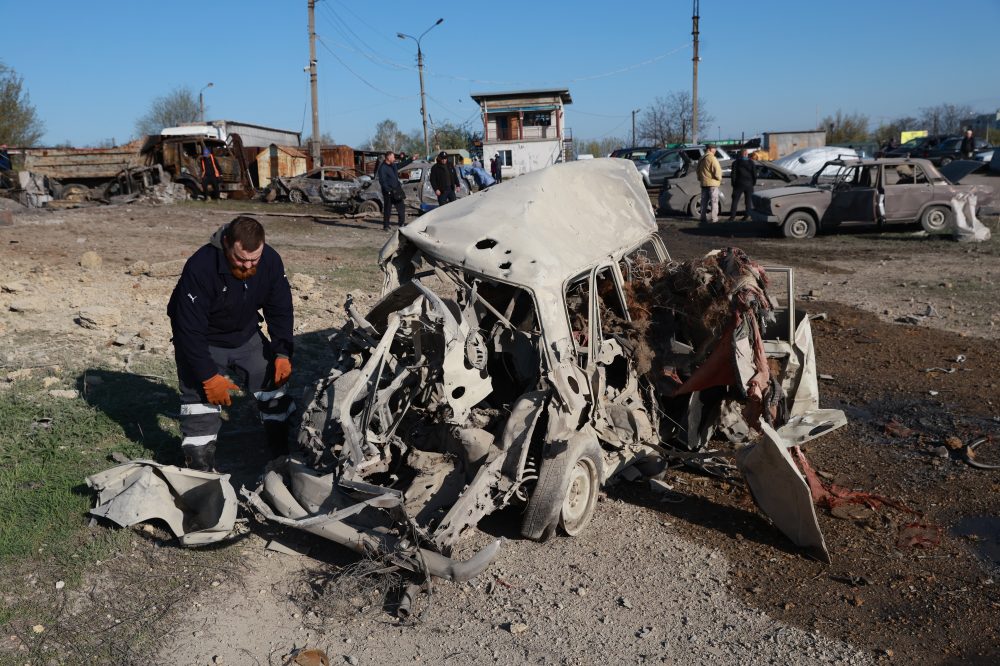
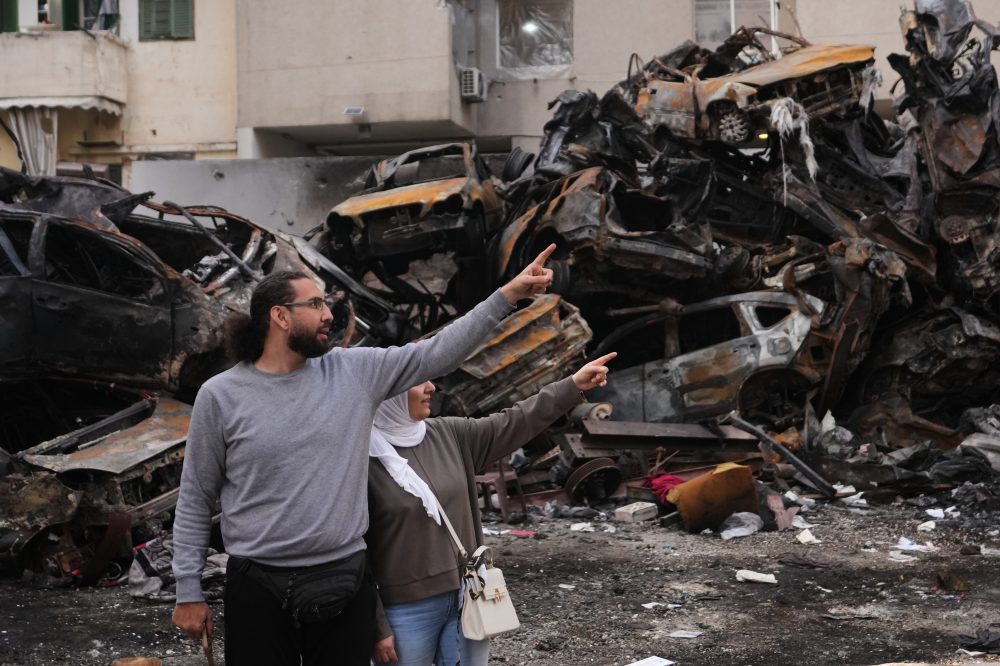
Throughout the community, evidence of recent bombardments was apparent in damaged structures, piles of concrete debris, and streets covered with wreckage. Local residents moved carefully along roadways surrounded by destruction.
An Israeli unmanned aircraft targeted a vehicle during overnight hours just several hundred meters from Tyre’s downtown area. The intended target remained unclear, though eyewitnesses reported the attack resulted in the death of a young woman who had been seated outside her residence.
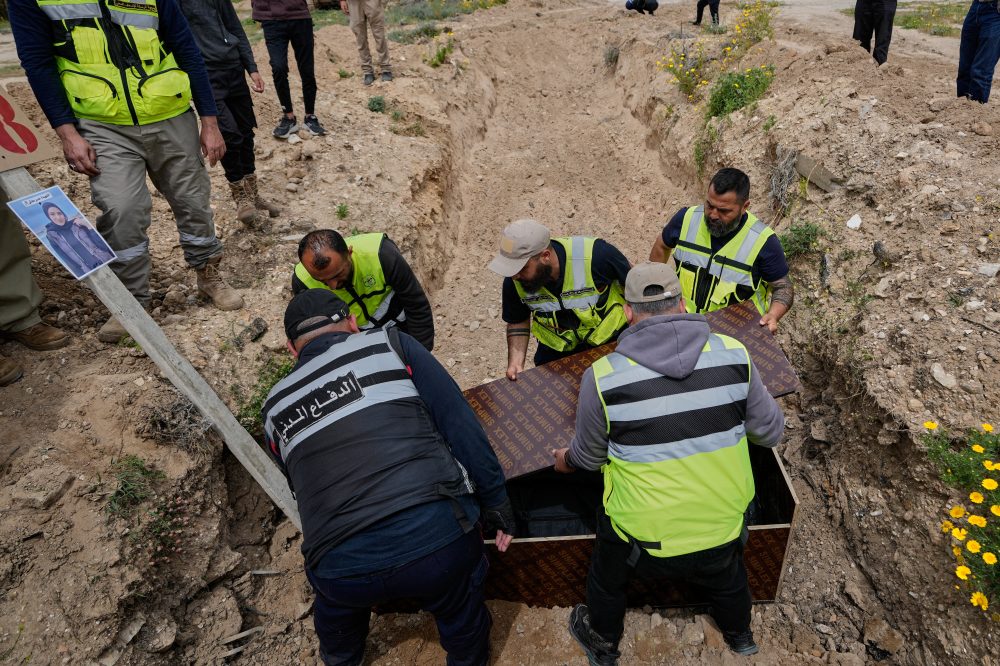
Community members gathered Wednesday for the burial of the victim, 19-year-old Ghadir Baalbaki, at a temporary burial ground established for war casualties. Many families cannot transport deceased relatives to their original communities located closer to active combat zones.
“We prayed maghrib (the Islamic evening prayer) and went and sat outside. We were sitting for 10 minutes before the strike hit us,” said Mariam Hamoud, Baalbaki’s aunt. “I hugged Ghadir because I thought she had fainted. I kept trying to wake her up.”
Her father, Mohammed Baalbaki, stood beside the grave in tears.
“We cannot adapt to life without her,” he said. “Since this tragedy took place yesterday we have been suffering.”
The current conflict between Israel and Hezbollah intensified when Hezbollah launched multiple rockets toward northern Israel, occurring days after the United States and Israel began their military campaign against Iran. Israel responded with comprehensive aerial operations and ground forces deployment.
Lebanese health officials report that Israeli military operations have resulted in over 2,000 deaths, while more than one million Lebanese citizens have been forced from their homes.
Tuesday’s Washington discussions represented an unusual direct meeting between Lebanese and Israeli representatives. However, Hezbollah has expressed opposition to these negotiations, considering them a surrender to Israeli demands while bombardments of their country continue.
The Lebanese government, which has criticized Hezbollah for involving the nation in another conflict, maintains that diplomatic discussions offer the only path to ending the violence.
BARCELONA, Spain — A massive flotilla of more than 70 vessels departed from Barcelona, Spain on Wednesday, carrying activists and humanitarian supplies destined for Gaza.
The Global Sumud Flotilla includes over 1,000 participants from nations worldwide, with organizers describing it as the largest civilian-led maritime mobilization of its type opposing Israel’s policies in the Palestinian territory.
Approximately 40 vessels launched from Barcelona’s port, while additional boats will merge with the convoy from various Mediterranean ports as the fleet travels eastward, according to Thiago Ávila, a flotilla leader who addressed media during a symbolic departure ceremony in Barcelona on Sunday. Weather conditions had forced organizers to postpone their original April 12 launch date.
With global focus shifting to conflicts involving Iran, activists are hoping their current mission will redirect international attention to the circumstances facing Palestinians in Gaza.
“We sail because governments have failed,” said Saif Abukeshek, a Palestinian activist and member of the flotilla’s global steering committee.
“They want a society that feels helpless, that cannot act, that cannot mobilize,” Abukeshek stated on Sunday. “We refuse to be that society.”
Gaza recently observed six months since a ceasefire ended the most severe combat between Israeli military forces and Hamas-led fighters. However, Israeli military operations have resulted in more than 700 deaths in the six months following the ceasefire, according to Gaza’s Health Ministry.
Significant ceasefire implementation tasks remain incomplete, including Hamas disarmament, ending their governance, establishing an international peacekeeping presence, and initiating extensive rebuilding efforts. Approximately 2 million Gaza inhabitants continue living amid destruction with inadequate food and medical supplies, receiving only restricted aid through one Israeli-monitored border crossing.
Both Israel and Egypt have maintained various levels of a blockade on Gaza since Hamas took control from competing Palestinian factions in 2007. Israel maintains the blockade prevents Hamas from acquiring weapons, while opponents argue it constitutes collective punishment of Gaza’s Palestinian residents.
The Global Sumud Flotilla’s current initiative follows less than a year after Israeli authorities thwarted a previous attempt.
Last autumn, numerous vessels approached Gaza waters, with one actually breaching the 12-nautical-mile boundary separating international waters from Gaza’s territorial zone. However, all were eventually intercepted, confiscated, or forced to retreat.
Participants in last year’s mission, including Swedish environmental activist Greta Thunberg, faced arrest, imprisonment, and deportation by Israel. They alleged mistreatment during detention, claims Israeli officials rejected.
Their maritime interception was transmitted live through onboard cameras, generating global demonstrations at the time. However, Gaza-focused attention has diminished as current Iran-related conflicts dominate Middle Eastern affairs and impact international markets.
Organizers aim for this mission to restore focus on Palestinian living conditions in the Gaza Strip, devastated by the Israel-Hamas conflict. Over 70,000 Palestinians have died since the war began with Hamas’s October 7, 2023 attack on southern Israel, which killed approximately 1,200 people and resulted in 251 hostages.
Greenpeace Spain and migrant rescue organization Open Arms, which have dedicated their two major ships to accompany the smaller flotilla vessels, are among the mission’s supporters.
“We sail because the people of Gaza have a right to exist and to breathe and to thrive on their land,” said Eva Saldaña, head of Greenpeace Spain.
Wednesday marks the annual tax filing deadline for most Americans, and Treasury Department officials reveal that millions have already taken advantage of new tax benefits introduced under the Trump administration’s policies.
According to a Treasury official who briefed reporters on Tuesday, more than 53 million taxpayers have claimed deductions under the new provisions included in the comprehensive Republican tax and spending legislation. The breakdown shows 6 million Americans claimed the tip tax exemption, 21 million used the overtime deduction, and 30 million senior citizens took advantage of enhanced deductions.
The anonymous Treasury official characterized the 2026 filing season as successful from the administration’s viewpoint when previewing these figures.
Despite these new tax benefits, recent polling indicates that approximately 70% of Americans continue to believe their tax burden remains excessive, even after the Republican tax legislation that promised significant taxpayer savings.
When the tax season began in January, White House officials predicted that average refunds would increase by a minimum of $1,000. Current IRS statistics show the average refund stands at $3,462, representing an 11% increase of roughly $350 compared to last year’s average refund of $3,116.
The Treasury Department has adjusted its messaging strategy to emphasize that this season’s tax refunds have increased 24% when compared to the four-year average before President Donald Trump assumed office.
The administration has attempted to highlight Trump’s tax reductions as a way to boost voter confidence in his economic management before the upcoming November midterm elections, though this message has been eclipsed by rising gasoline costs stemming from the conflict in Iran.
This tax season occurs amid significant changes at the IRS, including leadership transitions and a 27% workforce reduction over the past year due to cuts implemented by the Department of Government Efficiency.
IRS CEO Frank Bisignano is scheduled to appear before the Senate Finance Committee on Wednesday.
Bisignano’s prepared testimony to Congress will highlight the IRS’s successful implementation of the Republican tax legislation.
Meanwhile, Democratic legislators have focused attention on IRS disclosures of confidential taxpayer data to Immigration and Customs Enforcement through an arrangement between ICE and the Department of Homeland Security designed to identify and remove individuals residing illegally in the United States.
A Seoul court handed down a six-month prison sentence Wednesday to an American content creator whose disruptive behavior and offensive acts sparked widespread anger throughout South Korea.
Ramsey Khalid Ismael, who goes by Johnny Somali online and calls himself an internet “troll,” was convicted by the Seoul Western District Court on several charges including business interference and creating fake explicit material.
The 25-year-old faced allegations of bothering workers and guests at an entertainment venue, creating chaos in a store by playing loud music and throwing noodles around, causing similar disruptions on public transportation, and sharing deepfake videos without permission. Prosecutors had originally requested a three-year sentence.
The judge stated that Ismael showed “severe” disregard for South Korean laws and offended numerous people through his livestreamed antics designed to earn YouTube money. Officials immediately took him into custody after the ruling, citing concerns he might flee the country.
Last October, Somali triggered nationwide fury when he posted footage of himself kissing and performing inappropriate dances on a memorial dedicated to women who suffered sexual enslavement by Japanese forces during World War II. He subsequently issued an apology, stating he didn’t understand what the monument represented.
Ismael, who had been prohibited from departing South Korea while awaiting trial, previously expressed remorse to local media and said he wanted to apologize to the South Korean people.
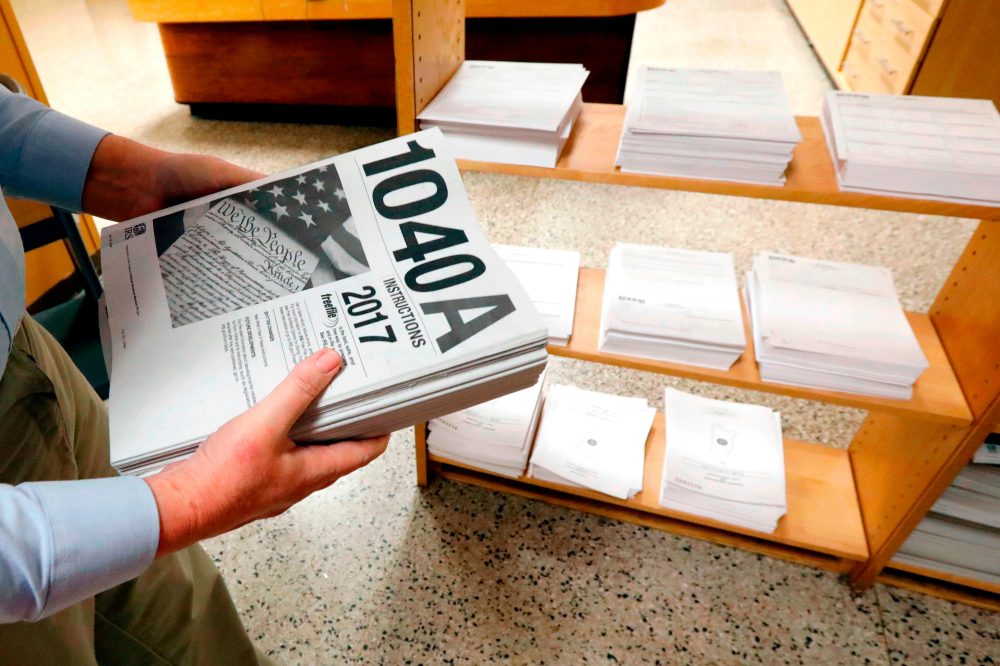
Wednesday represents the official Tax Day deadline across the United States, but those who have delayed filing their 2025 returns shouldn’t worry just yet. There’s still opportunity to complete the process today.
For taxpayers concerned about meeting today’s cutoff, requesting an extension remains an option that extends the filing deadline to October 15th.
Here’s essential information about Wednesday’s cutoff date and helpful guidance to consider.
Typically, all tax filers should have these items ready:
— Social Security number
— W-2 documentation for employed individuals
— 1099-G paperwork for those receiving unemployment benefits
— 1099 documentation for self-employed workers
— Records from savings accounts and investments
— Knowledge of qualifying deductions like educational costs, medical expenses, or charitable contributions
— Understanding of applicable tax credits, including child tax credits or retirement contribution credits
For comprehensive documentation requirements, taxpayers can visit the IRS website.
Tax experts advise collecting all paperwork in a single location before beginning your return, along with keeping previous year documents if your finances have significantly changed. Professionals also recommend establishing an identity protection PIN through the IRS to prevent identity theft. After creating this number, the IRS will mandate it for filing your return.
Should time run short for completing your tax filing, you can request additional time through your chosen tax software, the IRS Free File system, or postal mail.
Remember that extensions apply only to filing deadlines, not tax payment obligations. Those owing taxes should submit estimated payments before the deadline to prevent penalties and interest charges. Taxpayers expecting refunds will receive their money after filing.
Wednesday’s deadline applies to extension requests, providing until October 15th for filing.
The IRS explains that certain taxpayers, including military personnel and those living or working internationally, receive automatic two-month extensions until June 15th. However, payment obligations typically remain due April 15th.
Many taxpayers worry about IRS complications from filing errors. To prevent frequent mistakes:
— Verify your name matches your Social Security card
You should ensure your tax return name corresponds with your Social Security card information. Individuals who changed surnames after marriage, for instance, must use their former name if Social Security Administration updates haven’t been processed yet to prevent delays, according to the IRS.
When employers provide W-2 forms with names that don’t match your Social Security card, the IRS recommends contacting your employer for corrections.
— Look for tax documents if you’ve eliminated paper mail
Although many crucial tax forms still arrive via physical mail, people increasingly choose electronic delivery options. If documents aren’t appearing in your mailbox, review your digital accounts.
“If you didn’t get anything in the mail doesn’t mean that there isn’t an information document out there that you need to be aware of and report accordingly,” Tom O’Saben, director of tax content and government relations at the National Association of Tax Professionals, previously told The Associated Press.
— Include all income sources
Multiple job holders during 2025 need W-2 forms from each employer.
Individuals earning $89,000 or less last year can access IRS Free File for complimentary guided tax preparation with automatic calculations. The IRS also provides an interactive assistance tool for questions during form completion.
Besides TurboTax and H&R Block, taxpayers can employ licensed professionals like certified public accountants. The IRS maintains a national directory of tax preparation specialists.
The IRS supports two free assistance programs: Volunteer Income Tax Assistance (VITA) and Tax Counseling for the Elderly (TCE). VITA serves people earning $69,000 or less annually, individuals with disabilities, and those with limited English proficiency. TCE assists people aged 60 and older. The IRS website helps locate organizations hosting VITA and TCE services.
For tax-related problems, clinics nationwide can help resolve these matters. These tax clinics typically provide services in additional languages including Spanish, Chinese, and Vietnamese.
Motorists traveling on Foulk Road should expect delays this afternoon as construction crews have shut down one lane of traffic in the northbound direction.
The lane restriction affects the stretch of Foulk Road between Naamans Road and Grubb Road, according to DelDOT traffic reports.
Officials say the construction-related closure will remain active until 3:30 PM today. Drivers are advised to allow extra travel time or consider alternate routes to avoid potential backups in the area.
Motorists traveling on Pike Creek Road should expect delays this afternoon as construction crews continue work that requires intermittent lane restrictions.
The affected area spans Pike Creek Road between Larkspur Road and Abbey Lane, where workers are causing periodic lane closures that will continue through 4:30 PM today.
Drivers are advised to allow extra travel time when using this route or consider alternate paths to avoid potential delays during the construction period.
LIMA – Peruvian election officials entered their fourth consecutive day of ballot counting Wednesday as the race to determine who will challenge frontrunner Keiko Fujimori in a presidential runoff remains undecided, according to official data showing roughly 90% of votes tallied.
Three candidates are locked in an extremely close contest for the second runoff position. Left-wing congressman Roberto Sanchez and right-wing former Lima mayor Rafael Lopez Aliaga are both capturing approximately 12% of votes, while center-left candidate Jorge Nieto trails closely behind with around 11%, according to Peru’s national electoral authority ONPE.
The extended counting process highlights the razor-thin margins separating the candidates vying to advance to the final round against Fujimori, who has maintained her lead throughout the counting period.
A tragic school shooting in Turkey’s Kahramanmaras province Wednesday left four people dead and 20 others injured when a middle school student opened fire on campus, according to local officials.
Governor Mukerrem Unluer confirmed to media that among the victims was a teacher. The student gunman had brought his father’s firearms to school hidden inside a backpack before launching the deadly assault. The shooter also died during the incident, Unluer reported.
The attack took place in the southeastern region of Turkey on Wednesday, sending shockwaves through the local community. Authorities are continuing their investigation into the circumstances surrounding the violence at the middle school.
Federal treasury officials have initiated a comprehensive data collection effort targeting private credit companies nationwide, according to a Wednesday report from Punchbowl News citing informed sources.
The Treasury Department’s inquiry seeks detailed information about how these financial firms operate and their connections to traditional regulated banking institutions, the publication reported.
Officials are specifically requesting data on recent business performance and existing partnerships with banks, insurance providers, and reinsurance companies, according to the sources.
Reuters has not been able to independently confirm these details about the Treasury’s outreach to private credit firms.
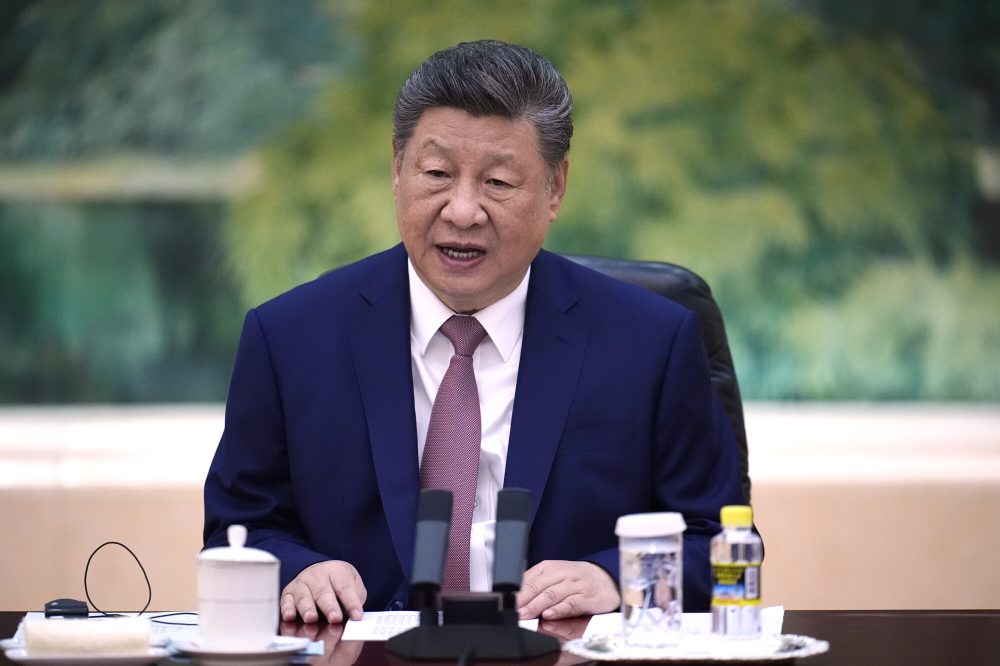
Vietnam’s newly elected president To Lam made a significant diplomatic statement this week by selecting China as the destination for his first international journey since taking office. During a Wednesday meeting in Beijing, Chinese President Xi Jinping emphasized the importance of enhancing infrastructure connections between the two nations and expanding partnerships in cutting-edge sectors such as artificial intelligence and semiconductor technology, according to China’s state television network.
Lam’s four-day visit, which started Tuesday, represents his inaugural foreign trip following his election just one week prior. This choice clearly demonstrates his administration’s foreign policy direction and the deepening relationship between these two Communist countries.
According to CCTV’s coverage, Xi emphasized that protecting the socialist framework and maintaining Communist Party leadership represents the most significant shared strategic interest between both nations during their discussions.
The Chinese leader also encouraged both countries to maintain unwavering confidence in their political systems and continue pursuing reforms while staying true to their established course, the broadcast indicated.
In response, Lam expressed that Vietnam considers strengthening ties with China as “its objective need, strategic choice and topic priority.” He further stated that his country is prepared to deepen cooperation across multiple sectors, encompassing commerce, investment, railroad development, and additional infrastructure projects, as reported by CCTV.
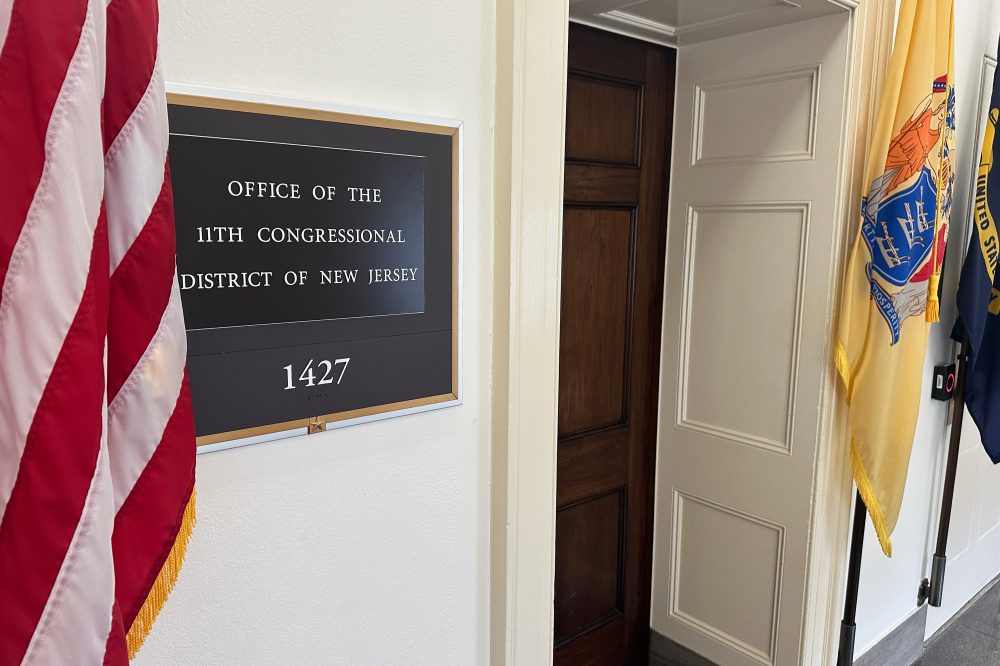
Voters in New Jersey’s 11th Congressional District will cast ballots Thursday in a special election to fill the House seat left vacant when Mikie Sherrill became the state’s Democratic governor.
The outcome could further reduce the narrow Republican control of the House if Democrats succeed in the district that typically favors their party.
Two main candidates are vying to succeed Sherrill: Democrat Analilia Mejia, a progressive activist and former federal Labor Department worker, faces off against Republican Joe Hathaway, who serves on the Randolph Township Council.
Mejia secured early endorsements from progressive leaders including U.S. Senators Bernie Sanders and Elizabeth Warren, plus Representative Alexandria Ocasio-Cortez. She edged out a competitive February 5th Democratic primary that featured former Representative Tom Malinowski and former Lieutenant Governor Tahesha Way. Malinowski had sought a political comeback following his 2022 loss in an adjacent House district.
Hathaway faced no opposition in securing the Republican nomination.
The Israel-Hamas conflict has dominated campaign discussions. A super PAC connected to the American Israel Public Affairs Committee invested over $2.3 million opposing Malinowski, who had questioned unlimited aid to Israel’s government. Mejia stood alone among primary candidates in stating her belief that Israel committed genocide in Gaza, and she has labeled Israeli Prime Minister Benjamin Netanyahu a war criminal. Hathaway advocates unwavering U.S. support for Israel, stating America should stand “in lockstep” with the ally without aid conditions.
Campaign finance records show Mejia raised approximately $1.1 million for both the primary and general election, maintaining about $374,000 as of March 27th. Hathaway collected roughly $525,000 for his campaign with about $109,000 remaining in his account.
Historical voting patterns favor Democrats in the district. Sherrill secured reelection in 2024 with roughly 57% support, while Democratic presidential candidate Kamala Harris captured 53% of district votes.
The district spans 588 precincts across three counties: Morris County contains more than half the precincts, Essex County holds about 39%, and Passaic County represents 9%. Essex County’s portion heavily supports Democrats, with Harris winning 64% in 2024. President Donald Trump narrowly captured Morris County’s district area by approximately one percentage point and won the small Passaic County section with about 57%.
Election procedures require polls to close at 8 p.m. Eastern Time. The Associated Press will monitor results and announce a winner only when trailing candidates cannot mathematically overcome the gap. New Jersey lacks automatic recount provisions, though candidates and voters may request paid recounts that receive refunds if results change.
Voter registration data from April 1st shows approximately 603,000 eligible voters in the district: about 230,000 Democrats, 165,000 Republicans, and 204,000 unaffiliated voters, with remaining registrations spread among minor parties.
The February 5th Democratic primary drew over 68,000 votes compared to roughly 16,000 in the Republican contest. The 2024 general election recorded about 394,000 votes, with nearly half cast before Election Day.
Early voting through Monday totaled about 54,000 ballots: approximately 34,000 from Democrats, 13,000 from Republicans, and over 7,000 from unaffiliated voters.
During February’s special primary, initial results appeared at 8:04 p.m. Eastern Time, four minutes after poll closure. Final updates concluded at 10:30 p.m. with about 91% of votes counted, and the race was called on February 12th at 5:34 p.m.
New Jersey counties typically release early and absentee voting results in their first update before reporting Election Day totals.
The winner will serve 201 days before the seat appears again on the 2026 midterm ballot.
WASHINGTON — First Lady Melania Trump made an uncommon appearance on Capitol Hill Wednesday, participating in discussions with House representatives about proposed legislation to modernize the nation’s foster care system that hasn’t seen major updates in nearly three decades.
The First Lady has focused her attention on foster care issues since President Donald Trump concluded his initial presidency in 2021. Her Wednesday visit to the legislative branch mirrors her successful advocacy efforts last year that resulted in Congress passing legislation protecting women and children from online sexual exploitation.
This Capitol Hill appearance occurred one week following Melania Trump’s unexpected White House statement where she refuted any connections to Jeffrey Epstein, stated she had no awareness of his criminal activities, and called for congressional hearings for his victims. She also demanded an end to what she termed “lies” connecting her to the deceased financier and convicted sex offender.
Through social media, the First Lady expressed her anticipation for collaborating with Congress to “advance new legislation designed to protect and empower individuals from the foster care community.” She described their collective goal as “to strengthen America’s next generation.”
Her Wednesday afternoon meeting included House Ways and Means Committee members alongside individuals with personal foster care experience.
Both Republican and Democratic committee members have introduced multiple bills aimed at modernizing the Chafee foster care program to enhance outcomes for young people exiting the foster care system. These proposals would expand their access to housing assistance, educational opportunities, and job training programs, helping facilitate their transition to independent adult lives.
The Chafee program supports current and former foster youth between ages 14 and 21 as they exit the system. Committee officials described the bipartisan proposals as the most substantial updates since the program’s establishment in 1999.
A January 2025 Government Accountability Office report revealed that states were returning millions in unused Chafee program funding to federal coffers, despite ongoing unaddressed needs among foster youth.
This past November, President Trump established the “Fostering the Future” program through executive order, directing federal agencies, nonprofits, educational institutions, and private sector partners to collaborate on improving career and educational prospects for children raised in foster care.
The First Lady, who accompanied her husband during the Oval Office signing ceremony, leads a separate “Fostering the Future” initiative under her “Be Best” child-focused campaign from his first presidential term. This program provides scholarships to current and former foster youth.
Last month, she organized a summit with representatives from over 40 nations, encouraging international cooperation to enhance educational and technological access for children worldwide.
In March 2025, Melania Trump used her first public appearance since returning to her role as First Lady to participate in Capitol Hill discussions about the Take It Down Act. President Trump signed this legislation two months later, criminalizing the knowing publication or threatened publication of intimate images without consent.
Last week, both Melania Trump and the White House highlighted the first conviction under this new law after an Ohio man admitted guilt in federal court to cybercrimes involving real and AI-generated sexually explicit images and violent threats against multiple victims.
JOHANNESBURG (AP) — In a diplomatic move aimed at mending fractured relations with Washington, South African President Cyril Ramaphosa has named seasoned politician Roelf Meyer to serve as his nation’s ambassador to the United States.
Meyer brings extensive experience from South Africa’s transition to democracy, having served as defense minister under the white minority National Party government led by F.W. De Klerk from 1991 to 1992. He played a pivotal role as a lead negotiator during talks that dismantled apartheid and paved the way for Nelson Mandela to become the nation’s first Black democratically-elected president in 1994. Following that historic election, Meyer continued his public service as constitutional development minister in Mandela’s administration through 1996.
The selection comes during a challenging period for U.S.-South Africa relations under President Donald Trump’s administration, which previously removed former Ambassador Ebrahim Rasool after he publicly criticized Trump.
This diplomatic fallout created pressure on Ramaphosa to choose a representative who could work effectively with the Trump administration amid ongoing tensions.
Trump has taken a hostile stance toward South Africa, eliminating all financial aid while making unsubstantiated claims about a “white genocide” targeting the Afrikaner minority population. The administration has even established programs to provide migration opportunities and asylum for white Afrikaners who claim persecution in their homeland.
“I can confirm that President Cyril Ramaphosa has appointed Mr Roelf Meyer as South Africa’s Ambassador to the US,” presidential spokesman Vincent Magwenya told The Associated Press.
Meyer’s selection as an Afrikaner representative follows Ramaphosa’s recent acceptance of Leo Brent Bozell III as the new U.S. ambassador to South Africa just one week prior.
Bozell, a conservative activist chosen by Trump, immediately created controversy when South Africa’s foreign ministry called him in for discussions in March. During a business leaders’ gathering, Bozell questioned the South African government’s relationship with Iran and criticized affirmative action policies that prioritize opportunities for Black citizens.
University of the Witwatersrand professor John Stremlau, who specializes in U.S.-Africa diplomatic relations, praised Meyer as “the right person, at the right time.”
“He is an excellent and experienced negotiator who not only negotiated in South Africa, but has brokered agreements elsewhere in various other places under very difficult circumstances,” Stremlau explained, noting that Meyer must “stabilize the relationship” between the nations.
“But it will be difficult for him because Trump’s executive orders last year laid out a racist agenda against South Africa’s Black majority, cutting all financial assistance to them and offering refugee status to Afrikaners,” Stremlau added.
Additional friction exists over South Africa’s pursuit of an International Court of Justice case alleging Israeli genocide against Palestinians in Gaza.
Trump declined to attend the G20 Leaders Summit that South Africa hosted in 2025 and has excluded South Africa from upcoming G20 meetings scheduled for Miami in December.
NEW YORK (AP) — Over a dozen young adults met in a Brooklyn brownstone, depositing their smartphones into a metal bowl before spending two hours engaged in reading, sketching, and face-to-face discussions — deliberately avoiding any screen time.
A comparable gathering occurred nearby in a converted early 1900s cardboard manufacturing facility that now serves as upscale office space. About 20 participants in their thirties gazed at their mobile devices briefly, then set them aside to examine their empty hands and those of fellow attendees.
This activity aimed to emphasize the value of focusing on actual experiences rather than the bright digital displays that dominate modern existence.
Twenty years following Steve Jobs’ introduction of the iPhone, a modest yet dedicated movement — with branches in multiple nations — is pushing back against ubiquitous screens.
“The products have become more insidious and more extractive, exploitative,” said Dan Fox, 38, who hosted the house gathering. Members of the nascent movement “want to start a revolution,” he said.
However, can this “attention activism” campaign led by millennials and Generation Z challenge the world’s biggest corporations? Statistics suggest otherwise. Yet cultural shifts begin modestly, and opposition is mounting against what many term “human fracking.”
Apple and other major technology companies claim they’ve implemented measures to help users limit device usage, including tracking tools and a less appealing grayscale display option.
Campaign organizers argue these efforts fall short.
“They want to take down Big Tech,” says Fox, a stand-up comedian who works in marketing for Brooklyn-based Light Phone, one of several “dumb phones” with only basic functionality.
Contrary to typical modern devices, the company highlights what its phones don’t include, such as “social media, clickbait news, email, an internet browser, or any other anxiety-inducing infinite feed.”
Fox became motivated to join the cause after attending a 2015 Tame Impala performance at Radio City Music Hall. He observed that virtually every audience member was recording the show on their devices rather than experiencing the music directly.
“I realized the phones are literally getting in the way of the things I love,” Fox said.
Wireless internet connectivity has become so integrated into daily life that among the rare places without ready access is wartime Iran, where officials disabled internet service during widespread demonstrations in January.
D. Graham Burnett serves as a science historian at Princeton University and co-authored “Attensity! A Manifesto of the Attention Liberation Movement,” establishing him as a key figure in the expanding resistance to corporate exploitation of human focus.
Combined with MSNBC host Chris Hayes’ popular book “The Sirens’ Call: How Attention Became the World’s Most Endangered Resource,” his research contributes to increasing scholarship encouraging people to step away from screens and engage with reality.
Burnett describes the “attention liberation movement” as breaking free from time-consuming applications. Individuals “need to rewild their attention. Their attention is the fullness of their relationship to the world.”
Participants in Fox’s apartment began the session with personal introductions, resembling a recovery meeting.
“I don’t feel good about my relationship with my phone. I feel like an addict,” said Riley Soloner, who teaches theatrical clowning and works as an usher at Carnegie Hall. He arrived with a backpack full of books — the paper kind.
Overseas in the Netherlands, attendees gathered in a neo-Gothic cathedral recently for an Offline Club session.
“We create our events and gatherings with different themes. One of them is connecting with yourself through creative activities or reading or writing or puzzling,” said co-founder Ilya Kneppelhout. “Really something that makes you slow down and reflect, go inward.”
Dozens of “attention activism” organizations exist throughout the United States and Canada, with the movement also emerging in Spain, Italy, Croatia, France and England. Burnett anticipates further expansion.
Students at Oberlin College’s Harkness Housing and Dining Co-op chose to operate their organization without digital communication and spreadsheets in January, extending to prohibit technology in common areas of the 1950s brick structure.
“People expressed a feeling of relief about not needing to be checking their emails, or checking their texts or checking the news. That allowed us to spend a lot of time just talking to each other,” said junior Ozzie Frazier, 21.
Throughout the month-long cooperative experiment, Frazier noted that residents began borrowing CDs from the library and participating in craft evenings, live performances and the word game Bananagrams.
“A lot of people felt very connected to each other. Not having the devices gave them some kind of mental space,” Frazier said.
Wilhelm Tupy discovered “Attensity” while browsing a Vienna bookstore and visited the School of Radical Attention in Brooklyn’s DUMBO area during a recent trip.
He believed he had found something connecting his athletic background as a judo champion — requiring concentrated “flow” — with his current role as a business advisor.
“Discipline is not enough nowadays,” he said. “It’s becoming more and more difficult to keep the attention and to keep the focus on goals and whatever you want to achieve and want to do.”
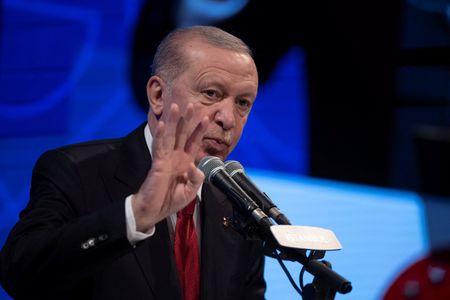
Turkish President Tayyip Erdogan announced Wednesday that his nation is actively pursuing efforts to prolong a ceasefire between the United States and Iran while working to reduce regional tensions and keep diplomatic discussions moving forward.
As Iran’s neighbor, Turkey has maintained close communication with the U.S., Iran, and Pakistan, which has served as a mediator. Turkish officials have consistently advocated for ending what they describe as an unjustified conflict.
During remarks to parliament members, Erdogan expressed concern that Israeli military actions in Lebanon are undermining peace prospects. He emphasized the importance of taking advantage of the diplomatic opening created by the current ceasefire.
“Statements by the sides show that, while the negotiation table has not been toppled, they have reached a road bump on the nuclear issue,” Erdogan told lawmakers, noting that tensions around the Strait of Hormuz are escalating once again.
“We are conveying the necessary suggestions and carrying out initiatives to ease tensions, extend the ceasefire, and maintain talks. There can be no negotiating with clenched fists,” the Turkish leader stated.
Meanwhile, U.S. President Donald Trump indicated that discussions with Iran might restart soon and potentially result in an agreement, following weekend negotiations in Pakistan that failed to produce significant progress. Trump also hinted at an “amazing two days” ahead for observers.
According to Turkish diplomatic sources, foreign ministers from Turkey, Pakistan, Saudi Arabia, and Egypt are scheduled to convene during a diplomatic forum in Antalya, a southern Turkish province, this weekend. Pakistan’s Prime Minister Shehbaz Sharif is also expected to participate.
“There may be difficulties and complicated issues that will take a long time to solve, but when the focus is on the benefits of peace, and action is taken with a long-term perspective, the majority of these can be resolved,” Erdogan concluded.
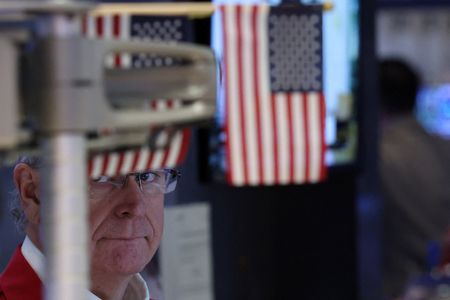
Stock exchanges around the world have recovered to levels not seen since before recent international conflicts began, with U.S. markets approaching all-time highs as investors grow optimistic about potential diplomatic breakthroughs in the Middle East.
This renewed confidence has helped keep oil prices in check, with both Brent and West Texas Intermediate crude trading below the $100 per barrel mark on Wednesday. Brent was trading around $96 per barrel while WTI hovered near $92 per barrel.
The stabilization in energy markets came after President Trump indicated on Tuesday that discussions with Iran could restart within days, despite ongoing U.S. military operations that have disrupted Iran’s shipping activities in the Strait of Hormuz as part of a naval blockade.
These developments sparked another strong day on Wall Street Tuesday, with the Nasdaq climbing 2% and the S&P 500 gaining 1% to finish just below its all-time record. Asian markets continued the positive momentum Wednesday, as Japan’s Nikkei rose 0.9% and South Korea’s KOSPI jumped 3%. European markets remained steady, along with U.S. futures ahead of the opening bell.
The recovery has extended beyond American shores, with the MSCI global index excluding U.S. stocks reaching its strongest performance since March 2nd on Tuesday. The VIX fear gauge has returned to February levels, while the dollar has continued retreating from its recent safe-haven highs, trading near its lowest point since the conflict began.
Corporate earnings have provided additional fuel for the market optimism, with major U.S. banks delivering strong first-quarter results. JPMorgan exceeded profit forecasts thanks to solid trading income and investment banking activity, while Citigroup posted its best quarterly revenue performance in ten years, pushing its stock to heights not seen since 2008. Bank of America and Morgan Stanley are scheduled to announce their results later today.
Dutch semiconductor equipment giant ASML contributed to the positive atmosphere Wednesday by surpassing earnings expectations and raising its 2026 revenue projections based on artificial intelligence-driven demand.
While the International Monetary Fund reduced its global economic growth projections Tuesday and cautioned about potential negative scenarios related to the ongoing conflict, the organization’s baseline forecast anticipates a brief war and maintains unchanged growth expectations for 2027.
U.S. producer price data for March showed increases due to energy market disruptions, but the rise was roughly half what economists had predicted. This provided reassurance to markets, especially since the data reflected conditions after the Iran situation had begun.
Financial analysts note that the March oil price surge has had limited impact on global economic forecasts partly due to the world’s decreasing reliance on fossil fuels. Wind and solar power generation has more than tripled their share of global electricity production over the past ten years.
Key events scheduled for today include U.S. March import price data at 8:30 a.m., speeches by Federal Reserve officials Michael Barr and Michelle Bowman, release of the Fed’s Beige Book economic survey, and earnings reports from Bank of America and Morgan Stanley.
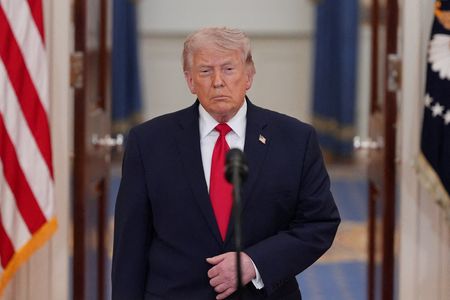
WASHINGTON – President Donald Trump revealed during a Fox Business Network interview that he exchanged letters with Chinese President Xi Jinping regarding weapons supplies to Iran, with the interview broadcast Wednesday.
During the Tuesday taping, Trump disclosed he had written to the Chinese leader requesting that China refrain from providing weapons to Iran. According to Trump, Xi responded in writing that China is not supplying arms to Tehran. The president did not specify the timing of this correspondence.
“I wrote him a letter asking him not to do that, and he wrote me a letter saying that, essentially, he’s not doing that,” Trump stated during his appearance on “Mornings with Maria.”
This revelation comes after Trump issued warnings last week threatening an immediate 50% tariff against any nation that provides weapons to Iran.
The president also indicated that global oil market fluctuations stemming from conflicts involving Iran and developments in Venezuela would not affect his upcoming meeting with Xi scheduled for next month. “He’s somebody that needs oil. We don’t,” Trump commented regarding the Chinese leader’s position.
Walmart announced Wednesday that it’s giving its Great Value store brand a complete makeover as budget-minded customers increasingly choose store-brand alternatives over name brands.
The retail giant revealed that its Great Value line, which first debuted in 1993, will undergo its first major redesign in more than ten years. The transformation will affect nearly 10,000 food and household products across the company’s shelves.
The company plans to implement the changes gradually over a two-year period, starting with salty snack products before moving through other product categories one by one.
According to Walmart, the updated packaging will feature enhanced nutritional details and health benefit information on all Great Value food products.
Scott Morris, who serves as senior vice president of private brands at Walmart U.S., emphasized that the makeover won’t affect the actual products or their prices.
This brand refresh follows Walmart’s earlier commitment to eliminate artificial dyes from its private label food products, including Great Value items, by January 2027. The move reflects changing customer preferences influenced by the popularity of GLP-1 weight-loss medications.
The announcement comes after Walmart reported strong quarterly sales results in February, boosted by continued growth in its digital shopping platform.
Bank of America saw its first-quarter earnings climb as market turbulence drove up trading activity and a wave of major corporate mergers increased the bank’s investment banking revenue.
The company’s stock gained 1.5% in pre-market trading following the earnings announcement.
Financial markets started 2026 with strong momentum, supported by late-2025 interest rate reductions and solid corporate performance. But that positive outlook quickly shifted as the Federal Reserve took a more aggressive stance, concerns grew about overvalued artificial intelligence companies, and increased U.S. involvement in Middle Eastern conflicts created market uncertainty.
This market instability led to significant shifts in investor behavior, with many moving away from high-growth technology stocks toward more stable value investments.
When markets experience volatility, investment banks typically see increased profits as their trading divisions earn more from heightened client transactions. Bank of America’s sales and trading division generated $6.4 billion in the first quarter, representing a 13% increase.
The first three months of 2026 witnessed substantial deal-making activity, with global transactions surpassing $1.2 trillion despite Middle Eastern conflicts and fluctuating company values.
Large-scale deals, particularly in the technology sector, dominated the landscape. According to LSEG data, 22 transactions valued at more than $10 billion each were completed during the quarter ending March 31, setting a new quarterly record.
BofA Securities played important advisory roles in several major transactions, including McCormick’s $42.7 billion purchase of Unilever’s food division and Boston Scientific’s $14.9 billion acquisition of medical device company Penumbra.
The bank also provided guidance for Devon Energy’s $26 billion acquisition of Coterra Energy, marking a significant step in U.S. shale industry consolidation.
Additionally, the bank headed the advisory team for senior housing REIT Janus Living’s March listing on the New York Stock Exchange.
Investment banking fees at BofA totaled $1.8 billion for the quarter, a 21% increase that exceeded the bank’s projected 10% growth.
JPMorgan Chase also announced strong first-quarter results on Tuesday, surpassing analyst expectations with help from robust trading and deal-making performance.
Despite strong earnings, JPMorgan, Bank of America, and Wells Fargo have all declined in 2026, trailing the broader S&P 500 index, which has gained approximately 1.8% through the most recent close.
Bank of America posted net income of $8.6 billion, equivalent to $1.11 per share, for the quarter ending March 31. This compared to $7.4 billion, or 89 cents per share, during the same period last year.
“We remain watchful of evolving risks. However, we saw healthy client activity, including solid consumer spending and stable asset quality, indicating a resilient American economy,” CEO Brian Moynihan said in a statement.
A traffic incident has forced the closure of westbound Middletown Odessa Road at its intersection with Route 1, according to the Delaware Department of Transportation.
The westbound lanes of Route 299 remain shut down as authorities respond to the incident near the Middletown area.
DelDOT has not provided details about the nature of the incident or an estimated time for reopening the roadway.
Drivers traveling westbound on Route 299 should expect delays and consider alternate routes while the closure remains in effect.
Federal documents obtained through a Freedom of Information Act request reveal that the Trump administration has terminated the Consumer Financial Protection Bureau’s Washington headquarters lease, ending the agreement six years before its scheduled expiration.
The Office of the Comptroller of the Currency ended the CFPB’s lease in February and transferred the downtown Washington property to the General Services Administration at no charge, according to records released to Reuters.
This latest development adds to ongoing uncertainty surrounding the consumer protection agency, which was established by Congress following the 2008 financial crisis to oversee consumer financial products. President Trump has advocated for eliminating the bureau entirely, and court documents show his administration initially planned to close the agency completely.
After facing legal challenges from agency staff, the administration is now pursuing court permission to slash the CFPB’s workforce from approximately 1,700 employees to just one-third of that number.
The OCC acquired the building in 2010 as part of regulatory reforms implemented after the financial crisis that also led to the CFPB’s creation. The original lease was set to run for 20 years, requiring the consumer bureau to pay roughly $11.4 million annually in rent for 2012, with 2% yearly increases.
According to the lease termination documents, the CFPB first approached the OCC about ending the arrangement shortly after Trump assumed office and made the request again in December.
In correspondence dated February 12, Comptroller of the Currency Jonathan Gould informed the GSA that managing the property involved “costs and risks” and that serving as the CFPB’s landlord “does not advance the OCC’s mission.”
The consumer protection agency has experienced significant staff reductions over the past year, with current employment dropping below 1,200 workers based on recent court filings. Sources familiar with the situation indicate that only a small number of CFPB personnel regularly use the building, as most employees now work remotely.
Trump’s Budget Director Russell Vought, who serves as the CFPB’s acting director, suspended agency operations last year and sent staff home. The building’s signage was removed overnight during this period.
Some agency functions have gradually resumed, including regulatory drafting and limited supervisory activities. Recent job postings show the bureau has advertised a small number of attorney positions.
The headquarters building sits across from the White House complex and features modern 1974 architecture with floor-to-ceiling windows. The facility encompasses more than 300,000 square feet, includes over 200 parking spaces, and has an accessible rooftop in a prime downtown location.
The Trump administration characterizes the agency as a politicized obstacle to free enterprise, while supporters argue that efforts to dismantle it will ultimately harm consumers.
Neither the OCC nor GSA representatives provided immediate responses to requests for comment. A CFPB spokesperson confirmed the agency’s headquarters were located at the property in question but declined to answer detailed inquiries.
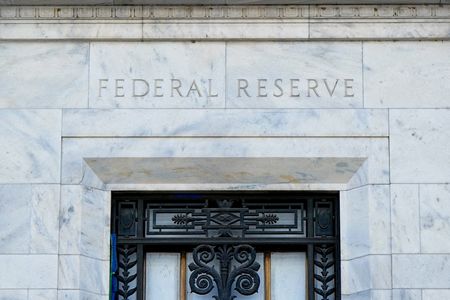
The 12 regional presidents of Federal Reserve banks across the nation find themselves at the center of an unprecedented battle over central banking independence, as political and legal challenges mount against the institution’s traditional structure.
San Francisco Fed President Mary Daly, who reached her position through a selection process that bypassed public elections and political appointments, maintains that regional bank leaders serve as cornerstones of the Federal Reserve’s democratic credibility.
This perspective now confronts significant challenges from multiple directions: a Supreme Court case examining whether presidents can dismiss Fed governors, ongoing transition difficulties between current Fed Chair Jerome Powell and President Trump’s nominee Kevin Warsh, and potential reforms from Treasury Secretary Scott Bessent, who has voiced criticism of Fed operations.
“Look back to the original act … You create these regional Feds and you make the selection of those policymakers different than the selection of the ones in D.C.,” Daly explained in a recent interview, referencing how the Federal Reserve Act sought to balance centralized authority in Washington with regional representation across 12 districts.
The regional presidents hold substantial influence, with five participating in monetary policy votes on a rotating schedule, representing crucial support that Fed leadership must secure when establishing policy directions.
These officials frequently emphasize their extensive interactions with local business leaders and workers as fundamental to the Fed’s mission, arguing that their independence from political appointment processes enables objective decision-making.
Daly noted that Senate-confirmed Fed governors must approve regional bank appointments, creating “the checks and balances that I think are part of a democratic institution. Other people can disagree, but this has stood the test of time.”
However, the current system faces mounting pressure from both the legal challenge regarding Trump’s attempt to remove Fed Governor Lisa Cook and Powell’s decision about remaining on the board through 2028, even if Warsh assumes the chairmanship after Powell’s term concludes May 15.
Warsh’s confirmation process has stalled due to at least one Republican senator’s opposition, stemming from concerns about a Trump administration investigation into Powell that the senator views as undermining Fed independence.
Powell has criticized this investigation and stated he will determine his future “based on what I think is best for the institution and for the people we serve,” potentially setting up continued resistance to changes he considers excessive.
While regional Fed presidents are selected through local processes with minimal Washington involvement, they remain vulnerable to dismissal by a board majority. The current board includes three Biden appointees and three Trump appointees, with Powell originally appointed by Obama, promoted by Trump, and reappointed by Biden.
Trump has not publicly addressed regional bank composition, and his administration has not formally proposed changes to increase White House influence over these institutions.
Nevertheless, discussions about their role have become entangled in broader debates about balancing Federal Reserve independence in monetary policy with democratic accountability and constitutional governance principles.
Columbia Law School Professor Kathryn Judge, speaking at a recent Shadow Open Market Committee gathering, predicted that Trump administration challenges, regardless of their success, would create a period of “disruption” that “is likely to dramatically weaken the ground upon which Fed independence has stood, and that independence is going to remain fragile.”
Future directions remain uncertain. Warsh has called for significant Fed changes without providing specifics, while Bessent has published detailed criticism of what he considers excessive Fed economic influence and suggested residency requirements for regional bank president appointments.
Stephen Miran, before joining the Fed board, co-authored research arguing that presidents should have authority to dismiss both Fed board members and regional bank leaders, claiming the current arrangement creates “some degree of tension” with constitutional principles.
Former Fed Vice Chair for Supervision Randall Quarles echoed similar sentiments, telling the Shadow Open Market Committee that Supreme Court protection of Fed officials from presidential dismissal would be “both wrong and unnecessary.”
“The right answer is to say … the president can, in fact, dismiss anyone on the Federal Reserve Board because he disagrees with their views on policy,” Quarles argued, while expressing confidence that Senate confirmation processes and regional bank leadership would prevent political hijacking of monetary policy.
Former St. Louis Fed President James Bullard quickly challenged this position, warning: “You’re absolutely playing with fire. Do you not think that if you fire all the governors at will, they will just turn around and fire all the (Fed bank) presidents? … One party or another has swept into power and what do they want? They want low interest rates because they don’t want to have to pay a lot for their deficit spending.”
Netflix is pivoting its strategy toward advertising revenue and content development after its unsuccessful attempt to purchase Warner Bros Discovery, with investors closely monitoring the streaming platform’s quarterly earnings report scheduled for Thursday.
The failed acquisition would have provided Netflix immediate access to popular entertainment properties such as “Game of Thrones” and “Friends,” eliminating the need for expensive original content development.
Now the streaming company faces increased competition from a potential Warner Bros-Paramount Skydance merger worth $110 billion, should that transaction be completed.
Financial analysts predict Netflix will announce first-quarter revenue growth of 15.5 percent, reaching $12.18 billion, with advertising contributing approximately $634 million to that total, based on LSEG polling data.
The company implemented price increases for U.S. subscribers in March, which some industry experts believe may prompt Netflix to raise its annual revenue projections. These higher costs could also drive more customers toward the company’s advertisement-supported subscription option, though ad revenue remains a smaller portion of overall income.
Netflix stock has climbed 13 percent year-to-date and jumped roughly 26 percent since abandoning the $72 billion Warner Bros acquisition attempt.
Market observers anticipate Netflix will concentrate on sports programming and live event broadcasting to enhance advertising income.
“We’re kind of entering another phase for the ad business, where they are becoming one of the largest scaled global advertising platforms,” explained John Belton, a portfolio manager at Gabelli Funds, which holds Netflix stock.
During the recent quarter, Netflix broadened its live programming offerings, featuring a K-pop concert by BTS broadcast from Seoul that attracted 18.4 million global viewers, along with the 2026 World Baseball Classic, which set records as the most-watched baseball game worldwide on streaming platforms.
Delaware attorneys are joining colleagues nationwide in issuing urgent warnings to clients: conversations with artificial intelligence chatbots could end up as evidence in criminal prosecutions and civil lawsuits.
The cautionary advice has intensified following a significant federal court decision in New York earlier this year. A judge determined that a former financial company CEO facing securities fraud charges could not prevent prosecutors from accessing his conversations with AI chatbots.
Legal professionals are now alerting clients that discussions with popular AI platforms such as ChatGPT from OpenAI and Claude from Anthropic may be subject to court orders in both criminal investigations and civil litigation.
“We are telling our clients: You should proceed with caution here,” stated Alexandria Gutiérrez Swette, an attorney with the New York law firm Kobre & Kim.
While conversations between attorneys and their clients receive strong confidentiality protections under American law, AI chatbots do not qualify as lawyers. Legal professionals are now instructing clients on methods to better protect their communications with artificial intelligence tools.
More than twelve prominent U.S. law firms have distributed guidance through client emails and website postings, offering strategies to reduce the likelihood of AI conversations becoming courtroom evidence.
Some legal firms are incorporating these warnings directly into client contracts. Sher Tremonte, a New York-based firm, recently included language in a client agreement stating that sharing attorney advice or communications with a chatbot could eliminate attorney-client privilege protections.
The landmark case involved Bradley Heppner, former chairman of bankrupt financial services firm GWG Holdings and founder of alternative asset company Beneficent. Federal prosecutors charged Heppner last November with securities and wire fraud; he entered a not guilty plea.
Heppner had utilized Anthropic’s Claude chatbot to create reports about his case for sharing with his legal team. His attorneys argued that these AI conversations should remain confidential because they contained details from lawyers regarding his defense strategy.
Government prosecutors contended they had the right to obtain materials Heppner created using Claude, arguing that his defense attorneys weren’t directly involved and that attorney-client privilege doesn’t extend to chatbots.
Sharing information from a lawyer with any outside party can compromise the standard legal protections for attorney communications.
In February, Manhattan-based U.S. District Judge Jed Rakoff ordered Heppner to surrender 31 documents created using Anthropic’s Claude chatbot in connection with the case.
Judge Rakoff wrote that no attorney-client relationship exists “or could exist, between an AI user and a platform such as Claude.”
Neither Heppner’s legal team nor the Manhattan U.S. attorney’s office provided responses to requests for comment.
Courts are increasingly confronting the expanding use of artificial intelligence by both lawyers and self-represented individuals in legal proceedings, which has resulted in court filings containing fictional cases generated by AI systems.
Rakoff’s decision represented a crucial early examination in the AI era of fundamental legal protections covering attorney-client communications and materials prepared for litigation.
On the same date as Rakoff’s ruling, U.S. Magistrate Judge Anthony Patti in Michigan reached a different conclusion. He determined that a woman representing herself in an employment lawsuit against her former employer didn’t need to provide her ChatGPT conversations about her employment claims.
Judge Patti classified the woman’s AI discussions as part of her personal “work-product” for the case, rather than conversations with an individual whom her employer could seek to use in its defense.
ChatGPT and other generative AI programs “are tools, not persons,” Patti wrote in his decision.
The privacy and usage policies for both OpenAI and Anthropic indicate that the companies may share user data with third parties. Both companies also require users to consult qualified professionals before depending on their chatbots for legal guidance.
During a February hearing in Heppner’s case, Judge Rakoff observed that Claude “expressly provided that users have no expectation of privacy in their inputs.”
Neither OpenAI nor Anthropic representatives provided immediate responses to requests for comment.
Legal counsel recommendations have varied from advising clients to carefully choose their AI platforms to proposing specific language for chatbot interactions.
Los Angeles-based O’Melveny & Myers and other firms indicated in client advisories that “closed” AI systems designed for corporate use might offer stronger protections for legal communications, though they noted this remains largely unproven.
Several firms suggested that AI legal research is more likely to receive attorney-client privilege protection when conducted under lawyer supervision. If an attorney recommends using AI, individuals should indicate this in their chatbot prompt, according to New York-headquartered Debevoise & Plimpton in a website notice.
“I am doing this research at the direction of counsel for [X] litigation,” the firm recommended people include in their messages.
Details about AI usage are also becoming standard in law firm client contracts, based on a Reuters examination of contracts posted on a U.S. government website.
Sher Tremonte, which frequently represents white-collar criminal defendants, stated in a March contract: “Disclosure of privileged communications to a third-party AI platform may constitute a waiver of the attorney-client privilege.”
Justin Ellis from New York-headquartered MoloLamken and other legal professionals anticipate that additional court rulings will eventually establish clearer guidelines for when AI conversations can serve as evidence.
Until that clarity emerges, attorneys are emphasizing that a time-tested principle remains valid: avoid discussing your case with anyone except your lawyer — including artificial intelligence.
KYIV, Ukraine — Ukrainian President Volodymyr Zelenskyy said Wednesday that obtaining assistance from allied nations to purchase and manufacture additional air defense systems remains his country’s primary diplomatic objective, as Russia continues launching fatal strikes against civilian targets and critical infrastructure.
Between Tuesday and Wednesday, Russian bombardments struck more than six Ukrainian regions away from active combat zones, resulting in the death of an 8-year-old child in the Cherkasy region and a woman at a bus stop kiosk in southern Zaporizhzhia, according to the president and regional authorities.
“Every day we need air defense missiles — every day Russia continues its strikes,” Zelenskyy wrote on his Telegram social media account.
Without any announced plans for additional U.S.-facilitated negotiations with Russia, the Ukrainian leader embarked on a 48-hour tour of three European capitals, obtaining commitments for continued military and financial assistance from Germany and Norway before traveling to Italy on Wednesday.
Following more than four years of confronting Russia’s comprehensive military offensive, Ukraine has gained valuable experience intercepting enemy drones and created innovative air defense capabilities, yet the nation requires additional funding to expand manufacturing to levels that would maximize its strategic benefits.
The Ukrainian president explained he is requesting European nations to continue contributing to a financial mechanism that enables purchasing American-manufactured weapons from the United States for Ukraine, particularly the Patriot defense system capable of intercepting Russian cruise and ballistic missiles targeting civilian locations.
Zelenskyy is also advocating for collaborative weapons manufacturing partnerships, including drone and missile production, while urging the European Union to expedite delivery of a pledged 90-billion-euro ($106 billion) financial package.
Representatives from more than 50 partner countries who routinely coordinate to provide weapons assistance to Kyiv scheduled an online conference for Wednesday, led by German Defense Minister Boris Pistorius and British Defense Secretary John Healey. NATO Secretary-General Mark Rutte planned to participate.
Prior to the meeting, Britain revealed it would deliver 120,000 drones to Ukraine during the current year, marking its largest shipment of these weapons to date. The delivery encompasses long-distance attack drones, surveillance and reconnaissance units, supply drones and naval capabilities. Authorities did not specify delivery timelines.
Russian forces deployed 324 drones and three ballistic missiles against Ukraine during overnight hours, according to Ukrainian air force reports, representing the largest assault in nearly two weeks. Ukrainian defenses successfully intercepted 309 of the attacking drones.
Russia additionally launched a massive FAB-1500 glide bomb weighing 1.5 metric tons at central Sloviansk during early Wednesday morning hours, according to Vadym Liakh, head of the Sloviansk City Military Administration.
The explosion demolished a children’s athletic facility that served as a municipal landmark, Liakh reported.
During nighttime attacks on the southeastern city of Dnipro, Russian military forces targeted two universities, causing damage to academic structures, student housing and neighboring residences, according to Mayor Borys Filatov.
The explosion’s impact shattered over 1,000 windows in nearby buildings, Filatov noted, emphasizing that no military installations existed in the affected area.
Simultaneously, Ukraine continued conducting its long-distance drone operations against Russia, with the Russian Defense Ministry announcing Wednesday that its air defenses destroyed 85 Ukrainian drones overnight across multiple Russian territories, the occupied Crimean peninsula and waters of the Black and Azov seas.
Ukrainian drones attacked an industrial complex in Sterlitamak, a Russian city located approximately 1,300 kilometers (roughly 800 miles) east of Ukraine’s border, according to local government officials.
Radiy Habirov, regional governor of Bashkortostan where Sterlitamak is situated, stated in a Wednesday online announcement that multiple drones were eliminated over Sterlitamak’s “industrial zone,” with debris landing on one facility and igniting a fire. He provided no additional information.
DEARBORN, Mich. — A year and a half after America’s most prominent Arab American community backed Donald Trump’s return to the White House, residents continue their daily prayers for peace.
Families in this Detroit suburb anxiously await updates from overseas relatives, hoping for safety news while grieving those they’ve already lost to violence.
The initial heartbreak over Gaza’s conflict has expanded significantly. With Dearborn’s substantial Lebanese American residents, Lebanon’s escalating warfare has brought the crisis closer to home. This overseas turmoil now intersects with domestic challenges including stricter immigration policies, economic difficulties, and rising local tensions following a recent synagogue attack.
“The community now sees that it could have got worse — and it did get worse,” said Nabih Ayad, founder of the Arab American Civil Rights League. “But the community was just so desperate.”
The election-season media attention that once focused intensely on Dearborn has diminished. Large-scale demonstrations have subsided. Yet within religious centers, at memorial services, and during family gatherings, discussions show a community still struggling and beginning to consider future options.
Recently, Ayad met with fellow Arab American community leaders for an Associated Press interview. Several had participated extensively in discussions with both Kamala Harris’ Democratic campaign and Trump’s Republican effort as each sought their electoral support.
“We get this all the time by media, okay? It’s basically, ‘How’d that decision go? How’d that work out for you?’” Ayad said.
Nearly a dozen leaders attended — including county officials, state legislators, and business operators — and most agreed that circumstances haven’t improved since Trump’s inauguration.
However, few expressed remorse about their choice. Most explained that Democrats failed to provide a credible option because Harris, serving as vice president then, didn’t sufficiently separate herself from Joe Biden’s pro-Israel stance regarding Gaza operations.
Most don’t intend to back Trump or other Republicans going forward.
“I think November 3rd couldn’t come soon enough,” said Wayne County Commissioner Sam Baydoun, referring to the midterm elections.
Following America’s joint action with Israel against Iran, the regional conflict expanded to encompass Lebanon, Hezbollah’s operational base.
A tentative two-week ceasefire announced recently didn’t cover Israel-Hezbollah hostilities, allowing continued violence there. The warfare has forced over one million Lebanese to flee their homes and resulted in more than 2,000 deaths, including over 500 women, children, and healthcare personnel. Lebanon and Israel conducted their first direct diplomatic discussions in decades this Tuesday in Washington.
Michigan hosts America’s largest Arab American population, with nearly 25% claiming Lebanese heritage. Within Wayne County, encompassing Detroit and Dearborn, approximately one-third of the roughly 140,000 residents who identified as Middle Eastern or North African in 2020 census data are Lebanese.
For many families, this translates to persistent anxiety.
“I have family in Lebanon. I have an uncle with his wife and his kids and his grandkids. And to be honest with you, I’m just waiting for the call from overseas saying that he’s perished,” said Assad Turfe, a Wayne County official who was among the few Arab Americans to endorse Harris in 2024.
“This is the kind of environment that this community is living with every day,” he added. “That story is in the minds and the hearts of almost everyone that lives in this community.”
During Friday services in Dearborn Heights, more than one hundred worshippers filled a mosque for afternoon prayers. The imam began by addressing Middle Eastern conflicts and criticizing Trump’s statements that a “whole civilization will die” unless Iran accepted his conditions.
“Political leaders are supposed to build the bridges, not promote scorched earth policies,” the imam said.
The moment highlighted how profoundly the conflict has penetrated everyday routines, transforming religious spaces into venues extending beyond worship.
That evening, Peace Park in Dearborn became filled with Lebanese flags as a memorial service occupied the central plaza.
Young people sat on flag-draped steps, carrying photographs of children killed during the war. Meanwhile, speakers alternated describing a conflict spanning multiple presidential administrations with minimal progress toward resolution.
“What we have witnessed is not just another headline. It is not distant. It is not abstract,” Suehaila Amen, a Lebanese American, said at the vigil.
“We are a community in mourning,” she said, “and we have been mourning for a long, long time.”
Walmart has announced a comprehensive redesign of packaging for its Great Value private label brand, making it easier for customers to quickly identify nutritional details like gluten-free options or protein content in products.
The retail giant’s largest store brand, Great Value, encompasses 10,000 different items and ranks among the nation’s biggest food and consumer goods labels. This packaging refresh signals how shoppers increasingly view store brands as comparable alternatives to national name brands rather than inferior substitutes.
The updated designs feature enhanced food photography aimed at making products more appealing to consumers. The new Great Value lasagna packaging, for instance, displays the dish garnished with fresh basil on a complete place setting with red checkered tablecloth backdrop, replacing the previous plain white background presentation, Walmart officials explained.
Wednesday’s announcement marks the brand’s first complete visual overhaul in more than a decade since the 33-year-old label’s inception. Scott Morris, senior vice president of Walmart’s U.S. private brands division, said the new packaging will begin appearing in stores next month, emphasizing that the actual products remain unchanged.
This redesign comes as economic pressures drive more consumers toward store brands over pricier national alternatives. Market research firm Circana reports that private label products captured 23.9% of food and beverage unit sales last year, a slight increase from 23.7% the previous year. National brands held 76.1% of the market, down from 76.3% in 2024.
According to Walmart, store label products represent approximately 25% of the company’s U.S. merchandise sales, though specific Great Value revenue figures weren’t disclosed. The retailer has consistently noted growing customer preference for its private label offerings.
Additionally, shoppers are becoming more selective about food ingredients, seeking high-protein options or gluten-free alternatives. Walmart noted that both regular customers and gig workers fulfilling online orders need to quickly identify key product attributes while shopping or picking items from shelves.
“We’re offering this great product at a very affordable price, but there was always this kind of lagging feeling that a customer was buying this product that felt like they had to compromise,” explained Dave Hartman, vice president of creative design for Walmart. “So that was one of the key impetuses in terms of redesigning the brand.”
The packaging trend extends beyond Walmart, with companies like PepsiCo recently announcing updated Tostitos designs that highlight claims such as no artificial colors, flavors or preservatives.
Under the new Great Value design, nutritional information will consistently appear in the upper right corner of packages, according to Hartman. Previously, this information appeared in various locations without standardization.
The redesigned Great Value Chicken Nuggets package exemplifies these changes, prominently featuring “11 grams of protein per serving” in the upper right corner alongside photography showing nuggets plated with dipping sauce. The original packaging lacked the protein callout and showed less appealing product imagery.
This packaging redesign represents Walmart’s latest investment in strengthening its store brand portfolio. Last fall, the company announced plans to eliminate synthetic dyes from all private label food products.
Automotive manufacturers and battery producers are rushing to transform their electric vehicle battery facilities into energy storage production plants as EV sales continue to decline across the United States. The shift aims to capitalize on growing demand for power storage systems driven by artificial intelligence and data center expansion.
Major companies including General Motors, Ford Motor, and their Asian battery partners – Japan’s Panasonic Holdings, South Korea’s Samsung SDI, and LG Energy Solution – have invested over $100 billion in battery manufacturing facilities during the past ten years. However, the electric vehicle market has struggled under current administration policies favoring fossil fuels.
Energy storage systems utilize lithium-ion battery technology similar to EV batteries, storing electricity from renewable sources like solar and wind power for release during peak demand periods. Growing U.S. demand stems largely from data centers and cloud computing operations that consume massive amounts of electricity.
Despite the anticipated energy storage growth, industry analysis shows it won’t compensate for the dramatic drop in EV battery demand. Electric vehicle sales were already underperforming manufacturer expectations before the $7,500 consumer tax credit ended on September 30, leading to a sales decline exceeding 25% over six months.
Factory conversions require significant time and financial investment, plus companies must master technology currently dominated by Chinese manufacturers. Bob Lee, North America head for LG Energy Solution, announced his company is converting three North American facilities for storage battery production. He anticipates continued struggles with excess capacity, describing it as “fallout” from the EV market downturn.
“Like any other industry that goes through a difficult period like this, I don’t think it’s going to be all rosy,” he said.
Ford announced a $2 billion investment in a new battery storage division over two years to “create a new, diversified and profitable revenue stream.” GM’s partnership with LGES, known as Ultium Cells, revealed plans last month to convert a Tennessee EV battery facility for storage cell production.
Converting production facilities presents complex and expensive challenges. North American stationary battery demand will reach 76 gigawatt-hours this year according to Benchmark Mineral Intelligence, but automotive industry investments have created approximately 275 GWh of factory capacity. While storage demand may nearly double to 125 GWh over five years, it still won’t absorb the surplus automotive capacity.
LG Energy Solution plans to convert factory space for up to 50 GWh annual storage battery production by year’s end, representing only one-third of the company’s regional capacity across its own facilities and joint ventures with General Motors, Honda, and Hyundai.
Energy storage systems typically use lithium iron-phosphate (LFP) batteries, which cost less than the nickel-based chemistry predominant in North American EV batteries. Converting factories to LFP production can require 18 months and cost hundreds of millions of dollars, according to battery industry executives.
U.S. battery manufacturers face additional complications from China’s dominance in LFP technology and supply chains. American producers are working to reduce Chinese material dependence to qualify for federal tax credits for domestic battery production established under the previous administration and maintained under current leadership. Companies must gradually eliminate Chinese content over coming years to receive full tax benefits.
Trade restrictions create further obstacles, with U.S. tariffs on Chinese-made cathode and anode materials – the battery electrodes that transfer electrical charges – reaching 35% according to Benchmark Mineral Intelligence.
The automotive industry’s energy storage pivot has accelerated recently. In March, the GM-LGES partnership announced $70 million in spending and worker retraining to produce storage battery cells at their Nashville-area plant. Ford disclosed in December plans to repurpose underutilized Kentucky factory space for storage battery manufacturing.
Traditional automakers are attempting to catch up with Tesla, where Elon Musk’s company has spent approximately ten years developing its energy storage business into one of the EV manufacturer’s fastest-growing segments. The storage division proved more profitable than Tesla’s automotive business in 2025, achieving gross margins around 30% compared to roughly 15% for vehicle sales, excluding regulatory credit earnings.
Tesla’s Megapack storage unit deployments have increased dramatically, including $430 million in revenue last year from sales to Musk’s xAI company, demonstrating how AI-driven data center demand directly translates to battery orders.
Kurt Kelty, GM’s battery chief and former Tesla executive, told reporters in January that the company remains committed to building U.S. battery manufacturing industry and supply chains. Whether for EVs or storage systems, he said, “it really doesn’t matter.”
The executive leading Volkswagen’s operations in China is sounding the alarm about intensifying market pressures as the world’s biggest automotive market shows signs of potential decline.
Ralf Brandstaetter, who serves as Volkswagen Group China CEO, indicated that a market contraction could occur for the first time since 2018. “It cannot be ruled out that we will see a decline in the Chinese market for the first time since 2018,” Brandstaetter stated during an interview with FAZ newspaper published Wednesday.
Market projections from the China Passenger Car Association suggest the passenger vehicle sector will see stagnant growth, with expectations of flat performance in 2026 following anticipated sales of 24 million units in 2025.
Brandstaetter characterized these projections as a “best-case scenario” for the industry.
The challenging market conditions have prompted Volkswagen to adjust its long-range outlook, with the company now targeting annual sales of 26 million vehicles by 2030 – a reduction from its earlier projection of 28 million units, according to Brandstaetter.
The German automotive giant is working to maintain its status as China’s leading foreign car manufacturer by introducing numerous electric and hybrid vehicle models through partnerships with local companies.
While domestic Chinese manufacturers have disrupted Volkswagen’s long-standing market leadership, the company managed to regain its top position during the first quarter as the conclusion of government electric vehicle incentives impacted competitors such as BYD.
However, Brandstaetter tempered expectations about future profitability. “But we certainly won’t be returning to the super-profits of years past,” he explained. “Those days are over. Competition in China is now far too fierce for that.”
British Foreign Minister Yvette Cooper declared Wednesday that the global community has let down Sudan’s population, speaking at a Berlin conference focused on the nation’s devastating conflict while demanding unified international action to halt weapons deliveries to the region.
During discussions on the margins of the Berlin gathering, Cooper acknowledged the shortcomings in addressing Sudan’s crisis. “Countries from across the world are coming together here in Berlin to discuss the way, frankly, the international community has failed the people of Sudan,” Cooper stated on Wednesday.
The British official stressed the importance of applying maximum pressure to end the violence. “We need to ensure that every possible pressure is put on those warring parties to reach the urgent ceasefire that we desperately need to see,” she declared, while also emphasizing the critical importance of providing humanitarian assistance to those affected by the conflict.
BASEL, Switzerland – The chairman of major Swiss bank UBS issued a warning Wednesday that the institution may face difficult strategic choices as Switzerland moves forward with stricter banking regulations following last year’s Credit Suisse collapse.
Speaking at UBS’s annual shareholder meeting in Basel, Chairman Colm Kelleher criticized the Swiss government’s proposed banking regulations, describing them as a significant threat to how UBS operates while providing minimal benefits for overall financial system stability.
The banking executive emphasized that while UBS remains deeply connected to Switzerland, the bank will not reduce its operations and continues pursuing expansion opportunities across Asia and the United States.
“We want to remain headquartered in Switzerland,” Kelleher stated during the meeting.
“In the meanwhile, it is our duty to evaluate appropriate measures to address, if confirmed, the negative effects of these extreme proposals,” he added.
The proposed regulatory changes stem from Switzerland’s response to Credit Suisse’s failure in 2023, which resulted in UBS purchasing the troubled bank through a government-orchestrated emergency acquisition. Swiss officials are expected to provide additional details about their capital requirement proposals before the end of April.
Kelleher noted that the scope of UBS’s future stock repurchase programs will depend heavily on whatever regulatory framework Switzerland ultimately adopts. He also praised CEO Sergio Ermotti’s work overseeing the Credit Suisse merger, which is approaching completion.
“Sergio will see the integration through to completion and then focus on driving growth and sustainably higher returns,” Kelleher explained. “He will also lead UBS through this period of regulatory uncertainty.”
Recent reports suggest Ermotti may continue leading the bank through late 2027, as the institution has not yet identified a clear internal candidate to succeed him.
Pope Leo arrived in Cameroon on Wednesday as part of his ambitious 10-day journey across four African nations, where he plans to advocate for peace amid ongoing tensions in the country’s English-speaking territories.
The 70-year-old pontiff, who hails from Chicago, continues to face harsh criticism from President Donald Trump following his vocal opposition to the Iran conflict. Trump recently labeled the pope “terrible” on social media platforms and has maintained his attacks despite widespread criticism from American Christians of all political backgrounds.
The papal aircraft touched down in Yaounde, Cameroon’s capital city, at approximately 3:20 p.m. local time after departing from Algeria earlier that morning. Leo’s schedule includes meetings with President Paul Biya and addresses to the nation’s leadership.
Cameroon, once under German colonial rule before being split between British and French control following World War One, has experienced significant unrest over the past ten years. Thousands have perished in clashes between government troops and separatist movements operating in the two regions where English is predominantly spoken.
In a gesture of goodwill, a separatist coalition announced Monday it would implement a three-day “safe travel passage” allowing civilians and visitors unrestricted movement during the papal visit.
Leo assumed leadership of the world’s 1.4 billion Catholics in May following the passing of Pope Francis. While maintaining a reserved public presence during his initial ten months in office, he has recently become increasingly vocal on various global issues and emerged as a strong opponent of the U.S.-Israeli military action against Iran.
When speaking with Reuters on Monday, the pope indicated his intention to continue condemning the war despite Trump’s public criticisms.
The extensive African tour represents one of the most logistically challenging papal journeys organized in recent decades. Leo will cover nearly 18,000 kilometers across 18 separate flights, visiting 11 cities and towns throughout Cameroon, Angola, and Equatorial Guinea.
Thursday’s itinerary includes travel to Bamenda, the largest city in Cameroon’s English-speaking region, where the pope will celebrate Mass and participate in a “meeting for peace” at the local cathedral.
The tour’s most significant event is scheduled for Friday in the coastal city of Douala, where Vatican officials anticipate approximately 600,000 people will attend the papal Mass.
We’ve all experienced that feeling of being confused, disoriented, or thrown off balance – but few words capture it quite as whimsically as ‘discombobulated.’
While nobody enjoys feeling mixed up or bewildered, this particular term manages to put a lighthearted spin on an otherwise frustrating experience. The word’s playful sound seems almost at odds with the uncomfortable sensation it describes.
Interestingly, Milwaukee’s airport features a popular sign pointing travelers toward a ‘recombobulation area’ – a clever play on words that helps visitors get reorganized after going through security checkpoints. Though ‘recombobulate’ isn’t found in standard dictionaries, the humorous term has become a beloved fixture that resonates with weary travelers.
The linguistic roots of ‘discombobulated’ reflect the creative nature of American English, where invented words sometimes capture feelings better than their more formal counterparts.
Good morning, Delmarva! We’re looking at another beautiful spring day across the peninsula with plenty of sunshine and comfortable temperatures.
Today will be sunny and pleasant with highs reaching near 89 degrees. You’ll notice a gentle southwest breeze picking up throughout the day, ranging from 5 to 15 mph – perfect for drying out any laundry or enjoying outdoor activities. No rain or storms in sight, so it’s a great day to get outside and soak up that vitamin D!
Tonight, we’ll see partly cloudy skies move in as temperatures drop to a comfortable 66 degrees – ideal sleeping weather with the windows open.
Looking ahead to Thursday, we’re staying in this lovely weather pattern with mostly sunny skies and another warm day near 88 degrees. Thursday night brings similar conditions with partly cloudy skies and lows around 66.
This consistent, mild spring weather is exactly what we love to see this time of year on Delmarva. Enjoy the sunshine, and I’ll see you back here tomorrow with your updated forecast!
Rachel Reyes spent nearly twelve months searching for answers about her son’s death, only to discover that a federal immigration agent was the one who pulled the trigger.
Her son, Ruben Ray Martinez, a United States citizen, was fatally shot by an Immigration and Customs Enforcement officer during what authorities described as a traffic encounter in Texas. The tragic incident has made Martinez the first recorded fatality involving ICE personnel since President Trump began his second term in office.
Reyes, who clutches a photograph of her deceased son, believes the shooting was preventable. The delayed revelation about ICE’s involvement has left her without closure and struggling to understand how the situation escalated to deadly force.
The circumstances surrounding the traffic stop that led to Martinez’s death remain under investigation, as his family continues to seek justice and transparency in the case.
Los Angeles FC punched their ticket to the CONCACAF Champions Cup semifinals Tuesday night after Denis Bouanga converted a crucial penalty kick deep into stoppage time, securing a 1-1 tie with Cruz Azul in Puebla, Mexico. The result gave LAFC a commanding 3-1 victory over the two-leg quarterfinal series.
LAFC entered the match with a substantial 3-0 advantage from their home victory the previous week, putting them in control of the series. Their semifinal opponent will be determined by the outcome of the Toluca versus Los Angeles Galaxy matchup.
The Mexican side created hope for a comeback when Gabriel Fernandez successfully converted a penalty kick in the 18th minute, but Cruz Azul couldn’t build on that momentum. Their chances took a significant hit when Gonzalo Piovi received a direct red card for a dangerous challenge on Bouanga just two minutes into second-half injury time.
The pivotal penalty opportunity for LAFC came five minutes after the red card when officials called a handball violation inside Cruz Azul’s penalty area, allowing Bouanga to level the score.
LAFC’s celebration was tempered by the fact that Bouanga’s first-half yellow card will force him to miss the opening leg of their semifinal series. The forward has been instrumental in their tournament run, netting five goals across Los Angeles’ six CONCACAF Champions Cup contests.
In the evening’s second quarterfinal conclusion, Nashville SC delivered a shocking performance against Club America in Mexico City. Hany Mukhtar’s 51st-minute strike proved to be the difference-maker as Nashville claimed a 1-0 victory, advancing with a 1-0 aggregate triumph after last week’s scoreless draw in Tennessee.
The decisive sequence began with Andy Najar launching a long ball down the right flank for Nashville. Cristian Espinoza’s cross found its way between two Club America defenders, setting up Mukhtar for a right-footed finish from 10 yards that beat goalkeeper Rodolfo Cota.
Nashville, known as the Boys in Gold, will face either Tigres UANL or the Seattle Sounders in the semifinals. This marks the club’s first semifinal appearance in continental competition, having participated in the tournament for only the second time.
Charlotte Hornets guard LaMelo Ball emerged as the game’s hero in Tuesday night’s playoff victory against Miami, but Heat head coach Erik Spoelstra believes Ball should have been thrown out of the contest during the first half for a dangerous play.
During the early minutes of the second quarter, Ball caused Heat All-Star Bam Adebayo to trip by grabbing his left ankle, sending Adebayo crashing hard to the court beneath the basket. The fall resulted in a back injury that forced Adebayo to miss the rest of Charlotte’s thrilling 127-126 overtime win at home.
As Adebayo remained on the ground near the baseline, the game continued with both teams scoring baskets. Officials finally halted play with Charlotte leading 30-26 and 10:58 remaining in the quarter. Adebayo managed to get up and walked gingerly to the locker room for medical assessment.
Following the game, Spoelstra expressed his frustration with the incident. “I didn’t see it (when it happened), but I don’t think it’s cute. I don’t think it’s funny. I think it’s a stupid play. It’s a dangerous play. Obviously, our best player was out,” Spoelstra stated.
“I’m not making an excuse. The Hornets played great and they made those plays down the stretch. We had our opportunities to win. That’s a shame. You should be penalized for that. I don’t think that belongs in the game — tripping guys, shenanigans,” he continued.
Official Zach Zarba explained to reporters after the game that the incident couldn’t be reviewed since play had resumed following the occurrence.
Ball offered an apology for his actions, saying, “I apologize on that one. I got hit in the head (on the preceding action) and didn’t really know where I was. But I’m going to check on him, see if he’s OK and everything.”
Despite the controversy, Ball finished with 30 points and delivered the decisive basket with just 4.7 seconds remaining in overtime to secure the victory.
Before his injury, Adebayo had contributed six points and three rebounds. The veteran center, now in his ninth season, posted impressive regular season averages of 20.1 points and 10.0 rebounds per game, with his rebounding numbers ranking eighth league-wide.
Toronto completed a dramatic comeback against Milwaukee on Tuesday evening, securing a 9-7 extra-inning victory that pushed the Brewers’ losing streak to six straight games. Myles Straw delivered the decisive blow with a two-run double that highlighted a three-run 10th inning for the visiting Blue Jays.
The Blue Jays had rallied with three runs in the ninth inning to take a 6-4 advantage, only to watch Milwaukee answer with two runs in the bottom half to force extra innings.
In the 10th, Vladimir Guerrero Jr. started the winning rally with a one-out double off Grant Anderson (0-1), bringing home automatic runner Ernie Clement from second base for a 7-6 Toronto lead. After Jesse Sanchez received an intentional walk, Straw connected on a line drive to left field that scored both runners.
Louis Varland (1-1) earned the victory despite surrendering a run in the 10th on William Contreras’ RBI single. Varland had entered with two outs in the ninth and struck out Joey Ortiz with the bases loaded, then closed out the game by striking out Gary Sanchez with runners on first and second.
Reds 2, Giants 1
Cincinnati held off San Francisco despite being outhit 7-3, as Brady Singer delivered six solid innings and early home runs from Spencer Steer and Sal Stewart provided the offense for the host Reds.
Singer (1-1) surrendered only a fifth-inning solo homer to Willy Adames along with five other hits across his six-inning outing. The bullpen trio of Graham Ashcraft, Tony Santillan and Emilio Pagan each contributed a scoreless frame, with Pagan securing his fifth save on just seven pitches in the ninth.
Giants starter Robbie Ray (2-2) was undone by the two home runs, which were the only hits he allowed during his five-inning stint that required 94 pitches. Ray issued four walks while striking out six batters.
Diamondbacks 4, Orioles 3
Arizona received a three-run homer from Ildemaro Vargas and a strong season debut from Merrill Kelly to defeat Baltimore on the road.
Kelly, the veteran right-hander who had been sidelined with a back injury since spring training, worked 5 1/3 innings to earn the win while allowing two runs on five hits. Geraldo Perdomo collected three hits for the Diamondbacks, while Jose Fernandez and James McCann each contributed two hits.
Baltimore got a home run from Samuel Basallo, who joined Jeremiah Jackson with two hits in the losing effort. Leody Taveras drove in runs during both the third and eighth innings for the Orioles.
Tigers 2, Royals 1
Detroit extended its winning streak to four games as Dillon Dingler delivered the go-ahead RBI double with two outs in the eighth inning to edge Kansas City at home.
Both Detroit runs came in the eighth frame, with Zach McKinstry scoring on a wild pitch before Kevin McGonigle crossed the plate on Dingler’s second hit of the evening. The contest featured outstanding starting pitching, as Kansas City’s Cole Ragans held the Tigers to just one hit and no runs over six innings, while Framber Valdez limited the Royals to one run and three hits in seven frames.
Will Vest (1-2) struck out all three batters he faced in relief to earn the victory. Kenley Jansen recorded his third save of the season and 479th of his career, stranding a runner at third base while passing Lee Smith for third place on the all-time saves list.
Cubs 10, Phillies 4
Chicago erupted for 15 hits in a convincing road victory over Philadelphia, with Carson Kelly’s three-run homer leading the way alongside three RBIs each from Nico Hoerner and Alex Bregman.
Michael Busch contributed two hits and two walks for the Cubs. Colin Rea (2-0) allowed three runs on four hits with five strikeouts across six innings, with his only mistake being a three-run homer surrendered to Edmundo Sosa in the second inning.
Philadelphia reliever Tim Mayza (0-1) struggled in his brief appearance, giving up four runs (three earned) in just one-third of an inning.
Nationals 5, Pirates 4
Washington received a 3-for-4 performance from CJ Abrams, who homered and drove in two runs, to defeat Pittsburgh on the road and even their four-game series.
Brady House added two hits and an RBI for the Nationals, who have now won four of their last five contests. Luis Garcia Jr. and Daylen Lile each contributed RBI singles, while Mitchell Parker (1-0) struck out five over two scoreless relief innings and Gus Varland notched his second save.
Pirates starter Mitch Keller (1-1) saw his excellent early-season form falter, as he was tagged for five runs on six hits in four innings. Brandon Lowe and Joey Bart each connected for solo homers, while Marcell Ozuna and Nick Gonzales added RBIs for Pittsburgh.
Braves 6, Marlins 5
Atlanta rallied for a dramatic victory over visiting Miami thanks to Dominic Smith’s three-run opposite-field double with two outs in the eighth inning.
The comeback came against Pete Fairbanks (0-1), who allowed a leadoff single to Drake Baldwin. After two outs, Mike Yastrzemski singled and Ozzie Albies was hit by a pitch before Smith lined a 2-1 cutter off the left-center field fence. Raisel Iglesias worked the ninth with two strikeouts to earn his third save, while Robert Suarez (2-0) got the win despite allowing a run in the eighth.
Miami had taken an early 4-0 lead with one run in the first on Agustin Ramirez’s sacrifice fly and three more in the second. Connor Norby, Graham Pauley and Jakob Marsee each drove in runs during that second-inning rally.
Angels 7, Yankees 1
Los Angeles opened with consecutive home runs from Mike Trout, Jo Adell and Jorge Soler in the first inning to power past New York at Yankee Stadium.
The Angels have now won six of their last nine games in the Bronx and lead the American League with 26 home runs. Former Yankee Oswald Peraza collected three hits and homered off Weathers in the fourth. Reid Detmers (1-1) allowed four hits and one run over seven-plus innings for the victory.
Ryan Weathers (0-2) was charged with five runs on five hits and two walks in five-plus innings. He surrendered a career-high four homers while recording 10 strikeouts for his third career double-digit strikeout performance. The Yankees have now lost six of their last seven games.
Padres 4, Mariners 1
San Diego rode Xander Bogaerts’ 3-for-4, three-RBI performance and six strong innings from Michael King to defeat visiting Seattle and extend their winning streak to six games.
King (2-1) allowed four hits and one run while walking two and striking out five. San Diego’s high-leverage relief corps handled the final three innings, with Mason Miller working the ninth for his fifth save in five opportunities.
Seattle’s Bryan Woo (0-2) took the loss despite a quality start, permitting eight hits and three runs over seven innings with one walk and three strikeouts. The defeat snapped the Mariners’ four-game winning streak.
Rays 8, White Sox 5
Tampa Bay got two hits and three RBIs from Ben Williamson and a milestone victory from Shane McClanahan, who earned his first win in nearly three years in the road victory over Chicago.
McClanahan (1-0) allowed three runs (two earned) and two hits across five innings in his return from Tommy John surgery and nerve issues that sidelined him for the past two seasons. His first victory since June 16, 2023, sparked the Rays’ offensive effort.
Chicago’s Munetaka Murakami connected for a two-run homer in the ninth to provide the final margin. White Sox starter Noah Schultz (0-1) struggled in his major league debut, yielding four runs (three earned) and three hits in 4 1/3 innings. Everson Pereira hit a three-run shot in his return from injury.
Twins 6, Red Sox 0
Minnesota extended its home winning streak to six games behind Byron Buxton’s four-hit performance, including two solo homers, and seven shutout innings from Mick Abel in the victory over Boston.
Abel (1-2) held Boston to four hits while striking out 10 and walking none. Taylor Rogers and Cole Sands each contributed one scoreless inning of relief. Buxton, who now has three homers in his last two games, scored four times. Brooks Lee also homered for Minnesota, while Trevor Larnach drove in two and Luke Keaschall had two hits and an RBI.
Roman Anthony and Masataka Yoshida each collected two hits for Boston, which managed just six hits total. The Red Sox have now lost 11 of their first 17 games. Boston starter Sonny Gray (2-1) was tagged for five runs on nine hits in four innings.
Cardinals 6, Guardians 5 (10 innings)
St. Louis completed a comeback victory over Cleveland when Nathan Church brought home Thomas Saggese with a sacrifice fly in the bottom of the 10th inning at home.
Cardinals rookie JJ Wetherholt powered the offense with two home runs and three RBIs to set up Wednesday’s rubber game. Riley O’Brien (2-0) earned the win after tossing a scoreless 10th inning.
Cleveland received solo homers from Jose Ramirez and Daniel Schneemann, plus a two-run double from Angel Martinez. Tim Herrin (0-1) was charged with the loss.
Astros 7, Rockies 6
Houston broke an eight-game losing streak by overcoming visiting Colorado, with Christian Walker recording three hits and two RBIs while the Astros scored six runs in the third inning.
Houston capitalized on two fielding errors by Rockies second baseman Willi Castro to chase right-hander Michael Lorenzen (1-2) in the third. Yordan Alvarez delivered a game-tying two-run double down the right field line, Walker added an RBI fielder’s choice, and Cam Smith and Vazquez contributed RBI singles for a 7-3 Houston lead.
Hunter Goodman recorded his sixth career multi-homer game for Colorado, with his second blast in the fifth cutting the deficit to 7-5. Jake McCarthy had delivered a two-run triple to center field in the second inning, extending Colorado’s early 3-0 lead after Goodman’s first-inning homer. Jordan Beck added a solo shot in the fourth.
Athletics 2, Rangers 1
Oakland received a two-run single from Jacob Wilson, 6 1/3 strong innings from Jeffrey Springs and a spectacular home run robbery from Denzel Clarke to defeat Texas in West Sacramento.
Springs (3-0) allowed one run and three hits to help the Athletics win their sixth game in the past seven contests. Mark Leiter Jr. struck out two in a perfect ninth inning for his second save.
Jake Burger provided Texas with an RBI single, but the Rangers saw their recent hot streak end after winning five of seven. Texas starter MacKenzie Gore (2-1) gave up two runs and three hits over 4 2/3 innings while walking a career-high-tying six batters and striking out five.
The artist who was once known as Kanye West has called off his scheduled performance in Marseille, France following threats from government officials to prohibit the concert from taking place.
This latest cancellation follows Ye being barred from the United Kingdom just one week prior, where he was set to be the main act at the Wireless Festival in July. The rejections stem from ongoing criticism of the performer’s history of making antisemitic statements.
Taking to social media platform X on Wednesday, Ye announced his decision: “After much thought and consideration, it is my sole decision to postpone my show in Marseille, France until further notice. I know it takes time to understand the sincerity of my commitment to make amends.”
The performance was originally set to take place at the Stade Vélodrome stadium on June 11. The artist legally changed his name in 2021.
France’s Interior Minister Laurent Nuñez had committed to investigating “all possibilities” to prevent the concert from proceeding as scheduled, according to statements from his office.
Marseille’s mayor, Benoît Payan, had already voiced strong opposition to hosting the rapper in the diverse Mediterranean city, which has welcomed immigrants for hundreds of years.
“I refuse to let Marseille be a showcase for those who promote hatred and unabashed Nazism,” Payan declared. “Kanye West is not welcome at the Vélodrome, our temple of community and home to all Marseillais.”
The 48-year-old performer has faced severe criticism for expressing antisemitic views and publicly praising Adolf Hitler.
Last year, Ye released a track titled “Heil Hitler” and promoted merchandise featuring Nazi symbols on his website. Australian officials revoked his visa in July following the song’s release.
In January, the rapper issued an apology through a full-page advertisement in The Wall Street Journal. He attributed his actions to his bipolar disorder, stating it caused him to experience “a four-month long, manic episode of psychotic, paranoid and impulsive behavior that destroyed my life.”
In his recent social media statement, Ye added: “I take full responsibility for what’s mine but I don’t want to put my fans in the middle of it. My fans are everything to me. Looking forward to the next shows. See you at the top of the globe.”
Recent satellite imagery reveals China has installed floating barriers and positioned vessels to restrict access to Scarborough Shoal, one of the most contested areas in the South China Sea, according to exclusive photographs obtained by Reuters.
The disputed maritime location has become a flashpoint where diplomatic experts worry ongoing tensions between China and the Philippines could escalate into military confrontation.
Satellite photos captured on April 10 and 11 document four fishing vessels positioned at the shoal’s entrance, alongside what appears to be a Chinese military or coast guard ship. The April 11 image clearly shows a floating barrier stretched across the entrance.
Vantor, the satellite imaging company previously known as Maxar Technologies, confirmed a likely Chinese patrol vessel was visible just beyond the entrance on April 10.
China’s defense ministry has not responded to requests for comment regarding the vessel deployment or the timing of these operations.
The Scarborough Shoal represents a historically productive fishing area located completely within the Philippines’ exclusive economic zone, though China maintains territorial claims over the region.
In 2023, China’s approval of a national nature reserve at the location drew sharp criticism from Philippine security officials, who described the action as a “clear pretext for occupation.”
Philippine coast guard spokesperson Jay Tarriela confirmed to Reuters on Wednesday that Chinese authorities had positioned a 352-meter (1,150-foot) floating barrier at the entrance during April 10 and 11.
“Six Chinese maritime militia vessels were observed within the shoal, while three others were spotted outside, seemingly obstructing the entrance to BDM,” Tarriela stated, using the Philippine designation Bajo de Masinloc. China refers to the area as Huangyan Island.
Though Philippine coast guard forces have previously cut through such barriers, Tarriela noted the Chinese appear to have withdrawn the most recent obstruction since the weekend. However, Philippine Navy patrols continue in the area.
“According to our assessment in the past, they consistently exhibit suspicion whenever they monitor a group of Filipino fishing boats,” Tarriela explained.
Philippine Navy spokesperson Roy Trinidad reported Tuesday that ten Chinese coast guard ships were documented at the shoal between April 5 and April 12.
While both nations maintain competing territorial claims, no formal sovereignty has been established, leaving the shoal under Beijing’s effective control despite continued Philippine fishing operations.
In January, Philippine and United States military forces conducted joint naval operations at the shoal, marking their eleventh such collaborative exercise as treaty partners.
Military cooperation between the two allies has intensified under Philippine President Ferdinand Marcos Jr., who has strengthened ties with Washington in response to China’s expanding South China Sea presence.
Thousands of American and Philippine troops are scheduled to begin major joint exercises across the Philippine islands this month, including operations in Zambales province, located approximately 120 nautical miles from Scarborough Shoal.
Diplomatic sources indicate these military exercises and broader regional tensions are under close scrutiny, with concerns that China might exploit perceptions of American distraction due to Middle East conflicts and efforts to maintain shipping access through the Strait of Hormuz.
China has maintained a continuous presence of coast guard vessels and fishing boats at the shoal since taking control in 2012 following a confrontation with Philippine forces.
Manila has accused Chinese maritime militia of operating fishing vessels at the shoal and other disputed South China Sea locations, though Beijing has never confirmed these allegations.
A significant 2016 decision by the Permanent Court of Arbitration supported Manila’s position on various South China Sea disputes, though determining Scarborough Shoal sovereignty fell outside the court’s jurisdiction.
The tribunal determined Beijing’s blockade violated international law, noting the area served as traditional fishing waters for multiple nations, including China, the Philippines, and Vietnam.
BEIJING – A high-ranking Chinese trade official held discussions with a Ford Motor Company executive in Beijing this week, encouraging the American automaker to expand its business operations within China’s market, according to an official government statement released Wednesday.
During Monday’s meeting, Vice Commerce Minister Li Chenggang told Ford’s chief policy officer Steven Croley that “The Chinese and U.S. automotive industries have complementary advantages and broad prospects for cooperation.”
Li encouraged Ford to continue expanding its business footprint in China while building stronger partnerships with Chinese companies. The goal, according to the ministry statement, would be to develop more competitive vehicles for both Chinese consumers and international markets.
BEIJING, April 15 – During a Wednesday meeting with Vietnam’s newly elected president, Chinese leader Xi Jinping emphasized the importance of both nations maintaining clear strategic alignment and making political security a top priority.
To Lam, Vietnam’s highest-ranking official, is visiting China through Friday in what represents his inaugural foreign trip since assuming the role of state president just last week. This diplomatic visit signals strengthening relationships between the two neighboring Communist nations.
Despite ongoing disagreements regarding territorial disputes in the South China Sea, both countries have developed increasingly closer ties in recent years. Their collaboration has expanded across multiple areas including railway development, technological advancement, and various other economic sectors.
A Chinese electronics manufacturer is poised to complete one of the year’s largest stock offerings after attracting robust investor interest in Hong Kong markets.
Victory Giant, which produces circuit boards for artificial intelligence servers and electronic devices, is anticipated to set its share price at HK$209.88 each – the highest point of its proposed range – according to two informed sources. This pricing would generate approximately HK$17.5 billion, equivalent to $2.2 billion.
The circuit board maker may also activate an additional option to increase the offering by up to 15%, potentially bringing total fundraising to roughly HK$20.2 billion, one source indicated. Both sources requested anonymity as the details have not been publicly disclosed. Victory Giant has not yet responded to requests for comment.
The final pricing announcement is scheduled for Friday, based on the company’s official prospectus documents.
Should the offering price at its upper limit, the transaction would demonstrate that investor appetite for major Chinese technology companies remains robust, even amid market turbulence caused by Middle Eastern conflicts.
This stock sale represents the largest equity offering since hostilities began in Iran during late February and marks Hong Kong’s most significant listing since Zijin Gold’s $3.5 billion transaction in September, according to financial data firm Dealogic.
Meanwhile, another Chinese company, Huaqin Technology, initiated its own Hong Kong share sale on Wednesday, seeking to raise up to HK$4.55 billion and continuing the trend of substantial Chinese equity transactions in the territory.
Victory Giant currently trades on the Shenzhen exchange with a market capitalization of $39.6 billion, according to LSEG information. The company launched its Hong Kong offering Monday, planning to sell 83.35 million shares at prices reaching HK$209.88 per share, prospectus documents show.
Trading of the new Hong Kong shares is scheduled to commence April 21.
A Western Australian court has ordered two major mining companies to pay what could total hundreds of millions of dollars in royalties to the descendants of former business partners in a legal dispute that has stretched on for fifteen years.
The ruling affects Hancock Prospecting, the company owned by Australia’s wealthiest individual Gina Rinehart, and mining giant Rio Tinto. Both companies must compensate the families of Rinehart’s father’s former business associates for royalties from iron ore operations at the Hope Downs mining complex located in Western Australia’s mineral-rich Pilbara region.
The origins of this dispute trace back to the 1950s when Rinehart’s father Lang Hancock partnered with his former school friend Peter Wright to secure mineral extraction rights for what would eventually become the Hope Downs operation. In 1969, both men entered into an arrangement with businessman Don Rhodes that guaranteed him a small percentage of royalties from future ore production in the region.
The central legal issues focused on the business relationship between Wright and Hancock, particularly how they would divide their assets under agreements they negotiated during the 1970s and later modified prior to Wright’s passing in 1985. The descendants of Rhodes also pursued compensation based on their 1969 contract.
Western Australia Supreme Court Justice Jennifer Smith determined that Wright Prospecting and DFD Rhodes, the companies representing the Wright and Rhodes families respectively, are entitled to receive portions of both past and future royalty payments from certain Hope Downs mining operations.
The specific dollar amounts owed will be calculated during a separate court proceeding scheduled for a later date.
“After many delays, we are pleased to finally receive a result in our favour. The decision is lengthy and complex. We will review it in detail before determining if any further steps need to be taken,” stated a representative from Wright Prospecting.
DFD Rhodes has not yet provided a response to requests for comment. A Rio Tinto representative acknowledged the court’s decision and indicated the company would thoroughly examine the ruling’s details.
Hancock Prospecting Executive Director Jay Newby emphasized the substantial investment required to develop the mining operation. “Bringing Hope Downs to life required significant investment in exploration, evaluation and development, obtaining thousands of government approvals, securing major project financing and a joint venture partner,” Newby stated.
According to Newby’s estimates, the annual royalty obligations would total approximately $2.86 million USD for the Rhodes family and about $10 million USD for Wright Prospecting.
Well-known comedian Dave Chappelle recently opened up about his commitment to supporting public broadcasting during an interview with NPR’s Michel Martin.
The discussion touched on Chappelle’s financial backing of public media outlets, including his assistance to an Ohio public radio station that was searching for new facilities.
During the wide-ranging conversation, Chappelle also shared his thoughts on the craft of stand-up comedy and spoke about his ties to Yellow Springs, Ohio, where he has established roots in the community.
The interview highlights the comedian’s growing involvement in media investments and his dedication to preserving public broadcasting resources.
Officials at a correctional facility in Fulton County, Georgia have deployed aerial surveillance technology to prevent prohibited items from reaching prisoners behind bars.
The facility is utilizing unmanned aircraft systems to stop the flow of illegal contraband being delivered to inmates. These surveillance drones are manufactured by Flock, a technology company that has faced criticism regarding the extent of its monitoring operations.
The implementation represents a growing trend of correctional facilities turning to advanced technology to address security challenges and prevent dangerous materials from entering prison grounds through unauthorized delivery methods.
Water utilities nationwide are cutting back on fluoride additions to public drinking water due to supply chain disruptions caused by Middle Eastern conflicts.
The ongoing regional tensions have created shortages of the fluoridation chemicals that water treatment facilities rely on to maintain proper fluoride levels in municipal water supplies.
As a result, water systems are being compelled to decrease the amount of fluoride they add to drinking water, potentially affecting dental health benefits that communities have relied on for decades.
An Austin-based federal judge is currently reviewing witness testimony as part of deliberations on whether to maintain a temporary halt to restoration work at Camp Mystic, the location where flooding claimed 27 lives last year.
The tragic incident involved both campers and staff members who perished when floodwaters swept through the facility. The judge must now decide whether repair and renovation activities at the camp site should remain suspended while legal proceedings continue.
Across Colorado, home cooks are preparing and selling tamales from their personal kitchens in violation of current state regulations. State legislators are now working to change that by adding tamales to the official roster of homemade foods that residents can legally market and sell.
The proposed legislation, known as the Tamale Act, would expand Colorado’s existing cottage food laws to include the popular dish. Currently, numerous home-based food entrepreneurs operate in a legal gray area when they sell their homemade tamales to customers.
Listen to the Morning Delmarva Farm Report Update — April 15, 2026
DELMARVA — Poultry producers nationwide continue battling infectious bronchitis virus, one of the costliest health challenges in today’s industry. The respiratory disease hits both broilers and layers hard, spreading easily between birds and mutating quickly. Industry experts say the virus’s rapid genetic changes make control difficult, especially when it combines with other respiratory infections.
Markets
May corn futures closed Tuesday at $4.43 per bushel, up 2.75 cents. May soybeans dropped 4.25 cents to $11.58 per bushel. Chicago May wheat gained 9.75 cents, settling at $5.92. June live cattle finished up $2.90 at $251.42 per hundredweight.
Forecast
Sunny skies are expected today with highs reaching 83 degrees and southwest winds 5 to 10 miles per hour. Perfect conditions for field work across Delmarva. Thursday looks mostly sunny, highs again near 83 with similar winds. Rain chances arrive Friday with showers possible through the weekend.
This article is based on the Delmarva Farm Report Update Morning Edition, April 15, 2026. Hosted by Tom Bradley.
A German semiconductor equipment company has boosted its financial outlook for 2026 after experiencing unexpectedly robust demand for specialized technology used in light-based applications.
Aixtron announced Tuesday that it now anticipates annual revenue of approximately 560 million euros ($660 million) for 2026, with a potential variance of 30 million euros either way. This represents an increase from the company’s earlier projection of 520 million euros.
The revised forecast stems from surging interest in optoelectronics equipment during the first quarter of the year. This technology plays a crucial role in manufacturing components for LEDs, lasers, and solar panels.
“The significantly stronger-than-expected demand from the optoelectronics sector in the first quarter is a very encouraging development,” stated CEO Felix Grawert, who indicated the company anticipates this positive trend will persist.
Investors responded enthusiastically to the news, driving Aixtron’s stock up 13% on Wednesday and making it the top performer on Europe’s Stoxx 600 index during early trading hours. The company’s shares have already climbed nearly 130% this year.
Financial analysts at J.P. Morgan noted the company’s impressive quarterly order performance, attributing it to momentum in the optoelectronics market.
“Given upgrades to near-term estimates and clearly positive order commentary, we expect to see Aixtron shares to outperform in response,” the analysts wrote in their investor briefing.
The company reported that first-quarter orders increased by 30% compared to the same period last year, totaling around 171 million euros.
The positive news comes as the semiconductor equipment industry experiences broader growth, with ASML, the world’s leading chipmaking equipment supplier, also reporting stronger-than-anticipated quarterly results and raising its annual forecast due to artificial intelligence driving equipment demand.
More than 250 individuals, consisting of Rohingya refugees and citizens of Bangladesh, remain unaccounted for following a deadly boat disaster in the Andaman Sea during their journey to Malaysia, international refugee and migration organizations reported.
Nine survivors were pulled from the waters on April 9 by the crew of the M.T. Meghna Pride, a Bangladesh-flagged vessel, according to Lt. Com. Sabbir Alam Suzan, a spokesperson for the Bangladesh Coast Guard, who spoke with The Associated Press on Wednesday. The rescued group included three Rohingya individuals and six Bangladeshi citizens.
The timing of the vessel’s sinking and current search efforts remained unclear as of Wednesday.
In a combined statement released Tuesday, the United Nations High Commissioner for Refugees and the International Organization for Migration revealed that the fishing trawler had departed from Teknaf, located in Cox’s Bazar district in southern Bangladesh, carrying numerous passengers bound for Malaysia.
The vessel lost control and went down due to overcrowded conditions, powerful winds, and turbulent waters, the organizations stated.
Shari Nijman, a UNCHR communications officer stationed in Cox’s Bazar, confirmed Wednesday that her agency had no additional information to share.
A second coast guard media representative, speaking anonymously in accordance with department protocol, told the AP by telephone Wednesday that all nine rescued individuals – eight males and one female – were in good condition after being transferred to coast guard custody and subsequently handed over to Teknaf police.
The rescue operation was not conducted as part of any formal search mission since the incident occurred beyond Bangladesh’s territorial waters, the official explained. The M.T. Meghna Pride crew discovered the survivors while traveling from Chittagong, Bangladesh to Indonesia.
The UNHCR and IOM characterized the tragedy as highlighting the prolonged displacement crisis facing Rohingya populations and the lack of permanent solutions for their situation.
Continued conflict in Myanmar’s Rakhine state has created uncertainty about safe repatriation for the Rohingya, while insufficient humanitarian aid and limited educational and employment opportunities in refugee settlements continue driving desperate Rohingya to attempt dangerous ocean crossings, frequently based on misleading promises of better wages and improved living conditions overseas, the agencies explained.
Both organizations called on the global community to increase financial support and solidarity to provide essential aid for Rohingya refugees in Bangladesh, which currently houses over one million Rohingya who fled Myanmar.
Chinese government officials have begun preliminary discussions with solar equipment manufacturers about potentially restricting exports of cutting-edge technology to the United States, according to five individuals familiar with these early-stage conversations.
The potential restrictions could jeopardize American company investments and slow progress in space-based computing initiatives, given that China produces over 80% of global solar panel components and houses the world’s top 10 solar cell equipment suppliers.
Sources indicate that no final decisions have been made, and the discussions haven’t progressed to seeking formal industry input from a sector already struggling with significant overcapacity following years of rapid growth.
China’s commerce ministry and state council did not provide immediate responses to Reuters’ requests for comment.
POTENTIAL IMPACT ON US MANUFACTURING EXPANSION
Should these measures be implemented, they could disrupt expansion plans for American companies like Tesla, which aims to construct new facilities or enhance existing operations to increase domestic production capacity.
This would represent another expansion of export restrictions in a technology sector where China maintains dominance, following Beijing’s decision to regulate rare earth exports last year in response to US tariffs.
The timing coincides with escalating US-China competition in developing space-based computing systems powered by solar technology, an area of particular interest to Tesla CEO Elon Musk.
Major US technology corporations including Google and Amazon are investing heavily in terrestrial solar and energy storage infrastructure while also relying on similar orbital data centers to meet artificial intelligence’s increasing power requirements.
Industry analysts and executives have anticipated potential export controls, partly due to growing concerns about efforts by Musk and others to increase American solar panel manufacturing and reduce dependence on China.
INDUSTRY CONCERNS ABOUT US COMPETITION
Xu Xiaohua, chairman of Anhui Huasun Energy, told Caijing business magazine earlier this year that Musk is attempting to capitalize on China’s solar industry downturn to obtain equipment and expertise.
Xu emphasized the need for Chinese companies to strengthen their efforts to maintain technological leadership.
Huasun did not respond immediately to requests for comment.
These potential restrictions come as leaders Xi Jinping and Donald Trump prepare for a summit in Beijing next month, which both nations see as an opportunity to establish more stable trade relations.
Reuters previously reported that Tesla was negotiating to purchase $2.9 billion worth of solar panel manufacturing equipment from Chinese suppliers, including Suzhou Maxwell Technologies, which was awaiting export approval from the commerce ministry.
Musk has stated that solar power could meet all of America’s electricity needs, and Tesla has set an ambitious target of establishing 100 gigawatts of solar manufacturing capacity on American soil by 2028.
CONCERNS ABOUT TESLA’S INDEPENDENCE GOALS
“Tesla succeeding in its solar self-sufficiency push could prove a nightmare for China’s world-leading solar manufacturers,” stated research firm Trivium China, which specializes in Chinese government policy analysis, in a recent report.
The firm noted that Chinese manufacturers would not only lose a significant potential customer but could face competition from a powerful new rival during a period of existing financial strain.
“Beijing won’t sit idly by as its industrial champions inadvertently aid the industrial policies of rival countries.”
Three sources, who requested anonymity due to the confidential nature of regulatory discussions, reported that Suzhou Maxwell Technologies received official visits after Reuters published details about Tesla’s negotiations with Chinese suppliers.
Discussions between regulators and Suzhou Maxwell Technologies centered on possible limitations for US shipments, including sophisticated equipment required for producing high-efficiency panels using HJT technology, according to two sources.
Neither Suzhou Maxwell nor Tesla provided immediate responses to comment requests.
SCOPE AND TIMING REMAIN UNCLEAR
Reuters could not establish the potential breadth of restrictions regarding other export destinations, implementation timelines for licensing requirements, or specific product coverage.
In 2025, China announced licensing requirements for exports of related technology, including advanced batteries and materials for energy storage systems used in large-scale solar installations, but delayed implementation until November this year.
Other Chinese solar manufacturers have continued negotiations and shipments of solar manufacturing equipment to the United States, including additional companies competing for Tesla’s business, according to two sources.
HJT, or heterojunction solar technology, enhances power generation by utilizing crystalline silicon wafers surrounded by ultra-thin silicon layers within the cell, enabling greater capture of sunlight-generated electrons as electrical energy.
Ukraine’s top diplomat reached out to Israeli officials this week regarding a Russian ship that was permitted to dock at an Israeli port while carrying grain that Ukraine claims was illegally taken from its territory.
Foreign Minister Andrii Sybiha spoke with Israeli Foreign Minister Gideon Sa’ar about the vessel on Tuesday, addressing what Ukraine views as theft of agricultural products from territories under Russian control.
Ukraine maintains that all grain harvested from the four regions Russia has claimed since its 2022 invasion, along with Crimea which Russia seized in 2014, constitutes stolen Ukrainian property.
“I stressed that the illegal export of stolen Ukrainian agricultural products is part of Russia’s broader war effort,” Sybiha wrote in a Tuesday evening social media post. “Such illegal trade with stolen goods must not be allowed.”
While Russia calls these four regions its “new territories,” the international community continues to recognize them as Ukrainian land.
According to Sybiha’s previous statements in March, Russia transported over 2 million tons of allegedly stolen Ukrainian grain via the Black Sea during the past year. Ukrainian officials calculated in August that Russia has taken approximately 15 million tons of Ukrainian grain since launching its full-scale military operation.
The diplomatic conversation also covered broader security issues and Middle Eastern developments.
“We reaffirmed our mutual interest in advancing the bilateral agenda and maintaining an active dialogue, including on security-related matters,” Sybiha stated.
French luxury goods company Kering experienced a sharp stock decline Wednesday, with shares falling as much as 10% after its flagship Italian brand Gucci reported weaker-than-anticipated first-quarter revenue figures.
The luxury fashion house saw revenue decrease by 8% during the quarter, representing the brand’s 11th consecutive period of declining sales. Industry analysts attribute the downturn to reduced spending from Middle Eastern consumers amid ongoing regional conflicts and decreased international tourism.
By 0827 GMT, Kering’s stock had dropped 8.5% to 255 euros, positioning the company for its most significant single-day loss in over 12 months.
The disappointing results arrive just ahead of a crucial presentation by Kering CEO Luca de Meo, who plans to reveal his comprehensive strategy for revitalizing the 33-billion-euro ($39 billion) corporation’s performance.
Financial analysts at Citi noted the challenges ahead, stating: “While guidance was confirmed, the timeline for a Gucci turnaround remains uncertain and likely gradual, against a challenging macro backdrop and ongoing geopolitical tensions.”
The luxury sector overall faces similar headwinds, with industry leaders LVMH and Hermes also experiencing reduced consumer demand due to Middle Eastern conflicts affecting their customer base.
While Kering highlighted robust Gucci performance in North American markets, JPMorgan analysts suggested this growth pattern likely reflects broader luxury industry trends rather than Gucci-specific improvements, noting significant double-digit revenue drops across all other global markets.
JPMorgan researchers expressed skepticism about recovery prospects, commenting: “This suggests, in our view, that the turnaround will take a lot longer, and much more work, than the bulls would hope for.”
Year-to-date, Kering shares have declined approximately 7% in 2024.
Stock prices for French luxury company Hermes plummeted 14% Wednesday morning following the company’s announcement that Middle East conflicts have significantly damaged regional sales and reduced tourist shopping in major European cities.
The ongoing war involving Iran has crushed investor expectations for luxury market recovery this year, with the conflict reducing shopping activity in Dubai malls and driving up energy costs that have weakened consumer spending power.
Despite Hermes’ reputation for maintaining steady performance through its exclusive production strategy during industry downturns, the company could not escape the war’s economic effects. Share prices fell to their lowest point in over three years, with total losses reaching 28% since the start of January.
Other luxury brands LVMH and Kering also announced earlier this week that the conflict had negatively affected their sales figures.
Revenue from Hermes’ signature products, including their famous Birkin and Kelly handbags, silk accessories, and fragrances, increased 5.6% when adjusted for currency fluctuations. However, this growth fell short of the 7.1% increase predicted by Visible Alpha analysts.
Middle East regional sales dropped 6% in currency-adjusted figures to 160 million euros, down from 185 million euros during the same period last year.
“We had very good growth, double-digit growth in January and February and then the month of March was an abrupt halt,” explained Hermes finance chief Eric du Halgouet, noting that luxury shopping centers in Dubai and other Gulf locations experienced a 40% sales decline in March.
While the Middle East represents only 4.4% of total sales, it had been Hermes’ fastest-expanding market during the previous year.
Currency exchange rates have created additional challenges for luxury companies. The strong euro reduced Hermes’ quarterly revenue by 290 million euros ($342 million), resulting in overall reported sales falling 1% to 4.07 billion euros from 4.13 billion euros in the previous year.
The luxury brand, which serves ultra-wealthy customers with handbags priced above $10,000, reported that decreased tourist activity affected airport retail locations and Middle Eastern stores, as well as sales in Britain, Italy, and Switzerland, where Gulf region shoppers typically drive significant business.
French sales declined 2.8% due to reduced tourism numbers. In Asia, Hermes’ largest sales region, revenue grew only 3.5% in currency-adjusted terms as air travel disruptions impacted locations including Singapore and Thailand, according to du Halgouet.
The United States provided positive results, with currency-adjusted sales increasing 17.2%.
Honda Motor Company has issued a major safety recall affecting 440,830 Odyssey minivans throughout the United States due to a computer programming defect that could cause airbags to activate without warning, federal safety officials announced Wednesday.
The National Highway Traffic Safety Administration confirmed that a programming glitch in the vehicle’s computer system may cause the side and side-curtain airbags to inflate unexpectedly while driving.
According to the federal safety agency, Honda dealerships will address the problem by updating the vehicle’s computer software at no cost to owners.
The recall affects Odyssey minivans nationwide and represents one of the larger automotive safety recalls announced this year.
Devastating winds and torrential rainfall from Super Typhoon Sinlaku have unleashed destruction across isolated U.S. territories in the Pacific Ocean, tearing apart metal roofing and driving islanders into emergency shelters.
The massive storm system has been relentlessly hammering the remote islands with hurricane-force winds and heavy precipitation, causing significant structural damage as residents hunker down for safety.
Los Angeles pitcher Yoshinobu Yamamoto overcame an early home run to dominate New York’s lineup, helping the Dodgers secure a narrow 2-1 victory over the struggling Mets on Tuesday night.
After surrendering a leadoff homer, Yamamoto found his rhythm and set down 20 consecutive New York batters in what became a classic pitching matchup. Kyle Tucker provided the decisive blow with a clutch RBI single in the eighth inning that broke a 1-1 deadlock.
The victory extended Los Angeles’ hot streak to nine wins in their last 11 contests and marked their fifth series triumph in six attempts this season. Meanwhile, New York’s struggles continued as their losing streak reached seven games.
Yamamoto’s final line showed one earned run allowed on four hits across 7 2/3 innings, recording seven strikeouts and issuing just one walk. Blake Treinen (1-0) earned the win after striking out Luis Robert Jr. in a crucial eighth-inning situation with two runners in scoring position. Alex Vesia closed out the game by striking out three straight batters for his second save.
New York starter Nolan McLean matched Yamamoto’s excellence, surrendering only one run on two hits over seven complete innings while walking two and fanning eight Dodgers hitters.
Francisco Lindor got the Mets on the board immediately, launching Yamamoto’s third pitch of the game over the right field wall for his first home run and RBI of the season. The blast also ended New York’s 20-inning scoreless drought.
Los Angeles answered quickly in the bottom half of the first frame. Tucker drew a one-out walk, advanced to third on Will Smith’s double to left field, and scored when Freddie Freeman grounded out to first base.
Following Lindor’s early blast, Yamamoto completely shut down the Mets offense until the seventh inning, when Bo Bichette broke the streak with a two-out double. Francisco Alvarez followed with a walk, putting two runners on base, but Yamamoto escaped trouble by striking out Brett Baty.
McLean was equally effective after Smith’s first-inning double, retiring 13 straight Dodgers batters without allowing another hit until Max Muncy’s seventh-inning single.
The deciding rally came in the eighth when pinch hitter Miguel Rojas drew a leadoff walk against left-handed reliever Brooks Raley (0-1). Santiago Espinal advanced the runner with a sacrifice bunt before Shohei Ohtani received an intentional walk. Tucker then delivered the game-winning hit, blooping an RBI single down the left field line.
Ohtani’s walk extended his remarkable on-base streak to 48 consecutive games, placing him alone in second place in franchise history since the team moved to Los Angeles.
CAIRO (AP) — The devastating conflict in Sudan between government military forces and paramilitary groups is now approaching its fourth year of fighting.
The prolonged warfare has created catastrophic conditions, driving countless civilians toward starvation, generating massive population displacement, and creating urgent humanitarian needs for more than 30 million individuals. Military observers report that both warring factions face allegations of severe human rights violations, including systematic ethnic persecution, unlawful executions, and sexual assault against non-combatants.
The statistical breakdown of this ongoing crisis reveals the scope of devastation:
Casualty figures from the Armed Conflict Location & Event Data (ACLED) show minimum death tolls, though humanitarian organizations believe actual fatalities significantly exceed reported numbers due to restricted access across Sudan’s expansive territory during active combat.
Refugee populations have sought safety in neighboring nations including Egypt, South Sudan, Libya, and Chad, with hundreds of thousands crossing borders.
Additional hundreds of thousands remain internally displaced within Sudan’s borders.
World Food Program data indicates that millions of Sudanese citizens are experiencing severe food insecurity and acute malnutrition.
Economic impacts include dramatic fuel price increases following the escalation of Middle Eastern regional conflicts.
Islamic Relief reports that hundreds of community feeding centers have shut down within the past six months, eliminating crucial food sources for millions of vulnerable people.
UNICEF documentation shows thousands of children have suffered death or serious injury during the warfare.
Educational disruption affects millions of school-age children who cannot attend classes, according to UNICEF statistics.
Thousands of educational facilities are currently occupied by military forces or converted into emergency housing for displaced families, UNICEF reports.
World Health Organization Director-General Tedros Adhanom Ghebreyesus reports that only a fraction of Sudan’s medical facilities maintain full or partial operations.
WHO verification shows numerous deliberate attacks targeting healthcare infrastructure since hostilities began.
Recent ACLED data documents civilian casualties from aerial bombardments and unmanned aircraft strikes during 2025, reflecting an intensification of drone warfare tactics.
Pope Leo XIV is traveling to Cameroon with a peace mission as the central African nation grapples with separatist violence and political tensions under 93-year-old President Paul Biya, who recently secured his eighth term in an election widely questioned by critics.
Vatican officials indicate that addressing corruption in the resource-rich nation and emphasizing proper use of political power will be central themes during Leo’s visit, which begins Wednesday when he arrives in the capital city of Yaounde. The pope is coming from Algeria, the opening stop of his four-country African tour.
Church leadership has clearly stated that Catholic social doctrine opposes the kind of authoritarian governance Leo is witnessing during this historic trip – the first African visit by the church’s first American pontiff.
Biya, who has governed the central African country since 1982, holds the distinction of being the world’s oldest sitting leader.
Upon landing in Yaounde, Leo will have an audience with Biya at the presidential palace. His schedule includes speaking to government officials, civil servants and diplomatic representatives, followed by a visit to a Catholic-run orphanage operated by nuns.
Opposition parties in Cameroon have challenged the October 12 election results that gave Biya another victory. His main challenger, Issa Tchiroma Bakary, maintains he actually won and has urged citizens to reject the official outcome.
Earlier this week, Leo released a separate statement about the proper responsibilities of political leaders and the importance of “authentic democracy” to validate their power and serve as a “guardrail against the abuse of power.”
In his message to a Vatican social science academy, Leo emphasized that democratic systems stay healthy only when guided by moral principles and a humanitarian outlook that honors everyone’s dignity.
“Lacking this foundation, it risks becoming either a majoritarian tyranny or a mask for the dominance of economic and technological elites,” he cautioned in the April 1 message, which wasn’t aimed at any specific country or official.
Leo has scheduled two significant events during his Cameroon visit, with the centerpiece being a “peace meeting” Thursday in Bamenda, a northwestern city affected by separatist conflict.
Anglophone separatists began their uprising in 2017, seeking to break away from Cameroon’s French-speaking majority and create an independent English-speaking nation. The International Crisis Group reports that this conflict has claimed over 6,000 lives and forced more than 600,000 people from their homes.
Before Leo’s arrival, the English-speaking rebels declared a three-day suspension of hostilities to ensure “safe travel” during the papal visit.
The Unity Alliance, representing multiple separatist organizations, announced Monday evening that the pause recognizes the “profound spiritual importance” of the visit and aims to protect civilians, pilgrims and officials traveling in the area.
Leo’s second major Cameroon event will be a Mass Friday in Douala, where organizers expect approximately 600,000 attendees. Catholics make up about 29% of Cameroon’s population.
The pope will continue to Angola on Saturday for his trip’s third segment, concluding next week in Equatorial Guinea.
SEOUL, South Korea — The director of the International Atomic Energy Agency emphasized Wednesday that comprehensive monitoring protocols for Iran’s nuclear operations must be central to any potential peace agreement between the United States and Iran.
Rafael Grossi, who leads the U.N.’s atomic energy oversight body, highlighted the importance of establishing thorough verification systems for Iran’s nuclear activities, as President Donald Trump indicated Tuesday that additional negotiations with Iran might occur within the coming 48 hours.
The current administration has identified stopping Iran from acquiring nuclear weapons as a primary objective in the ongoing conflict. While Iran has consistently maintained it is not pursuing such weapons, the country has resisted accepting restrictions on its atomic energy program.
Recent diplomatic efforts in Pakistan over the weekend between both nations did not yield a breakthrough. The White House pointed to Iran’s nuclear program as a major obstacle, though an Iranian diplomatic source, who requested anonymity due to the sensitive nature of the private discussions, disputed claims that the nuclear issue caused the talks to stall.
“Iran has a very ambitious, wide nuclear program so all of that will require the presence of IAEA inspectors,” Grossi explained to journalists in Seoul. “Otherwise, you will not have an agreement. You will have an illusion of an agreement.”
The IAEA chief emphasized that any nuclear technology accord “requires very detailed verification mechanisms.”
Following a 12-day conflict in June, Iran has blocked IAEA inspectors from accessing nuclear sites that were targeted by Israeli and American forces, according to a classified IAEA document distributed to member nations and obtained by The Associated Press in February.
The document highlighted that inspectors “cannot verify whether Iran has suspended all enrichment-related activities,” or determine the “size of Iran’s uranium stockpile at the affected nuclear facilities.”
While Iran continues to assert its nuclear program serves peaceful purposes, the IAEA and Western governments maintain that Tehran operated a coordinated nuclear weapons development effort until 2003.
According to IAEA assessments, Iran possesses 440.9 kilograms (972 pounds) of uranium enriched to 60% purity, which represents a relatively brief technical process away from the 90% weapons-grade threshold.
Grossi previously stated that this uranium stockpile could potentially produce up to 10 nuclear weapons if Iran chose to weaponize its program.
IAEA protocols typically require monthly verification of such highly enriched nuclear materials.
MANILA – The Philippine government announced Wednesday that its National Security Adviser Eduardo Ano has stepped down from his position for health-related reasons, with former military commander Eduardo Oban set to take his place.
Communications undersecretary Claire Castro addressed the transition during a government briefing, stating: “The President has accepted the resignation of National Security Adviser Eduardo Ano. Secretary Ano has decided to retire from public service after decades of continuous service in government and the military.”
The leadership transition occurs as tensions continue to escalate between the Philippines and China over disputed waters in the South China Sea, with both nations blaming each other for provocative encounters in the maritime region.
Ano’s departure comes as he prioritizes his personal well-being, particularly given his history of cardiac health issues. The outgoing adviser disclosed in 2021 that he had undergone several heart operations.
During his tenure, Ano spearheaded the Philippines’ “transparency initiative,” a program designed to expose what Manila characterized as China’s hostile behavior toward Filipino maritime personnel and fishing crews in contested waters.
The departing security chief built an extensive military background, notably serving as the armed forces’ top commander during the intense Marawi conflict in 2017. Under President Ferdinand Marcos Jr.’s administration, Ano emerged as one of the strongest voices opposing Beijing’s actions in the region.
His replacement, Oban, previously held the position of military chief during the administration of former President Benigno Aquino, though his tenure was brief.
In a thrilling play-in tournament matchup Tuesday night, Deni Avdija delivered a spectacular 41-point performance that propelled the Portland Trail Blazers to a dramatic 114-110 victory over the Phoenix Suns, overcoming an 11-point fourth-quarter deficit.
The decisive moment came when Avdija converted a crucial three-point play with just 16.1 seconds on the clock, helping Portland snap a four-year postseason absence. The Trail Blazers will now face the second-seeded San Antonio Spurs in their opening playoff series this Sunday.
Phoenix still has an opportunity to reach the postseason, as they’ll host Friday’s winner between the Golden State Warriors and Los Angeles Clippers, who meet Wednesday. Friday’s victor will earn the eighth seed and challenge the defending champion Oklahoma City Thunder in the opening round.
The game’s final moments were filled with drama. Jordan Goodwin gave Phoenix a 110-109 advantage with a layup at the 32.5-second mark, though he failed to convert the subsequent free throw attempt. Portland capitalized on the miss and used a timeout to orchestrate Avdija’s game-changing drive to the basket.
Phoenix’s Jalen Green attempted a three-pointer with 8.9 seconds remaining but came up short. Matisse Thybulle secured the rebound for Portland, stole the ball from Goodwin, and found Jerami Grant open for an emphatic dunk with just six-tenths of a second left to seal the victory.
Avdija dominated the final period with 14 points while also contributing 12 assists and seven rebounds for the contest. His teammates provided valuable support, with Jrue Holiday contributing 21 points and Grant adding 16, including two critical three-pointers during Portland’s decisive 17-5 closing surge.
For the Suns, Green led all scorers with 35 points, while Devin Booker contributed 22 and Dillon Brooks chipped in 20 points in the losing effort.
Phoenix appeared to control the game’s momentum entering the final quarter, trailing by just one point at 83-82 before opening the fourth with an 11-0 run for a commanding 10-point advantage. This surge was part of a larger 24-4 run that began after Avdija had given Portland a 79-69 lead during the third quarter.
The Trail Blazers began their comeback when Holiday and Avdija connected on three-pointers, cutting Phoenix’s lead to 100-97 with 4:15 remaining. The momentum shifted further when Donovan Clingan was assessed a flagrant-1 foul for pulling down Brooks during Avdija’s successful shot attempt.
Grant’s three-pointer and two free throws from Shaedon Sharpe brought Portland within one point at 105-104 with 2:29 left on the clock. Grant’s subsequent three-pointer gave the Blazers their first lead of the quarter at 107-106, though Booker answered with free throws to put Phoenix back ahead 108-107 with 1:34 remaining.
Following a Portland turnover and a missed shot by Booker, Avdija drove to the basket for a 109-108 lead with 37.3 seconds left, setting the stage for the game’s thrilling conclusion.
A survivor from a catastrophic boat disaster in the Andaman Sea has shared his terrifying experience after a vessel packed with refugees and Bangladeshi citizens overturned, resulting in approximately 250 people reported missing.
The vessel set sail from Teknaf in southern Bangladesh with Malaysia as its destination but went down during the second week of April due to harsh weather conditions, powerful winds, and dangerous overcrowding, according to United Nations refugee and migration officials.
Bangladesh currently provides shelter to approximately 1.2 million Rohingya refugees in southern camps, with the majority having escaped violence in Myanmar during 2017. Many refugees still undertake treacherous ocean voyages seeking security and employment opportunities in other countries.
Those who survived reported that close to 300 individuals were crammed aboard the vessel, including women, children, crew, and alleged human traffickers.
Survivor Rafiqul Islam described how passengers suffered through four days and nights on the water as circumstances quickly worsened. To evade law enforcement patrols, traffickers compelled passengers into tight storage areas designed for fishing equipment and nets.
“There was hardly any oxygen,” Islam shared with Reuters, explaining that no fewer than 30 people perished from lack of air before the vessel overturned. “We could not breathe.”
As the boat flipped over, hundreds of people were hurled into the ocean. Islam calculated that roughly 240 individuals remained on the vessel when it capsized, including approximately 20 women and multiple children. Very few managed to survive.
Islam belonged to a small group who initially escaped alive. A Bangladeshi oil tanker that happened to be passing by rescued four survivors, who then informed the crew about others still struggling in the water.
“They later found five more people,” Islam reported.
He outlined a hazardous, multi-part voyage that started on April 4, when passengers initially departed on a small fishing vessel before being moved to a larger boat near Myanmar’s territorial waters. During one segment, they were compelled to hide in vegetation to avoid being spotted by patrol units.
This disaster underscores the desperate circumstances facing Rohingya refugees, many of whom continue taking life-threatening sea journeys to nations including Malaysia, Indonesia, and Thailand.
Relief organizations caution that conditions are deteriorating as humanitarian assistance decreases. A recent International Rescue Committee study, which surveyed 500 households in Cox’s Bazar, revealed that only 2% of Rohingya parents maintain hope for their children’s futures, compared to 84% among host community families.
With food allowances cut to as low as $7 monthly per individual, numerous families are adopting desperate survival strategies. Close to 69% of refugee households indicate children are leaving school, while half report their children have been compelled to work.
The IRC called on donors and officials to transition from emergency assistance to sustainable solutions, cautioning that without continued support, both refugee and host populations will experience increased poverty and vulnerability.
Financial markets are showing mixed signals as the Middle East conflict approaches its eighth week, with stark differences emerging across various investment sectors.
American equities have made a complete recovery from war-related losses, with the S&P 500 benchmark climbing 10% since hitting bottom on March 30. The index closed Tuesday at 6,967.38, surpassing its February 27 level from before U.S. and Israeli airstrikes began in Iran.
The market’s fear indicator, known as the VIX volatility index, has dropped back under 20 after reaching a 10-month peak above 35 last month. This dramatic turnaround follows last week’s ceasefire agreement and growing optimism about renewed peace negotiations.
Major investment firms Citi and others have adopted positive outlooks for American stocks, citing expectations for strong corporate profits, especially in technology sectors. March represented the index’s steepest monthly decline since the tariff-related turbulence of April 2025.
However, energy markets tell a different story. Crude oil continues trading near $100 per barrel, representing a 40% increase from late February prices. North Sea crude for immediate delivery has refiners paying over $140 per barrel – nearly double pre-conflict rates.
“The U.S. can manage an oil shock of this duration, though Asia is more exposed,” explained Markus Hansen, a portfolio manager at Vontobel, who has been purchasing discounted stocks during the selloff. Hansen warned that sustained high energy costs will likely delay central bank interest rate reductions.
Bond markets reflect this energy price pressure, with borrowing costs across the United States, Europe, and Japan trading well above pre-war levels. Persistent high energy expenses are stoking inflation concerns and making central banks more cautious about monetary policy.
U.S. two-year Treasury yields sit roughly 40 basis points higher than late February at approximately 3.75%, while British two-year yields have jumped 75 basis points. Gold has also struggled, remaining nearly 10% below pre-conflict levels as investors sold their best-performing assets to offset losses elsewhere.
Currency markets have largely stabilized, with the dollar returning to pre-war positions. The dollar index, measuring the greenback against six other currencies, now trades just above its February 27 closing level. The euro has recovered to around $1.18, and the British pound has returned to pre-conflict levels at $1.136.
Regional disparities are pronounced among different economies. Europe’s energy dependence has left the STOXX 600 down 2% from pre-war levels, while Germany’s industrial-focused DAX has dropped nearly 5%. Asian markets in Japan and Korea also show significant declines.
The Philippines has declared a national emergency due to energy import challenges, with its stock market falling 8% since the conflict began. Conversely, oil-exporting Brazil has seen its main equity index rise 5% above pre-war levels, with the real currency gaining 2.7% against the dollar.
Norway’s crown has strengthened more than 1% versus the dollar since hostilities commenced. China, despite being a major oil importer, has benefited from substantial reserves and low domestic inflation, leading to bond market inflows and declining yields. Chinese green energy stocks have experienced particularly strong gains.
The divergent market performance reflects the complex economic impacts of the ongoing conflict, with energy-dependent economies facing continued challenges while oil exporters and markets with strong fundamentals show resilience.
Ukrainian officials report that Russian forces conducted a massive overnight assault beginning Tuesday at 6 p.m. local time, deploying 324 drones and three ballistic missiles against multiple targets across the country.
According to Ukraine’s air force, defensive systems successfully intercepted or disabled 309 of the attacking drones. However, the remaining 15 drones along with all three missiles found their targets, striking nine separate locations and causing casualties and significant property damage.
In the southeastern city of Dnipro, three residents sustained injuries during the drone bombardment, regional governor Oleksandr Ganzha reported via Telegram. The assault left a nine-story apartment complex and an administrative facility severely damaged, with Ganzha sharing images showing a massive hole torn through one building’s exterior wall.
This latest violence follows Tuesday’s missile attack on Dnipro that claimed five lives and left nearly 30 people injured.
The central city of Cherkasy also faced drone strikes overnight, sending four residents to seek medical care, according to regional governor Ihor Taburets.
Tragedy struck the southeastern city of Zaporizhzhia in the early Wednesday hours when shelling claimed the life of a 74-year-old woman working at a kiosk, regional governor Ivan Fedorov announced on Telegram. The attack also inflicted damage on a parking facility, commercial properties, and surrounding homes.
Southern Ukraine’s Odesa region, home to crucial Black Sea port infrastructure, endured another wave of drone attacks that damaged warehouse and administrative structures, regional governor Oleh Kiper confirmed.
The Kyiv region also reported drone activity during the overnight assault.
Federal prosecutors filed a motion Tuesday requesting an appellate court to dismiss seditious conspiracy verdicts against prominent members of extremist organizations who participated in the January 6, 2021 assault on the U.S. Capitol.
The Department of Justice’s petition targets the convictions of high-ranking figures within the Proud Boys and Oath Keepers organizations, who were found guilty of seditious conspiracy charges stemming from their participation in the Capitol breach.
The legal filing represents a significant development in the ongoing aftermath of the January 6th events, as prosecutors seek to overturn verdicts that were among the most serious charges brought against participants in the Capitol attack.
CAIRO — As Sudan marks the beginning of its fourth year of devastating civil war on Wednesday, United Nations officials are condemning what they describe as an “abandoned crisis” that has received diminishing international attention while other Middle East conflicts dominate headlines.
The ongoing battle between Sudan’s military forces and the paramilitary Rapid Support Forces has created what experts call the world’s most severe humanitarian disaster, forcing 13 million citizens from their homes and leaving entire regions of the expansive Darfur area in ruins.
Intelligence reports indicate that regional powers, particularly the United Arab Emirates, are secretly providing support to various fighting factions. Diplomatic efforts led by the United States and other regional authorities have repeatedly failed to broker any meaningful ceasefire, with many now distracted by the broader Iran conflict.
“This grim and chastening anniversary marks another year when the world has failed to meet the test of Sudan,” declared Tom Fletcher, the United Nations’ top humanitarian official.
The death toll has reached at least 59,000 people, including approximately 6,000 who perished during a brutal three-day assault by RSF forces on the Darfur town of el-Fasher last October. UN-supported investigators determined that this particular attack displayed “the defining characteristics of genocide.”
Widespread starvation has gripped multiple areas of Sudan due to the prolonged conflict. Food security specialists from the Integrated Food Security Phase Classification warned in February that severe acute malnutrition cases could surge to 800,000 individuals.
According to UN statistics, roughly 34 million Sudanese citizens—nearly two-thirds of the entire population—require immediate humanitarian aid. The World Health Organization reports that only 63% of medical facilities continue operating at full or partial capacity while disease outbreaks, including cholera, spread throughout affected areas.
Recent developments have worsened the situation as fuel costs have jumped more than 24% due to the Iran war’s impact on international shipping routes, subsequently driving food prices even higher.
“A plea from me: Please don’t call this the forgotten crisis. I’m referring to this as an abandoned crisis,” stated Denise Brown, the UN’s senior representative in Sudan, during Monday remarks criticizing the global community’s failure to prioritize ending the violence.
The current warfare stems from a power dispute that developed during Sudan’s attempted democratic transition following mass protests that led to the military removal of longtime ruler Omar al-Bashir in April 2019.
Conflict erupted between military leader Gen. Abdel-Fattah Burhan, who heads the ruling sovereign council, and RSF commander Gen. Mohamed Hamdan Dagalo, who previously served as Burhan’s second-in-command.
The nation now exists as two separate entities: a military-supported, internationally recognized government based in the capital city of Khartoum, and a competing RSF-controlled administration operating from Darfur.
“Neither side can achieve a decisive victory,” observed Shamel Elnoor, a Sudanese journalist and researcher, noting that citizens “have become powerless and are subjected to foreign dictates.”
Military forces maintain authority over northern, eastern, and central territories, including Sudan’s Red Sea shipping facilities and its petroleum processing plants and distribution networks. The RSF and their allies dominate Darfur and sections of the Kordofan region bordering South Sudan, areas containing significant oil deposits and gold mining operations.
Egypt provides backing to Sudan’s military leadership, while UN investigators and human rights organizations accuse the UAE of supplying weapons to the RSF. UAE officials have denied these allegations.
Researchers from Yale School of Public Health’s Humanitarian Research Lab, who monitor the conflict using satellite technology, reported this month that RSF forces had received military assistance from an Ethiopian base. RSF representatives declined to address this claim.
Josef Tucker, a senior analyst specializing in Horn of Africa affairs at the International Crisis Group, warned The Associated Press that the war might expand beyond Sudan’s borders, potentially making the situation “even more intractable.”
Three years of combat have produced widespread human rights violations, including mass executions and extensive sexual violence such as gang assaults.
Medical facilities, emergency vehicles, and healthcare personnel have faced targeted attacks throughout Sudan, resulting in over 2,000 deaths according to WHO documentation.
The International Criminal Court has announced investigations into possible war crimes and crimes against humanity, particularly focusing on Darfur, a region that gained international notoriety two decades ago for genocide and systematic atrocities.
Most recent violations have been attributed to RSF forces and their Janjaweed partners, Arab militia groups infamous for committing atrocities against East and Central African populations in Darfur during the early 2000s. The RSF organization evolved from these Janjaweed militias.
“We have … no reason at all to believe it will stop the mass atrocities that we saw in el-Fasher,” Brown warned.
Military control of Khartoum and other urban centers in central Sudan during early 2025 enabled approximately 4 million displaced persons to return home, according to the UN migration agency’s March report. However, these returnees face significant challenges including damaged infrastructure and other obstacles.
“It’s not really a return to normal. It is trying to survive amidst a new normal,” explained Tjada D’Oyen McKenna, chief executive of humanitarian organization Mercy Corps.
DENVER — A chain-reaction collision involving approximately 70 vehicles on a snow-covered Colorado interstate Tuesday resulted in eight people being transported to hospitals, state authorities reported.
The multi-vehicle wreck forced authorities to shut down eastbound lanes of Interstate 70 in Clear Creek County, located roughly 50 miles west of Denver, the Colorado State Patrol announced.
Emergency responders assessed 19 individuals for potential injuries at the scene, with eight requiring hospital transport. Among those hospitalized, one person had “sustained serious bodily injuries,” state patrol officials reported.
Social media photos from the scene revealed extensive damage, showing multiple commercial trucks caught in the wreckage, scattered vehicle parts across the roadway, crushed front ends, and at least one vehicle precariously balanced above ground level.
Authorities have not yet determined what triggered the massive collision.
President Donald Trump indicated that the ongoing conflict with Iran is approaching its conclusion during interview segments scheduled to broadcast Wednesday, as military officials confirmed their naval blockade of Iranian ports has reached complete operational status.
Pakistani officials announced Tuesday they are working to broker negotiations between Washington and Tehran to bring the conflict to an end, following Trump’s earlier statement to the New York Post suggesting additional diplomatic discussions “could be happening over next two days.”
In separate diplomatic developments, Lebanese Ambassador to the United States Nada Hamadeh Moawad described recent discussions between Lebanon and Israel in Washington as “constructive.” Israeli Ambassador Yechiel Leiter expressed appreciation for his Lebanese colleagues following their two-hour session, stating “we’re on the same side of the equation.” However, the Lebanese militant organization Hezbollah has rejected these direct negotiations and declared it will not honor any resulting agreements.
The Middle Eastern conflict has resulted in significant casualties, with fatalities reaching at least 3,000 in Iran, over 2,100 in Lebanon, 23 in Israel, and more than a dozen across Gulf Arab nations. Thirteen American military personnel have also lost their lives.
In related financial developments, Pakistani Finance Minister Muhammad Aurangzeb announced Wednesday that Saudi Arabia will place $3 billion into Pakistan’s central banking system. This injection provides crucial economic support to Pakistan, whose financial system has faced pressure amid regional instability connected to the U.S.-Iran confrontation. Aurangzeb is currently in Washington attending World Bank and International Monetary Fund conferences.
Additionally, Aurangzeb revealed that an existing $5 billion Saudi deposit will no longer require yearly renewal procedures and will instead be extended for an extended timeframe, according to government communications. Pakistani officials also disclosed earlier this month their intention to return $2 billion deposited by the United Arab Emirates in Pakistan’s central bank during 2019.
Australian Prime Minister Anthony Albanese and Brunei’s Sultan Hassanal Bolkiah executed a collaborative agreement Wednesday pledging to prevent unnecessary energy and food commerce limitations resulting from the Iranian conflict. The accord was finalized during Albanese’s visit to the small Southeast Asian kingdom.
Australia represents Brunei’s largest trading partner, with Brunei supplying Australia diesel fuel and fertilizer-grade urea. Albanese mentioned discussions regarding Brunei potentially expanding urea deliveries. “What’s guaranteed is that they are not looking at export restrictions on Australia,” he stated. Albanese intends to meet with Malaysian Prime Minister Anwar Ibrahim Thursday to strengthen Australian fuel and diesel supply arrangements.
Pakistani Prime Minister Shehbaz Sharif will visit Saudi Arabia, Qatar, and Turkey this week as part of diplomatic efforts to arrange another round of U.S.-Iran negotiations. This journey follows Islamabad’s hosting of unusual talks that concluded without formal resolution.
Sharif aims to organize additional discussions before the current temporary ceasefire concludes on April 22. Pakistan’s Foreign Ministry stated that the visits beginning Wednesday and concluding Saturday will emphasize bilateral relationships. Sharif plans to address continued cooperation and regional stability with Saudi Arabian and Qatari leadership.
During his Turkey visit, Sharif will participate in the fifth Antalya Diplomacy Forum and conduct meetings with Turkish President Recep Tayyip Erdogan along with other international leaders.
South Korean officials report providing information to Iran, the United States, and Gulf countries regarding 26 South Korean vessels currently trapped in the Strait of Hormuz. South Korea is working to ensure their safe departure from the waterway.
South Korean Foreign Minister Cho Hyun told lawmakers Wednesday that officials view the current U.S.-Iran ceasefire as an opportunity to guarantee the ships’ safe evacuation from the area.
Student activist Luka Mishveladze has transformed from sleeping on university floors during protests to leading demonstrations against education reforms threatening to close his school.
The 20-year-old began his activism when anti-government demonstrations erupted across Georgia in late 2024. Now, 18 months later, he finds himself rallying outside the same Tbilisi building where he once studied, fighting to save his academic home.
“It was hard for me to realise that this was happening in reality, that I am losing my university, the place I am used to calling home,” Mishveladze told Reuters.
Critics view the education overhaul approved in February as another step in the ruling Georgian Dream party’s pivot away from Western partnerships toward Russian influence, a trend that accelerated following Moscow’s 2022 invasion of Ukraine.
The former Soviet republic, once viewed as a promising democracy on track for European Union membership, has increasingly distanced itself from Western alliances while strengthening Moscow connections.
CENTRALIZED CONTROL OVER UNIVERSITIES
Georgian Dream officials defend the education changes as necessary market-driven adjustments designed to strengthen regional institutions and improve resource allocation.
Government leaders claim they want to eliminate what they describe as excessive concentration of universities in the capital city and end wasteful spending practices.
Opposition voices argue the reforms represent further evidence of the administration’s effort to steer the nation of 3.7 million citizens away from Western integration, more than thirty years after breaking free from Soviet control.
The new system operates under a “one faculty, one city” framework, restricting multiple universities in the same location from offering identical degree programs.
State officials will determine which academic subjects each of the 19 public institutions can teach and will reallocate student enrollment limits across the system that serves more than half of Georgia’s college students.
Ilia State University in Tbilisi, where Mishveladze and approximately 17,300 other students attend classes, faces the most severe impact. The highly-ranked research institution, known for its outspoken liberal stance and extensive European partnerships, will see dramatic cuts.
University administrators report that over 90% of their academic programs will be eliminated, forcing a three-year shutdown process. This fall, ISU can only accept 335 new undergraduate students, compared to 3,770 admitted the previous year.
“No other sector in Georgia has been so integrated into the European space than higher education. So they’re killing it,” said Ketevan Darakhvelidze, the chancellor of ISU. “The more isolated Georgia will be, the better for the government.”
Seven additional universities received reduced enrollment quotas, though only ISU reports facing complete closure.
Education policy researcher Shalva Tabatadze noted that government funding in Georgia has historically supported universities “which have political affiliations,” calling this practice “problematic.”
A March assessment by the Organization for Security and Co-operation in Europe identified “marked democratic backsliding” in Georgia and referenced concerns about the education reforms. The report suggested the faculty redistribution might be designed to scatter large student protest groups.
Government officials did not respond to Reuters’ requests for comment. Education Minister Givi Mikanadze, who served on the committee developing the reforms, also declined interview requests.
Georgian Dream, governing since 2012, rejects accusations of authoritarianism and maintains its policies aim to preserve peace in Georgia, which suffered defeat in a brief 2008 conflict with Russia. Party leaders accuse opposition groups of attempting violent overthrows.
ACADEMIC FREEDOM UNDER THREAT
Student and faculty opposition to the changes has energized nightly anti-government demonstrations that began when officials announced suspension of EU membership negotiations in late 2024.
While the relatively modest rallies don’t threaten government stability, they have gained support at universities throughout Georgia.
“They are going to shut down every free-thinking institution capable of critical reasoning,” said ISU sociology professor Nino Rcheulishvili.
Since its 2006 establishment, ISU has developed partnerships with 145 European institutions for joint degree offerings.
“All those programmes are at risk,” said Nino Doborjginidze, ISU’s rector, noting that recent legislative changes could eliminate access to most international grants.
Protesters achieved one small success when the government abandoned plans to merge two Tbilisi universities in February, but many young people still consider leaving Georgia.
Twenty-year-old Davit Mshvenieradze represents students contemplating departure, though he wants to see Georgian Dream removed from power first.
“If they are here (in power), I want to stay here and protest against them,” he said.
Berlin officials announced Wednesday that Germany will contribute an additional 20 million euros, equivalent to $23.6 million, in humanitarian assistance to Sudan during 2025, with additional funding proposals currently being evaluated by the development ministry.
The announcement came ahead of an international humanitarian conference taking place in Berlin on Wednesday, where German officials revealed they had already allocated 155.4 million euros for relief projects in Sudan and surrounding nations impacted by the ongoing conflict by the end of 2025.
The devastating conflict between Sudan’s military forces and the paramilitary Rapid Support Forces reached its second anniversary on Wednesday, creating massive food shortages and forcing millions from their homes in what has become one of the globe’s most severe humanitarian emergencies.
Conference organizers are working to secure funding commitments totaling at least 1 billion euros for Sudan relief efforts. Foreign Minister Johann Wadephul expressed optimism about reaching that goal during an interview with Deutschlandfunk radio, stating: “That seems to be working.”
Wadephul acknowledged the enormous challenge of securing adequate funding for global crises, particularly with ongoing conflicts in Iran and Ukraine and reduced aid commitments from the United States. He described the effort as “a Sisyphean task.”
“We must try to compensate for what others, including the United States, unfortunately fail to do,” Wadephul explained during the radio interview.
The Foreign Minister emphasized that providing humanitarian assistance serves Germany’s strategic interests by preventing mass hunger, which could trigger another large-scale migration crisis similar to the Middle Eastern refugee influx experienced in 2015 and 2016.
BUDAPEST – Following his election victory, Hungary’s new leader Peter Magyar announced Wednesday his administration will halt state media operations and establish fresh media legislation once he assumes office.
Speaking during a radio interview on state-run Kossuth radio, Magyar outlined plans to create a new media oversight body and guarantee press freedom. “Every Hungarian deserves a public service media that broadcasts the truth,” Magyar stated.
Magyar’s TISZA (Respect and Freedom) party secured a decisive win in Sunday’s election, bringing an end to Viktor Orban’s 16-year tenure as Prime Minister.
COLOMBO – More than 200 Iranian naval personnel have been successfully returned to their home country after being rescued by Sri Lankan authorities last month, according to a senior government official who spoke Wednesday.
The rescue operations began on March 4 when Sri Lankan forces saved 32 crew members from the Iranian warship IRIS Dena, which had been struck by a torpedo from an American submarine. The vessel was returning from naval exercises conducted by India during ongoing U.S.-Israeli military actions against Iran.
A day later, on March 5, Sri Lankan authorities conducted a second rescue mission, saving 208 sailors from another Iranian ship, IRIS Booshehr, which had contacted Colombo requesting emergency assistance due to mechanical problems with its engines.
“The crew of both ships were flown out about 11 p.m. on a special flight on Tuesday night,” Deputy Defence Minister Aruna Jayasekera told Reuters.
Following the evacuation of its crew in Colombo, the IRIS Booshehr was pulled by tugboats to waters near Sri Lanka’s eastern coastline at Trincomalee, arriving Tuesday morning.
“There are about 8-10 Iranian crew remaining aboard to assist operations,” Jayasekera added.
Sri Lankan officials provided the rescued sailors with 30-day temporary entry permits and accommodated them at naval and air force facilities while coordinating their return journey to Iran.
An Iranian charter aircraft also transported the remains of 84 crew members from the Dena who lost their lives during the American military strike.
Eleven-year-old Jawad Younes was enjoying a soccer match with his cousins in the space between their family homes when tragedy struck on March 27. He had briefly escorted his tired 4-year-old brother Mehdi back to their mother before rejoining the game in Saksakieh, Lebanon.
An Israeli airstrike targeted his uncle’s residence moments later. The explosion rocked surrounding structures and knocked Jawad’s siblings to the floor inside their home. As mother Malak Meslmani rushed to help her fallen children, her thoughts immediately turned to her eldest son.
“I was pulling my children off the floor in the house, but as I was running to pick them up, I screamed, ‘Jawad,’” she said. “My heart told me.”
The March 27 attack instantly claimed Jawad’s life along with one of his cousins, who had been like a brother to him. Multiple other children sustained injuries in the blast.
The strike also killed Jawad’s uncle, an interior design engineer whom the boy admired and hoped to emulate professionally. Meslmani described her brother-in-law as a civilian, though acknowledged their family’s loyalty to Hezbollah, the militant organization and political party established in the 1980s to resist Israeli occupation of southern Lebanon.
Jawad and his cousin represent two of the 168 children who have perished among more than 2,100 total deaths during six weeks of renewed conflict between Israel and the Iran-supported Hezbollah movement.
Israeli forces have frequently conducted surprise attacks on suspected Hezbollah operatives and leaders at their residences, often targeting locations distant from active combat zones where families live among uninvolved neighbors in apartment complexes. While Israeli military officials seldom identify specific strike targets, they maintain they implement safeguards to reduce civilian harm and attribute responsibility to Hezbollah members for operating within civilian populations. Families who have lost children accuse Israel of war crimes due to extensive civilian casualties.
Current hostilities have resulted in at least two Israeli civilian deaths and 13 military fatalities, according to Israeli statistics. One civilian death resulted from mistaken Israeli fire.
When questioned by the Associated Press, Israeli military representatives did not dispute that children have died in Lebanese operations but emphasized their focus on Hezbollah installations and fighters. Military officials claim to have eliminated hundreds of Hezbollah personnel while providing limited supporting evidence.
International conflict regulations prohibit direct civilian targeting, though incidental harm during legitimate military operations is permissible when proportionate to expected military advantages.
Israeli military officials told AP their operations comply with legal standards, “including the principles of distinction, proportionality, and the taking of precautions.”
University of South Carolina law professor Charles Trumbull, who specializes in armed conflict law and ethics, noted the difficulty of evaluating proportionality without knowing strike objectives and whether military planners knew children were present.
“To the extent that they knew that children were likely to be harmed or killed in these strikes, and as an ethical matter, absolutely I think that should affect the calculus,” he said. “Just because certain strikes might not violate the law on conflict doesn’t mean that they’re not concerning or problematic or that they are morally justified.”
Three-year-old Taline Shehab was sleeping at 2 a.m. on March 12 when missiles destroyed an upper apartment in her family’s Aramoun building, approximately 12 miles south of Beirut, causing structural collapse. Both Taline and her father died while her mother suffered critical injuries.
Aramoun’s religiously diverse community had generally felt secure, despite experiencing airstrikes during the previous Israel-Hezbollah conflict in 2006.
Taline’s father Mohamad worked as a drone operator and video producer, frequently collaborating with Lebanese military forces and major television productions. He and wife Nathalie operated a fashion business that regularly featured Taline on social media platforms.
“They were a very close family. Their daily life revolved around their daughter,” said Ali Shehab, Mohamad’s brother.
He described Taline as “full of personality” and “very attached to her father. She loved being around him and didn’t like to share him with anyone.”
Ali finds solace believing “maybe Mohammed and Taline, because they are so attached to each other, God chose them both.”
Dr. Ghassan Abu Sitta, who has treated war casualties extensively in Gaza and Lebanon through his American University of Beirut Medical Center initiative, reports that most cases he encounters involve “children being crushed underneath the rubble of their own homes,” similar to Taline’s situation.
Ten-year-old Zeinab al-Jabali accompanied her father Hassan everywhere: neighborhood shops, mountain excursions around their Bekaa Valley village.
Hassan now sleeps at the Beirut hospital where medical staff treat his wife and three older daughters, all injured in the attack that took Zeinab’s life.
Conflict has marked much of Hassan al-Jabali’s existence. In 1982, his brother—also 10 years old like Zeinab—died from an Israeli missile strike.
Al-Jabali earned income selling mouneh (preserved foods like raisins and dried herbs) and working at his cousin’s laban (yogurt) production facility.
On March 5, al-Jabali’s wife and daughters were preparing iftar—the meal concluding daily Ramadan fasting—at his sister-in-law’s residence when the airstrike occurred.
Al-Jabali acknowledged his brother-in-law who perished “in the past was with the resistance,” referring to Hezbollah.
“But they struck him at home, in a house full of children, full of girls,” said al-Jabali, who heard the explosion from elsewhere in the village and discovered devastation upon rushing to check his family.
He has not informed his wife of Zeinab’s death, fearing grief might compromise her medical recovery.
Regarding the strikes that killed Jawad, Taline, and Zeinab, Israeli military officials provided no specific target details beyond Hezbollah connections.
Military statements expressed regret for civilian harm while emphasizing operations against Hezbollah, “which attacked the State of Israel under Iranian backing.”
Many Lebanese citizens blame Hezbollah for involving their nation in warfare by launching cross-border missiles on March 2, two days following U.S. and Israeli attacks on Iran. However, Israeli strike devastation has strengthened support among others.
“We are now holding onto the resistance more than any time before,” said Meslmani, Jawad’s mother.
Despite Israeli military evacuation notices covering extensive southern Lebanese territories, many Saksakieh residents remained. Displaced populations from further south sought shelter there, and daily life seemed relatively normal before the fatal strike.
Meslmani now visits Jawad’s grave in a small cemetery overlooking mountain scenery, where warplane sounds echo overhead.
“I remember everything,” she said. “How he used to eat and drink, how he used to play, how he would get dressed and fix his beautiful hair.”
Since his death, aircraft noise no longer disturbs her.
“The most precious thing, my heart, is gone,” she said. “What more can they do?”
GUADALAJARA, México (AP) — Under Mexico’s scorching heat, Raúl Servín spends countless hours digging through soil mixed with anguish, determination and often disappointment. His mission: finding his son who vanished eight years ago and “all the other missing people” throughout Mexico.
Each Tuesday, Servín fills a vehicle with digging tools, shovels, drinking water and meals. After asking for divine protection, he gathers three fellow volunteers. Together they travel to dangerous territories where the earth may conceal bodies of those killed in a Mexican region plagued by drug trafficking violence.
This group calls itself the Guerreros Buscadores — the “Searching Warriors.” Their task is enormous, shared by dozens of similar organizations: Official data shows over 130,000 individuals have vanished since 2006.
Juggling search missions with everyday responsibilities proves challenging. Servín lost his employment after beginning his quest for his missing child. He now earns money serving tables during weekends.
Yet the most heartbreaking moments also provide paths forward — discoveries revealed through skeletal remains, damaged bodies, evidence that brings various forms of resolution. Occasionally there’s even happiness — despite it emerging from excavated holes.
During these challenging times, the 54-year-old Servín confronts a disturbing reality: Sometimes the most feared outcome becomes the most hopeful result possible.
Servín’s existence contains emotionally complex situations difficult to observe. Recently, these Warriors allowed an Associated Press photographer to document their activities — showing their work and its significance. They planned to visit multiple sites around Guadalajara, Jalisco state’s capital and a World Cup venue.
Servín and his female colleagues work independently, without any security escort. Their sole protection involves a “panic button” carried by Servín that links to a federal system protecting human rights advocates.
This dangerous work occurs in a hazardous setting. Despite Mexico not experiencing war or military rule, thousands vanish annually due to cartel conflicts. Hidden burial sites are regularly uncovered; over 70,000 unidentified bodies have accumulated in morgues and graveyards.
Previous leadership acknowledged this crisis and established official search agencies, but widespread impunity and government inaction continue. Current officials state that missing data for one-third of disappeared individuals makes searching impossible. Families drive most search efforts and discoveries.
The team travels to various locations following anonymous information received through the Guerreros Buscadores website. These reports often come from people who heard screaming or gunfire or witnessed suspicious activity but fear contacting police.
During their last expedition, they excavated over three feet deep at four sites. They found nothing. Sometimes they discover blood evidence or bullet shells. They investigate every lead regardless. Servín explains: “There cannot be room for doubt.”
He gets a phone call. A source reports a body buried in a neighborhood. The intelligence appears credible, prompting them to alter their schedule. This time they cannot scout the location beforehand, a safety protocol to avoid meeting cartel guards or armed criminals who might force them away with warning shots. This has occurred previously.
Gateway arches mark the entrance to the housing development the informant identified. It borders a commuter rail line outside Guadalajara, a city covered with missing person flyers. Jalisco state, controlled by the Jalisco New Generation Cartel, represents a disappearance hotspot.
Mexican President Claudia Sheinbaum toured the region after February violence following the cartel leader’s death. She promised World Cup security would be ensured.
Search organizations want to use global attention on Mexico to highlight their situation. “I love soccer,” Servín states, “but that’s not going to stop me from going out to search.”
Hats and cloth coverings protect searchers from sunlight. Each wears a customized shirt featuring their loved one’s photograph. Servín’s displays “Searcher Dad.”
The team prepares their gear. A metal probe they term “the seer” proves essential: For more than ten years, this basic yet crucial instrument has aided searchers. They insert it into soil and smell. Organic odors provide clues.
They start excavating in a small dirt patch at a residential corner. They continue digging extensively. Nothing appears.
After hours without results, Servín exits the housing complex and walks between the barrier and railroad tracks. The earth feels loose. “I saw a hole with small rocks; it was strange.”
Previously, his pulse would have quickened. Now he reports, “I don’t get nervous anymore.”
He crouches and grabs his shovel. A train rolls by. Initially he spots skull fragments. He starts removing dirt with his tool and hands.
“We’ve got a positive!” he calls out.
All four put on protective masks and gloves. A jawbone emerges. No question exists: This is human remains.
Servín displays the skull to his teammates, handling it with extreme care. They decide to continue excavating seeking the complete skeleton. A bag containing bones surfaces. Then footwear. Then hip bones. They gently position each item outside the hole. Any duplicate bone gets placed separately since it might belong to another victim.
The women’s voices blend like gentle songs. “Hi baby, you’re going home soon.” “Your family is waiting for you.” Someone places a candle beside the excavation.
To those unfamiliar with violent situations, this scene might appear disturbing. To witnesses, it represents tremendous compassion and unity performed by people repeatedly victimized by officials for years. In 2021, a prosecutor gave a woman her relative’s remains in garbage bags. A photograph of her blank expression over the large black bag at her feet became widely shared.
Criminals conceal victims because without bodies, no crimes exist. Nearly 20,000 missing individuals have been recovered dead since 2010. Therefore discovering bodies can be risky.
Servín triggers his panic device that many searchers possess. Since 2010, at least 36 searchers have been murdered, according to civil organizations. The most recent occurred in mid-March.
Servín communicates with federal personnel, verifies his identity using a code, describes his discovery and provides coordinates. He requests hourly check-ins, meaning calls confirming their safety.
Next he contacts police.
One woman prepares for live Facebook broadcasting. This creates documentation. Without livestreaming when they discovered a ranch used by the Jalisco Cartel, convincing people about their findings would have been difficult. It also helps people identify items.
“There’s a pair of gray underwear that says ‘Sport’ in orange letters, some size 5 brown boots,” one searcher describes. “There’s the skull, it still has some hair. … There’s the pelvis.”
The camera focuses on shoe details and the toothless jawbone. Every detail might assist identification. One woman hopes the “little person” will soon reunite with family. They offer prayers.
Servín responds to online questions. Though not an expert, his experience suggests the body was buried approximately 18 months earlier. This cannot be his son, but hope never completely disappears; two weeks prior, a mother located her son after seven years searching. He thanks God that remains exist for DNA analysis.
When the Guerreros discover bodies “in pieces,” Servín wants to weep. “What hits us hardest is to think that our children might be in those conditions.”
Yet he also feels satisfied. Because he knows answers exist there.
While awaiting officials, the searchers rest. This becomes an intimate discussion among people connected by loss and their purpose.
A neighborhood woman arrives with her son. She has a missing child and wants to see if he recognizes anything. An hour later, another mother appears. The searchers hug her and recommend visiting the prosecutor’s office for DNA testing. Emotions overflow.
When police arrive, Servín answers their inquiries. Suspicion remains because he knows some officers work for cartels. He says “some time ago” authorities accused them of contaminating crime scenes, but the groups have slowly gained credibility.
As darkness approaches, the forensic team begins working. In Mexico, genetic test results can take days or years. The remains of one searcher’s brother — a searcher who is also Servín’s partner — have been at the forensic institute for six years. A match exists, but experts haven’t finished processing remains from all bags found then. “It’s illogical,” he says. His frustration is obvious.
At 9 p.m., Servín presses the panic button again to confirm he’s home safely. “I arrive feeling at peace,” he says, “knowing the day was fruitful.”
BEIJING (AP) — In a Wednesday diplomatic meeting, Chinese President Xi Jinping described the steadiness and reliability of China-Russia relations as especially valuable given today’s turbulent global environment marked by instability and disorder.
Meeting with Russia’s Foreign Minister Sergey Lavrov in Beijing, Xi emphasized how the robust energy and model character of the friendship agreement between both nations becomes even more significant against this backdrop of international turmoil.
The Chinese leader stated that diplomatic departments from both nations must fully execute the agreements made between himself and Russian President Vladimir Putin, emphasizing the need for enhanced strategic dialogue and tight diplomatic cooperation. Xi also called on officials to advance the broad strategic partnership between Beijing and Moscow to “stand higher, walk more steadily and go further.”
While Xi highlighted the importance of bilateral relations between the two powers, he did not elaborate on his references to disorder and shifts in the global situation, as questions remain about the duration of the Iran conflict.
In footage from a Fox Business Network interview, U.S. President Donald Trump stated Tuesday that the conflict was “close to over.” Trump has consistently claimed American success in Iran since hostilities began, though conditions on the ground remain much more complex.
The bond between China and Russia has strengthened significantly in recent years, especially after Russia’s military action in Ukraine began in early 2022. Trump’s unconventional handling of the Ukraine conflict has introduced new dynamics to the relationship but appears not to have altered its fundamental nature.
During Putin’s September visit to China, Xi greeted his counterpart as an “old friend,” while Putin also referred to Xi as “dear friend.”
Lavrov began a two-day visit to China on Tuesday following an invitation from his Chinese counterpart Wang Yi.
ISLAMABAD (AP) — Diplomatic optimism emerged Wednesday regarding potential fresh negotiations between Washington and Tehran, even as American naval forces confirmed their blockade of Iranian ports had become fully operational and Iran issued threats of regional retaliation.
Former President Donald Trump indicated Tuesday that additional diplomatic discussions might occur “over the next two days,” informing the New York Post that negotiations could again take place in Islamabad while diplomatic representatives worked behind the scenes to coordinate arrangements.
United Nations Secretary-General António Guterres expressed agreement, stating it’s “highly probable” that diplomatic discussions will resume. He referenced a recent conversation with Pakistan’s Foreign Minister Ishaq Dar.
Commodity markets responded positively to prospects of conflict resolution, with petroleum prices declining and American equity markets climbing near January’s record levels. The ongoing conflict, now entering its seventh week, has disrupted global markets and destabilized the international economy through severed shipping routes and military strikes targeting infrastructure throughout the region.
In Washington developments, the first face-to-face discussions in decades between Israeli and Lebanese diplomatic representatives to America ended on an encouraging note Tuesday, the State Department reported.
Israeli Ambassador Yechiel Leiter stated both nations stand “on the same side of the equation” regarding “liberating Lebanon” from Hezbollah militants. Lebanese Ambassador Nada Hamadeh Moawad described the discussions as “constructive” while advocating for an end to the current hostilities between Israel and Iran-supported Hezbollah forces. Since March, this conflict has forced over one million Lebanese residents from their homes.
Israel and Lebanon have remained technically in a state of war since Israel’s establishment in 1948, with Lebanon continuing to experience deep internal divisions regarding diplomatic relations with Israel.
Previous weekend negotiations in Pakistan aimed at permanently resolving the US-Iran standoff ended without achieving any breakthrough. White House officials identified Iran’s nuclear program as a primary obstacle.
“I think they want to make a deal very badly,” Trump stated during an interview excerpt with Fox Business Network’s “Mornings with Maria” set to broadcast Wednesday morning. He continued: “I view it as very close to over.”
A US government source revealed Tuesday that potential new discussions with Iran remained under consideration without any confirmed scheduling. The source requested anonymity due to the sensitive nature of ongoing diplomatic efforts.
Muhammad Aurangzeb, Pakistan’s finance minister, informed The Associated Press that “our leadership is not giving up” regarding efforts to facilitate conflict resolution between America and Iran.
While the current ceasefire appeared stable, the confrontation over the crucial Strait of Hormuz threatened to reignite violence and worsen the regional conflict’s economic consequences.
Combat operations have resulted in at least 3,000 Iranian fatalities, more than 2,100 Lebanese deaths, 23 Israeli casualties, and over a dozen deaths in Gulf Arab nations. Thirteen American military personnel have also lost their lives.
US Central Command reported Tuesday that no vessels successfully bypassed the blockade during the initial 24-hour period, while six commercial ships followed American military directions to reverse course and return to Iranian territorial waters.
The naval blockade aims to apply pressure on Iran, which has continued exporting millions of oil barrels, primarily to Asian markets, since hostilities began February 28. Much of this trade likely involves covert shipping operations that circumvent sanctions and monitoring, generating crucial revenue for Iran’s continued operations.
Oil tankers approaching the strait Monday changed direction shortly after blockade implementation, though one vessel subsequently reversed course again and passed through the waterway.
Since conflict eruption, Iran has restricted maritime traffic, with most commercial shipping avoiding the passage. Tehran’s effective blockade of the strait, which normally handles one-fifth of global oil transit during peacetime, has caused petroleum prices to surge dramatically, increasing costs for gasoline, food, and essential commodities well beyond Middle Eastern borders.
WASHINGTON — Lawmakers face a Monday deadline to decide the fate of a controversial surveillance program that allows intelligence agencies to monitor foreign communications, with President Donald Trump advocating for its extension despite ongoing privacy debates.
The Foreign Intelligence Surveillance Act provision enables the CIA, NSA, FBI and other agencies to gather and examine extensive overseas communications data without obtaining warrants. The surveillance sometimes captures communications involving Americans who contact monitored foreign targets.
With the program set to expire Monday, lawmakers are debating reforms including mandatory warrants before officials can review Americans’ emails, phone calls or text messages. Critics also seek restrictions on government purchases from internet data brokers, who sell massive amounts of personal information collected online.
Reform prospects diminished after Trump endorsed the program’s continuation, citing its value in providing crucial intelligence for recent U.S. operations in Venezuela and Iran.
“The fact is, whether you like FISA or not, it is extremely important to our military,” Trump posted on social media Tuesday.
Government officials describe the program, called Section 702, as essential for national security and preventing terrorist attacks. Opposition voices characterize it as a dangerous violation of constitutional rights and personal privacy.
In his Truth Social message, Trump acknowledged that a different FISA provision targeted his 2016 campaign but endorsed Section 702’s extension despite concerns about potential future misuse by political opponents. He urged Congress to approve an 18-month extension of the foreign surveillance authority.
“My administration has worked tirelessly to ensure these FISA reforms are being aggressively executed at every level of the Executive Branch to keep Americans safe, while protecting our sacred Civil Liberties guaranteed by our Great Constitution,” Trump wrote.
Trump has historically criticized intelligence agencies and previously opposed Section 702 before changing his position. “KILL FISA” Trump posted on social media in 2024, when lawmakers last renewed the provision.
Trump isn’t alone in shifting positions: Director of National Intelligence Tulsi Gabbard previously sponsored legislation as a Hawaii representative to eliminate Section 702 but now endorses it after her appointment to oversee the nation’s 18 intelligence agencies.
Gabbard credits new safeguards implemented since her congressional service for influencing her changed perspective.
Beyond warrant requirements for accessing Americans’ information, critics seek enhanced protections governing how the FBI and other agencies search communications and report those activities publicly.
“Journalists, foreign aid workers, people with family overseas, all could have their communications swept up in this surveillance merely because they talked to someone outside of this country,” said Sen. Ron Wyden, D-Ore. The persistent law opponent advocates for modifications ensuring the government doesn’t secretly violate constitutional rights.
Multiple Republicans have also proposed changes, including the warrant requirement.
“National security and civil liberties are not mutually exclusive,” said Rep. Andy Biggs, R-Ariz. “We can give our intelligence professionals the tools they need to target foreign threats while ensuring that Americans are not subjected to unconstitutional surveillance.”
In 2025, foreign surveillance targets rose to nearly 350,000 from approximately 292,000 in 2024. Searches using terms possibly identifying Americans dropped slightly to 7,724 from 7,845 in 2024.
These figures are incomplete because agencies like the FBI have developed methods to access data without publicly reporting searches, according to Elizabeth Goitein, senior director of the Liberty and National Security Program at the Brennan Center for Justice at New York University.
FBI personnel repeatedly violated internal guidelines when searching for intelligence about the January 6, 2021, Capitol attack and 2020 racial justice demonstrations, a 2024 court ruling revealed.
“It’s reminiscent of J. Edgar Hoover’s tenure at the FBI,” Goitein said, referencing the FBI’s founding director who employed illegal surveillance to intimidate and monitor Americans. “They can pretty much target anyone.”
Despite bipartisan worries about the law and its civil liberties implications, Congress has limited time to implement changes before Monday’s deadline.
Trump’s endorsement also decreases the likelihood that sufficient Republicans will oppose party leadership and collaborate with Democrats on reform efforts.
Wyden noted that Section 702 votes are typically postponed until the final moment, when lawmakers face pressure that national security requires approval. Legislators are warned, he explained, that “if they vote for any amendments, the program will die and terrible things will happen and it will be all their fault.”
The House presents the strongest opportunity for incorporating changes, where numerous lawmakers from both parties have voiced concerns.
However, Rep. Rick Crawford, an Arkansas Republican leading the House Intelligence Committee, supports Trump’s proposal for an 18-month extension.
Crawford has previously criticized what he terms intelligence weaponization but stated last month that he believes the government can strengthen spy agencies while maintaining accountability.
“We can walk and chew gum at the same time,” Crawford said.
WASHINGTON — Two members of Congress stepped down this week following accusations of sexual misconduct with staff members, but many female lawmakers say the accountability moment has been years overdue and more changes are needed.
Representatives Eric Swalwell of California and Tony Gonzales of Texas both announced their departures from Congress within hours on Monday. The timing came just before the House reconvened in Washington and as both faced potential expulsion votes from their colleagues.
The departures marked a significant moment for Capitol Hill accountability, representing the most notable action since approximately twelve male politicians saw their careers end during the peak of the #MeToo era. However, several congresswomen argued the resignations took far too long and highlighted ongoing problems with sexual misconduct in Congress.
“Today was an important turning point,” stated New York Democratic Representative Alexandria Ocasio-Cortez. “That it should — that abuse of power — should never be accepted, and above all, in public office. And so, I think this is an important resetting point for the institution.”
A cross-party coalition of female lawmakers had prepared to introduce resolutions Tuesday that would have compelled expulsion votes for both Swalwell and Gonzales. This pressure campaign succeeded after the San Francisco Chronicle and CNN reported Friday that a woman accused Swalwell of sexual assault.
The accusations against Swalwell span from 2019 to 2024, with additional inappropriate behavior claims from other women emerging later. While Swalwell has rejected all sexual misconduct allegations, he has admitted to poor judgment. Gonzales had faced months of resignation demands after acknowledging a 2024 affair with a staff member who later took her own life.
“Accountability can happen. We can hold men accountable when they abuse women, and we’re going to do more of it,” declared Representative Teresa Leger Fernández, who leads the Democratic Women’s Caucus.
House rules explicitly prohibit sexual relationships between members and their staff.
After the #MeToo movement gained momentum, the House implemented mandatory yearly training on sexual harassment and discrimination for all members. Additional legislation passed to accelerate the complaint process for harassment cases, increase settlement transparency, and require lawmakers to personally cover any financial penalties.
Former California Democratic Representative Jackie Speier, who championed sexual assault reforms, told The Associated Press that significant issues remain despite these changes.
“What we do in Congress is basically look the other way,” she explained, urging House Speaker Mike Johnson and Democratic leader Hakeem Jeffries to “really tighten the rules and create a safe environment for these women to report.”
Johnson stated he had no conversations with either lawmaker before their resignation announcements, but told reporters the situation concluded “appropriately.”
“This is the right thing for the institution,” he commented.
Sexual abuse concerns have gained prominence as lawmakers examine the actions of deceased financier Jeffrey Epstein. Several conservative Republican women played key roles in pushing Congress to address these issues.
Republican Representative Nancy Mace, working with Representatives Lauren Boebert and former Representative Marjorie Taylor Greene, defied pressure from President Donald Trump and Johnson last year. They joined Democrats to force a vote requiring the release of many Epstein case files.
Mace, who publicly shared her own rape survival story in 2019, has maintained an active campaign supporting sexual assault victims. She and Republican Representative Anna Paulina Luna repeatedly demanded resignations from both Swalwell and Gonzales.
Mace has also called for Republican Representative Cory Mills to step down, as he faces an ethics investigation over alleged sexual misconduct and violence against a former girlfriend. Mills maintains he will disprove these claims.
Additionally, Mace and Luna are seeking the resignation of Florida Democratic Representative Sheila Cherfilus-McCormick. The House Ethics Committee discovered evidence she violated campaign finance laws related to a mistaken $5 million overpayment from Florida to her family’s healthcare business. She denies any wrongdoing.
“Clean house. Expel them. Hold every last one accountable,” Mace posted on social media. “The American people are watching.”
Notably, Mace herself faces an ethics investigation regarding allegations of improper housing reimbursement claims, which she disputes.
As sexual abuse allegations continued mounting against Swalwell, some Democrats experienced moments of reflection and remorse, particularly those who maintained close relationships with him.
Arizona Senator Ruben Gallego, a longtime Swalwell friend who managed his presidential campaign, held an emotional news conference Tuesday.
“I messed up. I’m human. I trusted this man,” Gallego said with tears in his eyes.
Under intense reporter questioning, Gallego admitted hearing rumors about Swalwell being “flirty” but said he trusted him as a close family friend.
“I definitely look at the world in a different way now,” Gallego stated. “I personally am going to make sure that I’m going to take personal steps and office steps to make sure that we don’t even get close to a gray line.”
Speier, who began her political career as a congressional aide and faced harassment from a supervisor, explained that Congress members operate with extensive autonomy over their offices. All 535 lawmakers serve as bosses of their personally chosen staff.
“There’s really no one overseeing you,” Speier noted. “There’s a sense of entitlement that kind of overtakes many of these members.”
Speier worked with former Representative Bradley Byrne to pass legislation simplifying sexual harassment and discrimination reporting, including prohibiting nondisclosure agreements that protect Congress members.
Since 2018 reforms required the Office of Congressional Workplace Rights to report awards and settlements from formal complaints, House member offices have made eight payments totaling slightly over $400,000. These payments cover all workplace rights violations, not exclusively sexual harassment, and violations could involve other congressional staff within offices.
Speier emphasized the importance of continuing to simplify the reporting process for survivors.
“Unless someone comes forward, you know the conduct continues,” she stated.
An Ireland-based pharmaceutical company announced Wednesday that its investigational male baldness treatment demonstrated continued effectiveness and maintained safety standards during a full year of clinical testing.
Cosmo Pharmaceuticals revealed that their experimental medication, clascoterone, produced ongoing hair regrowth and proved safe for long-term use in men suffering from typical male pattern baldness throughout the 12-month study period.
This extended research builds upon promising late-stage trial results announced in December, where the topical medication successfully achieved its primary objectives in two comprehensive studies involving 1,465 men over a six-month timeframe, showing notable hair regrowth.
According to Cosmo’s Wednesday announcement, men who continued using clascoterone for the full 12-month period experienced a statistically significant improvement in hair count that was 2.39 times better than participants who discontinued treatment after the initial six months.
The company noted that participants who ceased treatment at the six-month mark saw a notable decrease in hair count, while those who remained on clascoterone experienced ongoing hair regrowth throughout the entire year-long study.
The medication works as a topical solution that prevents male hormones from affecting the scalp, targeting a primary factor behind hair follicle reduction and subsequent hair loss.
Cosmo reported that the drug maintained a safety profile similar to placebo treatments over the 12-month period, with no significant hormone-related adverse effects documented.
The company plans to seek U.S. regulatory approval in early 2027 and intends to present complete data from these advanced-stage studies at upcoming scientific conferences.
Cosmo CEO Giovanni Di Napoli shared with Reuters that the company is examining potential licensing partnerships for the medication. “We want to find a perfect partner that can scale this drug and can reach millions of men globally as quickly as possible. So that’s our goal and that’s what we’re going to do over the next few weeks and months,” he explained.
Other pharmaceutical companies are also working on innovative hair loss solutions, including Pelage Pharmaceuticals, which is developing PP405, an experimental topical treatment designed to restore hair growth in both men and women.
Major luxury retailers are experiencing substantial revenue losses as the ongoing Middle East conflict enters its sixth week, forcing airport shutdowns and dramatically reducing international travel through the region.
High-end brands that depend heavily on duty-free sales at airports are seeing their most profitable sales channels severely impacted, creating additional pressure as these companies were already dealing with weakened demand in China and European markets.
The travel retail sector, valued at $74 billion globally, faces mounting challenges as airlines cancel flights and airports reduce operations. International flight activity to and from the Middle East dropped sharply in early March, and while some recovery has occurred, operations remain significantly below normal levels.
Aviation data from Cirium shows flight cancellations in the Middle East peaked at 65% on March 3 before improving to 13% by March 27, though overall scheduled flights have also decreased substantially.
LVMH, the luxury conglomerate, reported that its DFS duty-free operations are reducing growth by two percentage points for its selective retailing division, which includes the Sephora beauty chain. Chief Financial Officer Cecile Cabanis explained to analysts this week that the conflict has cut at least 1% from overall company sales during the most recent quarter due to decreased spending in Gulf nations.
“What we see today is still that demand is very much down,” Cabanis stated.
Airport retail locations throughout the region have been forced to adjust operations significantly. Dubai International Airport, which houses luxury outlets including L’Oreal’s Aesop, Kering’s Gucci, and Estee Lauder’s Jo Malone brands, is operating with fewer terminals following a drone attack that temporarily shut down the facility. Kuwait International Airport has closed completely due to repeated drone strikes, halting all sales for retailers including Avolta and Boots.
Avolta, which generates 3% of its revenue from Middle Eastern operations, has responded by relocating merchandise from slower-performing locations to areas with higher customer traffic, according to CFO Yves Gerster. He noted that some partially closed airports have seen increased sales of food and other essentials for travelers who become stranded.
Kering’s CFO Armelle Poulou reported that travel retail performance has declined compared to the previous year, though she noted that “performance with local customers has been more resilient than tourism-related demand.” The conflict reduced Kering’s overall March sales by 3%, representing a 1% impact for the entire quarter, with similar effects specifically affecting the Gucci brand.
Industry observers are particularly focused on upcoming earnings from Estee Lauder, scheduled for May 1, as the company considers a $40 billion acquisition of Spanish rival Puig. Puig derives approximately 10% of its revenue from travel retail, making it among the beauty companies most vulnerable to fluctuations in airport shopping and international travel patterns.
L’Oreal, whose Asian travel retail operations represent less than 4% of the company’s $44 billion in 2025 sales, will announce quarterly results on April 22. While the company doesn’t disclose comprehensive travel retail figures, industry analysts indicate that Asia represents its largest travel retail market.
The current disruption highlights the vulnerability of luxury and beauty companies that have increasingly relied on high-margin airport retail and Gulf region hubs to compensate for weaker performance in other markets. Industry experts warn that extended disruptions to Middle East air travel could create additional strain on the travel retail sector, which is still working to recover from the impacts of the COVID-19 pandemic.
BAMENDA, Cameroon — Caro Bih endured kidnapping, chains, and ransom demands at the hands of separatist militants who have battled government forces across regions of Cameroon for years. Multiple family members have died, been imprisoned, or taken captive. Flames consumed her family’s home.
Today, she places her faith in Pope Leo XIV for bringing peace.
Bih joins millions of Cameroonians awaiting the pontiff’s Wednesday arrival during his four-country African journey. The visit occurs while the Central African country continues recovering from a contentious presidential race that claimed dozens of lives as 93-year-old Paul Biya, the globe’s eldest head of state, prolonged his lengthy presidency.
The papal mission, emphasizing peace, is anticipated to spotlight the insurgency within Cameroon’s two English-speaking provinces. Thousands have perished in what aid organizations describe as among the planet’s most overlooked wars.
Separatist forces announced Tuesday they would halt hostilities for three days to ensure secure passage for the pope, citizens, and officials.
Government representatives have positioned Leo’s journey as an opportunity for national reconciliation in the country, governed by French-speaking leadership and split across ethnic boundaries.
“We have been praying ceaselessly for the conflict to end, to no avail,” said Bih, a 52-year-old mother of six and a nurse by training. She spoke to The Associated Press from Bamenda, the epicenter of the violence. “We want the pope to intercede for us. I strongly believe his coming will help heal my wounds.”
Western Cameroon has suffered ongoing warfare since English-speaking rebels initiated an uprising in 2017, aiming to separate from the French-speaking population and form their own nation.
The pontiff will oversee a reconciliation gathering Thursday in Bamenda with community representatives and conduct Mass at the regional airport.
Government opponents fear the papal appearance may appear as support for Biya’s leadership, which faces accusations of committing violations during the fighting and rejecting negotiations.
“I would caution the pope against allowing the regime to exploit his presence to mask the pain of profound historical injustices with empty appeals to peace and unity,” said Benjamin Akih, a U.S.-based Cameroonian activist and member of the Council for the Sovereignty of Cameroon, a civil society group.
Eric Chinje, who leads the Project Cameroon diaspora democracy group, suggested the pope might avoid criticizing leaders determined to maintain power indefinitely, referencing Biya’s extended tenure.
“The visit has more to do with the pope’s global evangelical mission than with the fate and future of Cameroon,” Chinje said.
The Rev. John Berinyuy Tatah, a Catholic priest, was abducted by rebels in November along with five other clergy members and detained for two weeks in wilderness areas, “cut off from the world.”
He expressed confidence that the pope will plant hope that could restore Cameroon if properly cultivated.
“The cry of every Cameroonian is for the pope to help us to mediate for dialogue in the ongoing crisis,” said Tatah, who plans to attend a pope-led Mass.
The nation also confronts Boko Haram extremists conducting raids from neighboring Nigeria, frequently striking military installations and villages.
Over 3.3 million conflict-affected Cameroonians face food insecurity, with households missing meals, selling animals, or borrowing money for survival, according to the U.N.’s World Food Program.
“My hope is that the pope touches the soft spot of our collective wounds,” said Yeeika Desmond Nangsinyuy, a spoken-word artist who uses his art to speak out against violence.
Nangsinyuy revealed separatists captured him in 2024 and demanded he cease his performances. He refused to comply.
“I want him to speak directly to the pain of families torn apart by conflict, and to inspire renewed hope that peace is possible,” he said of Leo.
The rebel warfare has devastated local communities.
Bih reported only two of her children attend classes. One stays with friends to ease her caregiving burden. Others labor on farms, construction projects, or washing clothing to support the household.
Combined with earnings from vegetables she grows and markets, the family’s monthly earnings equal approximately $53, barely sufficient for food.
In 2024, Bih stopped physiotherapy and medication for a stroke she sustained while repeatedly fleeing violence. She now depends on traditional plant-based treatments.
“I had dreamt of seeing my children become doctors, magistrates and so on,” she said quietly. “Now their future is uncertain.”
The children’s father, 60-year-old Ngwa Manases, lives separately and also suffers from the conflict’s impact. He abandoned his position as a Catholic missionary educator due to dangerous conditions.
Their 9-year-old daughter, Lydiane, left school to help care for her siblings.
“I miss school,” the girl said. She had wanted to become an accountant.
Bih expressed hope the papal visit will transform their circumstances.
“We believe he will be a turning point,” she said.