
President Donald Trump indicated that the ongoing conflict with Iran is approaching its conclusion during interview segments scheduled to broadcast Wednesday, as military officials confirmed their naval blockade of Iranian ports has reached complete operational status.
Pakistani officials announced Tuesday they are working to broker negotiations between Washington and Tehran to bring the conflict to an end, following Trump’s earlier statement to the New York Post suggesting additional diplomatic discussions “could be happening over next two days.”
In separate diplomatic developments, Lebanese Ambassador to the United States Nada Hamadeh Moawad described recent discussions between Lebanon and Israel in Washington as “constructive.” Israeli Ambassador Yechiel Leiter expressed appreciation for his Lebanese colleagues following their two-hour session, stating “we’re on the same side of the equation.” However, the Lebanese militant organization Hezbollah has rejected these direct negotiations and declared it will not honor any resulting agreements.
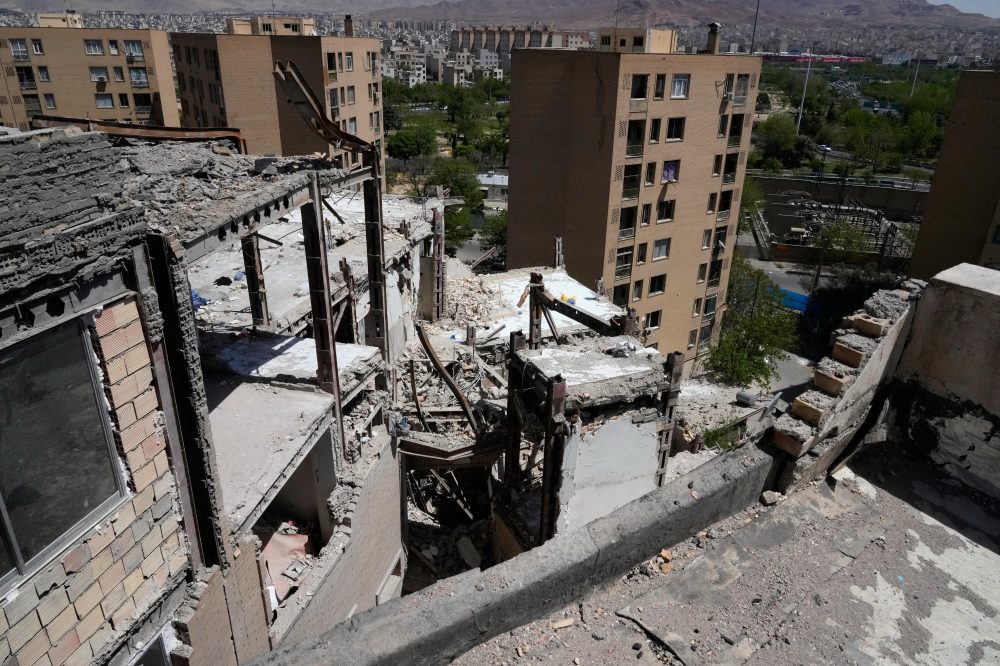
The Middle Eastern conflict has resulted in significant casualties, with fatalities reaching at least 3,000 in Iran, over 2,100 in Lebanon, 23 in Israel, and more than a dozen across Gulf Arab nations. Thirteen American military personnel have also lost their lives.
In related financial developments, Pakistani Finance Minister Muhammad Aurangzeb announced Wednesday that Saudi Arabia will place $3 billion into Pakistan’s central banking system. This injection provides crucial economic support to Pakistan, whose financial system has faced pressure amid regional instability connected to the U.S.-Iran confrontation. Aurangzeb is currently in Washington attending World Bank and International Monetary Fund conferences.
Additionally, Aurangzeb revealed that an existing $5 billion Saudi deposit will no longer require yearly renewal procedures and will instead be extended for an extended timeframe, according to government communications. Pakistani officials also disclosed earlier this month their intention to return $2 billion deposited by the United Arab Emirates in Pakistan’s central bank during 2019.
Australian Prime Minister Anthony Albanese and Brunei’s Sultan Hassanal Bolkiah executed a collaborative agreement Wednesday pledging to prevent unnecessary energy and food commerce limitations resulting from the Iranian conflict. The accord was finalized during Albanese’s visit to the small Southeast Asian kingdom.
Australia represents Brunei’s largest trading partner, with Brunei supplying Australia diesel fuel and fertilizer-grade urea. Albanese mentioned discussions regarding Brunei potentially expanding urea deliveries. “What’s guaranteed is that they are not looking at export restrictions on Australia,” he stated. Albanese intends to meet with Malaysian Prime Minister Anwar Ibrahim Thursday to strengthen Australian fuel and diesel supply arrangements.
Pakistani Prime Minister Shehbaz Sharif will visit Saudi Arabia, Qatar, and Turkey this week as part of diplomatic efforts to arrange another round of U.S.-Iran negotiations. This journey follows Islamabad’s hosting of unusual talks that concluded without formal resolution.
Sharif aims to organize additional discussions before the current temporary ceasefire concludes on April 22. Pakistan’s Foreign Ministry stated that the visits beginning Wednesday and concluding Saturday will emphasize bilateral relationships. Sharif plans to address continued cooperation and regional stability with Saudi Arabian and Qatari leadership.
During his Turkey visit, Sharif will participate in the fifth Antalya Diplomacy Forum and conduct meetings with Turkish President Recep Tayyip Erdogan along with other international leaders.
South Korean officials report providing information to Iran, the United States, and Gulf countries regarding 26 South Korean vessels currently trapped in the Strait of Hormuz. South Korea is working to ensure their safe departure from the waterway.
South Korean Foreign Minister Cho Hyun told lawmakers Wednesday that officials view the current U.S.-Iran ceasefire as an opportunity to guarantee the ships’ safe evacuation from the area.