
Eleven-year-old Jawad Younes was enjoying a soccer match with his cousins in the space between their family homes when tragedy struck on March 27. He had briefly escorted his tired 4-year-old brother Mehdi back to their mother before rejoining the game in Saksakieh, Lebanon.
An Israeli airstrike targeted his uncle’s residence moments later. The explosion rocked surrounding structures and knocked Jawad’s siblings to the floor inside their home. As mother Malak Meslmani rushed to help her fallen children, her thoughts immediately turned to her eldest son.
“I was pulling my children off the floor in the house, but as I was running to pick them up, I screamed, ‘Jawad,’” she said. “My heart told me.”
The March 27 attack instantly claimed Jawad’s life along with one of his cousins, who had been like a brother to him. Multiple other children sustained injuries in the blast.
The strike also killed Jawad’s uncle, an interior design engineer whom the boy admired and hoped to emulate professionally. Meslmani described her brother-in-law as a civilian, though acknowledged their family’s loyalty to Hezbollah, the militant organization and political party established in the 1980s to resist Israeli occupation of southern Lebanon.
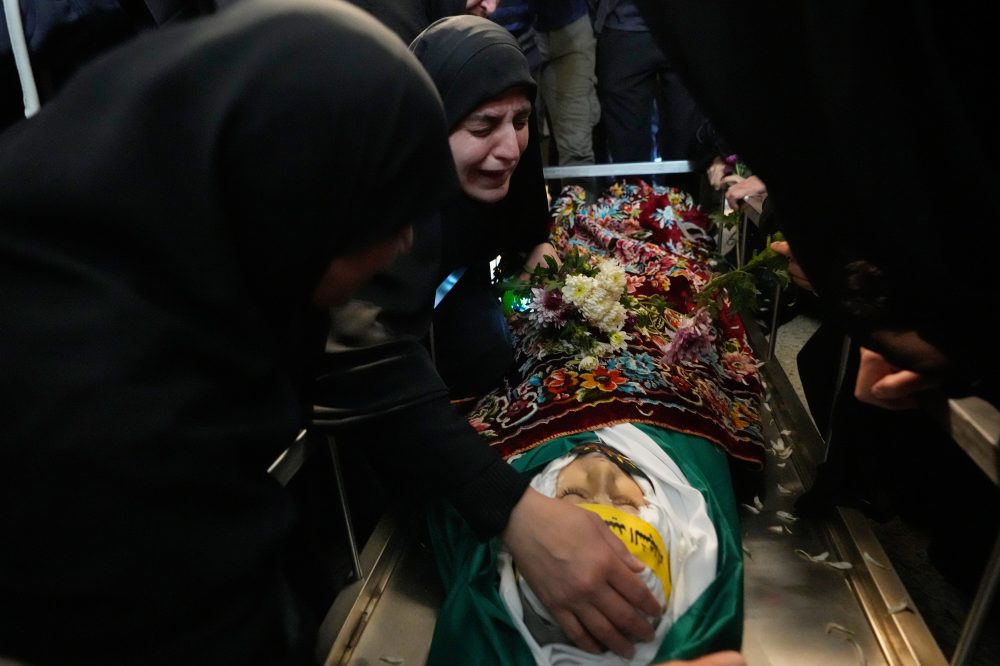
Jawad and his cousin represent two of the 168 children who have perished among more than 2,100 total deaths during six weeks of renewed conflict between Israel and the Iran-supported Hezbollah movement.
Israeli forces have frequently conducted surprise attacks on suspected Hezbollah operatives and leaders at their residences, often targeting locations distant from active combat zones where families live among uninvolved neighbors in apartment complexes. While Israeli military officials seldom identify specific strike targets, they maintain they implement safeguards to reduce civilian harm and attribute responsibility to Hezbollah members for operating within civilian populations. Families who have lost children accuse Israel of war crimes due to extensive civilian casualties.
Current hostilities have resulted in at least two Israeli civilian deaths and 13 military fatalities, according to Israeli statistics. One civilian death resulted from mistaken Israeli fire.
When questioned by the Associated Press, Israeli military representatives did not dispute that children have died in Lebanese operations but emphasized their focus on Hezbollah installations and fighters. Military officials claim to have eliminated hundreds of Hezbollah personnel while providing limited supporting evidence.
International conflict regulations prohibit direct civilian targeting, though incidental harm during legitimate military operations is permissible when proportionate to expected military advantages.
Israeli military officials told AP their operations comply with legal standards, “including the principles of distinction, proportionality, and the taking of precautions.”
University of South Carolina law professor Charles Trumbull, who specializes in armed conflict law and ethics, noted the difficulty of evaluating proportionality without knowing strike objectives and whether military planners knew children were present.
“To the extent that they knew that children were likely to be harmed or killed in these strikes, and as an ethical matter, absolutely I think that should affect the calculus,” he said. “Just because certain strikes might not violate the law on conflict doesn’t mean that they’re not concerning or problematic or that they are morally justified.”
Three-year-old Taline Shehab was sleeping at 2 a.m. on March 12 when missiles destroyed an upper apartment in her family’s Aramoun building, approximately 12 miles south of Beirut, causing structural collapse. Both Taline and her father died while her mother suffered critical injuries.
Aramoun’s religiously diverse community had generally felt secure, despite experiencing airstrikes during the previous Israel-Hezbollah conflict in 2006.
Taline’s father Mohamad worked as a drone operator and video producer, frequently collaborating with Lebanese military forces and major television productions. He and wife Nathalie operated a fashion business that regularly featured Taline on social media platforms.
“They were a very close family. Their daily life revolved around their daughter,” said Ali Shehab, Mohamad’s brother.
He described Taline as “full of personality” and “very attached to her father. She loved being around him and didn’t like to share him with anyone.”
Ali finds solace believing “maybe Mohammed and Taline, because they are so attached to each other, God chose them both.”
Dr. Ghassan Abu Sitta, who has treated war casualties extensively in Gaza and Lebanon through his American University of Beirut Medical Center initiative, reports that most cases he encounters involve “children being crushed underneath the rubble of their own homes,” similar to Taline’s situation.
Ten-year-old Zeinab al-Jabali accompanied her father Hassan everywhere: neighborhood shops, mountain excursions around their Bekaa Valley village.
Hassan now sleeps at the Beirut hospital where medical staff treat his wife and three older daughters, all injured in the attack that took Zeinab’s life.
Conflict has marked much of Hassan al-Jabali’s existence. In 1982, his brother—also 10 years old like Zeinab—died from an Israeli missile strike.
Al-Jabali earned income selling mouneh (preserved foods like raisins and dried herbs) and working at his cousin’s laban (yogurt) production facility.
On March 5, al-Jabali’s wife and daughters were preparing iftar—the meal concluding daily Ramadan fasting—at his sister-in-law’s residence when the airstrike occurred.
Al-Jabali acknowledged his brother-in-law who perished “in the past was with the resistance,” referring to Hezbollah.
“But they struck him at home, in a house full of children, full of girls,” said al-Jabali, who heard the explosion from elsewhere in the village and discovered devastation upon rushing to check his family.
He has not informed his wife of Zeinab’s death, fearing grief might compromise her medical recovery.
Regarding the strikes that killed Jawad, Taline, and Zeinab, Israeli military officials provided no specific target details beyond Hezbollah connections.
Military statements expressed regret for civilian harm while emphasizing operations against Hezbollah, “which attacked the State of Israel under Iranian backing.”
Many Lebanese citizens blame Hezbollah for involving their nation in warfare by launching cross-border missiles on March 2, two days following U.S. and Israeli attacks on Iran. However, Israeli strike devastation has strengthened support among others.
“We are now holding onto the resistance more than any time before,” said Meslmani, Jawad’s mother.
Despite Israeli military evacuation notices covering extensive southern Lebanese territories, many Saksakieh residents remained. Displaced populations from further south sought shelter there, and daily life seemed relatively normal before the fatal strike.
Meslmani now visits Jawad’s grave in a small cemetery overlooking mountain scenery, where warplane sounds echo overhead.
“I remember everything,” she said. “How he used to eat and drink, how he used to play, how he would get dressed and fix his beautiful hair.”
Since his death, aircraft noise no longer disturbs her.
“The most precious thing, my heart, is gone,” she said. “What more can they do?”