The interim head of the Centers for Disease Control and Prevention emphasized Monday that vaccination remains the strongest defense against measles as the nation grapples with rising case numbers.
Acting Director Jay Bhattacharya stressed the importance of the MMR vaccination in a video message shared on social media platform X. “There is no cure for measles, which is why prevention is so critical,” Bhattacharya stated. “The MMR vaccine remains the most reliable and effective way to prevent it.”
The health official announced that the CDC is deploying additional resources to assist prevention and response initiatives nationwide, while maintaining regular communication with state and local health departments.
“We stand ready to provide CDC technical staff, laboratory support, vaccines and therapeutics upon request,” he explained in the video message.
According to the most recent CDC statistics, health officials documented 1,136 confirmed measles infections across the United States through February 26, 2026.
Bhattacharya assumed the interim CDC leadership role in February while simultaneously serving as director of the National Institutes of Health.
The ongoing U.S.-Israeli military action against Iran entered its third day Monday, creating widespread disruption across the aviation industry with carriers facing significant financial losses that insurance policies won’t cover, according to industry analysts and insurance experts.
Aviation stocks plummeted from Asian markets to Wall Street, erasing billions in market capitalization as the escalating conflict forced the cancellation of thousands of flights globally, closed major Middle Eastern aviation centers, and drove oil prices sharply higher.
Insurance industry professionals and market analysts provided insight into how the crisis affects coverage:
Jefferies analysts noted that commercial property insurance policies “almost always” contain exclusions for war-related damages, and unlike marine and aviation coverage, separate war insurance isn’t readily obtainable for most businesses.
The investment firm warned that significant commercial property damage, including potential harm to Dubai’s famous Palm Jumeirah development, would likely fall outside standard insurance protection.
According to Jefferies, aviation war insurance policies contain provisions allowing insurers to terminate coverage, while standard non-war aviation policies typically contain war exclusions either through direct language or force majeure clauses.
However, one industry insider informed Reuters that aviation insurers routinely handle such situations and noted that no insurance companies have issued cancellation notices thus far.
A second industry source explained that while airlines maintain aviation war coverage protecting their aircraft fleets from physical damage and liability claims, operational disruption losses typically fall under business interruption policies that exclude war-related events, forcing airlines to absorb these costs directly.
Credit rating agency Morningstar DBRS stated the conflict presents major underwriting and investment obstacles across marine, aviation, property, travel, and supply chain insurance sectors.
“From an aviation-hull perspective, insurers must consider the risk that missiles or air-defence interceptors could result in large hull and liability claims,” the agency explained in its analysis.
Morningstar DBRS further warned that if the Gulf conflict expands, it could drive up pricing while reducing available capacity in terrorism and political violence insurance markets.
The cost of insuring cargo shipments through Middle Eastern waters has jumped as much as five times normal rates over the past two days, with most underwriters refusing to provide coverage for vessels transiting the Strait of Hormuz, Reuters reported Monday citing industry sources.
Officials in the United Arab Emirates reported Monday that a drone strike ignited a blaze at the Musaffah fuel storage facility, though the attack did not disrupt normal operations at the critical energy hub.
The Abu Dhabi media office confirmed authorities quickly managed the emergency situation. “Abu Dhabi authorities have responded today to a fire resulting from the targeting of a Musaffah fuel tank terminal by a drone. The situation was promptly contained,” the office said.
Officials confirmed no one was hurt in the incident.
The targeted facility serves as a key distribution point operated by Abu Dhabi National Oil Company, where fuel products are loaded onto trucks for delivery. The site connects to an extensive pipeline system spanning 1,600 kilometers that supplies petroleum products throughout the Abu Dhabi emirate.
This marks another attack on the Musaffah facility, which previously came under fire from Yemen’s Iranian-backed Houthi rebels in 2022 during their ongoing conflict with the Saudi-led military coalition.
The strike occurred as regional tensions intensify following a series of attacks across the area. Earlier Monday, Saudi Arabia’s national oil company Aramco was forced to close its Ras Tanura refinery after a drone strike, marking what appears to be an escalation on the third consecutive day of regional attacks launched by Tehran following a U.S.-Israeli operation against Iran.
Meanwhile, QatarEnergy suspended production of liquefied natural gas and related products after attacks targeted facilities at Ras Laffan, according to an informed source speaking to Reuters.
Washington is preparing to cut ties with cornerback Marshon Lattimore following a brief stint that lasted just one and a half seasons, CBS Sports has learned.
The 29-year-old defender, who earned Pro Bowl honors four times and claimed Defensive Rookie of the Year recognition in 2017, is in the last year of his massive five-year contract worth $97.6 million that he inked with New Orleans back in 2021. Lattimore will celebrate his 30th birthday this May.

His scheduled salary for 2026 was $18.5 million, but since none of that money was guaranteed, Washington faces no financial penalty for cutting him loose.
Originally selected 11th overall by New Orleans in the 2017 NFL Draft, Lattimore joined Washington via trade last November. His time with the Commanders included just 11 total appearances – two games following the 2024 trade and nine contests this past season before suffering an ACL tear.
Legal troubles surfaced in January when Ohio authorities arrested him on weapons-related charges, including carrying a concealed weapon and improper firearm handling in a vehicle.
Throughout his eight-year NFL career, Lattimore has been a consistent starter, appearing in all 95 regular-season contests he’s been available for. His career statistics include 16 picks with two returned for scores, 98 pass breakups, five forced fumbles, six fumble recoveries, and 436 total tackles.
SALISBURY, Md. – Salisbury University celebrated a remarkable week of athletic achievement as four Sea Gulls student-athletes earned recognition from the Coast-to-Coast Athletic Conference (C2C) for their outstanding performances between February 23 and March 1, 2026.
The university’s tennis programs dominated the weekly honors, with Gurv Suri claiming the men’s award and Gibelle Beaujon taking home the women’s recognition, marking a clean sweep for the Sea Gulls tennis teams in their respective C2C categories.
Meanwhile, the women’s lacrosse squad contributed two honorees to the weekly awards list. Julianna Ott earned recognition for her offensive contributions, while Abby Fleishell was celebrated for her defensive prowess during the competition period.
The Jersey Mike’s A Sub Above Players of the Week program highlights exceptional student-athlete performances across the Coast-to-Coast Athletic Conference, recognizing excellence both on and off the field of play.
Drivers should expect delays on Federal School Lane today as construction crews have closed the left lane between South DuPont Highway (Route 13) and River Road (Route 9).
According to DelDOT, the lane restriction will remain in effect until 5 PM this afternoon while construction work is underway in the area.
Motorists are advised to allow extra travel time and use caution when driving through the work zone. Traffic will be reduced to one lane in each direction during the construction period.
Delaware residents can expect warmer than usual weather in the coming week and a half, according to extended weather forecasts covering the next 6 to 10 days. The projection indicates that most areas across the nation will see temperatures at or above seasonal averages, with rainfall amounts also expected to meet or exceed normal levels.
The East Coast, including Delaware and surrounding states, shows the highest probability for experiencing temperatures warmer than typical for this time of year. Conversely, areas expecting below-average moisture include California and portions of the western Great Basin region.
Cold temperatures will begin moving northward this week but will remain present near the Canadian border stretching from North Dakota through New England. Early week weather patterns may bring icy conditions and freezing precipitation to areas as far south as the Ohio Valley and Mid-Atlantic region before milder temperatures take hold.
The weather pattern is expected to shift during the week’s second half, with warmer air masses moving into the region.
SOFIA – Former Bulgarian President Rumen Radev announced Monday that he has formed a new three-party coalition named Progressive Bulgaria to compete in the nation’s parliamentary elections scheduled for April 19.
The move marks the country’s eighth electoral contest in just seven years, highlighting Bulgaria’s ongoing political turmoil. Radev, who resigned from his largely ceremonial presidential position in January, remains widely favored among Bulgarian voters, with polling data indicating his new alliance could secure over 30 percent of voter support.
During his presidency, Radev exercised significant unofficial political influence throughout a turbulent period that culminated in the most recent government’s downfall on December 11. He stepped down from office nearly twelve months ahead of schedule.
The administration collapsed after sustained public demonstrations against increased taxes and what protesters viewed as inadequate efforts to combat corruption within the government.
Taking to Facebook, Radev declared: “‘Progressive Bulgaria’ is the answer to the expectations of Bulgarians for dismantling the oligarchic corruption model. In order to succeed, we will fight for a decisive victory and it depends on the voice of all Bulgarians.”
The new coalition unites three left-oriented political groups: Our People Movement, Social Democratic Party, and the Socialdemocrats movement.
Since becoming a eurozone member on January 1, Bulgaria has struggled with persistent governmental instability. Political parties have been unable to establish lasting governing partnerships since 2021 due to a divided parliament.
LONDON, March 2 – British Prime Minister Keir Starmer warned lawmakers Monday that Iran has intensified its military attacks on regional targets following the death of Supreme Leader Ali Khamenei, describing the nation’s current tactics as increasingly dangerous.
Speaking before Parliament, Starmer cautioned that Khamenei’s death has not deterred Iran from conducting strikes against military and economic infrastructure across the region.
“The death of Khamenei will not stop Iran from launching these strikes,” Starmer addressed Parliament members. “In fact, their approach is becoming even more reckless and more dangerous to civilians.”
The Prime Minister’s comments highlight growing international concerns about Iran’s military activities in the aftermath of their longtime leader’s passing.
WASHINGTON – America’s emergency oil stockpile has served as a crucial tool for presidents seeking to manage fuel costs during times of international conflict, though the current administration has no immediate plans to tap into these reserves.
The Strategic Petroleum Reserve, which represents the world’s largest emergency oil supply, currently contains 415.4 million barrels stored in underground salt dome facilities along the Texas and Louisiana coastlines. Officials indicate the Trump administration is not presently considering releasing oil from the SPR, according to a government source speaking Monday.
However, energy analysts suggest that continued price increases following recent U.S.-Israeli military actions against Iran, which resulted in the death of Supreme Leader Ali Khamenei and other senior officials, could prompt the administration to reconsider this position.
The reserve’s storage capacity reaches approximately 714 million barrels, primarily consisting of high-sulfur sour crude that American refineries are equipped to process.
Historical wartime deployments of the reserve include several significant releases:
During the 2022 Russian invasion of Ukraine, former President Joe Biden authorized the largest-ever emergency release of 180 million barrels over a six-month period beginning in March. While both Biden and Trump have initiated modest replenishment efforts, congressional funding remains necessary for substantial restocking.
When Iranian-backed Houthis targeted Saudi Arabian oil facilities in 2019, disrupting over half of the kingdom’s crude production, then-President Trump indicated readiness to utilize the reserve if necessary. The release ultimately proved unnecessary as Saudi Arabia’s Abqaiq facility and Khurais field quickly restored operations.
Former President Barack Obama coordinated with international partners in June 2011 to release 30 million barrels during Libya’s civil war, with the International Energy Agency facilitating an additional 30 million barrel release from member nations to address global market disruptions.
The reserve’s first major wartime deployment occurred during Operation Desert Storm in 1990-1991, when former President George H.W. Bush authorized sales totaling approximately 21 million barrels in two separate phases. An initial 3.9 million barrel test sale took place in October 1990, followed by a January 1991 authorization for 34 million barrels, of which 17.3 million were ultimately sold as coalition forces launched airstrikes against Iraqi military targets.
COPENHAGEN – Danish Prime Minister Mette Frederiksen announced Monday that her country has formed a strategic nuclear defense partnership with France, marking a significant shift in European security cooperation.
The announcement came as French President Emmanuel Macron revealed plans to expand France’s nuclear capabilities and enhance deterrent measures through unprecedented collaboration with European allies, describing it as a fundamental shift in nuclear policy.
“Enhanced cooperation will help bolster Europe’s deterrent strength. Regrettably, this has become essential as we anticipate Russia’s military threat will grow in the years ahead,” Frederiksen explained to reporters.
The Danish leader emphasized that this new European partnership would work alongside existing security frameworks. “We want to make clear today that this strategic cooperation will supplement, not substitute for, our deterrent collaboration within NATO,” she stated.
Danish Defense Minister Troels Lund Poulsen clarified that the strategic partnership will not involve placing nuclear weapons within Denmark’s borders.
Agricultural producers across the region are raising concerns that corporate mergers within the fertilizer sector are contributing to dramatically increased farming expenses. Despite companies expanding their production capabilities, growers say they’re not seeing the expected cost reductions at the farm level.
Mark Mueller, who serves as a farmer director with Iowa Corn, explains that agricultural producers anticipated lower prices as companies increased their manufacturing capacity. However, Mueller notes that reality has been different.
“For some reason the increased production doesn’t necessarily translate into savings that get passed along to the farmer. Let’s face it,” Mueller stated, highlighting the disconnect between industry expansion and farmer costs.
The situation has left many in the agricultural community questioning whether industry consolidation is working against their economic interests, as input expenses continue to climb despite greater production volumes.
Service station operators nationwide are expressing mounting frustration as Congress continues to delay action on legislation that would allow year-round sales of E15 ethanol-blended gasoline.
According to Geoff Cooper, who leads the Renewable Fuels Association as CEO, gas station owners and truck stop operators have grown weary of waiting for federal lawmakers to establish consistent, nationwide regulations for the higher ethanol blend.
“We’ve certainly heard that remark from the retailers and truck stop folks before, and I think there is” genuine exhaustion with the legislative process, Cooper noted.
The push for year-round E15 availability has been stalled in Congress despite ongoing advocacy from fuel retailers who want clearer federal guidelines for offering the ethanol blend to customers throughout all seasons.
A University of Delaware softball standout has earned recognition from Conference USA officials for her outstanding play on the mound.
Karli Challburg, a freshman pitcher for the Blue Hens, received Conference USA Freshman of the Week honors following her impressive showings in games against Le Moyne and Bryant during the Blue Hen Invitational tournament.
The conference made the announcement on Monday, March 2, highlighting Challburg’s contributions to the team’s performance at the home tournament.
The weekly recognition marks an early achievement in Challburg’s collegiate career as she continues to make her mark in her debut season with the Delaware softball program.
Weather officials have put the Delmarva Peninsula under a Winter Weather Advisory that began Saturday afternoon and will remain in effect until Sunday morning at 8:00 AM.
The National Weather Service office in Mount Holly, New Jersey activated the advisory at 1:18 PM on Saturday, March 2nd, warning residents across Delaware and surrounding areas to prepare for winter weather conditions.
The advisory will stay active until 8:00 AM on Sunday, March 3rd, giving local communities nearly 19 hours to navigate the anticipated weather challenges.
Residents throughout the region should monitor local conditions closely and take appropriate precautions for travel and outdoor activities during the advisory period.
A source with knowledge of the transaction tells The Associated Press that the Detroit Lions have sent veteran running back David Montgomery to the Houston Texans in exchange for offensive lineman Juice Scruggs, plus fourth and seventh-round draft selections.
The individual confirmed the trade details to the AP on Monday while requesting anonymity since the teams have not yet made an official announcement.
The move allows Detroit to acquire crucial offensive line reinforcement and additional draft capital while parting ways with a veteran back seeking expanded playing time.
Montgomery is expected to compete for a starting position with his new Houston team.
In Detroit, the running back found himself relegated to a reserve role with minimal opportunities to see the field behind Jahymr Gibbs, who has earned Pro Bowl recognition in each of his first three professional seasons.
This past season saw Montgomery post the lowest numbers of his career in both rushing attempts (158) and total rushing yards (716). Despite the reduced workload, he managed eight touchdown runs and averaged 4.5 yards per carry, just shy of his career-high 4.6 yards per attempt from 2023, when he accumulated 1,015 rushing yards and 13 ground scores in his first year wearing a Lions uniform.
The 28-year-old back brings substantial experience to Houston, having compiled 6,115 rushing yards and 59 rushing touchdowns throughout his seven-year career, along with 1,890 receiving yards and four receiving scores split between four seasons in Chicago and three in Detroit.
With Montgomery’s departure, Detroit will likely pursue another backup running back through either free agency signings this month or the upcoming April draft.
Houston originally drafted Scruggs during the second round of the 2023 selection process. The lineman could potentially fill a starting role at either center or guard for Detroit, where strengthening what was once a dominant offensive line has become a crucial offseason objective after the unit’s struggles contributed to the team’s playoff absence.
BOGOTA, Colombia — One-time guerrilla fighters who previously dominated Colombia’s countryside now face an uphill battle to maintain their existence as a legitimate political organization during this Sunday’s crucial congressional elections.
The former Revolutionary Armed Forces of Colombia members, operating under the political banner Comunes (Commoners), face steep odds in securing sufficient votes to keep their legislative positions or even preserve their official party recognition.
During the previous two legislative terms, the organization held 10 assured congressional positions — a benefit provided through their 2016 peace agreement with Colombia’s government.
However, those guaranteed positions have now expired according to the peace accord’s provisions, forcing Comunes to compete alongside all other political organizations without special advantages.
Political analysts anticipate the former insurgents will struggle to maintain their legislative presence amid fierce competition from over a dozen parties vying for Senate and House positions.
“They have not really gained the support of the people,” stated Yan Basset, who teaches political science at Bogota’s Rosario University.
The ex-rebels conducted kidnappings affecting thousands of citizens and carried out bombing attacks on numerous rural communities throughout their 50-year war against Colombia’s government.
According to Basset, the conflict’s negative legacy persists, “and obviously for many Colombians it is difficult to forgive.”
Despite having secured legislative seats, Comunes demonstrated poor electoral performance in past voting cycles.
The organization captured 89,300 votes across Colombia during 2018’s congressional races. This figure dropped to 50,100 by 2022.
This downward trend poses serious consequences since Colombian election regulations mandate parties secure at least 3% of total votes to maintain official recognition for candidate nominations and government funding eligibility. The previous election required 509,000 votes to achieve that essential 3% threshold.
To boost their electoral prospects this cycle, Comunes has partnered with Fuerza Ciudadana, an organization established two decades ago by progressive activists and scholars that recently secured mayoral victories and a gubernatorial win in northern Colombia.
The former guerrillas also seem to be downplaying their brand identity to make their candidates more appealing to ordinary voters. Campaign materials including flyers, banners and stickers prominently display Fuerza Ciudadana’s branding, while Comunes’ red rose emblem is notably missing from most promotional content.
Comunes additionally registered their coalition under the Fuerza Ciudadana name with election officials, guaranteeing the partner organization’s orange symbol, not their own, will be visible on Sunday’s voting forms.
“Politics in Colombia is very complex,” remarked Carlos Carreño Marín, a former FARC military leader.
Marín participated in FARC’s negotiating team for the 2016 peace agreement and has served as a Comunes congressional representative since 2018.
The 48-year-old is now working to retain his Bogota legislative position while recognizing the difficulty ahead.
“We are in an intense struggle against parties that have been doing this for two centuries,” he explained.
Nearly 300 congressional positions will be decided during Sunday’s voting.
The election results could significantly impact President Gustavo Petro’s constitutional reform agenda. Petro has criticized judicial officials and lawmakers for obstructing his initiatives to nationalize Colombia’s healthcare infrastructure and overhaul the retirement system.
Energy markets experienced significant volatility Monday as escalating conflict involving Iran led to major disruptions in shipping through the Strait of Hormuz, underscoring the critical importance of this waterway to global oil distribution.
This narrow channel serves as the gateway from the Persian Gulf, facilitating the transport of approximately 20% of worldwide oil supplies. Vessels navigating these waters, which border Iran to the north, transport petroleum and natural gas from major producers including Saudi Arabia, Kuwait, Iraq, Qatar, Bahrain, the UAE and Iran itself. The majority of these energy exports are destined for Asian markets.
Any interruption to shipping through this strategic waterway creates significant ripple effects throughout global energy markets.
“The scale of what is at stake cannot be overstated,” said Hakan Kaya, senior portfolio manager at investment management firm Neuberger Berman. He explained that while oil companies could manage a partial slowdown lasting one to two weeks, a complete or near-complete blockage extending a month or longer would drive crude oil prices, currently trading around $70 on Monday, “well into triple digits” and push European natural gas prices “toward or above the crisis levels seen in 2022.”
The Strait of Hormuz forms a curved waterway measuring approximately 33 kilometers (21 miles) across at its most constricted point. It links the Persian Gulf with the Gulf of Oman, providing ships access to international waters and global destinations. Although Iran and Oman maintain territorial claims within the strait, international maritime law recognizes it as open waters accessible to all vessels. The United Arab Emirates, known for Dubai’s iconic skyline, is also positioned adjacent to this vital shipping lane.
Throughout history, the Strait of Hormuz has served as a crucial trade corridor, with ceramics, ivory, silk and textiles flowing from China through the region. In contemporary times, it accommodates massive oil tankers transporting petroleum and gas from regional producers. Most of these shipments reach Asian destinations, including China, which remains Iran’s sole remaining oil purchaser.
Although Saudi Arabia and the UAE operate pipelines that can bypass the strait, the U.S. Energy Information Administration notes that “most volumes that transit the strait have no alternative means of exiting the region.”
Previous threats to this shipping route have triggered global energy price increases, including during the Israel-Iran conflict in June.
While the strait remains officially open, vessel traffic has declined dramatically due to disrupted satellite navigation systems, according to data analytics company Kpler in a Sunday statement on X. The U.K. Maritime Trade Operations Center documented attacks on multiple ships in waters surrounding the strait and issued warnings about increased electronic interference affecting vessel tracking systems.
A drone boat loaded with explosives attacked a Marshall Islands-flagged oil tanker in the Gulf of Oman, the eastern approach to the strait, resulting in one crew member’s death, Omani officials confirmed.
Iran has been issuing threats to vessels approaching the Strait of Hormuz and is suspected of conducting several attacks.
In mid-February, Iran temporarily blocked portions of the strait, claiming the action was part of military exercises. Oil prices surged approximately 6% in subsequent days.
This closure represented a rare, possibly unprecedented shutdown of the waterway.
During previous periods of regional tension and warfare, Iran has periodically interfered with shipping through the narrow passage. During the Iran-Iraq war of the 1980s, both nations targeted tankers and other vessels, deploying naval mines that completely halted traffic at various times. However, Iran has not followed through on repeated threats to completely close the waterway since the 1980s, even during last year’s 12-day conflict when Israel and the United States conducted strikes on Iran’s nuclear and military facilities.
WASHINGTON — Hours after expressing frustration with stalled nuclear negotiations, President Donald Trump authorized a large-scale military operation against Iran that eliminated key leadership figures and disrupted global markets.
The sequence of events began Friday afternoon when Trump spoke to media outside the White House before departing for Texas, stating his dissatisfaction with ongoing indirect discussions with Iran.
“I’m not happy with the way they’re going,” Trump told reporters at 12:25 p.m. EST regarding the nuclear negotiations. When questioned about his next steps, he responded, “No, I haven’t,” regarding whether he had reached a final decision.
While traveling on Air Force One to Texas events at 3:38 p.m. EST, Trump authorized the military action dubbed “Operation Epic Fury.”
“The president directed, and I quote, ‘Operation Epic Fury approved … Good luck,’” General Dan Caine, chairman of the Joint Chiefs of Staff, revealed during a Monday press conference.
According to Caine, this authorization triggered final preparations across all joint U.S. military branches, with air defense systems positioning themselves and flight crews conducting last-minute rehearsals of their attack plans. Simultaneously, aircraft began receiving final armaments while two U.S. carrier strike groups moved toward launch positions.
During his continued flight to Texas, Trump made multiple Truth Social posts, including one nine minutes after approving the strike that ordered the government to cease using Anthropic artificial intelligence technology following a public disagreement between the company and Pentagon regarding AI safety measures.
Upon arriving in Texas at 4:03 p.m. EST, Trump addressed reporters at the Port of Corpus Christi about the negotiations, reiterating his displeasure without revealing the approved operation. When asked about his proximity to deciding on strikes, he declined to answer.
“I’d rather not tell you,” Trump responded. “You would have had the greatest scoop in history, right? Yeah.”
The actual military action commenced at 1:15 a.m. EST, based on Caine’s Monday timeline presentation.
“Across every domain — land, air, sea, cyber,” American forces “delivered synchronized and layered effects designed to disrupt, degrade, deny and destroy Iran’s ability to conduct and sustain combat operations on the U.S. side,” Caine explained.
During the Pentagon briefing, Caine described the operation as involving “thousands of service members from all branches, hundreds of advanced fourth- and fifth-generation fighters, dozens of refueling tankers, the Lincoln and Ford carrier strike group and their embarked air wings.”
He emphasized that ammunition and fuel supplies maintained continuous flow with support from an extensive network including intelligence and surveillance operations, while additional forces continued deploying to the region.
The military action followed months of CIA efforts to monitor senior Iranian leadership movements, particularly Supreme Leader Ayatollah Ali Khamenei. This intelligence was shared with Israel, leading to adjustments in Saturday’s strike timing, according to an anonymous source familiar with the operation.
In Tehran, explosions were audible as Israel’s defense minister announced a state of emergency.
Three coordinated strikes at separate locations occurred within sixty seconds, eliminating Khamenei and approximately 40 senior officials, including the paramilitary Revolutionary Guard commander and Iran’s defense minister, an Israeli military official confirmed.
At 4:37 p.m. EST, Trump used his Truth Social platform to announce Khamenei’s death, stating the supreme leader was “unable to avoid our Intelligence and Highly Sophisticated Tracking Systems.”
On Sunday at 12:21 p.m. EST, Trump posted on Truth Social that American forces had “destroyed and sunk 9 Iranian Naval Ships,” would be “going after the rest” and “largely destroyed their Naval Headquarters.”
Later Sunday at 4:06 p.m. EST, the Republican president released a video message stating that U.S. military and allies struck hundreds of Iranian targets, including Revolutionary Guard installations and air defense systems “all in a matter of literally minutes.”
Trump indicated the strikes would persist until “all of our objectives are achieved” without specifying those goals.
Also Sunday, Trump administration officials informed congressional staff during private briefings that U.S. intelligence had not indicated Iran was planning a preemptive attack against America, according to three briefing participants.
Instead, administration officials acknowledged a broader regional threat from Iran’s missile capabilities and proxy forces, two sources reported.
A senior White House official also stated Sunday that Iran’s “new potential leadership” had expressed openness to discussions with the United States.
In a Sunday New York Times interview, Trump suggested the assault could continue for “four to five weeks.”
Monday at 8 a.m. EST, Defense Secretary Pete Hegseth clarified during a Pentagon briefing that the U.S. was not pursuing nation-building in Iran and that continued strikes would not lead to prolonged conflict.
“This is not Iraq. This is not endless,” he stated. “This is not a so-called regime change war, but the regime sure did change, and the world is better off for it.”
During Monday trading, oil prices surged as tanker disruptions near the Strait of Hormuz sparked concerns about Persian Gulf supply shortages. U.S. oil reached approximately $71.97 per barrel. MarineTraffic.com reported that strait transit had decreased 70% since Saturday.
The strikes also unsettled global markets, with U.S. futures following European and Asian markets downward. Both S&P 500 and Dow Jones Industrial Average futures dropped roughly 1%.
Recent escalations in Middle East tensions have exposed just how dependent worldwide aviation has become on a select few major airport hubs, with Dubai’s international airport – the globe’s busiest – at the center of widespread travel disruptions.
The Gulf region’s commercial powerhouse has built an impressive aviation empire over four decades, growing from Emirates’ humble beginnings with just two leased aircraft and a pair of flight routes to today’s massive operation connecting 110 countries through 454,000 annual flights.
“That we’ve got such a well-spread geographic business model and are well spread between visitors and those in transit suggests it’s very robust and will continue to survive any geopolitical tension that exists, wherever it may be,” Dubai Airports CEO Paul Griffiths told Reuters in a recent interview.
However, Saturday’s U.S. and Israeli military actions against Iran brought these regional conflicts directly to Dubai’s front door, including a direct assault on the airport facility itself.
Now Dubai confronts the enormous challenge of managing tens of thousands of stranded travelers while rebuilding its flight network and protecting incoming traffic that makes up half of its operations.
Industry experts generally believe the Gulf aviation hubs will bounce back from this setback, provided regional warfare doesn’t drag on indefinitely. However, the simultaneous closure of all three primary Gulf hubs – Dubai, Abu Dhabi and Doha – comes at a time when competitors from Turkey, Saudi Arabia and India are expanding their own operations.
“There’s no doubt at all this is temporary. They have seen major incidents before and recovered very quickly due to their importance as global hubs,” said UK-based travel consultant Paul Charles. “They will recover quickly, even if there is substantial uncertainty in the short term.”
Some analysts express more skepticism about the recovery timeline. While the aviation sector rebounded from pandemic losses due to demand exceeding available flights, this situation threatens passenger demand itself.
“Travellers are likely to consider more direct flights rather than stop over in Dubai or Doha. All this hub traffic is likely to take a hit,” said independent aviation adviser Bertrand Grabowski.
Despite these concerns, geography and economics continue working in the Gulf hubs’ favor.
“One third of the world’s population is within four hours’ flying time and two thirds within eight hours,” said Dubai Airports’ Griffiths.
“We’ve seen the incredible aggregation power that a hub delivers.”
Nevertheless, challenges to the Gulf’s aviation dominance are emerging. Turkish Airlines stands to gain significantly through its major hub positioned outside the conflict area, according to independent aviation analyst John Strickland.
Saudi Arabia is also expanding its aviation presence, with India following suit as Asian carriers capture more passengers.
Technical improvements in aircraft manufacturing, which previously benefited Gulf carriers, are now working against their hub model. Airbus recently started construction on a second ultra-long-range A350 aircraft to support Qantas plans for direct Sydney-to-London service.
Emirates launched operations during the height of the Iran-Iraq conflict in 1985. Its explosive expansion contributed to Gulf Air’s breakup – the airline that previously served Qatar, Bahrain, Abu Dhabi and Oman – as Qatar and Abu Dhabi established independent carriers, creating today’s three competing Gulf aviation hubs.
With Dubai’s reputation for stability now questioned following Iranian attacks and defensive missile debris, analysts say the biggest uncertainty surrounds future passenger traffic to Dubai itself.
The timing has also raised concerns about the already-postponed development of a massive new airport facility outside the city.
Dubai destination traffic “will doubtless recover, but there is likely to be some lasting damage”, Grabowski said.
For Emirates and its partner airline flydubai, recovery may require leveraging their market influence to restore normal operations.
“People have short memories and they might be incentivised by some bargain deals to bring people back, but I don’t think that would need to be there for long,” said Eddy Pieniazek, head of advisory at aviation and leasing consultancy Ishka.
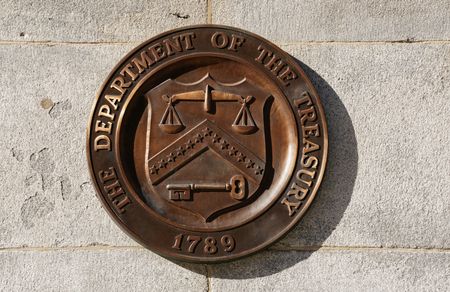
WASHINGTON – The Biden administration announced Monday it has levied financial penalties against Rwanda’s military forces and high-ranking defense officials, the Treasury Department confirmed on its website, following ongoing combat operations across multiple areas in eastern Democratic Republic of Congo.
The African nations had previously agreed to a ceasefire arrangement in Washington this past December, which was part of former President Trump’s initiative to establish stability in the area and encourage substantial Western financial investment totaling billions of dollars.
However, military conflicts have persisted since that agreement, undermining the previous administration’s peace-building efforts in the region.
The Treasury Department’s website shows that Monday’s penalties include Vincent Nyakarundi, who serves as Rwanda’s army chief of staff, along with the nation’s chief defense staff and two additional Rwandan officials.
Rwandan government representatives have not yet provided a response to requests for comment on the sanctions.
A recent federal policy change has shifted power dynamics between corporations and their investors, creating legal disputes and uncertainty in the process.
Last November, the Securities and Exchange Commission altered its longstanding practice of reviewing corporate decisions to exclude shareholder proposals from annual meeting ballots. Under the new approach, company executives gained broader authority to determine which investor resolutions will appear on proxy statements — the required documents distributed before shareholder meetings.
This regulatory shift has sparked at least three legal challenges against major corporations including AT&T, Axon Enterprises, and PepsiCo, with additional cases potentially on the horizon. Giovanna Eichner, a shareholder advocate with Green Century Capital Management, a Boston-based climate-focused investment firm, said the commission’s retreat from oversight has created confusion.
“More than anything, this lack of structure and rules is actually just leaving everyone unsure about the best way to move forward,” Eichner stated.
When the changes were announced in November, activist investors expressed concern that the move aligned with broader efforts by Trump administration appointees to limit environmental, social and governance (ESG) investment initiatives. Republican lawmakers from energy-producing regions have criticized ESG efforts as harmful to corporate profitability.
Despite gaining new authority, companies appear to be exercising restraint due to litigation risks. Shareholder advocacy organization As You Sow has submitted 47 proxy resolutions this year, with corporations blocking approximately half a dozen — similar to last year’s rate when companies rejected 8 out of 63 such proposals.
“Companies have to decide: Do you want to have a good relationship with your shareholders, or do you want to pay your corporate attorneys millions?” said Andy Behar, CEO of As You Sow.
SEC officials declined to provide comment, though a source familiar with the agency’s reasoning indicated the change was motivated partly by efforts to reduce staff workload.
The legal challenges have prompted some companies to reverse course. On January 5, PepsiCo informed the SEC it would exclude a proposal calling for review of animal welfare standards in its supply chain, including practices at Indian sugar facilities where bulls allegedly pull overloaded sugarcane carts. The company cited the proposal filer’s failure to adequately detail their availability for discussions.
Following a February 19 lawsuit, PepsiCo reversed its position the next day, agreeing to include the resolution on its proxy ballot.
“It was us bringing the lawsuit that forced Pepsi to follow the necessary procedure here,” said Asher Smith, attorney for the People for the Ethical Treatment of Animals Foundation, which represented the proposal filer.
Similarly, telecommunications company AT&T faced legal action on February 17 from New York City pension funds after rejecting a shareholder proposal seeking workforce demographic information. A week later, New York Comptroller Mark Levine announced AT&T had settled the lawsuit by agreeing to allow the vote, describing it as a “major win for investors amid ongoing attempts to undermine transparency and accountability” by corporations.
Stun-gun manufacturer Axon continues to fight a pending lawsuit in federal court after deciding to exclude a vote on political contribution reporting, arguing it would “micromanage” company operations. The Nathan Cummings Foundation filed the legal challenge seeking to force the vote.
Laura Campos, senior director at the foundation, explained the lawsuit was necessary to protect shareholder rights. “When the Securities and Exchange Commission stepped back from providing substantive responses to no-action requests, it left shareholders hoping to preserve their rights with few options for doing so,” she said.
Not all companies have chosen confrontation. Starbucks requested permission in November to skip a resolution on transgender healthcare coverage filed by conservative organization National Center for Public Policy Research, claiming it involved “ordinary business” matters. Despite the new regulatory flexibility that would have allowed Starbucks to simply exclude the proposal, the company scheduled it for their March 25 annual meeting.
Arizona Cardinals quarterback Kyler Murray faces potential release this month if the team fails to secure trade offers, according to NFL Network reports.
The former Heisman Trophy winner from 2018 and two-time Pro Bowl quarterback sat out 12 contests last season due to a foot injury. Throughout the past five seasons, Murray has completed a full regular-season campaign only once.
Despite injury concerns, the 2019 first overall draft selection would likely attract significant interest as a free agent. Multiple franchises dealing with quarterback uncertainty are reportedly monitoring Murray’s situation, including the Minnesota Vikings, New York Jets, Atlanta Falcons and Pittsburgh Steelers.
Arizona brought in Mike LaFleur as their new head coach in February, replacing Jonathan Gannon. LaFleur, who previously served as the Rams’ offensive coordinator and is the brother of Green Bay’s Matt LaFleur, recently attended the NFL Scouting Combine with Cardinals officials to evaluate quarterback prospects. The team holds the third pick in the upcoming 2026 draft.
Throughout his seven-year tenure with Arizona, Murray has thrown 121 touchdown passes against 60 interceptions across 87 regular-season appearances. He played under both Gannon and former coach Kliff Kingsbury during his time with the organization.
The Cardinals retain quarterback Jacoby Brissett as a potential starting option, as he performed well while filling in for the injured Murray during the previous season.
Major League Soccer announced Monday that its 2026 All-Star Game will bring back the popular format featuring top players from MLS competing against Liga MX stars on July 29 in Charlotte.
This will mark the fifth occasion overall that the competing North American soccer leagues have squared off in this All-Star format, continuing a trend that has run for three consecutive years.
Bank of America Stadium will host the event just 10 days following the conclusion of the 2026 FIFA World Cup championship match, with the tournament being jointly hosted across the United States, Mexico and Canada.
Fan voting will determine 11 spots on the 26-player MLS All-Star squad, while the All-Star head coach will choose 13 players and MLS Commissioner Don Garber will select the final two roster spots.
“The 2026 MLS All-Star Game presented by Chime will feature a can’t-miss rematch between the best of MLS and LIGA MX,” said MLS executive vice president Camilo Durana. “With the energy and momentum our Leagues will experience coming out of a historic World Cup on home soil, we are thrilled to showcase our All-Stars and put on a great show for fans in Charlotte and those watching around the world on Apple TV.”
Liga MX officials have yet to reveal how they will choose their 26-player roster for the summer showcase.
“We are excited that LIGA BBVA MX will once again be part of the MLS All-Star Game for the 2026 edition,” said Francisco Iturbide, Liga MX director of operations, competitions and development. “This event reflects the value of our collaboration with MLS and provides us with an important opportunity to showcase the quality and competitiveness of our players. We are certain that it will be a great week for fans of all three countries.”
MLS enters the contest with a strong track record, having captured victory in three of the four previous All-Star battles against Liga MX, most recently defeating their Mexican counterparts 3-1 in Austin, Texas last year.
Charlotte will also host the 2026 MLS All-Star Skills Challenge on July 28 at Truist Field as part of the weekend festivities.
Young soybean producers throughout Missouri are participating in a specialized fellowship program designed to strengthen their leadership capabilities while expanding their understanding of agricultural operations. The Missouri Grassroots Fellowship brings together emerging farmers from different regions of the state for comprehensive training and development.
Among the participants is Luke Hopper, who previously served as an intern with Missouri Soybeans before joining the fellowship program. Hopper has been sharing insights about his involvement in the initiative and the valuable experiences it has provided to participating farmers.
The program focuses on building essential leadership qualities among the next generation of agricultural professionals while providing them with in-depth knowledge about soybean production and industry practices. Participants gain exposure to various aspects of farming operations and develop skills that will benefit their future careers in agriculture.
Monday’s livestock trading remained subdued as market participants focused on inventory management and weekly preparations rather than active transactions. The quiet trading environment is characteristic of the start of the market week.
Price negotiations have not yet begun in earnest, with neither purchase offers nor seller quotes being firmly established at this point in the week.
Market observers anticipate that substantial trading activity will likely emerge later in the week, consistent with patterns observed in recent trading sessions. Heavy transaction volumes are expected to materialize around Thursday or Friday, following established market rhythms.
Most dairy commodity values fell during Monday’s trading session at the Chicago Mercantile Exchange, though butter bucked the downward trend with significant gains.
Dry whey dropped half a cent to close at $0.6275 per pound, with one transaction recorded at that level. Forty-pound blocks of cheese declined by three-quarters of a cent to $1.5150, supported by three transactions ranging between $1.5125 and $1.5150. Cheese barrels fell one cent to $1.55 per pound, though no transactions occurred in that category.
Butter stood out as the day’s winner, climbing $0.2650 to reach $2.1050 per pound. Trading activity was robust with fifteen transactions completed, spanning from $2.05 to $2.1075. Nonfat dry milk prices retreated four cents to $1.67 per pound, with eighteen sales executed in a range from $1.6575 to $1.71.
As economic pressures mount in the farming industry, agricultural producers are seeking strategies to maximize productivity on each acre while controlling expenses. Croplan Seed is assisting farmers in addressing this challenge through an emphasis on data analysis, field trials, and regional expertise.
Jeff Osterhaus, who serves as Seed Portfolio Manager for Croplan, noted that although numerous companies provide quality products, Croplan distinguishes itself through its commitment to data-driven decision making and localized agricultural knowledge to help farmers optimize their seed investments.
Traffic is being diverted around a section of North Chapel Street in Newark after a vehicle became wedged beneath a railroad overpass.
The Newark Police Department reports that the roadway is impassable between Cleveland Avenue and East Main Street while authorities work to free the trapped vehicle.
Officials have not yet provided a timeline for when the street will reopen to normal traffic flow. Police say they will issue an update once the roadway has been cleared and is safe for vehicles to pass through again.
Federal agencies are cutting all ties with artificial intelligence company Anthropic following a direct directive from President Trump to cease using the startup’s technology products.
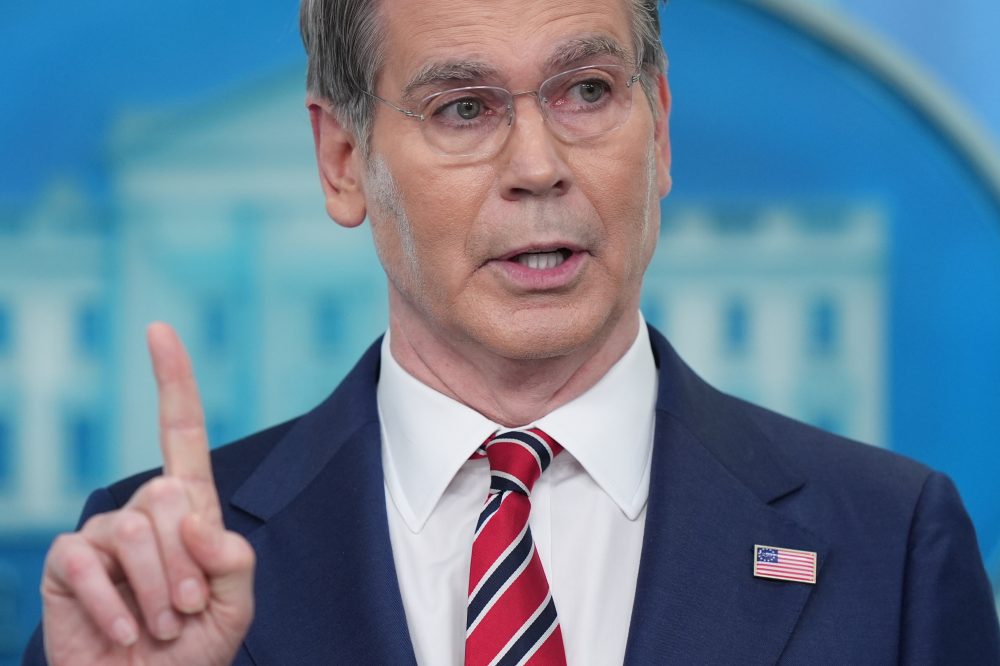
On Monday, Treasury Secretary Scott Bessent announced via social media that his department would completely discontinue using all Anthropic services, including the company’s Claude AI platform. This action follows Trump’s Friday mandate ordering government entities to sever relationships with the AI firm.
The Federal Housing Finance Agency is also eliminating its use of Anthropic technology, according to Director William Pulte, who posted the announcement on X. Pulte indicated that mortgage giants Fannie Mae and Freddie Mac would likewise stop using the company’s products.
The Pentagon has indicated it will classify Anthropic as a supply chain security concern, delivering a significant setback to the artificial intelligence company following disagreements over technology safety protocols.
Trump has established a six-month transition period for the Defense Department and other federal agencies currently utilizing Anthropic’s services to phase out their operations.
This government action represents an unusual rejection of a major American AI company that has helped maintain U.S. leadership in artificial intelligence technology critical to national security. The move could isolate Anthropic in a way typically reserved for foreign competitors.
Meanwhile, competing AI firm OpenAI revealed late Friday that it secured its own agreement to provide technology services to the Defense Department’s secure networks.
GENEVA – Swiss officials confirmed Monday that diplomatic communications between Washington and Tehran continue flowing through Switzerland’s neutral channels, even as military operations between U.S.-Israeli forces and Iran entered their third day.
The Swiss foreign ministry told Reuters via email that the diplomatic pathway “is available to both parties and operates in both directions,” though ministry officials declined to elaborate on specific details of the communications.
Switzerland has served as a diplomatic intermediary between America and Iran for more than four decades, taking on the role of neutral “protecting power” to represent American diplomatic interests in Iran after the two nations severed official relations following Iran’s 1979 Islamic Revolution.
Swiss diplomatic officials also reported that all of their regional embassies continue normal operations and are providing assistance to Swiss citizens in the area who require support during the ongoing conflict.
ANKARA – Turkish President Tayyip Erdogan condemned recent strikes against Iran carried out by the United States and Israel, calling them a “clear violation” of international law during remarks made Monday.
The Turkish leader made his comments while addressing attendees at a Ramadan iftar dinner in the capital city of Ankara, where he also expressed that Turkey stands with the Iranian people during this difficult time.
Erdogan announced that Turkey plans to increase diplomatic engagement across all levels of government to help broker a ceasefire and restore stability to the region. He warned that allowing the current conflict to persist poses significant dangers that extend beyond the immediate area and could create global consequences that no nation is equipped to manage.
Multiple sources confirmed Monday that the Detroit Lions have reached an agreement to send running back David Montgomery to the Houston Texans in a multi-asset deal.
According to NFL Network, Detroit will acquire offensive lineman Juice Scruggs along with fourth- and seventh-round selections in the upcoming draft as compensation for the veteran back.
ESPN had reported Sunday that Montgomery was seeking a departure from Detroit following three campaigns with the franchise, hoping to find an opportunity where he wouldn’t be sharing backfield responsibilities with Jahmyr Gibbs.
The 28-year-old Montgomery carries a $6 million salary commitment for the 2026 campaign.
Houston’s ground game struggled significantly this past season, ranking 22nd league-wide with just 108.9 rushing yards per contest after Joe Mixon missed the entire year due to injury. First-year player Woody Marks paced the team’s rushing attack with 703 yards, while 30-year-old Nick Chubb contributed 506 yards.
Montgomery experienced his least productive season statistically, accumulating 716 rushing yards and eight scores across 17 appearances without a single start in 2025.
Throughout his NFL tenure, he has compiled 6,115 rushing yards with 59 touchdowns while adding 231 receptions for 1,890 yards and four receiving scores over 105 games (79 starts) between Chicago (2019-22) and Detroit. The Bears selected him in the third round of the 2019 draft.
The deal cannot be finalized until March 11, when the new league year officially begins.
Houston also reportedly reached terms earlier Monday to send starting right tackle Tytus Howard to Cleveland in exchange for a fifth-round draft selection.
The 26-year-old Scruggs has appeared in 37 contests with 20 starts since Houston selected him in the second round two years ago.
Meanwhile, Gibbs earned his third consecutive Pro Bowl selection in 2025 after rushing for 1,223 yards and 13 touchdowns in 17 starting assignments. He will celebrate his 24th birthday on March 20.
Recent escalation of conflict in the Middle East may offer temporary financial benefits for American grain producers, according to an agricultural market specialist. Naomi Blohm, a senior market advisor at Total Farm Marketing, indicates that commodity prices experienced an uptick after weekend airstrikes targeted Iran, though she cautions the price boost might not sustain itself over time.
“If South America ends up getting rain, if the conflict doesn’t escalate further, we could see prices retreat,” Blohm explained, noting that several factors could quickly reverse the current price momentum in grain markets.
Meteorological Winter 2025–26 will go down as one of the coldest and snowiest winters in over a decade for much of the Mid-Atlantic, including Delaware and the I-95 corridor. While snowfall was impressive, precipitation overall leaned slightly below average in many locations, making it a cold and snowy, but somewhat dry winter season.
Preliminary data from the National Weather Service shows that several cities experienced their coldest winter since the mid-2010s, and in some cases, the early 1990s.
A Historically Cold Winter
Across the region, average temperatures finished several degrees below normal.
In Georgetown, the average winter temperature was 33.8°F, which is 5.2 degrees below normal. This ranks as the 8th coldest meteorological winter since 1893-94, marking the coldest winter there in over three decades.
In Wilmington, the average temperature came in at 31.8°F, or 3.9 degrees below normal, making it the coldest winter since 2014-15.
Philadelphia, Allentown, Trenton, Reading, Mount Pocono, and Atlantic City all saw their coldest meteorological winter since at least 2014-15, while Atlantic City Marina experienced its coldest since the historic winter of 1993-94.
Snowfall: A Major Comeback Year
Snowfall was the headline story this winter, particularly along and north of the I-95 corridor.
In Wilmington, seasonal snowfall reached 24.0 inches, which is 7.2 inches above normal. This makes it the snowiest winter since 2013-14, breaking a decade-long stretch of relatively modest snowfall seasons.
Farther north, Trenton recorded 44.3 inches, ranking as the 6th snowiest winter on record. Philadelphia measured 30.1 inches, its snowiest winter since 2013-14.
Although snowfall data was not calculated for Georgetown’s seasonal totals, February alone brought impactful snow events, and nearby observing sites confirm this winter was significantly snowier than recent years across southern Delaware.
Precipitation: Snowy But Slightly Dry
Despite the frequent snow, total liquid precipitation was generally below normal in many locations.
Wilmington finished with 8.14 inches, about 1.77 inches below average. Georgetown, however, was one of the few spots to edge slightly above normal, finishing at 9.17 inches, just 0.11 inches above average.
This reflects the nature of the season: colder air masses favored snow production, but overall storm systems were not especially moisture-rich.
February Sealed the Deal
February reinforced the winter’s cold theme. Georgetown averaged 5.7 degrees below normal for the month, while Wilmington finished 3.4 degrees below average. Several late-month warmups pushed temperatures near 60 degrees, but they were not enough to offset persistent cold earlier in the season.
WASHINGTON – President Donald Trump confirmed Monday that he has authorized U.S. military forces to conduct strikes against Iran with the goal of stopping Tehran’s nuclear weapons development and rapidly expanding ballistic missile capabilities.
Speaking from the White House East Room, Trump revealed that military operations he initiated on Friday are moving faster than anticipated. The president had initially estimated the campaign would run four to five weeks, though he acknowledged it might extend longer than planned.
The president stated that preventing Iran from acquiring nuclear weapons serves as a primary motivation for the military action, despite Tehran’s denials of pursuing such capabilities. Trump also cited the need to disrupt Iran’s long-range ballistic missile development as a key objective.
During his White House appearance, Trump provided his most detailed public remarks about the conflict, following earlier video statements and brief media interviews over the weekend that sometimes presented conflicting goals for the military engagement.
The president reported that U.S. forces had successfully destroyed 10 Iranian naval vessels and conveyed optimism about the campaign’s progress thus far.
The length of ongoing military tensions involving Iran will play a crucial role in determining market stability, according to an agricultural economics expert. Chad Hart from Iowa State University notes that this marks the second military strike carried out by the United States and Israel within the past year.
“We saw a brief spike up in prices, but we saw things calm,” Hart explained, referring to initial market reactions to the conflict.
Hart emphasizes that the duration of any sustained military action will be the determining factor in whether commodity markets experience significant volatility or return to more stable trading patterns.
Cleveland Browns officials have reached an agreement to bring offensive tackle Tytus Howard to their roster from the Houston Texans, trading away a fifth-round draft selection, according to a source with knowledge of the transaction who spoke to The Associated Press on Monday.
The source requested anonymity since neither franchise has publicly confirmed the transaction, which cannot be finalized until the NFL’s new league year begins on March 11.
Howard, entering his eighth professional season, is anticipated to receive a three-year contract extension valued at $63 million. Houston selected him in the first round of the 2019 draft, and he has made 93 starts during regular season play.
While Howard is projected to fill the right tackle position, he brings versatility having previously lined up at left tackle and right guard.
This transaction marks Cleveland’s initial move toward reconstructing an offensive line where the majority of starters face free agency. Last season, the Browns utilized 10 different offensive line configurations due to various injuries.
Dawand Jones remains the only returning Week 1 starter at left tackle, though he’s currently rehabilitating from knee surgery. Left guard Joel Bitonio, who appeared in all 17 Browns contests last season as the unit’s only constant, has yet to determine whether he’ll retire following 12 seasons or potentially return to the team.
During last week’s NFL Scouting Combine, General Manager Andrew Berry expressed admiration for how the Chicago Bears approached their offensive line reconstruction last year.
Chicago implemented four new starters through various methods: two via trades, one through free agency, and one second-round draft selection. The Bears also brought in new head coach Ben Johnson while retaining General Manager Ryan Poles.
Cleveland recently hired Todd Monken as their new head coach following Kevin Stefanski’s dismissal, while Berry enters his seventh campaign as general manager.
“If you think about it, they did a combination of internal development, veteran editions and draft, right?” Berry said about the Bears. “You had Darnell Wright, who he really came into his own at right tackle this past year. They traded for Joe Thuney, they traded for Jonah Jackson, they signed (Drew) Dalman in free agency and they drafted Ozzy Trapilo in the second round. So it’s a nice mixture of youth and experience and I think that we would look to take a similar approach if the player markets line up for us.”
Cleveland enters next month’s draft with nine selections, including both the sixth and 24th picks in the opening round.
Pakistan’s leader stood by his nation’s military operations against Afghanistan during remarks to lawmakers Monday, asserting that diplomatic solutions were exhausted before launching strikes against militant groups operating from Afghan soil.
The Pakistani government previously declared it was engaged in “open war” with Afghanistan, raising concerns among international observers. The disputed border region serves as a base for extremist organizations such as al-Qaida and ISIS.
“(The Afghan Taliban) must choose to dismantle the terror groups that survive on conflict and its war economy,” President Asif Ali Zardari told parliament members, emphasizing that “no state accepts serial attacks on its soil.”
Following Pakistani air operations last Sunday, Afghanistan responded with counter-attacks on Thursday. Pakistan has since conducted multiple border operations, with Information Minister Attaullah Tarar asserting that 435 Afghan military personnel were eliminated and 31 Afghan positions seized.
Afghan officials dispute these assertions.
Afghanistan’s deputy government spokesperson Hamdullah Fitrat reported that Pakistani military forces launched mortar attacks on a displaced persons camp in Kunar province’s eastern region, resulting in three children’s deaths and three additional injuries.
Afghan defense officials stated their forces targeted a Pakistani military installation near Paktia province, inflicting “substantial losses and heavy casualties.”
Pakistani military officials declined to comment but have maintained they exclusively target Afghan military sites to prevent civilian harm.
Pakistan has experienced increased violence recently, attributing the attacks to the banned Pakistani Taliban organization, Tehreek-e-Taliban Pakistan (TTP), which operates within Pakistan and from Afghan territory.
Pakistani officials claim Afghanistan’s Taliban leadership provides sanctuary for TTP fighters, an allegation Kabul rejects.
The current border hostilities terminated a truce negotiated by Qatar and Turkey last October, after Istanbul peace talks failed to produce a lasting resolution.
Zardari emphasized Pakistan’s willingness to negotiate, stating, “We have never walked away from dialogue.”
The Pakistani president renewed accusations that Afghanistan serves as India’s proxy by harboring militant organizations. “Stop being used by another country as a battlefield for their ambitions,” he declared.
Zardari referenced a recent United Nations Security Council monitoring team assessment that characterized militant presence in Afghanistan as a threat extending beyond the region.
State fire investigators have concluded that an early morning blaze that damaged a Leipsic home was caused by accident, according to the Delaware State Fire Marshal’s Office.
Emergency responders rushed to a house in the 100 block of Front Street around 2:40 AM on March 1, 2026, after receiving reports of a structure fire. The Leipsic Fire Company received the initial call for the residential blaze.
First responders arrived at the scene following reports that occupants might have been trapped within the burning home. Fire fighters from multiple companies responded to battle the flames.
Phoenix Suns guard Jamaree Bouyea has landed his first standard NBA contract, according to ESPN reports released Monday.
The two-year agreement marks a significant milestone for the 26-year-old player, who has spent the past four seasons navigating the league through temporary contracts and short-term deals across six different franchises.
This season, Bouyea has contributed 6.5 points per game while coming off the bench for Phoenix, along with 1.9 rebounds and 1.8 assists across 33 appearances, playing an average of 15.5 minutes per contest.
Since going undrafted following his college career at San Francisco in 2022, Bouyea has played for multiple organizations including Miami, Washington, Portland, San Antonio, and Milwaukee before joining the Suns. Across 52 total NBA games with just one start, he has maintained a 5.1 points per game average.
Washington’s NFL franchise has locked up veteran offensive lineman Nick Allegretti with a two-year contract extension, according to Monday reports from NFL Network.
The extension adds two additional seasons to Allegretti’s existing deal, keeping the lineman in Washington through the 2027 campaign. He previously had just one season remaining under his current contract.
The 29-year-old lineman stepped into a crucial role late last season, taking over at center for Washington’s final two contests when Tyler Biadasz went down with an injury. Reports indicate the team is planning to part ways with Biadasz.
Throughout his seven-season NFL career, Allegretti has appeared in 107 games with 34 starts, spending his first five years with Kansas City before joining Washington. The Chiefs selected him in the seventh round of the 2019 draft, and he was part of three championship teams during his tenure there. While he has primarily lined up at guard throughout his professional career, his versatility to play center adds value to Washington’s offensive line depth.
Washington Nationals outfielder Dylan Crews has been placed on day-to-day status following a left thumb bruise sustained when a pitch struck him during live batting practice.
Medical imaging revealed no fractures after Crews took the hit on Saturday, MLB Network reported.
The injury forced Crews out of Sunday’s game lineup. Through his first four spring training appearances, he’s recorded a .111 batting average with one run batted in.
The outfielder, who celebrated his 24th birthday last week, posted a .208 batting average during the previous season, connecting for 10 home runs, driving in 27 runs, and stealing 17 bases across 85 contests with Washington.
Selected as the second overall pick in Washington’s 2023 draft class, Crews has compiled a .211 batting average with 13 home runs, 35 RBIs, and 29 stolen bases over 116 major league games since his 2024 debut season.
The Kansas City Chiefs are expected to part ways with right tackle Jawaan Taylor unless they can secure a trade deal, according to multiple media reports. The move would create more than $20 million in salary cap relief for the 2026 season.
Taylor inked a massive four-year contract worth $80 million when he arrived in Kansas City as a free agent two years ago. The 2026 campaign represents the concluding year of that lucrative agreement.
Kansas City found themselves facing a significant financial crunch, sitting nearly $60 million above the projected salary cap following the conclusion of the 2025 season. Despite the league’s salary cap climbing to over $300 million – higher than many anticipated – general manager Brett Veach still faces considerable pressure to trim costs.
The organization has already made several financial adjustments, including parting ways with defensive end Mike Danna and reworking quarterback Patrick Mahomes’ contract structure. Additional cost-cutting measures are anticipated in the coming weeks.
The 28-year-old Taylor would likely see his roster spot filled by Jaylon Moore along Kansas City’s offensive front.
During his tenure with the Chiefs, Taylor accumulated a league-leading 49 penalties over 45 games, with 41 of those infractions being accepted by officials.
Throughout his professional career, Taylor has appeared in 111 games as a starter, beginning with Jacksonville from 2019-2022 before joining Kansas City. The Jaguars selected him in the second round as the 35th overall pick in the 2019 NFL Draft.
The Cincinnati Bengals have locked in guard Dalton Risner for another season, announcing Monday that they’ve reached a one-year contract extension that will keep him with the team through 2026.
According to his representatives Drew Rosenhaus and Shawn O’Dare, who spoke with ESPN, the contract could be worth as much as $5 million.
During his inaugural campaign with Cincinnati in 2025, the offensive lineman took the field for 14 contests, earning starting positions in 11 of those games while logging 768 snaps on offense.
The 30-year-old veteran has accumulated experience across 101 NFL games with 92 starts throughout his professional career. His journey has taken him from the Denver Broncos, where he spent four seasons from 2019 through 2022 after being selected in the second round of the 2019 draft, to a two-year stint with the Minnesota Vikings from 2023 to 2024, before joining the Bengals.
The United States is encountering significant roadblocks in its mission to secure critical minerals from the Democratic Republic of Congo, despite establishing a partnership agreement just months ago, according to diplomatic and industry sources.
Congo holds the world’s most extensive cobalt reserves along with substantial copper and lithium deposits, making it a cornerstone of America’s strategy to reduce Western dependence on China for essential minerals.
Following the December signing of a minerals agreement between the US and Congo, officials in Kinshasa provided Washington with a list of 44 potential projects last month covering copper, cobalt, lithium, tin, gold, and energy resources, as Reuters previously reported.
This US-Congo collaboration aims to attract investment and support a peace agreement that Washington helped negotiate between Congo and Rwanda. The Congolese government has alleged that Rwanda backs M23 rebel forces currently battling government troops in eastern regions.
However, many of the proposed mining sites are located in politically unstable areas or face licensing complications, making rapid and dependable mining agreements difficult to achieve, according to sources including Congolese government and mining sector officials who requested anonymity due to the sensitive nature of ongoing discussions.
One American diplomat suggested that Kinshasa may be intentionally delaying new agreements to pressure Washington into taking stronger action against M23 before moving forward. Reuters was unable to independently confirm this assertion.
The Congolese government did not provide immediate responses to comment requests. Speaking on background, a senior government official dismissed the allegations as “speculation.”
“The agreement has its own rhythm: a period for receiving offers, a period for negotiation,” the official explained. Rwanda, which denies supporting M23, also did not respond immediately to requests for comment.
The US State Department informed Reuters that America remains “deeply concerned” about violence in eastern Congo and continues pressing regional partners to strengthen the ceasefire, calling on Rwanda to cease M23 support and withdraw according to December’s peace agreement.
The department expressed Washington’s desire to see rapid advancement on major deals, including a proposal for Glencore to transfer copper and cobalt operations to the US-supported Orion consortium, US-based Virtus Minerals’ attempt to acquire Congo-focused Chemaf, and expansion of the Lobito Corridor railway.
According to Joshua Walker from NYU’s Congo Research Group, Kinshasa’s decision to include the Rubaya mine on the shortlist indicates Congo’s desire for stronger US action against M23. The mine produces approximately 15% of global coltan and currently operates under M23/AFC control.
Walker noted that investment remains unlikely while the group maintains territorial control.
American security influence has already impacted some mining operations. Alphamin Resources resumed operations at its Bisie tin mine only after US diplomatic intervention helped reduce fighting in surrounding areas, though the company warns that renewed violence could threaten access and operations.
Michael Bahati, chief analyst at advisory firm Ascendance Strategies, identified Congo’s licensing bottlenecks as a fundamental obstacle to new US investment. Additionally, some assets on Kinshasa’s list face disputes, incomplete ownership documentation, and delayed transparency reporting.
At Manono, a world-class lithium site, US-backed KoBold is working to resolve a dispute with Australia’s AVZ, while China’s Zijin in the same region prepares for June shipments.
High-quality copper-cobalt properties, including Chemaf and Gecamines’ holdings, encounter political disputes and permitting histories that discourage Western financial institutions. Chemaf’s proposed sale to US-backed Virtus has stalled after owners indicated that the approximately $30 million offer fails to address the company’s substantial debts.
Even for simpler opportunities like tailings reprocessing or proposed cobalt refineries, Kinshasa has indicated that success depends on governance improvements and security assurances that only Washington can help provide.
These obstacles highlight a disconnect between US strategic goals and its capacity to deploy capital quickly, according to Geraud-Christian Neema, an analyst specializing in African natural resource geopolitics.
Washington continues focusing on “ready-to-produce” properties. A longer-term transformation would require US companies willing to accept Congo-level risks and wait years for profits, a commitment “not many US firms are prepared to make,” he explained.
Congolese officials admit they want American companies to accelerate their pace but say they cannot bypass compliance requirements.
While US and other Western companies must satisfy obligations including anti-corruption screenings, establishing clear ownership chains, and documenting community impact assessments, Chinese firms operate under different regulatory frameworks.
At Manono, Zijin’s early progress in developing roads, power systems, and port connections is already influencing the project. KoBold’s Congo representative said the company plans to utilize that infrastructure once ownership disputes are settled, reflecting the compliance challenges facing US-backed enterprises.
The difference is evident throughout Congo’s mining industry – Chinese operators can manage uncertainty that Western companies cannot, enabling Beijing-linked firms to advance projects while American companies remain caught in extended due-diligence processes.
Currently, Kinshasa has successfully drawn Washington deeper into its critical-minerals sphere, gambling that US engagement will yield security and political benefits, NYU’s Walker observed.
“What that engagement will ultimately look like, however, remains uncertain.”
With Chinese companies already controlling more than 70% of Congo’s copper-cobalt and other rare mineral assets, nothing yet indicates Washington can substantially weaken Beijing’s dominance.
Two major European allies announced Monday they will deepen their collaboration on nuclear defense matters, creating a new coordination team to align their strategic approaches and military training exercises.
The partnership between France and Germany emerges as European nations grow increasingly worried about potential changes to America’s nuclear protection promises during Donald Trump’s presidency.
According to Monday’s joint announcement, the European collaboration seeks to boost the continent’s capabilities in managing conflicts before they reach nuclear levels, with particular focus on early detection systems, aerial defense networks, and long-range precision weaponry.
Both nations committed to launching concrete measures within the current year, including allowing German military personnel to participate in France’s nuclear training programs and conducting shared visits to critical defense installations.
The two countries emphasized that their enhanced cooperation would work alongside NATO’s existing nuclear deterrent framework rather than replacing it, while reaffirming their ongoing dependence on American deterrence capabilities and the independent nuclear arsenals maintained by France and Britain.
Dallas Cowboys rookie defender Donovan Ezeiruaku is on the road to recovery after undergoing hip surgery and may remain out of action through the beginning of training camp, according to an ESPN report released Monday.
The second-round selection from the 2025 NFL Draft had surgery to fix a torn labrum approximately five weeks ago, though he’s expected to be cleared for limited participation during organized team activities, the report indicates.
The 22-year-old player is set to make a position change this season, shifting from his previous role as a defensive end to outside linebacker as Dallas implements a 3-4 defensive system under newly appointed defensive coordinator Christian Parker.
During his first NFL season in 2025, Ezeiruaku saw action in every game throughout the 17-game schedule, earning starting assignments in nine contests. His rookie statistics included two quarterback sacks, 12 quarterback pressures, 40 total tackles with nine resulting in losses, one forced fumble, and one safety. He logged 604 defensive snaps along with 85 special teams plays.
America’s agricultural heartland is experiencing dramatically different weather conditions this Monday, creating challenges for residents across multiple states. Bitter cold temperatures have settled over the Corn Belt region, with some areas in the upper Great Lakes recording sub-zero readings during the early morning hours.
Winter storm conditions are creating hazardous travel situations throughout the Ohio Valley and surrounding areas, where a dangerous mix of snow, sleet, and freezing rain is currently falling. Local authorities are reporting travel disruptions as roads become increasingly treacherous.
Further west on the Plains, fire weather concerns persist as conditions remain favorable for wildfire development stretching from portions of eastern Colorado eastward into neighboring states.
Agricultural technology company Syngenta has announced the upcoming launch of Durastak, a revolutionary corn trait system scheduled for release during the 2027 growing season. The breakthrough technology represents the agricultural industry’s first triple-Bt protein combination specifically engineered to provide enhanced protection against corn rootworm infestations.
The new trait system has been developed to address growing concerns about pest resistance, offering farmers significantly improved crop protection capabilities. According to the company, Durastak provides approximately 50% more effective protection compared to their existing Duracade technology, while also delivering an average yield boost of 9.7 bushels per acre.
This advancement comes as Delaware and regional farmers continue to face challenges from corn rootworm, a persistent pest that can cause substantial crop damage and economic losses. The enhanced protection offered by the triple-Bt protein stack could provide local agricultural producers with a more reliable defense against these destructive insects.
The technology’s introduction in 2027 will give farmers access to what Syngenta describes as the most advanced corn rootworm control system available in the marketplace, potentially offering Delaware’s agricultural community improved crop security and enhanced profitability.
With the Trump administration preparing to examine the United States-Mexico-Canada Agreement during the summer months, agricultural leaders warn that the consequences of any changes could be severe. Nebraska Corn representative Andy Jobman emphasizes that farmers across the country have a straightforward position on the matter.
“Our big thing is do no harm,” Jobman stated, highlighting the unified stance among agricultural producers. According to Jobman, the current trade agreement has delivered consistent stability and reliability for the farming community over many years.
Weather officials have issued a special advisory for residents across the Delmarva Peninsula region Saturday morning.
The National Weather Service’s Mount Holly, New Jersey office released the weather statement at 11:34 AM EST on March 2nd, alerting local communities to developing conditions.
The advisory affects areas throughout Delaware and the Eastern Shore of Maryland and Virginia that fall under the Mount Holly forecast office’s jurisdiction.
Residents are encouraged to monitor local weather conditions and stay tuned to TV Delmarva for the latest updates on any changing weather patterns in the region.
The escalating conflict in the Middle East is creating major uncertainty for international sporting events, potentially disrupting the schedules of global superstars including Lionel Messi, Cristiano Ronaldo, and Lewis Hamilton.
Event cancellations and travel restrictions have already begun following Saturday’s military strikes by the United States and Israel against Iran. Sports organizers now face urgent decisions about whether major soccer matches and Formula 1 races can proceed as planned.
Over the past ten years, Middle Eastern countries have established themselves as essential players in the global sports arena, serving as event venues, financial supporters, and employers for elite athletes worldwide.
Time is running short for organizers to decide the fate of the “Finalissima” match set for March 27, featuring Spain versus Argentina – the European and South American champions respectively. This high-stakes game could provide Messi with another opportunity to add to his impressive collection of trophies.
Qatar announced Sunday that all soccer competitions would be suspended indefinitely. Argentina had been set to face Qatar in a friendly match on March 31.
“UEFA is monitoring and carefully assessing all developments of the situation in cooperation with (South American soccer body) CONMEBOL and the (local organizing committee),” European soccer governing body UEFA stated to The Associated Press on Monday.
Ronaldo’s Saudi Arabian team Al Nassr has already felt the impact through widespread cancellations of Asian Champions League matches. The team had been set to compete Wednesday in Dubai.
Formula 1 has upcoming races planned for Bahrain and Saudi Arabia next month. Since F1 teams and personnel typically begin shipping equipment and staff weeks ahead of events, decision-making time is rapidly diminishing. The sport’s governing body FIA states that “safety and wellbeing” remains their top concern.
Both men’s and women’s tennis circuits and the European golf tour recently completed their Middle Eastern tournament schedules and won’t return to the region for several months.
Iran’s men’s soccer squad is expected to travel to the United States for the World Cup in approximately three months, with their opening match against New Zealand scheduled for June 16 in Inglewood, California.
Questions remain about Iran’s participation in the tournament. Iranian soccer federation president Mehdi Taj expressed uncertainty, stating “we cannot be expected to look forward to the World Cup with hope.”
The U.S. government has indicated it will provide travel ban exemptions for athletes and coaches participating in events such as the World Cup and the 2028 Los Angeles Olympics.
Even if competitions proceed, athletes and teams face significant concerns about safe travel to and from the region.
Former U.S. Open tennis champion Daniil Medvedev is among several players currently stranded in Dubai following last week’s tournament conclusion. Their travel delays could impact the BNP Paribas Open beginning Wednesday in Indian Wells, California.
Cricket and basketball athletes are encountering similar difficulties, along with thousands of international visitors, while Formula 1 staff are exploring alternate routes to avoid the region while traveling to this week’s Australian Grand Prix.
The Middle East’s role in international sports has expanded dramatically in recent years, with nations like Saudi Arabia and Qatar becoming major event hosts and financial contributors.
Beyond soccer and motorsports, Qatar is scheduled to host a World Endurance Championship sportscar event this month, a MotoGP motorcycle race, a gymnastics World Cup next month, and the season-opening Diamond League track and field meet in May. Qatar also owns Paris Saint-Germain, the Champions League-winning soccer club.
Saudi Arabia, designated to host the 2034 men’s soccer World Cup, has invested heavily in the LIV Golf series and emerged as a significant force in professional boxing.
PORTLAND, Maine — A Maine Democratic candidate seeking to challenge a longtime Republican senator has secured another notable endorsement, demonstrating continued momentum despite ongoing campaign challenges.
Arizona Senator Ruben Gallego announced his support Monday for Graham Platner, a first-time candidate who works as an oyster farmer and served as a combat veteran. Gallego praised Platner as embodying “the grit and independence that defines Maine.”
“Graham Platner is the kind of fighter Maine hasn’t seen in a long time, someone who tells you exactly what he thinks, doesn’t owe anything to the special interests, and wakes up every day thinking about working families,” Gallego stated. The Arizona Democrat secured his Senate position in 2024 with a victory margin exceeding 2 points, even as Trump won Arizona by nearly 6 points.
Platner’s endorsement list already includes Vermont Senator Bernie Sanders, who serves as an independent but works with Democrats, along with New Mexico’s Democratic Senator Martin Heinrich. However, Senate Minority Leader Chuck Schumer has chosen to support Platner’s primary rival, Maine Governor Janet Mills.
The 41-year-old Platner and 78-year-old Mills are both targeting Republican Senator Susan Collins, age 73, who serves her fifth term and recently declared her intention to seek reelection. Securing a Maine victory represents a critical component of Democratic strategy to regain Senate control, with the party requiring four additional seats to achieve majority status. Democrats have identified Maine, North Carolina, Alaska, and Ohio as key battleground states.
Platner has built support through his outsider appeal and focus on economic fairness messaging. His campaign has weathered storms including scrutiny over past social media content and a tattoo that appeared similar to Nazi imagery, which he has since had modified.
Gallego, considered among potential Democratic presidential candidates for 2028, previously campaigned in New Jersey, Virginia, and Florida last fall, supporting Democrats who ultimately won their races.
“I have an immense amount of respect for him and I’m looking forward to joining him as a fellow Marine and combat infantryman in the U.S. Senate,” Platner commented in response to the endorsement.
WASHINGTON – President Donald Trump indicated Monday that the United States plans to dramatically escalate its military actions against Iran, describing current operations as minimal compared to what lies ahead.
During an interview with CNN on Monday, Trump suggested that America’s military response has been restrained so far. “We haven’t even started hitting them hard. The big wave hasn’t even happened. The big one is coming soon,” the president stated.
The president’s remarks followed reports of the death of Iran’s Supreme Leader Ayatollah Ali Khamenei, creating questions about who will assume control of the Islamic Republic. Trump acknowledged the leadership vacuum, telling CNN that the administration remains uncertain about Iran’s current command structure.
“We don’t know who the leadership is. We don’t know who they’ll pick,” Trump explained during the interview.
According to Reuters reporting from Sunday, numerous high-ranking U.S. officials express doubt that the ongoing military campaign against Iran will result in immediate government change within the country.
The Cleveland Browns are addressing their offensive line needs by landing Houston Texans veteran Tytus Howard in an upcoming trade that will become official when the new NFL league year begins March 11.
The 29-year-old Howard brings significant versatility to Cleveland, having started at left guard, right guard, and right tackle during his seven-year tenure with Houston. Over his career, he has accumulated 93 starts and played multiple positions for the Texans last season.
When asked about the trade by KPRC2, Howard expressed understanding about the move. “I wasn’t surprised,” Howard said. “They’re trying to get younger and pay some guys. I ain’t mad. I kind of knew it was going to happen.”
The trade reunites Howard with former Texans quarterback Deshaun Watson, marking another player exchange between these two franchises in recent years. Howard entered the NFL as the 23rd overall selection in the 2019 draft from Alabama State, while Watson joined the Browns via trade in 2020.
According to ESPN’s reporting, Cleveland will surrender a fifth-round selection in the 2026 NFL Draft to complete the deal. Howard is anticipated to ink a three-year contract extension, with multiple sources indicating the agreement could reach a maximum value of $63 million.
The Browns face significant uncertainty along their offensive line, with only tackle Dawand Jones currently under contract for 2026. The 25-year-old Jones is working his way back from a lateral collateral ligament injury that ended his 2025 season in Week 3, adding to a concerning injury history that has prevented him from completing a full campaign. However, general manager Andrew Berry indicated at last week’s NFL Scouting Combine that Jones should be ready for training camp.
Houston has been active in reshaping their offensive line, having sent starting left tackle Laremy Tunsil to Washington at the beginning of last year’s league period. The Texans also dealt tackle Cam Robinson to Cleveland to help address the Browns’ injury-plagued line, though Robinson has since become a free agent.
The Nasdaq stock exchange has filed a formal request with federal securities regulators to launch a new type of prediction market focused on one of its flagship stock indexes.
According to regulatory documents filed March 2nd, the exchange is asking the Securities and Exchange Commission for permission to offer binary options trading on both the Nasdaq 100 index and its smaller counterpart, the Nasdaq 100 micro index.
The Nasdaq 100 serves as a benchmark that follows the performance of the 100 largest non-financial corporations trading on the Nasdaq exchange. This group includes technology giants such as Apple, Nvidia and Intel. The micro version represents one one-hundredth of the full index’s value.
These binary options would function as prediction markets, allowing traders to make yes-or-no bets on whether the index will reach certain price levels within specified time periods.
Multiple nations in the Persian Gulf region have approached Italy seeking advanced air defense technology as Middle Eastern conflicts continue to intensify, according to Italy’s defense minister who briefed lawmakers Monday.

Defense Minister Guido Crosetto explained that regional tensions involving Iran, Israel, and the United States have prompted these urgent requests from Gulf nations looking to bolster their defensive capabilities.
The escalating situation has seen Israel launch attacks into Lebanon following strikes from the militant organization Hezbollah, while Iran has targeted Gulf nations with missiles and unmanned aircraft. Additionally, a drone manufactured in Iran recently struck a British military installation in Cyprus.
“The Gulf countries are expressing strong concern about the evolution of the crisis and have indicated the urgent need to strengthen their defence capabilities, particularly air defence and anti-drone,” Crosetto told Italian parliament members.
Among the requested equipment is the SAMP/T system, a joint French-Italian defense platform also called MAMBA, which has the capability to monitor multiple dozens of aerial threats while simultaneously engaging up to ten targets. This represents Europe’s sole domestically-produced system capable of stopping ballistic missiles.
However, meeting these requests poses significant challenges since Italy is currently providing SAMP/T units to Ukraine for protection against Russian attacks, creating supply constraints.
“It is a very delicate issue, considering that these capabilities are already heavily strained and limited in light of European needs and the support provided so far to Ukraine,” the defense minister explained during his parliamentary testimony.
Crosetto had recently returned from Dubai on Sunday, where he and his family had been temporarily stuck following Iran’s recent military actions. He appeared alongside Foreign Minister Antonio Tajani, who characterized the regional conflict as presenting direct security risks to Italy itself.

T-Mobile has launched a legal counterattack against Verizon Wireless, claiming the nation’s largest wireless carrier uses misleading advertising tactics to steal customers from competitors.
The countersuit, filed late Friday in Manhattan federal court, comes nearly a month after Verizon filed its own lawsuit on February 4 targeting T-Mobile’s advertisements that promised customers could save over $1,000 annually by switching services.
According to T-Mobile’s legal filing, Verizon’s marketing campaign promising customers a superior deal when they bring in bills from T-Mobile or AT&T is fundamentally dishonest because Verizon cannot actually provide similar service plans at reduced costs.
Verizon’s promotional campaign features billboards and store displays showing historical figures George Washington, Abraham Lincoln, and Benjamin Franklin with shocked expressions over the company’s advertised offers.
“The Better Deal Campaign is a classic ‘bait and switch’ by which Verizon lures many consumers through the door with a false promise of savings and then tries to upsell them on more expensive products and services,” T-Mobile stated in court documents.
Verizon representatives and their legal team did not respond to requests for comment Monday regarding the countersuit.
In Verizon’s original legal action, the company claimed T-Mobile unfairly matched its discounted promotional pricing against Verizon’s regular rates while exaggerating the worth of additional services that competitors don’t include. T-Mobile has rejected these allegations.
Both wireless companies are seeking court orders to stop their rival’s advertising campaigns, along with triple financial damages under federal false advertising laws and compensation for violations of New York’s business competition regulations.
T-Mobile operates from its headquarters in Bellevue, Washington, while Verizon is based in New York.
According to year-end financial data, Verizon leads the wireless market with 146.9 million customers, followed closely by T-Mobile with 142.4 million subscribers. AT&T holds third place with 120.1 million customers.
A noticeable pattern change will bring a significant warm-up to the Delmarva Peninsula beginning mid-week and continuing through the upcoming weekend, along with several opportunities for showers. After recent colder conditions, the large-scale setup across the United States is shifting. Upper-level troughing will deepen over the western part of the country while strong ridging builds across the East. At the surface, a large Bermuda high will take control, allowing much warmer air to surge northward into the Mid-Atlantic region.
As a result, temperatures are expected to run 10 to 20 degrees above normal by late week. Highs on Wednesday will climb into the low 50s to low 60s, followed by even warmer readings Thursday, when many areas reach the upper 50s to upper 60s. Some communities across Delmarva could even touch the low 70s. Friday’s forecast is slightly more complicated, as a back-door cold front dropping south from New England may briefly knock temperatures down compared to Thursday. Even so, highs should still reach the low 50s to low 60s, which remains above average for this time of year.

By the weekend, that boundary is expected to lift back north, placing Delmarva firmly back into the warm sector. Inland areas could see highs well into the 60s and 70s on Saturday and Sunday, offering a preview of spring. Coastal communities, however, will likely remain cooler, mainly in the 50s, due to chilly Atlantic water temperatures and occasional onshore flow.
In addition to the warmer air, several weak disturbances will move along a boundary stretched from the Ozarks to New England, bringing multiple chances for showers from Wednesday through the weekend. Rain chances will generally range between 30 and 60 percent during the week. A slightly stronger wave Thursday night may even produce a few rumbles of thunder. Shower chances continue into the weekend, though they appear lower overall, closer to 20 to 40 percent as the jet stream remains positioned well north of the region.
Overall, the pattern does not suggest any major storm systems or significant severe weather at this time. Instead, Delmarva can expect a stretch of well above normal temperatures paired with periodic, beneficial rainfall is welcome news given ongoing drought concerns in parts of the Mid-Atlantic.
The nation’s highest court has decided not to review a groundbreaking case about whether artificial intelligence can hold copyrights for creative works, effectively maintaining current rules that require human creators.
On Monday, the Supreme Court rejected an appeal from Stephen Thaler, a computer scientist from St. Charles, Missouri, who had been fighting for copyright protection of artwork created entirely by his artificial intelligence system.
Thaler’s legal battle began in 2018 when he sought federal copyright registration for “A Recent Entrance to Paradise,” a digital artwork depicting train tracks leading into a portal with green and purple plant-like imagery surrounding it. He claimed his AI technology called “DABUS” produced the piece without human involvement.
The U.S. Copyright Office turned down his application in 2022, determining that creative works require human authors to qualify for copyright protection. Federal courts in Washington later supported this decision, with one judge stating in 2023 that human authorship represents a “bedrock requirement of copyright.” The D.C. Circuit Court of Appeals confirmed this ruling in 2025.
President Donald Trump’s administration had recommended against the Supreme Court taking up Thaler’s case, arguing that “multiple provisions of the act make clear that the term refers to a human rather than a machine,” despite the Copyright Act not explicitly defining “author.”
Thaler’s legal team had argued their case held “paramount importance” given artificial intelligence’s rapid expansion in creative fields. They warned that the court’s refusal to hear the appeal could harm AI development in creative industries during crucial growth years.
“Even if it later overturns the Copyright Office’s test in another case, it will be too late. The Copyright Office will have irreversibly and negatively impacted AI development and use in the creative industry during critically important years,” his attorneys stated.
The Copyright Office has similarly denied copyright applications from other artists seeking protection for images created using the AI system Midjourney. However, those cases differed from Thaler’s because the artists claimed they used AI as a tool to assist their creative process, rather than having the AI work independently.

This marks the second time the Supreme Court has declined to hear Thaler’s arguments about AI-created intellectual property. The court previously rejected his separate case involving AI-generated inventions for a beverage holder and light beacon, which the U.S. Patent and Trademark Office had also denied on similar human authorship grounds.
A leading agricultural scientist is providing farmers with guidance on how to better utilize advanced weed management techniques this growing season. Dr. Eric Scherder, who serves as the U.S. Crop Protection Technical Lead for Corteva Agriscience, emphasizes that the Enlist system serves as an essential component in comprehensive weed management and resistance prevention strategies.
Speaking with Brownfield, Scherder outlined several approaches that growers can implement to optimize their use of the Enlist system during the upcoming season. He stressed the importance of incorporating these tools as part of a broader, systematic approach to controlling unwanted vegetation while preventing the development of herbicide-resistant weeds.
Agricultural chemical company BASF has unveiled a groundbreaking advancement in crop protection that could revolutionize how growers battle a devastating agricultural enemy: the soybean cyst nematode (SCN). The company’s newly developed genetic trait, called Nemasphere, marks a historic first as the initial genetic technology engineered exclusively to shield soybean crops from this destructive pest that severely reduces harvests.
This microscopic threat has long plagued soybean producers, causing substantial financial losses through diminished crop yields. The soybean cyst nematode attacks plant roots, weakening crops and significantly reducing the amount farmers can harvest from their fields.
According to Michael McCarville, who serves as BASF’s Trait Technology Lead, this innovation represents a major breakthrough for agricultural producers. McCarville explained to Brownfield that plant breeders now have access to this cutting-edge genetic tool to help protect one of America’s most valuable crops.
The development of Nemasphere addresses a critical need in modern agriculture, where farmers continuously seek effective methods to combat persistent threats that erode their crop yields and profitability. This genetic trait technology offers producers a new weapon in their ongoing battle against one of soybean production’s most costly adversaries.
Delaware State Police have taken into custody a 24-year-old Wilmington car wash worker accused of stealing a customer’s engagement ring and later trying to sell it at a pawn shop.
Jose Gonzales-Morales was arrested following an investigation that began February 15, 2026, when authorities were called to Magic Car Wash on Naamans Road in Wilmington. A customer reported their engagement ring had vanished from their vehicle after getting it washed, having accidentally left the jewelry inside the car.
During the initial investigation, police interviewed multiple employees at the car wash, including Gonzales-Morales, but were unable to locate the missing ring at that time.
The breakthrough came when the victim took matters into their own hands, distributing flyers with photos of the stolen ring to local pawn shops in case someone tried to sell it. This proactive approach paid off eight days later on February 23, 2026, when Gonzales-Morales allegedly walked into a Wilmington-area pawn shop attempting to sell the very ring pictured on the flyer.
The pawn shop owner, who had received one of the victim’s flyers, immediately recognized the jewelry and recovered it, returning the engagement ring to its rightful owner.
Gonzales-Morales was taken into custody without incident on February 28, 2026, and transported to Troop 1. He faces two felony charges: Theft $1500 or Greater and Providing False Statement to Law Enforcement. Following his arraignment at Justice of the Peace Court 11, he was released on an unsecured bond of $2,500.
Storm debris cleanup efforts are ongoing in Wicomico County as the Department of Public Works assists with roadside debris removal following the recent severe weather that impacted the area.
Officials announced that the brush collection site at the Parsonsburg Convenience Center has reached maximum capacity and will temporarily cease operations. The facility will remain unavailable to residents until county crews can process the accumulated storm debris.
The county’s public works department continues its efforts to help communities recover from the storm damage by supporting cleanup operations throughout the region.
City officials in Rehoboth Beach are advising residents that cleanup operations following recent storm damage will require several weeks to finish completely.
Municipal work crews have deployed collection trucks today to gather storm debris while also handling regular trash collection duties, according to city officials who are asking for public patience during the process.
The Streets Department has established specific guidelines for debris removal that residents must follow. All large pieces of fallen trees and branches must be cut down to sections measuring 4 feet or smaller, or they will be left behind during collection runs.
City workers will not enter private properties to remove debris, making property owners responsible for clearing their own land. However, municipal crews may remove debris that blocks public roads or right-of-way areas.
Residents seeking an alternative disposal method can bring their storm debris directly to the recycling center located at 37540 Oyster House Road. The facility operates from 9 am to 1 pm on Mondays, Fridays, and Saturdays.
Officials emphasized that the cleanup process will require several weeks to complete due to the extensive amount of fallen trees, limbs and branches left behind by the storm.
Iranian officials are working urgently to select a new Supreme Leader following the death of Ayatollah Ali Khamenei, who led the nation for nearly four decades before being killed in an unexpected joint U.S.-Israeli attack.
This marks just the second occasion since Iran’s 1979 Islamic Revolution that the country must choose a new supreme leader. Candidates being considered span from hardline figures favoring continued confrontation with Western nations to reform-minded individuals supporting diplomatic solutions.
The supreme leader holds ultimate authority over all critical decisions in Iran, including matters of war and peace, as well as the nation’s controversial nuclear activities.
Currently, a temporary leadership group consisting of President Masoud Pezeshkian, hardline judicial leader Gholamhossein Mohseni Ejei, and prominent Shiite religious figure Ayatollah Ali Reza Arafi is steering Iran through what many consider its most significant crisis in recent decades. Foreign Minister Abbas Araghchi announced Sunday that officials expect to name a new supreme leader within the coming days.
The selection process falls to the Assembly of Experts, an 88-member body required by law to promptly designate a replacement. This assembly comprises Shiite religious leaders who win public elections after the Guardian Council, Iran’s constitutional oversight body, approves their candidacy.
Given Khamenei’s substantial influence over both religious institutions, analysts believe the next leader is unlikely to represent a dramatic shift in direction.
Among the leading possibilities is Khamenei’s son, a mid-ranking Shiite cleric widely viewed as a potential heir. While he maintains strong connections to Iran’s paramilitary Revolutionary Guard, he has no governmental experience. His appointment could create complications, given the Islamic Republic’s historical opposition to inherited leadership and its claims of offering a more equitable system.
Arafi, who sits on the interim governing council, received Khamenei’s personal endorsement for Guardian Council membership in 2019 before winning election to the Assembly of Experts three years later. The senior religious leader oversees an extensive network of Islamic schools.
Former President Hassan Rouhani, considered a moderate voice, led Iran from 2013 through 2021 and negotiated the significant nuclear deal with President Obama’s administration that President Trump later abandoned. Rouhani maintained Assembly of Experts membership until 2024, when he claimed officials prevented his reelection bid. He condemned this action as limiting Iranian citizens’ political involvement.
Hassan Khomeini represents the most notable descendant of Islamic Republic founder Ayatollah Ruhollah Khomeini. Though also viewed as relatively moderate, he lacks government experience and currently works at his grandfather’s memorial site in Tehran.
Senior cleric Mirbagheri enjoys support among hardline factions and serves on the Assembly of Experts. He maintained close relationships with the late Ayatollah Mohammad Taghi Mesbah Yazdi, another hardline figure who argued Iran should retain the option to develop “special weapons,” widely understood as nuclear weapons.
During the COVID-19 outbreak, Mirbagheri criticized school closures as part of a “conspiracy.” He currently directs the Islamic Cultural Center in Qom, Iran’s primary center for religious education.
BRUSSELS — European nations find themselves increasingly entangled in the escalating Middle East conflict between the U.S.-Israel alliance and Iran, scrambling to safeguard military installations and rescue thousands of citizens trapped in the expanding war zone.
The crisis has thrust European countries into emergency mode, despite having no voice in the initial U.S.-Israeli military operations against Tehran. Now they’re grappling with the consequences as Iranian retaliation spreads throughout the region that houses vital European trading partners and strategic commercial pathways.
Thousands of Europeans residing in major Middle Eastern cities like Beirut, Dubai, and Jerusalem now face uncertainty, while extensive immigrant communities from Turkey, Egypt, and Gulf nations living across Europe watch developments with growing concern.
Although European powers have declined direct military participation, Britain, France, and Germany announced their willingness to collaborate with Washington in countering Iranian attacks. The United Kingdom has granted American forces access to British military installations for strikes against Iranian missile facilities.
The conflict’s reach has already touched European soil. Cyprus, currently holding the EU’s rotating leadership, was forced to clarify its non-involvement after an Iranian-designed Shahed drone struck a British air facility on the island’s southern shoreline this past weekend. These same drone models have previously appeared in European skies during Russia’s assault on Ukraine.
Anticipating potential domestic threats, several European governments have enhanced security protocols at transportation hubs including train terminals and airports.
Notably, European leadership has largely avoided condemning the American-Israeli military campaign. Many officials welcome the potential collapse of Iran’s government, which has repeatedly detained European nationals and undermined continental economic interests over recent years.
Spain stands as a notable exception to this consensus. Prime Minister Pedro Sánchez declared Sunday, “One can be against a hateful regime, and at the same time, be against a military intervention that is unjustifiable, dangerous and outside of international law.”
European involvement remains essential given the region’s volatility and the continent’s need for Middle Eastern stability. Concerns about prolonged petroleum price increases and potential unpredictable migration waves ensure continued European engagement.
The immediate European focus centers on protecting thousands of nationals caught in the spreading conflict zone.
EU foreign ministers addressed evacuation concerns during weekend emergency discussions. While no coordinated rescue operation launched, officials acknowledged one might become necessary shortly.
German authorities report approximately 30,000 German travelers stranded aboard cruise vessels, in hotels, or at shuttered airports, unable to return due to the fighting. Most remain in Middle Eastern locations, though some are stuck elsewhere because their connecting flights route through Abu Dhabi, Qatar, or Dubai. Military extraction proved impossible due to closed airspace.
The Czech Republic has dispatched two aircraft to Egypt and Jordan for citizen retrieval, collecting dozens of Czech nationals who traveled overland from Israel. Four additional planes were scheduled for Oman to transport more of the estimated 6,700 Czechs throughout the region.
Iranian threats against vessels in the Strait of Hormuz—the narrow Persian Gulf passage handling one-fifth of global oil commerce—have prompted calls for enhanced EU merchant ship protection following actual attacks in those waters.
France responded by deploying two additional warships to strengthen Operation Aspides, the European naval mission in the area. However, these vessels will only patrol the distant Red Sea and Gulf of Aden—entry points to the Suez Canal connecting the Red Sea and Mediterranean—joining three ships already stationed there.
Operation Aspides launched two years ago to shield maritime commerce from potential Houthi rebel attacks originating in Yemen. While the Houthis have voiced support for Iran, they haven’t immediately declared military action on Tehran’s behalf.
Officials are reviewing the mission’s authorization and considering stricter engagement protocols, though immediate changes appear unlikely.
Preserving broader Middle Eastern stability remains a primary European objective. Iran’s retaliatory actions across multiple countries have drawn widespread condemnation.
EU foreign policy chief Kaja Kallas plans to organize talks with Gulf Cooperation Council nations at the ministerial level this week, as the bloc works to reassure Iran’s neighbors and other regional countries facing potential threats.
“Iran’s attacks of a number of countries in the Middle East are inexcusable. The events must not lead to further escalation that could threaten the region, Europe and beyond, with unpredictable consequences,” Kallas stated following Sunday’s emergency discussions.
The European Union intends to spearhead diplomatic initiatives aimed at reducing regional tensions while maintaining efforts to prevent Iranian nuclear weapons acquisition, despite the collapsed nuclear agreement after the Trump administration’s withdrawal.
EU officials indicate no preferred successor for Tehran’s leadership, noting it’s premature to identify potential candidates for future support. Foreign ministers primarily expressed “solidarity with the Iranian people.”
They pledged assistance for “their fundamental aspirations for a future where their universal human rights and fundamental freedoms are fully respected.”
European leaders maintain that authentic popular opposition to the regime emerged recently but was crushed through unprecedented violence. Thousands died and tens of thousands faced detention.
One certainty remains: the EU will unlikely support any leadership promoted by Iran’s Revolutionary Guard. The IRGC’s addition to the bloc’s terrorism list last month makes European recognition of them as legitimate negotiating partners virtually impossible.
THE HAGUE, Netherlands — Recent military operations involving American and Israeli forces targeting Iran have intensified concerns about violations of international legal standards, as Tehran and allied groups responded with missile strikes throughout the Middle East region on Monday.
From United Nations headquarters in New York, the center of post-World War II international governance, Secretary-General António Guterres addressed the Security Council on Saturday, declaring that American and Israeli military strikes breached international law and UN Charter provisions. Guterres simultaneously criticized Iran’s counter-attacks as violations of Middle Eastern nations’ sovereignty and territorial boundaries.
Trump administration representatives maintain their military operations represent legitimate actions to prevent Tehran from developing nuclear capabilities. “It’s a matter of global security. And to that end, the United States is taking lawful actions,” stated Mike Waltz, Trump’s UN ambassador.
In a Sunday correspondence to the United Nations, Iranian Foreign Minister Abbas Araghchi described the death of Supreme Leader Ayatollah Ali Khamenei as “constitutes a grave and unprecedented breach of the most fundamental norms governing relations among States.”
Defense Secretary Pete Hegseth offered a forceful defense of American military actions on Monday. “No stupid rules of engagement, no nation building quagmire, no democracy building exercise, no politically correct wars. We fight to win and we don’t waste time or lives,” Hegseth declared from Pentagon headquarters.
These Iranian operations follow by fewer than eight weeks the American military operation that resulted in the capture of former Venezuelan President Nicolás Maduro in Caracas, subsequently transporting him to New York for prosecution.
International law expert David Crane, who established and led a United Nations tribunal prosecuting Sierra Leone war crimes, authored an assessment stating that American operations in Iran and Venezuela “highlight a dangerous trend: the normalization of unilateral force as a tool of foreign policy. Even when the outcome is positive, the violation of international law and constitutional limits sets a precedent that threatens global stability and undermines America’s own legal foundations.”
Democratic lawmakers in Washington have characterized the military strikes as unlawful. Their position maintains that constitutional authority for war declarations rests exclusively with Congress. Critics argue the Trump administration has not provided adequate justification or strategic planning for the military operations and their consequences.
Congressional leadership rapidly organized a Monday debate regarding Trump’s constitutional authority for Iranian bombardment under war powers legislation.
The International Criminal Court’s founding treaty amendment defines aggression as “the use of armed force by a State against the sovereignty, territorial integrity or political independence of another State, or in any other manner inconsistent with the Charter of the United Nations.”
The court specifically identifies aggressive acts including: “Bombardment by the armed forces of a State against the territory of another State or the use of any weapons by a State against the territory of another State.”
Since the United States, Israel, and Iran maintain non-membership status with the court, ICC jurisdiction over the current conflict requires Security Council referral to court prosecutors.
UN Charter provisions restrict nations to using force against other countries only with Security Council authorization or for self-defense purposes, explained Marieke de Hoon, who teaches international criminal law at Amsterdam University.
De Hoon characterized the Iranian attacks as aggression crimes.
“It is a violation of the prohibition to use force, the cornerstone of the international legal order, and there is no legal justification for it: it is not a self-defense against an armed attack by Iran or an imminent threat” of attack, “nor is there a UNSC resolution to authorize use of force,” she explained to The Associated Press. “Regime change moreover violates the sovereignty of another state.”
Iranian leadership maintains an established record of violently suppressing opposition movements and supporting extremist activities that have created Middle Eastern instability. Trump administration forces targeted the nation’s nuclear facilities in previous military strikes last year.
However, De Hoon argued these factors cannot justify American and Israeli bombardments.
International law grants Tehran self-defense rights, she noted, while adding that “Iran is not allowed to attack civilian infrastructure in other countries. Its response needs to be proportionate to stop the aggression, without offering itself a legitimation toward, for instance, regime change in the aggressor country.”
Crane acknowledged that removing Maduro and Khamenei from power might enhance regional stability, decrease human suffering, and improve democratic and peaceful prospects, but “international law does not permit states to unilaterally decide which tyrants to remove by force.”
Reading University international law professor Marko Milanovic stated that during peacetime, “it is a clear violation of international law to assassinate the head of state or government of some other state.”
Government leaders “enjoy personal immunities and inviolability, and any attacks against them would also violate the sovereignty of their state,” he explained.
Wartime conditions alter these protections, he noted, explaining that when political leaders serve as armed forces members, “then they are combatants like any other members of the armed forces and are not immune from attack.”
Motorists in the Pike Creek area should plan alternate routes as a portion of Upper Pike Creek Road will be temporarily shut down for construction work.
The Delaware Department of Transportation announced that the roadway between Route 2 and Old Coach Road will be inaccessible to traffic during daytime hours on March 2nd and 3rd, 2026.
The daily closures will be in effect from 8 a.m. until 4 p.m. on both days, allowing the road to reopen for evening and morning commuter traffic.
Drivers who regularly use this route should expect delays and consider using alternative pathways during the construction window. The work is scheduled to wrap up by late afternoon on March 3rd.
Three United States Army service members will receive the nation’s highest military decoration during a White House ceremony on Monday, as President Donald Trump presents the Medal of Honor to recognize their extraordinary courage and sacrifice.
Among those being honored is retired Command Sgt. Maj. Terry P. Richardson, whose heroic actions during the Vietnam conflict are credited with preserving the lives of 85 fellow soldiers.
The ceremony will also posthumously honor Staff Sgt. Michael H. Ollis, who made the ultimate sacrifice in Afghanistan during 2013 while displaying exceptional bravery in the combat operation that claimed his life.
Additionally, Master Sgt. Roderick W. Edmonds will receive posthumous recognition for his courageous leadership and defiance while held as a prisoner of war by German forces during World War II. Edmonds passed away in 1985.
This prestigious military decoration is bestowed by the Commander in Chief on behalf of Congress to honor service members who demonstrate exceptional valor in combat situations, placing their own lives at risk while performing duties far exceeding normal expectations.
Ukrainian President Volodymyr Zelenskyy announced Monday that his nation will finish technical preparations needed to begin European Union membership negotiations within the coming days.
Speaking to reporters through a WhatsApp media session, Zelenskyy again urged EU partners to establish a concrete timeline for Ukraine’s admission to the bloc, arguing this would serve as a crucial security guarantee for his country as it works to negotiate an end to the conflict with Russia.
“We are ready, but not all leaders of the European Union are… I mean, not everyone is ready to give Ukraine this opportunity,” Zelenskyy stated.
Ukraine gained official EU candidate status shortly after Russia launched its invasion in February 2022.
However, Kiev’s advancement through the standard EU membership process has stalled due to Hungary’s opposition, which has prevented the required unanimous consent to formally begin discussions on the six main “clusters” of membership requirements.
Hungarian Prime Minister Viktor Orban, who maintains the strongest Russia ties within the EU and faces crucial elections in April, has also blocked the most recent EU aid package for Ukraine valued at 90 billion euros spanning this year and next.
Orban claims Ukraine has cut off Russian oil deliveries to Hungary through the historic Druzhba pipeline that runs through Ukrainian territory. Ukraine maintains the pipeline suffered damage from a Russian drone strike.
Kiev views EU membership as essential to its post-conflict reconstruction. Ukraine’s inclusion in the EU with a specific entry date appears in preliminary versions of a 20-point peace framework developed jointly by Ukraine and the United States, currently being discussed with Russia.
European Union officials have indicated that Ukraine, given its checkered history regarding government transparency, anti-corruption efforts, and legal system reforms, may require several years of institutional changes to satisfy EU entry standards.
Zelenskyy reiterated Monday that Ukraine would be technically prepared for EU membership by next year, emphasizing that the actual timing depends on political commitment from existing member nations.
“If they truly believe in Ukraine, if they want to see Ukraine in the EU, then this is the opportunity: at the end of the war, to give Ukraine a concrete date and not repeat the mistake they made with NATO,” he explained.
A Beijing-based artificial intelligence company is setting its sights on global expansion after delivering impressive financial results and outlining ambitious growth strategies.
MiniMax, a Chinese AI startup, announced Monday its goal to establish itself as a worldwide AI platform provider following remarkable revenue performance that saw earnings climb 159% compared to the previous year, reaching $79 million. International markets accounted for more than 70% of the company’s total sales.
The firm experienced particularly strong performance in its core AI products, with consumer subscription revenues jumping 143.4%. Its enterprise services and open platform division delivered comparable growth rates.
This marks MiniMax’s inaugural financial report since completing its Hong Kong stock market debut in January, where the company successfully raised HK$4.8 billion, equivalent to $614 million.
The strong results reflect growing market appetite for more affordable, open-source AI solutions offered by Chinese companies like MiniMax and DeepSeek, which market themselves as budget-friendly alternatives to expensive proprietary American systems.
While DeepSeek concentrates on text-based reasoning technology and developer resources, MiniMax distinguishes itself through multimodal features that integrate text, video, and audio capabilities.
During a conference call following the earnings announcement, Chief Executive Officer Yan Junjie outlined the company’s strategy to function as both a model developer and product platform while maintaining its open-source philosophy to draw external developers.
The organization intends to launch its newest M3 model during the first six months of this year.
Despite its growth trajectory, MiniMax remains significantly smaller than American rivals. OpenAI reported its annual revenue exceeded $20 billion in 2025.
The Chinese company continues operating at a loss, recording a net deficit of $1.87 billion in 2025, up from $465.2 million the year before. The majority of last year’s losses stemmed from valuation changes in financial instruments the company holds.
“We believe AI is not currently a zero-sum market, but rather one where annual incremental growth far exceeds the existing base,” Yan stated, emphasizing potential opportunities in programming assistance, workplace productivity tools, and video creation technologies.
A massive entertainment merger announced this week will create a media powerhouse carrying approximately $79 billion in debt, company executives revealed Monday following the completion of their $110 billion acquisition deal.
Paramount CEO David Ellison disclosed the debt figure during an analyst conference call after finalizing the $31-per-share purchase of Warner Bros on Friday. The deal came together after Netflix chose not to increase its competing bid.
The newly combined companies plan to merge their streaming platforms into one service, according to Ellison, who believes this will provide the necessary resources and scale to better challenge Netflix’s market dominance.
Ellison noted that the merged companies currently reach over 200 million subscribers across more than 100 global markets.
“Unlike Netflix, Paramount’s business could use a shot in the arm and an immediate boost to achieve the greater scale it needs,” commented Matthew Dolgin, a senior analyst with Morningstar.
The acquisition brings together Paramount’s television networks CBS, MTV, Comedy Central and BET with Warner’s portfolio including CNN, HBO, TNT, and Food Network.
This combination creates one of entertainment’s most extensive collections of proven content, joining popular franchises like “Game of Thrones,” “Mission Impossible,” “Harry Potter,” “Top Gun,” DC Universe properties and “SpongeBob SquarePants.”
The bidding war for Warner Bros stretched across several months, with both Paramount and Netflix submitting competing offers for the studio and streaming operations.
Netflix initially secured an agreement in December to purchase those assets for $27.75 per share, totaling $82.7 billion, but excluded cable networks from the deal.
When Warner’s board determined Paramount’s proposal was superior, Netflix declined to increase its offer and withdrew from the competitive battle for properties including DC Comics, HBO and HBO Max.
The Paramount-Warner arrangement eliminates uncertainty about cable network assets that Warner stockholders would have kept under Netflix’s proposal, addressing concerns that had complicated Netflix’s bid.
The merged company plans to release at least 30 movies annually in theaters while keeping both Warner Bros and Paramount studio operations running.
Paramount covered the $2.8 billion termination fee Warner owed to Netflix on Friday. Company officials expect the transaction to finalize during the third quarter of this year.
Industry observers anticipate the merger will receive European Union antitrust clearance without major obstacles, with any required asset sales expected to be minimal, according to sources familiar with the regulatory process.
Paramount, under David Ellison’s leadership – son of tech billionaire Larry Ellison – maintains connections to the Trump administration that some analysts suggest could lead to more favorable regulatory review.
However, California State Attorney General Rob Bonta has announced his office is already examining the deal and will conduct a thorough investigation.
Movie theater operators have expressed concerns that combining two major Hollywood studios could eliminate jobs and reduce the total number of films available for theatrical release.
PARIS – French President Emmanuel Macron announced Monday that his nation will expand its nuclear weapons stockpile and bolster its defense capabilities, citing growing concerns about global conflicts potentially escalating to nuclear warfare.
Speaking from a naval submarine facility in Brittany on March 2nd, Macron warned of mounting international tensions that require France to strengthen its military deterrence strategy.
“We are currently experiencing a period of geopolitical upheaval fraught with risk,” Macron declared during his address, emphasizing that France needs a “hardening” of its nuclear deterrence approach to address these challenges.
The announcement comes as nations worldwide grapple with various regional conflicts and security threats that have raised concerns about potential nuclear escalation.
Arctic high pressure will keep the Delmarva region locked in a stretch of below-normal temperatures through Tuesday, while a developing system to the south brings periods of light wintry precipitation.
Cold Start to the Week
High pressure centered over the eastern Great Lakes will gradually shift offshore tonight and settle over the western Atlantic by Tuesday. In the meantime, Delmarva will remain firmly under a cold air mass.
High temperatures today will struggle to reach the low to mid 30s, running roughly 10 degrees below seasonal averages. Winds will remain light, but the cold air will be firmly entrenched across the peninsula.
Light Snow Developing This Afternoon
As the high slides offshore, a developing area of low pressure over the Southern Plains will push a warm front northward toward the Mid-Atlantic.
Shortwave energy riding along that boundary is expected to trigger light snow across Delmarva this afternoon into early evening. A light coating of snow is possible, especially across the Eastern Shore of Maryland and Delaware. Any snow that develops should taper off later this evening.
Accumulations are expected to remain minor, generally less than an inch.
Wintry Mix Late Tonight into Tuesday
Attention then turns to late tonight into Tuesday morning as the warm front continues lifting north. With temperatures initially below freezing, precipitation will begin as snow across much of Delmarva.
Southern portions of the peninsula are expected to change over to plain rain fairly quickly overnight as slightly warmer air moves in. However, across northern areas of Delmarva, a brief period of wintry mix cannot be ruled out before transitioning to rain.
Any ice accumulation locally would be light, generally a glaze at most, with snowfall totals remaining under one inch.
Milder by Tuesday Afternoon
By Tuesday afternoon, temperatures should rise into the 40s across Delmarva, allowing all precipitation to change to plain rain.
While this is not expected to be a major winter event for the peninsula, brief slick spots are possible late tonight into early Tuesday before the changeover to rain.
The head of the United Nations nuclear monitoring organization stated Monday that there’s no evidence recent strikes by Israel and the United States damaged Iran’s nuclear installations, contradicting Iranian officials who claim the Natanz facility was attacked.
Rafael Grossi, director general of the International Atomic Energy Agency, addressed the organization’s 35-member governing board, saying Iran’s nuclear program has been cited as justification for the military operations by Israel and the U.S., who contend Iran is advancing toward nuclear weapons capability.
However, Iran’s atomic installations appear to have avoided significant damage in the current round of attacks, unlike the June strikes that severely impacted nuclear facilities.
“We have no indication that any of the nuclear installations … have been damaged or hit,” Grossi told the Board of Governors meeting.
The IAEA chief revealed that his organization’s emergency response team has struggled to maintain contact with Iran’s nuclear oversight authorities, though some communication with Iranian officials continues.
“We are, of course, in conversation with Iran, but at the moment, it’s very limited. Until last Thursday, it was very intense,” Grossi explained during a news briefing, noting that while no IAEA personnel are currently stationed in Iran, the agency is monitoring developments through satellite surveillance.
Iran has prevented IAEA inspectors from returning to facilities damaged in the June bombardment.
Shortly after Grossi’s presentation, Iran’s IAEA representative Reza Najafi contradicted the assessment, telling journalists that strikes had targeted the Natanz nuclear site.
“Again they attacked Iran’s peaceful, safeguarded nuclear facilities yesterday,” Najafi declared. When asked by reporters to specify which installations were struck, he responded “Natanz” before departing.
The Natanz location previously contained two uranium processing facilities that sustained damage during June attacks – a surface-level plant that the IAEA determined was completely destroyed, and a subterranean facility that suffered extensive damage.
When questioned about the Iranian ambassador’s statements, Grossi maintained his position during the subsequent news conference.
“I will not get into a polemic on that. We stand by what I said before. We haven’t seen major military activity targeting the nuclear facilities. We have been looking at different satellite images,” he stated.
“There might be something there, but not significant or comparable in any way to what we saw last time.”
Grossi had participated in recent diplomatic discussions in Geneva, where Oman facilitated negotiations between Iranian and American representatives regarding nuclear issues.
“An understanding eluded the parties this time. I am sure we are, quite understandably, feeling a strong sense of frustration,” Grossi informed the governing board.
The IAEA director encouraged renewed diplomatic efforts while reaffirming the agency’s assessment that Iran shows no credible signs of operating a coordinated nuclear weapons development program. Iranian officials continue to deny any military objectives in their nuclear activities.
Indiana agriculture officials are dealing with a fresh outbreak of deadly bird flu after confirming six new infections of Highly Pathogenic Avian Influenza within the past seven days.
According to the Indiana State Board of Animal Health, the dangerous strain was found at two commercial egg-laying operations located in LaGrange County. Health officials have ordered the destruction of more than 43,000 birds to prevent further spread of the virus.
Authorities have established containment measures including a control zone extending approximately 6.2 miles around the affected facilities, with an expanded surveillance area covering more than 12 miles to monitor for additional cases.
The latest detections add to ongoing concerns about avian influenza’s impact on poultry operations across the Midwest, as officials work to prevent the virus from spreading to additional farms in the region.
Delaware Department of Transportation crews are currently conducting salt brine operations throughout the state, officials announced.
Drivers can expect to encounter slow-moving vehicles on roadways as DelDOT teams apply brine solution to road surfaces. The department is advising motorists to exercise caution and maintain safe following distances when approaching these operations.
The brine application is part of DelDOT’s standard road treatment procedures to help maintain safe driving conditions on Delaware highways and local roads.
Motorists are encouraged to allow extra travel time and remain alert for work crews and equipment operating at reduced speeds during these operations.
Motorists traveling through downtown Wilmington today will encounter traffic restrictions on East 4th Street as construction crews continue their work.
The Delaware Department of Transportation reports that the right lane of East 4th Street is currently closed to traffic from North Church Street to Christina Avenue. The lane closure is expected to remain in effect until 3 PM today.
Drivers are advised to allow extra travel time and consider alternate routes when possible to avoid potential delays in the area.
Energy facilities across the Middle East went offline Monday as escalating conflicts between Israel, the United States, and Iran triggered widespread precautionary shutdowns of oil and gas operations.
Qatar suspended its liquefied natural gas production, which accounts for roughly one-fifth of the world’s total supply. The nation ranks as the globe’s second-largest LNG exporter behind the United States and serves as a crucial supplier for balancing energy demands in Asia and Europe. QatarEnergy’s customer base is 82% Asian.
Saudi Arabia’s largest domestic oil refinery ceased operations after being targeted by a drone attack, according to a source familiar with the situation.
The military actions have extended into their third day, also forcing the halt of most oil production in Iraqi Kurdistan and shuttering several significant Israeli gas fields, which has disrupted exports to Egypt.
Energy markets reacted dramatically, with oil prices climbing as much as 13% during trading to exceed $82 per barrel – the highest level since January 2025. The price surge occurred as the conflict brought shipping through the Strait of Hormuz to a virtual standstill. This critical waterway handles one-fifth of the world’s oil supply.
Saudi Aramco’s Ras Tanura refinery, which processes 550,000 barrels daily, was closed as a safety precaution. The facility sits within an energy complex along the kingdom’s Gulf coastline that also functions as a vital export terminal for Saudi crude oil.
Aramco has not yet responded to requests for comment.
QatarEnergy announced it was also stopping production of LNG-related products. Earlier Monday, Qatar’s government reported that two Iranian drones struck a QatarEnergy facility, with officials currently evaluating the extent of damage.
In Iraqi Kurdistan, oil companies including DNO, Gulf Keystone Petroleum, Dana Gas and HKN Energy have suspended operations at their fields as a safety measure, though no damage has been reported. The region exported 200,000 barrels daily through a pipeline to Turkey’s Ceyhan port in February.
Off Israel’s coast, the government ordered Chevron to temporarily close the massive Leviathan gas field, where the company is working to increase capacity to approximately 21 billion cubic metres annually as part of a $35 billion export agreement with Egypt. A Chevron representative confirmed that its facilities, including the Tamar gas field, remain secure.
Energean also shut down its production vessel that services smaller gas fields in the area.
In Iran, explosions were reported Saturday at Kharg Island, which handles 90% of Iran’s crude exports, though the impact on facilities remains unclear.
Iran ranks as the third-largest producer within the Organization of the Petroleum Exporting Countries, contributing about 4.5% of global oil supplies. The country produces approximately 3.3 million barrels per day of crude oil, plus an additional 1.3 million barrels daily of condensate and other liquids.
Regarding the Saudi facility, the source indicated that conditions at Aramco’s Ras Tanura refinery are now stable. The Saudi defense ministry spokesperson told Al Arabiya TV that two drones were intercepted at the site, with debris sparking a contained fire but causing no injuries.
While some refinery units were shut down for safety reasons, an unnamed energy ministry official told Saudi state news agency SPA that petroleum product supplies to domestic markets remained unaffected.
However, the Ras Tanura closure will likely heighten supply concerns as shipping through the Strait of Hormuz has nearly stopped following attacks on vessels in the area Sunday.
“The attack on Saudi Arabia’s Ras Tanura refinery marks a significant escalation, with Gulf energy infrastructure now squarely in Iran’s sights,” said Torbjorn Soltvedt, principal Middle East analyst at risk intelligence firm Verisk Maplecroft.
“The attack is also likely to move Saudi Arabia and neighbouring Gulf states closer to joining U.S. and Israeli military operations against Iran.”
Saudi Arabia’s well-protected energy infrastructure has faced previous attacks, particularly in September 2019 when drone and missile strikes on the Abqaiq and Khurais facilities temporarily eliminated more than half of the kingdom’s crude production.
Yemen’s Iran-backed Houthis previously targeted Ras Tanura in 2021.
Financial experts are warning Delaware drivers to brace for continued high gas prices as escalating Middle East tensions threaten oil shipments through one of the world’s most important waterways.
The Strait of Hormuz, which carries more than one-fifth of the world’s oil supply, has become the focal point of market concerns as regional conflicts intensify. Multiple investment banks released analyses this week projecting sustained price increases at the pump.
Citigroup forecasts Brent crude oil will trade between $80 and $90 per barrel for at least the next week, though analysts expect prices could drop back to $70 per barrel if tensions ease.
Goldman Sachs calculated that current crude prices include an $18 per barrel risk premium due to the crisis. The investment firm projects this premium could shrink to $4 if shipping through the strait is only half-blocked for one month. However, Goldman warns that natural gas prices could skyrocket by 130% to reach 74 euros per megawatt hour if oil flows stop completely for a month.
Wood Mackenzie analysts predict even steeper price increases, saying oil could top $100 per barrel if tanker traffic doesn’t resume quickly through the strategic waterway.
“The disruption creates a dual supply shock: not only are current exports through the Strait halted, but OPEC+ additional volumes and ultimately most of OPEC’s spare capacity – typically a key lever for balancing the global oil market – are inaccessible while the waterway remains closed,” Wood Mackenzie researchers stated in their analysis.
The Organization of the Petroleum Exporting Countries and its allies had planned to increase production by 206,000 barrels daily in April, but those plans may be complicated by the shipping disruptions.
JPMorgan Chase reports that oil exports through the Strait of Hormuz have plummeted to approximately 4 million barrels per day from the typical 16 million, with shipments now limited mainly to Iranian crude as commercial tanker traffic has largely ceased.
The bank estimates that Gulf region oil producers maintain enough storage and tanker capacity to handle 25 days of stranded supply. However, JPMorgan warns that shipping restrictions lasting 3-4 weeks could force Gulf Cooperation Council nations to shut down production, potentially pushing Brent crude above $100 per barrel.
Societe Generale analysts offered a more optimistic outlook Monday, suggesting the most probable outcome would be a brief price spike followed by a partial decline as markets gain confidence in supply stability.
Bernstein research firm has already adjusted its long-term projections, raising its 2026 Brent oil price forecast from $65 to $80 per barrel. In worst-case scenarios involving extended conflict, Bernstein sees prices potentially reaching $120-$150 per barrel.
Macquarie Group’s global energy strategist Vikas Dwivedi said international markets could absorb a one to two-week closure of the Strait of Hormuz, but warned that price impacts would accelerate dramatically after three weeks and become severe after four weeks of disruption.
Drivers traveling on southbound US Route 13 are experiencing delays this morning after a vehicle accident forced authorities to shut down the left lane near the Route 20 intersection.
According to Delaware Department of Transportation officials, the collision has blocked traffic flow in the area, prompting drivers to merge into the remaining open lanes.
Motorists are advised to allow extra travel time and consider using alternative routes while emergency crews and transportation officials work to clear the roadway and restore normal traffic patterns.
The duration of the lane closure has not been determined, and drivers should continue monitoring traffic conditions before traveling through the area.
Motorists using Interstate 95 northbound in the Newark area are dealing with traffic delays today due to a lane restriction that will remain in place until late afternoon.
The Delaware Department of Transportation reports that the right lane is currently blocked along the northbound stretch of I-95 between the Newark Toll Plaza and the Delaware Welcome Center. The lane closure is scheduled to continue until 4 PM today.
Drivers are advised to allow extra travel time and use caution when passing through the work zone. Traffic may be moving slower than normal during peak travel hours.
Salisbury’s environmental committee, called the Green Team, has secured $20,000 in grant money to develop more pollinator-friendly spaces throughout the community.
The money will fund a comprehensive program designed to boost public awareness and create demonstration gardens that support bees, butterflies, and other pollinators in the area.
These crucial species play a vital role in maintaining healthy environments and supporting food systems, but their numbers continue to drop. The local project seeks to combat this decline by establishing additional native plant gardens and natural meadows on municipal, commercial, and private properties. A renewed Lower Shore Pollinator Habitat Certified program will monitor these locations and promote community involvement.
Mayor Randy Taylor noted that this program demonstrates the city’s dedication to environmental responsibility and resident participation.
Speaking about the grant’s impact, Mayor Taylor stated, “By expanding habitats like these, The City of Salisbury is not only supporting biodiversity but also creating greener, healthier spaces for our residents.”
The project will include several major elements:
• Establishing three to five new pollinator gardens in prominent community locations
• Creating and sharing educational resources in multiple languages
• Organizing at least twelve community events, including group planting activities
• Placing identification signs at garden demonstration areas
• Marketing the program via social platforms, news outlets, and community presentations
Several local organizations are collaborating on this project, including Lower Shore Land Trust, Wicomico Public Library, Youth Environmental Action, Habitat for Humanity of Wicomico County, Assateague Coastal Trust, and Fenix Youth Project.
These pollinator-friendly spaces offer multiple benefits beyond supporting wildlife, including better soil quality, decreased storm water problems, and attractive outdoor areas for community members and tourists. The program encourages participation from property owners, local businesses, and young people to foster environmental responsibility and ensure fair access to natural spaces.
Salisbury’s water utility crews will shut down a section of Hill Street on Monday, March 2, to install a new valve box as part of the city’s continued water infrastructure upgrades.
The Waterworks Utilities Division has scheduled the replacement work in the 600 block of Hill Street, requiring a full closure between Delaware Avenue and 2nd Street. Traffic will be blocked from passing through the area while crews work from 9 a.m. until approximately 3:30 p.m., though unexpected complications could extend the timeline.
Utility locating services and Central Alarm systems have received advance notice of the scheduled infrastructure work.
City officials are asking for patience from area residents and motorists who may be affected by the temporary road closure.
Drivers in Bear are dealing with traffic delays today as construction crews have closed the right lane on Christiana Road (Route 7).
The lane closure affects the stretch of roadway between Rivers End Drive and Christiana Meadows, according to Delaware Department of Transportation officials.
The construction-related closure is scheduled to remain in effect until 3 p.m. today, potentially causing slower travel times for commuters and residents in the area.
Motorists are advised to allow extra time when traveling through this section of Route 7 or consider alternate routes if possible.
AUSTIN, Texas — The 2026 midterm election season officially begins Tuesday as Texas voters participate in highly competitive Senate primaries that could reshape the political landscape heading into November’s general election.
With Republicans maintaining a 53-47 Senate advantage, Democrats acknowledge their challenging path to regaining control of the chamber in 2026. However, party leaders believe strong primary outcomes in Texas could potentially make the traditionally red state more competitive during a midterm cycle that historically favors the opposition party over the sitting president’s party.
Tuesday’s primary elections extend beyond Texas, with Arkansas and North Carolina also selecting their nominees. Texas voters will decide contests for every statewide position, including governor and state legislative seats.
On the Republican side, Senator John Cornyn encounters his most formidable primary challenge after sailing through his previous four Senate campaigns without serious opposition. This cycle, he confronts a field of eight candidates led by state Attorney General Ken Paxton and U.S. Representative Wesley Hunt. Historical data shows only two Texas incumbent senators have suffered primary defeats over the past century.
The Democratic primary features a competitive battle between U.S. Representative Jasmine Crockett and state Representative James Talarico, with Ahmad Hassan, who has previously sought office in both Texas and Minnesota, also in the running.
Governor Greg Abbott seeks his fourth consecutive term while facing ten Republican primary opponents. The Democratic gubernatorial field includes former U.S. Representative Chris Bell, state Representative Gina Hinojosa, and six additional active contenders.
Congressional races take on added significance as candidates compete within newly drawn district boundaries. State Republicans redesigned these maps following encouragement from President Donald Trump as part of their strategy to retain House control.
The redistricting’s effects are already apparent among Democratic incumbents. Representatives Christian Menefee and Al Green must compete against each other and two additional candidates in the reconfigured 18th Congressional District. Meanwhile, in the newly formed 33rd Congressional District, Democratic Representative Julie Johnson faces former Representative Colin Allred and two other primary challengers.
Several Republican incumbents face potentially difficult primary battles. Representatives Dan Crenshaw and Tony Gonzales encounter strong challenges in the 2nd and 23rd congressional districts respectively. Gonzales has weathered calls for his resignation from Republican colleagues following allegations regarding a relationship with a former staff member who died by suicide.
Texas election law requires primary winners to secure majority support to avoid a May 26 runoff election.
Democratic candidates traditionally face steep odds in Texas general elections. The party hasn’t captured any statewide office since 1994, spanning positions from governor to railroad commissioner. No Texas Democrat has won a Senate seat since 1988, with Lyndon Johnson being the last Democrat to hold Cornyn’s current position.
Harris County, encompassing Houston and representing the state’s largest population center, significantly influences both party primaries. Dallas and Travis counties maintain importance in Republican contests while contributing larger vote shares in Democratic races. Tarrant County, home to Fort Worth, typically carries greater weight in Republican primaries.
For the Republican Senate primary, counties showing strongest Trump support could prove decisive, given the campaign’s focus on questioning Cornyn’s conservative credentials during the Trump presidency. While many counties where Trump received 80% or more support in 2024 are rural with smaller populations, they collectively represented approximately one-fifth of previous state GOP primary votes. Historical data shows both Cornyn and Paxton won overwhelming majorities in these Trump strongholds during their last primaries, though Cornyn’s performance lagged behind his statewide numbers while Paxton exceeded his.
Democratic primary observers should monitor counties with substantial Hispanic populations along the border, particularly El Paso and Hidalgo counties, plus areas with significant African American populations in East Texas, part of the broader Southern region known as the Black Belt.
The Associated Press maintains its policy of declaring winners only when no mathematical possibility exists for trailing candidates to overcome deficits. Until races are officially called, the AP continues covering significant developments while clearly stating that winners haven’t been determined.
Texas law mandates automatic recounts solely for tied elections. Losing candidates may request and fund recounts when margins fall below 10% of the leading candidate’s total. The AP may call races subject to potential recounts if leads appear too substantial for recounts or legal challenges to alter outcomes.
Polls close at 7 p.m. local time statewide, though Texas spans two time zones. Most polling locations close at 8 p.m. Eastern Time, with westernmost areas closing at 9 p.m. Eastern. While significant results from most regions will be available between 8-9 p.m. Eastern, the AP won’t call statewide races until all polls close at 9 p.m. Eastern.
Coverage will include vote tallies and winner declarations for contested primaries across U.S. Senate, House, gubernatorial, lieutenant governor, attorney general, comptroller, land commissioner, agriculture commissioner, railroad commissioner, state Supreme Court, Court of Appeals, state Board of Education, and both legislative chambers.
Any eligible voter may participate in either party’s primary. Texas doesn’t require party registration, but primary participation establishes party affiliation for May runoff eligibility purposes.
Texas had approximately 18.5 million registered voters as of the November 2025 general election.
The 2022 primaries saw nearly 2 million Republican gubernatorial primary participants and roughly 1.1 million Democratic voters. Early voting accounted for about 53% of Republican primary ballots and 58% of Democratic primary votes.
This year’s early voting totals reached nearly 1,177,000 Democratic primary ballots and more than 1,009,000 Republican primary ballots by Thursday.
During 2024 Senate primaries, the AP began reporting results at 8:09 p.m. Eastern, nine minutes after most polls closed. Final updates occurred at 4:41 a.m. Eastern for the Democratic primary with 96% of votes counted, and 5:46 a.m. Eastern for the Republican primary with 98% tallied.
Counties historically release complete or nearly complete early and absentee voting results in initial updates before reporting Election Day totals.
Tuesday marks 84 days until potential runoff elections and 245 days until the 2026 midterm elections.
WASHINGTON — Tuesday’s primary elections in North Carolina will determine the candidates for a pivotal U.S. Senate contest that could influence which party controls the evenly split chamber come November. Voters will also choose nominees for various U.S. House seats, state legislative positions, and Court of Appeals races.
Following Republican Senator Thom Tillis’s retirement announcement last June, North Carolina has emerged as one of the few states where Democrats see a realistic chance to capture a GOP-held Senate seat in what’s otherwise a challenging electoral landscape. With Republicans currently maintaining a 53-47 Senate advantage, Democrats require a net gain of four seats to reclaim control.
Twelve contenders — split evenly between both parties — are seeking to replace Tillis. Tuesday’s primary victors will advance to the November general election showdown.
Leading the Republican field is Michael Whatley, who previously served as Republican National Committee chair and has secured President Donald Trump’s endorsement. The GOP race also includes author and lawyer Don Brown, along with conservative activist Michele Morrow, both of whom pursued different offices in 2024. Brown previously sought the Republican nomination in the 8th Congressional District, while Morrow mounted a strong campaign for Superintendent of Public Instruction. Though Margot Dupre’s name remains on the ballot, election officials have disqualified her candidacy.
On the Democratic side, former two-term Governor Roy Cooper faces five challengers. Both Whatley and Cooper have significantly outpaced their primary opponents in fundraising efforts.
House races will take place using newly drawn district maps — state lawmakers redrew boundaries in 2025 as part of Trump’s initiative to increase Republican House representation through mid-decade redistricting. The reconfigured 1st Congressional District, now designed to favor Republicans, features five GOP candidates vying to unseat Democratic Representative Don Davis. Laurie Buckhout, who came close to defeating Davis in 2024, is making another attempt and will compete against Carteret County Sheriff Asa Buck, state Senator Bobby Hanig, Lenoir County Commissioner Eric Rouse, and attorney Ashley-Nicole Russell.
The heavily Democratic 4th Congressional District, encompassing the Raleigh-Durham region, will see Democratic Representative Valerie Foushee in a primary rematch against Durham County Commissioner Nida Allam. Allam finished second to Foushee in a crowded 2022 Democratic field that featured former American Idol contestant Clay Aiken. Vermont Senator Bernie Sanders has endorsed Allam’s candidacy.
Wake and Mecklenburg counties, containing Raleigh and Charlotte respectively, represent the state’s most populous areas and typically generate the highest voter turnout in both party primaries. Guilford County, the third-largest with roughly half the population of Wake or Mecklenburg, also holds significant influence, though Durham County usually takes precedence in Democratic contests while Forsyth County carries more weight in Republican races.
Trump’s backing should benefit Whatley considerably in a state where the then-former president won every county during his 2024 primary battle against former UN Ambassador Nikki Haley.
Cooper demonstrated similar dominance, winning every county in his 2020 primary reelection campaign and losing only five small counties in his 2016 primary race.
In the 4th District contest, Allam previously captured her home base of Durham — the district’s largest county — during the 2022 primary against Foushee, while Foushee secured Orange County and achieved commanding victories in four smaller counties. The redrawn 4th District retains Durham and Orange but now includes portions of Wake and Chatham counties while losing the four smaller areas where Foushee performed strongest. Should Allam and Foushee divide Durham and Orange by comparable margins to 2022, Wake County’s results could prove decisive.
The Associated Press maintains strict standards for declaring winners, only doing so when no mathematical possibility exists for trailing candidates to overcome their deficits. Until a race is officially called, the AP continues monitoring significant developments while clearly stating no winner has been determined.
North Carolina’s primary system allows second-place finishers to demand runoff elections when the leading candidate receives less than 30% of total votes.
The state doesn’t conduct automatic recounts, though candidates may request them when margins fall below 0.5% of total votes or 10,000 votes in statewide races, or 1% in other contests. The AP may still declare winners in recount-eligible races if the lead appears too substantial for legal challenges to alter outcomes.
Polling locations close at 7:30 p.m. Eastern Time.
The AP will deliver vote tallies and winner declarations for contested primaries covering U.S. Senate, House, state Senate and House, plus state Court of Appeals positions.
Only registered party members can participate in their respective primaries, meaning Democrats cannot vote in Republican contests and vice versa. Unaffiliated voters may choose either party’s primary.
Current registration figures from February 21 show approximately 7.7 million eligible North Carolina voters. Republicans hold a slight edge over Democrats, with each party claiming roughly 2.3 million registered members. More than 3 million voters remain unaffiliated with any party.
The 2022 Senate primaries drew nearly 765,000 Republican votes and about 619,000 Democratic ballots. Early voting accounted for approximately 37% of Republican primary turnout and 46% of Democratic participation.
This year’s early voting numbers show more than 416,000 Democratic ballots and nearly 295,000 Republican ballots cast through Saturday.
During the 2022 Senate primaries, initial AP results appeared around 7:50 p.m. Eastern, roughly 20 minutes after polls closed. Final updates came at 12:25 a.m. Eastern with over 99% of votes tallied.
Most North Carolina counties release complete or near-complete mail and early voting results in their first updates before reporting any Election Day totals.
Following Tuesday’s primaries, 245 days will remain until the 2026 midterm elections.
DOVER (TV Delmarva) — As millions of Americans increasingly rely on artificial intelligence for guidance, technology companies are now launching specialized chatbots designed to address medical and health concerns.
This past January, OpenAI unveiled ChatGPT Health, a specialized version of its popular chatbot that can review medical records, fitness app data, and information from wearable devices to respond to health-related inquiries. The service currently has a waiting list for access. Meanwhile, Anthropic, another AI developer, provides comparable capabilities through its Claude chatbot for select users.
Both technology firms emphasize that their artificial intelligence systems, called large language models, are not meant to replace medical professionals and should never be used for diagnosing illnesses. The companies position these tools as aids for interpreting complex medical test results, preparing patients for medical appointments, or identifying significant health patterns within medical records and app data.
Medical professionals and researchers who have tested ChatGPT Health and similar technologies view them as potentially beneficial compared to current alternatives.
While AI systems aren’t flawless and may occasionally provide inaccurate information, they typically deliver more tailored and relevant responses than what patients might discover through internet searches.
“The alternative often is nothing, or the patient winging it,” explained Dr. Robert Wachter, a medical technology specialist at University of California, San Francisco. “And so I think that if you use these tools responsibly, I think you can get useful information.”
A key benefit of these newer chatbots is their ability to provide responses based on individual medical histories, including medication lists, patient age, and physician notes.
Wachter and other experts suggest that even without uploading medical records to AI systems, users should provide comprehensive details to receive better responses.
However, Wachter and colleagues emphasize certain situations require immediate medical care rather than chatbot consultation. Warning signs like difficulty breathing, chest discomfort, or severe headaches may indicate medical emergencies.
Even for non-urgent health concerns, both patients and physicians should maintain “a degree of healthy skepticism” when using AI programs, according to Dr. Lloyd Minor from Stanford University.
“If you’re talking about a major medical decision, or even a smaller decision about your health, you should never be relying just on what you’re getting out of a large language model,” stated Minor, who serves as dean of Stanford’s medical school.
While AI chatbots offer advantages when users share personal medical details, it’s crucial to recognize that information provided to AI companies lacks protection under federal privacy regulations that typically safeguard sensitive medical data.
The Health Insurance Portability and Accountability Act, or HIPAA, imposes penalties including fines and imprisonment for healthcare providers, hospitals, insurance companies, or medical services that inappropriately share medical records. However, this legislation doesn’t cover chatbot developers.
“When someone is uploading their medical chart into a large language model, that is very different than handing it to a new doctor,” Minor noted. “Consumers need to understand that they’re completely different privacy standards.”
OpenAI and Anthropic both claim they maintain health information separately from other data types and apply enhanced privacy safeguards. Neither company uses health data for training their AI models. Users must actively choose to share information and can withdraw access whenever they wish.
Despite growing enthusiasm for AI technology, independent research on these systems remains limited. Initial studies indicate programs like ChatGPT can perform well on advanced medical examinations but frequently struggle during real-world interactions.
A recent Oxford University study involving 1,300 participants discovered that individuals using AI chatbots to investigate hypothetical medical conditions didn’t make superior decisions compared to those using web searches or personal judgment.
When presented with detailed written medical scenarios, AI chatbots accurately identified underlying conditions 95% of the time.
“That was not the problem,” said lead researcher Adam Mahdi from the Oxford Internet Institute. “The place where things fell apart was during the interaction with the real participants.”
Mahdi’s research team identified multiple communication issues. Users frequently failed to provide chatbots with essential information needed to properly identify health problems. Additionally, AI systems often delivered mixed responses containing both accurate and inaccurate information, leaving users unable to differentiate between reliable and unreliable advice.
The 2024 study didn’t evaluate the most recent chatbot versions, including newer options like ChatGPT Health.
Wachter believes improving chatbots’ ability to ask follow-up questions and gather crucial details from users represents an important area for development.
“I think that’s when this will get really good, when the tools become a little bit more doctor-ish in the way they go back and forth” with patients, Wachter explained.
Currently, one method to increase confidence in AI-generated information involves consulting multiple chatbots, similar to seeking second medical opinions.
“I will sometimes put information into ChatGPT and information into Gemini,” Wachter said, referring to Google’s AI platform. “And when they both agree, I feel a little bit more secure that that’s the right answer.”
A massive triceratops skeleton that welcomed guests at a Wyoming museum for nearly 30 years is now heading to the auction house, marking an unusual case of a museum-displayed dinosaur entering the marketplace during a time when prehistoric fossil values have reached unprecedented levels.
The specimen, known as “Trey,” will be available for online bidding between March 17 and March 31 through Joopiter, a digital auction site created by Grammy Award-winning musician and producer Pharrell Williams. Auction organizers expect the fossil to sell for between $4.5 million and $5.5 million.
The ancient creature lived over 66 million years ago during the late Cretaceous era and was unearthed near Lusk, Wyoming, in 1993 by discoverers Lee Campbell and the late Allen Graffham, a professional fossil hunter known for making several important paleontological discoveries throughout his career.
Measuring 17 feet in length, the plant-eating dinosaur served as a centerpiece attraction when the Wyoming Dinosaur Center in Thermopolis opened its doors in 1995, remaining on display there through a loan arrangement until 2023.
Following a recent private sale, the skeleton has been relocated to Singapore, where potential buyers can schedule personal viewings through the end of March, according to Joopiter representatives.
Paleontologist Andre LuJan, who collaborated with Joopiter to ready the fossil for sale, noted that Trey “has this cultural aspect that a lot of fossils that go to auction these days just simply don’t have.” He added, “This one is connected to people and undoubtedly has inspired young children who’ve seen it to pursue a career in paleontology.”
What was once primarily the territory of academic institutions and museums has evolved into a thriving investment market for dinosaur remains.
Last year witnessed “Apex” the stegosaurus commanding $44.6 million at auction, breaking the previous benchmark of $31.8 million established in 2020 when “Stan,” a Tyrannosaurus rex skeleton, changed hands.
Demonstrating the continued strength of the fossil marketplace, another rare juvenile dinosaur skeleton exceeded its projected $4 million to $6 million Sotheby’s estimate in July, ultimately selling for more than $30 million amid intense competitive bidding, including additional fees and expenses.
According to Caitlin Donovan, Joopiter’s global head of sales, the growing enthusiasm represents a movement away from conventional collecting areas such as classic paintings toward items that possess “cultural resonance.”
“(Dinosaurs) have always captivated our imagination … and people are now starting to see the value in investing in these as assets,” LuJan explained.
However, the booming market has raised concerns among some paleontologists who worry that significant specimens might vanish into private ownership, limiting scientists’ access to valuable research materials. Public institutions are “getting totally priced out of an exploding market,” according to Kristi Curry Rogers, a paleontologist at Minnesota’s Macalester College.
“If a fossil goes into a private collection without guaranteed access forever, that data is essentially lost to science,” stated Curry Rogers, who has no connection to the current sale.
LuJan stressed that Trey has remained in private hands throughout its history, expressing optimism that it will eventually return to a museum setting, similar to Apex, which now resides at New York’s American Museum of Natural History following its buyer’s agreement to a long-term loan that permits scientific study.
“Because we’ve had this paradigm shift in what owning dinosaurs means to society, people are naturally gravitating toward these benevolent situations where they loan them long-term to museums or they end up donating them to a new museum that’s just being born,” LuJan observed.
Graphics processing powerhouse Nvidia announced Monday it will commit $2 billion to each of two technology partnerships designed to accelerate its artificial intelligence chip capabilities.
The California-based company revealed separate deals with photonic technology firms Lumentum and Coherent, targeting improvements to data center processors that can handle increasingly demanding AI workloads.
Wall Street responded positively to the news, with both Lumentum and Coherent stock prices climbing more than 7% during pre-market trading following Monday’s announcement.
Company leadership previously indicated during Nvidia’s latest quarterly earnings call that the firm planned to deploy its substantial cash holdings toward strengthening the artificial intelligence ecosystem and enhancing model performance capabilities.
Photonic and light-based technologies have gained traction among semiconductor manufacturers seeking to accelerate chip performance speeds, particularly as inference processing demands continue escalating across the industry.
These strategic partnerships encompass multi-billion dollar procurement agreements from Nvidia, while securing future access and capacity rights to cutting-edge laser and optical networking solutions from both partner companies.
The financial backing will enable Lumentum and Coherent to expand their research and development efforts, increase production capacity, and strengthen operations while developing domestic manufacturing facilities within the United States.
The nation’s highest-ranking military officer warned Monday that American military goals in Iran will require an extended timeline to accomplish, with more U.S. casualties anticipated as joint operations with Israel enter their third consecutive day.
General Dan Caine, who serves as chairman of the Joint Chiefs of Staff, addressed reporters about the expanding aerial campaign between the United States and Israel against Iranian forces, which shows no signs of concluding soon. During Monday’s operations, Kuwait’s air defense systems accidentally downed three U.S. F-15E fighter aircraft while responding to an Iranian assault, according to military officials.
“This is not a single overnight operation. The military objectives that CENTCOM and the Joint Force have been tasked with will take some time to achieve, and in some cases will be difficult and gritty work,” Caine explained to the media. He confirmed that America continues deploying additional military personnel to the Middle Eastern region, building upon an already substantial troop presence.
The general’s remarks followed President Donald Trump’s Sunday indication that Iranian strikes could continue for up to four weeks.
Military officials reported that a fourth American service member succumbed Monday to wounds received during the Iranian operation. U.S. forces have successfully intercepted numerous ballistic missiles aimed at American positions and regional allies.
At the same briefing, Defense Secretary Pete Hegseth assured that military actions against Iran would not result in an “endless war,” while recognizing the operation cannot be finished immediately. Hegseth outlined plans to eliminate Tehran’s missile capabilities, naval forces, and additional security infrastructure.
“This is not Iraq. This is not endless,” Hegseth stated.
President Trump initiated what military analysts consider the most significant U.S. foreign policy risk in recent decades, launching the coordinated campaign with Israel on Saturday against a longtime adversary that has challenged America and its allies for generations.
Despite the ongoing U.S.-Israeli attacks, Iran’s conservative religious leadership has demonstrated no indication of surrendering control. Defense experts suggest that American and Israeli air superiority, without ground troops, may prove insufficient to remove them from power. Reports indicate dozens of Iranian deaths from the strikes, including several that apparently struck civilian locations.
Officials in Gaza are warning of a critical shortage of fuel and essential supplies after Israel shut down all border crossings into the war-torn territory following military action against Iran.
The closure came Saturday after Israel announced coordinated airstrikes on Iran conducted alongside the United States. Israeli military officials have not provided a timeline for reopening the crossings, stating they cannot operate safely during active warfare.
The Palestinian territory relies entirely on fuel deliveries by truck from Israel and Egypt, and the supply shortage threatens to cripple hospitals and disrupt water and sewage systems. The majority of Gaza’s population has been forced from their homes during Israel’s ongoing two-year conflict with Hamas.
United Nations official Karuna Herrmann, who oversees fuel distribution in the region, warned of the dire situation ahead. “I expect we have maybe a couple of days’ running time,” Herrmann stated.
Palestinian aid coordinator Amjad Al-Shawa, who collaborates with UN agencies and non-governmental organizations, provided a similarly grim assessment. He projected fuel reserves might stretch three to four days, while supplies of produce, flour and other basic necessities could also be depleted if border operations remain suspended.
Reuters could not confirm these supply estimates independently.
COGAT, Israel’s military agency overseeing Gaza access, maintained that sufficient food had entered the territory since an October ceasefire began to meet population needs. “(The) existing stock is expected to suffice for an extended period,” COGAT stated without providing specifics. The agency did not address questions about potential fuel shortages.
The ceasefire is part of a broader American-supported initiative aimed at ending the conflict, which includes reopening Egypt’s Rafah border crossing, expanding humanitarian aid deliveries, and reconstruction efforts.
Hamada Abu Laila, among Gaza’s displaced residents, expressed concern that the border closures could trigger another humanitarian crisis similar to the famine that affected portions of the territory last year when Israel halted aid shipments for nearly three months.
“Why is it our fault, in Gaza, with regional wars between Israel, Iran, and America? It is not our fault,” Abu Laila said.
Media and information giant Thomson Reuters announced Monday it has selected Gary E. Bischoping Jr., a veteran Dell Technologies executive, to serve as its new chief financial officer effective May 8, as part of a scheduled leadership succession plan with retiring CFO Mike Eastwood.
Bischoping, who currently works as a partner with private equity company Hellman & Friedman, will officially join Thomson Reuters on April 13. His background includes over 17 years with Dell Technologies, where he held various executive positions including chief financial officer and treasurer for one of the company’s divisions.
The leadership restructuring also involves Eastwood transitioning to chair the board of Thomson Reuters Foundation, taking over from Jim Smith, the former leader of the Toronto-headquartered technology and information corporation that operates Reuters News.
“He (Bischoping) brings the right combination of financial rigor, strategic insight, and operational leadership to guide Thomson Reuters through its next chapter — including the opportunities ahead in the AI era,” CEO Steve Hasker said in a statement.
Thomson Reuters indicated that both Eastwood and Bischoping will take part in the company’s first-quarter earnings conference call scheduled for May 5.
Large numbers of Iranian nationals made their way across the Turkish border on Monday as regional conflict intensified, according to eyewitness reports from the scene.
A Reuters correspondent observed the mass crossing at the Kapikoy border checkpoint, where new arrivals described a climate of anxiety in Iran’s capital and long lines forming at fuel stations throughout the country.
The border crossing came after Turkey announced earlier Monday that routine day-trip travel between the nations had been mutually halted at all three crossing points. Turkish officials stated they would only permit Turkish citizens and third-country nationals to enter, following reports Sunday that some Iranian travelers had been turned away.
Despite the restrictions, Iranian citizens began streaming through the Kapikoy gate by Monday afternoon, carrying luggage through light snowfall with snow-capped Iranian mountains visible in the distance.
One Tehran resident, who requested anonymity while explaining his family was waiting in Istanbul, described conditions in the capital. “The situation in Tehran is already difficult,” he stated. “There are difficult things in Tehran, bombings. Everyone is scared. But for example, normal people, nothing happened to them.”
The man explained he had purchased household supplies when the conflict began, noting that stores were packed with customers.
Binali Kilic, who identified himself as an Iranian of Azeri descent from the Qazvin region near the Turkish frontier, said daily life continued in his area but military targets were under constant attack, disrupting civilian routines.
“They’ve withdrawn into themselves. Everyone is in their homes,” Kilic explained as travelers pulled suitcases through the checkpoint toward waiting transport vehicles. “There were sounds of bombing coming from nearby areas that were hit.”
Regarding daily necessities, Kilic noted supplies remained available but fuel access had become problematic. “There are no food problems or anything like that. The only concern people have is getting fuel for their trips, near and far. There are queues at petrol stations,” he added.
Turkish Trade Minister Omer Bolat confirmed Iran was allowing its citizens to return home through Turkey, while commercial freight continued moving through all three border crossings under enhanced security measures.
“All our units continue to perform their duties on high alert to ensure the uninterrupted continuation of Turkey’s border crossing services and trade flows,” Bolat announced.
Motorists should plan for delays on Park Avenue today as construction crews have closed one westbound lane between Nanticoke Avenue and Cedar Lane.
The Delaware Department of Transportation reports the lane restriction is in effect on Park Avenue (Route 431) and will remain in place until 5 PM today. The closure affects traffic traveling west between Nanticoke Avenue and Cedar Lane (Route 318).
Drivers are advised to allow extra travel time and consider alternate routes if possible to avoid potential backups in the construction zone.
Defense Secretary Pete Hegseth delivered his first public statements to the press since U.S.-Israeli military actions against Iran commenced on Saturday, declaring that the Trump administration intends to conclude the escalating conflict.
“We didn’t start this war but under President Trump we’re finishing it,” Hegseth stated during the briefing.
The Defense Secretary appeared alongside Dan Caine, chair of the Joint Chiefs of Staff, as they provided details about the American operation targeting Iran. The military actions began despite several weeks of diplomatic efforts aimed at preventing the conflict from escalating further.
The weekend operations mark a significant development in tensions between the United States, Israel, and Iran, coming after extensive negotiations failed to prevent military engagement.