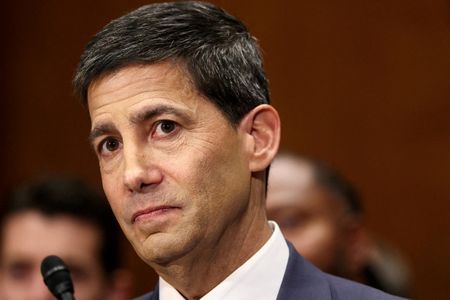

WASHINGTON – The United States Federal Reserve is entering a new chapter as former governor Kevin Warsh prepares to take the helm as chair, following eight years of tensions with the White House, a worldwide pandemic, and battles against rising prices.
This transition also marks a shift for President Donald Trump, who will lose his frequent target Jerome Powell, though Powell will stay on as a Fed governor and continue leading the central bank temporarily until Warsh officially takes over. Trump’s selection of Warsh for Fed chair appears aimed at creating better relations between the White House and the nation’s central bank.
Back in 2016, Powell had served just a few months in his initial term when Trump started criticizing him over the Fed’s decisions to increase interest rates. Currently, Trump is calling for rate reductions, but Warsh might also let him down given inflation risks and the more aggressive stance of fellow Fed officials.
Market observers currently anticipate Warsh may need to increase rates by January.
Here’s the current situation as the Warsh-led Fed begins:
INFLATION
Trump had pledged that prices would drop immediately upon taking office, but inflation measures indicate this hasn’t occurred. Due to ongoing effects from import tariffs, oil price increases during the U.S.-Israeli conflict with Iran, and continued robust investment and consumer spending, Warsh assumes control while inflation moves further beyond the Fed’s 2% goal. Multiple Fed governors have voiced concerns about mounting price pressures.
The Powell era did experience higher average inflation compared to previous leaders. However, a recent developing “disinflation,” or declining inflation rate, changed direction following the double impact of increased tariffs and higher energy expenses.
UNEMPLOYMENT
Besides managing inflation, the Fed’s responsibility includes using policy tools to maintain strong employment. These two objectives sometimes clash. Increasing prices might require the Fed to restrict policy and threaten job creation, or elevated unemployment could demand lower rates which risks economic overheating. The Fed is attempting to decide if this represents one of those conflicting moments.
However, while inflation requires reduction, the unemployment rate has stayed stable and remains relatively low by historical measures at 4.3%.
Supporters of rate reductions have claimed the job market appears weaker than statistics suggest, with genuine risks of rapid joblessness increases. But recently, policymakers have shown greater concern about climbing prices.
THE BALANCE SHEET
The Fed’s portfolio of assets and liabilities represents a distinctive economic entity. It contains the nation’s gold reserves and accounts for all physical U.S. currency held in banks or stored privately. However, most of its current $6.7 trillion in assets and corresponding liabilities consists of U.S. Treasury and mortgage-backed securities serving dual functions.
These large holdings essentially represent Fed money injected into the economy in exchange for Treasury or mortgage bonds. They were gathered to help the U.S. economy survive crises such as the COVID-19 pandemic. They remain as part of the Fed’s tools for managing short-term interest rates.
Warsh is anticipated to examine various regulatory and policy modifications to reduce the substantial balance sheet. This could result in extended discussions with minimal immediate progress. Warsh has shown confidence in his capacity to create comprehensive “regime change,” and Fed observers might consider the balance sheet’s size as one measure of his success.
Achievement will depend on factors like how the U.S. Treasury’s debt issuing schedule or international investors react to any modifications Warsh implements to reduce the balance sheet. Long-term interest rates on U.S. government debt, which influences what consumers pay for home mortgages and other loans, have already been climbing, and a smaller Fed balance sheet could create additional upward pressure.
INTEREST RATES: UP, DOWN OR SIDEWAYS?
The Fed has maintained interest rates unchanged since December, and policymakers generally believe the current policy rate of 3.5% to 3.75% is appropriate. It’s considered still somewhat “restrictive,” meaning it creates downward pressure on inflation and limits overall demand, but not so severely that it threatens a sharp unemployment increase. Policymakers also believe the current rate could be reduced quickly if necessary to a level that would maintain job market stability.
Some of Warsh’s colleagues are already concerned about high inflation and want to use the Fed’s policy statement to indicate that rate increases, rather than rate cuts, may be forthcoming.
Such a choice would present an immediate challenge for Warsh, confronting Trump with a more aggressive language shift at Warsh’s first meeting in June.
But the upcoming discussion under the Fed’s new leadership will be comprehensive and may require time to resolve, addressing issues like artificial intelligence’s impact on the job market and productivity, and the continuing development of a workforce limited by an aging population and immigration levels that have dropped significantly under Trump.