
The ongoing U.S.-Israeli conflict with Iran has generated financial losses of at least $25 billion for businesses worldwide, with costs continuing to mount, according to a new analysis.
An examination of corporate announcements since the conflict began reveals the widespread economic impact affecting companies across the United States, Europe and Asia. Businesses are dealing with escalating energy costs, disrupted supply chains and blocked trade routes resulting from Iran’s control over the Strait of Hormuz.
The analysis found that no fewer than 279 corporations have pointed to the war as a reason for implementing protective measures to reduce financial damage, such as raising prices and cutting production. Additional companies have paused dividend payments or stock buybacks, temporarily laid off workers, implemented fuel surcharges, or requested emergency government aid.
This disruption represents another major challenge for global business following the COVID-19 pandemic and Russia’s invasion of Ukraine, leading to reduced expectations for the remainder of the year with little indication that a peace agreement is near.
“This level of industry decline is similar to what we have observed during the global financial crisis and even higher than during other recessionary periods,” Whirlpool CEO Marc Bitzer told analysts after it slashed its full-year forecast in half and suspended its dividend.
As economic growth decelerates, companies’ ability to raise prices will diminish and fixed expenses will become more difficult to manage, analysts warn, putting profit margins at risk in the second quarter and beyond. Continued price increases are expected to drive inflation higher, further damaging consumer confidence that is already weakened.
“Consumers are holding back on replacing products and rather repairing them,” Bitzer said.
The home appliance manufacturer is among many affected companies. Businesses including Procter & Gamble, Malaysian condom maker Karex and Toyota have issued warnings about the growing financial impact as the conflict reaches its third month.
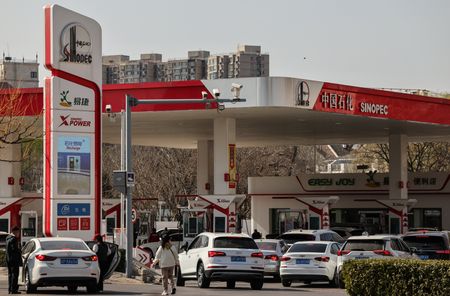
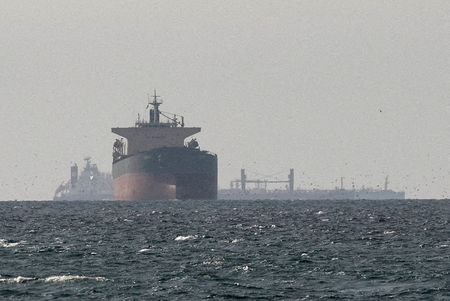
Iran’s closure of the Strait of Hormuz — the world’s most important energy transit point — has driven oil prices beyond $100 per barrel, representing an increase of more than 50% since before the war began.
The blockade has increased shipping expenses, limited access to raw materials and eliminated trade routes essential for moving goods. Availability of fertilizers, helium, aluminum, polyethylene and other crucial materials has been affected.
Twenty percent of companies examined in the review — which produce items ranging from cosmetics to tires and detergent, plus cruise operators and airlines — have reported financial damage from the war.
Most affected companies were located in the UK and Europe, where energy expenses were already high, while nearly one-third came from Asia, demonstrating those areas’ heavy dependence on Middle Eastern oil and fuel products.
For comparison, hundreds of companies had reported more than $35 billion in expenses by October last year related to U.S. President Donald Trump’s 2025 tariffs.
Airlines represent the largest portion of measured war-related expenses, accounting for almost $15 billion, as jet fuel costs have nearly doubled. As the supply chain problems continue, additional companies from various sectors are raising concerns. Japan’s Toyota projected a $4.3 billion impact while P&G estimated a $1 billion after-tax profit loss.
Fast-food chain McDonald’s announced earlier this month that it anticipated higher long-term cost inflation from continuing supply-chain problems, the type of warning that had previously been limited to industrial company earnings calls.
The increase in fuel costs is reducing demand from lower-income consumers, CEO Chris Kempczinski explained, noting that “elevated gas prices are the core issue we’re seeing right now.”
Nearly 40 companies in the industrial, chemical, and materials sectors have announced price increases due to their dependence on Middle Eastern petrochemical supplies.
Newell Brands Chief Financial Officer Mark Erceg stated earlier this month that each $5 increase in oil prices per barrel adds approximately $5 million in expenses.
German tire manufacturer Continental anticipates losses of at least 100 million euros ($117 million) starting in the second quarter because rising oil prices are making raw materials more costly.
Continental executive Roland Welzbacher explained earlier this month that it would require three to four months before impacting the company’s financial statements. “It probably hits us late in Q2, and then it will come in full-blown in the second half,” he said.
Corporate earnings remained strong during the first quarter, helping explain why major stock indices like the S&P 500 have reached record highs despite rising energy costs and increasing bond yields due to inflation concerns.
Since March 31, forecasts for second-quarter net profit margins have been reduced by 0.38 percentage points for S&P 500 industrial companies, 0.14 percentage points for consumer discretionary firms and 0.08 percentage points for consumer staples, according to FactSet data.
European companies listed on the STOXX 600 will experience margin pressure starting in the second quarter, as passing along additional costs will become more challenging and hedging protection ends, Goldman Sachs analysts noted.
Consumer-oriented industries including automobiles, telecommunications, and household goods are experiencing negative forecast adjustments of more than 5% for the next 12 months, according to Gerry Fowler, UBS head of European equity strategy.
In Japan, analysts have reduced second-quarter earnings growth estimates to 11.8% since late March, cutting previous projections in half.
“The true earnings hit has not yet materialized in most companies’ results,” said Rami Sarafa, CEO of Cordoba Advisory Partners.