
Fast Retailing, the Japanese parent company of clothing brand Uniqlo, announced Thursday that its third-quarter operating profit climbed 45.7%, even as the ongoing Iran war created headaches for its supply chains and shipping operations.
The company reported operating profit of 213.79 billion yen — roughly $1.32 billion — for the three-month period ending in May. That figure is up sharply from 146.74 billion yen during the same quarter a year ago, and it significantly exceeded the average analyst estimate of 177.73 billion yen, based on projections compiled by LSEG.
On the strength of those results, Fast Retailing boosted its full-year operating profit forecast to 730 billion yen, up from its previous target of 700 billion yen. The company is now on track for what would be its fifth consecutive year of record-breaking earnings.
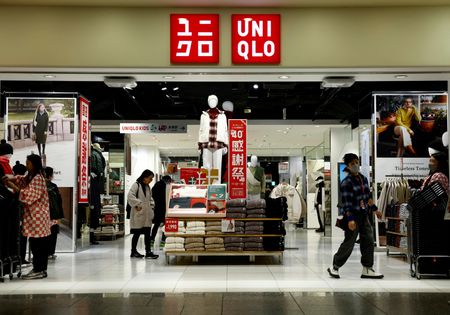
Analysts closely watch Fast Retailing as an indicator of consumer spending trends in both Japan and mainland China, where the company operates nearly 900 stores.
The retailer traces its roots to a single shop in the western Japanese city of Hiroshima, which opened in 1984. Today, more than 2,500 Uniqlo locations operate around the world, offering affordable items like fleece jackets and cotton shirts manufactured primarily at factories across Asia.
In recent years, Fast Retailing has been pushing aggressively into European and North American markets as it seeks to diversify beyond China, which remains its biggest international market. Growth there has slowed as consumer confidence weakened, leading the company to close some stores and restructure operations.
Back home in Japan, sales have gotten a boost from a surge in tourism, fueled in part by a yen that has fallen to levels not seen in roughly 40 years.
Like other global fashion companies, Fast Retailing has had to navigate disruptions tied to the Middle East conflict, which has affected both supply lines and freight costs. The company’s CFO, Takeshi Okazaki, noted in April that the Iran war was making air freight from Southeast Asian production facilities more complicated, and that prolonged increases in oil prices could drive up the cost of synthetic fabrics.
Extreme heat has also been a factor for the industry more broadly. Intense heat waves across Europe and North America this year have prompted Swedish retailer H&M to announce changes to its product offerings and marketing schedule to better reflect longer, hotter summers.