
WASHINGTON — The Democratic Socialists of America, a left-leaning political organization, has moved from the margins of American politics to a position of growing influence within the Democratic Party. But what exactly does the group believe, and can it sustain a foothold in mainstream politics?
Here is a look at the organization, based on information from its national website.
A GROWING FORCE IN DEMOCRATIC POLITICS
The DSA was formed in 1982 through the merger of two separate organizations, but it remained largely unknown for decades. That changed in 2016, when independent Senator Bernie Sanders mounted an unsuccessful campaign for the Democratic presidential nomination. His run brought widespread attention to frustrations with the party’s mainstream direction and helped energize its left wing.
Sanders describes himself as a democratic socialist but has no formal ties to the DSA.
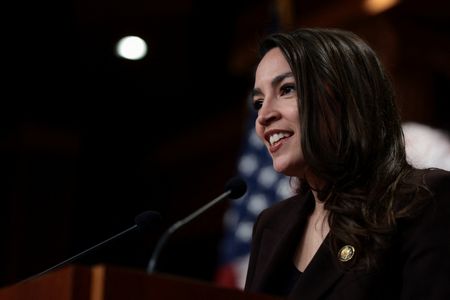
The organization gained significant momentum in 2018 when DSA member Alexandria Ocasio-Cortez pulled off a major upset in a Democratic House primary in New York. She has since become a prominent figure in the party and is considered a potential 2028 presidential contender.
DSA members have continued to rack up notable victories, including New York Mayor Zohran Mamdani. This year, DSA-backed candidates have won Democratic House primaries in New York City and Colorado. DSA member Nithya Raman advanced to the final two candidates in the Los Angeles mayoral race, and DSA member Janeese Lewis George won the Democratic primary for mayor of Washington, D.C., with a full-term election expected in November.
The organization now describes itself as the largest socialist group in American history, claiming a membership of more than 100,000 people. So far this year, DSA or its local chapters have backed 150 candidates across various levels of government, recording 38 wins and 38 losses.
WHAT SEPARATES SOCIALISTS, DEMOCRATIC SOCIALISTS, AND COMMUNISTS?
President Donald Trump has labeled Mamdani and other DSA-supported candidates as “communist,” attempting to draw comparisons to adversaries of the United States such as the former Soviet Union.
Communism, by definition, seeks to eliminate private property and create a society without class distinctions — goals that real-world communist governments have largely failed to achieve.
In Europe, parties that call themselves democratic socialist have used electoral politics to build strong social safety nets and establish public oversight of major industries, while still permitting private property and free markets.
The DSA says it wants to go further than the European model but without adopting the authoritarian tactics associated with communist regimes. The group advocates for government control of major industries and wants to replace capitalism with a system where, in their words, “ordinary people have a voice.”
WHERE DSA STANDS ON ISRAEL
The DSA has pushed to move the Democratic Party away from its historically strong support for Israel, and the issue has become a flashpoint in this year’s primary contests.
The organization characterizes Israel as an apartheid state carrying out a genocide in Gaza and accuses it of having “fascist” ambitions. DSA calls for an end to all U.S. military and economic assistance and weapons sales to Israel, and it supports student campaigns urging universities to pull their investments from the country.
The group has also called for a full Israeli withdrawal from Arab territories, a “right of return” for displaced Palestinians, and a “right to resist” Israeli occupation — though it stops short of explicitly endorsing militant organizations like Hamas. Following the October 7, 2023 Hamas attack that killed 1,200 Israelis, DSA described the assault as “not unprovoked” and said it was “a direct result of Israel’s apartheid regime.”
OTHER POLICY POSITIONS
The DSA’s national website outlines the organization’s stances on a wide range of issues, including the following:
• Expanding Medicare to cover all Americans, a proposal commonly known as “Medicare for All”
• Free college and early childhood education
• Nationwide rent control and a major expansion of public housing
• Higher taxes on wealthy individuals, corporations, large inheritances, and private universities
• A 32-hour workweek with no cuts to pay or benefits, along with stronger protections for labor unions
• Large-scale infrastructure and jobs programs, along with a “Green New Deal” to boost investment in renewable energy and phase out fossil fuels
• Public ownership of major transportation networks, energy systems, and natural resources
• A significantly more open immigration system that would allow workers to move freely between countries and eliminate deportation
• Lifting sanctions on Cuba, Venezuela, Iran, and other nations described as acting “independently of the United States”
• Deep cuts to the U.S. military budget and the closure of all American military bases abroad
• Abolishing the Electoral College in favor of a national popular vote for president
• Adding seats to the U.S. House of Representatives and eliminating supermajority requirements in the Senate