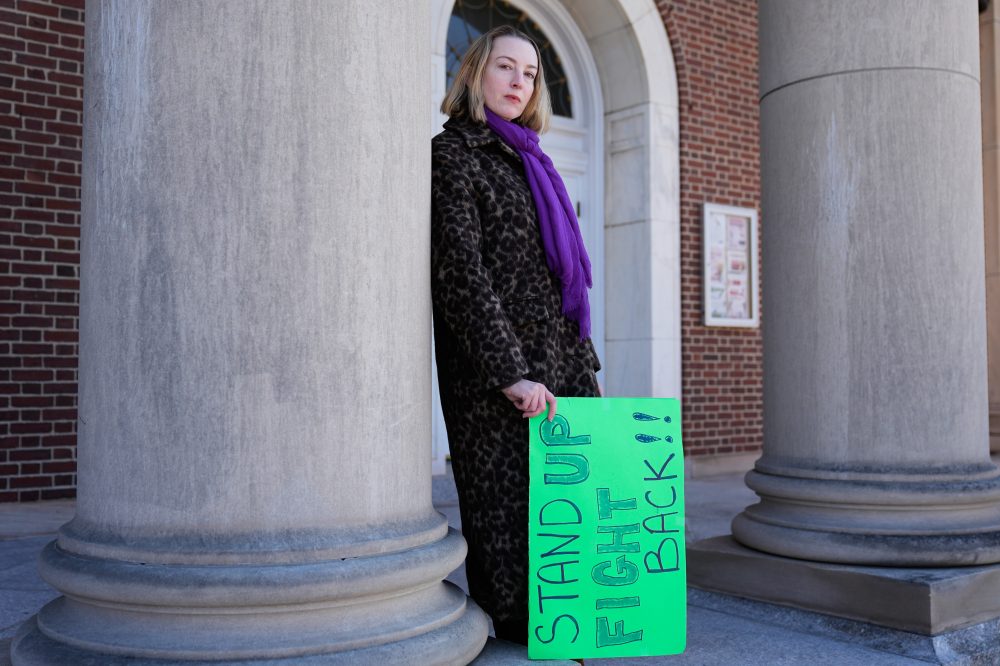

MONTCLAIR, N.J. — Just a few years back, Allison Posner had minimal involvement in political activities.
Today, the 42-year-old mother from Maplewood, New Jersey, distributes meals and baby supplies to migrant families at a local detention center. She holds protest signs on highway overpasses between her children’s school runs and dental visits. This weekend, she plans to spearhead a “No Kings” demonstration through her wealthy community with her family and thousands of others who believe President Donald Trump poses a serious danger to American democratic institutions.
“The people in the suburbs are definitely radicalizing,” said Posner, who works as a freelance actor.
An expanding group of worried residents in suburban areas nationwide — communities historically characterized by political centrism or conservative leanings — are increasingly taking leading roles in opposing Trump. More than one year into the Republican leader’s second presidency, these former “soccer moms” are transforming into committed activists marching through their pristine neighborhoods to challenge Trump and his supporters.
This leftward movement might strip Republicans of congressional control during Trump’s remaining two years. It could also transform the Democratic Party by promoting a new generation of passionate progressive contenders willing to confront the Trump administration more forcefully than party leaders might want.
Indivisible, the advocacy group organizing this weekend’s third “No Kings” protest series, reports that approximately two-thirds of over 3,000 scheduled rallies will occur beyond city limits. Altogether, organizers anticipate more than 9 million participants nationwide in what they predict will become the biggest single protest day in American history.
“We’re going to be everywhere,” stated Indivisible co-founder Ezra Levin.
Event coordinators note particularly strong registration numbers in suburban regions featuring prominent congressional contests, including Scottsdale, Arizona; Langhorne, Pennsylvania; East Cobb, Georgia; and northern New Jersey’s 11th district, which faces a special election on April 7.
Democratic primary voters last month selected Analilia Mejia, a former political director for Sen. Bernie Sanders, as their nominee to succeed Mikie Sherrill, the centrist Democrat recently elected as New Jersey’s governor.
Posner expressed enthusiasm about having a combative representative for her area, someone capable of expressing the anger she observes daily.
“I’m seeing people from the PTA or the neighborhood who would have never joined a protest in the past, who are now asking how they can get involved,” Posner stated. “This is not some other people’s fight. This is our fight.”
For generations, wealthy suburban areas like northern New Jersey consistently elected Republicans who matched their constituencies: business-focused, socially moderate, and uninterested in ideological battles.
This pattern started shifting during Trump’s presidency.
Throughout America, university-educated suburban voters rejected Trump’s political approach. They moved dramatically toward Democrats during 2018 midterm elections and subsequent presidential races. Areas like New Jersey’s 11th district, formerly a Republican fortress, have joined a new progressive alliance based in previously competitive regions.
Even in Summit, New Jersey, among America’s most affluent suburbs, Jeff Naiman feels he’s experiencing an “authoritarian nightmare” created by Trump.
“It’s like our hair is on fire,” says Naiman, a 59-year-old radiologist leading his local Indivisible chapter. “Our country’s being torn apart.”
He supports Mejia and feels certain she’ll win next month’s special election — and again in November’s general contest.
“In this environment,” Naiman stated, “I think the chances of her losing the general election are basically zero.”
Mejia, an vocal progressive activist endorsed by Sanders and Rep. Alexandria Ocasio-Cortez, D-N.Y., won last month’s crowded Democratic primary, defeating centrist candidates including former congressman Tom Malinowski.
She opposes Israel’s Gaza conflict, advocates abolishing U.S. Immigration and Customs Enforcement, and supports Medicare for All. She’s also prepared to voice concerns about what she characterizes as Trump’s authoritarian behavior, and will speak at this weekend’s “No Kings” demonstration.
“A ZIP code does not protect anyone from rising violent authoritarianism,” she stated during an interview.
Mejia continues calling herself a “soccer mom,” despite Republican opponents claiming she’s attempting to moderate her activist reputation before Election Day.
“My youngest plays baseball and soccer, my oldest lacrosse and basketball,” she explained. “And when I take my children to activities, to games, and I speak to other parents, I know that we’re all experiencing this economy and this political moment very similarly.”
Mejia rejected antisemitism allegations regarding her Israel position, where she accused the nation of committing genocide during the Gaza war, an issue that became central to the campaign.
“When I say Palestinians have rights, like Jewish people and Israelis have rights, that is not antisemitism, that is humanism,” she said while recognizing antisemitism exists within both major parties. “I am an Afro Latina raising two Black sons in America. I know othering kills. I know how dangerous it is when we dehumanize communities.”
New Jersey’s 11th district had Republican representation until Sherrill won during 2018 midterm elections that delivered a severe judgment at Trump’s first-term midpoint.
Joe Hathaway, the Republican candidate in next month’s special election and a Randolph Township council member, aims to persuade voters that Mejia is too extreme for their district. Republican strategists in Washington also believe a wave of far-left Democratic nominees nationwide like Mejia in otherwise centrist districts could help their party keep its narrow House majority this fall.
However, suburban Republicans face significant political challenges from their party’s White House leader. Hathaway, for instance, initially refused to reveal his Trump voting record.
“I don’t think it’s important,” he said during an interview, before admitting he voted for the president three times. “This job is representing the district, NJ-11 comes first, before a president, before your party.”
Hathaway supports the president’s Iran conflict and many economic policies in Trump’s “one big, beautiful” legislation. But he quickly emphasized areas of disagreement.
The Republican endorsed most Democratic demands in the Department of Homeland Security shutdown dispute, including requirements for federal immigration officers to wear body cameras, properly identify themselves, remove face coverings, and receive enhanced training.
He also wants Republican congressional leaders to challenge Trump, whose executive power use Hathaway said is “pressure testing” constitutional checks and balances.
“Congress needs to reassert that it is the first branch of government and take more of a leadership role than it’s been doing,” he stated.
Suburban Americans have gradually distanced themselves from Republicans over the last 15 years, according to Gallup surveys tracking party identification over time.
Trump couldn’t reverse this trend despite claiming Democrats would “destroy” suburbs with affordable housing.
In 2020, Joe Biden captured 54% of suburban voters while Trump received only 44%, according to AP VoteCast. This represented significant improvement over Democrat Hillary Clinton’s performance in a smaller 2016 validated voter study by Pew Research Center, which found Clinton and Trump roughly split this demographic.
Suburbs have also become more diverse and educated recently, demographic changes that may boost Democratic confidence. In both recent presidential elections, AP VoteCast showed college-educated and non-white suburban voters strongly favored Democratic candidates.
Naiman, the Summit radiologist, said he’s observed his town’s transformation, which had Republican representation at state and federal levels for decades until Trump’s rise.
“I don’t think that Summit is going to be swinging towards Republicans anytime soon — at least not as long as Trumpism is around,” he stated.