
For Donnie Beson, filling up his classic cars has become increasingly expensive. The 68-year-old from Woodland Park, Colorado, remains loyal to President Donald Trump but believes the Iranian conflict has pulled the commander-in-chief away from domestic priorities.
“Come on, Trump. Worry about us,” Beson expressed. “We’re in a billion-dollar-a-day war. It’s like, ‘Man, you forgot about the other stuff, and you got to take care of that first.’”
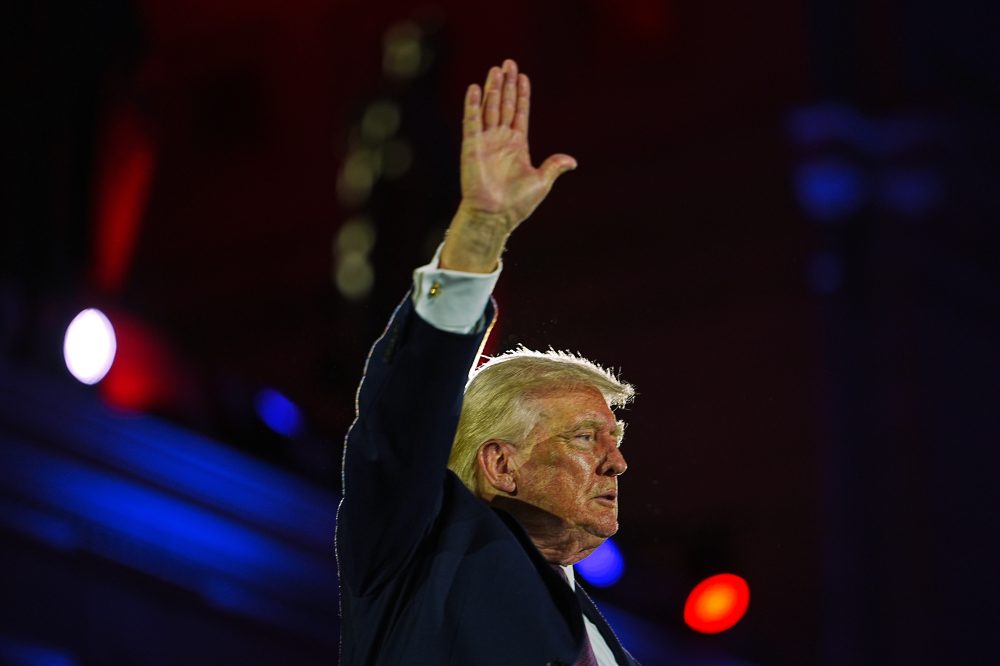
While Trump maintains strong Republican loyalty, fresh polling data from The Associated Press-NORC Center for Public Affairs Research suggests the president could face voter frustration during this midterm election cycle if America becomes entangled in an extended Middle Eastern conflict—the very scenario he pledged to prevent.
The survey reveals that while 63% of GOP voters support air attacks on Iranian military installations, just 20% endorse sending American soldiers into combat.
Escalating fuel costs present another challenge for Trump. Oil and gasoline prices have climbed dramatically since hostilities with Iran commenced nearly four weeks ago, creating additional economic strain as many citizens already struggle with basic expenses. The polling shows approximately 60% of Republicans express at least some worry about affording gasoline in coming months, though their concern levels remain below the national average.
Trump’s overall approval rating among Republicans sits at roughly 75%, with 70% backing his Iran strategy.
These numbers align with broader GOP support for Trump’s international policies and his recent intensified approach toward Cuba, where he’s increased efforts to alter the nation’s governing structure.
Many Republican voters maintain significant confidence in the president’s foreign policy judgment. Approximately half express high trust in his military deployment decisions beyond U.S. borders. Similar percentages show strong faith in his interactions with both adversaries and allied nations.
Sharon Fuller, a 68-year-old retired hospital analyst from Ocklawaha, Florida, strongly supports the president and endorses both his overall performance and Iranian military actions.
Despite some war-related doubts, Fuller praised Trump as a “huge patriot” and highlighted her satisfaction with stock market performance during his current term.
“I don’t really agree with the war, but on the other hand, I think it’s a necessity at this point,” she stated.
Republican attitudes differ markedly from broader American sentiment regarding the conflict. Recent Quinnipiac University polling found approximately 80% of registered Republican voters believe the Iranian war will create global security improvements, compared to roughly one-third of all voters.
The AP-NORC survey shows 81% of Republicans consider preventing Iranian nuclear weapons development “extremely” or “very” important, supporting one of Trump’s stated war objectives. However, only about half prioritize replacing Iran’s current government with U.S.-friendly leadership.
Stephen Hauss, a 40-year-old Delaware Agriculture Department employee managing environmental programs in Camden, describes his political philosophy as libertarian-influenced. Though he supported Trump in 2024, the Iranian conflict has shifted his presidential assessment.
“Before the war I was just kind of like, ‘OK, like, I voted for him. I got to give him, like, some benefit of the doubt,’” Hauss explained.
Hauss now opposes American efforts to replace foreign governments, adding, “I don’t think I am on board with this anymore.”
Additional U.S. military involvement could create further complications for Trump. Only about 20% of Republicans support ground troop deployment against Iran, while roughly one-third remain undecided and approximately half oppose such action.
Thomas Sweeney, a 76-year-old retired chemical engineer from Frisco, Texas, voted for Trump in three elections. The Army veteran opposes the current war, which has diminished his presidential opinion.
“I’m not happy. I am frustrated,” Sweeney said. “Soldiers are very, very precious. You just don’t go in there and waste lives.”
Rising energy costs represent another Trump vulnerability, even among party loyalists. About 75% of Republicans consider maintaining low gasoline prices “extremely” or “very” important for U.S. foreign policy, potentially conflicting with their war support.
The Quinnipiac University poll found roughly 30% of registered Republican voters describe recent gasoline prices as creating “very” or “somewhat” serious family hardships.
Persistent high fuel costs could generate additional frustration among Trump supporters who expected the president to reduce everyday expenses.
Fuller, the Florida Republican, ruled out voting Democratic but offered Trump specific guidance.
“I’d like him to see what he can do to get prices down for, quote, the working people and myself now living on a fixed income,” she said.
The AP-NORC poll surveyed 1,150 adults from March 19-23 using NORC’s probability-based AmeriSpeak Panel, designed to represent the U.S. population. The sampling error margin is plus or minus 4 percentage points overall and plus or minus 6.7 percentage points for Republicans.