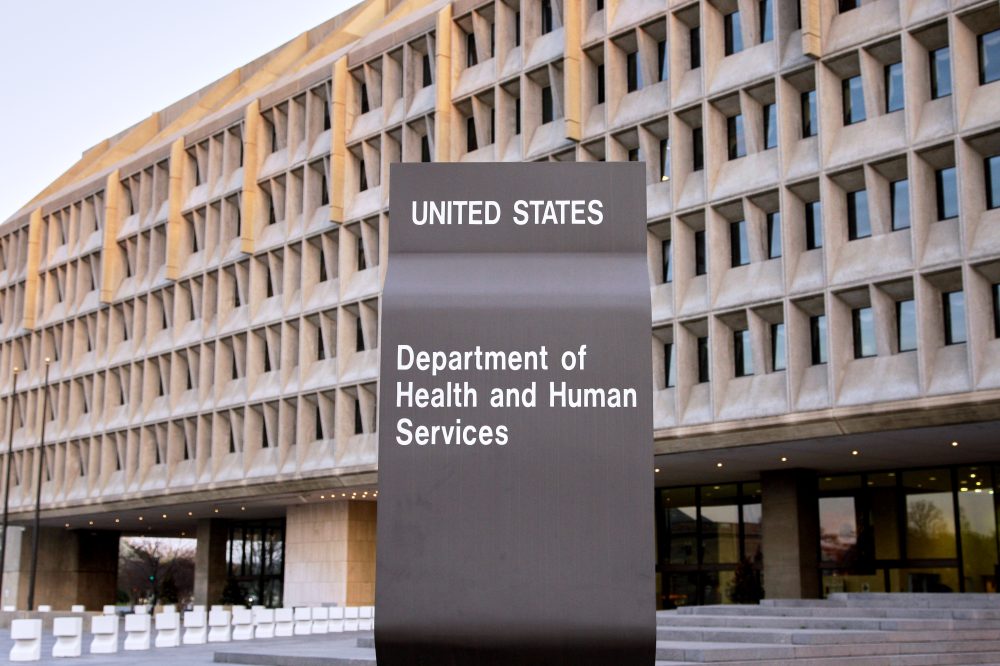
Federal officials announced Thursday they are conducting investigations into 13 states, including Delaware, over requirements that health insurance plans provide abortion coverage.
These investigations represent the most recent chapter in an ongoing political battle over how to interpret the Weldon Amendment, a federal provision included annually in spending legislation since 2005. This amendment prohibits states from discriminating against healthcare organizations that refuse to provide, cover, or make referrals for abortion services.
During Joe Biden’s presidency, the Department of Health and Human Services’ civil rights division determined this provision did not apply to employers or healthcare plan sponsors. However, the current Trump administration has reversed this interpretation.
Federal officials now argue that states requiring abortion coverage may be breaking the law by failing to provide opt-out options for employers and healthcare plan issuers. The administration is requesting additional information from affected states through formal letters.
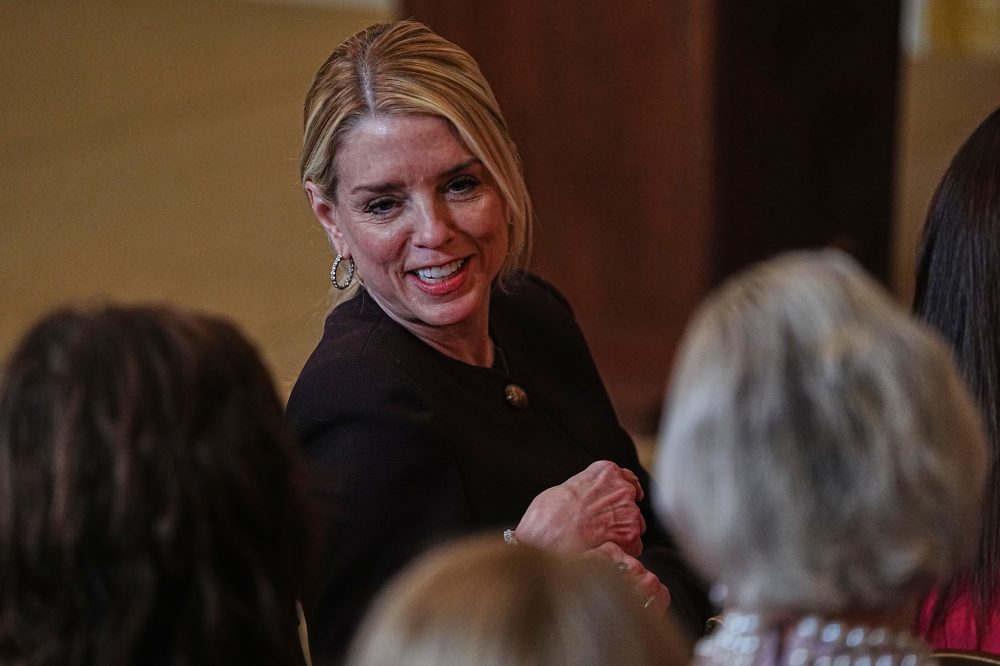
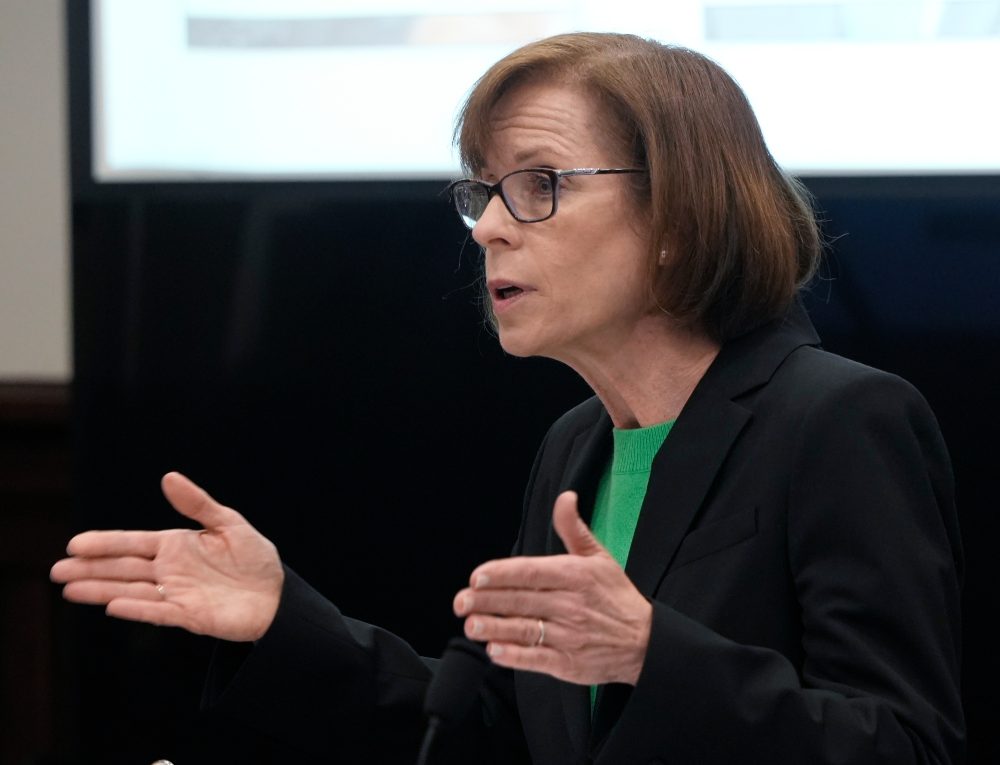
Paula M. Stannard, who heads the HHS civil rights office, explained the investigations aim “to address certain states’ alleged disregard of, or confusion about, compliance with the Weldon Amendment.”
“Under the Weldon Amendment, health care entities, such as health insurance issuers and health plans, are protected from state discrimination for not paying for, or providing coverage of, abortion contrary to conscience. Period,” Stannard said.
The targeted states include California, Colorado, Delaware, Illinois, Maine, Maryland, Massachusetts, Minnesota, New Jersey, New York, Oregon, Vermont and Washington. Vermont is the only state among them with a Republican governor.
The Weldon Amendment belongs to a category of legislation called conscience laws, designed to protect individuals and healthcare organizations from being forced to provide abortions or related services that conflict with their religious or moral beliefs.
Mary Ziegler, who teaches law at the University of California, Davis, noted that since the amendment’s passage in 2005, its interpretation has shifted based on “partisan swing” depending on which political party controls the White House.
Ziegler observed that Democrats might have a stronger legal position since the amendment’s text doesn’t specifically mention employers and plan sponsors among protected healthcare entities, though courts have not yet settled this question.
Elizabeth Sepper, a law professor at the University of Texas at Austin, pointed out that Project 2025, the Heritage Foundation’s comprehensive policy blueprint, recommended that a Trump administration should cut Medicaid funding from states found violating the Weldon Amendment.
“What we’re seeing here is the fulfillment of a promise to the religious right,” she said.
During Trump’s previous term in 2020, his administration attempted to cut federal healthcare funding from California over alleged Weldon Amendment violations, but the Biden administration reversed that decision upon taking office in 2021.
WASHINGTON — An ongoing Justice Department probe may inadvertently allow Federal Reserve Chair Jerome Powell to extend his tenure beyond his official term ending May 15, despite President Donald Trump’s months-long effort to oust him from the position.
Trump has selected former Fed official Kevin Warsh as Powell’s replacement, but Warsh’s Senate confirmation has stalled due to a DOJ inquiry examining Powell’s brief remarks to the Senate Banking Committee last June regarding the Federal Reserve’s building renovation project.
Republican Senator Thom Tillis of North Carolina has declared he will not support any Fed appointments until the investigation concludes. Combined with Democratic opposition on the committee, Tillis’s position has effectively prevented Warsh’s nomination from moving forward.
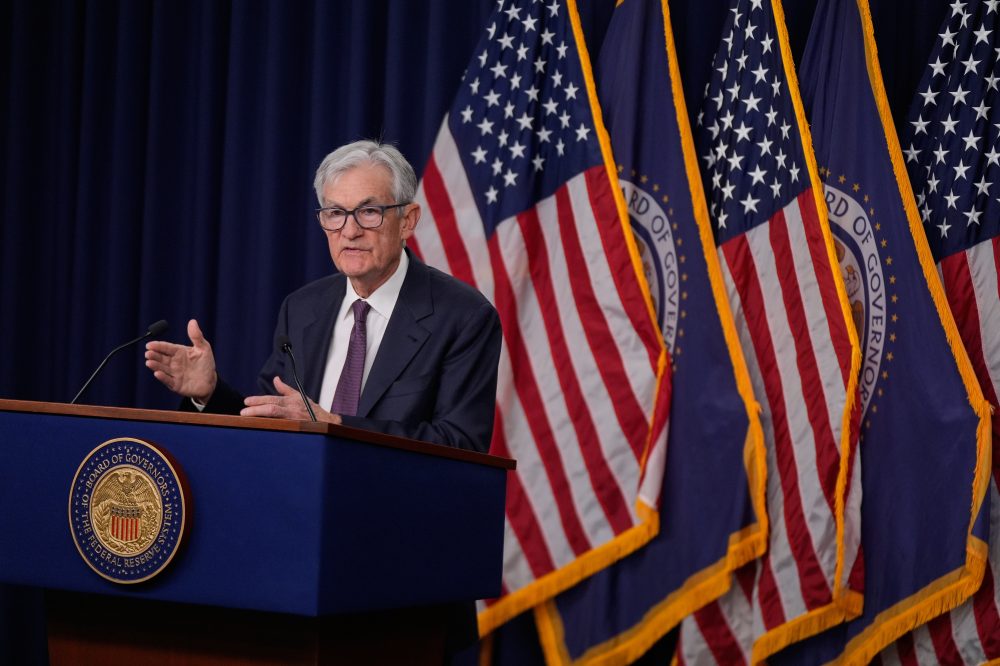
During a Wednesday press conference, Powell announced his intention to continue leading the Fed’s interest rate-setting panel beyond his term’s expiration if no replacement receives confirmation. He indicated he might extend his service even further while the investigation remains active.
“I have no intention of leaving the board until the investigation is well and truly over, with transparency and finality,” Powell stated to reporters.
While Powell’s chairmanship expires, his membership on the Fed’s seven-member governing board continues through January 2028. Unlike typical practice where departing chairs leave the board entirely, Powell could maintain his board position, preventing Trump from appointing another member to fill the seat.
When asked Wednesday whether he would resign after the investigation’s completion, Powell remained noncommittal.
“I have not made that decision yet,” he explained. “I will make that decision based on what I think is best for the institution and the people we serve.”
The situation presents an unexpected development considering Trump’s public criticism of Powell, while demonstrating the Federal Reserve’s success in defending its autonomy through legal and congressional channels.
The DOJ investigation suffered a significant setback recently when a federal judge dismissed two subpoenas issued by U.S. Attorney for the District of Columbia Jeannine Pirro, which sought Fed documents related to its $2.5 billion building renovation.
U.S. District Judge James Boasberg determined that the subpoenas were primarily intended “to harass and pressure Powell either to yield to the President or to resign and make way for a Fed Chair who will.”
Pirro announced plans to appeal the ruling last week, expressing indifference about any resulting delays in Warsh’s potential appointment.
“I don’t even know who he is,” Pirro commented about Warsh. “Politics is not the lane I’m in right now. … We are focused on the law.”
WASHINGTON – President Donald Trump dismissed the possibility of sending additional military personnel to the Middle East on Thursday as tensions with Iran continue.
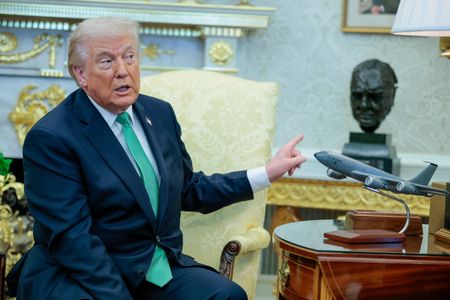
When questioned by reporters about potential troop deployments to the region, Trump responded firmly: “I’m not putting troops anywhere. If I were, I certainly wouldn’t tell you. But I’m not putting troops. We will do whatever is necessary to keep the price.”
The president made these remarks during a White House Oval Office session with Japanese Prime Minister Sanae Takaichi on March 19.
Trump’s statement comes after Reuters revealed on Wednesday that his administration was weighing the possibility of sending thousands of American military personnel to strengthen operations related to Iran, according to a U.S. official and three sources with knowledge of the discussions.
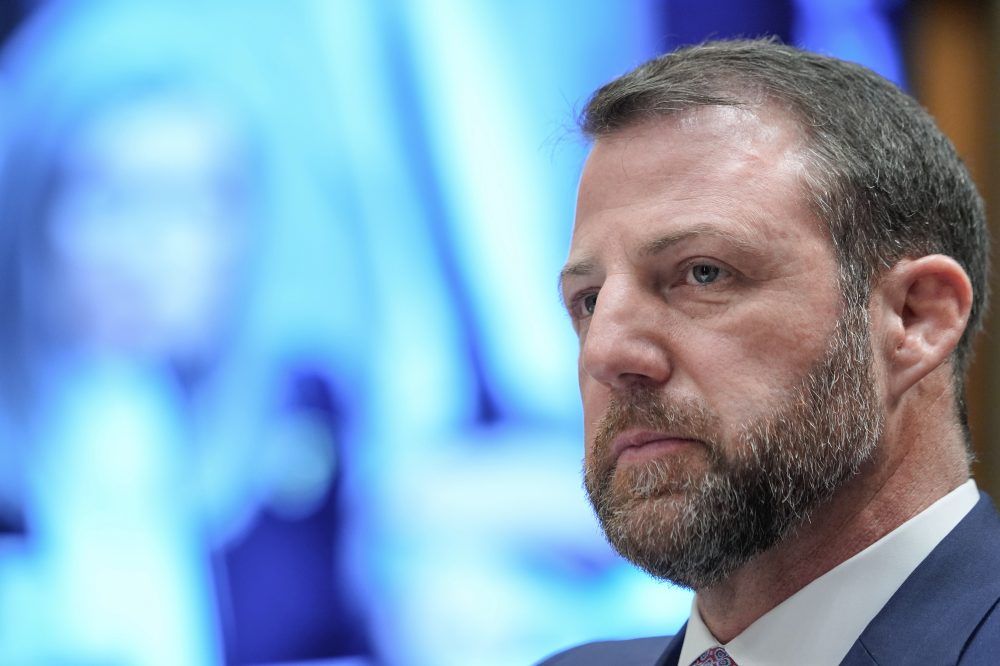
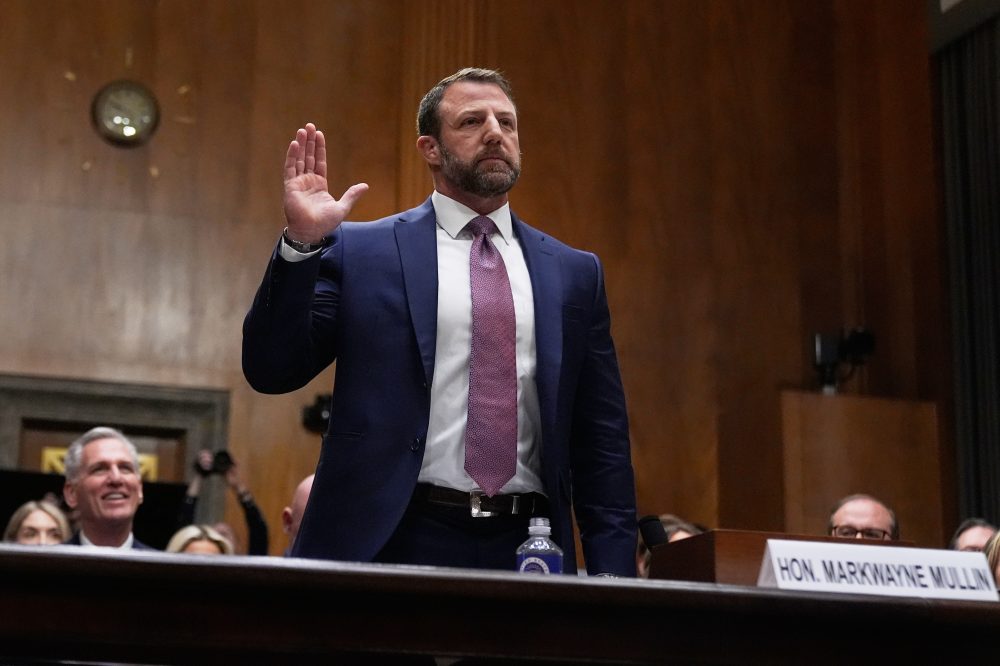
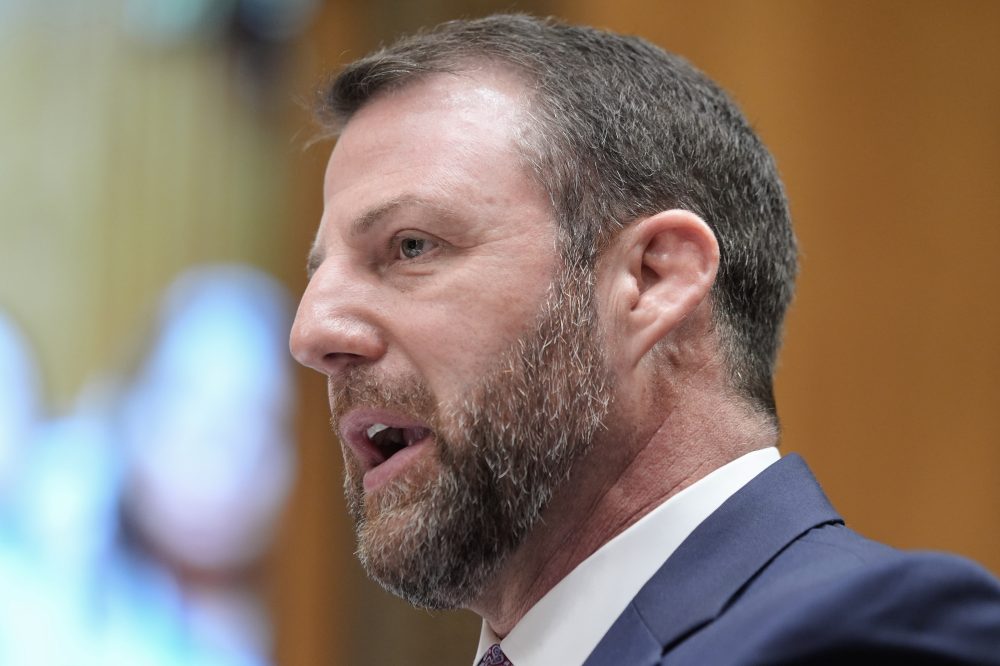
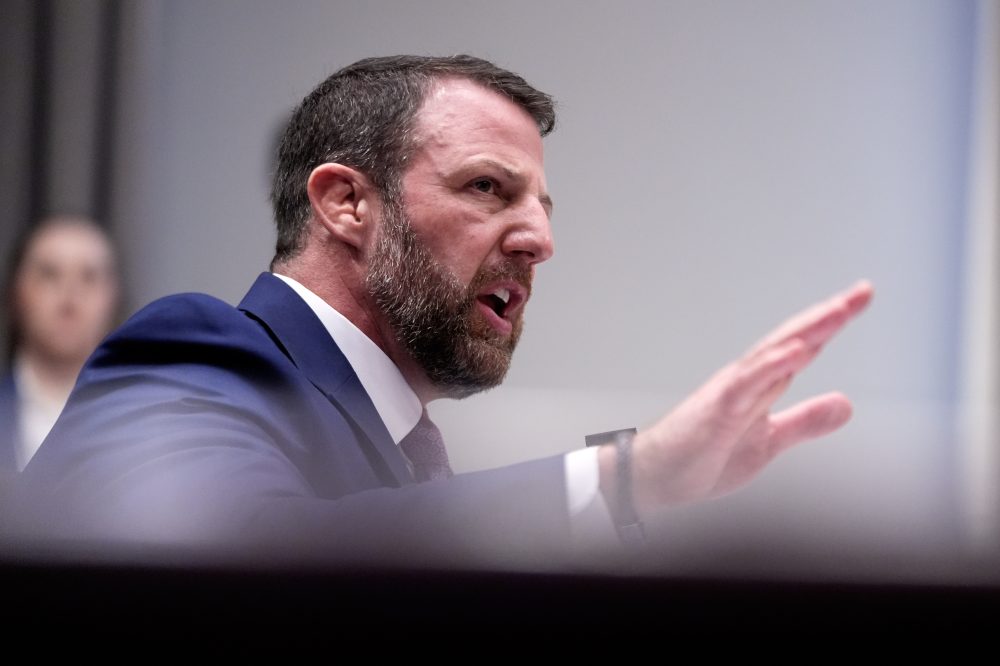
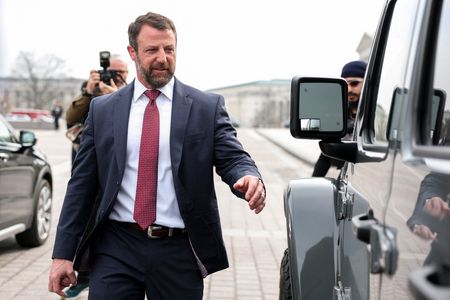
WASHINGTON — Oklahoma Senator Markwayne Mullin has taken a significant step toward leading the Department of Homeland Security after a Senate committee Thursday approved his nomination by a narrow margin.
The committee’s 8-7 decision follows Wednesday’s heated confirmation hearing and clears the way for a full Senate vote that could happen as early as next week on President Donald Trump’s Cabinet pick.
In an unusual twist, Republican committee chairman Rand Paul of Kentucky voted against Mullin, while Pennsylvania Democrat John Fetterman supported the nomination. The vote occurs amid an ongoing 34-day funding crisis at the Department of Homeland Security as both parties clash over agency policies.
During his committee appearance, Mullin attempted to present himself as a stabilizing force following the turbulent leadership of Kristi Noem, Trump’s initial choice for the position. The Oklahoma lawmaker also expressed backing for Trump’s immigration agenda, which sits at the center of the current funding dispute that emerged after three American citizens died in encounters with federal officers.
The confirmation hearing became notably hostile, with Mullin clashing not only with Democratic members but also with Paul in exchanges that nearly derailed the proceedings.
Paul began the session with sharp criticism of Mullin’s qualifications to head the department, particularly focusing on an undisclosed congressional travel incident that Mullin described as involving classified information during his House service.
The Kentucky senator also referenced inflammatory remarks Mullin made during a previous political dispute, when he labeled Paul a “freaking snake” and appeared to justify a physical attack Paul suffered from a neighbor years earlier. That assault left Paul with several broken ribs and required multiple surgical procedures.
“I just wonder if someone who applauds violence against their political opponents is the right person to lead an agency that has struggled to accept limits to the proper use of force?” Paul questioned during the hearing.
Mullin stood firm against the criticism, responding: “For you to say I’m a liar, sir, that’s not accurate.”
Paul subsequently announced his opposition to confirming Mullin for the position.
Fetterman, known for breaking with Democratic Party positions, explained his support by citing his “rooted in a strong committed, constructive working relationship with Senator Mullin for our nation’s security.”
State government workers in Delaware will now have access to comprehensive artificial intelligence education through a newly implemented training program designed to promote ethical technology use across all departments.
The curriculum has been made available via the Delaware Learning Center, the state’s digital education platform, and focuses on teaching employees how to implement AI tools responsibly and effectively in their daily work.
This educational initiative represents Delaware’s commitment to ensuring that as artificial intelligence becomes more prevalent in government operations, state workers are properly equipped with the knowledge and guidelines necessary to use these technologies in ways that serve the public interest while maintaining ethical standards.
The training program addresses the growing need for government employees to understand both the capabilities and limitations of AI systems, helping them make informed decisions about when and how to incorporate these tools into their work processes.
WASHINGTON — Defense officials have submitted a massive $200 billion funding request to the White House to support ongoing military operations against Iran, a senior administration official has revealed.
The official, who requested anonymity when discussing confidential matters, confirmed that the Defense Department has forwarded this request for White House consideration.
This staggering amount represents additional funding beyond what the military already secured through President Donald Trump’s tax reform legislation passed last year.
While lawmakers on Capitol Hill are preparing for a new spending proposal, it remains uncertain whether the White House has officially sent the request to Congress for review. The level of congressional support for such spending remains unclear.
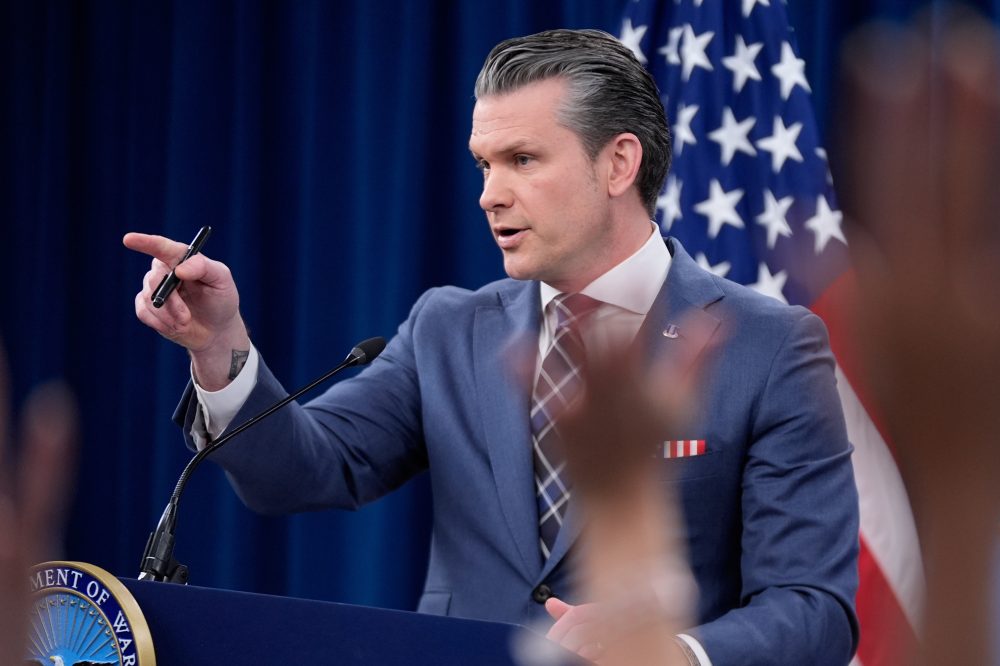
The Washington Post initially broke this story. During a Thursday news briefing, when reporters asked Defense Secretary Pete Hegseth about the specific dollar amount, he avoided confirming the exact figure while noting it could be subject to change. However, he acknowledged plans to approach Congress for proper funding.
“It takes money to kill bad guys,” Hegseth stated.
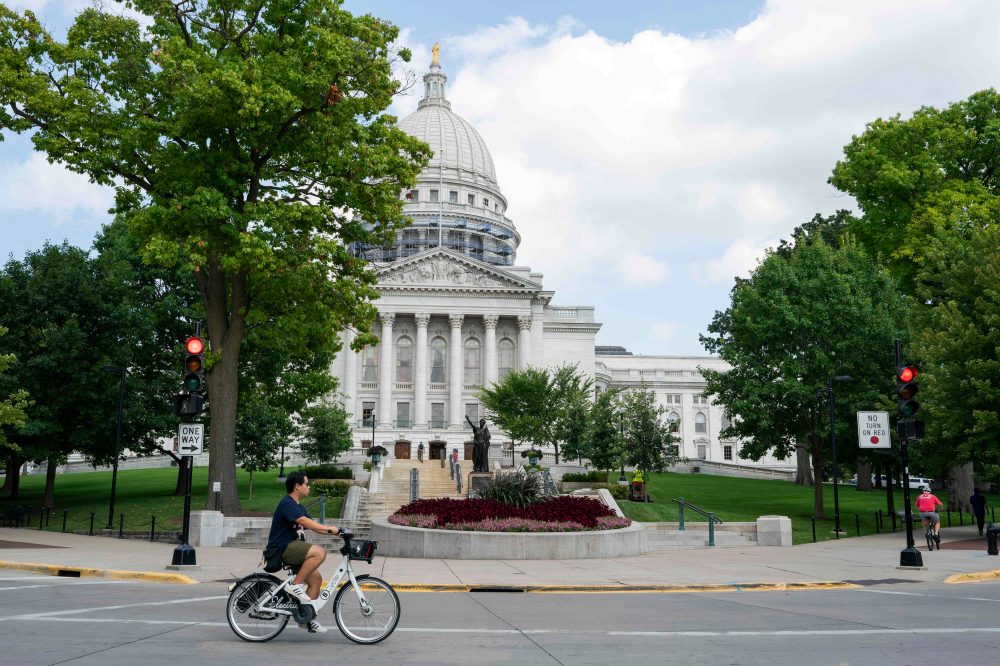
Wisconsin Governor Tony Evers has approved legislation extending the timeframe for mothers to surrender newborn children under the state’s Safe Haven law. The updated policy increases the window from three days to a full month following birth.
Under this expanded Safe Haven provision, mothers who feel unable to provide care for their newborns can bring them to designated facilities without facing legal consequences or interrogation. The law permits surrendering infants at numerous approved sites throughout the state.
This legislative change aims to assist women facing challenging pregnancy circumstances by providing additional time to make adoption decisions after giving birth. Wisconsin joins all other states in maintaining Safe Haven protections, though timeframes vary by jurisdiction.
Federal immigration enforcement agents have been collecting genetic material from individuals arrested while demonstrating against ICE activities, according to reports from detained protesters.
The DNA collection occurs after arrests are made during protests, with federal officers taking samples from those in custody. While this practice falls within legal boundaries, civil liberties experts are questioning the government’s intentions for storing and using this biological data.
The genetic sampling has sparked debate about privacy rights and government surveillance, particularly regarding protesters exercising their First Amendment rights. Legal analysts note that while DNA collection from arrestees is permitted under federal law, the implications for demonstrators raise constitutional concerns.
Immigration advocacy groups are monitoring the situation closely, expressing worry about potential intimidation tactics against those opposing federal immigration enforcement policies. The practice has been documented in multiple locations where protests against ICE operations have occurred.
WASHINGTON — President Donald Trump’s aggressive push to prioritize fossil fuels over renewable energy sources is facing a major test as the Iranian conflict drives oil prices higher and exposes Americans to greater energy supply risks.
Since taking office for his second term, Trump has systematically dismantled his predecessor’s climate initiatives while championing what he calls American energy dominance through increased oil and gas production. However, the current Middle East crisis is highlighting potential flaws in this fossil fuel-heavy strategy.
With crude oil climbing past $100 per barrel and gasoline approaching $4 per gallon, energy analysts argue that Trump’s rejection of alternative energy sources like wind and solar has made consumers more susceptible to international supply disruptions. The critical Strait of Hormuz shipping route remains largely inaccessible due to Iranian military actions targeting vessel traffic.
Peter Gleick, a climate scientist who co-founded the Pacific Institute focused on water sustainability issues, explained the immediate impact: “The biggest short-term losers of the war will be U.S. consumers of oil and gas, as energy prices rise.”
Tyson Slocum, who directs energy policy at the consumer advocacy organization Public Citizen, criticized the administration’s limited options. “It turns out fossil fuels have their own supply risks, and the administration has no answers,” he stated.
Slocum noted that despite Trump’s campaign pledge to slash energy costs in half, Americans have experienced rising electricity bills due to increased demand from data centers. “Now we are seeing higher gas prices, and nobody knows where it’s going,” he added.
When asked about the economic consequences, Trump characterized the conflict as a “very small price to pay” following years of Iranian aggression and expressed confidence that oil costs “will drop like a rock” after hostilities end.
Speaking to reporters Monday from the White House, Trump reiterated his commitment to domestic production: “Dig we must. That’s the Trump policy of lots of oil.”
The effects are already visible across the country as consumers face higher costs. AAA data shows the national gasoline average reached approximately $3.84 per gallon by Wednesday, a significant increase from the sub-$3 prices Trump highlighted during his recent State of the Union speech.
With midterm elections approaching and economic concerns topping voter priorities, these energy cost increases could create political challenges for Republicans.
“We’re always concerned when gas prices go up,” acknowledged Republican Senator Mike Rounds from South Dakota.
North Carolina GOP Senator Thom Tillis emphasized the broader implications: “Gas drives the affordability issue.”
Throughout his political career, Trump has consistently opposed renewable energy development, especially offshore wind projects, while promoting fossil fuel electricity generation. He frequently criticizes wind turbines as unsightly, costly, and harmful to wildlife, though federal data indicates that domestic cats pose a far greater threat to birds than turbines, followed by building strikes. Research from the National Audubon Society warns that rising global temperatures could threaten two-thirds of North American bird species with extinction.
During this second presidential term, Trump has doubled down on fossil fuel support through tax incentives and expedited drilling permits. Simultaneously, he has halted numerous clean energy initiatives and eliminated billions in renewable energy funding, dismissing such programs as the “Green New Scam.” Trump previously told the United Nations that climate change represents “the greatest con job ever perpetrated on the world, in my opinion.”
These policies represent a complete departure from President Joe Biden’s approach, which included extensive efforts to reduce emissions from power generation and other sectors while promoting electric vehicle adoption.
Biden’s administration had implemented a major regulation requiring coal plants to either install emission capture technology or cease operations. Congressional Democrats also authorized nearly $375 billion in clean energy investments, representing the largest climate-focused spending commitment by any nation in history.
Trump and Republican lawmakers quickly moved to reverse these measures, with the president going as far as overturning the scientific determination that climate change poses risks to public health and environmental safety.
Jason Bordoff, who founded Columbia University’s Center on Global Energy Policy, observed the administration’s stance: “You see an administration that has said, quite literally through reversal of the Endangerment Finding, we shouldn’t worry so much about climate change.”
Speaking on Bloomberg Green’s “Zero” podcast, Bordoff characterized the current U.S. approach: “We’re the largest oil and gas producer in the world, so why buy all this clean energy stuff like EVs and solar panels from China?”
To address mounting price pressures, Trump has authorized the release of millions of barrels from the Strategic Petroleum Reserve and temporarily suspended sanctions on Russian oil shipments currently in transit.
Administration officials are also exploring the possibility of deploying Navy vessels to protect oil tankers navigating the Strait of Hormuz. The U.S. is working to build an international coalition with nations dependent on Middle Eastern crude to secure the waterway, through which roughly one-fifth of global oil trade typically passes.
Despite these interventions, prices have remained elevated.
Gregory Brew, a senior analyst with the Eurasia Group, described the current situation: “We are currently experiencing what is the largest oil supply disruption in history.”
At a Cato Institute event, Brew predicted continued price volatility: “The Iranian strategy of applying pressure to the United States will continue to play out, and President Trump will continue to feel the pressure.”
Energy Secretary Chris Wright conceded that elevated prices will likely persist for several weeks but framed the situation as necessary sacrifice. He told ABC News Sunday that the world faces “short-term pain to solve a long-term problem” as the U.S. and Israel work to “defang” Iran.
“There’s no guarantees in wars at all,” Wright acknowledged. “This is short-term pain to get through to a much better place.”
United Nations Secretary-General António Guterres used the Middle Eastern crisis to advocate for accelerated renewable energy adoption, arguing it represents “the fastest path to energy security.”
“There are no price spikes for sunlight and no embargoes on the wind,” he stated.
OKLAHOMA CITY — The friendship between President Trump and his Homeland Security Secretary nominee, Senator Markwayne Mullin, began during one of the most frightening moments of the Oklahoma Republican’s life — when his teenage son sustained a devastating brain injury during a high school wrestling competition in 2020.
During his Senate confirmation hearing Wednesday, Mullin recounted how Trump took a personal interest in his family’s crisis, even inviting the senator and his injured son onstage at a political rally that year. The president asked 15-year-old Jim Mullin to sit with him and discuss his recovery process, while privately offering to arrange flights to medical experts and cover treatment costs.
“You know, someone loves your kids, you’re going to love that guy forever,” Mullin declared at a 2024 campaign event. “He’s a friend of yours.”
Now 48, Mullin is positioned to lead the Department of Homeland Security, taking over the sprawling agency after Kristi Noem was dismissed earlier this month amid growing criticism of immigration enforcement policies. Trump’s choice reflects his preference for personal loyalty and trusted relationships, particularly as he seeks to implement his signature mass deportation agenda.
During Wednesday’s confirmation proceedings, Mullin struggled with emotion as he described the aftermath of his son’s accident. The teenager awakened as a “different kid,” unable to perform simple tasks like touching his nose or solving basic math problems, while battling short-term memory issues.
“He was running in one of the toughest elections he had been in, and the guy was still that concerned about my son,” Mullin testified. “We were acquaintances before that. We’ve been friends ever since.”
According to Mike Stopp, Mullin’s former chief of staff, the senator maintains an unusual ability to challenge Trump while preserving their friendship. “He has no problem telling the president what he thinks,” Stopp noted. “They’re at that point in their relationship.”
Mullin entered politics in 2012 at age 34, transitioning from running a successful plumbing business to seeking an open House seat in Oklahoma’s expansive 2nd Congressional District, which spans from the Ozark foothills to the Texas border. His political awakening came partly from frustration with Affordable Care Act requirements that would have forced him to provide employee health coverage.
“Markwayne was fed up,” recalled Trebor Worthen, his campaign consultant at the time.
His blue-collar background and cattle ranching experience connected with voters across party lines in the rural district. Worthen, who spent a year crisscrossing the area with Mullin in a red diesel truck, observed: “Anybody who lives in Oklahoma or who has family in Oklahoma, you know somebody like Markwayne Mullin.”
After winning decisively, Mullin pledged to serve only three House terms but reversed course in 2018, admitting he “didn’t understand politics” when making the original commitment. Despite some backlash, he secured reelection and completed five House terms before moving to the Senate in 2023.
In Washington, Mullin built bipartisan relationships through early-morning workout sessions in the members-only House gymnasium. The former mixed martial arts competitor and college wrestler bonded with colleagues from both parties during these fitness gatherings, including former Massachusetts Democratic Representative Joe Kennedy III, current Director of National Intelligence Tulsi Gabbard, and Noem.
“What I like about him is he’s willing to not just share his views but to listen to yours, which really helps when you’re trying to get something done, especially in a bipartisan way,” said Democratic Representative Josh Gottheimer of New Jersey, who attended Mullin’s confirmation hearing in support.
Another surprising supporter present was Sean O’Brien, president of the International Brotherhood of Teamsters, who nearly came to blows with Mullin during a heated 2023 Senate hearing. O’Brien sat directly behind Mullin Wednesday as the nominee called him a “close friend” and said they had resolved their differences.
Since joining the Senate, Mullin has become one of Trump’s most vocal advocates on Capitol Hill, defending controversial cabinet selections like Noem and Defense Secretary Pete Hegseth. He frequently serves as a liaison between Senate Republican leadership and House colleagues.
Mullin backed Trump’s unsuccessful efforts to challenge the 2020 election results, maintaining his support even after personally confronting Capitol rioters on January 6th. He helped other Republicans barricade House chamber doors as lawmakers sheltered inside, later speaking through shattered glass to convince rioters to withdraw. He subsequently visited injured police officers from the attack.
“They weren’t cowards. They stood the line and took a beating,” Mullin told C-SPAN in 2021.
On immigration issues, Mullin has championed border wall construction and defended federal agents involved in controversial incidents, including fatal shootings of U.S. citizens in Minnesota. During a “Meet The Press” appearance last summer, he argued that American-born children of undocumented immigrants should face deportation alongside their parents.
Stopp noted that Mullin’s business experience includes employing visa holders and helping them navigate the citizenship process, something the senator took pride in accomplishing.
As a Cherokee Nation citizen, Mullin would make history as the first Native American DHS Secretary. This role would grant him oversight of federal immigration agent training, addressing ongoing concerns about agents improperly stopping tribal citizens or questioning tribal identification documents.
Patrice Kunesh, a former Biden administration Native Americans commissioner and Brookings Institution senior fellow, emphasized the importance of tribal consultation. “He should meet with tribal leaders and say, ‘Let me hear your concerns,’” she suggested, hoping Mullin would improve Immigration and Customs Enforcement training on recognizing tribal IDs.
“Direct consultation with tribal governments, tribal leaders, would be incredibly important,” Kunesh added.
WASHINGTON — President Donald Trump confronts what may be his presidency’s most challenging military decision: whether to deploy American ground forces into Iran to secure approximately 970 pounds of enriched uranium that Tehran could potentially weaponize for nuclear bombs.
While Trump has provided varying justifications for initiating the conflict with Iran, he has consistently maintained that a key goal in partnering with Israel militarily is guaranteeing Iran will “never have a nuclear weapon.”
The commander-in-chief has remained more cautious regarding how extensively he’s prepared to pursue his commitment to eliminate Iran’s weapons program permanently, including capturing or eliminating the weapons-grade nuclear materials in Tehran’s possession.
Intelligence suggests most of this material lies trapped beneath debris from a mountainous facility devastated during U.S. airstrikes Trump authorized last June, which he claimed had “obliterated” Iran’s nuclear capabilities.
Nuclear specialists describe this as a dangerous, complex mission requiring substantial American troop deployment into Iranian territory — a perilous and politically sensitive undertaking for the Republican commander-in-chief, who has promised to avoid entangling America in prolonged, bloody Middle Eastern wars that continue haunting the nation’s collective memory.
Simultaneously, congressional leaders and analysts worry that Iranian hardliners surviving the current fighting will feel more compelled than before to develop nuclear weapons as protection against future American and Israeli attacks, making control of Iran’s enriched uranium stockpile even more crucial. This material could enable Iran to construct up to 10 nuclear devices if they choose to weaponize their program.
Democratic Senator Richard Blumenthal of Connecticut expresses deep concern that Trump has set the country on a course requiring troops inside Iran for what he describes as the president’s disorganized and unclear goals.
“Some of the objectives that he continues to espouse simply cannot be achieved without a physical presence there — securing the uranium cannot be done without a physical presence,” stated Blumenthal, who serves on the Senate Armed Services Committee.
Trump’s Republican supporters emphasize that strategies exist for handling the enriched uranium. Senate Foreign Relations Committee Chairman James Risch of Idaho referenced Wednesday “a number of plans that have been put on the table,” though he refused to provide specifics.
Other lawmakers recognized the challenges of sending troops into Iran.
“No one has given me a briefing on how you would do it without boots on the ground,” explained Senator Rick Scott of Florida, an Armed Services Committee member. “It doesn’t mean you can’t. But no one’s ever briefed me about it.”
Scott emphasized that leaving the stockpile untouched isn’t acceptable: “I think it would be helpful to get rid of it.”
Nearly three weeks into fighting that has killed hundreds, strained international relationships, and damaged the world economy, Trump and his senior advisors have remained deliberately vague about their uranium stockpile discussions.
“I’m not going to talk about that,” Trump responded last week when questioned about the enriched uranium. “But we have hit them harder than virtually any country in history has been hit, and we’re not finished yet.”
Later that same day in Kentucky, Trump seemed to suggest the airstrikes had already eliminated the danger. “They don’t have nuclear potential,” he declared.
Defense Secretary Pete Hegseth informed reporters this week that the administration sees no benefit in revealing “what we’re willing to do or how far we’re willing to go” while maintaining “we have options, for sure.”
Richard Goldberg, former National Security Council director for countering Iranian weapons of mass destruction during Trump’s initial presidency, believes capturing or destroying the enriched uranium is achievable if the president chooses that path.
American and Israeli military forces have been progressing toward establishing conditions — specifically, complete aerial dominance — that would enable special operations teams trained in destroying centrifuges and handling nuclear materials to execute such a mission if Trump decides to proceed.
However, a ground deployment would prove far more challenging than other recent high-profile rapid insertion missions, such as January’s capture of Venezuela’s Nicolás Maduro or the May 2011 assassination of Osama bin Laden, Goldberg noted. The probable requirement to clear debris for accessing uranium containers adds additional complexity, necessitating heavy construction machinery.
“But if you actually own the airspace and you can have close air support and drones and everything else up in the sky for pretty wide perimeter, presumably you could do a lot,” said Goldberg, currently a senior advisor at the Foundation for Defense of Democracies, a hawkish Washington research organization.
International Atomic Energy Agency Director Rafael Grossi informed Washington reporters this week that most enriched uranium likely remains at the three Iranian nuclear installations bombarded last year by American forces.
“The impression we have … is that it hasn’t been moved,” Grossi stated, explaining that the majority sits under rubble at Iran’s Isfahan installation while smaller quantities remain at the destroyed Natanz and Fordow sites hit during last year’s American attacks.
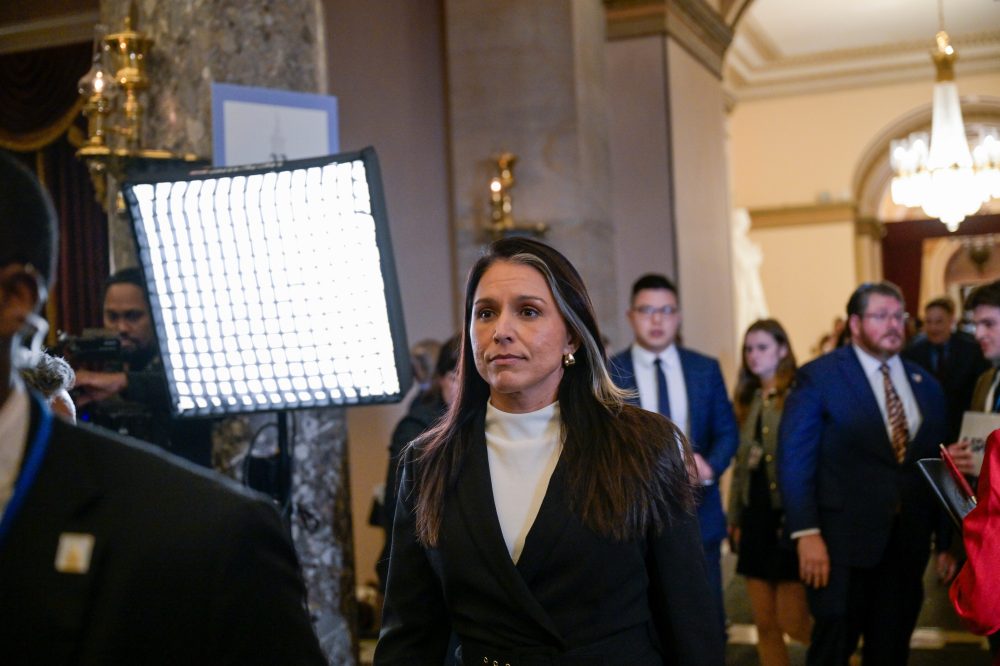
During Wednesday Senate testimony, Director of National Intelligence Tulsi Gabbard’s prepared statement indicated that American strikes on Iran had “obliterated” Iran’s nuclear enrichment operations and buried underground installations.
Gabbard reported that the U.S. monitors whether Iranian leadership attempts restarting their nuclear program but noted they haven’t tried rebuilding nuclear enrichment capabilities. She added that the religious authority governing Iran’s government has been weakened by Israeli leadership strikes but continues functioning.
Brandan Buck, senior foreign policy analyst at the Cato Institute, estimated that extracting or diluting the enriched materials would likely require over 1,000 soldiers at each Iranian location and considerable time to finish.
Conversely, failing to secure the enriched uranium carries its own dangers. Should Iran’s hardliners retain power along with enriched materials, they’ll now possess stronger motivation for building nuclear weapons.
“Trump has put himself between a rock and a hard place,” Buck observed. “Throughout this, he has had maximalist aims, but he’s wanted to maintain minimal effort in order to keep the costs low.”
Military personnel and defense contractors are resisting Pentagon directives to eliminate Anthropic’s artificial intelligence systems from their operations, citing the technology’s superiority over competing platforms.
Defense Secretary Pete Hegseth classified Anthropic as a supply-chain security threat on March 3, mandating a six-month timeline for the Pentagon and its contractors to cease using the company’s AI products. The designation followed disagreements between Anthropic and military officials regarding usage restrictions for the artificial intelligence technology.
However, the directive faces significant pushback from users who are delaying implementation or preparing to return to Anthropic’s systems once the conflict resolves.
“Career IT people at DoD hate this move because they had finally gotten operators comfortable using AI,” an IT contractor explained. “They think it’s stupid.” The contractor praised Anthropic’s Claude AI model as “the best,” while criticizing xAI’s Grok for delivering inconsistent responses to identical questions.
The transition away from Anthropic’s technology presents substantial logistical challenges. According to one contractor, obtaining new security certifications for replacement systems could require several months of work.
Multiple Pentagon personnel, officials, and contractors provided information anonymously due to restrictions on public statements. The Defense Department, Anthropic, and xAI declined to provide comments.
Artificial intelligence has become integral to military operations, supporting weapon targeting, operational planning, classified information handling, and data analysis tasks.
Following a $200 million defense contract announcement in July 2025, Anthropic rapidly integrated into military workflows. Claude achieved the distinction of being the first AI system authorized for classified military networks, with sources reporting widespread adoption. Federal agencies generally regarded Anthropic’s capabilities as superior to competitor offerings.
Previous Reuters reporting revealed that Pentagon forces utilized Claude technology during Iranian conflict operations, with sources confirming continued usage despite the prohibition. One expert characterized this ongoing use as “the clearest signal” of the Pentagon’s reliance on the platform.
“It’s a substantial cost to replace those models with alternatives,” stated Joe Saunders, CEO of government contractor RunSafe Security. Saunders noted that alternative systems must undergo extensive certification processes for classified and military network deployment.
Replacing existing systems with new technology could require 12 to 18 months for certification completion, according to Saunders.
“It’s not just costly, it’s a loss of productivity,” Saunders added, drawing from his experience helping military organizations implement AI chatbot technology.
While Claude elimination orders circulate throughout the Pentagon, one official reported compliance driven by career preservation concerns, describing the transition as wasteful.
Functions previously managed by Claude, including large dataset queries, now require manual completion using tools like Microsoft Excel, the official noted. Pentagon developers extensively relied on Anthropic’s Claude Code tool for software programming, according to multiple sources.
The loss of coding capabilities has frustrated developers, though another senior official emphasized they shouldn’t depend on single tools.
Claude removal represents a massive operational challenge.
Palantir’s Maven Smart Systems, which provides intelligence analysis and weapons targeting software to military forces, built multiple prompts and workflows using Anthropic’s Claude Code, according to two knowledgeable sources. Palantir holds Maven-related contracts with the Defense Department and national security agencies potentially worth over $1 billion, requiring the company to substitute Claude with alternative AI models and reconstruct software components.
Some personnel are “slow-rolling” Claude replacement while actively using it for workflow creation, which involves automated task sequences, a Pentagon technologist revealed.
Developer frustration stems from losing custom AI agents designed for processing massive data volumes when transitioning to new systems.
The Defense Department has directed contractors, including major defense companies, to evaluate their Anthropic dependencies and begin phase-out procedures. Officials and contractors now face strategic decisions about quickly adopting OpenAI, Google, or xAI alternatives, or gradually unwinding Anthropic usage to enable rapid restoration if Pentagon policies change.
One federal agency chief information officer plans to delay the phase-out, anticipating government-Anthropic negotiations will reach resolution before the six-month deadline.
“What we are seeing play out here is the tension of adoption, both inside the Pentagon as well as the political level,” observed Roger Zakheim, director of the Ronald Reagan Presidential Foundation and Institute.
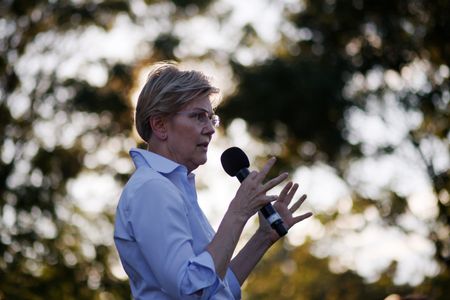
The leading Democrat on the Senate Banking Committee is calling on Federal Reserve chair nominee Kevin Warsh to provide detailed explanations about any connections he may have had with deceased convicted sex offender Jeffrey Epstein.
Massachusetts Senator Elizabeth Warren sent a formal letter to Warsh on Wednesday evening, requesting clarification after his name surfaced in government-released documents connected to Epstein. The disgraced financier passed away while incarcerated in 2019.
Warren highlighted that Warsh’s name was mentioned in correspondence between Epstein’s staff regarding a holiday celebration on the Caribbean island of St. Barthélemy in 2010. “It is unclear whether and to what extent you interacted with Mr. Epstein in association with the invitation referenced in this email exchange,” Warren stated in her letter.
The senator emphasized the importance of transparency, writing: “As the Senate considers your nomination to serve as Chair of the Fed, it is essential that Congress and the public fully understand the extent of any interactions or relationship you had with Jeffrey Epstein.” Warren pointed out that these communications occurred after Epstein’s initial conviction for sex crimes involving a minor and while he was facing related civil litigation.
As the ranking minority member overseeing Warsh’s confirmation process, Warren has given him until March 31 to answer eight detailed questions about potential interactions with Epstein and his associates.
Warsh has not yet provided a response to Warren’s inquiry.
The nominee previously served as a Fed governor and is connected through marriage to the wealthy Lauder family. President Trump selected him to replace current Chair Jerome Powell, whose term concludes in May.
Warren’s questions include whether Warsh visited St. Barthélemy during late 2010 or early 2011, and if he participated in any social events where Epstein was present. She also inquired about potential encounters with Ghislaine Maxwell, Epstein’s former associate who is currently imprisoned.
The letter additionally asks whether Trump, who had past associations with Epstein and was frequently mentioned in the released government documents, attended any of these same events.
Warren requested that Warsh provide any correspondence with Epstein’s associates and disclose any additional interactions with Epstein or Maxwell beyond what government files have revealed so far.
Warsh’s confirmation timeline remains uncertain due to complications. Republican Senator Thom Tillis has announced he will block the nomination until a criminal investigation involving the Fed and current Chair Jerome Powell reaches a conclusion.
Powell announced Wednesday that he plans to remain in his position until a replacement is confirmed and will not resign from the Fed entirely while under Justice Department investigation.
A day after stepping down from his counterterrorism role in President Donald Trump’s administration, Joe Kent appeared on Tucker Carlson’s podcast to discuss his opposition to the Iran conflict. The former official’s resignation and subsequent media appearance have sparked fresh concerns about antisemitic messaging within conservative circles.
During Wednesday’s interview, Kent stated that “The Israelis drove the decision to take this action,” referring to military actions against Iran. The discussion then shifted toward unsubstantiated theories suggesting pro-Israel groups were involved in the death of conservative activist Charlie Kirk.
“I’m saying there are unanswered questions,” Kent remarked during the podcast.
The interview highlighted two growing divisions within Republican ranks and conservative media – disagreements over Trump’s Iran policy and America’s relationship with Israel, alongside mounting worries that criticism of Israel is becoming a gateway for antisemitic messaging that echoes historical prejudices.
Carlson, the former Fox News personality who maintains significant influence in conservative circles, has faced previous criticism for platforming white nationalist Nick Fuentes on his show last year. During that controversial interview, Fuentes made disparaging remarks about “organized Jewry in America.”
In Wednesday’s discussion, Carlson criticized Israel directly, claiming “its lobbying in the United States pressured the president.”
Republican Jewish Coalition President Matt Brooks characterized Kent’s podcast appearance as “part of an ongoing problem.” Brooks revealed his organization had opposed Kent’s appointment as National Counterterrorism Center director due to connections with right-wing extremist elements. Despite these objections, Trump proceeded with the nomination, though he later admitted “I always thought he was weak on security” and “I didn’t know him well.”
Kent’s resignation letter contained language that critics described as promoting antisemitic conspiracy theories while expressing concerns about the Iran conflict. He accused “high-ranking Israeli officials and influential members of the American media” of promoting warfare. While Israeli leaders, including Prime Minister Benjamin Netanyahu, did encourage Trump to take joint military action against Iran, Kent expanded his criticism further.
He claimed this represented “the same tactic the Israelis used to draw us into the disastrous Iraq war” and suggested his wife, a Navy cryptologist killed by a suicide bomber in Syria, died “in a war manufactured by Israel.”
Kentucky Republican Senator Mitch McConnell condemned the letter as containing “virulent antisemitism.” New Jersey Democratic Representative Josh Gottheimer added that “scapegoating Israel isn’t just a tired antisemitic trope — it’s anti-American.”
Kent has previously stated his rejection of all forms of “racism and bigotry.”
Trump has remained silent regarding Kent’s statements about Israel, though he has previously disputed claims that Israel influenced his war decisions, saying “I might might have forced their hand.”
Concerns about Israeli influence extend beyond conservative circles, with progressive politicians also facing antisemitism accusations related to their responses to the Gaza conflict that began following Hamas’s October 7, 2023 attack.
However, these debates represent a growing rift within the Republican Party, traditionally a strong supporter of Israel. Conservatives continue grappling with fallout from Carlson’s Fuentes interview, which prompted resignations from Heritage Foundation board members and staff after the think tank’s president defended Carlson.
Trump has avoided directly addressing the controversy, declining to criticize Fuentes while praising Carlson for having “said good things about me over the years.” The president previously hosted Fuentes for dinner at Mar-a-Lago between his two terms, and Carlson continues visiting the White House.
Mort Klein, who leads the conservative Jewish organization Zionists for America, expressed support for Trump while stating “I’d like him to do more” regarding antisemitism concerns.
“I want him to be stronger on those issues,” Klein said.
While Carlson denies being antisemitic, he has claimed anti-Jewish hatred is less widespread than discrimination against white people and criticized Christian politicians like Texas Senator Ted Cruz for their strong Israel support, calling it heretical.
The Iran conflict continues dividing conservative media figures. Daily Wire co-founder Ben Shapiro called Carlson’s Fuentes interview “an act of moral imbecility” and accused him of spreading false information and conspiracy theories to his audience.
Shapiro has also clashed with Candace Owens, who has promoted antisemitic conspiracy theories. Conservative commentator Dennis Prager wrote an open letter to Owens stating “I cannot think of anyone in public life engendering as much suspicion of Jews, Zionism and Israel as you.”
Former Fox News anchor Megyn Kelly, who now runs her own media operation, claimed the war was promoted by “Israel firsters, like Mark Levin.” Levin, a radio and Fox personality who strongly supports Trump’s war efforts, responded by calling Kelly an “emotionally unhinged, lewd and petulant wreck.”
The feuding appears set to continue, with Levin extending a social media invitation for Kent to appear on his upcoming show.
Donald Trump’s choice to lead the Department of Homeland Security outlined a more moderate stance on emergency management during his Senate confirmation hearing Wednesday, dismissing proposals to dismantle FEMA and promising to reverse several controversial policies from his predecessor.
Markwayne Mullin’s testimony generated optimism among emergency response officials who hope for a new direction at the Federal Emergency Management Agency following a period of instability under departing Secretary Kristi Noem.
However, questions remain about which specific changes Mullin would actually implement if confirmed, given his allegiance to Trump, who has sent mixed signals about FEMA’s future.
“It’s got a great mission, and I think people at FEMA want to do their job,” Mullin said during questioning by fellow Oklahoma Senator James Lankford. The nominee endorsed agency improvements to enhance effectiveness, accelerate reimbursements to local governments, and better assist rural areas.
Trump has consistently suggested eliminating the agency and transferring more disaster duties to individual states. Mullin’s testimony occurred less than 12 months after FEMA’s interim director Cameron Hamilton was dismissed following congressional testimony where he opposed dissolving the organization.
Throughout Noem’s leadership of DHS, FEMA experienced significant disruption and instability, including workforce reductions, program eliminations, and postponed disaster declarations and funding.
A much-awaited report from the Trump-selected FEMA Review Council containing agency overhaul recommendations remains months overdue, leaving states uncertain about future federal disaster assistance levels.
Previous FEMA leadership welcomed Mullin’s statements as potentially signaling an end to the chaos under Noem and an opportunity for meaningful agency improvements.
“He gets the importance of FEMA and while there is definitely room for improvement, he understands the partnership with FEMA is essential,” said Deanne Criswell, who served as FEMA administrator during Joe Biden’s presidency.
Pete Gaynor, who held the FEMA administrator role during Trump’s initial term, characterized Mullin’s testimony as “an impressive and meaningful first step forward.”
During discussions with Lankford and New Jersey Democratic Senator Andy Kim, Mullin emphasized that disaster response should remain locally directed with FEMA providing support – a principle already embedded in the agency’s mission – and stressed the need for faster community reimbursements.
“Taking years to get reimbursed is not acceptable,” Mullin stated. “Taking, honestly, months to get reimbursed is not acceptable.”
When Kim questioned him about particular policies, Mullin committed to eliminating Noem’s requirement for her personal approval of expenditures exceeding $100,000, a policy that angered bipartisan lawmakers who argued it hindered disaster response efforts.
“I’m not a micromanager,” Mullin declared, also informing Kim that he was already considering candidates for a permanent FEMA administrator position. Trump has yet to name a permanent FEMA leader, leaving the agency under its third interim director.
Though Mullin assured Kim the agency would maintain “adequate staffing” for national disaster response, he avoided stating whether he believed FEMA currently employs too many people.
Mullin also promised collaboration with Congress members on potential FEMA changes after Kim criticized Noem’s lack of engagement with senators during her role as FEMA Review Council co-chair. Mullin pledged “the best” congressional outreach, recognizing that FEMA reforms require legislative support.
“I’m pretty sure that you guys set the policies and mission for FEMA, so for any serious changes, it may take actually policy changes,” he told Kim. FEMA’s authority and duties are established in the 1988 Stafford Act and related legislation, with many procedural modifications requiring congressional approval.
Amanda Devecka-Renear, who leads the New Jersey Organizing Project advocating for Hurricane Sandy victims, expressed skepticism about Mullin’s commitments.
“Disaster survivors have been misled by hollow rhetoric before, and will be watching closely if Sen. Mullin is confirmed by the Senate to see if his actions match his words,” Devecka-Renear stated.
Whether Mullin would support reform concepts promoted by Trump, Noem, and the FEMA Review Council – including replacing reimbursements with state block grants and modifying disaster declaration requirements – remains unclear.
Emergency management experts and local officials have warned such modifications could reduce state, tribal, and territorial funding. States would need to adjust budgets to accommodate reduced federal support and require time for those transitions, according to Peter Muller from The Pew Charitable Trusts, speaking at a recent state emergency managers conference.
Mullin also avoided directly promising to reinstate FEMA staff placed on leave after signing an August protest letter opposing policies they claimed weakened the agency, but told Kim that whistleblower retaliation violates federal law.
“I’ll work within the law and the requirements of me, as secretary,” he said.
WASHINGTON — As military tensions with Iran spread across multiple countries, the U.S. State Department is operating with dramatically fewer Middle East specialists than in previous crises.
The Bureau of Near Eastern Affairs, which normally coordinates American foreign policy across 18 nations in the region, has been stripped of more than 80 staff members according to internal department surveys. Many were veteran diplomats with decades of regional experience.
The Trump administration initially placed Mora Namdar, an attorney of Iranian heritage with limited management background, in charge of the bureau before reassigning her to consular affairs. Namdar had contributed to Project 2025, the conservative policy blueprint. Her Senate-confirmed predecessor was a career Middle East specialist who joined the department in 1984 and previously served as ambassador to the United Arab Emirates.
Budget proposals called for slashing the bureau’s funding by 40%, though Congress approved smaller reductions. The administration also dissolved the standalone Iran office, combining it with Iraq operations.
According to interviews with over a dozen current and former government officials, these staffing decisions and President Trump’s preference for centralized decision-making are hampering America’s response to the expanding crisis.
Experienced foreign service officers were terminated, retired early, or transferred elsewhere, replaced by junior staff or political appointees. The assistant secretary position overseeing Near Eastern Affairs remains unfilled, along with several key Middle East ambassadorships. Four of the bureau’s five supervisory roles are held by temporary appointees.
Officials who spoke on condition of anonymity during the active conflict describe an overworked government struggling to implement presidential directives. Remaining staff report their analysis and recommendations are frequently ignored.
State Department spokesman Tommy Pigott strongly rejected these characterizations.
“As far as we can tell, AP’s entire ‘report’ on the evacuations does not include any conversations with people actually involved. Instead, it relies on ‘outside’ or ‘former official’ sources that have no idea what they are talking about. We walked AP through specific inaccuracy after specific inaccuracy — indeed how the whole premise was wrong,” Pigott stated.
Since Trump assumed office, the State Department has lost over 3,800 employees through layoffs, voluntary departure programs, and regular retirements. The American Foreign Service Association estimates senior diplomatic ranks were disproportionately affected compared to their overall workforce representation.
“He’s making choices without the larger expertise of the United States government that would flag issues of consequence,” observed Max Stier, who leads the nonpartisan Partnership for Public Service. “Sometimes government is slow-moving because there are a lot of different factors that need to be balanced against each other.”
The administration appeared unprepared for Iran’s retaliation following U.S. strikes, something Trump himself acknowledged when expressing surprise at Tehran’s response against American regional allies. “Nobody expected that. We were shocked. They fought back,” Trump told reporters recently.
Pigott maintained that staffing reductions “are not having any negative impact on our ability to respond to this operation, our ability to plan, and our ability to execute in service to Americans.” He added the department “rejects the premise that key decisions were made without meaningful input from experienced professionals.”
However, former officials say Iranian retaliation was predictable based on previous military exercises and conflict simulations conducted by both Pentagon and private organizations. The National Security Council, which Trump has downsized, typically would provide presidential briefings incorporating expert bureaucratic analysis.
Instead, a small circle of presidential advisors makes decisions without broader governmental coordination, including Secretary of State Marco Rubio, who simultaneously serves as national security adviser.
“In the Trump Administration, decisions are made by President Trump and senior administration officials and not by no-name bureaucrat leakers who whine to the press about not being consulted about highly classified operations,” White House spokesperson Dylan Johnson responded.
“In the time that I was there, there was no policy process to speak of,” said Chris Backemeyer, who served as deputy assistant secretary in Near Eastern Affairs before resigning last year. Backemeyer, who supported the Iran nuclear agreement Trump abandoned, recently left government to seek a Nebraska congressional seat as a Democrat.
“They did not want to hear any advice from career people,” Backemeyer added.
When America decided to strike Iran, Ambassador to Israel Mike Huckabee provided Jerusalem embassy staff evacuation options, indicating advance knowledge of incoming attacks. However, other regional embassies failed to make comparable arrangements, leaving non-essential personnel and families in conflict zones.
The department claims it issued travel advisories since January and maintained full crisis response capabilities when strikes commenced.
Nevertheless, minimal planning apparently occurred for evacuating Americans living, working, visiting, or studying in countries that became conflict zones, partly because the White House seemed to underestimate the possibility of prolonged multi-nation warfare, as Trump’s own comments suggest.
Following Iranian attacks on allies including Saudi Arabia, Qatar, and the United Arab Emirates, the State Department urged Americans to leave the region. Multiple former Consular Affairs staffers say such planning should have begun well before U.S. strikes started.
Namdar only advised Americans to evacuate several days into the conflict through social media, when airspace was largely closed and commercial flights unavailable.
“The messaging that went out to American citizens — after the U.S. struck Iran — was woefully late and, initially, confusing,” stated Yael Lempert, who served as ambassador to Jordan until 2025. Lempert is among five former ambassadors scheduled to address departmental failures at Thursday’s American Academy of Diplomacy event in Washington.
While other problematic evacuations, such as the Biden administration’s Afghanistan withdrawal, have faced criticism, officials say this situation is worsened by experienced personnel losses. Consular Affairs eliminated over 150 positions during the Trump administration through layoffs, probationary dismissals, and retirements, according to an anonymous official, though other departments suffered greater cuts.
The department reports assisting nearly 50,000 Americans affected by the conflict, with more than 60 evacuation flights from the region. In total, over 70,000 Americans have returned home since hostilities began February 28.
“The loss of experienced personnel through these RIFs has clearly undermined the Bureau of Consular Affairs’ ability to fulfill its most important mission, to protect Americans abroad,” Senator Jeanne Shaheen, the ranking Democrat on the Senate Foreign Relations Committee, said in a statement.
Language capabilities are also deteriorating. Thirteen Arabic speakers and four Farsi speakers, all trained with taxpayer funds, were among terminated employees, according to a draft letter circulating among former foreign service officers.
Training a foreign service officer in languages can cost $200,000. The letter estimates dismissed State Department personnel received over $35 million in taxpayer-funded language training and more than $100 million in total training and career development.
The State Department established two temporary task forces addressing the Middle East crisis. One supports Near Eastern Affairs capabilities while another assists Consular Affairs with American evacuations.
More than 250 Foreign Service officers from last year’s reduction-in-force remain on department payroll. Many have volunteered to return for task force work or other duties during the global crisis.
“I haven’t been given any separation paperwork. I still have an active clearance. I could go back to the department tomorrow, either to backfill or staff a task force,” said one foreign service officer requesting anonymity due to their continued payroll status and lack of press authorization. “I will do the scutwork jobs.”
The department hasn’t responded to their offers but stated the task force is “fully staffed.”
Federal authorities have spotted mysterious drones flying over a Washington military installation that houses two of the nation’s top cabinet officials, according to a Washington Post report published Wednesday.
The unmanned aircraft were observed above Fort McNair, the military base where Secretary of State Marco Rubio and Defense Secretary Pete Hegseth maintain residences, three sources familiar with the matter told the newspaper.
According to the report, authorities have been unable to identify the origin of the drones, with two sources confirming that investigators remain puzzled about where the aircraft came from.
The drone activity at Fort McNair led officials to consider whether Rubio and Hegseth should be moved to different locations for their safety, the Washington Post reported.
Despite these concerns, both cabinet secretaries have remained at their current residences, according to a senior administration official cited in the report.
The newspaper noted that military officials have increased their surveillance of potential security threats due to elevated alert status related to ongoing U.S. and Israeli military operations against Iran.
Reuters was unable to immediately confirm the details of the Washington Post’s reporting through independent sources.
Both the Pentagon and State Department failed to provide responses when contacted for comment about the incident.
Pentagon chief spokesperson Sean Parnell refused to discuss the drone sightings when approached by the Washington Post for comment.
“The department cannot comment on the secretary’s (Hegseth’s) movements for security reasons, and reporting on such movements is grossly irresponsible,” Parnell stated to the Post.
WASHINGTON — Federal investigators are looking into whether a former high-ranking counterterrorism official may have mishandled classified materials, according to a source with knowledge of the matter who spoke Wednesday.
The FBI probe involves Joe Kent, who stepped down Tuesday as head of the National Counterterrorism Center after publicly criticizing U.S. military operations against Iran. The source, who requested anonymity due to the sensitive nature of the ongoing investigation, confirmed the inquiry was already underway before Kent’s departure.
The investigation comes amid a broader pattern of Justice Department probes targeting political opponents of President Donald Trump over the past year, including former FBI chief James Comey and New York’s top prosecutor Letitia James. Many of these cases have faltered, with prosecutors facing judicial pushback or failing to secure charges.
Semafor first broke news of the investigation, though specific details about what federal agents are examining remain unclear.
Kent announced his resignation through a post on X, where he expressed opposition to the Iran conflict and stated he “cannot in good conscience” support the military campaign.
“Iran posed no imminent threat to our nation, and it is clear that we started this war due to pressure from Israel and its powerful American lobby,” Kent stated in his social media announcement.
President Trump responded to reporters by saying he had long considered Kent “weak on security” and declared that anyone in his administration who doesn’t view Iran as dangerous is unwanted. CIA Director John Ratcliffe and other senior officials have subsequently distanced themselves from Kent’s position on Iran.
Attempts to reach Kent, who previously mounted an unsuccessful congressional campaign, were made through his former campaign representative Wednesday evening.
The Trump administration plans to temporarily display a controversial statue of Delaware’s Caesar Rodney in the nation’s capital, four years after it was removed from Wilmington during nationwide racial justice demonstrations.
The bronze sculpture depicting the Declaration of Independence signer on horseback will be placed in Freedom Plaza, a federal park in downtown Washington DC, for up to six months according to the National Park Service. The installation is part of the current administration’s efforts to mark America’s 250th anniversary celebration.
Rodney, who owned a Delaware plantation, made his historic journey to Philadelphia in 1776 to cast his vote for American independence. However, he also held approximately 200 individuals in bondage throughout his life.
The statue stood in Wilmington for nearly a century before city officials took it down in 2020 following widespread protests after George Floyd’s death. Since its removal, the monument has remained in storage at a warehouse facility.
According to reports from the Washington Post, the decision to display Rodney’s statue aligns with President Trump’s broader initiative to combat what he terms “anti-American” ideology. This campaign has included removing slavery-related exhibits and restoring Confederate monuments, actions that civil rights organizations warn could undo years of social advancement.
The Interior Department’s announcement made no reference to Rodney’s history as a slaveholder or the circumstances surrounding the statue’s removal from Delaware. A department representative stated that showcasing the monument reflects the administration’s dedication to “acknowledging the full breadth of our nation’s history, including the story of Caesar Rodney.”
Rodney battled a severe facial cancer that left him disfigured and ultimately led to his death in 1784. Last year, officials also reinstalled a statue of Confederate General Albert Pike in Washington, which had been toppled during Black Lives Matter demonstrations in 2020.
WASHINGTON — A former counterterrorism chief who stepped down this week revealed Wednesday that he and other high-ranking officials who had reservations about military action against Iran were blocked from briefing President Donald Trump on their concerns.
During an interview on Tucker Carlson’s program, Joe Kent explained that the president depended on a limited group of advisers when deciding to launch strikes against Iran. Kent alleged that Israel pressured Trump into action, even though he maintains there was no proof Iran presented an immediate danger to the United States.
“A good deal of key decision makers were not allowed to come and express their opinion to the president,” Kent explained to the conservative host. “There wasn’t a robust debate.”
Kent’s revelations provide a rare look inside Trump’s choice to attack Iran on February 28 and highlight how the conflict might split his political supporters. The statements also indicate there was internal administration opposition to the strikes.
In his role leading the National Counterterrorism Center, Kent oversaw an organization responsible for identifying and assessing terrorist dangers. Director of National Intelligence Tulsi Gabbard supervised his work, and she stated Wednesday that determining Iran’s threat level was Trump’s sole responsibility.
Gabbard, a Hawaii veteran and former representative, has previously opposed discussions of Iran military action. She hasn’t publicly shared her views on the current strikes, and her spokesperson won’t answer media inquiries.
When Carlson pressed Kent about who prevented his Trump access, Kent wouldn’t identify specific individuals.
Kent stated that intelligence reports showed no evidence of Iranian nuclear weapons development, and he believes Israel forced American action by threatening to strike first, which could have endangered U.S. regional interests. He said both Israeli leaders and American media figures helped build the case that Iran was dangerous.
“The Israelis drove the decision to take this action,” Kent told Carlson. He referenced statements from Secretary of State Marco Rubio and House Speaker Mike Johnson indicating that Israeli plans motivated U.S. action.
Kent, who has past ties to right-wing extremist groups, claimed Israeli Prime Minister Benjamin Netanyahu and other Israeli leaders directly lobbied Trump, frequently sharing information American officials couldn’t verify. “When we would hear what they were saying, it didn’t reflect intelligence channels,” Kent explained. His assertion that an “Israeli lobby” influenced Trump’s war decision has faced backlash from Jewish organizations and others calling it antisemitic.
Kent chose to make his first public statements since resigning on Carlson’s show, who has also been criticized for allegedly antisemitic comments.
Trump has given varying explanations for the strikes and has disputed claims that Israel forced American involvement. Tuesday, he dismissed Kent’s war criticism and said he always considered Kent “weak on security,” adding that if administration members didn’t view Iran as threatening, “we don’t want those people.”
“They’re not smart people, or they’re not savvy people,” Trump stated. “Iran was a tremendous threat.”
The White House hasn’t yet responded to questions regarding Kent’s television appearance.
Kent served as a Green Beret through 11 combat deployments before leaving to work for the CIA. He also experienced personal loss: His wife, a Navy cryptologist, died in a 2019 Syrian suicide bombing, leaving him with two young sons. The 45-year-old Kent has since remarried.
Kent explained to Carlson that he chose to resign when it became clear his objections would be dismissed.
“I know this path that we’re on, it doesn’t work,” Kent said, concluding: “I can’t be a part of this in good conscience.”
CHICAGO — Illinois Governor JB Pritzker delivered sharp criticism Wednesday against special interest spending that flooded his state before Tuesday’s primary elections, specifically targeting a pro-Israel lobbying organization he once financially backed.
The Jewish Democratic governor, who is considered a potential 2028 presidential candidate, previously donated to the American Israel Public Affairs Committee but ended that support more than ten years ago. Speaking to The Associated Press Wednesday, Pritzker argued that AIPAC has abandoned its original mission as a nonpartisan organization dedicated to Middle East peace.
“It became an organization that was supporting Donald Trump and people who follow Donald Trump,” Pritzker stated. “AIPAC really is not an organization that I think today I would want any part of.”
Special interest organizations, AIPAC among them, injected approximately $70 million into six competitive U.S. House and Senate races throughout Illinois on Tuesday. The Hyatt Hotel fortune heir characterized this spending as “interference.”
AIPAC representatives did not respond to requests for comment Wednesday.
The competitive Illinois races — mostly created by incumbent retirements — became testing grounds for major Democratic issues heading into 2026, including Israel policy and cryptocurrency regulation, as super PACs invested millions. Debates over American involvement in the Israel-Hamas conflict, and more recently tensions with Iran, influenced multiple contests.
AIPAC’s participation generated some of the primary season’s most aggressive campaign attacks, though the organization achieved mixed results. In a ten-candidate House primary covering portions of Chicago’s South Side, AIPAC-supported Cook County Commissioner Donna Miller secured the Democratic nomination Tuesday. However, the group’s favored candidate in a predominantly Jewish district north of Chicago fell to Evanston Mayor Daniel Biss.
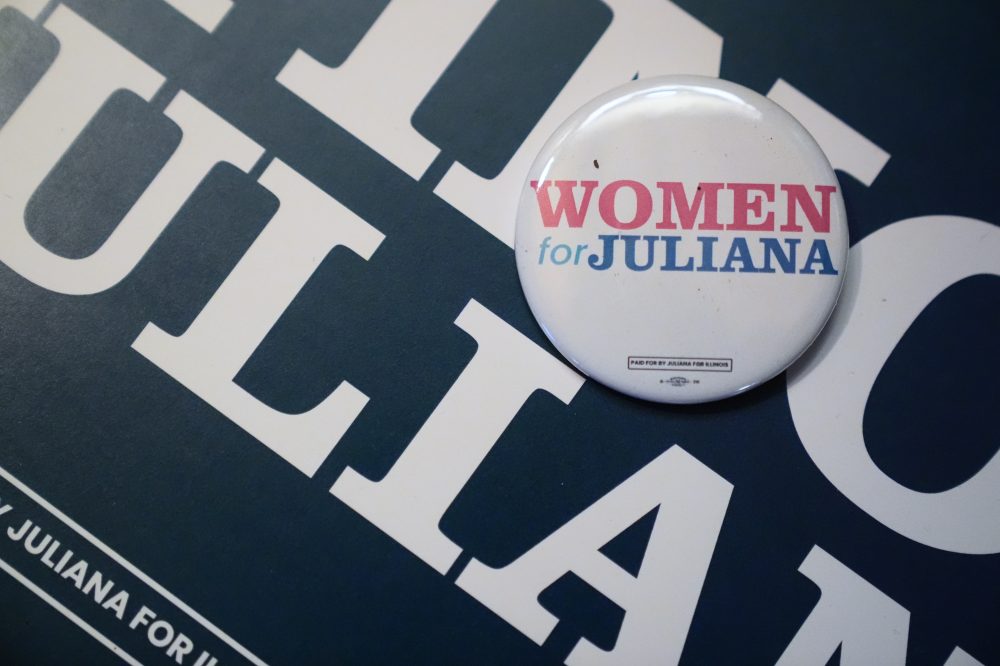
Though running unopposed in his own primary, Pritzker played an active role in multiple campaigns, investing millions to support Lieutenant Governor Juliana Stratton’s successful Democratic Senate nomination bid.
This involvement, combined with Pritzker’s potential 2028 presidential campaign, has intensified scrutiny of his international policy positions as Democratic Party divisions over Israel deepen.
While supporting Israel, Pritzker has criticized Prime Minister Benjamin Netanyahu’s leadership. He advocates for a two-state solution providing “safe havens” for both Israeli Jews and Palestinian residents of Gaza.
“I do not know why the United States has walked away from that, except, of course, that Donald Trump doesn’t seem to understand how to create Middle East peace and instead wants to go to war, as he has now done in Iran, simply following Netanyahu into that war,” Pritzker explained.
“Are we going to now take military adventures across the world to take out leaders, who we think are bad for their countries?” he continued. “If so, we’re going to be involved in a whole lot of wars going forward.”
Pritzker invested at least $5 million supporting Stratton’s campaign. She defeated U.S. Representative Raja Krishnamoorthi for the Democratic Senate nomination despite his fundraising advantages.
External groups contributed over $16 million supporting Stratton’s candidacy while spending $11 million in opposition.
According to Pritzker, Stratton prevailed based on her policy positions rather than his endorsement.
“She stood on her own two feet, and people saw that she’s real and she’s going to be a fighter for us in Washington,” Pritzker remarked.
Some voters offered different perspectives.
Matthew Crain, a 54-year-old state employee from downstate Chatham, said Pritzker’s endorsement convinced him to switch his vote from Krishnamoorthi to Stratton.
“I thought with potential future running for president, I thought having one of his allies in would be a good thing,” Crain explained.
Brooke Morgan, a 39-year-old Springfield museum curator, said she knew Stratton’s political record from her seven years as lieutenant governor.
“The governor is doing a pretty good job in Illinois, and I think that his backing, his support of her certainly gave me some confidence as well,” Morgan noted.
This November, Pritzker will face Republican challenger Darren Bailey, a former state legislator who supports Trump’s platform. The matchup repeats their 2022 contest, which Pritzker won decisively.
During a Tuesday campaign rally, Bailey — who received Trump’s endorsement four years earlier — claimed he doesn’t agree with the president on every issue and promised to welcome Democrats who feel excluded.
A Wednesday campaign advertisement from Pritzker’s team labeled Bailey as “still too extreme for Illinois.”
Regarding his own national political aspirations, Pritzker stated he’s not considering anything beyond his 2026 third-term campaign.
MADISON, Wis. — Attorney General Pam Bondi has found a way to keep Brad Schimel in charge of federal prosecution duties in Wisconsin despite judges blocking his continuation as interim U.S. attorney, part of a nationwide trend as confirmation battles slow appointments to key Justice Department positions.
Schimel had been serving as interim U.S. attorney for Wisconsin’s Eastern District since Bondi named him to the position in November for a 120-day period. When that term reached its Tuesday deadline, federal judges in the district announced on March 10 they would not grant an extension, though they had the authority to do so.
However, the Milwaukee U.S. Attorney’s office revealed Wednesday that Bondi has designated Schimel as first assistant U.S. attorney for Milwaukee, enabling him to maintain his oversight responsibilities under the new designation.
“I am grateful for this opportunity to serve the people of the Eastern District of Wisconsin,” Schimel stated. “I will continue to work tirelessly to make the entire district safer and stronger.”
This situation mirrors what’s happening nationwide, where temporary appointees are managing most of America’s 94 federal judicial districts while Senate Democrats block confirmation proceedings for presidential nominees. Justice Department records show just 30 districts currently have presidentially nominated and Senate-confirmed U.S. attorneys in place.
First assistant positions like Schimel’s new role are being used to run prosecutor offices across a dozen states, including California, New Mexico, Kentucky, Nevada, New York, Virginia, Vermont and Washington state, the department’s records indicate.
The Republican Schimel earned his law degree from the University of Wisconsin Law School and previously served as Waukesha County’s district attorney before winning Wisconsin’s attorney general race in 2014. After losing his reelection bid to Democrat Josh Kaul in 2018, outgoing GOP Governor Scott Walker appointed him to a Waukesha County judgeship.
Last spring, Schimel mounted an unsuccessful state Supreme Court campaign where the court’s ideological makeup was at stake. Even with Trump’s backing and millions in financial support from billionaire Elon Musk, he was defeated by liberal candidate Susan Crawford.
Wisconsin Democratic Senator Tammy Baldwin voiced opposition earlier this month to extending Schimel’s interim prosecutor role, describing him as overly partisan and emphasizing that “getting the right person who will uphold the rule of law rather than pledge loyalty to the President, is more important than ever.”
In contrast, Wisconsin’s Republican Senator Ron Johnson criticized the Eastern District judges’ refusal to extend Schimel’s interim appointment as “bizarre” and had pressed Bondi to retain Schimel’s leadership of the Milwaukee office.
WASHINGTON — Top Justice Department officials traveled to Capitol Hill Wednesday in an effort to address mounting congressional criticism over how the agency has managed millions of documents from the Jeffrey Epstein sex trafficking probe.
Attorney General Pam Bondi and Deputy Attorney General Todd Blanche conducted a private briefing with House Committee on Oversight and Government Reform members regarding the massive collection of files that has created ongoing political challenges for the Trump administration throughout the past year.
Department leadership had anticipated that releasing records connected to the convicted financier would resolve the political controversy that has persisted during the president’s second term. However, the agency continues facing intense scrutiny and criticism regarding its approach to the Epstein investigation and document management.
On Tuesday, the Republican-controlled committee issued a subpoena demanding Bondi testify under oath on April 14 about the Epstein case and related investigative materials. Congressional members have criticized the Justice Department for keeping too many documents confidential and for poor redaction practices that revealed sensitive victim information.
The Justice Department has dismissed the subpoena as “completely unnecessary,” emphasizing that lawmakers have been offered opportunities to review unredacted documents at department facilities and that officials remain available for congressional inquiries.
Department representatives have worked to reassure both Congress and the American people that no efforts have been made to protect President Donald Trump — who states he ended his previous friendship with Epstein years earlier — or other prominent Epstein associates from potential embarrassment. Justice officials have also pushed back against claims they have disregarded victims, maintaining that while current files contain no evidence for additional prosecutions, they remain open to pursuing new leads.
“I’m not trying to defend Epstein — I’m not,” Blanche stated during a recent interview with Katie Miller, who is married to senior Trump advisor Stephen Miller. “I do defend the work that this department is doing today, right now, which is going after every single perpetrator anyway, and if there is a narrative that exists that we are ignoring Epstein victims, that is false.”
The document release stems from the Epstein Files Transparency Act, legislation passed following sustained public and political pressure requiring government disclosure of records involving the deceased financier and his former associate Ghislaine Maxwell. The financier’s criminal cases have long captivated online investigators, conspiracy theorists, and others who suspected official cover-ups and demanded complete transparency.
Following a missed December 19 congressional deadline for full file release, the Justice Department reported assigning hundreds of attorneys to review materials and determine necessary redactions. In January, the department announced the release of over 3 million document pages, plus more than 2,000 videos and 180,000 images.
WASHINGTON (AP) — Congressional negotiations to end the Department of Homeland Security funding crisis show little progress as the shutdown reaches its 33rd day, despite urgent appeals from President Trump’s nominee to lead the agency, Republican Senator Markwayne Mullin of Oklahoma.
For over a month, Democratic lawmakers have blocked funding for specific DHS agencies, demanding accountability following the deaths of Alex Pretti and Renee Good in Minneapolis. The funding dispute affects major enforcement divisions including U.S. Immigration and Customs Enforcement and U.S. Customs and Border Protection.
Airport security operations face mounting pressure as Transportation Security Administration officials report worsening delays at multiple locations. Unpaid screeners are increasingly calling in sick or leaving their positions entirely.
House Democrats are pursuing a discharge petition to force consideration of legislation by Representative Rosa DeLauro of Connecticut that would restore funding to TSA and select DHS components while excluding ICE, Border Protection, and the secretary’s office.
Though such petitions rarely succeed, Democrats point to their recent victory using the same tactic to compel release of Jeffrey Epstein documents from the Justice Department.
“Discharge petitions are difficult, some say impossible,” Democratic leader Hakeem Jeffries declared during a Capitol steps gathering. “But for us, difficult takes a day, impossible takes a week.”
Republican leadership argues the department must operate at full capacity given current security threats, rejecting partial funding approaches.
“It was created in the wake of 9/11. Democrats are acting like it’s September 10th, before 9/11 happened,” House Majority Leader Steve Scalise of Louisiana stated.
The Democratic petition needs signatures from all party members plus four Republicans to trigger a floor vote. Even if successful in the House, the measure would face significant Senate obstacles requiring 60 votes for advancement.
During confirmation hearings, Trump’s DHS nominee commended the more than 100,000 department employees working without compensation while urging swift resolution.
“We have to realize that we’re putting our homeland and the peace of mind at risk for the American people,” Mullin testified to the nomination panel.
Private negotiations continue as Democrats submitted their latest funding proposal to the White House, though Republicans characterize it as virtually identical to offers from three weeks ago.
The administration outlined immigration enforcement modifications already accepted in correspondence to Republican Senators Susan Collins of Maine and Katie Britt of Alabama, including expanded body camera usage except during undercover work, restricted civil enforcement at sensitive sites like hospitals and schools, enhanced inspector general oversight with mandatory compliance reviews, and clear officer identification requirements during enforcement actions.
Senate Democratic Leader Chuck Schumer dismissed these concessions as insufficient Wednesday.
“The White House is still refusing to engage on some of the most pressing demands Democrats have called for since day one,” Schumer remarked.
Floor proceedings highlighted the ongoing stalemate when Senator Raphael Warnock of Georgia proposed TSA funding through September, only to meet Republican objections. Senator James Lankford of Oklahoma countered with two-week full DHS funding, which Warnock rejected.
The exchange reflects repeated Democratic attempts at selective September funding versus Republican insistence on comprehensive short-term measures during negotiations.
“This is silly to break this up into aspects of who’s going to get funding and who’s not going to get funding,” Lankford argued, while Warnock characterized ICE as “an unaccountable paramilitary force wreaking havoc on the streets of our country.”
Trump administration social media accounts documented shutdown consequences while assigning blame to Democrats.
“Right now, our heroic TSA officers are not being paid, and many cannot pay their rent, buy food, or afford to put gas in their cars,” the Department of Homeland Security posted. “Some are even staying in airports overnight because they can’t afford their commute.”
TSA acting deputy administrator Adam Stahl identified Philadelphia airport among locations experiencing extended screening delays due to increased worker absences.
“The reality of the situation is this is going to get worse before it gets better if we don’t see any sort of action in Congress,” he told CNN.
Department data shows more than 366 TSA personnel have resigned during the shutdown, creating staffing shortages complicated by four to six month training requirements for replacements.
WASHINGTON — America’s national debt reached a historic milestone Wednesday, climbing past $39 trillion for the first time as the country continues military involvement in the U.S.-Israeli conflict with Iran.
This record-breaking amount underscores the challenging balance facing government officials between various spending priorities, including implementing significant tax legislation, increasing military expenditures, strengthening border security measures, and reducing the overall debt burden — a commitment Donald Trump made during his campaign and presidency.
According to the Government Accountability Office, escalating federal debt directly affects everyday Americans through increased costs for home loans and vehicle financing, reduced employee compensation as companies have fewer resources for investment, and higher prices for consumer goods and services. Budget reform advocates caution that the ongoing pattern of increased borrowing and interest payments will create more difficult financial decisions for future Americans.
“We must recognize this alarming rate of growth and the significant financial burden we are putting on the next generation,” stated Michael Peterson, chair and CEO of the nonprofit Peter G. Peterson Foundation, which focuses on educating the public about America’s fiscal sustainability challenges.
The speed of this debt accumulation raises additional concerns. Federal borrowing has increased under leadership from both major political parties, driven recently by military conflicts, extensive pandemic relief programs, and reduced tax revenues.
Just five months ago, the national debt crossed the $38 trillion threshold, and it had reached $37 trillion only two months prior to that milestone.
Peterson warned that “at the current growth rate, we will hit a staggering $40 trillion in national debt before this fall’s elections.” He added, “Borrowing trillion after trillion at this rapid pace with no plan in place is the definition of unsustainable.”
White House economic adviser Kevin Hassett reported Sunday that the Iranian conflict has already cost American taxpayers over $12 billion, with no clear timeline for when military operations will conclude.
Neither White House officials nor Treasury Department representatives provided immediate responses to Associated Press inquiries about Wednesday’s debt milestone.
WASHINGTON — A Senate confirmation hearing took an unprecedented turn Wednesday when the committee chairman issued a bold challenge: Say it directly to my face.
Kentucky Republican Sen. Rand Paul has been vocal about his opposition to President Donald Trump’s choice for Homeland Security Secretary, GOP Sen. Markwayne Mullin. Paul has announced his intention to vote against the nomination.
The tension between these two Republicans stems from longstanding personal conflicts.
Mullin previously described Paul as a “freaking snake” and expressed support for Paul’s neighbor, who violently attacked the senator while he worked in his yard, leaving Paul with several fractured ribs from the unexpected assault.
In response, Paul has characterized Mullin as dishonest and prone to rage, questioning whether he possesses the right disposition to oversee the Department of Homeland Security during Trump’s planned immigration crackdown.
“Tell it to the world why you believe I deserved to be assaulted,” Paul declared Wednesday as he called the Homeland Security and Governmental Affairs Committee session to order.
“Explain to the American people why they should trust a man with anger issues to set the proper example for ICE and border patrol agents.”
Mullin, who competed professionally in mixed martial arts and has conducted fitness sessions in the House gymnasium — including with former House Speaker Kevin McCarthy, who sat among his supporters in the front row — adopted the Trump administration’s confrontational approach.
He refused to retreat from the confrontation.
“If I have something to say, I’ll say it directly to your face,” Mullin fired back.
Mullin demonstrated exactly why he has earned Trump’s favor for this position, as current Secretary Kristi Noem prepares to step down from the struggling agency.
He doubled down on his previous statements about Paul, reaffirming that he “can understand why your neighbor did what he did.”
“I am not apologizing,” Mullin stated flatly during the proceedings.
Even in a season marked by contentious committee hearings, this confrontation stood apart.
Trump administration officials and Cabinet hopefuls have repeatedly clashed with lawmakers, mostly Democrats, who oppose the president’s personnel choices and policy directions. However, Paul’s attack as a Republican colleague who has previously sparred with Trump as a GOP maverick created an unusual bipartisan opposition. This dynamic illustrates the challenging confirmation path Mullin faces, with a committee vote scheduled for next week.
The confrontation continued beyond the opening remarks.
Senators questioned Mullin for three hours about his personal integrity and professional qualifications for the Homeland Security position. He lacks deep policy knowledge in immigration enforcement, FEMA operations, or other departmental responsibilities. He also doesn’t bring recognized management credentials, having transitioned from running his family’s plumbing company to serving in Congress.
Mullin’s primary qualifications appear to be his connection with Trump — he referred to the president as a “friend” — and his reputation as a likeable relationship-builder who works across party lines, often bouncing a stress ball while walking through congressional corridors.
Republican senators spoke positively about Mullin’s character, and he became emotional while recounting how Trump showed care for his son Jimmy during health challenges while the president campaigned in 2020.
However, Mullin confused senators when discussing a mysterious international trip he claimed to have taken years ago to a country experiencing war-like conditions.
Committee members revealed that the FBI, responsible for vetting executive nominees, had no documentation of such travel, and leadership demanded that Mullin meet them privately in a secure location to explain what they termed his “super secret” foreign mission.
“I didn’t say it was ‘super secret’,” Mullin responded sharply.
Nevertheless, the initial confrontation established the hearing’s hostile atmosphere and foreshadowed the limited support Mullin can expect in Thursday’s committee vote.
Paul began with an appeal to end political violence that has plagued the nation, referencing incidents from his 2011 entry into politics when former Democratic Rep. Gabby Giffords was shot at a public event outside a Tucson supermarket, through the 2017 congressional baseball practice shooting where he was in the batting cage when gunfire erupted, and numerous subsequent incidents.
“It is imperative now more than ever that the leaders of our country disavow violence and lead by example,” Paul emphasized.
He showed video footage of Mullin nearly engaging in a physical altercation with a union representative — challenging him to “stand your butt up” — during a 2023 Senate hearing.
Mullin admitted that he and Paul simply have irreconcilable differences.
“We just don’t get along,” he acknowledged in his testimony.
Mullin mentioned that he and the union leader, Teamsters’ Sean O’Brien who was present in the audience, had developed a friendship.
“I can set it aside if you’re willing to set it aside,” Mullin proposed to Paul.
Paul responded skeptically, “Somehow you think I’m going to just set that aside?”
DOVER AIR FORCE BASE, Del. — President Donald Trump attended a solemn ceremony at Dover Air Force Base Wednesday as six fallen U.S. service members were returned home to their loved ones. This marks the president’s second attendance at such a ceremony since military conflict with Iran commenced in late February.
The six military personnel lost their lives when their KC-135 aircraft crashed in western Iraq over territory controlled by friendly forces during ongoing operations. Family members requested that Wednesday’s ceremony remain private, with no media present, following standard military protocol.
The ceremony consisted of a photo collection assembled by Associated Press photo editors.
MOUNT CLEMENS, Mich. — A Michigan man received a minimum four-year prison sentence Wednesday for orchestrating a signature forgery operation that eliminated five Republican gubernatorial hopefuls from the 2022 primary race.
However, Shawn Wilmoth won’t immediately head to prison after a Detroit-area judge permitted him to remain free during his appeal of convictions on forgery and related charges. The judge noted the unprecedented nature of the case but required Wilmoth to post bond.
“A case like this has never been seen before” in Michigan, Judge James Maceroni said.
Republican hopefuls contracted with Wilmoth to collect the required 15,000 voter signatures needed for primary ballot qualification four years ago. Michigan election officials discovered that individuals were essentially gathering around tables to sign multiple petitions before passing them along to others.
The fraudulent signatures filled the petitions, leaving the candidates without sufficient legitimate signatures for ballot access. None of the affected candidates faced accusations of awareness regarding the deceptive operation.
Among the eliminated Republican contenders were former Detroit police Chief James Craig and wealthy entrepreneur Perry Johnson, who is mounting another gubernatorial campaign for this election cycle.
During court proceedings, defense attorneys attempted to redirect responsibility, arguing to jurors that both Wilmoth and co-defendant Willie Reed fell victim to fraud by numerous petition collectors. Reed also received a conviction.
According to the attorney general’s office, nine political campaigns, including several Detroit-area judicial races, paid over $700,000 to companies connected to Reed and Wilmoth for signature collection services.
With Johnson pursuing the governor’s office again in 2026, he announced that every individual signing his ballot access petition will receive a text message verification request.
He promised to submit “petitions of the highest quality.”
A record-breaking $125 million was spent to transform Illinois’ congressional representation during Tuesday’s primary elections.
Illinois Democrats selected five fresh faces as their congressional nominees in open districts expected to stay blue this November, marking a significant generational shift in the state’s political landscape.
The expensive and chaotic primary battle featured approximately $70 million from external organizations and $54 million in direct candidate expenditures across five hotly contested races for vacant U.S. Senate and House positions.
Such intense, big-money competition is uncommon for Illinois, a state traditionally characterized by organized political machinery rather than wide-open electoral battles. This cycle proved exceptional due to an unprecedented wave of retirements that opened doors for fresh representation throughout the ticket. When U.S. Sen. Dick Durbin declared last year he would not pursue a sixth term, it triggered two House members to seek his position. The domino effect from Durbin’s departure, combined with three additional Chicago-area Democratic representatives stepping down, resulted in more than one-quarter of the state’s U.S. House delegation being up for grabs for the first time in over 70 years.
This situation attracted numerous candidates and massive financial investments.
The Senate primary alone accumulated over $34 million in independent spending. To put this in perspective, according to OpenSecrets, a nonpartisan political spending watchdog, only nine Senate general election races in 2024 attracted more outside money.
In a state featuring expensive media markets like Chicago, such enormous sums are quickly depleted. Ten political action committees each reported spending at least $1 million independently across the five competitive contests. Two organizations — Illinois Future PAC, which received a minimum of $5 million from Gov. JB Pritzker, and cryptocurrency-supported Fairshake — each exceeded $10 million in expenditures.
Political action committees backed by cryptocurrency and artificial intelligence interests invested heavily in four Illinois contests. The American Israel Public Affairs Committee, which advocates for U.S.-Israel relations, also contributed millions.
In four out of five contested House primaries for open seats, external groups outspent all candidates combined. This phenomenon is highly unusual: OpenSecrets data shows that in 2024’s general election, fewer than 50 federal races out of nearly 470 saw outside groups outspend the actual candidates.
For the Senate Democratic primary, external spending heavily favored eventual victor Lt. Gov. Juliana Stratton. She received both the most support and faced the most opposition. Outside organizations invested over $16 million supporting her campaign while spending approximately $11 million against her. Her official campaign reported nearly $2.8 million in Federal Election Commission filings.
Rep. Raja Krishnamoorthi, who trailed Stratton by roughly 7 percentage points as of Wednesday morning with most votes tallied, invested almost $24 million from his personal campaign treasury. External groups spent more than $4 million working against his candidacy.
These external spending figures reflect 24- and 48-hour Federal Election Commission reports filed through Tuesday evening, while campaign expenditure data represents the most recent FEC documents covering spending through Feb. 25.
The sole other contest where outside spending exceeded $10 million was Illinois’ 9th District, encompassing Chicago’s North Shore suburban communities. This race initially featured over a dozen candidates, but three contenders — a mayor, a state legislator, and a former media professional with substantial online support — attracted most external attention.
Kat Abughazaleh, the former media professional who could have become the first Gen Z woman in Congress, was the only candidate facing entirely negative outside spending. State Sen. Laura Fine received more than $4.3 million in support from Elect Chicago Women, a newly formed super PAC. Primary winner Evanston Mayor Daniel Biss secured over half a million each from 314 Action Fund and the Congressional Progressive Caucus PAC.
Elect Chicago Women also invested more than $1.4 million opposing Biss.
The remaining three open House races featuring large candidate pools each witnessed between $8 and $9 million in total expenditures. The 2nd District topped this group: Winner Cook County Commissioner Donna Miller received backing from over $4.3 million through an external organization called Affordable Chicago Now, which has not yet revealed its funding sources.
While some organizations maintain obvious connections to industries like cryptocurrency and artificial intelligence, the financial backers of other major spenders remain unknown. Besides Affordable Chicago, both Elect Chicago Women and Chicago Progressive Partnership have not disclosed their donors, meaning the true source of this massive spending will remain unclear until PAC reporting deadlines arrive later this month.
ATLANTA (AP) — Georgia Republicans appeared poised to eliminate the touch-screen voting equipment they’ve long criticized, but the complex logistics of overhauling election systems have created unexpected obstacles.
The practical challenges of switching voting technology have stalled progress, even with election skeptics now holding key positions in state government and Donald Trump returning to the White House.
Georgia voters will likely continue using Dominion Voting Systems equipment this November — now owned by Liberty Vote — which creates paper ballots featuring QR codes that scanning devices read to tabulate results.
Trump and his supporters maintain these machines altered or erased votes during the 2020 election, claims unsupported by evidence and contradicted by substantial defamation payouts to Dominion. Trump’s March 2025 executive order attempted to prohibit barcode vote-counting and require readable ballot selections, but a federal court halted the measure following Washington state’s legal challenge.
Georgia Republicans created their own dilemma when legislators enacted a law two years back establishing a July 1 deadline to eliminate ballot barcodes. Many citizens distrust vote-counting systems using codes people cannot decipher. However, lawmakers and election officials never reached consensus on implementation steps — and critically, never allocated necessary funds.
Conservative activists who have pushed for voting changes since Trump’s 2020 Georgia defeat strongly supported ending QR code usage. These supporters now dominate Georgia’s State Election Board and supplied allegations the FBI referenced when seizing 2020 ballots from heavily Democratic Fulton County, which remains central to ongoing fraud accusations.
“HAND. MARKED. PAPER. BALLOTS. I will not be moved. I shall not be moved. Got it?” State Election Board member Salleigh Grubbs posted on social media Sunday as news emerged about potentially postponing the July 1 deadline.
Machine critics point to computer programming that became public, including when Trump supporters accessed it from Coffee County’s elections office. While the equipment lacks internet connectivity, security analysis revealed software weaknesses that physical access could exploit. Dominion provided fixes for these issues, but Republican lawmakers never funded GOP Secretary of State Brad Raffensperger’s software updates.
Various proposals to meet the QR code elimination deadline involved dramatic changes to Georgia’s voting or counting procedures. One plan required hand-counting all early in-person ballots — the state’s most popular voting method. Another would assign voters to specific early voting sites instead of allowing county-wide location flexibility. Similar location restrictions caused voter confusion during recent Texas primary elections.
Behind these failed attempts lies growing agreement that hand-marked paper ballots counted by scanners represents the best solution. During Tuesday’s committee hearing, lawmakers expressed interest in purchasing on-demand ballot printers rather than pre-printing millions of ballots. However, they acknowledged insufficient time remains for major changes before November.
Republican Rep. Victor Anderson of Cornelia, who leads the House Governmental Affairs Committee, warned that abandoning barcodes this year risked “a severe upset in our election system.”
“It just wasn’t going to happen,” Anderson stated.
His committee instead approved legislation requiring new voting system selection by 2028 rather than July 1. Lawmakers also committed to funding new equipment for Georgia’s 159 counties.
The measure still needs approval from the full House and the more conservative Senate, with the Senate particularly likely to resist. Lt. Gov. Burt Jones, whom Trump has endorsed for his 2026 gubernatorial campaign, did not respond to comment requests.
One Republican state senator who previously championed hand-marked paper ballots now accepts that November implementation is impossible.
“I’m disappointed in the timeline, but at this point, we have the choice of making an informed legislative decision or unfortunately dealing with a legal option which is not realistic,” state Sen. Max Burns of Sylvania told The Associated Press following the hearing.
The bill includes provisions transferring some post-election audit authority from the secretary of state to the State Election Board — appealing to conservative activists but opposed by Democrats. David Worley, a former Democratic board member, described the group as “hyperpartisan” and questioned its audit capabilities and staffing.
Local election officials strongly support the delay, saying it prevents potential disorder.
“This is something that is setting us up for success and not failure,” said Deidre Holden, election director in Paulding County near Atlanta, regarding the postponement. “The timeline was my biggest concern.”
Maryland officials have greenlit more than $747,000 in state funding to support recreational improvements and environmental conservation projects spanning four counties, including areas on the Eastern Shore.
The three-member Board of Public Works, consisting of Governor Wes Moore, Treasurer Dereck E. Davis, and Comptroller Brooke E. Lierman, authorized the grants from the Maryland Department of Natural Resources during their March 18, 2026 meeting.
The largest single allocation directs $200,000 through the Community Parks and Playgrounds Program toward renovating athletic courts and playground equipment at Berwyn Heights Elementary School in Prince George’s County. These upgraded facilities will serve both students and community members.
In Talbot County, officials approved $3,000 for installing a specialized communication board at the Home Run Baker Sports Complex. The board will feature visual aids including photographs, symbols, and illustrations designed to help individuals with communication challenges participate more fully in recreational activities.
Environmental conservation efforts received substantial backing through two separate easement acquisitions. Somerset County will benefit from $125,000 allocated for securing a permanent conservation easement within the Dividing Creek Rural Legacy Area through the Rural Legacy program. This protection will safeguard working farmland that supports the regional economy while maintaining 1,500 feet of scenic roadway views.
The largest conservation investment totals $420,000 for acquiring a Conservation Reserve Enhancement Program easement covering 59 acres in Queen Anne’s County. This project will establish 2,000 feet of forested buffers along a waterway that feeds into Southeast Creek within the Chester River watershed, helping maintain water quality standards.
The Community Parks and Playgrounds Program has channeled over $90 million into more than 900 recreational projects statewide since its inception in 2002, providing competitive grants to help local governments upgrade existing parks and develop new recreational spaces.
Maryland’s Rural Legacy Program, established in 1997, focuses on preserving large-scale working landscapes across 36 designated areas throughout the state. The program recently earned national recognition from the American Farmland Trust alongside the Maryland Agricultural Land Preservation Foundation.
The Conservation Reserve Enhancement Program’s permanent easement component, active since 2009, works with voluntary landowners to maintain conservation practices beyond the expiration of federal contracts.
Complete details regarding all approved funding items can be found in the official Board of Public Works meeting documentation from March 18, 2026.
Vice President JD Vance and Energy Secretary Chris Wright are scheduled to sit down Thursday with representatives from the American Petroleum Institute, the country’s top oil industry organization, as the Trump administration seeks solutions to climbing fuel costs.
Speaking to reporters Wednesday in Michigan during the ongoing Iran conflict’s third week, Vance indicated the administration plans to reveal a “couple of things” within the next day or two aimed at tackling gas prices, which have climbed an average of 92 cents per gallon across the nation since last month, based on AAA data.
During his visit to a manufacturing plant in Auburn Hills, Michigan, the Vice President addressed the escalating fuel costs and acknowledged there’s a “rough road ahead of us for the next few weeks, but it’s temporary.”
A representative from the American Petroleum Institute verified to Reuters that Thursday’s gathering will include Vance, Wright, congressional members, and state governors to examine energy markets during current global instability.
“Our industry is focused on providing insight into market dynamics and strengthening American energy leadership and resilience for the long term,” the organization’s spokesperson stated.
Petroleum prices jumped Wednesday following strikes on Iran’s significant Pars gas field, marking the first documented attacks on the nation’s Gulf energy facilities. Additional market concerns stem from shipping threats around the Strait of Hormuz, a crucial petroleum transport route near Iran where vessels face potential mine dangers.
Iranian officials announced plans for Gulf-wide retaliation following the gas field attack, potentially driving consumer prices even higher.
The current administration recognizes that increased pump prices for Americans could damage Republican prospects in November’s midterm elections, where the party aims to maintain congressional control in both houses.
“We know they’re up, and we know that people are hurting because of it, and we’re doing everything that we can to ensure that they stay lower,” Vance addressed the Michigan audience.
Communities from various political backgrounds are mounting opposition to Immigration and Customs Enforcement’s plans to expand detention facilities across the nation.
The federal agency secured $45 billion in congressional funding spread over four years specifically to increase its detention capacity nationwide. However, numerous municipalities and local governments are now actively resisting these expansion efforts in their jurisdictions.
The pushback spans across the political divide, with both conservative and liberal communities expressing concerns about hosting expanded immigration detention centers in their areas.
One example of this expansion can be seen in Williamsport, Maryland, where a warehouse facility is being transformed into an immigration detention center designed to house up to 1,500 individuals.
The resistance from local communities represents a significant challenge to ICE’s detention expansion strategy, as the agency seeks to utilize its substantial congressional funding to increase holding capacity across the United States.
Three dozen states and cities launched a federal court battle Wednesday against the Trump administration, contesting its move to eliminate the scientific foundation underlying America’s climate change regulations.
The lawsuit, filed in the U.S. Court of Appeals for the District of Columbia, was spearheaded by New York and California. The legal action also targets the Environmental Protection Agency’s February announcement to eliminate vehicle emission standards that restrict greenhouse gases from automobiles and trucks.
The coalition includes Michigan, Connecticut, and Virginia at the state level, along with major cities including New York, Boston, Chicago, Denver and Los Angeles. This legal action follows a similar lawsuit previously filed by environmental advocacy organizations.
WASHINGTON, March 18 – The White House announced Wednesday that Chinese officials have consented to delaying President Donald Trump’s planned diplomatic visit to Beijing, which had been set to take place in the coming two weeks.
White House Spokeswoman Karoline Leavitt stated that the administration is actively working to establish a new timeline for the presidential visit at the earliest opportunity.
On Tuesday, Trump indicated he would make the Asian trip “about five or six weeks” from now, attributing the delay to pressures from the Iran war situation, though he did not provide a specific timeline.
When asked for comment, a representative from China’s Washington embassy emphasized the importance of high-level diplomatic engagement. “Head-of-state diplomacy plays an irreplaceable role in providing strategic guidance to bilateral relations,” the spokesperson stated. “China and the U.S. will continue to maintain communication on President Trump’s visit to China.”
WASHINGTON — Federal officials announced Wednesday they will expand visa bond requirements to include citizens from 12 additional nations, requiring deposits of up to $15,000 for U.S. visa applications.
Beginning April 2, individuals holding passports from Cambodia, Ethiopia, Georgia, Grenada, Lesotho, Mauritius, Mongolia, Mozambique, Nicaragua, Papua New Guinea, Seychelles and Tunisia must provide these financial guarantees when seeking American visas. The bonds are returned if visa requests are rejected or if approved travelers comply with their visa conditions.
This information was published on the State Department’s official website Wednesday.
Following the April implementation date, citizens from 50 nations will face these bond requirements. The Trump administration launched this program in recent years as part of broader efforts to address visa violations and reduce unauthorized immigration.
The initiative targets countries with elevated overstay statistics, particularly several African nations. Depending on individual situations and consular officer judgment, applicants must secure bonds valued at $5,000, $10,000, or $15,000.
“The visa bond program has already proven effective at drastically reducing the number of visa recipients who overstay their visas and illegally remain in the United States,” department officials stated, noting that nearly 97% of approximately 1,000 bond-posting individuals have complied with their visa terms.
WASHINGTON — Major setbacks hit the artificial intelligence and cryptocurrency sectors during this week’s Illinois primary elections, marking an early defeat for tech companies attempting to establish political dominance in midterm races and cement their status as influential forces in American governance.
These industries poured millions into Illinois Democratic primary contests, backing candidates they expected would favor minimal regulatory oversight of technologies that are transforming employment and financial management across the nation.
Through super PACs with unlimited spending authority, they launched television campaigns and distributed promotional materials that rarely mentioned their technological focus. The messaging instead emphasized opposition to President Donald Trump’s policies and support for progressive initiatives, mirroring tactics employed by organizations such as the American Israel Public Affairs Committee.
However, this indirect approach failed to prevent the AI and cryptocurrency sectors’ involvement from sparking controversy in Illinois’s contentious primaries, where an unusual number of vacant seats created highly competitive contests.
The cryptocurrency-supported political action committee Fairshake invested over $10 million targeting Illinois Lt. Gov. Juliana Stratton, who secured the Democratic nomination to replace Sen. Dick Durbin, D-Ill.
Both Fairshake and Protect Progress, another crypto-linked organization, invested additional millions backing Stratton’s primary opponents, U.S. Reps. Raja Krishnamoorthi and Robin Kelly, without success, based on Federal Election Commission records.
Representatives from Fairshake and Protect Progress did not respond to comment requests.
Technology-backed organizations achieved varying outcomes in Illinois House primary races.
State Rep. La Shawn Ford, who previously endorsed state measures regulating AI and cryptocurrency sectors, secured the Democratic nomination to replace U.S. Rep. Danny Davis. Fairshake allocated nearly $2.5 million opposing Ford’s campaign in a contest where at least four additional political organizations spent funds against the progressive legislator or supporting his competitors.
Cook County Commissioner Donna Miller won the Democratic primary to succeed Kelly after Fairshake spent over $800,000 opposing state Rep. Robert Peters, another progressive supporter of cryptocurrency regulation legislation.
AI-supported spending created internal conflicts in that contest.
The AI-funded Think Big PAC contributed more than $1 million supporting Jesse Jackson Jr., a former congressman who admitted guilt in a 2013 fraud case. Jackson simultaneously faced approximately $1 million in opposition spending from Jobs and Democracy PAC, another AI-backed organization.
Both PACs declined to provide comments.
Think Big operates as a subsidiary of Leading the Future, funded by prominent Silicon Valley leaders including venture capitalist Marc Andreessen. Andreessen opposes federal AI regulations and strongly supports the Republican president’s AI agenda.
Jobs and Democracy PAC receives funding from AI company Anthropic, which supports certain safety regulations as AI technology advances. Both PACs targeted progressive candidates advocating for substantial technology regulations and increased taxation on wealthy individuals.
The substantial financial investments in Illinois races approached $20 million total, demonstrating both industries’ political aspirations and intensifying already heated primary competitions.
“Corporate money is being used to paint corporate-backed candidates as fearless progressives,” said Adam Green, co-founder of the Progressive Change Campaign Committee, a political group that works to elect anti-corporate progressives.
“The question for the Democratic Party is whether we elect people who actually believe in these positions or will we elect milquetoast candidates who give lip service to these values but don’t back them in actual policy,” Green said.
Campaign finance analysts and ordinary voters continue grappling with understanding the technology sector’s political impact.
“They’re so new to the game that public opinion isn’t very well formed about them,” said Brian Gaines, a political science professor at the University of Illinois Urbana-Champaign. “You don’t get a clear signal for who is the progressive and who is the moderate on AI and crypto policies.”
“People are wary of the technology,” Gaines said, “but they don’t know what to think yet.”
WASHINGTON – Federal regulators announced Wednesday they are allowing four international drone models to enter the U.S. market despite a comprehensive prohibition on foreign drone imports enacted in December.
The Federal Communications Commission’s decision came after Pentagon officials concluded that four specific drone types – the SiFly Aviation Q12, Mobilicom SkyHopper Series, ScoutDI Scout 137, and Verge X1 – present no threats to national security.
This marks the second round of exemptions granted by the FCC, which in January had already cleared certain international drone models and essential components for import through the conclusion of 2026. Notably, none of the newly approved drone models originate from Chinese manufacturers.
President Trump has temporarily suspended enforcement of the Jones Act, a maritime shipping regulation, as part of his administration’s strategy to address rising gasoline costs across the nation.
The century-old federal law typically requires that cargo transported between American ports be carried on vessels that are U.S.-built, U.S.-owned, and operated by American crews. By waiving these restrictions, the administration aims to increase fuel supply options and potentially reduce costs for consumers.
However, industry analysts remain skeptical about the measure’s effectiveness in creating substantial relief at gas stations nationwide. Many experts believe the temporary suspension will have minimal impact on the dramatic price fluctuations that drivers have been experiencing.
The Jones Act has been temporarily waived during previous national emergencies and supply disruptions, but this marks a notable use of the presidential waiver authority specifically targeting fuel price concerns.
The administration has not specified how long the suspension will remain in effect, though such waivers are typically implemented for limited periods while market conditions are monitored.
WASHINGTON — The Treasury Department announced Wednesday that American businesses can now engage with Venezuela’s government-owned petroleum company under relaxed sanctions, as the Trump administration searches for methods to increase global oil availability amid the conflict with Iran.
Treasury officials granted broad permission for Petróleos de Venezuela S.A. (PDVSA) to market Venezuelan crude directly to American firms and international buyers, marking a dramatic policy reversal after years of Washington blocking most commercial activity with Venezuela’s administration and energy industry.
Additionally, the White House announced Trump will suspend Jones Act provisions for 60 days, eliminating requirements that cargo between American ports travel on U.S.-registered ships. This Depression-era legislation, created to safeguard domestic shipbuilding interests, is frequently cited as contributing to higher fuel costs.
These policy changes underscore mounting pressure on the Republican government to address climbing oil costs as America and Israel continue military operations against Iran with no clear conclusion in sight. International petroleum prices have surged after Iran blocked shipping through the critical Strait of Hormuz, a waterway that typically handles one-fifth of global oil exports from the Persian Gulf region.
The Treasury’s authorization aims to encourage fresh investment in Venezuela’s energy infrastructure and benefit both nations while expanding worldwide oil availability, according to a Treasury representative who spoke to The Associated Press on condition of anonymity.
Following Nicolás Maduro’s removal and detention during a U.S. military intervention in January, President Trump declared America would essentially ‘manage’ Venezuela and market its petroleum resources.
The Treasury’s new authorization offers selective sanctions relief without completely removing penalties. Companies established before January 29, 2025, may now purchase Venezuelan oil and conduct previously prohibited transactions, reopening global market access for this significant oil producer.
However, restrictions remain in place.
Revenue cannot flow directly to sanctioned Venezuelan organizations like PDVSA, but must instead go to a designated U.S.-supervised account. Essentially, America will permit oil commerce while maintaining financial oversight.
Furthermore, agreements involving Russia, Iran, North Korea, Cuba, and certain Chinese companies remain prohibited. Venezuelan debt or bond transactions also stay banned.
This authorization should significantly strengthen Venezuela’s petroleum-reliant economy and encourage hesitant investors. The decision represents part of the Trump administration’s gradual strategy to rehabilitate Venezuela. However, critics of the interim Venezuelan leadership contend this policy rewards Venezuelan officials — all remaining loyal to Maduro and his political party — despite ongoing oppression, corruption, and human rights violations.
Most government employees earn approximately $160 monthly, while average private sector workers made about $237 last year, as annual inflation reached 475% according to Venezuela’s central bank, pushing food prices beyond many citizens’ reach.
Venezuela possesses the planet’s largest proven oil reserves, which previously fueled Latin America’s most robust economy. Yet corruption, poor management, and American economic penalties caused output to plummet from 3.5 million barrels daily in 1999 when Maduro’s predecessor Hugo Chávez assumed leadership, to under 400,000 barrels daily by 2020.
Previously, the Treasury Department during Trump’s first term excluded Venezuela from international oil markets by sanctioning PDVSA as punishment for Maduro’s administration’s corrupt, undemocratic, and criminal behavior. This forced the government to sell remaining production at steep discounts — roughly 40% below market value — to purchasers like China and other Asian buyers. Venezuela even began accepting Russian rubles, bartered merchandise, or digital currencies as payment.
The updated authorization prohibits payments in gold or cryptocurrency, including the petro, a digital token Venezuela’s government launched in 2018.
The Treasury Department announced Wednesday that it has granted authorization for specific business transactions involving Venezuela’s government-owned petroleum corporation PDVSA.
This reversal of restrictions originally implemented by President Donald Trump in 2019 during his previous administration represents the most recent step by the current government to reduce penalties against Venezuela following the seizure of President Nicolas Maduro by American forces in January.
The full consequences of this authorization remain unclear, as Venezuela’s petroleum sales are currently under U.S. management, with earnings placed into American-controlled bank accounts before being allocated to Venezuela’s temporary government.
Trump aims to attract energy corporations to invest $100 billion into Venezuela’s deteriorating petroleum industry, which has been damaged by decades of poor maintenance, fraudulent practices, and American economic penalties.
President Donald Trump will travel to Dover Air Force Base on Wednesday to honor six American service members whose lives were lost when their military refueling plane crashed in Iraq last week.
This marks the second occasion since beginning military action against Iran on February 28th that the Republican commander in chief will participate in the ceremonial return of fallen soldiers’ remains — a duty he has previously called the “toughest thing” about his presidential role.
The six crew members aboard the KC-135 Air Force tanker aircraft died when their plane went down over allied territory in Iraq’s western region during support missions targeting Iran. The fallen service members hailed from Alabama, Indiana, Kentucky, Ohio and Washington state.
This tragic incident has increased the death count in Operation Epic Fury to no fewer than 13 military personnel. Pentagon officials report that approximately 200 American troops have sustained injuries, with 10 cases classified as severe.
Trump previously visited Dover Air Force Base on March 7th for a similar ceremony honoring six service members who lost their lives in a drone attack on a Kuwait command facility. During that visit, he rendered military honors as caskets draped in American flags were transported from aircraft to vehicles bound for the base’s mortuary services.
Following that ceremony, Trump reflected on the difficult aspects of military leadership. “It’s the bad part of war,” he shared with media representatives. When questioned about the possibility of future visits for additional ceremonies as the conflict progresses, he responded, “I’m sure. I hate to do it, but it’s a part of war, isn’t it?”
Military officials from U.S. Central Command, responsible for Middle Eastern operations, reported that the aircraft went down after an undisclosed incident involving two planes in “friendly airspace” over Iraq. However, they clarified that the loss occurred during active duty operations and was “not due to hostile or friendly fire.” An investigation into the circumstances continues, while the second aircraft returned safely.
Three of the deceased were stationed with the 6th Air Refueling Wing at MacDill Air Force Base in Florida: Maj. John A. “Alex” Klinner, 33, who served in Birmingham, Alabama; Capt. Ariana Savino, 31, of Covington, Washington; and Tech. Sgt. Ashley Pruitt, 34, of Bardstown, Kentucky.
The remaining three served with the 121st Air Refueling Wing at Rickenbacker Air National Guard Base in Columbus, Ohio: Capt. Seth Koval, 38, a resident of Stoutsville, Ohio, who was from Mooresville, Indiana; Capt. Curtis Angst, 30, who lived in Columbus; and Master Sgt. Tyler Simmons, 28, of Columbus.
WASHINGTON – The Trump administration announced Wednesday it will expand a controversial visa bond program, adding 12 more countries to a list requiring citizens to post $15,000 deposits when applying for U.S. entry visas.
A State Department official, who requested anonymity, confirmed that the expanded program will affect citizens from a total of 50 nations, with most of the previously targeted countries located in Africa.
Starting April 2nd, nationals from these countries must pay the substantial bond when seeking B1 or B2 visas for business or tourist purposes. According to the official, the program’s purpose is to discourage visitors from remaining in the United States beyond their authorized stay.
The dozen newly added nations include Cambodia, Ethiopia, Georgia, Grenada, Lesotho, Mauritius, Mongolia, Mozambique, Nicaragua, Papua New Guinea, Seychelles, and Tunisia.
Visitors who comply with their visa terms and return home as required will have their bonds refunded, the official explained. Those who never make the trip will also receive their money back.
The Republican president has maintained strict immigration policies since assuming office in January, implementing aggressive deportation measures, canceling visas and green cards, and requiring social media and speech reviews for immigrants.
Civil liberties organizations have criticized Trump’s travel and immigration measures, arguing they undermine due process rights and freedom of expression. The administration and its supporters counter that these policies enhance national security.
Trump previously enacted a travel restriction last June that completely or partially prohibited entry for citizens from 19 countries, citing national security concerns.
The State Department official claimed the bond program has successfully decreased the number of individuals who exceed their authorized stay periods.
The original 38 countries subject to the bond requirement include Algeria, Angola, Antigua and Barbuda, Bangladesh, Benin, Bhutan, Botswana, Burundi, Cabo Verde, Central African Republic, Cote d’Ivoire, Cuba, Djibouti, Dominica, Fiji, Gabon, The Gambia, Guinea, Guinea-Bissau, Kyrgyzstan, Malawi, Mauritania, Namibia, Nepal, Nigeria, Sao Tome and Principe, Senegal, Tajikistan, Tanzania, Togo, Tonga, Turkmenistan, Tuvalu, Uganda, Vanuatu, Venezuela, Zambia, and Zimbabwe.
WASHINGTON — Oklahoma Senator Markwayne Mullin is scheduled to testify Wednesday during his confirmation hearing to become President Donald Trump’s next Homeland Security Secretary, where lawmakers will question him about his plans for the massive federal department.
The Oklahoma Republican has served 13 years in Congress and developed a strong working relationship with Trump. Should senators approve his nomination, Mullin would take over from Kristi Noem, who Trump dismissed from the position earlier this month following widespread criticism of her department leadership.
Wednesday’s hearing marks the first chance for Congress and the American people to learn directly from Mullin about his strategy for managing the nation’s third-largest cabinet agency. The enormous department employs approximately 260,000 workers and handles everything from presidential protection and disaster relief to immigration enforcement.
Before entering politics, Mullin competed in mixed martial arts and operated a plumbing company in Oklahoma. He has previously voiced support for immigration enforcement efforts and is anticipated to loyally advance Trump’s policy priorities if confirmed to lead DHS.
“Whether it be protecting the homeland from bad actors, stopping dangerous drugs from flowing into American communities, or removing the worst-of-the-worst criminal illegal aliens, Senator Mullin will work tirelessly to implement the President’s agenda,” White House spokeswoman Abigail Jackson said in an emailed statement Tuesday.
Democrats are expected to focus heavily on Trump’s immigration policies and Mullin’s role in implementing them during questioning. The hearing occurs while the administration’s mass deportation efforts face mounting scrutiny, with Mullin likely to encounter pressure about achieving Trump’s ambitious removal targets amid growing public opposition to aggressive enforcement methods.
Democratic opposition to the Trump administration’s immigration tactics has led party members to block DHS funding until the department agrees to modify how its officers conduct operations.
Michigan Democratic Senator Gary Peters, who serves as the top Democrat on the Senate Homeland Security Committee, released prepared remarks ahead of the hearing calling for “straightforward” reforms similar to those governing police departments. Peters highlighted various security challenges facing the department, from Iranian threats to cybercriminals, emphasizing the need for leadership with a “steady hand.” However, Peters expressed “reservations” about Mullin’s readiness for such a crucial position.
The ongoing partial government shutdown has created lengthy security checkpoint delays at numerous airports nationwide as TSA screeners work without paychecks for another month. Republicans have consistently argued that Democrats are compromising national security by refusing to fund the department.
During Noem’s tenure, aggressive enforcement actions took place in major cities like Los Angeles, Chicago and Minneapolis, where federal agents conducted large-scale arrest operations that led to confrontations between protesters and law enforcement.
Critics and elected officials have accused DHS personnel of breaking vehicle windows, physically confronting bystanders attempting to document their actions, and holding immigrants in poor conditions. The fatal shootings of two demonstrators — Renee Good and Alex Pretti in Minneapolis — intensified opposition to Trump’s immigration approach.
Department officials maintain their officers only use force when absolutely necessary and have criticized activists and politicians for escalating tensions through inflammatory statements about federal agents.
Mullin will also likely answer questions regarding FEMA’s future, as the disaster relief agency undergoes significant restructuring after Trump expressed interest in major reforms or potentially eliminating it entirely.
Noem headed a Trump-created FEMA Review Council tasked with proposing major changes to how the federal government assists states, tribes and territories with disaster preparation, response and recovery. These proposed reforms could significantly reduce federal disaster assistance while placing greater responsibility on local governments.
Additionally, Noem required her personal approval for all contracts exceeding $100,000, creating substantial delays for states seeking reimbursement for disaster-related expenses like debris cleanup.
Following the departure of two acting FEMA administrators during Noem’s leadership, the agency remains without permanent leadership.
Trump announced Noem’s new role as special envoy for a Western Hemisphere security initiative. Noem expressed gratitude for the appointment and highlighted what she called “historic accomplishments” at DHS in strengthening American security.
WASHINGTON – Oklahoma Republican Senator Markwayne Mullin will appear Wednesday before a Senate committee seeking confirmation as the nation’s next Homeland Security Secretary, facing questions about immigration policies and national security matters.
The nomination comes after President Trump dismissed former Secretary Kristi Noem amid growing criticism over the department’s immigration enforcement approach. Mullin has consistently supported Trump’s strict immigration stance throughout his congressional career.
Democratic senators have withheld funding for the Department of Homeland Security since mid-February, demanding changes to current immigration practices. The funding dispute has resulted in a partial agency shutdown.
Trump initiated an intensive deportation campaign upon returning to office in 2025. Though the administration characterizes the effort as targeting dangerous criminals, arrests have included individuals with clean records, along with children and families.
During Noem’s tenure, federal agents conducted major enforcement operations in cities including Los Angeles and Chicago. These operations involved masked officers using aggressive tactics, including tackling workers in parking areas and deploying tear gas in residential neighborhoods while citizens attempted to record the activities. The militaristic approach sparked legal challenges and widespread criticism.
Following a January incident in Minneapolis where federal immigration officers fatally shot two American citizens, the administration promised a more focused strategy. However, Democrats maintain their funding opposition until enforcement methods change.
Trump replaced Noem earlier this month as Republican lawmakers increasingly criticized both the immigration crackdown and her departmental leadership. Mullin previously served ten years in the House of Representatives before winning his Senate seat in 2022.
The Senate Homeland Security and Governmental Affairs Committee hearing provides Mullin an opportunity to outline his leadership approach and address concerns about his predecessor’s management.
Committee ranking Democrat Gary Peters of Michigan plans to criticize Noem’s response to the Minneapolis shooting, according to prepared statements obtained by Reuters.
“It’s not the role of the secretary to be a cable news commentator in the wake of a crisis,” Peters said.
Mullin, who previously operated a family plumbing company, ranks among the Senate’s wealthiest members. His 2024 financial disclosure revealed assets between $29 million and $97 million. Recent years show millions in stock transactions, though a spokesperson notes he employs an independent firm for portfolio management in accordance with federal regulations.
During his 2012 House campaign, Mullin faced Democratic criticism regarding employment of a convicted felon with firearm access at his plumbing operation. Opponents also questioned whether the business utilized E-Verify, the federal system confirming workers’ legal immigration status.
White House spokesperson Abigail Jackson stated this week there was “no indication Mullin did anything inappropriate” concerning the felon issue and confirmed “none of his businesses ever employed workers without legal status.”
As a Cherokee Nation member, Mullin became only the fourth Native American senator upon his election victory.
Wednesday’s confirmation hearing begins at 9:30 a.m. Eastern time.
WASHINGTON – As midterm elections approach, Senate Republicans are employing a calculated political strategy, attempting to characterize Democrats as enablers of electoral misconduct through their opposition to President Trump’s voter identification legislation.
The proposed SAVE America Act, which has Trump’s backing, would mandate proof of American citizenship when registering to vote and require photo identification for ballot casting. However, the measure faces certain defeat in the Senate, where Republicans cannot secure the necessary 60 votes from the chamber’s 100 members.
Anticipating Democratic resistance to the proposal, Trump’s congressional supporters have launched an extended floor discussion designed to emphasize Democratic opposition to photo voting requirements – a concept that enjoys widespread public support across party lines, polling data indicates.
Senator John Barrasso, who serves as the chamber’s second-ranking Republican, explained their approach to reporters: “We’re going to put every one of them on the record so that everyone in America knows that Republicans support voter ID and Democrats are the party of open borders and illegal voters.”
The Republican messaging echoes Trump’s unsubstantiated assertions that significant numbers of undocumented immigrants participate in American elections.
However, federal law already prohibits non-citizen voting in national elections. Government audits of voter registration databases and research conducted by organizations across the political spectrum confirm that such illegal voting occurs extremely infrequently. The Constitution delegates election administration responsibilities to state and local authorities.
Democratic lawmakers argue against the legislation, contending its restrictions target a non-existent problem. They further assert the requirements could prevent millions of Americans from voting, particularly women, racial minorities, and economically disadvantaged citizens who may struggle to obtain passports, birth certificates, and other documentation needed to verify citizenship.
Senate Democratic leader Chuck Schumer criticized the SAVE America Act during Tuesday’s floor proceedings, calling it “a pernicious, radical bill” and pledging his party would prevent its passage.
The House approved the legislation by a narrow margin last month. Political observers suggest the bill could serve as justification for Trump and Republicans to claim that any narrow defeats in November resulted from fraudulent voting.
Walter Olson, a senior fellow at the libertarian Cato Institute, noted: “It seamlessly introduces an excuse for losing the midterms. It is also a possible rationalization for intervening in some way.”
Trump and his congressional allies are already pointing to Democratic opposition as proof of intended voter fraud, claiming Democrats seek non-citizen votes in November.
The Republican Party confronts a midterm campaign environment that traditionally disadvantages the incumbent president’s party, threatening Republican hopes of maintaining their narrow House majority. Democrats are capitalizing on voter dissatisfaction with economic conditions and concerns about an escalating conflict with Iran that has driven oil prices above $100 per barrel.
Political analysts believe Democrats have favorable prospects for House control, while Republican divisions in Texas have created possibilities for reduced Senate representation, though few anticipate Democratic control of that chamber.
Chris Williams, a voting expert at the University of Arkansas at Little Rock, suggests the SAVE America Act targets anti-establishment voters who respond to claims of institutional corruption and contributed to Trump’s presidential victories in 2016 and 2024.
This voting bloc represents a substantial portion of the electorate. Reuters/Ipsos polling conducted before the 2024 election revealed that 44% of American adults worried about “large numbers of non-citizens voting,” including 82% of Republicans, 44% of independents, and 15% of Democrats.
Should Republicans experience losses, Olson warned that Trump might attempt to interfere with ballot handling procedures before states certify results. The defeated legislation could provide justification for intervention against Democratic victories “because they wouldn’t address fraud.”
While Congress debates the SAVE America Act, Trump’s Justice Department is pursuing legal action against 29 states, including Republican-controlled Utah and Oklahoma, for failing to provide voter registration records. Attorney General Pam Bondi stated these records are necessary to maintain election integrity.
Trump has indicated he would pursue voter ID mandates through executive action if Congress fails to act.
Representative Joe Morelle, the leading Democrat on the House Administration Committee overseeing elections, emphasized: “Fundamentally, these are the American people’s elections. They’re not Donald Trump’s. They’re not the Republican Party’s. They’re not the Democratic Party’s.”
“When the American people recognize the president is trying to shut down or stop the work of election officials, I think there’s going to be an enormous outcry,” Morelle added.
While President Trump and Republican lawmakers anticipate that rising fuel costs from the Iran crisis will be brief enough to avoid political damage in November’s elections, energy market experts and industry specialists warn that Americans may face sustained high prices at gas stations long after any resolution is reached.
The ongoing conflict has caused crude oil prices to spike, with U.S. oil surpassing $100 per barrel for the first time since the 2022 conflict between Russia and Ukraine began. Diesel fuel has climbed beyond $5 per gallon, reaching levels not seen since the end of 2022. These increases largely result from Iran’s strategic blocking of the Strait of Hormuz, a critical waterway that typically handles about 20% of the world’s oil transportation.
The President has consistently maintained that increased energy expenses represent a reasonable cost for eliminating Iran as a threat. During Tuesday’s remarks, he once again forecasted that energy prices would “drop like a rock” following the conflict’s conclusion.
However, market futures, official government projections, and anticipated summer driving season demand all indicate that oil and gasoline costs will remain elevated even after tensions subside, according to industry experts who note that energy prices historically decrease at a slower pace than they increase.
Matt Smith, who analyzes energy markets for consulting firm Kpler, explained: “It’s going to take time for those prices to come back down.”
Should gasoline costs remain high throughout the summer months, voters may hold Trump’s Republican Party responsible for increased household expenses and penalize GOP candidates during November’s midterm contests. Recent polling indicates Americans are increasingly concerned about living costs. Economic affordability represents a crucial advantage for Democrats, who have opportunities to gain House control and reduce Republican Senate dominance.
While Trump has consistently leveraged social media platforms and presidential communications to influence public opinion, gasoline pricing proves particularly challenging to reframe politically, according to Chris Borick, who studies polling and political science at Pennsylvania’s Muhlenberg College.
Borick noted: “It’s the most in-your-face reminder of affordability concerns, and it’s almost impossible to convince voters of some kind of contextual case that outweighs their emotional reaction.”
White House representative Taylor Rogers defended the administration’s position, stating Trump has been “right about everything,” including oil market predictions.
“Once the military objectives of Operation Epic Fury are completed and the Iranian terrorist regime is neutralized, oil and gas prices will drop rapidly—potentially even lower this before the strikes began,” Rogers declared.
The Energy Information Administration significantly increased its energy price forecasts this month. Current projections show Brent crude averaging approximately $79 per barrel in 2026, representing a 37% increase from the previous $58 estimate, while retail gasoline is expected to average $3.34 per gallon, up nearly 15% from earlier predictions.
Looking ahead to 2027, updated government forecasts project global oil prices roughly 22% higher and domestic gasoline costs about 8.4% above previous estimates, highlighting expectations that supply constraints and geopolitical tensions may maintain elevated energy expenses for years ahead.
Commodity trading markets reflect similar trends, with delivery contracts extending into next year priced above earlier 2026 levels.
According to LSEG data, U.S. crude futures have averaged $68.10 per barrel year-to-date but are projected to average $85.25 for the remaining 2026 period and $71.35 in 2027, compared to approximately $64.70 per barrel in 2025.
Rabobank energy strategist Florence Schmit emphasized that any market stabilization would occur gradually.
“Even if they signed a peace deal tomorrow, it would take months before we see a full resumption of traffic and energy flows,” she explained, suggesting prices might decline to the mid-to-high $70s range by year’s end.
American motorists are experiencing immediate effects. Tuesday’s national average for regular gasoline reached $3.79 per gallon, up from $3.54 one week prior and $2.92 a month ago, based on industry tracking. Current prices show sharp increases from $3.08 twelve months ago, demonstrating broader inflationary trends in energy sectors and reduced crude availability.
Since the February 28 conflict beginning, Trump has examined various approaches to reduce price pressures, with Chief of Staff Susie Wiles leading coordination efforts, according to Reuters reporting.
The current administration has implemented multiple measures to counter supply disruptions and stabilize global markets, including relaxing specific sanctions on Russian energy exports to increase available crude and coordinating with international partners for an unprecedented strategic petroleum reserve release.
The approximately 200 million barrel release from America’s Strategic Petroleum Reserve will occur over multiple months, restricting its immediate price impact.
WASHINGTON – Democratic primary contests across the nation are becoming battlegrounds over the Iran conflict, as progressive candidates challenge their more moderate opponents for insufficient opposition to President Donald Trump’s military campaign and alleged connections to defense industry funding.
A Reuters analysis reveals these internal party conflicts are playing out in primary races for congressional seats across Michigan, Colorado, Illinois, Maine and North Carolina. Multiple progressive challengers are targeting establishment-backed candidates, claiming that campaign contributions from weapons manufacturers and pro-Israel organizations compromise their anti-war positions.
These primary confrontations reflect deeper ideological battles within the Democratic Party as it works to regroup following 2024 electoral defeats and begins positioning for the 2028 presidential race.
The U.S.-Israeli military action against Iran has reignited progressive calls to end American military interventions and reduce the political power of defense industry donors, while redirecting focus toward domestic economic justice and civil rights issues.
Progressive candidates have made the Iran conflict a centerpiece of their campaigns through public appearances, media coverage, television advertisements and donor outreach, highlighting their opponents’ financial relationships with weapons contractors and organizations linked to the American Israel Public Affairs Committee, the influential pro-Israel lobbying organization.
Abdul El-Sayed, seeking the Democratic Senate nomination in Michigan, expressed skepticism about politicians who accept such funding. “It’s difficult to trust politicians who take money from weapons manufacturers and AIPAC, all of whom are for this war, and for those politicians to then stand up and say they against the war,” El-Sayed stated.
Candidates like El-Sayed argue that opposing the Iran conflict requires more than rhetoric – Democrats must demonstrate commitment by rejecting donations from these sources. Their moderate rivals have pushed back forcefully, contending they have consistently opposed the Iran war and accusing progressives of creating artificial controversies for political advantage.
Although Democratic congressional members have generally united against a conflict that lacks broad American support, these primary season disagreements suggest the party may be undermining a potential electoral opportunity as Republicans face their own political challenges heading into the midterms.
The central debate revolves around whether the party should prioritize appealing to independent voters or concentrate on mobilizing its base supporters. These internal tensions, encompassing both ideology and strategy, have persisted through multiple election cycles.
The disagreements extend beyond foreign policy to include questions about how aggressively to pursue economic reforms and the appropriate relationship between the party and corporate interests.
Bill Galston, an experienced Democratic strategist, predicted the tensions will intensify after November. “The day after the midterms are over in November these tensions will burst forth,” Galston said.
In North Carolina’s Democratic House primary this month, county commissioner Nida Allam launched an advertisement targeting the Iran war and her rival, incumbent Democrat Valerie Foushee.
Allam’s campaign emphasized that Federal Election Commission records show Foushee’s current campaign received $3,000 contributions from political committees associated with defense contractors Lockheed Martin and Northrop Grumman.
During Foushee’s 2022 congressional campaign, AIPAC’s political action committee provided over $2 million in support according to FEC documents, though she pledged to decline AIPAC-connected assistance in this cycle.
Allam declared in her advertisement: “I will never take a dime from defense contractors or the pro-Israel lobby. I have opposed these forever wars my entire career.”
Foushee secured a narrow victory in the March 3 primary by a single percentage point and appears likely to win reelection in November. However, Galston characterized Allam’s Iran-focused attacks as an early indication of the party’s internal struggles leading toward 2028.
In a statement to Reuters, Foushee criticized the conflict: “Trump’s senseless war in Iran puts civilians abroad and our servicemembers at risk. Americans are tired of sending taxpayer money abroad for endless wars while the cost of groceries, healthcare, and housing continues to rise here at home.”
Progressive challengers also criticize their opponents for supporting Pentagon budget increases rather than backing unsuccessful congressional attempts to redirect defense spending toward domestic programs.
In Colorado’s Democratic Senate primary, state senator Julie Gonzales, 43, is challenging 74-year-old incumbent John Hickenlooper, who is favored to win both the primary and general election.
Gonzales has criticized Hickenlooper’s October vote supporting increased defense spending under Trump, calling it inconsistent to make anti-war statements while funding military operations.
“Whatever he says, John Hickenlooper owns this war,” Gonzales told Reuters.
Hickenlooper joined most Senate Democrats in supporting a recent resolution to limit Trump’s war-making authority abroad.
In a video posted on X, Hickenlooper stated: “I think he started an illegal war with Iran. Americans don’t want another endless war in the Middle East.”
Public opinion surveys indicate approximately 25% of Americans support the war, with only 10% of Democratic voters backing the conflict.
Melat Kiros, a progressive Democratic candidate challenging an incumbent in a Colorado House primary, immediately addressed the Iran issue when the U.S.-Israeli bombing campaign began February 28.
In an Instagram video recorded while walking, Kiros condemned politicians who accept defense industry contributions.
“The only way things change is if we make sure that our elected representatives aren’t in the pockets of the military industrial complex,” she said.
Speaking with Reuters, Kiros criticized her opponent Diana DeGette for voting twice against progressive proposals to reduce Pentagon spending in 2020 and 2021.
“The greatest hypocrisy I’m seeing is these folks now saying we shouldn’t be spending this money on war.”
DeGette’s campaign did not respond to Reuters’ request for comment, but in a March 5 statement she said: “This war is costing at least $1 billion every day. That is billions of dollars that could go towards affordable health care and housing. I refuse to support this war.”
Matt Bennett, co-founder of the centrist Democratic organization Third Way, warned that progressive efforts to intensify internal party debates over Iran and broader party direction could damage Democratic midterm prospects.
He maintained that defeating Republicans and reclaiming the presidency requires candidates who can appeal to moderate voters.
“These hyper progressives that are running in these primaries don’t do that, and that’s the concern.”
Progressive organizations counter that voters are dissatisfied with conventional politics.
Usamah Andrabi, spokesman for Justice Democrats, which has endorsed progressive candidates including Allam and Kiros this year, said party supporters want leaders who will confront corporate influence and the defense establishment.
“The war with Iran is a great testing ground for that sort of future of the Democratic Party,” Andrabi said.
The Democratic National Committee, responsible for election strategy and candidate support, did not address Reuters’ questions about internal Iran disagreements, instead highlighting economic and political priorities for voters.
DNC spokesperson Mia Ehrenberg said: “More than a year into his term, prices are higher than ever and Trump’s latest foreign conflict has plunged our nation into a deadly and costly war that no one asked for.”
Minnesota is confronting an unprecedented crisis as federal authorities have placed hundreds of millions of dollars in Medicaid funding on hold, with potential losses reaching into the billions.
The massive funding freeze stems from the Trump administration’s intensified campaign against healthcare fraud, leaving the state’s essential medical assistance program in financial uncertainty.
Minnesota Governor Tim Walz recently appeared before a House Oversight and Government Reform Committee hearing in Washington, D.C., as state officials work to address the federal concerns and restore the critical funding stream.
The scale of the financial threat facing Minnesota’s Medicaid system is unlike anything the state has previously encountered, raising concerns about the program’s ability to continue serving vulnerable populations who depend on these healthcare services.
Healthcare policy experts warn that Minnesota’s situation could signal similar challenges ahead for other states as federal oversight of Medicaid fraud prevention becomes more aggressive nationwide.
The funding suspension affects a program that provides essential medical care to low-income families, elderly residents, and disabled individuals across Minnesota, making the resolution of this crisis a top priority for state leadership.
WASHINGTON — Senior intelligence leaders from the Trump administration are preparing for intense congressional questioning this week regarding military operations in Iran and the nation’s ability to counter domestic terrorist threats.
The traditional annual threat assessment hearings featuring the country’s highest-ranking intelligence chiefs are occurring during a period of intense examination of America’s Middle East military operations and growing alarm about homeland terrorism following recent violent incidents at a Michigan synagogue and Virginia university.
Congressional testimony before both House and Senate intelligence panels is anticipated to focus heavily on the Iranian conflict, specifically the disclosure that stale intelligence information apparently contributed to a U.S. missile strike hitting an Iranian elementary school, resulting in more than 165 deaths. Reports indicate the faulty targeting information originated from the Defense Intelligence Agency, led by Lt. Gen. James H. Adams, who will be among the witnesses. The White House maintains the incident remains under review.
The congressional sessions, beginning Wednesday in the Senate and continuing Thursday in the House, will likely examine internal administration disagreements about the conflict following this week’s departure of Joe Kent from his position as National Counterterrorism Center director. Kent stated Tuesday he could not “in good conscience” support the Trump administration’s military campaign and disagreed that Iran represented an immediate danger to America.
Shortly afterward, Director of National Intelligence Tulsi Gabbard, who supervised Kent’s operations and is scheduled to appear at this week’s hearings, posted a measured social media statement saying Trump had the authority to determine Iran’s threat level. She avoided stating her personal position on the military strikes.
Gabbard and CIA Director John Ratcliffe may face additional questioning about recent Iran intelligence evaluations, including one indicating U.S. military action would be unlikely to topple Tehran’s government, and another questioning claims that Iran was planning initial attacks.
The congressional sessions will also likely examine Kash Patel’s FBI leadership. This marks his initial public Capitol Hill appearance since video emerged last month depicting him celebrating with U.S. men’s hockey team members after their Winter Olympics gold medal victory.
Patel has dismissed numerous agents during his first year leading the bureau, sparking worries about losing national security expertise during a period of elevated terrorist dangers.
Recent weeks have seen multiple incidents: a gunman in Iranian flag clothing marked “Property of Allah” fatally shot two people at a Texas establishment; two individuals allegedly inspired by the Islamic State were charged with bringing homemade explosives to a protest near the New York City mayor’s residence; a previously convicted terrorism defendant opened fire in an Old Dominion University classroom in Virginia; and a Lebanese-born individual in Michigan drove into a synagogue.
The FBI has stated it continues working continuously to safeguard the nation.
MADISON, Wis. — While sports enthusiasts place billions in wagers during March Madness, Wisconsin’s legislature has passed legislation that could generate significant revenue through expanded sports betting opportunities.
Lawmakers gave final passage Tuesday to a bill allowing tribal gaming facilities to offer online sports betting services throughout Wisconsin. However, the legislation requires Democratic Governor Tony Evers’ approval, which remains uncertain. Implementation would also require new agreements with American Indian tribes who would operate the betting platforms — a process that will extend well beyond this year’s basketball tournaments.
Sports betting has rapidly expanded nationwide since the Supreme Court cleared the way in 2018, growing from just Nevada to 39 states plus Washington, D.C. Should Evers approve Wisconsin’s plan, the state would become the 32nd to permit online sports wagering, the preferred method for most bettors.
State-regulated sportsbooks across America processed nearly $167 billion in wagers last year, producing revenues of almost $17 billion after paying customer winnings, according to the American Gaming Association. This represented nearly a 23% jump from the prior year.
Wisconsin currently restricts gambling to tribal territories through exclusive agreements between tribes and state government. Sports wagering is presently limited to select tribal casinos, with online betting prohibited.
The tribal agreements require a portion of gambling profits to flow back to state coffers. During 2024, tribes contributed just over $66 million to Wisconsin from casino revenues.
The proposed legislation would permit online sports betting only when the supporting technology, including computer servers, operates from tribal lands within Wisconsin. This “hub-and-spoke” framework mirrors Florida’s current system.
The measure has backing from multiple Wisconsin tribes and the Milwaukee Brewers. Advocates argue residents are already placing bets through offshore platforms, prediction markets, or by traveling to neighboring states like Illinois where it’s permitted.
Republican Assembly Speaker Robin Vos acknowledged his opposition to online gambling but stated people are already participating, adding “I would rather make sure that Wisconsinites have some sort of control over that.”
The Sports Betting Alliance, representing major operators including FanDuel, DraftKings, bet365, BetMGM and Fanatics, opposes the legislation. They claim partnerships with Wisconsin tribes wouldn’t be financially viable because federal regulations mandate 60% of gambling revenues return to tribes. These companies favor a state constitutional amendment opening sports betting to all operators.
Sports Betting Alliance representative Damon Stewart testified against the bill, stating “It is simply not economically feasible for a commercial operator to hand over 60% or more of its revenue to an in-state gaming entity, just for the right to operate in the state.”
The legislation has split Wisconsin Republicans since its introduction last year. Senate passage required 12 Democrats joining nine Republicans. The Republican-controlled Assembly approved it through a voice vote without discussion last month.
Governor Evers previously indicated he would sign the bill if passed with tribal consultation and support. However, he has since expressed reservations, noting last month that not all 11 state tribes have registered support. Evers’ spokesperson Britt Cudaback did not respond to requests for comment Tuesday.
Even with Evers’ signature, Wisconsin residents may face additional delays before placing mobile and computer bets. New sports betting programs typically require months to launch.
North Carolina’s governor approved expanded sports betting legislation in June 2023, but online betting didn’t commence until March 2024. Missouri voters narrowly endorsed sports wagering in November 2024, yet it didn’t launch until December. Missouri has seen modest returns so far — $928 million in bets during the first two months generated only $659,000 in state taxes.
Several states have modified their sports betting laws to capture larger revenue shares. Tax increases or restructuring has occurred in Illinois, Louisiana, Maryland, New Jersey, Ohio, Tennessee and Washington, D.C. Colorado and Virginia have reduced previously allowed tax deductions.
Illinois has implemented multiple changes, recently adding 25-50 cent fees on each sports bet placed. Chicago began imposing an additional 10.25% tax on sports betting revenues starting January 1.
Louisiana increased sports betting taxes last year to support college athletics. The revised law allocates one-quarter of online sports wagering tax revenue to public universities with Division I football programs for “the benefit of student athletes.”
Sports betting extends beyond simple team victory predictions. Popular wagers focus on individual player statistics, such as points scored by specific athletes. These proposition bets have featured in recent scandals involving allegations of players manipulating their performance.
The NCAA began urging states in 2023 to restrict bets involving college athletes. Since then, Louisiana, Maryland, Ohio and Vermont have prohibited individual proposition bets on college athletes.
More than a dozen states impose no restrictions on collegiate proposition bets, while nearly the same number ban all such wagers. Other states maintain middle-ground positions, with some permitting prop bets on college athletes only for games not involving their home-state schools.
TRENTON, N.J. — A federal judge delivered a scathing rebuke to federal prosecutors Monday, ejecting one attorney from his courtroom and demanding that New Jersey’s three top U.S. Attorney officials appear before him to testify under oath.
U.S. District Judge Zahid N. Quraishi unleashed his frustration with the Justice Department’s handling of federal prosecutions in New Jersey during what became a heated 22-minute court session. His anger followed another judge’s ruling last week that found the Trump administration’s appointment of three officials to replace interim U.S. Attorney Alina Habba violated constitutional requirements for Senate confirmation.
The three officials — Philip Lamparello, Jordan Fox and Ari Fontecchio — continue to lead the office while the government appeals the decision.
During questioning of Assistant U.S. Attorney Daniel Rosenblum about the office’s current leadership structure and whether Habba maintains any operational control, Judge Quraishi became incensed when another prosecutor tried to interrupt. He accused Supervisory Assistant U.S. Attorney Mark Coyne of attempting to “blindside” the court and demanded he leave immediately or face removal by security.
The confrontation occurred as Quraishi prepared to sentence a defendant in a child sexual abuse material case, which he described as compromised by poor investigative work and rushed plea negotiations. The sentencing has been postponed.
“You have lost the confidence and the trust of this Court,” Quraishi declared to Rosenblum. “You have lost the confidence and the trust of the New Jersey legal community, and you are losing the trust and confidence of the public.”
The New York Times documented the judge’s comments and published a complete transcript of the proceedings online.
Justice Department spokesperson Chad Gilmartin responded to the Times, stating: “Unfortunately some judges are more interested in courtroom theatrics and constitutional overreach than promoting public safety. It is an especially troubling moment when a court chooses to sideline a case involving child exploitation.”
The three officials, dubbed “the triumvirate” by Judge Quraishi and in court documents, remain in their positions because Judge Matthew Brann temporarily suspended his order barring them to allow time for appeal. However, Brann emphasized in his 130-page ruling that “a stay cannot validate an unlawful appointment” and warned “If the Government chooses to leave the triumvirate in place, it does so at its own risk.”
“Here is your risk. This is your risk,” declared Quraishi, who received his appointment from President Joe Biden in 2021.
The judge expressed disbelief at Rosenblum’s assertions that Lamparello, Fox and Fontecchio maintain full control without outside interference from figures like Habba.
Quraishi announced he would not accept any statements from federal prosecutors until the three officials appear before him in Trenton on May 4. Should their testimony prove unsatisfactory, he indicated he might compel Habba and Deputy Attorney General Todd Blanche, the Justice Department’s number two official, to testify as well.
The judge’s irritation was evident from the hearing’s opening moments, as he criticized Coyne for appearing without advance notice and repeatedly interrupting without court permission.
“I’m not going to hear from you, Mr. Coyne. If you want to sit there for moral support or hand Mr. Rosenblum Post-its or whisper in his ear, I’ll let you do that as supervisor,” Quraishi stated during one of several confrontations before ordering Coyne’s departure.
Quraishi also criticized prosecutors’ decision-making in the child sexual abuse material case, questioning why they finalized a plea agreement before FBI agents completed their search of the defendant’s electronic devices. The agreement requires a “significantly lower” sentence than federal guidelines recommend, according to the judge.
“It was a sloppy investigation where, while you executed a plea agreement, the FBI uncovered significantly more child pornography that you couldn’t charge and now you’re stuck with a plea agreement because you’re bound by it,” Quraishi explained.
NBC News announced Tuesday evening that Illinois Lieutenant Governor Juliana Stratton has secured the Democratic Party’s nomination for the United States Senate seat from Illinois.
The victory positions Stratton as the likely successor to long-serving Senator Dick Durbin, given that Illinois consistently votes for Democratic candidates in statewide races. Political observers expect her to have a significant advantage heading into the November general election.
Stratton’s primary win sets up what many anticipate will be a smooth path to the Senate, as the Prairie State has remained solidly in Democratic control for federal elections in recent years.
Federal attorneys are backing the Pentagon’s controversial decision to ban artificial intelligence company Anthropic from government contracts, filing court documents Tuesday that argue the move was both legal and necessary for national security.
The dispute centers on Defense Secretary Pete Hegseth’s March 3rd declaration that labeled Anthropic – the company behind the popular Claude AI assistant – as a supply chain security threat. This designation came after Anthropic declined to eliminate safety measures that prevent their technology from being used in autonomous weapons systems or domestic surveillance operations.
In their court filing, Justice Department lawyers contend that Anthropic’s constitutional challenge will likely fail, stating the conflict involves contract negotiations and security issues rather than speech restrictions.
“It was only when Anthropic refused to release the restrictions on the use of its products — which refusal is conduct, not protected speech — that the President directed all federal agencies to terminate their business relationships with Anthropic,” government attorneys wrote in their response. The filing emphasized that “no one has purported to restrict Anthropic’s expressive activity.”
Anthropic filed suit in California federal court seeking to halt the Pentagon’s action during the ongoing legal proceedings. Several legal analysts suggest the company may have solid grounds to argue government overreach.
President Trump has endorsed Hegseth’s decision, which blocks Anthropic from certain military contracts but could potentially harm the company’s standing and result in billions in financial losses this year, company leaders warn.
The blacklisting followed extended negotiations between Pentagon officials and Anthropic that reached a stalemate, leading Trump and Hegseth to publicly criticize the company and claim its usage limitations put American lives at risk.
Anthropic has rejected these accusations, maintaining that artificial intelligence technology remains too unsafe for autonomous weapons applications. The company also stated it opposes domestic surveillance on ethical grounds.
In their March 9th legal challenge, Anthropic characterized the designation as “unprecedented and unlawful,” arguing it infringed upon their free speech and due process protections while violating federal requirements for agency decision-making procedures.
The Pentagon has also classified Anthropic as a supply chain risk under separate legislation that could extend the restrictions government-wide.
Anthropic is fighting that additional action through a second lawsuit filed in a Washington D.C. appeals court.
Mayor Zohran Mamdani’s legal team is seeking to end the city’s representation of former Mayor Eric Adams in a civil lawsuit alleging sexual assault from over 30 years ago, court documents filed Tuesday reveal.
The decision comes several months into Mamdani’s tenure, after a contentious election cycle that saw both Democratic politicians exchange harsh criticisms of one another.
The lawsuit centers on accusations that Adams sexually assaulted Lorna Beach-Mathura in 1993 during his time as a police officer, with claims he requested sexual favors in return for career advancement assistance within the department. Adams has strongly disputed these allegations and stated he has no recollection of ever meeting Beach-Mathura.
Beach-Mathura has agreed to be publicly identified in connection with this case through her legal counsel.
Speaking on Adams’ behalf, spokesperson Todd Shapiro expressed confidence that “the facts will ultimately prevail.”
The city’s corporation counsel filed the withdrawal motion, contending that Adams should not receive taxpayer-funded legal defense because the alleged incident occurred outside “the scope of his City employment.”
A representative for Mamdani emphasized Tuesday that this decision originated “independently by the Corporation Counsel, as is required by law,” clarifying that the mayor neither directed the review nor influenced its outcome.
“Of course, Mayor Mamdani has full faith and confidence in the Corporation Counsel’s independent judgment and in his ability to reach the appropriate and just legal conclusions,” spokesperson Dora Pekec stated.
The relationship between Mamdani and Adams remains strained following their political battle.
Adams exited last year’s Democratic primary after facing federal corruption charges that were later dropped following unusual intervention by the Trump administration. He then pursued reelection as an independent candidate, portraying Mamdani as an elitist progressive disconnected from regular New Yorkers.
Mamdani countered by characterizing Adams as a compromised official whose close ties to the Trump administration undermined his capacity to lead the city effectively.
Though Adams ultimately abandoned his reelection bid and backed former Governor Andrew Cuomo, he intensified his criticism of Mamdani in an effort to derail the younger candidate’s campaign. Adams controversially suggested without elaboration that terrorist threats might increase under a Mamdani administration.
“New York can’t be Europe, folks,” Adams declared while endorsing Cuomo at a campaign rally. “I don’t know what is wrong with people. You see what’s playing out in other countries because of Islamic extremism,” he added, referencing recent terrorist incidents in Europe and Africa.
Mamdani decisively defeated Cuomo in November’s mayoral race, making history as the city’s first Muslim mayor and youngest leader in recent memory. Adams has continued criticizing his successor through social media since the election.
Beyond withdrawing from Adams’ defense, the city’s legal department has also ceased funding attorneys for two Adams associates in unrelated legal matters.
Beach-Mathura’s lawsuit was filed under New York’s Adult Survivors Act, legislation that temporarily extended deadlines for sexual assault claims. She initially submitted her complaint in November 2023, shortly before the law expired, then filed the comprehensive lawsuit months later.
When the case was first brought, the city’s corporation counsel dismissed the accusations as “ludicrous” and anticipated “full vindication in court.”
Officials within the Trump administration are pushing back against assertions made by conservative commentator Tucker Carlson regarding a supposed CIA investigation targeting him, calling his concerns baseless.
In a social media post, Carlson claimed intelligence agencies were building a case against him for potential prosecution. “The CIA is preparing some kind of criminal referral against me, a crime report to the Department of Justice, on the basis of a supposed crime I committed,” he stated. Carlson went on to explain: “What’s that crime? Well, talking to people in Iran before the war. They read my texts,” while implying the purported investigation stemmed from his criticism of Israel.
However, Axios White House correspondent Marc Caputo contradicted these assertions, reporting that White House officials called the claims “bullsh*t” and confirmed no CIA probe exists targeting Carlson. According to Caputo, his inquiries with appropriate agencies revealed no evidence that any intelligence organization had initiated an investigation or submitted a referral.
Caputo further investigated whether other agencies like the National Security Agency might be involved, but his research yielded identical results, showing no activity from either the NSA or CIA regarding Carlson.
Regarding a recent conversation between Carlson and President Trump, Caputo characterized their interaction as respectful, noting they “politely disagreed.” The reporter indicated that Trump stood firm on viewing Iran as a threat and dismissed any notion that he had been deceived. A source with knowledge of their discussion stated the president “wasn’t participating in an op.”
Although no intelligence agency probe has been confirmed, Caputo noted that the Department of Justice and FBI have received multiple requests from private individuals urging an investigation into Carlson under the Foreign Agents Registration Act.
These events stem from Carlson’s public accusations of government surveillance and possible legal consequences related to his correspondence and positions regarding Iran.
Federal health officials have expanded their nationwide investigation into Medicaid fraud by targeting Florida, marking the fifth state to face scrutiny from the Trump administration this year.
Dr. Mehmet Oz, who leads the Centers for Medicare and Medicaid Services, sent a formal request Tuesday to Florida officials demanding detailed information about how the state identifies and combats fraudulent activity within its Medicaid program.
The federal administrator has issued comparable demands to officials in New York, Minnesota, Maine and California as part of a broader Trump administration campaign against fraud and waste in government benefit programs.
Florida represents the first Republican-controlled state to receive such a request from Oz, signaling the administration’s intention to pursue fraud investigations without regard to party politics.
The Florida investigation follows President Trump’s Monday executive order establishing a federal anti-fraud task force under Vice President JD Vance’s leadership, as concerns about government spending resonate with voters ahead of upcoming elections.
In his social media announcement, Oz declared that Florida “has been a hotspot for health care fraud for years” and urged state leadership to “step up and work with us to stop it.”
The federal administrator pointed to previous large-scale fraudulent operations within Florida’s Medicare and Medicaid systems that led to criminal prosecutions, stating that the extensive nature of these schemes requires additional oversight information from state officials.
Florida Attorney General James Uthmeier acknowledged Oz’s concerns on social media platform X, highlighting a recent Medicaid fraud arrest within the state.
“The Medicaid system is overwhelmed with fraud and abuse, and we look forward to working with Dr. Oz on these issues,” Uthmeier stated.
Representatives for Governor Ron DeSantis and Florida’s Agency for Health Care Administration have not yet responded to media requests for comment. Federal officials have given state leaders 30 days to answer a comprehensive list of questions.
In January, CMS suspended Medicaid payments to Minnesota due to fraud concerns, prompting Democratic Governor Tim Walz to condemn the action as politically motivated. Oz indicated funding would resume only after Minnesota develops a thorough corrective strategy.
Federal officials have also implemented a six-month freeze on new Medicare enrollments for suppliers of medical equipment and prosthetics to address suspected billing irregularities.
President Donald Trump announced Tuesday that he is rescheduling his planned diplomatic visit to China’s capital to meet with President Xi Jinping, as the ongoing conflict with Iran disrupts American foreign policy priorities and stalls efforts to improve relations between the two economic superpowers.
Speaking to members of the media from the Oval Office, Trump stated, “We are resetting the meeting. We’re working with China. They were fine with it.”
The president had originally planned to visit Beijing from March 31 through April 2, marking his first journey to China during his current 14-month second presidential term. According to Trump, the rescheduled meeting will occur in “about five or six weeks,” though the White House has not announced specific new dates.
A representative from the Chinese embassy in Washington confirmed ongoing discussions about the visit timing, saying, “China and the U.S. remain in communication on President Trump’s visit to China, including the dates. I have nothing to add at the moment.”
The rescheduled diplomatic meeting creates additional uncertainty in both financial markets and international relations, as the Iranian conflict has pushed oil costs upward, created threats to maritime commerce through the Strait of Hormuz, and increased investor concerns about energy supply chains.
The postponement also puts on hold negotiations aimed at reducing tensions between Washington and Beijing across multiple areas including Taiwan, trade tariffs, semiconductor technology, narcotics trafficking, rare earth minerals, and agricultural trade.
Trump’s military campaign in Iran has created widespread military and economic ripple effects that have demanded focus from throughout his administration.
According to a source familiar with the Beijing visit planning, the optics of Trump participating in an elaborate state ceremony appeared increasingly inappropriate given America’s economic challenges and the return of fallen American military personnel from Middle East operations.
Iran has responded to combined American-Israeli military strikes by issuing threats to attack ships traveling through the Strait of Hormuz.
Trump’s appeals for international support have been largely unsuccessful so far. China, which brought in approximately 12 million barrels of oil per day during the first two months of 2026 – more than any other nation – has not provided a direct response to his requests for assistance.
Chinese Foreign Ministry spokesperson Lin Jian stated earlier Tuesday that characterizing the visit delay as resulting from disagreements over the strait would be “misguided.”
Beijing had never formally announced specific dates for Trump’s visit, and typically does not reveal Xi’s schedule until just days beforehand.
Trump’s most recent meeting with Xi occurred in October in South Korea. His last trip to China took place in 2017.
Advance preparations for the planned meeting included discussions this week in Paris between American Treasury Secretary Scott Bessent and Chinese Vice Premier He Lifeng.
Those Paris negotiations centered on potential expanded Chinese purchases of American farm products including poultry, beef, and various non-soybean crops. The officials also addressed increasing supplies of rare earth minerals that China largely controls, along with new strategies for managing trade and investment relationships between the nations, according to sources with knowledge of the discussions.
A Border Patrol official who rose to national prominence during the Trump administration’s intensive immigration enforcement campaigns has announced his decision to step down from federal service, according to confirmation he provided to The Associated Press on Tuesday.
Gregory Bovino, age 55, began his career with the Border Patrol in 1996 and advanced through various leadership positions over nearly three decades. His public profile expanded significantly last June when he took charge of enforcement operations in Los Angeles, leading to thousands of detentions through high-profile raids at locations including Home Depot stores and vehicle cleaning facilities. During these operations, federal agents broke vehicle windows, forced entry into residential properties, and conducted mounted patrols through the well-known MacArthur Park area.
Frequently seen wearing tactical equipment, Bovino subsequently moved his operations to Chicago, where his teams conducted enforcement activities along the Chicago River, in the popular Michigan Avenue shopping district, and throughout various neighborhoods and suburban areas. His Chicago tenure included directing a helicopter-assisted operation at a large residential complex and deploying chemical agents against protesters.
Following brief deployments in Charlotte, North Carolina, and New Orleans, Bovino maintained an almost constant presence in Minnesota’s Twin Cities region, where tensions escalated between protesters and immigration officials, ultimately resulting in the deaths of two American citizens: Renee Good and Alex Pretti. Bovino departed Minnesota soon after Pretti’s death on January 24 and was subsequently replaced by Tom Homan, the White House’s border enforcement coordinator.
Currently serving as sector chief for the Border Patrol’s El Centro, California division since 2020, Bovino will conclude his federal career from that position.
During an August 25 interview with the AP, Bovino outlined his enforcement philosophy: “We’re not going to hit one location. We’re going to hit as many as we can. All over — all over — the Los Angeles region, we’re going to turn and burn to that next target and the next and the next and the next, and we’re not going to stop. We’re not going to stop until there’s not a problem here.”
In that same interview, Bovino defended the Border Patrol’s expanded operations in urban areas far from international boundaries: “What happens at the border, even 100 years ago, didn’t stay at the border, and it still doesn’t. That’s why we’re here in Los Angeles.”
Regarding a controversial incident in Chicago’s Little Village neighborhood where he deployed tear gas against a crowd, Bovino stated in a November 3 AP interview: “We use the least amount of force necessary to effect the arrest, we do that. If I had more CS gas, I would have deployed it.” The Department of Homeland Security claimed Bovino had been struck by a rock, though witnesses disputed this account and alleged agents used gas without advance warning. A federal judge later determined that Bovino provided false testimony about this incident.
U.S. District Judge Sara Ellis addressed Bovino directly on October 28, stating: “My role is not to tell you that you can or cannot enforce validly passed laws by Congress. … My role is simply to see that in the enforcement of those laws, the agents are acting in a manner that is consistent with the Constitution.” The judge mandated that Bovino provide daily reports on his agents’ enforcement methods in Chicago.
At a January 24 press conference following the fatal shooting of 37-year-old nurse Alex Pretti by federal officers, Bovino characterized the incident by saying: “This looks like a situation where an individual wanted to do maximum damage and massacre law enforcement.” Eyewitness footage immediately contradicted his account of the events.
President Donald Trump addressed Bovino’s removal from Minnesota during a January 27 Fox News Channel interview: “I don’t think it’s a pullback, it’s a little bit of a change. Everybody in this room that has a business, you know you make little changes. You know Bovino’s very good, but he’s a pretty out there kind of a guy, and in some cases, that’s good, maybe it wasn’t good here.”
On March 5, following Trump’s dismissal of Kristi Noem as homeland security secretary, Bovino offered his assessment: “She is the best Secretary I ever worked for, period. The others weren’t even close. Noem is the ultimate patriot.”
The U.S. Senate approved a contentious judicial nominee Tuesday, voting 51-45 to place Anna St. John on the federal bench in Louisiana’s Eastern District Court despite fierce opposition from Democrats and an unexpected critic – former Fox News personality Gretchen Carlson.
St. John, who serves as president and general counsel for the Hamilton Lincoln Law Institute, faced scrutiny over her 2021 congressional testimony where she argued against banning mandatory arbitration in workplace sexual assault and harassment cases.
President Trump had announced St. John’s nomination via social media in January, praising her “strong record of tirelessly fighting to protect Free Speech, champion Religious Liberty, and keep men out of women’s sports.”
The New Orleans attorney has spent nearly a decade at Ted Frank’s Center for Class Action Fairness, which later became part of the Hamilton Lincoln Law Institute, where she has challenged class action settlements that the organization claims benefit attorneys while providing minimal relief to affected consumers.
Louisiana Republican Senator John Kennedy, who sits on the Judiciary Committee, praised the confirmation Tuesday, stating: “She knows our Constitution like the back of her hand and has the smarts and experience to be a great, fair judge.”
However, Senate Judiciary Committee ranking Democrat Dick Durbin strongly criticized the nomination during recent hearings, arguing that her “record reflects a partisan ideology and raises serious questions about her ability to impartially administer justice.”
Durbin highlighted opposition from Carlson, who gained national attention a decade ago when she filed a prominent sexual harassment lawsuit against former Fox News CEO Roger Ailes. Ailes, who passed away in 2017, had denied those allegations.
In a January 29 opinion piece published by Alliance for Justice Action, Carlson accused St. John of attempting to “gaslight” women who sought to eliminate forced arbitration during the #MeToo era.
The dispute centers on legislation that Congress ultimately passed in 2022 – the Ending Forced Arbitration of Sexual Assault and Sexual Harassment Act – which prohibits companies from requiring employees to resolve sexual assault or harassment claims through arbitration rather than the court system.
During her November 2021 House Judiciary Committee testimony opposing the bill, St. John argued in written statements that arbitration offers a quicker and more cost-effective method for resolving disputes, “even when serious harms such as sexual harassment and assault are at issue.”
When questioned about her position during a February 4 hearing, St. John maintained her stance, asserting that arbitration “can be beneficial and that it can result, and often does result, in much higher recoveries for plaintiffs and sexual assault survivors.”
WASHINGTON — During a Tuesday White House meeting, President Donald Trump voiced his displeasure after NATO and allied nations turned down his requests for assistance in protecting the Strait of Hormuz, expressing frustration that international partners won’t support what he describes as efforts benefiting global security.
The President, who has been seeking allied participation in safeguarding the vital shipping lane that serves as a crucial route for regional oil transportation, criticized the lack of backing “despite the fact that we helped” NATO “so much,” arguing that preventing Iran from obtaining nuclear capabilities serves allies’ interests as well.
Trump’s frustrated reaction to the rejection highlights how the three-week conflict, which is creating ripple effects throughout the global economy, has become something the international community expects the U.S. leader to handle independently after he initiated it without consulting partners.
“You would have thought they would have said, ‘We’d love to send a couple of minesweepers.’ That’s not a big deal,” Trump said. “It doesn’t cost very much money. But they didn’t do that.”
Despite his disappointment with traditional American allies, Trump indicated he accepts the developing situation where responsibility for the conflict will fall primarily on his administration alone.
Although Israeli Prime Minister Benjamin Netanyahu had been encouraging this approach for months, Trump has increasingly argued that the path to confrontation was his individual decision. He has stated it began with what Trump called a “feeling” about Iran’s threat level, and he maintains it will conclude when his instincts indicate the time is right.
“We don’t need any help, actually,” Trump declared to reporters while welcoming Ireland’s Prime Minister Micheál Martin during a St. Patrick’s Day White House visit.
The President pointed out that NATO members have relied on tens of billions in American support for Ukraine’s defense against Russian aggression, yet failed to reciprocate by assisting the U.S. and Israel in efforts to neutralize Iran’s regional threats. He emphasized that America has invested hundreds of billions in strengthening European and Asian security.
Trump’s relationship with the alliance has been inconsistent, viewing the post-World War II security framework as overly dependent on American resources. He has consistently criticized member nations for insufficient spending and has questioned U.S. commitment to NATO’s mutual defense provision that treats attacks on one member as attacks on all.
While NATO functions as a defensive rather than offensive alliance and has stated it won’t participate in the U.S.-led Iran conflict, the organization did maintain an 18-year presence in Afghanistan and conducted a 2011 air campaign that helped remove Libya’s former leader Moammar Gadhafi.
“We will protect them, but they will do nothing for us, in particular, in a time of need,” Trump posted on social media.
The President noted that partners in Japan, Australia, and South Korea — along with China — have also declined his requests to help secure the waterway, which typically handles approximately 20% of global crude oil shipments daily. Asian nations face the greatest exposure to trade disruptions due to their heavy dependence on imported fuel transported through the strait.
The European Union’s chief diplomat responded to Trump’s criticism, stating the 27-member bloc refuses involvement in the U.S.-Israel conflict with Iran and rejected demands to deploy warships to the Strait of Hormuz.
“This is not Europe’s war. We didn’t start the war. We were not consulted,” EU foreign policy chief Kaja Kallas stated Tuesday, following discussions among member nations about Trump’s naval deployment request.
“We don’t know what are the objectives of this war,” Kallas added. “The member states do not have the wish to be dragged into this.”
Trump characterized the situation as a “great test” for NATO and declared the alliance was making “a very foolish mistake” in rejecting his appeal.
When asked whether he might reconsider America’s NATO relationship given the Iran conflict response — or potentially consider withdrawing from the military alliance — Trump replied: “It’s certainly something that we should think about. I don’t need Congress for that decision.”
He continued, “I have nothing currently in mind, but I’m not exactly thrilled.”
Questions remain about Trump’s ability to unilaterally exit NATO. Congressional legislation from 2023 requires legislative approval to leave the military alliance. Legal experts suggest Trump might attempt to find workarounds, possibly invoking presidential foreign policy authority to circumvent the requirement.
Trump’s argument that America’s longstanding NATO support should be reciprocated now that the U.S. seeks assistance with Iran is encountering significant resistance.
French President Emmanuel Macron indicated his nation’s willingness to help secure the Strait of Hormuz, but only through a mission separate from the current Middle East conflict.
“We are not a party to the conflict, and therefore France will never take part in operations to reopen or liberate the Strait of Hormuz,” Macron declared.
Trump dismissed Macron’s stance, saying “Well, he’ll be out of office very soon,” referring to the French president’s second five-year term ending in May 2027.
Although Trump may have concluded that America no longer requires external military assistance for strait security, the State Department has contacted multiple countries requesting support in isolating Iran through terrorist designations of the Islamic Revolutionary Guard Corps and Hezbollah, which would trigger sanctions against these organizations and their members.
A Monday cable distributed to all U.S. diplomatic missions instructed American diplomats in countries without such designations to pursue them quickly, given Iran’s widespread retaliation for the U.S.-Israeli military operation over the past two weeks.
“Now is the time for other nations to take concrete action against Iran, including by designating the Islamic Revolutionary Guard Corps (IRGC) and its proxy. Hezbollah, as terrorist organizations,” stated the cable obtained by The Associated Press.
Former President Donald Trump continues to delay his promised endorsement in the Texas Republican Senate runoff, while incumbent Senator John Cornyn and state Attorney General Ken Paxton refuse to exit the race ahead of Tuesday’s withdrawal deadline.
Both candidates are doubling down with fresh attack advertisements targeting each other, setting the stage for more than two months of expensive and divisive campaigning that party leaders hoped to avoid.
Trump informed NBC News on Saturday that he expects to make an endorsement this week. However, it has already been two weeks since he initially pledged to support a candidate “soon” and encourage the other to exit the race “for the good of the Party.”
In the March 3 primary election, Cornyn led Paxton but failed to capture the majority required to prevent a runoff.
When questioned about the possibility of Cornyn withdrawing, campaign spokesperson Matt Mackowiak responded “of course not” and noted “we’ve already started our campaign.”
Cornyn’s campaign unveiled an advertisement Tuesday focusing on allegations of Paxton’s extramarital affair and his impeachment by the Republican-majority Texas House. While Paxton was subsequently cleared of charges and has rejected corruption claims, another Cornyn ad characterized these same allegations as violations of the Ten Commandments.
Regarding Paxton’s potential withdrawal, campaign spokesperson Nick Maddux refused to provide comment. However, the attorney general rolled out a new attack advertisement against Cornyn on Friday and is set to address the Conservative Political Action Committee’s annual gathering this month, indicating no intention to quit.
Paxton’s advertisement features news footage showcasing Cornyn’s previous criticism of Trump, particularly regarding the former president’s unfounded claims about the 2020 election being fraudulent, while positioning Paxton as the MAGA-supporting contender.
A super PAC supporting Paxton has attempted to capture Trump’s notice by broadcasting an advertisement with similar themes in West Palm Beach, Florida, where Trump’s Mar-a-Lago resort is located.
Despite being a more conventional Republican, Cornyn is not backing away from the battle over MAGA loyalty, with his campaign website leading with the statement “Cornyn votes with President Trump 99% of the time.”
Trump shared with NBC News that he has great affection for “both candidates very much” and is confident either could defeat Democratic nominee state Representative James Talarico in the general election.
Although Cornyn narrowly outperformed Paxton in the initial primary, the runoff election could benefit the attorney general since these contests typically attract the most conservative and engaged Republican voters.
“Cornyn has always had a weakness with the most conservative voters in the electorate,” explained Joshua Blank, research director for the Texas Political Project at the University of Texas, Austin, which conducts statewide polling.
However, Blank noted that Cornyn’s primary campaign seemed to address some of that disadvantage and “illustrate for the Republican primary electorate what kinds of vulnerabilities that Ken Paxton has.”
Veteran Texas Republican strategist Dave Carney emphasized that television advertisements carry less weight in runoff elections. The smaller, more focused voter pool requires campaigns to concentrate on identifying specific supporters and reaching them through targeted digital outreach and text messaging.
“Whoever has good data and knows who their supporters are and turns them out will win,” Carney stated.
WASHINGTON — A congressional committee has issued a subpoena compelling Attorney General Pam Bondi to testify about how the Justice Department has managed Jeffrey Epstein investigation documents and the agency’s handling of millions of records connected to the convicted financier.
The House Committee on Oversight and Government Reform has mandated that Bondi appear for questioning on April 14, following a committee vote from earlier this month that received backing from five Republican members.
The Justice Department’s inability to block the subpoena from the GOP-controlled committee highlights growing frustration within President Donald Trump’s own political supporters regarding Bondi’s oversight of reviewing and releasing the extensive collection of documents from Epstein’s criminal case.
Committee Chairman Rep. James Comer explained the reasoning in correspondence to Bondi, stating: “The Committee has questions regarding the Department of Justice’s handling of the investigation into Jeffrey Epstein and his associates and its compliance with the Epstein Files Transparency Act.”
Comer further noted in his letter: “As Attorney General, you are directly responsible for overseeing the Department’s collection, review, and determinations regarding the release of files pursuant to the Epstein Files Transparency Act, and the Committee therefore believes that you possess valuable insight into these efforts.”
The Justice Department responded Tuesday by characterizing the subpoena as “completely unnecessary.” Officials indicated that Bondi and Deputy Attorney General Todd Blanche were scheduled to conduct a closed-door briefing with committee members on Wednesday.
Department representatives emphasized in their statement: “Lawmakers have been invited to view the unredacted files for themselves at the Department of Justice, and the Attorney General has always made herself available to speak directly with members of Congress.” The agency expressed its commitment to “continuing to provide policymakers with the facts.”
The Trump administration has encountered ongoing political challenges since document releases commenced in December, with detractors claiming the department has concealed certain records and excessively censored materials. Additionally, some victims have criticized the agency for careless redaction work that exposed their private information.
Department officials have vigorously defended their approach to the Epstein document process, asserting they operated with maximum speed and thoroughness to examine and publish the millions of records mandated by federal law. The agency has rejected claims that redactions were used to shield specific individuals or that materials were inappropriately withheld, and has stated it promptly addressed any redaction mistakes brought to their attention by victims.
National Public Radio host Mary Louise Kelly conducted an interview with Christopher Sununu, who serves as president and chief executive officer of Airlines for America, an industry trade organization. The conversation centered on the impact that a partial federal government shutdown is having on thousands of Transportation Security Administration workers across the country.
The discussion highlighted concerns about how the funding disruption is affecting airport security personnel nationwide during the ongoing government closure.
BOSTON — A federal judge’s temporary order has brought Health Secretary Robert F. Kennedy Jr.’s sweeping vaccine policy changes to an abrupt stop, dealing a significant blow to his anti-vaccine agenda during his first year in the Trump administration.
Kennedy had achieved several major victories for “medical freedom” advocates, including dismissing all 17 members of the Advisory Committee on Immunization Practices (ACIP), appointing vaccine skeptics as their replacements, and substantially reducing the recommended childhood vaccination schedule — moves that alarmed pediatricians nationwide.
However, Judge Brian Murphy’s Monday ruling in Boston has temporarily blocked each of these controversial actions.
The decision disrupts Kennedy’s progress at a crucial political time, as the White House and Department of Health and Human Services had been shifting their focus from vaccines to less controversial healthy food initiatives before November’s midterm elections.
It’s unclear whether this setback will mobilize Kennedy’s supporters to mount a stronger defense, give the administration reason to permanently abandon vaccine policy changes, or perhaps both.
HHS spokesperson Andrew Nixon stated that the department “looks forward to this judge’s decision being overturned.” Deputy Attorney General Todd Blanche announced plans to appeal and referenced another Murphy ruling on immigration deportations that was overturned by a federal appeals court the same day.
“How many times can Judge Murphy get reversed in one year?” Blanche posted on X. “We will keep appealing these lawless decisions, and we will keep winning. The question is, how much embarrassment can this Judge take?”
Kennedy’s current position stems from his decision to abandon his independent presidential campaign and endorse Trump two years ago. Trump promised to reward this support by allowing Kennedy to “go wild” on health, food and medicine issues.
The health secretary has delivered on this promise, rapidly transforming public health guidelines and restructuring established vaccine policymaking procedures throughout the past year.
In his Monday decision, Judge Murphy determined that Kennedy ignored established government procedures, particularly when rebuilding the scientific committee that provides vaccine guidance to the Centers for Disease Control and Prevention, in ways that likely broke federal law.
“There is a method to how these decisions historically have been made – a method scientific in nature and codified into law through procedural requirements,” Murphy stated in his order. “Unfortunately, the Government has disregarded those methods and thereby undermined the integrity of its actions.”
Mark Gorton, who leads the Kennedy-supporting MAHA Institute, criticized the judge for treating pre-Kennedy HHS bureaucratic procedures as “some sort of ideal.”
“You’ve had all sorts of ACIP decisions for decades, and you never had a judge standing up and saying that his judgment is superior to that of the panelists, even though the ACIP members for years have been incredibly corrupt and incredibly conflicted,” Gorton argued.
Dr. Robert Malone, among Kennedy’s new vaccine advisory committee appointments, labeled Murphy a “rogue” judge and demanded his impeachment.
Malone encouraged the Trump administration to continue pursuing Kennedy’s vaccine reforms, writing on Substack that the temporary order “is a delay, not a defeat.”
Jeffrey Tucker, who founded the nonprofit Brownstone Institute and has championed Kennedy’s cause, views the ruling as beneficial. He calls it a “clarifying moment” that could unite MAHA activists following recent internal disputes and disagreements.
“It makes the battle lines really, really obvious to everybody,” Tucker explained. “It’s an opportunity for moral courage, strategic intelligence and doubling down in dedication to the agenda of medical freedom above all else.”
The ruling arrives as Republican polling experts have cautioned that Kennedy’s vaccine positions might hurt the party in midterm races — precisely when the White House and HHS had begun focusing on less divisive issues.
A White House official, speaking anonymously about internal administration strategy, revealed earlier this week that Kennedy had already accomplished most of his vaccine-related objectives, with the administration now prioritizing food policy for this year.
White House representatives did not immediately respond to questions Tuesday regarding how the court decision might alter this strategic direction.
Sara Rosenbaum, who teaches health law and policy at George Washington University, believes the judge’s decision coincided with the administration’s growing awareness that “Kennedy had gotten them into a very bad place.”
“I think it hopefully will toughen their resolve to keep getting vaccines off the agenda for now,” she commented.
AKRON, Ohio — An Ohio jury started deliberations Tuesday to decide whether two former FirstEnergy Corporation leaders are guilty of corruption in a massive bribery scandal involving $60 million that led to a profitable nuclear plant rescue package.
Chuck Jones, the company’s former chief executive, and Michael Dowling, a former senior vice president, are facing corruption, bribery, conspiracy and aggravated theft charges. Prosecutors allege they paid $4.3 million to Sam Randazzo, who later became Ohio’s top utility regulator and helped craft the bailout legislation called House Bill 6 while providing other benefits to the company. Both defendants have entered not guilty pleas.
Prosecutors spent two days making their final case, emphasizing that Jones and Dowling deliberately bought off Randazzo, who was destined to chair the Public Utilities Commission of Ohio, to serve their own interests. They argued that obtaining Randazzo’s assistance in securing valuable legislative and regulatory benefits improved the Akron utility company’s financial performance, which directly boosted Jones and Dowling’s pay.
“They rigged a process that was supposed to be fair for everyone. Their corruption here was using power, influence and money for personal and corporate greed,” Special Assistant Attorney General Matthew Meyer told jurors Monday. “By cleverly structuring the timing and labels of their payoff to Sam Randazzo, these two captains of industry behaved like they were untouchable.”
Defense lawyers dismissed this argument as absurd, maintaining their stance that the money given to Randazzo in early January 2019, before he became a candidate for the Public Utilities Commission of Ohio, was a legitimate legal settlement.
“Chuck Jones did not bribe Sam Randazzo,” Jones’ attorney Carole Rendon told jurors on Tuesday. “He made a legitimate business decision to terminate a settlement agreement that was for Sam Randazzo’s clients, the members of IEU-Ohio.” Industrial Energy Users-Ohio was one of Randazzo’s businesses.
Prosecutors presented text messages between the former executives and their discussions about how to approach then-Governor-elect Mike DeWine and then-Lieutenant Governor-elect Jon Husted, now a U.S. senator who testified during the trial. Evidence from post-election meetings was also introduced to support prosecutors’ claims that the two men had an elaborate scheme to enrich themselves at Ohioans’ expense.
Steven Grimes, representing Dowling, argued Monday that the state didn’t meet the burden of proving guilt beyond reasonable doubt. He contended that prosecutors’ arguments relied heavily on assumptions that Dowling planned for the $4.3 million to reach Randazzo, which he said the evidence contradicts.
Grimes accused prosecutors of selectively choosing events from years past to create a narrative that Dowling conspired with Randazzo and Jones, but said the evidence didn’t definitively prove this occurred.
“I’ve been fighting for Mike for a long time. And this is it. I’m done fighting. I get to turn it over to now,” he told jurors. “You guys are the safeguards. You’re the constitutional protection that Mike has. You’re what he’s got. And so when you go back there in your jury room, please demand the details. Don’t compromise. Listen. Respect your fellow jurors. Talk it out. But don’t accept these assumptions. Keep up the fight for Mike. Send him home.”
FirstEnergy acknowledged in a 2021 nonprosecution agreement that it funded the $60 million scheme where former Ohio House Speaker Larry Householder installed allies, gained control, passed the nuclear bailout legislation, and then protected it from a citizen referendum through underhanded tactics.
Householder received a racketeering conviction along with lobbyist and former Ohio Republican Party chair Matt Borges in 2023. The jury gave Householder 20 years for leading the scheme while Borges received five years. Two additional political operatives admitted guilt for their participation, and a dark money organization acknowledged in court that it funneled the money. Neil Clark, a fourth Householder associate charged in the scheme and influential Statehouse lobbyist, took his own life in 2021.
Randazzo died by suicide in 2024 after entering not guilty pleas to numerous state and federal charges. Summit County Common Pleas Judge Susan Baker Ross, who has presided over the Jones and Dowling case for six weeks in Akron, kept some of the more disturbing details that emerged over the past five years from the jury.
A prominent Senate Democrat is demanding transparency from the White House regarding reports of a massive $10 billion payment arrangement to the U.S. Treasury tied to TikTok’s corporate restructuring.
On Tuesday, Senator Mark Warner, who serves as the leading Democrat on the Senate Intelligence Committee, called on the administration to clarify details surrounding the financial agreement that emerged from negotiations during the previous Trump presidency over TikTok’s American business operations.
Warner referenced reporting from the Wall Street Journal indicating that major stakeholders in the restructured TikTok partnership have already transferred $2.5 billion to federal coffers, with plans to deliver an additional $7.5 billion through scheduled payments over time. The investor group reportedly includes technology giant Oracle, private equity firm Silver Lake, Abu Dhabi’s sovereign wealth fund MGX, along with additional financial backers.
Earlier this year in January, ByteDance announced that TikTok USDS Joint Venture LLC would implement comprehensive safeguards to protect American user information, applications, and underlying technology through enhanced data protection and cybersecurity protocols.
Delaware lawmakers are moving forward with legislation that would significantly restructure the governing board of the Delaware Institute for Dental Education and Research.
Senate Bill 191 introduces sweeping changes to how the institute’s board of directors operates, including modifications to both voting and non-voting member positions. The proposed law would establish new term limits for board positions and revise the process for choosing the board’s Chair and Vice Chair.
Under the new requirements, every board member would be mandated to undergo diversity training as part of their service. The legislation also specifies that university consultants brought in to help with official board matters would not have voting privileges.
The bill represents the latest effort to modernize the institute’s governance structure, with lawmakers making additional minor adjustments to the board’s stated mission and responsibilities. The Delaware Institute for Dental Education and Research plays a key role in advancing dental education and research initiatives throughout the state.
The measure updates existing language in Title 16 of the Delaware Code that originally established the board’s framework and operational guidelines.
Delaware legislators are considering modifications to state regulations governing community-owned power generation facilities through proposed legislation known as Senate Bill 210.
The proposed measure would alter existing language in Delaware’s legal code that defines what qualifies as a “Community-owned energy generating facility.” Under the new requirements, these facilities would need to connect to the electrical grid at locations within service territories overseen by utilities that fall under Public Service Commission oversight.
The legislation specifically targets Section 1001(5) of Title 26 in Delaware’s legal code, which covers public utility regulations. The change would add geographic restrictions to where these community energy projects can link into the power grid.
Currently, the bill is under review by state lawmakers as part of the legislative process.
WASHINGTON — President Donald Trump has pushed back a long-scheduled diplomatic visit to China by several weeks as he concentrates on addressing the ongoing conflict in Iran and seeks international military support for Middle Eastern shipping lanes.
During a Tuesday meeting with Irish Prime Minister Micheál Martin at the White House, Trump announced he would travel to China in five to six weeks rather than at month’s end. The president described his plans as “resetting” the visit with Chinese President Xi Jinping, though he provided no additional details.
The China visit represents a crucial chance to strengthen the delicate trade agreement between the world’s two largest economies, but it has become complicated by Trump’s efforts to resolve the Iranian situation. After calling on China and other countries over the weekend to deploy naval forces to safeguard Middle Eastern oil transit routes, Trump suggested his travel schedule remained uncertain, while also stating Tuesday that America could handle the situation without international assistance.
Speaking to the Financial Times on Sunday, Trump expressed his desire to determine Beijing’s willingness to help secure the strait before departing for what was originally planned as a late-March meeting. A day later, he informed reporters that he had asked to postpone the trip approximately one month due to wartime responsibilities.
“I think it’s important that I be here,” Trump said. “And so it could be that we delay a little bit. Not much.”
Treasury Secretary Scott Bessent, who conducted discussions with Chinese Vice Premier He Lifeng in Paris this week as part of preparations for Trump’s visit, maintained that any schedule modifications stemmed from logistical considerations rather than attempts to pressure Beijing.
Trump continues advocating for nations dependent on Middle Eastern petroleum to assist in monitoring the Strait of Hormuz, a critical passage handling roughly 20 percent of global oil trade. He has specifically highlighted China’s situation, pointing out that the nation imports approximately 90 percent of its oil through the strait compared to minimal U.S. imports from the region. Similar requests have been made to Japan, South Korea, Britain, and France, though no countries have agreed to participate, with China remaining uncommitted.
“We strongly encourage other nations whose economies depend on the strait far more than ours,” Trump stated at the White House Monday. “We want them to come and help us with the strait.”
The president characterizes the Iranian conflict as a service to the global community being performed by America and Israel, arguing that other nations should contribute to strait protection efforts. Several international leaders have rejected this approach and criticized U.S. military tactics.
Trump’s Chinese visit holds significant international importance as both countries work toward stability following a trade dispute that resulted in elevated tariffs before tensions decreased. Trump and Xi reached a one-year trade agreement last fall, leading to Trump’s commitment to a state visit to Beijing. He previously visited China in 2017 during his initial presidential term.
China’s foreign minister stated last week that his country anticipates a “landmark year” in U.S.-China relations. He emphasized that China maintains “a positive and open attitude,” noting that “the key is for the U.S. side to meet us halfway.”
Trump’s focus has shifted as the conflict drives oil prices higher during a challenging midterm election year where cost of living concerns already dominated voter priorities. Beyond postponing his China trip, he has also removed sanctions on Russian oil and authorized releases from national petroleum reserves, despite previously opposing such measures.
PORTLAND, Maine — A heated battle for the Democratic Senate nomination in Maine escalated Tuesday when Governor Janet Mills’ campaign launched a new attack advertisement targeting her primary opponent Graham Platner over his controversial social media history.
Both candidates are vying for the Democratic ticket to challenge incumbent Republican Senator Susan Collins, a contest that could prove crucial for Democrats hoping to regain control of the Senate.
The Mills campaign’s new video features women reading aloud from Platner’s previous online posts that appeared to minimize sexual assault. According to the advertisement’s narrator, Platner had written on Reddit that individuals shouldn’t drink so heavily “they wind up having sex with someone they don’t mean to.”
The women featured in the ad label him “a bully” and declare there’s “no way” they would support him. The commercial concludes with a voiceover stating: “Graham Platner: the closer you look, the worse it gets.”
Platner, who works as an oyster farmer and served as a Marine veteran from rural Maine, had previously issued an apology several months ago when these deleted posts first came to light. He explained that he made the comments while dealing with mental health struggles following his military service. The controversial posts included support for political violence, dismissive remarks about military sexual assault, and criticism of law enforcement and rural communities.
Platner’s campaign manager Ben Chin fired back, calling Mills’ advertisement a “desperate attempt for relevance.”
“It’s why people hate politics and why not enough real people run for office: D.C. insiders who are so obsessed with their own power and threatened by someone who is building an actual movement of working people, that they launch a barrage of attacks to try to tear Graham down,” Chin stated.
Mills’ campaign responded by saying Platner’s remarks demonstrate him “minimizing sexual assault and blaming survivors.” They also distributed statements from multiple Maine women condemning Platner.
“Graham Platner’s comments aren’t just disgusting or disturbing, they are disqualifying,” stated Peggy Schaffer of Vassalboro, a former vice chair of the Maine Democratic Party, in materials shared by the Mills campaign. “These comments make him unelectable in any general election.”
The primary contest features Mills, age 78, a longtime Democratic figure with backing from Senate Minority Leader Chuck Schumer, facing off against the significantly younger and less politically experienced Platner, 41. Despite his inexperience, Platner has drawn crowds to town halls throughout the state with his populist messaging focused on housing costs and healthcare affordability. He has secured endorsements from Vermont Independent Senator Bernie Sanders and Arizona Democratic Senator Ruben Gallego.
Platner has also faced scrutiny regarding a skull-and-crossbones tattoo that resembles Nazi imagery. He claims he received the tattoo during a drinking episode and only recently learned of its Nazi connections. He has since had the tattoo altered with a different design.
Earlier this month, Mills took a subtle dig at her opponent by posting on social media: “for what it’s worth, I don’t have any tattoos.”
Platner countered Tuesday with his own advertisement featuring an endorsement from a Maine resident named Susan Collins, who shares no relation to the Republican senator. This Collins calls the incumbent a “D.C. insider” while describing Platner as a “Democrat with backbone.”
Senator Collins’ campaign chose not to respond to the competing advertisements or the dispute between her potential challengers. Collins, now 73, has held her Senate seat since 1996 and has successfully defeated multiple Democratic challengers over her career.
Democrats need to gain four additional seats to reclaim Senate control, with strategists eyeing potential victories in Maine, North Carolina, Alaska, and Ohio.
A longtime Trump supporter who stood by the former president through election challenges and January 6th has now broken ranks over military action in Iran, stepping down from his top counterterrorism role on Tuesday.
Joe Kent, who served as director of the National Counterterrorism Center, departed his position citing disagreements with the administration’s Iran policy. Despite his previous unwavering loyalty to Trump, Kent stated Iran “posed no imminent threat to our nation” and claimed “we started this war due to pressure from Israel and its powerful American lobby.”
The 45-year-old former special forces operator had been viewed as one of Trump’s most reliable allies in a crucial national security position. His departure highlights a significant rift within the administration over Middle East strategy.
Kent’s reasoning directly contradicts Trump’s justification for military action against Iran. On February 28, when U.S. and Israeli forces began their bombing campaign, Trump declared that Iran’s “menacing activities directly endanger the United States, our troops, our bases overseas, and our allies throughout the world.”
In his resignation letter to the president, Kent argued that “high-ranking Israeli officials and influential members of the American media deployed a misinformation campaign … to encourage a war with Iran.”
These comments about Israeli influence and American media reflect Kent’s history of controversial associations with extremist groups. His remarks echo antisemitic conspiracy theories suggesting Jewish Americans wield excessive control over news coverage.
During Senate confirmation proceedings, Kent admitted that a campaign advisor arranged a phone call that included Nick Fuentes, a far-right personality who has praised Hitler and made inflammatory statements about Jewish people controlling America.
Kent’s 2022 House race involved payments to Graham Jorgensen, a Proud Boys member, for campaign consulting. He also collaborated with Joey Gibson, who founded the Christian nationalist organization Patriot Prayer, and received backing from various extremist figures.
Prior to his congressional campaigns, Kent promoted unfounded theories that government agents orchestrated the January 6th Capitol attack and falsely claimed Trump defeated Joe Biden in 2020. He has demanded Biden’s impeachment, called for investigating the election results, and advocated defunding the FBI following the Mar-a-Lago document search.
Kent eventually distanced himself from some extremist connections and stated he opposes “racism and bigotry.” However, during Senate hearings, he refused to abandon his election conspiracy claims.
The Senate confirmed Kent in July by a 52-44 margin, with nearly all Democrats opposing his nomination due to his radical associations. Republican Senator Thom Tillis of North Carolina was the only GOP member to vote against confirmation.
In his role, Kent oversaw an intelligence organization established following 9/11 to identify and analyze terrorist threats. The agency maintains the government’s database of known and suspected terrorists.
Prior to confirmation, Kent served as chief of staff to Director of National Intelligence Tulsi Gabbard. The former Green Beret completed 11 combat deployments, primarily in Iraq, during two decades of Army service.
Following his 2018 military retirement, Kent joined the CIA as a paramilitary officer and advised Trump’s 2020 reelection effort on counterterrorism matters. He frequently appeared on conservative television programs and podcasts while pursuing congressional seats in 2022 and 2024.
Kent’s first wife, Shannon Smith, died in a 2019 suicide bombing while serving as a Navy cryptologist fighting ISIS in Syria.
Smith’s death transformed Kent into a critic of American military interventions worldwide.
“That is why I have a skepticism of our federal government,” he explained regarding his wife’s death, stating she died because “Republicans and Democrats consistently lied to the American people to keep us engaged in wars abroad.”
During America’s troubled 2021 Afghanistan exit, Kent harshly criticized the defense establishment and Washington’s “permanent ruling class.” He suggested some nation-building advocates were misguided while others pursued selfish interests.
“It speaks to our hubris,” Kent told reporters during his congressional campaign. “For us not to have learned from all this just shows that there are people making money and making their careers at the other end of it. They’ve been doing it on the backs and dead bodies of U.S. soldiers.”
Trump praised Kent enthusiastically when announcing his nomination in February 2025.
“Joe will help us keep America safe by eradicating all terrorism, from the jihadists around the World, to the cartels in our backyard,” Trump posted on social media.
During confirmation hearings, Kent emphasized Latin American drug cartels rather than Middle Eastern threats.
“President Trump is committed to identifying these cartels and these violent gang members and making sure that we locate them and that we get them out of our country,” Kent informed Senate Intelligence Committee members.
While working under Gabbard, Kent instructed an intelligence analyst to modify a report about Venezuela’s government and transnational gangs. The changes supported Trump’s claims that gang members could be expelled using the Alien Enemies Act, typically reserved for wartime situations.
Democratic senators questioned Kent extensively about his involvement in a Signal messaging group used by Trump’s national security team to discuss classified military operations.
The Signal conversation accidentally included an Atlantic magazine journalist and revealed Defense Secretary Pete Hegseth sharing precise details about warplane departures and bombing schedules for March 2025 attacks on Yemen’s Houthis. This sensitive information was disclosed before pilots had even taken off.
The incident created significant embarrassment for the administration, though Trump imposed no penalties on Hegseth, Kent, or other officials involved.
A College Republicans chapter at the University of Florida has taken legal action against the school’s administration, claiming their constitutional rights were violated when the organization was shut down following allegations of antisemitic conduct by members.
The student group filed their federal lawsuit Monday targeting interim president Donald Landry, seeking to halt the university’s enforcement of the deactivation and regain access to campus facilities in Gainesville.
“The University of Florida punitively deactivated and shut down the UFCR, in response to alleged viewpoints expressed by a member of UFCR, and in an effort to silence the club and chill its future speech,” the organization stated in their legal filing.
University spokesperson Cynthia Roldan Hernandez declined to discuss the matter in an email response, citing the institution’s policy against commenting on active litigation.
According to university administrators, they received notification over the weekend from the Florida Federation of College Republicans that the state organization had dissolved the campus chapter. The federation determined that certain members had “engaged in a pattern of conduct that violated its rules and values, including a recent antisemitic gesture,” university officials explained.
The school has indicated its willingness to help reestablish the campus organization once the state federation is prepared to move forward with different student leadership.
In their legal challenge, the College Republicans argue that the shutdown was not grounded in any established university regulations or policies, but rather stemmed solely from a member’s expression of views “which was alleged to be antisemitic.”
The lawsuit also contends that university officials failed to provide proper notification to the chapter and denied them the chance to present their perspective on the situation.
This incident represents the second occasion this month where a Florida public university has moved against a Republican student organization over accusations of racist or antisemitic conduct.
Florida International University in Miami recently opened an inquiry into a group chat created by a Miami-Dade Republican Party official that contained violent racial epithets, antisemitic remarks, and offensive language targeting women. The conversation included both students and prominent conservative figures at the Miami institution.
Similar controversies have emerged beyond Florida’s borders. Last autumn, New York’s Republican State Committee suspended a Young Republican group after a group chat surfaced containing inappropriate jokes about sexual assault and casual references to gas chambers.
WASHINGTON — Defense attorneys for a Virginia man accused of placing explosive devices outside political party headquarters are claiming that President Donald Trump’s comprehensive pardons for January 6th Capitol rioters should also cover their client’s case.
Lawyers for Brian J. Cole Jr. filed court documents Monday requesting dismissal of charges against their client, arguing that Trump’s broad clemency actions should extend to Cole because his alleged actions on January 5, 2021, are “inextricably tethered” to the Capitol events that occurred the next day. They’ve petitioned U.S. District Judge Amir Ali to dismiss the case before it goes to trial.
Federal prosecutors have not yet filed a written response to this defense motion. However, in earlier court documents, prosecutors noted that Cole denied any connection between his alleged actions and the January 6th Capitol proceedings when questioned by FBI investigators.
During his first day returning to office in January, Trump issued pardons, reduced sentences, and ordered case dismissals for all 1,500-plus individuals charged in connection with the attack by his supporters.
Cole was taken into custody nearly a year later on allegations that he positioned two explosive devices outside both the Republican National Committee and Democratic National Committee offices in Washington, D.C., during the evening before the riot. Law enforcement discovered the unexploded devices on January 6th.
Defense attorneys contend that the Justice Department’s own case presentation has directly connected Cole’s alleged January 5th actions to the following day’s events, when rioters interrupted the congressional session certifying President Joe Biden’s election victory over Trump.
“That is not happenstance sequencing in time. It is the government’s theory of Mr. Cole’s alleged motive and context,” defense lawyers wrote. “According to the government, the timing was chosen because of what was scheduled to occur at the Capitol on January 6.”
The defense team also maintains that prosecutors’ motive theory places Cole’s alleged actions “in the same political controversy that animated the January 6 crowd.”
According to court documents, prosecutors state that Cole admitted his actions to investigators following his December 4th arrest. He reportedly told FBI agents he felt “bewildered” by conspiracy theories surrounding the 2020 presidential election and “something just snapped” after “watching everything, just everything getting worse,” according to prosecutors.
Cole has been held in custody since his arrest. His legal team has challenged Ali’s decision to deny Cole’s release before trial. No trial date has been scheduled.
The 30-year-old Woodbridge, Virginia resident has been diagnosed with autism and obsessive-compulsive disorder. His lawyers note he has no prior criminal history.
Law enforcement officials say they used cellular phone records and additional evidence to identify him as a suspect in a case that had puzzled the FBI for more than four years.
WASHINGTON – Federal transportation officials are warning that continued budget disputes in Washington could lead to the closure of smaller airports nationwide as security staff shortages reach critical levels.
Transportation Security Administration personnel have been working without receiving their paychecks for an entire month due to the ongoing partial government shutdown. The situation has become so dire that approximately 5,000 of the 50,000 TSA security screeners failed to report for their shifts this past Sunday, representing a 10 percent absence rate.
Adam Stahl, who serves as Acting Deputy Administrator for the TSA, warned during a Fox News interview that the situation could deteriorate further without resolution. “As the weeks continue, if this continues it’s not hyperbole to suggest that we may have to quite literally shut down airports — particularly smaller ones if callout rates go up,” Stahl stated.
The warning highlights the growing impact of the federal funding standoff on essential transportation services across the country.
A high-ranking counterterrorism official has stepped down from his position, citing his opposition to ongoing military action against Iran.
Joe Kent, who previously ran as a Republican congressional candidate in 2022, submitted his resignation letter expressing his inability to support the current Iran conflict.
In his formal departure statement, Kent declared he “cannot in good conscience” endorse the military engagement with Iran. He emphasized his belief that Iran “posed no imminent threat to our nation.”
Kent’s resignation highlights growing internal debate within government circles about the justification for military action against the Middle Eastern nation.
The former counterterrorism official’s decision to leave his post over policy disagreements underscores the controversial nature of the current Iran operations among some government personnel.
WASHINGTON — The head of America’s National Counterterrorism Center stepped down Tuesday, declaring he could not support the Trump administration’s military engagement with Iran.
Joe Kent made his departure public through social media, stating Iran “posed no imminent threat to our nation, and it is clear that we started this war due to pressure from Israel and its powerful American lobby.”
The White House has not yet responded to Kent’s resignation.
Kent took over the counterterrorism position in July following a narrow 52-44 Senate confirmation vote. The agency under his leadership was responsible for identifying and analyzing terrorist threats against the United States.
Prior to his government role, Kent unsuccessfully sought congressional seats in Washington state on two occasions. His background includes extensive military service with 11 deployments as a Green Beret, after which he worked for the Central Intelligence Agency.
Democratic lawmakers had strongly fought against Kent’s appointment, citing his associations with extremist right-wing individuals and promotion of unfounded theories. His 2022 congressional bid included payments to Graham Jorgensen, a Proud Boys member, for advisory services. Kent also maintained close ties with Joey Gibson, who established the Christian nationalist organization Patriot Prayer, while gaining endorsements from various far-right personalities.
During Senate hearings for his confirmation, Kent declined to reject conspiracy claims suggesting federal agents orchestrated the January 6, 2021 Capitol attack, and he maintained false assertions that Trump legitimately defeated Joe Biden in the 2020 presidential race.
Senators questioned Kent about his involvement in a Signal messaging group where Trump’s national security staff discussed classified military operations.
Republican supporters, however, highlighted Kent’s counterterrorism credentials based on his military and intelligence background.
Intelligence Committee GOP Chairman Tom Cotton defended Kent during Senate floor remarks, stating he had “dedicated his career to fighting terrorism and keeping Americans safe.”
WASHINGTON — Senate Republicans are preparing to take over the chamber floor for what could be an extended debate lasting a week or more on voting legislation they acknowledge cannot pass under current circumstances.
The marathon floor session, set to begin Tuesday, represents an extraordinary political theater aimed at drawing public focus to legislation that would impose new voter registration requirements. The move comes as former President Donald Trump continues pressuring congressional Republicans to advance the measure ahead of November’s midterm elections.
Senate Majority Leader John Thune faces a challenging balancing act between Trump’s demands for action and unified Democratic resistance to the proposal. While Trump has called on Thune to eliminate the legislative filibuster or devise alternative methods to pass the bill, Thune has consistently stated he lacks sufficient support for such moves.
The Republican strategy involves staging an extended public demonstration of support for the Safeguard American Voter Eligibility Act, commonly called the SAVE America Act. The legislation would mandate that Americans provide proof of citizenship during voter registration and present identification when casting ballots, among other requirements.
This approach carries significant political risks, with no assurance it will satisfy Trump’s expectations. The former president has declared he will not sign other pending legislation until the SAVE Act becomes law.
The prolonged debate will ultimately conclude with a failed procedural vote. Republicans control 53 Senate seats but need 60 votes to move the bill forward, while all 45 Democrats and both independents who align with Democrats oppose the measure.
Nevertheless, the extended discussion will “put Democrats on the record,” Thune explained last week.
Trump has claimed without supporting evidence that Democrats can only succeed in midterm elections through fraudulent means, stating explicitly that Republicans require the SAVE America Act to prevail in November. The House approved this legislation earlier this year, but Senate consideration stalled when it became apparent Republicans lacked the necessary votes.
However, Trump expressed dissatisfaction with the delay and demanded Senate action. The Republican leader has maintained his position against signing other measures, including bipartisan housing legislation supported by the White House, until the voting bill advances.
The proposed legislation includes numerous provisions that Trump and his closest allies have championed as part of a broader initiative to establish federal oversight of elections. The bill would mandate nationwide proof of citizenship requirements for voter registration and acceptable identification for ballot casting.
Additionally, the measure would establish new penalties for election officials who register voters without citizenship verification and require states to provide voter information to the Department of Homeland Security for screening of potentially ineligible voters.
Trump has also requested additional provisions, including restrictions on most mail-in voting options.
“It’ll guarantee the midterms,” Trump stated regarding the legislation last week. “If you don’t get it, big trouble.”
Democratic lawmakers and voter advocacy organizations argue there is minimal evidence of non-citizen voting and contend the bill would prevent millions of eligible voters, including Republicans, from participating by creating excessive citizenship verification requirements.
While voting without U.S. citizenship is already prohibited by law, the bill would establish stringent new documentation requirements for voter registration. Critics argue these documents are often difficult to obtain for many citizens.
“There is no new problem to solve here,” stated Janai Nelson, president and director-counsel of the Legal Defense Fund, a civil rights advocacy organization. “There is an apparatus already to ensure that elections are safe and secure and that only eligible voters are casting ballots in our elections.”
Senate Democratic Leader Chuck Schumer indicated Democrats do not oppose voter identification requirements but argued “this is about purging the voter rolls in a massive way, so you never even get the chance to show a voter ID when you showed up to vote because you’d be knocked off the rolls.”
Trump, supported by Republican Senator Mike Lee of Utah, has advocated for a talking filibuster that would compel Democrats to speak continuously for days or weeks to prevent the bill’s passage. However, Thune and the broader Republican conference dismissed this approach, arguing it would ultimately fail while providing Democrats a platform and opportunity to propose unlimited amendments that could add their priorities to the legislation.
Instead, Republicans plan to control the floor through their own speeches, following standard procedures but operating beyond the typical time constraints usually observed during legislative debates. Democrats are expected to respond with their own procedural tactics, potentially requiring Republicans to remain available for votes at all hours, forcing them to stay near the Senate throughout the process.
Lee acknowledged last week that the outcome remains uncertain. He believes Trump “understands that we need to put in an aggressive effort here.”
“And a lot of that,” he explained, “is going to have to be determined in real time as we go about it.”
The degree of Trump’s satisfaction with the process, Lee noted, “will depend on whether, in his view, we gave it everything we have.”
On Monday evening, Lee was mobilizing Trump’s supporters on social media.
“Once we’re on this bill,” he posted, “we must stay on it until it’s passed into law.”
Recent federal tax legislation could lead to a paradoxical outcome for charitable organizations: while millions more Americans may start giving to nonprofits, the total amount donated could drop significantly, according to fresh analysis from researchers.
A study released Tuesday by Indiana University Lilly Family School of Philanthropy reveals how heavily charitable giving depends on major donors and corporations, whose contributions have a disproportionate effect on overall donation trends, explained Jon Bergdoll, the school’s interim director of data and research partnerships who spearheaded the study.
The research indicates that new tax incentives available to most taxpayers will motivate between 6 and 8.7 million additional Americans to contribute to charitable causes over time. Despite this increase in donors, total nonprofit contributions are projected to decline by approximately $5.6 billion each year due to new restrictions affecting corporations and high-income individuals.
Bergdoll emphasized that these effects won’t be immediate, noting that broader economic conditions will likely have greater influence on 2026 donation totals than the new legislation, known as the One Big Beautiful Bill.
“Giving I could imagine going in so many different directions this year,” Bergdoll stated. “And so this is not saying, ‘Giving will absolutely go down in 2026.’ It just there’s this little extra weight dragging it down.”
The projected $5.6 billion decrease would account for less than 1% of the $592.50 billion donated to nonprofits in 2024, based on Giving USA data. The Treasury Department has not yet responded to requests for comment regarding the new tax law’s impact on charitable contributions.
The primary driver encouraging increased donations is a new charitable deduction allowing individuals to claim up to $1,000 and married couples up to $2,000. This benefit applies to the 87% of taxpayers who use the standard deduction rather than itemizing.
Bergdoll noted that public awareness of this new deduction may develop slowly.
“That behavior will only change based off of households becoming aware,” he explained. “And the stakeholders that have the most to gain by those households becoming aware are nonprofits.”
Conversely, two provisions in the new legislation affecting wealthy contributors are expected to suppress donations. The first establishes a reduced cap on total deductions for high earners. Taxpayers in the highest bracket who itemize can now only claim total deductions equal to 35% of their income, down from the previous 37%.
“Because of the nature of giving, because of how much giving is coming from those top marginal income households, this actually has the largest effect of anything we’ve looked at,” Bergdoll observed.
A second modification affects all taxpayers who itemize deductions, roughly 11% of filers, by creating a minimum threshold. Under the updated rules, these households must donate more than 0.5% of their income to receive tax benefits. Contributions below this level won’t qualify for deductions.
The legislation also establishes a minimum threshold for corporate charitable donations at 1% of pre-tax profits. Companies giving less than this amount can no longer claim charitable deductions for those contributions.
The Lilly School analysis found this corporate change will likely reduce business giving by around $1.5 billion annually, though this figure is lower than researchers initially anticipated, Bergdoll said.
Comprehensive corporate giving data at the individual company level remains limited, he noted. However, researchers utilized information from Chief Executives for Corporate Purpose (CECP), which suggested that most charitable donations come from companies already giving above the new threshold.
Sheila Bravo, president and CEO of Delaware Alliance for Nonprofit Advancement, which supports nonprofits throughout the state, said major businesses she communicates with, including banks, don’t expect the new deduction floor to affect their giving patterns.
“Here in Delaware, the shifts that we’re seeing in corporate giving are not specific to that tax law as much as there’s other factors that are influencing corporate giving,” Bravo explained. These factors might include increased operational costs, business environment uncertainty, and internal changes in how companies make charitable giving decisions.
Bergdoll stressed that these projections represent the most probable outcomes from the tax law modifications rather than definitive predictions. However, across all scenarios examined, researchers found overall giving would likely decrease.
“At the very worst of things, we see giving dropping by almost $12 billion,” he said. “And at the lighter end of things, we see giving dropping by about $2.5 billion.”
WASHINGTON — Senate Republicans are set to begin an extraordinary floor debate Tuesday on voting legislation they acknowledge cannot pass, in a bid to draw public focus to election law changes demanded by President Donald Trump before November’s midterm contests.
The extended debate could stretch for a week or more, possibly through the weekend, as Senate Majority Leader John Thune balances Trump’s demands with unified Democratic resistance. While Trump has pressed Thune to eliminate the legislative filibuster requiring 60 votes in the 100-member chamber or find alternative paths forward, Thune has consistently stated he lacks sufficient support for such moves.
Rather than changing rules, Republicans plan to stage an extended, vocal demonstration supporting the measure, which would mandate Americans verify citizenship before voter registration and present identification when casting ballots, along with additional requirements. The approach carries political risks, with no assurance it will satisfy Trump, who has threatened to block other legislation until the Safeguard American Voter Eligibility Act — known as the SAVE America Act — becomes law.
The floor proceedings are anticipated to conclude with a failed vote. Republicans control 53 seats but need 60 votes to advance the measure, while all 45 Democrats plus two independents who align with Democrats oppose the legislation.
Nevertheless, the debate will “put Democrats on the record,” Thune stated last week.
Trump claims without supporting evidence that Democrats can only succeed in midterms through fraudulent means and has explicitly stated Republicans require the SAVE America Act for November victories. The House approved the legislation earlier this year, but Senate consideration stalled when it became apparent Republicans lacked necessary votes.
However, Trump expressed dissatisfaction and demanded Senate action. The Republican president has declared he will not sign other measures, including bipartisan housing legislation supported by the White House, until the voting bill passes.
The legislation includes numerous provisions Trump and his strongest allies have promoted as part of broader efforts to establish federal election oversight. It would mandate nationwide proof of citizenship for voter registration and require accepted identification for ballot casting.
The measure would also establish new penalties for election officials who register voters without citizenship verification and compel states to provide voter information to the Department of Homeland Security for federal screening of potentially ineligible voters.
Trump additionally seeks new provisions in the bill, including restrictions on most mail-in voting.
“It’ll guarantee the midterms,” Trump said of the legislation last week. “If you don’t get it, big trouble.”
Democrats and numerous voter access organizations argue minimal evidence exists of non-citizen voting and contend the bill would prevent millions of voters — including Republicans — from participating by establishing new citizenship verification obstacles.
While non-citizen voting is already prohibited, the bill would establish stringent new documentation requirements for voter registration. Critics argue such documents are often unavailable to many citizens.
“There is no new problem to solve here,” said Janai Nelson, president and director-counsel of the Legal Defense Fund, a civil rights law advocacy group. “There is an apparatus already to ensure that elections are safe and secure and that only eligible voters are casting ballots in our elections.”
Senate Democratic leader Chuck Schumer stated Democrats do not oppose voter identification but “this is about purging the voter rolls in a massive way, so you never even get the chance to show a voter ID when you showed up to vote because you’d be knocked off the rolls.”
Trump, supported by Republican Sen. Mike Lee of Utah, has advocated for a talking filibuster requiring Democrats to speak continuously for days or weeks to prevent passage. However, Thune and most GOP members rejected this approach, arguing it would ultimately fail while providing Democrats a platform and opportunity to propose unlimited amendments, potentially incorporating their priorities.
Instead, Republicans plan to control floor time with their own speeches, following standard procedures but operating beyond typical time constraints for legislative debate. Democrats are expected to respond with procedural tactics, potentially forcing Republicans to remain available for votes at all hours, requiring them to stay near the Senate throughout.
Lee acknowledged last week uncertainty about how events will unfold. He believes Trump “understands that we need to put in an aggressive effort here.”
“And a lot of that,” he said, “is going to have to be determined in real time as we go about it.”
Trump’s satisfaction with the process, Lee noted, “will depend on whether, in his view, we gave it everything we have.”
Monday evening, Lee mobilized Trump’s supporters on social media.
“Once we’re on this bill,” he wrote, “we must stay on it until it’s passed into law.”
Tuesday’s Democratic primary in Illinois will serve as a crucial test of progressive influence within the party, as voters choose among eleven candidates seeking to fill the Senate seat being vacated by retiring Senator Dick Durbin, age 81.
The competitive race reflects a broader shift happening across Illinois, where Durbin’s retirement alongside two other veteran congressional members has sparked multiple heated Democratic primary contests throughout the state on Tuesday.
As a solidly Democratic stronghold, Illinois races are anticipated to remain uncompetitive come November’s general election, when Republicans under President Donald Trump will work to maintain their congressional control.
Recent polling shows Trump’s approval rating at 39% in the latest Reuters/Ipsos survey, while Democrats have delivered strong electoral results in recent months, capturing Virginia’s governorship, forcing a runoff in a pro-Trump Georgia district, and selecting a centrist Senate candidate in Texas.
The primary features three prominent candidates: current Representatives Raja Krishnamoorthi, 52, and Robin Kelly, 69, along with Illinois Lieutenant Governor Juliana Stratton, 60.
Immigration enforcement under the Trump administration, particularly mass deportations and resulting Chicago protests, has emerged as a central campaign issue.
Among the leading candidates, Stratton has adopted the most progressive stance, advocating for completely eliminating Immigration and Customs Enforcement. “ICE cannot be reformed,” she stated.
Kelly took action in January by filing impeachment charges against former Homeland Security Secretary Kristi Noem, who supervised ICE before Trump dismissed her on March 5. Krishnamoorthi supports removing “Trump’s ICE” leadership without permanently dismantling the entire agency.
On the Republican side, former Illinois Republican Party chairman Don Tracy is viewed as a leading candidate among several seeking the GOP Senate nomination.
Northwestern University political science professor Laurel Harbridge-Yong expects a tight Democratic contest. “The three (leading) candidates all have served in elective office, are strong candidates by many kinds of metrics; there’s quite a mix of endorsements” among the candidates, she explained.
Currently, Republicans maintain a 53-47 Senate advantage and control the House 218-214 with three vacant seats. Historical patterns show incumbent presidents’ parties typically lose congressional seats during midterm elections, with analysts suggesting Democrats have favorable House prospects but face steeper Senate challenges.
Additional competitive races are unfolding as Democratic and Republican candidates seek nominations for seats being vacated by retiring Representatives Danny Davis, 84, and Jan Schakowsky, 81. Both Democrats represent strongly liberal Chicago-area constituencies.
Several other open House seats are generating significant primary activity, including districts currently held by Krishnamoorthi and Kelly as they pursue Senate campaigns.
Krishnamoorthi, who immigrated from India as a child, has represented his district for nearly ten years in the House.
His campaign financing leads all competitors, maintaining $6.6 million in available funds after collecting over $30 million total. As a New Democrat Coalition member representing moderate House Democrats, Krishnamoorthi supports increasing the federal minimum wage to $17 hourly over five years.
His healthcare agenda includes expanding Medicare coverage for seniors, specifically allowing Americans aged 50 and older to purchase Medicare plans.
Both Stratton and Kelly are courting progressive supporters by promoting comprehensive “Medicare for all” single-payer healthcare legislation.
Stratton has received backing from Democratic Governor J.B. Pritzker, who appears frequently in her television advertisements. She proposes raising the current $7.25 federal minimum wage to $25 per hour, compared to her opponents’ $17 target.
Her campaign has collected $4 million in contributions with $1.3 million remaining available.
Kelly has represented her House district since 2013 and emphasizes that her Chicago-area constituency, spanning urban, suburban and rural communities, has prepared her to address diverse voter concerns.
According to Federal Election Commission records, she has raised $3.3 million with nearly $721,000 in remaining campaign funds.
President Donald Trump continues pushing Republican lawmakers to approve new voting legislation that would require Americans to show citizenship documents when registering to vote, claiming this measure would “guarantee” GOP success in upcoming midterm elections.
The proposed SAVE America Act faces significant hurdles in the Senate due to Democratic resistance. However, political analysts warn the legislation might unexpectedly disadvantage Trump’s own voter base if it becomes law.
The proposed rules would require most Americans to present either a valid U.S. passport or birth certificate during voter registration. Standard identification like driver’s licenses or REAL IDs wouldn’t suffice since they don’t verify citizenship status. Additionally, many voters would need to complete registration at election offices in person.
Research from the University of Maryland’s Center for Democracy and Civic Engagement indicates approximately 21 million eligible Americans lack convenient access to citizenship documentation.
Although voting rights organizations argue the bill would create obstacles for all voters, Trump supporters may face particular challenges. Statistical analysis and polling data reveal Republican voters have lower passport ownership rates compared to the general population and are more frequently affected by name changes through marriage, which could cause mismatches with birth certificates.
Senate Majority Leader John Thune plans to introduce the measure for a floor vote this week, following Trump’s assertion to House Republicans that approval would “guarantee the midterms.” The House approved similar legislation last month after previous attempts in 2024 and 2025.
Trump has pressured Thune to modify Senate filibuster procedures, allowing Republicans to pass the bill through simple majority vote, threatening to reject all other legislation until this happens. Currently, insufficient Republican support exists for such procedural changes.
The former president justifies the legislation as preventing non-citizen voting, continuing his unsubstantiated claims about widespread electoral fraud. Current federal law already prohibits non-citizens from participating in elections. Democratic leaders have condemned the proposal as voter suppression.
Analysis from the Center for American Progress, a left-leaning organization, shows 14 of 17 states with highest passport ownership rates supported Democratic candidate Kamala Harris in 2024. Conversely, all dozen states with lowest passport ownership backed Trump.
“Republican voters will be disproportionately impacted by the burdens of the SAVE Act,” stated Greta Bedekovics, democracy policy director at the Center for American Progress.
States with minimal passport ownership tend to be rural, where voters might encounter greater difficulties reaching election offices for in-person registration, according to Nicole Hansen, an attorney with the nonpartisan Campaign Legal Center.
Republican Senator Lisa Murkowski of Alaska opposes the legislation, highlighting that one-fifth of her state’s population lives off the road system and might need to fly to election offices for registration. “The bill as written would disenfranchise many Alaskans,” she stated in a recent opinion piece.
Kansas Republican Senator Roger Marshall rejected concerns about unfair burdens on rural residents. “Once a week, once every two weeks, they’re going to the county seat to get groceries, to get healthcare, to buy a car,” Marshall explained to Reuters. “So they’re going there anyway.”
Survey research demonstrates strong connections between passport ownership and higher education levels. Trump dominated among voters with high school education or less in 2024, while Harris won college-educated voters.
Critics also suggest the bill could create barriers for married women whose birth certificates might not reflect current names. A 2023 Pew Research Center study found Democratic women were twice as likely as Republican women to retain their maiden names after marriage.
CNN exit polling from the 2024 presidential election showed married women favored Trump over Harris 52% to 47%, while single women overwhelmingly supported Harris 61% to 38%.
White House press secretary Karoline Leavitt dismissed concerns about married women being affected, calling it a “huge myth” and saying only a small fraction would need to update documentation.
The legislation would dramatically reshape election administration nationwide. Federal statistics show over 100 million Americans either registered as new voters or updated existing registrations between 2022 and 2024.
Not all experts agree Trump voters would bear the greatest impact. Wren Orey, elections project director at the Bipartisan Policy Center, noted that while survey data indicates roughly 12% of Americans lack easy access to passports or birth certificates, Orey’s research found no significant partisan divide. Republicans more often reported having birth certificates, while Democrats more frequently possessed passports.
“The bill would impact a large portion of Americans across all demographic groups,” Orey concluded.
The final individual detained during former President Trump’s enforcement actions against campus protesters has been freed from federal immigration custody.
Leqaa Kordia, age 33, walked out of the Prairieland Detention Center in Alvarado, Texas on Monday, March 16, 2026, where she had been held since last March. The West Bank native, who has made New Jersey her home since 2016, was greeted by family members, friends and supporters upon her release.
Kordia’s detention marked the end of a nearly year-long period in federal immigration custody following the campus protest enforcement measures implemented during the previous administration.
The emotional reunion outside the Texas facility concluded what advocates described as an extended separation from her community and support network in New Jersey.
WASHINGTON — Oklahoma Senator Markwayne Mullin faces substantial obstacles awaiting him if confirmed as the nation’s next Homeland Security Secretary, stepping into leadership of a department struggling with multiple crises.
The agency responsible for border security finds itself at a critical juncture. States recovering from natural disasters express frustration over delayed federal aid. Air travelers endure extended security checkpoint waits as a month-long congressional funding dispute affects staffing.
The Oklahoma lawmaker would replace departing Secretary Kristi Noem, who began her tenure with President Trump’s support but whose social media-focused approach to managing the nation’s third-largest federal agency ultimately led to her exit.
Louisiana Republican Senator John Kennedy emphasized the department’s management difficulties, stating: “We’ve got serious management problems at DHS, and we need somebody steering the ship.” Kennedy mentioned telling the Oklahoma senator that a comprehensive departmental review is necessary.
The former mixed martial arts competitor has built a reputation for his confrontational style in the Senate. With over a decade of congressional experience, he enjoys support from colleagues and is anticipated to align with White House policy objectives. His confirmation proceedings are scheduled for Wednesday.
Among Mullin’s primary responsibilities would be overseeing the administration’s signature mass deportation initiative, which has led to increased immigrant arrests, created community anxiety, and raised questions about detention and enforcement methods.
Twelve months of prominent enforcement actions produced significant arrest statistics but also drew criticism regarding officer conduct. Federal law enforcement’s fatal shooting of two demonstrators in Minneapolis prompted demands for immigration agency reforms.
Public support for Trump’s immigration policies has declined since his second term began, with polling showing most Americans believe Trump has “gone too far.” This shifting public sentiment may require Mullin to adjust how agencies under his authority execute deportation efforts.
Since his nomination announcement, Mullin has remained silent about his departmental leadership plans and has avoided media questions.
He appears positioned to serve as a loyal Trump supporter in this new capacity. During his Senate tenure, he has prioritized serving as an unofficial White House advocate rather than focusing on legislative work — maintaining frequent presidential contact and promoting administration messages both publicly and privately on Capitol Hill.
He has consistently championed Immigration and Customs Enforcement personnel and supported last summer’s congressional appropriations that significantly expanded immigration enforcement capabilities.
After the fatal Minneapolis shootings, he defended law enforcement while criticizing local officials for rhetoric he claimed had “emboldened” demonstrators.
John Sandweg, who previously served as acting ICE director under President Obama, explained that Mullin must navigate competing internal administration pressures regarding future enforcement strategies — whether to increase deportations through widespread arrest operations or maintain more focused enforcement targeting individuals with criminal records.
“He’s going to have to reconcile … are we about numbers or about quality?” Sandweg observed. “And I think he’ll face a lot of pressure to also deliver on numbers.”
Mullin also enters ongoing conflicts with congressional Democrats seeking ICE reforms, which have caused the month-long DHS funding interruption.
Senate Democrats demand immigration enforcement modifications before approving additional funding. Their requirements include prohibiting masks for deportation officers, ending roving immigrant patrols, and mandating judicial warrants for home entries. Republicans have rejected these conditions.
The prolonged standoff forces thousands of Homeland Security employees to work without compensation, including airport security personnel. Several airports report extended security lines, raising concerns about screeners calling in sick, seeking additional employment, facing transportation costs, or leaving their positions entirely.
In his prospective role, Mullin is expected to strengthen congressional relationships, where Republicans viewed Noem skeptically. He maintains close ties with House Speaker Mike Johnson of Louisiana and Senate Majority Leader John Thune of South Dakota.
Republicans hope replacing Noem with Mullin will satisfy Democratic demands for departmental funding.
“This is what the Democrats have been clamoring for. They wanted a new change and shake-up in the leadership, and it’s now happening,” Thune stated.
However, Democrats continue demanding comprehensive changes.
“I like Markwayne personally, but I don’t think it’s a question of who is at the helm, it’s a question of law,” said Hawaii Democratic Senator Brian Schatz.
Mullin will also assume control of a Federal Emergency Management Agency experiencing turmoil and uncertainty due to administration efforts to transfer disaster responsibilities to states and Trump’s threats to eliminate the agency.
Under Noem’s leadership, DHS implemented numerous policies pursuing this goal, delaying funding, causing staff departures, and generating lawsuits over the homeland security secretary’s FEMA authority, while the agency continues operating without permanent leadership.
Noem established a policy requiring her personal approval for expenditures exceeding $100,000, which critics argued delayed billions in disaster recovery funding. State emergency officials hope for quick policy reversal and preparedness grant funding release, according to National Emergency Management Association spokesperson Karen Langdon.
More than $2.2 billion in recovery and mitigation projects remain pending DHS approval as of Friday, based on official data obtained by The Associated Press.
The Trump-appointed FEMA Review Council, led by Noem, is months behind schedule releasing anticipated recommendations after the outgoing secretary disagreed with other members about reform extent.
While Mullin’s FEMA positions remain unclear, he has previously questioned federal disaster response effectiveness.
“It’s not FEMA that’s going to respond,” he stated on Fox Business following 2024’s Hurricane Helene. “It’s the local people that are going to respond, and we’re going to be fighting with FEMA to get reimbursed if they ever do reimburse.”
Lawmakers and states generally support reforms streamlining disaster assistance and reducing bureaucratic obstacles, but state and local governments require reliable leadership and preparation time for changes, said Carnegie Endowment for International Peace senior fellow Sarah Labowitz.
“What we want to see going forward is predictability,” Labowitz emphasized. “There’s a lot of work to be done to re-earn trust.”
WASHINGTON — A national advocacy organization plans to invest $50 million supporting Democratic candidates who champion child care and elder care affordability, connecting caregiving expenses to broader economic concerns facing American families.
The Campaign for a Family Friendly Economy, established ten years ago, seeks to elevate caregiving issues as key election topics. This initiative launches amid escalating child care expenses and lengthening waitlists for federal assistance programs that help low-income working families.
According to Sondra Goldschein, who leads the campaign and its political action committee, caregiving costs represent a crucial affordability challenge, particularly since child care expenses now surpass housing costs for many families. She highlighted additional strain on middle-aged Americans simultaneously caring for children and aging parents.
“When child care can cost more than your rent or a mortgage, or you have to sacrifice a paycheck in order to be able to take care of a loved one,” Goldschein explained, that influences voting decisions. “Each election cycle, we see candidates recognizing that more and more.”
Goldschein believes this message will connect with families confronting multiple rising expenses, including increased fuel costs linked to Middle Eastern conflicts that concern many voters.
The organization intends to concentrate Democratic support in Senate contests across North Carolina, Georgia, Michigan, Maine and Ohio, plus House races throughout Iowa and Pennsylvania. Volunteers will also engage directly with voters about caregiving challenges.
The National Republican Congressional Committee has not yet provided comment on this initiative.
While Republicans increasingly recognize child care as vital for workforce expansion, their proposals typically offer more modest approaches than Democratic alternatives. Last year, President Donald Trump’s One Big Beautiful Bill expanded child care tax credit eligibility to approximately 4 million additional families. The legislation also boosted military family child care assistance and employer tax incentives for workplace child care services.
Prior to 2020, political candidates seldom addressed child care concerns. However, the pandemic exposed both the vulnerability and essential nature of child care services. Early childhood programs faced pressure to remain operational so frontline workers, particularly healthcare professionals, could continue working.
Former President Joe Biden successfully secured $39 billion in child care assistance through Congress in 2021, enabling states to serve more families and increase child care worker compensation. Biden later proposed establishing universal prekindergarten nationwide and dramatically expanding child care subsidies to limit family costs to 7% of household income. However, this broader proposal failed narrowly in Congress. Following the expiration of pandemic assistance, families now face renewed financial pressure from rising costs.
Currently, multiple candidates have made child care affordability central to their campaigns. New York Mayor Zohran Mamdani, a democratic socialist elected on promises to improve middle-class affordability, campaigned on universal child care. Democratic Governors Mikie Sherrill of New Jersey and Abigail Spanberger of Virginia won office after promising expanded child care subsidies.
This election cycle features candidates promoting universal child care commitments, including Democrats Janeese Lewis George, seeking Washington D.C. mayor, and Francesca Hong, pursuing Iowa’s governorship. New York Governor Kathy Hochul, facing reelection, has pledged support for Mamdani’s initiatives and eventual statewide universal child care expansion.
Neither the White House nor the Department of Health and Human Services, which manages federal child care programs, responded to comment requests. During his 2024 campaign address to the Economic Club of New York, Trump suggested increased foreign tariffs would address child care expenses. This proposal has not yet been implemented.
Trump’s current administration has primarily focused on combating fraud, following viral allegations that Somali-operated child care centers in Minneapolis fraudulently billed the government for unserved children.
Although child care subsidy fraud prosecutions have occurred, state inspectors debunked the Minneapolis video’s main accusations. Nevertheless, the Trump administration attempted freezing child care funding for Minnesota and five other Democratic-controlled states until courts mandated the funding’s release.
WASHINGTON — A controversial measure demanding citizenship documentation from new voter registrants has emerged as a priority for President Donald Trump, who believes the legislation will “guarantee the midterms” for Republicans this November.
The Senate plans to consider the measure as soon as Tuesday, establishing new mandates for citizenship verification during registration and identification requirements at voting locations. These provisions represent part of Trump’s broader push for increased federal oversight of electoral processes.
While existing federal statutes already mandate U.S. citizenship for participation in national elections, this proposed legislation would establish stringent new documentation standards for voters to verify their eligibility.
Democratic lawmakers stand united in opposition to the measure and are anticipated to prevent its advancement through the Senate. They argue the legislation would prevent millions of eligible American voters from participating in elections if they lack readily accessible birth certificates or similar documentation.
Trump has urged Senate Majority Leader John Thune to advance the bill despite slim chances of success, even suggesting Republicans should eliminate the filibuster or pursue alternative methods for passage. Thune has consistently stated insufficient Senate support exists for such tactics.
Republican leadership instead plans extended floor debate lasting a week or longer, attempting to satisfy Trump while forcing Democrats to justify their opposition.
“The bill would require Americans to demonstrate that they’re eligible to vote,” Thune stated last week. “And that they are who they say they are.”
The Safeguard American Voter Eligibility, or SAVE America Act, would mandate Americans prove citizenship during voter registration, primarily through valid U.S. passports or birth certificates.
Standard driver’s licenses from most states would prove insufficient. The legislation specifies identification must comply with REAL ID standards and indicate U.S. citizenship — requirements few state licenses currently meet.
Alternative documentation includes passports or birth certificates. Military personnel could present military identification alongside service records showing birthplace.
Most registration applicants would need to submit documents personally at election offices, including mail-in voters. Opposition advocacy organizations warn the legislation would devastate voter registration efforts before this year’s elections.
The measure would establish new penalties for election officials who register applicants lacking documentary citizenship proof. Critics say this provision could intimidate workers into rejecting legitimate applicants while discouraging polling place volunteers. The bill would also permit private citizens to sue election officials under certain circumstances.
Although federal law mandates voter citizenship, no current nationwide requirement exists for identification at polling places. Presently, 36 states maintain voter identification laws of varying strictness, according to the National Conference of State Legislatures.
The legislation would mandate valid identification from voters in all states, with mail-in voters required to submit photocopies. Overseas military personnel and certain qualified disabled individuals would receive exemptions.
Republican advocates frequently emphasize this provision when promoting the bill’s passage. Thune argued last week that requiring identification to obtain library cards makes showing ID “not too much to ask voters” for federal elections.
The measure would require states to share voter information with the Department of Homeland Security for citizenship verification of registered voters — providing unprecedented federal access to state voter databases. Many states are already engaged in legal battles with the Trump administration over voter information demands.
Proponents of state-federal information sharing say it would enable DHS to cross-reference state data with immigration status verification databases.
However, Senate Democratic leader Chuck Schumer predicted that providing names to federal authorities would allow DHS to “purge tens of millions of people from the voter rolls.”
Senate Republicans expect to propose floor amendments during their extended debate supporting the bill. Trump has requested additional provisions, including mail-in ballot prohibitions used by numerous states.
Trump has consistently criticized mail-in voting, making it central to his unfounded fraud allegations regarding the 2020 election he lost to Democrat Joe Biden. However, voting organizations and lawmakers from both parties have traditionally supported the practice for increasing voter accessibility.
The president also seeks two unrelated transgender rights provisions — banning individuals born male from women’s sports participation and blocking sex reassignment surgeries for certain minors.
If enacted, the SAVE America Act’s new registration and polling identification requirements would take immediate effect. Trump claims Republican necessity for midterm election victories — despite the party’s 2024 success in capturing Congress and the White House without this legislation.
With primary elections beginning next month, critics argue implementation would prove difficult and expensive for state election officials while potentially confusing voters.
Democratic elections attorney Marc Elias said he isn’t “aware of any state that currently requires what this would require.”
“If it’s passed tomorrow, the day after states would need to implement this,” Elias said.
The Trump administration is escalating its campaign to influence news coverage of Middle Eastern conflicts, using criticism, warnings, and regulatory threats to pressure journalists into reporting stories according to the White House’s preferred narrative.
President Trump has expressed anger on social platforms about unfavorable coverage and confronted reporters during flights. Meanwhile, the nation’s chief media regulator has cautioned television stations they could face license revocation for broadcasting what he terms ‘fake news.’ Both Trump and Defense Secretary Pete Hegseth have challenged the patriotic credentials of media organizations based on their reporting practices.
The president has criticized war reporting through various channels. On social media, he claimed news organizations overstated damage to aircraft hit during an Iranian attack at a Saudi Arabian airport. He also criticized ‘Corrupt Media Outlets’ for believing artificial intelligence-generated misinformation from Iran and accused the press of reluctance to highlight U.S. military successes.
While friction between presidential administrations and journalists is typical due to the media’s oversight function in democracy, recent events demonstrate an unusual antagonism toward being questioned that potentially conflicts with First Amendment protections.
During a Sunday evening flight from Florida to Washington aboard Air Force One, Trump criticized ABC News reporter Mariam Khan’s inquiry about a fundraising message featuring imagery from a military ceremony honoring fallen service members.
When Khan identified herself as representing ABC, Trump responded: ‘I think it’s maybe the most corrupt news organization on the planet. I think they’re terrible.’
FCC Chairman Brendan Carr referenced Trump’s social media post about the Saudi Arabia incident while cautioning news organizations about their reporting standards.
‘Broadcasters that are running hoaxes and news distortions — also known as fake news — have a chance now to correct course before their license renewals come up,’ Carr posted on X during the weekend. ‘The law is clear. Broadcasters must operate in the public interest, and they will lose their license if they do not.’
Court precedents spanning decades have typically favored press freedom over government content regulation attempts. However, Carr argued that reforms would benefit traditional media companies given widespread public distrust.
Carr’s regulatory power remains constrained. The FCC lacks direct oversight of major networks CBS, NBC, and ABC, though it can deny license renewals for individual affiliate stations. Cable channels CNN, Fox News Channel, and MSNBC operate outside FCC jurisdiction. Trump’s message that Carr shared specifically named The New York Times and The Wall Street Journal, both beyond FCC authority as print publications.
Penalizing television affiliates for war reporting that Carr opposes would likely violate legal standards, First Amendment lawyer Floyd Abrams explained in a Monday interview.
‘The broadcast media is always at risk of a sort that newspapers are not. But at its core, they are protected by the First Amendment,’ Abrams stated, ‘and these statements by the chairman seem to me are directly threatening First Amendment interests and First Amendment principles.’
Abrams argued that comprehensive war reporting represents exactly the public service work television stations should pursue to merit their licenses.
Intimidation could be Carr’s goal, according to former CNN Pentagon reporter Barbara Starr. The concern extends beyond pressuring outlets to moderate their coverage. ‘The risk is the climate they create,’ she explained. ‘Are people going to be afraid to talk to reporters? Some of them will be, and that’s a serious matter.’
Trump celebrated Carr’s actions on social media, expressing enthusiasm about examining licenses of ‘highly corrupt and highly unpatriotic News organizations.’ Fox News Channel’s ‘Fox & Friends’ morning program endorsed these efforts Monday.
‘The president has said enough with this coverage, from other networks that are not telling you the truth, that are so negative about what is going on,’ Fox host Ainsley Earhardt stated without naming specific outlets. ‘This is a pro-America fight, and every network needs to get on board with that.’
During his latest Pentagon briefing, Hegseth directly targeted CNN. Under his leadership, most established news organizations have lost their designated Pentagon press room access after refusing to accept new restrictions he claims limit their work. Some reporters from excluded outlets attend briefings, though Hegseth rarely acknowledges their questions. Photography during briefings has been prohibited without explanation.
Hegseth dismissed a CNN report about administrative unpreparedness for potential Iranian attacks on global oil infrastructure as absurd. He displayed his suggested headlines that a ‘patriotic press’ should adopt.
‘The sooner that David Ellison takes over that network, the better,’ Hegseth commented, referencing the Paramount Global executive whose company is expected to acquire CNN ownership. The administration anticipates this change will produce more favorable coverage.
CNN Chief Executive Mark Thompson defended the network’s journalism. ‘Politicians have an obvious motive for claiming that journalism which raises questions about their decisions is false,’ he stated. ‘At CNN, our only interest is telling the truth to our audiences in the U.S. and around the world, and no amount of political insults and threats is going to change that.’
Despite restricted access and hostile treatment under the current administration, journalists continue breaking important stories, according to Starr, who recently retired from Pentagon reporting.
‘That has always been the case,’ she noted. ‘The level of intimidation has definitely ramped up and, in response to that, the commitment to the First Amendment and quality journalism has ramped up even further.’
CHICAGO (AP) — Tuesday’s primary elections in Illinois marked a pivotal moment as voters selected candidates for six vacant congressional positions, setting the stage for fresh Democratic leadership in the state’s predominantly blue delegation.
Senator Dick Durbin’s decision to step down after serving five terms has created an intense battle for his seat, with current House representatives and the state’s lieutenant governor among those seeking the position. The campaign has featured aggressive tactics and substantial fundraising efforts, while also serving as a measure of Democratic Governor JB Pritzker’s political clout — a billionaire whose name surfaces in discussions about potential 2028 presidential candidates.
Multiple House members choosing not to seek reelection has resulted in vacant positions with packed primary fields throughout the Chicago metropolitan area. These races carry significant weight since primary victors in this Democratic stronghold are likely to secure victory in the general election.
Organizations including the American Israel Public Affairs Committee and political action committees backing cryptocurrency and artificial intelligence sectors have invested heavily in several competitions.
Following Durbin’s announcement that he would not seek a sixth term as the Senate’s second-ranking Democrat, sixteen candidates entered the race — ten Democrats and six Republicans.
The Democratic field has been dominated by three leading contenders: Chicago-area Representatives Raja Krishnamoorthi and Robin Kelly, along with Lieutenant Governor Juliana Stratton.
Krishnamoorthi has led in both fundraising and advertising presence, becoming the first candidate to air television commercials in July. Campaign finance documents show he began 2026 with more than $15 million available after spending over $6 million and collecting more than $3.5 million during the final quarter of last year.
In contrast, Stratton entered the year with $1 million after raising approximately the same amount while spending just under $1 million in the last three months of 2025. However, Pritzker contributed $5 million to a super PAC primarily designed to support her candidacy last month.
Stratton has centered her campaign around Pritzker’s backing and has criticized Krishnamoorthi during debates, focusing particularly on the five-term representative’s voting history and contributions from a contractor connected to U.S. Immigration and Customs Enforcement.
“That is not the example of somebody who’s going to stand up to Donald Trump and fight for all of our communities,” Stratton said during a debate in January. “I want to abolish ICE.”
Krishnamoorthi, who has advocated for dismantling the agency, stated he contributed the funds to immigrant advocacy organizations. He contended that Stratton targeted him because she “didn’t have any policy ideas. She had to attack.”
Kelly has criticized Pritzker’s participation in the race, maintaining that an incumbent governor should remain neutral.
Campaign messaging has emphasized connections to notable Chicago figures including former President Barack Obama and the late Reverend Jesse Jackson, who passed away last month. A posthumous endorsement that Stratton promoted created controversy when Jackson’s family retracted it Monday, explaining the draft was not intended for public distribution.
Election administrators are hoping for increased voter participation after 2024 primary turnout reached just 19%, marking the lowest level in more than fifty years.
Roosevelt Jones, 67, cited Social Security and public safety as his primary concerns when he voted early for Stratton in Chicago.
“She seems to be the one to take care of things,” he said.
The Republican primary features six contenders, including former Illinois Republican Party chairman Don Tracy and attorney Jeannie Evans. Illinois has not elected a Republican senator in ten years, since Mark Kirk lost to current Democratic Senator Tammy Duckworth.
Numerous candidates are competing for five vacant House positions in the Chicago area, where funding from organizations supporting Israel and the cryptocurrency sector has significantly influenced the races.
Kelly’s 2nd District, which encompasses portions of Chicago’s South Side, suburban areas, and extends into central Illinois agricultural regions, has drawn ten Democrats and one Republican. Democratic candidates include former Representative Jesse Jackson Jr., son of the late civil rights leader, Cook County Commissioner Donna Miller, and state Senator Robert Peters.
Krishnamoorthi’s suburban 8th District seat has attracted eight Democratic hopefuls, including former Representative Melissa Bean and Cook County Commissioner Kevin Morrison.
Two additional longtime House members are stepping down from their positions.
Representative Danny Davis’s 7th District, encompassing downtown areas, the West Side, and suburbs, is being vacated after his 1996 election. Leading Democratic candidates to succeed him include state Representative La Shawn Ford, City Treasurer Melissa Conyears-Ervin, developer Jason Friedman, and community organizer Kina Collins. Two Republicans are also seeking the position.
Representative Jan Schakowsky is departing after fourteen terms, creating the most competitive primary field for her 9th District position. The fifteen Democratic candidates include Evanston Mayor Daniel Biss, digital content creator Kat Abughazaleh, and state Senator Laura Fine. Four Republicans are competing for the nomination.
Representative Jesus “Chuy” Garcia’s seat became available when he announced he would not run again due to health concerns. The primary became uncontested after Garcia strategically arranged for his chief of staff, Patty Garcia, who shares no family relation with the congressman, to file candidacy papers before the deadline. This maneuver prevented other Democrats from having sufficient time to gather petition signatures before Garcia withdrew.
Pritzker, who inherited wealth from the Hyatt Hotel empire and faces no primary opposition, is attempting to become the first governor since the 1980s to win a third consecutive term.
As one of President Donald Trump’s harshest critics, Pritzker featured a campaign advertisement this month showcasing efforts to resist the intensive federal immigration enforcement operations in Chicago last year.
“I will always stand up for the law and the constitution,” he said. “Because that’s what we do in the state of Illinois.”
Pritzker has also taken verbal shots at Republican candidate Darren Bailey, a former state senator he decisively defeated in 2022.
Bailey, one of four Republicans seeking the nomination, claims he is adopting a different approach. He has concentrated more attention on Chicago voters by selecting running mate Aaron Del Mar, who chairs the Republican Party in Cook County.
Bailey has attacked Pritzker’s leadership abilities, including holding him responsible for increasing expenses.
“He’s just another billionaire who has never once felt the pain he’s inflicted,” he said.
Other Republican primary candidates include Ted Dabrowski, a real estate developer; Rick Heidner, a video gambling entrepreneur; and DuPage County Sheriff James Mendrick.
WASHINGTON – Intelligence sources are contradicting President Donald Trump’s Monday statements that Iranian attacks on Gulf allies came as a shock, revealing he received advance warnings about potential retaliation before military operations began.
According to a U.S. official and two intelligence sources speaking on condition of anonymity, pre-conflict assessments outlined possible Iranian responses to U.S. action. While the intelligence didn’t guarantee Iran’s reaction, “it certainly was on the list of potential outcomes,” one source explained.
During two separate Monday appearances, Trump expressed surprise at Iran’s retaliatory operations targeting Qatar, Saudi Arabia, the United Arab Emirates, Bahrain and Kuwait. Speaking at a Kennedy Center board meeting, he stated: “They (Iran) weren’t supposed to go after all these other countries in the Middle East. Nobody expected that. We were shocked.”
These latest assertions add to a pattern of administration statements that intelligence reporting has not supported, including claims about Iran’s missile capabilities and nuclear weapons timeline. Such allegations have been cited among various justifications for Trump’s decision to join Israel in launching air operations against Iran on February 28.
Intelligence briefings also warned Trump that Tehran would likely attempt to shut down the Strait of Hormuz, a critical shipping route, according to two additional sources with knowledge of the briefings.
Iranian forces have spent the past two weeks launching drone and missile attacks throughout Gulf nations, hitting American military installations, an Emirates facility housing French personnel, plus civilian targets including hotels, airports, and energy infrastructure.
Iran has effectively stopped nearly all maritime traffic through the Strait of Hormuz, which handles 20% of global oil transport, driving energy costs higher worldwide.
Following administration war briefings last week, Democratic congressional members reported hearing no evidence of immediate threats requiring the U.S.-Israeli military campaign.
Neither the White House nor the Office of the Director of National Intelligence provided responses to requests for comment.
Intelligence officials specifically briefed Trump that military strikes against Iran risked sparking wider regional warfare, including Iranian attacks on Gulf capitals, particularly if those nations appeared to support or approve American operations, the U.S. official confirmed.
When questioned Monday during an Oval Office ceremony about whether he was surprised by the lack of briefings on Gulf state retaliation risks, Trump responded: “Nobody, nobody, no, no, no. The greatest experts, nobody thought they were going to hit.”
The intelligence community had assessed that Israel’s strategy of targeting senior Iranian leadership would likely prompt retaliation against American military and diplomatic facilities, according to the second source familiar with the matter.
Diplomatic personnel evacuations from regional embassies only began after air strikes commenced, rather than in advance.
Intelligence analysts also cautioned that Iran “could” expand its retaliatory campaign to include American regional partners, the source added.
WASHINGTON — During two separate occasions on Monday, President Donald Trump claimed that an unnamed former commander-in-chief had privately admitted to regretting their failure to take aggressive action against Iran similar to Trump’s current approach over the past two weeks.
However, there’s a significant issue with this account: spokespeople for all four living ex-presidents — including three Democrats and one Republican — have stated that none have had recent conversations with Trump.
When pressed by journalists to identify which former president he spoke with, Trump refused to provide a name, stating he wouldn’t want to “embarrass him.”
The Republican commander-in-chief initially shared this account during lengthy comments about the Iran conflict while opening a Kennedy Center board of trustees meeting. As board chairman, Trump conducted the session at the White House.
Trump reiterated his position that Iran has posed a danger to America for decades, but claimed he alone among presidents has shown the determination to address it.
“Look, for 47 years, no president was willing to do what I’m doing, and they should have done it a long time ago,” Trump stated. “It would have been a lot easier. There’s no president that wanted to do it.”
“And yet every president knew. I’ve spoken to a certain president, who I like, actually, a past president, a former president. He said, ‘I wish I did it, I wish I did,’ but they didn’t do it. I’m doing it,” Trump added.
When reporters inquired about the identity of this former president, Trump responded: “I can’t tell you that. I don’t want to embarrass him. It would be very bad for his career, even though he’s got no career.”
Spokespeople for former Presidents Bill Clinton, George W. Bush, Barack Obama and Joe Biden each confirmed they had not engaged in recent discussions with Trump. These individuals requested anonymity as they lack authorization to discuss the former presidents’ private communications.
The White House did not provide an immediate response when contacted for comment after learning that representatives for all former presidents denied recent conversations with Trump.
Trump and the four previous presidents were most recently in the same location during his January 20, 2025 inauguration — occurring well before the current conflict.
Trump has consistently criticized both Biden and Obama harshly, frequently labeling Biden the “worst president in the history of our country” and condemning Obama for negotiating what he calls a “horrible deal” regarding Iran’s nuclear program. During his first presidency, Trump pulled America out of that agreement.
However, the Republican leader recently expressed more favorable views toward Clinton, saying it “bothers” him that the former president was required to provide congressional testimony regarding his association with convicted sex offender Jeffrey Epstein.
“I liked Bill Clinton. I still like Bill Clinton,” Trump remarked during a February 4 NBC News interview. “I liked his behavior toward me. I thought he got me, he understood me.”
Trump retold his account about the Iran discussion with a former president later Monday in the Oval Office, during an announcement that Vice President JD Vance would head a newly formed task force targeting fraud in federal benefit programs.
“Was it George W. Bush?” one reporter inquired.
“No,” Trump replied.
“Was it Bill Clinton?” the journalist continued.
Trump responded: “I don’t want to say. I don’t want to say,” before adding that “it’s somebody that happens to like me. And I like that person, who’s a smart person. But that person said, ‘I wish I did it,’ OK, but I don’t want to get into who, OK. I don’t want to get them into trouble.”
Federal officials report that more than one in ten Transportation Security Administration workers were absent from their posts Sunday, as the partial government shutdown reaches its 30th day with no resolution in sight.
The ongoing political standoff has left 50,000 airport security personnel working without paychecks, creating travel delays and prompting executives from America’s biggest airlines to demand swift congressional action during the busy spring break travel season.
According to the Department of Homeland Security, TSA worker absences typically stay below 2%, but Sunday’s rate exceeded 10% nationwide. The situation has been particularly severe at major hubs including Atlanta, New York’s JFK, and Houston, where roughly 20% of staff have been missing since funding expired on February 14.
The department also reported that 366 TSA employees have quit their jobs entirely during the shutdown period. Weekend absences surged dramatically, with Houston seeing over 50% of workers absent, while New Orleans and Atlanta experienced absence rates above 30%, forcing travelers to endure security wait times of two hours or more.
In response to the mounting crisis, chief executives from the nation’s major carriers issued an urgent appeal to lawmakers Sunday.
“Too many travelers are having to wait in extraordinarily long – and painfully slow – lines at checkpoints,” stated the joint letter from leaders of American Airlines, United Airlines, Delta Air Lines, Southwest Airlines, JetBlue Airways, Alaska Air, and other major carriers.
White House officials convened a Monday conference call with travel industry representatives, including Airlines for America CEO Chris Sununu, as pressure mounts to resolve the impasse. The industry group chose not to provide public comment on the discussion.
The airline executives drew parallels to a previous 43-day shutdown last fall that caused widespread flight disruptions and forced the Federal Aviation Administration to mandate a 10% reduction in flights at major airports. “Once again air travel is the political football amid another government shutdown,” the CEOs stated in their letter.
Bipartisan efforts in the Senate fell short Thursday when competing proposals to restore TSA funding failed to gain sufficient support.
Department of Homeland Security funding expired February 13 after lawmakers couldn’t agree on immigration enforcement changes sought by Democratic legislators.
The timing couldn’t be worse for the aviation industry, which anticipates a record-setting spring travel season with 171 million passengers expected to fly – a 4% increase compared to the same period last year.
Some airports have been forced to shut down security checkpoints entirely, while others are organizing fundraising efforts to help unpaid TSA workers purchase food and basic necessities as they continue working without compensation.
A federal appeals court has ruled against the Trump administration’s attempt to halt trillions of dollars in government assistance programs, backing state officials who challenged the unprecedented policy.
The 1st U.S. Circuit Court of Appeals in Boston on Monday affirmed a lower court’s decision that prevented what judges called an improper freeze on federal funding. The ruling favored attorneys general from 22 states and Washington D.C. who filed suit against the administration.
Chief Circuit Judge David Barron criticized the White House’s Office of Management and Budget, stating it “directed the agency defendants to freeze such funds without considering an obvious aspect of the problem — namely, the reliance interests of the recipients of the obligated federal funds that were to be frozen.”
Judge Barron, appointed during a Democratic administration along with his fellow panel members, referenced a district court finding that federal agencies had not properly evaluated whether payments were legally mandated or justified on an individual basis.
The appeals court mostly supported U.S. District Judge John McConnell’s March 2025 order that stopped the policy, though it reversed portions requiring agencies to send payments to the plaintiff states. This change followed a Supreme Court decision from last year indicating that lawsuits for government contract and grant money must go through specialized courts.
The White House has not provided a response to requests for comment on the decision.
The legal challenge began after the Office of Management and Budget issued guidance in January 2025, following Trump’s return to office, instructing federal agencies to temporarily halt spending on assistance programs.
The directive stated the suspension was needed while officials examined grants and loans to verify they matched Trump’s executive directives, including those eliminating diversity, equity and inclusion initiatives and suspending climate change project funding.
The policy potentially affected as much as $3 trillion in federal assistance.
Although the OMB later rescinded the memo amid legal challenges, including the case before Judge McConnell, the states maintained that withdrawing the memo did not necessarily end the underlying policy.
A Palestinian activist walked free from a Texas immigration facility Monday after spending more than a year in detention, marking the end of what her legal team describes as the final case from the Trump administration’s enforcement actions against Gaza war protesters.
Leqaa Kordia, 33, departed the Prairieland Detention Center in Alvarado, Texas, and headed back to rejoin her family in New Jersey, according to her attorneys. The West Bank native had been held at the facility since early 2025.
Federal immigration officials took Kordia into custody for remaining in the country beyond her student visa’s expiration date, though her lawyer maintains she was working to obtain permanent legal status. Authorities say local law enforcement initially arrested her during pro-Palestinian demonstrations at Columbia University in 2024 as protests erupted over Israel’s military campaign in Gaza.
Immigration Judge Tara Naselow-Nahas granted Kordia’s release Friday after setting bond at $100,000, though her immigration proceedings will move forward. The ruling came after two earlier bond approvals were blocked by government appeals.
During Friday’s hearing, Judge Naselow-Nahas criticized the government’s opposition to Kordia’s release, calling their arguments “disingenuous.”
Kordia required emergency medical treatment last month after suffering a seizure while in custody. She has described the detention facility’s conditions as “filthy” and “inhumane.” New York City Mayor Zohran Mamdani brought her situation directly to President Donald Trump’s attention.
The Trump administration has targeted pro-Palestinian campus demonstrations, labeling them as antisemitic and pursuing deportation proceedings against foreign nationals who participated while also threatening to cut federal funding to universities.
Kordia and fellow demonstrators, including members of Jewish advocacy organizations, argue that officials are incorrectly framing legitimate criticism of Israel’s Gaza operations and Palestinian territory occupation as antisemitic sentiment, while portraying Palestinian rights advocacy as extremist activity.
Twenty state attorneys general are pushing back against a Trump administration plan they say would effectively eliminate a $5 billion federal electric vehicle charging program by making its requirements impossible to meet.
The Democratic officials, representing states like California, Colorado, Arizona, New York, Virginia, Illinois and Michigan, argue that a Transportation Department proposal to increase “Buy America” standards from 55% to 100% for charging station components would be unachievable for manufacturers and would slow or stop federally-funded EV charger installation across the country.
Neither the Transportation Department nor the White House provided immediate responses to requests for comment on the criticism.
Earlier this year, federal Judge Tana Lin determined the Trump administration illegally paused funding designated for electric vehicle charging infrastructure expansion, ruling in favor of 20 Democratic-controlled states that challenged the action in court.
The group of Democratic attorneys general, along with Kentucky Governor Andy Beshear, believe the Transportation Department’s new charging station content requirements represent another attempt to implement the president’s goal of stopping congressionally-approved EV infrastructure funding.
While the states back the concept of Buy America policies, they maintain the Transportation Department’s specific proposal cannot be implemented in practice.
“There are currently no 100% domestically produced chargers available for purchase, there is not enough demand for 100% domestically produced chargers to justify investing in domestic production, and some critical components of the chargers are simply not produced in the United States,” the officials wrote in their letter.
The legal challenge followed the Transportation Department’s suspension of the $5 billion National Electric Vehicle Infrastructure Formula Program, which originated from infrastructure legislation passed by Congress in 2021 during Joe Biden’s presidency.
The new standards would become effective immediately after final approval. Environmental group Sierra Club characterized the proposal as another disingenuous effort by the Trump administration to eliminate the program and block fund usage.
The current administration has implemented multiple policies aimed at increasing gasoline vehicle sales while reducing electric vehicle benefits for both manufacturers and buyers.
Congressional legislation passed in January redirected $879 million previously allocated under Biden for EV charging networks toward different infrastructure projects.
A former Pentagon advisor who lost his job amid a leak investigation has landed a new position within the nation’s intelligence community, according to reports from The New York Times.
Dan Caldwell, who previously served as a senior advisor to Defense Secretary Pete Hegseth, will join the Office of the Director of National Intelligence in an advisory capacity. His Pentagon tenure ended abruptly when he was removed from the building and put on administrative leave due to what officials described as unauthorized information sharing.
Following his departure, Caldwell joined two other Pentagon officials in questioning the validity of the investigation against them. In their joint statement, they declared: “Unnamed Pentagon officials have slandered our character with baseless attacks on our way out the door.”
According to The New York Times, Caldwell’s upcoming position will involve providing guidance to senior intelligence officials who oversee coordination between various federal intelligence organizations and help prepare President Donald Trump’s daily intelligence reports.
An administration source indicated that Caldwell has not yet begun his duties at the intelligence office and that his position will be primarily administrative in nature.
The Office of the Director of National Intelligence addressed the hiring in an official statement: “Any individual who is hired by ODNI goes through an extensive background review, including record checks and personal interviews, with a trained official to ensure the individual is trustworthy and does not pose a threat to national security.”
Throughout his time in Washington, Caldwell has attracted notice for his foreign policy perspectives, which detractors have labeled as isolationist while supporters argue they represent a more balanced approach to America’s defense commitments.
COLUMBIA, S.C. — After more than thirty years in the nation’s capital, Senator Lindsey Graham has achieved his political goals: direct access to President Donald Trump, military engagement with Iran, and strong financial backing for his reelection bid in South Carolina.
The question now facing Republicans and Americans is what price these achievements will exact during an election year where Congressional control remains uncertain. The Middle East conflict has drawn widespread criticism with unclear objectives, while oil costs climb and hostilities expand across the region.
Graham, who submitted paperwork Monday for his fifth Senate term, expressed no reservations when addressing campaign supporters at his headquarters. The senator revealed he had conversations with Trump both Sunday evening and Monday morning while defending his role in advocating for military engagement.
“We haven’t underestimated Iran at all,” he said. “We’re crushing them.”
For over ten years, Graham has championed direct military confrontation between the United States and Tehran. He opposed the Iran nuclear agreement crafted during Barack Obama’s presidency, applauded Trump’s decision to target nuclear facilities last year, and brushed aside bipartisan concerns about his aggressive language.
“If the radical cleric in Iran had a nuclear weapon, he would use it just as certainly as Hitler were to use it. He would kill all the Jews, and we’re next,” Graham said Monday. “I’ll put my efforts to make sure the military has what they need to win the wars we’re in, ahead of anybody in the United States Senate.”
Graham typically encounters minimal opposition during reelection cycles, and this year appears no different. Nevertheless, the war’s outcome could influence midterm elections and define Graham’s reputation as one of Washington’s most vocal military advocates.
“You’re seeing essentially a child on Christmas morning who has gotten everything that he’s ever dreamed of,” said Jon Hoffman, a research fellow in defense and foreign policy with the Cato Institute, a libertarian leaning think tank. “And that’s not best for the country, obviously, but it’s best for Lindsey Graham’s ideology.”
Iran has remained Graham’s primary target for decades. During his House service in the 1990s, he supported measures designed to isolate the nation and restrict its missile and nuclear capabilities.
Following his 2002 Senate election as Iraq war preparations began, Graham consistently cautioned that Iran was exploiting the situation to strengthen its regional position.
In 2015 comments at the U.S. Council on Foreign Relations, Graham expressed his desire for American forces to “stop them and make them pay a price so they’ll never want to do it again.”
“Let’s make sure that their air force, their navy and their army is a shell of its former self,” Graham said. “And let’s be ready to respond when they hit us.”
Graham’s hawkish foreign policy initially appeared incompatible with Trump’s “America First” philosophy, which questions overseas military involvement, and their partnership has varied over time. Nevertheless, they’ve developed a friendship through golf and shared support for decisive military operations.
This position has created tension among some Republicans.
“Lindsey hasn’t seen a fist fight he hasn’t wanted to turn into a bombing raid,” complained Rep. Tim Burchett of Tennessee when asked about Graham’s interest in expanding its bombing campaign to Lebanon.
During February, as Graham made numerous cable news appearances promoting military action, conservative opponents labeled him insensitive and worried about his sway over Trump.
“When did Lindsey Graham become our president?” Megyn Kelly, the former Fox News host, posted on social media.
“Let’s get real. The problem with Lindsay Graham isn’t (just) that he’s a homicidal maniac, it’s that Trump likes and is listening to him, and Trump’s favorite channel” — a reference to Fox News — “is parading him around like a Hefner bunny in stockings on every show,” she said.
White House press secretary Karoline Leavitt said Trump “hears from lawmakers all the time on a number of issues” and he has “very good and candid” rapport with Graham.
“Republicans are supportive of President Trump’s bold decision to launch combat operations and end the threat posed by the Iranian terrorist regime,” Leavitt said in a statement.
Over the years, Graham has confronted and decisively beaten conservative primary opponents who questioned his South Carolina credentials, with detractors claiming he was too willing to compromise and work with Democrats on matters like immigration alongside his close friend, the late Arizona Republican Senator John McCain.
During campaign seasons, Graham typically highlights his conservative record. In 2020, while facing Democrat Jaime Harrison, Graham regularly reminded voters of his vigorous defense of Supreme Court nominee Brett Kavanaugh during confirmation proceedings.
Monday’s event saw Graham reinforce his backing of Trump’s Iran strikes, stating he believes “morale is high” within U.S. military ranks, and that returning him to Washington would help “give them what they need to win a war they can’t afford to lose.”
“I’m running for the Senate to build up a military and use it wisely. I’m running for the Senate to help President Trump, not standing in his way,” Graham said. “Do you think a Democratic candidate would help Trump do what he needs to do?”
A Palestinian woman who spent an entire year in immigration custody following the Trump administration’s targeting of pro-Palestinian demonstrators walked free Monday after posting a $100,000 bond.
Leqaa Kordia, 33, originally from the West Bank and a New Jersey resident since 2016, had been confined at a Texas immigration facility since March of last year. She was part of approximately 100 individuals taken into custody during demonstrations outside Columbia University in 2024.
“I don’t know what to say. I’m free! I’m free! Finally, after one year,” an elated Kordia declared to media representatives as she exited the detention facility.
Three separate immigration judges had previously granted her bond release. Federal authorities appealed the initial two decisions, but chose not to contest the third ruling, allowing her freedom on Monday.
Medical concerns arose recently when Kordia required a three-day hospital stay after experiencing a seizure when she collapsed and struck her head at the private detention center.
“We are overwhelmed with relief and gratitude at the release of our beloved Leqaa Kordia,” her cousin Hamzah Abushaban expressed through her legal team. “This past year has taken an unimaginable toll on Leqaa and our entire family.”
While expressing excitement about returning home and embracing her mother, Kordia pledged to continue advocating for others remaining in detention.
“There is a lot of injustice in this place,” she stated. “There is a lot of people that shouldn’t be here the first place.”
Kordia explained her participation in the 2024 protests came after Israeli forces killed numerous family members in Gaza, where she maintains strong connections. “My way of helping my family and my people was to go to the streets,” she previously told The Associated Press in October.
Criminal charges from her protest involvement were dropped and sealed. However, the New York City Police Department later shared her arrest information with the Trump administration, claiming it was requested for a money laundering probe.
Immigration officials apprehended Kordia during a routine March 13, 2025 appointment with U.S. Immigration and Customs Enforcement in New Jersey. She was immediately detained and transported to Prairieland Detention Center near Dallas.
Her case was part of broader immigration enforcement actions targeting non-citizens who had spoken out against or demonstrated regarding Israel’s Gaza military operations, particularly affecting university students and academics.
Mahmoud Khalil, a former Columbia University graduate student, faced similar circumstances, spending three months in a Louisiana immigration facility before his release last March.
Unlike campus activists such as Khalil who received public support and official condemnation of their arrests, Kordia’s situation received minimal attention since she wasn’t affiliated with student organizations or advocacy groups.
Government officials allege Kordia violated her visa terms while investigating money transfers she made to Middle Eastern relatives. Kordia maintains these funds were humanitarian assistance for family members affected by the conflict.
An immigration judge determined there was “overwhelming evidence” supporting Kordia’s explanation of the financial transfers.
During Friday’s proceedings, Kordia’s legal representatives highlighted her deteriorating neurological condition during incarceration, which increased her seizure risk. They emphasized her ability to reside with U.S. citizen relatives and argued she posed no flight danger.
Immigration Judge Tara Naslow concurred with the assessment.
“I’ve heard testimony. I’ve seen thousands of pages of evidence presented by the respondent, and very little evidence presented by the government in any of this,” Naslow observed.
Department of Homeland Security attorney Anastasia Norcross maintained government opposition to Kordia’s release regardless of bond amount, though she didn’t indicate whether a third appeal would be filed.
The nation’s highest court has issued a temporary halt on deportations while agreeing to review the federal government’s authority over a program that protects certain migrants from being sent back to their home countries.
The Supreme Court’s intervention affects roughly 356,000 people – including about 6,000 Syrians and 350,000 Haitians – who had been granted protection under the Temporary Protected Status program.
The justices have scheduled expedited oral arguments to examine the scope and limitations of this immigration protection mechanism, which provides temporary relief from deportation for individuals from countries experiencing armed conflict, natural disasters, or other extraordinary circumstances.
This legal pause prevents the current administration from proceeding with removal proceedings against these protected individuals while the court deliberates on the broader constitutional and statutory questions surrounding the program.
The case represents a significant test of executive authority over immigration policy and could establish important precedents for how future administrations handle similar protection programs.
Immigration and Customs Enforcement officers have started adopting tactical gear that resembles equipment used by military special forces units during their operations.
The federal agents are now outfitted with camouflage uniforms, protective body armor, and tactical helmets while conducting enforcement activities. Officials indicate these equipment changes serve broader operational purposes that extend beyond standard immigration apprehension procedures.
The shift toward military-style equipment represents a notable change in how immigration enforcement personnel are equipped for their duties in the field.
WASHINGTON — The nation’s highest court will consider the Trump administration’s effort to terminate temporary protected status for individuals who have fled conflict and disasters in Haiti, Syria, and other nations worldwide.
On Monday, the Supreme Court justices declined to immediately remove these protections, which means hundreds of thousands of individuals can continue residing and working legally in the United States for the time being.
The case is scheduled for oral arguments next month.
The court, which has a conservative majority, has previously supported the Trump administration on immigration matters and permitted the termination of comparable protections for 600,000 Venezuelan nationals while legal challenges continue, potentially subjecting them to removal proceedings.
The administration filed urgent appeals after federal courts blocked the immediate termination of temporary protected status for 350,000 Haitian nationals and 6,000 Syrian nationals.
The Justice Department contended that the Department of Homeland Security possesses exclusive authority to terminate these protections, which were initially intended as short-term measures.
However, immigration lawyers maintained that both nations remain in significant crisis and that returning individuals would be unsafe.
Federal courts in New York and Washington, D.C., have issued orders postponing the termination of protections, with one court determining that “hostility to nonwhite immigrants” likely influenced the decision to end Haitian protections. Circuit courts of appeals upheld these rulings.
Approximately 1.3 million individuals who have fled armed conflicts and natural disasters globally have received temporary protected status. The administration seeks a comprehensive ruling that would prevent courts from interfering when Homeland Security chooses to terminate a country designation.
Officials have stated that conditions in the designated countries have stabilized and have rejected claims that racial bias influenced their decisions.
Temporary protected status permits individuals to legally reside and work in the United States, although it does not offer a pathway to citizenship. Since Republican Donald Trump’s return to office, Homeland Security has initiated termination procedures for the program covering multiple countries.