
American shoppers continue to spend money despite rising fuel costs from the Iran conflict, but many are changing their purchasing patterns and shopping locations, retail executives and industry analysts report.
The shifts in consumer behavior remain modest so far, including different gas purchasing habits and reduced trips to apparel and home goods retailers. These changes vary across different income levels. During recent analyst earnings discussions, leaders from major companies like Walmart, McDonald’s and Dollar General noted that shoppers overall remain resilient while lower-income customers are making noticeable spending cuts.
However, the emerging signs of financial pressure that retailers are reporting, even as generous income tax refunds helped boost their sales, lead some economists and analysts to predict broader spending reductions once refunds end and consumers feel the full effect of costlier fuel and higher prices across food, clothing, insurance and other categories.
Trevor Chapman, a communications executive in West Hills, California, explained that he and his spouse now coordinate their gas purchases around Costco locations with fuel stations instead of visiting their local independent gas station. The pair has also increased their online grocery shopping to prevent unplanned purchases.
“Gas is a kind of catalyst,” Chapman said. “It trickles down into the entire budget. We’re trying to keep everything as normal as possible. But it’s starting to feel like it’s adding up more and more.”
Even before the U.S. and Israel began the war, numerous consumers had already become more selective with their non-essential spending, worn down by multiple years of persistent inflation and import tariffs implemented the previous year.
The U.S. Commerce Department announced last week that increased prices, rather than additional purchases, drove most of the expansion in Americans’ spending during April, when a crucial inflation measure hit its peak since October 2023.
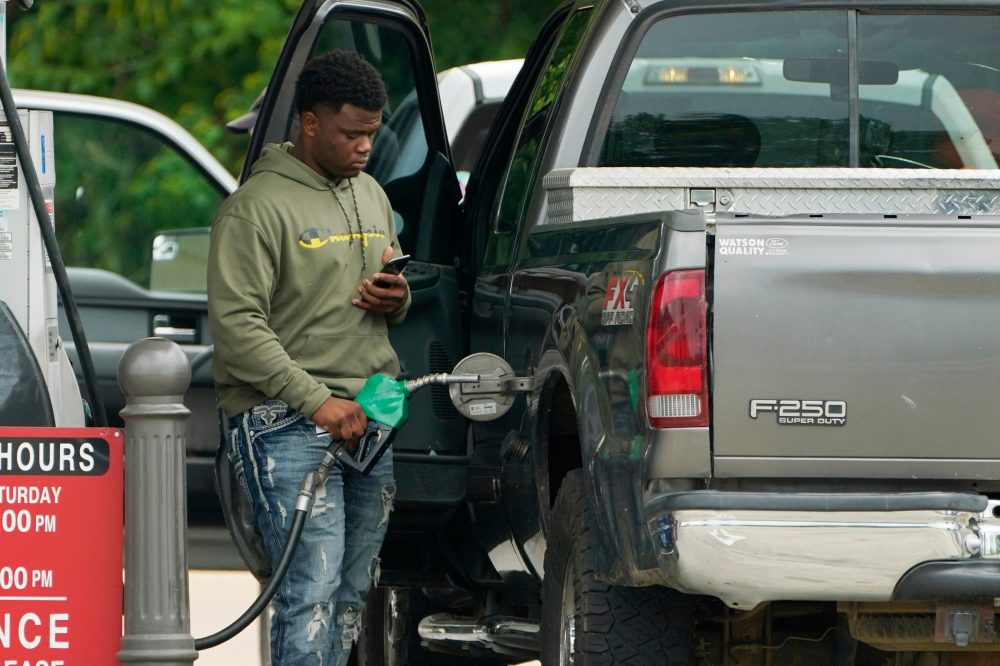
Membership-based warehouse retailers including Costco, Walmart’s Sam’s Club and BJ’s Wholesale Club have experienced increased activity at their gas pumps since the conflict started in late February, the companies report. Fuel generally costs less at these wholesale clubs.
However, numerous drivers are not completely filling their tanks, Walmart Chief Financial Officer John David Rainey informed analysts late last month. For the first time since 2022, Walmart shoppers and Sam’s Club members are purchasing an average of fewer than 10 gallons per visit, he noted.
“That’s an indication of stress,” Rainey said.
Costco members are also adjusting their habits. They are visiting store fuel stations more often to “top up in between what would have normally been a gap between getting the tank to empty because of the concern about what might the gas price be tomorrow,” Chief Financial Officer Gary Millerchip explained in late May.
Meanwhile, the fuel price increase has damaged convenience stores, where 80% of all gas is sold in the U.S., according to Jeff Lenard, a vice president at the National Association of Convenience Stores.
A sales review by the trade organization discovered that pump transactions at locations owned by 130 convenience store companies decreased by nearly 10% during March and April compared to those same months the previous year. Interior store sales at these companies declined by 10.4%, the analysis showed.
“When you lose gallons to the big box, you also lose in-store sales,” Lenard said.
Elevated gas prices did not prevent many Americans from eating out during the first two months of the Iran war. Tax refunds provided assistance, the National Restaurant Association stated. Customer visits to U.S. restaurants in April remained the same as the corresponding month last year, though a 2.6% rise in restaurant spending came mainly from increased menu prices, market research firm Circana reported.
But weaknesses are beginning to appear as budget-minded U.S. residents handle the combined burden of paying more for gas and other consumer items along with rising costs in additional areas from past and current inflation.
Gas prices will not help attract customers with household incomes of $45,000 or below back to U.S. fast-food restaurants, McDonald’s Chairman and CEO Chris Kempczinski stated last month. Individuals in that income bracket started reducing their fast-food purchases after the inflation period that followed the COVID-19 pandemic’s end, and this trend accelerated last year.
U.S.-based restaurant consulting firm Revenue Management Solutions examined 14.6 billion restaurant transactions from the past four years and discovered that as gasoline becomes more costly, restaurant visits slowly decrease, according to Chief Research Officer Sebastián Fernandez. The study showed the effect doubles when gas reaches the $4 level, which occurred as a national average on March 31.
Consumers are also making compromises when grocery shopping, according to Stew Leonard, president of an eight-store supermarket chain his father established, Stew Leonard’s. He has observed customers purchasing meat in large quantities for freezing and showing less interest in products featured during live food demonstrations or available for tasting.
“It’s telling me that people are sticking more to their shopping list,” Leonard said.
Dollar General CEO Todd Vasos also mentioned $4 per gallon gas as a threshold that brought more consumers with household incomes above $100,000 to the discount chain. Vasos informed analysts Tuesday that many of Dollar General’s primary shoppers, who have mid-to-low incomes and live in rural areas, were reducing their food spending.
Sophie Tolsdorf, 29, of La Grange, Kentucky, said she represents one of the consumers purchasing meat in bulk when prices are favorable. She also changed to buying whole fruit rather than pre-cut fruit in packages and reduced purchases of rawhide bones for her dog that cost $40 per pack.
“He might have noticed,” Tolsdorf said. “He’s definitely a little bit bored during the workday now.”
Prior to the war, retailers had used several earnings periods to emphasize consumer caution and selectivity as elements that could impact sales of non-essential items. Shoppers seem to have reduced their discretionary spending further as gas purchasing costs increased, said Marshal Cohen, chief retail advisor at Circana.
From April 25 to May 23, U.S. retailers sold 6% fewer non-grocery items than during the equivalent four-week period of 2025, Cohen reported. Housewares, clothing, footwear and sports equipment experienced the largest decreases, ranging from 5% to 7%. Circana noted that toys and beauty products remained positive areas, showing at least an 8% increase in units sold.
Location intelligence company Placer.ai, which monitors people’s movements through cellphone data, observed visits to BJ’s, Costco and Sam’s Club gas stations begin to increase in early March, coinciding with a steep fuel price rise, according to R.J. Hottovy, the company’s head of analytical research.
By early May, Placer.ai’s information revealed four straight weeks of decreased foot traffic at clothing, electronics and home furnishing stores, and increased trips to grocery stores and dollar stores.
“Consumers are prioritizing value-oriented retailers like warehouse clubs, superstores, and off-price chains,” Hottovy said.