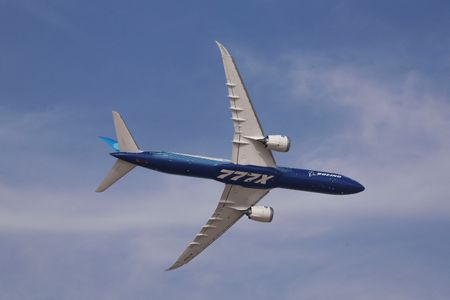

The Middle East’s largest airline is showing confidence about finally receiving its long-awaited Boeing 777X aircraft, with delivery expected by June of next year, according to statements made at an industry conference in Berlin.
Emirates, which holds the distinction of being the globe’s biggest purchaser of wide-body aircraft, has endured extended postponements for Boeing’s flagship model while simultaneously expressing frustration with engine reliability issues on Airbus’ largest offering, which has prevented the airline from placing orders.
“Anything can go wrong … but it’s in good shape,” Emirates President Tim Clark stated when discussing the 777X order during the Berlin conference.
The Dubai-based carrier anticipates taking delivery of its initial 777X between May and June of 2025, marking 14 years since Emirates spearheaded the original ordering surge for the 400-passenger aircraft. The GE-powered aircraft’s development has faced numerous setbacks, including certification holdups.
Clark restated his airline’s worries regarding the performance of the Rolls-Royce Trent XWB-97 engine in the harsh, sandy conditions typical of Gulf region operations. This engine powers the somewhat smaller Airbus A350-1000, and Emirates has maintained it will not purchase this aircraft until durability concerns are addressed.
“The story of the (XWB-)97 is as it was. I know they (Rolls-Royce) are working hard to get it sorted,” Clark explained.
The Emirates executive, who has previously engaged in public disagreements with Rolls-Royce, also criticized a compensation package potentially exceeding £100 million ($134 million) granted to Rolls-Royce CEO Tufan Erginbilgic.
Erginbilgic has received recognition for implementing comprehensive organizational changes, leading to significant improvements in both profitability and stock performance.
While Rolls-Royce refused to address questions about executive compensation, a company representative responded to Clark’s engine durability comments by noting that their Trent XWB-97 technology enhancement program is boosting both durability and operational time.
“These enhancements will double the durability of the Trent XWB-97 in hot and dusty environments and provide a 50% improvement for flying in benign environments,” the spokesperson explained.
The manufacturer is also making investments to increase its maintenance, overhaul and repair capabilities by 2030 to meet rising customer needs and deliver engine improvements to clients “as quickly as possible,” according to company statements.
The aviation industry is currently experiencing widespread tensions between airlines and engine manufacturers regarding elevated costs and delivery postponements.
Clark showed little understanding for engine producers who have struggled to meet demand, resulting in grounded aircraft.
“I can’t say to my government, I can’t fly because I haven’t got this; they’d kick me out. So it’s brutal, but that’s the way it is. You need to do better than you’re doing, but it’s not only him (Erginbilgic), it’s all the others as well.”
The International Air Transport Association recently accused engine manufacturers of “gouging” airlines through parts pricing. Engine companies defend themselves by citing substantial financial risks taken to achieve fuel efficiency gains and attribute some delays to supply chain complications.
“Listen, guys, that’s not my problem, that’s your problem,” Clark stated, directing his comments toward engine manufacturers regarding supply limitations.