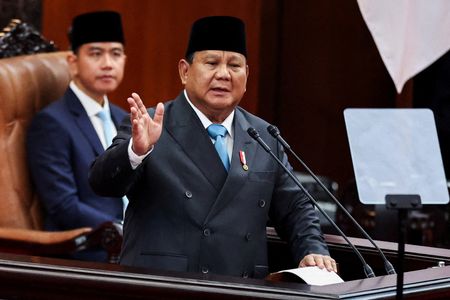

Indonesian markets are experiencing a devastating collapse as President Prabowo Subianto’s ambitious spending programs and unconventional economic policies drive away international investors.
Since assuming office in 2024, the former special forces commander turned politician has implemented sweeping changes including free school meal programs for millions of children while abandoning the fiscal restraint policies that had been in place for decades in pursuit of economic growth.
However, the global energy crisis combined with several controversial policy decisions have severely damaged investor trust. These include placing commodity exports under the control of a massive sovereign wealth fund that answers directly to Prabowo, and imposing new employment and growth requirements on the central bank.
These actions have tarnished what was considered an emerging market success story just two years ago. Credit default swaps now suggest that Southeast Asia’s biggest economy may lose its investment-grade rating.
Indonesian stocks have become the world’s worst-performing market in 2026, plummeting over 42%. The rupiah currency has also taken a severe beating, becoming both a consequence and cause of the economic turmoil as its decline triggers additional selling pressure.
The currency has dropped 8% this year and fallen 7% since the Iran conflict began. It currently trades at 18,190 against the U.S. dollar, marking an all-time low, with its steepest decline in three weeks since 2020.
“Indonesia is suffering from a genuine confidence crisis, with serious governance red flags that overshadow any valuation argument,” said Tan Altundag, investment manager for emerging equities at Pictet Asset Management, which has aggressively cut its exposure to Indonesian stocks.
“The rupiah at 18,000/USD is not just eroding real returns for foreign investors … the currency slide risks becoming a self-reinforcing loop, pushing up inflation … tightening financial conditions, and ultimately weighing on growth.”
The currency continues falling despite a significant 50-basis-point interest rate increase in May and a $12 billion decline in Indonesia’s foreign exchange reserves this year, which the central bank typically uses for currency defense. The negative effects are now spreading throughout the economy.
Foreign stock sales totaling a net $3.2 billion through May represent the largest outflow since 2009. Data reveals that international ownership of government bonds, which reached nearly 40% before the COVID-19 pandemic, has crashed to a nearly 20-year low of just 12.6%.
“It’s true, there is a doom-loop forming,” said John Woods, Asia chief investment officer at Lombard Odier, a private bank.
“Persistent outflows, with foreign holdings in bonds and stocks at multi-year lows, would continue to pressure the rupiah, liquidity, and asset prices – prolonged outflows could slow infrastructure and growth plans.”
Indonesia’s credit and stock ratings face serious threats. Rating downgrades would force investors to sell their holdings and increase borrowing costs for credit.
Index provider MSCI is examining trading and transparency concerns in the equity markets and has warned of a potential downgrade to frontier status, though investors consider this unlikely.
Moody’s and Fitch have downgraded their debt rating outlooks to negative, pointing to diminished policy credibility, while S&P has indicated its rating will depend on efforts to strengthen fiscal reserves.
Markets are particularly concerned that the energy crisis resulting from the U.S.-Israeli conflict with Iran has intensified economic pressure and strained the budget through fuel subsidies, yet Prabowo has intensified his costly agenda.
Indonesia recently enacted comprehensive legislation, not fully disclosed to the public, granting parliament new authority over the central bank and adding “real sector growth” to its responsibilities, which analysts view as undermining its independence.
Earlier this year, Prabowo appointed his nephew as a deputy central bank governor.
Last month, he announced that the government would assume control of commodity exports through Danantara, a sovereign wealth fund he created.
“The underlying concern is that the direction of policy is not great and is becoming less transparent,” said Kieran Curtis, head of emerging markets local debt at Aberdeen in London.
“It is too early to say there has been damage from that policy, but it is not as efficient as exports finding their own market.”
External pressures from the Iran conflict’s impact on energy markets and credit default swaps, which may overstate downgrade risks, have added to the strain. However, investors believe only significant policy changes will reverse the trend.
“Yes, it is possible for countries to pull themselves out of a negative spiral where they have put themselves in that position to begin with,” said Mark Ledger-Evans, Asia-focused emerging markets fixed income portfolio manager at Ninety One, an investment management firm.
“In Indonesia’s case, we believe it stems largely from the idea of pursuing growth rates which are not feasible, which then filters down into execution, and hence it’s not so easy to pull out of the negative spiral without a re-think of the ideas.”
Chinese companies that helped develop Indonesia’s nickel industry into the world’s leading producer are already seeking alternatives due to policy pressures, while returning investors will demand better pricing.
“Indonesia is no longer being priced as a reliably orthodox emerging market,” said Hemant Mishr, chief investment officer at fund manager S CUBE Capital, “but as one carrying rising policy risk.”