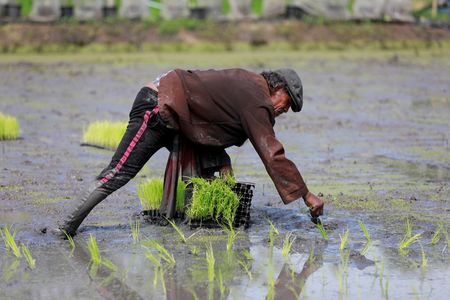

Global rice production is facing unprecedented challenges as the ongoing conflict in Iran disrupts critical supply chains and the emerging El Nino weather pattern threatens harvests across Asia’s major growing regions.
The world’s most widely consumed grain faces potential shortages as agricultural producers reduce planted acreage due to fertilizer scarcity and escalating fuel expenses stemming from the Iranian conflict. Weather experts warn that El Nino conditions will bring increased heat and drought to key rice-producing areas.
Rice serves as a cornerstone of international food security, with even minor supply interruptions creating widespread effects that drive up costs and burden family finances, especially for budget-conscious consumers throughout Asia and Africa. The United Nations Food and Agriculture Organization projected in April that rice production would grow 2% to reach record levels in 2025/26.
The Iranian conflict’s impact extends to major exporting nations Thailand and Vietnam, as well as import-dependent countries like the Philippines and Indonesia, according to agricultural producers and commodity traders. Military actions have restricted fuel and fertilizer movement through the Strait of Hormuz, a critical maritime passage linking Gulf nations to international markets.
Small-scale farmers throughout Southeast Asia are experiencing increased pressure as El Nino weather conditions prepare to bring hotter and more arid environments to the region during the year’s latter half.
“Farmers have already started planting rice in some countries and are using fewer inputs because prices have gone up,” said Maximo Torero, chief economist at the UN FAO. “We are going to see a tighter global supply situation in the second half of the year and early next year.”
Historical precedent shows the severity of rice market disruptions. In 2008, export limitations from major suppliers caused prices to more than double to approximately $1,000 per metric ton, sparking civil unrest in multiple nations. More recently, supply constraints from 2022 to 2023, worsened by India’s export limitations, elevated prices and triggered widespread panic purchasing.
Rice shipments currently encounter significant supply chain obstacles.
“Logistics have become a nightmare, especially in Asia as there is shortage of polypropylene bags, limited truck availability to move rice to ports and shipping itself has been disrupted,” said a Singapore-based trader at a top global rice merchant, who asked to remain unidentified as they are not authorized to speak to media.
Although fertilizer shortages and dry conditions are already reducing yields from smaller harvests currently being gathered in Southeast Asia, the upcoming crop season will likely experience more substantial decreases.
India, Thailand and the Philippines begin planting their primary crops during June and July, while Vietnam and Indonesia are currently seeding their second-season harvests.
The majority of Asian rice producers cultivate two or three annual crops.
Sripai Kaew-Eam, a 60-year-old farmer in Thailand’s Chai Nat province about 151 km (94 miles) north of Bangkok, explained that elevated fertilizer and fuel costs have increased production expenses to approximately 6,000 baht ($183.99) per rai (0.4 acre), up from around 4,500 to 5,000 baht for the previous crop, while the price she receives for the unhusked rice she harvests is about 6,200 baht per metric ton.
Fertilizer costs have climbed to 1,000 to 1,200 baht per bag, from 850 baht, compelling her to reduce usage by half.
“Fertiliser prices are high, fuel prices are high,” she said.
The Philippines, which imports more rice than any other country, confronts comparable challenges.
“Some farmers are now saying they may not plant or will reduce fertiliser use, which would inevitably cut production,” said Arze Glipo, executive director of the Integrated Rural Development Foundation.
The nation’s harvest could decline by up to 6 million tons from its standard 19 million to 20 million ton output.
“That would leave the Philippines in a precarious position, as imports are also uncertain due to export restrictions, making it extremely difficult to cover any production shortfall,” Glipo said.
In Indonesia, fertilizer availability isn’t problematic, but El Nino conditions are anticipated to reduce production.
Indonesia’s statistics bureau predicts the rice harvest area during the March to May timeframe will contract by 10.6% to 3.85 million hectares (9.5 million acres), while unhusked rice production will decrease 11.12% to 20.68 million tons.
Despite supply concerns, the world maintains substantial rice reserves following years of exceptional harvests, with India, the globe’s largest exporter, storing a record 42 million tons or roughly one-fifth of worldwide stockpiles, according to U.S. Department of Agriculture statistics, providing a buffer against any decline in global production.
Current prices for most rice varieties remain stable but will probably increase even if the Hormuz situation receives immediate resolution, the FAO’s Torero stated.
Reopening the strait quickly would prevent a major supply crisis, but “if we don’t reopen this in the next two to three weeks, the situation is going to get pretty serious,” he said.