Federal agriculture officials released two significant nutrition policy updates on May 8th that will benefit dairy producers nationwide: new guidelines for milk offerings in school meal programs and revised food stocking requirements for stores accepting SNAP benefits.
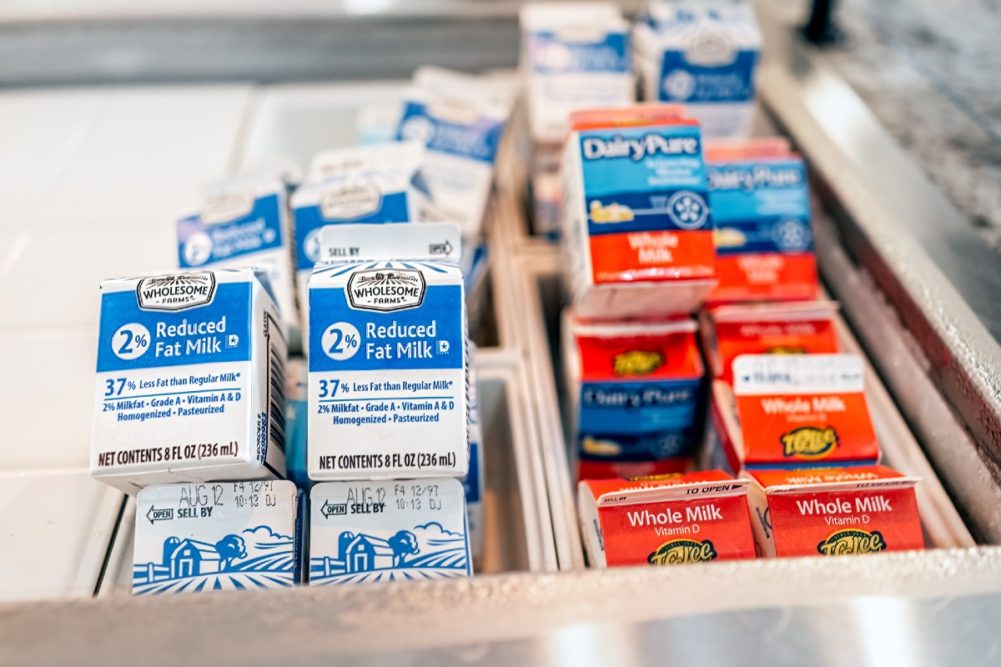
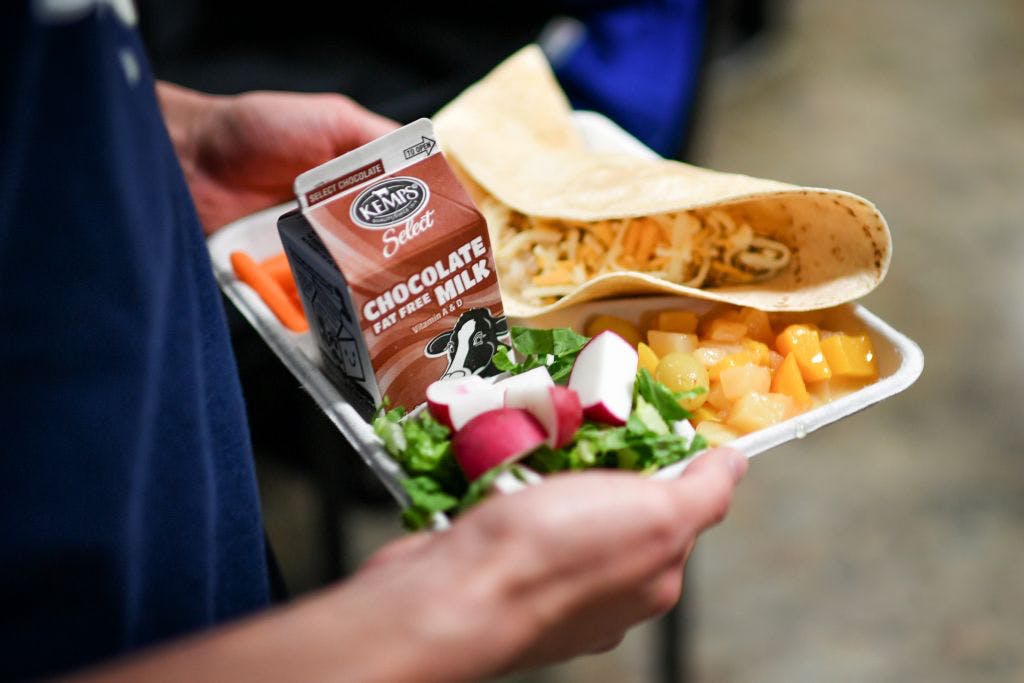
The National Milk Producers Federation praised the federal decision to implement the Whole Milk for Healthy Kids Act through updated regulations taking effect June 8th. This marks the first time since 2012 that schools will be permitted to serve whole milk and 2% milk in federally supported meal programs.
During the rule development process, NMPF pushed for comprehensive milk access across all school feeding programs, not limited to lunch service. The organization successfully advocated for inclusion of breakfast programs, the Special Milk Program, and the Child and Adult Care Food Program. Schools will now have flexibility to provide whole, 2%, 1% or skim milk varieties in both unflavored and flavored options throughout all meal services.
On the same date, federal officials unveiled revised stocking requirements for retailers participating in the Supplemental Nutrition Assistance Program.
The modified SNAP regulations maintain dairy’s status as a required food category while expanding recognized varieties to include flavored milk, sour cream and shredded cheese as distinct products. Plant-based milk alternatives face new restrictions, with only three varieties counting toward dairy stocking obligations. These changes align with recommendations NMPF submitted in November comments to federal regulators.
Butter has been removed from mandatory stocking lists and reclassified as an accessory item, matching the treatment of other cooking fats. SNAP recipients can continue purchasing butter with benefits, but stores will no longer need butter inventory to qualify for program participation. Retailers must still maintain seven different dairy products to meet SNAP certification standards.
Dairy farmers across the nation are being urged to prepare for a potential outbreak of New World screwworm after Mexican authorities documented more than 1,200 cases during May. The closest confirmed infection sits approximately 31 miles from the United States border, leading agricultural experts to warn that an American outbreak could happen soon.
The parasite poses a serious threat to livestock by creating severe wounds that may result in death, making early detection by farmers crucial for prevention and treatment efforts. Federal regulators have responded by expanding the list of medications available to combat the pest through emergency and conditional approvals.
The Food and Drug Administration took action on May 19 by issuing an emergency use authorization for doramectin injection, known as Dectomax-CA1, allowing its use in lactating and dry dairy cows along with replacement heifers 20 months and older. This medication had already received conditional approval for younger female dairy cattle under 20 months, but the emergency authorization broadens treatment options for producers facing a potential outbreak.
The FARM Antibiotic Stewardship Program, which stands for Farmers Assuring Responsible Management, has published guidance containing details about currently approved and authorized treatments for New World screwworm. This resource aims to help farmers make informed decisions that safeguard their livestock while ensuring responsible antimicrobial usage.
Federal agriculture officials have established a comprehensive five-part strategy emphasizing rapid detection, treatment and containment measures, livestock movement restrictions, and investment in innovative treatment and control methods. Industry organizations have participated in coordination meetings with federal and state officials to establish effective prevention practices and have endorsed a registration application for NovoFly that was submitted on April 22.
Farmers who believe they may have infected animals should immediately contact their veterinarian to file a report, obtain samples for laboratory testing, and receive treatment guidance. Federal agriculture officials have established an informational website that offers current updates and information about confirmed cases.
Once the screwworm enters American territory, farmers should anticipate movement restrictions in affected regions, including mandatory inspections and treatments to prevent further spread. Agricultural producers are advised to collaborate with their veterinarians and coordinate with state animal health authorities regarding movement protocols.
Maryland’s Best has launched its summer initiative with the introduction of a campaign titled “Eat Well. Buy Local.” alongside the unveiling of a redesigned logo on June 2, 2026.
The program aims to encourage Maryland residents and tourists to support local agricultural businesses and food establishments throughout the summer months. The initiative promotes shopping at farms, farmers markets, restaurants and retailers that offer locally-produced items.
As people plan their summer dining experiences and backyard barbecues, the campaign urges them to consider purchasing from local sources to support the state’s agricultural community and food industry.
Listen to the Morning Delmarva Farm Report Update — June 2, 2026
DELMARVA — Two-thirds of the U.S. corn and soybean crops are in good to excellent condition according to the latest national crop report. The USDA reports 67% of corn is rated good to excellent, down 2% from last year. Soybeans are tracking at 66% good to excellent. While those numbers look solid nationwide, growing conditions vary widely by region, with some areas dealing with drought stress and others facing too much rain.
Markets
Livestock futures climbed Monday at the Chicago Mercantile Exchange. August live cattle gained $1.55 to close at $240.60. October contracts rose $1.90 to $232.32. Feeder cattle showed even stronger gains, with August contracts jumping $3.12 to $351.55.
At local cash markets, corn at Laurel Grain Company in Laurel, Delaware is bringing $4.87 a bushel for July delivery. Soybeans there are $11.37 for November.
Forecast
Sunny skies are expected today with a high near 69°F and northeast winds 5 to 10 mph. Tonight stays mostly clear with a low around 58°F. Wednesday brings more sunshine, warming to 74°F. No rain is in the forecast through the week, with temperatures climbing into the mid-80s by Friday.
This article is based on the Delmarva Farm Report Update Morning Edition, June 2, 2026. Hosted by Tom Bradley.
Officials in Australia announced Tuesday that the nation’s wheat production this year will reach its lowest point in three years, driven by elevated fertilizer expenses and drought conditions affecting certain regions.
As one of the world’s leading wheat exporters, Australia’s diminished crop output will tighten global grain supplies, potentially driving up food costs that already hit two-year peaks last month following crop damage in the United States.
The Australian Bureau of Agricultural and Resource Economics and Sciences (ABARES) released quarterly projections showing wheat production will total 26.7 million metric tons this harvest season.
This represents a decline of approximately 9 million tons compared to the previous season and falls roughly 8 million tons below the five-year average, based on agency data.
Fertilizer expenses have surged dramatically since the conflict in Iran disrupted shipments from Gulf region suppliers. These elevated costs will likely lead farmers to reduce fertilizer application, limiting crop yield potential, according to ABARES, which operates under the agriculture ministry.
Additionally, eastern regions of Australia have experienced extended periods of insufficient rainfall over recent months. While May brought beneficial precipitation that improved growing conditions, the national weather service continues forecasting El Nino patterns and below-normal rainfall in upcoming months.
“It will be crucial that adequate and timely supply of fertiliser is available and adequate rainfall is received to meet current yield projections,” ABARES said.
The agency projects wheat planting areas will decrease 12% from last season to 10.9 million hectares, marking the smallest planted area since the 2019/20 growing season.
Barley cultivation, which demands less fertilizer than wheat, is expected to expand 4% from the previous season to 5 million hectares, though total production will still decline 15% to 14.1 million tons, ABARES reported.
Canola planting areas, requiring substantial fertilizer but commanding higher market prices than wheat, should contract 6% to 3.5 million hectares, with harvest volumes dropping 20% to 6.2 million tons.
Australia’s planting season is concluding, with harvest operations scheduled to begin near year’s end.
Listen to the Evening Delmarva Farm Report Update — June 1, 2026
DELMARVA — The USDA’s first seasonal assessment shows the nation’s major crops in solid shape, with 67% of U.S. corn rated good to excellent, though that’s down 2 points from last year. Soybeans are tracking at 66% good to excellent.
While those numbers look strong nationally, growing conditions vary sharply by region. Some areas are dealing with drought stress while others are getting too much rain, creating challenges for Delmarva growers as well.
A crop consultant in northwest Missouri is warning that heavy rainfall is fueling weed pressure, especially waterhemp, and raising concerns about nitrogen loss in fields.
Policy
The USDA opened applications today for its Farmer Bridge Assistance Program targeting specialty crop growers. The initiative delivers more than $1.6 billion calculated on 2025 planting plans and covers almost 270 different specialty crops.
Markets
Livestock futures posted solid gains Monday. August live cattle rose $1.55 to close at $240.60. October contracts climbed $1.90 to $232.32. Feeder cattle showed even stronger performance with August contracts jumping $3.12 to $351.55.
On the grain side, corn at Laurel Grain Company in Laurel, Delaware is bringing $4.89 a bushel for July delivery. Soybeans are $11.39 for November.
Forecast
Partly cloudy skies are expected tonight with a low of 52° and northeast winds 10 to 15 mph. Tuesday brings sunny skies and 71° with light south winds.
This article is based on the Delmarva Farm Report Update Evening Edition, June 1, 2026. Hosted by Tom Bradley.
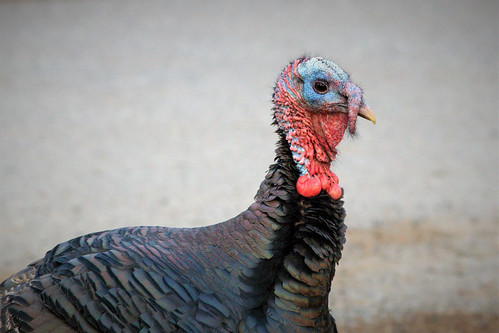
Wild turkey hunters across Maryland brought home 5,094 birds during the 2026 spring hunting season, according to state wildlife officials. The total represents a 5% bump compared to the previous year’s numbers, though it still falls short of the all-time high of 5,356 birds recorded in 2023.
“Favorable weather helped contribute to another productive spring season for Maryland turkey hunters,” said Karina Stonesifer, Director of the Maryland Department of Natural Resources Wildlife and Heritage Service. “While populations can fluctuate across regions and from year to year, turkey hunters continue to enjoy quality hunting opportunities across Maryland.”
Garrett County topped the state’s harvest numbers with 542 birds taken, while Charles County came in second with 452 turkeys. Worcester County rounded out the top three with 430 birds harvested. Both Allegany and Washington counties also saw hunters bring home more than 300 birds each.
The spring season kicked off with the Junior Turkey Hunt on April 11-12, which gave young hunters the first opportunity to participate. During that special weekend, youth hunters successfully harvested 441 wild turkeys, making up 8% of the season’s total take. Sunday hunting contributed 14% to the overall statewide numbers.
Hunters looking ahead to next season can purchase their 2026-27 licenses starting July 1 through the Maryland DNR website. The fall hunting calendar begins September 1 with mourning dove season, followed by deer archery season starting September 11.
The National Agricultural Statistics Service has issued its latest report documenting agricultural progress and crop conditions nationwide.
The agency’s newly released assessment provides current data on crop development and field conditions across multiple farming sectors.
This regular reporting helps track the status of agricultural production and provides valuable information for farmers, agricultural businesses, and industry stakeholders monitoring seasonal crop advancement.
Fruit and vegetable farmers nationwide can now apply for financial assistance through a federal program worth $1.625 billion that was officially launched June 1st.
The Assistance for Specialty Crop Farmers Program provides more funding than originally promised, surpassing the $1 billion commitment made by the Trump administration in late 2025 when they announced relief payments for producers dealing with market disruptions and rising production costs. This financial support aims to help farmers weather economic challenges until new provisions from the Republican reconciliation legislation passed in July 2025 take effect this October.
How to Apply and Who Qualifies
The Farm Service Agency will identify eligible participants and create pre-completed application forms (Form CCC-556) available through the department’s online system starting June 1st for those with Login.gov credentials. Farmers who lack online accounts or prefer in-person assistance can obtain applications at local FSA offices beginning June 8th. All applications must be turned in by August 7th.
To qualify for payments, producers must have grown eligible specialty crops during the 2025 crop year and submitted crop acreage reports to FSA by April 24, 2026.
Farmers must also have completed additional required paperwork (Forms CCC-902, CCC-941, and AD-1026) or file these documents by August 9, 2027.
Individual payment limits are set at $250,000 per applicant, and those with adjusted gross incomes exceeding $900,000 cannot participate.
Payment amounts differ by crop type, with produce categorized into payment tiers based on average yearly revenue per acre as calculated by the department.
Tier
Per-acre payment
Crop examples (partial list)
1
$650
Fresh grapes, strawberries, lettuce, onions, green bell peppers, arugula, carrots, mushrooms, garlic, freestone peaches, and okra
2
$225
Apples, sweet potatoes, tomatoes, chili peppers, squash, and pumpkins
3
$65
Pecans, sweet corn, cashew, and hazelnuts
Qualifying bean and pea varieties will receive $25 per acre. However, bean and pea types already covered under the Farmer Bridge Assistance program cannot receive payments through this new specialty crop initiative. The department may expand the eligible crop list if officials determine other producers experienced comparable economic hardships.
Crops produced in controlled settings like greenhouses or hydroponic facilities generally won’t qualify for payments, though mushrooms are exempt from this restriction.
Officials anticipate approved applicants will start receiving their payments within the current month.
New agricultural statistics reveal that soybean processing for crude oil production totaled 6.55 million tons during April 2026, according to recently released data.
The monthly processing figure translates to approximately 218 million bushels of soybeans that were crushed for oil extraction purposes during the reporting period.
Federal agricultural officials have released new data showing that corn utilization for alcohol production and other industrial applications reached 478 million bushels during April 2026.
The report, which tracks grain processing activities nationwide, provides a snapshot of how major agricultural commodities are being used in various industries throughout the country.
The data reflects consumption patterns for corn used in ethanol production and other non-food applications during the month-long period.
Manufacturing operations utilizing cotton processing equipment consumed 19.0 million pounds of synthetic fibers throughout April 2026, according to federal agricultural data.
The consumption figures represent the total amount of manmade materials processed through cotton system machinery during the month.
The statistics are part of ongoing tracking of fiber usage patterns in the textile manufacturing industry.
The National Chicken Council issued a statement today following the United States Department of Agriculture’s Agricultural Marketing Service decision to postpone implementation of new poultry industry regulations by 18 months.
The federal rule, officially titled “Poultry Grower Payment Systems and Capital Improvement Systems,” had been scheduled to become effective on July 1, 2026. However, the Agricultural Marketing Service announced the delay after conducting a review of the regulation’s potential financial impact on the poultry industry, which was initially proposed in March.
A healthcare professional is making a difference in agricultural communities by combining her medical background with farm safety education. Katie Hammock serves in the dual role of nurse and farm safety educator, bringing valuable healthcare perspective to agricultural safety initiatives.
Hammock’s work represents an important intersection between healthcare and agriculture, as she uses her nursing experience to help educate farming communities about safety practices and injury prevention.
Her unique position allows her to address safety concerns from both a medical and practical farming standpoint, providing comprehensive education to those working in agricultural settings.
A recent video presentation from the Virginia Farm Bureau documents the complete journey of locally-grown flowers as they move from agricultural production through retail sales.
The educational content explores how flowers are cultivated on Virginia farms and follows their path to consumers in the marketplace.
The Farm Bureau’s video production aims to showcase the agricultural process behind flower farming and the supply chain that brings these products to market.
The provided article appears to contain only a video embed and lacks substantial text content to rewrite. Based on the headline reference to Virginia tulip festivals and spring farming traditions, this story would typically cover seasonal agricultural celebrations, but insufficient source material is available for a complete rewrite.
ANNAPOLIS, MD (June 1, 2026) — The Maryland Department of Agriculture has launched its online application process for the Senior Farmers Market Nutrition Program for the 2026 season.
The state agriculture department announced that eligible seniors can now apply through an online portal accessible via a link posted on the department’s main website.
Officials emphasized that all participants must complete a fresh application for this year’s program, even those who have participated in previous years.
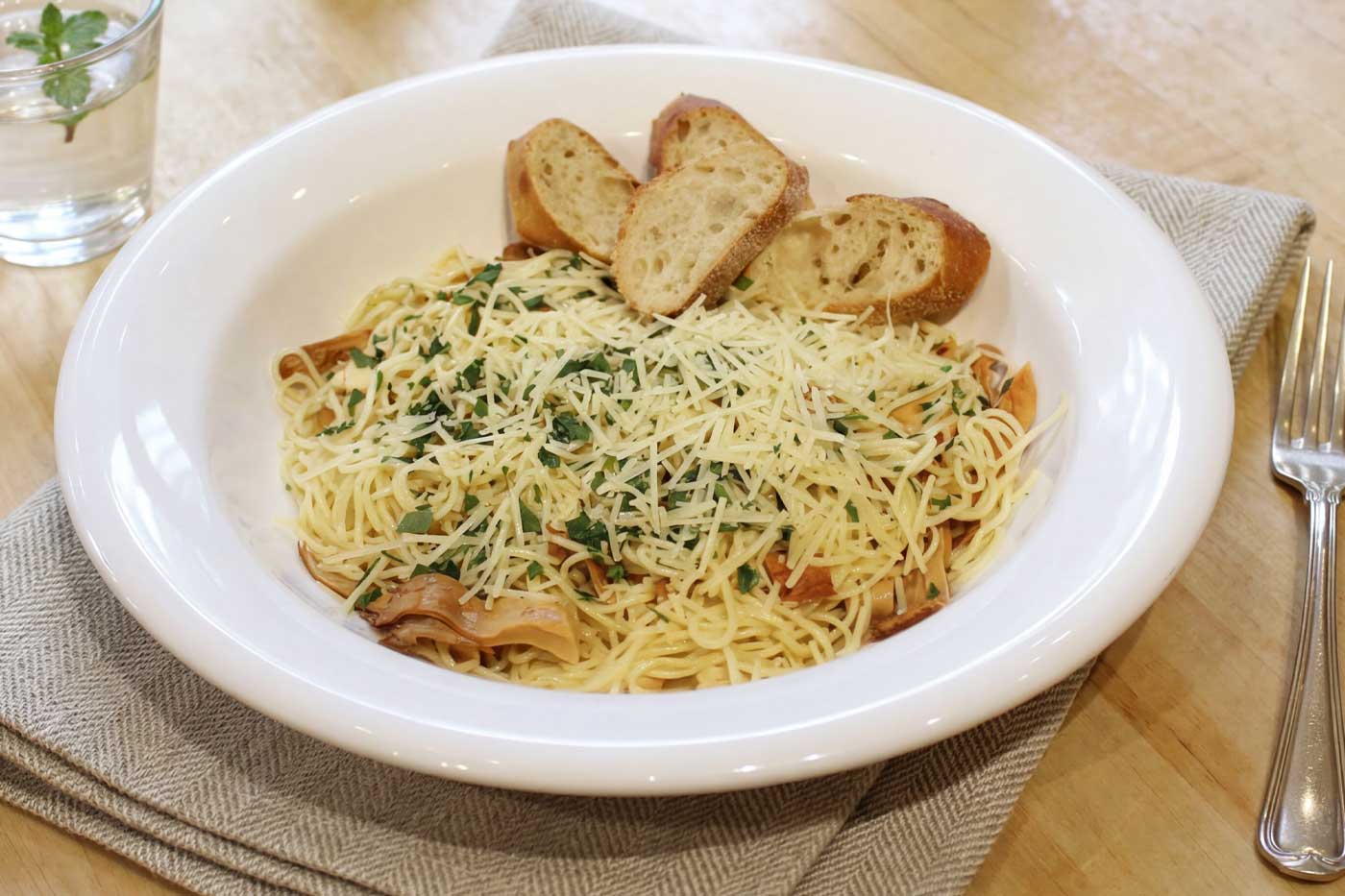
A wild mushroom pasta dish was showcased by Chef Tammy Brawley during an episode of Real Virginia, the weekly television show produced by Virginia Farm Bureau.
The Chicken of the Woods Scampi recipe calls for 2 tablespoons each of butter and olive oil, along with 1 sliced garlic clove and crushed red pepper to taste. The dish also requires 2 tablespoons of dry white wine, 2 cups of coarsely sliced Chicken of the Woods mushrooms, and 1 package of angel hair pasta prepared according to package instructions.
For garnishing, the recipe suggests chopped parsley, fresh squeezed lemon, and shredded parmesan cheese.
To prepare the dish, cooks should first make the pasta according to directions, drain it, and set it aside while keeping some pasta water in reserve.
The cooking process begins by combining butter and olive oil in a large saute pan. Next, add the garlic and cook until it becomes tender, then incorporate the red pepper. Pour the wine into the center of the pan and allow it to simmer.
The mushrooms should then be added to the pan and stirred. Finally, mix the prepared pasta with the sauce, adding reserved pasta water if the mixture appears too dry.
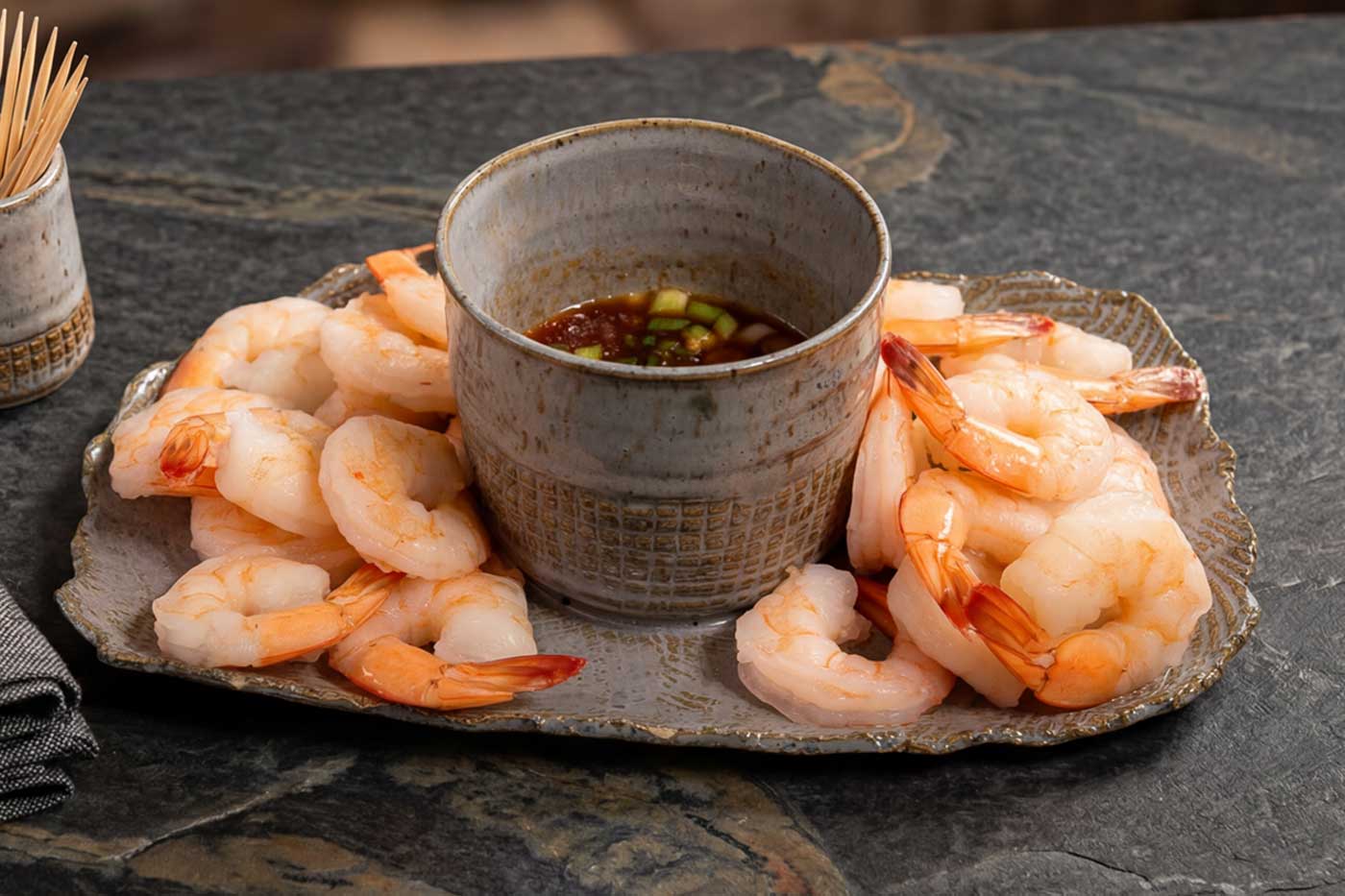
A culinary professional recently showcased a flavorful condiment recipe during an appearance on Real Virginia, the weekly television show produced by Virginia Farm Bureau. Chef Tammy Brawley demonstrated how to create a sauce that balances sweetness with spice, designed to complement both seafood and grilled fruit.
The recipe calls for two pounds of very large shrimp along with several sauce ingredients including one tablespoon of sambal oelek chili paste, one teaspoon of kosher salt, one teaspoon of orange zest, one tablespoon of orange juice, half a cup of agave or maple syrup, one tablespoon of tomato paste, two minced green onions, and pineapple spears for grilling.
To prepare the dish, cooks should combine all ingredients thoroughly using a whisk, setting aside the pineapple spears. The cooking process involves heating a grill or indoor grill pan to medium temperature, then placing the pineapple spears on the cooking surface. Once grill marks become visible, the fruit should be brushed with the prepared sauce. The same sauce serves as an accompaniment for the shrimp as well.
The president of a leading dairy organization reflects on witnessing technological advancement from submitting graduate school assignments on floppy disks in the early 1990s to today’s rapidly evolving artificial intelligence landscape that’s transforming everything from internet searches to purchase predictions.
According to the dairy industry executive, AI technology has rapidly infiltrated every aspect of daily life and continues advancing faster than society can adjust to its changes.
The dairy sector cannot remain passive observers, warns the industry leader. The economic impact and far-reaching implications of AI are too significant to ignore. With challenging dairy economics, rising consumer demands, and ongoing labor shortages familiar to every producer, incorporating AI mastery becomes crucial rather than optional for ensuring a sustainable and profitable dairy industry for future generations.
The fundamental challenge remains unchanged: dairy profit margins stay narrow while market volatility persists. Feed expenses fluctuate dramatically, milk pricing swings wildly, and international markets react to social media posts or weather conditions. While dairy producers have traditionally been among agriculture’s most data-oriented business operators, today’s information volume spanning nutrition formulation, heat management, milk production, and animal health has exceeded human processing capabilities.
AI technology proves valuable by not merely collecting information but analyzing it, learning patterns, and forecasting results before issues appear in milk storage tanks. The goal isn’t replacing farmer decision-making but providing producers with extensive data to achieve precision levels that enable predicting and correcting problems before they develop.
Individual cow monitoring enhanced by AI could represent dairy’s most significant productivity advancement since rotary milking systems were introduced. Cattle thrive with consistent schedules, clean housing, and carefully balanced nutrition. Current sensor technology monitors chewing patterns, activity levels, body temperature, and food consumption, creating unique behavioral profiles for each animal. AI platforms can detect early indicators of metabolic disorders, udder infections, mobility issues, or nutritional problems days before conventional observation methods. The technology can integrate weather predictions with feed formulations, optimizing nutrition before sunrise. This results in improved animal health, reduced feed expenses and veterinary costs, and increased milk output. In an industry where every additional milk pound counts, such innovations represent essential tools and competitive advantages for farmers implementing AI successfully.
However, AI’s most substantial long-term dairy value may exist outside barn operations. The supply chain and logistics efficiencies created by AI will certainly bring revolutionary changes. More importantly, imagine seamlessly connecting producers with consumers in both domestic and international markets. Consumers, major dairy purchasers, and foreign trade partners increasingly demand transparency regarding animal treatment, feed sources, production methods, and environmental impact.
Such information helps close deals with both international buyers in export markets and parents shopping at grocery stores. Dairy farmers using AI-powered monitoring and record-keeping can document sustainability and animal care measurements with previously impossible detail levels, creating potential advantages when serving transparency-focused customers.
The industry already recognizes that strong performance in carbon efficiency, water conservation, and soil health provides competitive benefits. Soon, AI will help predict which investments will generate optimal farm-level returns with proper data collections.
This doesn’t mean AI serves as a universal solution. Significant questions and concerns persist about harnessing this technology for maximum benefit, determining energy sources for powering it, ensuring successful coexistence between thriving farms and AI data facilities, and establishing necessary data privacy and security protections. This final point represents a serious and complex challenge requiring practical, legally binding solutions. It’s crucial to remember that AI, like everything else, isn’t infallible – without human oversight, major mistakes can happen, and ultimately dairy farmers must maintain control.
For the dairy industry, the potential advantages are too substantial to avoid the challenges, and the sector’s brightest minds must focus on solutions to understand AI’s direction and how dairy can benefit from that trajectory.
Therefore, next week at the organization’s Board of Directors meeting in Arlington, VA, an AI workshop and presentations will be added to the agenda. As the premier U.S. dairy-farmer organization, they aim to use their convening power to bring the industry together on a collaborative basis to address shared questions and challenges, seek common solutions benefiting everyone, and work through the challenges that widespread AI adoption is rapidly presenting. They anticipate seeing member contributions and look forward to serving as a knowledge center for this critical, rapidly evolving subject.
The dairy operations that succeed in the coming decade will combine human insight with AI’s predictive capabilities. The industry can view AI as an outsider’s tool, or as a threat with risks outweighing benefits, or embrace it as the next step in the same innovation that has always characterized American agriculture. The organization firmly supports AI adoption, acknowledging there will be obstacles, problems to resolve, and difficult questions to address along the way, because alongside policy leadership, they help members pursue innovative solutions benefiting the entire industry. Dairy has never feared hard work or new equipment. AI simply represents the next tool for achieving success.
Listen to the Morning Delmarva Farm Report Update — June 1, 2026
DELMARVA — New Jersey Governor Mikie Sherrill has issued an emergency declaration after freeze damage in April resulted in $300 million in farm crop losses. The declaration, which took effect May 20, covers all 21 counties.
Damage assessments show crop destruction surpassing 30% across numerous regions, with some growers facing total crop failure for specific varieties. The frigid weather struck April 19 through 22, hitting plants during a crucial growth phase and causing devastating harm to blooms and developing fruit. Sherrill is calling for federal assistance and working to maintain farming operations across the Garden State.
Markets
Corn at Laurel Grain Company in Laurel, Delaware is bringing $4.92/bu for July delivery. December corn there is $4.90/bu. Soybeans at Laurel are $11.33 for July, $11.46 for November. Up in Lebanon, Pennsylvania, Triple-M Farms is paying $5.27 for July corn and $11.83 for July beans.
Forecast
The region is looking at mostly sunny skies today with highs around 71°F and northeast winds 5 to 15 mph. Tonight brings isolated rain showers early, then partly cloudy with lows near 53°F. Tuesday looks sunny with highs near 70°F.
This article is based on the Delmarva Farm Report Update Morning Edition, June 1, 2026. Hosted by Tom Bradley.
DAKAR, Senegal (AP) — Senegalese farmer Abou Sow felt a wave of concern when he witnessed U.S. missile strikes against Iran on social media, knowing the conflict would soon impact farming across West Africa. Chemical fertilizer costs have surged 40% since hostilities commenced on Feb. 28.
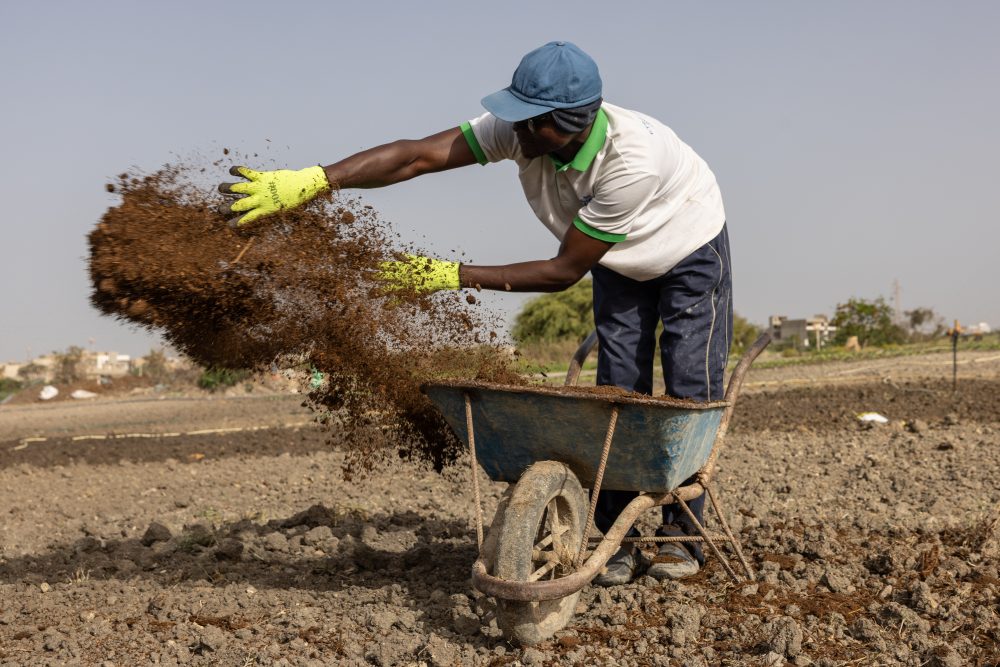
Unlike many of his peers, Sow had prepared for such disruptions. He transitioned away from synthetic fertilizers eight years earlier, embracing organic compost and natural alternatives instead. Today, he encourages fellow Senegalese farmers to purchase manure from nearby livestock owners and teaches them composting techniques, identifying healthy worms as positive indicators.
“We can’t afford to wait for a ceasefire,” Sow said. “It’s risky to depend on chemical fertilizers.” Iran’s control over the Strait of Hormuz has disrupted natural gas supplies needed for synthetic fertilizer production and impacted international shipping routes.
According to the International Food Policy Research Institute, the Gulf region accounts for 30% of chemical fertilizer traded worldwide, while the World Bank’s fertilizer price index shows global costs have climbed 50%.
“The clock is ticking very hard,” said Maximo Torero, chief economist at the U.N.’s Food and Agriculture Organization, as food security concerns mount.
Agricultural specialists note that moving away from synthetic fertilizers could yield broader environmental advantages, since their manufacturing and application generate substantial greenhouse gas emissions that drive climate change.
Organic fertilizers offer contrasting benefits by capturing carbon in soil and reducing pollution problems like runoff that contaminates water sources.
“It’s good for the planet because you’re weaning food production off fossil fuels,” said Susan Chomba, member of the International Panel of Experts on Sustainable Food Systems, a think tank.
Senegal brings in 125,000 tons of fertilizer each year. The minister of agriculture, Mabouba Diagne, has said the state sourced enough chemical fertilizer for the current season, but farmers said it is increasingly difficult to find.
Farmer Aliou Fall blamed U.S. President Donald Trump for the soaring fertilizer costs. “He brings war to the world and he doesn’t even think about it. Now farmers are suffering,” Fall said.
Each year, Sow uses six tons of compost as his alternative. He considers himself lucky to farm near a community where animal waste is abundant due to residents raising sheep for religious celebrations.
However, in remote farming regions, obtaining and transporting large amounts of manure presents significant challenges, and Sow worries some growers may abandon their land during these difficult times.
One emerging solution involves biofertilizer production, which uses bacteria and microorganisms to help crops extract nitrogen from air and soil. An increasing number of African companies are manufacturing industrial-scale compost from city waste, converting food scraps into agricultural nutrients.
In April, Senegal’s government announced plans to subsidize and distribute 30,000 tons of organic fertilizer products to assist farmers. Sow said that’s not enough.
According to the Organization of Economic Co-operation and Development, governments worldwide allocate $700 billion annually for agricultural subsidies, with substantial portions supporting chemical fertilizer provision. Chomba noted this makes natural alternatives costlier and less competitive.
“You’re incentivizing the wrong sort of products,” she said.
Brazil ranks among the world’s top exporters of soybeans, coffee, sugarcane, beef and poultry. However, the country imports more than 80% of its fertilizer, said Joana Colussi, assistant professor of agricultural economics at Purdue University.
Fertilizer costs have risen 50% since the Iran war began, according to Luis Barbieri, founder of the Folio Institute, a Brazilian organization that connects farmers, scientists and researchers.
“Whenever we have a war, farmers’ use of biofertilizers is turbocharged,” Barbieri said.
Although Brazil widely adopted chemical fertilizers during the 1970s, they prove less efficient in tropical conditions where heavy rainfall and high temperatures cause nutrient loss through runoff.
Brazil’s biofertilizer industry expanded 15% between 2023 and 2024, according to the state-run Brazilian Agricultural Research Corporation, Embrapa. Patent regulations allow farmers to produce their own biofertilizers at significantly reduced costs.
In Mexico, however, minimal advancement has occurred due to government subsidies favoring chemical fertilizer usage and insufficient funding for alternatives, said Gerardo Noriega, a research professor at the Autonomous University of Chapingo and one of the country’s leading advocates for organic fertilizers.
He suggested the current crisis “may force (farmers) to adopt organic fertilizers more quickly than they had imagined.”
In India’s southern Indian state of Telangana, Manohara Chari has been making jivamrita, a potent mix of cow dung, urine, flour, soil and sugar to replace the chemical fertilizer he used to apply.
“We do not depend on companies,” said Chari, one of 1.7 million farmers in Telangana and Andhra Pradesh states who have shifted to natural farming, which embraces natural fertilizers, integrates livestock waste and plants a diversity of crops to improve soil health.
Agricultural workers and experts indicate the Iran conflict and synthetic fertilizer shortages make natural approaches more appealing. On May 10, Prime Minister Narendra Modi announced a “national mission” to adopt natural farming and cut fertilizer use by 50%.
India imports 60% of its fertilizer from the Gulf. The government has rushed to source supplies and subsidized it to keep prices low, at significant expense to the state.
“There’s certainly been more interest this year in natural farming, especially after the Middle East conflict began,” said G.V. Ramanjaneyulu, agricultural scientist at the Center for Sustainable Agriculture. Some farmers have dedicated part of their land to assess the approach.
Converting to natural methods requires extra labor, and farmers experience a transition period. Chari suggested the government could provide assistance instead of subsidizing chemical fertilizers: “If even a fraction of that support is given to natural farmers, more people will shift towards it.”
Listen to the Evening Delmarva Farm Report Update — May 30, 2026
DELMARVA — The U.S. Department of Agriculture opened registration today for a $1.625 billion aid program targeting specialty crop growers facing rising costs and international competition pressures.
U.S. Secretary of Agriculture Brooke Rollins announced the Assistance for Specialty Crops Farmers initiative will begin accepting applications Monday for farmers with existing Login.gov credentials. Pre-populated applications will be available through the system starting June 1. Producers without online accounts can obtain paper forms at their local Farm Service Agency office beginning June 8. The registration window closes August 7.
Rollins said the Trump administration is using an expedited process through the One Farmer One File system to accelerate payment distribution.
Markets
Livestock futures finished lower Friday at the Chicago Mercantile Exchange. Live cattle transactions reached $256, down $4 from the prior week’s weighted average. Dressed cattle business continued during Friday’s session.
On Delmarva, Laurel Grain Company in Laurel, Delaware is offering $4.90 per bushel for December corn delivery. November soybeans are trading at $11.40.
Forecast
Sunny skies continued Saturday afternoon with temperatures around 68 degrees. Tonight’s low will drop to 51 under mostly clear conditions. Sunday will be sunny with a high near 73. Dry weather is expected to hold through Monday before a slight chance of rain Tuesday.
This article is based on the Delmarva Farm Report Update Evening Edition, May 30, 2026. Hosted by Tom Bradley.
Listen to the Morning Delmarva Farm Report Update — May 30, 2026
DELMARVA — Fertilizer costs continue to threaten farm survival across the country, according to testimony delivered to federal regulators this week. An Iowa producer told the Federal Trade Commission Thursday that farmers are basically going broke right now, with input costs completely out of control.
Lance Lillibridge from Vinton delivered that stark warning directly to the FTC Chairman during a gathering in Texas, calling the current fertilizer pricing situation unsustainable for operations nationwide. That pressure hits Delmarva growers just as hard.
Federal Assistance
Federal help is on the way for specialty crop producers. The Agriculture Department announced yesterday a $1.625 billion assistance program opening soon for fruit and vegetable growers.
Regional Development
Perdue Farms launched 6 trucks running entirely on soybean-based biodiesel at their Salisbury, Maryland facility yesterday. The company says the fleet cuts vehicle emissions by 70%.
Markets
Corn at Laurel Grain Company in Laurel, Delaware is bringing $4.90/bu for December delivery. Soybeans there, $11.40 for November.
Forecast
Sunny skies today with a high near 69°F and north winds 10-20 mph. Tonight partly cloudy, low 53°F. Tomorrow sunny again, 70°F with light west winds. Dry weather holds through Monday before a slight chance of rain showers moves in Tuesday.
This article is based on the Delmarva Farm Report Update Morning Edition, May 30, 2026. Hosted by Tom Bradley.
Listen to the Evening Delmarva Farm Report Update — May 29, 2026
DELMARVA — With hot weather approaching, cattle producers are being urged to prepare for heat stress conditions that can significantly impact herd productivity and health.
Veterinarian Ryan Royer, a consultant for Novonesis, is warning farmers about the substantial effects excessive heat can have on both dairy and beef operations. When cattle become overheated and uncomfortable, their feed intake drops substantially, leading to decreased milk production in dairy operations and lower beef yields in cattle raised for meat. Heat-stressed animals also face a higher risk of developing various health complications.
According to Royer, production losses can range anywhere from 10% or 15% up to 50%.
Markets
Livestock futures ended the week lower at the Chicago exchange. Live cattle transactions reached $256, down $4 from last week’s weighted average. Limited direct cash cattle trading occurred through the end of Friday’s session.
In grain markets, Laurel Grain Company in Laurel, Delaware is offering $4.92 a bushel for July corn and $11.27 for July soybeans.
Forecast
The Delmarva region finished Friday afternoon at 76° under sunny skies. Tonight drops to 59° with mostly clear conditions. Saturday looks pleasant with sunshine and highs reaching 68°.
This article is based on the Delmarva Farm Report Update Evening Edition, May 29, 2026. Hosted by Tom Bradley.
The crawfish processing sector in Louisiana is facing serious challenges due to difficulties obtaining guest-worker visas for seasonal employees. Processing facilities throughout the state are struggling to maintain operations without access to their traditional migrant workforce.
The visa complications have created widespread disruption across Louisiana’s crawfish processing operations, leaving many facilities unable to handle the seasonal demands of the industry.
Farmers across the country saw commodity prices climb by 2.3 percent in April, according to the latest federal pricing data released this week.
The monthly agricultural pricing index measures what producers receive for their crops and livestock, providing a key economic indicator for the farming sector.
The April increase reflects ongoing market conditions affecting agricultural commodities nationwide, though specific details about which crops or livestock drove the price gains were not immediately available in the preliminary report.
Agricultural producers across the nation saw their earnings from peanut sales decrease during the week that ended May 23, according to new pricing data.
Farmers received an average of 22.9 cents per pound for all farmer stock peanuts during that week, representing a decline of 0.8 cent from the previous reporting period.
The pricing information reflects what producers earned for their raw peanut inventory sold to processors and other buyers in the agricultural marketplace.
EFFINGHAM, Illinois — In the heart of Illinois agricultural territory, a seven-decade-old pickup truck awaits a bright canary yellow paint job that will mark its transformation from farm equipment to family treasure.
The 1956 International Harvester S-130 served as the first vehicle a father learned to operate as a youngster, spending days assisting with agricultural duties and evenings exploring with neighborhood friends. Back then, the truck held no emotional significance — its value came purely from its practical function.
“It was just a truck,” the father recalls.
Pickup trucks originated as purely functional vehicles. Before manufacturers began producing dedicated models in the early 1900s, people constructed their own versions. These vehicles evolved into symbols of rural American life, powerful enough to inspire countless country music lyrics.
Now, pickups dominate America’s highways. Though many still serve hauling purposes, others have transformed into luxury vehicles — customized with lifts or lowered suspensions and equipped for leisurely weekend drives.
The truck that once served the now-closed Meyer family farm will soon have a singular purpose: serving as a showpiece.
This represents an unexpected transformation. Had this outcome been anticipated, the father might have selected a simpler restoration project. The International S series from the 1950s experienced an extremely brief manufacturing period. This reality creates significant challenges when searching for replacement components — even for brother Andy, who excels at locating hard-to-find items.
Andy discovered the truck for sale initially. Despite its deteriorated condition, he felt compelled to transport it home. In subsequent years, he and his father have pursued a quest for replacement parts that has simultaneously awakened the father’s childhood recollections. These include tales of him driving as a youth, taking neighboring boys on nighttime hunting expeditions, the dangerous methods he and his siblings used to complete farm tasks, and the uncle whose prom companion rode in the passenger seat.
Their adventure through internet auctions and Illinois rural roads has developed its own momentum. What began with restoring a single 1956 International Harvester has evolved into possessing five 1956 International Harvesters in different stages of repair. Only one vehicle is beyond restoration.
When asked why he continues bringing them home, the father responded with dry humor: “I’m possessed.”
However, the answer was already apparent. The journey itself brings happiness. So why not continue?
America’s cattle population has reached its smallest size since 1951, marking a significant milestone for the nation’s livestock industry.
The combined total of beef and dairy cattle has declined to levels not seen in over 70 years, according to recent data. This dramatic reduction represents a substantial shift in the agricultural landscape.
Several factors have contributed to this historic low in cattle numbers. Extended periods of dry weather have created challenging conditions for ranchers and dairy operators. Additionally, the costs associated with running cattle operations have climbed significantly, putting financial pressure on producers.
The livestock industry has also experienced increased consolidation, with smaller operations being absorbed into larger enterprises or shutting down entirely.
Despite the shrinking herd size over recent decades, beef production in the United States has maintained its strength. This stability is partly due to cattle now weighing several hundred pounds more than they did during the 1950s, helping to offset the reduced numbers with increased individual animal weight.
Listen to the Morning Delmarva Farm Report Update — May 29, 2026
DELMARVA — Cattle markets closed lower Thursday heading into Friday’s trading session. June live cattle fell $1.67 to settle at $249.75, while August contracts dropped $1.50 to $241. August feeder cattle declined $1.60 to $353.02. Boxed beef prices also saw steep drops.
Markets
Corn at Laurel Grain Company in Laurel, Delaware is bringing $4.99 a bushel for July delivery. Soybeans there are $11.40 for July.
Crop Conditions
In the Midwest, an Iowa farmer reports slow soybean emergence after wet spring planting. The producer wrapped up planting 2 weeks ago after weather delays, but is now monitoring development issues in bean fields.
Policy
The U.S. Department of Agriculture Thursday unveiled the Great American Cotton Plan, a new initiative to support American cotton growers and strengthen demand for domestically grown cotton.
Livestock Management
As temperatures climb, cattle producers should watch for heat stress in feedlot animals. When the thermometer hits 90 degrees with high humidity, dark-coated cattle near market weight struggle to cool themselves. Warning signs include heavy panting, drooling, and seeking shade.
Forecast
Sunny today with a high of 76 and light west winds. Tonight mostly clear with a low around 58. Saturday sunny again, 71 degrees with north winds 15 to 20 miles per hour.
This article is based on the Delmarva Farm Report Update Morning Edition, May 29, 2026. Hosted by Tom Bradley.
Listen to the Evening Delmarva Farm Report Update — May 28, 2026
DELMARVA — Maryland’s Agriculture Department extended the cover crop termination deadline to June 5 after persistent rain left fields too wet to access across much of the state. The extension applies to participants in the 2025 through 2026 Cover Crop Program who have been unable to terminate fall-planted cover crops due to waterlogged conditions.
Markets
Livestock futures dropped Thursday at the Chicago Mercantile Exchange. June live cattle settled down $1.67 at $249.75. August lives fell $1.50 to $241. August feeders dropped $1.60 to $353.02. Boxed beef prices also declined sharply during the session.
Meanwhile, the Federal Trade Commission opened a probe into possible anti-competitive practices in the fertilizer industry. A Missouri Corn Growers Association spokesman says unfair business practices have driven up costs for farmers nationwide.
For local grain, corn at Laurel Grain Company in Laurel, Delaware is bringing $5.01 a bushel for July delivery. Soybeans there are $11.35 for July.
Forecast
Partly sunny skies are expected this afternoon with a high near 78° and north winds at 15 mph. Tonight drops to 56° under mostly clear skies. Friday looks sunny with a high of 72° and west winds 10 to 15 mph.
This article is based on the Delmarva Farm Report Update Evening Edition, May 28, 2026. Hosted by Tom Bradley.
ANNAPOLIS, MD – Agricultural officials have granted farmers additional time to complete cover crop termination activities, moving the deadline to June 5, 2026, according to an announcement made on May 28, 2026.
The Maryland Department of Agriculture made the decision to extend the timeframe for participants in the 2025-2026 Cover Crop Program after persistent rainfall created waterlogged field conditions throughout large portions of the state.
The weather-related challenges have prevented farmers from accessing their properties to complete the required termination of fall-planted cover crops within the previously established timeframe.
PRINCESS ANNE, MD – A public meeting has been scheduled by the State Soil Conservation Committee for Thursday, June 18, 2026, running from 10:30 AM until 12:30 PM.
The session will take place at the Somerset Soil Conservation District office, located at 30730 Park Drive in the Howard H. Anderson Ag Building in Princess Anne, MD 21853.
According to the meeting notice, the gathering will concentrate on soil conservation initiatives and water quality programs. Members of the public are invited to attend the proceedings.
ANNAPOLIS, MD – Maryland Secretary of Agriculture Kevin Atticks will officially launch the 2026 Maryland’s Best Ice Cream Trail this Friday afternoon at Prigel Family Creamery in Glen Arm, Maryland.
The kickoff event is scheduled for 3:00 p.m. ET on Friday, May 29, 2026, and media outlets are invited to attend the ceremony.
This marks the 14th consecutive year for the popular summer ice cream program, which has become a cherished tradition for Maryland residents and visitors alike.
Two major American dairy organizations have renewed their push for federal trade action against Canada following the release of a new government report on dairy trade practices. The National Milk Producers Federation and the U.S. Dairy Export Council are urging the U.S. Trade Representative to utilize the U.S.-Mexico-Canada Agreement review process to tackle Canada’s problematic nonfat milk solids export policies.
The organizations’ statement comes after yesterday’s publication of the U.S. International Trade Commission’s Section 332 report titled “Nonfat Milk Solids: Competitive Conditions for the United States and Major Foreign Suppliers.”
According to the dairy groups, the report validates concerns they have raised for years about Canadian milk production quotas that “aim to match domestic supply and demand for butterfat lead to a level of raw milk production that results in a domestic structural surplus of [nonfat milk solids] components.” The study further indicates that Canada’s government-controlled milk pricing system “unlinks its relatively high farmgate price of milk from the price that [nonfat milk solids] processors pay for milk components in Canada using regulated ‘price discrimination.’”
These Canadian practices described in the report formed the foundation for the dairy organizations’ collaboration with the first Trump administration to obtain commitments during USMCA negotiations. Canada agreed to restrict its artificially low-priced skim milk powder and milk protein concentrate exports, establishing annual limits above which these exports face surcharges to protect U.S. producers from being undercut domestically and internationally.
Although the report recognizes that Canada has so far kept its exports of formally classified nonfat milk solids within limits, it also documents a significant rise in Canadian exports of items listed under tariff codes for “blended dairy products” and “protein isolates” that escape USMCA oversight. The study shows that protein isolate exports under these codes totaled merely 76 metric tons from 2013 to 2015. Following USMCA implementation, protein isolate volumes surged dramatically to exceed 32,000 metric tons between 2022 and 2024. Though the tariff classification isn’t limited to dairy proteins, the commission estimates most exports were dairy-derived.
The commission’s report indicates these dairy products are coming into the United States from recently built and expanded processing facilities in British Columbia and Manitoba. The study states that “in addition to access to cost-competitive sources of [nonfat milk solids] components, these facilities received grants and loans from national and provincial governments.”
During July 2025 testimony before the commission as part of the investigation, representatives Jaime Castaneda and William Loux from the dairy organizations highlighted the harmful impact of Canada’s combined pricing and trade policies on American dairy farmers and processors. Castaneda stated, “it is absurd that Canadian dairy producers receive one of the highest farmgate milk prices in the world by a wide margin, yet their nonfat milk solids end up on the global market at prices below our cost of production.” Loux commented, “Canada’s actions distort markets and undermine fair competition … This information is critical to bring substantive results for U.S. dairy producers and processors, including during the upcoming USMCA review process.”
The testimony supported detailed written comments the organizations filed during the investigation and coordination efforts among members to showcase the scope of the problem. The groups plan to continue working with the U.S. Trade Representative to use the report’s findings and ensure Canadian efforts to bypass their dairy protein export obligations are fully addressed during the ongoing USMCA joint review process.
VIRGILINA—After recent rainfall brought some relief to Virginia’s parched farmland, agricultural producers are cautiously hopeful that this growing season might still be rescued, while state farming officials urge those hit by harsh spring weather conditions to explore federal disaster relief programs.
Farmers across numerous Virginia counties have been granted drought disaster designations through U.S. Agriculture Secretary Brooke Rollins and the Farm Service Agency, as the entire state remains under severe-to-extreme drought conditions. Multiple disaster relief programs are now accessible to qualifying producers, featuring emergency lending and additional recovery assistance.
Carl Daniel, Halifax County Farm Bureau president who cultivates corn, soybean and tobacco while also raising beef cattle, described the recent precipitation as “a blessing.”
Although many farmers in Southside Virginia are delaying crop planting beyond typical schedules, “we think there is still hope,” Daniel explained. “The rain has been sporadic. Some areas only got an inch-and-a-half while others up to 5 inches. But any rain is good in a drought situation!”
Nevertheless, grasslands and grazing areas are “taking a beating,” according to Virginia Farm Bureau Federation state board member Bruce Slagle, who serves farmers throughout the region.
“Some farmers are still feeding their hay supplies from last fall, while not making more,” Slagle noted. “Normally, you’re rolling hay now for next winter. What little hay is out there—they might be feeding it already. But I think the rain is going to help them out a lot.”
VFBF Vice President Robert J. Mills Jr. has managed to cut some hay this season at Briar View Farms in Pittsylvania County.
“But our first cutting is less than 30% of our usual yield,” Mills reported. “The rest dried up.”
Dry pasture conditions have forced others into difficult financial decisions.
“We have cattle farmers in Halifax selling young calves, so there’s enough pasture for the others to have,” Daniel noted. “And people are already looking for hay to feed.”
However, farmers adapt when weather conditions turn unfavorable. Mills explained that tobacco planting schedules can be adjusted based on the variety selected.
“This is the first time in our career that we’ve ever planted tobacco in June,” Mills said. “If we have more rain and crop progresses throughout the season, we’ll be OK. But if we have another drought mid-season, it’s going to stall the crop. Delayed maturity puts it in the frost window.”
Mills reported that only approximately 25% of corn has been planted countywide due to drought conditions, including merely 12 acres of their 200-acre cornfield, while late frost forced some producers to completely replant their corn and soybean crops.
Producers affected by the late April freeze may qualify for FSA physical loss loans designed to help repair or replace damaged or destroyed physical property. The farmers.gov Disaster Assistance Discovery Tool, Disaster Assistance-at-a-Glance fact sheet and Loan Assistance Tool can help determine program or loan options. To file a Notice of Loss or to ask questions about available programs, contact your local USDA Service Center or call Virginia FSA at 804-287-1500.
BLACKSBURG—Safety experts are issuing warnings to outdoor enthusiasts planning to use utility terrain vehicles this spring and summer, emphasizing that these powerful machines can pose serious risks despite their rugged design and versatility.
While UTVs provide access to countless recreational activities including trail exploration, hunting expeditions, cargo transport, and camping adventures—offering automobile-like familiarity and protection—this sense of security can lead operators to become dangerously overconfident.
“UTVs can be dangerous machines,” warned Curt Porterfield, assistant director of facilities and safety for the Virginia Tech College of Agriculture and Life Sciences. “Many folks don’t respect the machine enough to know its dangerous capabilities.”
Statistics reveal a troubling trend: fatalities involving off-highway vehicles nationwide rose 32% between 2018 and 2020, with Virginia recording 37 deaths from OHV-related accidents. Emergency departments across the country treated approximately 100,900 injuries linked to OHVs each year from 2018-2022, according to 2024 data from the U.S. Consumer Product Safety Commission.
According to Porterfield, the primary factors behind UTV accidents and injuries include excessive speed, steep terrain, “too much weight in the wrong place at the wrong time,” and poor machine maintenance.
The growing market for affordable used UTVs is contributing to rising accident rates.
“These private sale machines are often repaired to operate mechanically but may not be brought up to the necessary safety standards,” he explained. “Not addressing essential safety repairs in a used machine and accepting the risk is a common mistake.”
Additional frequent errors include allowing operators under 16 years old to drive UTVs, or operating these vehicles while impaired by drugs or alcohol.
When shopping for a UTV, buyers should carefully evaluate the vehicle’s capabilities and intended applications, considering who will operate it and where it will be used.
The majority of UTV models come with rollover protective structures installed. Owners should refrain from removing ROPS and other built-in safety equipment unless specifically designed for removal.
“Read the operator’s manual in its entirety, establish a relationship with your dealer and ask questions about your machine,” Porterfield recommended.
Pre-ride preparations:
Conduct thorough equipment checks. Regular cleaning and upkeep help identify potential mechanical problems.
Visit the Consumer Product Safety Commission website to confirm any recalls have been resolved.
Review the operator’s manual for cargo capacity limits.
Verify all passengers have appropriate clothing and safety gear.
Stock emergency supplies including first aid and trauma kits, warning devices, backup communication equipment, and recovery straps.
Research local and state regulations for land and roadway usage.
During UTV operation:
Use seatbelts and limit passengers to available restraint systems. Minimize young children as passengers when possible and avoid transporting infants.
Survey riding locations at reduced speeds to identify hazardous areas.
Stick to established paths and trails, avoiding paved roadways.
Maintain regular contact with others when riding solo.
Assess ground conditions, load weight, passenger count, and velocity when navigating slopes. Generally, target inclines below 15 degrees.
When using UTVs without ROPS, avoid seatbelt use to enable quick exit during potential rollover situations.
Restrict towing activities and hitch usage, understanding weight restrictions for any attachments.
Porterfield recommends comprehensive training for all UTV operators and suggests utilizing educational materials from the Recreational Off-Highway Vehicle Association at rohva.org/learn-to-drive.
Additional information appears in Virginia Farm Bureau’s Cultivate magazine. Media inquiries can be directed to Porterfield at 540-231-8759.
BEDFORD—A Bedford County farmer has discovered a natural farming technique that transforms decomposing organic materials into what he calls liquid gold for his crops.
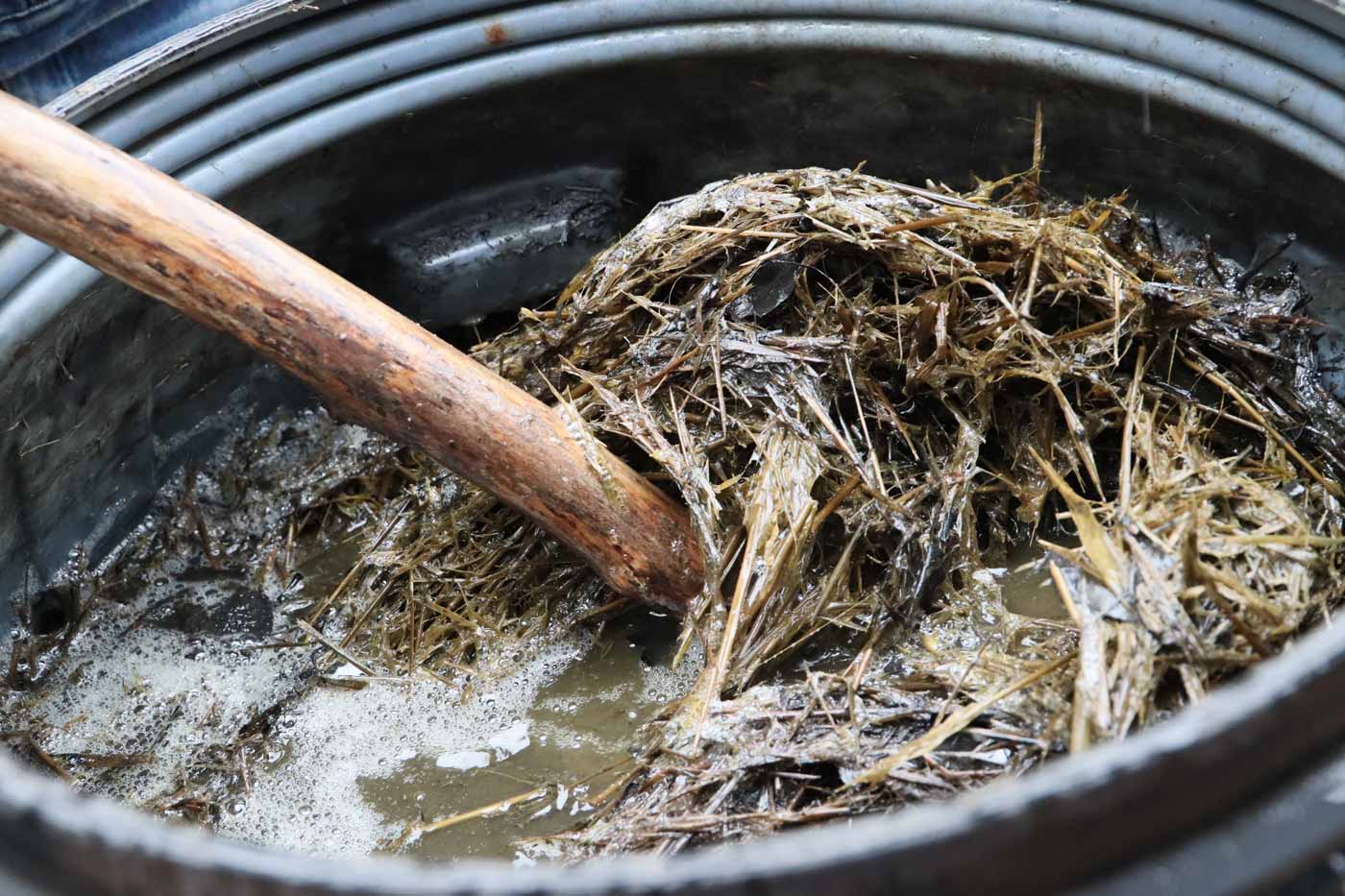
In February, Jay Faucher opened four large 60-gallon containers filled with fermenting organic matter on his 38-acre farm. The mixture slowly breaks down into a potent liquid fertilizer known as JADAM, which gets diluted and sprayed across his vegetables and pastures.
JADAM, which translates to “people that resemble nature” in Korean, was developed by Dr. Youngsang Cho in 1991. The natural farming approach transforms organic materials like compost, forest fungi, weeds, straw and plant clippings into a concentrated fertilizing solution and natural crop protection.
The fermented liquid gives off a distinctive aroma that combines beer, damp hay and wild mushrooms.
“That smell means it’s ready,” Faucher explained. “See the bubbles? That is alive, baby! This tub was a real thick goo last fall. Now it’s full of liquid.”
The process uses sealed containers where microorganisms work without oxygen. Once exposed to air, these microbes die off and make way for beneficial soil organisms to flourish.
Faucher creates two different versions of the nutrient-dense mixture.
The first type serves as a liquid fertilizer made from aged plant materials fermented in water, designed to feed soil and plants while mimicking natural soil development.
“It’s like you’re creating a soil biome,” Faucher described.
The second variety combines cooked potatoes, sea salt and forest soil to produce a powerful blend of native microorganisms that improves soil health while providing natural pest and disease control.
According to Cho’s 2017 presentation, rising costs for fuel, energy, chemicals and labor are pressuring farms everywhere. He believes JADAM can cut chemical expenses down to “pennies an acre.”
“I don’t care what you plant in the ground,” Faucher said. “With JADAM, it’ll pop up. But I wish I would have known how to control it better last season.”
Faucher treated his entire property with diluted JADAM, covering rows of beans, chiles, corn, peppers, pumpkins and tomatoes.
“I could not believe the size of my golden russet potatoes!” he exclaimed.
But he discovered that applying JADAM everywhere created unexpected problems.
“The vegetation took over everything,” he admitted. “I was killing myself with the weed eater! So, this season I’m just going to spray each individual row.”
JADAM practitioners exchange advice and experiences through various social media communities. The complete article appears in the Virginia Farm Bureau Federation’s spring Cultivate magazine.
For more information, contact Faucher at 540-425-4203.
Listen to the Morning Delmarva Farm Report Update — May 28, 2026
DELMARVA — Crop insurance deadlines are approaching for corn and soybean producers as wet weather continues to slow planting across the Midwest. According to Williamson Crop Insurance, farmers in Illinois, Indiana, Ohio, and Michigan face a June 5 final plant date for corn and June 20 for soybeans. Missing those windows means reduced coverage for each day planted late. On Delmarva, most planting wrapped up weeks ago, but the insurance clock matters for anyone with delayed acres.
Markets
Soybeans showed mixed results Wednesday with July contracts closing at $11.85¼, down ¾¢. Soybean meal and oil held gains despite falling crude prices. USDA reports soybean planting nationwide is now 79% complete, ahead of the average pace.
Locally, Laurel Grain Company in Laurel, Delaware is offering $5.01/bu for July corn and $11.33 for July soybeans. Triple-M Farms in Lebanon, Pennsylvania is bringing $5.31 for July corn.
Forecast
Sunny skies are expected Thursday with a high near 78°F and northwest winds 5-15 mph. Tonight stays mostly clear with lows around 57°F. Friday brings more sunshine with highs around 77°F and light west winds. Perfect weather for fieldwork across the peninsula.
This article is based on the Delmarva Farm Report Update Morning Edition, May 28, 2026. Hosted by Tom Bradley.
A family-owned Iowa seed company has filed a federal lawsuit claiming Bayer engaged in illegal tactics to dominate the American market for genetically modified corn seeds, allegedly earning “hundreds of millions, if not billions, of ill-gotten dollars.”
The legal action by Latham Quality targets the concentrated U.S. seed industry as the current administration examines anti-competitive practices in agricultural supply chains. The Germany-based pharmaceutical and agricultural giant already faces thousands of separate lawsuits claiming its Roundup weedkiller causes cancer.
According to the complaint filed in U.S. District Court for the Eastern District of Missouri last month and made public Tuesday, Bayer artificially inflated costs for farmers and independent seed companies by dominating the market for corn seeds engineered to withstand Roundup.
“Bayer has the power to control market prices and exclude competition,” the lawsuit stated. “In fact, it does so.”
The civil case seeks class-action status and requests triple damages for losses allegedly suffered by Latham and similar companies. American crop producers have been grappling with elevated expenses for seeds, fuel and fertilizer while confronting a fourth consecutive year of declining profit margins.
Bayer, which purchased American seed manufacturer Monsanto in 2018, responded Wednesday that it considers the claims without merit and will address them through the court system. The company maintained it operates fairly across all areas of its agricultural operations while following applicable regulations.
“The crop input and corn seed markets are competitive, fair and diverse,” Bayer stated.
The Department of Justice announced last week that Bayer eliminated potentially anti-competitive elements from a loyalty program designed for independent seed companies that license its technology for seed production.
The lawsuit centers on corn seeds called NK603, which Bayer controls. Nearly all genetically engineered hybrid corn seeds distributed in America contain the NK603 characteristic that provides Roundup resistance, the complaint noted. Federal estimates indicate approximately 92% of corn acreage utilizes herbicide-tolerant seeds.
Despite Bayer’s final patent on NK603 expiring in 2022, demand has remained strong while no meaningful competition has developed, according to the filing.
“This is the direct result of Bayer’s anti-competitive conduct to maintain its monopoly,” the complaint alleged.
The lawsuit claims Bayer blocked independent seed companies from utilizing its genetic seed material to create competing generic corn products even after the NK603 patent lapsed. The company also continued collecting royalties on seeds grown from its genetic material and increased licensing costs for companies like Latham.
Latham had licensed rights from Bayer or Monsanto to incorporate NK603 into corn seeds that Latham manufactured and sold to farmers. When Latham began developing its own corn seeds that would compete with Bayer’s offerings, a Bayer representative allegedly warned the company to “stay 100% loyal to Bayer.”
After Latham continued its competitive efforts, Bayer brand sales representatives retaliated by using confidential information to steal the company’s customers, pushing Latham toward bankruptcy, the lawsuit claimed.
“Unfortunately, many independent companies are going out of business as these multinational companies have become more powerful and frankly predatory,” John Latham, president of Latham Quality, testified to a U.S. Senate Judiciary Committee hearing on competition in the seed and fertilizer sectors in October.
Bayer’s Crop Science division, which encompasses seeds, reported first-quarter earnings that increased 17.9% to 3 billion euros ($3.49 billion).
Listen to the Evening Delmarva Farm Report Update — May 27, 2026
DELMARVA — Persistent wet weather in the Midwest is pushing corn farmers up against critical crop insurance deadlines. Producers in Illinois, Indiana, Ohio, and Michigan face a June 5 cutoff for corn and June 20 for soybeans to maintain coverage.
According to Jason Williamson from Williamson Crop Insurance, every day planted after those final dates carries financial penalties. The pressure is mounting for growers balancing muddy fields against insurance requirements.
Policy
The USDA opened a review period today for base acre allocations under federal farm programs. Property owners across the country have until August 31 to examine their base acre status and explore potential increases under Agriculture Risk Coverage and Price Loss Coverage programs.
Markets
Soybeans showed mixed results today. July contracts closed at $11.85¼, down ¾ of a cent. Soybean meal and oil provided some support despite falling crude prices. USDA reports soybean planting hit 79% complete, ahead of normal pace.
Corn at Laurel Grain Company in Laurel, Delaware is bringing $4.98 a bushel for July delivery. Soybeans there are $11.26 for July.
Forecast
The region has a chance of showers and thunderstorms through tonight with temperatures in the mid-60s. Thursday looks much better, mostly sunny, with highs around 72° and lighter northwest winds. Friday stays sunny with temperatures in the mid-70s. Good drying weather is ahead.
This article is based on the Delmarva Farm Report Update Evening Edition, May 27, 2026. Hosted by Tom Bradley.
Memorial Day weekend brought cloudy skies and overcast conditions that weren’t ideal for beach trips, but created perfect circumstances for fishing enthusiasts throughout Maryland waters.
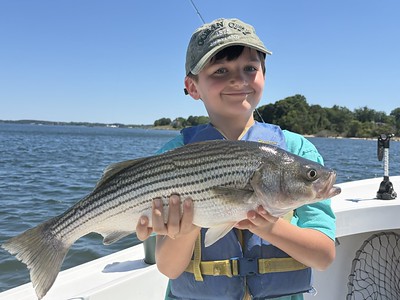
Beginning June 1, striped bass regulations will become much simpler to follow as all Maryland sections of the Chesapeake Bay and tidal waterways will allow striped bass fishing through July 31. Anglers must follow a 19-inch to 24-inch slot restriction with a daily limit of one fish per person.
This week features a full moon – the second of the month, making it a blue moon. This lunar event will trigger the yearly May worm swarms, providing fish with abundant nutrition. Spot fish have reached many Bay areas, and fishing enthusiasts must remember they are required to use non-offset circle hooks when pursuing striped bass with live or cut bait.
Water Conditions: May 27 – June 2
NOAA monitoring stations report main Bay surface and river mouth temperatures have dropped slightly to the upper 60s and should remain steady throughout the week. Smaller waterways and streams are also maintaining temperatures in the upper 60s. Smaller streams and downwind locations on sunny days will heat up more quickly and frequently reach the low to mid 70s. As waters warm, bottom oxygen concentrations are beginning to decline. Currently, most Bay bottom waters have sufficient oxygen levels except around Quantico on the Potomac River and near the Bay Bridge.
Most Maryland rivers and streams should experience typical flow levels. Water clarity should be average for most Maryland Bay areas and rivers. Above-normal tidal movements are expected all week due to the May 31 full moon. Horseshoe crabs should begin appearing on beaches with salt levels above 6ppt for their spring mating migration.
Upper Chesapeake Bay
Weekend rainfall increased flows at the Conowingo Dam this week, where anglers are successfully targeting blue and flathead catfish in the dam pool. Blue catfish action mixed with channel catfish continues downstream along the Susquehanna and into the upper Bay. All regional tidal rivers also contain blue and channel catfish populations.
Overcast weather has created excellent striped bass fishing conditions that anglers are reporting this week. Casting paddletails and soft plastic jigs near structure and jigging along channel edges produces good results. Pooles Island, Hart-Miller Island, the Love Point rocks, the Patapsco River mouth, and Baltimore Harbor all offer productive light tackle fishing spots. Trolling umbrella rigs along 30-foot channel edges effectively locates striped bass when fish are scattered.
The season’s first spot are being caught off Sandy Point State Park, with enough numbers for live-lining striped bass. White perch are appearing at the Bay Bridge’s west end, the Magothy River mouth, and lower sections of regional tidal rivers.
Middle Bay
Striped bass fishing at Bay Bridge piers has been productive this past week and should continue. Boats anchor up-current of bridge piers on the east side and drift live spot and various baits back to pier foundations. Other anglers position near piers and cast soft plastic jigs to pier bases with good success.
Light tackle striped bass fishing is excellent for anglers casting and jigging at many traditional middle Bay locations. Eastern Bay, Poplar Island, Thomas Point, and the Choptank River mouth are among locations where casting paddletails and soft plastic jigs works well. Shallow waters are good for casting paddletails and topwater lures. Deeper channel edges are ideal for jigging with soft plastics. Bluefish have reached the middle bay region this past week, so soft plastics may get damaged.
Trolling along channel edges at approximately 30-foot depths effectively targets striped bass this week. Channel edges at Bloody Point, the Buoy 83 edge, and the False Channel are productive trolling locations. Umbrella rigs with bucktail trailers have been popular. With bluefish arriving in the region, adding Drone spoons to trolling spreads might be beneficial. Spot are arriving and anglers are already using this striped bass bait for live-lining at preferred locations.
White perch are gradually moving to summer habitat locations at tidal river and creek mouths near oyster reefs and structure including docks, piers, and submerged objects. Bottom rigs baited with grass shrimp or bloodworm pieces work well around deep structure. Casting spin jigs and small lures along promising shoreline structure provides enjoyable evening light tackle fishing.
Lower Bay
Deeper channel edge waters are being targeted by anglers jigging with soft plastic jigs or trolling with umbrella rigs along 30-foot edges. Adding several Drone spoons behind inline weights for regional bluefish is recommended. The steep Potomac channel edge from St. Georges Island to Piney Point, the lower Patuxent, and the eastern bay side from Buoy 76 to Buoy 72 deserve exploration.
Red and black drum are being found on the Bay’s eastern side from the Middle Grounds past the Target Ship and Tangier Sound. Finding them on depth finders and dropping soft crab baits is the most popular technique. Red drum can also be caught by jigging with large soft plastics or trolling large spoons behind inline weights.
Spot have arrived in the lower Patuxent River, St. Marys River, near Hoopers Island, and Tangier Sound, where anglers will begin live-lining spot near traditional channel edges. Anglers must remember to use non-offset circle hooks when targeting striped bass with live or cut bait.
White perch are steadily moving into typical summer habitats, though some report the process seems slower than previous years. Bottom rigs baited with grass shrimp or bloodworm pieces work well in deeper waters, while casting spin jigs and small lures in shallower waters provides entertaining fishing.
Blue Crabs
Many crabbers were active over the weekend during foggy and sometimes rainy conditions, attempting to provide crabs for Memorial Day Weekend gatherings. Most managed successful catches in all Bay regions. Recreational crabbers in the lower Eastern Shore performed best, with most reporting 8-12 feet of water as the optimal depth for crabs.
Freshwater Fishing
Maryland’s spring trout stocking season has concluded. Stocking began in February and finished on May 18. A total of 254,810 trout were stocked; 182,260 trout went into open waters and 72,550 were stocked during the closure period. Trout were placed in 118 waterbodies, including 53 streams and rivers and 65 lakes and ponds. The next regular trout stocking period begins in October.
Due to warming temperatures, some delayed harvest trout management waters (Group I) in central and parts of western regions will open to trout harvest from June 1 to September 30. Other areas known as Group II in the western region will open to trout harvest from June 16 to September 30. This strategy allows anglers catch-and-release fishing during months when cold temperatures provide good trout survival, and keeping five trout daily when temperatures become too warm for good survival.
Many Maryland rivers and streams received needed rainfall, resulting in increased flows. Upper Potomac River levels at Paw Paw were measured at four feet last Thursday and are predicted to reach 17 feet on May 28. The North Branch, higher in the watershed, only experienced a three-foot gauge increase. River flows will decrease in coming weeks.
The fish hatchery program supplements upper Potomac smallmouth bass and walleye populations annually with fingerlings to boost recruitment of these valuable species. Walleye fingerlings are also stocked in selected rivers and reservoirs to increase angling opportunities.
Triadelphia Reservoir will receive walleye fingerlings measuring about one inch. Fisheries biologist Ross Williams noted this program dates back to 1992. In a 2024 gill net survey at Triadelphia Reservoir, biologists surveyed 11 walleye weighing between 3 pounds. Walleye fingerlings are also regularly stocked in the lower Susquehanna River, Rocky Gorge, Liberty and Savage reservoirs.
Largemouth bass anglers are enjoying excellent fishing opportunities this week. Bass are in post-spawn feeding patterns and feeding throughout the day due to cooler temperatures and overcast skies. Intermediate waters outside shallow grass areas are good targets for spinnerbaits, jerkbaits, crankbaits and soft plastics. Shallower grass beds are good locations for topwater lures.
Chesapeake Channa, also known as snakeheads, can be found in grass bed areas in tidal waters, with many beginning to spawn. Noisy and disruptive topwater lures effectively attract attention from parent fish protecting eggs or fry balls.
Chain pickerel fishing always provides exciting entertainment and they can be found on grass bed outside edges. Crappie can be found near structure this month. Various sunfish species can be found roaming outside shallower waters.
Blue catfish and channel catfish offer active fishing in the bay’s tidal rivers while flathead catfish in the upper Potomac provide action. Blue and channel catfish are attracted to cut baits and scented baits. Flathead catfish prefer live bait.
Atlantic Ocean and Coastal Bays
Surf anglers are enjoying productive fishing off Ocean City and Assateague Island beaches. Anglers using large cut baits are catching large striped bass, red drum and bluefish. Most striped bass measure over the maximum slot size of 31 inches but provide exciting catch-and-release action, as do large red drum. Black drum are being caught on sand fleas and clams.
At the Ocean City Inlet and Route 50 Bridge area, anglers are catching striped bass by casting soft plastic jigs and paddletails. A fair number of striped bass being caught fall within the 28-31 inch slot. Anglers drifting cut baits in the inlet during evening hours are catching good numbers of striped bass. Flounder are moving through the inlet with catch and release tautog fishing available.
Back bay channels leading from the inlet are productive places to drift for flounder as they move through channels and spread throughout back bay waters. Striped bass are being caught near Route 90 and Verrazzano bridge piers by anglers casting soft plastic jigs and paddletails.
Offshore fishing at wrecks and reefs for black sea bass has been very productive with limit catches being common. Flounder and ling can be part of the mix for anglers. Farther offshore at the canyons, anglers are finding the first yellowfin tuna and dolphin with reports of bluefin tuna moving through canyon areas.
Six individuals have been chosen to participate in the 2026 Maryland Horse Career Program, which will take place from June 1 through June 5, according to an announcement from the Maryland Horse Foundation.
The program represents a collaborative effort between the Maryland Horse Foundation, the Maryland Horse Industry Board, and University of Maryland Equine Studies. Its mission focuses on linking up-and-coming professionals with established figures in the equine industry.
Originally established in 2017 under the name Maryland Thoroughbred Career Program, the initiative has evolved to encompass broader aspects of the horse industry beyond thoroughbred racing.
The United States poultry industry is showing signs of growth according to new data tracking broiler production activities.
Statistics reveal that broiler-type eggs set nationwide increased by 1 percent compared to previous periods. The data also shows that broiler-type chicks placed throughout the country experienced a larger jump of 3 percent.
These figures indicate positive momentum in the commercial poultry sector, which supplies much of the nation’s chicken meat production.
Fishing enthusiasts and newcomers alike will have three opportunities this summer to cast their lines in Maryland waters without purchasing licenses or permits. The dates include June 6, June 13, and July 4, when both residents and out-of-state visitors can fish freely.
These yearly license-free events offer an excellent opportunity to discover the state’s varied fishing locations. Experienced anglers can use these occasions to bring friends or relatives who haven’t tried fishing before.
The Maryland Department of Natural Resources (DNR) schedules these special fishing days annually on the opening two Saturdays in June plus Independence Day to capitalize on optimal spring and summer fishing conditions. During these designated periods, anyone may legally catch and keep finfish for personal enjoyment in both saltwater and freshwater areas throughout Maryland.
Participants must still comply with existing regulations, including minimum size requirements and daily bag limits outlined in the department’s fishing and crabbing guide.
The DNR provides numerous tools for both novice and seasoned fishermen, including an interactive angler access map and fish identification charts. Anglers at every skill level are invited to subscribe to the weekly Maryland Fishing Report for current fishing updates.
Those interested in helping protect Chesapeake Bay can target invasive species during these free fishing opportunities, including Chesapeake Channa (northern snakehead) and blue catfish. These non-native fish harm local species but offer exciting fishing action and provide delicious, protein-rich meals. No seasonal restrictions or catch limits apply to invasive species.
Beyond these free fishing days and specific license-free areas, Maryland requires anyone 16 years or older to carry a valid fishing license while fishing in state waters. Licenses are available for purchase or renewal online, at department service centers, through participating retail sports license agents, or by calling 866-344-8889. Revenue from fishing licenses, equipment, boats, and marine fuel sales supports the DNR’s fish conservation efforts.
A charitable running and walking event at a Wilmington farm has generated significant funding to help feed Delaware children in need. The 2026 Milk Run/Walk, hosted at Ramsey’s Farm, brought together 136 participants and raised more than $20,000 for children’s nutrition programs across the state.
The Delaware Farm Bureau (DEFB) Foundation organized the event alongside Beast Coast Productions, with proceeds supporting three key organizations: the DEFB Foundation, Food Bank of Delaware, and the Ministry of Caring.
Participants could choose from multiple race options, including 5K and 10K runs as well as a Health Walk, all taking place on picturesque routes winding through the farm property. Winners in each category received distinctive cowbell awards along with other prizes. A special highlight was the chance for runners and walkers to pose for photos with an actual dairy cow, provided by Emerson Farms.
The day wrapped up with an awards presentation, a 50/50 raffle drawing, and a silent auction featuring donations from various local businesses throughout the area.
The funds raised will directly benefit three programs focused on youth nutrition and education. The Ministry of Caring serves individuals and families in need throughout the Wilmington region, with milk being a key component of the nutritious meals provided at the Emmanuel Dining Room. Meanwhile, the Food Bank of Delaware’s Backpack Program ensures children have access to food over weekends by sending them home with backpacks filled with shelf-stable milk, juice, macaroni and cheese, granola bars, and applesauce.
The DEFB Foundation focuses on building greater awareness and appreciation for Delaware’s agricultural sector. Money from this fundraising event will support the Foundation’s educational programs and other efforts advancing this goal.
Food Bank of Delaware Special Events Manager Jessi Domingeuz expressed appreciation for the partnership. “We’re so grateful for the Delaware Farm Bureau Foundation’s partnership and support of the Food Bank of Delaware’s Backpack Program,” Domingeuz said. “The Milk Run was a beautiful morning filled with energy and enthusiasm from the crowd, all coming together to support children facing food insecurity across our state. Events like this help ensure kids have nutritious meals and snacks to take home over the weekends, making a meaningful impact for Delaware families.”
The successful event relied heavily on community support from sponsors. Diamond-level sponsors included Delmarva Farmer, First State Orthopedics, Kathy Barry Agency, Hoobers Inc./Case IH, Hy-Point Dairy Farm, Land O’ Lakes, Ramsey’s Farm, Seasons Pizza, and Woodside Farm Creamery.
Gold sponsors comprised Del-One, Delaware Department of Agriculture, Delaware Electric Cooperative, Dempsey Farms LLC, Dr. James Fierro, Holtz Farm LLC, Jones Family Farm, Kenny Family Foundation, Kevin Rogers & Jackie King, Lisa Broadbent Insurance Inc., Gail Melendres Wynn, MD, New Castle County Conservation District, New Castle County Farm Bureau, Puglisi Egg Farms, SpineCare Delaware, Syngenta, and University of Delaware – CANR/UDairy.
Additional information about the Delaware Farm Bureau and Foundation can be found at www.defb.org. Those interested in learning more about the Ministry of Caring can visit https://www.ministryofcaring.org/, while details about the Food Bank of Delaware are available at https://www.fbd.org/. Complete race results can be accessed at www.runsignup.com/Race/Results/Overview/73211.
Three local FFA chapters received specialized training in government advocacy before meeting with state officials last month at the Delaware State Capitol.
The Delaware Farm Bureau conducted an advocacy training session on May 20, 2026, at the Delaware State Fairgrounds for students from Lake Forest FFA, Milford FFA, and Woodbridge FFA chapters.
The training session was designed to help students develop their advocacy abilities before visiting Legislative Hall. Participants learned about the importance of civic engagement, methods for determining their legislative districts, and techniques for sharing compelling personal narratives. The workshop included practice sessions for making introductions, discussing their agricultural backgrounds, and formulating questions for government officials.
After completing their training, the FFA students made their way to Legislative Hall in Dover, where they had meetings with multiple lawmakers and Delaware Governor Matt Meyer.
A soil health initiative has launched a new enrollment period with enhanced financial incentives and simplified agreement terms to encourage farmers to adopt cover crop practices.
The program offers increased compensation rates compared to previous enrollment periods, along with more straightforward contract language designed to make participation easier for agricultural producers.
Cover crops are planted to protect and improve soil between regular growing seasons, helping to prevent erosion, enhance soil fertility, and support environmental sustainability goals.
The renewed enrollment opportunity represents an effort to expand participation in conservation practices that benefit both farm operations and broader environmental objectives.
Listen to the Morning Delmarva Farm Report Update — May 27, 2026
DELMARVA — A Missouri farmer reported completing soybean planting over the Memorial Day weekend after weeks of delays caused by wet weather and cold temperatures. The northern Missouri operation faced challenging conditions through early May, followed by additional rainfall that interrupted planting until the holiday weekend provided several consecutive days of favorable weather to complete fieldwork.
Policy
The USDA’s new One Farmer One File digital system is generating both excitement and concern across the agriculture community. The initiative, launched in 2025, aims to create a unified digital record that follows farmers through all USDA interactions, potentially saving hours of paperwork.
The Secretary says the program will replace over 500 outdated systems that currently cost taxpayers more than $1,000,000,000 annually. During its first test with the Farmer Bridge Assistance Program, 50 times more producers signed up online in 4 days compared to last year’s emergency program over 5 months. Questions remain about data privacy and government surveillance as development continues toward a 2028 completion target.
Markets
Yesterday’s close showed July corn at $4.57.5, down 5.75 cents. July soybeans fell 10.5 cents to $11.86. July wheat closed at $6.35.5.
On the livestock side, June live cattle dropped $1.07 while June lean hogs gained 37 cents to $96.12.
Locally, corn at Laurel Grain Company in Laurel, Delaware is bringing $5.01 for July delivery, with July beans at $11.26.
Forecast
Showers and thunderstorms are expected today with a high near 79°F. Thursday turns mostly sunny behind a cold front with highs near 79°F and lighter northwest winds.
This article is based on the Delmarva Farm Report Update Morning Edition, May 27, 2026. Hosted by Tom Bradley.
Listen to the Evening Delmarva Farm Report Update — May 26, 2026
DELMARVA — Spring planting across the United States is nearing completion, with 86% of the nation’s corn crop in the ground as of Sunday, according to USDA figures released this week. The planting progress exceeds the 5-year average of 83%.
Emergence rates have accelerated significantly, with 60% of corn already emerged, up sharply from 39% a week earlier. Soybean planting is also running ahead of schedule at 79% complete.
Disease Alert
Corn producers are being urged to monitor for tar spot, a disease continuing to spread through Midwest farming regions. Jason Gibson with Corteva Agriscience warned that the disease can rapidly worsen when conditions favor its development, but protective fungicide treatments like Forcivo can help safeguard yields.
Markets
Grain futures mostly declined in Tuesday trading. July corn settled at $4.57 1/2, down 5 3/4 cents. July soybeans closed at $11.86, dropping 10 1/2 cents. July soybean meal finished at $328.60, down $3.30. July soybean oil rose 38 points to $74.36. July Chicago wheat ended at $6.35 1/2, down 10 3/4 cents.
In livestock markets, June live cattle fell $1.07 to $248.22. August feeders declined 40 cents to $349.45. June lean hogs gained 37 cents, finishing at $96.12.
Forecast
The afternoon forecast calls for 72 degrees under cloudy skies. Tonight will bring patchy fog with a slight chance of showers and thunderstorms, with a low around 63 degrees. Wednesday brings rain showers likely with a high near 74 degrees.
This article is based on the Delmarva Farm Report Update Evening Edition, May 26, 2026. Hosted by Tom Bradley.
TAFTANAZ, Syria (AP) — Ancient agricultural traditions continue to thrive in northwestern Syria, where farmers maintain centuries-old techniques for cultivating freekeh, a smoky roasted wheat grain that serves as a cornerstone of Middle Eastern cooking.
The distinctive grain comes from wheat that’s harvested while still young and green, then roasted using open fire methods. This process burns off the outer shells while keeping the inner grain intact, creating freekeh’s characteristic smoky taste that sets it apart from other wheat products.
Around Taftanaz in Syria’s Idlib province, agricultural workers continue the seasonal ritual of gathering, moving and fire-roasting the wheat before cleaning it for sale at local markets. The practice has survived ongoing warfare and financial difficulties, representing a lasting element of Syria’s agricultural heritage. Throughout Syrian households and dining establishments, the grain typically accompanies meat dishes like lamb or chicken, often topped with nuts and fresh vegetables.
This is a photo gallery curated by AP photo editors.
The National Agricultural Statistics Service has issued its most recent assessment of crop development and agricultural conditions.
The federal agency’s latest report provides updated statistics on farming progress and the current state of crops in the field.
This periodic assessment helps track agricultural development throughout the growing season, offering insights into crop advancement and field conditions across farming regions.
Dairy farmers are advocating to members of Congress for expanded milk options in school cafeterias, arguing that offering whole milk, reduced-fat options, and flavored varieties delivers better outcomes for students.
A schoolteacher and dairy farmer who operates near Union Bridge, MD, and belongs to Maola Local Dairies expressed support for increased variety during the most recent Dairy Defined podcast episode that was published today. Lauren Schwartzbeck stated: “I think it’s awesome that students and kids have a choice. Giving them more choices just gets more milk out there for them, and the benefits that it has, and the flavor that it has that kids enjoy. I think by giving them those choices and by providing that product to them, that can only do great things, not only just for our dairy industry, but for these kids as well.”
The podcast also featured Frank Doll, who serves as Prairie Farms Chairman and NMPF Executive Committee Member and operates a dairy operation near Greenville, IL. Both farmers highlighted the advantages of incorporating whole milk into school lunch programs and emphasized the importance of flavored milk options, which serve as a widely accepted source of nutrition among students. Doll additionally outlined key priorities for the dairy sector as producers prepare for their upcoming annual Washington visit next month.
The Dairy Defined podcast series is available for listeners through Apple Podcasts, Spotify and Amazon Music by searching for “Dairy Defined.”
A federal agency is moving forward with plans to extend its data gathering efforts aimed at keeping deadly bird diseases out of the country.
The Animal and Plant Health Inspection Service has announced its intention to seek renewed authorization for information collection activities tied to rules designed to block highly pathogenic avian influenza and Newcastle disease from entering the United States.
Under the Paperwork Reduction Act of 1995, the agency is required to provide public notice of its request to revise and extend approval for the data collection program.
The information gathering focuses on imports of pet, performing, and research birds, as well as poultry and unprocessed bird products, particularly bird carcasses that could potentially carry these dangerous diseases across U.S. borders.
Agricultural workers throughout Sudan report they must significantly reduce summer planting due to escalating global fuel and fertilizer prices connected to the Iran conflict, further threatening food production in a nation where ongoing warfare has created severe hunger.
Eight agricultural workers from various regions of Sudan, along with industry specialists, informed Reuters that rising fuel and fertilizer costs would worsen challenges created by civil warfare, affecting essential domestic crops including sorghum and millet, plus export products like sesame.
Sudan faces particular vulnerability to consequences from the Iran crisis because it depends on the Gulf region for more than half its fertilizer requirements, based on U.N. data, while warfare between the Sudanese army and the paramilitary Rapid Support Forces has made it completely reliant on fuel imports.
The nation already stands at the center of an emerging global food crisis during a period of declining aid funding. Approximately 19.5 million people, representing more than 40% of the population, experience crisis-level hunger, with certain areas facing famine risk, according to a U.N.-supported monitoring group.
Sudan’s farming capabilities have attracted Gulf investors, but the industry has suffered from decades of poor management and conflict. Roughly two-thirds of residents depend on agriculture for income.
The regional warfare has added “salt to the wound,” stated Sadig Elamin, the U.N. Food and Agriculture Organization’s senior food security analyst in Sudan, cautioning that total production might decline by “not less than 40%.”
Continued disruption threatens to worsen hunger “well beyond the current food crisis,” the U.N.’s humanitarian office reported this month.
Following more than three years of warfare in Sudan, the army controls central and eastern areas, while the RSF has strengthened its hold on western Darfur. Both forces battle over the extensive Kordofan region between them, essential for agriculture.
For agricultural workers in southern Omdurman’s Jamuia scheme, this planting period should have shown promise, after the RSF, accused of destroying irrigation channels and water equipment, was forced from the area near capital Khartoum one year ago.
Currently, however, farmers confront fertilizer costs increased 67% from the previous year and fuel prices — including diesel for irrigation equipment — that have more than doubled, based on national assessments.
“At that price we don’t make a profit, you spend your whole profit on the diesel,” stated one farmer, Bashir Ismail.
Just 500 of 10,000 total feddans (4,200 hectares) have been planted approximately halfway through the planting period, reported Omar al-Ebeid, secretary for the scheme’s farmers’ committee.
Meanwhile, farmers express frustration that the army-aligned government, with its budget reduced to support the war effort, has not assisted them.
“The RSF left in February of last year. Nothing has been fixed since then,” said Mohamed Balla, head of a farmers’ collective in the Gezira scheme, which generated around half the nation’s sorghum and wheat before the country’s conflict.
While fuel and fertilizer costs have increased dramatically, prices for harvested crops have remained unchanged.
National grain production, which had already declined by 25% from pre-war levels, according to the FAO, could drop further.
“Two sacks of wheat buy you one sack of urea. So we won’t grow it again,” Balla stated.
Sudan’s government-supported Agricultural Bank should help fund farmers but has been impacted by the conflict like other financial institutions. It has set agricultural input prices too high and product prices too low, Balla and others report, forcing farmers into debt.
The bank’s head informed Reuters it would work to “alleviate the burden” on Sudanese farmers by providing inputs with better terms over extended periods.
The Agriculture Ministry’s director for agricultural production, Fatma Yousif, said the ministry had reached agreement with the bank to establish a new fund to finance as much as feasible.
The ministry was examining ways to support farmers with fuel expenses and was working on restoring irrigation channels, having repaired pumps in multiple locations, she told Reuters.
In Kordofan and Darfur, ongoing lawlessness threatens production of sesame, peanuts, gum arabic, and millet.
“There is no funding for farmers, no machinery for planting and ploughing the land, and no security because the RSF and other gangs loot the crops and demand money at every checkpoint,” said Mohamed Adam, a farmer displaced from West Kordofan state to army-controlled El Obeid in North Kordofan.
An RSF spokesperson did not respond to a request for comment. The group has previously denied targeting civilians and civilian infrastructure.
Three farmers from the region told Reuters that tractors were stolen during raids and farmhands recruited for fighting, while entire communities had been displaced, meaning minimal land has been prepared in rain-fed fields for the coming season.
Khalid Abdellatif, director at CTC Group, one of the country’s largest agricultural suppliers, said transporting supplies to the regions was costly and dangerous, with small-scale subsistence farmers particularly struggling.
Listen to the Morning Delmarva Farm Report Update — May 25, 2026
DELMARVA — With June just a week away, dairy farmers across the country are preparing for National Dairy Month celebrations. Agricultural advocates are calling on dairy producers to explore creative approaches for reaching out to non-farming communities and highlighting the positive aspects of their industry.
The month-long observance presents an opportunity to celebrate dairy cattle, the dedicated individuals working in the field, and the quality products they produce. June represents an ideal opportunity to enjoy a variety of dairy products while also providing dairy producers with a chance to showcase their year-round efforts and educate the public about the dairy farming industry.
Markets
Corn at Laurel Grain Company in Laurel, Delaware is bringing $5.08/bu for July delivery. December corn there is $5.02/bu. Soybeans for July delivery are $11.37/bu, while November beans are $11.38/bu.
Forecast
Patchy fog is expected this morning with highs today near 69° and light southerly winds. It will stay mostly cloudy tonight with lows around 63° and patchy fog continuing. Tuesday expect partly sunny skies with patchy fog in the morning, highs reaching 72°. Wednesday brings a slight chance of rain showers with highs near 75°.
This article is based on the Delmarva Farm Report Update Morning Edition, May 25, 2026. Hosted by Tom Bradley.
Listen to the Evening Delmarva Farm Report Update — May 23, 2026
DELMARVA — Cold weather in the Midwest has farmers worried this week as recent temperatures have created emergence problems for corn and soybeans across parts of Illinois and Wisconsin, according to Chris Brown, a field agronomist for Burrus Seed. Brown says those crops don’t have the growing degree units and heat needed to help plants develop during this critical phase.
Policy
The Maryland Department of Agriculture announced Friday a $1.6 million grant program for postharvest infrastructure. The program will help rural communities build and enhance refrigerated storage and food distribution systems. Maryland Secretary of Agriculture Kevin Atticks says strengthening local food producers will improve access to nutritious, locally sourced food. Priority goes to agricultural producers, seafood processors, and producer groups.
Markets
Soybeans and corn finished firm Friday ahead of the Memorial Day weekend. Short covering and technical buying pushed soybean prices higher. Traders report crop planting and growing conditions look generally positive. Locally, corn at Laurel Grain Company in Laurel, Delaware is bringing $5.02 a bushel for December delivery. Soybeans there are running $11.38 for November.
Forecast
Rain continues this evening with temperatures near 58°F. Expect more rain Sunday with a high near 67°F, then showers and thunderstorms likely Sunday night. Memorial Day brings rain showers likely with highs in the low 70s.
This article is based on the Delmarva Farm Report Update Evening Edition, May 23, 2026. Hosted by Tom Bradley.
Listen to the Morning Delmarva Farm Report Update — May 23, 2026
DELMARVA — Crop insurance sign-ups on Delmarva have exploded this year, according to data from the University of Delaware. Participation in supplemental coverage programs jumped from 170 policies in 2025 to 1,440 policies this year.
The surge came after Congress boosted federal premium subsidies from 65% to 80% last summer, cutting what farmers pay by about 43%. A Maryland corn and soybean grower told the Delmarva Farmer the higher subsidies added a lot more coverage for not as much premium, making it finally affordable.
Midwest Weather Concerns
Cold weather continues to stall crop development across the Midwest. An agronomist working in Illinois and Wisconsin says recent low temperatures have created emergence problems for corn and soybeans. Without those growing degree units and heat, plants just aren’t developing normally during this critical phase.
Markets
Soybeans and corn both finished yesterday’s session firm ahead of the Memorial Day weekend. Traders say short covering and technical buying pushed prices higher.
Locally, corn at Laurel Grain Company in Laurel Delaware is bringing $5.02 a bushel for December delivery. Soybeans there are $11.38 for November.
Forecast
Expect rain today with temperatures near 59° and east winds 15 to 20 miles per hour. Rain continues tonight with lows around 55°. Tomorrow brings more rain, then showers and thunderstorms, with highs near 69°.
This article is based on the Delmarva Farm Report Update Morning Edition, May 23, 2026. Hosted by Tom Bradley.
Listen to the Evening Delmarva Farm Report Update — May 22, 2026
DELMARVA — Soybeans and corn finished the day strong ahead of the Memorial Day weekend, with soybean prices climbing on short covering and technical buying. Commodity traders say crop planting and growing conditions look generally positive across farming regions, though markets continue watching for potential new Chinese purchasing activity.
Insurance
Farmer sign-ups for supplemental crop insurance have surged across Delmarva. A University of Delaware farm business specialist reports that participation in enhanced coverage programs jumped from just 170 policies last year to 1,440 policies this year.
That increase came after Congress boosted federal premium subsidies from 65% to 80% last July, cutting what farmers pay by about 43%. 1 Maryland grower cultivating nearly 1,000 acres of corn and soybeans called it simple mathematics, saying the program added a lot more coverage for not as much premium.
Pest Outlook
Late planting caused by dry weather may bring heavier insect pressure to soybean fields this season. An agricultural specialist says delayed planting creates a cycle where pest insects establish multiple breeding cycles, potentially leading to larger populations targeting soybeans as other crops dwindle.
Markets
Corn at Laurel Grain Company is bringing $5.02 a bushel for December delivery. Soybeans there are $11.38 for November.
Forecast
Expect rain through tomorrow with temperatures in the low 60s. Rain continues through the Memorial Day weekend with highs reaching the low 70s.
This article is based on the Delmarva Farm Report Update Evening Edition, May 22, 2026. Hosted by Tom Bradley.
Farmers across the nation saw a modest increase in what they earned for peanuts during the week that concluded on May 16, according to new agricultural data.
Growers received an average of 23.7 cents per pound for all farmer stock peanuts, representing an uptick of 0.8 cent from the previous reporting period.
The pricing information reflects what agricultural producers earned for their peanut crops during that specific weekly timeframe.
Dairy production showed strong growth last month across the country’s leading milk-producing regions, according to new federal data.
The 24 major milk-producing states generated a combined 19.2 billion pounds of milk in April, marking a 2.8 percent increase compared to April of the previous year.
The uptick in production reflects continued strength in the nation’s dairy industry during the spring season when output typically begins to rise.
The number of cattle being fattened in feedlots nationwide has grown by 2 percent, according to new federal agricultural data.
The increase reflects current livestock market conditions as ranchers and agricultural operations continue preparing cattle for eventual processing and sale to consumers.
Federal agriculture officials regularly track these numbers as part of ongoing monitoring of the nation’s livestock industry and food supply chain.
The poultry industry has recorded a notable increase in ready-to-cook weight, showing a 6 percent rise from the previous year’s numbers.
According to recently released data, this uptick indicates growth in poultry processing operations across the country.
The weight measurement represents birds that have been processed and prepared for consumer purchase, providing insight into industry production levels and market trends.
Refrigerated warehouse facilities across the country reported mixed trends in natural cheese inventory levels as of the end of April 2026, according to new data.
The total volume of natural cheese held in cold storage facilities showed a 1 percent increase compared to March levels, indicating a modest monthly gain in stockpiled dairy products.
However, when measured against the same timeframe in the previous year, the cheese inventory figures revealed a 1 percent decrease from April 30, 2025 totals.
The data reflects the ongoing fluctuations in dairy product storage levels that warehouse operators and industry stakeholders monitor to track market conditions and supply chain dynamics.
Chase Harvell pulled into Airport High School’s parking lot Friday morning in southeastern Michigan for his final time before graduation next week.
While Harvell was operating a family vehicle like he had many times previously, this particular ride had a maximum speed of about 25 mph.
Harvell joined dozens of other graduating students who ditched their regular cars and trucks, instead showing up in farm equipment, all-terrain vehicles, golf carts and other unconventional transportation.
The festivities were part of Tractor Day, an annual tradition at the Carleton, Michigan school that began in the 1980s. The school sits approximately 35 miles south of Detroit. While most students made it to campus by 7:30 a.m., the celebration continued all day with games, music and catered food from a nearby restaurant.
This yearly gathering serves both as an enjoyable farewell event for graduating students and a way to pay tribute to the region’s farming roots.
“We’re just a farm school,” Harvell said. “It’s a tradition. Everyone’s done it before us. We just carry it on.”
The fourth-generation farmer operated a Case 305 Magnum on Friday, the identical piece of equipment his family uses to work the fields where they cultivate soybeans and corn. His older brother had driven the same tractor to the celebration three years earlier.
Myah Hoppert showed up early in a John Deere 8300 that was so familiar with the route it could nearly navigate to school independently. The same machine had transported Hoppert’s two sisters and eight cousins to Airport High during previous Tractor Day events.
“Last day with all my friends,” said Hoppert, who intends to pursue nursing studies at Monroe County Community College in the coming year.
Friday represented “one final hurrah,” according to Austin Neddo, who potentially had the oldest vehicle of the day. He drove a refurbished 1940 Farmall A, equipment that previously belonged to Neddo’s great-great-grandfather.
Jocelyn Kleman, serving as class treasurer, helped coordinate Friday’s activities, which she called “our last recess.” She anticipated that 150 of approximately 180 seniors would participate in Tractor Day.
Kleman and two classmates arrived in an off-road vehicle called a “side-by-side.” She had eagerly awaited this day for four years, having previously only watched the annual celebration from classroom windows like other underclassmen.
“You could just see how much fun the seniors are having,” said Kleman, who plans to attend Michigan State University in the fall. “What a nostalgic event this really is.
“And how much the seniors look forward to it each year.”
WASHINGTON, D.C. — Federal agriculture authorities announced this week that China has removed bird flu-related export bans on poultry products from 17 American states, with the changes scheduled to begin May 15, 2026.
The USDA’s Animal and Plant Health Inspection Service (APHIS) revised its China export restrictions webpage to show the policy update. The affected states include Alabama, Alaska, Arizona, Kentucky, Massachusetts, Nebraska, Nevada, New Hampshire, New Mexico, Ohio, Oklahoma, Oregon, Tennessee, Texas, Utah, and Virginia.
The restrictions had been put in place due to highly pathogenic avian influenza concerns affecting poultry operations across these states.
ARLINGTON, Va., May 22, 2026 — The National Grain and Feed Association (NGFA) has expressed gratitude for the House Transportation & Infrastructure Committee’s work in moving forward the BUILD America 250 Act. The organization backs multiple elements within the bill designed to enhance freight movement efficiency throughout agricultural supply networks.
The association praised the bill’s inclusion of a 10 percent axle-weight variance allowance for dry-bulk freight transportation, along with dedicated funding for first- and last-mile rural road improvements. The organization specifically thanked Congressman Dusty Johnson (R-S.D.) for his amendment that would raise truck weight limits to 91,000 pounds on six axles through a pilot program on interstate highways.
“NGFA’s longstanding approach is that transportation policy remains grounded in operational and data-driven solutions,” said NGFA President and CEO Michael Seyfert. “We appreciate the leadership of Chairman Sam Graves and Ranking Member Rick Larsen to advance this process. We are grateful to Representative Dusty Johnson for his continued support for common-sense changes to truck weights on our federal highways. We look forward to working with the Senate to further consider key policies to help reduce transportation fuel use and costs while improving freight productivity and efficiency.”
Listen to the Morning Delmarva Farm Report Update — May 22, 2026
DELMARVA — Better crop emergence is encouraging news for corn and soybean growers this spring. A farmer in northern Iowa reports his stands are showing improved results compared to last year’s thin emergence, despite some challenges from early planting and cold nights.
Policy
The American Soybean Association is pushing to eliminate trade duties on phosphate fertilizer from Morocco. Studies by Texas A&M University show these duties have cost farmers billions of dollars since they were put in place.
Markets
Soybeans and corn dropped yesterday on favorable weather and strong planting progress. Analysts expect total planted acreage may exceed USDA’s March projections.
At Laurel Grain Company in Laurel, Delaware, corn for July delivery is bringing $5.09 a bushel. December corn is $5.02. July soybeans are $11.39, and November beans are $11.42.
Forecast
Rain showers are likely today with highs near 62°F and east winds 10 to 15 mph. Rain continues tonight, low around 52°F. Tomorrow brings more rain showers with highs near 62°F and east winds 15 to 20 mph. Heavy rain totals of 2 to 6 inches are forecast across the central and eastern U.S. through Memorial Day weekend, with severe storms moving east from the Plains.
This article is based on the Delmarva Farm Report Update Morning Edition, May 22, 2026. Hosted by Tom Bradley.
A federal agency is moving forward with plans to update regulatory paperwork requirements for private facilities that quarantine ruminant animals.
The Animal and Plant Health Inspection Service has announced its plans to seek changes and an extension to existing information collection rules that govern privately operated quarantine facilities for ruminants, following procedures outlined in the Paperwork Reduction Act of 1995.
The agency’s announcement indicates it will be requesting both modifications to current standards and an extension of the regulatory framework that oversees these specialized animal housing facilities.
The Food Safety and Inspection Service has announced plans to extend an existing data collection program that monitors laboratory certifications and oversight of meat and poultry processing operations.
Following requirements under the Paperwork Reduction Act of 1995 and Office of Management and Budget guidelines, FSIS stated it will seek renewal of its current information gathering system. The program covers laboratory certification processes, business dealings with federally inspected meat and poultry facilities, egg processing operations, and related companies, as well as waivers from Federal Meat Inspection Act and Poultry Products Inspection Act standards.
Officials indicated no modifications are planned for the current data collection framework. The existing authorization is set to conclude on October 31, 2026.
Listen to the Evening Delmarva Farm Report Update — May 21, 2026
DELMARVA — Crop prices continued their slide Thursday as favorable planting weather across the corn belt pushed both soybeans and corn lower. Market analysts say total planted acreage may exceed the USDA’s March projections.
Meanwhile, export sales showed some bright spots. Corn exports from the previous harvest came in significantly higher than typical during the week ending May 14, with Japan and South Korea leading the purchase activity according to the USDA. Soybeans also improved after several weeks of hitting seasonal lows.
Markets
July corn closed at $4.63, down 3 cents. November soybeans settled at $11.87, off 4 cents. July wheat finished at $6.32, down a penny.
On the cash side, corn at Laurel Grain Company in Laurel, Delaware is bringing $5.07 a bushel for July delivery. Soybeans there are $11.35 for July.
Policy
A federal court ruling is bringing more certainty to the H-2-A guest worker program. An agricultural employer organization says reforms to wage calculations will continue following a decision that rejected a preliminary injunction request.
Forecast
Rain showers are likely through tonight with temperatures dropping to 54°F. Friday brings more rain showers with a high of 62°F and east winds 10 to 15 miles per hour. Rain continues into the weekend, which could slow fieldwork across Delmarva.
This article is based on the Delmarva Farm Report Update Evening Edition, May 21, 2026. Hosted by Tom Bradley.
April marked a milestone for the nation’s pork industry as production levels soared to unprecedented heights, according to newly released federal agriculture data.
The latest livestock slaughter report reveals that pork production during the month exceeded all previous records, highlighting the continued expansion of the meat processing sector.
The statistics reflect ongoing trends in agricultural production as the industry adapts to market demands and processing capabilities.
The annual Ice Cream Trail in Maryland is returning for its 14th consecutive season, featuring additional participating venues for 2026.
Maryland Secretary of Agriculture Kevin Atticks, along with the Maryland’s Best program, are inviting both state residents and tourists to take part in celebrating the local dairy sector by exploring participating establishments during the trail period from May 21 through September 7, 2026.
The Maryland’s Best initiative operates as a comprehensive statewide promotional effort focused on building relationships between consumers and local agricultural producers.
RICHMOND—As Mental Health Awareness Month continues in May, agricultural groups throughout Virginia are emphasizing that farmers and agricultural workers have access to support services and resources during difficult times.
Agricultural producers in Virginia and nationwide face mounting pressure from distinctive daily obstacles. Beyond the physical requirements of their work, farmers must navigate natural catastrophes that destroy their harvests, volatile market prices, trade interruptions, rising costs, and additional factors beyond their control that can overwhelm even the strongest individuals.
“And when the farming community is suffering, all of those businesses and employees associated with agriculture are struggling too,” noted Lynwood Broaddus, Caroline County Farm Bureau president. “There’s a lot of stress out there that people hold in, and it might not come out until it’s too late.”
Following their participation in training through the American Farm Bureau Federation Farm State of Mind program, Lynwood and Becky Broaddus have conducted farm stress workshops for agricultural producers, industry professionals, and various groups throughout Virginia—highlighting available support services, resources, and warning signs of stress while assuring those facing difficulties that help is available.
During a presentation to local producers in January, the Broadduses distributed farm stress informational materials created by the AgriSafe Network—sparking a joint initiative to place these resources in U.S Department of Agriculture Farm Service Agency state offices.
A government worker who attended the meeting contacted Wilmer Stoneman, state executive director of the FSA in Virginia, about placing the materials in her FSA location. The following day, Stoneman got a call from another office regarding a struggling farmer who needed assistance.
“The Farm Service Agency, Virginia Cooperative Extension and Farm Bureau offices are places that farmers come to get help,” Stoneman said. “The least we can do is provide information that can help a farmer through a stressful time.”
Virginia Farm Bureau produced and delivered copies of the resources for display at counters in all state FSA locations—making sure visitors can easily obtain information about farm stress support services, including the AgriSafe Network’s AgriStress Helpline®. The helpline offers confidential assistance to the agricultural community around the clock. Farmers can call or text 833-897-2474 for direct emotional support, guidance, and resources from qualified professionals.
“The ‘S’ in FSA stands for Service, so it’s our mission to help farmers with all the things they’re dealing with,” Stoneman added. “That’s why this project was so important to us, and I firmly believe that it has helped a number of people. I know it’s helped at least one.”
Broaddus, who assisted in delivering the informational materials to state FSA locations, explained that “if we can help one person get through a difficult time, we’ve been successful.”
Those interested in arranging for the Broadduses to conduct a mental health workshop or presentation should contact Lynwood.
Furthermore, AFBF introduced a new tool this month designed to help farmers determine how to respond when stress becomes unmanageable and they feel lost.
AFBF’s Farm State of Mind Checklist: Weathering the Storm provides straightforward steps that farmers and their families can implement to handle overwhelming emotions, avoid burnout, and gain perspective—such as ensuring proper nutrition, hydration, and rest; taking time for meditation, prayer, or breathing exercises; reaching out to friends and colleagues; and telling their story.
The complete checklist is available for download at FarmStageOfMind.org.
Agricultural producers can find support from others facing similar challenges through Togetherall, an anonymous peer-to-peer digital platform that helps farmers and their families receive and provide mutual support.
Additional resources are available at AgriSafe.org or VFB’s farm safety web page.
Cases of African swine fever across European Union member nations climbed dramatically in 2025, with domestic pig infections rising 76% and wild boar cases increasing 44%, according to Thursday’s announcement from the European Food Safety Authority.
While the disease poses no threat to human health, it can kill pigs and wild boar quickly and transmits easily between animals. When outbreaks occur, countries often impose trading restrictions and limit animal movement.
The European Food Safety Authority’s newest yearly disease tracking report showed 585 cases in domestic pigs across the 27 EU countries during 2025, representing a 76% jump from 2024 figures.
Wild boar infections totaled 11,036 cases, marking a 44% increase from the year before and reaching the highest levels recorded since 2021.
Even with the rising case numbers, the European Food Safety Authority noted that quarantine zone sizes across the EU stayed relatively unchanged.
Spain, which leads European Union pork production, identified the disease in November 2025 following more than 30 years without any confirmed cases, pushing the count of impacted EU nations to 14.
According to the European Food Safety Authority, Spain represented one of two instances in 2025, alongside Germany, where the fever surfaced far from previously known infection zones, indicating the virus traveled long distances instead of gradually moving through adjacent areas.
In Spain’s case, the closest confirmed outbreak had occurred in northern Italy, approximately 700 kilometers away. German authorities found the virus in wild boar in North Rhine-Westphalia, roughly 200 kilometers from the nearest previous case. The European Food Safety Authority stated that officials could not determine how the virus arrived in either location.
Romania drove much of the 2025 surge in domestic pig cases, representing 81% of all outbreaks that year, while Croatia, Estonia and Latvia also reported growing case numbers, the European Food Safety Authority reported.
The provided article content appears to be incomplete, containing only a reference link and attribution to NMPF without substantial news content to rewrite.
AMELIA COURT HOUSE, Va.—Converting organic waste into renewable energy has moved from concept to reality at a Virginia farming operation.
Massachusetts-based Vanguard Renewables is cutting greenhouse gas emissions on a large scale by keeping organic waste out of landfills, while bolstering domestic energy systems and supporting sustainable farming practices across the United States. The company’s latest project recently began operations at Oakmulgee Dairy Farm in Amelia Court House.
This location, along with two facilities in Wisconsin, processes nearly 1,000 tons of food waste daily across three major U.S. markets, feeding enough energy into the electrical grid to supply industrial operations and tens of thousands of residential customers.
“We’re taking organic waste that would otherwise end up in landfills across the region and leveraging industry-best technology to deliver carbon-negative, high-quality gas to the grid,” said Mike O’Laughlin, CEO of Vanguard Renewables at the April 28 commissioning event.
Oakmulgee represents Virginia’s longest-running continuously operated dairy farm, managed by Larkin Moyer alongside his sons, Jeremy and Brandon. Vanguard Renewables contacted them about the partnership opportunity in 2022.
The agricultural operation provided ideal conditions for the initiative, featuring a robust, well-established dairy business, appropriate size, close access to a gas pipeline, and availability of both farm and food waste materials.
The Moyers benefit from a long-term land lease agreement that generates revenue while promoting more environmentally friendly manure handling practices. The operation also provides the farm with organic fertilizer and bedding materials at no charge, cutting operational costs.
The volume generated will assist “literally thousands of other acres of neighboring farms” with fertilizer requirements, Moyer observed.
Prices for basic fertilizer components have risen substantially due to international conflicts.
“This will help ensure that the sixth generation has the opportunity to also run this farm,” he said. “It can keep family farms in business for their next generations too, plus creating jobs in their communities.”
Organic materials handled by the processing system include fats, oils, greases, food manufacturing waste and unmarketable food items. This waste reaches the facility through agreements with area food processors and distributors, where packaging is removed and later recycled.
The combination of dairy waste and food scraps undergoes processing in a closed, airless system. Generated gas is collected and refined into renewable natural gas, which supplies homes, businesses and major corporations—establishing a complete circular process.
These facilities launched through a partnership with TotalEnergies, combining Vanguard Renewables’ knowledge in organic waste recycling and biomethane creation with TotalEnergies’ worldwide energy development experience. Renewable natural gas from these operations fuels AstraZeneca’s U.S. facilities through one of the nation’s largest corporate purchase agreements.
The complete report will appear in September’s Virginia Farm Bureau News magazine this fall.
Media contacts: Javier Vargas, Vanguard Renewables communications, or Moyer.
Federal food safety officials are updating inspection procedures at pork processing facilities across the country, removing certain physical examination requirements they say are no longer necessary.
The Food Safety and Inspection Service announced it will eliminate the requirement for cutting into jaw lymph nodes and physically examining internal organs of pig carcasses at all pork slaughter facilities. This applies to plants operating under both traditional inspection methods and the newer inspection system.
According to the agency, these hands-on examination techniques are unnecessary for maintaining food safety standards. Officials point to low condemnation rates for pork and note that disease conditions requiring rejection of meat can be spotted through visual inspection of other changes in the carcass.
The regulatory changes will remove the requirement for facility workers to perform these specific examination procedures before federal post-mortem inspection takes place. Additionally, the agency is modifying staffing requirements for traditional inspection operations.
These adjustments will give the Food Safety and Inspection Service greater flexibility in assigning inspection personnel based on individual facility layouts, operations, and staffing requirements.
Listen to the Morning Delmarva Farm Report Update — May 21, 2026
DELMARVA — Corn farmers across the region need to start planning their defense against tar spot disease immediately, according to an agricultural specialist from Corteva Agriscience. The crop ailment is expanding its reach and showing up earlier each season, with the potential to reduce yields by 20 to 50 bushels once it takes hold. Jason Gibson warns that with planting underway across Delmarva, early planning is critical.
Markets
Grain futures closed lower Wednesday. July corn settled at $4.65¾, down 9½ cents. July soybeans fell 9¾ cents to $11.99¾. July wheat dropped 6¾ cents to $6.60½.
For local cash, corn at Laurel Grain Company in Laurel, Delaware is bringing $5.01 a bushel for December delivery. Soybeans there are $11.41 for November.
Livestock markets were mixed, with June live cattle down $1.27, August feeders up $2.12, and June lean hogs down 65 points.
Forecast
Showers and thunderstorms are expected today with a high near 68° and northeast winds 10 to 15 miles per hour. Rain continues tonight with a low around 54°. Friday brings more rain showers with a high near 64° and east winds 10 to 15 miles per hour. Field work will be limited through the weekend with continued wet conditions.
This article is based on the Delmarva Farm Report Update Morning Edition, May 21, 2026. Hosted by Tom Bradley.
Brazilian officials are on the verge of completing a debt restructuring initiative for agricultural producers, according to Finance Minister Dario Durigan’s announcement on Wednesday. The minister indicated the plan will incorporate a credit guarantee fund designed to assist farmers.
Speaking to members of the media, Durigan revealed that ministry officials reached an understanding with senators that the agricultural debt restructuring initiative should feature extended repayment timeframes beyond what officials originally suggested.
According to the minister, the grace period for these transactions will span two years, extending beyond the Finance Ministry’s original one-year proposal. Officials anticipate the complete repayment timeline will stretch to 10 years, a significant increase from the initially projected six-year period.
Durigan emphasized that officials maintain their position requiring producers to demonstrate genuine losses from unfavorable weather conditions to qualify for renegotiation benefits.
The government recently revived a consumer debt relief initiative that was first introduced in 2023, designed to reduce interest obligations and increase available income as President Luiz Inacio Lula da Silva prepares for his re-election campaign in October.
Listen to the Evening Delmarva Farm Report Update — May 20, 2026
DELMARVA — An agricultural specialist is warning corn growers to start planning their defense against tar spot disease immediately. Jason Gibson from Corteva Agriscience says the crop ailment is expanding its reach and showing up earlier each season.
Gibson says tar spot can take off 20 to 50 bushels in a hurry, especially when conditions favor the disease.
Markets
Grain futures closed mixed Wednesday. July corn settled at $4.65 3/4, down 9 1/2 cents. July soybeans fell 9 3/4 cents to close at $11.99 3/4. July wheat ended at $6.60 1/2, down 6 3/4 cents.
For local cash bids, corn at Laurel Grain Company in Laurel, Delaware is bringing $5.11 for July delivery. Soybeans there are at $11.40 for July.
Livestock markets were mixed. June live cattle closed down $1.27 at $253.27. August feeder cattle gained $2.12 to finish at $365.77. June lean hogs dropped 65 points to $97.27.
Forecast
Severe thunderstorms are moving through the region this evening with a heat advisory in effect until 8:00 p.m. tonight. Thursday brings rain showers likely with temperatures only reaching 67 degrees and northeast winds at 10 mph. Rain continues into the weekend.
This article is based on the Delmarva Farm Report Update Evening Edition, May 20, 2026. Hosted by Tom Bradley.
With Memorial Day weekend approaching and recent hot weather signaling summer’s arrival, more families and friends are heading out on the water to enjoy quality fishing time together.
Weekly Outlook: May 20 – May 26
Water temperatures are expected to drop slightly this week due to anticipated rainy weather across Maryland’s Bay region. Monitoring buoys indicate main Bay surface temperatures and river mouth areas have reached the low 70s. Smaller waterways have warmed to the low to mid 70s. However, protected streams and downwind locations on sunny days will heat up more quickly and often maintain temperatures in the low to mid 70s.
Most Maryland rivers and streams are anticipated to have below normal flow levels. Water clarity should remain typical for most Maryland sections of the Bay and tributaries. Above normal tidal movement is expected Wednesday and Thursday due to the May 16 new moon.
For current detailed fishing conditions in your Bay area, visit Eyes on the Bay’s Click Before You Cast.
Upper Chesapeake Bay
The Susquehanna River and Flats stay closed for striped bass targeting above the line from Abby Point to Worton Point until June 1. Below that boundary, south to the line from the south corner of the Hart-Miller Island dike to the end of Route 21 in Tolchester, only catch and release is permitted. South of the Hart-Miller Island/Route 21 Tolchester line allows striped bass fishing to the Virginia border. Fishermen may retain one striped bass daily within the 19-inch to 24-inch size range.
Fishermen in the Susquehanna River are landing large blue catfish and flathead catfish in the Conowingo Dam pool. Moving downstream from the Susquehanna and beyond the river mouth, the target shifts to a combination of blue catfish and channel catfish. Cut bait including gizzard shad, menhaden, white perch, or scented options all prove effective. Department of Natural Resources invasive fishes program manager, biologist Branson Williams, anticipates larger female blue catfish will begin spawning late this month through June around cavities and structure.
At the Susquehanna Flats, fishermen are experiencing excellent action for largemouth bass and Chesapeake Channa in the extensive grass beds covering the flats. Various topwater options including buzzbaits, chatterbaits, and frogs work well, as do weedless flukes and paddletails. Chesapeake Channa spawning occurs now through June into July in thick vegetation. Once they start defending fry schools, noisy topwater lures perceived as threats to the young fish effectively trigger parent strikes.
Fishing for both largemouth bass and Chesapeake Channa remains productive in many upper bay tidal rivers with brackish water. Extensive grass beds draw both species. The upper sections of the Bush, Gunpowder, Patapsco, Magothy, Sassafras, Bohemia and Chester rivers offer excellent fishing opportunities.
Striped bass are appearing in multiple upper bay locations this week. Fishermen report success casting paddletails and soft plastic jigs around Pooles Island, Love Point rocks, lower Patapsco and Baltimore Harbor waters, and the Magothy River mouth. Jigging along channel edges and drop-offs in these areas also produces results. Trolling channel edges with umbrella rigs provides another productive striped bass technique.
White perch are appearing in traditional late spring to early fall locations. Anglers find white perch over oyster bars, knolls and deep structure in the Bay and lower portions of regional tidal rivers. Bottom rigs with grass shrimp or bloodworm pieces are favored baits. During morning and evening periods, casting small spin-jigs, soft plastic jigs and spinners near shoreline structure offers enjoyable white perch fishing.
Middle Bay
Striped bass anglers have success anchoring up-current from Bay Bridge piers and drifting cut baits, soft crab and small live white perch back to pier foundations. Most striped bass activity occurs on the bridge’s east side. Other fishermen drift near piers while casting soft plastic jigs and paddletails to pier bases. Anglers on the Bay Bridge west side in shallower water report good white perch results.
Striped bass appear in numerous locations along Bay shores, Eastern Bay, and the Choptank and western shore tidal river mouths. Casting five-inch soft plastic jigs along channel edges has gained popularity. Shallower areas with shoreline structure produce good catches for anglers casting paddletails. The rocks at Poplar Island, Thomas Point and other preferred structure provide excellent morning and evening fishing.
Fishermen spot striped bass suspended along channel edges in the main Bay, Eastern Bay and Choptank mouth. Jigging with soft plastic jigs becomes very popular once fish are located. Trolling offers another option and excellent way to search for scattered fish. Umbrella rigs remain the most popular method for reaching fish depth. In shallower Eastern Bay channels or locations like the False Channel at the Choptank mouth, tandem rigged bucktails with twistertails or sassy shads work effectively.
White perch now occupy traditional summer habitat locations and will provide enjoyable fishing through summer months. Fishing from docks and piers with grass shrimp or bloodworm pieces on simple bottom rigs works well. During morning and evening hours, they gather along shorelines with attractive structure and respond to small lure casting.
Lower Bay
The lower Bay region offers exciting fishing this week, with newly arrived red drum and bluefish creating additional angler opportunities. Reports indicate the first spot and croakers have appeared in recent days. Striped bass and black drum fishing remains productive.
Red drum are appearing on the Bay’s eastern side in Tangier Sound, above the Middle Grounds, and near the Target Ship. They respond to soft crab baits dropped to them when located on depth finders, similar to black drum targeting methods. Red drum also strike large soft plastics when jigged after marking on depth finders, or trolling with large spoons for exciting catch and release action.
Jigging soft plastics along channel edges effectively catches striped bass and bluefish entering the region. Channel edges in the bay, lower Potomac and Patuxent rivers provide good locations for suspended striped bass. Bluefish reports come from the Bay near the Target Ship area, Patuxent mouth and off Point Lookout.
Shallow water striped bass fishing delivers exciting action this week from Tangier Sound to the Potomac and Patuxent rivers. During morning and evening periods, casting poppers and paddletails are popular shallow water techniques for striped bass, with potential speckled trout encounters.
White perch now inhabit regional tidal creeks and rivers. In deeper waters, bottom rigs with grass shrimp or bloodworms prove effective. Casting small soft plastic jigs, spin-jigs and spinners provides enjoyable shallow shoreline fishing during morning and evening hours.
Blue Crabs
Dedicated recreational crabbers are deploying trotlines and collapsible traps in bay tidal rivers. The lower Eastern Shore offers the best opportunities, though crabs are caught in middle and upper Bay regions. Catches range from several dozen to half a bushel or more. The 2026 Chesapeake Bay Winter Crab Dredge Survey results show promise for the crabbing season.
Freshwater Fishing
Anglers observe the spring trout stocking program’s final stages moving toward the western region where cooler temperatures better support trout survival. These stockings will also decrease as the spring trout stocking season concludes.
Due to warming water temperatures, some delayed harvest trout management waters in central and western regions will open for trout harvest from June 1 to September 30. Other Group 11 areas in the western region open for trout harvest from June 16 to September 30. This strategy allows catch-and-release during cold water months providing good trout survival, and keeping five trout daily when temperatures become too warm for good survival.
Upper Potomac River water flows remain very low and clear, creating challenging smallmouth bass fishing conditions. Long casts and light lines improve odds of fooling smallmouth bass. Forecast rain may increase river flows.
Many freshwater anglers focus on largemouth bass fishing now that spawning has ended in most Maryland areas. Bass feed aggressively, and water temperatures remain cool enough for all-day fishing success. Developing grass beds and emergent vegetation provide good focus areas for topwater and weedless lures. Waters outside grass beds work well for paddletails, crankbaits and spinnerbaits.
Crappie gather near structure including sunken brush, rocks, marina docks, fallen treetops and bridge piers. Drifting small minnows or marabou jigs under slip bobbers are popular targeting methods. Chain pickerel position near grass beds, often within them covering open water edges. Chesapeake Channa begin spawning in the thickest grass beds, potentially making them difficult to attract with buzzbaits, chatterbaits, or similar lures.
Atlantic Ocean and Coastal Bays
Surf anglers using large cut baits of mullet and menhaden catch and release striped bass above the slot, some large bluefish and a few inshore sharks. Those fishing with sand fleas or clams catch black drum, with recent red drum surf reports.
At the inlet and Route 50 Bridge area, anglers casting soft plastic jigs catch striped bass, though most require release for failing to reach the 28-inch minimum. Anglers drifting cut baits in the inlet area at night catch and release striped bass outside the 28-inch to 31-inch slot. Flounder remain available in the inlet area. The tautog season is closed until July 1.
Back bay channels leading from the inlet provide the destination for flounder drifting plans. Boat traffic remains manageable, even on weekends, though this will change as summer progresses.
Boats taking anglers to wreck and reef sites report good black sea bass catches. Limit catches are common with flounder and ling or red hake also possible. Farther offshore in the canyons, anglers find excellent dolphin numbers and some yellowfin tuna. Deep drop anglers discover good numbers of golden and blueline tilefish.
The United States poultry industry is experiencing growth according to new agricultural statistics, with broiler-type egg production climbing 2 percent nationwide.
The data also shows that broiler-type chick placement has increased by 3 percent across the country, indicating continued expansion in the poultry farming sector.
These figures reflect the ongoing activity in commercial chicken production, which supplies much of the nation’s poultry meat to consumers and restaurants.
Culinary professionals across Maryland have an opportunity to showcase their talents at an upcoming state event celebrating local ingredients and products.
The Maryland Department of Agriculture revealed plans for the 2026 Governor’s Buy Local Cookout, scheduled for Friday, July 17, 2026 in Annapolis, Maryland. The department expressed enthusiasm about the upcoming event in their announcement made on May 12, 2026.
Selected chefs who advance to the final round will have the chance to prepare their dishes as part of the festivities during Buy Local Challenge Week. The cookout represents the state’s ongoing effort to promote locally-sourced food and support Maryland’s agricultural community.
Details about submission requirements and the selection process for participating chefs were not immediately available in the initial announcement.
Virginia Farm Bureau has served as the voice for the state’s agricultural community for nearly a century, with farmer members directing every policy stance the organization takes. The relationships these farmers build with legislators across rural and urban districts prove essential in advancing farming-related issues.
During the recent General Assembly session, Virginia Farm Bureau pursued numerous legislative priorities with mixed results. Many of their goals saw positive outcomes, though several matters remain in limbo due to the legislature’s adjournment without approving a state budget. As of mid-May 2026, Virginia’s General Assembly has yet to pass a new state budget, with discussions stalled over a proposed two-year spending plan. A special session is currently underway to resolve the deadlock before the new fiscal year begins in July.
SUCCESSFUL POLICY ACHIEVEMENTS
The organization secured several important victories for Virginia’s farming community. They successfully preserved the farmworker exemption from overtime requirements, protecting the economic viability of farming operations across the state. Additionally, they maintained exemptions for H-2A and H-2B workers from minimum wage requirements.
Virginia Farm Bureau also strengthened food labeling accuracy by securing requirements that products made from manufactured proteins cannot be labeled or marketed as animal-based foods. They established a producer-first definition of agrivoltaics and granted local governments authority to require solar canopies over parking lots, reducing pressure on agricultural and forest lands from solar development.
Other wins included giving localities authority to evaluate how data centers and other high energy use facilities affect water resources, agriculture, parks, historic sites, and forestland. The organization protected farmers’ ability to use biosolids while creating testing protocols and safeguards against dangerous PFAS levels.
Additional successes included preventing efforts to ban paraquat use by farmers, streamlining the kill permit process for farmers dealing with deer damage, and directing the Secretary of Agriculture and Forestry to develop economic development plans for agriculture and forestry at the beginning of each new gubernatorial administration.
POLICY SETBACKS
Despite these victories, Virginia Farm Bureau faced several defeats during the legislative session. They failed to maintain the broad farmworker exemption from minimum wage requirements and saw reduced decision-making power for local governments when positioning utility-scale solar facilities through the creation of state standards for ordinances.
The organization also encountered increased employer mandates through establishment of higher minimum wages, paid family medical leave, and paid sick leave programs. Additionally, they were unsuccessful in creating a tax incentive program to attract sustainable aviation fuel manufacturers, which would have increased market opportunities for biomass from wood residuals or grain.
A national milk producers federation has released its regulatory register covering the Spring 2026 period. The publication contains information about regulatory developments affecting the dairy industry during that timeframe.
MONTEZUMA, Kan. — For decades, Orville Williams has successfully cultivated wheat across his 2,600-acre operation in Montezuma, Kansas, maintaining productive harvests since his teenage years.
While he’s weathered economic hardships during the 1980s and various drought periods that affected his yields over the years, this growing season presents unprecedented challenges.
“All in all, it’s not going to be a good year,” Williams, 76, explained.
Extreme drought conditions and above-normal temperatures, combined with sudden temperature drops, have devastated much of the United States this year, particularly affecting Plains states. These harsh conditions have accelerated the spread of wheat streak mosaic virus and barley yellow dwarf virus, severely limiting crop potential. Rising expenses for fertilizer, diesel fuel, and tariffs have created additional financial strain for experienced wheat producers.
“It’s kind of a double whamma,” Williams noted.
Production forecasts reveal the severity of the crisis. Agricultural producers face their lowest wheat output since 1972, with the U.S. Department of Agriculture projecting 1.56 billion bushels this year, declining to 1.05 billion bushels in 2025. This situation particularly impacts Kansas, which ranks among America’s leading wheat-producing states.
Analysis of USDA information indicates that Kansas wheat conditions have reached such poor levels in only five instances over the past four decades, with 58% of crops classified as “poor” or “very poor” as of May 17. Field conditions haven’t been this deteriorated since a devastating drought in 2023.
“It’s very tough conditions that growers are faced with right now,” explained Kansas State agronomist Romulo Lolloto. He emphasized the consumer impact, “whether it is through going to a bakery and having higher bread prices, or whether it’s through losing some of the international market out there for the U.S.”
The challenging season has forced numerous wheat producers to file crop insurance claims or explore alternative crops to manage financial uncertainty.
Williams achieved nearly 100 bushels per acre with irrigation last season, but expects only 30 to 40 bushels this year. He divides his wheat production between irrigated fields and dryland farming — which relies on natural rainfall and soil moisture — where he anticipates just 10 to 15 bushels per acre.
Williams and fellow producers acknowledge they’ll experience financial losses this season. “I guess my attitude is: Stay the course. Don’t make any new purchases,” he stated. “And forget your wants and just do your needs.”
Climate change, resulting from burning fossil fuels, has increasingly complicated crop production over recent years, and wheat faces similar challenges. Multiple wheat producers described intensifying weather extremes this season, including winter’s unusual heat, late freezing temperatures, and persistent rainfall shortages.
Meanwhile, the United States has ceded market share in global wheat trade to Russia and the European Union; domestic wheat acreage has declined over recent years due to multiple factors, according to USDA meteorologist Brad Rippey.
“There’s certainly a downward trend for wheat in the Great Plains and elsewhere in the U.S. based on a number of factors, and certainly the weather challenges over the last couple of decades have been a big part of that,” Rippey observed.
Nevertheless, wheat remains the country’s third-largest field crop by planted area, production volume, and farm revenue, following corn and soybeans, per USDA data. The United States ranks among the world’s top wheat producers by volume annually and serves as a major crop exporter.
Thousands of American farmers depend on wheat for their primary income — and circumstances beyond their influence have complicated their operations.
Dry weather accelerated crop development, according to USDA records, which doesn’t indicate positive harvest quality.
By early May’s first complete week, 86% of Kansas wheat crops had developed seed heads, compared to the typical 61% during the same period over the previous decade. While plants are “genetically programmed” to form heads before dying, Rippey explained, premature development often results in inferior quality.
Farmers planted only 32.4 million acres (13.1 million hectares) of wheat this year initially, with harvested acreage reaching just 22 million, creating an abandonment rate slightly above 32% of this year’s wheat crop, based on USDA projections.
Excluding the 2022-2023 cycle, only a few other historical periods have seen higher U.S. winter wheat abandonment rates, Rippey pointed out.
In Kansas, approximately 17% of the crop faces abandonment this year.
“Rain makes grain,” stated Mike Nickelson, who grows wheat and corn in western Kansas. “That’s the whole key. We can do the very best we can do and then if we don’t get the rain, then it makes it pretty tough.”
Weather forecasters predict a significant El Nino pattern, a natural cyclical phenomenon where equatorial Pacific waters warm and modify global weather systems, including precipitation. Since this typically brings above-normal summer temperatures to the United States, drought relief may not arrive for months.
“It seems like we’re the ones out trying to feed the world and we’re the ones suffering the most,” Nickelson, 60, reflected. “My son is here farming with me and I’d really like to transition him to help take over the farm. I’m like, really, do I want him to have to do this? I mean, it’s a great life, but man, right now it’s just tough.”
The conflict in Iran has driven fuel costs higher. Williams, the Montezuma producer, travels 150 to 200 miles (240 to 320 kilometers) daily, with diesel prices increasing nearly $2 per gallon compared to last year.
Expenses for seeds, fertilizer, and other inputs continue climbing rapidly. Some producers purchased fertilizer early for this season but remain concerned about next year’s costs. Farmers continue dealing with consequences from the Trump administration’s volatile trade policies.
Nickelson reported that urea, an agricultural fertilizer, previously cost $400 per ton. He currently pays between $600 and $700 per ton. “You hope to break even, but I’m not sure we’re gonna do that,” he said.
For Ben Palen, a fifth-generation farmer and agricultural consultant, viable solutions remain elusive, with minimal relief available.
Crop insurance coverage for losses provides limited compensation. The Trump administration has provided one-time bridge payments for qualifying producers of various crops to offset increased costs from trade disruptions and inflation, though these funds remain restricted.
Leaving wheat fields fallow — essentially unused to prepare land for future crops — or planting alternative crops aren’t practical alternatives. Simply adding irrigation water won’t salvage wheat crops, and switching to different crops at this point in the growing season proves difficult for farmers.
“It’s a little late now to try to plant something on say, a wheat crop that’s failed on a particular farm,” Palen, 70, explained, “because we just don’t have soil moisture to get another crop started.
“This is probably about as challenging of a time to be a farmer that I can recollect,” he concluded. “It’s a pretty serious situation.”
Listen to the Evening Delmarva Farm Report Update — May 19, 2026
DELMARVA — A northwest Missouri farmer is assessing replant needs after excessive rainfall hit his operation. Ryan Meyerkorth from Atchison County reported receiving more than 6 inches of rain during April, followed by another 7 inches in the last 48 hours. Portions of his soybean crops have been affected by the heavy precipitation.
Policy
The Agriculture Secretary announced today that federal agencies are speeding up permits for new fertilizer plants to help cut farm input costs. Secretary Brooke Rollins said the approval process for an ammonia production facility under construction in Louisiana could be completed within 45 days through the Army Corps of Engineers, representing a significant acceleration in the typical permitting timeline.
Markets
July corn futures closed today at $4.75¼, down 1¾ cents. July soybeans settled at $12.09½, dropping 3½ cents. July Chicago wheat gained 2¾ cents, finishing at $6.67¼.
For local cash bids, corn at Laurel Grain Company in Laurel, Delaware is bringing $5.20 a bushel for July delivery. Soybeans are $11.50 for July.
Forecast
The region is under a heat advisory tonight with mostly clear skies and a low around 70°F. Wednesday looks sunny with a high near 87°F before afternoon thunderstorms develop. Thursday brings showers and thunderstorms likely with cooler temperatures in the mid-60s.
This article is based on the Delmarva Farm Report Update Evening Edition, May 19, 2026. Hosted by Tom Bradley.
The latest federal agriculture statistics show a mixed picture for the poultry industry in April, with egg production rising while some chick hatching numbers declined.
According to new data, April egg production increased by 5 percent compared to previous levels. However, the hatching of egg-type chicks saw a small decrease during the same timeframe.
On the broiler side of the industry, hatching of meat-type chicks rose by 3 percent in April, indicating continued demand for chicken production.
The statistics reflect ongoing trends in the nation’s poultry sector, which supplies both eggs and chicken meat to consumers nationwide.
The Delaware Farm Bureau has selected two Kent County college students to fill their summer internship positions.
Harmony “Montana” Golden from Felton and Dillana Reed from Camden will work together to advance the organization’s goals of supporting Delaware’s agricultural community through education and advocacy efforts that benefit both farming families and consumers.
Golden, who moved to Felton from Panama City, Florida, is currently studying Agricultural Studies at Warner University in Lake Wales, Florida, where she’s also pursuing minors in Marketing and Education as a sophomore. Her agricultural background comes from being raised on her family’s farm and participating in FFA during her youth. Golden hopes to use this internship to develop practical experience in agricultural advocacy, network with industry leaders, and develop professional skills through the organization’s programs and activities. When not studying, she works as an intern with Youth Leaders in Production Agriculture and leads her campus chapter of Delight, a college ministry. Her career goals include becoming an agriculture educator or working in a role that advances the farming industry.
“This opportunity means a lot to me because it allows me to grow professionally, build confidence, and take meaningful steps toward my future career while working in a field I am passionate about,” said Golden about the summer internship.
Reed, who grew up in Camden, is currently completing her junior year at Delaware Valley University in Doylestown, Pennsylvania, studying agribusiness with a focus on livestock, dairy, and equine studies. Her connection to the organization’s mission comes from her family’s farming background and personal understanding of the difficulties facing agricultural producers. When not in class, Reed assists with farm operations, cares for her horse, and competes with her university’s western equestrian team. Her family’s connection to the organization and its commitment to supporting both the agricultural sector and local communities motivated her interest in the internship. Reed is excited to develop expertise in various agricultural areas, particularly policy issues, member services, and industry advocacy.
“I take pride in my agricultural roots and am grateful for the opportunity to grow professionally while contributing to an organization that supports Delaware agriculture and its producers,” said Reed.
The interns’ primary summer project will center on encouraging Delaware families to use locally-grown specialty crops in their regular meal planning. This effort will include creating simple recipes, promoting local farmers markets, and producing cooking demonstration videos with organization members, chefs, and other community food advocates. The project receives funding from the United States Department of Agriculture Specialty Crop Block Grant and involves collaboration with the Delaware Department of Agriculture. The goal is to build stronger relationships between consumers and local farmers, increase the use of specialty crops in everyday cooking, and promote family involvement in both cooking and agriculture.
More information about Delaware Farm Bureau is available at defb.org. Those interested in sharing recipes or participating in cooking videos can contact Assistant Executive Director and Marketing Coordinator Mikayla Paul at [email protected].
Based on the limited content available from the United Soybean Board’s website, the organization is directing attention toward improving the infrastructure systems that support soybean supply chains across the country.
The initiative appears to focus on modernizing the various components that help move soybeans from farms to markets, though specific details about the proposed improvements were not available in the source material.
The United Soybean Board’s efforts represent part of ongoing discussions within the agricultural sector about updating transportation and distribution networks to better serve farming communities nationwide.
Four dozen prominent food and beverage companies have committed to a collaborative effort promoting regenerative farming practices, according to an announcement made Tuesday by a non-profit organization.
The SAI Platform revealed that major corporations including Carlsberg, Diageo, Nestle, and Mondelez have endorsed a shared commitment to expand sustainable agriculture methods. Additional companies participating in the initiative include ADM, McCormick, and Unilever.
The program seeks to tackle environmental challenges including climate change, loss of biodiversity, and soil deterioration while strengthening the stability of agricultural supply networks. The initiative brings together input from farming communities, non-governmental organizations, and academic institutions to coordinate efforts throughout the supply chain.
The participating companies emphasized that tackling these widespread challenges requires unified action rather than individual efforts. “We need alignment and collaboration – not isolated efforts,” stated Simon Boas Hoffmeyer, VP, Global Head of Sustainability & ESG, Carlsberg Group.
The collaborative approach recognizes that no individual company or single solution can create the comprehensive transformation needed to address current agricultural and environmental challenges.
Listen to the Morning Delmarva Farm Report Update — May 19, 2026
DELMARVA — Planting delays continue to plague growers across the Midwest this spring, with excessive moisture keeping farmers out of fields well into May. A Michigan grower reported finally completing soybean planting last Friday after wet conditions prevented field work since late April.
Dave Williams from Elsie, Michigan said he had hoped to start planting the last week of April but conditions were too wet. The pattern has become familiar to growers across the corn belt this season.
Crop Health
An Iowa State extension agronomist is warning farmers in northern Iowa to scout for seedling diseases in corn and soybeans. Angie Rieck-Hinz says wet April conditions followed by cooler temperatures in early May created ideal conditions for diseases that can damage young plants. She is advising growers to dig up plants that look unhealthy or delayed to check for problems.
Markets
Grain futures rallied Monday. July corn closed up 21.25 cents at $4.77. July soybeans gained 36 cents to $12.13. July wheat climbed 28.75 cents to $6.64.50.
Locally, corn at Laurel Grain Company in Laurel, Delaware is bringing $5.25 a bushel for July delivery. Soybeans there are $11.60 for July.
Forecast
Sunny skies are expected today with a high of 86°F and south winds around 10 mph. A Heat Advisory remains in effect through Wednesday evening with heat index values near 98°F. Relief arrives Wednesday afternoon when showers and thunderstorms move in.
This article is based on the Delmarva Farm Report Update Morning Edition, May 19, 2026. Hosted by Tom Bradley.
Listen to the Evening Delmarva Farm Report Update — May 18, 2026
DELMARVA — Grain markets rallied Monday following a new trade deal with China that commits Beijing to buying at least $17 billion in American agricultural products each year for the next 3 years. The expansion beyond previous soybean agreements announced last October lifted commodity prices across the board.
Markets
July corn futures climbed 21.25 cents to close at $4.77/bu. July soybeans jumped 36 cents to $12.13, while July soybean meal added 20 cents to finish at $334.50. July wheat at Chicago rose 28.75 cents to $6.64.50.
On Delmarva, corn at Laurel Grain Company is bringing $5.22/bu for July delivery, and soybeans are $11.53.
Planting Progress
Nationwide, planting is running well ahead of schedule. 75% of the U.S. corn crop is in the ground as of Sunday, ahead of the 5-year average of 70%. Soybean planting is at 67%, also running ahead of normal.
Forecast
The region is wrapping up a sunny Monday afternoon with temperatures in the low 80s. Tuesday brings Code Orange air quality, with a weather inversion trapping pollutants near ground level and mid-90s heat worsening ozone formation. Sensitive groups should limit outdoor work. Wednesday stays hot with showers and thunderstorms developing, then cooler Thursday with a cold front bringing rain and cleaner air from the northeast.
This article is based on the Delmarva Farm Report Update Evening Edition, May 18, 2026. Hosted by Tom Bradley.
A recent trade agreement between the United States and China regarding agricultural purchases could lead Brazil to redirect its farming exports to new markets, according to industry analysts speaking Monday.
The arrangement, which the White House announced Sunday, may create opportunities for Brazil to fill market spaces vacated by American agricultural products as the US concentrates on shipping to Brazil’s primary trading partner, experts suggest.
However, specialists caution that determining the full effects of this agreement on Brazil’s farming industry may be too early, though the nation’s agricultural competitiveness could enable expansion into different markets.
Government statistics show Brazil exported $55.22 billion worth of agricultural products to China in 2025, representing roughly one-third of the sector’s international sales for that period. Soybeans made up $34.5 billion of those exports, while meat products totaled $9.82 billion.
The White House projects China will purchase an additional 25 million metric tons of American soybeans, and if these transactions occur, Brazil would probably adjust its trade patterns accordingly, according to Stag International brokerage.
“A Chinese soybean purchase program of 25 million tons would mainly displace buyers outside China toward Brazil and other origins,” the brokerage said in a report.
Stag International notes that Brazil maintains structural advantages in competition and, with projections showing a record harvest exceeding 180 million tons in 2026, should continue securing substantial demand from markets beyond China.
Industry organizations Anec and Abiove had not provided responses to inquiries at the time of reporting.
In an unexpected development, Brazil might increase beef shipments to America if the country—dealing with limited supply—sends more of its own beef products to China.
“In principle, if the renewal of U.S. plant approvals (by China) is confirmed, there could be interest from the United States in recapturing part of its share in the Chinese market. Given the large shortfall in U.S. production to meet domestic demand, opportunities could emerge for other countries, such as Brazil, to expand sales to the U.S.,” said Paulo Mustefaga, CEO of industry group Abrafrigo.
Chinese customs records from Friday revealed that China has renewed over 400 expired export permits for American beef processing facilities, following a summit in Beijing between U.S. President Donald Trump and Chinese President Xi Jinping.
“It is worth noting that the United States, like Brazil, is also subject to a quota on beef exports under safeguard measures (by China), which should limit any expansion of U.S. sales to the Chinese market,” Mustefaga added.
The National Agricultural Statistics Service has issued its newest report detailing crop progress and agricultural conditions nationwide.
The agency’s Crop Progress and Condition Estimates document offers current data on how crops are developing and the state of farming operations.
This regular publication helps track agricultural trends and provides valuable information for farmers, researchers, and industry professionals monitoring crop performance throughout the growing season.
A prominent figure in the dairy industry has announced his retirement after years of service to American farmers. Michael Dykes, who spent ten years at the helm of the International Dairy Foods Association, is stepping away from his leadership role.
The National Milk Producers Federation released a statement praising Dykes’ contributions to the agricultural sector. Gregg Doud, who serves as President and CEO of the organization, highlighted Dykes’ extensive background in farming and his impact on the industry.
“Michael Dykes has been an absolute workhorse for American agriculture. Dating from his childhood on a dairy farm through his decade of leadership at the International Dairy Foods Association, Michael’s accomplishments on behalf of the farmers of this country is a very long list. It has been an absolute honor to work with him on many issues over many years, and his dedication to the industry he serves has always been inspiring. Dairy farmers thank him for his leadership and wisdom, and we wish him the best in his next chapter,” Doud stated.
Dykes’ career in agriculture began early, growing up on a dairy farm before eventually taking on leadership responsibilities within the dairy foods sector. His retirement marks the end of a significant chapter in dairy industry advocacy.