
Agricultural technology is experiencing a groundbreaking transformation as scientists harness the power of gene editing to revolutionize soybean cultivation, according to industry experts.
For centuries, farmers have depended on improved seeds to maintain productivity amid changing environmental conditions. From early plant breeding methods to contemporary techniques, each advancement has helped reduce risks, safeguard harvests, and optimize resource utilization. Currently, gene editing stands as one of the most significant breakthroughs in breeding technology, offering a biological solution that can deliver improvements with unprecedented speed and accuracy.
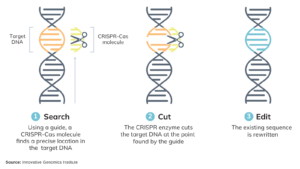
The most sophisticated and widely recognized gene editing technology is the CRISPR-Cas system, which stands for Clustered Regularly Interspaced Short Palindromic Repeats. This revolutionary tool enables researchers to make incredibly precise modifications to plant and animal genetic material. Functioning like molecular scissors equipped with a genetic guidance system, CRISPR-Cas technology locates specific sections within a plant’s DNA and creates targeted cuts. This process activates the plant’s inherent repair mechanisms, which can then be utilized to generate a variety of desired modifications.
Scientists often compare CRISPR-Cas to a word processing program for genetic material. Researchers can now remove or substitute individual components within the genetic blueprint. Importantly, this technique operates within the plant’s existing natural DNA structure, serving as a breeding enhancement tool that works alongside traditional breeding methods and other biotechnologies.
Thanks to major technological breakthroughs in artificial intelligence and genetic research working together, gene editing can now achieve results that previously required up to ten years to accomplish. The modifications created through CRISPR-Cas technology mirror changes that might happen naturally or through standard breeding practices—but with greater speed and precision. Certain genes can be deactivated, while others can be enhanced, reduced, or improved in their performance.
However, maximizing seed potential requires more than scientific innovation alone. As an internationally traded product, grain must comply with specific regulations established by each importing country. The seed industry promotes worldwide regulations grounded in solid scientific evidence that foster innovation by removing unnecessary regulatory burdens. Significant advancement is occurring, with increasing numbers of countries acknowledging gene editing as an innovative breeding method that should be exempt from restrictive GMO regulations, instead choosing a regulatory consultation approach.
Looking forward, farmers face mounting pressure to increase production while using fewer resources. Although no single solution exists, gene editing represents a significant advancement, combining thousands of years of breeding expertise with modern tools and capabilities designed to address current agricultural challenges. This new generation of seed innovations will deliver enhanced performance, improved efficiency, and greater durability in an increasingly challenging farming landscape.
The Evolution of Plant Breeding
Gene editing marks a critical advancement in the 12,000-year evolution of plant breeding. Understanding the significance of this technology requires examining its historical foundation.
First Generation Breeding: Humans selected and crossbred plants with desirable characteristics they preferred. This informal method—while effective, was extremely slow and labor-intensive—spanned the initial 10,000 years of breeding history.
Second Generation Breeding: Following Gregor Mendel’s breakthrough discovery of genetic inheritance laws in the late 1800s, humans began enhancing selection methods through statistical analysis and controlled experiments. This research ultimately resulted in breeder Norman Borlaug earning the Nobel Peace Prize for boosting wheat production by 70%.
Third Generation Breeding: After scientists understood DNA’s structure, breeders began incorporating genetic and genomic information to support and accelerate breeding choices. Genetic markers provided the capability to identify desirable traits and forecast the genetic potential of untested plant groups.
Fourth Generation Breeding: Currently, the combination of artificial intelligence, genomics, and gene editing enables scientists to comprehend and tackle some of the most complex aspects of crop systems—creating opportunities for substantial beneficial improvements.