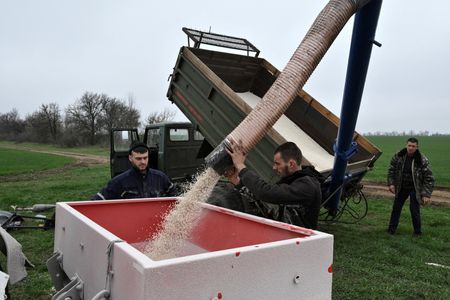

Agricultural producers worldwide are confronting their second major fertilizer price surge in just four years as the conflict in Iran disrupts global supply chains. Unlike previous situations, current grain prices are too depressed to help farmers absorb the increased costs, leading many to reconsider their planting strategies and threatening worldwide food security.
The Middle Eastern region serves as a critical fertilizer manufacturing center, with most global fertilizer shipments normally traveling through the Strait of Hormuz. The ongoing conflict has completely stopped maritime traffic through this vital waterway.
Production of urea, a crucial nitrogen-based fertilizer, has ceased at Qatar’s largest manufacturing plant, while shipments of sulfur and ammonia—essential components for various fertilizers—have also been severely restricted.
As the conflict continues without resolution, industry experts, traders, fertilizer manufacturers, and agricultural specialists are drawing comparisons to the 2022 supply disruption caused by Russia’s invasion of Ukraine, expressing concern that current conditions may prove even more challenging.
“Back in 2022, a lot of the fertiliser was ultimately flowing through,” stated Shawn Arita from the Agricultural Risk Policy Center at North Dakota State University.
“It’s a much steeper supply crunch that we’re seeing now,” Arita explained.
Since the war began in late February, fertilizer costs have skyrocketed, with urea experiencing the most dramatic price increases due to the loss of approximately one-third of globally traded volumes normally shipped from the Gulf region.
Some nations are managing to secure supplies despite the costs. India, which ranks as the world’s top rice producer and second-largest wheat grower, recently purchased record quantities of urea through a single import agreement, paying almost double what it paid just two months earlier.
However, industry analysts note that such pricing levels are unattainable for many buyers.
During 2022, elevated global grain prices helped agricultural producers offset rising input costs from the Ukraine conflict. Recent abundant harvests of grains and oilseeds have kept crop prices relatively low.
Chicago wheat prices currently stand at roughly half their level from four years ago, while soybeans were nearly 50% higher than current prices.
Consequently, many farmers today lack sufficient revenue to manage escalating fertilizer expenses.
Nitrogen-based fertilizers like urea require seasonal application for most crops and directly affect annual production volumes and quality characteristics, including protein levels in wheat.
While farmers can reduce applications of other essential nutrients such as phosphate and potash without immediate production losses, this strategy may face limitations if phosphate markets experience extended pressure from Chinese export restrictions combined with war-related disruptions to sulfur and ammonia raw materials.
Some growers may ultimately “roll the dice” and decrease fertilizer usage, risking lower yields, according to Andy Jung from U.S. fertilizer company Mosaic.
At least 2 million metric tons of urea production—representing approximately 3% of annual seaborne trade—have been eliminated since hostilities began, reports Sarah Marlow from commodity data provider Argus. Manufacturing facilities have closed across the Middle East as well as in India, Bangladesh and Russia.
Additionally, nearly 1 million tons already loaded onto ships remain stranded in the Gulf.
Even if fighting ends quickly and the Hormuz strait reopens, clearing the shipping backlog will require weeks, noted Mark Milam from commodity market intelligence firm ICIS.
Fertilizer availability will likely stay limited for months due to damage at Gulf production facilities and competition for scarce alternative supplies.
“It’s going to take a while to get back to normal,” said Stephen Nicholson, Rabobank’s head of North American grains and oilseeds.
Many farms maintain fertilizer inventories, while record harvests last year increased global grain reserves. Therefore, the immediate effects of the current crisis on worldwide food supplies may remain contained.
However, agricultural organizations, including the International Grains Council, are already reducing their projections for upcoming harvests. The United Nations, which is attempting to negotiate shipping access for fertilizer through the Gulf, has issued warnings about food security in developing nations.
In 2022, elevated fertilizer costs contributed to worsening hunger in impoverished, import-dependent countries, and analysts indicate that regions like East Africa face similar vulnerabilities.
Australia may provide an early indicator of production impacts on global staple crops.
In Western Australia’s agricultural heartland, one industry organization now anticipates wheat planting area will decline by 14% as growers move away from the fertilizer-intensive, low-profit grain.
Farmers continuing to grow wheat may simply reduce fertilizer application rates.
“If we see a drop-off in application in Australia and we start seeing expected yields come down, it could be quite an ominous sign for what’s in store for everybody else,” explained Matthew Biggin, senior commodities analyst at BMI.
In Brazil, the world’s largest soybean exporter, analysts also anticipate farmers will use less fertilizer and potentially switch to cheaper, less effective alternatives like ammonium sulfate.
Production of Southeast Asian palm oil—the world’s most widely produced edible oil, already facing supply constraints—could also decline, while Amit Guha, an independent Kuala Lumpur-based agronomist, cautioned that nutrient deficiencies pose long-term risks to younger trees.
In Europe, spring planting decisions are shifting away from input-intensive corn in countries including France, while reduced supplemental nitrogen applications may lower protein content in this summer’s wheat harvest, analysts reported.
The greater concern, however, will emerge during autumn planting, when financially strained European farmers could reduce overall grain acreage.
“That’s why we’re starting to get a little worried about the 2027 harvest,” said Benoit Fayaud of Expana.