
A dramatic shift from unseasonably warm temperatures to freezing conditions throughout the Northeast has created significant challenges for agricultural producers, forcing some to rush harvests while others face potential crop losses.
While chilly nights during this season aren’t uncommon, the Northeast Regional Climate Center at Cornell University notes that typical last frost dates span from mid-April through early June across the region. However, the exceptionally mild temperatures during April’s first two weeks, followed by a sharp temperature plunge, have created unusual difficulties for growers.
Several New England locations experienced temperatures reaching the 80s last week, only to see snowfall just days afterward. The cold snap extended into this week, prompting the National Weather Service to issue freeze warnings for Monday night through Tuesday morning across portions of Ohio, Pennsylvania, Virginia, Maryland and North Carolina.
At Apple Hill Orchards in Ohio, which operates approximately 80 acres in Mansfield and 110 acres in Fredericktown, the warm spell triggered premature budding in peach and apple trees. Owner Anne Joudrey reported that subsequent temperatures plummeting into the low 20s destroyed one entire peach variety.
“Farming is farming, and you never know what you’re gonna get, but we had a pretty good bloom, so we were expecting a pretty good crop,” she explained Monday.
Joudrey noted that her apple trees appeared to be weathering the conditions better, benefiting from their placement on elevated terrain that allows cold air to flow away.
“We should fare pretty well, hopefully,” she said. “But you never know.”
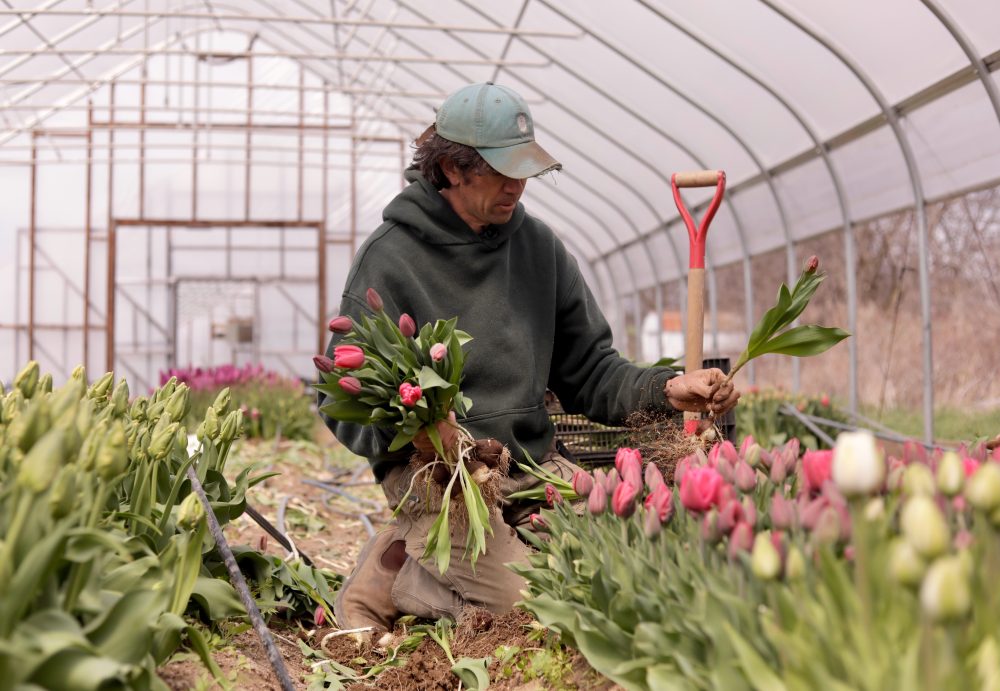
The temperature fluctuations have also disrupted operations at Understory Farm in Bridport, Vermont, where owner Gregory Witscher cultivates cut flowers. His tulips, originally planned for Mother’s Day sales in mid-May, have already reached full bloom inside the farm’s greenhouse facilities.
“That just means that we have to harvest them all at the same time,” he explained. “We have to harvest them and store them with the bulbs on in creates in a walk-in cooler for longer.”
Witscher, who produces approximately 50 different flower varieties for wholesale distribution, emphasized that weather variability demands adaptability. He noted that small-scale vegetable and flower operations increasingly rely on protective equipment such as row covers, heating systems for cold protection, and shade materials for extreme heat.
“With the hot weather and then the cold weather, I think its intense, and it makes things challenging,” he said. “The longer I do this, the more I want to have as many options as possible and have a lot of tools and resources available to be extremely nimble.”