
The Maryland Forest Service is working to help farmers and communities discover the hidden potential of native edible plants that grow naturally beneath forest canopies across the state.
Francis Smith, a natural resources planner with the Maryland Forest Service, is promoting agroforestry – the practice of deliberately combining trees and shrubs with traditional farming to boost productivity and create sustainable land use.
“There is an edible and medicinal understory below our forest canopy that offers benefits to landowners ranging from backyard gardeners and beekeepers to traditional farmers,” Smith said.
Smith recommends several native species for Maryland landowners, including common elderberry, beach plum, black chokeberry, serviceberry, pawpaw, American hazelnut, common persimmon, wild American plum, and high bush blueberry. Larger trees like black walnut, hickory, chestnut and maple can also be integrated. Even woody flowering plants such as red osier and winterberry can be harvested for craft materials.
These agroforestry approaches create new economic opportunities beyond traditional farming. The native plants can support emerging markets for specialty foods and distilled products, while opening additional revenue sources for property owners. Both rural and urban communities are exploring “food forests” to increase access to fresh, locally grown produce.
Learning from Indigenous Knowledge
Smith has witnessed growing interest in agroforestry during his seven years working in the field. He notes that much of the knowledge he’s gathering has been maintained and passed down by Native Americans for generations.
“To me, agroforestry is really just a scientific word for indigenous stewardship,” Smith said. “[Native Americans] were the original stewards before ‘stewardship’ was even a word.”
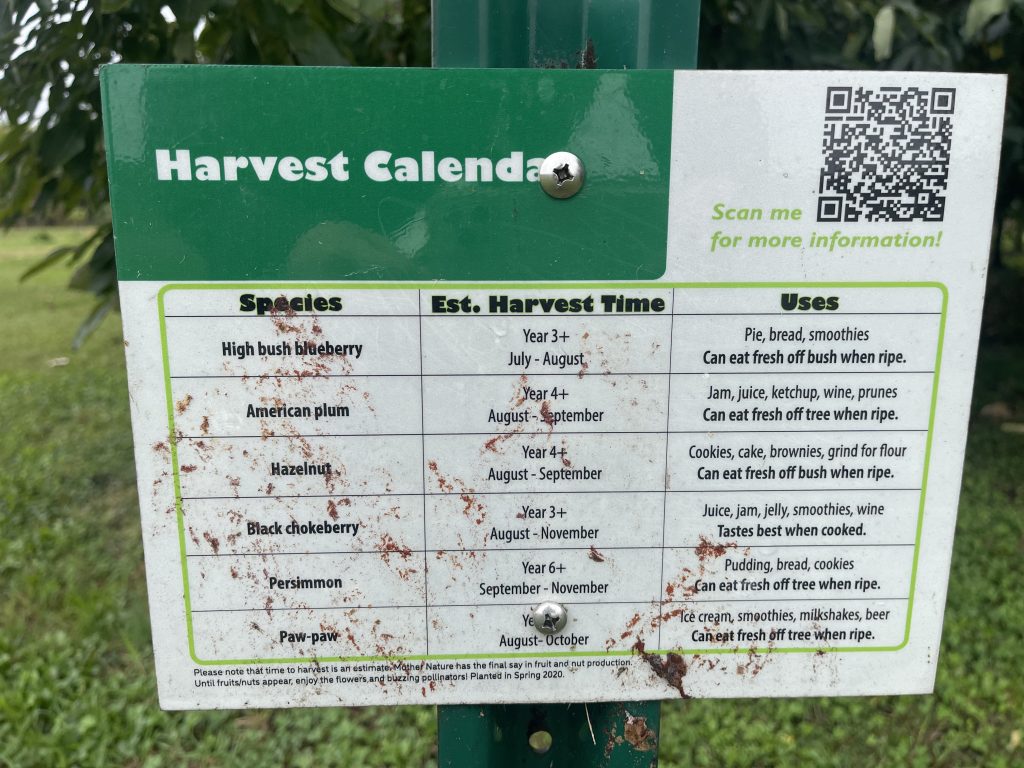
The White Marsh Park Edible Trail in Centreville serves as a demonstration site for these concepts. This experimental food forest showcases six native species: hazelnut, persimmon, American plum, black chokeberry, pawpaw and high bush blueberry. All produce edible fruit or nuts that park visitors can harvest for free.
Now in its seventh growing season, the demonstration forest has inspired culinary experimentation throughout Maryland, with student groups researching hazelnut oil production and nutritious chokeberry beverages.
“This is where I think Maryland’s range of native understory trees and shrubs that produce edible, healthy fruits and nuts could possibly serve as a steady supplemental income or farm marketing opportunity,” Smith explained. He added that food forests work well in large backyard gardens or as educational tools at schools.
Six Farming Applications
The Forest Service collaborates closely with the Maryland Department of Agriculture to promote agroforestry on farms and in communities. Smith outlined six specific practices that farmers can implement:
Windbreaks: Linear plantings of trees, shrubs, or grasses that shield soil, crops, and livestock from wind damage. “A working windbreak in agroforestry terms is just a windbreak that you would periodically harvest from,” Smith explained. “You can blend in fruit and nut-producing species that offer products for market while also providing wildlife habitat and pollinator support.”
Multifunctional riparian forest buffers: Trees and plants along waterways that filter pollutants and prevent erosion, enhanced with edible understory plants for additional harvests. “We’re using trees and shrubs along streams and waterways because these are living filters,” Smith said. “Blending in agroforestry species that produce fruits, nuts, and syrups can improve the land and our health while providing potential new markets for farmers seeking new sources of income.”
Alley cropping: Growing crops between tree rows to maximize land use. “We already plant in rows, so why not maximize land use to the benefit of landowners?” Smith asked. “You really want to actively work every layer of the land.”
Silvopasture: Integrating trees, forage, and livestock in the same area. “They’re basically raising livestock in between the tree rows, which provides spots of shade and additional fodder,” Smith explained.
Forest farming: Cultivating specialty crops under existing forest canopies. “Growing and harvesting plants such as cohosh, goldenseal, ramps or wild ginger is part of what’s known as forest farming,” he said.
Food Forests: Sustainable systems that replicate natural forests on smaller scales, typically featuring fruit or nut trees surrounded by shrubs, herbs, vines, and root crops.
While these methods require less maintenance than conventional crops, Smith emphasizes that planning is still essential. “When you’re planting, you need to consider the three W’s: weeds, wildlife, and water,” Smith explained. “You need a plan for how you are going to manage those, because that’s going to be the things you’re going to always, always battle.”
Looking Ahead
The first Mid-Atlantic Agroforestry Conference will be held in Pennsylvania this June, focusing on forest farming and multifunctional buffers. The conference will provide regional practitioners, landowners, farmers, and conservation professionals with insights into agroforestry practices, marketing strategies, and real-world case studies.
Smith continues working on the best methods to distribute harvests to the public, from simple pick-your-own operations to partnerships with food banks. He also helps organizations apply for grants to establish edible trails.
“We’re in the early stages but it seems to all be coming together at the same time,” Smith said.
Those interested in agroforestry can contact their local Maryland Department of Agriculture Soil Conservation District. Funding opportunities are available through the MDA’s Healthy Soils Competitive Fund, and the Maryland Agricultural and Resource-Based Industry Development Corporation can provide equipment funding for farmers and forest product companies.