Delaware native Danielle Hunter has locked in his future with the Houston Texans, agreeing to a massive one-year contract extension worth $40.1 million, according to multiple media reports.
The NFL Network announced Thursday that the deal covers the 2027 season and features a substantial $30.7 million signing bonus. This marks the second consecutive year Houston has extended Hunter’s contract, following a $35.6 million one-year extension signed last March.
The 31-year-old pass rusher initially joined the Texans organization in March 2024 on a two-year contract valued at $49 million.
Hunter brings impressive credentials to Houston, having earned Pro Bowl honors five times during his eight-year tenure with the Minnesota Vikings before making the move to Texas.
Since joining the Texans, Hunter has been a defensive force, recording 27 total sacks across two seasons, including 15 this past year. His complete stat line with Houston includes 100 tackles with 32 resulting in losses, 45 quarterback pressures, four forced fumbles, and one fumble recovery. The veteran has maintained perfect attendance, participating in all 17 games both seasons.
Throughout his NFL career, Hunter has compiled impressive numbers across 153 games with 124 starts. His career totals include 562 tackles, 140 tackles for loss, 15 forced fumbles, five fumble recoveries, and two touchdowns. With 114.5 career sacks, Hunter currently ranks as the sixth-most productive pass rusher among active NFL players.
European law enforcement agencies announced Friday they have identified 22 individuals connected to a coordinated campaign of explosive package attacks throughout Europe last year, with investigators pointing to Russia’s military intelligence service as the orchestrating force.
The incidents involved detonations at shipping facilities across Britain, Germany, and Poland, with security experts believing these attacks served as rehearsals for a broader Russian scheme targeting cargo aircraft headed to the United States.
Russian officials have consistently rejected any involvement in these operations or broader allegations of conducting sabotage campaigns, including arson incidents, designed to undermine nations supporting Ukraine.
Eurojust, which coordinates criminal investigations across European Union member states, revealed that investigators from Germany, Poland, the Netherlands, Britain, and Lithuania worked together to identify the suspects located in Lithuania and Poland, all allegedly operating under direction from Russia’s GRU intelligence service.
“The suspected perpetrators were recruited from Russia, Latvia, Estonia, Lithuania and Ukraine and were often in a vulnerable socio-economic situation,” the Eurojust statement said.
“It is suspected that the acts carried out by these suspects were executed on behalf of the military-intelligence service of the Russian Federation.”
Russia’s defense ministry, which oversees military intelligence operations, has not yet responded to requests for comment. Moscow routinely dismisses such accusations as anti-Russian sentiment.
Lithuania’s Deputy General Prosecutor Arturas Urbelis announced during a news briefing that five individuals holding Russian, Ukrainian, and Lithuanian citizenship will face terrorism charges in Lithuanian courts, with potential sentences reaching 10 years imprisonment upon conviction.
Lithuanian authorities reported that four packages containing “self-made, explosive-incendiary charges” were dispatched from Vilnius on July 19, 2024.
One package being handled by DHL ignited at Leipzig airport in eastern Germany just before workers planned to load it onto a Britain-bound aircraft, according to Lithuanian officials.
A second explosive device detonated aboard a DPD delivery truck traveling through Poland, while a third package exploded inside a DHL storage facility in Birmingham, England.
The fourth package, also transported by DPD truck in Poland, failed to activate due to technical problems, investigators reported. None of these incidents resulted in injuries.
Eurojust investigators also discovered evidence of two ‘test packages’ sent to destinations in the United States and Canada, along with two additional parcels intercepted in Amsterdam that were destined for North American locations.
British law enforcement confirmed that counter-terrorism specialists continue investigating the Birmingham explosion. Last year, authorities arrested a Romanian citizen on charges of assisting foreign intelligence services before releasing him pending further investigation.
“The strength of cooperation in this case has led us to collectively identify what we believe to be Russian military intelligence involvement in a series of incidents across Europe,” said Vicki Evans, Britain’s Senior National Coordinator for Counter Terrorism Policing.
Queen Anne’s County officials have released their latest government newsletter, encouraging residents to stay connected with local government developments and activities.
The March 6, 2026 edition of the Queen Anne’s County Government News is now available for residents to review on the county’s official website. County officials are urging community members not to overlook this opportunity to stay informed about important local government updates and events happening in their area.
Interested residents can access the current newsletter by visiting the county’s website at qac.org, where they can find the complete publication detailing recent government activities and upcoming events.
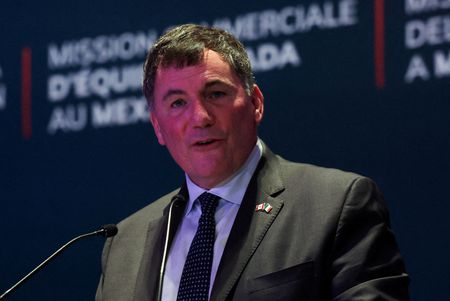
Trade officials from Canada and the United States will hold their first face-to-face meeting of the year this Friday in Washington, as both nations gear up for a mandatory evaluation of their trilateral trade agreement with Mexico.
Dominic LeBlanc, Canada’s minister overseeing trade relations with the U.S., is scheduled to sit down with American trade representative Jamieson Greer, according to confirmation from the minister’s office.
Jean-Sébastien Comeau, communications director for LeBlanc’s office, stated: “They will discuss the upcoming trilateral review of the CUSMA, as well as bilateral concerns.”
The meeting takes place against the backdrop of the approaching July 1 deadline for reviewing the United States-Mexico-Canada Agreement, known as CUSMA in Canada and USMCA in the United States.
While the two officials have maintained phone contact throughout the year, their last in-person meeting occurred in October, according to statements LeBlanc made the previous week.
Canada is pushing to eliminate duties on several crucial industries, including steel and aluminum, automotive sectors, copper goods, and lumber products. These tariffs have resulted in Canadian job losses, despite data showing nearly 90% of Canada’s overall exports enter the U.S. without tariffs under the current trade agreement.
The discussions take on added significance given President Donald Trump’s previous statements suggesting he might abandon the three-nation deal, calling it unnecessary for America and indicating preference for separate bilateral agreements with Canada and Mexico.
Speaking at a recent event, LeBlanc indicated Canada is working with the U.S. to eliminate tariffs on impacted industries, with potential agreements possibly being incorporated into bilateral deals during the trade pact review process.
Greer has characterized negotiations with Canada as “more challenging,” pointing to ongoing obstacles including Canadian restrictions on dairy markets and limitations on American wine and spirits sales.
While Canada and the United States have yet to formally begin their review process, the U.S. has already initiated discussions with Mexico. American and Mexican negotiators are set to begin bilateral talks during the week of March 16 as part of their joint assessment of the trade agreement, the U.S. Trade Representative’s office announced Thursday.
A deadly assault on a military installation in northern Benin has left 15 soldiers dead and five others wounded, according to military officials who confirmed the attack on Friday.
The violence occurred Wednesday in the northern village of Kofouno, where extremist fighters targeted a military camp in the latest escalation of regional conflict. Militant organizations with ties to al Qaeda and ISIS have been expanding their operations across border areas connecting Niger, Benin and Nigeria, transforming remote travel routes into dangerous battlegrounds.
Jama’at Nusrat al-Islam wal-Muslimin (JNIM), an organization affiliated with al Qaeda, has taken credit for orchestrating the deadly assault.
“The attack resulted in the loss of 15 of our personnel and five wounded, whose lives are not in danger,” stated Colonel James Johnson, who serves as spokesperson for Benin’s armed forces.
Johnson reported that military forces managed to eliminate at least four of the “terrorists” and destroyed multiple motorcycles as the attackers fled the scene. He also disputed JNIM’s assertion that the group had gained control of the Kofouno military facility.
The West African nation seldom makes public statements regarding extremist violence in its northern territories, though officials acknowledged last April that a JNIM operation had resulted in 54 military deaths.
Security challenges in northern Benin contributed to an unsuccessful military coup attempt in December, when dissatisfied soldiers tried to remove President Patrice Talon from power. The conspirators cited worsening security conditions in the north “coupled with the disregard and neglect of our fallen brothers-in-arms” as justification for their actions.
Assistance from neighboring nations, including Nigeria, helped prevent the coup from succeeding.
Benin is preparing for a presidential election scheduled for next month, which will conclude Talon’s time in office.
PARIS – French authorities have concluded that a baby’s death was not connected to recalled Nestle infant formula the child had been given, according to officials in Bordeaux on Friday.
The investigation was launched after concerns arose about cereulide, a harmful toxin capable of causing severe nausea and vomiting. This toxin was found in components supplied by a Chinese vendor to multiple baby formula manufacturers, prompting safety recalls across dozens of nations and sparking widespread parental anxiety.
“Based on the current state of the investigation, the infant’s death does not appear to be linked to the formula used for feeding,” the prosecutor said in a statement.
Laboratory testing conducted on both the powdered formula and prepared milk from Nestle that the baby had consumed in the days before death revealed no presence of cereulide, according to the official statement.
Moscow is sharing sensitive intelligence with Tehran that reveals the whereabouts of American naval vessels and aircraft operating throughout the Middle East, according to a Friday report from the Washington Post citing three sources with knowledge of the intelligence.
The Washington Post indicated that while the full scope of Moscow’s assistance to Tehran remains unclear, Iran’s capacity to track American forces has been compromised following strikes conducted by the United States and Israel against Tehran in recent days.
The regional conflict has intensified dramatically, sparking a cycle of retaliatory attacks by Iran while drawing in neighboring countries as Tehran attempts to inflict significant costs on America, Israel, and their regional partners.
American military officials have confirmed that six reserve personnel were killed in Kuwait after a drone attack struck a US military installation at Port Shuaiba. Trump and other high-ranking officials have cautioned that the ongoing conflict will likely lead to additional American military casualties.
When asked about the reported Russian assistance to Iran, a White House representative chose not to address the allegations directly.
“The Iranian regime is being absolutely crushed. Their ballistic missile retaliation is decreasing every day, their navy is being wiped out, their production capacity is being demolished, and proxies are hardly putting up a fight,” stated White House spokeswoman Anna Kelly in response to Reuters’ inquiries.
The Kremlin acknowledged Friday that Russia maintains communication with Iranian leadership representatives but refused to elaborate when reporters questioned whether Moscow was providing assistance to Tehran.
For Russia, the Middle East conflict has delivered unexpected economic benefits, with substantially increased demand for Russian oil and natural gas, helping to revive exports that had suffered under sanctions imposed due to Moscow’s invasion of Ukraine. During Ukraine’s conflict with Russia, Washington has provided Kiev with intelligence support.
Neither the Russian Embassy in Washington nor Russia’s United Nations mission in New York provided immediate responses to requests for comment.
Danish officials announced Friday that military conflicts across the Middle East could delay overseas ballots from reaching Denmark ahead of the nation’s upcoming general election on March 24.
The Iranian war has created widespread aviation disruptions throughout the region, forcing the shutdown of major transportation centers in Dubai, Doha, and Abu Dhabi. This has left both travelers and mail shipments without reliable routing options.
“The Ministry of Foreign Affairs can’t under these circumstances guarantee that postal votes cast in countries affected by the current situation will arrive in time for the general election,” the ministry said in a statement.
According to ministry officials, the delivery concerns affect ballots submitted from Middle Eastern nations, as well as potentially from Asian countries where mail routing typically travels through Middle Eastern transit points before reaching Europe.
The ministry has not released estimates regarding the number of Danish citizens living abroad who planned to participate in the election through overseas voting.
This Sunday, clocks across most of the United States will jump ahead one hour as daylight saving time begins. While losing an hour of sleep might seem like a minor inconvenience, medical experts warn the effects extend far beyond feeling groggy Monday morning.
The shift to earlier sunrises and extended evening daylight disrupts your internal body clock, potentially triggering sleep problems that can persist for weeks. Medical research has documented increases in heart attacks and strokes immediately following the March time adjustment.
However, there are strategies to minimize the transition’s impact, such as seeking morning sunlight exposure to help recalibrate your body’s natural sleep-wake cycle.
At 2 a.m. Sunday, most Americans will lose an hour as daylight saving time officially starts. The change reverses on November 1 when clocks move backward an hour.
Several areas don’t participate in the time shift, including Hawaii, most of Arizona, Puerto Rico, American Samoa, Guam, and the U.S. Virgin Islands, which maintain standard time throughout the year. Many nations worldwide also practice daylight saving time, though their start and end dates vary.
While some individuals attempt to prepare by retiring slightly earlier for several nights beforehand, the adjustment proves particularly challenging for the one-third of American adults who already fall short of the recommended seven hours of nightly rest.
Your brain contains a master timekeeper that responds to light and darkness exposure. This internal rhythm operates on approximately a 24-hour schedule, controlling when you feel sleepy versus alert. These patterns shift with age, explaining why young children who wake early often become teenagers who struggle to get up.
Sunlight exposure in the morning resets this internal clock. As evening approaches, your body increases production of melatonin, a hormone that promotes sleepiness. Extended daylight from the time change interferes with this melatonin release, throwing the entire system off balance.
Insufficient sleep connects to cardiovascular disease, mental decline, weight gain, and many other health issues. Your circadian rhythm influences more than just sleep, affecting heart rate, blood pressure, stress hormone levels, and how your body processes food.
Research examining U.S. traffic deaths shows a temporary spike in fatal accidents during the initial days after the spring time change. Morning crashes showed the highest increase, which scientists linked to sleep loss.
Cardiovascular risks also rise during this period. The American Heart Association references studies indicating more heart attacks occur on the Monday following daylight saving time’s start, with stroke rates climbing for the following two days.
Medical professionals already recognize that heart attacks, particularly severe cases, happen more frequently on Mondays and during morning hours when blood clotting increases.
Scientists haven’t determined exactly why the time change amplifies the Monday pattern, but the sudden disruption to circadian rhythms may worsen risk factors like elevated blood pressure in vulnerable individuals.
Sleep specialists recommend getting outside for morning sunlight during daylight saving time’s first week to help reset your internal clock. Adjusting daily activities like meal times and exercise schedules earlier can also signal your body to begin adapting.
Avoiding afternoon naps and caffeine, along with limiting evening screen time from phones and electronic devices, makes the transition to an earlier bedtime less difficult.
Annual discussions about eliminating time changes continue. President Donald Trump has pledged to end daylight saving time during his second term. Congressional legislation called the Sunshine Protection Act, which would make daylight saving time permanent, has repeatedly failed to advance despite bipartisan support.
Medical organizations favor a different approach. Both the American Medical Association and American Academy of Sleep Medicine support ending time changes but recommend adopting standard time year-round, arguing it better matches natural sunlight patterns and human biological needs for consistent sleep.
IRBIL, Iraq — Leaders of an armed Kurdish opposition group operating from northern Iraq have clarified to The Associated Press that while they’re not preparing immediate strikes against Iran, they would participate in any U.S.-led ground invasion of their homeland.
These statements seem designed to calm Iraqi Kurdish authorities, who have expressed concerns about attacks being launched from their region against Iran, worried about being drawn deeper into the Middle Eastern conflict that has escalated following American and Israeli military actions against Iran.
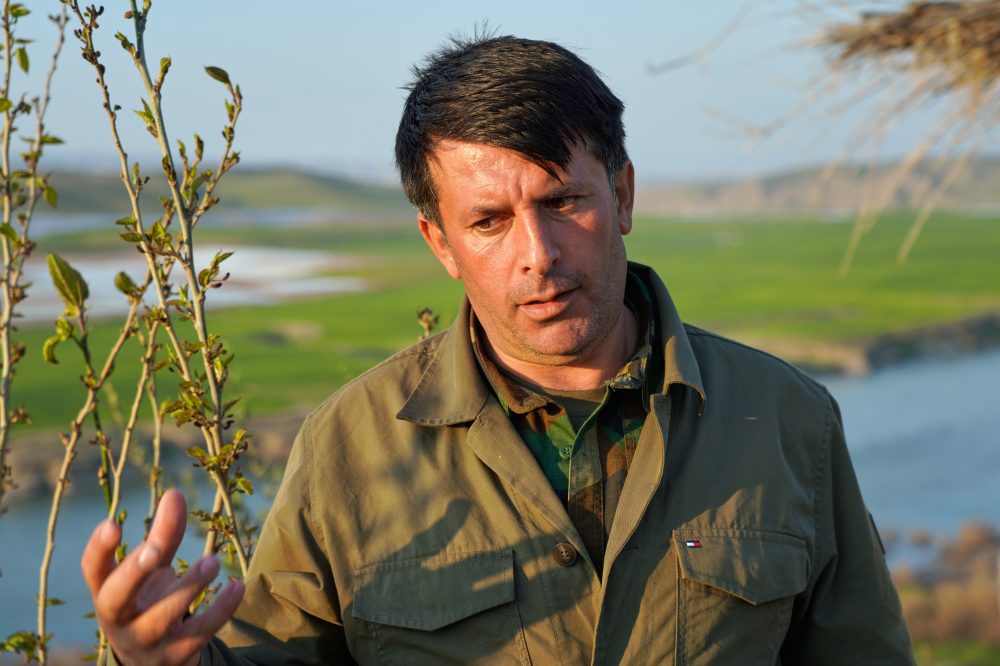
Speaking to the AP on Thursday, Khalil Nadiri from the Kurdistan Freedom Party PAK explained that in case of American ground operations, “then we would enter alongside the coalition forces.” However, he emphasized that “The Kurds must not place themselves as the spearhead of the attack.”
Nadiri revealed that his organization maintains armed members already operating within Iran’s borders and wouldn’t necessarily need cross-border assistance to launch an internal uprising.
According to Nadiri, the Kurdish organizations have maintained communication with both American and Israeli officials, though he rejected claims that they’ve received material support from either nation.
These clarifications follow earlier reports this week from Kurdish officials indicating that Iranian Kurdish opposition groups in northern Iraq were preparing for possible cross-border military actions, with the U.S. allegedly requesting Iraqi Kurdish support for such operations.
PAK military commander Rebaz Sharifi described potential U.S. and allied weapons support for Kurdish groups as “a very positive development,” while also confirming they haven’t received such assistance to date.
Sharifi expressed expectations that President Donald Trump “might want the peshmerga forces of Eastern Kurdistan to participate in the conflict during a ground invasion,” adding that “if it reaches that point, we, for our part, would be pleased with it.”
Both officials worked to address Iraqi Kurdish leaders’ concerns about using Iraq’s semi-autonomous Kurdish territory as a staging area for attacks.
Kurdistan Regional Government spokesperson Peshawa Hawramani stated earlier this week that “allegations claiming that we are part of a plan to arm and send Kurdish opposition parties into Iranian territory are completely unfounded,” emphasizing that Iraqi Kurdish parties don’t want to “expand the war and tensions in the region.”
Iranian forces and affiliated Iraqi militias have already conducted numerous missile and drone strikes targeting northern Iraq, hitting American military installations and the consulate in Irbil, along with Iranian Kurdish opposition group facilities.
Sharifi reported that PAK locations have endured two ballistic missile strikes and four drone attacks since the conflict began, resulting in one fighter’s death and three wounded personnel.
Nadiri explained that “since the (Iraqi) Kurdistan region has adopted a policy of not becoming a part of this conflict and because we do not want to disrupt the stability and security here and we respect the laws of this region, consequently, the environment has not yet been established for us to move our forces back into Eastern Kurdistan.”
The term “Eastern Kurdistan” refers to Iran’s Kurdish-populated regions, according to these groups.
The prospect of Kurdish military participation has created friction with other Iranian opposition factions, particularly those aligned with former shah’s son Reza Pahlavi, who has criticized the Kurds as separatists seeking to divide Iran.
Sharifi stated that his organization’s “ultimate goal is the statehood of the Kurds in all four regions and the reunification of Kurdistan,” referencing Kurdish populations spread across Iran, Iraq, Turkey and Syria.
Nadiri suggested that a confederal arrangement might serve as a “viable solution,” allowing Kurdish areas to remain within Iran while preserving their “own sovereignty, identity, and unique characteristics.”
ABUJA, Nigeria — Extremist fighters launched a devastating assault on a northeastern Nigerian community Friday, seizing more than 300 civilians including women and children, according to local authorities.
The mass abduction occurred in Ngoshe, a town located in Borno state, regional official Bulama Sawa confirmed. Speaking to The Associated Press, Sawa indicated the assault appeared to be revenge for a recent military strike that eliminated three leaders from the extremist organization Boko Haram.
No organization has stepped forward to take credit for Friday’s mass kidnapping. Nigeria continues struggling with widespread security challenges involving multiple armed factions. The United States has deployed military personnel to the West African country to provide guidance to local forces combating the ongoing violence.
Additional assaults occurred this week targeting the settlements of Konduga, Marte, Jakana, and Mainok from Wednesday through early Friday morning, a military representative confirmed.
Military spokesman Uba Sani reported that forces successfully defended against the attacks on Konduga, Marte, Jakana and Mainok communities, though “a number of brave soldiers paid the supreme price in the line of duty,” including a senior officer. Sani declined to provide specific casualty figures.
Sani characterized the operations as “failed attacks” that demonstrated the “increasing desperation of terrorist elements under sustained operational pressure” from government forces.
Security analyst Ulf Laessing from the Konrad Adenauer Foundation explained that Friday’s Ngoshe assault exploited the Nigerian military’s struggle to maintain control across vast territories where extremist organizations operate. These groups have also gained strength through enhanced coordination across borders and deploying drones for reconnaissance before launching strikes.
“The army is fighting a ghost — fighters descending with motorbikes on villages and disappearing into the bush before the army can respond in time,” Laessing observed.
The most significant extremist organizations include Boko Haram and a splinter group aligned with the Islamic State known as Islamic State West Africa Province. Additional threats come from the IS-connected Lakurawa organization and various criminal gangs focused on kidnapping for profit and illegal resource extraction.
The security situation has deteriorated further with the involvement of additional militants from nearby Sahel countries, including Jama’at Nusrat al-Islam wal-Muslimin, which conducted its inaugural attack on Nigerian territory last year.
United Nations statistics indicate several thousand Nigerians have lost their lives in the ongoing violence. Security experts argue the government’s efforts to safeguard civilians remain inadequate.
Motorists traveling on Old Mill Bridge Road northbound should expect delays today as construction crews have shut down the right lane near the Tidal Road intersection.
The Delaware Department of Transportation reports the lane restriction will remain in place until 2:00 PM this afternoon while work continues in the area.
Drivers are advised to use caution when passing through the construction zone and allow extra travel time for their commute.
Belarus President Alexander Lukashenko has freed 18 additional prisoners as he continues working to rebuild diplomatic relationships with the United States.
Thursday’s presidential decree released 18 individuals, with 15 of them previously convicted on extremism charges that Belarus commonly uses in cases with political motivations. Officials reported that 11 of those granted clemency were women.
The prisoner releases represent the most recent development in a series encouraged by President Donald Trump’s administration. Lukashenko, who has faced Western isolation following his contested 2020 reelection that sparked widespread demonstrations and harsh government responses, has been working to repair relations with Washington through these releases.
Following a phone conversation between the two presidents in August, Lukashenko has freed 123 individuals, including Nobel Peace Prize winner Ales Bialiatski and notable opposition leaders Maria Kolesnikova and Viktar Babaryka. The United States responded by removing sanctions from Belarus’ potash fertilizer industry and national carrier Belavia.
This week’s pardons push the total beyond 140 releases. U.S. special envoy for Belarus John Coale praised the action on X Thursday, calling it “another notable step in the relationship between the U.S. and Belarus as President Trump has tasked me with getting all the political prisoners out.”
However, the Belarusian human rights organization Viasna reports that 1,140 political prisoners still remain incarcerated.
Human rights advocates continue warning that government oppression persists alongside the releases, with new arrests and convictions ongoing.
This week alone, well-known Belarusian musician and poet Aleh Khamenka received a three-year prison sentence plus substantial fines for extremist activities related to his work with a prohibited radio station. Khamenka was arrested in June following a home search and has been imprisoned for over six months.
Additionally, Belarusian officials this week classified the PEN Belarus writers’ association, which includes more than 100 members, as an extremist group.
PEN Belarus leader Tatsyana Nyadbay told The Associated Press in a phone interview that the designation was “horrendous” because it “puts the writers who remain in Belarus at risk.”
The organization’s membership includes 2015 Nobel Literature Prize recipient Svetlana Alexievich and 2022 Nobel Peace Prize winner Bialiatski. Alexievich departed Belarus after the 2020 demonstrations, while Bialiatski served more than five years in prison on charges widely considered politically driven.
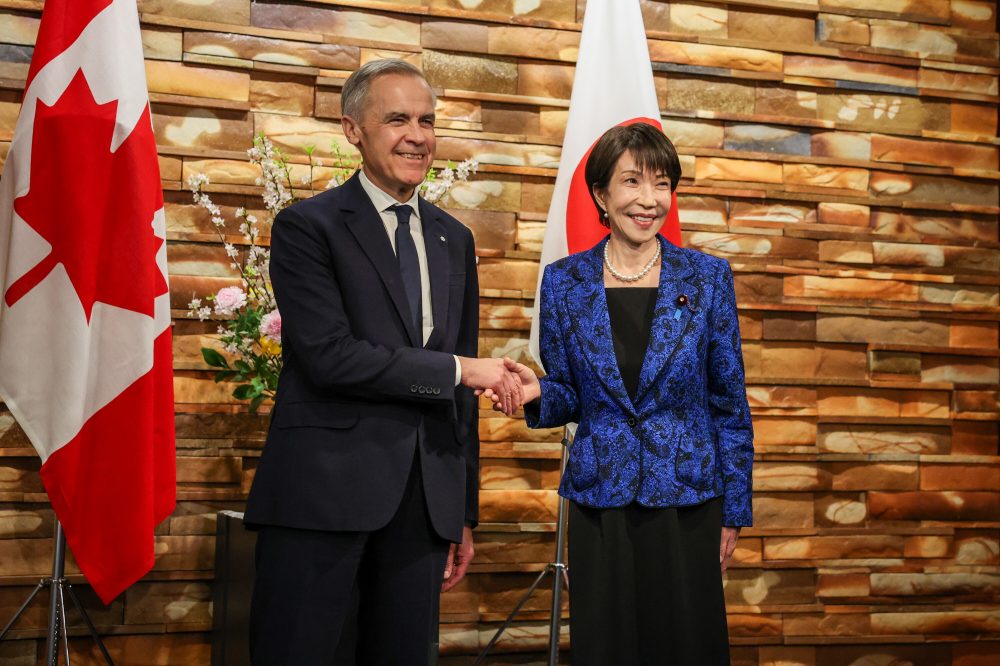
Japanese Prime Minister Sanae Takaichi and Canadian Prime Minister Mark Carney finalized a comprehensive strategic partnership Friday, establishing enhanced cooperation across defense, economic, and energy sectors amid rising concerns over global oil supplies due to Middle Eastern conflicts.
The two leaders emphasized the critical nature of energy security during these times of “geopolitical uncertainty,” as outlined in an official statement from Japan’s Foreign Ministry.
Meeting in Tokyo, Takaichi and Carney committed to collaborative efforts in diversifying energy sources and expanding trade relationships to strengthen energy supply networks, according to the ministry’s published roadmap.
“The world is at a turning point. We see the manifestations in the Middle East. We see it everywhere,” Carney stated during their joint press briefing.
This marked Carney’s inaugural visit to Japan since assuming office last year, occurring as Middle Eastern warfare raises alarm over petroleum shipments passing through Iran’s Strait of Hormuz. During his Australia trip earlier this week, Carney advocated for reducing tensions in the Iranian conflict.
The leaders also established plans for bilateral discussions on economic security and cybersecurity policies, addressing China’s increasing assertiveness in commercial and military spheres throughout the Indo-Pacific region.
Tokyo and Ottawa will begin negotiations toward a defense agreement designed to streamline military visit procedures, joint training exercises, and other collaborative operations.
Both nations plan to enhance cooperation between their defense industries as Japan works to expand its limited defense export sector, supporting Takaichi’s initiative to strengthen Japan’s military capabilities and arms manufacturing to improve partnerships with allied countries.
On Friday morning, Takaichi’s ruling Liberal Democratic Party and coalition partner Japan Innovation Party presented a proposal to eliminate restrictions on lethal weapons exports, marking another departure from Japan’s post-war pacifist policies. Government officials expect formal approval of this proposal within the coming months.
Violent thunderstorms swept across Oklahoma Thursday evening as meteorologists warned that Friday could bring even more dangerous weather, including the possibility of destructive tornadoes across America’s central regions.
Dramatic video footage showed a law enforcement officer driving directly toward a massive storm system near Fairview in western Oklahoma, where lightning strikes revealed a large funnel cloud extending toward the earth. The Thursday night tempest, marking one of the season’s initial severe weather events as spring approaches, was recorded by equipment installed in the deputy’s patrol vehicle.
Tragically, a 47-year-old mother and her 13-year-old daughter from Fairview lost their lives when their car was involved in a collision at a highway and county road intersection around 10 p.m. Thursday, officials reported. According to Oklahoma Highway Patrol representative Sarah Stewart, the fatal accident “appears to be tornado related.”
Oklahoma Governor Kevin Stitt issued a statement Friday expressing his condolences: “Severe weather struck Major County last night and tragically claimed the lives of a mother and daughter. I am praying for the family as they grieve this tragic loss, as well as all those impacted by the storms.”
Weather service officials from Norman, Oklahoma, announced plans to dispatch assessment teams Friday to determine whether Thursday’s storms produced confirmed tornadoes. “As of right now, we’re still investigating that,” explained meteorologist Ryan Bunker.
Friday’s weather conditions could prove even more dangerous, with over 7 million Americans facing the most severe weather threat in regions encompassing Kansas City, Missouri; Tulsa, Oklahoma; and Omaha, Nebraska, based on Storm Prediction Center forecasts. An additional 25 million residents face moderate risk levels across areas including Dallas, Oklahoma City, and Milwaukee, Wisconsin.
The National Weather Service predicted scattered severe thunderstorms would develop Friday afternoon and evening, stretching from Plains states through the Ozarks and into Midwest regions.
“The greatest potential for a few strong tornadoes and very large hail should exist across eastern portions of Oklahoma/Kansas/Nebraska into western Arkansas/Missouri and southern Iowa,” forecasters stated.
AccuWeather meteorologists explained that the dangerous weather pattern results from warm Gulf Coast air masses colliding with cold Canadian air systems moving behind frontal boundaries.
“This is probably our first real event this season where people are really starting to pay attention getting into the spring storm season,” noted Melissa Mayes, who serves as deputy director for Washington County Emergency Management Agency in Bartlesville, Oklahoma, located north of Tulsa.
These spring weather systems arrive as tornado season typically begins across various regions of the United States at different times. Safety experts advise residents to prepare by obtaining weather radios and establishing shelter plans before severe weather strikes.
Separately, northeastern states faced winter weather advisories as a mixture of rain, snow, and slush created hazardous morning travel conditions from Pennsylvania through Maine on Friday. Multiple vehicle accidents occurred on the Maine Turnpike as drivers navigated sleet and snow conditions.
Educational institutions in New Hampshire and Maine either cancelled classes or implemented delayed start times.
Weather conditions began improving by mid-morning in some locations, though Maine, Massachusetts, Rhode Island, and Connecticut maintained active weather advisories. Southern Ohio received flood warnings.
Across southern United States regions, the same weather system is expected to generate unusually high temperatures for this time of year by weekend.
“Temperatures will be 20-30 degrees above average, with 80s reaching as far north as parts of the Ohio Valley and Mid-Atlantic,” federal meteorologists wrote in extended forecast discussions. “Daily records could become widespread.”
Florida International University has opened a formal investigation after discovering a group chat containing racist slurs, antisemitic remarks, and misogynistic content that was initiated by a Miami-Dade Republican Party official.
According to the Miami Herald, which reviewed and confirmed the authenticity of the messages, the chat included university students along with prominent conservative figures from the campus community. State Republican leadership has publicly condemned the content.
University officials announced Thursday that campus police are examining student behavior in the chat while working alongside local, state, and federal law enforcement agencies.
“FIU does not and will not tolerate violence, hate, discrimination, harassment, racism or antisemitism,” declared university President Jeanette Nunez, who previously served as Florida’s lieutenant governor and as a Republican state legislator. “This is not who we are. This is not what FIU stands for.”
Florida’s Republican Party issued its own statement announcing “an internal review of this situation” while denouncing “the repugnant comments” as being “completely contrary” to the party’s values and principles.
This incident follows a similar controversy from last fall when New York’s Republican State Committee suspended a Young Republican group after offensive group chat messages surfaced, including inappropriate jokes about sexual assault and casual references to gas chambers.
The Republican Jewish Coalition joined the chorus of criticism Friday, with spokesman Sam Markstein reinforcing the Florida GOP’s position.
“Antisemitism and bigotry have no place in the Republican Party,” Markstein stated.
Travel blogger Alyssa Ramos endured a grueling 48-hour escape from Kuwait that spanned four continents, but she says federal officials provided no assistance during her ordeal.
“They keep going on the news and saying they’re doing everything they can to get Americans out,” Ramos stated upon reaching Miami Thursday. “I know for a fact they’re not.”
According to Ramos, her multiple attempts to contact the U.S. Embassy in Kuwait led her to the consular section, where staff members told her they were unable to assist with departure arrangements and advised her to register for the government’s smart traveler program while remaining sheltered.
Ramos represents numerous American nationals and foreign citizens who fled Middle Eastern countries or remained trapped there Friday, nearly seven days after Israeli-American strikes against Iran quickly drew more than a dozen neighboring nations into the conflict. U.S. travelers expressed mounting anxiety and irritation as they faced shuttered airports, grounded flights, and concerning federal advisories, while nations like Poland, Australia, and France rapidly deployed military aircraft or hired commercial planes to retrieve their citizens.
“Having the State Department or whoever tell us, you need to get out immediately, well, but there’s no help. So you’re on your own to get your own travel plans. That was the most stressful thing,” Chicago resident Susan Daley remarked after touching down Thursday on the initial commercial flight from Dubai to San Francisco since Iran hostilities commenced February 28. Daley had been conducting business in the United Arab Emirates.
The Trump administration has rejected accusations that the federal response was inadequate.
State Department officials announced that the first government-arranged evacuation flight returned from the Middle East Thursday, with additional flights expected each day. Officials did not immediately specify passenger counts or departure locations. The agency reports that through Thursday, it has “directly assisted” 10,000 citizens throughout the region who sought help or information.
A social media update from the assistant secretary of state for public affairs featured a photograph of Americans boarding a chartered aircraft displaying the New England Patriots NFL team logo. This plane appears to be at least the second such flight to arrive at Dulles International Airport near Washington.
Through Thursday, approximately 20,000 Americans had returned safely to the United States since warfare began, according to State Department figures. Regional U.S. embassies continued advising Americans to depend on commercial aviation for departure, despite widespread closures or severe restrictions across Gulf airspace.
Without guidance from Washington or consular offices, some travelers reported using WhatsApp group conversations and social media crowdsourcing for commercial flight information and alternate departure routes from the United Arab Emirates, Kuwait, and neighboring countries. Several established GoFundMe fundraising campaigns to cover hotel costs and other expenses accumulated during extended stays in Dubai and additional Gulf cities.
Ramos established WhatsApp group discussions Monday to assist individuals who contacted her through her social media presence, “My Life’s a Travel Movie,” seeking evacuation guidance following her challenging departure.
Within three days, over 2,200 people joined conversations focused on leaving Dubai, Doha, Qatar, and Kuwait. Participants coordinated shared transportation to functioning airports, exchanged trusted driver recommendations, and shared pricing information including accepted payment methods.
Thursday brought a message from one member explaining that her spouse and two children had attempted leaving Dubai but experienced two flight cancellations, with their diabetic 2-year-old’s medication supply dwindling. Fellow members immediately provided suggestions and assistance.
Jason Altmire, a former three-term Democratic congressman from Pennsylvania, successfully departed Dubai after the UAE partially restored airspace access and Emirates airline restarted limited service.
“We never heard anything from the State Department other than the general email advising us to find our own way out,” Altmire explained in an email interview. “I found this, along with the ‘you’re on your own’ State Department voicemail, to be infuriating.”
Congressional Democrats wrote Secretary of State Marco Rubio Tuesday, stating that “the lack of clear preparation, planning, and communication to Americans abroad is unacceptable and a violation of the State Department’s basic mission to provide consular assistance and the protection of U.S. citizens overseas.”
Rubio acknowledged Tuesday that the U.S. had arranged recovery flights but faced obstacles from airspace restrictions.
“We know that we’re going to be able to help them,” he stated, while noting that “it’s going to take a little time because we don’t control the airspace closures.”
American Cory McKane, trapped in Dubai, secured departure from the region Wednesday following an exhausting, sleepless, and costly journey to Muscat, Oman.
Rather than risk complications at Dubai’s congested airport, McKane and companions rented a vehicle and drove to the Oman border. There, he reported, taxi operators demanded up to $650 to transport stranded travelers to Muscat’s airport, where flights continued operating.
McKane credited knowledgeable local contacts and a WhatsApp group created by stranded travelers for sharing resources and guidance.
“Everyone’s been sending each other resources because, quite frankly, the U.S. has not done a single thing in any capacity. That’s been really disappointing,” McKane stated.
Commercial flight availability has remained restricted since conflict began. Aviation analytics company Cirium reported that more than 29,000 of roughly 51,000 scheduled Middle East airport flights were canceled through Friday.
Oman, Egypt, Saudi Arabia, and Jordan have become crucial departure points for evacuation flights due to continued flight operations in those nations. However, airspace over Iran, Iraq, Qatar, Bahrain, Kuwait, and Syria remained closed, according to flight-tracking service Flightradar24.
Azerbaijan shuttered its southern airspace Thursday after accusing Iran of a drone strike on its territory that wounded four civilians and damaged airport infrastructure.
Trenten Higgins, who traveled by taxi from Israel to Jordan, managed to fly from its capital to New York Thursday. He described the State Department as unhelpful.
“Every alert that they gave and all the advice they gave was a day at least too late,” he explained. “Even when it wasn’t too late, it was impossible to act upon and then they would just hang up.”
The Washington Capitals have sent veteran defenseman John Carlson to the Anaheim Ducks in an overnight transaction that caught the player completely off guard.
The timing of the deal was so unexpected that Carlson was fast asleep when it happened and only discovered he’d been traded when he woke up Friday morning, according to TSN’s Pierre LeBrun.
In exchange for the 36-year-old blueliner, Washington will receive a conditional first-round draft pick for either 2026 or 2027, plus a third-round selection in 2027. Should Anaheim miss the playoffs, the Ducks can hold onto their 2026 first-rounder and send their 2027 first-round pick to the Capitals instead.
Carlson’s entire NHL career has been spent with Washington after the franchise selected him in the opening round of the 2008 draft.
“Since joining our organization 17 years ago, John Carlson has exemplified what it means to be a Washington Capital every day,” Capitals general manager Chris Patrick said. “John’s determination, leadership, persistence and skill helped our franchise reach new heights and cemented him as a cornerstone and one of the greatest players in Capitals history. His contributions to our organization and the Washington, D.C., community both on and off the ice have been immeasurable. We are incredibly grateful for everything John has given to our team and wish him and his family nothing but the best moving forward with Anaheim.”
This season, Carlson has tallied 46 points through 55 contests, netting 10 goals and adding 36 assists while logging an average of 22:52 per game. He’s in the final year of his eight-year, $64 million deal and will hit unrestricted free agency this summer.
The Stanley Cup winner holds every major franchise record for Washington defensemen, including most goals (166), assists (605), points (771), power-play points (273) and games played (1,143).
“John Carlson brings leadership, character, a high hockey IQ and a presence to our lineup,” Anaheim general manager Pat Verbeek said. “We are very excited to add a Stanley Cup winner to complement our group and make a big push down the stretch.”
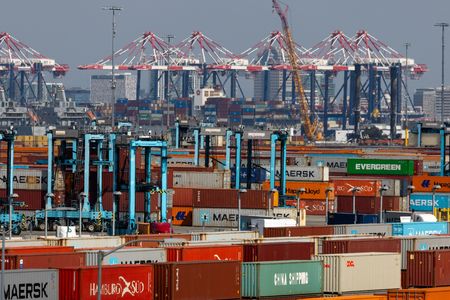
WILMINGTON, Del. – U.S. Customs and Border Protection has informed a federal court that it lacks the capability to process tariff refunds that were ordered following a Supreme Court decision declaring certain tariffs unlawful.
The customs agency made this declaration in documents submitted Friday to the U.S. Court for International Trade, stating it cannot fulfill the court’s directive to return the disputed tariff payments.
The filing comes after the nation’s highest court previously determined that the tariffs in question were imposed illegally, leading to the court order requiring their return to affected parties.
WASHINGTON – American businesses experienced a modest increase in their stockpiled goods during December, according to federal data released Friday by the Commerce Department’s Census Bureau.
The nation’s business inventory levels climbed 0.1% last month, marking the first uptick after remaining flat in November. This slight growth met predictions from economic analysts.
When compared to the same period last year, business stockpiles showed a more substantial 1.6% increase in December. These inventory figures represent a crucial element in calculating the nation’s gross domestic product, though they tend to fluctuate significantly.
The data release experienced delays due to the federal government shutdown that occurred last year. Previous government reports indicated that business inventories had fallen for three consecutive quarters during the final months of the year, although the rate of decline had been slowing.
These inventory changes contributed 0.21 percentage points to the nation’s 1.4% annualized economic growth rate during the October through December period.
Retail businesses saw their stockpiles recover by 0.1% in December, bouncing back from a 0.4% drop the previous month. Meanwhile, wholesale operations recorded a 0.2% inventory gain, and manufacturing companies increased their stock levels by 0.1%.
Business sales activity strengthened by 0.5% in December, following a 0.6% increase in November. However, retail sales remained unchanged during the month. At the current sales rate, companies would need approximately 1.36 months to completely sell through their existing inventory, an improvement from the 1.37 months required in November.
WASHINGTON – The Treasury Department announced Friday it has lifted Russia-related sanctions against a United Arab Emirates shipping company, according to an official notice posted on the agency’s website.
Globe Trekkers, a freight and logistics firm operating out of the UAE, had previously been subject to U.S. sanctions tied to Russia. The Treasury’s website confirmed the company’s removal from the sanctions list as of March 6.
The notice provides no additional details about the reasoning behind the decision to remove the sanctions or the timeline for when they were originally imposed on the logistics company.
Energy giant BP is pursuing damages of at least $3.7 billion following its successful arbitration case against American natural gas company Venture Global over undelivered liquefied natural gas shipments, according to newly released company documents.
According to Venture Global’s annual report published this week, BP’s compensation demands range from $3.7 billion to potentially more than $6 billion, plus additional costs for interest and legal expenses.
When contacted for comment, BP representatives declined to respond, while Venture Global’s spokesperson dismissed the British company’s damage claims as “unserious and not supported by evidence or controlling law.”
The arbitration case represents part of a massive legal battle in the LNG sector, with major energy companies including BP, Shell, Unipec, Edison, Galp, Repsol and Orlen all filing disputes against Venture Global.
BP successfully won its October arbitration regarding Venture Global’s inability to fulfill LNG deliveries under a long-term agreement scheduled to commence in late 2022.
The International Chamber of Commerce’s arbitration court determined that Venture Global violated its contractual duties by failing to properly announce the start of commercial operations at its Calcasieu Pass facility and by not operating as a “reasonable and prudent operator,” according to Venture Global’s regulatory documents filed at that time.
Despite this loss, Venture Global, which ranks as America’s second-largest LNG exporter, has prevailed in two of the three arbitration cases filed against the company.
The company successfully defended itself in Shell’s arbitration claim and later defeated Shell’s court appeal challenging that arbitration decision.
America sided with Russia, China, and Niger on Thursday when voting against a United Nations nuclear agency resolution that criticized strikes on Ukraine’s electrical systems, according to diplomatic sources.
The International Atomic Energy Agency’s 35-member Board of Governors approved the measure, marking the seventh Ukraine-focused resolution since Russia’s invasion of its neighbor four years ago. However, this represents the first instance of American opposition to such a resolution.
“While we continue supporting the IAEA’s work in-country, we do not support the Board’s current consideration of an unnecessary resolution that does not help achieve peace between Ukraine and Russia,” the United States said in its statement to the board before the vote.
President Donald Trump has recently pushed Ukraine toward accepting a rapid peace agreement that might require surrendering territory to Russia. Ukrainian leadership has rejected any territorial concessions.
Diplomats present at the private session reported the resolution succeeded with 20 supporting votes from nations including France, Britain, Australia, Canada, South Africa and Argentina, while facing 10 abstentions and four opposing votes. Countries abstaining included Brazil, Egypt, Morocco and Saudi Arabia.
According to the text reviewed by Reuters, the current resolution used less forceful language than earlier versions. The document stated the board “reemphasizes that attacks targeting Ukraine’s energy infrastructure for the off-site power supply of nuclear power plants, including at the ZNPP (Zaporizhzhia Nuclear Power Plant), represent a direct threat to nuclear safety and security.”
This action comes after America abstained during a UN General Assembly vote in February marking the invasion anniversary, when members approved a resolution supporting Ukraine’s territorial integrity and expressing alarm over escalating Russian strikes against civilians and essential energy systems.
That General Assembly measure succeeded with 107 nations supporting, 12 opposing, and 51 abstaining.
American officials explained their General Assembly abstention by stating the resolution contained provisions that might interfere with ongoing diplomatic efforts to resolve the conflict.
MIAMI – A senior White House official declared Thursday that eliminating drug cartels throughout the Western Hemisphere requires military intervention rather than conventional law enforcement methods.
Stephen Miller, who serves as Deputy Chief of Staff at the White House, addressed Latin American defense officials during a gathering at the U.S. Southern Command headquarters in Florida.
“We have learned after decades of effort is that there is not a criminal justice solution to the cartel problem,” Miller stated during his remarks to the assembled defense leaders at the conference.
Miller’s comments represent a significant policy position regarding how the United States views the ongoing battle against organized crime networks operating across the Americas.
Drivers in New Castle County should prepare for significant traffic disruptions this week as the Delaware Department of Transportation implements several road closures at the Interstate 95 and Route 896 interchange.
DelDOT officials have scheduled daytime lane restrictions on northbound Interstate 95 to accommodate truck access from Monday through Thursday. Additionally, crews will conduct overnight bridge work on Sunday that will require closing multiple lanes on northbound I-95.
Sunday night will also bring rolling roadblocks affecting the northbound State Route 896 on-ramp that connects to northbound Interstate 95, as workers continue bridge maintenance projects. Motorists can also expect daytime lane restrictions on southbound Route 896 on Sunday for sidewalk construction activities.
The transportation department advises drivers to plan alternate routes and allow extra travel time during the affected periods.
Maryland’s Department of Natural Resources has announced it will accept applications for nature-based shoreline restoration initiatives across three Eastern Shore counties.
The agency has issued a formal Request for Proposals seeking construction, design/build, and design submissions for living shoreline restoration work. Approximately $17 million in funding has been allocated for these environmental protection efforts. Applications will be accepted through April 6, 2026 and can be found on the Roots for Resilience: Open Solicitations webpage, which also contains detailed instructions and eligibility criteria.
Projects under consideration must be situated within Wicomico, Somerset, or Dorchester counties and must safeguard significant adjacent wetland areas. The agency’s goal is to fund large-scale restoration efforts that will collectively preserve 400 acres of high-quality tidal marsh habitat.
Priority will be given to public land initiatives that protect substantial marsh areas, with multiple project awards anticipated. While the minimum funding threshold is set at $1 million, smaller design-only proposals may receive consideration with department approval. Although matching funds are not mandatory, additional leveraged funding is welcomed.
Living shoreline techniques employ natural erosion prevention methods, including marsh vegetation, coir logs, sills, and breakwaters, to stabilize coastlines while preserving natural coastal dynamics. These methods help minimize erosion and flooding, safeguard infrastructure, reduce long-term expenses, support maritime industries, and enhance coastal resilience.
Those interested in applying should reach out to Ari Engelberg ([email protected]) for RFP details, to discuss potential project concepts, and to arrange site evaluations.
The initiative receives funding through a Climate Pollution Reduction Grant from the U.S. Environmental Protection Agency, which was awarded to the Atlantic Conservation Coalition, a partnership of four coastal states that includes the Maryland Department of the Environment.
Residents can once again dispose of brush at the Parsonsburg Convenience Center starting March 6, 2026, though officials warn that available space for dumping remains restricted.
The Solid Waste Division announced they are actively working to expand capacity as efficiently as possible to better serve the community.
County officials are asking residents to keep in mind the current space limitations when planning their visits to the facility.
Stock markets began Thursday’s trading session with significant declines as investors remained concerned about the ongoing Middle East conflict, which has now stretched into its sixth day. Market analysts worry that the continuing tensions could trigger new inflationary pressures, potentially complicating future decisions by the Federal Reserve regarding monetary policy.
At the opening bell, the Dow Jones Industrial Average dropped 212.7 points, representing a 0.44% decrease to reach 48,526.73. The S&P 500 index declined by 18.4 points, or 0.27%, settling at 6,851.08. Meanwhile, the Nasdaq Composite experienced a steeper fall of 100.0 points, down 0.44% to 22,707.468.
The market reaction reflects growing investor uncertainty about how prolonged Middle East tensions might impact global economic stability and influence the Federal Reserve’s approach to interest rate policies moving forward.
Israeli authorities announced Thursday that over 20,000 citizens have successfully returned to their homeland following the closure of the country’s airspace during weekend military operations involving Iran, according to the Transportation Ministry.
Officials began gradually reopening Israeli airspace Thursday, permitting limited flights to touch down at Ben Gurion International Airport outside Tel Aviv.
The country shut down its airspace Saturday when U.S.-Israeli military operations against Iran commenced, leading to retaliatory missile attacks from Iran that left tens of thousands of travelers stranded in foreign countries.
Transportation Ministry data indicates approximately 120,000 Israeli citizens currently overseas are requesting assistance to return home, with officials estimating the complete repatriation process will require seven to 10 days to complete.
According to Israel’s Population and Immigration Authority, nearly 300,000 Israelis traveled internationally over the past three months, while airlines report tens of thousands of customers are now seeking return passage.
The Transportation Ministry stated it is working to increase travel options through air, land, and sea entry points for both arrivals and departures.
The majority of returning Israelis have entered the country through land border crossings into Eilat, the southern Red Sea resort destination.
Israeli carriers have conducted evacuation flights from European destinations to Taba, Egypt and Aqaba, Jordan — both cities neighboring Eilat.
While these alternative route flights continue, Israel’s four national airlines — flag carrier El Al, Israir, Arkia and Air Haifa — have resumed service to Tel Aviv. Despite the gradual airspace reopening, only arriving aircraft are currently permitted, limited to one landing hourly due to ongoing Iranian missile threats.
“We are doing everything to return every Israeli home safely,” stated Transportation Minister Miri Regev, a former military Brigadier General.
“With the opening of airspace, the return of Israelis to Israel began, and we continue to work around the clock together with all parties to expand the options for returning and leaving the country in accordance with security restrictions,” she added.
The initial aircraft to reach Ben Gurion included Israir and Arkia flights arriving from Rome, plus an El Al flight from Athens. Additional flights from European cities, the United States, and Asia are scheduled.
Ben Gurion Airport announced outbound flights will restart Sunday, though initially restricted to 50 passengers per departure.
Israeli airlines have suspended ticket sales from March 15 through March 21 to prioritize rebooking customers whose previous flights were canceled when airspace restrictions were implemented.
A major U.S. investment firm is facing significant financial exposure following the collapse of a British property lending company, according to a Bloomberg News report released Friday.
Blue Owl, an alternative asset management company overseeing $307 billion in investments, has approximately 36 million pounds ($48 million) tied up with Century Capital Partners Ltd, a London-based lender that went into administration in February, sources familiar with the situation told Bloomberg.
The American private-credit company had provided financing for the highest-risk portion of loans that Century originated, focusing primarily on expensive properties in central London’s real estate market.
Century Capital collapsed with roughly 95 million pounds in total obligations, occurring just days before Market Financial Solutions, a larger competitor, also entered a British form of bankruptcy proceedings.
According to the Bloomberg report, both lending companies depended on credit lines from private investment firms and traditional banks to create short-term property loans. These loans typically served borrowers unable to obtain conventional bank financing and carried elevated interest rates. The report noted that no creditor has alleged fraudulent activity by Century Capital.
Neither Century Capital nor Blue Owl provided immediate responses when contacted for comment by Reuters.
Blue Owl has faced increased investor attention in 2026 as financial pressures, restrictions on withdrawals, and a substantial asset sale have sparked wider questions about emerging difficulties in the private-credit industry.
The failure of Market Financial Solutions has intensified worries about lending practices and the rapidly expanding private finance sector.
**STOCK PERFORMANCE DECLINING**
Last month, Blue Owl announced plans to divest $1.4 billion worth of assets from three investment funds, distribute some proceeds back to certain investors, and reduce outstanding debt. The company also permanently eliminated quarterly withdrawal options for investors in its smallest fund, which primarily serves high-net-worth individuals.
This move negatively affected share prices by raising concerns about private lending standards and potential cash flow problems throughout the sector.
Blue Owl’s stock price dropped more than 6% on Friday and has declined over 30% during 2026. Over the past twelve months, the company’s shares have lost nearly 49% of their value.
The current exchange rate shows $1 equals 0.7485 British pounds.
Prudential Financial’s life insurance division in Japan announced Friday that several of its workers stationed at partner agencies illegally accessed and removed confidential business data, then distributed it to colleagues within the company.
According to the firm’s disclosure, eleven staff members extracted operational data during 379 separate incidents across seven different agencies. The stolen information was then passed along to other Prudential personnel, who utilized it to develop sales marketing tactics.
The compromised data included details about agency sales performance and other internal business operations, the company revealed.
This latest scandal emerges just weeks after the head of Prudential’s Japanese life insurance division stepped down in February, amid a separate misconduct investigation involving approximately 100 workers and roughly 3.1 billion yen in damages.
“Both the seconded employees who removed the information and the employees who received it lacked a fundamental understanding of the rules and failed to perform basic compliance actions,” Prudential Gibraltar Financial Life Insurance said in a statement.
The insurance company announced it will terminate all life insurance employee assignments to outside agencies by March’s end. Additionally, several current and former company leaders have agreed to voluntarily forfeit portions of their salaries.
“After confirming the content of all cases with the agencies, no issues were identified that would raise concerns under the Unfair Competition Prevention Act, nor was there any inappropriate removal of contract information,” it added.
Trading activity showed Prudential’s parent company stock dropping 3.4% during Friday morning sessions.
Major U.S. stock markets began Friday trading with significant declines as investors grappled with dual concerns: escalating Middle East conflicts that could drive up energy prices and unexpectedly poor employment data for February.
At the opening bell, the Dow Jones Industrial Average dropped 320.2 points, representing a 0.67% decline to 47,634.55. The broader S&P 500 index fell 61.7 points or 0.90% to reach 6,769.03, while the technology-heavy Nasdaq Composite experienced the steepest drop, falling 327.8 points or 1.44% to 22,421.172.
Investors are concerned that ongoing tensions in the Middle East could lead to higher energy costs, which would contribute to inflationary pressures across the economy. These worries were compounded by February jobs data that revealed the economy lost jobs when growth had been anticipated.
BEIJING, March 6 – Leaders and business executives from Guangdong Province, China’s southern technology and manufacturing center, announced Friday their commitment to integrate artificial intelligence throughout the region’s massive $2 trillion economy. The announcement came just one day after Beijing unveiled its comprehensive “AI plus” initiative designed to weave the technology into every sector of the nation’s economy.
The declarations were made during a gathering focused on discussing new government policy documents and a five-year development plan that, for the first time, places AI-powered industrial transformation at the heart of economic expansion.
Given Guangdong’s crucial role in worldwide supply networks, manufacturing everything from mobile phones to home appliances and electric cars, the province’s success in implementing AI technology will significantly influence how much the European Union and United States can reduce their supply chain dependence on China during this period of increasing geopolitical tensions.
Guangdong holds the distinction of being China’s most economically productive province, maintaining the top position nationally for over thirty years. The region generated approximately 14.6 trillion yuan ($2.1 trillion) in gross domestic product for 2025, creating an economy larger than entire nations such as Australia.
Governor Meng Fanli stated that Guangdong would expand “AI plus” implementations throughout various industries while promoting widespread commercial adoption of artificial intelligence technology.
The province’s Communist Party leader Huang Kunming announced plans to accelerate the development of new infrastructure projects, particularly massive computing facilities.
Shenzhen Mayor Qin Weizhong, representing China’s leading technology center, reported that industries including artificial intelligence, robotics, and semiconductor manufacturing experienced growth rates exceeding ten percent during the previous year. Strategic emerging sectors represented 43% of Shenzhen’s total economic output, according to Qin. The city serves as headquarters for major technology corporations including Huawei, Tencent, and DJI.
The mayor explained that Shenzhen was fast-tracking domestic alternatives for chip manufacturing equipment, computing infrastructure, and electronic design automation software – technological areas where China trails the United States and faces restrictive American trade controls.
Qin also called for increased federal assistance to establish an independent AI hardware and software ecosystem while expanding Chinese-developed standards in fields such as artificial intelligence and intelligent vehicles.
A provincial government asset official indicated that Guangdong would direct state investment toward advanced manufacturing sectors, including artificial intelligence and drone technologies.
GAC Group Chairman Feng Xingya announced his automotive company would intensify implementation of AI systems within self-driving vehicle technology.
WASHINGTON – Federal highway safety regulators are bringing together top executives from major self-driving car companies for a comprehensive safety discussion this Tuesday.
The National Highway Traffic Safety Administration has organized the autonomous vehicle safety forum, which will feature leadership from three prominent companies in the field. Participants include Tekedra Mawakana, co-CEO of Waymo (owned by Alphabet), Aicha Evans who heads Amazon’s Zoox division, and Chris Urmson, chief executive of Aurora.
The gathering comes as the current administration works to accelerate the rollout of driverless taxi services while removing regulatory obstacles, though officials remain focused on safety considerations. Federal regulators are examining possible new measures, including what they describe as “future guidance on the safe domestic development, testing, and deployment” of autonomous vehicles.
The full-day conference will also examine how remote assistance technology is being utilized in robotaxi operations, as the industry continues to evolve rapidly.
KANSAS CITY, Mo., March 6, 2026 — During the National Pork Industry Forum held in Kansas City, Missouri, the National Pork Producers Council revealed the winners of three major scholarship programs totaling $90,000 in financial support. The awards include the 2026 Lois Britt Memorial Pork Industry Scholarship, the Neil Dierks Scholarship, and the newly launched U.S. Pork Center of Excellence (USPCE) Swine Legacy Scholarship. CME Group and the National Pork Industry Foundation (NPIF) sponsor these programs that honor outstanding students pursuing careers in America’s pork sector.
Duane Stateler, departing NPPC president and Ohio pork producer, expressed enthusiasm about the scholarship recipients. “These young leaders represent the very best of our industry’s future,” Stateler commented. “At Forum each year, we are reminded the strength of U.S. pork is not only in our farms and businesses but in the people who are stepping up to serve it. Their work ethic, integrity, and commitment to agriculture give me great confidence in where we are headed. NPPC is proud to support them as they carry this industry forward.”
John Ricci, managing director and global head of agricultural products at CME Group, highlighted his company’s long-standing commitment to the industry. “We have proudly supported NPPC and its commitment to the pork industry and its next generation of leaders through the Lois Britt Memorial Pork Industry Scholarship since 1990,” Ricci stated. “We congratulate this year’s recipients and applaud their success and ongoing dedication to the field of agriculture.”
Lois Britt Memorial Pork Industry Scholarship Recipients
Ten students earned the $2,500 Lois Britt Memorial Pork Industry Scholarship for 2026:
Trell Amoss — Oklahoma State University
Elizabeth Anderson — Iowa State University
Avah Burke — Pennsylvania State University
Jenna DeRouchey — Iowa State University
Halle Evans — Iowa State University
Georgia Horosky — Wilmington College
Drew Mickey — Kansas State University
Abigail Morse — South Dakota State University
Kylee Reed — Iowa State University
Joshua Wiley — Iowa State University
CME Group and NPIF jointly fund the Lois Britt Memorial Pork Industry Scholarship, which supports undergraduate students enrolled in two-year swine programs or four-year agricultural college programs. The scholarship program began in 1990 and received its current name in 2006 to honor Lois Britt, a former NPPC board director. Britt dedicated her career to agricultural advancement, serving 34 years with the North Carolina Cooperative Extension before working 15 years in public and government relations with Murphy-Brown LLC, now known as Smithfield. Her contributions earned her induction into both the NPPC Pork Industry Hall of Fame and the North Carolina Pork Council Hall of Fame, along with the North Carolina 4-H Lifetime Achievement Award.
Neil Dierks Scholarship Winner
Emma Zwart from Iowa State University received the $5,000 Neil Dierks Scholarship for 2026.
The National Pork Industry Foundation administers the Neil Dierks Scholarship, which was established in 2021 and provides funding for current or incoming graduate students in swine-related programs. The scholarship honors Neil Dierks, who led NPPC as CEO for 20 years before retiring in December 2021 after three decades with the organization. During his tenure, Dierks helped establish NPPC as a prominent advocacy organization and the international voice of the U.S. pork industry. His achievements were recognized with his induction into the NPPC Pork Industry Hall of Fame in 2022.
USPCE Swine Legacy Scholarship Recipients
Four students received the inaugural $5,000 USPCE Swine Legacy Scholarship in 2026:
Rebecca Brown — The Ohio State University
Jenna DeRouchey — Iowa State University
Kory Storm — South Dakota State University
Trell Amoss — Oklahoma State University
The National Pork Industry Foundation manages the USPCE Swine Legacy Scholarship, which was created in 2026 following the closure of the U.S. Pork Center of Excellence after two decades of operation as a public-private partnership serving the pork industry. Through a competitive application process, the organization’s remaining financial resources were transferred to NPIF to establish an endowed scholarship program. This scholarship assists students pursuing careers in research, education, or veterinary science with an emphasis on the swine industry, providing funding for one graduate or professional track student and three undergraduate students annually. The program is structured to continue for the next 40 years, preserving the Center’s mission by supporting the next generation of industry professionals.
Additional information about the scholarship application process is available through NPPC’s education programs.
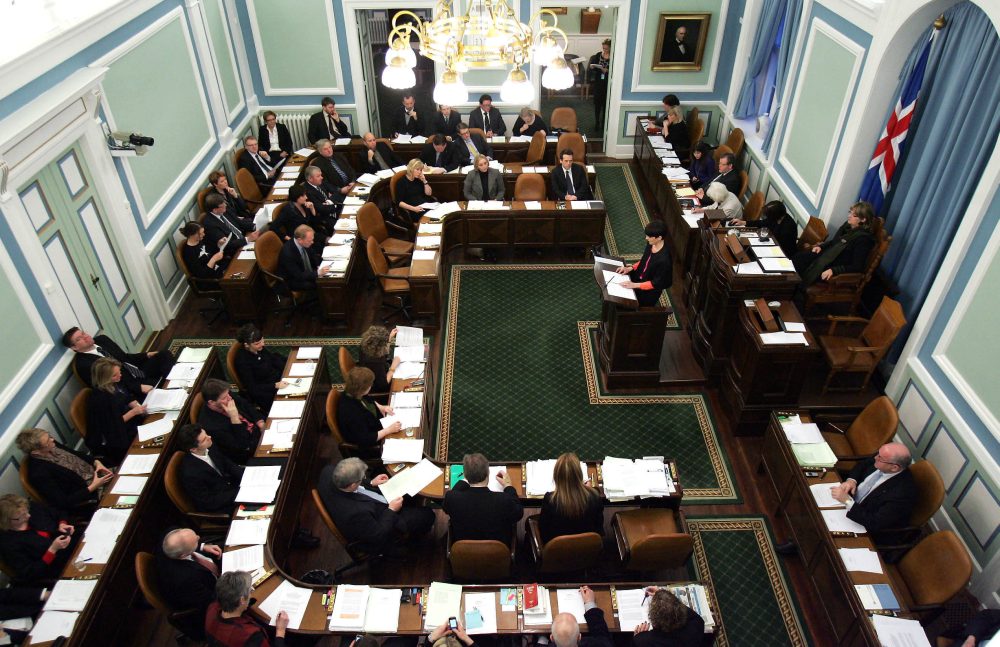
Iceland’s Cabinet has greenlit a proposal for a summer referendum asking voters whether the nation should restart negotiations to join the European Union, according to national broadcaster RUV.
The government approved the resolution Friday, scheduling the vote for August 29. However, Iceland’s parliament, known as the Althingi, must first give its approval before citizens can head to the polls.
This Arctic island nation of 400,000 residents is reconsidering its relationship with the EU as geopolitical tensions mount and economic pressures intensify.
The center-left coalition led by Prime Minister Kristrun Frostadottir, which took office in 2024, originally planned to conduct this referendum by 2027. However, recent statements by U.S. President Donald Trump about acquiring Greenland prompted officials to accelerate their timeline.
During heated international discussions about his territorial ambitions, Trump repeatedly confused Greenland with Iceland in his public remarks.
Multiple factors have heightened Iceland’s security anxieties, including inflation concerns, the ongoing conflict between Russia and Ukraine, and strained relationships across the Atlantic. Without its own military forces, Iceland depends on NATO protection and a defense partnership with the United States.
Iceland has historically resisted EU membership due to fears of losing control over its valuable fishing territories in the North Atlantic to vessels from other European countries.
The nation initially sought EU membership in 2009 following the devastating collapse of its banking industry during the worldwide financial meltdown. However, negotiations were put on hold in 2013 when conservatives took power, and talks officially concluded in 2015.
Currently, Iceland maintains access to EU markets through the European Economic Area agreement and participates in the Schengen zone, which allows unrestricted travel between member countries.
The EU is presently conducting membership discussions with ten nations, including Albania, Moldova, Montenegro, and Ukraine leading the queue.
EU membership involves an extensive, multi-year evaluation process overseen by the European Commission, examining 35 different areas ranging from government transparency and financial systems to fishing rights, transportation infrastructure, farming policies, and fundamental freedoms including expression and worship.
Every existing EU member must vote unanimously to accept new applicants. Hungary has indicated it may block Ukraine’s potential membership.
DANBURY, Conn. (AP) — Emergency calls at the Danbury Fire Department used to trigger immediate, high-volume alarms and tones that would startle firefighters before they rushed out to potentially high-stress situations.
Captain Kevin Lunnie described the previous system as “overwhelming.” He observed significant spikes in his heart rate when those alerts sounded, which poses serious concerns in a field where cardiac issues represent the primary cause of line-of-duty fatalities.
However, the city has adopted a more gentle method. Their new system, which became operational in September, features alarms that begin quietly and slowly build in volume, accompanied by a computerized voice that calmly delivers essential information about the emergency response needed.
“It’s much easier on your nervous system,” Lunnie stated.
This southwestern Connecticut city of approximately 87,000 residents has implemented the updated alert technology across its five fire stations, becoming part of thousands of departments globally working to decrease stress levels and enhance response efficiency.
During a recent weekday demonstration at Danbury’s primary fire station, an incoming call triggered the alert with one gentle tone. “Truck 1,” announced the automated female voice. “Respond to sick person,” it continued, providing the patient’s location.
Throughout the station, soft red lighting pulsed while screens showed the emergency type and address. A countdown timer started at two minutes, with crews aiming to depart before reaching zero.
The approach proves both more peaceful and clearer compared to the previous method, which started with maximum-volume single tones followed by chaotic longer ones that shifted between high and low frequencies. Emergency dispatchers would announce calls through station speakers, which firefighters described as filled with static and difficult to comprehend.
“Most people found it very jarring,” Lunnie commented about the old system, which would shock firefighters awake at any hour.
The updated equipment connects directly to the computer-aided dispatch system. When dispatchers receive emergency calls and enter initial details, it can notify stations and units more rapidly than department personnel, while simultaneously transmitting call information to firefighters’ mobile devices and smartwatches.
According to Danbury Assistant Fire Chief William Lounsbury, this results in faster response times.
Danbury utilized approximately $500,000 from 2021 American Rescue Plan Act funds to purchase the new Phoenix G2 system, manufactured by US Digital Designs, a Honeywell subsidiary. Honeywell reports that nearly 6,000 firehouses across the United States use this same system.
Various other companies produce comparable alerting technologies installed in numerous stations throughout the country.
Supporters of the gentler method reference a decade-old research study showing that alert systems using immediately loud sounds raised firefighter heart rates by a median of seven beats per minute, versus five beats per minute with systems that gradually increased volume.
While the difference appeared relatively minor, researchers determined it was statistically meaningful.
“When the alarm was used in a ramp-up fashion — so a gradual buildup on the alarm — the heart rate was lower to the alarm, so it put less stress on their body,” explained Dr. Jay MacNeal, associate emergency medical services director for Wisconsin’s Beloit Fire Department and one of the study’s co-authors.
More than 40 Beloit firefighters participated in the research, which appeared in the Journal of Occupational and Environmental Hygiene in 2016 by investigators from Mercyhealth’s Emergency Medicine Department in Janesville, Wisconsin, and Yale University in Connecticut.
The National Fire Protection Association reports that among 51 on-duty firefighter deaths in the United States during 2024, 20 resulted from sudden cardiac death, making it the top cause of these fatalities.
In the previous year, the NFPA established new standards for fire station alerts requiring alarms and tones that begin at lower volumes, plus calm, computerized voices, recognizing the importance of stress reduction.
The International Association of Fire Fighters, representing more than 360,000 firefighters and paramedics across the United States and Canada, endorses progressive-volume alert systems. However, the organization seeks specific standards governing their design.
Sean DeCrane, the IAFF’s assistant to the general president for health and safety, noted that research on optimal methods for alerting firefighters to emergency calls remains insufficient, and each currently available system differs.
“We would like to see an industry standard that really starts to define the decibel levels, the intervals, the integration of turning on the lights, what that progression should be, and we believe the standard should be based on research,” DeCrane stated.
Financial markets worldwide are grappling with uncertainty as the Middle East conflict continues into its second week, creating unprecedented challenges for economic forecasting and monetary policy decisions.
The U.S. dollar has become investors’ preferred safe haven during this period of unrest, posting its best weekly gains since late 2024 with a 1.7% increase. Meanwhile, rising energy costs are sparking concerns about a repeat of the 2022 energy crisis, though market analysts note the absence of widespread panic seen in previous global crises.
Key market stress indicators remain relatively stable, including corporate bond spreads and the VIX volatility measure, suggesting many investors continue to trust President Donald Trump’s promise of a swift resolution to the conflict.
The recent Bank of America survey revealed that half of global fund managers considered gold ownership the most popular investment strategy, with the precious metal climbing 70% over the past year. Technology stocks and emerging market investments also attracted heavy investment flows before the current selloff.
These previously popular assets have taken significant hits this week, alongside bonds experiencing their worst weekly decline in over a year as inflation concerns mount and interest rate projections shift dramatically.
Kit Juckes, who leads foreign exchange strategy at Societe Generale, emphasized that current market conditions aren’t creating systemic risks. “There’s nothing that gums up the works of the system,” Juckes explained.
“There’s just a geopolitical shock that, for the sake of argument, has sent the dollar up, stocks down, and boosted some volatility and sent oil prices up very quickly,” he added.
Market volatility measures have increased but remain well below crisis levels. The VIX equity volatility index sits above 20 after its largest weekly jump since November, far from the record 60 reached during Trump’s “Liberation Day” events last April.
Bond market volatility, measured by the ICE BofA MOVE index, has reached its highest point since November at 75, though still below April’s peak around 140. Currency fluctuations have also intensified but less dramatically than during January’s Greenland annexation threats.
Energy markets represent the primary source of current market stress, with oil prices surging over 20% in one week – the largest weekly increase in four years.
Nicolas Forest, chief investment officer at Candriam, offered perspective on historical conflict impacts: “When you look at past crises, we can see that generally the impact of past conflicts are relatively neutral for equities. We can see some shock, but after three months, six months, it’s relatively manageable.”
However, Forest warned about oil reaching $100 per barrel: “That’s another story.”
The potential energy crisis compounds existing market vulnerabilities that financial regulators have highlighted recently, including excessive hedge fund borrowing in government bond markets, possible artificial intelligence investment bubbles, and growing risks in private credit markets.
Kevin Thozet from Carmignac has long argued that markets underestimate sustained inflation risks, particularly given resilient global economic growth. He advocates for inflation-protected bonds over traditional government securities.
“Even with oil nearing $90 a barrel, people are still underappreciating the risk of inflation over the medium term,” Thozet stated.
With numerous uncertainties surrounding interest rates and long-term economic impacts, investors are gravitating toward familiar strategies.
Dan Izzo, founder of hedge fund BLKBRD, described the current investment dilemma: “People are struggling to understand the answer of, ‘what do I buy?’”
“Earlier this year and before the war in Iran, people were firmly rooted in buying assets in the rest of the world, certainly as AI and credit-related U.S. risks have emerged,” Izzo noted.
“The war has shifted this thinking,” he concluded.
Popular trading platform Robinhood made history Friday by launching its massive $658.4 million venture capital fund on the New York Stock Exchange, breaking down barriers that have traditionally kept everyday investors away from lucrative private company investments.
For years, major venture capital firms in Silicon Valley have dominated investments in private companies, leaving individual investors unable to participate in a market where company values have skyrocketed.
Trading under the symbol ‘RVI,’ the new fund holds positions in several well-known private tech companies, including data analytics company Databricks, business expense platform Ramp, and digital banking service Revolut.
“There is a big gap in the market where the retail customer cannot access private assets,” Robinhood’s Chief Financial Officer Shiv Verma explained during a Reuters interview.
Many of these private companies now carry price tags that match or surpass major publicly traded corporations. Databricks secured funding in February that valued the company at $134 billion, while Ramp achieved a $32 billion valuation last November.
Financial experts warn the fund comes with inherent risks, particularly regarding how private company values can fluctuate, though these concerns apply broadly across the venture capital industry. The market for venture capital exits has also experienced significant turbulence as initial public offering activity has declined.
Robinhood set the initial share price at $25 and sold 12.6 million shares, though this fell short of their original fundraising goals. Market volatility continues to affect investor interest in new public offerings amid ongoing global tensions and concerns about artificial intelligence disruption.
Verma emphasized that Robinhood deliberately selected established, mature companies that pose “much less risk” compared to newer startups.
“These are great investments, they’re going to do well and if there’s some short-term volatility in the interim, because it’s a closed-end fund, you’re not forced to sell,” he stated.
The CFO noted the fund may eventually branch into additional industries such as energy, robotics, aerospace, and defense, and attracted interest from institutional investors during their marketing campaign.
Robinhood has transformed from a simple trading application aimed at individual investors into a comprehensive financial services company, helping drive its market value beyond $72 billion.
Federal Reserve officials find themselves facing a difficult balancing act after February’s disappointing employment figures coincided with surging oil prices, potentially forcing policymakers to choose between controlling inflation and supporting a struggling job market.
The latest employment report revealed that American businesses eliminated 92,000 positions in February, while previous months’ job creation numbers were also revised downward. Oil prices climbed close to $90 per barrel during the same period, driving gasoline costs up from $3.00 to $3.32 nationwide in just one week.
Health sector labor disputes and continued federal government workforce reductions contributed to February’s job losses, but the data still dashed expectations that employment growth was gaining momentum.
These twin pressures of weakening employment and rising energy costs have revived concerns about “stagflation” – a scenario combining economic stagnation with inflation that Fed officials believed they had successfully addressed.
While the Federal Reserve is anticipated to maintain current interest rates at its March 17-18 policy meeting, officials may need to engage in deeper conversations about economic strategy as supply chain vulnerabilities resurface. The situation echoes challenges from the pandemic period, when global supply disruptions proved difficult to predict and manage.
Market participants have increased their expectations for a Fed rate reduction in June following the jobs data, though the decision will likely depend on how policymakers weigh competing economic risks that could simultaneously drive prices higher and slow growth.
Fed Governor Christopher Waller shared his perspective during a Bloomberg Television appearance, describing the oil price surge as “more like a one-off event” that wouldn’t necessarily trigger Fed action. However, he recognized the uncertainty if ongoing conflicts continue pushing energy costs upward.
“If it’s unwound in … a couple of weeks or even two months, it’s not going to be a big factor down the road,” Waller explained. “If it becomes more permanent … Then it’ll start bleeding through to other parts of the economy.”
The disappointing February employment figures are expected to carry additional weight in Fed deliberations. Waller had previously indicated he would resist supporting additional rate cuts if February’s job numbers proved strong, following January’s unexpectedly robust employment gains.
“If the labor market continues to go weak … If we get a bad number … the question is why are you just sitting on your hands” rather than supporting employment through rate reductions, Waller stated.
Some Fed officials are already grappling with competing priorities, as inflation remains approximately one percentage point above the central bank’s target while new upward price pressures emerge.
San Francisco Fed President Mary Daly addressed the challenge during a CNBC interview, saying “The hopes that the labor market was steadying — maybe that was too much. But we also have inflation printing above target and oil prices rising. How long they last, we don’t know, but both of our goals are risks now and we need to keep our eye on both.”
Federal securities regulators announced Friday they have imposed a $20 million penalty against investment firm Canaccord Genuity for neglecting to submit about 150 required suspicious activity reports to authorities.
The company reached a settlement agreement with the Securities and Exchange Commission without acknowledging any wrongdoing while paying the substantial civil penalty. As part of the resolution, Canaccord Genuity also accepted an official censure from regulators.
SAO PAULO – Brazil’s government-owned banking giant has taken its popular instant payment technology across borders for the first time, introducing the service in Argentina on Friday.
Banco do Brasil partnered with its subsidiary Banco Patagonia to create a system that lets any Brazilian using the Pix payment platform make purchases in Argentina, regardless of which bank they use back home. This marks the first time the widely-used Brazilian payment system has operated outside the country’s borders.
“The launch of Pix abroad strengthens Banco do Brasil’s international operations and underscores its commitment to innovation in payment methods,” said Felipe Prince, the bank’s vice president for Internal Controls and Risk Management.
Prince noted that Argentina serves as the opening move in a broader plan to expand payment convenience for Brazilian customers worldwide.
Banco Patagonia’s chief executive Oswaldo Parre described the partnership as advancing regional financial integration between the neighboring South American nations.
The Brazilian banking institution is now considering whether to roll out similar services in other regions across the Americas, Europe, and Asia, particularly targeting areas with significant Brazilian populations.
THE PAYMENT PROCESS
Brazil’s central banking authority created Pix to facilitate immediate, 24-hour money transfers at no cost to individual users. Nearly 900 financial institutions now support the platform, which has grown into Brazil’s dominant payment method with more than 170 million users nationwide, according to regulatory data.
The cross-border version works through QR code scanning – Brazilian customers use their banking applications to scan codes at participating Argentine businesses. While merchants receive payment in Argentine pesos, customers see charges in Brazilian reais on their accounts.
Banco do Brasil manages all backend operations, including peso-to-real currency exchanges and applicable fees, with full cost transparency displayed to customers before they confirm transactions.
BEIRUT, March 5 – Israeli military officials directed civilians to evacuate Hezbollah-controlled neighborhoods in southern Beirut on Thursday, creating widespread panic as thousands fled the densely populated areas during the fourth day of intense fighting between Israel and the Iran-backed militant group.
Through a social media post, an Israeli military representative instructed people living in the southern districts to move toward the east and north, sharing a detailed map of four large neighborhoods that must be cleared. Some of these areas sit close to Beirut’s main airport.
“Save your lives, evacuate your homes immediately,” wrote Israeli military spokesperson Avichay Adraee in his warning message, adding that traveling southward could put residents in grave danger.
Television broadcasts captured scenes of congested roadways as civilians escaped both in vehicles and on foot from the targeted neighborhoods. Warning shots echoed through the southern districts, alerting remaining residents to leave immediately.
The conflict expanded to include Lebanon this Monday after Hezbollah launched attacks, prompting Israel to respond with concentrated air campaigns targeting the southern suburbs of Beirut, along with areas in southern and eastern Lebanon.
A day earlier on Wednesday, Israeli forces had instructed residents across roughly 8% of southern Lebanon’s territory to abandon their homes.
The combination of Israeli strikes and evacuation directives has displaced tens of thousands of Lebanese citizens from both the southern suburbs and southern regions this week. Lebanese health officials report 77 deaths so far.
No Israeli casualties have been documented from Hezbollah’s attacks during this period.
The southern suburbs of Beirut house predominantly Shi’ite Muslim communities and rank among the capital’s most crowded residential zones. These same neighborhoods suffered extensive damage from Israeli bombardment during conflicts with Hezbollah in both 2024 and 2006.
Two crew members died and four others sustained injuries when an Algerian military transport plane went down Thursday moments after departing from the Boufarik air base, according to reports from Ennahar TV citing the country’s defense ministry.
The small military aircraft experienced the fatal incident shortly following its departure from the base on March 5th. The defense ministry confirmed the casualty figures through the television network’s reporting.
ANNAPOLIS, MD – Maryland agriculture officials announced new quarantine measures on March 6, 2026, targeting an invasive moth species that threatens local ecosystems.
The Maryland Department of Agriculture has implemented an immediate quarantine for box tree moths (Cydalima perspectalis) covering the entirety of Allegany, Frederick, Garrett, and Washington counties. The emergency restrictions will limit the transportation of certain regulated materials from these areas.
Simultaneously, state officials have broadened their existing quarantine protocols for spotted lanternfly populations in the same four-county region.
The quarantine measures take effect without delay as agriculture specialists work to contain the spread of these destructive invasive insects that pose significant risks to Maryland’s plant life and agricultural economy.
WASHINGTON — The nation’s employment picture darkened unexpectedly in February as employers eliminated 92,000 positions, pushing the jobless rate higher to 4.4% and signaling continued challenges in the labor market.
Friday’s report from the Labor Department showed a dramatic shift from January’s performance, when employers had added 126,000 positions across private companies, nonprofit organizations, and government agencies. Economic forecasters had predicted February would bring 60,000 new positions.
Making matters worse, government statisticians revised downward the job counts for December and January by a combined 69,000 positions.
The employment sector had been anticipated to recover this year following a disappointing 2025, when economic turbulence from President Donald Trump’s unpredictable tariff strategies and persistent high interest rate effects limited job creation to just 15,000 monthly additions.
Building industry employers eliminated 11,000 positions in February, likely due to harsh winter weather conditions. Medical sector companies dropped 28,000 workers following a month-long labor strike involving over 30,000 nursing staff and frontline medical workers at Kaiser Permanente facilities across California and Hawaii.
The employment market’s future direction — along with broader economic prospects — faces uncertainty due to ongoing conflict with Iran.
Business owners showed hesitation in expanding their workforce throughout the previous year due to questions surrounding President Trump’s trade tariff policies and their unpredictable implementation timeline.
Elevated borrowing costs, deliberately set by the Federal Reserve to address post-COVID inflation surges, also created headwinds for job growth during 2025.
The effects of Trump’s assertive trade approach may diminish in 2025. His import duties became more moderate and consistent after securing a trade agreement with China last year, plus arrangements with major trading partners including Japan and European Union nations. Many companies have adapted to tariff expenses, frequently transferring these costs to consumers through price increases.
Companies required “a year to bake some of those costs into their business model, and now it’s time to get back to growth mode,” stated Andy Decker, CEO of Atlanta-based Goodwin Recruiting.
The Supreme Court has overturned Trump’s most significant tariff measures, though he continues implementing replacement policies.
Nevertheless, current hiring levels remain well below the robust employment expansion of 2021-2023, when the economy rebounded from pandemic restrictions and monthly job additions approached 400,000. Economic analysts characterize today’s employment environment as “no-hire, no-fire”: businesses avoid expanding staff while retaining existing employees.
Fortunately, reaching adequate job growth targets has become more achievable recently.
Previously, employers needed to create over 100,000 monthly positions to prevent unemployment increases.
However, Baby Boomer workforce exits and President Trump’s deportation policies have reduced job competition. This has lowered the equilibrium point to between zero and 50,000 monthly jobs, according to Joe Brusuelas, chief economist at tax and consulting firm RSM. “Under the current conditions, 70,000 should be considered solid,” he explained.
Businesses may be delaying hiring decisions while purchasing, implementing, and optimizing new technologies, particularly artificial intelligence systems. AI capabilities potentially allow companies to “do more with less” and reduce workforce needs, especially for beginning-level roles, Brusuelas noted.
Companies are considering, he explained, “we’ve invested an awful lot of money in (capital expenditures), and we need to see how much we can produce with our current labor force… The last thing you want to do is hire a lot of young people and then let them go.”
The nation’s job market took an unexpected turn in February as employment dropped by 92,000 positions, pushing the unemployment rate up to 4.4%, according to Friday’s employment data from the Bureau of Labor Statistics.
The February decline caught economists off guard, as they had predicted the economy would add 59,000 jobs during the month. Instead, the labor market contracted following January’s revised gain of 126,000 positions, which was adjusted downward from the initially reported 130,000.
Several factors contributed to February’s employment setback, including a major strike involving 31,000 Kaiser Permanente healthcare workers in California and Hawaii, along with severe winter conditions that disrupted business operations nationwide. The healthcare strike has since concluded.
Economic analysts noted that January’s stronger-than-expected job growth had been artificially inflated by updates to statistical models used to track business openings and closures, making February’s pullback partly a correction from the previous month’s inflated numbers.
The employment landscape continues to face headwinds from policy uncertainties surrounding President Trump’s tariff initiatives, which were implemented under emergency powers legislation. Although the Supreme Court invalidated the original tariffs, the administration responded by establishing a 10% worldwide tariff, later announcing plans to increase it to 15%.
Additional challenges stem from the administration’s immigration enforcement measures, which have tightened labor supply, and delayed population adjustments resulting from last year’s 43-day government shutdown.
New Census Bureau figures show the nation’s population grew by only 1.8 million people, representing a 0.5% increase to 341.8 million residents in the year ending June 2025.
While the unemployment rate rose from January’s 4.3%, economists emphasized that the current level remains historically low. Most analysts indicated they would only become concerned if joblessness exceeded 4.5%.
The ongoing Middle East conflict adds another layer of uncertainty to the economic outlook. Gas prices have jumped more than 20 cents per gallon since U.S. and Israeli forces launched strikes against Iran last weekend, with Tehran’s retaliation raising fears of broader regional warfare.
Market volatility from the conflict could prompt higher-income consumers—who drive much of the nation’s economic activity through spending—to reduce their purchases, potentially creating additional employment pressures.
Federal Reserve officials are scheduled to meet March 17-18, with expectations they will maintain the current benchmark interest rate between 3.50% and 3.75% as they monitor inflation risks from the escalating conflict.
European companies are scrambling to recover potentially billions in tariff payments following a Supreme Court decision that invalidated several of President Trump’s major trade levies, according to interviews with business executives across the continent.
Discussions with twelve European companies spanning electronics manufacturing to consumer goods reveal how businesses are working to adjust to rapidly shifting U.S. trade policies during the ongoing commercial dispute under the Trump administration.
Following the nation’s highest court’s February decision to overturn Trump’s “liberation day” tariffs, the president implemented a fresh 10% across-the-board duty that may increase to 15%, creating fresh global confusion about trade agreements negotiated last year and the actual rates facing importers.
“The Supreme Court ruling has said one thing… The White House is saying something else,” said Simon Hunt, CEO of Italian beverage company Campari, in an interview with Reuters. He noted conflicting messages from customs agencies and trade tribunals as well.
“If there’s an opportunity to recover (tariff payments), then clearly, like every other company, we’ll look at it. But at this stage, we’re just going to wait and see,” Hunt added.
The federal government had gathered over $130 billion through tariff collections that courts have now declared unlawful, representing a cornerstone of Trump’s trade strategy. The Supreme Court’s decision offered no direction regarding refund procedures, creating uncertainty about how importers might reclaim their payments.
This Friday, the U.S. Court of International Trade plans to convene with federal attorneys to develop a compensation framework. Government legal representatives indicated the process would necessitate individual examination of tens of millions of transactions.
German electric motor manufacturer ebm-papst’s American division is exploring legal remedies for reimbursement, including modifying import documentation through post-summary correction (PSC), which permits changes up to 300 days after merchandise enters the United States.
This approach could theoretically reduce the relevant tariff percentage and trigger an automatic refund, according to trade consultants. However, some industry experts expressed skepticism about receiving payments and worried U.S. officials might obstruct the procedure.
“This option is being used. Where legally permissible and appropriate,” an ebm-papst representative confirmed to Reuters.
The German manufacturer, reporting annual revenue exceeding 2 billion euros ($2.36 billion) and employing approximately 13,500 workers, has received inquiries from American customers regarding potential refunds and described its tariff losses as reaching “double-digit” millions of euros.
The company’s conversations with U.S. customers highlight another complication in the refund process: only the official importer of record can file for reimbursement.
Businesses that aren’t the importer of record but may have covered duties through contractual arrangements must pursue compensation through their suppliers or distributors, a complication that could spark legal battles between trading partners.
“There are still no binding guidelines from U.S. authorities and many details remain unclear. This includes, for example, whether the mutually agreed EU-U.S. agreement is still valid,” the ebm-papst representative stated.
“The tariff damage is considerable,” they added.
Nicolas Urien, director of global trade advisory at Customs Support Group consulting firm, explained that companies are “changing paperwork” through procedures allowing importers to modify entries before U.S. customs finalizes duty assessments.
This approach only applies to “unliquidated” imports but could provide companies a more straightforward path to seek refunds than pursuing court action, where expenses are discouraging many smaller businesses.
“A PSC may be used for unliquidated entries – where duties have been paid but not yet finalised – to remove tariffs that are no longer legally valid,” Urien explained. “Some companies have already initiated this process.”
The Financial Times reported Friday that some American companies were having refund applications rejected, citing unnamed sources. A federal trade court judge ordered the government Wednesday to begin processing refunds.
An American executive at a small European alcohol company said the firm was investigating refund claims and seeking guidance from industry associations and logistics partners. The company had also examined the post-summary correction option.
While the business could file a lawsuit, it currently plans to wait for clearer federal guidance on the refund process, viewing any potential payout as an unexpected windfall.
The recovery would be like “finding loose change down the back of the sofa,” the executive commented.
WASHINGTON – President Donald Trump delivered a firm message Friday regarding potential negotiations with Iran, declaring that the United States would only accept complete capitulation from the Middle Eastern nation.
The president stated that “unconditional surrender” would be the only terms under which America would consider striking any agreement with Iran.
Trump’s remarks signal a hardline stance toward diplomatic relations with the Islamic Republic, leaving little room for traditional negotiation processes.
The weight-loss medication industry is experiencing a significant transformation as pharmaceutical giants compete to develop pill alternatives to today’s popular injectable treatments, according to a March 6 industry analysis.
This rapidly evolving marketplace has caused Wall Street analysts to reconsider their previous predictions of a $150 billion industry value over the next ten years. The shift comes as oral medications enter the market, generic competitors prepare to launch, and prices for current blockbuster drugs from Eli Lilly and Novo Nordisk continue to decline in the United States.
Novo Nordisk has gained a competitive advantage by becoming the first pharmaceutical company to introduce a GLP-1 pill specifically for obesity treatment, positioning the Danish manufacturer ahead in this rapidly developing sector.
Multiple major pharmaceutical companies are now working to develop their own oral obesity medications:
ELI LILLY
The company’s experimental drug orforglipron, taken once daily as an oral non-peptide GLP-1 agonist, demonstrated impressive results in clinical testing. Participants without diabetes who were overweight experienced a 12.4% reduction in body weight over 72 weeks when taking the highest dosage in advanced trials.
Additional research showed that orforglipron successfully maintained weight reduction in patients who switched from injectable GLP-1 treatments, including Lilly’s own Zepbound and Novo Nordisk’s competing Wegovy product.
Eli Lilly anticipates launching orforglipron in the United States as soon as the second quarter of this year, awaiting final approval from the Food and Drug Administration.
STRUCTURE THERAPEUTICS
This company is advancing GSBR-1290, another non-peptide oral GLP-1 agonist. Clinical trials involving 230 participants showed weight reduction of up to 11.3% following 36 weeks of treatment during mid-stage testing.
Structure Therapeutics expects to begin advanced clinical development by mid-2026, following a scheduled consultation with the FDA during the first half of next year.
MERCK
Working alongside Hansoh Pharma, Merck is preparing to begin early-stage human trials of HS-10535, an oral small-molecule GLP-1 agonist. The experimental medication is currently undergoing laboratory testing.
ASTRAZENECA
AstraZeneca has partnered with Eccogene to develop ECC5004, a once-daily GLP-1 receptor agonist pill. Initial clinical trials demonstrated encouraging weight-loss results and acceptable safety outcomes, with intermediate-stage trials planned under AstraZeneca’s direction.
ROCHE
After acquiring Carmot Therapeutics, Roche is developing CT-966, an oral GLP-1 agonist. Early-stage trials conducted last year showed that CT-966 produced a placebo-adjusted average weight reduction of 6.1% within just four weeks in obese patients without diabetes.
VIKING THERAPEUTICS
Viking is creating an oral version of VK2735, which targets both GLP-1 and GIP hormones responsible for regulating metabolic processes.
During mid-stage clinical trials, this experimental weight-loss pill enabled patients to achieve 12.2% body weight reduction, though this fell short of Wall Street’s highest expectations of 15%.
PFIZER
Pfizer made a significant entry into the profitable obesity medication market through its $10 billion purchase of obesity drug developer Metsera, following intense competition with Novo Nordisk.
This acquisition provided Pfizer with two oral, long-acting GLP-1 drugs currently undergoing preclinical testing.
Additionally, Pfizer and Chinese collaborator Sciwind Biosciences received approval for their once-weekly weight-loss injection Xianweiying in China, creating additional competition for existing products from Novo, Lilly, and Innovent Biologics.
Pfizer previously worked on danuglipron, initially designed as a twice-daily oral GLP-1 agonist, but discontinued development after mid-stage trial data revealed poor patient tolerance.
INNOVENT BIOLOGICS
The China-based company Innovent Biologics is conducting early-stage trials of its oral GLP-1 weight-loss medication IBI3032 in both the United States and China.
HUADONG PHARMACEUTICAL
Another Chinese pharmaceutical company, HuaDong Pharmaceutical, reported that its oral obesity drug candidate HDM1002 achieved body weight reductions of up to 6.8% in early-stage studies involving overweight or obese participants in China.
ASCLETIS PHARMA
China-based Ascletis Pharma’s experimental oral GLP-1 drug ASC30 demonstrated weight loss of up to 7.7% during mid-stage clinical trials conducted in the United States.
Motorists traveling through Bear should expect delays on northbound Route 7 today as construction crews continue work that requires intermittent lane restrictions.
The temporary lane closures are affecting the stretch of Christiana Road between Pulaski Highway and Christiana Meadows, according to DelDOT traffic reports.
The construction-related lane restrictions are scheduled to remain in place until 3 PM today. Drivers are advised to allow extra travel time and consider alternate routes if possible.
DelDOT continues to monitor traffic conditions in the area and will provide updates as work progresses.
NEWARK, Del. – The Blue Hens men’s tennis team will hit the road for their upcoming match against the Naval Academy after a venue change was announced.
The contest between Delaware and Navy, which was initially set to take place on Friday, March 6, at the University of Delaware campus at 12:00 p.m., will now be held at the Brigade Sports Complex in Annapolis, Maryland. The match time has also been adjusted to 1:15 p.m.
The Blue Hens will make the trip across the Chesapeake Bay to face the Midshipmen at their home facility instead of hosting the match as originally planned.
Middletown police have taken a suspect into custody following a residential break-in that occurred in the Fairview Farms community last month.
Law enforcement officers were called to the first block of Fairview Avenue on February 25, 2026, around 6:25 in the evening after receiving reports of a home invasion. When police arrived at the scene, they discovered telltale footprints near the property that traced back to where someone had broken into the house.
The homeowner told investigators that multiple items had been stolen from the residence during the incident.
Police have not yet released additional details about the suspect or the specific items that were taken during the burglary. The investigation remains ongoing as authorities work to determine if this incident may be connected to other recent break-ins in the area.
Americans tightened their purse strings at the beginning of 2026, continuing a pattern of reduced consumer spending that started in the final months of last year.
January retail sales dropped by 0.2% after remaining unchanged in December. The January decline surprised economists who had predicted sales would remain flat for the month.
Health and personal care retailers experienced the steepest downturn, with sales plummeting 3% compared to December figures. Fuel stations recorded a 2.9% decrease in revenue, while apparel retailers saw purchases drop by 1.7% from the previous month.
However, some retail sectors bucked the downward trend. Home decoration and building supply stores, including garden and landscaping retailers, posted increases. Furniture and home decor businesses recorded a 0.7% uptick in sales, while construction material vendors experienced a 0.6% boost.
Despite the monthly decline, January 2026 retail sales remained 3.2% higher than the same period in 2025.
A prominent German media corporation, Axel Springer, has finalized the purchase of Telegraph Media Group, the company behind Britain’s renowned Daily Telegraph newspaper, for 575 million pounds ($766 million), both organizations confirmed on Friday.
This transaction brings closure to an extended ownership battle surrounding the Telegraph Media Group, which operates the 171-year-old conservative Daily Telegraph along with its Sunday edition.
According to Axel Springer, the company plans to make significant investments in the Telegraph group with the goal of transforming it into “the leading center-right media outlet in the English-speaking world” while accelerating its growth in American markets.
“More than 20 years ago, we tried to acquire The Telegraph and did not succeed. Now our dream comes true,” stated Axel Springer CEO Mathias Döpfner.
The German corporation’s portfolio includes notable publications such as Bild and Welt newspapers, as well as the political news organization Politico.
This acquisition concludes years of instability regarding the newspaper’s ownership and eliminates a competing proposal from the Daily Mail’s owner to purchase the Telegraph properties.
The Barclay family, who previously controlled the Telegraph group, decided to sell the publications in 2023 as part of efforts to settle outstanding family debts. RedBird IMI, a partnership involving RedBird Capital Partners and Sheikh Mansour bin Zayed Al Nahyan—a UAE royal family member and the country’s vice president—had initially proposed acquiring the newspapers.
However, this consortium withdrew their offer in 2024 after facing significant resistance from the UK government, which introduced new laws preventing foreign government control of British media outlets.
Subsequently, the Daily Mail’s owner submitted a 500 million-pound proposal, but the government mandated an investigation earlier this year due to concerns about market competition and maintaining diverse perspectives in Britain’s media landscape.
The Spectator, a conservative news magazine that was previously included in the Telegraph group, was separately acquired in 2024 by Paul Marshall, a British hedge fund executive.
Cross-border warfare between Pakistan and Afghanistan intensified on Friday as military forces from both countries conducted fresh attacks against each other, with each nation asserting they eliminated numerous enemy combatants in what represents the most severe hostilities between these neighboring countries to date.
International pleas for de-escalation have gone unheeded as the violence, now stretching into its ninth consecutive day, shows no signs of diminishing in what Pakistani officials have characterized as an “open war.”
Afghanistan’s Taliban-controlled Defense Ministry reported that their military units “destroyed numerous Pakistani military posts” across border areas in Nangarhar, Kandahar, Kunar, Paktia, and Khost provinces, resulting in the deaths of multiple Pakistani soldiers.
Pakistani government media outlets reported their nation’s aerial and ground forces delivered devastating blows in recent operations against Afghan military targets and members of the Pakistani Taliban, a militant organization called Tehrik-e-Taliban Pakistan or TTP.
Pakistani authorities stated the combat remains active and their armed forces “inflicted heavy losses” on Afghanistan, though they provided no additional specifics.
Pakistan has consistently blamed Afghanistan’s Taliban leadership in Kabul for providing sanctuary to the TTP, an allegation Afghan officials reject. Following the Afghan Taliban’s return to control in Afghanistan during August 2021, TTP attacks inside Pakistan have increased significantly.
Pakistani officials say their military campaign, which began last week, will persist until Afghanistan implements concrete measures to control the TTP and other militant groups operating within Afghan borders.
The United Nations mission in Afghanistan has called for an immediate end to hostilities, warning the fighting is exacerbating Afghanistan’s already critical humanitarian crisis. On Friday, the UN mission, known as UNAMA, posted on social media platform X that 56 civilians have died inside Afghanistan so far.
Multiple individuals sustained injuries Friday after Afghan mortar rounds struck a village in Mohmand, located in northwestern Khyber Pakhtunkhwa province, according to local official Mohammad Asif.
Death toll reports have differed dramatically between the two sides. Earlier this week, Afghanistan claimed their forces eliminated 150 Pakistani soldiers since combat began, while losing 28 Afghan troops.
On Friday, Pakistan’s Information Minister Attaullah Tarar posted on X that Pakistani military forces have killed 527 Afghan soldiers.
The frontier area, where extremist groups including al-Qaida and the Islamic State maintain operations, remains largely off-limits to journalists, and The Associated Press cannot independently confirm the competing casualty figures.
Whether diplomatic initiatives by other Muslim countries will bring Kabul and Pakistani leadership to peace talks in the near future remains uncertain.
On Wednesday, Turkish President Recep Tayyip Erdogan proposed mediating a fresh ceasefire during a phone conversation with Pakistan’s Prime Minister Shehbaz Sharif.
The following day, Malaysian Prime Minister Anwar Ibrahim held discussions with Afghanistan’s Prime Minister Mullah Mohammad Hasan Akhund, as confirmed by Taliban government spokesman Zabihullah Mujahid.
The current hostilities brought an end to a previous ceasefire negotiated by Qatar and Turkey in October, when the two countries had previously approached the brink of war. That agreement, finalized in Qatar, led to six days of discussions in Istanbul, producing a deal to maintain the truce and conduct additional negotiations in November.
PORTLAND, Maine — For the fourth consecutive year, Maine’s lobster industry has recorded a drop in its annual harvest, according to state fishing officials who released the data Friday. The sector continues struggling with rising operational expenses, inflation pressures, and shifting ocean conditions.
Maine’s signature seafood export, which serves as a cornerstone of the state’s cultural heritage and economic identity, has seen consistent yearly decreases since 2021. Researchers point to increasingly warm ocean temperatures as a factor driving lobster populations northward into Canadian territorial waters.
This year’s harvest totaled 78.8 million pounds (35.7 million kilograms), representing a significant drop from the more than 110 million pounds (49.9 million kilograms) recorded in 2021. The 2025 figures mark the industry’s weakest performance since 2008.
According to Carl Wilson, commissioner of the Maine Department of Marine Resources, inflation severely impacted operations last year, resulting in over 21,000 fewer fishing expeditions compared to 2024. Additional challenges included market instability from tariff concerns and a delayed start to the peak fishing season.
“This combination of factors likely contributed to the decline from 2024 to 2025 in the lobster harvest of more than eight million pounds and a decrease in the overall value of more than $75 million,” Wilson said in a statement.
Maine waters produce the overwhelming majority of America’s lobster supply, though other New England coastal areas also support trapping operations.
The fishery typically generates more than $500 million annually in dockside value, ranking among the nation’s most profitable catches. Last year’s total reached more than $461 million.
Southern New England’s lobster fishery has carried an official depletion designation from regulators for several years. This downturn occurred as ocean temperatures rose off Rhode Island and southern Massachusetts coasts, with scientists cautioning that similar patterns may be emerging in Maine waters. These crustaceans demonstrate high sensitivity to temperature fluctuations during juvenile stages and throughout their life cycles.
The regulatory Atlantic States Marine Fisheries Commission declared last year that lobster populations have experienced “rapid decline in abundance in recent years” across critical zones, officially determining the species faces overfishing pressures. Conservation organizations have advocated for stricter fishery management measures.
Industry representatives have challenged this evaluation, arguing that fishermen already operate under extensive regulations designed to protect lobster stocks and preserve endangered whale populations.
Despite recent declines, last year’s harvest numbers remain elevated compared to historical standards, exceeding the typical 50 million to 70 million pounds (approximately 23 million to 32 million kilograms) recorded during the 2000s and even lower totals from the previous decade.
The sector experienced exceptional growth during the 2010s, with annual catches surpassing 100 million pounds (45 million kilograms), peaking at more than 132 million pounds (60 million kilograms) in 2016.
Despite sustained high prices for both retail customers and wholesale buyers, elevated costs for essential supplies including fuel and equipment created “not a very profitable season,” according to John Drouin, who operates from Cutler.
However, some positive developments emerged, as lobster trapping showed greater consistency compared to the previous year, noted Steve Train, who works from Long Island.
“Hauling was more consistent, with less peaks and valleys, and the price was higher in the summer months,” Train said. “But I think I landed a little less.”
Lobsters continue to be widely available at restaurants and seafood retailers, though pricing remains elevated. Typical dockside prices ranged from $3 to $5 per pound during the 2010s but have exceeded $6 per pound in recent years. Last year’s average dock price reached $5.85 per pound.
The head of United Airlines announced Friday that rapidly climbing fuel expenses in the wake of military strikes against Iran will significantly impact the company’s financial performance for the first quarter of this year.
Speaking with CNBC, Chief Executive Officer Scott Kirby described the anticipated financial impact as “meaningful,” while noting that passenger demand for air travel continues to hold strong despite the challenging circumstances.
Aviation fuel costs have surged 15% over the past seven days, creating additional financial strain for airlines that are already dealing with substantial operational challenges stemming from the expanding Middle East conflict. The ongoing regional tensions have resulted in more than 20,000 canceled flights, leaving thousands of travelers without transportation options.
NEW YORK – The American dollar retreated from earlier gains on Friday following the release of employment figures that showed a surprising drop in job creation during February, raising expectations that interest rate cuts could come sooner than markets had anticipated.
February’s employment report revealed the U.S. economy shed 92,000 positions, a stark contrast to January’s revised figure of 126,000 new jobs added. Financial analysts surveyed by Reuters had predicted the creation of 59,000 new positions, based on January’s initially reported gain of 130,000 jobs.
Currency markets responded immediately to the news. The dollar’s value against the Japanese yen remained relatively stable at 157.61, down from 157.905 recorded moments before the employment data was released. Meanwhile, the dollar index pulled back from earlier increases, ending the trading session essentially unchanged at 99.10.
Hungarian officials announced Friday they had arrested seven Ukrainian nationals suspected of money laundering while transporting approximately $82 million in cash and gold, as Ukraine condemned the action as hostage-taking during an ongoing disagreement over oil deliveries.
The Hungarian Tax Authority deployed counter-terrorism units to intercept two Ukrainian armored vehicles carrying the money to Ukraine, marking a significant escalation in tensions that have already led Budapest to block billions of euros in European Union assistance for Kyiv.
Footage shared on the Hungarian government’s Facebook page depicted armed counter-terrorism officers exiting a van as the Ukrainian vehicles stopped at a service station, aiming weapons at windshields before handcuffing occupants and forcing them to the ground.
“The National Tax and Customs Administration (NAV) is pursuing criminal proceedings on suspicion of money laundering,” the authority said in a statement.
“On March 5, 2026, it detained seven Ukrainian citizens, including a former Ukrainian intelligence service general, and two armoured cash-in-transit vehicles, which were transporting a total of $40 million, 35 million euros and nine kilograms of gold from Austria to Ukraine.”
The tax officials reported collaborating with counter-terrorism units. Hungarian Foreign Minister Peter Szijjarto demanded Kiev provide explanations about cash movements through Hungary.
Government spokesperson Zoltan Kovacs announced later that the seven detainees would face expulsion from Hungary. Officials did not immediately clarify what would happen to the transported funds.
Ukraine’s ambassador to Hungary, Sandor Fegyir, traveled to the Budapest Counter-Terrorism Centre headquarters attempting to meet the detained Ukrainians, according to two Reuters witnesses.
Ukrainian Foreign Minister Andrii Sybiha identified the detained individuals as Oschadbank employees.
“In fact, we are talking about Hungary taking hostages and stealing money,” Sybiha wrote on X. “This is state terrorism and racketeering.”
He demanded immediate release of Ukrainian citizens and said Ukraine would request the EU to “provide a clear qualification of Hungary’s unlawful actions.”
Ukraine also issued travel warnings for its citizens regarding Hungary, stating it could not ensure their safety given what it termed “arbitrary actions” by Hungarian authorities.
Hungary and Slovakia claim Ukraine is intentionally postponing oil flow restoration through the damaged Druzhba pipeline for political purposes. Kiev rejects these accusations, explaining it requires time to fix damage from Russian drone attacks on energy infrastructure from January 27.
Hungarian Prime Minister Viktor Orban, confronting a significant challenge to his 16-year leadership in April 12 elections, has centered his campaign around the Ukraine war, claiming opposition parties would involve Hungary in the conflict.
He has blocked new EU sanctions against Moscow and a substantial Ukrainian loan due to the oil disagreement.
Sybiha posted on X that Kiev demanded “Hungary stop dragging Ukraine into its domestic politics and electoral campaign.”
During a state radio appearance, Orban again accused Kiev of blackmail and pledged Hungary would employ all available methods until oil deliveries restart. He did not reference the Ukrainian detentions.
Ukraine’s Oschadbank described its employees’ activities as standard operations.
“Since the start of the full-scale invasion, foreign currency and bank metals have been transported exclusively by land,” it said in a statement. “Similar trips are carried out by Oschadbank’s cash collection vehicles on a weekly basis.”
Shohei Ohtani wasted no time delivering for the home fans in Tokyo, crushing a grand slam in the second inning that ignited Japan’s dominant 13-0 victory over Chinese Taipei at the World Baseball Classic on Friday.
The capacity crowd at Tokyo Dome went wild when Ohtani connected on a curveball from pitcher Hao-Chun Cheng, driving it beyond the right field fence. Japan added six more runs in that same inning and continued their offensive onslaught until the contest was stopped after seven innings under the tournament’s mercy rule.
“I thought it might land as an out, so above all, I really wanted to get the first run on the board,” Ohtani said in a post-game interview. “I know there will be some tough battles ahead, but if the fans and the team can unite and everyone can help build the excitement together, it will really encourage us.”
The World Baseball Classic has become a premier international competition since its debut in 2006, now in its sixth edition. For Japan, the tournament represents a source of immense national pride, with the country assembling its top talent and holding the record with three championship titles.
Ohtani’s legendary status in Japan continues to soar. The 31-year-old superstar recently returned from another successful MLB campaign where he captured his second consecutive World Series championship with the Los Angeles Dodgers and earned his third Most Valuable Player honor.
Even when he’s not in Japan, Ohtani’s image dominates advertising across the country, promoting products ranging from beverages and snacks to educational services.
Fellow Dodger Yoshinobu Yamamoto, who was World Series MVP, took the mound as Japan’s starting pitcher and delivered 2 2/3 shutout innings. Japan’s next challenge comes Saturday against South Korea, while Chinese Taipei, now sitting at 0-2 following Thursday’s loss to Australia, will face Czechia in their upcoming match.
The atmosphere mirrors last year’s season opener at Tokyo Dome, where Ohtani helped the Dodgers sweep the Cubs in a two-game series. Fans are creating long lines throughout the venue to purchase official WBC merchandise, creating a festival-like environment.
The tournament spans from March 5-17, with games taking place in Tokyo, Puerto Rico, Houston, and Miami. Twenty national teams are competing in round-robin format within their respective pools, with the top two teams from each group moving forward to the quarterfinals.
Japan enters Pool C as the reigning champions following their thrilling 2023 championship victory over the United States. That final concluded dramatically when Ohtani struck out his then-Los Angeles Angels teammate Mike Trout for the final out. The triumph added to Japan’s previous championships in 2006 and 2009, maintaining their streak of reaching at least the semifinals in every tournament.
The Dodgers are limiting Ohtani to designated hitter duties only, hoping to protect his pitching arm for the upcoming MLB season. The two-way phenomenon, often compared to Babe Ruth for his dual abilities, logged only 47 pitching innings during the 2024 regular season while recovering from his second elbow surgery.
That batting focus paid dividends as Ohtani made history by becoming the first player ever to achieve 50 home runs and 50 stolen bases in a single season, earning unanimous National League MVP recognition. He collected three hits in four plate appearances Friday before being removed in the seventh inning.
Despite Ohtani’s absence from the pitching rotation, Japan boasts impressive depth on the mound with Dodgers teammates Yamamoto and Yusei Kikuchi, plus Colorado Rockies pitcher Tomoyuki Sugano. The roster features eight Major League players total, with the remaining spots filled by stars from Japan’s Nippon Professional Baseball league.
Streaming service Netflix has made a significant investment in the tournament’s Japanese broadcast rights, securing all 47 games for reportedly 15 billion yen ($95.26 million) – five times what broadcasters paid in 2023, according to Japanese media reports.
While Netflix declined to confirm the rights fee amount, the company is organizing approximately 150 public viewing parties across Japan and offering subscriber discounts. However, some fans and media outlets have expressed frustration that the games won’t be available on traditional free television for the first time in tournament history.
A major pharmaceutical acquisition was announced Friday as French drug company Servier revealed plans to purchase Day One Biopharmaceuticals in a deal valued at approximately $2.5 billion.
The acquisition involves Servier paying $21.50 per share in cash, marking a significant 68% premium above Day One’s closing stock price.
The purchase will provide Servier with access to Ojemda, a medication designed to treat pediatric low-grade glioma, which represents the most frequently occurring type of brain tumor found in children.
According to company officials, Servier plans to finance the entire transaction using its current cash reserves and investment holdings.
Chile’s government-owned mining company Codelco, which produces more copper than any other company globally, has entered into a partnership with tech giant Microsoft to explore how artificial intelligence can transform mining operations, the company announced Thursday.
The memorandum of understanding establishes an 18-month collaboration between the two companies, with shared oversight for both strategic planning and day-to-day implementation. The partnership will focus on several key areas including heavy data processing, AI-powered decision making, self-operating equipment, automated critical systems, and enhanced digital security measures.
Both organizations plan to work together on early-stage testing of innovative technologies and will exchange knowledge from their international operations and expertise.
Codelco’s Chief Executive Officer Ruben Alvarado emphasized the significance of the collaboration, stating: “Working with a world-class technological leader like Microsoft consolidates our leadership in the future of mining. Faced with an accelerated digital transformation, we have to process and consider large volumes of operational data.”
Microsoft Latin America President Tito Arciniega highlighted the broader implications of the partnership, saying: “This alliance with Codelco reflects the potential that artificial intelligence represents to advance development in the mining sector and Chilean market, facilitating safer, more efficient and sustainable operations with a focus on people, productivity and long-term value for the company and country.”
The chairman of the House Financial Services Committee expressed optimism Friday that Federal Reserve Chair Jerome Powell will deliver his mandatory congressional briefing in the near future.
During an interview with Bloomberg TV, the committee leader indicated he expects the first of two annual Fed updates to lawmakers to take place shortly. Powell, who is preparing to step down from his role, typically provides this testimony between the Federal Reserve’s initial two policy meetings each year.
However, the appearance remains unscheduled as the Justice Department continues investigating comments Powell made during his testimony before senators last summer. This ongoing probe has created uncertainty around the timing of the Fed chair’s required congressional update.
Lithuanian intelligence officials issued a stark warning Friday about Russia’s military buildup along NATO’s borders, suggesting Moscow is positioning forces that could serve as staging areas for future conflicts with the Western alliance.
According to Lithuania’s annual security threat assessment released Friday, Russia could be prepared for a “wide-scale military conflict” with NATO within six years if international sanctions are removed.
“Russia would likely create not only a 30-50 percent larger army than it had before the war but also a relatively modern one. Strategic reserves of weapons and ammunition would be fully restored. Russia would be ready for a conventional military conflict with NATO,” the Lithuanian intelligence report said.
The assessment indicates that Moscow’s primary objectives include shifting Europe’s power balance in its favor and achieving complete control over Ukraine. Lithuanian officials noted that Russian forces are gaining combat experience in Ukraine while simultaneously strengthening border positions.
Russia’s defense ministry has not yet responded to requests for comment regarding the intelligence findings.
The report highlights how Russian military production has accelerated with Chinese assistance, allowing Moscow to decrease its dependence on Western technology. Intelligence officials warn that Russia’s excess weapons stockpiles following the conflict could create “consequences for global security.”
Lithuania, which shares borders with both Russia and its ally Belarus, has emerged as one of Ukraine’s strongest supporters and most vocal critics of Russian actions since joining NATO and the European Union.
The intelligence assessment referenced mysterious package explosions that occurred in 2024, which Lithuanian authorities attributed to Russian military intelligence operations that could potentially be expanded to cause casualties.
However, the report concluded that various gas pipeline disruptions, power cable failures, and telecommunications outages affecting the Baltic Sea region since 2023 were accidental, despite involving vessels departing from Russian ports. Officials did not explain their methodology for reaching this determination.
Baltic nations have maintained heightened security measures following these underwater infrastructure incidents since Russia’s 2022 invasion of Ukraine. NATO leadership has announced plans to increase its regional military presence in response.
Finland retrieved an anchor in 2023 that authorities believe came from a Chinese cargo ship suspected of damaging the Estonia-Finland gas pipeline and multiple fiber-optic connections. That investigation continues, with Finnish officials declining to specify whether they consider the incident intentional or accidental.
When questioned about the pipeline and cable damage, Mindaugas Mazonas, Lithuania’s military intelligence chief, told reporters: “The investigation was not undertaken by our intelligence… but we have the answer that this was a non-intentional incident.”
Delaware transportation officials are alerting drivers to prepare for significant lane closures on Interstate 95 this week as construction continues on the Four Bridges infrastructure project.
According to the Delaware Department of Transportation, motorists should expect traffic restrictions affecting both directions of I-95 during overnight hours on Monday and Tuesday in New Castle County.
On Monday evening, March 9th, beginning at 7:00 pm and continuing until 6:00 am Tuesday morning, southbound I-95 travelers will encounter two left lanes closed between Route 141 and the Churchmans Road exit. During the same timeframe, northbound traffic will face three left lane closures between Route 1 and the Airport Road exit, though officials note the Airport Road exit will remain accessible to drivers.
The overnight construction schedule is designed to minimize disruption to commuter traffic while allowing crews to advance work on the major bridge improvement initiative.
Delaware residents and organizations have a new opportunity to secure funding for innovative transportation projects through a state program that runs through April 17, 2026.
The Delaware Department of Transportation has opened the application process for its Transportation Alternatives Program, an initiative designed to support community-led projects that go beyond traditional road improvements.
The program focuses on creating diverse transportation choices that can ease traffic congestion while encouraging healthier living and providing dependable, environmentally-friendly travel alternatives for all Delaware residents.
Community groups, local governments, and organizations interested in developing projects that support walking, biking, and other alternative forms of transportation can now submit their proposals for consideration.
Healthcare facilities in Gaza are facing a dire shortage of medical supplies, according to a Friday announcement from the World Health Organization, even after Israel allowed a major border crossing to reopen earlier this week.
WHO’s regional director Hanan Balkhy reported that certain critical items including gauze and needles have been completely exhausted, based on data provided by Gaza’s Health Ministry. The territory has been severely impacted by two years of conflict between Israel and Hamas.
“Stocks of essential medicines, trauma supplies and surgical consumables are critically low, and fuel shortages continue to limit hospital operations,” Balkhy stated.
“The situation is difficult, and we will be running out of whatever is remaining,” she added.
Earlier this week on Tuesday, Israeli military authorities announced the reopening of the Kerem Shalom border crossing “for the gradual entry of humanitarian aid.” The crossing had been previously shuttered due to concerns about missile attacks from Iran during heightened tensions following Israeli and U.S. military strikes against Iran last Saturday.
Meanwhile, the Rafah crossing connecting to Egypt – which serves as the primary evacuation route for Gaza residents – continues to remain closed, halting medical evacuations according to WHO officials.
The United Nations agency reports that approximately 18,000 individuals, including wounded children and patients with chronic conditions, are currently waiting for medical evacuation from the territory.
Balkhy confirmed that her organization managed to bring in some medical equipment and fuel supplies on Tuesday and Wednesday, though several transport trucks remain waiting in the Egyptian city of al-Arish.
“We’re talking about … maximum 200 out of 600 daily trucks that need to go in are going in so that is really not enough to support the needs in Gaza,” she explained.
The WHO official emphasized the urgent need for additional fuel shipments to keep medical facilities operational.
Following the conclusion of the Israel-Hamas conflict with an unstable ceasefire last October, 18 of Gaza’s 36 hospitals remain closed. The facilities that continue operating are having difficulty maintaining essential medical services including surgical procedures, dialysis treatment, and intensive care units, Balkhy reported.
Middle Eastern sovereign wealth funds, accumulated over decades from oil and gas revenues, face their biggest test as regional conflicts threaten to drain the $5 trillion emergency reserves these nations have carefully built.
Iranian strikes targeting Gulf infrastructure have created potential financial pressures not seen in years. While crude prices jumped 20% since last Friday, the attacks have disrupted critical oil exports through the Strait of Hormuz and forced shutdowns at major facilities, including Saudi Aramco’s largest domestic refinery and Qatar’s natural gas operations.
Extended military confrontations could compel treasury officials in Riyadh, Abu Dhabi, Doha and Kuwait to access their sovereign reserves, financial experts warn. These governments now face mounting defense expenditures, supply chain disruptions affecting everything from food to medical supplies, and potential economic downturns.
“SWFs (sovereign wealth funds) give countries like the UAE strong financial buffers, and regional governments will rely on their deep pools of sovereign wealth if and as needed,” said Paris-based Robert Mogielnicki, who runs an investment and geopolitical advisory firm and is a non-resident scholar at the Arab Gulf States Institute.
The Strait of Hormuz, which carries roughly one-fifth of global oil consumption, remains critical for energy giants Saudi Aramco and Abu Dhabi National Oil Company (ADNOC). Both companies have historically moved most crude exports through this waterway. Alternative shipping routes exist but lack sufficient capacity to handle typical Gulf volumes.
“The impact of the current Iran-related crisis depends on how energy flows and prices evolve,” Global SWF, a research group, said in a report on Wednesday.
Gulf nations have worked to reduce dependence on natural resources, yet hydrocarbon revenues still anchor public budgets with varying degrees of stability. The UAE expects fiscal surpluses approaching 5% of GDP through 2025 and 2026, while Saudi Arabia recorded a 276 billion riyal ($73.54 billion) budget shortfall last year, with additional deficits projected ahead.
JPMorgan analysts have already reduced growth projections for non-oil sectors across Gulf Cooperation Council members – Saudi Arabia, UAE, Oman, Bahrain, Kuwait and Qatar. They anticipate a 1.2 percentage-point decline from earlier estimates, with the UAE facing the steepest downward revision of 2.3 percentage points. Hydrocarbon sectors might rebound later this year depending on conflict duration, JPMorgan noted.
The investment bank warned that non-hydrocarbon industries would suffer lasting damage, with heightened risks to diversification goals including domestic investment, foreign capital attraction and talent recruitment.
International borrowing costs could also increase for these nations. Saudi Arabia approved a 217 billion riyal ($57.86 billion) borrowing authorization in January. The kingdom’s sovereign wealth fund, the Public Investment Fund (PIF), alongside Aramco, banks and other entities, has raised approximately $27 billion since early this year, representing one of their most aggressive fundraising periods, JPMorgan reported February 2.
“PIF may face more (financial and operational) constraints (than purely portfolio-oriented peers) since it is not only a global investor but is also the main funding force for Vision 2030,” said Ana Nacvalovaite, an Oxford academic specialising in sovereign wealth funds.
PIF was already redirecting focus domestically as the kingdom seeks to attract investment amid growing fiscal strain and the need to finance Vision 2030. This ambitious plan requires hundreds of billions in government spending across tourism and other sectors to reduce hydrocarbon dependence.
Following the 2008 global financial crisis, regional funds became crucial lifelines for international investors, supporting institutions from Barclays to Credit Suisse. Not every investment succeeded, leading funds to adopt more strategic approaches in recent years.
These entities have committed massive resources to technology and artificial intelligence, making these sectors central to economic diversification efforts away from oil dependency.
PIF has allocated tens of billions toward domestic and international technology ventures, including stakes in SoftBank’s Vision Fund. Mubadala has invested heavily in robotics and AI infrastructure, while Abu Dhabi’s MGX, launched last year with Mubadala as a founding partner, has collaborated with BlackRock on a $30 billion AI infrastructure initiative.
High-profile investments in media, entertainment and sports reflect efforts to project influence and capture growth in consumer industries. PIF acquired majority control in Electronic Arts and invested billions in professional golf through LIV Golf, boxing and e-sports.
Last December, the Saudi fund, Abu Dhabi’s L’imad and Qatar Investment Authority combined forces to support Paramount Skydance’s $108 billion offer for Warner Bros Discovery. This unusual three-way partnership demonstrated Gulf states’ appetite for entertainment assets and growing influence in global dealmaking.
However, continued military escalation and increased domestic needs could pause investment activities, according to Nacvalovaite.
“Priority is security of the citizens and the supply chains e.g. food security and drinking water,” she said.
The $1 trillion Kuwait Investment Authority (KIA), established in 1953 as the world’s first sovereign wealth fund, provides historical context for these institutions’ emergency role. When Iraqi forces invaded in 1990, KIA’s London operations effectively functioned as the country’s finance ministry, coordinating transfers to the government in exile.
Since then, every major Gulf fund has maintained similar emergency preparedness: accumulating during prosperous periods and deploying during crises, despite operating under different mandates and strategies. While PIF serves as a domestic investment vehicle for Saudi Vision 2030, KIA and Abu Dhabi Investment Authority focus exclusively on international investments.
Not all sovereign capital could be quickly mobilized during deeper crises. Funds like Mubadala, with greater emphasis on private equity, infrastructure assets, and illiquid alternatives, might face more challenging divestment processes.
U.S. Treasury bonds and publicly traded stocks may offer the first and easiest liquidation options. Abu Dhabi’s ADIA was among investors that sold a large block of shares in U.S. company Medline this week.
“Public markets are the easiest source of liquidity, but they’re also the most visible and can be costly to exit during volatility,” said Sam Bourgi, finance analyst at InvestorsObserver.
“The base case is that Gulf SWFs are not forced sellers.”
Some investment activity continues currently. Mubadala joined a group committing approximately $4 billion to life insurance company Athora Holding, according to Friday’s announcement, while ADIA and a QIA subsidiary appeared this week among cornerstone investors for Japanese payment firm PayPay’s U.S. initial public offering.
Reduced outbound investing and quiet portfolio adjustments rather than emergency asset sales represents a more probable scenario, Bourgi explained.
Qatar’s QIA chose to deploy sovereign resources domestically during the 2008 financial crisis to stabilize its banking system, purchasing assets from local bank portfolios to restore market confidence.
Peter Jädersten, CEO of fundraising advisory firm Jade Advisors, said efforts would focus on quickly restoring confidence, though he cautioned the process may require time.
“I think the SWFs’ portfolios will have a short-term reset, but so will other long term investors across the globe like endowments and pension funds. I don’t think it will make a dent in the long-term portfolios of the region’s SWFs,” he said.
A Dubai-based entrepreneur who launched a pet travel service last Saturday found himself overwhelmed with evacuation requests instead of the animal transport inquiries he expected, as Middle East tensions drive desperate residents to seek private jet escapes.
Samuel Lait’s company PetX Jets was designed to ferry pets and their owners between Dubai and the United Kingdom, but regional conflict has transformed his business model overnight. His inbox now overflows with requests from travelers of all ages – young couples, expectant parents, and seniors – all seeking passage out of the United Arab Emirates.
The ongoing U.S.-Israeli military operations against Iran reached their seventh day Friday, with the crisis threatening to spread beyond Middle Eastern borders and prompting mass exodus attempts from the region.
“The original idea was to transport pets and their owners between the UK and Dubai primarily. And that’s very much changed since Saturday,” Lait explained.
“We’re trying to sort of move with what’s happening,” he added, noting his company may accelerate launch plans originally scheduled for June.
Major UAE airports, typically ranking among the globe’s busiest aviation hubs, are operating at severely reduced capacity despite gradual flight resumptions. This limitation has pushed many residents and visitors to seek escape routes through neighboring Oman and Saudi Arabia, often utilizing private aircraft services.
Altay Kula, who heads France-based private jet brokerage Jet-VIP with Middle East operations, described the overwhelming demand surge since regional tensions escalated.
“Since the escalation of tensions in the region, we have seen a significant increase in bookings … every 10 minutes we have requests, every 20 minutes. I mean, the request is very important at the moment,” Kula stated.
According to Kula, current airspace restrictions have complicated departure logistics, driving clients to “seek solutions to leave the Middle East, particularly Dubai and Qatar,” often through Riyadh and Muscat airports.
Despite the business opportunity, both operators face significant obstacles, particularly skyrocketing charter costs that have priced out many potential customers.
Jet-VIP’s standard Dubai-to-Istanbul routes previously cost $50,000 for six-passenger light jets and $110,000 for larger aircraft accommodating 15 travelers. These rates have now doubled to $100,000 and $200,000 respectively.
“A lot of the flights that we were offered initially were out of Oman. So the prices there were still astronomical because the demand has obviously gone through the roof,” Lait observed, expressing frustration with aircraft costs as his startup attempts to begin operations.
Kula identified another challenge: limited airport slots as traffic surges at Muscat and Riyadh facilities.
“Sometimes it can take up to 24 hours just to have the authorisation to go to Oman and to pick up the passengers,” he explained, adding that his company prefers Dubai operations but faces slot availability issues due to airspace restrictions.
For now, Lait’s PetX Jets remains in holding pattern, waiting for conditions to improve.
“Our aim is to really try and hold out until the Dubai airspace opens and those aircraft become more in line with the prices that we’ve seen in the weeks and months leading up to Saturday,” Lait concluded.
NICOSIA, Cyprus – Political leaders in Cyprus are weighing whether to challenge Britain’s decades-long military presence on their island following a drone attack that heightened fears of being pulled into regional conflict with Iran.
The debate over Britain’s two military installations – Akrotiri and Dhekelia – has simmered since Cyprus achieved independence in 1960, but tensions escalated after Monday’s drone strike on Akrotiri base. Security sources believe the Iranian-made drone was launched by Hezbollah, Iran’s regional partner.
While no injuries occurred in the attack, the incident prompted emergency evacuations of nearby residents and placed the island on heightened security alert.
When questioned about potentially reassessing the British military installations, Cypriot President Nikos Christodoulides told media Friday: “There is nothing I can rule out.”
Foreign Minister Constantinos Kombos, formerly a law professor, responded cautiously when asked about the bases’ future status: “I no longer have the luxury in life of just expressing my legal opinion about things. Any decision on issues of this importance are not taken in the heat of the moment or during a crisis.”
However, local media took a stronger stance. Columnist Costas Venizelos wrote in the pro-government newspaper Phileleftheros: “The bases should take a hike. They are endangering our safety.”
The military facilities span approximately 99 square miles along Cyprus’s southern and eastern shorelines, housing roughly 7,000 British military members and their families, plus about 12,000 Cypriots living in surrounding areas.
Cypriot leadership expressed anger over weekend comments by British Prime Minister Keir Starmer, who failed to clearly deny potential use of the Cyprus facilities in U.S. and Israeli operations targeting Iran. Britain later issued clarifying statements and sent Defense Minister John Healey to Cyprus for diplomatic discussions.
“Yes, there was irritation” regarding Starmer’s remarks, President Christodoulides acknowledged during a Thursday interview with Greek television network Skai TV.
On Friday, Christodoulides also conducted meetings with MI6 intelligence chief Blaise Metreweli, though discussion details remain undisclosed.
Legal scholars in Cyprus argue the military arrangements warrant fresh examination under current international standards, describing the bases as colonial remnants incompatible with United Nations principles.
Britain’s Defense Ministry maintains the installations comply with international regulations, with a spokesperson stating: “Our Sovereign Base Areas are fully legal under international law.”
Cyprus experts point to Britain’s 2025 agreement transferring Chagos Islands sovereignty to Mauritius following international court rulings against colonial-era territorial separation as a potential model.
“That implies something similar can and should be implemented in the case of Cyprus – that the bases be placed on a new footing fully compliant with international law,” stated Costas Clerides, former Cypriot attorney-general and Supreme Court justice.
The controversy appears likely to persist, though Cypriot officials privately acknowledge reluctance to escalate tensions while their own Greek-Turkish territorial dispute remains unresolved.
“It’s not that simple,” one government official noted.
The British military presence represents one of the UK’s most strategically important overseas positions, supporting Middle Eastern operations for decades and serving as a key Mediterranean foothold.
SALISBURY, Md. – Salisbury University continues its ‘Nest to Nest’ feature series, which highlights Sea Gulls student-athletes who made the longest journeys to join their respective teams at the Maryland institution.
The ongoing series focuses on the extensive travels and compelling personal stories behind each athlete’s decision to compete for Salisbury University. Each installment examines both the physical distance covered and the meaningful narratives that brought these competitors to the Eastern Shore.
In the latest edition, women’s track and field team member Hayden Adams shares her story of traveling from a New England coastal community. The series describes her hometown as a seaside destination in New Hampshire that mirrors the appeal of Maryland’s popular Ocean City resort area.
The ‘Nest to Nest’ series serves as a regular spotlight on the diverse backgrounds and geographic origins of Salisbury University’s athletic program participants, showcasing how the Sea Gulls attract talent from across the country.
DOVER – Delaware’s transportation department has launched its application process for a grant program designed to support community-based transportation initiatives.
The Delaware Department of Transportation announced it is now reviewing submissions for its Transportation Alternatives Program, with the application window remaining open until April 17, 2026.
This initiative serves as a community-focused program designed to support the creation of non-conventional transportation infrastructure projects throughout the state.
Organizations and community groups interested in applying can find more information and submit their proposals through DelDOT’s official program website.
Motorists using Lesley Lane are encountering temporary traffic disruptions today as construction crews work along the roadway.
The Delaware Department of Transportation reports that intermittent lane restrictions are affecting the stretch of Lesley Lane located between East Roosevelt Avenue and Morrison Road.
According to DelDOT officials, the construction-related lane closures will continue through 5 PM today. Drivers are advised to plan for potential delays and consider alternate routes if possible.
The department has not provided details about the specific nature of the construction work being performed in the area.
NAIROBI, Kenya — A United Nations investigation has determined that Uganda provided military assistance for South Sudan’s aerial bombardments that resulted in civilian deaths and severe injuries from burns approximately one year ago.
According to findings from the U.N. Commission on Human Rights in South Sudan, coordinated air attacks conducted by both nations “targeted civilian-populated areas predominantly affecting Nuer communities in opposition-affiliated areas.” The Nuer people represent South Sudan’s second-largest ethnic community.
Uganda has military personnel stationed in South Sudan supporting President Salva Kiir’s administration against forces aligned with opposition leader Riek Machar, who lost his vice presidential position in September following criminal allegations. Uganda’s military leadership states their troops operate in South Sudan through government invitation under a mutual security pact.
As Machar currently faces trial on charges including treason, combat has escalated in regions considered his power base, where government forces work to scatter rebel fighters.
The U.N. investigation noted that the bombardments extensively employed “improvised incendiary devices.”
Uganda deployed forces to South Sudan in March 2025, bringing military equipment including tanks and armored vehicles. This deployment occurred after militia forces captured a military installation near the Ethiopian frontier.
Several weeks following this incident, authorities placed Machar under house detention for his suspected involvement in coordinating the assault, accusations he refutes. The government has subsequently depended on air-based attacks to establish dominance in expanding conflicts with Machar’s supporters and additional armed factions.
Uganda’s President Yoweri Museveni previously deployed his military to intervene in South Sudan’s civil war from 2013-2018 on several occasions supporting Kiir’s side, contributing to shifting the conflict in his direction. Current hostilities jeopardize a peace agreement established in 2018.
During a March 2025 assault in Wunaliet, located 15 kilometers (9 miles) from Juba, the capital, residences were consumed by flames after aircraft released “barrels of liquid that ignited,” according to witness accounts provided to the U.N. commission. Those who survived reported observing “civilians set alight, including a boy burnt beyond recognition.” Military quarters housing opposition troops also sustained damage.
Following the attack by one day, Gen. Muhoozi Kainerugaba, who is Museveni’s son and serves as chief military commander, published on X that Uganda had struck opposition forces.
“Our air offensive will not stop until Riek Machar makes peace with my uncle Afande Salva,” he wrote. Though Kiir is not Kainerugaba’s actual uncle, this language demonstrates the tight relationship between both governments.
The social media post, which was subsequently removed, included video footage that appeared to display explosive fires recorded from inside an aircraft.
Aircraft tracking information indicates that a turboprop aircraft that flew circular patterns over the bombing location had departed from Uganda earlier that day and was under Ugandan military operation, according to the U.N. findings.
The investigation stops short of definitively establishing Uganda’s participation level in operations or their precise role, noting only evidence of “high degrees of planning, operational integration and command-level authorization.”
In November, Uganda rejected claims of participating in South Sudan combat missions. The country has also disputed using “chemical weapons and barrel bombs” and maintains it does not target civilians.
Previously, Amnesty International concluded that Uganda had breached a 2018 U.N. weapons embargo prohibiting member nations from supplying most military aid to South Sudan, including arms and personnel. A U.N. expert panel reached similar conclusions in November.
BRUSSELS (AP) — European Union leaders announced Friday they are blocking visa-free travel privileges for Georgian government officials and diplomats for a minimum of one year, citing the country’s deteriorating democracy and violent response to peaceful demonstrators.
EU foreign policy chief Kaja Kallas issued a strong statement condemning the Georgian government’s actions: “If a government attacks its own people, silences journalists, and curtails freedom, there are consequences.”
The nation has been gripped by widespread demonstrations and civil unrest ever since Georgia’s ruling Georgian Dream party announced in November 2024 it was stopping efforts to pursue EU membership — a constitutional objective supported by many Georgian citizens.
This decision sparked massive street protests that authorities have responded to with widespread detentions and aggressive police tactics. The controversy intensified following a disputed parliamentary election where the governing party claimed victory amid opposition allegations of electoral fraud.
According to the European Commission, officials made the decision to halt official travel privileges “in response to Georgia’s deliberate and persisting violation of the commitments taken under its visa-free regime in key areas of democracy and fundamental rights.”
The violations specifically include a “crackdown on protesters, opposition politicians, and independent media,” which have “resulted in breaches of several fundamental rights and international legal standards.”
The EU’s executive body stated the travel suspension will remain in effect until March 6, 2027, with the possibility of a two-year extension if Georgian leadership fails to resolve the democratic governance and rule of law concerns.
European governments have also been instructed to increase scrutiny of all Georgian citizens entering EU territory. Officials warned that diplomats and government representatives attempting to use personal passports instead of official diplomatic documents could face complete entry bans.
Kallas emphasized the EU’s position on supporting Georgian citizens while rejecting their government’s actions: “The people of Georgia have our full support but there is no place for those representing repression in our union.”
CHICAGO (AP) — Campaign printing shops working overtime. Debate coordinators struggling with too many participants. Political advertisements flooding television screens and social platforms.
These indicators reveal Illinois is experiencing one of its most chaotic primary election cycles in recent memory.
With congressional lawmakers leaving office at unprecedented rates nationwide, Illinois feels this wave of departures more intensely than most states. Six House and Senate positions have become available in this strongly Democratic state due to senior lawmakers stepping down. This situation has created an unusual opportunity for the party to bring in fresh candidates — with almost 60 contenders competing for these six positions — allowing winners to influence the future Democratic caucus. However, it has also given voters extensive research to complete before the March 17 primary.
“Having all these names and faces thrown at you and trying to remember which one is which, it’s disorientating,” voter James Beatley said.
For his entire 21 years, the same Chicago-area representative, departing Rep. Danny Davis, has served him. Now Beatley faces 13 Democratic options. This has already sparked animated conversations about campaign financing and term limits among fellow Democrats at the University of Illinois Chicago, a political activity center in the country’s third-largest city where Beatley attends school.
He hasn’t made his choice yet.
According to Associated Press research, Illinois accounts for approximately one-fourth, or five of 21, of all Democratic House departures and 10% of total House retirements nationwide. One expert’s analysis shows this represents Illinois’ highest number of vacant House positions in at least seven decades.
Presently, five of Illinois’ 17 congressional positions, roughly 29%, stand empty. University of Illinois political researcher Brian Gaines notes the percentage reached similar levels twice during the 1940s, when seven of Illinois’ then-26 seats were vacant.
Departing officeholders claim it’s time to rebuild the party amid an increasingly polarized political climate, despite sacrificing experience.
“Illinois is undergoing tremendous change, and you can kind of feel it,” said the 84-year-old Davis, who was first elected in 1996. “It opens up opportunities for a new generation of leadership.”
The numerous contenders in the five vacant Chicago-area House races include candidates in their twenties, attorneys, and two former members seeking to return. They’ve disagreed over Israel-related funding and opposition to harsh immigration enforcement that disrupted cities like Chicago.
Rep. Jan Schakowsky’s district, where she’s stepping down after 14 terms, has the most candidates. Fifteen Democrats include Evanston Mayor Daniel Biss, digital creator Kat Abughazaleh, and state legislators.
Maria Lordots, pursuing teaching studies at UIC, will cast her ballot in Schakowsky’s district, covering parts of Chicago’s North Side and surrounding areas. The 20-year-old has examined candidate websites but found social media frustrating.
“You see a few clips, and that sort of influences you to or away from a candidate,” she said. She’s backing Abughazaleh due to dissatisfaction with establishment Democrats.
Roberto Gomez-Valadez, a 21-year-old UIC business student, understands her frustration.
He lives in a Chicago suburb where Rep. Robin Kelly is pursuing retiring Sen. Dick Durbin’s position. Kelly’s district features 10 Democratic contenders including state legislators and former Rep. Jesse Jackson Jr., son of the late civil rights leader.
“It’s overwhelming,” said Gomez-Valadez, who intends to support state Sen. Robert Peters because of his accessibility during their personal meeting. “When there’s so many candidates, overlapping opinions, it’s so much harder to stand out.”
Rep. Raja Krishnamoorthi is also seeking the Senate position, leaving eight Democrats competing for his congressional seat, including former Rep. Melissa Bean. Another vacancy exists due to Rep. Jesus “Chuy” Garcia’s departure, though the Democratic primary remains uncontested following Garcia’s political maneuvering to place his chief of staff on the ballot.
Even experienced political observers struggle to follow all the debates.
The League of Women Voters has organized candidate discussions for roughly a century. Illinois coordinators report this year’s debate count exceeds double the typical number.
“It’s usually our schtick, and it’s a thing this time around,” said Roberta Borrino from the League of Women Voters of Illinois.
The candidate overflow has created space and time constraints. Some discussions span two days. One organization had candidates present in groups, with some waiting in separate rooms while others debated.
During a recent UIC debate for Davis’ district, three candidates shared each microphone. Candidates received 45 seconds for responses and one rebuttal during two hours.
“You have to get really good at answering questions in barely no time,” said candidate Anabel Mendoza, a 28-year-old immigrant rights organizer. “You get really good at getting to the point.”
Some residents are receiving congressional political mail for the first time.
Richard Lewandowski operates a family printing business in Chicago that’s operated for 50 years. To meet campaign mailer demand, workers are laboring seven days weekly for up to 12 hours daily.
“You only see a midterm like this once every 20 years,” Lewandowski said.
Competitive state Legislature races and constitutional officer contests add to the intensity. Billionaire Gov. JB Pritzker, pursuing a third term, has endorsed his Lt. Gov. Juliana Stratton for the Senate.
Since most Democratic primary victors are expected to win in November, the stakes remain high.
Election officials report encouraging signs of recovery after 2024 recorded the lowest turnout in over 50 years. Statewide primary participation two years ago reached 19%, according to the Illinois Board of Elections.
In Chicago, over 43,000 early ballots have been submitted by mail and in person with two weeks remaining until the primary. This number doubles the approximately 20,000 from the 2022 midterm primary and roughly quadruples the 10,000 from 2018 with the same timeframe, according to the Chicago Board of Elections.
“When districts are competitive it does bring additional people to the polls,” board spokesman Max Bever said.
WASHINGTON – The cost of goods imported into the United States climbed in January, driven by more expensive capital equipment despite lower energy prices, according to federal data released Thursday.
The Bureau of Labor Statistics reported that import costs increased 0.2% last month, matching the upwardly adjusted December figure. This aligned with forecasts from economists surveyed by Reuters, who predicted the 0.2% monthly increase after an initially reported 0.1% December rise.
Over the full year through January, import costs dropped 0.1% compared to remaining flat in December. The data release faced delays due to last year’s government shutdown, which lasted 43 days and prevented October survey collection, causing the bureau to skip publishing October and November import price changes.
Officials indicated that ongoing effects from the 2025 government shutdown will continue delaying future import price reports.
Energy imports became cheaper, with fuel prices dropping 2.2% in January following a 1.1% decrease the previous month. Food import costs grew 0.2%. When removing fuel and food from calculations, core import prices jumped 0.5%, up from December’s 0.3% increase.
Annual core import price growth reached 1.6% through January, partially reflecting the weakening dollar against currencies of major trading partners. The trade-weighted dollar fell 7.37% in 2025 and has declined approximately 1.61% year-to-date.
Capital goods imports drove much of the increase, rising 0.4% with nonelectrical machinery leading at 0.5% growth. Consumer goods imports excluding automobiles edged up 0.1%, while vehicle, parts and engine prices gained 0.2%.
Air passenger fares for imports dropped significantly by 10.1% after a 6.4% increase previously, as reduced Asian and Latin American/Caribbean rates outweighed higher European costs. These airfare changes factor into Personal Consumption Expenditures calculations, the inflation metric the Federal Reserve uses for its 2% target.
While recent government data showed modest consumer price increases in January, producer inflation picked up pace. Before Thursday’s import data, economists projected the core PCE index could rise as much as 0.5% in January, potentially pushing annual growth to 3.1%.
December’s core PCE inflation stood at 0.4% monthly and 3.0% annually. The government plans to release January’s delayed PCE inflation report next Friday.
LONDON, March 5 – British Prime Minister Keir Starmer announced Thursday the deployment of four more Typhoon fighter aircraft to Qatar as tensions continue to rise across the Middle East region.
The decision comes as Britain faces scrutiny over its measured approach to the Iran crisis and following a drone strike on a crucial military installation in Cyprus, which has raised questions among allies about the nation’s military capabilities.
President Donald Trump has also taken aim at Starmer, accusing the British leader of not offering adequate backing for U.S. military actions against Iran.
During a Thursday press briefing, Starmer defended Britain’s strategy, stating the country had been positioning military assets throughout the region even before hostilities began.
“My focus is providing calm, level headed leadership in the national interest,” Starmer stated.
“That means deploying our military and diplomatic strength to protect our people, and it means having the strength to stand firm by our values and our principles, no matter the pressure to do otherwise,” he added.
The Prime Minister explained that the four additional Typhoon aircraft will reinforce the existing squadron stationed in Qatar to bolster defensive capabilities both there and across the broader region.
“We have the right plan for defence,” he declared.
Delaware Transit Corporation has landed a substantial $14.3 million federal grant that will breathe new life into dozens of buses serving communities across the First State.
The funding comes through the Federal Transit Administration’s Bus and Bus Facilities Program for fiscal year 2026 and will support comprehensive rehabilitation work on 51 buses. These vehicles make up nearly one-quarter of the entire DART fixed-route bus fleet that serves Delaware residents daily.
Rather than buying brand new buses, DTC officials say they’re taking a smart financial approach by refurbishing their current fleet. This midlife rehabilitation strategy allows the transit agency to keep buses in excellent working condition while avoiding the steep price tags that come with purchasing replacement vehicles.
The overhaul program represents what transportation officials call a high-return investment that will help maintain buses in a “State of Good Repair” as equipment costs continue climbing nationwide.
Western Conference NHL teams strengthened their rosters Wednesday as the trade deadline approaches, with multiple Stanley Cup contenders and playoff hopefuls making significant moves.
The Edmonton Oilers, who have reached the Western Conference finals twice in a row, completed their second transaction with Chicago in just a few days by acquiring veteran center Jason Dickinson. Chicago agreed to cover half of Dickinson’s contract and also sent forward Colton Dach, an Edmonton-area native, to the Oilers. In return, the Blackhawks received forward Andrew Mangiapane and a conditional 2027 first-round draft selection.
The Dallas Stars, riding a 10-game winning streak and fresh off three straight Western Conference final appearances, strengthened their defensive corps by obtaining Tyler Myers from the Vancouver Canucks. The Stars gave up a 2027 second-round pick and a 2029 fourth-round selection for the veteran blueliner.
Utah Mammoth made perhaps the biggest splash, trading for defenseman MacKenzie Weegar from Calgary. The Flames received three 2025 second-round draft picks, defenseman Olli Maatta, and unsigned prospect Jonathan Castagna in the deal.
The 32-year-old Weegar brings veteran leadership and the ability to handle substantial ice time as Utah pursues a Western Conference playoff spot. He had to waive his complete no-trade protection to facilitate the move and is committed long-term to Utah, with his contract running through 2031 at a $6.25 million annual cap charge.
“MacKenzie is a high-end defenseman with the type of leadership and work ethic that we want in a top-four blueliner,” Mammoth general manager Bill Armstrong said. “Acquiring MacKenzie solidifies our back end as we continue to push towards the playoffs, and he will be a great addition to our team on and off the ice.”
These transactions have significantly strengthened the Central Division’s top teams.
The 30-year-old Dickinson brings defensive reliability and exceptional penalty-killing skills from his time in Chicago. This season, he has recorded six goals and seven assists across 47 games.
Dickinson reunites with Connor Murphy in Edmonton after the 32-year-old defenseman was also dealt from Chicago to the Oilers earlier this week. Edmonton’s general manager Stan Bowman previously oversaw Chicago’s operations when current Blackhawks GM Kyle Davidson began his career with the organization.
Vancouver is absorbing half of Myers’ $3 million salary for this season and next, giving Dallas the veteran defender at just $1.5 million for potentially two playoff campaigns.
“Tyler is a veteran defenseman that will immediately add to our group,” Dallas general manager Jim Nill said. “His ability to play on the right side will give us an added element of flexibility on the blue line.”
At 6-foot-8 and 36 years old, Myers is in his 17th NHL season. He waived his complete no-movement clause to join the Stars.
“It just basically checked all the boxes,” Myers said on a video call with reporters. “Obviously had three or four teams that were a preference for us. Dallas one of them. And when we found out that they had some mutual interest, we pushed hard to get it done.”
Dallas sought additional defensive depth and may still pursue forward help before Friday’s deadline. Myers joins a blue line anchored by Miro Heiskanen that also features Esa Lindell and Thomas Harley.
“Already a lot of talent, already a lot of size,” Myers said. “I know how good of a team Dallas already is, and for me I’m just coming in to work as hard as I can and help in any way.”
Minnesota, potentially Dallas’ first-round playoff matchup, acquired bottom-six center Michael McCarron on Tuesday evening. League-leading Colorado added defensive depth by obtaining Nick Blankenburg from Nashville for a 2027 fifth-round pick.
The Wild may continue dealing, with general manager Bill Guerin seeking a top-tier center. Vincent Trocheck of the New York Rangers represents one possibility, as several teams have indicated their willingness to sell assets.
Two-time defending champion Florida has shifted into selling mode following three consecutive regulation losses. Wednesday’s signing of journeyman goaltender Louis Domingue may indicate the Panthers’ direction. Star goaltender Sergei Bobrovsky, who led them to consecutive championships and three straight final appearances while winning two Vezina Trophies, becomes a free agent after this season.
Though trading Bobrovsky seems unlikely, other pending free agents including A.J. Greer and Jeff Petry could generate interest.
Toronto, whose nine-season playoff streak appears ending, also has tradeable assets. The Maple Leafs scratched Scott Laughton, Bobby McMann, and Oliver Ekman-Larsson from Wednesday’s game against New Jersey as trade discussions intensify.
“It’s obviously a tough time for everybody, no matter what team you’re on,” Ekman-Larsson said following the morning skate. “At the same time, you know what you sign up for, and you know that that’s the case around the league.”
San Jose’s Kiefer Sherwood avoided another trade by signing a five-year, $28.75 million extension with the Sharks. San Jose acquired Sherwood from Vancouver on January 19th with the flexibility to either retain or trade him.
Major American airlines could face significant financial pressure as oil prices climb following recent military strikes involving the U.S., Israel, and Iran. The carriers have left themselves exposed to these price swings after abandoning fuel cost protection strategies years ago.
Aviation fuel costs have jumped 15% over the past week, adding another burden to an industry already struggling with conflict-related disruptions that have led to more than 20,000 canceled flights and stranded thousands of travelers.
After labor expenses, fuel represents airlines’ second-biggest cost, usually making up 20% to 25% of their operating budgets. Most U.S. carriers stopped using hedging strategies over the last twenty years to protect against fuel price volatility. Southwest Airlines, once a regular user of these financial tools, discontinued the practice in 2025, describing it as costly and unreliable. Meanwhile, international competitors like Air France-KLM and Cathay Pacific continue using these protective measures.
Hedging allows airlines to guard against fuel cost spikes through specialized financial contracts. However, these strategies can backfire when prices drop, forcing carriers to pay above-market rates through swap agreements—a situation that previously hurt U.S. airlines.
Without these protections, airlines now face direct exposure to sustained increases in jet fuel prices, which currently average $2.83 per gallon according to the Oil Price Information Service. Spot fuel trading at the U.S. Gulf Coast reached $4.12 per gallon Thursday, marking the highest level since June 2022, based on data from Platts, an S&P Global Energy division.
The financial impact varies by carrier size. Delta Air Lines reported in regulatory documents that each one-cent increase in jet fuel costs per gallon raises their annual fuel expenses by approximately $40 million. American Airlines faces about $50 million in additional costs per cent increase, while Southwest sees roughly $22 million in extra expenses.
An American Airlines representative explained that their fuel consumption runs about double Southwest’s amount, “which is a product of our fleet size and overall level of flying vs. Southwest.”
TD Cowen analysts projected Monday that United Airlines’ earnings per share for the March quarter could range between just 5 and 22 cents at current fuel prices, falling well below United’s January forecast of $1 to $1.50 per share. United declined to provide comment.
Reuters calculations show these four major U.S. carriers could collectively face $5.8 billion in additional fuel expenses if current elevated prices persist throughout the year, reversing several years of declining fuel costs.
JetBlue, Delta, and Alaska Airlines did not respond to requests for comment.
The actual impact on profit margins will depend on how long the conflict continues and each airline’s ability to offset rising expenses. Some carriers may successfully raise ticket prices, particularly those serving more premium passengers and business travelers.
Morgan Stanley analyst Ravi Shanker stated, “I’m pretty convinced the airlines are going to remain unhedged in the U.S. and look to pass through the costs to end consumers (only if needed in the event of sustained fuel inflation) instead.”
Shanker noted that European airlines’ ability to reduce fuel costs will depend on their hedging prices, considering jet fuel’s price volatility over the past year.
Airlines serving highly competitive domestic routes with less premium revenue, such as Alaska Air and JetBlue, may struggle more with cost increases. American Airlines, which serves many price-conscious leisure travelers and operates fuel-intensive short routes with frequent takeoffs and landings, also faces challenges.
Delta maintains some protection through its subsidiary-owned Pennsylvania refinery, which processes about 190,000 barrels daily—covering nearly three-quarters of Delta’s fuel needs. This ownership shields the company from refining margins that other companies would charge for converting crude oil into jet fuel.
However, this refinery doesn’t protect Delta from crude oil price fluctuations. Benchmark U.S. crude exceeded $81 per barrel Thursday, reaching its highest closing price since July 2024.
Turkish intelligence officials reached out to Britain’s MI6 spy agency last month seeking expanded assistance in safeguarding Syrian President Ahmed al-Sharaa amid growing threats from Islamic State operatives, according to five sources with knowledge of the situation.
The appeal underscores international efforts to stabilize a nation still experiencing intermittent violence more than a year after Bashar al-Assad’s government fell, as broader regional tensions from the U.S.-Israeli conflict with Iran add to the uncertainty.
International partners view Sharaa as essential to avoiding a return to religious warfare or renewed civil conflict, following 14 years of internal strife that forced millions to flee the country and enabled Islamic State to seize large portions of Syrian territory.
The extremist organization has intensified assaults on Syrian military and security forces in recent weeks, branding Sharaa, who previously led rebel forces, as their “number one foe.”
The exact nature of Turkey’s National Intelligence Organization’s request to MI6 remains unclear, as does any expanded role the British agency may have assumed.
Turkey, Britain, and the United States endorsed Sharaa’s leadership last year in efforts to help unify and reconstruct the nation of 26 million people. Both London and Washington have eliminated most economic sanctions targeting Syria and Hayat Tahrir al-Sham, the Islamic organization Sharaa previously commanded.
Sources speaking to reporters demanded anonymity due to the delicate nature of the intelligence matters.
Turkish intelligence, the Turkish foreign ministry, Britain’s foreign office, and Syria’s defense and interior ministries declined to provide statements when contacted.
The sources, including Syrian government officials and foreign representatives, all pointed to mounting concerns over multiple reported Islamic State schemes to eliminate Sharaa.
A Turkish official revealed that the National Intelligence Organization, which has been instrumental in helping Syria’s new administration establish control, reached out to MI6 for additional support following a recent incident. A high-ranking Syrian security official described the request as coming after a “high-risk assassination plot,” noting that Turkish, British, and Syrian intelligence services maintain constant information sharing.
Specific details about the assassination scheme were not disclosed.
Another Western intelligence source familiar with the matter suggested Turkey may want to establish a Western intelligence presence in Damascus to create separation between Turkish and Israeli agencies, which are currently in disagreement.
According to the United Nations Office of Counter-Terrorism, Islamic State targeted Sharaa and two top cabinet officials in five unsuccessful assassination attempts last year. Syrian authorities successfully prevented two of these plots, as reported in November.
Calling Sharaa a “watchdog” of the international anti-Islamic State alliance, the terrorist group carried out six strikes against Syrian government forces last month as part of what they termed a “new phase.”
Syrian officials publicly confirmed for the first time Thursday that they work closely with Turkish intelligence, announcing their joint success in preventing an Islamic State attack in the capital.
Turkish security officials said their intelligence service identified a three-person team planning remote explosive attacks, allowing Syrian partners to stop an “imminent assault.”
A U.S. diplomatic source briefed on the developments said the Turkish request to MI6 stemmed from the Islamic State’s renewed activity.
The Western intelligence source indicated the two agencies might increase collaborative planning and technical operations, though no final decision has been reached regarding deploying British personnel to Damascus.
A Syrian security official characterized a physical British presence as “highly risky.” They noted that MI6 cooperation was discussed during a February 26 meeting in Damascus between a delegation led by Britain’s Syria special envoy Ann Snow and Syria’s deputy interior minister, Major General Abdulqader Tahan.
Before breaking away from Al Qaeda’s Syrian branch in 2016, Sharaa served as a commander in the Nusra Front. He later headed a coalition of Islamic rebel groups that successfully overthrew Assad’s government in late 2024.
The British branch of budget airline Wizz Air announced Friday that it has obtained approval to launch flight operations connecting the United Kingdom with the United States. The carrier revealed its authorization came through on March 6th, opening the door for trans-Atlantic service.
The low-cost airline indicated it will concentrate on providing charter flight services, particularly for European soccer clubs and their supporters planning to travel for this summer’s World Cup competition. This specialized approach represents Wizz Air UK’s entry into the competitive trans-Atlantic aviation market.
Motorists traveling on Estates Drive are experiencing traffic delays today due to construction activities affecting the roadway.
The Delaware Department of Transportation reports that intermittent lane restrictions are currently in effect along the stretch of Estates Drive running from Applby Road to Conlin Court.
The construction-related lane closures are expected to continue through 6 p.m. this evening, according to DelDOT officials.
Drivers are advised to plan for potential delays and consider alternate routes if possible while the work is being completed in the area.
Motorists traveling through Dewey Beach should expect delays on three key roadways this afternoon due to ongoing lane restrictions.
VanDyke Avenue, Read Avenue, and Rodney Avenue are all experiencing periodic lane closures in the area between State Route 1 northbound and the oceanfront. These temporary traffic disruptions are scheduled to continue until 5:00 PM today.
Drivers planning to visit the beach community or travel through the affected area should allow extra time for their commute and consider alternate routes if possible.
Motorists in the Pike Creek area should plan alternate routes as a section of Upper Pike Creek Road remains blocked for construction work.
The Delaware Department of Transportation reports that the roadway is impassable between Papermill Road and New Linden Hill Road while crews complete their work.
The temporary closure is expected to last until 3 PM today, after which normal traffic flow should resume.
Drivers are advised to seek alternative routes and allow extra travel time when navigating through the affected area.
In a major cabinet shake-up, President Trump has removed Kristi Noem from her position as Secretary of Homeland Security and announced that Oklahoma Republican Senator Markwayne Mullin will step into the role.
The personnel change represents a significant shift in the administration’s national security leadership team. Noem, who previously served as South Dakota’s governor before taking the homeland security post, has been replaced effective immediately.
Senator Mullin, a Republican representing Oklahoma, will now transition from his legislative duties to head the massive federal department responsible for border security, immigration enforcement, and domestic terrorism prevention.
In separate developments, the Department of Justice has made public additional documentation connected to the Jeffrey Epstein investigation that had previously been withheld from public view.
LONDON — Authorities in London announced Friday the detention of four individuals accused of conducting surveillance operations targeting the Jewish community while working for Iranian intelligence.
The Metropolitan Police revealed in their announcement that the detained suspects consist of one Iranian citizen and three individuals holding both British and Iranian citizenship. Officers took them into custody on charges of providing assistance to a foreign intelligence operation. Law enforcement apprehended the men at various locations throughout north London just after 1 a.m., alleging they conducted surveillance on specific sites and people.
According to police officials, the detained men range in age from 22 to 55 years old, and investigators continue searching the arrest locations along with additional nearby properties.
Authorities also detained six additional men on charges of providing assistance to the primary suspects, according to the police force.
“We understand the public may be concerned, in particular the Jewish community, and as always, I would ask them to remain vigilant and if they see or hear anything that concerns them, then to contact us,” said Commander Helen Flanagan, who is in charge of counterterrorism policing in London.
These detentions occur amid ongoing military exchanges between Iran and both the United States and Israel, with Iran launching retaliatory attacks against Israeli targets, American military installations, and other regional locations. While Britain does not participate in offensive military actions, the country provides support for regional defensive operations.
The Campaign Against Antisemitism expressed appreciation to law enforcement “for foiling this alleged plot” while criticizing the British government for inadequately addressing Iranian threats.
“The U.K. may not be acting against Iran but Iran is acting against us,” it said in a statement.
“The government’s failure to keep its promise to proscribe the Islamic Revolutionary Guard Corps — the main instrument that the Islamic Republic uses to foment antisemitic violence worldwide — has sent the message that support for the brutal Iranian regime and its Jew-hating and West-hating ideology is perfectly acceptable in Britain,” it added.
British security officials express growing alarm over Iranian espionage activities within the United Kingdom.
Ken McCallum, director of Britain’s MI5 domestic intelligence agency, revealed in October that authorities had prevented more than 20 “potentially lethal Iran-backed plots” during the preceding year.
McCallum claimed that Iran and Russia increasingly employ “ugly methods,” including “surveillance, sabotage, arson or physical violence.” British officials have accused Iran of utilizing criminal networks to execute attacks throughout Europe.
According to intelligence reports, Iranian-supported schemes primarily focus on opposition Persian-language news organizations and Jewish communities.
As Ramadan reaches its midpoint, Muslim communities throughout the United States are struggling to preserve the sacred month’s balance of spiritual devotion and celebration while facing mounting challenges.
Federal immigration enforcement actions have impacted numerous Muslim neighborhoods, while hostile anti-Muslim language grows more prevalent. Adding to these concerns, ongoing warfare in the Middle East has left many families worried about relatives in affected regions.
In Paterson, New Jersey, which boasts one of America’s highest concentrations of Muslim residents per capita, 18-year-old Haneen Alatiyat observes how fear and worry are preventing community members from participating in Ramadan’s traditional group activities.
“The meaning of the holiday is to be together with the people you love,” said Alatiyat, whose heritage is half Palestinian and half Jordanian.
“Unfortunately, because of the ICE raids that are happening, people don’t want to do that,” she explained while standing outside the Islamic Center of Passaic County in Paterson, referencing Immigration and Customs Enforcement operations under President Donald Trump’s administration. She attends this mosque annually with her family during Ramadan.
Paterson houses one of the world’s largest Palestinian communities outside the Middle East, and residents had already been mourning losses and supporting survivors from the Israel-Hamas conflict in Gaza before these recent developments added new stress.
“This Ramadan has already been heavy for many families in our community with the immigration crackdowns,” explained Rania Mustafa, who serves as executive director of the Palestinian American Community Center in Clifton, New Jersey.
“Now, as the war on Iran started, many people here are experiencing another layer of fear and grief,” she continued.
In Minnesota, where residents are still recovering from recent extensive immigration enforcement operations, Ramadan arrived accompanied by complex emotions, according to Imam Yusuf Abdulle, executive director of the Islamic Association of North America.
Community members feel “blessed that we are alive and well,” Abdulle noted. “Also, we feel like we’re … bruised, affected, devastated economically, psychologically.”
Abdulle leads an umbrella organization that oversees multiple Islamic centers, including several in Minnesota.
He reported that the Abubakar As-Saddique Islamic Center in Minneapolis, where he serves on the board, has discontinued hosting group iftar meals that traditionally break the daily fast at sunset, now offering only dates and water instead. He blamed this change on the financial impact to local businesses that normally sponsor these gatherings, as customers avoided the area during enforcement operations.
“Eating together and sharing stories while eating, it was beautiful,” he reflected. “I hope that comes back.”
Despite the departure of most of the approximately 3,000 immigration officers, some community members continue to exercise caution about leaving home, including mosque attendance, particularly asylum-seekers and refugees, Abdulle reported.
“The fear … is very much there and it will be there for a while.”
However, family nurse practitioner Munira Maalimisaq finds reasons for gratitude despite the difficulties. She leads Inspire Change Clinic as CEO, serving marginalized populations in Minnesota.
“Even with the challenges, there’s a strengthened sense of community, resilience, and hope alongside the usual spiritual reflection, prayer, and charity that Ramadan brings,” she observed.
During this Ramadan period, several Muslim organizations have distributed guidance on handling interactions with immigration enforcement, including advice for mosques. The Muslim Public Affairs Council created a comprehensive safety resource.
MPAC representative Dahlia M. Taha explained that their guidance helps religious leaders address congregation concerns without creating panic or spreading false information.
Common questions from imams include: Are religious buildings vulnerable to enforcement actions? How can leaders provide comfort without offering legal counsel? How can immigration anxiety be addressed while maintaining Ramadan’s spiritual focus?
“There is a deep sense of community and peace that always comes with Ramadan,” Taha stated, noting that many mosques maintain strong attendance and families continue gathering.
Still, “people are carrying fear, anxiety, and uncertainty alongside our faith,” she acknowledged. “Devotion and concern are existing side by side. I think everyone is just exhausted.”
Ibrahim Dyfan, who directs Masjid Al Shareef, a 2,000-member mosque in Long Beach, California, said his congregation faces stress from increasing Islamophobia, immigration enforcement, and Middle Eastern conflicts, similar to other Muslim communities.
His mosque has enhanced security measures for Ramadan prayer services, he reported.
“All we can do is continue praying and fasting,” he stated. “This, like everything else, will pass. At the same time, we also need to pay attention to what is happening around us, and take the necessary precautions.”
Anti-Muslim rhetoric has escalated in Republican campaigns during this election cycle, particularly visible in Texas, which conducted primaries Tuesday. Governor Greg Abbott, who secured the GOP nomination for a fourth term, spearheaded efforts to block a Muslim-focused planned community near Dallas.
Congressional representatives have recently proposed multiple bills targeting Shariah, the religious framework guiding Muslim prayer and ethical behavior. Representative Randy Fine, R-Florida, posted social media content comparing Muslims unfavorably to dogs, prompting the Council on American-Islamic Relations and Democratic lawmakers to demand his resignation.
Muslim American leaders interpret this hostility as election-year fear tactics, more severe than previous campaign periods. Recent electoral wins for Muslim candidates, including Zohran Mamdani’s mayoral victory in New York, have only partially reduced their concerns.
“Every election year, you see an increase in anti-Muslim bigotry in certain parts of the country, where politicians see Muslims Americans a useful political football,” stated Edward Ahmed Mitchell, CAIR’s national deputy director. “We expect that — but it’s so much worse than usual this time.”
In Paterson, Rania Mustafa reports that numerous families maintain concern for relatives in conflict-affected areas of North Africa and the Middle East, including Gaza residents struggling with food shortages.
Nevertheless, she takes pride in her community’s determination.
“Despite what’s going on in the world, Ramadan reminds us of the strength and resilience of our community,” she declared. “People are still gathering for prayer, sharing meals, checking on one another, and supporting families who are struggling.”
As evening approached on a portion of Paterson’s Main Street renamed “Palestine Way” and decorated with Palestinian and American flags, residents arrived at homes and restaurants to end their daily fast recently. Some hurried to bakeries while others visited the Palestine Hair Salon.
Raed Odeh, the salon’s owner and lead barber, expressed disappointment that Middle Eastern conflicts and domestic immigration enforcement were diminishing what should be a celebratory month.
“This is not only affecting those who don’t have documents, this is also affecting everyone else around,” explained Odeh, who serves as Paterson’s deputy mayor, while trimming a customer’s beard.
Along with other municipal leaders, he advocates for the release of Leqaa Kordia, a Palestinian woman and Paterson resident detained in immigration custody for one year following her participation in a New York protest. Kordia recently reported suffering a seizure, which she attributed to “inhumane” detention conditions.
During these turbulent times, Odeh expressed a hope shared by many people of all backgrounds during Ramadan: “Of course, everybody is hoping for peace.”
ISLAMABAD (AP) — Shiite Muslim communities across Pakistan organized demonstrations Friday to condemn what they described as joint US-Israeli military operations that killed Iran’s Supreme Leader Ayatollah Ali Khamenei, prompting American diplomatic officials to warn citizens about potential security threats.
Under heavy police supervision, approximately 300 demonstrators conducted a peaceful sit-in within Pakistan’s capital city, displaying images of Khamenei while shouting anti-American and anti-Israeli slogans. Law enforcement positioned shipping containers along routes to the US Embassy in Islamabad as a precautionary measure against possible escalation.
Officials confirmed that demonstration organizers had committed to avoiding any march toward the diplomatic facility, which sits roughly 3 kilometers away from the protest site. The sit-in was scheduled to conclude Friday evening.
The Iranian leader, who maintained power since 1989, served as an influential religious and political symbol for Shiite communities globally, including those in Pakistan. News of his death during the joint military operation that initiated conflict last week has triggered widespread anger among Shiite populations.
Enhanced security measures were implemented in Karachi, the major port city where hundreds of Shiite demonstrators had attacked the US Consulate earlier this week, breaking windows and attempting arson. Law enforcement responded with batons, tear gas and live ammunition to control the crowds. The Karachi violence resulted in 10 protester deaths, while an additional 13 people died during unrest in northern cities such as Skardu and Gilgit.
Friday’s Karachi protesters maintained a distance of approximately 4 kilometers from the consulate building.
Sunni Muslim groups also organized separate, smaller demonstrations in both Islamabad and Karachi Friday, expressing opposition to the US-Israeli military campaign against Iran. These gatherings occurred away from American diplomatic properties and proceeded without violent incidents.
Prior to Friday’s demonstrations, US Embassy officials in Islamabad advised American citizens to restrict outdoor activities. An updated travel advisory also discouraged visits to Pakistan’s Balochistan province in the southwest, Khyber Pakhtunkhwa in the northwest, and the contested Kashmir region due to elevated risks of terrorist attacks and kidnapping.
Shiite Muslims represent approximately 15 percent of Pakistan’s 250 million residents, while the majority practice Sunni Islam.
Defense Secretary Pete Hegseth’s recent criticism of media coverage highlighting American military deaths reflects a decades-old government concern about news reporting that shows the human toll of armed conflict.
Speaking at a Pentagon briefing Wednesday about the ongoing Iran conflict, Hegseth criticized news organizations for their coverage of six U.S. Army reservists who died in an Iranian strike on a Kuwait operations facility.
“When a few drones get through or tragic things happen, it’s front-page news,” Hegseth said. “I get it. The press only wants to make the president look bad. But try for once to report the reality. The terms of this war will be set by us at every step.”
White House press secretary Karoline Leavitt reinforced Hegseth’s position during her own briefing when CNN’s Kaitlan Collins questioned the remarks.
“You take every single thing this administration says and try to use it to make the president look bad,” Leavitt said. “That’s an objective fact.”
This tension between government officials and journalists over war coverage traces back to the Vietnam conflict of the 1960s, when television brought graphic battlefield images directly into American homes for the first time. Many officials believed these nightly broadcasts gradually shifted public opinion from support to opposition.
Since Vietnam, Americans have rarely witnessed such detailed, up-close coverage of military operations – a pattern that continues with the current conflict led by President Donald Trump and Hegseth.
Timothy Naftali, a senior research scholar at Columbia University’s School of International and Public Affairs, explained the government’s approach.
“For many presidents, the lesson seemed to be: Don’t allow the realities of war into people’s living rooms if you can help it,” Naftali said.
Modern warfare coverage often resembles video game imagery – distant explosions lighting up the sky – while the human suffering remains largely hidden from public view.
During World War II, journalists worked alongside military units, with correspondents like Ernie Pyle and Walter Cronkite, plus photographers Robert Capa and Margaret Bourke-White becoming widely recognized. However, television had not yet become prevalent.
Vietnam marked perhaps the most open American conflict for media access. Correspondents based in the region provided continuous reports of casualties and destruction.
When CBS anchor Walter Cronkite, host of America’s most-watched evening newscast, visited Vietnam in 1968 and declared negotiated peace the only sensible solution, President Lyndon Johnson reportedly said: “If I’ve lost Cronkite, I’ve lost Middle America.”
The 1991 Gulf War brought new restrictions when President George H.W. Bush became upset over split-screen television coverage showing returning service members’ coffins while he was simultaneously joking with reporters at the White House. The Pentagon subsequently prohibited such ceremony coverage, citing family privacy concerns, though critics argued it aimed to prevent coffin imagery.
This prohibition remained largely intact until President Barack Obama ended it in 2019.
Journalists attempting to reach combat zones during 2000s conflicts faced significant movement restrictions or complete access denial. Jessica Donati, who reported for The Wall Street Journal and Reuters in Afghanistan, noted in a 2021 Modern War Institute article that “it’s easier these days for journalists in Afghanistan to embed with the Taliban than with the U.S. military.”
The current conflict’s distance from American territory and limited ground operations in Iran have kept U.S. casualties relatively low, making individual deaths more significant news events. Multiple journalists have noted that military casualty reporting existed long before Trump’s presidency, with CNN’s Jake Tapper calling Hegseth’s statement “a warped way of looking at the world” and “ahistorical.”
“The news media covers fallen service members because they have made the ultimate sacrifice for their country,” he said. “It’s a tribute. It’s an honor.”
Ground reporting from Iran has been extremely limited. CNN’s Frederik Pleitgen led the first U.S.-based television network team to enter the country Thursday, traveling across the nation to Tehran.
Washington Post military correspondent Dan Lamothe responded to Hegseth’s comments on social media, pledging to continue casualty coverage regardless of administration criticism – work performed under presidents from both parties.
“These efforts haven’t always been perfect,” Lamothe wrote. “But they’ve highlighted sacrifices by American servicemembers and their families, and shortcomings that sometimes allowed these deaths to happen. We’ll continue to do so. It’s too important to stop.”
Robert H. Reid, who served as a senior Stars and Stripes editor from 2014 to 2025, discovered that military readers wanted comprehensive coverage beyond casualty statistics. They sought personal details about fallen service members – their backgrounds, families, and interests.
Reid, who spent most of his career as an Associated Press international correspondent, emphasized the importance of honoring these individuals’ sacrifices through detailed reporting, noting that in decades to come, only their loved ones will remember them.
“The public needs to know that war is not a video game,” Naftali said. “It affects people.”
The Trump administration will convene top executives from major defense companies at the White House Friday to address the urgent need for increased weapons manufacturing, according to sources familiar with the plans.
The high-level meeting comes as military officials work to rebuild weapons inventories that have been significantly reduced following recent U.S. military actions against Iran and other operations worldwide.
Major defense corporations, including Lockheed Martin and RTX (formerly Raytheon), along with their key suppliers, have received invitations to participate in the discussions, sources revealed on condition of anonymity due to the private nature of the meeting.
The gathering highlights the administration’s intensified efforts to restore weapons supplies after Iranian operations consumed substantial munitions reserves.
Pentagon officials have encountered challenges reaching agreements with large defense companies as rapidly as desired, a U.S. official disclosed to Reuters earlier this week.
Neither Lockheed Martin nor the White House provided immediate responses to requests for comment, while RTX chose not to discuss the upcoming meeting.
The current administration has increasingly pressured defense manufacturers to focus on production capabilities rather than distributing profits to shareholders. In January, Trump issued an executive order designed to identify contractors who may be underperforming on government contracts while prioritizing shareholder distributions.
Following Russia’s 2022 invasion of Ukraine and Israel’s military campaigns in Gaza, the United States has depleted weapons stockpiles worth billions of dollars, including artillery equipment, ammunition supplies, and anti-tank missile systems.
Preparations for Friday’s meeting included a previously undisclosed conference call Wednesday evening between Deputy Defense Secretary Steve Feinberg and selected defense contractors, according to sources who requested anonymity. The Pentagon has not yet responded to requests for comment regarding this development.
The discussions center around agreements with major contractors such as Lockheed Martin, according to two government sources and one industry executive. The company secured a seven-year deal with the Pentagon in January to boost annual PAC-3 missile interceptor production capacity from approximately 600 units to 2,000 units yearly. Additionally, Lockheed has announced plans to increase Terminal High Altitude Area Defense (THAAD) missile interceptor production four-fold, from 96 to 400 units annually.
Air defense system demand, particularly for PAC-3 interceptors, has increased dramatically among the U.S. and allied nations due to rising geopolitical tensions and ongoing conflicts involving Iran.
The White House gathering may align with the announcement of a supplemental budget request totaling approximately $50 billion, which Reuters initially reported Tuesday. These additional funds would finance the replacement of weapons utilized in recent conflicts, including Middle Eastern operations. The preliminary figure remains subject to change based on operational duration.
This supplemental funding request would supplement an extra $150 billion in defense spending already incorporated into Republicans’ comprehensive legislative package, which they have described as “one big beautiful bill.”
BERLIN – German Chancellor Friedrich Merz encounters his inaugural electoral challenge this Sunday as Baden-Wuerttemberg residents cast their ballots in a crucial state election that could reshape his political standing since assuming office last May.
The southwestern German state, renowned as the headquarters of Mercedes-Benz and a traditional automotive manufacturing hub, previously served as a reliable conservative territory. However, Merz’s Christian Democratic Union (CDU) has spent the last ten years playing second fiddle to a Green Party-dominated government coalition.
Current polling data indicates this political arrangement may persist, though uncertainty remains over whether 37-year-old political newcomer Manuel Hagel from the CDU or seasoned Green Party candidate Cem Ozdemir will emerge victorious to succeed the well-regarded Green incumbent Winfried Kretschmann.
Recent ZDF polling shows both candidates locked in a tight race at 28% each, raising concerns that a Green Party triumph could fuel internal criticism of Merz, whose approval numbers have reached historic depths.
However, Ozdemir, the moderate former agriculture minister, would likely pose minimal challenges to federal government operations in the Bundesrat, Germany’s upper legislative chamber representing state interests.
Election observers will closely monitor the performance of the far-right Alternative for Germany (AfD), which polling suggests maintains approximately 20% support, reflecting the party’s nationwide momentum in recent years.
Merz has categorically rejected any collaboration with the AfD, whose influence in Baden-Wuerttemberg – among Germany’s wealthiest regions – has grown amid the automotive sector’s ongoing struggles.
The evolving German political landscape becomes evident through the potential entry of the far-left Left Party into state parliament and the dramatic decline of the center-left Social Democrats to single-digit polling numbers.
The U.S.-led Iranian conflict casts uncertainty over the election, having already driven up fuel costs and threatening broader economic consequences if hostilities persist, though direct voting impact appears minimal.
“Voters are smart, they know that in Baden-Wuerttemberg, it’s about state political issues,” said Manfred Guellner, head of the polling group Forsa.
Following Sunday’s Baden-Wuerttemberg contest, neighboring Rhineland-Palatinate will hold its election on March 22, with additional votes scheduled in Saxony-Anhalt, Berlin and Mecklenburg-Vorpommern this September.
A significant military conflict in the Middle East is creating massive disruptions across global energy markets and supply chains, with impacts that financial experts say could rival those seen during the COVID-19 pandemic.
The crisis began last Saturday when joint U.S.-Israeli military operations targeted Iran, resulting in the death of Iranian Supreme Leader Ayatollah Ali Khamenei. Iran responded with widespread retaliatory strikes throughout the region, escalating tensions dramatically.
Energy markets are experiencing their most dramatic price swings since Russia’s 2022 invasion of Ukraine. Brent crude oil has surged past $87 per barrel while West Texas Intermediate has climbed above $84, marking weekly increases exceeding 20% and 25% respectively. Year-to-date, both benchmarks have spiked more than 40%.
The scale of energy disruption is unprecedented. The strategically crucial Strait of Hormuz has been effectively shut down, stranding hundreds of oil tankers. Qatar has halted its liquefied natural gas operations, Saudi Arabia suspended production at a major refinery, and Iraq has completely stopped crude oil production.
Asian markets are bearing the brunt of the crisis, with refineries in the region dependent on Middle Eastern sources for nearly 60% of their crude supply now scrambling for alternatives. Several facilities have already scaled back operations, and Asian jet fuel prices skyrocketed more than 70% on Wednesday alone, reaching record highs. European natural gas prices have also surged.
President Donald Trump addressed the energy situation Thursday, saying regarding rising gasoline costs, “They’ll drop very rapidly when this is over, and if they rise, they rise.”
The administration is taking some measures to address the crisis. The U.S. has temporarily relaxed restrictions on Indian purchases of Russian oil to help ease pressure on India’s refineries. While the Treasury Department considered intervening in oil futures markets to control prices, officials have reportedly decided against that approach for now.
Earlier this week, Trump announced the U.S. would provide insurance coverage and naval escorts to help reopen the blocked Strait of Hormuz, though analysts suggest this initiative may be insufficient given the current situation.
Stock markets worldwide are showing mixed reactions to the crisis. Asian equity markets, particularly those in countries heavily dependent on Middle Eastern energy imports, have suffered significant losses. South Korea’s Kospi index, which had been among the top performers in early 2024, is heading toward its worst weekly decline in six years at approximately 10.5%.
European stock markets have also weakened since the conflict began, though less severely than their Asian counterparts. U.S. equities have performed relatively better, benefiting from America’s position as the world’s largest energy producer and a rebound in technology stocks.
The U.S. dollar has emerged as one of the major beneficiaries during the conflict, rising roughly 1.5% this week, though this may not be solely due to safe-haven demand. Treasury yields have increased as concerns about potential inflation from the energy crisis have outweighed investors’ typical flight to safety.
Interestingly, gold prices, despite being up Friday, are actually down for the week overall. This could indicate investors are selling the precious metal to cover losses elsewhere, or it might reflect the speculative nature that has driven gold’s massive gains over the past year.
Financial markets may briefly shift attention today with the release of February U.S. employment data, amid ongoing concerns about artificial intelligence’s impact on jobs. However, focus is expected to return quickly to Middle Eastern developments.
Regardless of how or when this conflict concludes, experts believe it has the potential to fundamentally alter global perspectives on defense strategy, energy security, and resource nationalism. This shift comes at a particularly critical time when the artificial intelligence revolution is driving unprecedented demand for energy, metals, and minerals.
The crisis highlights the vulnerability of global supply chains and the interconnected nature of modern energy markets, with effects rippling far beyond the immediate region of conflict.
Courts in Indonesia have delivered severe punishments to two Thai citizens involved in transporting an enormous quantity of methamphetamine, marking one of the nation’s most significant narcotics seizures in recent memory.
On Friday, judicial authorities in Batam imposed a life sentence on Weerapat Phongwan for his role in coordinating and supervising the drug distribution network, according to court officials. His co-defendant, Teerapong Lekpradub, received a 17-year prison term after being convicted of serving as a middleman in the narcotics transaction.
The arrests took place last May when Indonesian law enforcement intercepted a fishing vessel carrying 67 containers filled with methamphetamine totaling nearly 2 tons in weight. Court records reveal the drugs had been concealed inside tea bag packaging, as demonstrated in police footage from the investigation.
Authorities apprehended the suspects in maritime territory off Karimun in the Riau Islands province, located close to Singapore. Along with the two Thai nationals, four Indonesian citizens were also taken into custody during the operation.
The legal proceedings continued Thursday when the same court sentenced another defendant, Fandi Ramadhan, to five years behind bars. Verdicts for the remaining three accused individuals are expected to be announced next week.
The case gained widespread attention on social media platforms after Ramadhan’s relatives appealed to President Prabowo Subianto, requesting presidential intervention to secure his release.
According to local news sources, the narcotics originated from Phuket, Thailand, and investigators believe they were supplied by an international criminal organization with operations spanning Thailand, Myanmar, and Laos.
Indonesia maintains extremely harsh penalties for drug-related offenses. The country demonstrated its tough stance in 2015 when it executed two Australian citizens connected to the notorious Bali Nine smuggling ring for attempting to transport heroin from the popular tourist destination.
Iceland’s government announced Friday it will hold a public vote on August 29 to decide whether the country should restart negotiations for European Union membership, accelerating a commitment to conduct the referendum by 2027 amid growing global tensions.
The Nordic island nation walked away from EU membership discussions in 2013 after four years of negotiations. However, recent polling indicates renewed public interest in joining the European bloc, driven by increasing living expenses and the ongoing conflict in Ukraine.
The urgency surrounding EU membership has intensified following repeated statements from U.S. President Donald Trump about potentially annexing Greenland, which sits between Iceland and the United States. This has heightened concerns for the North Atlantic nation of nearly 400,000 residents.
According to public broadcaster RUV, Foreign Minister Katrin Gunnarsdottir announced at a news conference that the government reached a unanimous decision on the referendum proposal.
Should voters approve restarting membership talks, any final agreement reached with the European Union would then face a separate public vote on actual membership in the bloc.
Three former U.S. presidents will gather in Chicago this Friday to pay their respects to civil rights icon Jesse Jackson, who passed away last month at age 84.
Former Presidents Joe Biden, Barack Obama, and Bill Clinton are scheduled to attend the public memorial service alongside thousands of other mourners at the House of Hope, a venue with 10,000 seats located on Chicago’s South Side.
Jackson dedicated his life to championing voting rights and fighting against segregation throughout his 84 years.
This Friday’s ceremony is anticipated to be the most significant tribute celebrating Jackson’s life and contributions to American society.
Current President Donald Trump will be absent from the service due to scheduling conflicts and other commitments, according to a White House representative.
Chicago Mayor Brandon Johnson, who is scheduled to deliver remarks at the service, stated: “Rev. Jackson will be remembered for his oratory prowess, but in Chicago we knew him as a brilliant strategist, master negotiator and organizing savant.”
The guest list also includes former First Ladies Jill Biden and Hillary Clinton, the latter having served as Secretary of State. Musical performances will feature Jennifer Hudson, BeBe Winans, and Pastor Marvin Winans, event organizers announced.
Some scholars view the gathering of prominent Democratic figures as a response to the current administration’s stance on diversity and civil rights programs.
The Trump administration has rolled back various diversity initiatives and has criticized educational materials about slavery that it considers “anti-American.” The administration has also endorsed reinstating Confederate monuments that honor Civil War leaders who defended slavery.
University of Chicago American history professor Jane Dailey explained: “It’s fair to interpret the attention that this event is getting as speaking back to the people who are complaining about diversity.”
Commemorative activities started in Chicago the previous week, attracting elected leaders, activists, and local residents. Jackson’s remains were also displayed for public viewing in South Carolina, his birthplace.
As a powerful orator and long-time Chicago resident, Jackson became a central figure in America’s civil rights movement following Martin Luther King Jr.’s assassination in 1968. For more than fifty years, he worked tirelessly to eliminate segregation and expand political participation for African Americans and other underrepresented groups.
Jackson’s two bids for the presidency energized millions of new voters through his “Rainbow Coalition” movement, compelling the Democratic Party to focus on issues important to working families, agricultural communities, and people of color.
Professor Dailey noted: “He pried open windows for other people in his insistence on opening the political process to more and more people.”
BEIRUT – Nearly 100,000 Lebanese residents have sought refuge in emergency shelters following extensive Israeli military evacuation orders that a top United Nations official described as unprecedented in their scope, according to a Friday report.
The Israeli military issued evacuation directives on Thursday targeting residents of southern Beirut neighborhoods, including areas under control of the Iranian-backed Hezbollah organization, along with sections of the eastern Bekaa Valley. These orders came one day after similar warnings were issued for large areas of southern Lebanon, as fighting continues between Israeli forces and Hezbollah militants.
Imran Riza, who serves as the U.N. Humanitarian Coordinator for Lebanon, described the situation to Reuters as extraordinary in its magnitude.
“What we saw in the last couple of days is, I would say … unprecedented in terms of the scale here in Lebanon of the warnings, the displacement orders, and the reaction, the panic also, that this has all created,” Riza explained.
According to Riza’s Friday morning assessment, the displaced population has filled 477 emergency shelters across the country, with only 57 facilities still having available space.
“At the moment, there are about 100,000 people that are, as of this morning, in some 477 collective shelters. There are some 57 shelters that still have some space, but basically the capacity is being reached very, very quickly,” he stated.
The evacuation orders have triggered chaos and traffic jams as residents scramble to find safe locations, Riza observed.
“We had people moving all over the place and not knowing where to go to. So yes, I think we’re going to have an increased number quite quickly,” he said.
Riza referenced the 2024 conflict between Hezbollah and Israeli forces, which displaced over one million Lebanese residents, with 75-80% finding accommodation outside official shelter facilities.
“This time again, the majority will not be in shelters probably,” he predicted.
KYIV – Ukrainian President Volodymyr Zelenskyy announced Friday that his country successfully secured the release of 300 military personnel and two civilians from Russian custody during the second consecutive day of prisoner exchanges between the two nations.
The freed Ukrainian troops included soldiers of various ranks – from enlisted personnel to non-commissioned officers and commissioned officers – who had been stationed at multiple battlefront locations spanning from the eastern regions of Donetsk and Luhansk to the southern area of Kherson, according to Zelenskyy’s statement.
The Ukrainian president shared images on social media showing the returning servicemen stepping off transportation vehicles, embracing one another and sharing cigarettes in what appeared to be emotional reunion scenes.